Sucafina: 43% Responsible Sourcing and $7.4M Sustainability Investment in 2025

Author: Coffee World
Source: Sucafina 2025 Sustainability Report
Date: May 2026

Executive Summary:

  • Sucafina achieved 43% of its sales as responsibly sourced or traceable to farm level in 2025.
  • The company invested $7.42 million in training and community support projects.
  • Coffee was sourced from 214,313 certified farmers worldwide.
  • Sucafina monitored 437,602 plots across 18 countries for deforestation risk, with 99.2% deforestation-free.
  • The company distributed 895,085 high-quality coffee seedlings and 203,748 native tree seedlings.
  • Sucafina added “Accountability” as its seventh corporate value and adopted a “Connected Value” strategy.
  • The company launched IMPACT Industrial to extend its responsible sourcing program to soluble coffee manufacturing.

Sucafina, a global leader in farm-to-roaster coffee trading, announced exceptional results in its 2025 annual sustainability report. The announcement came during a year marked by global uncertainty, rising costs, and evolving regulations. The company achieved record numbers in its IMPACT responsible sourcing program, raised its external investments in sustainability initiatives to unprecedented levels, and simplified its strategy while adding “Accountability” as its seventh corporate value.

Nicolas A. Tamari, CEO of Sucafina, said: “Despite a difficult start to 2025, the second half of the year revealed a more encouraging reality. We saw renewed commitment from customers who realized that sustainability, traceability, human rights, and environmental stewardship are not options.

They are integral to brand value and consumer trust. By the end of the year, we reached an important milestone: 43% of our sales were responsibly sourced or traceable to farm level. This is a strong signal that our long-term investments are aligning with market expectations.”

Key Sustainability Figures for 2025

Indicator Value
Certified farmers sourced from 214,313
High-quality coffee seedlings distributed 895,085
Farm plots monitored for deforestation 437,602 (covering 674,161 hectares in 18 countries)
Deforestation-free plots 99.2%
Native tree seedlings distributed 203,748
Farmers certified under IMPACT Verification 69,229
Total employee training hours 11,971
Investment in training and community projects $7.42 million
Permanent employees trained in occupational health and safety 680
EcoVadis award Bronze (top 35%)

Strategic Update: Simplification, Integration, and Accountability

After five years of implementing its 2030 sustainability strategy, Sucafina conducted a comprehensive mid-term review. This resulted in an updated and simplified strategy centered on the concept of “Connected Value.” The five IMPACT program goals (Livelihoods, Regenerative Agriculture, Climate Action, Community Well-being, Forest Conservation) were integrated into three main pillars: Investing in Farmers, Caring for People, and Protecting the Planet. The company also added a seventh corporate value: Accountability, joining Adaptability, Humility, Entrepreneurship, Integrity, Expertise, and Passion.

In a strategic move, Sucafina decided to step away from the Science Based Targets initiative (SBTi) framework and transition toward a customized climate action pathway for its operations and supply chain.

The company will focus on practical interventions that achieve measurable emissions reductions and enhance resilience in coffee-producing regions, rather than compliance with a framework that does not always adapt to the reality of agricultural commodity trading.

Key Field Projects and Initiatives

Investing in Farmers
Sucafina’s Regenerative Agriculture methodology underwent external verification. It assesses the implementation of 15 targeted practices linked to four environmental dimensions: soil, water, biodiversity, and greenhouse gas emissions.

Pilot farms were established in Uganda and elsewhere. Notable projects include the SEMEIA project in Brazil (in partnership with Itochu and Ajinomoto AGF), a four-year initiative supporting nine farmers in Arabica and Robusta regions.

The project has planted 30,000 new coffee trees, installed composting units, and planted 6,680 native trees, aiming to reduce emissions and production costs by 2028.

Other initiatives include the Tools for Prosperity project in Uganda distributing basic agricultural tools, and the Regeneration Stimulation project in Rwanda (with 100WEEKS and Ahold Delhaize) where 95-97% of incentivized farmers performed radical pruning compared to 63% in the non-incentivized group.

Caring for People (Communities and Employees)
The REACH project in Uganda (with JDE Peet’s, Elucid, and RVO) developed a digital health financing platform serving 2,700 farming families, addressing challenges of treatment costs and distance.

Women’s savings and lending groups (VSLAs) were established in Burundi, Rwanda, and Kenya, along with support for livestock and beekeeping as additional income sources. For child protection, Sucafina joined the Child Rights Coalition in Uganda (with ChildFund, JDE Peet’s, Nestlé, NKG, Volcafe) to implement a system for monitoring and addressing child labor risks.

In education, the company built classrooms in Colombia (funded by 1% of Sucafina Instant’s net profits), supported early childhood programs in Guatemala with Seeds for Progress, and improved school facilities in Uganda.

Following Cyclone Sinar in Indonesia’s Gayo communities, Sucafina distributed emergency food packages to 913 farmers and 69 suppliers via two air freight shipments.

Protecting the Planet
For deforestation monitoring and EUDR compliance, Sucafina monitored 437,602 farm plots, with 99.2% deforestation-free.

The company developed an EUDR compliance methodology that includes geodata collection, satellite risk assessment, secondary verification, and support for environmental restoration efforts (including distribution of 203,748 native tree seedlings).

Solar energy was installed at the Beyers Koffie plant in Belgium: 642 high-efficiency solar panels (285.69 kWp capacity) produce approximately 243,000 kWh annually, covering 4-5% of the plant’s total electricity consumption.

In Rwanda, an agroforestry program in partnership with the London School of Economics distributed 110,064 regionally appropriate shade trees to 3,735 farmers with cash incentives for tree regeneration.

IMPACT Industrial: Extending the Program to Manufacturing

Sucafina unveiled a new track within its IMPACT program: IMPACT Industrial, designed to cover the production and manufacturing stages of soluble coffee.

The initiative aims to assess environmental, social, and governance practices among manufacturing partners and open constructive dialogue to improve performance in a stage that has historically lacked visibility and standardization.

Sucafina’s Operational Scale in 2025

Indicator Value
Permanent employees 1,528 (38% women)
Seasonal employees 7,138 (54% women)
Green coffee traded 541,000 metric tons
Certified farmers sourced from 214,313
Market share More than 1 in every 20 coffee cups consumed globally passes through Sucafina’s supply chains

Frequently Asked Questions (FAQ)

1. What percentage of Sucafina’s sales were responsibly sourced in 2025?

43% of total sales were responsibly sourced or traceable to farm level.

2. How much did Sucafina invest in sustainability projects in 2025?

The company invested $7.42 million in training and community support projects through the Kahawatu Foundation and other initiatives.

3. What is the new corporate value added by Sucafina?

Sucafina added “Accountability” as its seventh corporate value, alongside Adaptability, Humility, Entrepreneurship, Integrity, Expertise, and Passion.

4. What is the new IMPACT Industrial track?

A new track within the IMPACT program designed to assess environmental, social, and governance practices among soluble coffee manufacturing partners and improve transparency in that stage.

5. How is Sucafina addressing EU Deforestation Regulation compliance?

The company developed a compliance methodology including geodata collection, satellite risk assessment, and secondary verification, resulting in 99.2% of monitored land being deforestation-free.

6. What are the goals of the SEMEIA project in Brazil?

The four-year project aims to reduce emissions and production costs by 2028 through new tree planting, composting units, and native tree cultivation.

Coffee World – Based on Sucafina’s 2025 Sustainability Report.
Published: May 2026

Yannis Apostolopoulos: Rising Coffee Consumption Reshapes Global Market Dynamics

Bangkok – Qahwa World

Chief Executive of the Specialty Coffee Association, Yannis Apostolopoulos, told the Bangkok Post that the global coffee market is undergoing a structural transformation, as coffee-producing countries are no longer limited to exporting but are also emerging as major consumption markets, reshaping global demand dynamics.

He noted that this shift is clearly visible in countries such as Brazil, which combines its position as one of the world’s largest coffee producers with being one of the fastest-growing consumption markets. Brazil currently ranks just after the United States in coffee consumption, with expectations that it could eventually become the world’s largest coffee-consuming nation, significantly influencing global supply and demand balance.

Apostolopoulos also highlighted the rapid growth of Thailand’s coffee market, both in terms of consumption and service quality development. He pointed to the expansion of specialty coffee shops and rising consumer awareness, alongside the emergence of local producers delivering high-quality coffee with distinctive sensory profiles. He added that Thailand’s development trajectory resembles the earlier evolution of South Korea’s coffee culture.

Regarding the concept of specialty coffee, he explained that it involves transforming coffee from a traditional commodity into a value-based product that can be measured through precise criteria. These include origin, variety, processing method, and sensory characteristics, all of which enhance transparency and increase market value.

He further noted that the sector is supported by global training programmes reaching around 80,000 participants annually, covering brewing, roasting, and sensory skills, as well as specialised programmes in sustainability, equipment maintenance, and coffee shop management. New initiatives have also been launched to support the retail sector and entrepreneurs.

Commenting on rising global coffee prices, Apostolopoulos said the increase is driven by multiple factors, including climate change, production disruptions, and imbalances between supply and demand. He stressed that current prices more accurately reflect market realities compared to previous years, particularly as past prices had fallen below production costs before climate pressures, supply chain disruptions, and the Covid-19 pandemic significantly altered the market.

The remarks come as World of Coffee Bangkok 2026 is being held at BITEC, Halls 98–99, from Thursday to Saturday, bringing together global stakeholders from across the coffee industry in a professional platform aimed at strengthening trade, partnerships, and the development of the specialty coffee sector.

European Commission Expands EUDR Scope to Include Soluble Coffee

Dubai – Qahwa World

The European Commission has unveiled a new package of measures aimed at simplifying the implementation of the EU Deforestation Regulation (EUDR), while also expanding the regulation to include soluble coffee.

The announcement brings greater clarity to a regulation that has faced repeated delays since it was first proposed in 2021. The EUDR officially entered into force in 2023 and was initially scheduled to apply by the end of 2024. However, concerns from industries and producing countries over preparedness and compliance requirements led to multiple postponements.

The Commission now says it is focused on ensuring the regulation becomes fully operational by 30 December 2026.

As part of the latest revisions, EU officials estimate the simplification measures could lower annual compliance and administrative costs for affected companies by approximately 75 per cent compared with the original framework.

For the coffee sector, one of the most significant developments is the decision to add soluble coffee to the regulation’s scope. Industry representatives believe the move will create more consistent rules across coffee categories and strengthen fair competition within the European market.

Eileen Gordon-Laity, Secretary General of the European Coffee Federation, said the inclusion of soluble coffee would support equal treatment across the sector while reinforcing the environmental objectives of the regulation. She noted that aligned requirements are important for companies preparing for compliance ahead of the implementation deadline.

The updated package also includes changes to the EUDR digital system, with simplified paperwork requirements for smaller producers such as farmers and foresters.

Meanwhile, companies placing products on the market for the first time, including coffee roasters and major importers, will continue to face full due diligence obligations. Businesses further down the supply chain will mainly be responsible for collecting supplier reference numbers rather than independently verifying compliance.

The Commission also proposed removing leather and retreaded tyres from the regulation’s scope. Certain packaging materials, waste products, and product samples would also receive exemptions. In addition, several palm oil derivatives are expected to be added alongside soluble coffee.

Environmental groups have called on the European Union to avoid further delays in implementing the law. Anke Schulmeister-Oldenhove from WWF’s European Policy Office said the regulation must now move from discussion to action, warning that continued postponements could weaken both enforcement efforts and environmental credibility.

The draft Delegated Act is open for public feedback until 1 June 2026.


DMCC Webinar Highlights Growth in Coffee Trade Between Colombia and the UAE

Economic and Logistics Partnerships Drive Record Trade Expansion and Strengthen Global Presence of Colombian Coffee

Dubai – Qahwa World

The Dubai Multi Commodities Centre DMCC organized a virtual webinar titled “Made for Trade Live: Colombia in Focus”, in partnership with the Embassy of the United Arab Emirates in Colombia, the Chambers of Commerce of Manizales, Armenia and Quindío, and Cali, as well as IKOR Global. This DMCC Colombia coffee webinar highlighted trade growth by bringing together public and private sector stakeholders to explore trade, investment opportunities, and developments in the coffee sector between Colombia and the UAE. Notably, the DMCC Colombia coffee webinar trade growth emphasis reflects the expanding role of Colombian coffee in international markets.

Ahmed Bin Sulayem, Executive Chairman and Chief Executive Officer of DMCC, stated that the Comprehensive Economic Partnership Agreement signed in 2024 eliminated 95% of tariffs, noting that bilateral trade is expected to exceed USD 1 billion within five years. Moreover, as discussed during the DMCC Colombia coffee webinar, trade growth for Colombian coffee is likely to accelerate under these new measures.

He added that DMCC hosts more than 26,000 companies, contributes over 15% of Dubai’s foreign direct investment flows, and around 7% of Dubai’s GDP. The member base includes more than 200 companies from Latin America, including 30 from Colombia, with Colombian membership growing by 50% over the past two years, representing nearly 20% of DMCC’s South American companies. This expansion aligns with the ongoing DMCC Colombia coffee webinar trade growth strategy.

Colombia, the world’s third-largest coffee producer and exporter, recorded export growth of 17% in 2024, driven by a 132% increase in exports to China, which is expected to overtake the United States as Colombia’s second-largest export destination. Furthermore, the DMCC Colombia coffee webinar trade growth was a key driver discussed during this international event.

The DMCC Coffee Centre spans 15,000 square meters and includes temperature-controlled storage, processing, roasting, packaging, and distribution facilities, serving 350 companies. A total of 8,200 metric tons of coffee were processed in 2025, including Colombian coffee, as highlighted in the DMCC Colombia coffee webinar focused on trade growth.

During the second coffee auction at World of Coffee Dubai World of Coffee Dubai, Geisha coffee from Panama achieved a record price of USD 30,240 per kilogram in 2025. The 2026 edition recorded the highest number of international origins ever represented, attracting more than 17,000 participants, with plans for further expansion in 2027. Also, the DMCC Colombia coffee webinar trade growth focus signaled continued opportunities in global coffee markets.

The webinar also announced the launch of the DMCC Cacao Centre, with the global cacao market projected to reach USD 26.2 billion by 2035. The centre currently hosts 88 companies operating in cacao trading, chocolate manufacturing, and confectionery. During the DMCC Colombia coffee webinar trade growth topic, diversification into cacao was discussed as complementary to coffee.

DMCC also hosts more than 4,000 technology companies active in artificial intelligence, robotics, crypto, tokenization, and trade finance. The DMCC Phoenix initiative was launched last November, while DMCC FINEX includes around 2,000 companies and is expected to exceed 5,000 in the future, bringing the total ecosystem close to 50,000 companies. Innovation was a key theme in the DMCC Colombia coffee webinar’s trade growth agenda.

Mohammed Al Shamsi, Ambassador of the United Arab Emirates to Colombia, stated that the UAE has expressed concern regarding recent regional tensions, noting 50 years of diplomatic relations between the two countries. This milestone was acknowledged during the DMCC Colombia coffee webinar trade growth segment.

He said non-oil trade in 2025 exceeded USD 2 billion, surpassing the CEPA target of USD 1 billion within less than two years, even before ratification, with expectations of further doubling after approval. He also highlighted the growing presence of the Juan Valdez brand across UAE cities. Additionally, the DMCC Colombia coffee webinar trade growth theme supports greater market access for Colombian coffee brands.

The Chamber of Commerce of Manizales por Caldas reported that Caldas ranks as the ninth-largest exporting department in Colombia, with exports exceeding USD 1,363 million, representing 3.4% of national exports. Coffee remains the flagship product, with external sales reaching USD 19 million and growth of 52% between 2020 and 2024. This reflects the DMCC Colombia coffee webinar trade growth impact.

The Chamber of Commerce of Cali highlighted a model based on four pillars: investment, internationalization, innovation, and integration. In Valle del Cauca, 71 companies exported coffee in 2025 across 362 export operations, reaching USD 318 million in international sales. Cali accounts for 50% of exporting companies, followed by Cartago at 23% and Sevilla at 14%. The United States represents 46% of exports, followed by Germany, Japan, Canada, the Netherlands, and China. These trends were reviewed in the DMCC Colombia coffee webinar, emphasizing trade growth.

Ricardo Muñoz, Coordinator of the Specialty Coffee Program at the Chamber of Commerce of Armenia and Quindío, stated that the program has been active for 15 years, with coffee accounting for around 80% of Quindío’s exports despite its small size. The region focuses on micro-lots and has developed infrastructure for milling, processing, and roasting. DMCC Colombia coffee webinar trade growth themes were mentioned in relation to the specialty coffee sector.

A DMCC presentation highlighted Dubai’s strategic location, enabling access to 2.5 billion people within a four-hour flight radius and up to 5 billion people within broader connectivity. Dubai is ranked as the most competitive economy in the Arab world and a global hub hosting more than 200 nationalities. The DMCC Colombia coffee webinar trade growth was a major consideration in positioning Dubai as a hub.

Mohammed Mohammed, Senior Manager Corporate Sales at DMCC: “Dubai offers you accessibility and connectivity. With a four-hour flight, Dubai offers you access to around 2.5 billion population. If you double that number of flights, it will get you access to 5 billion population. The most important part, you don’t need to fly to Dubai to set up your business. You can do it digitally.” For example, when considering DMCC Colombia coffee webinar trade growth, digital connectivity makes expanding into new markets easier.

Gulfood Gulfood recorded more than 6,800 participants and 133,000 visitors, generating over USD 20 billion in trade deals, while GITEX GITEX attracted more than 5,500 participants from over 190 countries. Dubai’s trade and wholesale sector accounts for around 23% of its economy, with more than 90 million passengers passing through its airports annually. Notably, DMCC Colombia coffee webinar trade growth supports wider trade events and partnerships.

Mike Butler, Coffee Ecosystem Manager at DMCC, stated that the Coffee Centre was established in 2019 in Jebel Ali Free Zone on a 15,000 square meter site powered by 75% solar energy. It hosts more than 300 members across the global coffee value chain and provides services including storage, logistics, processing, roasting, and capsule production. This infrastructure was highlighted as part of the DMCC Colombia coffee webinar trade growth model.

IKOR Global Managing Director Tatiana Córdoba stated that Colombian coffee exports to the UAE reached USD 16 million in 2024 and USD 17.3 million in 2025, reflecting 9% growth, with 70% of exports directed to the United States, Europe, and Canada. These figures were analyzed at the DMCC Colombia coffee webinar focused on trade growth.

She highlighted that the UAE connects more than 2 billion people within less than four hours of flight time. Additionally, DMCC Colombia coffee webinar trade growth opportunities were emphasized regarding global connectivity.

Anastasia, from Finca Dontulio Group: “When we think about DMCC we consider it’s the backbone of our green coffee logistics… DMCC helps us to eliminate that risk. When we talk about our business model, we definitely think about the coffee and the quality of it, but more importantly we think about building something meaningful across borders, bringing finest Colombian coffee to the world without compromise and this is where DMCC played a key role, it enabled us to scale sustainably and maintain excellence at every step.” The DMCC Colombia coffee webinar trade growth findings support this international approach.

The webinar concluded with the announcement of upcoming events, including World of Coffee from 26 to 28 January, Gulfood from 15 to 19 March Gulfood, and an additional event scheduled in Abu Dhabi in November. This schedule was part of DMCC Colombia coffee webinar trade growth announcements.

Trump Tariffs Reshape Global Coffee Trade

Dubai – Qahwa World

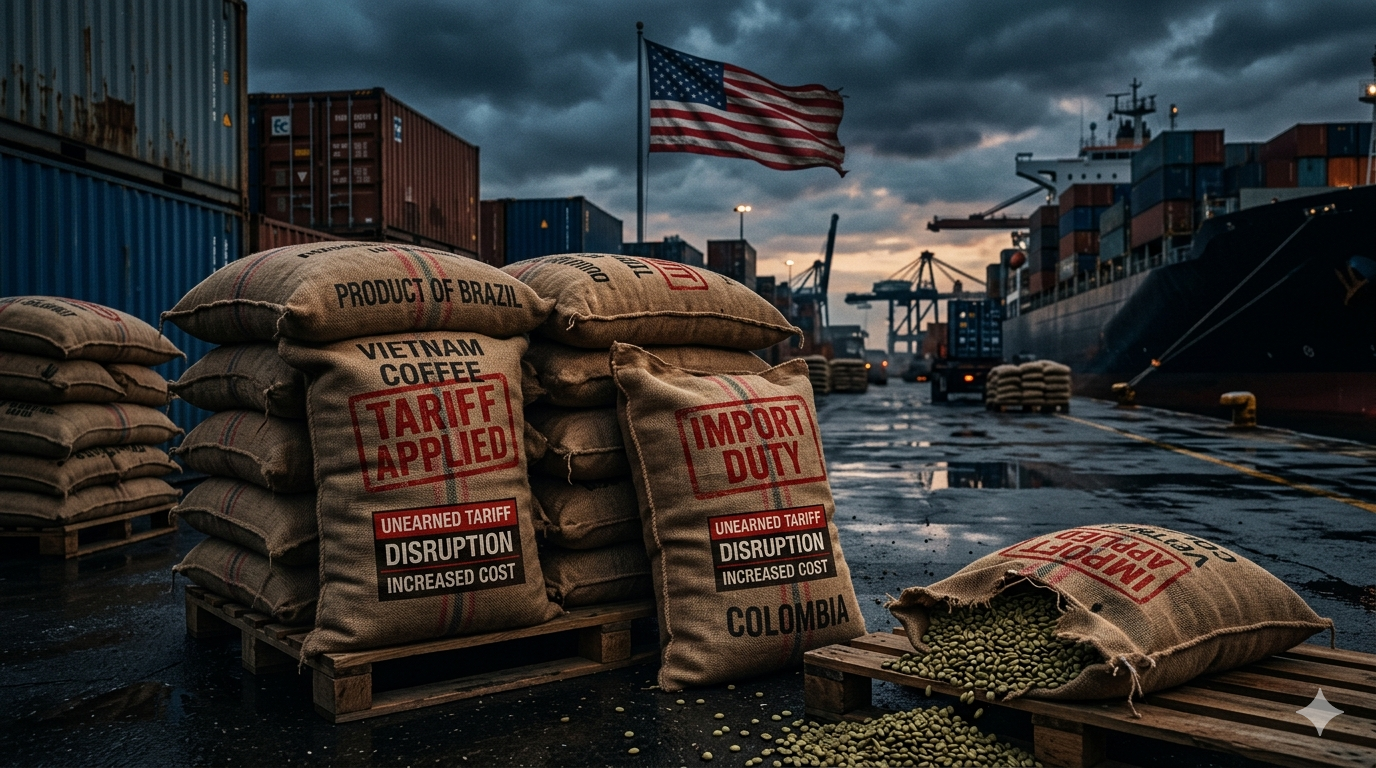
Tariff policies introduced during 2025 have contributed to significant shifts in the global coffee trade, pushing industry players to rethink supply chains and accelerate structural changes across the sector.

In 2025, broad tariff measures were imposed on imports of green coffee beans and roasting equipment. The initial rate started at around 10%, but in some cases increased substantially on major coffee-producing countries such as Brazil, Vietnam, Indonesia, and Mexico.

These measures were not applied consistently over time. Later adjustments, exemptions, and partial rollbacks were introduced following trade negotiations and policy revisions, including relief for certain agricultural goods that are not domestically produced, such as coffee. Despite this, the early phase of the tariffs had already created noticeable disruption.

The impact included higher roasted coffee prices in certain markets, shifts in export flows, and widespread instability across global supply chains.

  • Supply Chain Disruption

The changes exposed how sensitive the global coffee system is to trade policy shifts. Key developments included:

A decline in exports from Brazil to the United States, with redirected shipments toward Asia and the Middle East
Increased tariff pressure on exports from Vietnam, Indonesia, and Mexico, pushing buyers to search for alternative origins
Rising costs for coffee equipment such as grinders and espresso machines due to import dependencies

Frequent policy changes made long-term planning difficult, increasing operational uncertainty and raising costs across the supply chain.

  • Beyond Beans: Equipment and Infrastructure

The impact was not limited to green coffee. Imported roasting and café equipment also became more expensive, increasing the cost of opening or upgrading coffee shops.

This added pressure came on top of ongoing global supply chain disruptions, including higher raw material costs and shipping delays in recent years.

  • Market Adaptation Strategies

As costs rose, market participants explored different ways to adapt, including:

Rerouting shipments through countries with lower tariff exposure
Reclassifying origin within multi-stage production chains
Establishing roasting and packaging operations in third countries to alter customs classification

Large multinational companies were generally better positioned to implement such strategies due to capital availability and infrastructure flexibility.

  • Historical Context of Coffee Trade Workarounds

Attempts to bypass trade restrictions are not new in coffee history. Over centuries, coffee spread globally through a mix of legal trade, secrecy, and strategic relocation of plants and beans.

Historical examples include:

Early movement of coffee cultivation from its origin regions into Asia and the Americas through controlled and often restricted transfers
The spread of coffee plants to Southeast Asia and Latin America via maritime trade routes in earlier centuries
Historical episodes in Europe where coffee was heavily taxed or restricted, leading to informal trade networks and enforcement efforts

These patterns show that trade restrictions have historically encouraged alternative distribution channels.

  • Shifting Global Demand

Several broader trends accelerated during this period:

Growth in coffee consumption in Asia and the Middle East
Expansion of domestic consumption in producing countries
Increasing focus on supply diversification by major importers
Stronger regulatory attention in some markets on sustainability and climate-related sourcing

Together, these shifts suggest a gradual rebalancing of global coffee consumption and trade flows.

  • Uncertain Long-Term Outcomes

The long-term effects of these tariff-related disruptions remain unclear. Some analysts expect elevated price levels to persist even after policy normalization, due to accumulated supply chain inefficiencies.

While tariffs are often intended to support domestic industries, the observed effects in many cases have included:

Increased costs for importers and roasters, particularly smaller businesses
Higher consumer prices in retail and café markets
Reduced supply chain efficiency due to rerouting and compliance complexity
Limited direct benefit to producers in developing countries in many cases

Larger companies have generally been better able to absorb shocks, potentially contributing to greater consolidation within the industry.

  • Conclusion

The tariff developments of 2025 may represent a turning point in the global coffee trade system. Combined with shifting consumption patterns, rising new markets, and evolving supply chain strategies, the industry appears to be entering a new structural phase.

The key question moving forward is whether these changes will lead to a more resilient and balanced global coffee economy, or further concentrate influence among large multinational players.

Coffee has always moved across borders in response to economic and political pressure. Once again, it is adapting—reshaping itself along with the global systems that depend on it.

Strength in the Brazilian Real Boosts Coffee Prices

Dubai – Qahwa World

Coffee futures moved higher on Friday, supported by currency strength and supply dynamics. May arabica coffee (KCK26) rose by +6.40 points (+2.18%), while May ICE robusta coffee (RMK26) gained +14 points (+0.42%).

Arabica prices reached a one-week high, while robusta rebounded from its lowest level in 8.5 months in nearby futures. The rally was largely driven by the appreciation of the Brazilian real, which climbed to a two-year high against the US dollar. A stronger real tends to discourage export selling by Brazilian producers, tightening global supply.

Supply Trends and Inventory Movements

Tight robusta supplies continue to support prices. ICE-monitored robusta inventories declined to 3,977 lots, marking a 1.25-year low. In contrast, arabica inventories have increased, limiting price gains. ICE arabica stocks rose to 585,621 bags on March 18, the highest level in more than six months.

Shipping Disruptions Impact Global Trade

The closure of the Strait of Hormuz has disrupted global shipping routes, tightening coffee supplies worldwide. The disruption has increased freight rates, insurance costs, and fuel expenses, raising overall costs for coffee importers and roasters.

Weather Conditions in Brazil Support Prices

Weather conditions in Brazil are also providing support. Somar Meteorologia reported that Minas Gerais, the country’s largest arabica-growing region, received 11.7 mm of rainfall last week, representing only 47% of the historical average. Below-normal rainfall may affect crop development and support prices.

Record Crop Expectations Weigh on Market Sentiment

Despite current support factors, expectations of a record Brazilian coffee crop continue to pressure the market. On March 19, Marex Group Plc projected Brazil’s 2026/27 coffee production at 75.9 million bags, exceeding Sucafina’s estimate of 75.4 million bags and marking a 15.5% year-on-year increase.

On March 12, StoneX raised its forecast to 75.3 million bags, up from a previous estimate of 70.7 million bags. The firm also expects the global coffee surplus to expand to 10 million bags in 2026, compared to 1.8 million bags in 2025, representing the largest surplus in six years.

Vietnam Export Growth Pressures Robusta

Rising exports from Vietnam, the world’s largest robusta producer, are weighing on prices. Vietnam’s National Statistics Office reported that coffee exports in the first quarter of 2026 increased by 14% year-on-year to 585,000 metric tons.

In 2025, exports rose by 17.5% to 1.58 million metric tons. Production for the 2025/26 season is expected to increase by 6% to 1.76 million metric tons (29.4 million bags), reaching a four-year high.

Decline in Brazilian Exports Offers Support

Recent export data from Brazil provided additional support to prices. Cecafe reported that green coffee exports in February fell by 27% year-on-year to 2.3 million bags. Meanwhile, Brazil’s Trade Ministry reported a 31% decline in March exports to 151,000 metric tons.

Recent Price Trends and Global Outlook

Coffee prices declined sharply in February, with arabica falling to a 16.75-month low on February 24 due to expectations of strong Brazilian supply.

Brazil’s crop agency Conab projected on February 5 that 2026 coffee production would rise by 17.2% year-on-year to a record 66.2 million bags. Arabica output is expected to increase by 23.2% to 44.1 million bags, while robusta production is forecast to grow by 6.3% to 22.1 million bags.

Rabobank reported on March 4 that global coffee production for the 2026/27 season is expected to reach a record 180 million bags, about 8 million bags higher than the previous year.

Global Trade and Production Forecasts

The International Coffee Organization (ICO) reported on November 7 that global coffee exports for the current marketing year (October to September) declined by 0.3% year-on-year to 138.658 million bags.

The USDA’s Foreign Agriculture Service (FAS) projected in its December 18 report that global coffee production for 2025/26 will increase by 2.0% to a record 178.848 million bags. Arabica production is expected to decline by 4.7% to 95.515 million bags, while robusta output is forecast to rise by 10.9% to 83.333 million bags.

FAS also estimates that Brazil’s 2025/26 coffee production will fall by 3.1% to 63 million bags, while Vietnam’s production will increase by 6.2% to 30.8 million bags. Ending stocks for the 2025/26 season are projected to decline by 5.4% to 20.148 million bags, down from 21.307 million bags in 2024/25.

The Great Pivot: How Dubai and Asia Are Redefining Green Coffee Trading

A structural shift is moving the global coffee trade away from its historic Western centers toward a faster, proximity-driven system anchored in Dubai, Singapore, and Shanghai.

Source: Dubai – Qahwa World | April 2026

The global green coffee trade is undergoing one of the most significant transformations in its modern history. For decades, pricing power, logistics, and financial control were concentrated along a North Atlantic axis defined by New York, London, and Rotterdam. That structure is now being rebalanced.Across the Eastern hemisphere, a new trading corridor is taking shape. Dubai, Singapore, and Shanghai are emerging not only as logistics hubs but as integrated ecosystems that combine finance, infrastructure, and demand. This shift reflects deeper changes in consumption patterns, capital flows, and supply chain design.

By 2034, the global green coffee market is projected to reach between USD 54.5 billion and USD 61.4 billion. Much of that expansion is expected to come from Asia-Pacific and the Middle East, regions that are redefining how coffee is traded and where value is created.

A Market Rewritten by Demand

Growth in coffee consumption is no longer evenly distributed. Mature markets in Europe and North America are expanding slowly, while demand across Asia and the Middle East is accelerating.

Region Growth Market Profile
North America and Europe 0.5% to 1.2% Mature markets with premium focus
China 5% to 7% Rapid import growth and domestic roasting
India 6% to 8% Expanding café culture
Middle East 4% to 6% High-value consumption growth
Southeast Asia 5% to 7% Strong robusta base with specialty shift

This divergence is reshaping global trade routes. Coffee is increasingly flowing within an interconnected system that links producing countries directly with emerging consumption centers.

Value Moves Closer to Origin

A parallel shift is taking place within producing countries. Nations such as Vietnam, Indonesia, and Ethiopia are expanding their processing and roasting capacity, allowing them to retain a larger share of the value chain.

Mid-stream hubs in the Eastern corridor are reinforcing this trend. By enabling processing and packaging closer to origin, they reduce reliance on traditional Western intermediaries and increase margins across the supply chain.

The result is a measurable redistribution of value, with producers capturing an estimated 15% to 20% more than under legacy trade structures.

Speed as a Competitive Advantage

Logistics has become a defining factor in the new trading environment. Shorter routes between producing regions and Eastern hubs are reducing transit times and increasing flexibility.

Route Transit Time
East Africa to Rotterdam 35 to 45+ days
East Africa to Dubai 7 to 14 days
Southeast Asia to Europe 30 to 40 days
Southeast Asia to Singapore or Shanghai 5 to 12 days

Reduced transit time improves cash flow efficiency, lowers inventory risk, and helps preserve coffee quality. These advantages are becoming central to competitive positioning.

A New Financial Architecture

The financial systems supporting coffee trade are evolving alongside physical infrastructure. Traditional reliance on futures markets and bank-led financing is being complemented by more flexible models.

Feature Legacy Model Emerging Model
Financial Instruments Futures-based pricing Direct contracts
Assets Heavy infrastructure Platform-based systems
Finance Bank-led FinTech and sovereign capital
Execution Multi-day cycles Near real-time

Dubai as a Trade Platform

Dubai has positioned itself as a central node in this transformation. Integrated infrastructure allows multiple stages of the coffee supply chain to operate within a single ecosystem, reducing friction and improving efficiency.

Facilities such as the DMCC Coffee Centre combine storage, processing, roasting, and logistics, creating a unified platform that connects producers directly with high-growth markets.

Industry events, including World of Coffee Dubai, are reinforcing this role by facilitating direct trade relationships and improving transparency between origin and buyers.

Outlook to 2035

The global coffee trade is gradually moving toward diversified pricing systems and decentralized trade flows. Fixed-price agreements, quality-based valuation, and traceability tools are becoming more prominent.

By 2035, the Eastern Growth Corridor is expected to capture a significant share of incremental trade value, reflecting a long-term structural shift rather than a temporary adjustment.

Conclusion

The future of green coffee trading is being reshaped by proximity, speed, and integration. The shift toward Dubai, Singapore, and Shanghai reflects deeper changes in how markets function and where value is created.

What was once a centralized system is becoming a distributed network. Those positioned closest to both origin and demand are increasingly defining the next phase of the global coffee economy.

Vietnam Suspends Decree 46, Easing Coffee Trade

Dubai – Qahwa World

Vietnam’s suspension of Decree 46, a new food safety regulation governing all imported food and ingredients, has brought temporary relief to the coffee industry after weeks of disruption to supply chains.

Introduced at the end of January, Decree 46 tightened how food imports are managed at Vietnam’s borders. It replaced a more flexible framework with stricter approval procedures, including additional certification, registration, and physical inspections before products could enter the market. For many import-reliant sectors, including coffee, the impact was immediate.

Coffee businesses were hit on multiple fronts. Shipments of high‑quality green coffee, roasted products, and key processing inputs began to slow as importers adjusted to the new documentation and inspection requirements. Clearance times that previously took only a few days stretched to several weeks, creating bottlenecks at major ports as containers waited for checks and approvals. For an industry built on tight delivery schedules and thin margins, these delays quickly translated into operational and financial pressure.

Vietnam plays a central role in global coffee flows, not only as the world’s largest robusta producer but also as a processing and re‑export hub. Coffee is imported into the country for blending and processing before being shipped back out to international markets. That system depends heavily on efficiency and predictability at the border. By imposing full food‑safety compliance procedures on a wide range of imports, Decree 46 disrupted both.

One of the most sensitive areas was raw materials imported for re‑export. Under the previous rules, such shipments often benefited from simplified procedures because they were not intended for domestic consumption. Decree 46 removed much of that flexibility, requiring full compliance even for goods destined for re‑export. This added time, cost, and administrative complexity for coffee traders who route beans and semi‑finished products through Vietnam as part of global supply chains.

The specialty coffee segment also felt the strain. Imports of premium green coffee, small‑batch roasted products, flavorings, and other inputs used in high‑value offerings faced additional testing and approval steps. Smaller businesses, which typically operate with lean inventories, reported immediate pressure as delays threatened their ability to meet contracts and serve customers on time. Packaging materials and additives used in roasting, processing, and manufacturing coffee products were similarly drawn into the stricter regime, forcing companies to contend with more extensive compliance demands across their operations.

Industry reaction was swift. Business associations and trade groups representing food and beverage importers warned that the abrupt shift had created serious bottlenecks, with large numbers of shipments held at ports and border gates. They raised concerns about rising storage costs, the risk of contractual penalties, and knock‑on effects on domestic production that depends on imported inputs, including those used in coffee manufacturing and export.

In response, the government moved to stabilize the situation. On 4 February, authorities suspended the effectiveness of Decree 46 and temporarily reinstated the previous regulatory framework. This decision effectively returned import procedures to the more familiar rules that had been in place before the decree, allowing stuck shipments to begin moving again and easing congestion at key ports. For coffee traders and processors, the suspension has provided short‑term relief and a chance to clear backlogs.

However, the issue is far from settled. Officials have framed the suspension as a temporary measure while they review implementation challenges and consider adjustments to the regulation. Trading partners and industry groups have called for clearer guidance, more transparency, and adequate transition periods before any new rules take effect. The government has indicated that tighter control over food imports remains a strategic goal, suggesting that some form of stricter regime will likely return once technical and procedural issues are addressed.

For the coffee sector, this pause is being treated as a preparation window rather than a return to business as usual. Companies are reassessing their documentation workflows, compliance systems, and supply chain structures in anticipation that more demanding requirements will come back in some form. Import‑dependent roasters and exporters are also exploring options to diversify logistics routes, adjust contract terms, or build greater buffer stocks to cope with potential future disruptions.

The recent experience has highlighted just how sensitive the coffee trade is to regulatory shifts at key origin and transit points. Delays at Vietnam’s ports can quickly cascade into late deliveries, contract disputes, and price volatility along the supply chain. While the suspension of Decree 46 has eased immediate pressure, it has also sent a clear message: the operating environment for food and coffee imports in Vietnam is changing, and adaptation will be essential to maintain a smooth flow of trade.

You can adjust this text by shortening the background on regulation if your audience already knows Decree 46, or by expanding the “industry reaction” and adding quotes if you have direct sources from coffee companies or associations.

Coffee rallies hard as supply tightens and money flows back into the market

Dubai – Qahwa World

You can feel it again—the market is tightening, and coffee is responding exactly the way it tends to when physical supply starts to disappear.

Over the past week, coffee prices pushed sharply higher, and this wasn’t just a technical move. It’s a combination the industry knows well: weaker exports from origin countries and fresh speculative money stepping back in. That mix rarely stays quiet for long.

Arabica for May delivery jumped 8.6% to around $6,828 per tonne, while robusta added another 6%, reaching $6,664. Both markets are moving in sync, which usually tells you this isn’t a localised issue—it’s systemic.

You may like to read: Indonesia’s Top 9 Coffees in 2026

At the same time, the broader commodity space is sending mixed signals. Silver dropped heavily under the weight of high interest rates, while coffee moved the other way. That divergence says a lot about where capital is going: away from passive holdings and into markets where supply risk is real and immediate.

  • And right now, coffee has plenty of that.

The geopolitical backdrop isn’t helping. Tensions in the Middle East have started to interfere with shipping through the Strait of Hormuz, pushing oil prices higher. For coffee producers, that translates directly into higher costs — fuel, fertilisers, transport — everything gets more expensive. Eventually, those costs show up in the price of coffee.

But the bigger story is still supply.

Exports from the major producers are clearly slowing:

Brazil saw green coffee exports drop 27% year-on-year in February
Vietnam was down 20%
Colombia fell even harder, down 32%

Those are not small adjustments — that’s a meaningful contraction across all key origins at the same time.

You can also read: The Best Time to Drink Coffee, According to Experts

What’s more telling is what’s happening on the exchange. ICE stocks — the market’s safety cushion — are still about 30% below last year, sitting just above 552,000 bags. And Brazilian coffee makes up only a tiny share of that, roughly 4%.

That’s important. When Brazil isn’t showing up in exchange stocks, it usually means producers aren’t satisfied with current price levels — or simply don’t feel pressure to sell. Either way, it tightens the market further.

On top of that, funds are coming back in. Managed money increased its net long position in arabica by nearly 30% in just one reporting period. That kind of move doesn’t happen unless confidence — or urgency — is building.

Locally, in Vietnam’s Central Highlands, prices followed the global trend, climbing to around 94,000 dong per kilo. That’s a strong move in a short time, and it reflects how quickly international pressure feeds into domestic markets.

Read also: 43 Years of Data: How Coffee Affects the Brain and Memory

  • Meanwhile, silver drops — and capital rotates

While coffee is climbing, silver is going through the opposite cycle.

Prices fell more than 14% last week, extending a steady run of losses. The main driver here isn’t supply — it’s macroeconomics.

With inflation in the U.S. still stubborn, interest rates remain elevated. That pushes bond yields higher and makes non-yielding assets like silver less attractive. Money simply moves elsewhere.

You can also see it in ETF flows. Holdings dropped by 225 tons in a single week — a clear sign that institutional investors are reducing exposure.

What’s interesting, though, is that the physical market is telling a different story. China imported over 790 tons of silver in the first two months of the year, with February hitting a record. At the same time, exchange inventories in both Shanghai and COMEX are shrinking fast.

So, while paper markets are selling, physical demand hasn’t gone away.

  • The bigger picture

What we’re seeing now is a classic divergence.

Coffee is being driven by real-world constraints — supply, logistics, and producer behavior.
Silver is being driven by financial conditions — rates, yields, and capital flows.

For coffee, the key question isn’t whether prices can move — they already are. The real question is how long supply remains tight and whether producers step in at these levels.

Until that happens, the market stays vulnerable to further upside.

Mohammed Al-Hamdani: Guarding a Legacy of Over a Century

From 1918 to the Global Market—The Journey of a Legendary Coffee Dynasty

Dubai – Ali Alzakary

In the world of commodities, there are brands that sell “products”, and then there are rare entities that sell “history” distilled in a cup. To step into the world of “Al-Hamdani Mocha” is not merely to enter a commercial enterprise; it is to open the archives of a legacy that began in 1918. Back then, coffee caravans were defining global trade from the rugged peaks of Yemen.

From the narrow alleys of “Souq Bo’an” in Bani Matar, where the ancestors laid the foundation, to the skyscrapers of New York and the bustling markets of the Arabian Gulf, this family has transformed the “coffee cherry” into a civilizational message. Between century-old manuscripts and state-of-the-art European production lines stands Mr. Mohammed Al-Hamdani, CEO of Al-Hamdani Mocha, to tell us how such a profound “trust” is managed, and how the company has kept the pulse of Yemeni soil alive in the hearts of coffee aficionados worldwide.

We invite you, in this exclusive and deep-dive interview, to sail through a journey that began a century ago and never stopped, and to discover the secrets behind the authentic Mocha that connects the mountains of Haraaz and Al-Hayma to the entire world.

Mohammed Al-Hamdani: A Century of Yemeni Mocha Coffee Heritage | Interview

  • Mr. Mohammed, when we speak of a history dating back to 1918, we are looking at a legacy that predates the formation of many contemporary global markets. As the CEO of this venerable trading family, how do you describe the sense of responsibility in managing an institution that preserves manuscripts and documents over a century old?

Managing a company with this history is not just a commercial duty; it is a profound historical and cultural trust. We aren’t just running a profit-oriented entity; we are the guardians of a family legacy intertwined with the name of Yemeni coffee since the dawn of the last century. Al-Hamdani’s philosophy is built on a golden triangle: Authenticity, Quality, and Continuity. Successive generations have been keen to uphold the standards set by our grandfathers—from selecting the cherries in the farms to delivering a product worthy of the identity of Yemeni coffee. This is why Al-Hamdani has remained synonymous with quality and authentic Yemeni Mocha across decades.

  • The journey began in Souq Bo’an in Bani Matar, where your ancestors took their first steps. How have you and your team maintained that direct, soulful relationship with the farmers of Al-Hayma, Haraaz, and Bani Matar?

The farmer is our first and most vital partner. Our relationship with the farmers of Bani Matar, Haraaz, and Al-Hayma is not a dry supply-chain transaction; it is a lifelong partnership. We support them through agricultural training and awareness of scientific harvesting and drying methods, and we provide stable marketing channels that ensure their sustainability. This mutual trust is what has guaranteed our access to the finest coffee varieties and protected the quality of Yemeni coffee from fading despite all challenges.

Mohammed Al-Hamdani: A Century of Yemeni Mocha Coffee Heritage | Interview

  • In 2003, you made a significant leap by introducing modern European production lines. How do you balance the “soul” of traditional Yemeni farming with the “precision” of international standards?

Yemeni coffee derives its uniqueness from its traditional nature inherited through generations—this is a red line we cannot cross. However, to keep pace with the global market, it was essential to develop our sorting and packaging processes. We introduced European technologies to clean and protect the beans, ensuring they are defect-free according to international standards, without interfering with the essence of their natural cultivation and sun-drying. This equation between Authenticity and Technology is what has enabled our product to compete strongly in the most prestigious international arenas.

  • With over ten branches in Saudi Arabia and the Gulf, plus a branch in the United States, how do you read the varying tastes of coffee lovers globally?

Mohammed Al-Hamdani: Tastes vary by culture. In the Gulf, there remains a strong bond with traditional Arabic coffee based on Yemeni beans. In America and Europe, there is a growing passion for Specialty Coffee and modern preparation methods like Espresso and Filter. The beauty of Yemeni coffee is that it asserts its presence in all these styles; its complex flavor and history give it a special “charisma” that attracts professionals and hobbyists alike, regardless of the serving method.

Mohammed Al-Hamdani: A Century of Yemeni Mocha Coffee Heritage | Interview

  • The “Model Farm” project in Haraaz and Al-Hayma… What does this represent for your investment vision for the future of Yemeni coffee?

This project is the heart of our future vision. We seek to establish modern agricultural best practices that increase production efficiency and improve quality while maintaining the full authentic Yemeni character. The goal is not just to increase the harvest but to transform the farm into a training center that supports the Yemeni farmer and enhances the sector’s sustainability, proving to the world that Yemen is capable of offering world-class investment models in its historic lands.

  • Despite current logistical and economic challenges, Al-Hamdani continues to expand. What is the secret engine behind this resilience?

Mohammed Al-Hamdani: The secret lies in “Belief in Identity.” We believe that Yemeni coffee is the best in the world, and this belief drives our continuous work despite the odds. We rely on a strong network of relationships, accumulated trade experience, and a strict, non-negotiable commitment to international standards in packaging and export. We work to ensure that the coffee reaches the consumer’s hand anywhere in the world in the same perfect condition it was in the moment it was harvested.

Mohammed Al-Hamdani: A Century of Yemeni Mocha Coffee Heritage | Interview

  • Finally, Mr. Mohammed, how would you summarize a century of time in one message to everyone sipping a cup of Al-Hamdani coffee?

Our message is simple: Behind every sip is a story of a land. Every cup of Al-Hamdani coffee encapsulates the toil of a patient Yemeni farmer and a family legacy standing strong since 1918. We don’t just sell a drink; we export history, culture, and a Yemeni identity that reaches from Sana’a to Dubai and New York, telling the world: “This is the origin of Mocha.”

ICO February 2026 Report: Has the Inflationary Wave Receded?

LONDON – Qahwa World

The latest monthly report issued by the International Coffee Organization for February 2026 has revealed a dramatic shift that could redefine the global coffee market dynamics for years to come. After a prolonged period of scarcity and record-high prices that strained both suppliers and consumers, the report announced a sharp decline in price indicators. This shift is driven by a “tsunami” of anticipated supplies from Brazil and Vietnam, officially placing the market on the verge of a historic surplus that ends a three-year cycle of consecutive deficits.

  • Price Earthquake

In February, the Organization’s Composite Indicator Price (I-CIP) averaged 267.57 US cents/lb, representing a sharp 9.9% decrease compared to January. This decline is not merely a transient fluctuation but reflects massive selling pressure in global exchanges; the index opened the month at a peak of 289.47 cents and slid to 248.86 cents by month-end, the lowest level recorded since August 2025.

You may read: Global Coffee Market Roadmap—January 2026

None of the major categories were immune to this downward trend, with the Organization’s statistical analysis showing the following results:

  • Colombian Milds: Declined by 11.0% to settle at 330.89 cents.
  • Other Milds: Retracted by 11.7% to reach 321.35 cents.
  • Brazilian Naturals: Shrank by 10.2% to reach 308.62 cents.

Robustas: Proved most resilient, declining by only 6.6%. Experts attribute this to global roasters increasing the proportion of Robusta in their commercial blends as a strategic solution to reduce overall costs, creating sustainable demand that stabilized its price levels.

  • Brazilian and Vietnamese Winds

Organization analysts believe the fundamental reason behind this “price correction” lies in the optimistic forecasts from Brazil’s National Supply Company (CONAB), which raised expectations for the 2026/27 crop to 66.2 million bags, a massive 17.1% annual increase.

These forecasts were supported by a tangible improvement in weather conditions and regular, heavy rainfall in key growing regions such as Minas Gerais and Espírito Santo, as well as improved outlooks in the Central Highlands of Vietnam. These factors prompted major international financial institutions to predict a global surplus of up to 8.64 million bags, leading large investment funds to liquidate long positions and pivot toward selling. This explains the 20.7% shrinkage in the arbitrage between the London and New York futures markets.

  • Global Trade Map

Regarding exports, January 2026 saw the shipment of 10.85 million bags of green beans, a 12.7% increase over January 2025. However, behind this headline figure lie geographical disparities reflecting specific regional logistical and production challenges:

Asia & Oceania: The region achieved a staggering 51.8% growth, with Vietnam alone exporting 3.99 million bags in January, capitalizing on accelerated shipping ahead of the Lunar New Year (Tet) holiday.

Africa: Continued its recovery with 14.2% growth. Ethiopia stood out as a strategic player with a 51.5% increase in shipments, while Uganda grew by 11.2%, reflecting a significant improvement in the continent’s internal supply chains.

South America: Recorded a surprising 21.3% decline. The biggest shock was in Colombia, where production plummeted by 34.1% due to unfavorable localized weather fluctuations, negatively impacting the flow of premium Colombian Milds to global markets.

Mexico & Central America: Registered a slight 4.2% decrease, with Honduras suffering a sharp 28.7% drop in exports due to seasonal labor shortages and logistical hurdles.

Read Also: ICO Releases Global Coffee Market Report – December 2025

  • Stocks and Processed Coffee

For the first time in months, the International Coffee Organization report indicates a slight improvement in certified stocks. New York (ICE) stocks rose by 11.4% to 0.52 million bags, while London stocks increased by 3.1% to 0.76 million bags. This rise provides a relative “safety cushion” against sudden climatic or political shocks.

A notable phenomenon in the report was the export of “Roasted Coffee,” which jumped by 25.2%. This indicates a strategic shift in origin countries toward local processing to add value to their products rather than relying solely on raw bean exports. Meanwhile, soluble coffee exports grew at a steady pace of 1.9%.

  • The Retail Paradox

The report highlighted a crucial point affecting the real economy: despite the collapse of raw coffee prices in global exchanges, retail prices in the United States jumped by 18.3% year-on-year in January 2026. This persistent inflation, totaling 47% cumulatively over five years, is mainly due to rising logistics, energy, and labor costs in consuming countries. Additionally, accumulating consumer debt is beginning to weigh on purchasing power, which may threaten the expected 1.7% growth in global consumption.

  • Future Outlook

We are entering a phase of total “reset” in coffee market balances. The market is currently moving to narrow the global deficit to just 0.4 million bags this season, paving the way for the anticipated historic surplus next year. For investors, roasters, and consumers, the February 2026 report serves as the “final whistle” for the era of frantic speculation and chronic shortages, signaling the start of a price stability phase led by Brazilian production abundance and Vietnamese logistical efficiency.

Brazil’s Specialty Coffee Sector Gains Global Momentum

Dubai – Qahwa World

The United States Department of Agriculture (USDA) published a detailed report titled “Brewing Opportunity – Brazil’s Specialty Coffee Sector Shows Strong Potential,” examining the rapid development of Brazil’s specialty coffee industry and the opportunities and challenges shaping its future.

Brazil remains the largest coffee producer and exporter in the world, while also ranking as the second-largest coffee-consuming country. Historically, the nation exported its highest-quality beans while domestic consumption focused largely on lower-grade coffee. In recent years, however, this pattern has begun to shift. Brazilian consumers are increasingly developing a taste for specialty coffee, driving growth in both production and local demand.

According to the report, the expansion of the specialty segment is supported by several structural advantages. Brazil benefits from favorable climatic conditions that allow the cultivation of diverse coffee varieties across multiple regions. In addition, the country has developed a strong network of research institutions, cooperatives, and producer organizations that focus on improving quality, innovation, and technical expertise within the coffee sector.

At the same time, the domestic market for coffee continues to expand, with consumers showing greater interest in differentiated products and higher-quality beans.

You may read: Russia’s Imports of Brazilian Coffee Fall to Six-Month Low

Despite this progress, the report notes that Brazil’s specialty coffee sector still faces several structural challenges. Many producers struggle with limited access to rural credit, making it difficult to finance investments in equipment and infrastructure. Post-harvest processing facilities—such as washing stations, pulpers, sorting machines, and drying systems—also remain insufficient in some areas, limiting the ability of farmers to produce and market high-quality coffee.

Producers have also reported uneven access to technical assistance and a limited number of certified warehouses and exporters, which can reduce profitability and hinder broader participation in the specialty coffee market, particularly among small-scale farmers.

Although specialty coffee generally costs about 50 percent more than conventional coffee, the segment offers advantages beyond price. Buyers often establish longer-term relationships with producers, which can provide farmers with greater stability and security for future harvests.

  • Major Coffee-Producing Regions

Specialty coffee production in Brazil is concentrated mainly in high-altitude regions, where elevation and moderate temperatures contribute to denser beans and more complex flavor profiles.

You may read: Brazil Crop Expectations Pressure Global Coffee Prices

The state of Minas Gerais stands as Brazil’s leading producer of arabica and specialty coffees. Regions such as Sul de Minas, Cerrado Mineiro, Matas de Minas, and Mantiqueira de Minas form a well-organized production chain that includes farmers, cooperatives, exporters, warehouses, and research institutions. Minas Gerais alone produces around 24 million bags of coffee annually, representing nearly half of Brazil’s total coffee output.

Each sub-region offers distinctive characteristics. Cerrado Mineiro became the first coffee region in Brazil to receive Designation of Origin status, while Sul de Minas is known for its concentration of small farms and its large cooperative structure. Mantiqueira de Minas has gained international recognition for its high-altitude coffees, where significant temperature variation between day and night allows cherries to ripen slowly, resulting in sweeter and more aromatic beans.

In Espírito Santo, Brazil’s second-largest coffee-producing state, production is dominated by robusta—locally known as conilon—though high-altitude areas also produce quality arabica coffee. Regions such as Caparaó and Montanhas do Espírito Santo are known for small family farms and coffees with aromatic complexity and balanced acidity.

The state of São Paulo also contributes to the specialty segment through regions such as Alta Mogiana and Média Mogiana, where coffees typically display balanced acidity, strong aroma, and a creamy body.

You may read:Coffee Prices Rise as Brazilian Real Strength Sparks Short Covering

Other regions across Brazil contribute unique characteristics as well. Rondônia, located in the Amazon region, specializes in conilon production, while Paraná, historically a major coffee producer, continues to maintain output through small farms supported by cooperatives and research institutions. Meanwhile, Bahia, one of the country’s newer coffee regions, has gained attention for its use of advanced technology and mechanized farming systems, which support high productivity levels.

  • Quality Standards and Classification

Brazil follows internationally recognized quality standards for specialty coffee. The evaluation system used by the Specialty Coffee Association scores arabica coffees on a 100-point scale, with coffees scoring 80 points or higher classified as specialty grade.

Coffees are evaluated according to sensory characteristics such as aroma, flavor, acidity, body, sweetness, balance, uniformity, and aftertaste, while also being assessed for physical defects.

Brazil also uses national classification systems aligned with these international standards. The country’s official classification process evaluates cup quality using descriptors such as strictly soft, soft, and hard, among others.

In May 2025, the Brazil Specialty Coffee Association adopted a new evaluation protocol known as Coffee Value Assessment, designed to create a more standardized approach to assessing quality and to improve communication between producers and international buyers.

You may read:Brazil Rain and Vietnam Surplus Sink Coffee Futures

Brazilian producers may also use additional certification programs—such as organic or fair-trade certifications—to meet international market requirements, although these certifications do not automatically classify a coffee as specialty.

The quality of Brazilian robusta and conilon coffee has also improved in recent years, contributing to stronger demand and higher prices. Brazil is currently the second-largest producer of robusta coffee globally, behind Vietnam.

  • Challenges Affecting Growth

The report highlights genetics as another key factor in specialty coffee production. However, inconsistencies between international and national databases for coffee cultivars sometimes create challenges. Some varieties recognized internationally for exceptional quality are not officially registered for cultivation in Brazil, while many important Brazilian cultivars are absent from international quality catalogues.

These discrepancies can complicate certification and recognition processes for producers and may increase production costs or reduce profitability.

Specialty coffee production also requires significant investments in cultivation techniques and post-harvest infrastructure. Because these investments can be costly, the specialty coffee sector in Brazil remains concentrated among a relatively limited number of producers.

  • Growing Interest Among Brazilian Consumers

Although Brazil has long been a global coffee powerhouse, domestic appreciation for specialty coffee is relatively recent. Since the early 2000s, coffee culture has evolved significantly as consumers began exploring higher-quality beans, alternative brewing methods, and greater transparency regarding coffee origins.

You may read:India’s Quiet Coffee Superpower

Recent consumer surveys show that some Brazilians have reduced overall coffee consumption in response to rising prices. Nevertheless, demand for specialty coffee continues to grow. The report indicates that consumption of specialty coffee in Brazil has been increasing by about 15 percent per year, significantly faster than the growth of traditional coffee consumption.

Specialty coffee consumption in the country is estimated at around 70,000 tons annually, representing approximately five to ten percent of total coffee consumption.

Consumers interested in specialty coffee tend to seek differentiated beans, visit cafés that emphasize brewing quality, and show greater interest in sustainability practices and traceability.

  • Trade Trends and Export Markets

Brazilian export data does not track specialty coffee as a separate category. Instead, exporters often group it under “differentiated coffees,” which include beans certified for quality, sustainability, or other distinctive characteristics.

According to export data, Brazil shipped 8.1 million bags of differentiated coffees in 2025, representing about 20 percent of the country’s total coffee exports. Although export volumes declined compared with the previous year, revenues increased significantly to approximately 3.5 billion dollars, partly due to favorable exchange rates.

The United States remained the largest destination for Brazilian differentiated coffees, importing about 1.3 million bags, followed by Germany, Belgium, the Netherlands, and Italy. European markets often function as distribution hubs that supply specialty coffee to other regions.

  • Global Promotion and Future Outlook

Brazil is actively promoting its specialty coffee sector internationally through initiatives designed to strengthen its presence in global markets. One such program focuses on marketing Brazilian specialty coffees through trade fairs, branding campaigns, and partnerships with international buyers.

Priority markets include the United States, Japan, China, South Korea, the United Arab Emirates, France, and Australia, while processed coffee products such as roasted and ground coffee are being promoted in markets including Canada, Chile, China, and the United States.

The initiative is scheduled to run until 2027 and aims to expand Brazil’s leadership in the global specialty coffee sector.

The report concludes that rising international demand for traceable, sustainable, and high-quality coffee—combined with ongoing improvements in production and promotion—positions Brazil’s specialty coffee industry for continued growth in the years ahead.