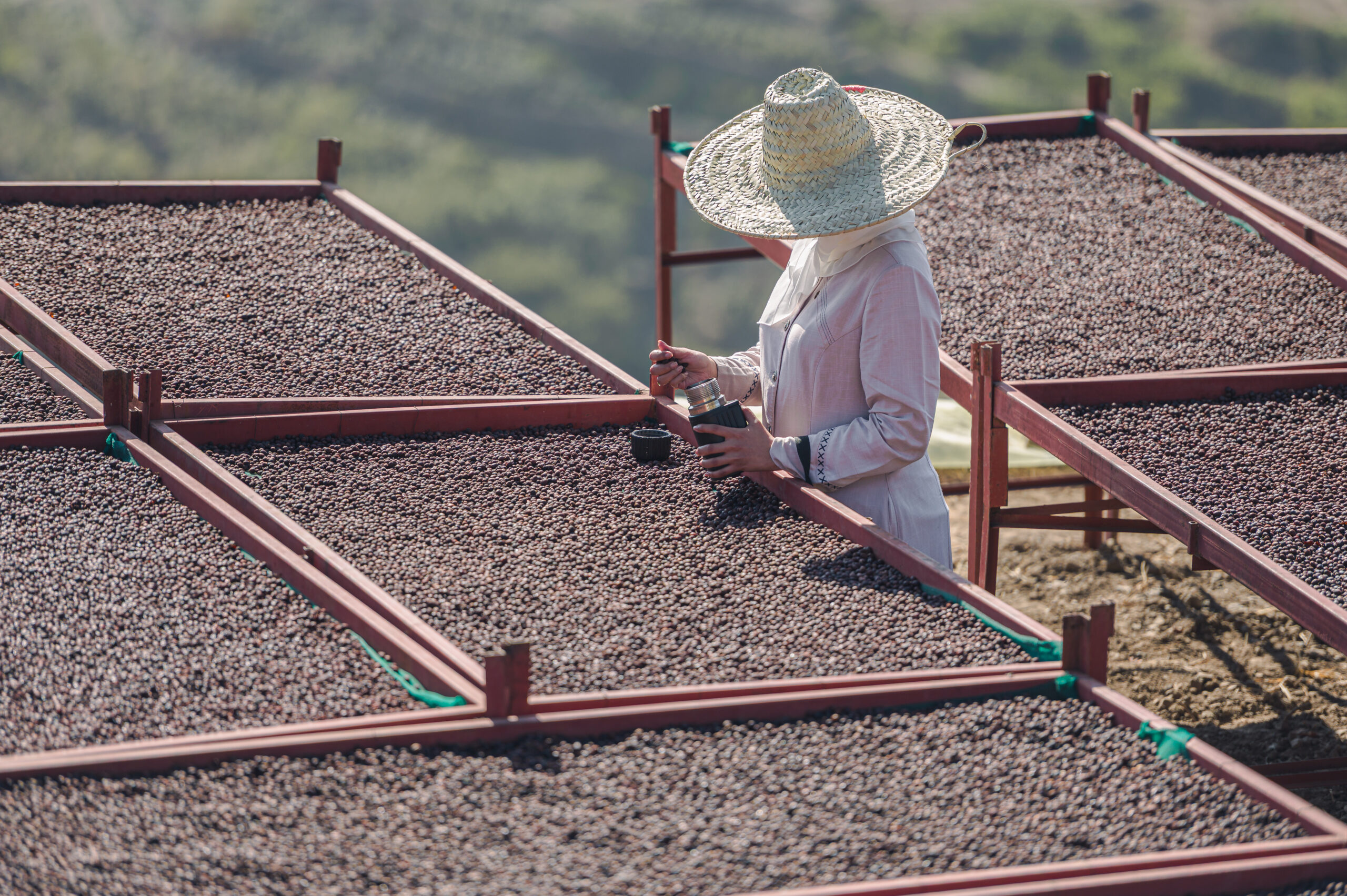
Myasah Ali: When a Yemeni Woman Writes Coffee’s History with the Ink of Passion and Pioneering

Source: Coffee World – Exclusive Interview |
Author: Ali Alzakary |
Date: June 8, 2026

Myasah Ali: When a Yemeni Woman Writes Coffee’s History with the Ink of Passion and Pioneering

Key Takeaways from the Interview:

  • Myasah Ali started her specialty coffee journey in 2021 in the heart of Sana’a, despite COVID-19 and Yemen’s difficult circumstances.
  • The brand name “Myasah” is a tribute to her grandmother, who gave up her coffee land inheritance in Haraz to protect her family.
  • Her biggest challenge came not from farmers but from traders who deliberately misled her with false advice to discourage her because she was a woman alone in the export field.
  • She learned from her mistakes never to trust inexperienced traders blindly; now formal contracts and legal governance are the foundation of her work.
  • She believes that Muslim women since the Prophet’s time engaged in trade, dialogue, and public life – her work today is a natural role, not a battle against society.
  • Her message to every young Yemeni woman: focus on your dream, people will rarely support you, your persistence and commitment are your true strength.

In the corridors of Sana’a, where history breathes the aroma of coffee, and specifically from the heart of “Myasah Coffee,” a story begins that goes far beyond mere commerce. It is the story of a Yemeni woman, Myasah Ali, whose project did not emerge from a vacuum.

If Sana’a is the headquarters from which the company launched, the roots of the story run deep, intertwining with the historic soil of Haraz – the region that gifted the world the finest coffee across the ages.

This fusion between the bustling capital and the timeless heritage of Haraz created a hidden yet powerful bond that led Myasah to establish an entity whose name now echoes in international forums. In this compelling interview, we dive deep into that memory to discover how Myasah turned this profound connection into a driving force to rewrite the professional history of Yemeni specialty coffee. We invite you to explore this inspiring journey in the lines ahead.

Entering the Coffee World in 2021 Amid Difficult Circumstances: Passion or Challenge?

Honestly, the beginning was not a choice between passion and challenge. Both came together. Passion was the initial spark, but passion alone is not enough to sustain you, especially at the time and under the conditions I started in – the COVID-19 crisis was just unfolding, and its global impact was making itself felt.

That is precisely where the challenge entered. It was a personal challenge to prove that no matter how complex the surrounding circumstances, they cannot prevent me from achieving my goal. The challenge became the engine that drove me to produce specialty coffee to high standards, capable of competing strongly in the global specialty coffee market.
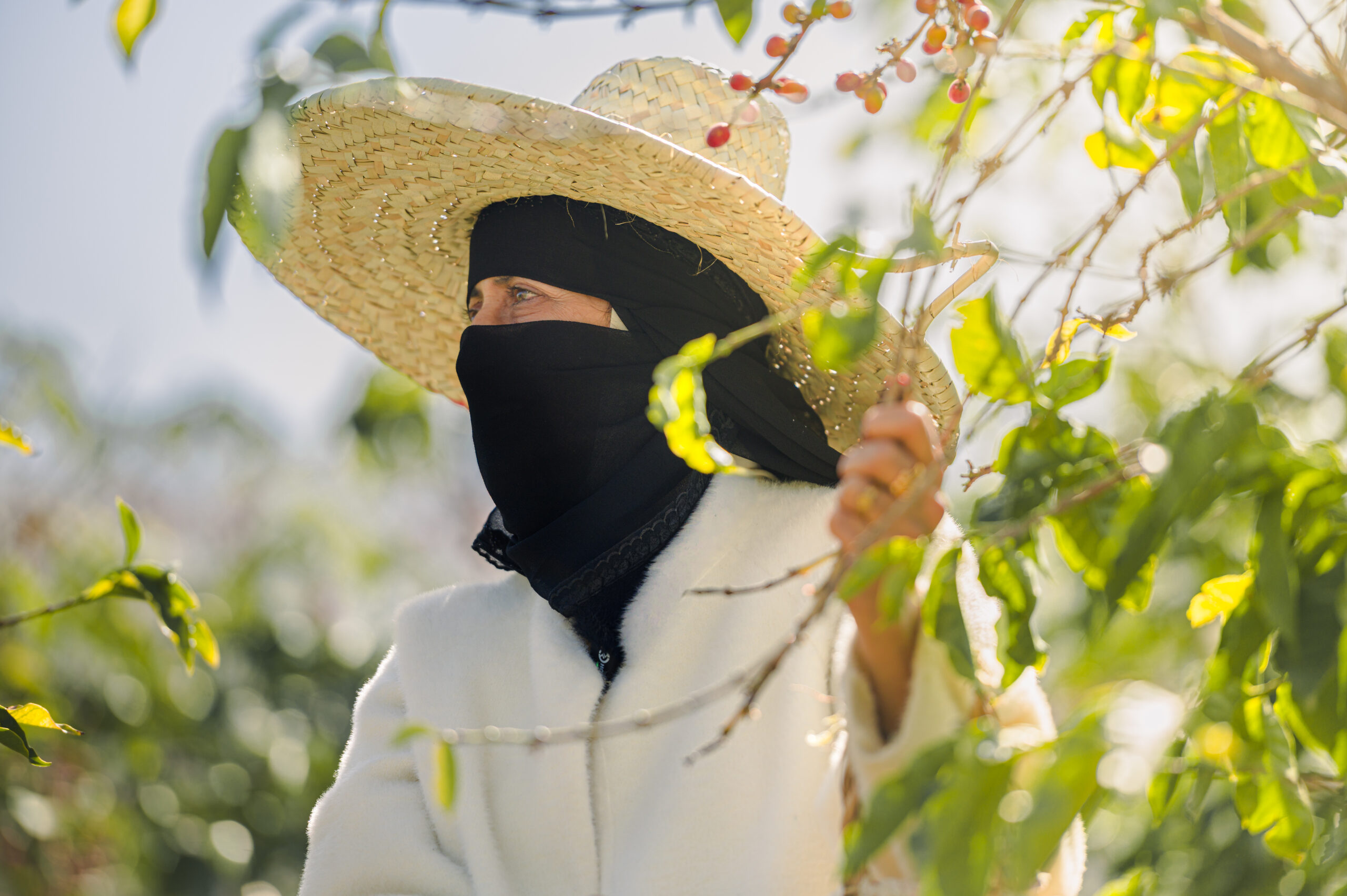
What Is the Secret Behind the Name “Myasah” as Your Company’s Brand?

This brand is the least I could offer to my grandmother, who named me and raised me. Her family was among the wealthiest and largest coffee farm owners in Haraz. However, after her parents passed away, she gave up all that inheritance and moved to Sana’a to avoid disputes over inheritance and to ensure her family’s safety.

This enterprise is a tribute to her sacrifice – every inch of land she let go for our sake. And my name is the greatest guarantee and commitment to the quality and luxury of what I present to the world. The link between Sana’a, where the company is based, and Haraz, where the roots lie, is a bond of blood and memory.

The Biggest Challenge: Working in a Field Described as “A Man’s World”

Yes, indeed. Exporting is one thing; going into the field is another. I am a city girl and did not know the villages. But my family’s support and their mindset were my first pillar of strength. The positive shock in the field was that women are present in coffee farms and work there more than men, so I never felt alien.

I earned respect and established my presence through credibility in dealing, and through the cleanliness and quality of the product I offer. Clean work always asserts itself. Everyone who has dealt with me in this market realized that behind this name stands a woman who accepts nothing less than the best.
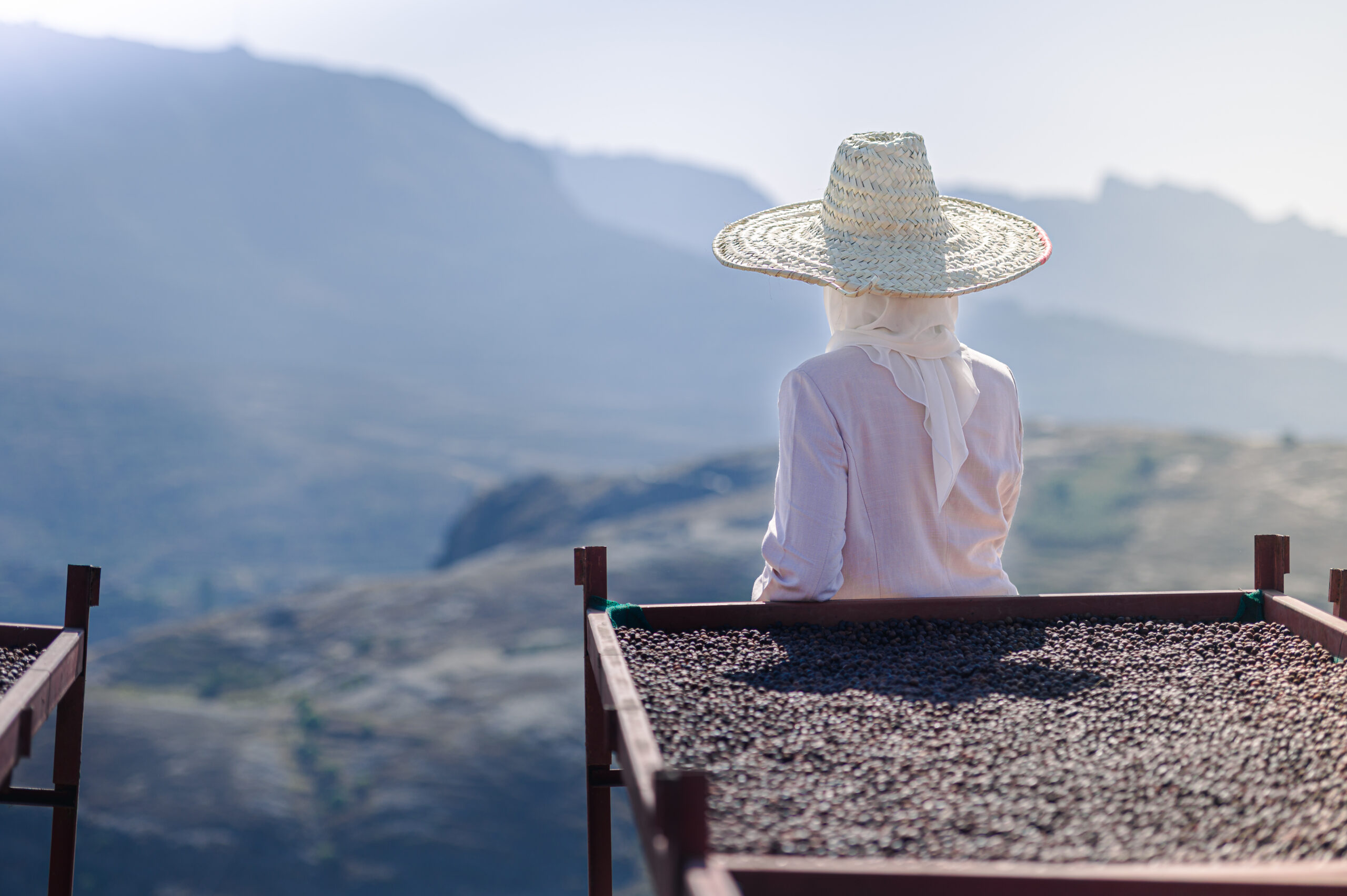
How Did Myasah Build Trust with Yemeni Farmers?

I built trust with farmers simply by keeping promises and committing to them. The Yemeni farmer buys word and credibility before anything else. As for the hardest moment that changed my thinking, it was not with farmers but with traders’ mistreatment and their attempts to mislead me. Being a lone woman exporting in this field, some deliberately gave me wrong advice and misinformation, aiming to discourage me and make me give up.

I quickly understood the game and shifted from good faith to smart caution. I started asking the same question to multiple traders, then analysing and doing the opposite of their misleading advice. That experience taught me to rely only on my own research, and to trust my managerial instinct to protect my business. Knowledge is the strongest weapon in the export world.

The Secret Behind Ensuring the Highest Quality Standards at “Myasah Coffee”

The secret lies in the unique evaluation mindset I follow. I do not treat coffee as a merchant wanting to sell without enjoyment. Instead, I always put myself in the place of the farmer, the trader, and the final cupper. Before I ship any batch, I consider myself a stranger tasting that coffee and evaluating it with strictness.

This role‑playing prevents me from compromising on any detail, and makes me eager to deliver the highest level of quality and cleanliness, because I want the cupper to feel the same passion and effort that went into every single bean. Each bean carries within it the heritage of Haraz and the precision management of Sana’a.
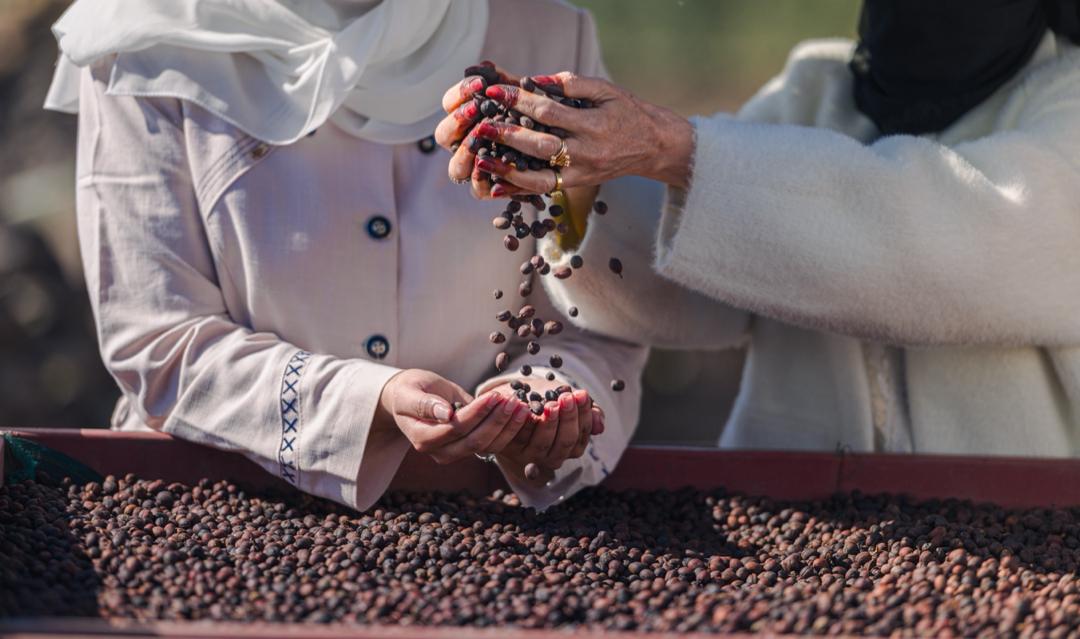
Losses Along the Way: The Mistake She Wishes She Had Avoided

The mistake I wish I had avoided was giving my trust to an inexperienced trader. In my early days, out of an emotional impulse, I decided to help someone whom all the other traders had rejected. Unfortunately, because of him, I not only lost money but also lost a name and reputation I was just building. However, I quickly corrected the situation and completely changed my mentality and business system.

Emotion has no place in business. Since then, official approved contracts, rigorous verification of partners, and legal governance have become the foundation of every shipment, to protect the name “Myasah Coffee” – especially since it is my personal name and there is no room for mistakes.

Has Myasah Overcome the Stereotype of Yemeni Women?

The weight my name has gained today comes from the deep expertise I have built and my continuous drive to improve it. As for the idea of victory, I have not defeated anyone, because there is no person in front of me I wish to compete with. My ambition is to compete with myself and develop my work only. Regarding the stereotype:

Muslim women since the time of the Prophet, peace be upon him, sold, bought, engaged in dialogue in scholarly gatherings, participated in battles, and in every aspect of life. What I do today is not a battle against society. It is simply the practice of my natural and active role as an ambitious woman in the business world.
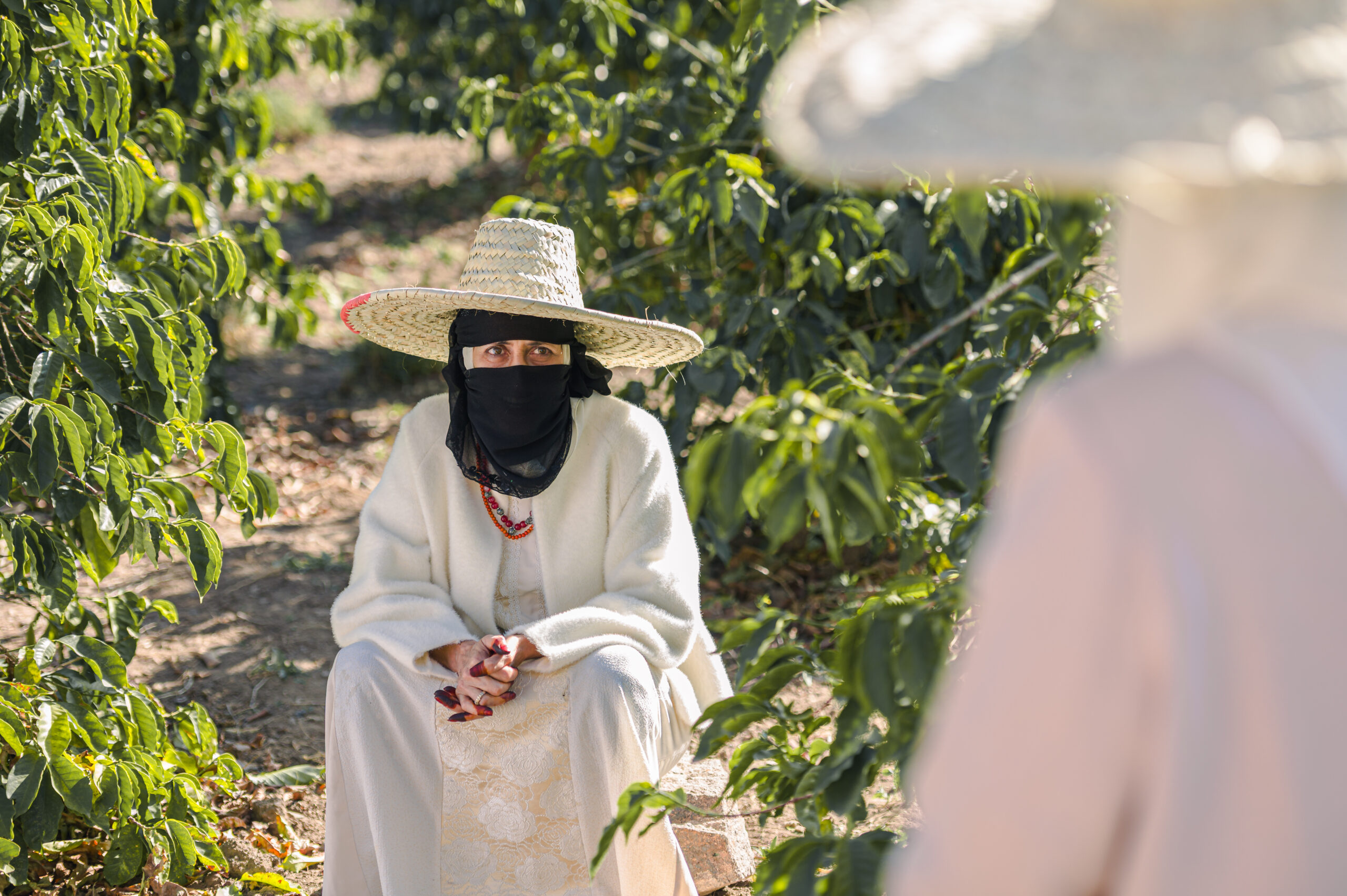
Balancing Global Standards with the Authenticity of Yemeni Coffee

Flavour and authenticity have not changed. The trees, soil, and climate in Haraz are constant factors that give coffee its historical identity. Global standards have not altered the essence of the coffee; they have improved the way we handle it.

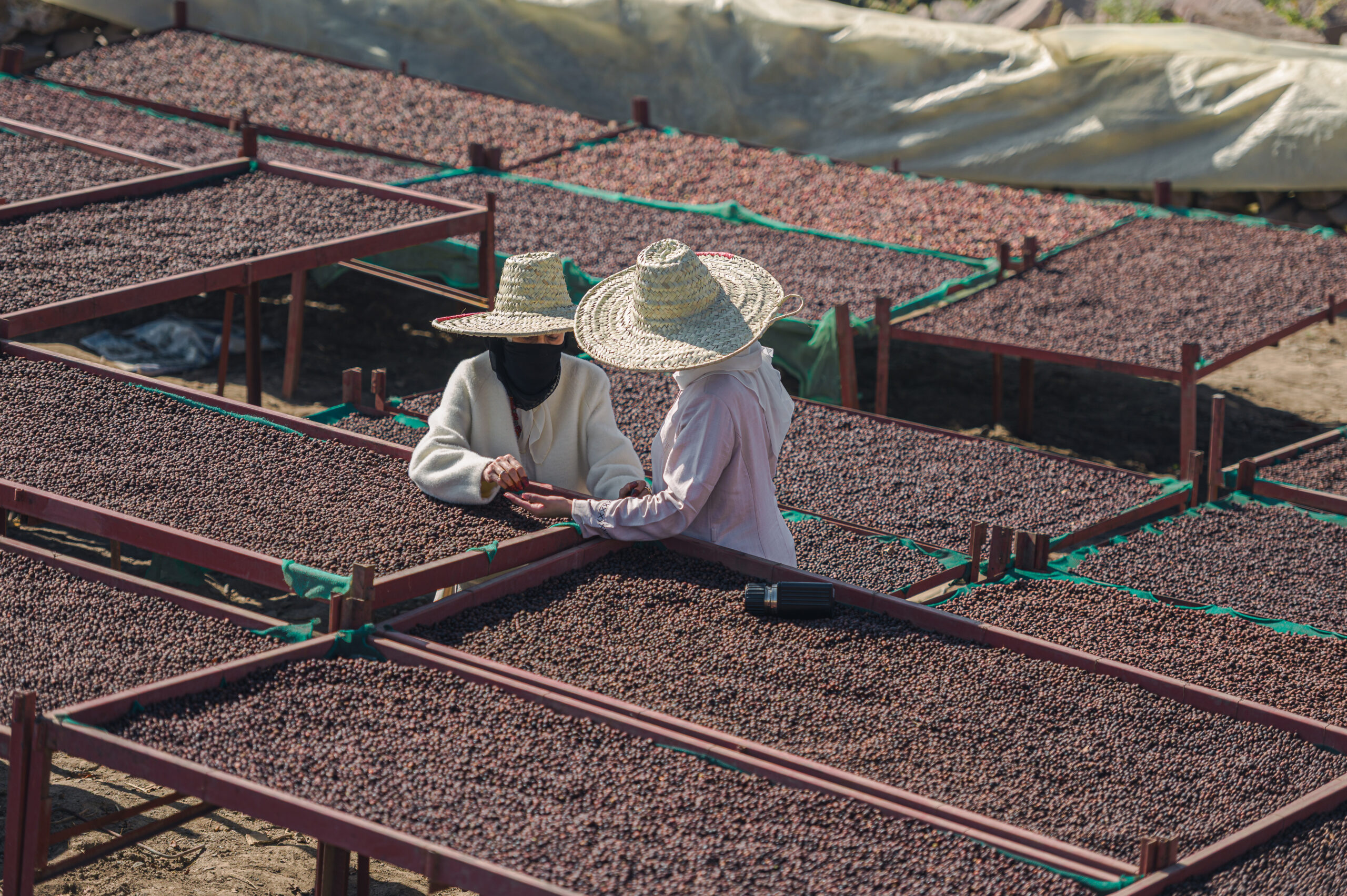
The difference today lies in refining harvesting methods, drying, roasting, and storage to keep pace with the times, inventing new machines and doing deep work.

Adhering to these standards does not cancel authenticity but protects it, and ensures that this historical legacy is presented to international customers in the highest quality and cleanest possible form.

What Does It Mean That “Myasah Coffee” Has Reached Global Markets?

The feeling that overwhelms me is true, deep pride in myself, in a success I have lived step by step thanks to God, and then to my own effort that never stopped or retreated despite all the pressures and problems. I cannot describe the feeling.

Today I start my morning with a cup of coffee produced by my own company, knowing that I am offering the world an ideal product at the highest standards. I have achieved successes and accomplishments that many men in this market have themselves testified were beyond the possible.

The arrival of “Myasah Coffee” to these international markets is confirmation that determination can always make a difference.
Myasah’s Message to Every Young Yemeni Woman Who Aspires to Her Dream

The message I want to give to every young Yemeni woman is: focus on your dream and your goal, as long as you clearly see the outcome and the position you want to reach. And always remember that no one else sees this vision.

Most people will not support you, and the bad words, envy, and enemies will not stop appearing on your path. So never pay attention to them. Be very careful in choosing those around you to be a real support. Persistence and holding onto your dream are the true power that can break any obstacle or societal perception.

Always keep one certainty in your heart: Whoever has God with them has no one against them.
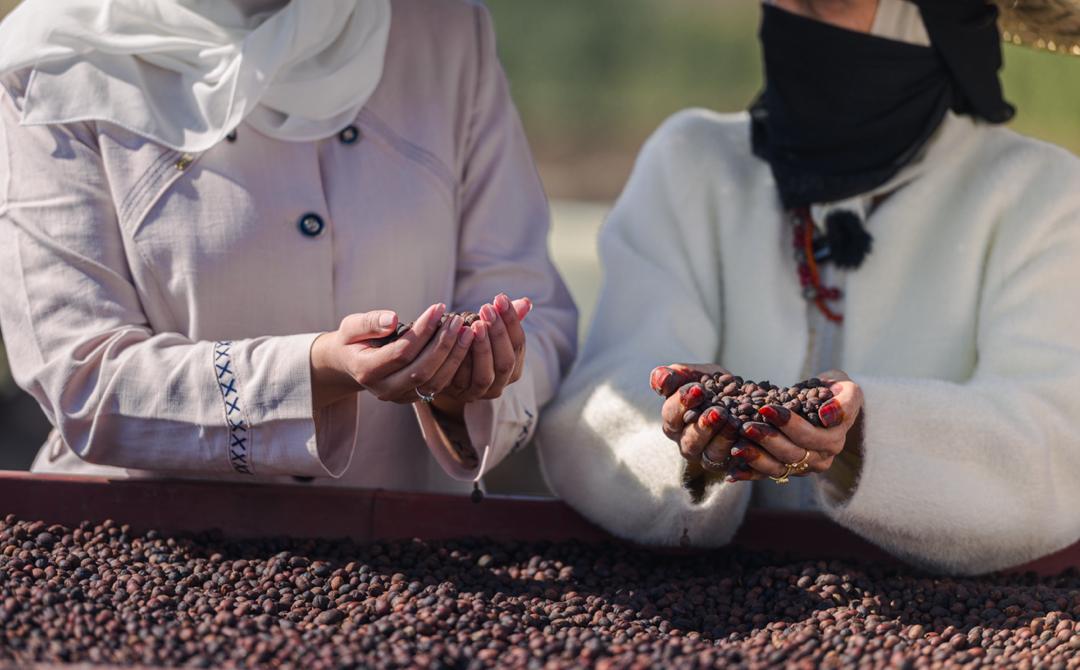
Frequently Asked Questions About Myasah Ali and Yemeni Coffee

Q: When was Myasah Coffee founded?

A: It was founded in 2021 in Sana’a, Yemen, amid the COVID-19 crisis and difficult local circumstances.

Q: Why did Myasah choose “Myasah” as her brand name?

A: As a tribute to her grandmother, who bore the same name and gave up her coffee land inheritance in Haraz to protect her family.

Q: What was Myasah’s biggest challenge at the start of her journey?

A: Traders trying to mislead her with false advice to discourage her because she was a lone woman in the coffee export field.

Q: How does Myasah deal with Yemeni farmers?

A: She relies on keeping promises and commitments. She says the Yemeni farmer buys word and credibility before anything else.

Q: What is Myasah’s message to young Yemeni women?

A: Focus on your dream, ignore negative talk, and stay persistent – that is the real power to break any obstacle.

Myasah Ali is an inspiring model for Yemeni and Arab women in the specialty coffee industry. Her determination, wisdom, and commitment to her roots have turned her brand into a respected name in global markets. We hope this story inspires everyone who seeks to turn passion into a profession, no matter the challenges.

Interview conducted by Coffee World – with Myasah Ali, founder of “Myasah Coffee” in Sana’a, Yemen.

All rights reserved. Republication with attribution permitted.

Publication date: June 8, 2026
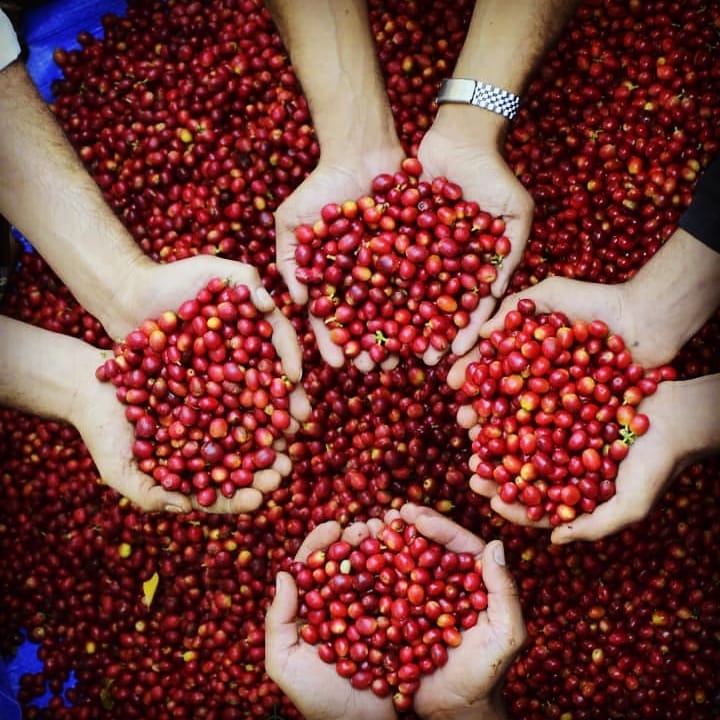
Al Jazeera Spotlights Yemeni Coffee at Kuala Lumpur Exhibition

Yemeni coffee competes globally with exceptional quality and production not exceeding 40 tons in 2025

Author: Qahwa World – Dubai | Source: Al Jazeera | Date: May 12, 2026 This article discusses the story of Al Jazeera Yemen coffee above the clouds and its journey to Kuala Lumpur. In fact, the story of Al Jazeera Yemen coffee above the clouds Kuala Lumpur highlights a unique cross-cultural journey.

Al Jazeera published a report on Yemeni coffee titled “Have You Tried Above the Clouds Coffee? The Secret of the Yemeni Bean That Caught Eyes in Malaysia,” prepared by its correspondent in Malaysia covering the International Coffee and Beverages Exhibition 2026 in Kuala Lumpur, held from May 7 to 9, 2026. Notably, the Al Jazeera Yemen coffee above the clouds Kuala Lumpur phenomenon was a main attraction at the exhibition.

The report opens by noting that those seeking an authentic flavor, rich taste, and captivating aroma from an exceptional cup of coffee might begin their journey in the Yemeni highlands, where coffee trees grow at altitudes exceeding 2,200 meters above sea level, in conditions unique to the mountains of Yafi and Abyan. The appeal of Al Jazeera Yemen coffee above the clouds Kuala Lumpur continues to grow among coffee lovers in Malaysia.

Yemeni Coffee.. Globally Recognized Quality

According to Yemeni coffee expert Ahmed Al Shoubli, Yemeni beans produce complex flavors tending toward chocolate, particularly in Al Yafei coffee, with ratings exceeding 85 points on the global quality scale, placing Yemeni coffee among the world specialty coffee elite.

However, Qaddafi Hamza, representative of the Chinese company Golden Choice in Malaysia, notes that Arabica coffee is no longer exclusive to Yemen, as his company also imports this variety from Guatemala, Mexico, Argentina, Indonesia, and elsewhere.

The Malaysian food exhibition in Kuala Lumpur brought together Al Shoubli and Hamza, with coffee companies occupying nearly half the exhibition space, a clear indicator of the rapidly growing global coffee industry. Al Jazeera Yemen coffee above the clouds Kuala Lumpur stands as a symbol of the region’s growing international presence.

Marketing Challenges and Limited Production

Coffee experts largely agree that Yemeni coffee possesses exceptional quality, but the greatest challenge lies in marketing and building a global brand capable of competing.

Rifat Al Ariqi, head of the coffee sector at the Small and Micro Enterprise Development Agency in Yemen, believes that enhancing the global presence of Yemeni coffee requires expanding Yemeni company participation in international coffee exhibitions, developing worker skills across various coffee production stages, establishing a specialized quality control authority, and strict adherence to global standards in farming, sorting, storage, roasting, packaging, and export.

Al Ariqi points out that officially exported Yemeni coffee does not exceed 10 percent of production volume, while a large portion leaves through unofficial channels, limiting its ability to compete in global markets.

Yemeni coffee farming also faces challenges related to high production costs due to farmers reliance on manual labor and the difficulty of using agricultural machinery in rugged mountainous areas, making quality and flavor distinction the most important competitive weapon.

From Qat to Coffee

Coffee cultivation is spread across 17 Yemeni governorates. According to Al Ariqi, production reached approximately 40 tons during 2025, with a notable expansion in cultivated areas at the expense of qat farms.

He confirms that Yemen witnessed the planting of more than 100,000 coffee trees over the past year, including 1,000 trees planted within just one month this year, indicating growing youth awareness of the importance of shifting toward coffee as a more sustainable and profitable economic crop.

This trend receives support from development organizations, including the Saudi Fund for the Reconstruction of Yemen and the Islamic Development Bank.

Nevertheless, the challenges facing Yemeni coffee are no different from global challenges related to climate and rising temperatures, which directly affect production volume and quality.

Accelerated Growth of Malaysia Coffee Market

Data from the World Coffee Portal indicates that Malaysia coffee sector recorded 28 percent growth over the past year, with the number of coffee shops and outlets reaching approximately 3,330 stores, with a market size estimated at $210 million.

Coffee is now present in nearly every corner of Malaysian shopping centers, alongside the spread of refrigerators dedicated to ready-made coffee in public places.

Shafiq Amin, an official at one coffee equipment company, says demand for coffee preparation machines has seen unprecedented growth over the past ten years, explaining that his company sales rose 15 percent this year compared to the previous year. He added that approximately 60 percent of machines sold go to homes, followed by offices and workplaces, amid increasing reliance on coffee as a daily source of energy and focus.

Boycotts and the Rise of Local and Asian Brands

Qaddafi Hamza believes that recent years have witnessed the rapid rise of local and Asian brands, particularly Chinese, at the expense of some traditional global brands.

He adds that boycott campaigns against companies accused of supporting Israel have contributed to accelerating the spread of these new brands, noting that building a brand in the coffee sector previously required many years, while startups today achieve wide reach within a short period.

He also pointed to the closure of some Starbucks branches in Malaysia amid boycott campaigns and accusations against the company regarding its positions on the Gaza war.

Hamza believes that some global cafes reliance on serving alcoholic beverages or mixing coffee with alcohol has pushed a segment of consumers toward local and Asian brands that offer products closer to consumer culture and values, while maintaining competitive quality levels.

Frequently Asked Questions

What is Above the Clouds coffee mentioned in the Al Jazeera report?
It is Yemeni coffee grown in highlands exceeding 2,200 meters above sea level, particularly in the Yafi and Abyan regions, known for complex chocolate-like flavors.

How much coffee did Yemen produce in 2025?
Production reached approximately 40 tons, with notable expansion in cultivated areas at the expense of qat farms, and more than 100,000 coffee trees planted over the past year.

What are the main challenges facing Yemeni coffee?
Key challenges include marketing and building a global brand, high production costs due to manual labor in mountainous areas, and a large portion of production leaving through unofficial channels.

How has the Malaysia coffee market grown?
The coffee sector in Malaysia recorded 28 percent growth, with approximately 3,330 coffee shops and a market size estimated at $210 million.

What is the relationship between boycott campaigns and the rise of local brands in Malaysia?
Boycott campaigns against companies accused of supporting Israel, including Starbucks, have accelerated the spread of local and Asian brands in the Malaysian market.


Author: Qahwa World – Dubai | Source: Al Jazeera | Date: May 12, 2026

Yemeni Coffee Steals the Show at ICBS 2026 in Malaysia

Author: Dubai – Qahwa World | Source: Yemen Monitor

Executive Summary

  • Event: International Coffee and Beverages Exhibition 2026 (ICBS 2026)
  • Venue: Kuala Lumpur Convention Centre (KLCC), Malaysia
  • Dates: May 7 to 9, 2026
  • Yemeni participation: Dedicated pavilion featuring 7 Yemeni companies specializing in coffee production and export
  • Participating companies: Ammar Al-Omari Trading Establishment, Al-Yafiea Coffee Company, Golden Yafa Coffee, Al-Shobly Export Company, Drip Darb, Star Mocha Coffee
  • Organizers and supporters: Small and Micro Enterprise Development Agency, Saudi Program for the Development and Reconstruction of Yemen, Islamic Development Bank
  • Support program: Market Access Promotion (MARKETS)
  • Supervising authority: Malaysian Ministry of Agriculture
  • Key activities: Live coffee brewing demonstrations, tasting sessions, distribution of cultural publications
  • Cultural publications: “Fingan Haysi” book and “Clouds Wine” trilogy
  • Media recognition: Malaysian press described the Yemeni pavilion as one of the exhibition’s highlights

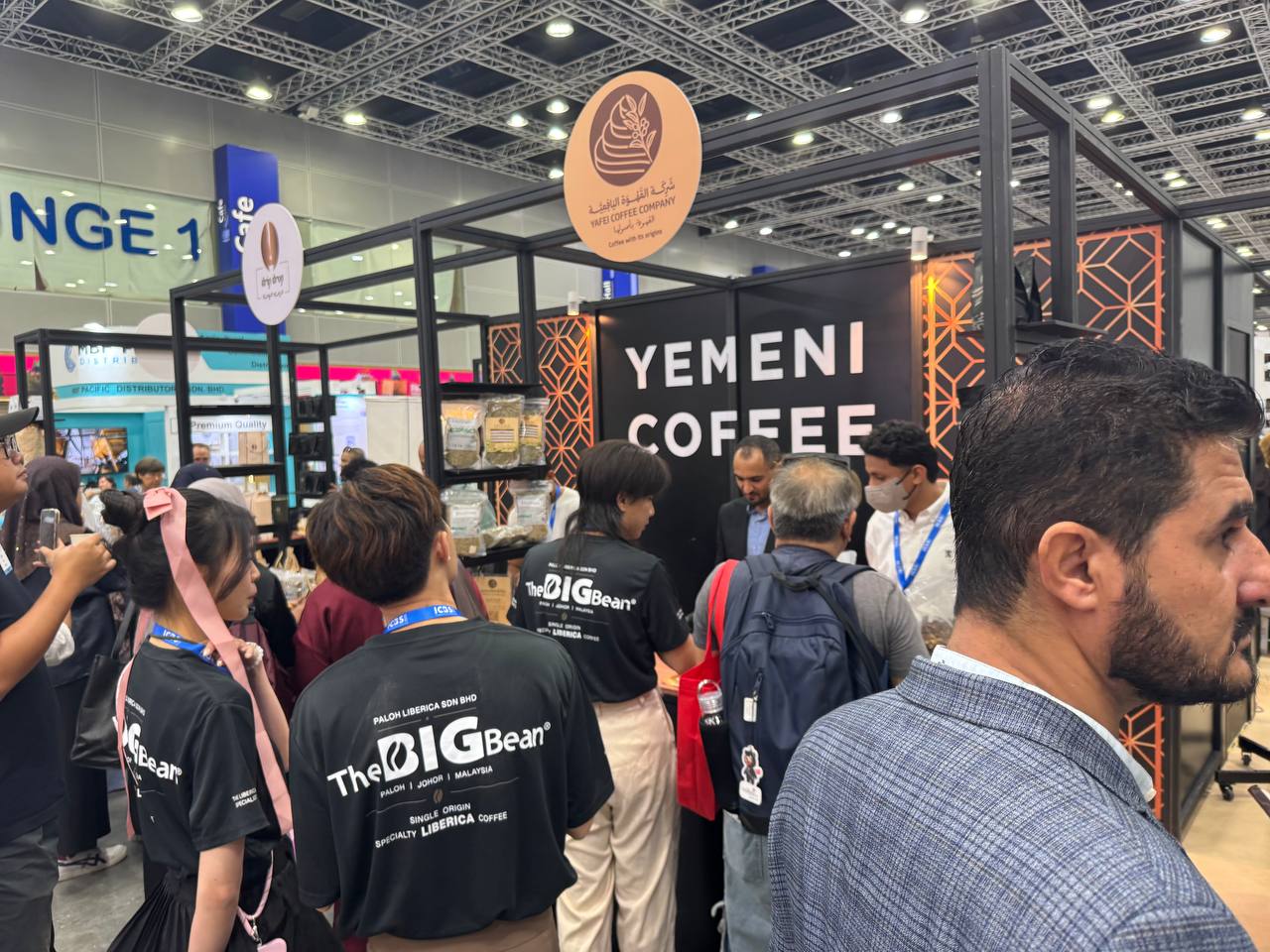
Yemeni coffee drew significant attention at the International Café and Beverage Show 2026 (ICBS 2026), as visitors gathered around the Yemeni pavilion to experience live brewing sessions, coffee tastings, and conversations about one of the world’s oldest coffee origins.

Held from May 7 to 9 at the Kuala Lumpur Convention Centre (KLCC), the exhibition brought together companies specializing in coffee, tea, matcha, café equipment, and beverage innovation, reflecting the continued rise of specialty coffee culture across Asia.

Among the busiest sections of the exhibition was the Yemeni pavilion, where producers and exporters introduced visitors to coffees cultivated in Yemen’s mountainous regions using traditional farming methods that have shaped the country’s coffee heritage for centuries.

Participating companies included Ammar Al-Omari Trading Foundation, Al-Yafae Coffee Company, Golden Yafea Coffee, Al-Shobli Export Company, Drip Drab, and Star Mocha Coffee. Throughout the event, exhibitors hosted cupping sessions and manual brewing demonstrations aimed at highlighting the distinct flavor profiles and historical identity of Yemeni coffee.

The participation was organized by the Small and Micro Enterprise Promotion Service (SMEPS) with support from the Saudi Development and Reconstruction Program for Yemen and the Islamic Development Bank through the “MARKETS” program, an initiative focused on improving access to international markets for Yemeni products.

Visitors and industry professionals showed particular interest in the connection between Yemeni coffee and the early history of global coffee trade. For many attendees, the pavilion offered more than a tasting experience — it provided a cultural introduction to coffee’s origins and the traditions that continue to shape production in Yemen today.

During his visit to the exhibition, Dr. Faisal Ali, President of the Yemenis Cultural Foundation, stressed the importance of presenting Yemeni coffee through a stronger cultural and media narrative capable of reaching modern specialty coffee audiences worldwide.

The pavilion also featured cultural publications linked to Yemen’s coffee history, including A Cup of Haysi and the Wine of the Clouds trilogy, adding a literary and historical dimension to the presentation.

Malaysian media covering the event described the Yemeni pavilion as one of the exhibition’s memorable highlights, noting the growing international interest in coffees tied to origin, heritage, and traditional agriculture.

Industry observers say the renewed attention toward Yemeni coffee reflects wider shifts in specialty coffee markets, particularly across Southeast Asia, where consumers are increasingly seeking coffees with traceable identity, regional character, and authentic production stories.

In addition to coffee showcases, ICBS 2026 featured brewing competitions, tea and matcha presentations, and live demonstrations of new beverage technologies as the region’s café and specialty beverage sectors continue to expand rapidly.


Author: Dubai – Qahwa World World | Source: Yemen Monitor

Yemeni Coffee Culture Expands Rapidly Across the United States

SUNNYVALE – AP

Hundreds of years ago, Yemen helped introduce coffee to the world. Today, the mountainous, war-affected country is exporting something new: its distinctive coffeehouse culture.

Yemeni coffeehouses are rapidly expanding across the United States. According to Technomic, a restaurant industry consulting firm, the number of cafés operated by six major Yemeni-style chains grew by 50% last year, reaching 136 locations. This figure does not include the many independent cafés and smaller chains serving Yemeni coffee and tea.

Several factors are driving this growth. Many Yemeni cafés stay open late—sometimes past 3 a.m., especially during Ramadan—offering a social alternative for Americans who do not drink alcohol. A recent Gallup poll found that only 54% of U.S. adults reported drinking alcohol last year, the lowest rate in 90 years.

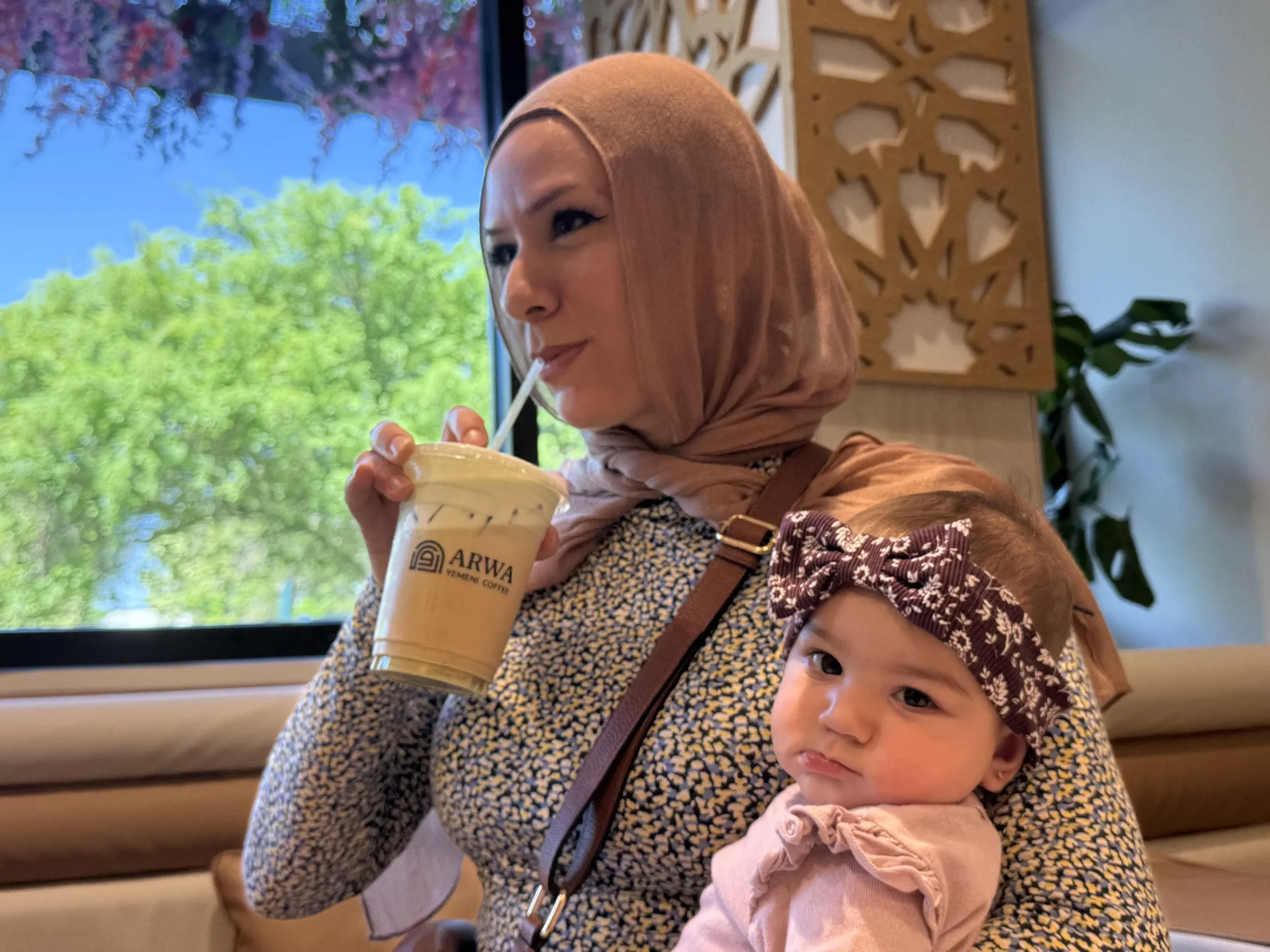
“Generally in the Middle East, our nightlife is coffee,” said Ahmad Badr, a franchise owner of Arwa Yemeni Coffee in Sunnyvale. “People gather in coffee shops, play games, and talk. We wanted to bring that here.”

Demographic shifts are also contributing to the trend. The Arab American population in the U.S. grew by 43% between 2010 and 2024, compared to roughly 10% growth for the overall population, according to the Arab American Institute.

While many Yemeni cafés are located in states with large Arab American communities—such as Michigan, California, and Texas—they are also appearing in more diverse locations, including Georgia, Kansas, and Maine.

A taste of home

For many Yemeni Americans, these cafés offer more than just beverages—they provide a connection to home.

Faris Almatrahi, co-founder of Texas-based Arwa Yemeni Coffee, said Yemen’s ongoing civil war, which began in 2014, has made travel difficult. His company, which operates 11 cafés and has 30 more in development, aims to recreate the atmosphere of Yemen.

Locations feature desert-inspired tones, mosque-like archways, and decorative elements reminiscent of traditional Yemeni culture.

“One way to experience Yemen without traveling there was to bring it here,” Almatrahi said. “It’s emotional—it really transports us back.”

However, he noted that most customers are not of Arab descent. Growing interest in global flavors and authentic cultural experiences—often fueled by social media—has broadened the appeal.

Menus typically include traditional drinks like Adeni tea, a spiced tea similar to chai, and qishr, made from dried coffee cherry husks. Familiar beverages such as lattes are often infused with spices or honey.

Food offerings may include khaliat nahal (Yemeni honeycomb bread filled with cheese and drizzled with honey) and basboosa, a syrup-soaked semolina cake flavored with lemon or rose water. Many cafés also serve more familiar items like matcha lattes and fruit-based drinks.

Expanding tastes

Industry experts say culturally specific cafés have become a major driver of growth in the U.S. coffee sector.

Peter Giuliano of the Specialty Coffee Association noted similar trends among Latin and Vietnamese coffee brands expanding their presence.

Customers are increasingly curious about new coffee profiles. Cindy Donovan, who recently visited a Yemeni café in Sunnyvale, described the experience as eye-opening.

“The flavors are more refined and mellow, but also richer,” she said. “The cardamom adds something really special—very flavorful without being heavy.”

Yemeni coffee is often sun-dried, a process that enhances its complexity, bringing out notes of chocolate and fruit. Many drinks are prepared using hawaij, a traditional spice blend that may include cardamom, ginger, cinnamon, cloves, coriander, or nutmeg.

Preparation methods also differ. “Our coffee and tea are not made with fully automatic machines,” said Mohamed Nasser of Haraz Coffee House. “We manually blend, boil, and prepare everything to achieve the perfect taste and color.”

A rich history

Coffee’s roots run deep in Yemen. While the plant is believed to have originated in Ethiopia, it was cultivated in Yemen by the 15th century, where it was used by monks to stay awake during prayers.

For about 200 years, Yemen controlled the global coffee trade before coffee plants were transported to other regions, breaking its monopoly.

In recent decades, renewed investment from entrepreneurs, organizations, and coffee specialists has helped revive Yemen’s coffee industry. Despite ongoing challenges, coffee remains one of the country’s most promising economic sectors.

“We see ourselves as ambassadors of our culture,” Almatrahi said. “Through these cafés, we share our hospitality and show what Yemen has to offer.”

Read the related stories:

Qahwah House: Bringing the Soul of Yemeni Coffee to Cahaba Heights

Yemeni Coffee Shops Expand Across Ann Arbor

Yemeni Coffee Craze Reaches Visalia with Bold Flavors and Slow Brews

Yemeni Coffee Shops Expand Across Ann Arbor

Ann Arbor – Qahwa World

Ann Arbor has seen a steady rise in Yemeni coffee shops over the past few years, reflecting a growing interest in the style and culture behind this type of coffee. Several cafés have opened across the city, including Bun Chai Yemeni Coffee & Tea, Bayt Almocha, Qahwah House, Socotra Coffee House, and Jabal. Another concept, Caffeena, is expected to take over a former bubble tea location on East Liberty Street, though no opening date has been confirmed.

Coffee is widely linked to Yemen, where it is believed to have played an early role in the development of global coffee culture. It spread internationally through the port of Mocha, which became closely associated with the beverage. Yemeni coffee is often recognized for its strong use of spices such as cardamom, cinnamon, and ginger, giving it a distinct flavor compared to more common Western styles.

Jabal first opened in Dearborn in late 2023 before expanding to Ann Arbor in early 2024. Its founders say the success of the first location helped drive the decision to enter the Ann Arbor market, where demand for specialty coffee continues to grow. The shop focuses on more than just coffee, aiming to create a space centered on hospitality and community.

Bayt Almocha, which opened in Kerrytown in 2025, follows a similar approach and is part of a larger national expansion. One of its goals is to introduce Yemeni food and coffee culture to new audiences while maintaining ties to its origins.

A key feature of many Yemeni coffee shops in Ann Arbor is their late operating hours. These spaces often serve as social hubs where people gather in the evening to study, meet friends, or spend time in a relaxed environment. This has made them especially popular among students at the University of Michigan, where finding late-night study spaces can be challenging.

Customers often describe these cafés as more welcoming and community-focused than traditional chains. Rather than offering quick service and takeaway drinks, Yemeni coffee shops encourage customers to stay, socialize, and enjoy the atmosphere.

As more locations open, Ann Arbor is becoming part of a broader trend that is bringing Yemeni coffee culture into mainstream café life across the United States.

Yemeni Coffee Craze Reaches Visalia with Bold Flavors and Slow Brews

Visalia – Qahwa World

A growing wave of Yemeni coffee culture is making its way into Visalia, reflecting a broader trend already gaining momentum across nearby cities like Fresno.

Originating from Yemen, coffee from this region has long held a significant place in global trade, especially through the historic port of Al Mokha—a name widely associated with the term “mocha.”

A new café, Siraj Coffee House, is preparing to open its doors in Visalia, introducing customers to the distinctive character of Yemeni coffee. The drinks are known for their slow brewing methods and rich aromatic profiles, often enhanced with spices such as cardamom, cloves, saffron, and nutmeg.

In addition to traditional Yemeni offerings, the café plans to serve Italian-style coffee and a range of beverages with little or no caffeine, including teas, fresh juices, and drinks like Brazilian lemonade. The menu will also feature house-made pastries, highlighting Middle Eastern sweets such as sabaya—a layered honey cake—and a soft, pull-apart bread filled with cream cheese.

The business is the result of a partnership between local entrepreneurs, including one also associated with Smash Town Burgers. While expansion plans are being considered, the immediate focus remains on launching the first location.

Set to open at 2145 W. Whitendale Avenue, the café occupies a space previously used by another bakery, marking a fresh chapter for the site.

This opening reflects a wider national surge in interest around Yemeni coffee. Establishments like Bab al-Yemen Cafe helped introduce the concept to the Central Valley, while brands such as Qamaria Yemeni Coffee have expanded the presence of Yemeni-style cafés across multiple states.

As the trend continues, Visalia joins a growing list of cities embracing this centuries-old coffee tradition with a modern twist.

Mohammed Al-Hamdani: Guarding a Legacy of Over a Century

From 1918 to the Global Market—The Journey of a Legendary Coffee Dynasty

Dubai – Ali Alzakary

In the world of commodities, there are brands that sell “products”, and then there are rare entities that sell “history” distilled in a cup. To step into the world of “Al-Hamdani Mocha” is not merely to enter a commercial enterprise; it is to open the archives of a legacy that began in 1918. Back then, coffee caravans were defining global trade from the rugged peaks of Yemen.

From the narrow alleys of “Souq Bo’an” in Bani Matar, where the ancestors laid the foundation, to the skyscrapers of New York and the bustling markets of the Arabian Gulf, this family has transformed the “coffee cherry” into a civilizational message. Between century-old manuscripts and state-of-the-art European production lines stands Mr. Mohammed Al-Hamdani, CEO of Al-Hamdani Mocha, to tell us how such a profound “trust” is managed, and how the company has kept the pulse of Yemeni soil alive in the hearts of coffee aficionados worldwide.

We invite you, in this exclusive and deep-dive interview, to sail through a journey that began a century ago and never stopped, and to discover the secrets behind the authentic Mocha that connects the mountains of Haraaz and Al-Hayma to the entire world.

Mohammed Al-Hamdani: A Century of Yemeni Mocha Coffee Heritage | Interview

  • Mr. Mohammed, when we speak of a history dating back to 1918, we are looking at a legacy that predates the formation of many contemporary global markets. As the CEO of this venerable trading family, how do you describe the sense of responsibility in managing an institution that preserves manuscripts and documents over a century old?

Managing a company with this history is not just a commercial duty; it is a profound historical and cultural trust. We aren’t just running a profit-oriented entity; we are the guardians of a family legacy intertwined with the name of Yemeni coffee since the dawn of the last century. Al-Hamdani’s philosophy is built on a golden triangle: Authenticity, Quality, and Continuity. Successive generations have been keen to uphold the standards set by our grandfathers—from selecting the cherries in the farms to delivering a product worthy of the identity of Yemeni coffee. This is why Al-Hamdani has remained synonymous with quality and authentic Yemeni Mocha across decades.

  • The journey began in Souq Bo’an in Bani Matar, where your ancestors took their first steps. How have you and your team maintained that direct, soulful relationship with the farmers of Al-Hayma, Haraaz, and Bani Matar?

The farmer is our first and most vital partner. Our relationship with the farmers of Bani Matar, Haraaz, and Al-Hayma is not a dry supply-chain transaction; it is a lifelong partnership. We support them through agricultural training and awareness of scientific harvesting and drying methods, and we provide stable marketing channels that ensure their sustainability. This mutual trust is what has guaranteed our access to the finest coffee varieties and protected the quality of Yemeni coffee from fading despite all challenges.

Mohammed Al-Hamdani: A Century of Yemeni Mocha Coffee Heritage | Interview

  • In 2003, you made a significant leap by introducing modern European production lines. How do you balance the “soul” of traditional Yemeni farming with the “precision” of international standards?

Yemeni coffee derives its uniqueness from its traditional nature inherited through generations—this is a red line we cannot cross. However, to keep pace with the global market, it was essential to develop our sorting and packaging processes. We introduced European technologies to clean and protect the beans, ensuring they are defect-free according to international standards, without interfering with the essence of their natural cultivation and sun-drying. This equation between Authenticity and Technology is what has enabled our product to compete strongly in the most prestigious international arenas.

  • With over ten branches in Saudi Arabia and the Gulf, plus a branch in the United States, how do you read the varying tastes of coffee lovers globally?

Mohammed Al-Hamdani: Tastes vary by culture. In the Gulf, there remains a strong bond with traditional Arabic coffee based on Yemeni beans. In America and Europe, there is a growing passion for Specialty Coffee and modern preparation methods like Espresso and Filter. The beauty of Yemeni coffee is that it asserts its presence in all these styles; its complex flavor and history give it a special “charisma” that attracts professionals and hobbyists alike, regardless of the serving method.

Mohammed Al-Hamdani: A Century of Yemeni Mocha Coffee Heritage | Interview

  • The “Model Farm” project in Haraaz and Al-Hayma… What does this represent for your investment vision for the future of Yemeni coffee?

This project is the heart of our future vision. We seek to establish modern agricultural best practices that increase production efficiency and improve quality while maintaining the full authentic Yemeni character. The goal is not just to increase the harvest but to transform the farm into a training center that supports the Yemeni farmer and enhances the sector’s sustainability, proving to the world that Yemen is capable of offering world-class investment models in its historic lands.

  • Despite current logistical and economic challenges, Al-Hamdani continues to expand. What is the secret engine behind this resilience?

Mohammed Al-Hamdani: The secret lies in “Belief in Identity.” We believe that Yemeni coffee is the best in the world, and this belief drives our continuous work despite the odds. We rely on a strong network of relationships, accumulated trade experience, and a strict, non-negotiable commitment to international standards in packaging and export. We work to ensure that the coffee reaches the consumer’s hand anywhere in the world in the same perfect condition it was in the moment it was harvested.

Mohammed Al-Hamdani: A Century of Yemeni Mocha Coffee Heritage | Interview

  • Finally, Mr. Mohammed, how would you summarize a century of time in one message to everyone sipping a cup of Al-Hamdani coffee?

Our message is simple: Behind every sip is a story of a land. Every cup of Al-Hamdani coffee encapsulates the toil of a patient Yemeni farmer and a family legacy standing strong since 1918. We don’t just sell a drink; we export history, culture, and a Yemeni identity that reaches from Sana’a to Dubai and New York, telling the world: “This is the origin of Mocha.”

Amal Al-Ekadi: A Woman’s Voice Showcasing the Value of Yemeni Coffee

Dubai Ali Alzakary

At the heart of coffee’s long story, Yemeni coffee remains one of its most authentic and fascinating chapters. From the mountains of Yemen—where coffee first began its journey to the rest of the world—the beans still carry the aroma of history and the character of a land cultivated by generations of farmers. Yet such a rich legacy always needs voices capable of telling its story and bringing it back into the global spotlight.

Among those voices is Amal Al-Ekadi, a Yemeni coffee advocate and marketing specialist who has dedicated years to promoting Yemeni coffee and highlighting its place in the global market. In this conversation with Qahwa World, Al-Ekadi shares her personal journey, the challenges she has faced, and her hopes for the future of Yemeni coffee. Through the following lines, readers are invited to discover her story and vision.

  • A Journey into the World of Coffee

Amal Al-Ekadi describes herself as someone who has been deeply engaged in the world of Yemeni coffee for several years, particularly in promoting and introducing Yemeni beans to wider audiences. Her professional path began at a foreign company where she worked in the production department before gradually advancing into shipping and export operations.

Throughout this journey, she says her goal remained clear: to help the world recognise the true value and rich heritage of Yemeni coffee. Today she is based in Riyadh, but she still considers herself part of the ongoing effort to amplify the voice of Yemeni coffee internationally.

  • Passion Behind the Idea

Al-Ekadi explains that her decision to work in promoting Yemeni coffee grew from her deep love for it and her belief that it represents a true treasure. Yemen, she notes, is the birthplace of coffee, yet marketing efforts have not always reflected this historical importance. This realization motivated her to become part of a movement that introduces people to this remarkable product and restores its rightful place in the global coffee scene.

  • A Flavor That Tells a Story

What fascinates Amal Al-Ekadi most about Yemeni coffee is its unique flavor profile and the diversity that appears from one region to another. For her, Yemeni coffee is far more than a beverage—it is a story, a culture, and a way of life shaped by farmers who dedicate years of work and care to cultivating these beans before they reach a cup.

  • First Steps

Her beginnings in the field were modest. Amal Al-Ekadi started by communicating directly with farmers and learning about the different varieties of Yemeni coffee. She also acknowledges the support she received from her former manager, Shubair Ezi, whose guidance played an important role in her early career.

Through her work in shipping and export, she gained practical experience while also introducing Yemeni coffee to wider audiences through social media and professional connections with coffee enthusiasts both inside and outside Yemen.

  • Challenges Along the Way

The path, however, was not without obstacles. Al-Ekadi points to the difficult circumstances Yemen has experienced in recent years, including war and the logistical challenges of transportation and export.

Despite these difficulties, Yemeni coffee has continued to find its way to global markets, thanks to the efforts of people who believe deeply in its value and remain committed to sharing it with the world.

Amal Al-Ekadi: A Yemeni Voice Promoting Yemeni Coffee

  • Growing Global Interest

According to Amal Al-Ekadi, the past few years have brought a noticeable shift in how people perceive Yemeni coffee. With the rapid growth of the specialty coffee movement worldwide, more consumers and professionals have begun to recognize the exceptional quality and distinctive character of Yemeni beans.

This renewed interest has helped return Yemeni coffee to the international conversation about premium and specialty origins.

  • The Distinctive Flavors of Yemen’s Mountains

While she believes every Yemeni coffee origin has its own charm, Amal Al-Ekadi says she is particularly drawn to coffees from mountainous regions such as Haraz and Yafa. Beans from these areas often display complex and rich flavor profiles that appeal strongly to specialty coffee enthusiasts.

  • The Growing Role of Yemeni Women

Amal Al-Ekadi also highlights the important role Yemeni women play in the coffee sector, from farming and processing to marketing and promotion. She believes women’s presence in the industry has become increasingly visible and influential in recent years, a development she considers both encouraging and essential for the sector’s future.

  • A Dream for Yemeni Coffee

For Amal Al-Ekadi, the long-term dream is for Yemeni coffee to fully reclaim its global reputation. Equally important is ensuring that Yemeni farmers receive the recognition and fair prices they deserve for the tremendous effort they invest in cultivating this historic crop.

  • A Message to Farmers and Young Entrepreneurs

In closing, Amal Al-Ekadi offers a message to farmers and young people interested in entering the coffee sector. Farmers, she says, are the foundation of this precious heritage, while the younger generation holds the key to its future development.

With greater awareness, thoughtful work, and professional marketing, she believes Yemeni coffee can become not only a source of pride but also an important economic pillar for Yemen.

Amal Al-Ekadi also expressed her appreciation to Qahwa World and to Mr Ali for the opportunity to share her experience with Yemeni coffee, expressing hope that collective efforts will continue to highlight the value of this historic product and bring it the recognition it deserves.


Specialty Yemeni Coffee: Authentic Heritage on Amazon

Dubai – Qahwa World

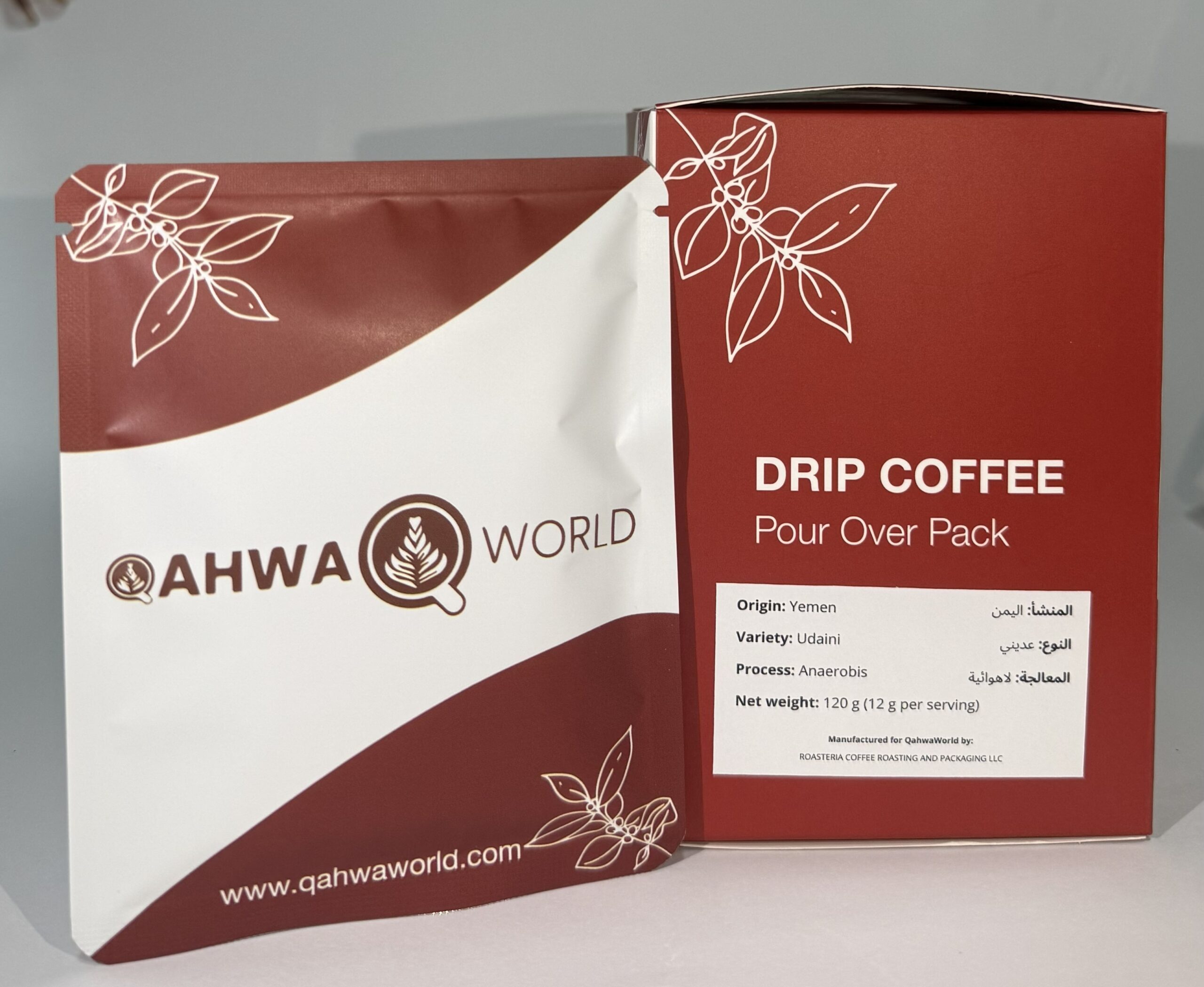
From the high peaks of Yemen directly to your doorstep, we present the first speciality Yemeni coffee in an innovative Drip Coffee format. We have selected the finest crops, reflecting the richness of Yemeni soil and its unique flavour notes, offering them in practical sachets for a perfect cup in seconds.

Whether at the office or on a road trip, never compromise on quality again. For our exclusive launch on Amazon, we are offering a very attractive price that brings luxury within your reach.

To experience the coffee, click here: Amazon Purchase Link

Hind Shaia: The Entrepreneur Renewing the Heritage of Yemeni Coffee from the Heart of Sana’a

DUBAI – ALI ALZAKARY

From the ancient streets of Sana’a, where tradition meets modern ambition, comes the story of Hind Shaia, a pioneering entrepreneur and content creator. Her project, “Nawah,” is more than just a café; it is a tribute to Yemen’s rich heritage and a bridge to the global specialty coffee market. By blending historical authenticity with international quality standards, Hind is proving that Yemeni coffee remains a world-class treasure. We invite you to explore this inspiring journey through our exclusive interview, where we discuss the future of the industry and the role of women in shaping its success.

  • Hind, when did your journey with Yemeni coffee begin, and what first drew you to it?

I wasn’t originally a coffee enthusiast. In 2015, my journey began out of a need for focus and energy during work and studies. Over time, this search turned into a real passion. By 2016, I began to dive deeper into the world of coffee and started drinking it regularly. Whenever I traveled, I made sure to visit specialty cafes and explore crops from different nations. However, Yemeni coffee remained the standard I used for comparison. I discovered that its character was truly different; its flavors are complex and deep, providing a balanced focus without anxiety.

  • How did you decide to establish “Nawah” and share Yemeni coffee with the world?

The decision matured in stages. The idea began as a dream in 2021, but I hesitated due to job security. However, my confidence in Yemeni coffee’s potential pushed me to invest. In 2024, my husband and I launched Nawah as an online store to raise awareness about specialty coffee. In early 2026, the dream became a reality with the opening of Nawah Café in Sana’a, a space that offers a modern and sophisticated image of our coffee.

  • Coffee in Yemen is more than just a drink; how would you describe its role in daily culture?

It is a part of our identity and history. From the mountain terraces and the port of Al-Makha, this drink reached the world. In our culture, every part of the fruit is used—from “Qishr” to roasted coffee. While its status declined slightly as tea became a cheaper alternative, there is a “return of awareness” today, especially among the youth who care about quality and history.

  • Yemeni coffee has a global reputation; what do you think makes it so special?

The uniqueness comes from a mix of land, people, and history. Yemen produces high-quality Arabica. The geography is crucial, as coffee grows at high altitudes between 1,800 and 2,400 meters. This slow ripening process highlights natural sweetness and complex flavors, offering notes of fruit, chocolate, and spices.

  • How has the coffee industry in Yemen changed recently? Are there new modern touches?

The industry now combines tradition with modern standards. Farmers still pick cherries by hand, but new processing methods have been introduced, such as using raised drying beds and modern machinery for sorting by size and color. Despite this, the human touch remains vital in final hand-sorting to ensure quality.

  • How do you see the relationship between traditional farmers and the specialty coffee industry?

It is a partnership. The farmer is the “guardian of the treasure.” Our role is to bridge the gap between the farm and the cup by introducing modern processing knowledge. When a farmer sees that attention to detail doubles the crop’s price, they become a partner in quality, ensuring sustainability and fair returns.

Hind Shaia and the Story of Yemeni Coffee at Nawah Café

  • How do you see the future of Yemeni coffee in local and global markets?

Our role is “excellence and rarity,” not mass production. We don’t compete in volume but in exceptional quality. Yemeni coffee is repositioning itself as a luxury product for connoisseurs. Globally, our historical legacy is a powerful marketing tool for specialty coffee.

  • What are the main opportunities to expand the presence of Yemeni coffee abroad?

First, telling the “story,” as the world buys an experience. Second, e-commerce, which facilitates direct access to global roasters. Third, participating in international exhibitions to reach the market that appreciates the true value of Yemeni coffee.

  • What is the role of women in the coffee industry today, especially in Yemen?

Their role is fundamental. Women are present from planting to the final cup. In rural areas, they participate in picking and sorting. Today, this role has evolved into leadership; we see Yemeni women certified as experts in tasting (SCA) and running their own export companies.

  • As a café owner in Sana’a, what were the biggest challenges you faced?

The biggest challenge is the general economic situation and limited purchasing power. We received many warnings about the timing, but our faith in quality was our driver. There are also logistical challenges in transporting coffee from rugged mountains and importing equipment.

  • What are the most important lessons you’ve learned in management and quality?

The first lesson is that consistency is the real challenge; maintaining standards daily is harder than just opening. Second, customers buy an experience. At Nawah, we educate visitors about the coffee’s story so they become ambassadors for Yemeni coffee.

  • Despite the current situation, how do you see the future of exporting Yemeni coffee?

While we cannot deny the export difficulties and restrictions, the spirit of trade is in our blood. We find solutions to overcome obstacles. We still export Yemeni coffee worldwide, and the supply chain remains resilient due to the determination of those in the sector.

MochaBox Opens in West Asheville, Bringing Authentic Yemeni Coffee and Unique Flavors

Dubai – Qahwa World

MochaBox Coffee Company has opened its new location in West Asheville, offering a distinctive experience that combines authentic Yemeni coffee with a variety of drinks and dishes. The café is led by Loay Abougabal, who has been passionate about coffee since childhood and now develops unique recipes that reflect Middle Eastern flavors while appealing to local tastes.

Located on Haywood Road, the café features a spacious, warmly designed interior with elegant lighting, a smoothie bar in the front, and a full-service coffee and beverage counter in the back. MochaBox serves traditional Yemeni beverages such as Adani Chai, Mofawar Coffee, and Pistachio Latte, alongside Yemeni pastries including Bee Bites and Sabaya.

Loay’s father, Khaled Abougabal, oversees the preparation of fresh juices and baked goods, ensuring the family’s authentic culinary traditions are represented.

Franchise owner Adel Seragi notes that the café was founded to bring something new to Asheville, inspired by the city’s openness to culinary experiences from different cultures. He adds that the area’s mountainous landscape reminded him of his homeland in Yemen.

The menu blends Middle Eastern flavors with familiar local dishes, including sandwiches, light meals, and American-style favorites, while also featuring inventive beverages developed by the café team. Guests can enjoy fresh juices, energy drinks, non-alcoholic mojitos, and specialty drinks with bold flavors and higher caffeine content.

Some traditional Yemeni drinks, such as the Adani Chai and Mofawar Coffee, are prepared using authentic methods that give them a rich, full-bodied taste. The café also offers creative drinks, like spiced pistachio lattes, for those seeking a unique twist while preserving the essence of Yemen.

MochaBox is open daily from 7 a.m. to 8 p.m., with the potential for extended hours depending on demand. The café offers West Asheville residents a fresh experience with warm ambiance, authentic flavors, and a variety of options for all tastes.

Abdulla alsakkaf: A Coffee Dream Brewing from Umm Al-Quwain to All of the UAE

Umm Al-Quwain – Ali Alzakary

In the tranquil emirate of Umm Al-Quwain, where calm meets ambition, a young Yemeni entrepreneur turned his daily passion for coffee into a vibrant business story. That’s how Profile Specialty Coffee was born — a café that brings together quality, accessibility, and authenticity in every cup.

Abdulla alsakkaf was not a coffee expert when he started; he was simply a true coffee lover who believed that mastery comes through curiosity and consistency. From a modest idea to a thriving specialty coffee shop, he built his path one espresso at a time — driven by the belief that real success begins with passion, not possession.

In this inspiring conversation, we get closer to Al-Saggaf’s journey, his challenges, his vision for the future, and how he turned a simple love for coffee into a growing brand in the UAE.
Read the full interview and discover the inspiring journey of Abdulla alsakkaf, the young man who turned his passion into a story of success.

Abdullah, welcome. Please introduce yourself and your project.

I’m Abdulla alsakkaf, founder of Profile Specialty Coffee, located in the Emirate of Umm Al-Quwain. We started the project about a year and ten months ago, in January 2024.

How did the idea come to you?

I’ve always loved coffee — especially specialty drinks like cortado and flat white. I noticed that Umm Al-Quwain lacked cafés serving quality specialty coffee at affordable prices. Coffee is part of daily life, but not everyone can afford expensive cups every day. So, I wanted to create a place that combines both quality and fair pricing — a café for everyone.

Where did you begin?

Passion alone isn’t enough to start a business. I reached out to friends with experience in café management, not just those who love coffee. Together, we conducted a simple feasibility study, discussed equipment and essentials, and built the concept step by step. My friends supported me a lot — from setup to operations — until we officially launched.

How did you come up with the name “Profile”?

We wanted something that represents identity — a kind of “profile” for specialty coffee itself. The idea was to make our café stand out as a symbol of excellence, much like the word “pro” means top quality. So we chose “Profile” as our brand name — a simple yet strong identity.

Abdulla Al-Sakkaf at Profile Specialty Coffee in Umm Al-Quwain, UAE

What were the biggest challenges you faced?

The hardest part wasn’t setting up the café or finding the right machines — it was managing people and maintaining consistent quality. Customers quickly notice any change in flavor or presentation. So the real challenge was building a disciplined, skilled team and keeping the same high standards every single day.

Did being in the UAE help your business?

Absolutely. The UAE’s coffee culture has grown tremendously in recent years. People here appreciate good coffee and understand its value. That environment helps a lot — it encourages experimentation and rewards quality.

Were you an expert in coffee before launching?

Not at all. I loved coffee but wasn’t trained in it. After opening, I began studying more seriously and took professional courses to improve my knowledge. My advice is: you don’t need to be an expert to start — but once you do, keep learning. Passion will take you far if you stay curious and keep improving.

What’s the key factor for success in a coffee business?

It’s a mix of everything — the beans, the baristas, and the equipment. But the beans come first. No matter how skilled the barista is, or how advanced the machines are, you can’t get a great cup without high-quality beans. Each element complements the other, but coffee always begins with the bean.

From your experience, what kind of coffee do customers prefer?

At first, most customers wanted Brazilian or Ethiopian beans because they were familiar with them. But I wanted to introduce them to new flavors — like Tanzanian and Yemeni coffee. We made it accessible and encouraged people to try. Today, our Yemeni coffee has become one of our top sellers, and customers love its balanced taste.

Do you think UAE customers have become more knowledgeable about specialty coffee?

Yes, definitely. People now understand more about flavors, acidity, and balance. They might not be experts like roasters or café owners, but they’ve developed an educated palate. That’s why baristas play a key role in guiding customers — explaining the coffee’s character and helping them appreciate its nuances.

Have global issues like rising prices or import tariffs affected your operations?

To some extent, yes — mostly through local roasters who import green beans. Since we work mainly with local roasters, we’ve been shielded from the worst of it. Still, whenever import or shipping costs increase, it eventually impacts all of us. Thankfully, the UAE market is competitive and stable, which helps balance prices.

Abdulla Al-Sakkaf at Profile Specialty Coffee in Umm Al-Quwain, UAE

What’s your vision for Profile Coffee?

Our dream is to expand across the UAE. We started in Umm Al-Quwain and plan to reach other emirates like Sharjah and Ajman. We’re also preparing a mobile coffee truck to take our experience to more customers. By 2026, we hope to open new branches and reach more people with our concept.

What advice would you give young people who want to start a coffee business?

Start only if you truly love coffee. Don’t do it because it’s trendy — do it because you’re passionate about it. When you love something, you’ll naturally grow in it. And never stop learning — coffee evolves every day. If you stay consistent and curious, you’ll succeed.

Do you serve only coffee, or other products as well?

We try to offer a complete experience. Along with coffee, we serve matcha, hibiscus, breakfast items, and desserts. We want everyone to enjoy their time — even those who don’t drink coffee. That variety makes the experience more inclusive and enjoyable.

Finally, where do you see Profile in five years?

Maybe not global yet, but definitely across the UAE. My goal is steady growth with the same high standards — to make Profile a trusted name wherever we go.