International Coffee Organization Releases Coffee Market Report for May 2026

Source: International Coffee Organization (ICO) – May 2026 Report |
Author: Qahwa World |
Date: June 13, 2026

International Coffee Organization Releases Coffee Market Report for May 2026

Key Takeaways:

  • The ICO Composite Indicator Price (I‑CIP) averaged 256.05 US cents/lb in May 2026, down 3.8% from April.
  • Brazilian Naturals fell 6.4% to 293.73 US cents/lb, while Robustas rose 1.1% to 166.51 US cents/lb.
  • ICE‑certified Arabica stocks fell 13.5% to 0.48 million bags – a multi‑month low.
  • CONAB raised its Brazil 2026/27 production forecast to a record 66.7 million bags, with Arabica up 28% y/y.
  • Global green bean exports declined 1.9% in April 2026 to 10.51 million bags, while Robusta exports rose 11.2%.
  • Vietnam’s April 2026 exports jumped 12.1% to 3.41 million bags – the country’s largest April volume on record.
  • The New York–London futures arbitrage narrowed 13.1% to 116.39 US cents/lb, reflecting improved Brazil arabica prospects.

The International Coffee Organization (ICO) published its monthly coffee market report for May 2026, showing a continued downward drift in prices as expectations of ample supply strengthened. The ICO Composite Indicator Price (I‑CIP) averaged 256.05 US cents/lb in May 2026, a 3.8% decrease from April 2026. The market continued to react to an improved supply outlook, reinforced by CONAB’s reaffirmation of a record outlook for Brazil’s production in crop year 2026/27.

Despite the decline, prices remain relatively elevated by historical standards. The drop reflects growing market expectations of a possible global surplus in coffee year 2026/27, combined with harvest pressure from Brazil and persistent backwardation in financial markets.

Group Indicator Performance: Arabicas Decline, Robustas Edge Up

Colombian Milds averaged 323.45 US cents/lb in May 2026, down 3.3% from April. Other Milds fell 4.8% to 315.42 US cents/lb. Brazilian Naturals dropped 6.4% to 293.73 US cents/lb – the steepest decline among the groups. In contrast, Robustas rose 1.1% to 166.51 US cents/lb.

On the futures markets, New York arabica futures fell 5.8% to 268.18 US cents/lb, while London robusta futures gained 0.8% to 151.79 US cents/lb. The arbitrage between the two futures markets contracted by 13.1% to 116.39 US cents/lb, highlighting in particular the improving prospects for arabica production in Brazil.

Group May 2026 (US cents/lb) Change vs April
ICO Composite 256.05 -3.8%
Colombian Milds 323.45 -3.3%
Other Milds 315.42 -4.8%
Brazilian Naturals 293.73 -6.4%
Robustas 166.51 +1.1%

Certified Stocks at Multi‑Month Lows

ICE‑certified robusta stocks fell 0.1% from April to May 2026, closing the month at 0.64 million bags. US‑certified arabica stocks also declined, dropping 13.5% to 0.48 million bags – the lowest level in months. The continued drawdown in certified stocks suggests persistent market uncertainty, as nearby contract premiums are not yet high enough to incentivize deliveries into certified warehouses.

CONAB Forecast: Record Brazil 2026/27 Crop

In mid‑May, Brazil’s National Supply Company (CONAB) released its second crop survey. It raised the total 2026/27 production forecast by about 0.5 million bags to a record 66.7 million bags. Arabica production was increased by 1.67 million bags to 45.8 million bags (+28% y/y). Robusta production was cut by about 1.2 million bags to 20.9 million bags (still a +0.8% y/y increase). CONAB also reported a 3.9% increase in coffee area to 2.34 million hectares, with yields rising to 34.4 bags per hectare. However, CONAB noted that carry‑over stocks remain low and highlighted continued growth in global demand, which tempered some of the market’s bearish sentiment.

Green Bean Exports: Overall Decline, Robusta Growth

Total global green bean exports reached 10.51 million bags in April 2026, down 1.9% from 10.71 million bags in April 2025. All coffee groups recorded declines except Robustas. Details:

  • Colombian Milds: down 14.0% to 0.78 million bags.
  • Other Milds: down 1.1% to 2.31 million bags.
  • Brazilian Naturals: down 14.8% to 2.91 million bags.
  • Robustas: up 11.2% to 4.50 million bags.

As a result, the Arabicas’ share of total green bean exports for the first seven months of coffee year 2025/26 fell to 60.4%, down from 64.2% in the same period a year earlier.

Group April 2026 (million bags) Change vs April 2025
Colombian Milds 0.78 -14.0%
Other Milds 2.31 -1.1%
Brazilian Naturals 2.91 -14.8%
Robustas 4.50 +11.2%

Regional Performance: Asia & Oceania Lead Growth

Total exports of all forms of coffee (green, soluble, roasted) fell 0.9% to 12.05 million bags in April 2026 compared with 12.17 million bags in April 2025. Regional dynamics were mixed:

  • Asia & Oceania: Up 7.3% to 4.64 million bags, led by Vietnam. Vietnamese exports jumped 12.1% to 3.41 million bags – the country’s largest April export volume on record.
  • Africa: Down 22.1% to 1.54 million bags, driven by sharp declines in Ethiopia and Uganda.
  • South America: Down 1.2% to 3.99 million bags, with Colombia recording its fifth consecutive monthly decline.
  • Caribbean, Mexico & Central America: Up 3.3% to 1.88 million bags, led by Honduras (+23.0%).

Price Volatility and El Niño Risks

The intra‑day volatility of the I‑CIP averaged 8.8% in May 2026, down 0.2 percentage points from April. Volatility for Brazilian Naturals and Robustas also declined, while Colombian Milds volatility increased slightly. On the futures markets, New York arabica volatility stood at 10.2%, and London robusta volatility at 10.1%.

The US National Oceanic and Atmospheric Administration (NOAA) estimates an 82% probability that El Niño conditions will emerge between May and July, with a 67% chance of a “Super El Niño”. Such a pattern could delay Brazil’s September‑October 2026 flowering rains, potentially damaging the 2026/27 crop. However, the impact of El Niño in Brazil is complex – it can be positive or negative depending on region, intensity, and timing.

Frequently Asked Questions About the ICO May 2026 Coffee Market Report

Q: What is the ICO Composite Indicator Price?

A: It is a weighted average of the four ICO group indicator prices (Colombian Milds, Other Milds, Brazilian Naturals, and Robustas).

Q: Why did arabica prices fall while robusta prices rose in May 2026?

A: Arabica fell due to record Brazil crop expectations, while robusta demand remained strong amid Red Sea shipping disruptions.

Q: What do falling certified stocks indicate?

A: They suggest that nearby contract premiums are not high enough to encourage deliveries into warehouses, reflecting persistent market uncertainty despite surplus expectations.

Q: How could El Niño affect coffee prices?

A: A “Super El Niño” could delay flowering rains in Brazil and damage next year’s crop, which would support higher prices. But the effect varies by region.

Q: What is the expected global coffee surplus for 2026/27?

A: CONAB’s record Brazil crop points to a significant surplus, but low carry‑over stocks and strong demand may limit its size.

The global coffee market remains caught between large surplus expectations on one hand, and low inventories, El Niño risks, and supply chain disruptions on the other. The ICO’s May 2026 report confirms that 2026 will be a pivotal year for the world’s coffee balance.

Prepared and edited by: Qahwa World – Based on the International Coffee Organization (ICO) market report for May 2026 (CMR-0526).

All rights reserved. Republication with attribution permitted.

Publication date: June 13, 2026

Ultrasonic Espresso: UNSW Researchers Develop Cold-Water Brewing Method That Cuts Energy Use by 75%

Source: University of New South Wales (UNSW) – Journal of Food Engineering |
Author: Qahwa World |
Date: June 11, 2026

Ultrasonic Espresso: UNSW Researchers Develop Cold-Water Brewing Method That Cuts Energy Use by 75%

Key Takeaways:

  • UNSW Sydney researchers developed a method to brew espresso-strength coffee using room-temperature water and ultrasonic sound waves.
  • The technology reduces energy consumption by up to 75% compared to traditional espresso.
  • The brewing process takes less than 3 minutes and produces coffee with similar richness and concentration to regular espresso.
  • Acoustic cavitation creates tiny jets that break down coffee grounds, accelerating extraction.
  • Blind taste tests with 100 participants found no significant sensory differences between ultrasonic and traditional espresso.
  • Ultrasonic filter coffee received higher ratings than conventionally brewed filter coffee, especially in perceived bitterness.
  • The technology is scalable for industrial coffee production, benefiting ready-to-drink manufacturers.

Researchers at the University of New South Wales (UNSW) Sydney have developed a new coffee brewing method that produces espresso-strength coffee using room-temperature water and ultrasonic sound waves, potentially reducing energy consumption by up to 75%.

The innovation challenges one of espresso’s core assumptions—that high-temperature water is essential for extracting the flavor, body, and caffeine concentration associated with traditional espresso. Led by Dr. Francisco Trujillo from UNSW’s School of Chemical Engineering, the research team created what they call an “ultrasonic espresso,” a process that uses high-frequency sound waves to accelerate extraction without the need for heated water. Their findings were published in the Journal of Food Engineering.

How the Technology Works

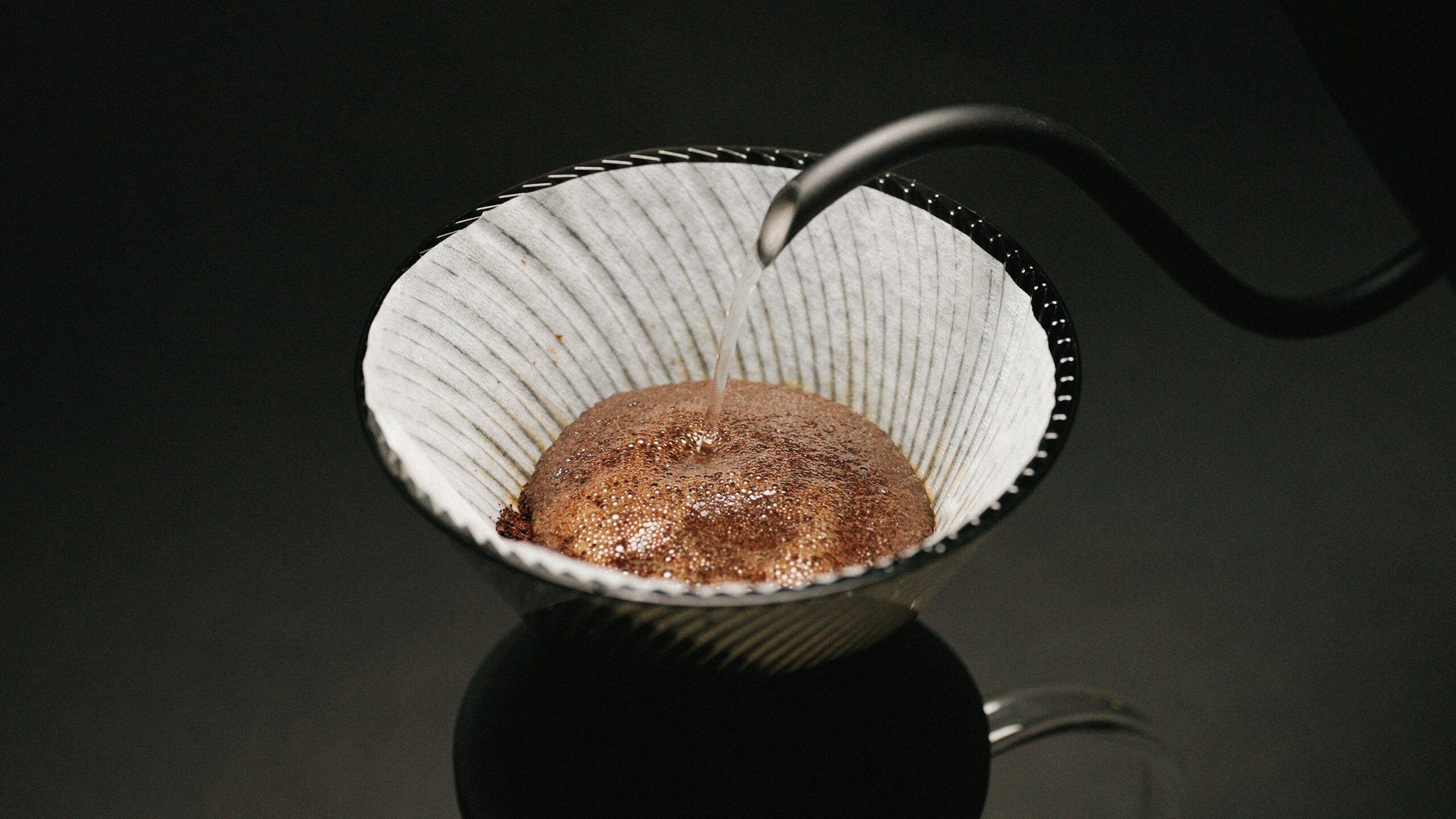
The system transforms a standard coffee filter basket into an ultrasonic reactor. A small metal transducer attached to the side of the basket generates ultrasonic vibrations that travel through both the coffee grounds and the water. These vibrations create a phenomenon known as acoustic cavitation—the rapid formation and collapse of microscopic bubbles within the liquid. As the bubbles collapse near the coffee particles, they generate tiny jets that break down the surface of the grounds, allowing flavor compounds, oils, and caffeine to be extracted more rapidly. According to the researchers, this process enables espresso-strength extraction at room temperature while significantly reducing energy requirements.

From Cold Brew to Espresso

The technology builds on earlier work by Dr. Trujillo’s team, which used ultrasound to reduce cold-brew preparation times from 12–24 hours to just a few minutes. While successful, the earlier method produced coffee with the characteristic flavor profile of cold brew—typically smoother, less concentrated, and lower in caffeine than espresso. The team’s latest research focused on achieving the intensity and concentration associated with traditional espresso. After testing a range of variables, including grind size, brew ratio, and ultrasound application time, the researchers identified an optimal extraction window of approximately 2.5 to 3 minutes. “The most important factor was the brew ratio, which determines the final concentration of the beverage,” Dr. Trujillo explained. “We also found that finer grinding accelerated extraction and helped achieve espresso-like characteristics.”

Blind Taste Tests Show Comparable Results

To evaluate the sensory quality of the ultrasonic coffee, the researchers conducted a blind tasting study involving around 100 regular coffee drinkers. Participants sampled four beverages: traditional espresso, ultrasonic espresso, traditional filter coffee, and ultrasonic filter coffee. All samples were prepared under controlled conditions, cooled to the same temperature, and served in coded cups in random order. Participants rated each coffee on aroma, flavor, bitterness, and overall preference using a nine-point scale.

Coffee Type Result Compared to Traditional
Ultrasonic Espresso No significant differences across any sensory category
Ultrasonic Filter Coffee Higher overall ratings, especially lower perceived bitterness

The results showed no significant differences between traditional espresso and ultrasonic espresso across any of the sensory categories. Most participants were unable to distinguish between the two brewing methods. The ultrasonic filter coffee performed even better, receiving higher overall ratings than conventionally brewed filter coffee, particularly in perceived bitterness. According to the researchers, the findings demonstrate that ultrasonic extraction can maintain—or in some cases improve—coffee quality despite eliminating the heat typically associated with brewing.

Commercial Potential

While the technology could eventually be adapted for home coffee machines, the researchers believe its greatest impact may be in industrial coffee production. Manufacturers of ready-to-drink coffee beverages could benefit from both reduced energy consumption and faster processing times. Because the process produces a concentrated coffee extract, it could be used directly in ready-to-drink products or shipped as a concentrate for later dilution into cold brew, milk-based beverages, and other coffee drinks. “There are companies that produce coffee products on an industrial scale, and we are confident this ultrasound system can be scaled up to meet their needs,” said Dr. Trujillo. “The energy savings and rapid processing time make it particularly attractive for commercial applications.” If successfully commercialized, ultrasonic brewing could offer a new pathway for producing espresso-strength coffee while reducing both energy consumption and production costs.

Frequently Asked Questions About Ultrasonic Espresso

Q: What are the main advantages of ultrasonic espresso?

A: It cuts energy use by 75%, uses room-temperature water, and produces espresso-strength coffee in under 3 minutes.

Q: Does the coffee taste different from traditional espresso?

A: Blind taste tests found no significant differences in aroma, flavor, or bitterness between ultrasonic and traditional espresso.

Q: How does ultrasound accelerate coffee extraction?

A: Acoustic cavitation creates tiny bubbles that collapse near coffee particles, generating micro-jets that break down the grounds and release flavors faster.

Q: Can this technology be used at home?

A: Currently designed for industrial applications, but it could potentially be adapted for home coffee machines in the future.

Q: What are the commercial applications?

A: Producing coffee concentrates for ready-to-drink beverages, reducing energy costs in factories, and accelerating cold brew production.

Ultrasonic espresso technology could redefine coffee brewing in the future. By cutting energy and time while maintaining quality, it opens new possibilities for both home and industrial production.

Prepared and edited by: Qahwa World – Based on a study from the University of New South Wales (UNSW) published in the Journal of Food Engineering.

Reference: Nikunj Naliyadhara et al., “Ultrasound Enables Espresso‑Strength Coffee Brewing in 2–3 Minutes at Low Temperature with Lower Energy Consumption,” Journal of Food Engineering, 2026.

All rights reserved. Republication with attribution permitted.

Publication date: June 11, 2026

Scientists from the Technical University of Munich Uncover the Secret of Coffee’s Mild Bitterness

Source: Technical University of Munich – Journal of Agricultural and Food Chemistry |
Author: Qahwa World |
Date: June 9, 2026

Scientists from the Technical University of Munich Uncover the Secret of Coffee’s Mild Bitterness

Key Findings:

  • Pure caffeine is intensely bitter – often described as harsh, medicinal, and almost undrinkable. Yet coffee does not taste nearly that bitter.
  • Researchers from the Technical University of Munich discovered that compounds formed during roasting reduce perceived bitterness by up to 50%.
  • The key compounds are melanoidins, which are created during the Maillard reaction when coffee beans are roasted.
  • In real coffee brews, panelists barely noticed caffeine’s bitterness even when its concentration was increased tenfold.
  • Melanoidins bind with caffeine, forming molecular complexes that prevent caffeine from reaching bitter taste receptors on the tongue.
  • Darker roasts produce more melanoidins, potentially offering stronger bitterness masking effects.
  • The findings open new possibilities for improving instant and ready-to-drink coffees, as well as developing low-bitterness blends.

For centuries, coffee lovers have enjoyed their daily brew without realizing they were experiencing a remarkable chemical deception. Pure caffeine is intensely bitter – often described as harsh, medicinal, and almost undrinkable. Its concentration in a typical cup of coffee far exceeds the level the human tongue can normally detect. Yet coffee does not taste nearly as bitter as it should.

Now, a new study from the Technical University of Munich (TUM) and the Leibniz-Institute for Food Systems Biology has finally solved this long-standing puzzle. Published in the Journal of Agricultural and Food Chemistry, the research reveals that compounds formed during roasting play a starring role in masking caffeine’s harsh edge.

The Experiment That Cracked the Code

Led by researchers Michael Gigl, Johanna Kreissl, and Oliver Frank, the team used a trained sensory panel – experts skilled in precise taste evaluation – to systematically test how different coffee components interact with caffeine. The results were striking. When caffeine was dissolved in water at normal coffee concentrations, panelists rated its bitterness as intensely unpleasant. But when the same amount of caffeine was combined with key coffee compounds – particularly chlorogenic acids and melanoidins – the perceived bitterness dropped by approximately 50%. In real coffee brews, the masking effect was even stronger. Panelists barely noticed caffeine’s signature bitterness even when its concentration was increased up to ten times higher than usual.

Melanoidins Take Center Stage

Using advanced nuclear magnetic resonance (NMR) spectroscopy, the scientists confirmed that caffeine forms complexes with melanoidins – the high-molecular-weight polymers produced through the Maillard reaction during roasting. These complexes appear to reduce the amount of “free” caffeine available to bind to bitter taste receptors on the tongue. The larger molecular structures may also create physical barriers or steric hindrance, limiting access to those receptors.

“Chlorogenic acid alone had little effect,” the researchers noted, “but when combined with melanoidins at natural concentrations found in coffee, the bitter intensity was strongly reduced.” Melanoidins not only suppress bitterness but also help transform the quality of the remaining bitterness into something more pleasant and “coffee-like,” rather than medicinal or harsh.

Compound Source Effect on Bitterness
Caffeine Green beans Extremely harsh bitterness
Chlorogenic acids Green beans Little effect alone
Melanoidins Formed during roasting Reduce bitterness by ~50%

Why This Matters for the Coffee Industry

The findings highlight the critical importance of the roasting process in shaping coffee’s final sensory profile. Darker roasts, which generate more melanoidins, may offer stronger masking effects – a hypothesis the team plans to explore in future studies. For the specialty coffee world, this research opens exciting possibilities: improving instant and ready-to-drink coffees by optimizing melanoidin content, developing low-bitterness blends while maintaining satisfying caffeine levels, and refining roasting techniques to craft more balanced and approachable cups.

“The significance of this work lies in explaining why coffee beverages do not taste of caffeine, even though the caffeine concentration of coffee is far above the perceivable level,” said Michael Gigl of TUM’s ZIEL Institute for Food and Health.

A Symphony of Chemistry

Coffee contains hundreds of compounds that contribute to its complex flavor. While caffeine is the most famous bitter player, the study underscores that the overall taste emerges from intricate interactions rather than any single molecule. As Gigl and colleagues concluded, a “plethora of bitter stimuli” generated during roasting ultimately creates coffee’s unique and beloved profile. So the next time you sip a perfectly balanced espresso or pour-over, remember: you are not just tasting beans and water. You are experiencing a masterful chemical performance – one in which the roast itself quietly tames the bitterness and lets the aroma and nuance shine through.

Frequently Asked Questions About Coffee Bitterness and Roasting

Q: Why doesn’t coffee taste extremely bitter despite containing caffeine?

A: Because melanoidins formed during roasting bind to caffeine and prevent it from reaching the bitter taste receptors on your tongue.

Q: What are melanoidins?

A: High-molecular-weight compounds formed during the Maillard reaction when coffee beans are roasted. They are responsible for the brown color and roasted flavor.

Q: Does the roast level affect coffee bitterness?

A: Yes. Darker roasts produce more melanoidins, which may enhance the bitterness masking effect. Further studies are needed to confirm this.

Q: How can these findings be used in the coffee industry?

A: They can help improve instant and ready-to-drink coffees, develop low-bitterness blends while maintaining caffeine levels, and refine roasting techniques.

Q: Was this study published in a peer-reviewed journal?

A: Yes, it was published in the Journal of Agricultural and Food Chemistry in 2026.

In every cup of coffee you enjoy, a complex chemical story unfolds. Roasting is not just a way to turn green beans brown – it is a precise tool for shaping flavor and making coffee balanced and pleasurable. Science is opening new frontiers in understanding and improving this ancient beverage.

Prepared and edited by: Qahwa World – Based on a scientific study from the Technical University of Munich and the Leibniz-Institute for Food Systems Biology, published in the Journal of Agricultural and Food Chemistry (2026).

Reference: Michael Gigl et al., “Impact of Interactions between Melanoidins and Caffeine on the Bitter Taste of Coffee Beverages,” Journal of Agricultural and Food Chemistry, 2026. DOI: 10.1021/acs.jafc.5c17022

All rights reserved. Republication with attribution permitted.

Publication date: June 9, 2026

US Coffee Consumption 2026 by the Numbers

Source: National Coffee Association (NCA) |
Author: Qahwa World |
Date: June 6, 2026

US Coffee Consumption 2026 by the Numbers: The Rise of Specialty Coffee and What It Means for Global Markets

Key Numbers:

  • 66% of American adults drank coffee yesterday – more than any other beverage including water.
  • 47% drank specialty coffee daily, surpassing traditional coffee (42%).
  • 58% had specialty coffee in the past week, a 10-point increase since 2021.
  • 45% of Americans consumed espresso-based beverages weekly (lattes, cappuccinos, espressos).
  • Age group 25-39 leads consumption: 69% weekly for specialty coffee.
  • Hispanic Americans are the highest specialty coffee consumers (67% weekly).
  • Northeast and West regions have the highest consumption (64% and 61% weekly).
  • Medium roast is the most popular (58%), followed by dark (39%) and light (13%).

The 2026 National Coffee Data Trends report, released by the National Coffee Association (NCA), confirms that coffee remains America’s favorite beverage. 66% of adults drank coffee yesterday, ahead of tap or bottled water. However, the real story lies in a deep shift within the US market.

For the first time, specialty coffee is achieving sustainable growth over traditional coffee. This shift reflects changing consumer tastes and carries major implications for global production, arabica and robusta futures, roasting strategies, and distribution worldwide. In this report, we present the most revealing numbers and analyze what they mean for the global coffee market.

1. Daily and Weekly Consumption Basics

January 2026 data shows specialty coffee outpacing traditional coffee in daily consumption for the first time on a broad scale. Daily specialty coffee penetration reached 47%, versus 42% for traditional coffee. On a weekly basis, 58% of Americans drank specialty coffee, compared to 62% for traditional coffee – a very close gap.

Coffee Type Daily Penetration Weekly Penetration
Specialty Coffee 47% 58%
Traditional Coffee 42% 62%
Espresso Based Beverages (EBBs) 29% 45%
Cold Specialty Beverages (N-EBBs)* 17% 27%

* Includes cold brew, frozen blended coffee, and nitro coffee.

Since 2021, weekly specialty coffee consumption has increased by 10 percentage points (from 48% to 58%). Meanwhile, weekly traditional coffee consumption has remained stable at around 62%. This means nearly all growth in the US coffee market comes from the specialty segment.

2. Who Drinks Specialty Coffee? Demographic Profile

By age: The 25-39 age group is the strongest driver. 69% of them drank specialty coffee in the past week, versus only 46% of those aged 60+. Moreover, 60% of the 25-39 group consumed espresso beverages, and 40% drank cold specialty drinks. Young adults (18-24) prefer specialty (50%) over traditional (40%), signaling a lasting generational shift.

Age Group Specialty (Weekly) Espresso Beverages Cold Specialty
18-24 50% 38% 33%
25-39 69% 60% 40%
40-59 60% 47% 27%
60+ 46% 30% 13%

By ethnicity: Hispanic Americans are the highest specialty coffee consumers (67% weekly), followed by Asian Americans (64%). African Americans (57%) and Caucasian Americans (56%) follow. Hispanic Americans also lead in espresso beverages (57%) and cold specialty drinks (39%).

By region: The Northeast leads with 64% weekly specialty consumption, followed by the West (61%), then the South (57%), and finally the Midwest (49%).

3. How Do Americans Drink Their Specialty Coffee?

Temperature: 43% prefer hot specialty coffee, while 32% consume it cold. In contrast, traditional coffee is 54% hot and only 13% cold. Specialty coffee thus dominates the cold beverage market year-round, even in January.

Roast level: Medium roast is the most popular (58%), followed by dark roast (39%), then light roast (13%). This confirms a preference for balanced, classic flavors.

Additives (sweeteners and whiteners): 59% of specialty coffee drinkers use sweeteners or flavored syrup. 58% use whiteners (milk, cream, or milk alternatives). The 25-39 age group records the highest sweetener usage (70%). Hispanic Americans are more likely to add white sugar and honey.

Out-of-home preparation: 36% of specialty coffee drinkers buy their coffee away from home (cafés, restaurants, workplaces), compared to only 23% of traditional drinkers. This highlights the importance of the hospitality and café sector for specialty coffee growth.

4. What Do These Numbers Mean for the Global Coffee Market?

The US shift to specialty coffee is not just a local taste change; it is a strong signal for global markets.

1. Demand for high-quality arabica will increase: Specialty coffee’s heavy reliance on arabica puts pressure on producing countries to increase output while maintaining quality. However, a record Brazil 2026/27 crop (71.9 million bags) may create a temporary surplus, but strong US demand will absorb much of it.

2. Arabica prices may find support despite surplus: Prices usually fall when supply rises. Yet 58% of Americans drinking specialty coffee weekly means that any production increase may be met by rising consumption, limiting price collapse. Additionally, tight spot supplies (falling exchange inventories) support prices in the short term.

3. Robusta market faces pressure: As traditional coffee’s share declines, Vietnam increases its robusta exports. This could lead to a robusta surplus and downward pressure on prices. Roasters will need to find new uses for robusta.

4. Flavor innovation and new formats are essential: 35% of specialty coffee drinkers consider flavor part of the definition of “specialty coffee.” The strong preference for sweet flavors forces producers to develop blends that meet these tastes. Meanwhile, the popularity of cold drinks requires investment in chilled distribution channels.

5. Demographic shifts reshape global marketing: Specialty coffee’s concentration among 25-39 year olds and Hispanic Americans means brands must redirect their campaigns and sales channels. Higher out-of-home consumption (36%) benefits global café chains.

6. Supply chain and climate challenges remain: With El Niño and Strait of Hormuz disruptions persisting, specialty coffee supply chains become more fragile. Prices may experience sharp volatility despite a theoretical surplus.

5. What Does This Mean for the Arab World, Especially the Gulf?

The Gulf market is experiencing massive growth in specialty coffee. US data confirms this is a global trend. For coffee-importing Arab countries, this means:

  • Higher prices: If strong US demand continues, arabica prices may rise globally, increasing import costs for local roasters and cafés.
  • Opportunity for differentiation: Arab cafés can play on distinctive flavors (spice, floral, fruit) that US specialty drinkers are open to. This opens doors for collaboration with US roasters or exporting innovative Arab blends.
  • Need for investment in education and training: To meet global quality standards, the Gulf coffee sector must strengthen Q Grader and sensory analysis programs, just as labs like Kanamori Coffee Lab do in Japan.

Frequently Asked Questions About US Coffee Consumption 2026

Q: What percentage of Americans drink coffee daily compared to other beverages?

A: 66% drink coffee daily, making it the most consumed beverage ahead of tap or bottled water.

Q: Has specialty coffee truly overtaken traditional coffee?

A: In daily consumption, yes: 47% specialty vs. 42% traditional. Weekly, traditional still leads slightly (62% vs. 58%).

Q: Which age group consumes the most specialty coffee?

A: The 25-39 age group, at 69% weekly.

Q: What is the most popular roast in America?

A: Medium roast (58%), followed by dark (39%), then light (13%).

Q: How do these numbers affect global coffee prices?

A: Strong US demand for arabica supports prices, while Brazil’s record crop may create temporary surplus. Robusta prices trend downward due to Vietnam exports.

Q: Which flavors do US specialty coffee drinkers prefer most?

A: Sweet flavors: chocolate (85%), caramel and brown sugar (78%), vanilla (79%).

The 2026 data shows that specialty coffee is no longer a luxury but the backbone of the US coffee market. This sends clear messages to producers, roasters, and investors worldwide: quality, innovation, and understanding demographic shifts are the keys to success in the coming decade.

Prepared and edited by: Qahwa World – Based on the National Coffee Association’s 2026 National Coffee Data Trends Specialty Coffee Report.

All rights reserved. Republication with attribution permitted.

Publication date: June 6, 2026

Brazil Coffee Output to Reach Record 71.9M Bags

Author: Qahwa World – Brasília
Source: USDA Foreign Agricultural Service – Report BR2026-0025
Date: June 1, 2026

Brazil Coffee Output to Reach Record 71.9M Bags

Executive Summary

  • Brazil’s 2026/27 coffee production is forecast at 71.9 million 60‑kg bags, a 14% increase over the previous season.
  • Arabica output is expected to surge 25% to 47.5 million bags, ending five years of low harvests.
  • Robusta (conilon) production is forecast at 24.4 million bags, a slight decline from 25 million bags due to cooler weather and excess rain in some regions.
  • Exports for 2026/27 are projected to jump 30% to 49 million bags, supported by the record crop.
  • However, low stocks and fears of an El Niño event are making exporters cautious and holding back deals.
  • Domestic consumption remains stable at 22.39 million bags, with a 0.5% annual increase.
  • The “Zero Crop, 100% Crop” management technique is helping farmers optimize yields and reduce costs.

Brazil is set to produce a record 71.9 million 60‑kg bags of coffee in the 2026/27 season. This is a 14% increase over the previous cycle. The outlook is especially bright for arabica coffee.

Optimal weather in major growing regions has driven the recovery. The record crop follows five years of low arabica production caused by adverse conditions.

Exports are expected to surge 30% to 49 million bags. However, exporters remain cautious. They are holding back on deals because of low stocks and uncertainties about a possible El Niño event.

El Niño could affect the end of the current harvest and the 2027/28 cycle. These factors are strongly influencing coffee prices in the Brazilian market.

Production Outlook

The positive biennial cycle is a key driver. Arabica trees naturally produce more in alternating years. This year is a high‑yield year.

Favorable weather conditions and rising global prices have also encouraged farmers to expand their coffee areas. Technology has enabled higher planting density per hectare.

As a result, total coffee production is forecast at 71.9 million 60‑kg bags. This is a 14% increase from the 63 million bags estimated for 2025/26.

The National Supply Company (CONAB) projects a slightly lower figure of 66.7 million bags. The Brazilian Institute of Geography and Statistics (IBGE) projects 65.1 million bags.

Both official agencies use different methodologies. They have historically provided lower estimates than the USDA.

Arabica and Robusta Performance

Arabica production is forecast to reach 47.5 million bags. This is a 25% increase over the previous cycle. The growth is driven by the positive biennial cycle and expanded cultivated area.

Technological improvements in crop management also played a role. Milder temperatures before flowering supported good crop development.

In contrast, robusta (conilon) production is forecast at 24.4 million bags. This is a slight decline from the 25 million bags estimated for 2025/26.

Colder weather and periods of excessive rainfall reduced yields in some main producing regions. The strong growth of the 2025/26 harvest also made it difficult to sustain the same level of production.

Producers are increasingly worried about climate change. Many are adjusting their practices, seeking more shaded areas, and looking for resilient varieties.

Regional Performance

Minas Gerais remains Brazil’s largest coffee‑producing state. It is forecast to harvest 34.1 million bags in 2026/27, up from 26.7 million in 2025/26.

The increase is due to the positive biennial cycle and better rainfall distribution. Rainfall was especially good before flowering and through March.

Espírito Santo, the second‑largest producer, is forecast at 21.4 million bags. Arabica production there is expected at 4.4 million bags, while robusta accounts for 17 million bags.

São Paulo, which grows only arabica, saw growth of more than 15% over the previous cycle, despite varied weather conditions.

Bahia has now become the second‑largest robusta producer, surpassing Rondônia. Its growth comes from advanced technology and high‑performance irrigated areas.

Rondônia is expected to see a 19% increase in robusta production. Favorable weather and the renewal of crops with higher‑yielding clonal plants are the main reasons.

Table 1: Brazilian Coffee Production by State (million 60‑kg bags)

State 2025/26 2026/27 Change
Minas Gerais 26.7 34.1 +27.7%
Espírito Santo 20.9 21.4 +2.4%
São Paulo 4.8 5.5 +14.6%
Bahia 4.7 5.2 +10.6%
Rondônia 2.3 2.8 +21.7%

Prices and Production Costs

Arabica prices rose sharply at the end of 2025 due to limited supply. However, prices started to decrease with the forecast of a larger harvest.

In April 2026, arabica coffee averaged BRL 1,811.87 (USD 360.03) per 60‑kg bag. This was a 5% drop from March and a 28% drop from April 2024.

Robusta prices fell even more. In April 2026, robusta traded at BRL 917.05 (USD 182.26). That was a 10% monthly drop and a 46% drop from April 2025.

Fears of an El Niño event have dampened sales activity. Many producers who were liquidating their remaining stocks are now holding back.

Production costs remain high. Fertilizer prices have risen, and freight costs have increased due to higher diesel prices. Diesel climbed about 24% in March 2026.

To cope, many farmers are adopting the “Zero Crop, 100% Crop” technique. This method divides farms into two plots and alternates skeleton pruning.

As a result, farmers focus only on the plot in its high‑yield phase. The system also increases organic matter and reduces fertilizer needs.

Domestic Consumption and Exports

Brazil’s domestic coffee consumption is forecast at 22.39 million bags for 2026/27. This is a slight 0.5% increase over the previous year.

Consumption declined by more than 2% in 2025 due to high prices. However, it recovered in early 2026 as supermarket prices dropped.

In the first four months of 2026, consumption rose 2% compared to the same period in 2025. The average Brazilian drinks about 3.8 cups of coffee per day.

Exports for 2026/27 are forecast to jump 30% to 49 million bags. This is based on the record harvest. However, low stocks have prevented even higher volumes.

Between January and April 2026, Brazil exported 11.5 million bags, a 24% decrease from the same period in 2025. April exports increased 1.2%, signaling a gradual recovery.

Germany remains the top buyer of Brazilian coffee, followed by the United States, Italy, Japan, and Belgium. The United States holds over 30% of the market share for Brazilian coffee imports.

Specialty coffees accounted for almost 18% of total exports in early 2026, though that volume was 36% lower than the same period in 2025.

Policy and Minimum Prices

The government has allocated BRL 7.37 billion for the 2026/27 Coffee Economy Defense Fund (FUNCAFE). The fund supports crop management, marketing financing, and working capital.

Minimum guaranteed prices for the 2026/27 harvest have been increased. Arabica now has a minimum price of BRL 792.53 per 60‑kg bag, a 20% rise from the previous season.

Robusta’s minimum price was set at BRL 556.97 per bag, a 12% increase. These prices are valid from April 2026 through March 2027.

Frequently Asked Questions

How much coffee will Brazil produce in 2026/27?

Production is forecast at 71.9 million 60‑kg bags, a 14% increase over the previous season.

Why is arabica production expected to surge?

The positive biennial cycle, expanded planted area, technological advances, and favorable weather are the main drivers.

Which Brazilian state produces the most coffee?

Minas Gerais is the largest producer, forecast at 34.1 million bags in 2026/27.

How will El Niño affect Brazilian coffee?

There is a 60% chance of El Niño between May and July 2026. It could negatively impact the 2027/28 harvest through higher temperatures and altered rainfall.

What is the “Zero Crop, 100% Crop” technique?

It is a management method that divides a farm into two plots and alternates skeleton pruning, allowing farmers to focus on high‑yield areas and reduce costs.

What are the main export destinations for Brazilian coffee?

Germany, the United States, Italy, Japan, and Belgium are the top buyers.


Author: Qahwa World – Brasília | Source: USDA Foreign Agricultural Service – Report BR2026-0025 | Date: June 1, 2026

Chinese Study: Sweetened Coffee Linked to Lower Risk of Early Death

Source: American College of Physicians / Annals of Internal Medicine |
Date: June 3, 2026

Chinese Study: Sweetened Coffee Linked to Lower Risk of Early Death

Key Findings:

  • Study from Southern Medical University in Guangzhou tracked over 171,000 people for 7 years.
  • Unsweetened coffee reduced death risk by 16 to 21 percent.
  • Coffee sweetened with one teaspoon of sugar per cup reduced risk by 29 to 31 percent.
  • Results for artificial sweeteners were inconclusive.
  • The study is observational, not experimental. It does not prove direct cause and effect.
  • Warning: Ready-made coffee drinks from chains contain much higher amounts of sugar.

Researchers from Southern Medical University in Guangzhou, China, published a new study in the journal Annals of Internal Medicine. The study examined the effect of sweetened coffee on the risk of early death. It included more than 171,000 participants from the UK Biobank project. The average follow-up period was about seven years.

As a result, the study found that drinking moderate amounts of coffee, whether sweetened or unsweetened, is associated with a lower risk of death. This research is one of the first large-scale studies to directly compare the effect of adding sugar to coffee on long-term health outcomes.

Key Results: Up to 31 Percent Lower Death Risk

The researchers divided participants into groups based on their coffee consumption. These groups included non-drinkers, unsweetened coffee drinkers, sugar-sweetened coffee drinkers, and artificially sweetened coffee drinkers. After seven years of follow-up, the results were clear.

First, people who drank any amount of unsweetened coffee were 16 to 21 percent less likely to die compared to non-drinkers. Second, those who drank 1.5 to 3.5 cups per day of sugar-sweetened coffee were 29 to 31 percent less likely to die. The researchers noted that these participants added only about one teaspoon of sugar (approximately 4 grams) per cup on average.

In contrast, the results for those who used artificial sweeteners were inconclusive. The reduced risk applied to deaths from cancer and cardiovascular disease as well.

Summary of Results

Coffee Type Daily Amount Reduction in Death Risk
Unsweetened coffee Any amount 16% to 21%
Sugar-sweetened coffee (1 tsp per cup) 1.5 to 3.5 cups 29% to 31%
Coffee with artificial sweeteners Varies Inconclusive

Why Is Coffee Beneficial? Possible Mechanisms

Coffee contains biologically active compounds that offer potential health benefits. The most important are antioxidants and polyphenols, especially chlorogenic acids. These compounds fight oxidative stress and inflammation. They also improve blood vessel function and glucose metabolism. In addition, caffeine enhances cognitive function and may reduce the risk of neurodegenerative diseases.

As a result, moderate coffee consumption has been linked to a lower risk of type 2 diabetes, stroke, heart disease, certain cancers, liver disease, and depression. However, the question remains: why did coffee with a small amount of sugar show even better results? Researchers believe that a small amount of sugar (one teaspoon) is not enough to cancel out the large benefits of coffee. But this needs further confirmation.

Important Caveats: Not a License to Add Excess Sugar

The researchers emphasize that these results do not mean adding sugar to coffee is beneficial in itself. The study observed an association, not a direct causal relationship. It is possible that people who regularly drink sweetened coffee also have a generally healthier lifestyle. Furthermore, the amount of sugar used in the study was very small (one teaspoon per cup).

In contrast, ready-made coffee drinks from major chains contain much larger amounts of sugar. A single drink can contain 20 to 50 grams of sugar. This far exceeds health recommendations. The World Health Organization recommends that free sugars should be less than 10 percent of daily calories. For an average adult, that is about 50 grams (12 teaspoons) per day. The ideal amount is less than 5 percent (25 grams or 6 teaspoons).

Therefore, researchers advise drinking coffee black or with a very small amount of sugar (no more than one teaspoon per cup). Avoid heavily sweetened drinks, heavy cream, and flavored syrups. Home brewing is preferable for better control of ingredients. Individuals with insomnia, anxiety, or stomach issues should consult their doctor.

Frequently Asked Questions About the Sweetened Coffee Study

Q: Does this study prove that adding sugar to coffee is healthy?

A: No. The study found a statistical association, not a causal relationship. The amount of sugar used was very small (one teaspoon per cup). A generally healthy lifestyle may also play a role.

Q: What is the optimal amount of coffee per day according to the study?

A: The optimal range is 1.5 to 3.5 cups per day. This amount was linked to the largest reduction in death risk.

Q: Do the results apply to instant coffee?

A: Yes, the study included various types of coffee. However, benefits are usually greater with filtered or freshly ground coffee.

Q: What is the daily sugar limit according to global guidelines?

A: The WHO recommends less than 10 percent of daily calories (about 50 grams or 12 teaspoons). The ideal is less than 5 percent (25 grams or 6 teaspoons).

Q: What about coffee with artificial sweeteners?

A: The results were inconclusive. There is not enough evidence of benefits or harms from this study.

Q: Can I drink sweetened coffee from commercial coffee shops?

A: Most coffee shop drinks contain very high amounts of sugar (20 to 50 grams). This may cancel out potential benefits and increase health risks. It is better to order black coffee or add a small amount of sugar yourself.

Prepared by: Scientific News Unit – Qahwa World – based on a study published in Annals of Internal Medicine on May 31, 2022, and the accompanying press release from the American College of Physicians.

Disclaimer: This information is for educational purposes and does not replace medical advice.

Publication date: June 3, 2026

Specialty Coffee in America Hits Record High in 2026

Source: National Coffee Association (NCA) |
Author: Specialty Reports Unit |
Date: June 2, 2026

Specialty Coffee in America Hits Record High in 2026

Key Takeaways:

  • 47% of American adults drank specialty coffee yesterday. This equals the highest level ever recorded.
  • Specialty coffee surpasses traditional coffee daily (47% vs. 42%).
  • 58% of Americans had specialty coffee in the past week. That is a 10 point increase since 2021.
  • The 25 to 39 age group leads consumption. 69% of them drank specialty coffee in the past week.
  • Espresso based beverages (lattes, cappuccinos) reached 45% weekly penetration.
  • Sweet flavors like chocolate and caramel top the preference list for specialty drinkers.
  • 36% of specialty coffee drinkers had their coffee prepared out of home. Only 23% of traditional drinkers did the same.

The National Coffee Association (NCA) released its 2026 National Coffee Data Trends Specialty Coffee Report today. The report shows that specialty coffee continues to achieve record numbers. Specifically, 47% of American adults drank specialty coffee on the day before the survey. This matches the record high set in 2025.

In addition, specialty coffee outperforms traditional coffee, which stood at 42% daily. The data points to a clear shift in consumer behavior toward quality and diverse flavors. Specialty coffee confirms its position as a favorite drink among new age groups.

Record High Consumption for Specialty Coffee

The Spring 2026 NCDT report found that 66% of American adults drank coffee of any type yesterday. This makes coffee the number one beverage in America, ahead of tap or bottled water. However, the real growth happens in the specialty coffee segment. Daily specialty consumption reached 47%, while traditional coffee remained stable at 42%.

Furthermore, weekly specialty coffee consumption has grown steadily. It increased from 48% in 2021 to 58% in January 2026. This represents a 10 percentage point increase over five years. Espresso based beverages (EBBs) are the main driver of this growth.

Coffee Type Daily Penetration (Jan 2026) Weekly Penetration (Jan 2026)
Specialty Coffee 47% 58%
Traditional Coffee 42% 62%
Espresso Based Beverages (EBBs) 29% 45%
Cold Specialty Beverages (N EBBs)* 17% 27%

* Includes cold brew, frozen blended coffee, and nitro coffee.

Age Group 25 39 Drives Growth and Demand for Innovation

The data shows that adults aged 25 to 39 are the main engine of the specialty coffee market. Specifically, 69% of this group drank specialty coffee in the past week. This is the highest percentage among all age groups. In contrast, only 46% of those aged 60 and above did the same.

As a result, younger consumers prefer espresso based drinks and cold beverages. For example, 60% of the 25 39 group had an espresso beverage in the past week. Cold brew consumption among them reached 28%. Among seniors, that number was only 6%.

Moreover, younger adults (18 to 24) showed a stronger preference for specialty coffee over traditional coffee. Their weekly specialty penetration was 50% compared to 40% for traditional. This suggests a lasting shift in consumption habits for future generations.

Age Group Specialty Coffee (Weekly) Espresso Beverages Cold Specialty Drinks
18 24 50% 38% 33%
25 39 69% 60% 40%
40 59 60% 47% 27%
60+ 46% 30% 13%

Flavor Preferences: Sweet Dominates, Specialty Drinkers Seek More

The report revealed that 35% of specialty coffee drinkers consider flavor as part of what makes a coffee “specialty.” Therefore, the study tested 22 flavor descriptions to identify the most preferred ones. Sweet flavors topped the list broadly. Chocolate (cocoa, milk chocolate, malt) scored 85% appeal among specialty drinkers. Caramel and brown sugar came second with 78%, followed by vanilla at 79%.

In contrast, specialty coffee drinkers showed greater openness to less common flavors compared to traditional drinkers. For example, the appeal for citrus notes (orange, lemon) rose to 64% among specialty drinkers versus 52% for traditional drinkers. Likewise, liking for rose and spice notes like cinnamon and cardamom increased significantly.

As a result, the study recommends that coffee shops and brands offer a mix of 4 to 5 core flavors. According to a TUR (Total Unduplicated Reach) analysis, offering chocolate, vanilla, and a tropical fruit can reach more than 70% of specialty coffee drinkers. Adding more flavors does not deliver significant additional reach.

Buying Behavior: Out of Home, Cold Drinks, and Sweeteners

The report noted clear behavioral differences between specialty and traditional coffee drinkers. First, 36% of specialty drinkers bought their coffee ready made from outside the home (cafes, restaurants, gas stations). This compares to only 23% for traditional coffee drinkers. This reflects the importance of out of home channels for the specialty segment.

Second, 32% of Americans consumed cold specialty coffee during the past week. This is a large number compared to traditional coffee, where only 13% was consumed cold. Cold brew and frozen blended drinks are key drivers of this trend, even during winter months.

Third, sweetener use increased among specialty coffee drinkers. Specifically, 59% of them added sweeteners or flavored syrup to their daily coffee. This percentage rises to 70% among the 25 to 39 age group. Hispanic Americans are more likely to add white sugar and honey. Meanwhile, 58% of specialty drinkers used whiteners (milk, cream, or milk alternatives).

Frequently Asked Questions About the 2026 Specialty Coffee Report

Q: What percentage of Americans drink coffee daily overall?

A: According to the Spring 2026 report, 66% of American adults drink coffee daily. This makes coffee the most consumed beverage, ahead of tap or bottled water.

Q: How does the NCA define “specialty coffee”?

A: Specialty coffee includes any espresso based beverage (lattes, cappuccinos), non espresso beverages like cold brew and nitro, plus traditional coffee that consumers believe is made from premium beans.

Q: Which age group consumes the most specialty coffee?

A: The 25 to 39 age group is the highest consumer. 69% of them drank specialty coffee in the past week, the highest among all age groups.

Q: What are the most preferred flavors for specialty coffee drinkers?

A: Sweet flavors lead the list. Chocolate has 85% appeal, followed by caramel and brown sugar at 78%, and vanilla at 79%.

Q: Do Americans prefer hot or cold specialty coffee?

A: 43% of specialty coffee drinkers prefer it hot, while 32% consume it cold. Cold beverages show steady growth even during winter months.

Q: Where do specialty coffee drinkers usually get their coffee?

A: 36% buy their coffee ready made away from home (cafes, restaurants, workplaces). The rest prepare it at home using drip makers or espresso machines.

Author: Specialty Reports Unit – Based on the National Coffee Association (NCA) press release issued June 2, 2026, and the 2026 NCDT Specialty Coffee Report.

All rights reserved. This report may be republished with attribution.

Publication date: June 2, 2026

Brazil Coffee Production to Hit Record 66.7 Million Bags in 2026

Author: Qahwa World – Brasília
Source: National Supply Company of Brazil (Conab), Cecafé, MDIC
Date: May 26, 2026This update covers expectations for a Brazil coffee production 2026 record, based on the latest reports and forecasts.

Brazil Coffee Output to Hit Record 66.7 Million Bags in 2026

Executive Summary

  • Brazil’s coffee production for the 2026 harvest is forecast at 66.7 million 60 kg bags, an 18% increase over 2025 and a new record, surpassing the 2020 harvest of 63.08 million bags.
  • Arabica production is expected to reach 45.8 million bags (+28%), while Robusta (Conilon) is forecast at 20.9 million bags (+0.8%).
  • Total planted area rises 3.9% to 2.34 million hectares, with national average productivity projected at 34.4 bags per hectare (+13%).
  • Minas Gerais, the largest producer, is forecast at 33.4 million bags (+29.8%). Espírito Santo follows with 18 million bags (+3%).
  • Brazil exported 11.5 million bags from January to April 2026, down 22.5% year-on-year due to low stocks, but April exports jumped 11.2% to 4.27 million bags, signaling recovery with the new harvest.
  • The USDA projects world production for 2025/26 at 178.8 million bags (+2%), with global demand rising 1.3% to 173.9 million bags, keeping prices elevated.

The National Supply Company of Brazil (Conab) released its second harvest survey on May 21, 2026, forecasting a record coffee production of 66.7 million 60 kg bags for the 2026 crop year, an 18% increase over the previous season.

If confirmed, this will be the largest harvest in Conab’s historical series, surpassing the 2020 record of 63.08 million bags.

The positive biennial cycle (higher production year for Arabica), the entry of new areas into production, and favorable weather conditions are the main drivers of this growth.

The total coffee area is expected to increase by 3.9% to 2.34 million hectares, comprising 1.94 million hectares of productive fields and 401,700 hectares of young plantations. National average productivity is projected to recover by 13% to 34.4 bags per hectare.

Arabica and Robusta Production

Arabica coffee production is forecast at 45.8 million bags, a 28% increase over 2025. This would be the third-highest Arabica harvest on record, behind only 2020 and 2018.

The expansion is driven by the positive biennial cycle, a larger area under production, and favorable weather conditions, particularly good rainfall distribution during the flowering period.

Robusta (Conilon) production is expected to reach 20.9 million bags, a modest 0.8% increase. While the harvested area is projected to grow to 388,220 hectares, average yields are estimated to drop 3.5% to 53.9 bags per hectare.

This decline reflects the high yields achieved in 2025 (a natural off-year for Robusta’s biennial cycle is less pronounced) and below-average temperatures in Espírito Santo during the production cycle, which affected plant physiology.

Production by State

Minas Gerais, the country’s largest coffee producer, is forecast to harvest 33.4 million bags (combining both species), a 29.8% increase over 2025.

This result is attributed to the positive biennial cycle combined with better rainfall distribution, especially in the months preceding flowering, as well as favorable weather through March, which provided good grain formation.

Espírito Santo, the second-largest producer, is expected to harvest 18 million bags, a 3% increase. Arabica production in the state is projected to rise 27.9% to 4.4 million bags, benefiting from the high biennial cycle.

However, Conilon production is forecast at 13.6 million bags, a 4.2% decrease due to the record-high performance in 2025 and below-average temperatures.

Bahia is expected to produce 4.7 million bags (+5.9%), supported by consistent weather, increased producer investment, and new areas entering production. São Paulo is forecast at 5.9 million bags (+24.6%), where only Arabica is grown. Rondônia is expected to produce 2.8 million bags (+19.4%), driven by the renewal of genetic material with more productive clonal plants and favorable weather.

Table 1: Brazil Coffee Production Forecast by State (2026, million 60 kg bags)

State 2026 Production (million bags) Change vs 2025 Main species
Minas Gerais 33.4 +29.8% Arabica
Espírito Santo 18.0 +3.0% Robusta (Conilon)
São Paulo 5.9 +24.6% Arabica
Bahia 4.7 +5.9% Both
Rondônia 2.8 +19.4% Robusta

Exports: April Recovery Signals New Harvest

According to the Brazilian Coffee Exporters Council (Cecafé), Brazil exported 4.27 million 60 kg bags in April 2026, an 11.2% increase compared to April 2025 (3.84 million bags). This was the first monthly increase in 2026, indicating the beginning of an export recovery as the new harvest enters the market.

“The rise in April reflects the start of the new harvest season in Brazil, which contributed to increased coffee availability for export,” said Horacio Miranda, analyst at hEDGEpoint. This upward trend supports Cecafé’s expectations of higher exports in the second half of the year.

In contrast, total exports from January to April 2026 reached 11.6 million bags, a 16.1% decrease compared to the same period in 2025. Export revenue for the first four months totaled $4.49 billion, down 14.4% year-on-year, according to MDIC data.

The decline in early 2026 reflects low domestic stocks resulting from limited production in previous years and strong export demand.

The main destinations in April were Germany, the United States, Italy, Belgium, and Japan.

Table 2: Brazil Monthly Coffee Exports (million 60 kg bags)

Month 2024 (million bags) 2025 (million bags) 2026 (million bags) Change (Apr 2026 vs Apr 2025)
January 3.2 3.1 2.9
February 2.8 2.9 2.4
March 3.0 3.2 2.6
April 3.4 3.84 4.27 +11.2%

Global Market Outlook

The United States Department of Agriculture (USDA) forecasts world coffee production for the 2025/26 cycle at 178.8 million 60 kg bags, a 2% increase over the previous cycle.

Despite the production increase, no significant price reductions are expected due to low carryover stocks from the previous cycle and a projected 1.3% increase in global demand to 173.9 million bags.

Brazil’s record harvest will play a major role in replenishing global stocks and meeting rising demand, particularly for high-quality Arabica beans.

Frequently Asked Questions

How much coffee will Brazil produce in 2026?

Brazil is forecast to produce 66.7 million 60 kg bags, an 18% increase over 2025, setting a new record.

What is driving the production increase?

The positive biennial cycle (high-yield year for Arabica), expansion of planted area (+3.9%), and favorable weather conditions, especially good rainfall distribution.

Which Brazilian state produces the most coffee?

Minas Gerais is the largest producer, forecast at 33.4 million bags, a 29.8% increase.

How are Brazil’s coffee exports performing?

April exports jumped 11.2% to 4.27 million bags, signaling recovery with the new harvest. However, January-April exports were down 16.1% due to low stocks.

What is the global coffee market outlook?

USDA projects world production at 178.8 million bags (+2%) and demand at 173.9 million bags (+1.3%), keeping prices elevated due to low stocks.


Author: Qahwa World – Brasília | Source: Conab, Cecafé, MDIC, USDA | Date: May 26, 2026

El Salvador Coffee Output Falls 7.5% to 542,000 Bags in 2026

Author: Qahwa World – San Salvador
Source: USDA Foreign Agricultural Service – Report ES2026-0004
Date: April 20, 2026

El Salvador Coffee Output Falls 7.5% to 542,000 Bags in 2026

Executive Summary

  • El Salvador coffee production for 2026/2027 is forecast at 542,000 60 kg bags, a 7.5% decrease from the revised 2025/2026 estimate of 586,000 bags.
  • The decline is driven by expected adverse weather from the El Niño phenomenon during flowering and harvest periods.
  • Planted area remains stable at 118,000 hectares, with no significant expansion due to climate vulnerability and limited credit access.
  • Exports are forecast at 543,000 bags in 2026/2027, slightly up from 535,000 bags. The United States remains the largest market with 50% share.
  • Domestic consumption reaches 339,000 bags, driven by a tourism boom and expanding coffee shop culture. Soluble coffee accounts for 88% of consumption.
  • Labor shortages from rural‑to‑urban migration continue to limit pruning, renovation, and harvesting activities.
  • Government programs focus on smallholders (less than 15% of area), but a large‑scale renovation plan remains unfunded.

The USDA Foreign Agricultural Service office in San Salvador estimates El Salvador coffee production for marketing year 2025/2026 at 586,000 60 kg bags.

For 2026/2027, production is forecast to fall to 542,000 bags, a 7.5 percent decrease, primarily due to the expected impact of the El Niño weather phenomenon during flowering and harvest periods.

The 2025/2026 crop was already affected by torrential rains in December 2025, which caused substantial berry drop at peak ripeness and dried out remaining berries, reducing both yields and bean quality during milling.

Planted area has remained stable at approximately 118,000 hectares across the past two marketing years and is expected to hold steady through 2026/2027.

Stagnation is largely attributed to climate vulnerability and limited access to credit, as private banks view coffee farming as a high‑risk investment and are reluctant to lend.

Faced with low profitability, many coffee farmers have transitioned to alternative crops such as cocoa and white corn.

Others have sold their land to real estate developers to cover debts. The government continues distributing new coffee seedlings, primarily to small‑scale farmers who represent about 15 percent of total coffee area, but without adequate financing many seedlings remain unplanted or fail to survive.

Producer Structure and Value‑Added Coffee

Smallest coffee producers (0‑3.5 hectares) represent most producers but account for a limited share of harvested area, which is more heavily concentrated among larger farms.

Value‑added production, including gourmet, specialty, and fair‑trade coffees, continues to generate additional income for a small but expanding group targeting niche markets.

These farmers focus on micro‑lot (5‑100 bags) and nano‑lot (fewer than 5 bags) sales, catering to specialty coffee buyers in the United States, Europe, and Asia.

In 2025, El Salvador held its annual Cup of Excellence competition, incorporating virtual cupping protocols for international judging. Geisha and Pacamara varieties dominated, with top‑scoring lots achieving ratings in the 90‑point range.

Inputs, Labor Shortages and Yields

The government operates a fungicide and biofertilizer distribution program primarily targeting small coffee farmers (with less than 7 hectares) to help manage coffee leaf rust outbreaks.

However, most producers do not benefit from this initiative and face limited access to financing for pest control and soil nutrition.

Seedling distribution includes varieties such as Cuscatleco, Marsellesa, Pacas, Pacamara, Sarchimor, and Anacafe 14.

A critical challenge is the continued shortage of agricultural labor. Migration to urban areas, driven by demand for construction labor, has reduced the rural workforce, leaving many farms without sufficient labor for pruning, weeding, fertilizer and pesticide application, and berry harvesting.

This scarcity undermines cultural practices and harvesting, negatively impacting productivity.

National coffee yields remain low, averaging 4.97 60 kg bags per hectare in 2025/2026. This underperformance is largely due to insufficient investment in a comprehensive renovation program. Current efforts focus primarily on small landholders (about 15 percent of planted area), limiting overall impact.

El Salvador is among the region’s most climate‑vulnerable countries, facing recurrent droughts and floods that disrupt flowering and cherry development, while also creating favorable conditions for pests and diseases such as coffee leaf rust, anthracnose, and coffee berry borer.

Domestic Consumption

Domestic coffee consumption for 2025/2026 is projected at 332,000 60 kg bags (green bean equivalent).

Increased international and local tourism due to improved security has boosted consumption.

Most of this consumption remains lower‑cost soluble coffee, largely imported from Mexico, Brazil, Colombia, and Nicaragua, alongside domestic brands such as Coscafe and D’Cafe.

Soluble coffee accounts for an estimated 292,000 bags, while roasted and ground coffee totals 40,000 bags.

For 2026/2027, consumption is expected to increase by 2 percent to 339,000 bags, driven by a surge in tourism.

In calendar year 2025, El Salvador recorded the world’s second‑highest percentage increase in tourism.

Coffee shop culture continues to expand, with new establishments in shopping malls and commercial centers. International chains such as Juan Valdez, Starbucks, and McCafe are growing alongside local brands like Viva Espresso and The Coffee Cup.

Retail demand for premium local varieties including Bourbon, Pacas, Pacamara, and Geisha continues to rise. Notably, El Salvador’s cafe Alquimia achieved 3rd place in the 2026 World Coffee Bar competition.

Despite this momentum, consumers continue to favor soluble coffee due to its affordability and convenience.

Limited marketing for higher‑quality roasted beans and price sensitivity sustain this preference.

The Salvadoran Coffee Institute (SCI) continues efforts to promote premium domestic coffee through initiatives such as National Pacamara Coffee Day and participation in international events like the Specialty Coffee Expo.

Exports and Key Markets

Coffee exports for 2025/2026 are estimated at 535,100 60 kg bags, a 12.6 percent increase from the previous year, driven by farmers taking advantage of high international prices and selling off accumulated stocks.

Exports are forecast to continue growing to 543,000 bags in 2026/2027, as prices are expected to remain high throughout the harvesting period.

The United States remains the largest export destination, accounting for approximately 268,570 bags, or 50 percent of total exports.

Belgium has emerged as the second‑largest destination with about 11 percent. Other key markets include Italy, Germany, Saudi Arabia, Japan, the United Kingdom, and Australia.

Premium prices for gourmet and specialty coffees continue to drive export incentives.

At the Cup of Excellence and other promotional events, top‑quality Salvadoran coffees are sold through global electronic auctions, often commanding prices $100‑$300 per hundredweight above spot market “Contract C” prices.

Table 1: El Salvador Coffee Exports (1,000 60 kg bags)

Destination 2025/2026 2026/2027 Share (2025/26)
United States 268.6 272.6 50.2%
Belgium 61.0 61.9 11.4%
Canada 26.8 27.2 5.0%
Italy 23.0 23.3 4.3%
Germany 22.5 22.8 4.2%
Japan 20.0 20.1 3.7%
Others 113.2 115.1 21.2%
Total 535.1 543.2 100%

Certification programs including Starbucks Café Practices, Fair Trade, UTZ, and coffee‑related geographical indications (GIs) are gaining traction.

SCI, in collaboration with six coffee regions, has established GIs for coffee produced in those areas. Certified coffee generally commands higher prices.

SCI has also trained local cuppers to obtain “Q” grade certification. Through Starbucks Café Practices, Salvadoran farmers can sell their coffee at prices roughly $50 above international “Contract C” prices. In 2024, NESCAFE announced plans to build a logistics facility to source and sell local coffee.

Imports and Stocks

In 2025/2026, Mexico surpassed Brazil as the main supplier of soluble coffee to El Salvador, with an expected 110,128 60 kg bags. Brazil is forecast to supply 101,915 bags, Colombia 18,161 bags, and the United States 6,750 bags of roasted and soluble coffee.

Total coffee imports are projected at 270,200 bags in 2025/2026 and 272,100 bags in 2026/2027, driven by a tourism boom and expansion of retail outlets and coffee bars.

Of the 2026/2027 total, 262,000 bags will be soluble coffee and 10,000 bags roasted coffee. Coffee stocks are estimated at 158,000 bags in 2025/2026, as farmers held back sales anticipating higher prices due to harvest delays and logistics issues at Port Acajutla. Stocks are forecast to decrease to 79,000 bags in 2026/2027 as producers capitalize on high prices.

Policy and Structural Challenges

The Salvadoran Coffee Institute (SCI) has implemented a pest monitoring program to help farmers manage coffee rust before severe damage occurs. Efforts have focused on renovating approximately 500 hectares in the northern coffee belt, adding two coffee quality control labs, and investing in molecular biology and somatic embryogenesis equipment.

However, government support primarily targets small farmers with less than 3.5 hectares, who represent less than 15 percent of total planted area.

A more effective solution would be a large‑scale replanting initiative focusing on medium‑sized farms that account for about 37 percent of area.

Many coffee trees are now over 25 years old and have surpassed their productive lifespan. Each year, over 7 million plants must be replaced to account for natural mortality.

According to the Salvadoran Coffee Association, approximately 30 million high‑quality, rust‑resistant plants are needed annually for the next 10 years to fully renovate the country’s coffee areas.

The sector’s challenges have led to a decline in jobs in coffee‑producing regions, contributing to rural migration.

For every 100,000‑quintal drop in coffee production (about 45,000 tons), an estimated 10,000 jobs are lost.

Additionally, more coffee farms are being abandoned or converted to basic grain production, exacerbating environmental challenges by reducing forestation and impairing water retention.

Financial challenges persist, with farmers still repaying debts under the Coffee Trust (FICAFE) program, established in 2001.

A grace period on capital payments has been extended through the end of 2026, but the sector remains under pressure.

Private banks are unwilling to offer loans due to high default risk driven by price volatility and diminishing yields.

Coffee farmers also face high processing costs, with mills currently charging around $100 per hundredweight of green bean equivalent to prepare coffee for export.

In 2019, the government proposed the Café‑Proyecto País program aimed at unifying coffee associations and developing a sustainability strategy, but lack of funding has delayed implementation.

In April 2021, a coffee rescue program was announced to restructure approximately $240 million in sector debt, create a coffee research institute, renovate 35,000 hectares, and promote local consumption, but fiscal constraints have delayed progress.

In January 2021, the government secured a $45 million loan from the Inter‑American Development Bank (IDB) to assist smallholder farmers through technical assistance and preferential loans, which also helped establish the Salvadoran Coffee Research Institute. However, much work remains.

Frequently Asked Questions

How much coffee will El Salvador produce in 2026/2027?

Production is forecast at 542,000 60 kg bags, a 7.5% decrease from the previous year, mainly due to El Niño.

What is the main export market for Salvadoran coffee?

The United States is the largest market, accounting for 50% of total exports, followed by Belgium (11%).

What are the biggest challenges facing El Salvador’s coffee sector?

Climate vulnerability (El Niño), labor shortages from rural migration, high input costs, limited credit access, and aging coffee trees.

How has domestic coffee consumption changed?

Consumption reached 332,000 bags in 2025/2026, driven by a tourism boom and expanding coffee shops. Soluble coffee accounts for 88% of consumption.

What is the average coffee yield in El Salvador?

Average yields are low at 4.97 60 kg bags per hectare, far below regional averages, due to lack of renovation investment.

What government programs support coffee farmers?

Programs include fungicide and biofertilizer distribution for smallholders, seedling distribution, and a $45 million IDB loan for technical assistance, but large‑scale renovation remains unfunded.


Author: Qahwa World – San Salvador | Source: USDA Foreign Agricultural Service – Report ES2026-0004 | Date: April 20, 2026

Guatemala Coffee Output Rises 3% to 3.13 Million Bags in 2026

Author: Qahwa World – Guatemala City
Source: USDA Foreign Agricultural Service – Report GT2026-0003
Date: April 16, 2026

Guatemala Coffee Output Rises 3% to 3.13 Million Bags in 2026

Executive Summary

  • Guatemala coffee production for 2026/2027 is forecast at 3.13 million 60 kg bags, a 3.3% increase from the previous year.
  • Harvested area expands to 345,000 hectares, up 2%, supported by maturing trees and plantation renovation.
  • Arabica accounts for 98% of output; about one‑third of plantations are planted with rust‑tolerant hybrids.
  • Exports (including soluble and roasted) are forecast at 3.2 million bags. The United States holds a 42% market share.
  • Domestic consumption reaches 900,000 bags, with soluble coffee representing 67% of that total.
  • Rust pressure reached 20% incidence in early 2025; the coffee borer (Xylosandrus compactus) has been detected in four departments.
  • ANACAFE operates input programs and a trust fund that has granted $180 million in loans since 2001.

The USDA Foreign Agricultural Service office in Guatemala City forecasts Guatemalan coffee production for marketing year 2026/2027 at 3.13 million 60 kg bags (green bean equivalent), a 3.3 percent increase from the revised 2025/2026 estimate of 3.025 million bags. The growth is primarily driven by expanded harvested area and maturing trees entering production.

Harvested area is forecast at 345,000 hectares in 2026/2027, up 2 percent from 338,000 hectares in 2025/2026. The number of bearing trees is expected to rise from 1.628 billion to 1.662 billion.

Arabica varieties account for approximately 98 percent of planted area, grown almost entirely under shade. About one‑third of Arabica plantations have been renovated with rust‑tolerant hybrids.

The remaining 2 percent consists of Robusta varieties, which are grown at lower altitudes.

The National Coffee Association (ANACAFE) continues to play a key role in ensuring the availability of certified planting material. Catimor and Caturra varieties make up nearly half of total plantings, followed by Catuai, Sarchimor, Bourbon, and others.

Producer Structure and Yield Trends

The Guatemalan coffee sector is dominated by small‑scale producers. Small growers (97 percent of producers) produce roughly 266 60 kg bags of parchment coffee annually, with average yields of 17.29 bags per hectare. Medium growers (2.9 percent) produce up to 172.9 bags annually at 18.62 bags per hectare. Large growers (0.1 percent) produce more than 173 bags annually, with yields exceeding 21.28 bags per hectare.

Yields in 2026/2027 are projected to increase slightly to 9.45 60 kg bags per hectare, above the 9.33 bags estimated for 2025/2026 but below the 9.67 bags achieved in 2024/2025.

The slight improvement reflects normal weather variations, though rising input costs remain a concern. As of March 2026, oil prices in Guatemala had increased by 20 percent, which will affect fertilizer and chemical prices for the following season.

Pest and Disease Challenges

The 2024/2025 harvest experienced higher coffee rust pressure, with incidence reaching up to 20 percent during January through March. Those months recorded higher moisture and temperature than usual. ANACAFE maintains close monitoring of rust and other pests to recommend preventive controls.

In September 2025, ANACAFE reported the identification of the coffee borer Xylosandrus compactus (Eichhoff) in the departments of Zacapa, Retalhuleu, Quetzaltenango, and San Marcos at altitudes of 600 to 900 meters. The pest was first reported in 2024 on avocado and cedar but subsequently appeared scattered on some Robusta trees. ANACAFE has provided control measures, including natural and chemical controls, but manual control appears to be the most effective method to prevent spread.

Input Programs and Farmer Support

ANACAFE’s Sustainable Profit Program provides guidance on best agronomic practices, focusing on a progressive annual pruning management system over 3‑ to 5‑year cycles. In 2024/2025, more than 27,000 hectares were harvested under the program, with 52,565 hectares registered.

ANACAFE also operates an agricultural input program that leverages collective purchasing power to secure inputs at reduced prices. The 2026 inputs program includes biostimulants, fertilizers, foliar fertilizers, fungicides, organic products, and crop protection chemicals, with discounts ranging from $0.75 per 100 pounds on standard fertilizers to specific per‑liter prices for specialty products.

A coffee trust fund, created by Legislative Decree 31‑2001 and amended over time, granted loans totaling $180 million between 2001 and 2025. Beneficiary farmers have repaid $108 million in capital and $46 million in interest. Decree 4‑2019 extended the trust fund’s duration until October 23, 2051, enhancing banking services for the sector.

Domestic Consumption

Domestic coffee consumption is projected to reach 900,000 60 kg bags in 2026/2027, a 2.9 percent increase from the 2025/2026 estimate of 875,000 bags. Soluble coffee continues to grow at a faster pace (30 percent growth rate) and accounts for 67 percent of domestic consumption (600,000 bags). Roasted and ground coffee accounts for the remaining 33 percent (300,000 bags).

Exports and Key Markets

Guatemalan coffee exports (including bean, roasted, and soluble) are forecast at 3.2 million 60 kg bags in 2026/2027, a 7.4 percent increase from the revised 2025/2026 estimate of 2.98 million bags. Green coffee exports represent approximately 90 percent of total exports, while demand for soluble exports continues to increase.

The United States remains the main destination, with a 42 percent market share. Other significant markets include Japan, Canada, Belgium, Italy, and South Korea. By region, North America absorbs 52 percent of exports, followed by Europe (26 percent), Asia (20 percent), and the rest of the world (2 percent).

In 2024/2025, total export value reached $1.284 billion, with prices averaging above $300 per 60 kg bag. To improve the buying experience, customers can explore the website “Explore – Guatemalan Coffees,” which displays farm‑level information on the best coffees of the year, including location, regional classification, varieties, processing methods, and showcasing schedules.

Table 1: Guatemala Coffee Exports (1,000 60 kg bags)

Destination MY 2023/24 MY 2024/25 Share (2024/25)
United States 1,294 1,198 41.9%
Japan 308 330 11.5%
Canada 360 273 9.5%
Belgium 263 266 9.3%
Italy 165 155 5.4%
South Korea 147 111 3.9%
Germany 131 96 3.4%
Others 483 430 15.0%
Total 3,151 2,859 100%

Policy, Sustainability, and Trade Agreements

In calendar year 2025, coffee represented 3.3 percent of Guatemala’s GDP and was the main agro‑industrial export product, accounting for 8 percent of total agricultural exports. Coffee is grown in 261 of the country’s 340 municipalities and covers 3.5 percent of total cropland. ANACAFE, established under Decree 19‑69, is responsible for issuing export licenses and promoting the sector.

ANACAFE promotes compliance with international and national policies related to greenhouse gas reduction. Initiatives include promoting renewable energy, water resource management with treatment and re‑utilization of processing water, and active geospatial monitoring to prevent deforestation. Close to 99 percent of Guatemalan coffee plantations comply with the EU zero‑deforestation policy, supported by specific platforms developed by ANACAFE.

On November 18, 2025, Guatemala’s Congress ratified the free trade agreement with South Korea through Decree 18‑2025. South Korea has also completed its ratification. Under the agreement, green coffee was granted immediate market access, representing a significant opportunity for the coffee sector.

Domestic reference prices for washed Arabica coffee as of April 7, 2026, are: hard green bean $247.53 per 60 kg bag, strictly hard green bean $253.53, and specialty strictly hard $256.53. Cherry prices range from $32.72 to $38.93 per bag depending on grade.

Frequently Asked Questions

How much coffee will Guatemala produce in 2026/2027?

Production is forecast at 3.13 million 60 kg bags, a 3.3% increase from the previous year.

What is the main export market for Guatemalan coffee?

The United States is the largest market, accounting for 42% of total exports.

What pests and diseases affect Guatemalan coffee?

Coffee rust (reaching 20% incidence in early 2025) and the coffee borer (Xylosandrus compactus) detected in four departments.

What percentage of Guatemalan coffee is grown under shade?

Almost 98% of Arabica coffee is grown entirely under shade.

How much of Guatemala’s domestic consumption is soluble coffee?

Soluble coffee accounts for 67% of domestic consumption (600,000 out of 900,000 bags).

What is ANACAFE’s role?

ANACAFE is the National Coffee Association, established under public law to enhance coffee production, marketing, and exportation, and it issues export licenses.


Author: Qahwa World – Guatemala City | Source: USDA Foreign Agricultural Service – Report GT2026-0003 | Date: April 16, 2026

Coffee Kombucha Study: Coffea arabica Infusion Works as Tea Alternative

Source: Journal of Food Science (DOI: 10.1111/1750-3841.71117)
Author: Qahwa World – Dubai
Date: May 24, 2026

Coffee Kombucha: New Study Finds Coffea arabica Infusion Viable Alternative to Traditional Tea

Executive Summary

  • Researchers evaluated replacing green tea with Coffea arabica infusion (25% to 100%) for kombucha fermentation.
  • Coffee substitution reduced sugar consumption but did not significantly affect final pH (2.8 to 3.2) or titratable acidity (approximately 0.4).
  • Higher coffee proportions reduced acetic acid bacteria and increased lactic acid bacteria, shifting metabolism toward lactic acid production.
  • SCOBY structure remained intact, with a more porous cellulose network in coffee-based formulations.
  • 100% coffee kombucha maintained stable total phenolic content and antioxidant capacity after fermentation.
  • Machine learning identified coffee-specific biomarkers linked to lactic acid and aroma-active compounds among 111 volatile compounds detected.

From Tea to Coffee: A New Frontier for Kombucha

Kombucha is traditionally fermented from sweetened Camellia sinensis tea using a symbiotic culture of bacteria and yeasts (SCOBY). However, a new study published in the Journal of Food Science explores whether Coffea arabica infusion can serve as a viable alternative substrate. The research, led by Paulo Sérgio Pedroso Costa Júnior and Dirceu de Sousa Melo, with contributions from Victor Hugo Buttrós, Karina Teixeira Magalhães-Guedes, Disney Ribeiro Dias, and Rosane Freitas Schwan, evaluated coffee substitution levels from 25% to 100% during kombucha fermentation.

The findings open new possibilities for product diversification in the functional beverage market. Coffee-based kombucha maintained fermentation performance and safety while offering distinct microbial, chemical, and sensory profiles.

Fermentation Kinetics and Acidity Profile

The study found that substituting green tea with coffee reduced sugar consumption rates. However, final pH values remained within the typical range for kombucha (2.8 to 3.2), and titratable acidity stayed stable at approximately 0.4. This indicates that coffee-based formulations can achieve the same level of acidity required for product safety and preservation.

Increasing coffee proportions significantly reshaped microbial populations. The most notable change was a reduction in acetic acid bacteria and an increase in lactic acid bacteria. This shift redirected metabolism toward lactic acid production, creating a different organic acid profile compared to traditional tea kombucha.

Parameter Traditional Tea Kombucha 100% Coffee Kombucha
Final pH 2.8 to 3.2 2.8 to 3.2 (stable)
Titratable acidity ~0.4 ~0.4 (stable)
Dominant bacteria Acetic acid bacteria Lactic acid bacteria
SCOBY cellulose network Standard density More porous
Total phenolic content after fermentation Decreased Stable

SCOBY Structure and Functional Attributes

Structural analyses revealed that SCOBY integrity remained preserved in all coffee-based formulations. However, researchers observed a more porous cellulose network in coffee kombucha compared to traditional tea kombucha. This structural difference may influence future applications of the fermented pellicle in food products or other industries.

Total phenolic content decreased after fermentation in most treatments. Notably, the 100% coffee kombucha maintained stable phenolic levels and preserved antioxidant capacity. This suggests that full coffee substitution may offer functional advantages over partial substitution or traditional tea.

Gas chromatography-mass spectrometry (GC-MS) analysis identified 111 volatile compounds across all samples. Using multivariate and machine learning approaches, researchers identified coffee-associated biomarkers linked to lactic acid and several aroma-active compounds. These biomarkers could serve as quality markers for coffee kombucha production.

Practical Applications for Beverage Manufacturers

The study’s practical applications are significant for the functional beverage industry. Coffee-based kombucha enables manufacturers to develop products with differentiated microbial, chemical, and sensory profiles without requiring major changes to conventional SCOBY-based processes.

Coffee infusion promotes a shift toward lactic acid-oriented fermentation, distinct aroma signatures, and preserved functionality. This offers a feasible strategy for product diversification. Manufacturers can modulate fermentation outcomes simply through raw material selection, supporting the development of innovative, scalable, and consumer-oriented kombucha beverages.

The research demonstrates that Coffea arabica infusion is a suitable alternative substrate for kombucha fermentation. It enables substrate-driven modulation of microbial dynamics and metabolic profiles while maintaining product safety and functional potential.

Frequently Asked Questions (FAQ)

1. Can coffee completely replace tea in kombucha fermentation?

Yes. The study found that 100% Coffea arabica infusion successfully supports kombucha fermentation while maintaining safety and functional properties.

2. How does coffee kombucha differ from traditional kombucha?

Coffee kombucha shifts microbial populations from acetic acid bacteria to lactic acid bacteria, resulting in different organic acid profiles. It also produces distinct aroma compounds and maintains antioxidant capacity better than some tea-based versions.

3. Does coffee kombucha have the same acidity as traditional kombucha?

Yes. Final pH values ranged from 2.8 to 3.2, and titratable acidity was approximately 0.4 for both traditional and coffee-based kombucha.

4. What happens to the SCOBY structure in coffee kombucha?

SCOBY integrity is preserved, but the cellulose network becomes more porous compared to traditional tea kombucha.

5. How many volatile compounds were identified in the study?

GC-MS analysis identified 111 volatile compounds. Machine learning helped identify coffee-specific biomarkers linked to lactic acid and aroma-active compounds.

6. Is coffee kombucha commercially feasible?

Yes. The study confirms that coffee infusion is a feasible strategy for product diversification without requiring significant changes to conventional SCOBY-based processes.

Author: Qahwa World – Dubai  |
Source: Journal of Food Science (DOI: 10.1111/1750-3841.71117)  |
Publication date: May 24, 2026

Vietnam Coffee Output Rises to 32.5 Million Bags in 2026

Author: Qahwa World – Ho Chi Minh City
Source: USDA Foreign Agricultural Service – Report VM2026-0016
Date: May 20, 2026

Vietnam Coffee Output Rises to 32.5 Million Bags in 2026

Executive Summary

  • Vietnam coffee production for 2026/2027 is forecast at 32.5 million 60 kg bags, comprising 31.4 million bags of Robusta and 1.1 million bags of Arabica.
  • Harvested area expands to 644,000 hectares, driven by replanting programs and price incentives from 2024-2025 peaks.
  • Exports are forecast at 28.95 million bags, up 2% from 2025/2026, with strong demand from Germany, Italy, the United States, and emerging Asian markets.
  • Domestic consumption continues to grow, reaching 5 million bags, supported by rising middle class and tourism.
  • Falling prices from recent peaks have prompted producers to release stocks, supporting strong export performance.
  • Fertilizer and fuel costs up 30%, labor costs up 33%, pressuring farmer income.
  • El Niño with 62% probability expected in mid-2026, threatening dry conditions in the Central Highlands.

The USDA Foreign Agricultural Service office in Ho Chi Minh City forecasts Vietnam coffee production for marketing year 2026/2027 at 32.5 million 60 kg bags, comprising 31.4 million bags of Robusta and 1.1 million bags of Arabica. This represents an increase from the revised 2025/2026 estimate of 31.7 million bags.

The increase is driven by production expansion following the price peaks of 2024-2025, replanting programs, and expansion by large private enterprises such as Hoang Anh Gia Lai Group and Vinh Hiep Co., Ltd.

Exports are forecast at 28.95 million bags in 2026/2027, up 2% from the revised 2025/2026 estimate of 28.5 million bags. The first half of 2025/2026 saw exports reach 15.7 million bags, a 27.5% increase year-on-year.

Domestic consumption continues to grow, forecast at 5 million bags in 2026/2027, up from 4.9 million bags. GDP grew above 8% in 2025, and tourism reached 21 million international visitors, boosting coffee demand.

According to the Ministry of Agriculture and Environment, Vietnam’s total coffee area has reached approximately 730,000 hectares. Harvested area for 2026/2027 is forecast at 644,000 hectares, up from 630,200 hectares in 2025/2026.

Improved productivity and climate-resilient varieties drive steady Robusta growth, while Arabica area remains stable. Replanted areas under the Coffee Replanting Program (2021-2023) will enter stable harvest phase with high-yield potential.

However, the Western Highland Agriculture and Forestry Science Institute warns that approximately 30% of current coffee area is 20 years or older and requires replanting or renewal to maintain productivity.

Rising Input Costs and Farmer Concerns

High coffee export prices in 2024-2025 created strong production incentives but also risks to long-term sustainability. Farmers increased input applications, often applying fertilizer beyond recommended levels, resulting in excess nitrogen, phosphorus, and potassium in some areas of the Central Highlands.

Early or excessive irrigation may increase coffee yield in the short term, but depletes groundwater and increases production costs over time. Local farmers report that production costs have increased significantly, with fertilizer and fuel rising approximately 30% and labor costs rising 33% compared to the previous year.

Farmers express concern about reduced rainfall and drought conditions in the Central Highlands. Precipitation fell below normal from January to March 2026 in major coffee-producing provinces including Dak Lak, Gia Lai, Kon Tum, Dak Nong, and Lam Dong.

NOAA forecasts a 62% probability that El Niño conditions will emerge during June to August 2026 and persist through at least the end of 2026. El Niño typically brings warmer and drier conditions to parts of Southeast Asia, which could reduce coffee productivity and production.

Sustainability and EUDR Compliance

Vietnam is steadily transforming from a quantity-focused coffee exporter into a globally competitive producer of high-quality, innovative, and sustainable coffee products. As of 2025, approximately 40% of Vietnam’s coffee area has achieved sustainability certification standards such as Rainforest Alliance, Fairtrade, 4C, and UTZ.

The Specialty Coffee Program, developed by MAE in 2021, continues to focus on improving bean quality through better farming practices, selective harvesting, and post-harvest processing techniques. This shift attracts attention from global buyers seeking distinctive flavor profiles and traceable origin stories.

MAE and coffee export companies are actively working to fulfill EU Deforestation Regulation (EUDR) requirements, which take effect in December 2026. However, challenges remain with more than 600,000 smallholder households involved in coffee production.

Intercropping and Crop Diversification

In recent years, many farmers in the Central Highlands converted portions of their coffee-growing areas to higher-value crops like durian, which can generate profits 2.5 to 3 times higher than coffee per unit area. However, the sharp rise in coffee export prices in 2024 reversed this trend, prompting farmers to return to coffee cultivation.

The traditional coffee monoculture model is gradually shifting toward intercropping systems, where farmers grow coffee alongside durian, avocado, macadamia, or pepper. While intercropping helps diversify farmer income, it reduces coffee tree density per unit area, complicating accurate acreage measurements.

Exports and Markets

Vietnam exported approximately 15.7 million bags in the first half of 2025/2026, a 27.5% increase compared to the same period in 2024/2025. Major markets demonstrated strong export growth, including Germany (up 46%), Italy (up 31%), the United States (up 37%), Spain (up 22%), Russia (up 35%), and Japan (up 19%).

Asian markets also recorded significant growth, including India (up 1,022%), Cambodia (up 473%), Thailand (up 56%), and China (up 50%). Soluble and roasted coffee exports account for approximately 13% of total exports, with forecast at 3.55 million bags in 2026/2027.

During the first half of 2025/2026, Laos was Vietnam’s largest coffee supplier, accounting for 45% of total imports, followed by Indonesia (19%), Brazil (16%), and Uganda (10%).

Prices and Stocks

The average export price reached $5,127 per ton in the first half of 2025/2026, down 9% compared to the same period of 2024/2025. In March 2026, the export price was $4,553 per ton, a 22% decrease compared to March 2025. However, coffee prices remain elevated compared to 2023/2024.

Domestic Robusta coffee prices in the Central Highlands averaged approximately VND 102,800 per kg in the first half of 2025/2026, a 16% decrease compared to the first half of 2024/2025.

Ending stocks for 2025/2026 are revised down to 689,000 bags based on stronger exports and higher domestic consumption. Stocks are forecast to continue declining to 489,000 bags in 2026/2027.

Table 1: Vietnam Coffee Production, Supply and Distribution (1,000 60 kg bags)

Item 2024/2025 2025/2026 2026/2027
Beginning Stocks 889 1,089 689
Arabica Production 1,000 1,200 1,100
Robusta Production 28,000 30,500 31,400
Total Production 29,000 31,700 32,500
Total Imports 1,200 1,300 1,250
Total Exports 25,200 28,500 28,950
Domestic Consumption 4,800 4,900 5,000
Ending Stocks 1,089 689 489

Frequently Asked Questions

How much coffee will Vietnam produce in 2026/2027?

Production is forecast at 32.5 million 60 kg bags, including 31.4 million bags of Robusta and 1.1 million bags of Arabica.

What is driving the increase in production?

Expansion in harvested area, replanting programs, and high price incentives from 2024-2025 peaks.

What are the main export destinations for Vietnamese coffee?

Major markets include Germany, Italy, the United States, Spain, Russia, Japan, and emerging Asian markets like India, Thailand, and China.

How are prices trending?

Export prices have declined 9% from the same period last year, and domestic Robusta prices are down 16%.

What is the El Niño risk for Vietnam’s coffee crop?

NOAA forecasts a 62% probability of El Niño emerging by mid-2026, which could bring drier conditions to the Central Highlands and reduce productivity.

How much of Vietnam’s coffee area is certified sustainable?

Approximately 40% of Vietnam’s coffee area has achieved sustainability certifications such as Rainforest Alliance, Fairtrade, 4C, and UTZ.


Author: Qahwa World – Ho Chi Minh City | Source: USDA Foreign Agricultural Service – Report VM2026-0016 | Date: May 20, 2026