Coffee Prices Continue to Rise Supported by Brazil Harvest Delays and El Niño Risks

Source: Barchart – Adapted by Qahwa World |
Author: Qahwa World |
Date: June 17, 2026

Coffee Prices Continue to Rise Supported by Brazil Harvest Delays and El Niño Risks

Key Takeaways:

  • Arabica prices rose 2.85% to a two-week high, robusta gained 1.36% to a five-week high.
  • Rainfall expected in Brazil may delay the harvest and reduce immediate supplies.
  • ICE arabica inventories fell to 397,242 bags – the lowest level in seven months.
  • El Niño risks threaten the critical flowering period in Brazil (September-October) and could impact the 2026/27 crop.
  • USDA forecasts a record Brazil 2026/27 crop of 71.9 million bags (+14% y/y).
  • Vietnam’s exports rose 7.9% in the first five months of 2026, with production expected at 29.4 million bags (+6%).
  • Shipping disruptions in the Strait of Hormuz are increasing transport costs and supporting prices.

Coffee prices continued to rise on Tuesday, supported by concerns that persistent rainfall in Brazil could delay the country’s coffee harvest. July Arabica futures gained 2.85%, while July Robusta futures advanced 1.36%. Arabica reached a two-week high, while robusta climbed to its highest level in five weeks.

The rally comes despite expectations of a record Brazilian crop, as the market appears to be focusing on immediate supply-side factors, including weather and declining inventories.

Harvest Delays Raise Supply Concerns

Weather remains a key driver of the market. Forecasting company Vaisala expects moderate to heavy rainfall across Brazil’s major coffee-growing regions this week, potentially slowing harvesting activities and delaying supplies reaching the market. Further supporting prices, ICE-monitored arabica inventories have been trending lower for the past three months. Arabica stocks fell to 397,242 bags on Monday, the lowest level in nearly seven months. Robusta inventories, however, have recovered from a two-year low of 3,631 lots recorded on May 15, rising to 3,991 lots.

Indicator Value Change
July Arabica Futures +2.85% Two-week high
July Robusta Futures +1.36% Five-week high
ICE Arabica Stocks 397,242 bags Seven-month low
ICE Robusta Stocks 3,991 lots Recovered from two-year low

El Niño Risks Loom Over Next Year’s Crop

Market participants are also monitoring the development of an El Niño weather pattern, which could affect Brazil’s next coffee crop. Coffee trader Volcafe has warned that El Niño could delay the arrival of seasonal rains during Brazil’s critical flowering period in September and October, potentially impacting the 2026/27 harvest. The US National Oceanic and Atmospheric Administration (NOAA) estimates a 67% probability of a strong El Niño event this year. Meanwhile, the Japan Meteorological Agency has confirmed that El Niño conditions have developed across the equatorial Pacific. Such weather patterns can trigger droughts, floods, and temperature extremes that may disrupt coffee production in both South America and Asia.

Large Crops Continue to Weigh on the Market Despite Temporary Gains

Despite recent gains, the broader market remains under pressure from expectations of abundant coffee supplies. Earlier this month, arabica futures fell to a 19-month low, while robusta touched a two-month low after forecasts pointed to a record Brazilian crop. On June 3, the USDA’s Foreign Agricultural Service (FAS) projected Brazil’s 2026/27 coffee production at a record 71.9 million bags, up 14% from the previous year. Rabobank also increased its forecast for the global arabica surplus in 2026/27 to 9.5 million bags, up from 7 million bags previously. In addition, Cecafé reported that Brazil’s green coffee exports rose 4.2% year-on-year in May to 2.73 million bags.

Indicator Value Change
USDA Brazil 2026/27 Crop Forecast 71.9 million bags +14%
Rabobank Global Arabica Surplus 9.5 million bags (was 7 million)
Brazil Green Coffee Exports (May) 2.73 million bags +4.2%

Vietnam Expands Exports and Production, Adding Pressure on Prices

Vietnam, the world’s largest robusta producer, continues to increase exports, adding further pressure to prices. According to Vietnam’s National Statistics Office, coffee exports during the first five months of 2026 reached 922,000 metric tons, up 7.9% from the same period a year earlier. Full-year exports in 2025 rose 17.5% to 1.58 million metric tons. Vietnam’s 2025/26 coffee production is also expected to increase by 6% year-on-year to 1.76 million metric tons, equivalent to approximately 29.4 million bags. This increase in production and exports adds further supply to the global market, particularly in the robusta segment.

Shipping Disruptions Support Prices

Geopolitical tensions affecting shipping routes have also contributed to market strength. Disruptions to traffic through the Strait of Hormuz have increased freight rates, insurance premiums, fuel costs, and fertilizer prices, raising costs throughout the coffee supply chain. This geopolitical factor adds an additional layer of support to prices, as these higher costs are passed on to importers, roasters, and ultimately consumers.

Global Production Outlook and Inventories Point to a Delicate Balance

The International Coffee Organization (ICO) reported that global coffee exports during the current marketing year (October–September) totaled 138.66 million bags, slightly down 0.3% from the previous year. Meanwhile, the USDA’s FAS projects global coffee production in 2025/26 to reach a record 178.85 million bags, up 2% year-on-year. The forecast includes arabica production of 95.52 million bags (-4.7%) and robusta production of 83.33 million bags (+10.9%). The USDA estimates Brazil’s 2025/26 coffee crop at 63 million bags, down 3.1% from the previous year, while Vietnam’s production is expected to rise 6.2% to 30.8 million bags. Global ending stocks are forecast to decline by 5.4% to 20.15 million bags in 2025/26, compared with 21.31 million bags in 2024/25, indicating that inventories may remain relatively tight despite rising production.

Indicator 2025/26 Year-on-Year Change
Global Coffee Production 178.85 million bags +2.0%
Arabica Production 95.52 million bags -4.7%
Robusta Production 83.33 million bags +10.9%
Ending Stocks 20.15 million bags -5.4%

Frequently Asked Questions About Coffee Price Movements

Q: Why are coffee prices rising despite expectations of a record crop in Brazil?

A: Because of immediate factors such as harvest delays due to rain, inventories falling to a seven-month low, and concerns about El Niño impact on next year’s crop.

Q: How does El Niño affect coffee prices?

A: El Niño could delay flowering rains in Brazil during September-October, potentially damaging the 2026/27 crop and supporting higher prices.

Q: How do Vietnam’s exports influence prices?

A: Rising Vietnamese exports increase robusta supply, which puts downward pressure on prices.

Q: What is the current level of exchange inventories?

A: ICE arabica stocks fell to 397,242 bags (a seven-month low), while robusta stocks rose to 3,991 lots from a two-year low.

Q: Will prices continue to rise?

A: It depends on weather developments in Brazil, El Niño risks, ongoing shipping disruptions, and the scale of the expected surplus from the record crop.

The coffee market remains caught between immediate bullish factors (harvest delays, falling inventories, El Niño risks, shipping disruptions) and structural bearish factors (record crop expectations, rising Vietnamese production and exports). All eyes remain on weather developments in Brazil to determine the next direction for prices.

Prepared and edited by: Qahwa World – Based on a Barchart report.

All rights reserved. Republication with attribution permitted.

Publication date: June 17, 2026

Starbucks Korea to Close Stores for History Training After ‘Tank Day’ Controversy

Source: Reuters – Adapted by Qahwa World |
Author: Qahwa World |
Date: June 16, 2026

Starbucks Korea to Close Stores for History Training After ‘Tank Day’ Controversy

Key Takeaways:

  • Starbucks Korea will close all its stores nationwide at 3 PM next Monday for employee training on historical awareness and social sensitivity.
  • The decision follows a controversial marketing campaign that used the terms “Tank Day” and “5/18” to promote coffee tumblers, evoking the 1980 Gwangju military crackdown.
  • The backlash led to the dismissal of Starbucks Korea CEO Son Jung-hyun.
  • This is the first time since Starbucks entered the South Korean market in 1999 that all stores have closed early on the same day.
  • Shinsegae Group, the operator of Starbucks Korea, said Chairman Chung Yong-jin and other senior executives will attend separate training sessions on Wednesday.
  • South Korea is Starbucks’ second-largest market outside the US, with more than 2,000 stores nationwide.

Starbucks Korea will close all of its stores early next week to allow employees to participate in history education and social awareness training after a marketing campaign sparked widespread public criticism.

The decision follows a controversy last month when Starbucks Korea launched a promotional campaign that unintentionally referenced one of the most painful events in South Korea’s modern history. The campaign used the terms “Tank Day” and “5/18” to promote a series of coffee tumblers. Many South Koreans viewed the wording as an insensitive reference to the military crackdown on the pro-democracy uprising in Gwangju on May 18, 1980.

Historic Closure and Unprecedented Training

In a statement released on Monday, Shinsegae Group, the operator of Starbucks Korea, announced that all Starbucks outlets nationwide will close at 3 p.m. next Monday so employees can participate in “historical awareness and social sensitivity” training. According to the company, this will be the first time since Starbucks entered the South Korean market in 1999 that all stores across the country have closed early on the same day.

Shinsegae Group also said that Chairman Chung Yong-jin and other senior executives will attend separate training sessions on Wednesday. “The initiative is intended to learn from this incident and help prevent similar situations from occurring across the group in the future,” the company said.

Date Event
May 18, 1980 Military crackdown on the Gwangju Uprising
May 2026 Controversial “Tank Day” and “5/18” campaign launched
May/June 2026 CEO Son Jung-hyun dismissed
Next Monday (3 PM) All stores close for historical training
Next Wednesday Executive leadership training sessions

Background: The Painful Memory of the Gwangju Uprising

The Gwangju Uprising remains a defining moment in South Korea’s democratic movement. Led largely by student protesters opposing the military rule of Chun Doo-hwan, the uprising was violently suppressed when troops were deployed to regain control of the southwestern city.

The event became a major catalyst for South Korea’s democratization, culminating in the country’s first free presidential elections in decades in 1987 after years of military-led governments. Official figures place the death toll at more than 200 people, although activists and historians have argued that the true number may have exceeded 2,000.

South Korea: Starbucks’ Second-Largest Global Market

South Korea is one of Starbucks’ most important international markets, with more than 2,000 stores nationwide. It is the company’s second-largest market outside the United States, after China. This extensive presence makes any marketing misstep or incident involving cultural and historical sensitivity have significant repercussions for the company’s global reputation.

Starbucks’ response was swift and decisive. Headquarters described the incident as unintentional but acknowledged that it should never have occurred. The controversy led to the dismissal of Starbucks Korea CEO Son Jung-hyun.

Indicator Value
Number of stores in South Korea Over 2,000 stores
Global ranking outside the US Second (after China)
Year of market entry 1999

Frequently Asked Questions About the Starbucks Korea Crisis

Q: What was the “Tank Day” controversy that triggered the crisis?

A: A marketing campaign by Starbucks Korea used the terms “Tank Day” and “5/18” to promote tumblers, evoking the painful memory of the 1980 Gwangju military crackdown.

Q: Why is “5/18” a sensitive date in South Korea?

A: May 18, 1980, marks the start of the military suppression of the pro-democracy Gwangju Uprising, which cost hundreds (possibly thousands) of civilian lives.

Q: What action did Starbucks Korea take after the controversy?

A: It dismissed its CEO and announced an early closure of all stores for employee training on historical awareness and social sensitivity.

Q: Is this the first time Starbucks has closed all its stores in South Korea?

A: Yes. Since entering the market in 1999, this is the first time all stores have closed on the same day.

Q: Why is South Korea important to Starbucks globally?

A: South Korea is Starbucks’ second-largest market outside the US, with over 2,000 stores, ranking second only to China.

The Starbucks Korea crisis highlights the critical importance of cultural and historical sensitivity in global marketing campaigns. In an era where brands operate across borders, deep understanding of local contexts and history has become an essential necessity, not an optional extra. Closing stores for training is a bold step that reflects the company’s commitment to learning from the mistake and preventing its recurrence.

Prepared and edited by: Qahwa World – Based on a Reuters report.

All rights reserved. Republication with attribution permitted.

Publication date: June 16, 2026

International Coffee Organization Releases Coffee Market Report for May 2026

Source: International Coffee Organization (ICO) – May 2026 Report |
Author: Qahwa World |
Date: June 13, 2026

International Coffee Organization Releases Coffee Market Report for May 2026

Key Takeaways:

  • The ICO Composite Indicator Price (I‑CIP) averaged 256.05 US cents/lb in May 2026, down 3.8% from April.
  • Brazilian Naturals fell 6.4% to 293.73 US cents/lb, while Robustas rose 1.1% to 166.51 US cents/lb.
  • ICE‑certified Arabica stocks fell 13.5% to 0.48 million bags – a multi‑month low.
  • CONAB raised its Brazil 2026/27 production forecast to a record 66.7 million bags, with Arabica up 28% y/y.
  • Global green bean exports declined 1.9% in April 2026 to 10.51 million bags, while Robusta exports rose 11.2%.
  • Vietnam’s April 2026 exports jumped 12.1% to 3.41 million bags – the country’s largest April volume on record.
  • The New York–London futures arbitrage narrowed 13.1% to 116.39 US cents/lb, reflecting improved Brazil arabica prospects.

The International Coffee Organization (ICO) published its monthly coffee market report for May 2026, showing a continued downward drift in prices as expectations of ample supply strengthened. The ICO Composite Indicator Price (I‑CIP) averaged 256.05 US cents/lb in May 2026, a 3.8% decrease from April 2026. The market continued to react to an improved supply outlook, reinforced by CONAB’s reaffirmation of a record outlook for Brazil’s production in crop year 2026/27.

Despite the decline, prices remain relatively elevated by historical standards. The drop reflects growing market expectations of a possible global surplus in coffee year 2026/27, combined with harvest pressure from Brazil and persistent backwardation in financial markets.

Group Indicator Performance: Arabicas Decline, Robustas Edge Up

Colombian Milds averaged 323.45 US cents/lb in May 2026, down 3.3% from April. Other Milds fell 4.8% to 315.42 US cents/lb. Brazilian Naturals dropped 6.4% to 293.73 US cents/lb – the steepest decline among the groups. In contrast, Robustas rose 1.1% to 166.51 US cents/lb.

On the futures markets, New York arabica futures fell 5.8% to 268.18 US cents/lb, while London robusta futures gained 0.8% to 151.79 US cents/lb. The arbitrage between the two futures markets contracted by 13.1% to 116.39 US cents/lb, highlighting in particular the improving prospects for arabica production in Brazil.

Group May 2026 (US cents/lb) Change vs April
ICO Composite 256.05 -3.8%
Colombian Milds 323.45 -3.3%
Other Milds 315.42 -4.8%
Brazilian Naturals 293.73 -6.4%
Robustas 166.51 +1.1%

Certified Stocks at Multi‑Month Lows

ICE‑certified robusta stocks fell 0.1% from April to May 2026, closing the month at 0.64 million bags. US‑certified arabica stocks also declined, dropping 13.5% to 0.48 million bags – the lowest level in months. The continued drawdown in certified stocks suggests persistent market uncertainty, as nearby contract premiums are not yet high enough to incentivize deliveries into certified warehouses.

CONAB Forecast: Record Brazil 2026/27 Crop

In mid‑May, Brazil’s National Supply Company (CONAB) released its second crop survey. It raised the total 2026/27 production forecast by about 0.5 million bags to a record 66.7 million bags. Arabica production was increased by 1.67 million bags to 45.8 million bags (+28% y/y). Robusta production was cut by about 1.2 million bags to 20.9 million bags (still a +0.8% y/y increase). CONAB also reported a 3.9% increase in coffee area to 2.34 million hectares, with yields rising to 34.4 bags per hectare. However, CONAB noted that carry‑over stocks remain low and highlighted continued growth in global demand, which tempered some of the market’s bearish sentiment.

Green Bean Exports: Overall Decline, Robusta Growth

Total global green bean exports reached 10.51 million bags in April 2026, down 1.9% from 10.71 million bags in April 2025. All coffee groups recorded declines except Robustas. Details:

  • Colombian Milds: down 14.0% to 0.78 million bags.
  • Other Milds: down 1.1% to 2.31 million bags.
  • Brazilian Naturals: down 14.8% to 2.91 million bags.
  • Robustas: up 11.2% to 4.50 million bags.

As a result, the Arabicas’ share of total green bean exports for the first seven months of coffee year 2025/26 fell to 60.4%, down from 64.2% in the same period a year earlier.

Group April 2026 (million bags) Change vs April 2025
Colombian Milds 0.78 -14.0%
Other Milds 2.31 -1.1%
Brazilian Naturals 2.91 -14.8%
Robustas 4.50 +11.2%

Regional Performance: Asia & Oceania Lead Growth

Total exports of all forms of coffee (green, soluble, roasted) fell 0.9% to 12.05 million bags in April 2026 compared with 12.17 million bags in April 2025. Regional dynamics were mixed:

  • Asia & Oceania: Up 7.3% to 4.64 million bags, led by Vietnam. Vietnamese exports jumped 12.1% to 3.41 million bags – the country’s largest April export volume on record.
  • Africa: Down 22.1% to 1.54 million bags, driven by sharp declines in Ethiopia and Uganda.
  • South America: Down 1.2% to 3.99 million bags, with Colombia recording its fifth consecutive monthly decline.
  • Caribbean, Mexico & Central America: Up 3.3% to 1.88 million bags, led by Honduras (+23.0%).

Price Volatility and El Niño Risks

The intra‑day volatility of the I‑CIP averaged 8.8% in May 2026, down 0.2 percentage points from April. Volatility for Brazilian Naturals and Robustas also declined, while Colombian Milds volatility increased slightly. On the futures markets, New York arabica volatility stood at 10.2%, and London robusta volatility at 10.1%.

The US National Oceanic and Atmospheric Administration (NOAA) estimates an 82% probability that El Niño conditions will emerge between May and July, with a 67% chance of a “Super El Niño”. Such a pattern could delay Brazil’s September‑October 2026 flowering rains, potentially damaging the 2026/27 crop. However, the impact of El Niño in Brazil is complex – it can be positive or negative depending on region, intensity, and timing.

Frequently Asked Questions About the ICO May 2026 Coffee Market Report

Q: What is the ICO Composite Indicator Price?

A: It is a weighted average of the four ICO group indicator prices (Colombian Milds, Other Milds, Brazilian Naturals, and Robustas).

Q: Why did arabica prices fall while robusta prices rose in May 2026?

A: Arabica fell due to record Brazil crop expectations, while robusta demand remained strong amid Red Sea shipping disruptions.

Q: What do falling certified stocks indicate?

A: They suggest that nearby contract premiums are not high enough to encourage deliveries into warehouses, reflecting persistent market uncertainty despite surplus expectations.

Q: How could El Niño affect coffee prices?

A: A “Super El Niño” could delay flowering rains in Brazil and damage next year’s crop, which would support higher prices. But the effect varies by region.

Q: What is the expected global coffee surplus for 2026/27?

A: CONAB’s record Brazil crop points to a significant surplus, but low carry‑over stocks and strong demand may limit its size.

The global coffee market remains caught between large surplus expectations on one hand, and low inventories, El Niño risks, and supply chain disruptions on the other. The ICO’s May 2026 report confirms that 2026 will be a pivotal year for the world’s coffee balance.

Prepared and edited by: Qahwa World – Based on the International Coffee Organization (ICO) market report for May 2026 (CMR-0526).

All rights reserved. Republication with attribution permitted.

Publication date: June 13, 2026

Coffee Prices Jump as Persistent Rain in Brazil Delays the Coffee Harvest

Source: Barchart (adapted) |
Author: Coffee World |
Date: June 12, 2026

Coffee Prices Jump as Persistent Rain in Brazil Delays the Coffee Harvest

Key Takeaways:

  • July arabica rose 2.17% and July robusta rose 3.19% to one‑week highs.
  • Moderate to heavy rain is forecast across Brazil’s coffee regions this week and may extend into next week.
  • ICE arabica inventories fell to a 6.5‑month low of 402,709 bags.
  • Concerns over a “Super El Niño” that could damage Brazil’s 2026/27 coffee crop are supporting prices.
  • The USDA FAS forecasts a record Brazil 2026/27 crop of 71.9 million bags, up 14% y/y.
  • Vietnam’s coffee exports rose 7.9% in January‑May 2026, adding bearish pressure.
  • The ongoing closure of the Strait of Hormuz continues to disrupt supplies and support prices.

Coffee prices jumped to one‑week highs today amid concerns that persistent rain in Brazil will delay the coffee harvest. July arabica futures rose 2.17%, while July robusta futures gained 3.19%. Forecaster Vaisala said moderate to heavy rainfall is forecast across Brazil’s coffee‑growing regions this week, and the showers could extend into next week.

The rally comes after arabica hit a 19‑month low on Tuesday, driven by expectations of a bumper Brazilian crop. However, the current rains have renewed worries about harvest delays and quality.

Persistent Rain Threatens to Delay Brazil’s Harvest

According to Vaisala, moderate to heavy rain is expected across Brazil’s coffee regions this week, with the potential to continue into next week. This could disrupt harvesting activities that have already begun and affect bean quality. Delayed harvests typically lead to a higher proportion of defective beans and lower overall quality, reducing the supply of high‑grade coffee in the market. As a result, futures prices rose sharply, with short covering amplifying the move.

Exchange Inventories Fall to Multi‑Month Lows

ICE arabica coffee inventories fell to 402,709 bags on Wednesday, a 6.5‑month low. Meanwhile, ICE robusta inventories remained near a two‑year low at 3,713 lots. The decline in inventories supports prices by signaling tight near‑term supplies.

“Super El Niño” Threatens Brazil’s 2026/27 Crop

Concerns are growing that an El Niño weather pattern could hurt Brazil’s coffee crop next year. Coffee trader Commercial said El Niño may delay rains in Brazil during September and October, the period when tree flowering normally occurs, damaging the 2026/27 crop. The US National Oceanic and Atmospheric Administration (NOAA) estimates a 67% probability of a “Super El Niño” this year, which could be the strongest on record. On Wednesday, the Japan Meteorological Agency confirmed that an El Niño pattern has formed across the equatorial Pacific, setting the stage for months of floods, droughts, and temperature fluctuations that could hinder coffee production in Asia and South America.

Source Brazil 2026/27 Crop Forecast (million bags)
USDA FAS 71.9 Coffee Trading Academy 71.4 Marex Group 75.9 Sucafina 75.4 StoneX 75.3

Vietnam Exports and Surplus Forecasts Cap Gains

On the other hand, large surplus expectations still loom. Last Wednesday, the USDA FAS forecast a record Brazil 2026/27 crop of 71.9 million bags, up 14% y/y. Rabobank raised its 2026/27 global arabica surplus estimate to 9.5 million bags from 7.0 million bags previously. Vietnam’s coffee exports rose 7.9% in the first five months of 2026, and its 2025/26 production is projected to climb 6% to 29.4 million bags. These factors limit the upside for prices in the longer term.

Type 2025/26 Forecast (million bags) Year-on-Year Change
Arabica 95.52 -4.7%
Robusta 83.33 +10.9%
Global Total 178.85 +2.0%

Strait of Hormuz Closure Supports Prices

The ongoing closure of the Strait of Hormuz continues to disrupt global coffee supplies, supporting prices. The closure has tightened supplies by raising shipping rates, insurance, fertilizer, and fuel costs, increasing costs for importers and roasters. This geopolitical factor adds another layer of uncertainty to the market.

Frequently Asked Questions About Coffee Price Moves

Q: Why did coffee prices jump today?

A: Because of forecasts for heavy rain in Brazil’s coffee regions, which could delay the harvest and affect quality.

Q: How does El Niño affect coffee prices?

A: El Niño could delay rains in Brazil and damage tree flowering, reducing next year’s crop and supporting higher prices.

Q: How do Vietnam’s exports influence prices?

A: Higher Vietnamese exports increase robusta supply, which tends to cap price gains in the medium term.

Q: What is the current level of exchange inventories?

A: ICE arabica inventories fell to 402,709 bags, a 6.5‑month low; robusta inventories near two‑year lows.

Q: Will prices continue to rise?

A: It depends on weather developments in Brazil, the severity of any El Niño impact, and geopolitical tensions.

The coffee market faces heightened uncertainty. While large surplus expectations remain in the background, current rains, El Niño risks, and Strait of Hormuz disruptions are reshaping the balance. Investors are closely watching weather developments in Brazil and inventory trends.

Prepared and edited by: Coffee World – Based on a Barchart report by Rich Asplund (adapted).

All rights reserved. Republication with attribution permitted.

Publication date: June 12, 2026

Victoria Arduino Unveils RECORD: Redefining Professional Espresso in 2027

Source: Victoria Arduino |
Author: Qahwa World |
Date: June 11, 2026

Victoria Arduino Unveils RECORD: A New Espresso Machine Redefining Design and Innovation in Professional Coffee

Key Takeaways:

  • Victoria Arduino previewed the exclusive RECORD 120 Limited Edition at HOST, with only 120 units produced.
  • Each unit represents one year of the company’s history, from 1905 to 2025, and is entirely handcrafted.
  • The company now announces that RECORD will officially enter the general catalog in 2027.
  • RECORD is not just a new model – it is a project designed to redefine design expectations in professional espresso machines.
  • More details will be revealed in the coming months on the company’s website.
  • Professionals, partners, and coffee lovers are invited to register for exclusive updates.

Victoria Arduino says: “Some follow today’s trends. Others define the future.” The historic Italian company has never simply kept pace – it has always anticipated the future of coffee, designing machines that not only meet the needs of today’s professionals but also inspire new ways of working, creating, and experiencing coffee.

At HOST, this vision took a bold step forward with the unveiling of the RECORD 120 Limited Edition. This exclusive preview captured the attention of the global coffee community. Produced in just 120 units, each RECORD 120 represents one year of Victoria Arduino’s history, from 1905 to 2025. Every machine is entirely handcrafted with exceptional artisanal mastery, making each piece truly unique. More than a machine, it was a statement of intent – a glimpse of what is to come.

From Limited Edition to Future Model: RECORD Joins the Catalog in 2027

Today, that vision evolves into something even greater. Victoria Arduino introduces RECORD, the brand’s future icon, scheduled to officially enter the catalog in 2027. RECORD represents the natural evolution of a design philosophy that unites innovation, precision, and aesthetics into a single future‑oriented platform. While further details will be unveiled in the coming months, one thing is already clear: RECORD is not simply a new model. It is a project designed to redefine design expectations in the world of professional espresso machines, establishing a new benchmark for the industry.

Item Details
Name RECORD
Brand Victoria Arduino
Previous Limited Edition RECORD 120 Limited Edition (120 units)
General Catalog Launch 2027
Key Features Handcrafted, exceptional craftsmanship, each piece unique

Design Philosophy and Innovation: What Makes RECORD Different

Victoria Arduino believes that the future is not something to wait for – it is something to build. That is why the company did not simply launch a new machine. It developed an integrated platform that combines modern technology with timeless Italian aesthetics. RECORD embodies the brand’s commitment to pushing the boundaries of what is possible in professional espresso. Professionals, partners, and coffee enthusiasts are invited to take part in this journey from the very beginning. Those interested can register on the company’s website to receive exclusive updates and be among the first to discover how RECORD is taking shape.

A Call to Participate: Shape Tomorrow, Today

The campaign’s slogan says: “Shape tomorrow. Today.” This invitation reflects the brand’s entire philosophy. Victoria Arduino does not just make coffee machines – it shapes the future of coffee culture. With RECORD, the company opens a new chapter in its more than century‑long history. Full details and future updates will be available at the official link: https://victoriaarduino.com/record/

Frequently Asked Questions About Victoria Arduino’s RECORD

Q: What is the Victoria Arduino RECORD?

A: It is the next‑generation professional espresso machine from the Italian brand, scheduled to enter the general catalog in 2027, following an exclusive limited edition at HOST.

Q: How many units of the RECORD 120 Limited Edition were produced?

A: Only 120 units were produced, each representing one year of the company’s history (1905–2025) and entirely handcrafted.

Q: When will RECORD be available on the market?

A: It is expected to enter the general catalog in 2027. Additional details will be revealed in the coming months.

Q: How can I follow updates about RECORD?

A: By registering on the official website: victoriaarduino.com/record

Q: What makes RECORD different from previous Victoria Arduino models?

A: RECORD is not just a new model – it is a complete project designed to redefine design standards in professional espresso machines, combining innovation, precision, and aesthetics into a future‑oriented platform.

Victoria Arduino proves once again that it does not follow trends – it creates them. RECORD is more than an espresso machine. It is a statement of intent and a vision for the future of professional coffee. Follow the updates to be among the first to discover this new icon.

Prepared and edited by: Qahwa World – Based on the official announcement from Victoria Arduino.

All rights reserved. Republication with attribution permitted.

Publication date: June 11, 2026

Ultrasonic Espresso: UNSW Researchers Develop Cold-Water Brewing Method That Cuts Energy Use by 75%

Source: University of New South Wales (UNSW) – Journal of Food Engineering |
Author: Qahwa World |
Date: June 11, 2026

Ultrasonic Espresso: UNSW Researchers Develop Cold-Water Brewing Method That Cuts Energy Use by 75%

Key Takeaways:

  • UNSW Sydney researchers developed a method to brew espresso-strength coffee using room-temperature water and ultrasonic sound waves.
  • The technology reduces energy consumption by up to 75% compared to traditional espresso.
  • The brewing process takes less than 3 minutes and produces coffee with similar richness and concentration to regular espresso.
  • Acoustic cavitation creates tiny jets that break down coffee grounds, accelerating extraction.
  • Blind taste tests with 100 participants found no significant sensory differences between ultrasonic and traditional espresso.
  • Ultrasonic filter coffee received higher ratings than conventionally brewed filter coffee, especially in perceived bitterness.
  • The technology is scalable for industrial coffee production, benefiting ready-to-drink manufacturers.

Researchers at the University of New South Wales (UNSW) Sydney have developed a new coffee brewing method that produces espresso-strength coffee using room-temperature water and ultrasonic sound waves, potentially reducing energy consumption by up to 75%.

The innovation challenges one of espresso’s core assumptions—that high-temperature water is essential for extracting the flavor, body, and caffeine concentration associated with traditional espresso. Led by Dr. Francisco Trujillo from UNSW’s School of Chemical Engineering, the research team created what they call an “ultrasonic espresso,” a process that uses high-frequency sound waves to accelerate extraction without the need for heated water. Their findings were published in the Journal of Food Engineering.

How the Technology Works

The system transforms a standard coffee filter basket into an ultrasonic reactor. A small metal transducer attached to the side of the basket generates ultrasonic vibrations that travel through both the coffee grounds and the water. These vibrations create a phenomenon known as acoustic cavitation—the rapid formation and collapse of microscopic bubbles within the liquid. As the bubbles collapse near the coffee particles, they generate tiny jets that break down the surface of the grounds, allowing flavor compounds, oils, and caffeine to be extracted more rapidly. According to the researchers, this process enables espresso-strength extraction at room temperature while significantly reducing energy requirements.

From Cold Brew to Espresso

The technology builds on earlier work by Dr. Trujillo’s team, which used ultrasound to reduce cold-brew preparation times from 12–24 hours to just a few minutes. While successful, the earlier method produced coffee with the characteristic flavor profile of cold brew—typically smoother, less concentrated, and lower in caffeine than espresso. The team’s latest research focused on achieving the intensity and concentration associated with traditional espresso. After testing a range of variables, including grind size, brew ratio, and ultrasound application time, the researchers identified an optimal extraction window of approximately 2.5 to 3 minutes. “The most important factor was the brew ratio, which determines the final concentration of the beverage,” Dr. Trujillo explained. “We also found that finer grinding accelerated extraction and helped achieve espresso-like characteristics.”

Blind Taste Tests Show Comparable Results

To evaluate the sensory quality of the ultrasonic coffee, the researchers conducted a blind tasting study involving around 100 regular coffee drinkers. Participants sampled four beverages: traditional espresso, ultrasonic espresso, traditional filter coffee, and ultrasonic filter coffee. All samples were prepared under controlled conditions, cooled to the same temperature, and served in coded cups in random order. Participants rated each coffee on aroma, flavor, bitterness, and overall preference using a nine-point scale.

Coffee Type Result Compared to Traditional
Ultrasonic Espresso No significant differences across any sensory category
Ultrasonic Filter Coffee Higher overall ratings, especially lower perceived bitterness

The results showed no significant differences between traditional espresso and ultrasonic espresso across any of the sensory categories. Most participants were unable to distinguish between the two brewing methods. The ultrasonic filter coffee performed even better, receiving higher overall ratings than conventionally brewed filter coffee, particularly in perceived bitterness. According to the researchers, the findings demonstrate that ultrasonic extraction can maintain—or in some cases improve—coffee quality despite eliminating the heat typically associated with brewing.

Commercial Potential

While the technology could eventually be adapted for home coffee machines, the researchers believe its greatest impact may be in industrial coffee production. Manufacturers of ready-to-drink coffee beverages could benefit from both reduced energy consumption and faster processing times. Because the process produces a concentrated coffee extract, it could be used directly in ready-to-drink products or shipped as a concentrate for later dilution into cold brew, milk-based beverages, and other coffee drinks. “There are companies that produce coffee products on an industrial scale, and we are confident this ultrasound system can be scaled up to meet their needs,” said Dr. Trujillo. “The energy savings and rapid processing time make it particularly attractive for commercial applications.” If successfully commercialized, ultrasonic brewing could offer a new pathway for producing espresso-strength coffee while reducing both energy consumption and production costs.

Frequently Asked Questions About Ultrasonic Espresso

Q: What are the main advantages of ultrasonic espresso?

A: It cuts energy use by 75%, uses room-temperature water, and produces espresso-strength coffee in under 3 minutes.

Q: Does the coffee taste different from traditional espresso?

A: Blind taste tests found no significant differences in aroma, flavor, or bitterness between ultrasonic and traditional espresso.

Q: How does ultrasound accelerate coffee extraction?

A: Acoustic cavitation creates tiny bubbles that collapse near coffee particles, generating micro-jets that break down the grounds and release flavors faster.

Q: Can this technology be used at home?

A: Currently designed for industrial applications, but it could potentially be adapted for home coffee machines in the future.

Q: What are the commercial applications?

A: Producing coffee concentrates for ready-to-drink beverages, reducing energy costs in factories, and accelerating cold brew production.

Ultrasonic espresso technology could redefine coffee brewing in the future. By cutting energy and time while maintaining quality, it opens new possibilities for both home and industrial production.

Prepared and edited by: Qahwa World – Based on a study from the University of New South Wales (UNSW) published in the Journal of Food Engineering.

Reference: Nikunj Naliyadhara et al., “Ultrasound Enables Espresso‑Strength Coffee Brewing in 2–3 Minutes at Low Temperature with Lower Energy Consumption,” Journal of Food Engineering, 2026.

All rights reserved. Republication with attribution permitted.

Publication date: June 11, 2026

Japan Meteorological Agency Confirms El Niño, Lifting Coffee Prices

Source: Barchart (adapted) |
Author: Qahwa World |
Date: June 11, 2026

Japan Meteorological Agency Confirms El Niño, Lifting Coffee Prices

Key Takeaways:

  • July arabica closed up 1.64% and July robusta up 1.85% after Japan confirmed El Niño formation.
  • El Niño could bring months of floods, droughts, and temperature swings, threatening coffee production in Asia and South America.
  • Arabica had fallen to a 19-month low on Tuesday amid forecasts of a bumper Brazil crop.
  • USDA FAS forecasts a record Brazil 2026/27 crop of 71.9 million bags, up 14% year on year.
  • Vietnam’s coffee exports rose 7.9% in January-May 2026, pressuring robusta.
  • ICE arabica inventories fell to a 6.5-month low of 402,709 bags on Wednesday.
  • NOAA estimates a 67% chance of a “Super El Niño” that could be the strongest on record.

Coffee prices settled sharply higher on Wednesday as short covering emerged after the Japan Meteorological Agency confirmed an El Niño weather pattern had formed across the equatorial Pacific. This sets the stage for months of floods, droughts, and temperature fluctuations later this year that could hinder coffee production in Asia and South America.

July arabica coffee closed up 1.64%, and July robusta closed up 1.85%. The rally followed Tuesday’s declines, when arabica fell to a 19-month low and robusta slid to a two-month low amid expectations of a bumper Brazilian crop this year.

Record Brazil Crop Forecast Still Weighs on Prices

Last Wednesday, the USDA Foreign Agricultural Service (FAS) forecast a record 2026/27 Brazil coffee crop of 71.9 million bags, up 14% year on year. Rabobank also raised its 2026/27 global arabica surplus estimate to 9.5 million bags from 7.0 million bags previously.

On May 7, the Coffee Trading Academy projected Brazil’s 2026/27 harvest would increase by 12% to 71.4 million bags. On March 19, Marex Group projected a record 75.9 million bags, surpassing Sucafina’s 75.4 million bag forecast. StoneX raised its estimate to 75.3 million bags on March 12. StoneX projects the 2026 global coffee surplus will expand to 10 million bags, up from 1.8 million bags in 2025 – the largest surplus in six years.

Source Brazil 2026/27 Crop Forecast (million bags)
USDA FAS 71.9
Coffee Trading Academy 71.4
Marex Group 75.9
Sucafina 75.4
StoneX 75.3

Strong Vietnam Exports Pressure Robusta; Inventories Fall

Last Tuesday, Vietnam’s National Statistics Office reported that the country’s coffee exports from January to May 2026 rose 7.9% year on year to 922,000 metric tons. Vietnam’s 2025 coffee exports jumped 17.5% to 1.58 million metric tons. Vietnam’s 2025/26 coffee production is projected to climb 6% to a four-year high of 1.76 million metric tons (29.4 million bags).

In contrast, ICE arabica coffee inventories fell to a 6.5-month low of 402,709 bags on Wednesday. ICE robusta inventories fell to a two-year low of 3,631 lots on May 15 and are now slightly higher at 3,713 lots. The decline in inventories provides some support to prices.

El Niño Confirmation Raises Concerns; Strait of Hormuz Disruptions Persist

The Japan Meteorological Agency confirmed that an El Niño weather pattern has formed across the equatorial Pacific. This could bring months of floods, droughts, and temperature swings that may hinder coffee production in Asia and South America. Coffee trader Commercial stated that El Niño may delay rains in Brazil during September and October, when tree flowering normally occurs, hurting the 2026/27 crop.

The US National Oceanic and Atmospheric Administration (NOAA) estimates a 67% probability of a “Super El Niño” this year, which could be the strongest on record.

Furthermore, the ongoing closure of the Strait of Hormuz continues to disrupt global coffee supplies and is bullish for prices. The closure has tightened supplies by raising shipping rates, insurance, fertilizer, and fuel costs, increasing costs for importers and roasters.

Mixed Outlook for Global Production and Stocks

The International Coffee Organization (ICO) reported on November 7 that global coffee exports for the current marketing year (October to September) fell 0.3% to 138.658 million bags. The USDA FAS bi-annual report on December 18 projected that 2025/26 world coffee production will increase 2.0% to a record 178.848 million bags. Arabica production is expected to fall 4.7% to 95.515 million bags, while robusta production rises 10.9% to 83.333 million bags.

The USDA FAS also forecasts that 2025/26 ending stocks will fall 5.4% to 20.148 million bags, down from 21.307 million bags in 2024/25. This decline reflects strong global demand and persistent supply chain pressures.

Type 2025/26 Forecast (million bags) Year-on-Year Change
Arabica 95.52 -4.7%
Robusta 83.33 +10.9%
Global Total 178.85 +2.0%

Frequently Asked Questions About El Niño and Coffee Prices

Q: Why did coffee prices rise after the El Niño confirmation?

A: Because El Niño can cause floods and droughts that hinder coffee production in Asia and South America, reducing supply and lifting prices.

Q: What is the probability of a “Super El Niño” this year?

A: NOAA estimates a 67% chance of a Super El Niño, which could be the strongest on record.

Q: How do Vietnam’s exports affect robusta prices?

A: Higher Vietnamese exports increase global robusta supply, putting downward pressure on prices.

Q: What is the current level of ICE arabica inventories?

A: They fell to a 6.5-month low of 402,709 bags on Wednesday.

Q: What is the global coffee surplus forecast for 2026?

A: StoneX expects a surplus of 10 million bags, the largest in six years, but El Niño could alter this outlook.

The coffee market remains caught between large surplus expectations on one hand and climate risks from El Niño plus geopolitical tensions in the Strait of Hormuz on the other. Confirmation of El Niño adds a new layer of uncertainty and could reshape market balances in the coming months.

Prepared and edited by: Qahwa World – Based on a Barchart report by Rich Asplund (adapted).

All rights reserved. Republication with attribution permitted.

Publication date: June 11, 2026

C20 Global Coffee Sustainability Summit to Unite Industry Leaders in London, Driving Action from Farm to Cup

Source: C20 Non‑Profit Institution – Press Release |
Author: Qahwa World |
Date: June 10, 2026

C20 Global Coffee Sustainability Summit to Unite Industry Leaders in London, Driving Action from Farm to Cup

Key Highlights:

  • The C20 Global Coffee Sustainability Summit will take place in London on June 23–24, 2026, at Camden Town Hall, King’s Cross.
  • The event runs under the theme “Beyond Sustainability,” moving from dialogue to tangible impact.
  • Over 120 senior delegates representing more than 100 companies from across the value chain will attend.
  • Day One focuses on producer countries: climate change, regenerative agriculture, social justice, water security.
  • Day Two shifts to consumer markets: regenerative café culture, energy transition, zero‑waste ecosystems.
  • Headline speakers include Christiana Figueres, Vanúsia Nogueira, Dr. Aaron Davis, Kate O’Brien, David Browning.
  • The C20 is not a one‑off event but a year‑round engine for change with digital town halls, podcasts, and shared sustainability tools.

The global coffee industry is set to convene in London this month for the C20 Global Coffee Sustainability Summit, a high‑profile, action‑oriented gathering dedicated to securing a sustainable future for the sector. Taking place on June 23–24, 2026, at King’s Cross, the summit is organized by the non‑profit C20 institution and promises to be a pivotal moment for collaboration across the entire value chain.

Under the tagline “Beyond Sustainability,” the summit moves from dialogue to tangible impact, addressing critical challenges from climate change and water security to social justice and regenerative business models. The event will bring together 120+ senior delegates representing over 100 companies, including agricultural innovators, CEOs, roasters, retailers, barista champions, and farmers.

Two‑Day Agenda: From Origin to Market

The meticulously crafted programme is split across two days, each focusing on a different pillar of the coffee ecosystem.

Day One (June 23) – The Lens of Origin: The opening day will tackle the most pressing issues facing coffee‑producing countries. Keynotes and panels will feature leading voices such as Vanúsia Nogueira (CEO, International Coffee Organization), Dr. Aaron Davis (Senior Researcher, Royal Botanical Gardens, Kew), and Kate O’Brien (CEO, Costa Foundation). Sessions will cover climate change and the rise of regenerative agriculture; social justice, human equity, and the economics of farming as a business; water security and agroforestry; and a “Green Blueprint” for scaling organic and regenerative models.

Day Two (June 24) – The Global North & Market Perspective: The focus shifts to consumer regions, exploring how cafes, roasters, and retailers can drive systemic change. Thought‑leaders like Christiana Figueres (Former Executive Secretary, UNFCCC)—who will deliver a welcome address—Tom Molnar (Gails) and Cemal Ezel (Change Please) will headline. Key themes include building a regenerative café culture; the great energy transition: decarbonising the coffee chain; engineering a zero‑waste coffee ecosystem; connecting consumers and baristas as sustainability advocates; and the institutional roadmap for a shared 2026‑2030 Sustainability Toolkit.

Item Details
Full Name C20 Global Coffee Sustainability Summit
Dates June 23–24, 2026
Venue Camden Town Hall, King’s Cross, London
Organizer C20 Non‑Profit Institution
Delegates 120+ senior delegates
Companies represented 100+ companies

World‑Class Speakers from Across the Industry

The headline speaker lineup represents a cross‑section of global expertise, including:

  • Christiana Figueres – Former Executive Secretary, UNFCCC.
  • Vanúsia Nogueira – CEO, International Coffee Organization.
  • Dr. Aaron Davis – Senior Researcher, Royal Botanical Gardens, Kew.
  • Kate O’Brien – CEO, Costa Foundation.
  • David Browning – CEO, Enveritas.
  • Etelle Higonnet – Founder, Coffee Watch.
  • Kasper Hülsen – CCO, Slow Forest.
  • Sebastian Neilson – CEO, Slow Forest.
  • Lee Holdstock – Head of Regulatory & Trade Affairs, Soil Association.
  • Roxy Rocks-Engelman – Interim Director, Project Waterfall.

Additional insights will come from Taylors of Harrogate, UCL, Slow Forest, Marks & Spencer, Gail’s, Enveritas, Trabocca, Colonna Coffee, Origin, Bean Voyage, Notpla, and more.

Beyond the Summit: A Year‑Round Engine for Change

The C20 is not a one‑off event but the centerpiece of a year‑round, non‑profit initiative. The organization works directly with industry partners to co‑create tools, frameworks, and resources designed to embed responsibility into the everyday workings of the coffee supply chain.

Post‑summit, C20 will activate a continuous programme including: bi‑monthly Advisory Board and sub‑committee meetings (focusing on EUDR compliance, carbon sequestration, etc.); 24+ digital town halls and webinars featuring expert curators; a tier‑one digital Resource Library with white papers and the foundational C20 Priorities Report; a media ecosystem of 12 deep‑dive podcasts and a monthly executive intelligence summary; as well as strategic site audits, best‑practice tours, and speaking slots at major international trade shows.

Tickets and Participation

The summit will take place at Camden Town Hall, King’s Cross, London. A range of ticket options is available:

  • 2‑Day Full Summit Pass (Industry): £595
  • 2‑Day Full Summit Pass (NGO/SME*): £395
  • 1‑Day Summit Pass (Industry): £295
  • 1‑Day Summit Pass (NGO/SME*): £195

(NGO/SME discount code available by email.)

Tickets include access to all lectures, keynotes, panels, and networking sessions, as well as a seat at the inaugural Global Coffee Sustainability Awards (date and location TBC).

Ticket Type Price (GBP)
2‑Day Pass – Industry £595
2‑Day Pass – NGO/SME £395
1‑Day Pass – Industry £295
1‑Day Pass – NGO/SME £195

With the global coffee sector at a crossroads, the C20 Global Coffee Sustainability Summit positions itself as the essential platform for leaders committed to moving from intention to action – from the farm to the final sip.

Frequently Asked Questions About the C20 Summit

Q: When and where will the summit take place?

A: June 23–24, 2026, at Camden Town Hall, King’s Cross, London.

Q: Who is organizing the summit?

A: The C20 non‑profit institution.

Q: How many participants are expected?

A: Over 120 senior delegates representing more than 100 companies.

Q: What are the main themes of the two days?

A: Day One focuses on origin countries (climate, regenerative agriculture, social justice, water security). Day Two focuses on consumer markets (regenerative café culture, decarbonisation, zero‑waste).

Q: How can I register?

A: Via the C20 website. Discounts are available for NGOs and SMEs.

Q: Will there be activities after the summit?

A: Yes, a year‑round programme including digital town halls, podcasts, resource libraries, and strategic audits.

The C20 Global Coffee Sustainability Summit is the platform that brings industry leaders together to turn challenges into opportunities. Do not miss your chance to help shape the future of sustainable coffee – from the farm to the cup. Register now and secure your seat at this historic event.

Prepared and edited by: Qahwa World – Based on a press release from the C20 non‑profit institution.

All rights reserved. Republication with attribution permitted.

Publication date: June 10, 2026

Saudi Arabia’s Coffee City: The Complete Story of a Giant Project Transforming Agriculture and Economy

Source: Qahwa World – Special Report |
Author: Qahwa World |
Date: June 9, 2026

Saudi Arabia’s Coffee City: The Complete Story of a Giant Project Transforming Agriculture and Economy

Key Highlights:

  • Saudi Arabia is building its first dedicated coffee city in the Al-Baha region, covering 170 hectares.
  • Over 527,000 coffee seedlings have been planted, with an expected annual production of 2,000 tons of high-quality coffee.
  • The Kingdom aims to establish six coffee cities to reach a national production target of 10,000 tons per year.
  • Investments exceed 1.2 billion riyals through the Saudi Coffee Company, owned by the Public Investment Fund.
  • The project will create about 100 direct jobs and hundreds of indirect opportunities.
  • Saudi Arabia currently imports 100,000 tons of coffee annually at a cost exceeding 2 billion riyals.
  • An initiative to plant one million coffee trees by 2030 supports food security and sustainability.

At a time when the world is seeking to diversify income sources and focus on sustainable agriculture, Saudi Arabia is taking bold steps to transform coffee from a traditional beverage symbolizing generosity and hospitality into a promising strategic economic sector. This vision is embodied in the first saudi coffee city project in the Al-Baha region, marking a qualitative leap toward achieving the goals of Vision 2030.

This giant project is not just an agricultural initiative. It is the cornerstone of the Kingdom’s vision to become a global coffee producer, reduce reliance on imports, enhance food security, and create thousands of jobs in rural areas.

The First Coffee City in Al-Baha: A Strategic Location and Ideal Climate

The pioneering project is located in the Makhushqa area of Al-Baha province, covering approximately 170 hectares (over 1.66 million square meters). After about three years since its launch, more than 527,000 coffee seedlings have been planted, with expected annual production of about 2,000 tons of high-quality coffee.

Al-Baha is one of the Kingdom’s most prominent agricultural regions, thanks to its mild mountain climate and altitude exceeding 2,000 meters above sea level. This altitude gives the coffee a distinctive taste and unique strength, rivaling the finest coffee varieties worldwide. The region currently hosts more than 450 coffee farms and about 115,000 coffee trees producing multiple varieties.

Indicator Value
Coffee city area 170 hectares
Coffee seedlings planted Over 527,000
Expected annual production 2,000 tons
Coffee farms in Al-Baha Over 450
Coffee trees in Al-Baha About 115,000

Ambitious Plan for Six Coffee Cities and National Production of 10,000 Tons

Saudi ambition is not limited to one city. The Kingdom aims to establish six specialized coffee cities in different regions, with the goal of reaching national production of 10,000 tons annually. Four development contracts have already been awarded to local and international companies, while the remaining contracts are still under tendering and competition.

The Ministry of Environment, Water, and Agriculture oversees these projects through its regional branches, opening the door to new investments and providing technical and logistical support to farmers.

Economic and Social Impact: Thousands of Jobs and Sector Growth

The Al-Baha coffee city project is expected to provide about 100 direct jobs for farmers, technicians, and supervisors, in addition to hundreds of indirect opportunities in logistics, roasting, packaging, marketing, and agricultural tourism.

This comes at a time when the coffee market in the Kingdom is valued between 7 and 18 billion riyals, with annual growth exceeding 5% to 9%. Saudis consume tens of millions of cups of coffee daily, making the sector a key driver of the hospitality industry and small and medium enterprises.

On the other hand, the Kingdom currently imports about 100,000 tons of coffee annually at a cost exceeding 2 billion riyals, prompting the government to accelerate local production efforts.

Indicator Value
Saudi coffee market size 7 to 18 billion riyals
Annual market growth 5% to 9%
Current annual imports 100,000 tons
Annual import cost Over 2 billion riyals

Massive Investments and Support Initiatives: Saudi Coffee Company and One Million Trees

The Saudi Coffee Company, owned by the Public Investment Fund, was established with investments reaching 1.2 billion riyals over 10 years. Key initiatives include planting one million coffee trees by 2030, establishing the Al-Baha Coffee Association to support small farmers, and developing training and research programs to improve quality and sustainability.

Engineer Mohammed Al-Marwani, CEO and Co-Founder of the Arab Coffee Foundation, stated: “The next step is to cement the Kingdom of Saudi Arabia’s position not just as a coffee-producing country, but as a globally recognized origin for coffee thanks to its quality, credibility, and innovation.” Al-Marwani noted that the challenge is not limited to increasing quantity but includes improving quality, developing modern processing methods, enhancing education and training, achieving environmental sustainability, and expanding access to local and global markets.

Future Vision: From a Net Importer to a Competitive Exporter

With these efforts continuing, experts expect the sector to transform from a net consumer to a competitive producer and exporter. Saudi coffee will contribute to enhancing food security, providing sustainable jobs for youth, and strengthening the Kingdom’s cultural and tourism identity. From the towering mountains of Al-Baha, a new story of the Saudi economy begins, where every coffee bean tells a story of ambition and national determination.

“Al-Baha always strives to be at the forefront of productive agricultural regions in the Kingdom of Saudi Arabia.”

– Mohammed Abbas, local coffee farmer

Frequently Asked Questions About the Saudi Coffee City Project

Q: Where is Saudi Arabia’s first coffee city located?

A: It is located in the Makhushqa area of Al-Baha province, covering 170 hectares.

Q: How many coffee seedlings have been planted so far?

A: Over 527,000 coffee seedlings have been planted.

Q: What is the Kingdom’s production target from these coffee cities?

A: To reach national production of 10,000 tons annually through six specialized cities.

Q: How much is the Saudi Coffee Company’s investment?

A: 1.2 billion riyals over 10 years.

Q: What is the one million coffee trees initiative?

A: A national initiative to plant one million coffee trees by 2030 to support local production and sustainability.

The Saudi coffee city project in Al-Baha is not just an agricultural initiative. It is a living model of Vision 2030 in action. It embodies Saudi ambition to transform local resources into national wealth, cultivating a prosperous future for generations to come, one cup at a time.

Prepared and edited by: Qahwa World – Based on reports from the Ministry of Environment, Water, and Agriculture and data from the Saudi Coffee Company.

All rights reserved. Republication with attribution permitted.

Publication date: June 9, 2026

Scientists from the Technical University of Munich Uncover the Secret of Coffee’s Mild Bitterness

Source: Technical University of Munich – Journal of Agricultural and Food Chemistry |
Author: Qahwa World |
Date: June 9, 2026

Scientists from the Technical University of Munich Uncover the Secret of Coffee’s Mild Bitterness

Key Findings:

  • Pure caffeine is intensely bitter – often described as harsh, medicinal, and almost undrinkable. Yet coffee does not taste nearly that bitter.
  • Researchers from the Technical University of Munich discovered that compounds formed during roasting reduce perceived bitterness by up to 50%.
  • The key compounds are melanoidins, which are created during the Maillard reaction when coffee beans are roasted.
  • In real coffee brews, panelists barely noticed caffeine’s bitterness even when its concentration was increased tenfold.
  • Melanoidins bind with caffeine, forming molecular complexes that prevent caffeine from reaching bitter taste receptors on the tongue.
  • Darker roasts produce more melanoidins, potentially offering stronger bitterness masking effects.
  • The findings open new possibilities for improving instant and ready-to-drink coffees, as well as developing low-bitterness blends.

For centuries, coffee lovers have enjoyed their daily brew without realizing they were experiencing a remarkable chemical deception. Pure caffeine is intensely bitter – often described as harsh, medicinal, and almost undrinkable. Its concentration in a typical cup of coffee far exceeds the level the human tongue can normally detect. Yet coffee does not taste nearly as bitter as it should.

Now, a new study from the Technical University of Munich (TUM) and the Leibniz-Institute for Food Systems Biology has finally solved this long-standing puzzle. Published in the Journal of Agricultural and Food Chemistry, the research reveals that compounds formed during roasting play a starring role in masking caffeine’s harsh edge.

The Experiment That Cracked the Code

Led by researchers Michael Gigl, Johanna Kreissl, and Oliver Frank, the team used a trained sensory panel – experts skilled in precise taste evaluation – to systematically test how different coffee components interact with caffeine. The results were striking. When caffeine was dissolved in water at normal coffee concentrations, panelists rated its bitterness as intensely unpleasant. But when the same amount of caffeine was combined with key coffee compounds – particularly chlorogenic acids and melanoidins – the perceived bitterness dropped by approximately 50%. In real coffee brews, the masking effect was even stronger. Panelists barely noticed caffeine’s signature bitterness even when its concentration was increased up to ten times higher than usual.

Melanoidins Take Center Stage

Using advanced nuclear magnetic resonance (NMR) spectroscopy, the scientists confirmed that caffeine forms complexes with melanoidins – the high-molecular-weight polymers produced through the Maillard reaction during roasting. These complexes appear to reduce the amount of “free” caffeine available to bind to bitter taste receptors on the tongue. The larger molecular structures may also create physical barriers or steric hindrance, limiting access to those receptors.

“Chlorogenic acid alone had little effect,” the researchers noted, “but when combined with melanoidins at natural concentrations found in coffee, the bitter intensity was strongly reduced.” Melanoidins not only suppress bitterness but also help transform the quality of the remaining bitterness into something more pleasant and “coffee-like,” rather than medicinal or harsh.

Compound Source Effect on Bitterness
Caffeine Green beans Extremely harsh bitterness
Chlorogenic acids Green beans Little effect alone
Melanoidins Formed during roasting Reduce bitterness by ~50%

Why This Matters for the Coffee Industry

The findings highlight the critical importance of the roasting process in shaping coffee’s final sensory profile. Darker roasts, which generate more melanoidins, may offer stronger masking effects – a hypothesis the team plans to explore in future studies. For the specialty coffee world, this research opens exciting possibilities: improving instant and ready-to-drink coffees by optimizing melanoidin content, developing low-bitterness blends while maintaining satisfying caffeine levels, and refining roasting techniques to craft more balanced and approachable cups.

“The significance of this work lies in explaining why coffee beverages do not taste of caffeine, even though the caffeine concentration of coffee is far above the perceivable level,” said Michael Gigl of TUM’s ZIEL Institute for Food and Health.

A Symphony of Chemistry

Coffee contains hundreds of compounds that contribute to its complex flavor. While caffeine is the most famous bitter player, the study underscores that the overall taste emerges from intricate interactions rather than any single molecule. As Gigl and colleagues concluded, a “plethora of bitter stimuli” generated during roasting ultimately creates coffee’s unique and beloved profile. So the next time you sip a perfectly balanced espresso or pour-over, remember: you are not just tasting beans and water. You are experiencing a masterful chemical performance – one in which the roast itself quietly tames the bitterness and lets the aroma and nuance shine through.

Frequently Asked Questions About Coffee Bitterness and Roasting

Q: Why doesn’t coffee taste extremely bitter despite containing caffeine?

A: Because melanoidins formed during roasting bind to caffeine and prevent it from reaching the bitter taste receptors on your tongue.

Q: What are melanoidins?

A: High-molecular-weight compounds formed during the Maillard reaction when coffee beans are roasted. They are responsible for the brown color and roasted flavor.

Q: Does the roast level affect coffee bitterness?

A: Yes. Darker roasts produce more melanoidins, which may enhance the bitterness masking effect. Further studies are needed to confirm this.

Q: How can these findings be used in the coffee industry?

A: They can help improve instant and ready-to-drink coffees, develop low-bitterness blends while maintaining caffeine levels, and refine roasting techniques.

Q: Was this study published in a peer-reviewed journal?

A: Yes, it was published in the Journal of Agricultural and Food Chemistry in 2026.

In every cup of coffee you enjoy, a complex chemical story unfolds. Roasting is not just a way to turn green beans brown – it is a precise tool for shaping flavor and making coffee balanced and pleasurable. Science is opening new frontiers in understanding and improving this ancient beverage.

Prepared and edited by: Qahwa World – Based on a scientific study from the Technical University of Munich and the Leibniz-Institute for Food Systems Biology, published in the Journal of Agricultural and Food Chemistry (2026).

Reference: Michael Gigl et al., “Impact of Interactions between Melanoidins and Caffeine on the Bitter Taste of Coffee Beverages,” Journal of Agricultural and Food Chemistry, 2026. DOI: 10.1021/acs.jafc.5c17022

All rights reserved. Republication with attribution permitted.

Publication date: June 9, 2026

Luckin Coffee Surpasses RMB20 Billion in Non-Coffee Beverage Sales, Expands Global Store Network Beyond 35,000

Source: PRNewswire – Press Release |
Author: Qahwa World |
Date: June 8, 2026

Luckin Coffee Surpasses RMB20 Billion in Non-Coffee Beverage Sales, Expands Global Store Network Beyond 35,000

Key Takeaways:

  • Cumulative sales of Luckin’s non-coffee beverages exceeded RMB 20 billion as of May 31, 2026.
  • 22 star products each surpassed 100 million cups sold.
  • Global store count exceeded 35,000.
  • Coconut Latte recorded cumulative sales of over 2.1 billion cups.
  • Orange Americano surpassed 500 million cups.
  • Luckin has built an integrated supply chain spanning Brazil, Ethiopia, Indonesia, and China.
  • The company is setting a new benchmark for diversified growth in China’s freshly made beverage industry.

Luckin Coffee today released key performance milestones for its non-coffee beverage business for the first time. As of May 31, 2026, cumulative sales of Luckin’s non-coffee beverages had exceeded RMB 20 billion. Meanwhile, the company’s global store count has now exceeded 35,000. These achievements demonstrate Luckin’s ability to scale successfully across multiple beverage categories beyond coffee, reinforcing its position as a leading player in China’s broader beverage market.

Central to this expansion has been Luckin’s ability to consistently innovate and create products that resonate with consumers. The company has turned innovative drinks into mass phenomena, setting a new model for the freshly made beverage industry.

Record-Breaking Products: 22 Items Each Surpass 100 Million Cups

Luckin Coffee revealed that 22 of its non-coffee beverage products each achieved cumulative sales exceeding 100 million cups. The flagship Coconut Latte led the way with over 2.1 billion cups sold. It was followed by Orange Americano with half a billion cups. Light Jasmine Milk Tea surpassed 400 million cups, while Little Butter Latte reached nearly 300 million cups, and Active Apple Kale Tea exceeded 100 million cups.

Product Cumulative Sales (cups)
Coconut Latte 2.1 billion
Orange Americano 500 million
Light Jasmine Milk Tea Over 400 million
Little Butter Latte Nearly 300 million
Active Apple Kale Tea Over 100 million

Integrated Supply Chain Spanning Three Continents

To support rapid product innovation across multiple beverage categories, Luckin has built an integrated supply chain and operational infrastructure designed for growth at scale. The company has expanded its global sourcing footprint to key origins in Brazil, Ethiopia, and Indonesia, as well as China’s Yunnan and Guangxi provinces. This secures premium ingredients ranging from coffee beans, coconuts, jasmine flowers, and navel oranges.

Beyond sourcing, Luckin has continued to strengthen its manufacturing capabilities through investment in self-operated facilities. These include a Green Coffee Bean Processing Plant in Baoshan, Yunnan province, and Roasting Centers in Qingdao, Kunshan, Pingnan, and Xiamen. Together, these assets create an integrated value chain covering ingredient sourcing, processing, product development, and digital distribution. This provides a reliable foundation for Luckin’s expanding beverage portfolio.

Global Network Beyond 35,000 Stores and a Pioneering Growth Model

Supported by a global network of more than 35,000 stores and an increasingly diversified beverage portfolio, Luckin now serves consumers across a wide range of occasions throughout the day. These range from work breaks and afternoon tea to leisure and social gatherings. As coffee and tea brands increasingly expand beyond their traditional categories, China’s freshly made beverage industry is entering a new phase of competition defined by scale, innovation, and operational capabilities.

Through its multi-category portfolio, integrated supply chain capabilities, and broad consumer occasion coverage, Luckin has pioneered a new growth model for the industry. As one of the first brands to successfully scale this approach, Luckin is setting a new benchmark for diversified growth while providing a practical blueprint for the industry’s long-term, sustainable development.

Metric Value
Cumulative non-coffee beverage sales RMB 20 billion
Global store count Over 35,000
Products exceeding 100 million cups 22 products
Best‑selling product (Coconut Latte) 2.1 billion cups

Frequently Asked Questions About Luckin Coffee’s Milestones

Q: What are Luckin’s cumulative non-coffee beverage sales?

A: Over RMB 20 billion as of May 31, 2026.

Q: How many stores does Luckin operate globally?

A: More than 35,000 stores.

Q: What is Luckin’s best‑selling product?

A: Coconut Latte, with over 2.1 billion cups sold.

Q: How does Luckin support product innovation?

A: Through an integrated supply chain spanning Brazil, Ethiopia, Indonesia, and China, plus multiple self‑operated manufacturing facilities.

Q: What makes Luckin’s growth model unique?

A: The combination of a multi‑category portfolio, integrated supply chain, and broad consumer occasion coverage – setting a new industry benchmark.

Luckin Coffee proves that success in the beverage market is no longer limited to a single category. Through innovation and an integrated supply chain, the company has drawn a new blueprint that could reshape competition in the freshly made beverage industry worldwide.

Prepared and edited by: Coffee World – Based on a press release from Luckin Coffee via PRNewswire.

All rights reserved. Republication with attribution permitted.

Publication date: June 8, 2026

Lavazza Launches Single-Serve Espresso Tablets in the U.S. to Challenge Keurig

Source: CNBC (adapted) |
Author: Qahwa World |
Date: June 8, 2026

Italian Coffee Giant Lavazza Launches Single-Serve Espresso Tablets in the U.S. to Challenge Keurig

Key Takeaways:

  • Lavazza is launching its new “Tablì” system in the U.S., using 100% coffee tablets with no coating or binder.
  • The system required five years of development, over 15 patents, and a new production facility in Italy.
  • Lavazza’s North American revenue jumped 26.9% in 2025.
  • The CEO says sustainability remains a top priority for coffee drinkers.
  • Keurig holds about 50% of the U.S. fresh ground coffee pod market; Nespresso has roughly 7%.
  • A $99.99 bundle including the machine, 60 tabs, and a milk frother is available for pre-order.
  • Keurig plans to launch plastic- and aluminum-free “K-Rounds” this fall.

Lavazza, the Italian coffee giant, is bringing its new brewing system, Tablì, to the United States. The system uses 100% coffee tablets and aims to challenge Keurig Dr Pepper’s dominance in the single-serve coffee category.

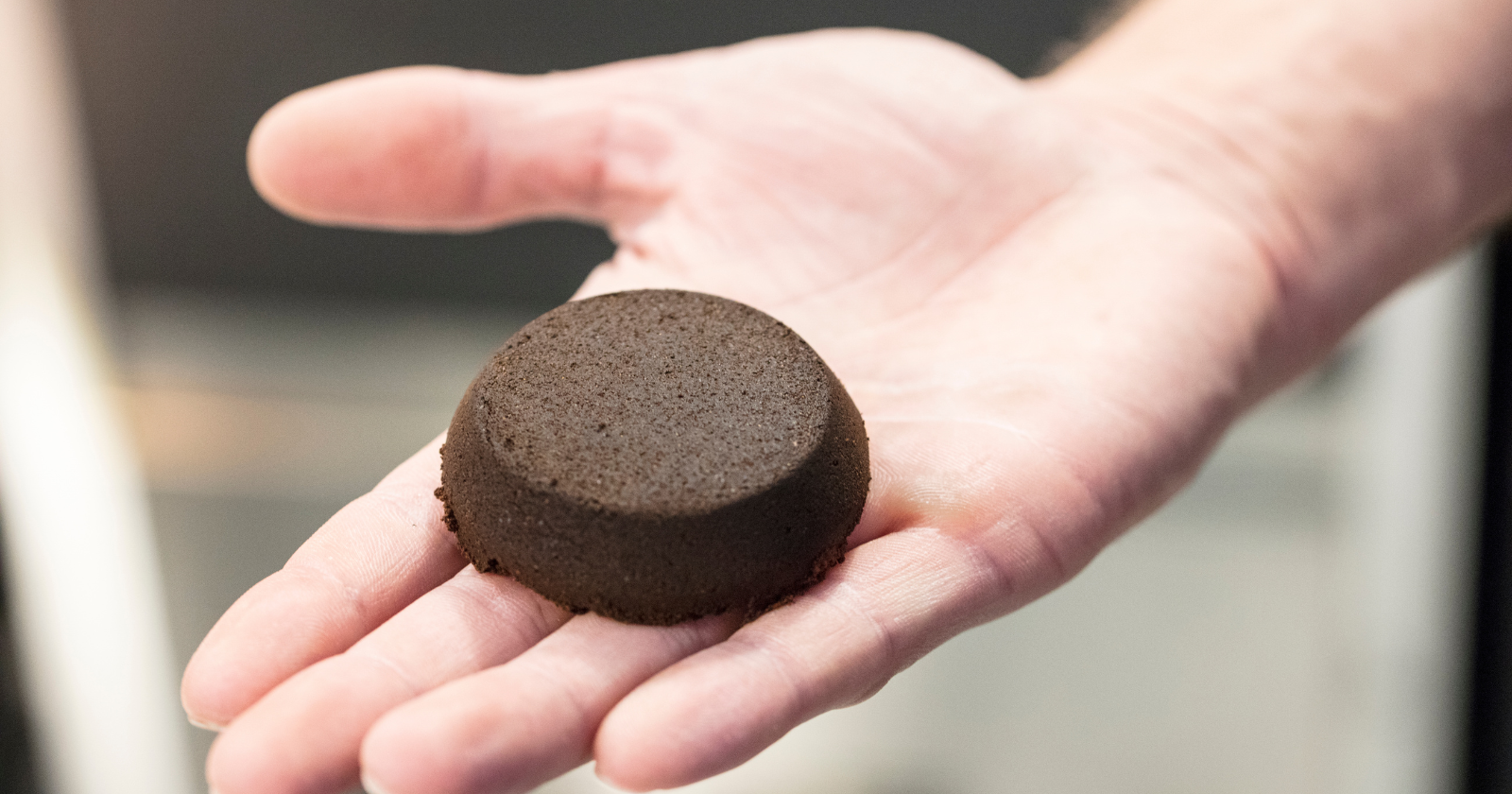
Lavazza unveiled Tablì last year and launched it first in Italy. The tablets are made of compressed ground coffee without any coating, binder, or gelatin. They can only be used with a Tablì coffee machine made by Lavazza. Each tablet is marked with the words “100% coffee.” At launch, the tabs come in five varieties: espresso, double espresso, decaf espresso, super crema, and lungo (brewed with more water).

Tablì System: Five Years of Development, Over 15 Patents

Antonio Baravalle, CEO of Lavazza, told CNBC: “The result that we’ve been able to achieve was through a very complicated industrial process in order to be able to have the coffee tablet very compact, to be able to deliver it without destroying it, to have it able to work in a coffee machine.” Tablì is the result of Lavazza’s acquisition of Italian startup Caffemotive in 2020. The new system took five years of development, more than 15 patents, and a new production facility in Gattinara, Italy, to bring it to market.

Item Details
System Name Tablì
Product Type 100% coffee tablets, no coating or binder
Available Varieties Espresso, double espresso, decaf, super crema, lungo
Promotional Bundle Price $99.99 (machine + 60 tabs + milk frother)
Official Launch Date August 2026

US Market: A Strategic Priority for Lavazza

The launch of Tablì in the U.S. comes as the country becomes an increasingly important part of Lavazza’s business. In 2025, the company’s North American revenue jumped 26.9%. Baravalle said, “We are strongly investing in the USA because we think it is an important space for us.” He added that Lavazza aims to eventually have a €1 billion ($1.15 billion) business in the U.S. “The brand is growing, in terms of equity, extremely well. We’ve spent a lot of money, for us, in the last two years, and we’re going to do that for the next five years.”

More than 130 years after its founding, the Lavazza family still privately owns the Italian company. In 2025, it reported net profit of €92 million on net revenues of €3.9 billion. In the U.S., Lavazza generates more than $100 million in annual dollar sales through retailers like Target and Walmart. For context, Keurig reported annual net sales of $3.99 billion for its U.S. coffee segment in 2025.

Fierce Competition in the Single-Serve Coffee Market

Keurig has dominated the single-serve coffee market in the U.S. for more than a decade. According to data from Euromonitor International, Keurig holds about half of the total U.S. market share for fresh ground coffee pods. Nespresso holds roughly a 7% share. Of course, Lavazza already sells K-cup pods in the U.S. through a partnership with Keurig. Baravalle said he does not expect to beat Keurig or Nespresso. “For us, it’s important to find our own space, but we are talking about two giants, and one of them, we have an important contract with that we are very happy with,” he said.

Sustainability: Lavazza’s Winning Card

Lavazza is betting that sustainability remains a top consideration for many coffee drinkers. Baravalle noted that this can differ across countries. For years, Keurig’s pods have been criticized for waste, leaving an opening for a competitor with a more environmentally friendly product. Keurig previously claimed that 100% of its K-cups have been recyclable since the end of 2020. In 2024, the Securities and Exchange Commission charged Keurig with making misleading statements over the recyclability of its pods. Keurig agreed to pay $1.5 million in penalties. Its website now reads, “Check locally, not recycled in many communities.” Nespresso’s aluminum pods are more easily recycled through the brand’s free mail-back service.

As Lavazza launches a potential competitor, Keurig has its own plans for plastic- and aluminum-free coffee pods. This fall, Keurig plans to launch “K-Rounds,” which uses a plant-based coating to preserve the ground coffee inside the puck-shaped pod. The innovation comes from a multi-year partnership with Delica Switzerland, maker of the CoffeeB system, which uses plastic-free coffee balls that have gained traction in parts of Europe.

Pricing and Availability: $99.99 Promotional Bundle

Lavazza will officially launch Tablì in the U.S. in August. A $99.99 bundle that includes the machine, a 60-count variety pack of tabs, and a milk frother is available now for pre-order on the company’s website. In May, Baravalle said the company was still determining its pricing strategy as it conducted consumer research to understand how much coffee drinkers were willing to pay. “We are also waiting to see how some big, huge competitors will move in the industry, trying to offer something similar,” Baravalle said. “But, for sure, Lavazza has premium positioning, and we’re not going to do something different from that.”

Frequently Asked Questions About Lavazza’s Tablì Launch in the U.S.

Q: What is Lavazza’s Tablì system?

A: A new brewing system that uses 100% compressed coffee tablets with no coating or binder, compatible only with Lavazza’s Tablì machine.

Q: How much does the promotional bundle cost?

A: $99.99, including the machine, 60 tabs, and a milk frother, available for pre-order.

Q: What is Keurig’s market share in U.S. coffee pods?

A: About 50%. Nespresso holds roughly 7%.

Q: Does Lavazza already sell pods for Keurig machines?

A: Yes, through a partnership with Keurig, Lavazza sells K-cup pods in the U.S.

Q: What is Keurig’s plan to compete on sustainability?

A: Keurig plans to launch “K-Rounds” this fall – plastic- and aluminum-free pods with a plant-based coating.

Lavazza is entering the U.S. single-serve coffee market with its Tablì system, focusing on sustainability and quality. Competition with Keurig and Nespresso intensifies, and with Keurig’s upcoming eco-friendly pods, the next battle in the American coffee market will be won by whoever delivers the best for consumers and the environment alike.

Prepared and edited by: Coffee World – Based on a CNBC report by Amelia Lucas (adapted).

All rights reserved. Republication with attribution permitted.

Publication date: June 8, 2026