ICO and ITC Expand Training Programme to Strengthen Links Between Origin and Specialty Coffee Markets

Dubai – Qahwa World

The International Coffee Organization highlights a strategic direction focused on building stronger connections between origin and specialty markets, emphasizing that stronger links between origin and specialty markets mean stronger opportunities for coffee producers.

The organization expresses pride in its partnership with the International Trade Centre in supporting initiatives designed to bridge this gap, connect producers more directly with high value markets, promote value addition at origin, and strengthen knowledge across the coffee value chain. The shared objective is clearly defined as working towards a coffee sector that is more inclusive, transparent and sustainable for everyone.

This vision is further reflected in the initiative titled Bridging the gap between origin and specialty coffee markets, which brings together Ethiopia, Honduras and other producing countries through a structured training partnership.

The programme demonstrates how coffee producers and cooperatives are being guided to understand specialty markets, build skills to connect with the right buyers, and communicate their identity with confidence. The central idea is a shift in role, expressed in the objective to evolve from simply delivering their coffee to actively selling it.

The International Trade Centre has partnered with the Specialty Coffee Association and the International Coffee Organization to deliver a series of practical workshops under the banner Introduction to Specialty Coffee Markets. These workshops are implemented through ITC’s ACP Business-Friendly and CLEAR Supply Chains projects, and are designed to strengthen market readiness and commercial positioning for coffee producers across origin countries.

The training structure is consistent across sessions and focuses on three core areas. It begins with understanding what makes a coffee specialty and how farm level decisions shape quality. It continues with identifying the right market segment for a given coffee profile. It concludes with learning how to communicate effectively with buyers and telling the cooperative’s story in a way that resonates across cultures and commercial contexts.

The first edition took place on 3 February 2026 in Addis Ababa, Ethiopia, bringing together 21 participants including cooperative representatives from Uganda. The session was delivered by Sara Yirga, a certified specialty coffee trainer and ITC consultant based in Ethiopia. A second edition followed on 19 March in San Pedro Sula, Honduras, with 32 participants consisting of 17 men and 15 women from cooperatives and producer organizations across the country, led by Andrés Montenegro, Specialty Coffee Association Sustainability Director. A third edition is planned ahead of World of Coffee Brussels which takes place on 24 June this year, with further editions planned across producing countries before year’s end.

The Honduras session brought together stakeholders from across the value chain including cooperatives, roasters and exporters. Participants described the training as a turning point in how they understand their position in the global specialty market. In Ethiopia, feedback highlighted immediate practical changes, including plans to approach different markets with greater specificity, tailor farm stories to buyer profiles, and engage more actively in the wider coffee world through events and social media.

  • Participant reflections illustrate the impact of the programme.

Karla María Cartagena from Cafico stated: “Participating in this workshop was a very enriching experience. It allowed us to strengthen our knowledge about specialty coffee markets and reaffirm the value of the work we do as an organization to position our coffee internationally.”

Orlin Alvarado from Proexo noted: “The training provided key tools for improving decision-making across the coffee value chain, from understanding intrinsic and extrinsic coffee attributes to learning how to strategically position our coffee in the specialty segment.”

Kristy Matamoros from Olanch Café said: “For Olanch Café, participating in this workshop reaffirms our commitment to excellence. A practical, dynamic, and enriching experience that broadened our strategic vision and motivates us to continue elevating our role within specialty coffee.”

Maira Lizzeth Gómez from COMIPRONIL Cooperative in Honduras shared: “It was our first time participating in a training on this topic. This learning motivates us to continue improving our processes and to identify new opportunities in the specialty coffee market. I am deeply grateful for these opportunities that strengthen our capabilities and contribute to the growth of our cooperative.”

From Ethiopia, Degaga Wakahum of Yedesta Buna Trading PLC said: “The introduction to the specialty marketing pilot programme was really good. It put everything in simple terms and made it easy to understand. Now I can easily compile information and put it in a way that the market can easily understand and aligned with the value attributes they want to focus on.”

Horom Teshome from Buunni Coffee added: “This training focused on three main areas: knowing the product, the market, and the right fit. It was a very insightful training. Especially for someone like me who’s very new to the coffee industry. It was practical, engaging, and experimental.”

The broader project framework is anchored in two major development initiatives. The ACP Business-Friendly Programme is funded by the European Union and the Organisation of African, Caribbean and Pacific States and jointly implemented by ITC’s Alliances for Action, the World Bank and UNIDO. It aims to improve the ability of agribusiness firms in ACP countries to compete, grow and prosper in domestic, regional, and international markets through inclusive and sustainable agricultural value chains that value all stakeholders from farm to shelf.

The CLEAR Supply Chains project, funded by the European Union, brings together the International Trade Centre, the International Labour Organization as the leading UN agency, the Food and Agricultural Organization, and the United Nations Children’s Fund. It focuses on addressing the root causes of child labour in supply chains, with a primary focus on coffee, while supporting farmer organizations, micro, small and medium enterprises, and value chain actors in strengthening commercial value, sustainability, Human Rights and Environmental Diligence alignment, and incomes for smallholder farmers in coffee producing countries including Uganda, Honduras, DRC and Vietnam.

Together, these efforts reflect a coordinated approach to strengthening origin capacity, improving market access, and building a more transparent and sustainable global coffee sector.

ICO, IACO Sign MoU on Coffee Cooperation

Agreement at World of Coffee San Diego focuses on data, regulation, and support for Africa’s coffee sector

San Diego — Qahwa World

The first day of World of Coffee San Diego saw the International Coffee Organization (ICO) and the Inter-African Coffee Organisation (IACO) formalise their cooperation through the signing of a Memorandum of Understanding (MoU).The agreement builds on an existing relationship between the two institutions and outlines areas for closer coordination across data, research, and policy support for African coffee-producing countries.

Structured Cooperation Across Key Areas

The MoU establishes a framework for collaboration in several technical and strategic areas relevant to the evolving coffee landscape.

These include improving data collection and analysis, supporting compliance with regulatory developments such as the European Union Deforestation Regulation (EUDR), advancing research into climate resilience, and strengthening capacity along the coffee value chain.

While the agreement does not introduce binding commitments, it provides a basis for coordinated initiatives and information exchange between the two organisations.

Africa’s Position in Focus

The partnership also reflects a continued effort to better integrate African perspectives into global coffee discussions.

African producing countries play a significant role in global coffee supply, yet continue to face structural challenges, including exposure to climate risks, limited access to finance, and evolving market requirements.

Through closer institutional coordination, the ICO and IACO aim to support member countries in navigating these challenges and engaging more effectively with international frameworks.

Institutional Context

The International Coffee Organization, established in 1963, serves as an intergovernmental platform for cooperation between coffee-exporting and importing countries, with a focus on market transparency, sustainability, and sector development.

The Inter-African Coffee Organisation represents African coffee-producing nations and works to promote production, improve quality, and enhance the competitiveness of the region’s coffee sector.

The MoU reflects a continuation of engagement between the two bodies rather than a new institutional direction.

World of Coffee as a Meeting Point

World of Coffee, organised by the Specialty Coffee Association, provides a platform for industry stakeholders ranging from producers and exporters to roasters, researchers, and policymakers.

The San Diego edition highlights ongoing conversations around sustainability, regulation, and market dynamics, with a growing emphasis on coordination between producing and consuming regions.

Participants

  • Vanusia Nogueira, Executive Director of the International Coffee Organization
  • H.E. Ambassador Solomon Rutega, Secretary General of the Inter-African Coffee Organisation
  • Claude Bizimana, Executive Chairman of the Inter-African Coffee Organisation
  • Celestine Gataraiha, Director of Research and Development at the Inter-African Coffee Organisation

Analysis

Memoranda of understanding are a common instrument in international cooperation, often used to formalise intent and provide a structure for future collaboration rather than immediate operational change.

In this context, the ICO–IACO agreement can be seen as part of a broader pattern of institutional alignment within the coffee sector, particularly as regulatory and environmental pressures increase.

Its practical significance will depend on how the outlined areas of cooperation translate into concrete programmes and measurable outcomes over time.

Reporting by Qahwa World from San Diego

Global Coffee Exports Surge Amid Asian Growth and Latin American Decline

LONDON – Qahwa World

The latest report from the International Coffee Organization reveals profound shifts in the global trade landscape, as total coffee exports across all forms surged to 12.62 million bags in January, marking a 13.7% increase compared to the same month last year. This growth was primarily driven by an exceptional performance in the Robusta sector, which successfully offset a significant contraction in shipments from major producers in South America, reflecting a fundamental change in the global supply structure.

Data highlights a dominant performance by the Asia & Oceania region, which achieved a 54.4% growth in exports. Vietnam led this surge with 3.99 million bags exported—a 73.3% annual increase—as the country accelerated shipments to clear inventories ahead of national holidays. Africa also maintained a strong presence with 14.2% growth, notably led by Ethiopia, which saw a 51.5% jump in shipments, confirming the recovery of supply chains and the continent’s ability to capture new market shares.

You may Read: ICO February 2026 Report: Has the Inflationary Wave Receded?

In contrast, South America faced a different reality, with exports declining by 21.3%. This downturn was directly impacted by a drop in shipments from Brazil and Colombia, ranging between 19% and 22%, following unfavorable localized weather conditions. This trend extended to Mexico and Central America, which recorded a 4.2% decrease, with Honduras suffering a sharp 28.7% drop in shipments due to logistical challenges and seasonal labor shortages still hindering the pace of exports in that region.

By category, Robusta exports grew by a staggering 49.1% to reach 5.25 million bags, accounting for a larger share of the global green bean trade at 48.4%. Furthermore, the data reveals a strategic shift toward value addition in origin countries, as exports of roasted coffee jumped by 25.2%. This indicates a growing desire among producers to move beyond raw material exports toward local manufacturing to maximize economic returns amidst the rapid changes in the global coffee sector.

ICO February 2026 Report: Has the Inflationary Wave Receded?

LONDON – Qahwa World

The latest monthly report issued by the International Coffee Organization for February 2026 has revealed a dramatic shift that could redefine the global coffee market dynamics for years to come. After a prolonged period of scarcity and record-high prices that strained both suppliers and consumers, the report announced a sharp decline in price indicators. This shift is driven by a “tsunami” of anticipated supplies from Brazil and Vietnam, officially placing the market on the verge of a historic surplus that ends a three-year cycle of consecutive deficits.

  • Price Earthquake

In February, the Organization’s Composite Indicator Price (I-CIP) averaged 267.57 US cents/lb, representing a sharp 9.9% decrease compared to January. This decline is not merely a transient fluctuation but reflects massive selling pressure in global exchanges; the index opened the month at a peak of 289.47 cents and slid to 248.86 cents by month-end, the lowest level recorded since August 2025.

You may read: Global Coffee Market Roadmap—January 2026

None of the major categories were immune to this downward trend, with the Organization’s statistical analysis showing the following results:

  • Colombian Milds: Declined by 11.0% to settle at 330.89 cents.
  • Other Milds: Retracted by 11.7% to reach 321.35 cents.
  • Brazilian Naturals: Shrank by 10.2% to reach 308.62 cents.

Robustas: Proved most resilient, declining by only 6.6%. Experts attribute this to global roasters increasing the proportion of Robusta in their commercial blends as a strategic solution to reduce overall costs, creating sustainable demand that stabilized its price levels.

  • Brazilian and Vietnamese Winds

Organization analysts believe the fundamental reason behind this “price correction” lies in the optimistic forecasts from Brazil’s National Supply Company (CONAB), which raised expectations for the 2026/27 crop to 66.2 million bags, a massive 17.1% annual increase.

These forecasts were supported by a tangible improvement in weather conditions and regular, heavy rainfall in key growing regions such as Minas Gerais and Espírito Santo, as well as improved outlooks in the Central Highlands of Vietnam. These factors prompted major international financial institutions to predict a global surplus of up to 8.64 million bags, leading large investment funds to liquidate long positions and pivot toward selling. This explains the 20.7% shrinkage in the arbitrage between the London and New York futures markets.

  • Global Trade Map

Regarding exports, January 2026 saw the shipment of 10.85 million bags of green beans, a 12.7% increase over January 2025. However, behind this headline figure lie geographical disparities reflecting specific regional logistical and production challenges:

Asia & Oceania: The region achieved a staggering 51.8% growth, with Vietnam alone exporting 3.99 million bags in January, capitalizing on accelerated shipping ahead of the Lunar New Year (Tet) holiday.

Africa: Continued its recovery with 14.2% growth. Ethiopia stood out as a strategic player with a 51.5% increase in shipments, while Uganda grew by 11.2%, reflecting a significant improvement in the continent’s internal supply chains.

South America: Recorded a surprising 21.3% decline. The biggest shock was in Colombia, where production plummeted by 34.1% due to unfavorable localized weather fluctuations, negatively impacting the flow of premium Colombian Milds to global markets.

Mexico & Central America: Registered a slight 4.2% decrease, with Honduras suffering a sharp 28.7% drop in exports due to seasonal labor shortages and logistical hurdles.

Read Also: ICO Releases Global Coffee Market Report – December 2025

  • Stocks and Processed Coffee

For the first time in months, the International Coffee Organization report indicates a slight improvement in certified stocks. New York (ICE) stocks rose by 11.4% to 0.52 million bags, while London stocks increased by 3.1% to 0.76 million bags. This rise provides a relative “safety cushion” against sudden climatic or political shocks.

A notable phenomenon in the report was the export of “Roasted Coffee,” which jumped by 25.2%. This indicates a strategic shift in origin countries toward local processing to add value to their products rather than relying solely on raw bean exports. Meanwhile, soluble coffee exports grew at a steady pace of 1.9%.

  • The Retail Paradox

The report highlighted a crucial point affecting the real economy: despite the collapse of raw coffee prices in global exchanges, retail prices in the United States jumped by 18.3% year-on-year in January 2026. This persistent inflation, totaling 47% cumulatively over five years, is mainly due to rising logistics, energy, and labor costs in consuming countries. Additionally, accumulating consumer debt is beginning to weigh on purchasing power, which may threaten the expected 1.7% growth in global consumption.

  • Future Outlook

We are entering a phase of total “reset” in coffee market balances. The market is currently moving to narrow the global deficit to just 0.4 million bags this season, paving the way for the anticipated historic surplus next year. For investors, roasters, and consumers, the February 2026 report serves as the “final whistle” for the era of frantic speculation and chronic shortages, signaling the start of a price stability phase led by Brazilian production abundance and Vietnamese logistical efficiency.

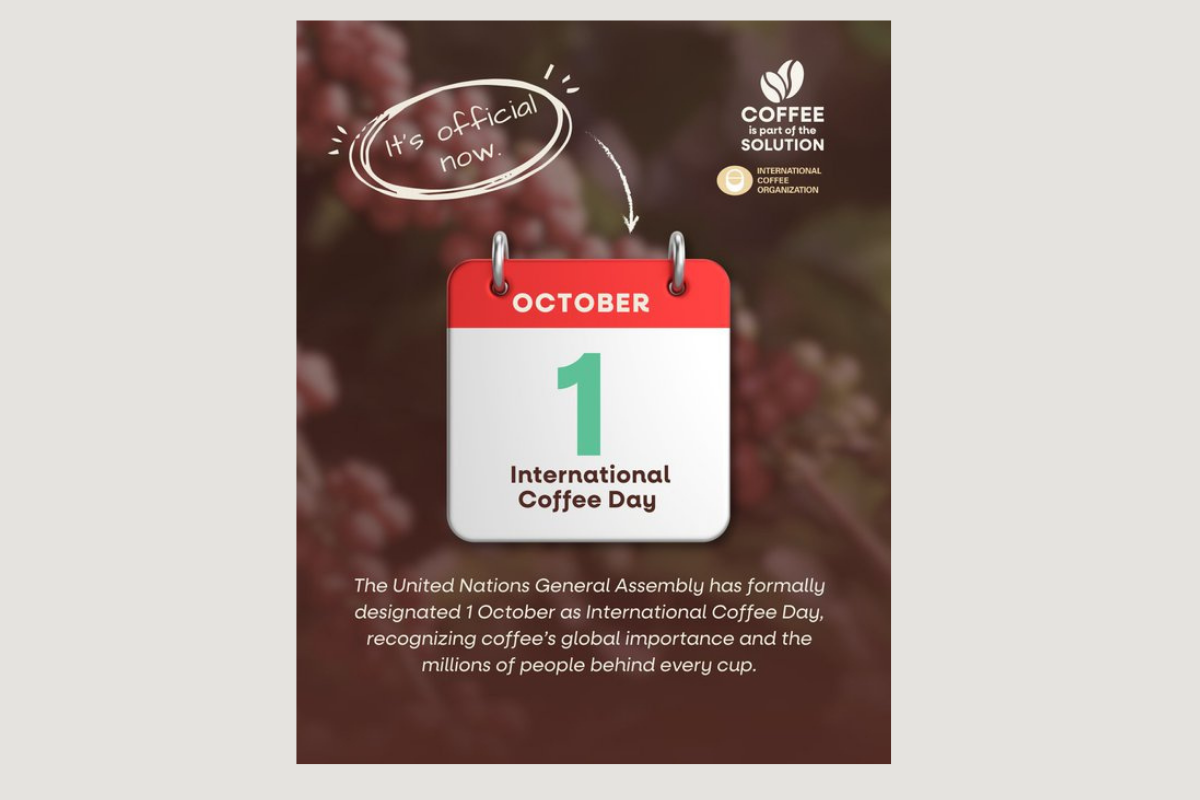
UN Officially Designates 1 October as International Coffee Day

Dubai – Qahwa World

The International Coffee Organization has announced what it described as “a historic moment for the global coffee community” after the United Nations General Assembly formally designated 1 October as International Coffee Day.

According to the announcement, the decision recognizes coffee’s profound importance to global economies, cultures, and livelihoods, highlighting the role the beverage plays across producing and consuming nations alike.

The milestone follows the adoption of Resolution A/80/L.44 by the United Nations General Assembly on 10 March 2026. The resolution, introduced by Brazil, received 150 votes in favor, with one vote against from the United States and one abstention from Canada.

United Nations Officially Declares 1 October International Coffee Day

Under the resolution, 1 October will now be officially recognized every year as International Coffee Day, and all countries, United Nations bodies, and relevant stakeholders are invited to organize activities that highlight the economic, social, and environmental significance of coffee.

The resolution also invites the Food and Agriculture Organization of the United Nations to lead the annual observance in cooperation with the International Coffee Organization.

  • Elevating an existing global celebration

International Coffee Day has already been observed globally on 1 October since 2015, when the initiative was first launched by the International Coffee Organization during Expo 2015 Milan.

The new United Nations designation elevates the observance to an official international day within the UN system, giving the coffee sector broader global recognition and strengthening the visibility of the millions of people who depend on coffee for their livelihoods.

United Nations Officially Declares 1 October International Coffee Day

In its statement, the International Coffee Organization noted that the decision reflects the collective efforts of its member countries, institutional partners, and international organizations, including the Food and Agriculture Organization, to raise awareness of the coffee sector’s importance.

  • Supporting farmers and sustainability

Coffee remains one of the world’s most widely traded agricultural commodities and supports millions of farmers, workers, traders, and communities across Africa, Asia, and Latin America.

The International Coffee Organization and the Food and Agriculture Organization see the UN recognition as an opportunity to strengthen global attention to the sector’s key challenges and opportunities, including sustainability, farmer livelihoods, and climate-related risks affecting coffee production.

Qu Dongyu welcomed the decision, stating that the new international day will help raise awareness of coffee’s socio-economic importance and reinforce its role in supporting efforts to reduce poverty worldwide.

United Nations Officially Declares 1 October International Coffee Day

For the global coffee community—from smallholder farmers to exporters, roasters, and consumers—the recognition marks a significant step toward greater international acknowledgment of the industry’s cultural and economic impact.

With the adoption of the UN resolution, International Coffee Day on 1 October is expected to gain even broader global participation, as governments, organizations, and coffee professionals organize events and initiatives celebrating the beverage and the people behind every cup.

ICO Launches 2026 Global Campaign: Coffee is Part of the Solution

London – QAHWA WORLD

The International Coffee Organization (ICO) has launched its 2026 global communications campaign under the theme “Coffee is Part of the Solution,” highlighting the sector’s role in addressing major global challenges.

Coffee provides income for approximately 12.5 million farming families worldwide and plays a central role in socio-economic development across producing regions and their communities.

Through this campaign, the ICO aims to reinforce the sector’s contribution to tackling pressing issues, including inequality, livelihoods, sustainability, climate resilience and inclusive development.

You may like: Bridging the Gap: An Exclusive Dialogue with Vanusia Nogueira on the Global Coffee Crisis and the Path to 2026

Beyond its economic value, coffee contributes in many regions to rural development, carbon sequestration, environmental sustainability, cultural heritage preservation, inclusive infrastructure and innovation. It also strengthens ties between producing and consuming countries, as well as between public and private stakeholders.

The campaign seeks to spotlight these contributions while encouraging collective action across the entire coffee value chain.

Throughout 2026, the ICO will present evidence, strategies and initiatives demonstrating how collaboration among producers, governments, the private sector, financial institutions and civil society can amplify coffee’s positive impact in addressing global challenges.

“Coffee has always been more than a commodity. It is a catalyst for development, dialogue and cooperation,” said Vanusia Nogueira, Executive Director of the ICO. “Through this campaign, we want to show that when the sector works together, coffee can support resilience, improve livelihoods and contribute meaningfully to solutions.”

The initiative also invites the global coffee community to share examples of impact-driven projects using the hashtag #CoffeeIsPartOfTheSolution, illustrating how collaboration can deliver measurable results on the ground.

As the intergovernmental body representing both coffee-exporting and importing countries, and convening public and private stakeholders, the ICO will continue to mobilize trusted data, dialogue, finance, knowledge and innovation. The campaign will be rolled out across the organization’s digital platforms throughout 2026, supported by institutional videos, data insights and engagement with members and partners worldwide.

The International Coffee Organization is the only intergovernmental organization dedicated to enhancing the sustainability of the coffee sector for both exporting and importing countries. It serves as a high-level platform for public and private stakeholders, provides official statistics on global coffee production, trade and consumption, and facilitates the development and funding of technical cooperation projects and public-private partnerships to advance the coffee industry.

Minas Gerais Rains End Speculative Fever and Topple Global Coffee Prices

DUBAI – QAHWA WORLD

Global coffee markets witnessed a dramatic shift in the final week of January 2026, as a wave of heavy rainfall in Brazilian production regions toppled the hopes of those betting on continued price increases. In a corrective movement described as the most violent in months, the pound of coffee lost more than 21 cents of its value within just 72 hours, causing the International Coffee Organization Composite Indicator Price (I-CIP) to plummet from a peak of 304.17 cents on January 27th to 283.02 cents by the end of the month. This freefall was not merely a response to a passing climatic event, but rather an official announcement of the end of the “risk premium” that had fueled markets throughout the past period due to fears of a long-term drought in the state of “Minas Gerais,” the beating heart of coffee production in Brazil, according to the latest data issued by the International Coffee Organization (ICO) Report for January 2026.

The report’s analytical data indicates that the market entered January in a state of cautious balance, as clear directional catalysts were absent, keeping prices within a narrow range that left farmers in a state of financial satisfaction without pushing them toward aggressive selling. However, this situation evaporated immediately upon the release of meteorological reports confirming improved moisture in the Brazilian soil, providing a strong signal for investment funds and major speculators on the New York Stock Exchange to liquidate their long positions and flee the market before prices retreated to minimum levels. This “mass exodus” of speculators doubled the downward momentum, turning the price correction into a rapid collapse that disrupted the calculations of exporters who had bet on prices remaining above the 300-cent barrier.

Economically, this collapse was linked to local currency variables in Brazil; as the strength of the “Real” against the Dollar played a dual role at the beginning of the month by raising prices, before global markets succumbed to the pressure of expected future supply. Analysts believe that the recent rains not only improved the condition of the existing “Arabica” crop but also sent reassuring messages regarding the 2026/2027 season, which pulled the rug from under the traders who built their strategies on supply scarcity. This shift placed global roasting companies in a stronger negotiating position, as they began to reduce their spot purchases in anticipation of further declines, reflecting the technical state of “Backwardation” dominating the exchanges, where spot prices remain higher than futures contracts, discouraging the desire to build long-term inventories at high prices.

On the field level, the International Coffee Organization report confirmed that these climatic developments have redrawn the forecast map for the first quarter of the year, as markets are now expected to witness an abundance of supplies with the fading fears of “water stress.” In conjunction with these price pressures, major players in the New York market began reassessing their positions, amid expectations that downward pressure will continue as long as the sky continues to grant Brazil’s farms the necessary moisture. The “Rain Revolution,” as some traders called it, was nothing but a harsh reminder that technology and financial analysis remain helpless before weather fluctuations in the world’s largest coffee-producing country, and that the security of the global cup remains more linked to weather maps over the mountains of Brazil than to the policies of central banks.

Tight Supplies Push Coffee Prices to Multi-Week Highs in September 2025

Dubai, 12 August 2025 (Qahwa World) – The global coffee market saw a sharp rally at the start of August, with September Arabica futures (KCU25) rising by 14.00 cents (+4.53%) to hit a seven-week high, while September Robusta futures (RMU25) climbed 188 points (+5.28%) to a four-week high. The surge was fueled by clear signs of tightening supply in the world’s largest producing countries, driven by lower exports and falling inventories.

Brazil’s Trade Ministry reported that the country’s exports of unroasted coffee in July dropped 20.4% year-on-year to 161,000 metric tons. At the same time, ICE-monitored Arabica inventories fell to a 14.5-month low of 738,095 bags, while Robusta stocks declined to a two-week low of 6,981 lots.

Markets are closely watching the United States’ stance on import tariffs, as President Trump has yet to announce an exemption for coffee from the 50% import duty on Brazilian exports — a move that could impact U.S. sales and boost domestic inventories in Brazil.

In weather developments, Minas Gerais, Brazil’s largest Arabica-growing region, recorded 4.8 mm of rainfall during the week ending 9 August, amounting to 109% of the historical average, easing drought concerns. Harvest progress remains swift, with Safras & Mercado estimating that 94% of the 2025/2026 crop had been completed as of 6 August (99% for Robusta and 91% for Arabica). Cooxupé, the country’s largest coffee cooperative and exporter, reported its members had harvested 74% of their crop by 1 August.

Globally, the International Coffee Organization’s monthly report showed that June exports rose 7.3% year-on-year to 11.69 million bags, while cumulative exports from October to June slipped 0.2%.

In recent months, prices have faced downward pressure from expectations of abundant supply. In June, the U.S. Department of Agriculture forecast Brazil’s 2025/2026 coffee production at 65 million bags (+0.5%), and Vietnam’s output at 31 million bags (+6.9%, the highest in four years). The USDA also projected record global output of 178.68 million bags (+2.5%), with Arabica production down 1.7% and Robusta production up 7.9%. Ending stocks are expected to rise 4.9% to 22.82 million bags.

Brazil’s Coffee Exporters Council (Cecafe) reported that June green coffee exports fell 31% year-on-year to 2.3 million bags, with Arabica shipments down 27% and Robusta down 42%. In Vietnam, 2023/2024 production dropped 20% year-on-year due to drought, hitting a four-year low, while exports from January to July 2025 rose 6.9% to 1.05 million metric tons.

Volcafe projects that the global Arabica market will post a deficit of 8.5 million bags in 2025/2026, compared to a 5.5 million-bag deficit in 2024/2025, marking the fifth consecutive year of shortfall.

International Coffee Organization (ICO) Offers Exciting Internship Opportunities for Students

LONDON, March 16, 2024(QW) – Are you a student seeking invaluable experience in the realm of international affairs and economic development? The International Coffee Organization (ICO) presents an exceptional chance to dive into the world of coffee trade and development through its Internship Programme.

Why ICO Internship? The ICO Internship Programme provides students with a unique insight into the daily operations of an international organization. Interns collaborate on a myriad of topics including statistical analysis, communication, advocacy, event management, research, and project formulation.

Who Can Apply? Applicants must be enrolled in a Master’s or Ph.D. program, final-year Bachelor’s students, or recent graduates within one year of completing their degree. Proficiency in English and preferably one of the other official ICO languages (French, Portuguese, Spanish) is required.

What Does the Internship Offer? Interns have the opportunity to work closely with ICO experts, engage in high-level discussions with government and industry representatives, and contribute to the organization’s mission of promoting a sustainable coffee sector. The internship duration typically ranges from two to six months and can be extended up to nine months.

How to Apply? Interested candidates should submit a brief CV and Cover Note to [email protected]. The Cover Note should outline the applicant’s degree program, graduation date, internship interest, preferred duration, areas of interest, IT skills, and past work experience (if any).

Join the ICO Community! ICO is dedicated to strengthening the global coffee sector and promoting sustainable growth for the betterment of all participants. Embrace this opportunity to make a tangible impact and advance your career in the exciting world of international coffee trade and development.

Apply now and embark on a rewarding journey with ICO!

For more information, visit ICO Internship Programme.

(Note: The ICO Internship Programme is a volunteer activity and does not offer financial compensation.)

About International Coffee Organization (ICO) The ICO is the principal intergovernmental organization for coffee, uniting exporting and importing governments to address challenges in the global coffee sector through international cooperation. Its member governments represent 98% of world coffee production and 83% of world consumption.

International Coffee Organization: 70% of Coffee Farming Workforce Comprises Women

The International Coffee Organization (ICO) has revealed that women constitute a significant 70% of the agricultural workforce in coffee-producing countries. The organization calls for the empowerment and enhancement of women’s roles, acknowledging the pivotal contribution women make in the coffee sector.

In celebration of International Women’s Day, the ICO, through its official Instagram account, emphasized the urgency of gender equality and the empowerment of women. It highlighted the global awareness and support for initiatives that uplift women in the coffee industry.

The organization stated, “Women make up to 70% of the agricultural workforce in coffee-producing countries. These statistics include women who independently manage their farms and those who contribute to both paid and unpaid work in family farms and agricultural activities.”

Roles are often divided by gender, with women in families dedicating disproportionately more time to coffee cultivation, harvesting, and processing. In contrast, men focus on less time-consuming activities such as crop storage and marketing.

The ICO pointed out that, out of the estimated 25 million coffee producers worldwide, 5 million are women, underscoring the significant impact women have on the coffee supply chain and the importance of recognizing their contributions.

“Approximately 20%-30% of coffee farms are managed by women. Despite their vital role, the lack of land tenure security poses challenges, leading to difficulties in accessing financing for female entrepreneurs. Social, cultural, and institutional traditions, alongside land inheritance systems, are common formal and informal barriers hindering gender equality in the agro-industrial sector.”

On the occasion of International Women’s Day, the ICO urged individuals, organizations, and communities to participate actively in sharing these facts and supporting initiatives aimed at promoting gender equality and empowering women in the coffee industry. By supporting women in coffee-producing regions, we can contribute to making the global coffee sector more inclusive and sustainable.

International Coffee Organization Explores Coffee’s Positive Impact on Type 2 Diabetes

The International Coffee Organization (ICO) continues its informative series, aiming to highlight the health benefits of our beloved beverage based on the Coffee Guide by the International Trade Centre.

In today’s installment, the organization sheds light on the impact of coffee on type 2 diabetes, revealing a significant correlation between coffee consumption and a reduced risk of this common disease.

The ICO confirms that enjoying 3-4 cups of coffee daily is associated with a substantial 25% decrease in the risk of type 2 diabetes compared to those who consume little or no coffee.

Moreover, the positive effect persists with each additional cup, provided it remains within the recommended limit of up to five cups per day. The organization emphasizes that both caffeinated and decaffeinated coffee exhibit the same preventive effects.

Beyond diabetes, the series underscores that consuming 3-5 cups of coffee daily may also lower the risk of cardiovascular diseases and death for healthy individuals. Our beloved beverage appears to be more than just a source of warmth and comfort; it can contribute to heart health.

The ICO assures that moderate caffeine intake carries no increased risks of heart and vascular diseases, irregular heartbeats, heart failure, or high blood pressure. Therefore, coffee enthusiasts can rejoice, as indulging in their favorite drink in moderation may be more beneficial than they realize.

It’s worth noting that these valuable insights are based on research conducted by the Scientific Information Institute on Coffee and are extracted from the Coffee Guide affiliated with the International Trade Centre—a rich resource providing insights from the ICO.

While coffee enthusiasts everywhere savor their daily cup, this serves as a reminder that our favorite beverage may pave the way for a healthier future for us all.


International Coffee Organization (ICO) Unveils 5 Fascinating Facts About Your Daily Cup!

In an exclusive revelation today, the International Coffee Organization (ICO) is shedding light on five intriguing facts about our daily cup of joe that may have slipped under your radar. This unveiling marks the commencement of a captivating series of posts, exploring the intricate relationship between coffee, health, sustainability, and more. This informative series draws inspiration from The ITC Coffee Guide, a valuable resource on the coffee trade enriched with insights from the ICO.

Fact 1: A Rich Tapestry of Micronutrients One of the lesser-known gems about coffee is its natural abundance of micronutrients. Potassium, magnesium, niacin, and antioxidants are among the nutritional treasures found in every cup, contributing to the daily intake of essential elements.

Fact 2: Tailored Nutrition The nutritional composition of your coffee experience is not a one-size-fits-all affair. Depending on the additions of milk, cream, sugar, or other ingredients, the nutritional profile of your cup can vary significantly, allowing for a personalized and delightful experience.

Fact 3: Fitness-Friendly Brew For coffee enthusiasts who prioritize fitness, here’s a delightful tidbit – coffee itself contains virtually no calories! It’s a guilt-free indulgence for those with a flair for healthy lifestyles.

Fact 4: Caffeine Considerations According to the European Food Safety Authority (EFSA), indulging in up to 400mg of caffeine per day, equivalent to approximately five cups of coffee, is deemed safe within the context of a balanced diet and an active lifestyle. This reassures coffee lovers that their daily fix falls well within the bounds of a healthy routine.

Fact 5: Caffeine Chronicles Delving into the caffeine content, a typical cup of coffee packs a punch with 75-100 milligrams (mg) of caffeine. This makes caffeine the primary bioactive compound in our beloved beverage, contributing to its energizing and stimulating effects.

Stay tuned as the ICO continues to unravel the mysteries behind our cherished daily brew, exploring the intricate connections between coffee, well-being, and sustainability. Join us on this exciting journey through the world of coffee, where each sip holds a story waiting to be discovered.