What Must Be Done to Stop Exporting Raw Coffee and Selling It Cheap?

Source: Qahwa World World (translated from Vietnamese) |
Author: Nguyễn Nghĩa |
Date: June 7, 2026

What Must Be Done to Stop Exporting Raw Coffee and Selling It Cheap?

Key Points:

  • Lam Dong, Vietnam’s largest coffee-growing province, still exports nearly 100% raw beans at low prices.
  • In the first 4 months of 2026, export volume rose 9.4% but value fell 10.3% year-on-year.
  • Processing accounts for 60% of a coffee’s quality and refinement.
  • International standards (EUDR, Net Zero, ESG) are becoming mandatory market access requirements.
  • A strategic shift to deep processing and modern technology is urgently needed.
  • Cooperatives must become the pillar linking small farmers.

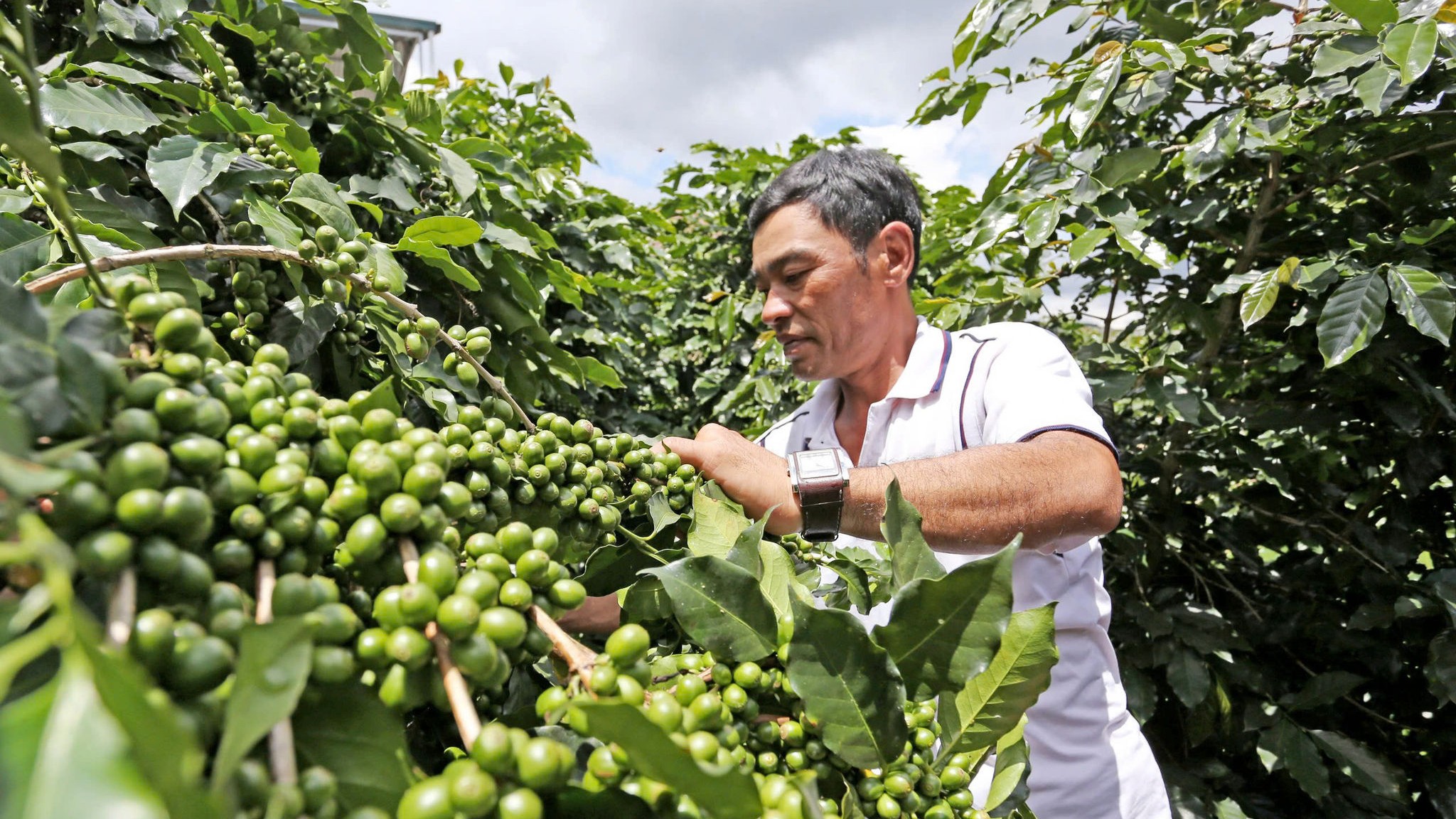
Despite being the largest coffee province in Vietnam, Lam Dong remains trapped in the cycle of exporting raw beans at low prices. The time has come for this strategic commodity to undergo a revolution, shifting from raw beans to refined processing to enhance value.

The Paradox of the “Brown Gold” Capital

In 2025, among agricultural, forestry, and fishery exports to key markets such as the European Union, coffee, together with seafood and cashew nuts, led the value, accounting for 49%, 15%, and 14% respectively.

In the first four months of 2026, Vietnam’s coffee export picture remained dynamic, with volume reaching approximately 791,090 tonnes and value reaching 3.66 billion USD. However, behind these numbers lies a troubling reality: export volume increased by 9.4%, but value decreased by 10.3% compared to the same period last year.

This decline exposes a fundamental weakness of the coffee industry: over-reliance on raw bean exports. Lam Dong province has the largest coffee growing area in the country, with about 314,000 hectares currently under harvest, average yield of 3.2 tonnes of green beans per hectare. The paradox is stark: nearly 100% of export output remains raw green beans. Yet processing accounts for up to 60% of a coffee’s flavour and refinement.

Technology as the Gateway to the Value Chain

According to the Vietnam Coffee and Cocoa Association, Vietnam has joined a total of 17 bilateral and multilateral free trade agreements (FTAs). New generation FTAs such as EVFTA, CPTPP and RCEP open up favourable tariff opportunities, but the path is also full of technical barriers.

If Lam Dong continues with a small-scale, fragmented production model lacking long-term chain linkages, the coffee industry will be pushed into a weak position. “Large markets do not just buy coffee beans; they buy the ‘environmental ethics’ of the production process. International standards are becoming increasingly stringent: the EU Deforestation Regulation (EUDR), Net Zero commitments, labour rights, and ESG governance standards are becoming mandatory passports for market access,” Mr. Tuan emphasised.

Standard / Requirement Impact on Coffee Exports
EUDR (Anti-deforestation) Traceability and proof of forest-free production
Net Zero / ESG Carbon footprint, social responsibility, governance
4C, Rainforest Alliance, VietGAP Minimum entry certificates for premium markets

What Must Be Done?

To stop exporting raw beans and selling cheap, Lam Dong’s coffee industry needs a restructuring strategy. The core focus is to strongly attract investment in deep processing technology. “We need to design and issue preferential policies on taxes, land funds, and green credit to invite large investors to build modern, large-scale integrated processing plants.

Attention should be paid to attracting investment in producing ground roasted coffee, specialty instant coffee for export. Only by boldly investing in modern drying technology can the value of coffee beans be multiplied,” shared Mr. Bach Thanh Tuan, Vice President of the Vietnam Coffee and Cocoa Association.

Alongside attracting investment, economists also argue that internal strength must be consolidated by promoting collective economic development. Cooperatives and co-operative groups must truly become the backbone to link small farm households, consolidate output, and thereby enhance negotiation and pricing power.

The shift from quantity to quality, from raw exports to refined processing, requires the joint effort of government, businesses, and farmers. When cultivation, care, and deep processing technology are prioritised, combined with market-oriented thinking, Lam Dong’s coffee beans will certainly shed the “cheap price tag” and confidently compete through the brand and value of the very land that grew them.

Original Vietnamese article by Nguyễn Nghĩa – Translated and adapted by Coffee World.

All rights reserved. Republication with attribution permitted.

Publication date: June 7, 2026

Vietnam Coffee Output Rises to 32.5 Million Bags in 2026

Author: Qahwa World – Ho Chi Minh City
Source: USDA Foreign Agricultural Service – Report VM2026-0016
Date: May 20, 2026

Vietnam Coffee Output Rises to 32.5 Million Bags in 2026

Executive Summary

  • Vietnam coffee production for 2026/2027 is forecast at 32.5 million 60 kg bags, comprising 31.4 million bags of Robusta and 1.1 million bags of Arabica.
  • Harvested area expands to 644,000 hectares, driven by replanting programs and price incentives from 2024-2025 peaks.
  • Exports are forecast at 28.95 million bags, up 2% from 2025/2026, with strong demand from Germany, Italy, the United States, and emerging Asian markets.
  • Domestic consumption continues to grow, reaching 5 million bags, supported by rising middle class and tourism.
  • Falling prices from recent peaks have prompted producers to release stocks, supporting strong export performance.
  • Fertilizer and fuel costs up 30%, labor costs up 33%, pressuring farmer income.
  • El Niño with 62% probability expected in mid-2026, threatening dry conditions in the Central Highlands.

The USDA Foreign Agricultural Service office in Ho Chi Minh City forecasts Vietnam coffee production for marketing year 2026/2027 at 32.5 million 60 kg bags, comprising 31.4 million bags of Robusta and 1.1 million bags of Arabica. This represents an increase from the revised 2025/2026 estimate of 31.7 million bags.

The increase is driven by production expansion following the price peaks of 2024-2025, replanting programs, and expansion by large private enterprises such as Hoang Anh Gia Lai Group and Vinh Hiep Co., Ltd.

Exports are forecast at 28.95 million bags in 2026/2027, up 2% from the revised 2025/2026 estimate of 28.5 million bags. The first half of 2025/2026 saw exports reach 15.7 million bags, a 27.5% increase year-on-year.

Domestic consumption continues to grow, forecast at 5 million bags in 2026/2027, up from 4.9 million bags. GDP grew above 8% in 2025, and tourism reached 21 million international visitors, boosting coffee demand.

According to the Ministry of Agriculture and Environment, Vietnam’s total coffee area has reached approximately 730,000 hectares. Harvested area for 2026/2027 is forecast at 644,000 hectares, up from 630,200 hectares in 2025/2026.

Improved productivity and climate-resilient varieties drive steady Robusta growth, while Arabica area remains stable. Replanted areas under the Coffee Replanting Program (2021-2023) will enter stable harvest phase with high-yield potential.

However, the Western Highland Agriculture and Forestry Science Institute warns that approximately 30% of current coffee area is 20 years or older and requires replanting or renewal to maintain productivity.

Rising Input Costs and Farmer Concerns

High coffee export prices in 2024-2025 created strong production incentives but also risks to long-term sustainability. Farmers increased input applications, often applying fertilizer beyond recommended levels, resulting in excess nitrogen, phosphorus, and potassium in some areas of the Central Highlands.

Early or excessive irrigation may increase coffee yield in the short term, but depletes groundwater and increases production costs over time. Local farmers report that production costs have increased significantly, with fertilizer and fuel rising approximately 30% and labor costs rising 33% compared to the previous year.

Farmers express concern about reduced rainfall and drought conditions in the Central Highlands. Precipitation fell below normal from January to March 2026 in major coffee-producing provinces including Dak Lak, Gia Lai, Kon Tum, Dak Nong, and Lam Dong.

NOAA forecasts a 62% probability that El Niño conditions will emerge during June to August 2026 and persist through at least the end of 2026. El Niño typically brings warmer and drier conditions to parts of Southeast Asia, which could reduce coffee productivity and production.

Sustainability and EUDR Compliance

Vietnam is steadily transforming from a quantity-focused coffee exporter into a globally competitive producer of high-quality, innovative, and sustainable coffee products. As of 2025, approximately 40% of Vietnam’s coffee area has achieved sustainability certification standards such as Rainforest Alliance, Fairtrade, 4C, and UTZ.

The Specialty Coffee Program, developed by MAE in 2021, continues to focus on improving bean quality through better farming practices, selective harvesting, and post-harvest processing techniques. This shift attracts attention from global buyers seeking distinctive flavor profiles and traceable origin stories.

MAE and coffee export companies are actively working to fulfill EU Deforestation Regulation (EUDR) requirements, which take effect in December 2026. However, challenges remain with more than 600,000 smallholder households involved in coffee production.

Intercropping and Crop Diversification

In recent years, many farmers in the Central Highlands converted portions of their coffee-growing areas to higher-value crops like durian, which can generate profits 2.5 to 3 times higher than coffee per unit area. However, the sharp rise in coffee export prices in 2024 reversed this trend, prompting farmers to return to coffee cultivation.

The traditional coffee monoculture model is gradually shifting toward intercropping systems, where farmers grow coffee alongside durian, avocado, macadamia, or pepper. While intercropping helps diversify farmer income, it reduces coffee tree density per unit area, complicating accurate acreage measurements.

Exports and Markets

Vietnam exported approximately 15.7 million bags in the first half of 2025/2026, a 27.5% increase compared to the same period in 2024/2025. Major markets demonstrated strong export growth, including Germany (up 46%), Italy (up 31%), the United States (up 37%), Spain (up 22%), Russia (up 35%), and Japan (up 19%).

Asian markets also recorded significant growth, including India (up 1,022%), Cambodia (up 473%), Thailand (up 56%), and China (up 50%). Soluble and roasted coffee exports account for approximately 13% of total exports, with forecast at 3.55 million bags in 2026/2027.

During the first half of 2025/2026, Laos was Vietnam’s largest coffee supplier, accounting for 45% of total imports, followed by Indonesia (19%), Brazil (16%), and Uganda (10%).

Prices and Stocks

The average export price reached $5,127 per ton in the first half of 2025/2026, down 9% compared to the same period of 2024/2025. In March 2026, the export price was $4,553 per ton, a 22% decrease compared to March 2025. However, coffee prices remain elevated compared to 2023/2024.

Domestic Robusta coffee prices in the Central Highlands averaged approximately VND 102,800 per kg in the first half of 2025/2026, a 16% decrease compared to the first half of 2024/2025.

Ending stocks for 2025/2026 are revised down to 689,000 bags based on stronger exports and higher domestic consumption. Stocks are forecast to continue declining to 489,000 bags in 2026/2027.

Table 1: Vietnam Coffee Production, Supply and Distribution (1,000 60 kg bags)

Item 2024/2025 2025/2026 2026/2027
Beginning Stocks 889 1,089 689
Arabica Production 1,000 1,200 1,100
Robusta Production 28,000 30,500 31,400
Total Production 29,000 31,700 32,500
Total Imports 1,200 1,300 1,250
Total Exports 25,200 28,500 28,950
Domestic Consumption 4,800 4,900 5,000
Ending Stocks 1,089 689 489

Frequently Asked Questions

How much coffee will Vietnam produce in 2026/2027?

Production is forecast at 32.5 million 60 kg bags, including 31.4 million bags of Robusta and 1.1 million bags of Arabica.

What is driving the increase in production?

Expansion in harvested area, replanting programs, and high price incentives from 2024-2025 peaks.

What are the main export destinations for Vietnamese coffee?

Major markets include Germany, Italy, the United States, Spain, Russia, Japan, and emerging Asian markets like India, Thailand, and China.

How are prices trending?

Export prices have declined 9% from the same period last year, and domestic Robusta prices are down 16%.

What is the El Niño risk for Vietnam’s coffee crop?

NOAA forecasts a 62% probability of El Niño emerging by mid-2026, which could bring drier conditions to the Central Highlands and reduce productivity.

How much of Vietnam’s coffee area is certified sustainable?

Approximately 40% of Vietnam’s coffee area has achieved sustainability certifications such as Rainforest Alliance, Fairtrade, 4C, and UTZ.


Author: Qahwa World – Ho Chi Minh City | Source: USDA Foreign Agricultural Service – Report VM2026-0016 | Date: May 20, 2026

Ethiopian Coffee Output Rises 4.7% in 2026

Author: Qahwa World – Addis Ababa

Source: USDA Foreign Agricultural Service – Report ET2026-0005
Date: May 20, 2026

Executive Summary

  • Ethiopian coffee production for marketing year 2026/2027 is forecast at 12.10 million 60 kg bags, up 4.7%.
  • Harvested area is forecast at 800,000 hectares, a 1.3% increase from the previous year.
  • Exports are forecast at 7.13 million bags, up 2.4%, supported by growing demand for Ethiopian Arabica.
  • China emerged as the third largest market in 2024/2025, with exports surging 264% to 670,000 bags.
  • Red cherry prices hit record highs of 220‑250 Birr per kg in Yirgacheffe, nearly four times the previous season.
  • About 5.9 million farmers are engaged in coffee production; smallholders account for 90% of national output.
  • The government allocated 100,000 hectares for private mechanized coffee farms to transform the sector.

The USDA Foreign Agricultural Service office in Addis Ababa forecasts Ethiopian coffee production for marketing year 2026/2027 at 12.10 million 60 kg bags, a 4.7% increase from the previous season. T

he growth is driven by improved yields under normal weather conditions. Harvested area is forecast at 800,000 hectares, up 1.3% from the estimated area for 2025/2026.

Exports are forecast at 7.13 million bags, supported by growing demand for Ethiopian Arabica beans. Marketing year 2025/2026 constitutes an exceptional period for Ethiopia’s coffee export sector, as record high fresh cherry prices and rising operating costs continue to place significant financial pressure on traders and exporters. China is rapidly emerging as one of the top coffee buyers, driven by its tariff free market access.

Production Gains Supported by Improved Yields and Area Expansion

The forecast assumes favorable weather conditions, particularly regular rainfall. In April 2026, farmers reported healthier flowering and more uniform cherry development across key producing regions. The southern regions are expected to experience a positive year after reporting a reduced harvest during the 2025/2026 season. The Ethiopian Coffee and Tea Authority reports that 5.9 million farmers are engaged in coffee production across the country. Smallholder farmers dominate Ethiopia’s coffee sector, accounting for 90% of total national production. These farmers typically cultivate coffee on small plots averaging less than half a hectare, often integrating coffee trees into mixed farming systems alongside food crops.

At the farm level, growing adoption of improved agronomic practices such as pruning and stumping of aging trees, along with increased use of recommended extension packages including composting and soil management techniques, is supporting productivity gains. Farmers are also becoming more aware of the benefits of stumping old coffee trees and intercropping. The gradual uptake of improved seedlings that are both higher yielding and more disease resistant is beginning to contribute to enhanced productivity.

Table 1: Ethiopia Coffee Production Estimate and Forecast

Marketing Year 2024/2025 (Estimate) 2025/2026 (Estimate) 2026/2027 (Forecast)
Area Harvested (hectares) 760,000 790,000 800,000
Production (million bags) 11.46 11.56 12.10
Yield (MT/ha) 0.90 0.90 0.91

National Stumping Campaign Boosts Yields

According to industry sources, nearly 70% of Ethiopia’s coffee trees are old, with some estimated to be more than 100 years old. Following the launch of a national stumping campaign four years ago, the Ethiopian Coffee and Tea Authority reports that stumped trees have already begun producing yields. Stumped trees cover 15% of the total coffee harvested area in 2025/2026. The Oromia region recorded the highest stumping rate at 19% of total harvested area, followed by South Ethiopia region at 14% and Sidama at 13%. Studies in Sidama and South Ethiopia regions have demonstrated that stumped coffee trees can increase yields by up to threefold within four years after stumping.

The Ethiopian Agricultural Research Institute reports that over 50 improved varieties offering higher yields and stronger disease resistance have been distributed to coffee growers across the country. These improved hybrid varieties yield around 2.8 tons per hectare under better management conditions, compared with current national average yields of less than 1.0 ton per hectare.

Ethiopia Pushes for Mechanized and Commercial Farms

The Government of Ethiopia is interested in large scale modern coffee production and has allocated 100,000 hectares of land for private sector coffee development. This marks the first time the government has allocated large tracts of land exclusively for modern coffee production. This represents a 70% increase compared to the country’s current 143,000 hectares of commercial coffee farms. Local officials describe the initiative as a strategic national project designed to transform Ethiopia’s coffee sector from its current reliance on traditional smallholder farming into a hybrid model that combines established practices with large scale technology driven production. Reports from May 2026 show that 110 private investors received new farmland for coffee cultivation. Planting has not yet begun, and authorities are urging investors to start developing the farmlands quickly.

Record Cherry Prices and Tightening Washed Coffee Supply

Farmers anticipated that the previous year’s record high coffee prices would maintain momentum, driving local cherry prices to unprecedented levels. At the start of 2025/2026, cherry prices tripled in some areas and quadrupled in others compared to the previous season. Several farmer cooperatives in Yirgacheffe district reported that red cherry prices peaked at 220‑250 Birr ($1.42‑$1.62) per kilogram in December 2025, nearly four times higher than the previous season. This sharp price hike, combined with rising production costs including labor expenses, created significant challenges for wet mills.

As a result, a notable shift in coffee processing practices occurred. Several farmers opted to process coffee at home rather than sell red cherries to washing stations, capturing higher returns by drying and selling natural coffee themselves. Simultaneously, wet mills became less inclined to purchase fresh cherries due to price increases and elevated working capital requirements. Farmers retaining cherries and wet mills reducing purchases significantly decreased the volume of red cherries reaching washing stations, leading to tighter availability of washed coffee during 2025/2026, alongside a growing share of natural processed coffee beans.

China Emerges as Third Largest Market

In 2024/2025, Ethiopia exported around 670,000 bags to China, generating more than $274 million in revenue. This positioned China as the third largest destination for Ethiopian coffee, a sharp rise from a decade ago when China ranked 17th with exports of approximately 22,000 bags. The pace of this growth highlights how quickly China has moved from a marginal buyer to a major player. Chinese imports have been driven by targeted trade promotion, improved market access, and strengthening commercial linkages. Since December 1, 2024, Ethiopian exports to China have enjoyed tariff free access, and China expanded its zero tariff policy to cover all tariff lines for products from 53 African countries effective May 1, 2026.

According to a USDA report, China’s domestic coffee market was estimated at approximately $42 billion in 2024, as coffee consumption rises rapidly among younger urban consumers. China’s coffee consumption reached 6.3 million bags by the end of 2024, but per capita consumption remains low at 22 cups annually, indicating substantial room for future expansion. Large chains such as Luckin Coffee (over 26,000 stores) and Cotti Coffee (around 15,000 outlets) continue to scale aggressively, shaping consumer habits and fueling demand for high quality beans.

Table 2: Top 10 Export Destinations for Ethiopian Coffee (MY 2024/2025)

Rank Country Volume (1,000 bags) Share
1 Saudi Arabia 1,182 15.9%
2 Germany 1,126 15.2%
3 China 670 9.0%
4 Belgium 651 8.8%
5 United States 614 8.3%
6 UAE 444 6.0%
7 South Korea 381 5.1%
8 Italy 259 3.5%
9 Russia 171 2.3%
10 Sudan 117 1.6%

Domestic Consumption Expands Despite High Prices

Domestic coffee consumption for 2026/2027 is forecast at 5.0 million bags. Post revised the 2025/2026 domestic consumption estimate upward from 3.70 million bags to 4.50 million bags, reflecting current market dynamics where falling global coffee prices are anticipated to redirect more supply domestically. Burgeoning demand in both rural and urban centers, as well as the increasingly emerging coffee culture among youth, is driving domestic consumption. Ethiopia ranks among the largest coffee consuming countries globally within the group of major producers. Per capita consumption is estimated at around 2.0 kilograms per year.

EUDR Compliance and Organic Certification Challenges

Ethiopia is making progress toward compliance with the EU Deforestation Regulation, which takes effect on December 30, 2026 for large businesses and June 30, 2027 for smaller enterprises. The Ethiopian Coffee and Tea Authority is working with international development partners and private sector stakeholders to operationalize a national traceability platform. Hundreds of thousands of smallholder plots have already been mapped and registered. However, challenges remain due to Ethiopia’s fragmented smallholder production system, limited digital infrastructure, and remoteness of many producing areas.

The EU’s updated organic regulation (Regulation 2018/848) became fully binding for non EU exporters on January 1, 2025, ending the previous equivalence system. The minimum annual on site inspection sampling rate has risen from approximately 2% to 5% of farmers, while at least 2% must now undergo residue sampling. The regulation also caps group certifications at roughly 2,000 smallholders and mandates annual audits for all certified operators. These stricter requirements are causing longer field inspection times, rising compliance costs, and increasing administrative burdens, making EU organic certification increasingly difficult for Ethiopian smallholder coffee farmers to maintain.

Frequently Asked Questions

How much coffee will Ethiopia produce in 2026/2027?

Production is forecast at 12.10 million 60 kg bags, a 4.7% increase from the previous year.

How many farmers are engaged in coffee production in Ethiopia?

About 5.9 million farmers, with smallholders accounting for 90% of national output.

What are the main export destinations for Ethiopian coffee?

Saudi Arabia and Germany are the largest with 15.9% and 15.2% shares, followed by China, Belgium, and the United States.

How much coffee did Ethiopia export to China in 2024/2025?

Around 670,000 bags worth $274 million, a 264% increase from the previous year, making China the third largest market.

Why are red cherry prices so high in 2025/2026?

Farmers anticipated continued momentum from record prices the previous year, driving local cherry prices to unprecedented levels, reaching 220‑250 Birr per kg in Yirgacheffe.

How is Ethiopia preparing for the EU Deforestation Regulation?

The Ethiopian Coffee and Tea Authority is developing a national traceability platform with international partners; hundreds of thousands of smallholder plots have already been mapped and registered.


Author: Qahwa World – Addis Ababa | Source: USDA Foreign Agricultural Service – Report ET2026-0005 | Date: May 20, 2026

Costa Rican Coffee Output Rises 3.5% in 2026

Author: Qahwa World – San Jose

Source: USDA Foreign Agricultural Service – Report CS2026-0004
Date: May 20, 2026

Executive Summary

  • Costa Rica coffee production for marketing year 2026/2027 is forecast at 1.2 million 60 kg bags, up 3.5%.
  • Several factors limit growth despite the biennial high year: strong local currency, high fertilizer prices, lower coffee prices, and expected El Niño.
  • The Costa Rican Colon has appreciated roughly 35% since mid-2022, cutting farmer revenues in local currency.
  • Coffee prices dropped from $574 per bag in October 2025 to $378 in April 2026.
  • El Niño is expected to affect Costa Rica in the second half of 2026, potentially reducing rainfall by up to 30% in some areas.
  • Exports forecast at 1.06 million bags; United States remains top destination with 39.6% share in 2024/2025.
  • The number of coffee farmers fell 48% in ten years to 24,653 in 2024/2025.

The USDA Foreign Agricultural Service office in San Jose forecasts Costa Rican coffee production for marketing year 2026/2027 to increase marginally to 1.2 million 60 kg bags, a 3.5% rise from the previous year.

Although the next marketing year is expected to be the higher production year under the biennial coffee production cycle, several factors will limit growth. These include a strong local currency, lower coffee prices, higher fertilizer and fuel prices, and potential abnormal weather patterns caused by El Niño.

According to ICAFE (Costa Rican Coffee Institute), the coffee sector is preparing for the continued negative effects of a very strong local currency against the US dollar.

The Costa Rican Colon has appreciated roughly 35% since mid-2022. Since most of the coffee is exported, even at historically high coffee prices, the colon denominated revenue has declined sharply because of the exchange rate, directly affecting farmer profitability.

ICAFE also reported that coffee prices have declined from $574 per 60 kg bag in October 2025 to $378 in April 2026, creating expectations of lower future income.

El Niño Threatens the Next Season

The Costa Rican National Meteorological Institute confirmed that El Niño will most likely affect Costa Rica during the second half of 2026. This could result in a reduction of rainfall of up to 30% of the normal amount in some areas of the country, primarily in the Northern Pacific. Although coffee production areas may not be as negatively affected, the timing of the phenomenon will determine whether the effects are mild or strong on coffee production.

FAS/San Jose expects coffee producers to face continued labor supply challenges. Panamanian workers from the Ngabe Bugle tribes now harvest most of the coffee crop, although Nicaraguans also participate. According to ICAFE, the inflow of field workers has been affected by slow migratory processes, causing uncertainty among growers.

Declining Area and Number of Farmers

According to the latest available area survey from 2022, planted area declined by 11.9% compared to the previous data set from 2018. FAS/San Jose projects MY 2026/2027 area planted to remain unchanged at approximately 83,000 hectares. However, industry sources suggest that some less productive producers may leave the activity altogether or reduce plantation maintenance given the difficult situation.

According to ICAFE, the number of coffee growers in the country declined to 24,653 farmers in MY 2024/2025 from 25,549 in MY 2023/2024. This number is down 48% from ten years ago. Long periods of low coffee prices, aging farmers, and high land prices near urban areas have contributed to the declining number of producers.

Table 1: Estimated MY 2025/2026 Area Planted (hectares)

Coffee Region 2018 2022 Change
Los Santos (Tarrazú) 27,944 28,519 2.1%
Occidental Valley 21,992 18,640 -15.2%
Central Valley 13,327 11,493 -13.8%
Perez Zeledón (Brunca) 13,315 10,617 -20.3%

Exports, Imports, and Consumption

FAS/San Jose projects MY 2026/2027 coffee exports at 1.06 million bags due to expected higher production. MY 2025/2026 exports are projected at 1.02 million bags. ICAFE reported that uncertainty in the Middle East recently pushed international buyers to increase purchases to secure product availability, while buyers were very cautious in late 2025.

The United States has been the main destination for Costa Rican exports for several years, although its market share has declined recently. The US share of total exports was 39.6% in MY 2024/2025, slightly higher than 38% in MY 2023/2024. The European Union is the other large destination.

Domestic consumption is projected unchanged at 320,000 bags in MY 2026/2027, due to slow population growth and relatively high prices. Costa Rica’s population is 5.3 million, with legal immigration low and population growth less than 1% per year. Domestic prices have risen almost 40% since 2022 due to inflationary pressures and higher international coffee prices.

Table 2: Green Coffee Exports by Destination (60 kg bags)

Country 2022/2023 2023/2024 2024/2025
United States 506,098 386,307 454,266
Belgium 128,290 282,162 269,551
Germany 93,990 60,347 57,089
South Korea 28,312 29,164 32,658
Japan 21,022 25,656 23,841
China 12,504 16,384 29,025
Total 1,002,321 1,017,105 1,102,439

EUDR Compliance: Deforestation Free Coffee

ICAFE continues to consolidate the scheme for marketing deforestation free coffee, in compliance with the European Union Green Deal requirements for deforestation free verification. The institution is strengthening its information systems to ensure georeferenced product traceability, to register due diligence statements, and to guarantee informed consent of growers. It also expanded training and technical assistance to producers, mills, and exporters.

On March 14, 2024, Costa Rica exported the first shipment of deforestation and degradation free coffee to Italy as part of a pilot program involving a local cooperative, the United Nations Development Programme, and ICAFE. The pilot involved 69 coffee growers (about 0.3% of all growers). The goal was to develop an effective and practical method for evaluating and documenting Costa Rican coffee compliance with the demanding requirements to be considered deforestation free.

Frequently Asked Questions

How much coffee will Costa Rica produce in 2026/2027?

Production is forecast at 1.2 million 60 kg bags, an increase of 3.5% from the previous year.

What are the biggest challenges facing Costa Rica’s coffee sector?

A strong local currency (Colon up 35% since mid-2022), high fertilizer prices, lower coffee prices, and expected El Niño.

How has the exchange rate affected farmer revenues?

Despite higher export prices in dollars, the strong Colon reduced local currency revenues by about 9% in 2025/2026 compared to the previous season.

What are the main export destinations for Costa Rican coffee?

The United States is the top destination with 39.6% of the total, followed by Belgium, Germany, South Korea, Japan, and China.

How many coffee farmers are there in Costa Rica?

There were 24,653 farmers in 2024/2025, down 48% from ten years ago.

Is Costa Rica ready for the EU Deforestation Regulation?

Yes. A successful pilot program was launched in 2024, and ICAFE is strengthening geotraceability systems and farmer training.


Author: Qahwa World – San Jose | Source: USDA Foreign Agricultural Service – Report CS2026-0004 | Date: May 20, 2026

Colombian Coffee Output Rises 7.2% in 2026

Author: Qahwa World – Bogota

Source: USDA Foreign Agricultural Service – Report CO2026-0008
Date: May 20, 2026

Colombia Coffee Output Rises 7.2% in 2026

Executive Summary

  • Colombian coffee production for marketing year 2026/2027 is forecast to rise 7.2% to 13.4 million 60 kg bags.
  • The increase is driven by favorable dry conditions and the transition from La Niña to a strong El Niño, as coffee plants tolerate water stress well.
  • Lower coffee prices encourage replanting and renovation, supporting future growth.
  • Exports are forecast at 13.4 million bags, with the United States remaining the top destination with over 40% market share.
  • Domestic consumption remains stable at 2.2 million bags despite promotional campaigns and a new law declaring coffee the national beverage.
  • Ending stocks fall 22.6% to 670,000 bags due to higher exports and lower imports.
  • Nearly 90% of Colombian coffee shipments already comply with the EU Deforestation Regulation (EUDR).

The USDA Foreign Agricultural Service office in Bogota forecasts Colombian coffee production for marketing year 2026/2027 to reach 13.4 million 60 kg bags, an increase of 7.2% from the previous year. This growth is mainly attributed to favorable dry conditions after years of heavy rainfall.

Colombia is transitioning from La Niña, which caused excessive precipitation, to a strong El Niño expected after mid 2026.

Despite concerns about El Niño affecting crops, coffee plants tolerate water stress and high temperatures, especially when grown in soils with good moisture retention. Historically, coffee production performs better during El Niño events than during La Niña. To achieve this production level, the Colombian Coffee Growers Federation (Fedecafe) recommended proper fertilization, weed management to conserve soil moisture, efficient harvesting, and establishing temporary shade cover using appropriate plant species.

Production Drop in 2025/2026 Due to Heavy Rains

For marketing year 2025/2026, USDA estimates a 9.4% decline in production to 12.5 million bags compared to the previous estimate. This drop is due to excessive rainfall in coffee growing regions, which negatively affected flowering and bean development. Continuous rainfall prevents the water deficit necessary for flower induction, causes premature flower fall, and increases the incidence of coffee leaf rust due to high humidity.

The phytosanitary survey conducted by Cenicafe in January 2026 showed that the national average incidence of coffee leaf rust reached 4.5%, up from 3.9% in October 2025, but it remains within phytosanitary control levels. Coffee berry borer infestation reached 1.6% nationally, below the economic damage threshold of 2%. Notably, 87% of Colombia’s coffee area is planted with rust resistant varieties, up from only 35% in 2010.

Lower Prices Encourage Farm Renovation

Local coffee prices depend on the New York international price and the Colombian peso to US dollar exchange rate. Since late 2025, prices have decreased due to global optimism about coffee production and a lower exchange rate. As of February 2026, coffee prices stood at 2,174,143 Colombian pesos per 125 kg bag, 30% lower than the same period a year earlier.

Labor costs account for about 70% of coffee production expenses. These costs have risen due to a minimum wage increase of more than 20%, plus higher fertilizer costs resulting from the Middle East conflict. The sector also suffers from labor shortages as workers move to urban areas for more profitable employment.

However, lower prices create a strategic window for farm renovation. When prices are high, producers maximize harvest from existing trees. When prices fall, the opportunity cost of renovation declines, and long term returns from rejuvenated trees become more attractive.

Exports, Imports and Stocks

USDA forecasts exports for 2026/2027 at 13.4 million bags, an increase of 4.6% from the previous year. Colombia exports coffee to more than 40 countries. The United States remains the top destination with over 40% market share, followed by the European Union, Canada, and Japan. From October 2025 to February 2026, exports to the United States, Japan, and South Korea increased more than 6% year on year.

In contrast, imports for 2026/2027 are forecast to fall 18% to 2.0 million bags as domestic production recovers. For 2025/2026, imports were estimated at 2.4 million bags due to lower domestic production and higher demand for lower quality coffee from Brazil, Peru, and Ecuador to fulfill soluble coffee export commitments. Colombia mainly imports green coffee (84.1%), followed by soluble coffee (15.7%), and roasted coffee (0.2%).

Ending stocks are forecast to fall 22.6% to 670,000 bags in 2026/2027, due to higher exports and lower imports despite improved production.

Table 1: Colombia Coffee Production, Supply and Distribution (1,000 60 kg bags)

Item 2024/2025 Official 2025/2026 Estimate 2026/2027 Forecast
Total Production 14,800 12,500 13,400
Total Imports 980 2,404 2,004
Total Exports 13,380 12,810 13,400
Domestic Consumption 2,150 2,200 2,200
Ending Stocks 918 866 670

Domestic Consumption and Government Policies

Domestic coffee consumption is forecast to remain stable at 2.2 million bags in 2026/2027. Despite expected moderate improvements in economic activity, high inflation (6.3% in 2026) and high coffee prices limit growth. Per capita coffee consumption in Colombia is about 3.08 kg per year, which is relatively low compared to more than 6 kg in most producing countries.

Fedecafe continues to promote domestic consumption through its campaign “Look for the Colombian Coffee Quality Triangle”. The triangular “Cafe de Colombia” logo guarantees 100% Colombian origin coffee, and about 850 brands use it. The government also enacted Law 2504 of 2025, which declares coffee the national beverage, promotes its consumption, and allows public entities to purchase national coffee and include it in food programs.

In April 2024, the Coffee Price Stabilization Fund Committee established the Coffee Income Compensation Mechanism (MECIC 2024). This mechanism provides direct financial support to growers when the rolling average domestic price falls below the average production cost. It has not been activated yet because prices have remained above the reference cost.

EU Deforestation Regulation Compliance

Colombian coffee producers are actively implementing traceability measures to comply with the European Union Deforestation Regulation (EUDR) 2023/1115. Colombia exports more than 20% of its coffee production to the EU. The compliance deadline is December 30, 2025 for medium and large companies, and June 30, 2026 for micro and small enterprises.

According to Fedecafe, nearly 90% of Colombian coffee lots already comply with the EU regulation. The federation has trained producers on the new legal requirements and created a geospatial platform that allows users to map their farm coordinates.

Frequently Asked Questions

How much coffee will Colombia produce in 2026/2027?

Production is forecast to reach 13.4 million 60 kg bags, an increase of 7.2% from the previous year.

Why did production drop in 2025/2026?

Production fell 9.4% to 12.5 million bags due to excessive rainfall that affected flowering and bean development.

How does El Niño affect Colombian coffee production?

Historically, coffee production performs better during El Niño because coffee plants tolerate water stress well, especially in soils with good moisture retention.

What are the main export destinations for Colombian coffee?

The United States is the top destination with over 40% market share, followed by the European Union, Canada, and Japan.

What percentage of Colombian coffee complies with the EUDR?

Nearly 90% of Colombian coffee lots already comply with the EU Deforestation Regulation.

How do lower coffee prices affect farmer decisions?

Lower prices reduce the opportunity cost of renovation, encouraging farmers to replant old trees for higher long term productivity.


Author: Qahwa World – Bogota | Source: USDA Foreign Agricultural Service – Report CO2026-0008 | Date: May 20, 2026

Sucafina: 43% Responsible Sourcing and $7.4M Sustainability Investment in 2025

Author: Coffee World
Source: Sucafina 2025 Sustainability Report
Date: May 2026

Executive Summary:

  • Sucafina achieved 43% of its sales as responsibly sourced or traceable to farm level in 2025.
  • The company invested $7.42 million in training and community support projects.
  • Coffee was sourced from 214,313 certified farmers worldwide.
  • Sucafina monitored 437,602 plots across 18 countries for deforestation risk, with 99.2% deforestation-free.
  • The company distributed 895,085 high-quality coffee seedlings and 203,748 native tree seedlings.
  • Sucafina added “Accountability” as its seventh corporate value and adopted a “Connected Value” strategy.
  • The company launched IMPACT Industrial to extend its responsible sourcing program to soluble coffee manufacturing.

Sucafina, a global leader in farm-to-roaster coffee trading, announced exceptional results in its 2025 annual sustainability report. The announcement came during a year marked by global uncertainty, rising costs, and evolving regulations. The company achieved record numbers in its IMPACT responsible sourcing program, raised its external investments in sustainability initiatives to unprecedented levels, and simplified its strategy while adding “Accountability” as its seventh corporate value.

Nicolas A. Tamari, CEO of Sucafina, said: “Despite a difficult start to 2025, the second half of the year revealed a more encouraging reality. We saw renewed commitment from customers who realized that sustainability, traceability, human rights, and environmental stewardship are not options.

They are integral to brand value and consumer trust. By the end of the year, we reached an important milestone: 43% of our sales were responsibly sourced or traceable to farm level. This is a strong signal that our long-term investments are aligning with market expectations.”

Key Sustainability Figures for 2025

Indicator Value
Certified farmers sourced from 214,313
High-quality coffee seedlings distributed 895,085
Farm plots monitored for deforestation 437,602 (covering 674,161 hectares in 18 countries)
Deforestation-free plots 99.2%
Native tree seedlings distributed 203,748
Farmers certified under IMPACT Verification 69,229
Total employee training hours 11,971
Investment in training and community projects $7.42 million
Permanent employees trained in occupational health and safety 680
EcoVadis award Bronze (top 35%)

Strategic Update: Simplification, Integration, and Accountability

After five years of implementing its 2030 sustainability strategy, Sucafina conducted a comprehensive mid-term review. This resulted in an updated and simplified strategy centered on the concept of “Connected Value.” The five IMPACT program goals (Livelihoods, Regenerative Agriculture, Climate Action, Community Well-being, Forest Conservation) were integrated into three main pillars: Investing in Farmers, Caring for People, and Protecting the Planet. The company also added a seventh corporate value: Accountability, joining Adaptability, Humility, Entrepreneurship, Integrity, Expertise, and Passion.

In a strategic move, Sucafina decided to step away from the Science Based Targets initiative (SBTi) framework and transition toward a customized climate action pathway for its operations and supply chain.

The company will focus on practical interventions that achieve measurable emissions reductions and enhance resilience in coffee-producing regions, rather than compliance with a framework that does not always adapt to the reality of agricultural commodity trading.

Key Field Projects and Initiatives

Investing in Farmers
Sucafina’s Regenerative Agriculture methodology underwent external verification. It assesses the implementation of 15 targeted practices linked to four environmental dimensions: soil, water, biodiversity, and greenhouse gas emissions.

Pilot farms were established in Uganda and elsewhere. Notable projects include the SEMEIA project in Brazil (in partnership with Itochu and Ajinomoto AGF), a four-year initiative supporting nine farmers in Arabica and Robusta regions.

The project has planted 30,000 new coffee trees, installed composting units, and planted 6,680 native trees, aiming to reduce emissions and production costs by 2028.

Other initiatives include the Tools for Prosperity project in Uganda distributing basic agricultural tools, and the Regeneration Stimulation project in Rwanda (with 100WEEKS and Ahold Delhaize) where 95-97% of incentivized farmers performed radical pruning compared to 63% in the non-incentivized group.

Caring for People (Communities and Employees)
The REACH project in Uganda (with JDE Peet’s, Elucid, and RVO) developed a digital health financing platform serving 2,700 farming families, addressing challenges of treatment costs and distance.

Women’s savings and lending groups (VSLAs) were established in Burundi, Rwanda, and Kenya, along with support for livestock and beekeeping as additional income sources. For child protection, Sucafina joined the Child Rights Coalition in Uganda (with ChildFund, JDE Peet’s, Nestlé, NKG, Volcafe) to implement a system for monitoring and addressing child labor risks.

In education, the company built classrooms in Colombia (funded by 1% of Sucafina Instant’s net profits), supported early childhood programs in Guatemala with Seeds for Progress, and improved school facilities in Uganda.

Following Cyclone Sinar in Indonesia’s Gayo communities, Sucafina distributed emergency food packages to 913 farmers and 69 suppliers via two air freight shipments.

Protecting the Planet
For deforestation monitoring and EUDR compliance, Sucafina monitored 437,602 farm plots, with 99.2% deforestation-free.

The company developed an EUDR compliance methodology that includes geodata collection, satellite risk assessment, secondary verification, and support for environmental restoration efforts (including distribution of 203,748 native tree seedlings).

Solar energy was installed at the Beyers Koffie plant in Belgium: 642 high-efficiency solar panels (285.69 kWp capacity) produce approximately 243,000 kWh annually, covering 4-5% of the plant’s total electricity consumption.

In Rwanda, an agroforestry program in partnership with the London School of Economics distributed 110,064 regionally appropriate shade trees to 3,735 farmers with cash incentives for tree regeneration.

IMPACT Industrial: Extending the Program to Manufacturing

Sucafina unveiled a new track within its IMPACT program: IMPACT Industrial, designed to cover the production and manufacturing stages of soluble coffee.

The initiative aims to assess environmental, social, and governance practices among manufacturing partners and open constructive dialogue to improve performance in a stage that has historically lacked visibility and standardization.

Sucafina’s Operational Scale in 2025

Indicator Value
Permanent employees 1,528 (38% women)
Seasonal employees 7,138 (54% women)
Green coffee traded 541,000 metric tons
Certified farmers sourced from 214,313
Market share More than 1 in every 20 coffee cups consumed globally passes through Sucafina’s supply chains

Frequently Asked Questions (FAQ)

1. What percentage of Sucafina’s sales were responsibly sourced in 2025?

43% of total sales were responsibly sourced or traceable to farm level.

2. How much did Sucafina invest in sustainability projects in 2025?

The company invested $7.42 million in training and community support projects through the Kahawatu Foundation and other initiatives.

3. What is the new corporate value added by Sucafina?

Sucafina added “Accountability” as its seventh corporate value, alongside Adaptability, Humility, Entrepreneurship, Integrity, Expertise, and Passion.

4. What is the new IMPACT Industrial track?

A new track within the IMPACT program designed to assess environmental, social, and governance practices among soluble coffee manufacturing partners and improve transparency in that stage.

5. How is Sucafina addressing EU Deforestation Regulation compliance?

The company developed a compliance methodology including geodata collection, satellite risk assessment, and secondary verification, resulting in 99.2% of monitored land being deforestation-free.

6. What are the goals of the SEMEIA project in Brazil?

The four-year project aims to reduce emissions and production costs by 2028 through new tree planting, composting units, and native tree cultivation.

Coffee World – Based on Sucafina’s 2025 Sustainability Report.
Published: May 2026

Mexican Coffee Must Not Disappear Behind Intermediaries: A Conversation with José Manuel Hernández García

Author: Ali Alzakary
Source: Qahwa World
Date: May 20, 2026This article features a José Manuel Hernández García interview.

Executive Summary:

  • José Manuel Hernández García, a mechatronics engineer from Coatepec, Mexico, is building digital traceability systems and opening new trade routes for Mexican coffee to the Middle East and Eurasia.
  • Severe drought in 2024/2025 affected Mexican coffee production, pushing prices higher and forcing farms to adopt new water management strategies.
  • EUDR regulations pose a risk of excluding small farmers. The response is to help producers meet traceability requirements without being left behind.
  • Dubai serves as a strategic hub for roasting and distributing Mexican coffee across the Middle East, adapting to local consumption styles including espresso and Turkish coffee.
  • Armenia was chosen as a gateway to Russia and Eurasia because of its trade framework, avoiding the complexities of direct business with Russia and the limitations of Turkey.
  • The “Todos Somos Mexico” movement turned coffee into a tool for economic diplomacy, uniting producers, governments, embassies, and consulates to present Mexico internationally.
  • A new Latin American platform is being developed to connect producers directly with buyers in the Middle East and Eurasia, supporting transparency, fair trade, and direct negotiation.

José Manuel Hernández García grew up in Coatepec, Veracruz, one of Mexico’s most recognized coffee producing regions. He was surrounded by coffee farms and the people who work them. But instead of staying on the farm, he became a mechatronics engineer.

Instead of exporting coffee the traditional way, he built digital traceability systems, opened new trade routes to the Middle East and Eurasia, and founded “Todos Somos México,” a movement that uses coffee as a tool for economic diplomacy. At only 29 years old, he is now developing a Latin American platform to connect producers from Mexico and beyond with strategic markets in Dubai, Armenia, Russia, and the GCC.

In this interview, he speaks openly about drought, EUDR regulations, fair returns for small farmers, and why he chose Armenia over Turkey as a gateway to Eurasia. Do not just drink your coffee. Know the story behind it.

Here is the full interview.

As a mechatronics engineer who grew up in Coatepec, one of Mexico’s most recognized coffee producing regions, how has your technical background influenced the production systems and digital traceability processes at Casa Tostadora Briones?

Growing up in Coatepec gave me a direct connection to coffee culture from an early age, while my background in mechatronics engineering helped me approach the coffee industry from a systems, technology, and process perspective.

At Casa Tostadora Briones, we focus heavily on organization, traceability, quality control, and long term scalability. My technical background has influenced how we structure information, manage producer relationships, monitor quality standards, and develop more efficient commercial and export processes.

One of the projects we are currently developing focuses on improving traceability directly at the farm level. Our goal is to build systems that allow buyers to follow the coffee journey more closely, from the moment harvesting begins to the movement and processing of each coffee lot.

We are also exploring the implementation of AI assisted technologies for coffee quality analysis, including colorimetry and density evaluation systems, to help improve consistency, transparency, and quality control throughout the supply chain.

I believe technology can help create stronger connections between producers and international markets while bringing more transparency and value to Mexican coffee.

Mexican coffee producers are facing major climate related challenges, including droughts, along with ongoing instability in global coffee prices. How are these factors affecting the consistency and quality of your specialty coffee, and how do you balance fair returns for producers while staying competitive in international markets?

The 2024 2025 coffee harvest in Mexico was heavily affected by severe drought conditions, which significantly impacted production volumes and contributed to a major increase in coffee prices across the market.

In many coffee producing regions, farmers faced water shortages, irregular rainfall, and higher stress on coffee plants, directly affecting consistency, cherry development, and overall production planning.

One of the biggest challenges today is not only maintaining coffee quality, but also adapting farms to increasingly unstable climate conditions.

In response to this, some coffee farms in Mexico are beginning to implement new water management strategies, including the construction of water reservoirs, the development of water wells, and more efficient irrigation systems to help secure water access during critical periods.

At the same time, technology is becoming increasingly important. We are working toward implementing monitoring systems that help analyze water needs at the farm level, allowing producers to make more informed decisions based on environmental and production conditions.

Regarding fair returns for producers, our approach is to avoid competing only through low prices. If the international market demands specialty coffee, traceability, consistency, and origin, then the producer must also receive a fair value for that work.

We balance this by building relationships with markets that understand quality and origin, especially in regions such as the Middle East and Eurasia. Instead of reducing the value paid to producers, we work on improving market positioning, logistics, traceability, and commercial strategy so Mexican coffee can remain competitive internationally without weakening the producer’s income.

For us, competitiveness does not mean paying less at origin. It means creating a stronger value chain where the producer, the exporter, and the international buyer can all participate in a sustainable and transparent way.

With the European Union Deforestation Regulation (EUDR) introducing strict geolocation and traceability requirements, how are you preparing to meet these standards while ensuring that small coffee farmers are not left out of global trade opportunities?

The EUDR represents a major turning point for the coffee industry. Traceability is no longer only a commercial advantage. It is becoming a requirement for access to some of the most important international markets.

At Casa Tostadora Briones, we are preparing by strengthening traceability directly from the farm level. This includes producer identification, farm and plot geolocation, documentation of coffee lots, and better digital organization of information throughout the supply chain.

One of the most important elements of our work is that we already have producer groups in different coffee growing regions of Mexico. For example, in one region of Veracruz, specifically in Cordoba, we work with a group of around 200 small producers. They have the quality, the knowledge of the land, and the potential to produce excellent coffee, but many of them are not familiar with the international rules, documentation, certifications, and traceability requirements that global markets increasingly demand.

This is where our role becomes very important. We do not only act as an exporter. We also work as a bridge between producers and international markets, helping them understand what each market requires and supporting them in the process of improving coffee quality, organizing information, and moving toward standardization according to buyer expectations.

We are also working toward integrating technology that allows us to follow the movement of coffee from the moment the harvest begins, through processing, commercialization, and export. The goal is to give international buyers more transparency while helping producers become better prepared for new global requirements.

One of the biggest risks of regulations like EUDR is that small producers could be left behind simply because they do not always have access to digital tools, technical support, or administrative systems. We believe companies like ours must help prevent that.

For us, compliance should not become an exclusion filter. It should become a path toward better organization, stronger traceability, and greater participation for small producers in global trade.

The future of Mexican coffee depends on combining origin, technology, traceability, and inclusion.

You are currently leading expansion efforts from Dubai to strengthen the presence of Mexican coffee in the Middle East. What makes this region strategically important for you, and how do you plan to position Mexican coffee in such a highly competitive specialty coffee market?

Dubai, and the United Arab Emirates in general, are strategically important for us because coffee is one of the most important beverages not only in the UAE, but across the Middle East. Coffee is deeply connected to hospitality, business, family, and daily life in the region.

We are also seeing important changes in nearby markets. For example, Russia has traditionally been a tea consuming market, but coffee consumption has been growing significantly, creating new opportunities for coffee producers and brands.

The UAE is also one of the most important logistics and commercial hubs in the world. From Dubai, we can import green coffee, roast it locally to preserve freshness, and distribute it across different channels. This gives us a major advantage because freshness is essential for positioning high quality coffee in a competitive market.

Our current focus is to enter and develop the HORECA sector by adapting Mexican coffee to the local culture of consumption. In the Middle East, every country has its own way of drinking coffee, and if you do not adapt, you are out of the market.

That is why our strategy is not only to sell Mexican coffee as an origin, but to understand how it can perform in espresso, specialty brewing, Turkish style preparations, and other local preferences.

From Dubai, we also see the opportunity to re export Mexican coffee to the GCC and other strategic markets. This allows us to use Dubai as a platform to build a long term presence for Mexican coffee across the Middle East and beyond.

The goal is to position Mexico as a serious, consistent, and adaptable coffee origin in one of the most dynamic coffee regions in the world.

Your expansion strategy has also included Armenia as a gateway to Russia and the wider Eurasian market. Why did you choose Armenia for this role, and what were the biggest challenges in opening these new commercial routes?

Armenia became part of our expansion strategy because we saw an opportunity to build a new bridge between Mexico, the Middle East, Russia, and the wider Eurasian market.

Russia is a large and important market, but because of the current restrictions and sanctions environment, doing business directly with Russia is not simple. At the same time, this has created a market where many international players have stepped back, leaving space for new routes and alternative commercial structures.

At the beginning, we considered Istanbul as a possible hub for Eurasia. However, when you analyze the geopolitical and logistical situation, Turkey presents certain limitations for this specific strategy. Doing business with Russia can be complex, and there is also no open land border between Turkey and Armenia, which makes regional coverage more difficult.

Armenia, on the other hand, has strong commercial ties with Russia and is part of a trade framework that allows access to Russia and other Eurasian markets under more favorable conditions. This gives us the possibility to receive payments, work with regional partners, and explore re export opportunities to countries within that framework.

For us, Armenia can become a strategic platform. Our vision is to import Mexican green coffee, evaluate where it is most efficient to roast or process it, and then re export it to Russia and other Eurasian destinations.

One of the biggest challenges we have faced in Armenia is the high import tax, which can reach around 20 percent. That is where the strategy becomes important: understanding where the coffee should be imported, where it should be roasted or processed, and from where it should be re exported in order to remain competitive.

Opening this type of route requires solving logistics, customs, payments, documentation, local partnerships, and market adaptation at the same time.

Another important challenge is education. Mexican coffee is not yet strongly positioned in Armenia or Russia, so we have to explain the origin, the quality, the regions, and the value behind the product.

For us, Armenia represents a strategic door into Eurasia and a way to continue opening international routes for Mexican and Latin American coffee beyond traditional markets.

Through your leadership in the “Todos Somos Mexico” initiative, how were you able to turn coffee from an agricultural product into a tool for economic diplomacy and international representation for Mexico?

“Todos Somos Mexico (We are all Mexico)” was born when we decided to take Mexican coffee to new horizons, especially to the Middle East.

When we began exploring these markets, we realized that Mexican coffee was not strongly positioned internationally. But we also realized something deeper: in many cases, there was limited knowledge about Mexico itself, its coffee regions, its producers, its culture, and its capacity to participate in high value global markets.

We also saw that Mexican coffee often does not go far beyond the United States. Many small producers remain disconnected from international opportunities because they do not have access to the right networks, market information, export structures, or institutional support.

That is why we decided that our mission could not be only to sell coffee. We needed to position Mexican coffee and Mexico at the same time.

We began visiting farms, listening directly to the needs of coffee growers, and understanding the reality behind each region. From there, we started bringing together small producers, civil associations, state governments, and institutions under one shared vision.

The Ministry of Tourism of Mexico also joined this effort, allowing us to present not only coffee, but also Mexico’s culture, identity, and regional diversity at World of Coffee Dubai 2026. Mexican embassies in the Middle East and consulates also became part of this representation.

That is how “Todos Somos Mexico” was born: as a movement to unite coffee producing regions, producers, institutions, governments, embassies, and consulates under one international message.

For me, coffee became a tool for economic diplomacy because it allowed us to speak about Mexico through its people, its land, its culture, and its productive capacity.

The message is simple: no one should be left out of this great representation. Mexican coffee must become a bridge that opens doors for more producers, strengthens Mexico’s image abroad, and creates long term opportunities in strategic markets.

After bringing together producers, organizations, and diplomatic representatives under one shared vision, what real impact did local Mexican coffee farmers experience on the ground?

The first real impact was visibility.

For many years, many small coffee farmers in Mexico produced high quality coffee, but once their coffee entered the commercial chain, their identity often disappeared. Exporters or intermediaries would buy the coffee, but the final presentation usually focused only on the exporting company or the final brand, without mentioning the farm, the producer, the region, or the story behind that coffee.

From the beginning, we decided to change that.

For us, origin and traceability are not only technical concepts. They are also a way to give recognition back to the people who produce the coffee. That is why one of the first steps was to document the farm, the region, the producer, and the story behind each coffee lot, so the final buyer can understand where the coffee comes from and who is behind it.

Through “Todos Somos Mexico”, producers began to see that their coffee could be represented internationally with their own identity, not only as an anonymous product inside a supply chain.

On the ground, this created more awareness about what global markets require: traceability, quality consistency, documentation, standardization, and storytelling. Producers started to understand that international positioning requires more than a good cup. It requires organization, information, and long term preparation.

Another important impact is that this work also encourages other exporters and companies to become more conscious about how small producers are treated. When the market begins to value the farm, the region, and the producer behind the coffee, the entire supply chain is pushed toward more transparency and responsibility.

In our case, the objective is also to generate more resources and reinvest part of that value back into coffee growing communities. This reinvestment is essential because coffee production in Mexico has not been growing as it should. In many regions, instead of increasing, production has been decreasing.

Mexico has excellent coffee, diverse microclimates, rich soil, altitude, and strong producing communities. The potential is there. But without reinvestment, technical support, infrastructure, and long term planning, it is very difficult for producers to increase production and improve consistency.

That is also part of our objective: to use international positioning to create a stronger cycle where better markets can generate more value, and that value can return to the communities to help increase production, improve quality, and strengthen the future of Mexican coffee.

Of course, this is a long term process. The impact is not immediate for every producer, and there is still a lot of work to do. But the first step was to return visibility to the producer and open a door that did not exist before.

For us, the real impact is creating a path where more producers can access better markets, better information, better recognition, reinvestment, and better opportunities without losing their identity along the way.

You are now developing a Latin American platform aimed at connecting producers and coffee brands with strategic markets in the Middle East and Eurasia. What are the main operational and technological features of this platform, and how will it support transparency and fair trade?

The Latin American platform we are developing is designed to connect producers and coffee brands from Mexico and Latin America with strategic markets in the Middle East and Eurasia.

The idea is not to create a simple buy and sell marketplace. We want to build a commercial, technological, and marketing arm for producers, allowing them to reach international buyers without leaving behind their farms or losing control of their origin.

When I first arrived in Dubai, this is exactly the kind of support I would have wanted to find. I would have wanted a structure, guidance, market access, local support, and a platform that could help me understand how to enter such a competitive and complex market.

That experience became part of the vision. What we had to learn by ourselves, we now want to make possible for producers across Mexico and Latin America.

Through the platform, producers will be able to present their coffee directly to buyers, including information about the farm, region, process, quality profile, available volume, and traceability. The goal is to bring the final buyer closer to the producer, instead of hiding the producer behind layers of intermediaries.

Operationally, the platform will support direct negotiation, local roasting, local distribution, storage, HORECA opportunities, retail access, and market positioning in strategic locations such as Dubai. This means a producer in Mexico or Latin America could access the Middle East market without having to immediately open a company, travel constantly, or build an entire local operation from zero.

The technology behind this platform is already developed. We are currently refining the final details before announcing the official launch. The same visibility work that we started with Mexican coffee, documenting producers, farms, regions, stories, and origin, will now be expanded to Latin America.

This technology will allow buyers to receive information when harvesting begins, follow the movement of coffee lots from the farm, and access more transparent information throughout the supply chain.

But the platform is not only about sending one container to the Middle East and considering the work finished. In many cases, sending a container can be the easy part. The real challenge is creating a market for each producer or coffee brand, with its own narrative, identity, and story.

This is extremely important because if a buyer changes suppliers, the producer should not disappear from the market completely. If the farm, the region, and the story have already been positioned, the producer has a stronger foundation to continue building commercial opportunities beyond one single buyer.

In terms of fair trade, the platform supports transparency by giving producers visibility and a more active role in the commercial process. When the producer can be seen, contacted, and recognized, the value of the coffee is less likely to disappear inside the supply chain.

For buyers, the platform creates direct access to origin, better information, stronger traceability, and a more human connection with the people behind the coffee.

For producers, it becomes a way to negotiate, position their brand, access local roasting and distribution, and enter strategic international markets while continuing to focus on what they do best: producing coffee.

Our long term vision is to help Mexican and Latin American coffee compete globally with stronger organization, better technology, and a more direct connection between origin and demand.

As a 29 year old entrepreneur who has built international trade networks and commercial infrastructure across multiple regions, what vision is guiding your efforts to shape the future of Latin American coffee in emerging global markets?

My vision is to help Mexican and Latin American coffee move from being seen only as a raw material to becoming a stronger global value proposition with origin, identity, traceability, and direct market presence.

Mexico and Latin America have some of the best coffee producing regions in the world. We have altitude, soil, microclimates, producers, culture, and quality. But there is still so much to explore, to learn, and to implement. In many cases, producers still do not have enough access to international markets, commercial infrastructure, technology, or the right positioning.

Since I left Mexico, my main objective has been very clear: to continue being a bridge for producers, to keep opening routes, and to create new paths for Mexican and Latin American coffee in markets where our origins are still not fully recognized.

At 29, I understand that this is only the beginning. Building international routes takes time, patience, trust, and a lot of work. But I also believe this is the right moment. Emerging markets such as the Middle East and Eurasia are looking for quality, origin, consistency, and new stories. Mexico and Latin America have all of that, but we need to present it with better organization, stronger strategy, and greater unity.

What we started with Mexican coffee, we now want to expand to Latin America. The goal is to create more visibility, more transparency, and more commercial opportunities for producers, while helping buyers access coffee with real origin and a human story behind it.

For me, the future of Mexican and Latin American coffee is about exporting better, with more value, more recognition, and more participation from the people who actually produce the coffee.

If we can combine technology, traceability, logistics, local roasting, market adaptation, and international partnerships, Mexican and Latin American coffee can become much stronger in emerging global markets.

That is the vision guiding my work: to keep building bridges, opening routes, and creating opportunities so producers from Mexico and Latin America can participate in the world with more dignity, more visibility, and more future.

Ali Alzakary – Conducted this interview for Qahwa World.
Published: May 20, 2026
GCP opens 30‑day public consultation on Coffee Sustainability Reference Code and Equivalence Mechanism review

Author: Ali Alzakary – Dubai. This article discusses the GCP public consultation Coffee SR Code 2026 and its relevance for stakeholders.

Event: GCP webinar, 19 May 2026
Source: Global Coffee Platform (GCP) public consultation launch materials and webinar

Stakeholders across the coffee value chain invited to review proposed updates and provide feedback by 19 June 2026. Surveys available in five languages.

Dubai, 19 May 2026 — The Global Coffee Platform (GCP) today officially opened a 30‑day public consultation on the review of its Coffee Sustainability Reference Code (Coffee SR Code) and the Equivalence Mechanism (EM). The consultation, launched during a live webinar hosted by GCP Sustainable Sourcing Manager Gabriel Chavez, runs from 19 May to 19 June 2026 and invites stakeholders from across the coffee sector to help shape the next generation of these critical sustainability tools.

The Coffee SR Code was developed as a common language for baseline sustainable coffee production, centered on economic prosperity, social well‑being, and environmental stewardship. The Equivalence Mechanism recognises sustainability schemes that align with the Code, supporting comparability and mutual understanding across the sector. Both tools are being reviewed together to ensure coherence and continued relevance.

“We welcome the participation of stakeholders from across the coffee value chain and from around the world to bring their experience and expertise to this process,” said Gabriel Chavez, GCP Manager Sustainable Sourcing. “A rich diversity of voices will help ensure these tools are fit‑for‑purpose, modernised and relevant.”

Why the review matters now

The coffee sector faces increasingly complex challenges: climate change, evolving regulatory frameworks such as the EU Deforestation Regulation (EUDR), rising market expectations, and the need for greater alignment across sustainability initiatives. Since the tools were first launched, 33 schemes have been recognised under the Equivalence Mechanism (four third‑party and 29 second‑party). Sustainable coffee purchases recorded under GCP’s framework have grown from about 639,000 tonnes in 2018 to 1.73 million tonnes in 2024, according to data shared during the webinar.

“If we look at where we are now, there are no fewer than 33 schemes which are currently recognised under the equivalence mechanism,” said Jeremy Laforet, Chair of the GCP Technical Committee. “The purchases of sustainable coffee recorded have risen from about 639,000 tons in 2018 up to 1.73 million tons in 2024, which is a tremendous sign of the seriousness with which our industry takes coffee sustainability.”

The review follows GCP’s regular five‑year cycle, aligned with the ISEAL Code of Good Practice. The combined review of the Coffee SR Code and EM was mandated by the GCP Board to improve alignment across the sustainable sourcing approach and reduce stakeholder fatigue by avoiding separate parallel processes.

“Now it’s over to you, it’s over to the wider membership as a whole to ensure that these two tools – the SR Code and the equivalence mechanism – remain practical, relevant and credible.” – Jeremy Laforet, Chair, GCP Technical Committee

Key proposed updates

The review process has been informed by a comprehensive assessment phase that included 55 survey responses, 8 stakeholder interviews, two workshops with the International Trade Centre, and detailed analysis of 33 recognised schemes. The proposed updates focus on refinement rather than redesign.

For the Coffee SR Code, proposed highlights include a stronger emphasis on continuous improvement, maintaining a risk‑based and context‑driven approach, and reinforcing alignment with due diligence logic (risk assessment → action → monitoring). The Code remains positioned as a shared baseline for sustainable coffee, not a prescriptive certification standard.

For the Equivalence Mechanism, updates are more pronounced. They include improved clarity and structure, strengthened governance, transparency, and data integrity, clearer expectations on disclosure and accountability, and a reinforced risk‑ and due diligence‑based methodology that moves beyond “tick‑box” compliance.

“The overall approach of this review has been focused on refinement rather than redesign,” Chavez explained. “We are not aiming to fundamentally change the intent or the scope, but rather to strengthen and improve based on implementation experience, stakeholder feedback, and evolving sector expectations.”

How to participate

GCP has prepared a consultation toolkit available on its website. Stakeholders can access a summary of proposed changes (available in English, Spanish, Portuguese, Bahasa Indonesia, and Vietnamese), a full consultation draft of the Coffee SR Code (English only), and two online surveys.

The main survey consists of 25 required questions covering high‑level feedback and key substantive changes. It is available in English, Spanish, Portuguese, Bahasa Indonesia, and Vietnamese. A separate technical survey (English only) allows stakeholders to provide detailed, requirement‑specific input on individual requirements. Both surveys will remain open until 19 June 2026.

All responses are confidential and will be anonymised. A summary of consultation results will be published on the GCP website in the second half of July 2026.

Next steps

Following the public consultation, GCP will consolidate and analyse all stakeholder feedback, identify key themes, and develop revised drafts. These will go through further technical discussion and validation with the Technical Committee, the Advisory Task Force, and the GCP Board. The final updated tools are expected to be published by the end of 2026, together with clear implementation and transition pathways for scheme owners and users across the sector.


European Commission Simplifies Deforestation Regulation.. What’s New?

By Ali Al Zakary – Dubai | May 8, 2026 | 9 min read

European Commission Simplifies Deforestation Regulation (EUDR 2023/1115): Soluble Coffee In, Leather Out, US Demands Rejected

📋 Executive Summary – What’s New in the Simplification?

  • Micro & small operators (under 10 employees or €2M turnover): exempt from geolocation coordinates (postal address accepted).
  • Compliance costs reduced by 75% annually.
  • Soluble coffee (HS 2101 11 00) added to the product scope.
  • Leather (HS 4101, 4104, 4107) temporarily excluded (subject to review).
  • US demand rejected: geolocation still mandatory for low-risk countries (non-small operators).
  • 📅 Final deadline unchanged: December 30, 2026.
  • 🇺🇸 US exports at risk: estimated $9 billion annually.

Background and Legal Context

Before diving into the details, it is essential to recall that the European Union Deforestation Regulation (Regulation 2023/1115) was amended in December 2025, following requests from member states and the private sector, after it became clear that the original text was so burdensome as to disrupt supply chains. The amendments mandated the Commission to prepare a “simplification review report” to ensure ease of application before the final deadline, which remains fixed at December 30, 2026. This report is what we discuss today.

The Simplification Package – Four Key Pillars

The Commission did not issue a single report but rather an integrated package of four interconnected elements:

  • Formal Report to the European Parliament and Council: Describes all measures implemented since June 2023 and estimates a reduction in annual compliance costs for companies by 75%.
  • Updated Guidance Document (third edition): Provides practically binding clarifications on the definition of “agricultural use” and the role of certification schemes in risk assessment.
  • Revised Frequently Asked Questions (fifth iteration): Addresses marginal cases such as e-commerce, micro and small primary operators, and alternative geolocation methods.
  • Draft Delegated Act amending the product scope: Proposes the addition of 17 codes, deletion of 3 codes, and replacement of 1 code.

Radical Change in Product Scope – Soluble Coffee In, Leather Out

This was arguably the most anticipated item. The Commission has developed a hybrid methodology to evaluate each product individually, combining quantitative and qualitative assessments.

Soluble coffee (HS 2101 11 00): The report states that its exclusion had created a “fragmented approach” in the coffee sector, whereby an illegal producer could convert beans into soluble coffee to evade scrutiny. This decision now subjects all forms of coffee (beans, roasted, soluble) to the same standards.

Leather (HS 4101, 4104, 4107): This exclusion surprised the global leather industry. The report gives four reasons: differentiation of the leather value chain from meat value chains, asymmetries in trade flows, relatively low economic value of hides compared to meat, and the risk of creating an unbalanced approach because downstream leather goods remain outside the scope. Warning: This exclusion may be reconsidered if evidence of circumvention emerges.

Summary of HS Code Changes

Change Type Number of Codes Examples
✅ Added 17 2101 11 00 (soluble coffee), 0206 21 00 (frozen cattle tongue)
❌ Excluded 3 4101 (raw hides), 4104 (tanned leather), 4107 (finished leather)
🔄 Replaced 1 Retreaded tyres replaced with new rubber treads

New Information System – Grouping Feature and Contingency Plan

  • Simplified declaration form for micro and small operators.
  • Updated APIs for large companies.
  • Detailed contingency plan for system unavailability.
  • Voluntary grouping feature: allows companies to group several due diligence statements into one file.

Operator Categorisation – Three Tiers, Different Obligations

Tier Description Key Obligations
Upstream operators Producers, large exporters Full due diligence, geolocation coordinates, statement per shipment
Micro & small operators Fewer than 10 employees or under €2M turnover One-time simplified declaration, postal address instead of coordinates
Downstream operators & traders Distributors, non-SME retailers Keep partner records, verify only if substantiated concerns exist

Low-Risk Countries – Geolocation Not Waived

This is the provision that caused US frustration. Operators sourcing exclusively from “low-risk” countries benefit from partial simplification under Article 13 of the regulation:

  • ✅ Relieved of risk assessment (Article 10) and risk mitigation (Article 11).
  • Not relieved of providing geolocation coordinates (unless they are micro/small operators).

Implication for the United States: Even if classified as “low risk” (as recognised by the August 2025 US-EU Framework Agreement), non-small US exporters must still provide geolocation coordinates. Washington has protested this as “burdensome and disproportionate.”

Global Law Repository and Proportionate Evidence

The Commission committed to establishing a central repository of relevant legislation for each producing country, to be ready by December 2026. The repository will cover land use rights, environmental protection, forest-related rules, indigenous peoples’ rights, labour rights, tax, anti-corruption, trade and customs regulations.

Proportionality principle: High-risk supply chains require in-depth, plot-by-plot evidence collection. Areas posing negligible risk (e.g., US, Western Europe) should not be required to systematically collect comprehensive legal documentation.

US Reaction – $9 Billion in Exports at Risk

Washington points out that 36% of US land area (331 million hectares) is forested, and forest carbon stocks increased by 3.6% since 2010. Despite this, US sources estimate that full application of the regulation could negatively affect US agricultural and forestry exports worth up to nine billion dollars annually, including beef, coffee (all forms), cocoa, soybeans, wood, rubber, and derived products.

The August 2025 US-EU Framework Agreement recognised that US production poses negligible risk to global deforestation. However, the May 4, 2026 simplification package contained no response to the core US demand: exempting low-risk countries from geolocation requirements.

Conclusion

In the final analysis, the European simplification package brought:

  • Good news for micro and small operators (75% cost reduction, postal address option).
  • Bad news for the global leather industry (temporary exclusion, subject to review).
  • Surprise for soluble coffee sector (full inclusion after having been previously excluded).
  • 🚫 No news for exporters from low-risk countries (geolocation mandate remains).

The file remains open for further negotiations before the December 30, 2026 deadline. Will Washington accept this “European disregard” or resort to countermeasures? Only the coming days will tell.

❓ Frequently Asked Questions (FAQ)

Q: Has the deforestation regulation been completely cancelled?
A: No. It has been simplified to reduce burdens on small companies. The final deadline remains December 30, 2026.

Q: How do small companies benefit?
A: Companies with fewer than 10 employees or annual turnover below €2 million submit a one-time simplified declaration and may use a postal address instead of geolocation coordinates.

Q: Is soluble coffee now covered by the regulation?
A: Yes. HS code 2101 11 00 (soluble coffee) has been added to close a loophole that allowed circumvention.

Q: Why was leather excluded?
A: Due to the differentiation of the leather value chain from meat, asymmetrical trade flows, low economic value of hides relative to meat, and risk of imbalance. However, the exclusion is subject to review if circumvention evidence emerges.

Q: Did the simplification satisfy US demands?
A: No. The core US demand — exempting low-risk countries from geolocation requirements — was rejected. US exporters (non-small) still must provide coordinates.

Q: What is the final compliance deadline?
A: December 30, 2026. The simplification changed procedures, not the deadline.


✍️ About the author: Ali Al Zakary – Journalist based in Dubai, specialised in European Union affairs and international environmental legislation. He has been covering the EU Deforestation Regulation (EUDR) since 2023 and has published over 30 reports and analyses on its developments and impact on Arab and global markets.

Sources: European Commission package documents (May 4, 2026), August 2025 US-EU Framework Agreement, US Department of Agriculture forest data (2025).

European Commission Expands EUDR Scope to Include Soluble Coffee

Dubai – Qahwa World

The European Commission has unveiled a new package of measures aimed at simplifying the implementation of the EU Deforestation Regulation (EUDR), while also expanding the regulation to include soluble coffee.

The announcement brings greater clarity to a regulation that has faced repeated delays since it was first proposed in 2021. The EUDR officially entered into force in 2023 and was initially scheduled to apply by the end of 2024. However, concerns from industries and producing countries over preparedness and compliance requirements led to multiple postponements.

The Commission now says it is focused on ensuring the regulation becomes fully operational by 30 December 2026.

As part of the latest revisions, EU officials estimate the simplification measures could lower annual compliance and administrative costs for affected companies by approximately 75 per cent compared with the original framework.

For the coffee sector, one of the most significant developments is the decision to add soluble coffee to the regulation’s scope. Industry representatives believe the move will create more consistent rules across coffee categories and strengthen fair competition within the European market.

Eileen Gordon-Laity, Secretary General of the European Coffee Federation, said the inclusion of soluble coffee would support equal treatment across the sector while reinforcing the environmental objectives of the regulation. She noted that aligned requirements are important for companies preparing for compliance ahead of the implementation deadline.

The updated package also includes changes to the EUDR digital system, with simplified paperwork requirements for smaller producers such as farmers and foresters.

Meanwhile, companies placing products on the market for the first time, including coffee roasters and major importers, will continue to face full due diligence obligations. Businesses further down the supply chain will mainly be responsible for collecting supplier reference numbers rather than independently verifying compliance.

The Commission also proposed removing leather and retreaded tyres from the regulation’s scope. Certain packaging materials, waste products, and product samples would also receive exemptions. In addition, several palm oil derivatives are expected to be added alongside soluble coffee.

Environmental groups have called on the European Union to avoid further delays in implementing the law. Anke Schulmeister-Oldenhove from WWF’s European Policy Office said the regulation must now move from discussion to action, warning that continued postponements could weaken both enforcement efforts and environmental credibility.

The draft Delegated Act is open for public feedback until 1 June 2026.


Global Coffee Leaders Launch First-Ever Deforestation Mapping Initiative

Amsterdam – Qahwa World

Leading global coffee companies have launched a landmark industry initiative aimed at transforming how deforestation risks are identified and managed across coffee-producing regions worldwide, through a unified satellite-based mapping system.

The Coffee Canopy Partnership brings together major players in the global coffee value chain, including JDE Peet’s, Louis Dreyfus Company, Sucden, Neumann Kaffee Gruppe, Touton, Sucafina, and Tchibo, in an unprecedented pre-competitive collaboration designed to create the first comprehensive and openly accessible global map of coffee production landscapes.

Developed in partnership with Airbus, the initiative will use very high-resolution satellite imagery combined with artificial intelligence and ground verification to map coffee farms, detect forest loss, and distinguish between natural forests and agroforestry systems such as shade-grown coffee, which have historically been misclassified in land-use datasets.

The program is designed to address one of the sector’s most persistent structural challenges: the lack of reliable, harmonized geospatial data on coffee cultivation. This data gap has contributed to inconsistencies in sustainability monitoring and, in some cases, the unintended exclusion of smallholder farmers from regulated markets.

The initiative launches with a large-scale pilot across East Africa, covering Ethiopia, Tanzania, Kenya, Uganda, Burundi, and Rwanda. The pilot will map approximately 1.2 million square kilometers of coffee-growing landscapes and serve as the foundation for a global rollout planned for 2027.

At the core of the project is the creation of two key geospatial datasets. The first will reconstruct a baseline of coffee cultivation for 2020–2021, correcting historical misclassifications of agricultural land as forest. The second will provide an updated view of coffee production landscapes for 2024–2025, enabling the detection of land-use change and potential deforestation over time.

The initiative comes as the industry prepares for stricter regulatory enforcement under the European Union Deforestation Regulation (EUDR), which restricts market access for commodities linked to deforestation after December 2020. Industry participants warn that without accurate mapping, agroforestry-based coffee systems risk being incorrectly classified, potentially affecting millions of smallholder farmers.

Speaking at the launch, Laurent Sagarra of JDE Peet’s said the initiative represents a shift away from fragmented sustainability efforts toward a shared, landscape-level approach. He emphasized that the goal is not to create another certification scheme, but to build a collaborative infrastructure capable of reducing deforestation risk across the entire sector.

Airbus Defence and Space highlighted the role of satellite technology and artificial intelligence in enabling this transformation, noting that high-resolution Earth observation data can provide the transparency required to strengthen both environmental protection and supply chain resilience.

Supporting institutions, including the UK Foreign, Commonwealth & Development Office and the UN Food and Agriculture Organization, have endorsed the pilot phase. FAO representatives noted that the initiative aligns with broader efforts to promote transparent and inclusive data systems for sustainable commodity production.

Industry participants described the project as a shift toward shared infrastructure for sustainability, arguing that collective data systems can reduce duplication, improve consistency, and enable more effective decision-making across governments, producers, and traders.

If successfully scaled, the Coffee Canopy Partnership is expected to become a global reference system for monitoring coffee-related land use change, supporting deforestation-free supply chains while protecting the livelihoods of smallholder farmers and strengthening long-term climate resilience in coffee-producing regions.


Ecuador Leads Cocoa Sector in Meeting EU Deforestation Rules

Ecuador – Qahwa World

Ecuador is positioning itself as one of the most advanced countries in adapting to the European Union Deforestation Regulation (EUDR), which is scheduled to take effect on December 30, 2026. Unlike many other cocoa origins, Ecuador’s cocoa sector already exceeds 90% compliance and is approaching full alignment, according to the National Association of Cocoa Exporters. This reflects significant progress in traceability, sustainability, and transparency, all of which are essential for continued access to the European market.

The country’s progress is supported by a long-term national strategy. For five consecutive years, Ecuador has led exports of organic products to the European Union, according to the Ministry of Agriculture and Livestock. This leadership strengthens its position in a global market where environmental compliance is becoming a mandatory requirement rather than an optional standard.

The EUDR requires proof that agricultural products are not linked to deforestation. For cocoa, this means implementing geolocation systems, farm-level monitoring, and full traceability across the supply chain. Ecuador has made notable progress in these areas through coordination between exporters, producers, and public institutions, reducing the risk of exclusion from the European market.

The country is also expanding its compliance base by integrating more producers into formal systems. National programs aim to register and support up to 100,000 cocoa and coffee farmers, helping them meet EUDR requirements and avoid potential export losses. These efforts also contribute to strengthening sector formalization and improving long-term competitiveness.

The EUDR, first proposed in 2019 and approved in 2023 by the European Parliament and the Council of the European Union, represents a major shift in global agricultural trade. After two implementation delays, the regulation is still set to apply at the end of 2026, leaving a limited adjustment period for exporting countries.

Within this context, Ecuador is not only reducing compliance risks but also gaining a competitive advantage. Its high level of readiness positions it as a reliable supplier in an increasingly strict regulatory environment.

The strength of Ecuador’s position is also linked to the scale of its cocoa industry. The country produces between 380,000 and 420,000 tons of cocoa annually and is the world’s leading exporter of fine aroma cocoa, accounting for around 60% of global supply in this segment. More than 70% of production is exported, generating between 3.5 and 4 billion US dollars annually, with the European Union as the main destination.

Cocoa production is concentrated in provinces such as Los Ríos, Guayas, and Manabí, along with other important areas including Esmeraldas and El Oro, and expanding regions in the Amazon such as Sucumbíos and Orellana. The sector involves around 600,000 families, mostly smallholder farmers. Between 15% and 25% of Ecuadorian cocoa already carries sustainability or organic certification, further reinforcing its readiness for new regulatory standards.