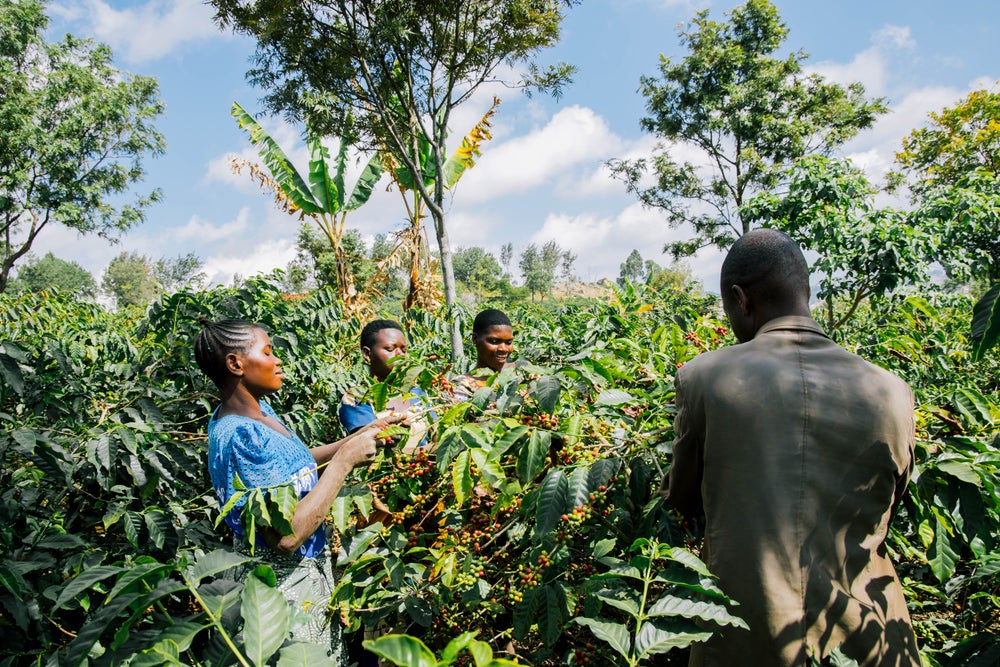
Sucafina: 43% Responsible Sourcing and $7.4M Sustainability Investment in 2025

Author: Coffee World
Source: Sucafina 2025 Sustainability Report
Date: May 2026

Executive Summary:

  • Sucafina achieved 43% of its sales as responsibly sourced or traceable to farm level in 2025.
  • The company invested $7.42 million in training and community support projects.
  • Coffee was sourced from 214,313 certified farmers worldwide.
  • Sucafina monitored 437,602 plots across 18 countries for deforestation risk, with 99.2% deforestation-free.
  • The company distributed 895,085 high-quality coffee seedlings and 203,748 native tree seedlings.
  • Sucafina added “Accountability” as its seventh corporate value and adopted a “Connected Value” strategy.
  • The company launched IMPACT Industrial to extend its responsible sourcing program to soluble coffee manufacturing.

Sucafina, a global leader in farm-to-roaster coffee trading, announced exceptional results in its 2025 annual sustainability report. The announcement came during a year marked by global uncertainty, rising costs, and evolving regulations. The company achieved record numbers in its IMPACT responsible sourcing program, raised its external investments in sustainability initiatives to unprecedented levels, and simplified its strategy while adding “Accountability” as its seventh corporate value.

Nicolas A. Tamari, CEO of Sucafina, said: “Despite a difficult start to 2025, the second half of the year revealed a more encouraging reality. We saw renewed commitment from customers who realized that sustainability, traceability, human rights, and environmental stewardship are not options.

They are integral to brand value and consumer trust. By the end of the year, we reached an important milestone: 43% of our sales were responsibly sourced or traceable to farm level. This is a strong signal that our long-term investments are aligning with market expectations.”

Key Sustainability Figures for 2025

Indicator Value
Certified farmers sourced from 214,313
High-quality coffee seedlings distributed 895,085
Farm plots monitored for deforestation 437,602 (covering 674,161 hectares in 18 countries)
Deforestation-free plots 99.2%
Native tree seedlings distributed 203,748
Farmers certified under IMPACT Verification 69,229
Total employee training hours 11,971
Investment in training and community projects $7.42 million
Permanent employees trained in occupational health and safety 680
EcoVadis award Bronze (top 35%)

Strategic Update: Simplification, Integration, and Accountability

After five years of implementing its 2030 sustainability strategy, Sucafina conducted a comprehensive mid-term review. This resulted in an updated and simplified strategy centered on the concept of “Connected Value.” The five IMPACT program goals (Livelihoods, Regenerative Agriculture, Climate Action, Community Well-being, Forest Conservation) were integrated into three main pillars: Investing in Farmers, Caring for People, and Protecting the Planet. The company also added a seventh corporate value: Accountability, joining Adaptability, Humility, Entrepreneurship, Integrity, Expertise, and Passion.

In a strategic move, Sucafina decided to step away from the Science Based Targets initiative (SBTi) framework and transition toward a customized climate action pathway for its operations and supply chain.

The company will focus on practical interventions that achieve measurable emissions reductions and enhance resilience in coffee-producing regions, rather than compliance with a framework that does not always adapt to the reality of agricultural commodity trading.

Key Field Projects and Initiatives

Investing in Farmers
Sucafina’s Regenerative Agriculture methodology underwent external verification. It assesses the implementation of 15 targeted practices linked to four environmental dimensions: soil, water, biodiversity, and greenhouse gas emissions.

Pilot farms were established in Uganda and elsewhere. Notable projects include the SEMEIA project in Brazil (in partnership with Itochu and Ajinomoto AGF), a four-year initiative supporting nine farmers in Arabica and Robusta regions.

The project has planted 30,000 new coffee trees, installed composting units, and planted 6,680 native trees, aiming to reduce emissions and production costs by 2028.

Other initiatives include the Tools for Prosperity project in Uganda distributing basic agricultural tools, and the Regeneration Stimulation project in Rwanda (with 100WEEKS and Ahold Delhaize) where 95-97% of incentivized farmers performed radical pruning compared to 63% in the non-incentivized group.

Caring for People (Communities and Employees)
The REACH project in Uganda (with JDE Peet’s, Elucid, and RVO) developed a digital health financing platform serving 2,700 farming families, addressing challenges of treatment costs and distance.

Women’s savings and lending groups (VSLAs) were established in Burundi, Rwanda, and Kenya, along with support for livestock and beekeeping as additional income sources. For child protection, Sucafina joined the Child Rights Coalition in Uganda (with ChildFund, JDE Peet’s, Nestlé, NKG, Volcafe) to implement a system for monitoring and addressing child labor risks.

In education, the company built classrooms in Colombia (funded by 1% of Sucafina Instant’s net profits), supported early childhood programs in Guatemala with Seeds for Progress, and improved school facilities in Uganda.

Following Cyclone Sinar in Indonesia’s Gayo communities, Sucafina distributed emergency food packages to 913 farmers and 69 suppliers via two air freight shipments.

Protecting the Planet
For deforestation monitoring and EUDR compliance, Sucafina monitored 437,602 farm plots, with 99.2% deforestation-free.

The company developed an EUDR compliance methodology that includes geodata collection, satellite risk assessment, secondary verification, and support for environmental restoration efforts (including distribution of 203,748 native tree seedlings).

Solar energy was installed at the Beyers Koffie plant in Belgium: 642 high-efficiency solar panels (285.69 kWp capacity) produce approximately 243,000 kWh annually, covering 4-5% of the plant’s total electricity consumption.

In Rwanda, an agroforestry program in partnership with the London School of Economics distributed 110,064 regionally appropriate shade trees to 3,735 farmers with cash incentives for tree regeneration.

IMPACT Industrial: Extending the Program to Manufacturing

Sucafina unveiled a new track within its IMPACT program: IMPACT Industrial, designed to cover the production and manufacturing stages of soluble coffee.

The initiative aims to assess environmental, social, and governance practices among manufacturing partners and open constructive dialogue to improve performance in a stage that has historically lacked visibility and standardization.

Sucafina’s Operational Scale in 2025

Indicator Value
Permanent employees 1,528 (38% women)
Seasonal employees 7,138 (54% women)
Green coffee traded 541,000 metric tons
Certified farmers sourced from 214,313
Market share More than 1 in every 20 coffee cups consumed globally passes through Sucafina’s supply chains

Frequently Asked Questions (FAQ)

1. What percentage of Sucafina’s sales were responsibly sourced in 2025?

43% of total sales were responsibly sourced or traceable to farm level.

2. How much did Sucafina invest in sustainability projects in 2025?

The company invested $7.42 million in training and community support projects through the Kahawatu Foundation and other initiatives.

3. What is the new corporate value added by Sucafina?

Sucafina added “Accountability” as its seventh corporate value, alongside Adaptability, Humility, Entrepreneurship, Integrity, Expertise, and Passion.

4. What is the new IMPACT Industrial track?

A new track within the IMPACT program designed to assess environmental, social, and governance practices among soluble coffee manufacturing partners and improve transparency in that stage.

5. How is Sucafina addressing EU Deforestation Regulation compliance?

The company developed a compliance methodology including geodata collection, satellite risk assessment, and secondary verification, resulting in 99.2% of monitored land being deforestation-free.

6. What are the goals of the SEMEIA project in Brazil?

The four-year project aims to reduce emissions and production costs by 2028 through new tree planting, composting units, and native tree cultivation.

Coffee World – Based on Sucafina’s 2025 Sustainability Report.
Published: May 2026

Colombia Mitaca Harvest: Quality Up, Volume Slightly Down

BOGOTÁ – Qahwa World

According to an update published today on the Sucafina website, Colombia’s mid-year Mitaca (fly crop) harvest is showing strong quality expectations despite a forecasted volume decline of roughly 4.5% compared to last year’s Mitaca. There is considerable industry interest in the Colombia Mitaca harvest 2026 due to these changes in projected volumes and expected quality.

The report, based on field observations from Oscar Fernando Hurtado, Global Head of Production Research, and Sara Ocampo, Sustainability Manager for CAMP & Colombia, indicates that harvesting began in mid-April following normal seasonal patterns. Interestingly, the Colombia 2026 Mitaca harvest will have its peak at lower-altitude farms between May and June, while higher zones follow in June and July. The harvest is expected to wrap up by mid-September.

Quality a Bright Spot

Favorable weather through Q1 2026 supported even cherry development, and coffee borer attacks remain below average. As for the Colombia Mitaca harvest in 2026, improved fertilization practices and farmer investments have also contributed to healthier field conditions. The main constraint is volume, as off‑cycle conditions and a wetter‑than‑usual main flowering period reduced production expectations.

Sustainability Progress

Sucafina also reported that two new Huila-based suppliers – Comercializadora de Café D&Y Coffee and Comercializadora de Café Mora – will begin IMPACT verification in July. Currently, 20,266 farmers across Colombia hold active IMPACT Verification. This process is slated to align closely with best environmental practices during the Mitaca harvest season in 2026.

On deforestation, 36,268 farm polygons have been submitted for assessment, supporting EUDR compliance. Initial carbon footprint measurements across transport, milling, and warehousing have been completed, and pilots on biochar production with partner Cotierra are in early stages. Notably, these initiatives support sustainability throughout the Colombia Mitaca harvest of 2026.

  • Related stories :

Historic Colombian Coffee Harvests Face Labour Shortages

Colombia Records Its Best Coffee Harvest in Over 30 Years

Indonesia coffee output falls for second year as heavy rain disrupts harvest

Dubai – Qahwa World

Indonesia’s coffee production is set to decline for a second consecutive year in 2025–26 as excessive rainfall disrupts key growing regions, although industry participants say cup quality has remained stable due to reduced pressure on processing. Experts are closely watching the Indonesia coffee harvest 2026 to assess its impact on supply and quality.

Arabica and Robusta volumes are both expected to fall from last year’s levels, with Sumatra among the most affected origins after flooding and landslides restricted access to producing areas and disrupted harvest flows, according to Sucafina Indonesia. In addition, stakeholders are keenly monitoring how the Indonesia coffee harvest 2026 may influence these changes.

In Sumatra, the Arabica harvest has shown an unusual seasonal pattern, with the first phase producing less than the later months, reversing typical output trends. Other origins, including Java, Sulawesi, Bali and Flores, are expected to follow normal harvesting schedules but continue to face weather-related disruptions. Furthermore, the Indonesia coffee harvest 2026 is expected to show diverse patterns across these regions.

Despite lower production, quality has been supported by improved post-harvest attention. For coffee traders, the Indonesia coffee harvest 2026 outcomes will be essential to forecast quality and supply for the next cycle.

“Quality has been very good so far. With less production, processing capacity is less strained and each batch can receive full attention,” said Daniel Shewmaker, Managing Director at Sucafina Indonesia. On another note, coffee experts continue to anticipate fresh details about the harvest for Indonesia in 2026.

Robusta harvesting is underway in Sumatra at lower and mid elevations, with other regions to follow in the coming months. Output is also expected to decline due to persistent rainfall, an unusually large fly crop and an earlier-than-usual start to the season. Heavy rains are also complicating drying conditions across key areas, which could affect the Indonesia harvest for coffee in 2026.

Shewmaker said frequent rainfall was creating challenges for post-harvest processing. Indonesian coffee harvest 2026 analysis will be vital for understanding these processing difficulties.

At the same time, input costs are expected to rise later in the year, particularly fertiliser prices, which are being affected by volatility in global energy markets and geopolitical tensions. Notably, these factors may converge during the Indonesia 2026 coffee harvest season.

Sucafina Indonesia said it has expanded direct sourcing in Aceh, northwest Sumatra, increasing access to traceable coffee lots as part of efforts to strengthen supply chain coverage. This expansion is linked to the company’s response to the anticipated Indonesia coffee harvest trends in 2026.

The company also highlighted ongoing sustainability initiatives in Java and other producing regions, including farmer income programmes, savings groups, composting projects and access to agricultural inputs. Indonesia’s coffee harvest for 2026 will serve as a benchmark for these initiatives.

Early indicators from Sumatra suggest improved flowering conditions earlier this year, which could support a stronger main Arabica harvest beginning in October 2026, the company said. Overall, the Indonesia coffee harvest 2026 is likely to be memorable for its challenges and opportunities.


Sucafina Releases Key Update on Vietnam’s 2025/26 Coffee Harvest

Vietnam Harvest Update 2025/26: Delayed Start, Strong Outlook

Dubai – Qahwa World

With global markets closely monitoring Vietnam, recent heavy rains from Storm 15 have attracted significant attention among those keen to understand the weather’s impact on supply. We caught up with Khoi Nguyen, Trading Manager at Sucafina Vietnam, for an update. Khoi tells us that despite rain-driven delays and labor tightness, the outlook remains positive, with production increases expected and quality indicators trending upward.

  • Production on the rise: Vietnam’s combined Robusta & Arabica 2025/26 Coffee crop is forecast at 31.2 million bags, up 12% year on year.
  • Heavy rains delaying progress: Excessive rainfall has slowed harvesting (14% of Robusta completed vs. ~25% historical average), compounded by labor shortages.
  • Strong quality prospects: Favorable cherry development and solid farm investment support expectations for improved overall quality.

Harvest Status: Delayed but Resilient

Despite the weather challenges making headlines, Vietnam’s coffee harvest is showing remarkable resilience. Khoi and the team project a total production of 31.2 million bags a 12% increase over last year. This includes 29.9 million bags of Robusta (up 11.5%) and 1.3 million bags of Arabica (up 19%). These numbers exceed our earlier forecasts (+6%) and sit well above the five-year average. Early-season agronomic conditions were favorable, and ongoing investment in farming helped set a strong foundation.

Recent weeks of intense rainfall have slowed harvesting across key Robusta regions. As of 25 November, only 14% of the crop had been harvested, compared with 17% at the same time last season. Labor availability is also lower this year, adding pressure to farm operations. However, sustained high coffee prices over two consecutive years provide farmers resources and incentives to manage these difficulties. If weather stabilizes, quality is expected to improve over last year.

2025/26 Harvest Timing

Robusta harvest is expected to peak in mid-December, with farmers busy harvesting, drying, and husking across Vietnam’s major producing areas.

Arabica harvest has reached its peak in the North (accounting for around 70% of the total Arabica crop). Central Arabica regions will peak early-December.

Both Robusta and Arabica harvests should be expected to complete in late January.

Regulatory & Supplier Landscape

Two key regulatory themes affect the supply chain: a 5% VAT on green coffee was introduced in July 2025, and the evolving European Union Deforestation Regulation (EUDR). Neither has an immediate impact at the farm level.

A 5% VAT on green coffee trading has been in place since July 2025 (previously only applied to roasted). The VAT has no impact on farmers’ harvesting behavior, but it may influence how exporters manage their supplier base. While it will not impact overall pricing (as VAT is refunded at export), it adds complexity to reporting administration and reduces cash flow somewhat.

Though EUDR details and enforcement timelines remain unclear, Vietnam’s supply chain is proactive. Supplier collaboration on geodata analysis and completion of macro risk assessment data collection position shipments well for 2025 due-diligence requirements.

IMPACT Supply Chains & Sustainability

Our IMPACT verified supply chains in Gia Lai and Lâm Đng are each progressing through audit cycles. IMPACT-verified coffees will be available starting December 2025.

In Arabica regions, we have successfully registered and audited over 1,500 new farmers in Son La and Lâm Đng for Rainforest Alliance (RA), 4C, and C.A.F.E. Practices certifications. These farmers have also completed training on RA and other agricultural standards. Other sustainability initiatives, including composting, tree planting, GAP training, and soil sampling, continue per earlier updates.

Outlook

While heavy rains understandably raise concerns, the broader view is optimistic. Vietnam is positioned to deliver a larger coffee crop with strong quality potential, grounded in sustained farmer investment and solid production forecasts. Weather stability in December and January remains critical. If conditions normalize, the 2025/26 season could mark one of Vietnam’s strongest performances in recent years.

Farmers’ gains from two years of high prices bolster reinvestment but also elevate their pricing expectations. For roasters and traders, this underscores the importance of early engagement on volumes and quality to secure desired lots.

Despite the media spotlight on weather-related challenges, the reality is nuanced: delays and risks require careful monitoring, but strong production volumes, sound quality fundamentals, and a mature, sustainability-focused supply chain provide confidence. If you are interested in learning more about our Vietnam supply chain or booking coffee from Vietnam, reach out to your trader!

Sucafina Releases Key Update on Ethiopia’s 2025/26 Coffee Harvest

Addis Ababa Qahwa World

Sucafina Ethiopia has released its latest update on the 2025/26 coffee harvest, with Kirubel Girma, Trading & Operations Manager, outlining harvest timing, regional variations, price movements, and expanded sustainability initiatives across the country.

According to the update, the harvest is beginning later than usual this season, with a delay of around 1520 days due to shifting weather patterns. Ripening continues to vary significantly by altitude, shaping different production trends across Ethiopia’s coffee-growing regions.

In southern Ethiopiaparticularly Yirgacheffe, Gedeb, and Gujifarmers expect a moderate decline of 5% to 7% after last year’s exceptionally high crop. Meanwhile, western and south-western regions are entering a strong on-cycle year, anticipating notably higher yields compared to the 2024/25 season.

Harvest timing varies by altitude as follows:

Lowlands:

Southern Ethiopia: mid-October to December

Western Ethiopia: late October to January

Mid-altitude regions:

Late October to mid-January

High-altitude regions:

Starting in November through the first half of February

Overall production is expected to be similar to last season, with shifts between regions balancing out total output. Consistent rainfall throughout the season has supported healthy cherry development and stable growing conditions.

On the market side, cherry prices have increased sharply this year. The season opened at 120 ETB/kg and has already climbed to 145 ETB/kg, a significant jump from last year’s starting point of 3540 ETB/kg. This rise is attributed to the devaluation of the Ethiopian birr, higher NY “C” prices, and increased competition among local buyers. The sector is also facing challenges in managing cherry price volatility amid a growing number of active market players.

Sucafina highlighted several sustainability developments, particularly in the Sidamo region, where the Lalisaa Project has expanded through a dedicated full-time field officer supporting farmers directly. This closer engagement has enhanced traceability and helped connect producers with markets offering better price incentives.

Additionally, in collaboration with destination teams and clients, Sucafina has begun returning GrainPro bags to Ethiopia. These bags are redistributed to farmers to improve on-farm storage conditions and protect quality, especially in areas lacking proper warehouse facilities.

Looking ahead, stable weather patterns, strong western yields, and improved price motivation for farmers point to a solid overall season for Ethiopia’s 2025/26 harvest. Sucafina encourages industry partners interested in sourcing Ethiopian coffee to contact their traders for current offers and origin updates.

First Look at the Central America Coffee Harvest 2025 / 2026

Dubai – Qahwa World

Sucafina has published a new field report titled First Look at the 2025 / 2026 Central America Coffee Harvest, offering an early overview of the upcoming season across Central America and Mexico. The report describes a sense of cautious optimism among producers as they prepare for the harvest, buoyed by improved weather conditions during the first half of the year.

According to Sucafina, early indicators suggest a 3% increase in coffee production compared to the previous season, with the first volumes expected to appear in the second half of October and the peak harvest period projected between December and January — a timeline more in line with historical averages for the region.

Oscar Fernando Hurtado Ramirez, Global Head of Production Research at Sucafina, stated that overall crop expectations across the region are positive. “We are expecting more coffee production in each country due to better weather conditions during the first half of the year,” he explained. Total production across Central America and Mexico is forecast to reach around 18 million bags, representing an increase of approximately 570,000 bags compared to the previous cycle.

Improved Crop Quality and Fewer Pests

The report notes that crop quality and conversion rates are also looking favorable this year. Lower pest and disease pressure have created more stable conditions that support plant health and boost yield potential. However, the report warns that coffee leaf rust could rise later in the year, given the higher proportion of susceptible varieties planted across the region combined with wetter conditions expected in October and December.

EUDR Still a Major Concern

Despite the encouraging start to the season, concerns remain high regarding the European Union Deforestation Regulation (EUDR). Hurtado emphasized that “EUDR remains the biggest concern among farmers and the broader coffee sector.” While progress has been made in preparing for compliance, producers are still uncertain about how the regulation will be implemented in practice—particularly for smallholders who may struggle to meet traceability and verification requirements.

Investing in Education for Lasting Impact

The report also highlights Sucafina’s ongoing social initiatives in Central America, particularly its collaboration with the Seeds for Progress Foundation to strengthen rural education in coffee-growing communities. Active in Guatemala across regions such as Santa Rosa, Jalapa, and Chiquimula, the initiative supports school infrastructure, teacher training, and the creation of safe learning environments for children during the harvest season, when many parents are at work in the fields.

One current project, Opportunity Through Pre-School Education, focuses on improving preschool classrooms in Santa Rosa by providing child-friendly furniture and training for educators. This initiative forms part of Sucafina’s IMPACT program, which promotes responsible sourcing and human rights development at origin.

As the 2025 / 2026 harvest begins to take shape, Sucafina reaffirmed its commitment to supporting both farmers and communities in the region. The company plans to share more updates from the field in the coming weeks and encourages partners to coordinate with their trading teams to plan for the upcoming coffee volumes.