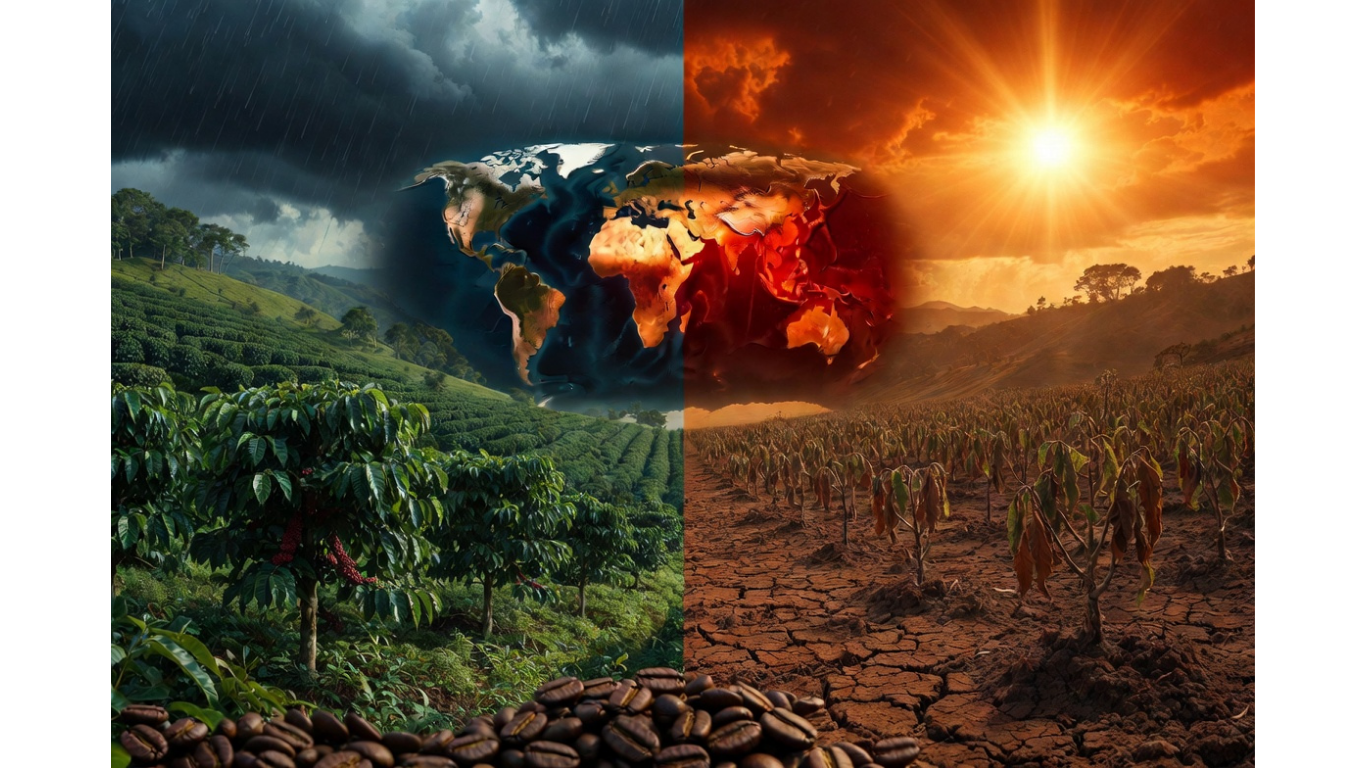
Brazil Coffee Output to Reach Record 71.9M Bags

Author: Qahwa World – Brasília
Source: USDA Foreign Agricultural Service – Report BR2026-0025
Date: June 1, 2026

Brazil Coffee Output to Reach Record 71.9M Bags

Executive Summary

  • Brazil’s 2026/27 coffee production is forecast at 71.9 million 60‑kg bags, a 14% increase over the previous season.
  • Arabica output is expected to surge 25% to 47.5 million bags, ending five years of low harvests.
  • Robusta (conilon) production is forecast at 24.4 million bags, a slight decline from 25 million bags due to cooler weather and excess rain in some regions.
  • Exports for 2026/27 are projected to jump 30% to 49 million bags, supported by the record crop.
  • However, low stocks and fears of an El Niño event are making exporters cautious and holding back deals.
  • Domestic consumption remains stable at 22.39 million bags, with a 0.5% annual increase.
  • The “Zero Crop, 100% Crop” management technique is helping farmers optimize yields and reduce costs.

Brazil is set to produce a record 71.9 million 60‑kg bags of coffee in the 2026/27 season. This is a 14% increase over the previous cycle. The outlook is especially bright for arabica coffee.

Optimal weather in major growing regions has driven the recovery. The record crop follows five years of low arabica production caused by adverse conditions.

Exports are expected to surge 30% to 49 million bags. However, exporters remain cautious. They are holding back on deals because of low stocks and uncertainties about a possible El Niño event.

El Niño could affect the end of the current harvest and the 2027/28 cycle. These factors are strongly influencing coffee prices in the Brazilian market.

Production Outlook

The positive biennial cycle is a key driver. Arabica trees naturally produce more in alternating years. This year is a high‑yield year.

Favorable weather conditions and rising global prices have also encouraged farmers to expand their coffee areas. Technology has enabled higher planting density per hectare.

As a result, total coffee production is forecast at 71.9 million 60‑kg bags. This is a 14% increase from the 63 million bags estimated for 2025/26.

The National Supply Company (CONAB) projects a slightly lower figure of 66.7 million bags. The Brazilian Institute of Geography and Statistics (IBGE) projects 65.1 million bags.

Both official agencies use different methodologies. They have historically provided lower estimates than the USDA.

Arabica and Robusta Performance

Arabica production is forecast to reach 47.5 million bags. This is a 25% increase over the previous cycle. The growth is driven by the positive biennial cycle and expanded cultivated area.

Technological improvements in crop management also played a role. Milder temperatures before flowering supported good crop development.

In contrast, robusta (conilon) production is forecast at 24.4 million bags. This is a slight decline from the 25 million bags estimated for 2025/26.

Colder weather and periods of excessive rainfall reduced yields in some main producing regions. The strong growth of the 2025/26 harvest also made it difficult to sustain the same level of production.

Producers are increasingly worried about climate change. Many are adjusting their practices, seeking more shaded areas, and looking for resilient varieties.

Regional Performance

Minas Gerais remains Brazil’s largest coffee‑producing state. It is forecast to harvest 34.1 million bags in 2026/27, up from 26.7 million in 2025/26.

The increase is due to the positive biennial cycle and better rainfall distribution. Rainfall was especially good before flowering and through March.

Espírito Santo, the second‑largest producer, is forecast at 21.4 million bags. Arabica production there is expected at 4.4 million bags, while robusta accounts for 17 million bags.

São Paulo, which grows only arabica, saw growth of more than 15% over the previous cycle, despite varied weather conditions.

Bahia has now become the second‑largest robusta producer, surpassing Rondônia. Its growth comes from advanced technology and high‑performance irrigated areas.

Rondônia is expected to see a 19% increase in robusta production. Favorable weather and the renewal of crops with higher‑yielding clonal plants are the main reasons.

Table 1: Brazilian Coffee Production by State (million 60‑kg bags)

State 2025/26 2026/27 Change
Minas Gerais 26.7 34.1 +27.7%
Espírito Santo 20.9 21.4 +2.4%
São Paulo 4.8 5.5 +14.6%
Bahia 4.7 5.2 +10.6%
Rondônia 2.3 2.8 +21.7%

Prices and Production Costs

Arabica prices rose sharply at the end of 2025 due to limited supply. However, prices started to decrease with the forecast of a larger harvest.

In April 2026, arabica coffee averaged BRL 1,811.87 (USD 360.03) per 60‑kg bag. This was a 5% drop from March and a 28% drop from April 2024.

Robusta prices fell even more. In April 2026, robusta traded at BRL 917.05 (USD 182.26). That was a 10% monthly drop and a 46% drop from April 2025.

Fears of an El Niño event have dampened sales activity. Many producers who were liquidating their remaining stocks are now holding back.

Production costs remain high. Fertilizer prices have risen, and freight costs have increased due to higher diesel prices. Diesel climbed about 24% in March 2026.

To cope, many farmers are adopting the “Zero Crop, 100% Crop” technique. This method divides farms into two plots and alternates skeleton pruning.

As a result, farmers focus only on the plot in its high‑yield phase. The system also increases organic matter and reduces fertilizer needs.

Domestic Consumption and Exports

Brazil’s domestic coffee consumption is forecast at 22.39 million bags for 2026/27. This is a slight 0.5% increase over the previous year.

Consumption declined by more than 2% in 2025 due to high prices. However, it recovered in early 2026 as supermarket prices dropped.

In the first four months of 2026, consumption rose 2% compared to the same period in 2025. The average Brazilian drinks about 3.8 cups of coffee per day.

Exports for 2026/27 are forecast to jump 30% to 49 million bags. This is based on the record harvest. However, low stocks have prevented even higher volumes.

Between January and April 2026, Brazil exported 11.5 million bags, a 24% decrease from the same period in 2025. April exports increased 1.2%, signaling a gradual recovery.

Germany remains the top buyer of Brazilian coffee, followed by the United States, Italy, Japan, and Belgium. The United States holds over 30% of the market share for Brazilian coffee imports.

Specialty coffees accounted for almost 18% of total exports in early 2026, though that volume was 36% lower than the same period in 2025.

Policy and Minimum Prices

The government has allocated BRL 7.37 billion for the 2026/27 Coffee Economy Defense Fund (FUNCAFE). The fund supports crop management, marketing financing, and working capital.

Minimum guaranteed prices for the 2026/27 harvest have been increased. Arabica now has a minimum price of BRL 792.53 per 60‑kg bag, a 20% rise from the previous season.

Robusta’s minimum price was set at BRL 556.97 per bag, a 12% increase. These prices are valid from April 2026 through March 2027.

Frequently Asked Questions

How much coffee will Brazil produce in 2026/27?

Production is forecast at 71.9 million 60‑kg bags, a 14% increase over the previous season.

Why is arabica production expected to surge?

The positive biennial cycle, expanded planted area, technological advances, and favorable weather are the main drivers.

Which Brazilian state produces the most coffee?

Minas Gerais is the largest producer, forecast at 34.1 million bags in 2026/27.

How will El Niño affect Brazilian coffee?

There is a 60% chance of El Niño between May and July 2026. It could negatively impact the 2027/28 harvest through higher temperatures and altered rainfall.

What is the “Zero Crop, 100% Crop” technique?

It is a management method that divides a farm into two plots and alternates skeleton pruning, allowing farmers to focus on high‑yield areas and reduce costs.

What are the main export destinations for Brazilian coffee?

Germany, the United States, Italy, Japan, and Belgium are the top buyers.


Author: Qahwa World – Brasília | Source: USDA Foreign Agricultural Service – Report BR2026-0025 | Date: June 1, 2026

Brazil Coffee Production to Hit Record 66.7 Million Bags in 2026

Author: Qahwa World – Brasília
Source: National Supply Company of Brazil (Conab), Cecafé, MDIC
Date: May 26, 2026This update covers expectations for a Brazil coffee production 2026 record, based on the latest reports and forecasts.

Brazil Coffee Output to Hit Record 66.7 Million Bags in 2026

Executive Summary

  • Brazil’s coffee production for the 2026 harvest is forecast at 66.7 million 60 kg bags, an 18% increase over 2025 and a new record, surpassing the 2020 harvest of 63.08 million bags.
  • Arabica production is expected to reach 45.8 million bags (+28%), while Robusta (Conilon) is forecast at 20.9 million bags (+0.8%).
  • Total planted area rises 3.9% to 2.34 million hectares, with national average productivity projected at 34.4 bags per hectare (+13%).
  • Minas Gerais, the largest producer, is forecast at 33.4 million bags (+29.8%). Espírito Santo follows with 18 million bags (+3%).
  • Brazil exported 11.5 million bags from January to April 2026, down 22.5% year-on-year due to low stocks, but April exports jumped 11.2% to 4.27 million bags, signaling recovery with the new harvest.
  • The USDA projects world production for 2025/26 at 178.8 million bags (+2%), with global demand rising 1.3% to 173.9 million bags, keeping prices elevated.

The National Supply Company of Brazil (Conab) released its second harvest survey on May 21, 2026, forecasting a record coffee production of 66.7 million 60 kg bags for the 2026 crop year, an 18% increase over the previous season.

If confirmed, this will be the largest harvest in Conab’s historical series, surpassing the 2020 record of 63.08 million bags.

The positive biennial cycle (higher production year for Arabica), the entry of new areas into production, and favorable weather conditions are the main drivers of this growth.

The total coffee area is expected to increase by 3.9% to 2.34 million hectares, comprising 1.94 million hectares of productive fields and 401,700 hectares of young plantations. National average productivity is projected to recover by 13% to 34.4 bags per hectare.

Arabica and Robusta Production

Arabica coffee production is forecast at 45.8 million bags, a 28% increase over 2025. This would be the third-highest Arabica harvest on record, behind only 2020 and 2018.

The expansion is driven by the positive biennial cycle, a larger area under production, and favorable weather conditions, particularly good rainfall distribution during the flowering period.

Robusta (Conilon) production is expected to reach 20.9 million bags, a modest 0.8% increase. While the harvested area is projected to grow to 388,220 hectares, average yields are estimated to drop 3.5% to 53.9 bags per hectare.

This decline reflects the high yields achieved in 2025 (a natural off-year for Robusta’s biennial cycle is less pronounced) and below-average temperatures in Espírito Santo during the production cycle, which affected plant physiology.

Production by State

Minas Gerais, the country’s largest coffee producer, is forecast to harvest 33.4 million bags (combining both species), a 29.8% increase over 2025.

This result is attributed to the positive biennial cycle combined with better rainfall distribution, especially in the months preceding flowering, as well as favorable weather through March, which provided good grain formation.

Espírito Santo, the second-largest producer, is expected to harvest 18 million bags, a 3% increase. Arabica production in the state is projected to rise 27.9% to 4.4 million bags, benefiting from the high biennial cycle.

However, Conilon production is forecast at 13.6 million bags, a 4.2% decrease due to the record-high performance in 2025 and below-average temperatures.

Bahia is expected to produce 4.7 million bags (+5.9%), supported by consistent weather, increased producer investment, and new areas entering production. São Paulo is forecast at 5.9 million bags (+24.6%), where only Arabica is grown. Rondônia is expected to produce 2.8 million bags (+19.4%), driven by the renewal of genetic material with more productive clonal plants and favorable weather.

Table 1: Brazil Coffee Production Forecast by State (2026, million 60 kg bags)

State 2026 Production (million bags) Change vs 2025 Main species
Minas Gerais 33.4 +29.8% Arabica
Espírito Santo 18.0 +3.0% Robusta (Conilon)
São Paulo 5.9 +24.6% Arabica
Bahia 4.7 +5.9% Both
Rondônia 2.8 +19.4% Robusta

Exports: April Recovery Signals New Harvest

According to the Brazilian Coffee Exporters Council (Cecafé), Brazil exported 4.27 million 60 kg bags in April 2026, an 11.2% increase compared to April 2025 (3.84 million bags). This was the first monthly increase in 2026, indicating the beginning of an export recovery as the new harvest enters the market.

“The rise in April reflects the start of the new harvest season in Brazil, which contributed to increased coffee availability for export,” said Horacio Miranda, analyst at hEDGEpoint. This upward trend supports Cecafé’s expectations of higher exports in the second half of the year.

In contrast, total exports from January to April 2026 reached 11.6 million bags, a 16.1% decrease compared to the same period in 2025. Export revenue for the first four months totaled $4.49 billion, down 14.4% year-on-year, according to MDIC data.

The decline in early 2026 reflects low domestic stocks resulting from limited production in previous years and strong export demand.

The main destinations in April were Germany, the United States, Italy, Belgium, and Japan.

Table 2: Brazil Monthly Coffee Exports (million 60 kg bags)

Month 2024 (million bags) 2025 (million bags) 2026 (million bags) Change (Apr 2026 vs Apr 2025)
January 3.2 3.1 2.9
February 2.8 2.9 2.4
March 3.0 3.2 2.6
April 3.4 3.84 4.27 +11.2%

Global Market Outlook

The United States Department of Agriculture (USDA) forecasts world coffee production for the 2025/26 cycle at 178.8 million 60 kg bags, a 2% increase over the previous cycle.

Despite the production increase, no significant price reductions are expected due to low carryover stocks from the previous cycle and a projected 1.3% increase in global demand to 173.9 million bags.

Brazil’s record harvest will play a major role in replenishing global stocks and meeting rising demand, particularly for high-quality Arabica beans.

Frequently Asked Questions

How much coffee will Brazil produce in 2026?

Brazil is forecast to produce 66.7 million 60 kg bags, an 18% increase over 2025, setting a new record.

What is driving the production increase?

The positive biennial cycle (high-yield year for Arabica), expansion of planted area (+3.9%), and favorable weather conditions, especially good rainfall distribution.

Which Brazilian state produces the most coffee?

Minas Gerais is the largest producer, forecast at 33.4 million bags, a 29.8% increase.

How are Brazil’s coffee exports performing?

April exports jumped 11.2% to 4.27 million bags, signaling recovery with the new harvest. However, January-April exports were down 16.1% due to low stocks.

What is the global coffee market outlook?

USDA projects world production at 178.8 million bags (+2%) and demand at 173.9 million bags (+1.3%), keeping prices elevated due to low stocks.


Author: Qahwa World – Brasília | Source: Conab, Cecafé, MDIC, USDA | Date: May 26, 2026

El Salvador Coffee Output Falls 7.5% to 542,000 Bags in 2026

Author: Qahwa World – San Salvador
Source: USDA Foreign Agricultural Service – Report ES2026-0004
Date: April 20, 2026

El Salvador Coffee Output Falls 7.5% to 542,000 Bags in 2026

Executive Summary

  • El Salvador coffee production for 2026/2027 is forecast at 542,000 60 kg bags, a 7.5% decrease from the revised 2025/2026 estimate of 586,000 bags.
  • The decline is driven by expected adverse weather from the El Niño phenomenon during flowering and harvest periods.
  • Planted area remains stable at 118,000 hectares, with no significant expansion due to climate vulnerability and limited credit access.
  • Exports are forecast at 543,000 bags in 2026/2027, slightly up from 535,000 bags. The United States remains the largest market with 50% share.
  • Domestic consumption reaches 339,000 bags, driven by a tourism boom and expanding coffee shop culture. Soluble coffee accounts for 88% of consumption.
  • Labor shortages from rural‑to‑urban migration continue to limit pruning, renovation, and harvesting activities.
  • Government programs focus on smallholders (less than 15% of area), but a large‑scale renovation plan remains unfunded.

The USDA Foreign Agricultural Service office in San Salvador estimates El Salvador coffee production for marketing year 2025/2026 at 586,000 60 kg bags.

For 2026/2027, production is forecast to fall to 542,000 bags, a 7.5 percent decrease, primarily due to the expected impact of the El Niño weather phenomenon during flowering and harvest periods.

The 2025/2026 crop was already affected by torrential rains in December 2025, which caused substantial berry drop at peak ripeness and dried out remaining berries, reducing both yields and bean quality during milling.

Planted area has remained stable at approximately 118,000 hectares across the past two marketing years and is expected to hold steady through 2026/2027.

Stagnation is largely attributed to climate vulnerability and limited access to credit, as private banks view coffee farming as a high‑risk investment and are reluctant to lend.

Faced with low profitability, many coffee farmers have transitioned to alternative crops such as cocoa and white corn.

Others have sold their land to real estate developers to cover debts. The government continues distributing new coffee seedlings, primarily to small‑scale farmers who represent about 15 percent of total coffee area, but without adequate financing many seedlings remain unplanted or fail to survive.

Producer Structure and Value‑Added Coffee

Smallest coffee producers (0‑3.5 hectares) represent most producers but account for a limited share of harvested area, which is more heavily concentrated among larger farms.

Value‑added production, including gourmet, specialty, and fair‑trade coffees, continues to generate additional income for a small but expanding group targeting niche markets.

These farmers focus on micro‑lot (5‑100 bags) and nano‑lot (fewer than 5 bags) sales, catering to specialty coffee buyers in the United States, Europe, and Asia.

In 2025, El Salvador held its annual Cup of Excellence competition, incorporating virtual cupping protocols for international judging. Geisha and Pacamara varieties dominated, with top‑scoring lots achieving ratings in the 90‑point range.

Inputs, Labor Shortages and Yields

The government operates a fungicide and biofertilizer distribution program primarily targeting small coffee farmers (with less than 7 hectares) to help manage coffee leaf rust outbreaks.

However, most producers do not benefit from this initiative and face limited access to financing for pest control and soil nutrition.

Seedling distribution includes varieties such as Cuscatleco, Marsellesa, Pacas, Pacamara, Sarchimor, and Anacafe 14.

A critical challenge is the continued shortage of agricultural labor. Migration to urban areas, driven by demand for construction labor, has reduced the rural workforce, leaving many farms without sufficient labor for pruning, weeding, fertilizer and pesticide application, and berry harvesting.

This scarcity undermines cultural practices and harvesting, negatively impacting productivity.

National coffee yields remain low, averaging 4.97 60 kg bags per hectare in 2025/2026. This underperformance is largely due to insufficient investment in a comprehensive renovation program. Current efforts focus primarily on small landholders (about 15 percent of planted area), limiting overall impact.

El Salvador is among the region’s most climate‑vulnerable countries, facing recurrent droughts and floods that disrupt flowering and cherry development, while also creating favorable conditions for pests and diseases such as coffee leaf rust, anthracnose, and coffee berry borer.

Domestic Consumption

Domestic coffee consumption for 2025/2026 is projected at 332,000 60 kg bags (green bean equivalent).

Increased international and local tourism due to improved security has boosted consumption.

Most of this consumption remains lower‑cost soluble coffee, largely imported from Mexico, Brazil, Colombia, and Nicaragua, alongside domestic brands such as Coscafe and D’Cafe.

Soluble coffee accounts for an estimated 292,000 bags, while roasted and ground coffee totals 40,000 bags.

For 2026/2027, consumption is expected to increase by 2 percent to 339,000 bags, driven by a surge in tourism.

In calendar year 2025, El Salvador recorded the world’s second‑highest percentage increase in tourism.

Coffee shop culture continues to expand, with new establishments in shopping malls and commercial centers. International chains such as Juan Valdez, Starbucks, and McCafe are growing alongside local brands like Viva Espresso and The Coffee Cup.

Retail demand for premium local varieties including Bourbon, Pacas, Pacamara, and Geisha continues to rise. Notably, El Salvador’s cafe Alquimia achieved 3rd place in the 2026 World Coffee Bar competition.

Despite this momentum, consumers continue to favor soluble coffee due to its affordability and convenience.

Limited marketing for higher‑quality roasted beans and price sensitivity sustain this preference.

The Salvadoran Coffee Institute (SCI) continues efforts to promote premium domestic coffee through initiatives such as National Pacamara Coffee Day and participation in international events like the Specialty Coffee Expo.

Exports and Key Markets

Coffee exports for 2025/2026 are estimated at 535,100 60 kg bags, a 12.6 percent increase from the previous year, driven by farmers taking advantage of high international prices and selling off accumulated stocks.

Exports are forecast to continue growing to 543,000 bags in 2026/2027, as prices are expected to remain high throughout the harvesting period.

The United States remains the largest export destination, accounting for approximately 268,570 bags, or 50 percent of total exports.

Belgium has emerged as the second‑largest destination with about 11 percent. Other key markets include Italy, Germany, Saudi Arabia, Japan, the United Kingdom, and Australia.

Premium prices for gourmet and specialty coffees continue to drive export incentives.

At the Cup of Excellence and other promotional events, top‑quality Salvadoran coffees are sold through global electronic auctions, often commanding prices $100‑$300 per hundredweight above spot market “Contract C” prices.

Table 1: El Salvador Coffee Exports (1,000 60 kg bags)

Destination 2025/2026 2026/2027 Share (2025/26)
United States 268.6 272.6 50.2%
Belgium 61.0 61.9 11.4%
Canada 26.8 27.2 5.0%
Italy 23.0 23.3 4.3%
Germany 22.5 22.8 4.2%
Japan 20.0 20.1 3.7%
Others 113.2 115.1 21.2%
Total 535.1 543.2 100%

Certification programs including Starbucks Café Practices, Fair Trade, UTZ, and coffee‑related geographical indications (GIs) are gaining traction.

SCI, in collaboration with six coffee regions, has established GIs for coffee produced in those areas. Certified coffee generally commands higher prices.

SCI has also trained local cuppers to obtain “Q” grade certification. Through Starbucks Café Practices, Salvadoran farmers can sell their coffee at prices roughly $50 above international “Contract C” prices. In 2024, NESCAFE announced plans to build a logistics facility to source and sell local coffee.

Imports and Stocks

In 2025/2026, Mexico surpassed Brazil as the main supplier of soluble coffee to El Salvador, with an expected 110,128 60 kg bags. Brazil is forecast to supply 101,915 bags, Colombia 18,161 bags, and the United States 6,750 bags of roasted and soluble coffee.

Total coffee imports are projected at 270,200 bags in 2025/2026 and 272,100 bags in 2026/2027, driven by a tourism boom and expansion of retail outlets and coffee bars.

Of the 2026/2027 total, 262,000 bags will be soluble coffee and 10,000 bags roasted coffee. Coffee stocks are estimated at 158,000 bags in 2025/2026, as farmers held back sales anticipating higher prices due to harvest delays and logistics issues at Port Acajutla. Stocks are forecast to decrease to 79,000 bags in 2026/2027 as producers capitalize on high prices.

Policy and Structural Challenges

The Salvadoran Coffee Institute (SCI) has implemented a pest monitoring program to help farmers manage coffee rust before severe damage occurs. Efforts have focused on renovating approximately 500 hectares in the northern coffee belt, adding two coffee quality control labs, and investing in molecular biology and somatic embryogenesis equipment.

However, government support primarily targets small farmers with less than 3.5 hectares, who represent less than 15 percent of total planted area.

A more effective solution would be a large‑scale replanting initiative focusing on medium‑sized farms that account for about 37 percent of area.

Many coffee trees are now over 25 years old and have surpassed their productive lifespan. Each year, over 7 million plants must be replaced to account for natural mortality.

According to the Salvadoran Coffee Association, approximately 30 million high‑quality, rust‑resistant plants are needed annually for the next 10 years to fully renovate the country’s coffee areas.

The sector’s challenges have led to a decline in jobs in coffee‑producing regions, contributing to rural migration.

For every 100,000‑quintal drop in coffee production (about 45,000 tons), an estimated 10,000 jobs are lost.

Additionally, more coffee farms are being abandoned or converted to basic grain production, exacerbating environmental challenges by reducing forestation and impairing water retention.

Financial challenges persist, with farmers still repaying debts under the Coffee Trust (FICAFE) program, established in 2001.

A grace period on capital payments has been extended through the end of 2026, but the sector remains under pressure.

Private banks are unwilling to offer loans due to high default risk driven by price volatility and diminishing yields.

Coffee farmers also face high processing costs, with mills currently charging around $100 per hundredweight of green bean equivalent to prepare coffee for export.

In 2019, the government proposed the Café‑Proyecto País program aimed at unifying coffee associations and developing a sustainability strategy, but lack of funding has delayed implementation.

In April 2021, a coffee rescue program was announced to restructure approximately $240 million in sector debt, create a coffee research institute, renovate 35,000 hectares, and promote local consumption, but fiscal constraints have delayed progress.

In January 2021, the government secured a $45 million loan from the Inter‑American Development Bank (IDB) to assist smallholder farmers through technical assistance and preferential loans, which also helped establish the Salvadoran Coffee Research Institute. However, much work remains.

Frequently Asked Questions

How much coffee will El Salvador produce in 2026/2027?

Production is forecast at 542,000 60 kg bags, a 7.5% decrease from the previous year, mainly due to El Niño.

What is the main export market for Salvadoran coffee?

The United States is the largest market, accounting for 50% of total exports, followed by Belgium (11%).

What are the biggest challenges facing El Salvador’s coffee sector?

Climate vulnerability (El Niño), labor shortages from rural migration, high input costs, limited credit access, and aging coffee trees.

How has domestic coffee consumption changed?

Consumption reached 332,000 bags in 2025/2026, driven by a tourism boom and expanding coffee shops. Soluble coffee accounts for 88% of consumption.

What is the average coffee yield in El Salvador?

Average yields are low at 4.97 60 kg bags per hectare, far below regional averages, due to lack of renovation investment.

What government programs support coffee farmers?

Programs include fungicide and biofertilizer distribution for smallholders, seedling distribution, and a $45 million IDB loan for technical assistance, but large‑scale renovation remains unfunded.


Author: Qahwa World – San Salvador | Source: USDA Foreign Agricultural Service – Report ES2026-0004 | Date: April 20, 2026

Guatemala Coffee Output Rises 3% to 3.13 Million Bags in 2026

Author: Qahwa World – Guatemala City
Source: USDA Foreign Agricultural Service – Report GT2026-0003
Date: April 16, 2026

Guatemala Coffee Output Rises 3% to 3.13 Million Bags in 2026

Executive Summary

  • Guatemala coffee production for 2026/2027 is forecast at 3.13 million 60 kg bags, a 3.3% increase from the previous year.
  • Harvested area expands to 345,000 hectares, up 2%, supported by maturing trees and plantation renovation.
  • Arabica accounts for 98% of output; about one‑third of plantations are planted with rust‑tolerant hybrids.
  • Exports (including soluble and roasted) are forecast at 3.2 million bags. The United States holds a 42% market share.
  • Domestic consumption reaches 900,000 bags, with soluble coffee representing 67% of that total.
  • Rust pressure reached 20% incidence in early 2025; the coffee borer (Xylosandrus compactus) has been detected in four departments.
  • ANACAFE operates input programs and a trust fund that has granted $180 million in loans since 2001.

The USDA Foreign Agricultural Service office in Guatemala City forecasts Guatemalan coffee production for marketing year 2026/2027 at 3.13 million 60 kg bags (green bean equivalent), a 3.3 percent increase from the revised 2025/2026 estimate of 3.025 million bags. The growth is primarily driven by expanded harvested area and maturing trees entering production.

Harvested area is forecast at 345,000 hectares in 2026/2027, up 2 percent from 338,000 hectares in 2025/2026. The number of bearing trees is expected to rise from 1.628 billion to 1.662 billion.

Arabica varieties account for approximately 98 percent of planted area, grown almost entirely under shade. About one‑third of Arabica plantations have been renovated with rust‑tolerant hybrids.

The remaining 2 percent consists of Robusta varieties, which are grown at lower altitudes.

The National Coffee Association (ANACAFE) continues to play a key role in ensuring the availability of certified planting material. Catimor and Caturra varieties make up nearly half of total plantings, followed by Catuai, Sarchimor, Bourbon, and others.

Producer Structure and Yield Trends

The Guatemalan coffee sector is dominated by small‑scale producers. Small growers (97 percent of producers) produce roughly 266 60 kg bags of parchment coffee annually, with average yields of 17.29 bags per hectare. Medium growers (2.9 percent) produce up to 172.9 bags annually at 18.62 bags per hectare. Large growers (0.1 percent) produce more than 173 bags annually, with yields exceeding 21.28 bags per hectare.

Yields in 2026/2027 are projected to increase slightly to 9.45 60 kg bags per hectare, above the 9.33 bags estimated for 2025/2026 but below the 9.67 bags achieved in 2024/2025.

The slight improvement reflects normal weather variations, though rising input costs remain a concern. As of March 2026, oil prices in Guatemala had increased by 20 percent, which will affect fertilizer and chemical prices for the following season.

Pest and Disease Challenges

The 2024/2025 harvest experienced higher coffee rust pressure, with incidence reaching up to 20 percent during January through March. Those months recorded higher moisture and temperature than usual. ANACAFE maintains close monitoring of rust and other pests to recommend preventive controls.

In September 2025, ANACAFE reported the identification of the coffee borer Xylosandrus compactus (Eichhoff) in the departments of Zacapa, Retalhuleu, Quetzaltenango, and San Marcos at altitudes of 600 to 900 meters. The pest was first reported in 2024 on avocado and cedar but subsequently appeared scattered on some Robusta trees. ANACAFE has provided control measures, including natural and chemical controls, but manual control appears to be the most effective method to prevent spread.

Input Programs and Farmer Support

ANACAFE’s Sustainable Profit Program provides guidance on best agronomic practices, focusing on a progressive annual pruning management system over 3‑ to 5‑year cycles. In 2024/2025, more than 27,000 hectares were harvested under the program, with 52,565 hectares registered.

ANACAFE also operates an agricultural input program that leverages collective purchasing power to secure inputs at reduced prices. The 2026 inputs program includes biostimulants, fertilizers, foliar fertilizers, fungicides, organic products, and crop protection chemicals, with discounts ranging from $0.75 per 100 pounds on standard fertilizers to specific per‑liter prices for specialty products.

A coffee trust fund, created by Legislative Decree 31‑2001 and amended over time, granted loans totaling $180 million between 2001 and 2025. Beneficiary farmers have repaid $108 million in capital and $46 million in interest. Decree 4‑2019 extended the trust fund’s duration until October 23, 2051, enhancing banking services for the sector.

Domestic Consumption

Domestic coffee consumption is projected to reach 900,000 60 kg bags in 2026/2027, a 2.9 percent increase from the 2025/2026 estimate of 875,000 bags. Soluble coffee continues to grow at a faster pace (30 percent growth rate) and accounts for 67 percent of domestic consumption (600,000 bags). Roasted and ground coffee accounts for the remaining 33 percent (300,000 bags).

Exports and Key Markets

Guatemalan coffee exports (including bean, roasted, and soluble) are forecast at 3.2 million 60 kg bags in 2026/2027, a 7.4 percent increase from the revised 2025/2026 estimate of 2.98 million bags. Green coffee exports represent approximately 90 percent of total exports, while demand for soluble exports continues to increase.

The United States remains the main destination, with a 42 percent market share. Other significant markets include Japan, Canada, Belgium, Italy, and South Korea. By region, North America absorbs 52 percent of exports, followed by Europe (26 percent), Asia (20 percent), and the rest of the world (2 percent).

In 2024/2025, total export value reached $1.284 billion, with prices averaging above $300 per 60 kg bag. To improve the buying experience, customers can explore the website “Explore – Guatemalan Coffees,” which displays farm‑level information on the best coffees of the year, including location, regional classification, varieties, processing methods, and showcasing schedules.

Table 1: Guatemala Coffee Exports (1,000 60 kg bags)

Destination MY 2023/24 MY 2024/25 Share (2024/25)
United States 1,294 1,198 41.9%
Japan 308 330 11.5%
Canada 360 273 9.5%
Belgium 263 266 9.3%
Italy 165 155 5.4%
South Korea 147 111 3.9%
Germany 131 96 3.4%
Others 483 430 15.0%
Total 3,151 2,859 100%

Policy, Sustainability, and Trade Agreements

In calendar year 2025, coffee represented 3.3 percent of Guatemala’s GDP and was the main agro‑industrial export product, accounting for 8 percent of total agricultural exports. Coffee is grown in 261 of the country’s 340 municipalities and covers 3.5 percent of total cropland. ANACAFE, established under Decree 19‑69, is responsible for issuing export licenses and promoting the sector.

ANACAFE promotes compliance with international and national policies related to greenhouse gas reduction. Initiatives include promoting renewable energy, water resource management with treatment and re‑utilization of processing water, and active geospatial monitoring to prevent deforestation. Close to 99 percent of Guatemalan coffee plantations comply with the EU zero‑deforestation policy, supported by specific platforms developed by ANACAFE.

On November 18, 2025, Guatemala’s Congress ratified the free trade agreement with South Korea through Decree 18‑2025. South Korea has also completed its ratification. Under the agreement, green coffee was granted immediate market access, representing a significant opportunity for the coffee sector.

Domestic reference prices for washed Arabica coffee as of April 7, 2026, are: hard green bean $247.53 per 60 kg bag, strictly hard green bean $253.53, and specialty strictly hard $256.53. Cherry prices range from $32.72 to $38.93 per bag depending on grade.

Frequently Asked Questions

How much coffee will Guatemala produce in 2026/2027?

Production is forecast at 3.13 million 60 kg bags, a 3.3% increase from the previous year.

What is the main export market for Guatemalan coffee?

The United States is the largest market, accounting for 42% of total exports.

What pests and diseases affect Guatemalan coffee?

Coffee rust (reaching 20% incidence in early 2025) and the coffee borer (Xylosandrus compactus) detected in four departments.

What percentage of Guatemalan coffee is grown under shade?

Almost 98% of Arabica coffee is grown entirely under shade.

How much of Guatemala’s domestic consumption is soluble coffee?

Soluble coffee accounts for 67% of domestic consumption (600,000 out of 900,000 bags).

What is ANACAFE’s role?

ANACAFE is the National Coffee Association, established under public law to enhance coffee production, marketing, and exportation, and it issues export licenses.


Author: Qahwa World – Guatemala City | Source: USDA Foreign Agricultural Service – Report GT2026-0003 | Date: April 16, 2026

Vietnam Coffee Output Rises to 32.5 Million Bags in 2026

Author: Qahwa World – Ho Chi Minh City
Source: USDA Foreign Agricultural Service – Report VM2026-0016
Date: May 20, 2026

Vietnam Coffee Output Rises to 32.5 Million Bags in 2026

Executive Summary

  • Vietnam coffee production for 2026/2027 is forecast at 32.5 million 60 kg bags, comprising 31.4 million bags of Robusta and 1.1 million bags of Arabica.
  • Harvested area expands to 644,000 hectares, driven by replanting programs and price incentives from 2024-2025 peaks.
  • Exports are forecast at 28.95 million bags, up 2% from 2025/2026, with strong demand from Germany, Italy, the United States, and emerging Asian markets.
  • Domestic consumption continues to grow, reaching 5 million bags, supported by rising middle class and tourism.
  • Falling prices from recent peaks have prompted producers to release stocks, supporting strong export performance.
  • Fertilizer and fuel costs up 30%, labor costs up 33%, pressuring farmer income.
  • El Niño with 62% probability expected in mid-2026, threatening dry conditions in the Central Highlands.

The USDA Foreign Agricultural Service office in Ho Chi Minh City forecasts Vietnam coffee production for marketing year 2026/2027 at 32.5 million 60 kg bags, comprising 31.4 million bags of Robusta and 1.1 million bags of Arabica. This represents an increase from the revised 2025/2026 estimate of 31.7 million bags.

The increase is driven by production expansion following the price peaks of 2024-2025, replanting programs, and expansion by large private enterprises such as Hoang Anh Gia Lai Group and Vinh Hiep Co., Ltd.

Exports are forecast at 28.95 million bags in 2026/2027, up 2% from the revised 2025/2026 estimate of 28.5 million bags. The first half of 2025/2026 saw exports reach 15.7 million bags, a 27.5% increase year-on-year.

Domestic consumption continues to grow, forecast at 5 million bags in 2026/2027, up from 4.9 million bags. GDP grew above 8% in 2025, and tourism reached 21 million international visitors, boosting coffee demand.

According to the Ministry of Agriculture and Environment, Vietnam’s total coffee area has reached approximately 730,000 hectares. Harvested area for 2026/2027 is forecast at 644,000 hectares, up from 630,200 hectares in 2025/2026.

Improved productivity and climate-resilient varieties drive steady Robusta growth, while Arabica area remains stable. Replanted areas under the Coffee Replanting Program (2021-2023) will enter stable harvest phase with high-yield potential.

However, the Western Highland Agriculture and Forestry Science Institute warns that approximately 30% of current coffee area is 20 years or older and requires replanting or renewal to maintain productivity.

Rising Input Costs and Farmer Concerns

High coffee export prices in 2024-2025 created strong production incentives but also risks to long-term sustainability. Farmers increased input applications, often applying fertilizer beyond recommended levels, resulting in excess nitrogen, phosphorus, and potassium in some areas of the Central Highlands.

Early or excessive irrigation may increase coffee yield in the short term, but depletes groundwater and increases production costs over time. Local farmers report that production costs have increased significantly, with fertilizer and fuel rising approximately 30% and labor costs rising 33% compared to the previous year.

Farmers express concern about reduced rainfall and drought conditions in the Central Highlands. Precipitation fell below normal from January to March 2026 in major coffee-producing provinces including Dak Lak, Gia Lai, Kon Tum, Dak Nong, and Lam Dong.

NOAA forecasts a 62% probability that El Niño conditions will emerge during June to August 2026 and persist through at least the end of 2026. El Niño typically brings warmer and drier conditions to parts of Southeast Asia, which could reduce coffee productivity and production.

Sustainability and EUDR Compliance

Vietnam is steadily transforming from a quantity-focused coffee exporter into a globally competitive producer of high-quality, innovative, and sustainable coffee products. As of 2025, approximately 40% of Vietnam’s coffee area has achieved sustainability certification standards such as Rainforest Alliance, Fairtrade, 4C, and UTZ.

The Specialty Coffee Program, developed by MAE in 2021, continues to focus on improving bean quality through better farming practices, selective harvesting, and post-harvest processing techniques. This shift attracts attention from global buyers seeking distinctive flavor profiles and traceable origin stories.

MAE and coffee export companies are actively working to fulfill EU Deforestation Regulation (EUDR) requirements, which take effect in December 2026. However, challenges remain with more than 600,000 smallholder households involved in coffee production.

Intercropping and Crop Diversification

In recent years, many farmers in the Central Highlands converted portions of their coffee-growing areas to higher-value crops like durian, which can generate profits 2.5 to 3 times higher than coffee per unit area. However, the sharp rise in coffee export prices in 2024 reversed this trend, prompting farmers to return to coffee cultivation.

The traditional coffee monoculture model is gradually shifting toward intercropping systems, where farmers grow coffee alongside durian, avocado, macadamia, or pepper. While intercropping helps diversify farmer income, it reduces coffee tree density per unit area, complicating accurate acreage measurements.

Exports and Markets

Vietnam exported approximately 15.7 million bags in the first half of 2025/2026, a 27.5% increase compared to the same period in 2024/2025. Major markets demonstrated strong export growth, including Germany (up 46%), Italy (up 31%), the United States (up 37%), Spain (up 22%), Russia (up 35%), and Japan (up 19%).

Asian markets also recorded significant growth, including India (up 1,022%), Cambodia (up 473%), Thailand (up 56%), and China (up 50%). Soluble and roasted coffee exports account for approximately 13% of total exports, with forecast at 3.55 million bags in 2026/2027.

During the first half of 2025/2026, Laos was Vietnam’s largest coffee supplier, accounting for 45% of total imports, followed by Indonesia (19%), Brazil (16%), and Uganda (10%).

Prices and Stocks

The average export price reached $5,127 per ton in the first half of 2025/2026, down 9% compared to the same period of 2024/2025. In March 2026, the export price was $4,553 per ton, a 22% decrease compared to March 2025. However, coffee prices remain elevated compared to 2023/2024.

Domestic Robusta coffee prices in the Central Highlands averaged approximately VND 102,800 per kg in the first half of 2025/2026, a 16% decrease compared to the first half of 2024/2025.

Ending stocks for 2025/2026 are revised down to 689,000 bags based on stronger exports and higher domestic consumption. Stocks are forecast to continue declining to 489,000 bags in 2026/2027.

Table 1: Vietnam Coffee Production, Supply and Distribution (1,000 60 kg bags)

Item 2024/2025 2025/2026 2026/2027
Beginning Stocks 889 1,089 689
Arabica Production 1,000 1,200 1,100
Robusta Production 28,000 30,500 31,400
Total Production 29,000 31,700 32,500
Total Imports 1,200 1,300 1,250
Total Exports 25,200 28,500 28,950
Domestic Consumption 4,800 4,900 5,000
Ending Stocks 1,089 689 489

Frequently Asked Questions

How much coffee will Vietnam produce in 2026/2027?

Production is forecast at 32.5 million 60 kg bags, including 31.4 million bags of Robusta and 1.1 million bags of Arabica.

What is driving the increase in production?

Expansion in harvested area, replanting programs, and high price incentives from 2024-2025 peaks.

What are the main export destinations for Vietnamese coffee?

Major markets include Germany, Italy, the United States, Spain, Russia, Japan, and emerging Asian markets like India, Thailand, and China.

How are prices trending?

Export prices have declined 9% from the same period last year, and domestic Robusta prices are down 16%.

What is the El Niño risk for Vietnam’s coffee crop?

NOAA forecasts a 62% probability of El Niño emerging by mid-2026, which could bring drier conditions to the Central Highlands and reduce productivity.

How much of Vietnam’s coffee area is certified sustainable?

Approximately 40% of Vietnam’s coffee area has achieved sustainability certifications such as Rainforest Alliance, Fairtrade, 4C, and UTZ.


Author: Qahwa World – Ho Chi Minh City | Source: USDA Foreign Agricultural Service – Report VM2026-0016 | Date: May 20, 2026

Ugandan Coffee Output Rises Slightly to 7.2 Million Bags in 2026

Author: Qahwa World – Nairobi
Source: USDA Foreign Agricultural Service – Report UG2026-0001
Date: May 20, 2026

Ugandan Coffee Output Rises to 7.2 Million Bags in 2026

Executive Summary

  • Ugandan coffee production for 2026/2027 is forecast at 7.2 million 60 kg bags, up from 7.1 million bags.
  • Planted area expands to 595,000 hectares, driven by land use shift from timber to coffee in Masaka region.
  • Robusta accounts for 80% of output (6.0 million bags); Arabica 20% (1.1 million bags).
  • Exports forecast at 6.8 million bags, up 1.9%, with the European Union taking 73% of total exports.
  • Domestic consumption rises slightly to 335,000 bags, supported by hospitality sector growth.
  • Fertilizer prices up 21% for a 50‑kg bag, limiting farmer uptake.
  • Government plans gradual shift from green bean exports to processed coffee (roasted and soluble) to boost value addition.

The USDA Foreign Agricultural Service office in Nairobi forecasts Ugandan coffee production for marketing year 2026/2027 at 7.2 million 60 kg bags, up from 7.1 million bags in the previous season.

The increase is driven by expansion in area under production, supported by sustained high prices in recent years.

Coffee exports in 2026/2027 are projected to rise from 6.7 million to 6.8 million bags.

Domestic consumption is forecast to increase slightly to 335,000 bags, supported by growth in the hospitality sector and a gradual rise in coffee consumption, particularly in urban areas.

FAS Nairobi forecasts planted area in 2026/2027 at 595,000 hectares, up from 590,000 hectares in 2025/2026.

This growth is driven by a gradual shift in land use from timber production to coffee, particularly in the Masaka region.

Uganda’s smallholder coffee farmers typically farm on 0.5 to 2.5 hectares of land.

Small farms dominate the sector and account for about 90% of total production, while medium and large-scale estates contribute the remaining 10%.

Robusta Dominates Production

For 2026/2027, post forecasts robusta production at 6.0 million 60 kg bags and arabica production at 1.1 million bags.

The increase reflects marginal expansion in area planted, driven by prevailing high prices.

Favorable weather conditions, increased adoption of improved agronomic practices, and the maturation of high-yielding trees planted earlier further support growth.

Robusta accounts for approximately 80% of total national production, with arabica making up the remaining 20%.

Uganda’s main coffee-growing regions are the central, eastern, and western zones, with emerging production areas in the north.

Robusta is mainly grown in the central region, although cultivation is increasingly expanding into the north due to increased investment and land availability.

Arabica is mainly cultivated in high-altitude areas of the eastern and western regions.

Table 1: Uganda Coffee Production, Supply and Distribution (1,000 60 kg bags)

Item 2024/2025 2025/2026 2026/2027
Planted Area (1,000 HA) 580 590 595
Harvested Area (1,000 HA) 570 575 580
Robusta (1,000 bags) 5,670 5,815 6,025
Arabica (1,000 bags) 1,030 1,060 1,135
Total Production (1,000 bags) 6,700 6,875 7,160
Exports (1,000 bags) 6,350 6,700 6,830
Domestic Consumption (1,000 bags) 325 330 335
Ending Stocks (1,000 bags) 269 334 329

Fertilizer Costs and Pest Challenges

Fertilizer use among Ugandan coffee farmers remains low, although farmers are starting to adopt its use.

Medium and large-scale farmers account for most fertilizer applications, while a growing number of smallholders are beginning to incorporate fertilizer into their agronomic practices.

However, high costs continue to constrain broader uptake.

Prices of commonly used nitrogen and phosphorus-based fertilizers have increased by approximately 21% for a 50‑kilogram bag, limiting affordability for farmers.

Most smallholder farmers continue to rely primarily on mechanical and traditional control methods to manage pests and diseases.

However, there is a gradual increase in the use of agrochemicals, particularly pesticides, driven by persistent and increasingly severe pest and disease pressures.

The twig borer is the most common pest, while coffee rust is the most recurrent disease.

These challenges continue to affect yields and increase production costs.

Coffee production is largely rain-fed, with rainfall generally sufficient.

Irrigation is more relevant in areas with less reliable rainfall, including parts of the north and east, but adoption remains limited due to high capital and operational costs.

Exports and Markets

Uganda exports over 98% of its coffee as green beans.

Exports in 2026/2027 are forecast at approximately 6.8 million bags, up 1.9%, driven by sustained strong global demand.

The European Union remains Uganda’s main export destination, accounting for about 73% of total exports in 2024/2025.

Morocco and the United States each account for about 6%.

The United Kingdom, Switzerland, Australia, Turkey, and Ukraine each take about 1%, while other destinations collectively account for about 6%.

Uganda is increasingly expanding its reach into non-traditional markets, with Morocco and China gaining importance.

Post revised the 2025/2026 export estimate upward by 2.8% from 6.52 to 6.70 million bags to reflect additional exports to non-reporting destinations, particularly Sudan.

Policy Shift Toward Value Addition

Uganda plans to gradually reduce exports of unprocessed coffee in line with the country’s focus on value addition to achieve its ambitious tenfold growth strategy.

The government aims to attract investment in coffee processing activities to expand industries, increase export earnings, and create jobs across the value chain.

This would prioritize exports of processed coffee products such as roasted and soluble coffee over green beans.

However, officials indicate that the transition will occur gradually rather than through an immediate ban, allowing green bean exports to continue in the short to medium term as local processing capacity and supporting infrastructure expand.

In 2025, the government restructured the Uganda Coffee Development Authority, integrating its functions into the Ministry of Agriculture, Animal Industry and Fisheries.

Initial implementation has yielded mixed feedback, with some stakeholders reporting continued access to services with minimal disruption, while others indicate delays in service delivery.

Frequently Asked Questions

How much coffee will Uganda produce in 2026/2027?
Production is forecast at 7.2 million 60 kg bags, up from 7.1 million bags.

What is the breakdown between Robusta and Arabica?
Robusta accounts for 6.0 million bags (80%), while Arabica accounts for 1.1 million bags (20%).

What are the main export destinations for Ugandan coffee?
The European Union takes 73% of exports, followed by Morocco (6%) and the United States (6%).

How much have fertilizer prices increased?
Fertilizer prices have risen by approximately 21% for a 50‑kg bag.

What is Uganda’s policy on coffee exports?
Uganda plans to gradually reduce green bean exports and shift toward processed coffee (roasted and soluble) to boost value addition.


Author: Qahwa World – Nairobi | Source: USDA Foreign Agricultural Service – Report UG2026-0001 | Date: May 20, 2026

Peruvian Coffee Output Stable at 4.78 Million Bags in 2026

Author: Qahwa World – Lima
Source: USDA Foreign Agricultural Service – Report PE2026-0008
Date: May 20, 2026

Peruvian Coffee Output Stable at 4.78 Million Bags in 2026

Executive Summary

  • Peruvian coffee production for 2026/2027 is estimated at 4.78 million 60 kg bags, broadly unchanged from the previous year.
  • Harvested area is estimated at 340,000 hectares, up about 1% from last season.
  • Exports are estimated at 4.55 million bags, also unchanged, supported by stable supply and strong demand for high-quality Arabica.
  • The United States is the largest market for Peruvian coffee with a 32% share, followed by Germany (16%) and Belgium (11%).
  • Over 90% of coffee is grown by smallholders on plots smaller than 5 hectares.
  • Peru is the world’s largest exporter of organic coffee, with approximately 90,000 certified hectares.
  • Domestic consumption is estimated at 305,000 bags, with 75% being soluble coffee.

The USDA Foreign Agricultural Service office in Lima estimates Peruvian coffee production for marketing year 2026/2027 at 4.78 million 60 kg bags, broadly unchanged from 2025/2026 (4.76 million bags). Total exports are estimated at 4.55 million bags, also broadly unchanged, supported by stable supply and continued demand for high-quality Arabica and certified coffees. Domestic consumption is estimated at 305,000 bags.

Harvested area is estimated at 340,000 hectares in 2026/2027, up about one percent from 2025/2026. The number of bearing trees is estimated at 630 million, while total tree population is estimated at 668 million trees. Arabica is the dominant coffee type, primarily of the Typica and Caturra varieties. Most farms are small (under 5 hectares) and rely on traditional methods like shade-growing, hand-picking, and sun-drying.

Credit Access and Infrastructure Challenges

Limited access to credit remains a major challenge for small producers. Private banks often reject untitled land as collateral, forcing farmers to rely on informal lenders or buyers. This results in burdensome fixed-price contracts and high interest rates.

Many farmers join cooperatives to obtain better prices, technical support, and marketing resources. However, infrastructure challenges, particularly poor roads and inadequate storage facilities, continue to limit Peru’s competitiveness in global coffee markets.

Table 1: Peru Coffee Production, Supply and Distribution (1,000 60 kg bags)

Item 2024/2025 2025/2026 2026/2027
Planted Area (1,000 HA) 370 370 375
Harvested Area (1,000 HA) 332 335 340
Arabica Production (1,000 bags) 3,700 4,200 4,780
Robusta Production (1,000 bags) 0 0 0
Total Production (1,000 bags) 3,700 4,764 4,780
Total Exports (1,000 bags) 3,440 4,238 4,550
Domestic Consumption (1,000 bags) 220 300 305
Ending Stocks (1,000 bags) 28 26 21

Production, Yields and Risks

Based on estimated production and harvested area, average yields in 2026/2027 are implied at approximately 843 kilograms per hectare. Yields vary significantly, with well-managed plantations achieving up to 45 bags (2,700 kg) per hectare.

Labor has the highest production cost, accounting for about 58% of total expenses, followed by fertilizers (24%) and agrochemicals (12%).

Peru’s coffee sector faces several risks that could affect production and export performance in 2026/2027:

  • Climate variability: Irregular rainfall, higher temperatures, and extreme weather events affect flowering, yields, and quality.
  • EUDR compliance: Meeting the EU Deforestation Regulation requirements remains a major challenge, especially for smallholders lacking land titles and georeferenced data.
  • Labor constraints: Rising labor costs and shortages during peak harvest periods increase production costs.

Exports and Key Markets

Peruvian coffee exports in 2026/2027 are estimated at 4.55 million bags, nearly unchanged from 2025/2026. Bean exports account for most shipments at 4.25 million bags, while roasted and ground exports are estimated at 300,000 bags and soluble exports at 4,000 bags.

The United States remained the top destination in 2024/2025, receiving 32% of exports, followed by Germany (16%) and Belgium (11%).

Export prices rose sharply in 2025/2026, averaging $7,577 per ton, 55% above the previous year. Prices are expected to remain above historical averages due to continued supply uncertainty, higher production costs, and sustained demand for high-quality Arabica.

Peru is the world’s leading exporter of organic coffee, with approximately 90,000 hectares certified organic. Many additional hectares are effectively organic due to limited use of chemical inputs. To meet foreign demand for specialty coffee, many producers pursue certification programs including Fair Trade, Organic, Rainforest Alliance, and Starbucks C.A.F.E. Practices.

Domestic Consumption and Policies

Domestic coffee consumption in 2026/2027 is estimated at 305,000 bags, up about two percent from 2025/2026. Soluble coffee accounts for 75% of total domestic consumption. However, consumption patterns are evolving, with a growing preference for roasted and ground coffee, especially among young urban consumers. Despite these trends, domestic consumption still represents only about six percent of total production.

Through the Food for Progress Program, FAS financed the regional MOCCA project to strengthen coffee value chains. In Peru, MOCCA has trained over 27,000 producers, supported the establishment of 515 nurseries, and facilitated nearly $17 million in credit.

Peruvian coffee producers have expressed concerns over the EU Deforestation Regulation (EUDR), which requires that products not originate from land deforested after December 31, 2020. The National Coffee Board warns that small producers may struggle to comply due to lack of land use certifications and titles. Although Congress amended the forestry law in January 2024 to simplify certification, producers assert that more support is needed.

Peru’s coffee sector provides 855,000 jobs, primarily in remote and economically vulnerable regions. The government promotes coffee cultivation as a legal alternative to coca leaf production through the National Commission for Development and Life Without Drugs (DEVIDA).

Frequently Asked Questions

How much coffee will Peru produce in 2026/2027?

Production is estimated at 4.78 million 60 kg bags, broadly unchanged from the previous year.

What are the main export destinations for Peruvian coffee?

The United States is the largest market with 32% share, followed by Germany (16%) and Belgium (11%).

What is Peru’s position in the organic coffee market?

Peru is the world’s largest exporter of organic coffee, with approximately 90,000 certified hectares.

What percentage of Peruvian coffee is grown by smallholders?

Over 90% of coffee is grown by smallholders on plots smaller than 5 hectares.

How much coffee does Peru consume domestically?

Domestic consumption is estimated at 305,000 bags, with 75% being soluble coffee.


Author: Qahwa World – Lima | Source: USDA Foreign Agricultural Service – Report PE2026-0008 | Date: May 20, 2026

Nicaraguan Coffee Output Falls 8% in 2026

Author: Qahwa World – Managua

Source: USDA Foreign Agricultural Service – Report NU2026-0003
Date: May 20, 2026

Nicaraguan Coffee Output Falls 8% in 2026

Executive Summary

  • Nicaraguan coffee production for 2026/2027 is forecast at 2.4 million 60 kg bags, down 8% from the recent high of 2.6 million bags.
  • High probability of El Niño in the second half of 2026, typically associated with droughts in Central America, threatens grain filling and yields.
  • Fertilizer costs have risen 25% due to global shipping disruptions in the Strait of Hormuz.
  • Exports forecast at 2.25 million bags. United States is the largest market with 35% share, followed by the European Union with 32%.
  • About 45,000 farmers cultivate 143,000 hectares, including 7,000 hectares of Robusta.
  • More than 600,000 Nicaraguans (10% of the population) have left the country since 2018, exacerbating labor shortages.
  • Brazil’s projected 23% increase in Arabica output could create a global surplus and drive prices down 35%, hurting Nicaraguan farmer profitability.

The USDA Foreign Agricultural Service office in Managua forecasts Nicaraguan coffee production (including Robusta) for marketing year 2026/2027 at 2.4 million 60 kg bags, 8% below the recent high of 2.6 million bags.

Although farmers reported good flowering in March and April 2026, the high probability of El Niño in the second half of 2026, typically associated with droughts in Central America, could significantly impact grain filling, quality, and yield.

Fertilizer costs have risen 25% due to global shipping disruptions in the Strait of Hormuz, presenting another factor that could reduce the crop.

FAS Managua estimates total production for 2025/2026 at 2.56 million bags, down 4% from the previous year. An extended canícula (mid‑summer drought in July and August) impacted grain filling in some low‑altitude regions. Despite lower production, farmers characterized the 2025/2026 harvest as highly successful due to record‑breaking prices; exporters paid up to $290 per bag for exportable coffee.

The industry largely avoided significant labor shortages as a more balanced harvest cycle eliminated typical peaks in worker demand, though some regions still reported shortages affecting harvest completion. One large farmer estimated losing 30% of his harvest due to lack of coffee pickers.

El Niño and Higher Fertilizer Costs Threaten Next Season

NOAA has forecast a 62% probability of El Niño (potentially a “Super El Niño”) developing by mid‑2026. This weather event is associated with droughts in Nicaragua and the region, which could significantly reduce yields and increase pest vulnerability. Meanwhile, fertilizer prices have risen 25% in the first half of 2026 due to global shipping disruptions in the Strait of Hormuz, adding further pressure on growers.

Beyond weather risk and rising input costs, coffee exporters are concerned that Brazil’s projected 23% increase in Arabica production in 2026/2027 may create the largest global surplus in five years and drive prices down by as much as 35%, undermining farmer profitability. Despite these challenges, the coffee industry remains optimistic, and FAS Managua believes Nicaragua will continue supplying high‑quality coffee in the years ahead.

Planted Area and Labor Shortages

FAS Managua projects planted area for 2026/2027 to remain unchanged at 143,000 hectares, with harvested area slightly lower at 141,000 hectares due to labor shortages resulting from increased outbound migration over the last five years. There are approximately 45,000 coffee growers cultivating about 143,000 hectares, of which 7,000 hectares are planted with Robusta varieties. More than 85% of Arabica coffee farms are in North Central Nicaragua (departments of Jinotega, Matagalpa, and Nueva Segovia), while Robusta production is concentrated in the Southern Caribbean Coast Autonomous Region.

According to industry contacts, more than 600,000 Nicaraguans (10% of the population) have fled the country since 2018, worsening labor shortages in the agricultural sector. One large farmer estimated losing 30% of his harvest due to lack of coffee pickers.

Table 1: Nicaragua Coffee Production, Supply and Distribution (1,000 60 kg bags)

Exports and Key DestinationsFAS Managua estimates Nicaraguan coffee exports will reach 2.25 million bags in 2026/2027, reflecting the anticipated production decline. The United States was the largest market for Nicaraguan coffee in 2024/2025, accounting for 35% of all exports. Most of these shipments are high‑quality Arabica beans demanded by specialty coffee roasters and cafes. The European Union is the second‑largest market, with approximately 32% share, where buyers particularly seek organic and fair‑trade coffees. Exporters are exploring opportunities to expand sales into China, as the United States and Europe are considered mature markets with limited growth prospects.Table 2: Nicaraguan Coffee Exports by Destination (60 kg bags)Policies and Structural ChallengesLaw 853 (Law for the Transformation and Development of the Coffee Sector), enacted in 2013, is one of the government’s main policies to support coffee growers. It levies a fee on each exported 60 kg bag, averaging $4 per bag in 2025/2026. Industry sources estimate the law has collected more than $40 million since 2013. However, growers have mixed opinions about its impact; some have benefited from the renovation fund, while others view the export fee as a financial burden.In contrast, in 2019 the government imposed taxes on fertilizers and agrochemicals for the first time, with import duties reaching up to 30% for certain products. This development diminishes profitability gains from earlier tax exonerations and reduces growers’ access to essential inputs like fertilizer. Coffee employs more than 330,000 people along the value chain, making it one of Nicaragua’s most important economic activities.Frequently Asked Questions

How much coffee will Nicaragua produce in 2026/2027?

Production is forecast at 2.4 million 60 kg bags, down 8% from the recent high of 2.6 million bags.

What is causing the expected decline?

A high probability of El Niño causing drought, plus a 25% increase in fertilizer costs due to shipping disruptions in the Strait of Hormuz.

What are the main export destinations for Nicaraguan coffee?

The United States (35%) and the European Union (32%) are the largest markets, followed by Belgium, Germany, and Canada.

How many farmers and how much land are involved?

Approximately 45,000 farmers cultivate 143,000 hectares, including 7,000 hectares of Robusta.

How does Brazil’s production increase affect Nicaragua?

Brazil’s projected 23% rise in Arabica output could create a global surplus and push prices down by up to 35%, hurting Nicaraguan farmer profitability.

Author: Qahwa World – Managua | Source: USDA Foreign Agricultural Service – Report NU2026-0003 | Date: May 20, 2026

Item 2024/2025 Official 2025/2026 Estimate 2026/2027 Forecast
Planted Area (1,000 HA) 143 143 143
Harvested Area (1,000 HA) 141 141 141
Total Production (1,000 bags) 2,560 2,560 2,440
Total Exports (1,000 bags) 2,410 2,420 2,250
Domestic Consumption (1,000 bags) 160 160 160
Ending Stocks (1,000 bags) 130 130 85
Country 2022/2023 2023/2024 2024/2025
United States 1,113,500 850,266 895,066
Belgium 280,180 427,268 470,917
Germany 101,075 116,693 221,633
Canada 73,393 78,167 81,383
Italy 98,275 72,767 89,933
Mexico 10,218 4,467 82,183

Ethiopian Coffee Output Rises 4.7% in 2026

Author: Qahwa World – Addis Ababa

Source: USDA Foreign Agricultural Service – Report ET2026-0005
Date: May 20, 2026

Executive Summary

  • Ethiopian coffee production for marketing year 2026/2027 is forecast at 12.10 million 60 kg bags, up 4.7%.
  • Harvested area is forecast at 800,000 hectares, a 1.3% increase from the previous year.
  • Exports are forecast at 7.13 million bags, up 2.4%, supported by growing demand for Ethiopian Arabica.
  • China emerged as the third largest market in 2024/2025, with exports surging 264% to 670,000 bags.
  • Red cherry prices hit record highs of 220‑250 Birr per kg in Yirgacheffe, nearly four times the previous season.
  • About 5.9 million farmers are engaged in coffee production; smallholders account for 90% of national output.
  • The government allocated 100,000 hectares for private mechanized coffee farms to transform the sector.

The USDA Foreign Agricultural Service office in Addis Ababa forecasts Ethiopian coffee production for marketing year 2026/2027 at 12.10 million 60 kg bags, a 4.7% increase from the previous season. T

he growth is driven by improved yields under normal weather conditions. Harvested area is forecast at 800,000 hectares, up 1.3% from the estimated area for 2025/2026.

Exports are forecast at 7.13 million bags, supported by growing demand for Ethiopian Arabica beans. Marketing year 2025/2026 constitutes an exceptional period for Ethiopia’s coffee export sector, as record high fresh cherry prices and rising operating costs continue to place significant financial pressure on traders and exporters. China is rapidly emerging as one of the top coffee buyers, driven by its tariff free market access.

Production Gains Supported by Improved Yields and Area Expansion

The forecast assumes favorable weather conditions, particularly regular rainfall. In April 2026, farmers reported healthier flowering and more uniform cherry development across key producing regions. The southern regions are expected to experience a positive year after reporting a reduced harvest during the 2025/2026 season. The Ethiopian Coffee and Tea Authority reports that 5.9 million farmers are engaged in coffee production across the country. Smallholder farmers dominate Ethiopia’s coffee sector, accounting for 90% of total national production. These farmers typically cultivate coffee on small plots averaging less than half a hectare, often integrating coffee trees into mixed farming systems alongside food crops.

At the farm level, growing adoption of improved agronomic practices such as pruning and stumping of aging trees, along with increased use of recommended extension packages including composting and soil management techniques, is supporting productivity gains. Farmers are also becoming more aware of the benefits of stumping old coffee trees and intercropping. The gradual uptake of improved seedlings that are both higher yielding and more disease resistant is beginning to contribute to enhanced productivity.

Table 1: Ethiopia Coffee Production Estimate and Forecast

Marketing Year 2024/2025 (Estimate) 2025/2026 (Estimate) 2026/2027 (Forecast)
Area Harvested (hectares) 760,000 790,000 800,000
Production (million bags) 11.46 11.56 12.10
Yield (MT/ha) 0.90 0.90 0.91

National Stumping Campaign Boosts Yields

According to industry sources, nearly 70% of Ethiopia’s coffee trees are old, with some estimated to be more than 100 years old. Following the launch of a national stumping campaign four years ago, the Ethiopian Coffee and Tea Authority reports that stumped trees have already begun producing yields. Stumped trees cover 15% of the total coffee harvested area in 2025/2026. The Oromia region recorded the highest stumping rate at 19% of total harvested area, followed by South Ethiopia region at 14% and Sidama at 13%. Studies in Sidama and South Ethiopia regions have demonstrated that stumped coffee trees can increase yields by up to threefold within four years after stumping.

The Ethiopian Agricultural Research Institute reports that over 50 improved varieties offering higher yields and stronger disease resistance have been distributed to coffee growers across the country. These improved hybrid varieties yield around 2.8 tons per hectare under better management conditions, compared with current national average yields of less than 1.0 ton per hectare.

Ethiopia Pushes for Mechanized and Commercial Farms

The Government of Ethiopia is interested in large scale modern coffee production and has allocated 100,000 hectares of land for private sector coffee development. This marks the first time the government has allocated large tracts of land exclusively for modern coffee production. This represents a 70% increase compared to the country’s current 143,000 hectares of commercial coffee farms. Local officials describe the initiative as a strategic national project designed to transform Ethiopia’s coffee sector from its current reliance on traditional smallholder farming into a hybrid model that combines established practices with large scale technology driven production. Reports from May 2026 show that 110 private investors received new farmland for coffee cultivation. Planting has not yet begun, and authorities are urging investors to start developing the farmlands quickly.

Record Cherry Prices and Tightening Washed Coffee Supply

Farmers anticipated that the previous year’s record high coffee prices would maintain momentum, driving local cherry prices to unprecedented levels. At the start of 2025/2026, cherry prices tripled in some areas and quadrupled in others compared to the previous season. Several farmer cooperatives in Yirgacheffe district reported that red cherry prices peaked at 220‑250 Birr ($1.42‑$1.62) per kilogram in December 2025, nearly four times higher than the previous season. This sharp price hike, combined with rising production costs including labor expenses, created significant challenges for wet mills.

As a result, a notable shift in coffee processing practices occurred. Several farmers opted to process coffee at home rather than sell red cherries to washing stations, capturing higher returns by drying and selling natural coffee themselves. Simultaneously, wet mills became less inclined to purchase fresh cherries due to price increases and elevated working capital requirements. Farmers retaining cherries and wet mills reducing purchases significantly decreased the volume of red cherries reaching washing stations, leading to tighter availability of washed coffee during 2025/2026, alongside a growing share of natural processed coffee beans.

China Emerges as Third Largest Market

In 2024/2025, Ethiopia exported around 670,000 bags to China, generating more than $274 million in revenue. This positioned China as the third largest destination for Ethiopian coffee, a sharp rise from a decade ago when China ranked 17th with exports of approximately 22,000 bags. The pace of this growth highlights how quickly China has moved from a marginal buyer to a major player. Chinese imports have been driven by targeted trade promotion, improved market access, and strengthening commercial linkages. Since December 1, 2024, Ethiopian exports to China have enjoyed tariff free access, and China expanded its zero tariff policy to cover all tariff lines for products from 53 African countries effective May 1, 2026.

According to a USDA report, China’s domestic coffee market was estimated at approximately $42 billion in 2024, as coffee consumption rises rapidly among younger urban consumers. China’s coffee consumption reached 6.3 million bags by the end of 2024, but per capita consumption remains low at 22 cups annually, indicating substantial room for future expansion. Large chains such as Luckin Coffee (over 26,000 stores) and Cotti Coffee (around 15,000 outlets) continue to scale aggressively, shaping consumer habits and fueling demand for high quality beans.

Table 2: Top 10 Export Destinations for Ethiopian Coffee (MY 2024/2025)

Rank Country Volume (1,000 bags) Share
1 Saudi Arabia 1,182 15.9%
2 Germany 1,126 15.2%
3 China 670 9.0%
4 Belgium 651 8.8%
5 United States 614 8.3%
6 UAE 444 6.0%
7 South Korea 381 5.1%
8 Italy 259 3.5%
9 Russia 171 2.3%
10 Sudan 117 1.6%

Domestic Consumption Expands Despite High Prices

Domestic coffee consumption for 2026/2027 is forecast at 5.0 million bags. Post revised the 2025/2026 domestic consumption estimate upward from 3.70 million bags to 4.50 million bags, reflecting current market dynamics where falling global coffee prices are anticipated to redirect more supply domestically. Burgeoning demand in both rural and urban centers, as well as the increasingly emerging coffee culture among youth, is driving domestic consumption. Ethiopia ranks among the largest coffee consuming countries globally within the group of major producers. Per capita consumption is estimated at around 2.0 kilograms per year.

EUDR Compliance and Organic Certification Challenges

Ethiopia is making progress toward compliance with the EU Deforestation Regulation, which takes effect on December 30, 2026 for large businesses and June 30, 2027 for smaller enterprises. The Ethiopian Coffee and Tea Authority is working with international development partners and private sector stakeholders to operationalize a national traceability platform. Hundreds of thousands of smallholder plots have already been mapped and registered. However, challenges remain due to Ethiopia’s fragmented smallholder production system, limited digital infrastructure, and remoteness of many producing areas.

The EU’s updated organic regulation (Regulation 2018/848) became fully binding for non EU exporters on January 1, 2025, ending the previous equivalence system. The minimum annual on site inspection sampling rate has risen from approximately 2% to 5% of farmers, while at least 2% must now undergo residue sampling. The regulation also caps group certifications at roughly 2,000 smallholders and mandates annual audits for all certified operators. These stricter requirements are causing longer field inspection times, rising compliance costs, and increasing administrative burdens, making EU organic certification increasingly difficult for Ethiopian smallholder coffee farmers to maintain.

Frequently Asked Questions

How much coffee will Ethiopia produce in 2026/2027?

Production is forecast at 12.10 million 60 kg bags, a 4.7% increase from the previous year.

How many farmers are engaged in coffee production in Ethiopia?

About 5.9 million farmers, with smallholders accounting for 90% of national output.

What are the main export destinations for Ethiopian coffee?

Saudi Arabia and Germany are the largest with 15.9% and 15.2% shares, followed by China, Belgium, and the United States.

How much coffee did Ethiopia export to China in 2024/2025?

Around 670,000 bags worth $274 million, a 264% increase from the previous year, making China the third largest market.

Why are red cherry prices so high in 2025/2026?

Farmers anticipated continued momentum from record prices the previous year, driving local cherry prices to unprecedented levels, reaching 220‑250 Birr per kg in Yirgacheffe.

How is Ethiopia preparing for the EU Deforestation Regulation?

The Ethiopian Coffee and Tea Authority is developing a national traceability platform with international partners; hundreds of thousands of smallholder plots have already been mapped and registered.


Author: Qahwa World – Addis Ababa | Source: USDA Foreign Agricultural Service – Report ET2026-0005 | Date: May 20, 2026

El Niño: What It Is and How It Affects Coffee

Author: Qahwa World – Climate Desk

Source: NOAA, WMO, ICO, StoneX, industry sources
Date: May 22, 2026

Executive Summary

  • There is a 96% probability that El Niño will persist through the Northern Hemisphere winter of 2026‑2027.
  • Sea surface temperatures in the Niño 3.4 region have already exceeded the +0.5°C El Niño threshold.
  • Vietnam and Indonesia face drought and higher temperatures, threatening Robusta yields.
  • Brazil may see irregular rainfall during critical flowering (August‑October 2026), reducing Arabica quality.
  • Colombia and Central America face mixed risks: excess rain (leaf rust) or drought.
  • Analysts expect higher coffee price volatility in 2027, with Robusta supply risks pushing futures higher.
  • Smallholder farmers in vulnerable regions could face income losses, food insecurity, and migration pressure.

As of mid‑May 2026, the tropical Pacific is showing unmistakable signs of a rapid transition toward El Niño conditions.

According to the NOAA Climate Prediction Center’s ENSO Diagnostic Discussion released on May 14, there is an 82% probability that El Niño will emerge between May and July 2026, rising to a 96% chance that it will persist through the Northern Hemisphere winter of 2026‑2027.

Scientists are closely monitoring whether this event could evolve into a Super El Niño, potentially rivaling the record‑strength episodes of 1982‑83, 1997‑98, or 2015‑16. With sea surface temperatures in key Niño regions already warming sharply, the stage is set for significant disruptions to global weather patterns — from devastating floods in South America to severe droughts across Southeast Asia and parts of East Africa.

What Is El Niño?

El Niño (Spanish for “The Little Boy” or “Christ Child”) is the warm phase of the El Niño‑Southern Oscillation (ENSO), Earth’s most influential climate variability pattern. Under normal conditions, strong easterly trade winds push warm surface water westward across the equatorial Pacific toward Indonesia, allowing cold, nutrient‑rich water to upwell off the coasts of Peru and Ecuador. During El Niño, these trade winds weaken or reverse. Warm water spreads eastward, suppressing upwelling and altering atmospheric circulation patterns worldwide.

The counterpart, La Niña, brings cooler waters and opposite weather effects. ENSO events typically occur every 2‑7 years and last 9‑18 months.

Current Status – May 2026

The equatorial Pacific is currently in a transitional state following a weak La Niña. Sea surface temperatures in the Niño 3.4 region have risen rapidly, with recent weekly values exceeding the +0.5°C El Niño threshold.

Multiple international models, including those from NOAA, the ECMWF, and the WMO, show high confidence in El Niño development by mid‑to‑late 2026. While peak strength remains uncertain, some projections suggest anomalies could exceed +2.0°C, raising the possibility of a strong‑to‑very‑strong event.

Global Weather Impacts

El Niño redistributes heat and moisture across the planet:

  • South America (Peru, Ecuador, northern Brazil): Increased rainfall and flooding risks, potential damage to infrastructure and agriculture.
  • Southeast Asia, Indonesia, Australia: Significantly reduced rainfall, drought, higher wildfire risk, water shortages.
  • East Africa: Wetter‑than‑average conditions, increased flood and disease risks.
  • Southern United States: Wetter winters; Northern US and Canada often milder.
  • Global: Elevated average temperatures (El Niño typically adds ~0.1–0.3°C to global surface temperatures).

Impact on Global Coffee Production

Coffee is one of the most climate‑sensitive major commodities. With roughly 12.5 million farming families dependent on it worldwide, any major ENSO event sends ripples through prices, quality, and livelihoods. The 2026‑2027 El Niño is expected to affect both Arabica and Robusta differently across key origins.

1. Brazil – The World’s Largest Producer

Brazil faces a complex outlook. While the current 2026/27 harvest is projected to be strong, El Niño could disrupt the critical flowering period (August‑October 2026) through irregular rainfall or excessive heat. Historical patterns show El Niño often brings drier conditions to key Arabica regions in Minas Gerais and São Paulo, potentially reducing bean size, increasing defects, and lowering quality.

2. Vietnam and Indonesia – Robusta Heartlands

These two giants are highly vulnerable to El Niño‑induced drought and elevated temperatures. Reduced rainfall and prolonged dry seasons can stress Robusta trees, leading to smaller beans, lower yields, and higher production costs due to increased irrigation needs. The 2015‑16 El Niño caused notable declines in Robusta output in these regions.

3. Colombia, Central America, and East Africa

Colombia and Central America face mixed signals: potential for excessive rainfall in some areas (increasing fungal diseases like coffee leaf rust) or drought in others. Ethiopia and Kenya may see wetter conditions that boost yields in some highlands but heighten disease pressure and complicate harvesting.

Overall Market Outlook

Analysts anticipate higher price volatility in 2027 as the event peaks. While Brazil’s large crop may buffer total volume in the short term, quality concerns and Robusta supply risks could push Arabica and Robusta futures higher. The ICO and major traders are already factoring these risks into their forecasts.

Broader Economic and Humanitarian Implications

  • Price Spikes: Coffee futures have already shown sensitivity to El Niño headlines, with short covering observed.
  • Smallholder Farmers: Millions in vulnerable regions face income losses, food insecurity, and potential migration pressures.
  • Supply Chain: Roasters, traders, and consuming countries should prepare for tighter specialty‑grade supplies and elevated costs.
  • Compounding Factors: Persistent low stocks, high input costs (fertilizers, labor), and climate change amplify risks.

Recommendations and Preparedness

For Governments and International Organizations: Strengthen early warning systems, support farmers with drought‑resistant varieties, irrigation, shade management, and crop insurance. The WMO, FAO, and ICO should coordinate contingency planning.

For the Coffee Industry: Diversify sourcing strategies, invest in sustainable practices that build resilience, and monitor ENSO updates monthly.

For Consumers: Expect potential price increases in premium and everyday coffee blends throughout 2027. Supporting traceable, climate‑smart coffee can help mitigate long‑term risks.

Frequently Asked Questions

What is the probability that El Niño will persist through winter 2026/2027?

NOAA estimates a 96% probability that El Niño will persist through the Northern Hemisphere winter of 2026‑2027.

Which coffee origins are most at risk from this El Niño?

Vietnam and Indonesia (Robusta) face drought; Brazil (Arabica) may see irregular flowering; Colombia and Central America face mixed flood/drought risks.

How could El Niño affect coffee prices?

Analysts expect higher price volatility in 2027. Robusta supply risks could push futures higher, and specialty‑grade supplies may tighten.

What can smallholder farmers do to prepare?

Governments and organizations should provide drought‑resistant varieties, irrigation support, shade management, and crop insurance.

How does this El Niño compare to past events?

Models suggest it could become a strong‑to‑very‑strong event, potentially rivaling 1982‑83, 1997‑98, or 2015‑16, but final strength remains uncertain.

What are the broader economic risks beyond coffee?

Smallholder farmers face income losses and food insecurity; supply chains face tighter supplies and elevated costs; migration pressures may increase.


Author: Qahwa World – Climate Desk | Source: NOAA, WMO, ICO, StoneX, industry sources | Date: May 22, 2026

Costa Rican Coffee Output Rises 3.5% in 2026

Author: Qahwa World – San Jose

Source: USDA Foreign Agricultural Service – Report CS2026-0004
Date: May 20, 2026

Executive Summary

  • Costa Rica coffee production for marketing year 2026/2027 is forecast at 1.2 million 60 kg bags, up 3.5%.
  • Several factors limit growth despite the biennial high year: strong local currency, high fertilizer prices, lower coffee prices, and expected El Niño.
  • The Costa Rican Colon has appreciated roughly 35% since mid-2022, cutting farmer revenues in local currency.
  • Coffee prices dropped from $574 per bag in October 2025 to $378 in April 2026.
  • El Niño is expected to affect Costa Rica in the second half of 2026, potentially reducing rainfall by up to 30% in some areas.
  • Exports forecast at 1.06 million bags; United States remains top destination with 39.6% share in 2024/2025.
  • The number of coffee farmers fell 48% in ten years to 24,653 in 2024/2025.

The USDA Foreign Agricultural Service office in San Jose forecasts Costa Rican coffee production for marketing year 2026/2027 to increase marginally to 1.2 million 60 kg bags, a 3.5% rise from the previous year.

Although the next marketing year is expected to be the higher production year under the biennial coffee production cycle, several factors will limit growth. These include a strong local currency, lower coffee prices, higher fertilizer and fuel prices, and potential abnormal weather patterns caused by El Niño.

According to ICAFE (Costa Rican Coffee Institute), the coffee sector is preparing for the continued negative effects of a very strong local currency against the US dollar.

The Costa Rican Colon has appreciated roughly 35% since mid-2022. Since most of the coffee is exported, even at historically high coffee prices, the colon denominated revenue has declined sharply because of the exchange rate, directly affecting farmer profitability.

ICAFE also reported that coffee prices have declined from $574 per 60 kg bag in October 2025 to $378 in April 2026, creating expectations of lower future income.

El Niño Threatens the Next Season

The Costa Rican National Meteorological Institute confirmed that El Niño will most likely affect Costa Rica during the second half of 2026. This could result in a reduction of rainfall of up to 30% of the normal amount in some areas of the country, primarily in the Northern Pacific. Although coffee production areas may not be as negatively affected, the timing of the phenomenon will determine whether the effects are mild or strong on coffee production.

FAS/San Jose expects coffee producers to face continued labor supply challenges. Panamanian workers from the Ngabe Bugle tribes now harvest most of the coffee crop, although Nicaraguans also participate. According to ICAFE, the inflow of field workers has been affected by slow migratory processes, causing uncertainty among growers.

Declining Area and Number of Farmers

According to the latest available area survey from 2022, planted area declined by 11.9% compared to the previous data set from 2018. FAS/San Jose projects MY 2026/2027 area planted to remain unchanged at approximately 83,000 hectares. However, industry sources suggest that some less productive producers may leave the activity altogether or reduce plantation maintenance given the difficult situation.

According to ICAFE, the number of coffee growers in the country declined to 24,653 farmers in MY 2024/2025 from 25,549 in MY 2023/2024. This number is down 48% from ten years ago. Long periods of low coffee prices, aging farmers, and high land prices near urban areas have contributed to the declining number of producers.

Table 1: Estimated MY 2025/2026 Area Planted (hectares)

Coffee Region 2018 2022 Change
Los Santos (Tarrazú) 27,944 28,519 2.1%
Occidental Valley 21,992 18,640 -15.2%
Central Valley 13,327 11,493 -13.8%
Perez Zeledón (Brunca) 13,315 10,617 -20.3%

Exports, Imports, and Consumption

FAS/San Jose projects MY 2026/2027 coffee exports at 1.06 million bags due to expected higher production. MY 2025/2026 exports are projected at 1.02 million bags. ICAFE reported that uncertainty in the Middle East recently pushed international buyers to increase purchases to secure product availability, while buyers were very cautious in late 2025.

The United States has been the main destination for Costa Rican exports for several years, although its market share has declined recently. The US share of total exports was 39.6% in MY 2024/2025, slightly higher than 38% in MY 2023/2024. The European Union is the other large destination.

Domestic consumption is projected unchanged at 320,000 bags in MY 2026/2027, due to slow population growth and relatively high prices. Costa Rica’s population is 5.3 million, with legal immigration low and population growth less than 1% per year. Domestic prices have risen almost 40% since 2022 due to inflationary pressures and higher international coffee prices.

Table 2: Green Coffee Exports by Destination (60 kg bags)

Country 2022/2023 2023/2024 2024/2025
United States 506,098 386,307 454,266
Belgium 128,290 282,162 269,551
Germany 93,990 60,347 57,089
South Korea 28,312 29,164 32,658
Japan 21,022 25,656 23,841
China 12,504 16,384 29,025
Total 1,002,321 1,017,105 1,102,439

EUDR Compliance: Deforestation Free Coffee

ICAFE continues to consolidate the scheme for marketing deforestation free coffee, in compliance with the European Union Green Deal requirements for deforestation free verification. The institution is strengthening its information systems to ensure georeferenced product traceability, to register due diligence statements, and to guarantee informed consent of growers. It also expanded training and technical assistance to producers, mills, and exporters.

On March 14, 2024, Costa Rica exported the first shipment of deforestation and degradation free coffee to Italy as part of a pilot program involving a local cooperative, the United Nations Development Programme, and ICAFE. The pilot involved 69 coffee growers (about 0.3% of all growers). The goal was to develop an effective and practical method for evaluating and documenting Costa Rican coffee compliance with the demanding requirements to be considered deforestation free.

Frequently Asked Questions

How much coffee will Costa Rica produce in 2026/2027?

Production is forecast at 1.2 million 60 kg bags, an increase of 3.5% from the previous year.

What are the biggest challenges facing Costa Rica’s coffee sector?

A strong local currency (Colon up 35% since mid-2022), high fertilizer prices, lower coffee prices, and expected El Niño.

How has the exchange rate affected farmer revenues?

Despite higher export prices in dollars, the strong Colon reduced local currency revenues by about 9% in 2025/2026 compared to the previous season.

What are the main export destinations for Costa Rican coffee?

The United States is the top destination with 39.6% of the total, followed by Belgium, Germany, South Korea, Japan, and China.

How many coffee farmers are there in Costa Rica?

There were 24,653 farmers in 2024/2025, down 48% from ten years ago.

Is Costa Rica ready for the EU Deforestation Regulation?

Yes. A successful pilot program was launched in 2024, and ICAFE is strengthening geotraceability systems and farmer training.


Author: Qahwa World – San Jose | Source: USDA Foreign Agricultural Service – Report CS2026-0004 | Date: May 20, 2026

Colombian Coffee Output Rises 7.2% in 2026

Author: Qahwa World – Bogota

Source: USDA Foreign Agricultural Service – Report CO2026-0008
Date: May 20, 2026

Colombia Coffee Output Rises 7.2% in 2026

Executive Summary

  • Colombian coffee production for marketing year 2026/2027 is forecast to rise 7.2% to 13.4 million 60 kg bags.
  • The increase is driven by favorable dry conditions and the transition from La Niña to a strong El Niño, as coffee plants tolerate water stress well.
  • Lower coffee prices encourage replanting and renovation, supporting future growth.
  • Exports are forecast at 13.4 million bags, with the United States remaining the top destination with over 40% market share.
  • Domestic consumption remains stable at 2.2 million bags despite promotional campaigns and a new law declaring coffee the national beverage.
  • Ending stocks fall 22.6% to 670,000 bags due to higher exports and lower imports.
  • Nearly 90% of Colombian coffee shipments already comply with the EU Deforestation Regulation (EUDR).

The USDA Foreign Agricultural Service office in Bogota forecasts Colombian coffee production for marketing year 2026/2027 to reach 13.4 million 60 kg bags, an increase of 7.2% from the previous year. This growth is mainly attributed to favorable dry conditions after years of heavy rainfall.

Colombia is transitioning from La Niña, which caused excessive precipitation, to a strong El Niño expected after mid 2026.

Despite concerns about El Niño affecting crops, coffee plants tolerate water stress and high temperatures, especially when grown in soils with good moisture retention. Historically, coffee production performs better during El Niño events than during La Niña. To achieve this production level, the Colombian Coffee Growers Federation (Fedecafe) recommended proper fertilization, weed management to conserve soil moisture, efficient harvesting, and establishing temporary shade cover using appropriate plant species.

Production Drop in 2025/2026 Due to Heavy Rains

For marketing year 2025/2026, USDA estimates a 9.4% decline in production to 12.5 million bags compared to the previous estimate. This drop is due to excessive rainfall in coffee growing regions, which negatively affected flowering and bean development. Continuous rainfall prevents the water deficit necessary for flower induction, causes premature flower fall, and increases the incidence of coffee leaf rust due to high humidity.

The phytosanitary survey conducted by Cenicafe in January 2026 showed that the national average incidence of coffee leaf rust reached 4.5%, up from 3.9% in October 2025, but it remains within phytosanitary control levels. Coffee berry borer infestation reached 1.6% nationally, below the economic damage threshold of 2%. Notably, 87% of Colombia’s coffee area is planted with rust resistant varieties, up from only 35% in 2010.

Lower Prices Encourage Farm Renovation

Local coffee prices depend on the New York international price and the Colombian peso to US dollar exchange rate. Since late 2025, prices have decreased due to global optimism about coffee production and a lower exchange rate. As of February 2026, coffee prices stood at 2,174,143 Colombian pesos per 125 kg bag, 30% lower than the same period a year earlier.

Labor costs account for about 70% of coffee production expenses. These costs have risen due to a minimum wage increase of more than 20%, plus higher fertilizer costs resulting from the Middle East conflict. The sector also suffers from labor shortages as workers move to urban areas for more profitable employment.

However, lower prices create a strategic window for farm renovation. When prices are high, producers maximize harvest from existing trees. When prices fall, the opportunity cost of renovation declines, and long term returns from rejuvenated trees become more attractive.

Exports, Imports and Stocks

USDA forecasts exports for 2026/2027 at 13.4 million bags, an increase of 4.6% from the previous year. Colombia exports coffee to more than 40 countries. The United States remains the top destination with over 40% market share, followed by the European Union, Canada, and Japan. From October 2025 to February 2026, exports to the United States, Japan, and South Korea increased more than 6% year on year.

In contrast, imports for 2026/2027 are forecast to fall 18% to 2.0 million bags as domestic production recovers. For 2025/2026, imports were estimated at 2.4 million bags due to lower domestic production and higher demand for lower quality coffee from Brazil, Peru, and Ecuador to fulfill soluble coffee export commitments. Colombia mainly imports green coffee (84.1%), followed by soluble coffee (15.7%), and roasted coffee (0.2%).

Ending stocks are forecast to fall 22.6% to 670,000 bags in 2026/2027, due to higher exports and lower imports despite improved production.

Table 1: Colombia Coffee Production, Supply and Distribution (1,000 60 kg bags)

Item 2024/2025 Official 2025/2026 Estimate 2026/2027 Forecast
Total Production 14,800 12,500 13,400
Total Imports 980 2,404 2,004
Total Exports 13,380 12,810 13,400
Domestic Consumption 2,150 2,200 2,200
Ending Stocks 918 866 670

Domestic Consumption and Government Policies

Domestic coffee consumption is forecast to remain stable at 2.2 million bags in 2026/2027. Despite expected moderate improvements in economic activity, high inflation (6.3% in 2026) and high coffee prices limit growth. Per capita coffee consumption in Colombia is about 3.08 kg per year, which is relatively low compared to more than 6 kg in most producing countries.

Fedecafe continues to promote domestic consumption through its campaign “Look for the Colombian Coffee Quality Triangle”. The triangular “Cafe de Colombia” logo guarantees 100% Colombian origin coffee, and about 850 brands use it. The government also enacted Law 2504 of 2025, which declares coffee the national beverage, promotes its consumption, and allows public entities to purchase national coffee and include it in food programs.

In April 2024, the Coffee Price Stabilization Fund Committee established the Coffee Income Compensation Mechanism (MECIC 2024). This mechanism provides direct financial support to growers when the rolling average domestic price falls below the average production cost. It has not been activated yet because prices have remained above the reference cost.

EU Deforestation Regulation Compliance

Colombian coffee producers are actively implementing traceability measures to comply with the European Union Deforestation Regulation (EUDR) 2023/1115. Colombia exports more than 20% of its coffee production to the EU. The compliance deadline is December 30, 2025 for medium and large companies, and June 30, 2026 for micro and small enterprises.

According to Fedecafe, nearly 90% of Colombian coffee lots already comply with the EU regulation. The federation has trained producers on the new legal requirements and created a geospatial platform that allows users to map their farm coordinates.

Frequently Asked Questions

How much coffee will Colombia produce in 2026/2027?

Production is forecast to reach 13.4 million 60 kg bags, an increase of 7.2% from the previous year.

Why did production drop in 2025/2026?

Production fell 9.4% to 12.5 million bags due to excessive rainfall that affected flowering and bean development.

How does El Niño affect Colombian coffee production?

Historically, coffee production performs better during El Niño because coffee plants tolerate water stress well, especially in soils with good moisture retention.

What are the main export destinations for Colombian coffee?

The United States is the top destination with over 40% market share, followed by the European Union, Canada, and Japan.

What percentage of Colombian coffee complies with the EUDR?

Nearly 90% of Colombian coffee lots already comply with the EU Deforestation Regulation.

How do lower coffee prices affect farmer decisions?

Lower prices reduce the opportunity cost of renovation, encouraging farmers to replant old trees for higher long term productivity.


Author: Qahwa World – Bogota | Source: USDA Foreign Agricultural Service – Report CO2026-0008 | Date: May 20, 2026