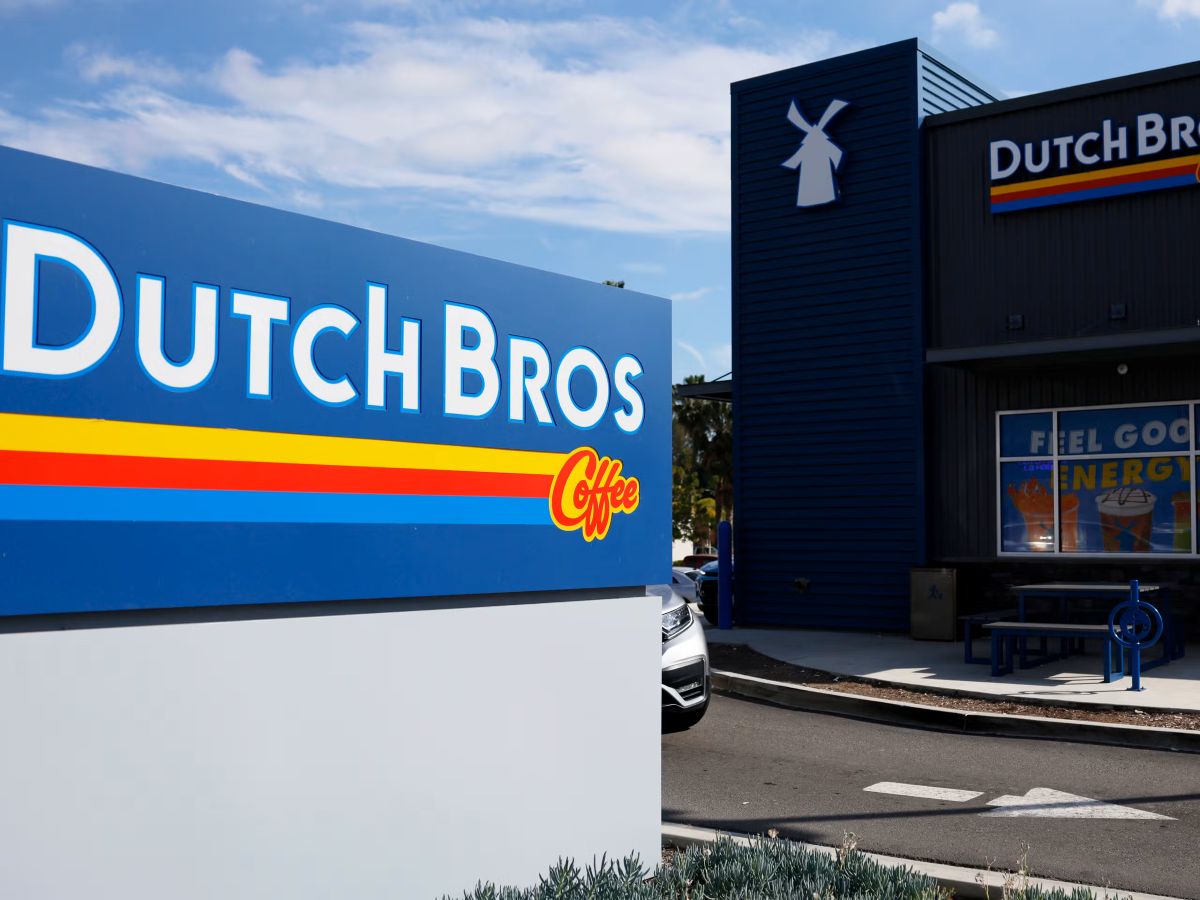
Dutch Bros Over-Indexes on Coffee and Energy Boost Ritual

Source: Morning Consult / Bill Pink
Author: Editorial Team
Date: July 27, 2026

Dutch Bros Over-Indexes on Coffee and Energy Boost Ritual

  • Dutch Bros holds 2.0 mental market share against 2.2 market share, a near-perfect match.
  • The brand over-indexes on morning coffee (+9.3), energy boost (+9.1), and coffee to share with coworkers (+10.0).
  • Dutch Bros ranks fourth on raw coffee association at ~21%, behind Starbucks, Dunkin’, and McDonald’s.
  • Mental market share among 18-to-34 adults is 3.2, compared to just 1.2 among 65+.
  • The brand’s reach is the real constraint: 51.8% of category buyers bring Dutch Bros to mind.
  • Dutch Bros under-indexes on sit-down occasions like family breakfast (-7.1) and weekend brunch (-5.7).
  • Emotional connection stands at 2.8, offering room for deeper customer loyalty.

Dutch Bros has built a national brand identity. However, its actual footprint remains concentrated in the West and Sun Belt. At 2.0 mental market share, it is a fraction of Starbucks or Dunkin’ in raw scale. Yet on the occasions that define the category’s center, it punches well above its weight.

These occasions include morning coffee, the energy boost, and coffee shared with coworkers. The ceiling is not relevance; it is reach. With mental market share and converted share nearly identical, this is not a conversion problem. It is a distribution story — an emerging regional brand whose differentiation is genuinely strong.

The Category Entry Points Dutch Bros Wins

Dutch Bros’ Mental Advantage profile reads like a coffee-led brand several times its size. The relative signal is real, even where the absolute reach is not yet there. The brand over-indexes on the coffee and energy boost ritual.

Dutch Bros Mental Advantage on Key Occasions
Occasion Mental Advantage
Bringing coffee to share with coworkers +10.0
Picking up a coffee to start my day +9.3
Need to boost energy/focus before a demanding morning +9.1
Grabbing breakfast on the way to work −1.0
Meeting someone for coffee and conversation +2.0
Treating myself to something special to start the day +4.0

Given its size, Dutch Bros over-performs on these daily coffee occasions. These sit at the heart of the category. Dutch Bros leans into them more than its footprint would predict. Its identity is coherent and correctly pointed at the occasions that generate frequency.

The Reach Constraint: Fourth Place in Raw Association

Absolute reach on these same occasions is a distant fourth. On each of these coffee occasions, Dutch Bros ranks fourth on raw association at roughly 21 percent. This is well behind Starbucks (around 40 to 48 percent), Dunkin’, and McDonald’s.

The relative strength is genuine, and it is important not to overread it. Dutch Bros over-indexes because it is small and focused. It is not challenging the leaders for these occasions today. The lean is a foundation to grow from rather than a position of strength to defend. Scale context matters here too. The three chains ahead of it operate many times Dutch Bros’ store count. The national sample includes large regions where the brand has no locations at all.

The Right Absences to Have

Dutch Bros is absent from the sit-down occasions, which is the right absence to have. The brand under-indexes on family breakfast with a Mental Advantage of −7.1. It also under-indexes on weekend brunch at −5.7. For a drive-thru coffee brand, these are the correct occasions to cede. The absences are consistent with a focused coffee proposition rather than a sign of missing breadth.

Mind and Market Are Already Matched

Dutch Bros holds 2.0 mental market share against 2.2 market share. The gap of negative 0.2 is essentially even. Unlike brands whose share runs ahead of or behind their mental availability, Dutch Bros converts the mental availability it has almost exactly. There is no conversion inefficiency to fix and no share running ahead of memory to defend. What limits the brand is the raw size of its mental footprint.

Dutch Bros: Mental vs Market Share
Metric Value
Mental Market Share 2.0
Market Share 2.2
Gap −0.2 (essentially even)
Category Buyers who think of Dutch Bros 51.8%
Network Size 6.5
Emotional Connection 2.8

Penetration is the ceiling. Dutch Bros is brought to mind by 51.8 percent of category buyers. This is far below the coffee leaders. Its associative Network Size is 6.5, narrower than the national chains. The brand’s problem is not what people think of it. It is that too few people think of it at all. Every occasion it over-indexes on is capped by this reach ceiling.

A Distinctly Younger Base

Dutch Bros’ mental market share is 3.2 among 18-to-34 adults. This compares to just 1.2 among the 65-plus group. This is the sharpest young skew of any brand in its size class. Its strength is generational, concentrated in the audience forming its coffee habits now and most open to a newer brand. This is the most valuable possible profile for a small brand with room to grow.

Dutch Bros Mental Market Share by Age Group
Age Group Mental Market Share
18-34 3.2
35-64 ~2.0
65+ 1.2

What to Do About It

Dutch Bros has the rare combination of a focused, correctly-aimed identity and a young base. It is held back almost entirely by how few people it reaches. The strategy is expansion of mental availability on the occasions the brand already fits, without repositioning.

Grow penetration on the coffee occasions it already over-indexes on. The morning coffee, the energy boost, and coffee for coworkers are where Dutch Bros’ Mental Advantage is strongest. Building raw awareness on exactly these occasions, instead of diversifying into new ones, compounds an existing strength and moves the brand up from its fourth-place absolute standing.

Lead with the young base. The 3.2 mental market share among 18-to-34 adults is the brand’s most valuable asset. Concentrating reach-building where the brand already skews is more efficient than competing head-on with the national chains for older or broader audiences.

Continue to deepen emotional connection as reach grows. With emotional connection at 2.8, Dutch Bros should pair awareness growth with reasons to feel loyalty that go beyond recognition. For a brand this size, converting new awareness into genuine attachment on the coffee ritual is what will eventually let its mental market share climb past the specialist tier.

About the Research

Morning Consult conducts over 30,000 daily proprietary surveys in 45 countries. The research covers more than 5,000 brands and 50 economic indicators. The category advantage research measures both mental availability and emotional closeness. It uncovers Category Entry Points and pinpoints growth opportunities.

Frequently Asked Questions

What is Dutch Bros’ mental market share?Dutch Bros holds 2.0 mental market share, compared to 2.2 market share, making the gap essentially even.

On which occasions does Dutch Bros over-index?Dutch Bros over-indexes on morning coffee (+9.3), energy boost (+9.1), and coffee to share with coworkers (+10.0).

Why is Dutch Bros ranked fourth in raw association?At roughly 21% association, Dutch Bros ranks fourth behind Starbucks (~40-48%), Dunkin’, and McDonald’s due to its smaller footprint.

What is the brand’s reach limitation?Only 51.8% of category buyers bring Dutch Bros to mind, limiting its growth potential across all occasions.

How does Dutch Bros perform among younger consumers?Mental market share among 18-to-34 adults is 3.2, compared to just 1.2 among 65+, showing a strong generational skew.

What is the strategic recommendation for Dutch Bros?Expand mental availability on existing coffee occasions, lead with the young base, and deepen emotional connection as reach grows.

USDA Report: Record World Coffee Production in 2026/27

Source: USDA Foreign Agricultural Service (FAS) – Coffee: World Markets and Trade
Author: Qahwa World
Date: July 23, 2026This article covers important findings from the world coffee market report 2026.

USDA Report: Record World Coffee Production in 2026/27

  • World coffee production forecast at a record 189.7 million bags in 2026/27, up 10.8 million from the previous year.
  • Brazil leads the surge with a record 71.9 million bags, driven by a 9.5 million bag Arabica rebound.
  • Global consumption rises to a record 179.7 million bags, with the European Union and United States leading gains.
  • World bean exports forecast at a record 131.4 million bags, up 11.9 million from 2025/26.
  • Ending stocks rise for a second consecutive year to 26.3 million bags.
  • Coffee prices have fallen 25% over the last seven months as additional supplies become available.
  • Vietnam, Colombia, Ethiopia, and Uganda all post production increases, while Indonesia declines.

The USDA Foreign Agricultural Service released its latest Coffee: World Markets and Trade report. Global coffee production for 2026/27 is forecast at a record 189.7 million bags. This represents an increase of 10.8 million bags from the previous year.

Record output in Brazil, Ethiopia, Uganda, and Vietnam drives this growth. These gains more than compensate for losses in India and Indonesia. World coffee bean exports are expected to reach a record 131.4 million bags. Global consumption is forecast to rise to a record 179.7 million bags.

World Production at Record High

World coffee production for 2026/27 is forecast 10.8 million bags higher than the previous year. Production is expected to reach a record 189.7 million bags. Brazil accounts for the largest share with a record 71.9 million bags. The rebound in Arabica production is particularly notable after five years of underperformance.

World Coffee Production 2026/27 (Million 60-kg Bags)
Category 2025/26 2026/27 Forecast Change
Total Production 178.8 189.7 +10.8
Arabica Production 94.4 105.9 +11.4
Robusta Production 84.4 83.8 -0.6

Brazil: Record Production and Arabica Rebound

Brazil’s combined Arabica and Robusta harvest is forecast at a record 71.9 million bags in 2026/27. This represents an increase of 8.9 million bags from the previous year. Arabica output is expected to rebound 9.5 million bags to 47.5 million, ending a five-year period of underperformance due to adverse weather conditions.

Timely rainfall during flowering in September and October ensured favorable fruit development. Near-record yields were achieved in Minas Gerais, where over 70% of Arabica coffee is grown. Robusta production is forecast to retreat 600,000 bags to 24.4 million following last year’s record harvest. Cooler temperatures combined with elevated rainfall lowered yields in Espirito Santo, where approximately 70% of Robusta is grown.

Brazil accounts for nearly 40% of world production and exerts significant influence on global supplies and prices. Brazil’s role in Arabica markets is even more pronounced, typically supplying between 40% and 50% depending on the biennial crop production cycle.

Brazil Coffee Production Outlook 2026/27
Category 2025/26 2026/27 Forecast Change
Arabica Production 38.0 million bags 47.5 million bags +9.5 million
Robusta Production 25.0 million bags 24.4 million bags -0.6 million
Total Production 63.0 million bags 71.9 million bags +8.9 million
Bean Exports 34.0 million bags 45.0 million bags +11.0 million
Ending Stocks 3.9 million bags 4.4 million bags +0.5 million

Global Consumption and Trade

World coffee bean exports are forecast 11.9 million bags higher to a record 131.4 million bags. This is driven by higher output in major producing countries. Global consumption is expected to rise to a record 179.7 million bags. The largest gains are occurring in the European Union and the United States.

Ending stocks are expected to rise for a second consecutive year to 26.3 million bags. This follows a significant drawdown between 2020/21 and 2024/25, when global ending stocks fell 15.5 million bags. While stocks are recovering, they remain below the long-term average.

World Coffee Summary 2026/27 (Million 60-kg Bags)
Category 2025/26 2026/27 Forecast Change
World Production 178.8 189.7 +10.8
World Bean Exports 119.5 131.4 +11.9
World Consumption 173.5 179.7 +6.3
Ending Stocks 24.4 26.3 +1.9

Country-by-Country Production Highlights

Vietnam production is forecast to increase 800,000 bags to a record 32.5 million. Expanding area and higher yields drive this growth. Recent high prices allowed growers to increase expenditures on fertilizers. Bean exports are forecast up 300,000 bags to 25.4 million. Domestic consumption is expected to reach a record 5.0 million bags.

Colombia output is expected to rise 900,000 bags to 13.4 million. Adequate soil moisture from last year’s excessive rains supports this growth. Increased utilization of fertilizers and pesticides also contributes. Bean exports, mostly to the United States and European Union, are forecast up 500,000 bags to 12.2 million.

Ethiopia is forecast to increase output by more than 500,000 bags to a record 12.1 million. Higher area and yield drive this growth. Over the last four years, growth has been driven by replacement of over half of the cultivated area with higher-yielding varieties. Bean exports are forecast up nearly 200,000 bags to 7.1 million.

Central America and Mexico production is forecast to rise nearly 600,000 bags to 17.7 million. Rebounding output in Costa Rica, Guatemala, Honduras, Mexico, and Panama contribute to this growth. Honduras is expected to account for nearly all the region’s growth, rebounding 500,000 bags to 6.0 million.

Indonesia production is forecast to drop 1.0 million bags to 11.4 million. Robusta output is expected to decrease 1.0 million bags to 10.0 million due to lower yields. Excessive rainfall disrupted flowering and cherry formation in Southern Sumatra and Java. Reduced output is expected to cut bean exports by over 800,000 bags to 7.0 million.

Key Country Production 2026/27 (Million 60-kg Bags)
Country 2025/26 2026/27 Forecast Change
Brazil 63.0 71.9 +8.9
Vietnam 31.7 32.5 +0.8
Colombia 12.5 13.4 +0.9
Ethiopia 11.6 12.1 +0.5
Indonesia 12.4 11.4 -1.0
Honduras 5.5 6.0 +0.5
Uganda 7.1 7.2 +0.1

Price Impact of Rising Supplies

Coffee prices have dropped 25% over the last seven months as additional supplies became available. This is measured by the International Coffee Organization monthly composite price index. The improving supply situation reflects record production and rising ending stocks.

However, ending stocks remain below the long-term average. Weather developments in key producing regions, particularly Minas Gerais in Brazil, remain the primary indicator for world market conditions. The biennial production cycle in Brazil continues to shape global supply and price expectations.

Revisions to 2025/26 Estimates

World production is unchanged from the December 2025 estimate of 178.8 million bags. Vietnam is raised 900,000 bags to 31.7 million on higher yields. Peru is up nearly 600,000 bags to 4.8 million. Colombia is lowered 1.3 million bags to 12.5 million due to excessive rain and cloud cover. Guatemala is reduced nearly 400,000 bags to 3.2 million due to coffee cherry borer and coffee rust.

World bean exports are revised down 4.3 million bags to 119.5 million. Brazil is lowered 3.0 million bags to 34.0 million due to lower shipments to the EU and United States. Ethiopia is reduced over 800,000 bags to 6.9 million on higher-than-anticipated domestic consumption. Vietnam is up 500,000 bags to 25.1 million on higher output.

Key Takeaways for the Coffee Industry

Record global production is expected to boost supplies significantly. Brazil’s Arabica rebound after five years of underperformance is particularly notable. This could help replenish global inventories that were drawn down in previous years.

Ending stocks are forecast to rise for a second consecutive year. However, they remain below the long-term average. Weather developments in Minas Gerais remain the primary indicator for world market conditions. Coffee prices have fallen 25% in seven months, reflecting improved supply. Producers and traders should monitor Brazil’s production cycle closely, as it heavily influences global market conditions.

Frequently Asked Questions

What is the forecast for global coffee production in 2026/27?World production is forecast at a record 189.7 million bags, up 10.8 million from the previous year.

What is Brazil’s production forecast?Brazil is forecast at a record 71.9 million bags, driven by a 9.5 million bag Arabica rebound.

What is the global consumption forecast?Global consumption is expected to rise to a record 179.7 million bags, with the largest gains in the EU and US.

What are ending stocks expected to be?Ending stocks are expected to rise for a second consecutive year to 26.3 million bags.

How have coffee prices responded to increased supply?Coffee prices have dropped 25% over the last seven months as additional supplies became available.

Which countries are driving production growth?Brazil, Vietnam, Colombia, Ethiopia, and Uganda are all posting production increases, while Indonesia declines.
ICO and FAO Renew Commitment to Sustainable Coffee Sector

Source: International Coffee Organization (ICO)
Author: Qahwa World Editorial Team
Date: July 22, 2026

ICO and FAO Renew Commitment to Sustainable Coffee Sector

  • ICO and FAO signed a new Memorandum of Understanding reaffirming their commitment to coffee sector sustainability.
  • The renewed partnership builds on years of successful collaboration between the two organizations.
  • Key areas include sustainable production, climate resilience, market transparency, and inclusive value chains.
  • The agreement also covers innovation, digital technologies, and knowledge exchange.
  • A special focus will be on empowering coffee-growing communities and smallholder farmers.
  • Both organizations aim to build a more inclusive and resilient coffee sector for future generations.

The International Coffee Organization and the Food and Agriculture Organization of the United Nations have renewed their commitment to a more sustainable coffee sector. Executive Director of ICO and FAO Director-General QU Dongyu signed a new Memorandum of Understanding today.

The agreement reaffirms their shared commitment to supporting the sustainable development of the global coffee sector. It builds on years of successful collaboration between the two organizations.

Key Areas of Cooperation

The renewed partnership will strengthen cooperation in several key areas. These include sustainable coffee production and sourcing. Climate resilience and adaptation are also priorities. Market transparency and access to information will be enhanced.

Other areas include inclusive and sustainable value chains. Innovation and digital technologies will play a crucial role. Knowledge exchange between stakeholders is another focus. The agreement also emphasizes empowering coffee-growing communities. Special attention will be given to smallholder and family farmers.

ICO-FAO Renewed Partnership – Key Cooperation Areas
Area Focus
Sustainable Production Sustainable coffee production and sourcing
Climate Action Climate resilience and adaptation
Market Transparency Market transparency and access to information
Value Chains Inclusive and sustainable value chains
Innovation Innovation, digital technologies and knowledge exchange
Community Empowerment Empowering coffee-growing communities, particularly smallholder farmers

The Importance of Coffee

Coffee supports the livelihoods of millions of people worldwide. It plays a vital role in advancing sustainable development. The sector faces numerous challenges. These include climate change, market volatility, and social inequality.

Through this renewed framework, ICO and FAO will continue working together. Their goal is to ensure the coffee sector becomes more inclusive and resilient. They aim to prepare it for the challenges of the future. The partnership will benefit producers, consumers, and future generations.

About ICO and FAO

The International Coffee Organization is the only intergovernmental organization dedicated to coffee. It enhances the sustainability of the coffee sector for both exporting and importing countries. The ICO provides official statistics and facilitates technical cooperation projects.

The Food and Agriculture Organization is a specialized agency of the United Nations. It leads international efforts to defeat hunger. FAO supports sustainable agriculture and rural development. Together, ICO and FAO bring complementary expertise to the coffee sector.

“A renewed commitment to a more sustainable and resilient coffee sector.”

— International Coffee Organization

Future Outlook

The renewed partnership signals a strong commitment to coffee sustainability. Both organizations look forward to building an even stronger partnership. The focus remains on practical outcomes for coffee producers and communities. Innovation and knowledge sharing will drive progress.

Together, ICO and FAO aim to create lasting positive change. The goal is a coffee sector that is inclusive, resilient, and prepared for future challenges. Producers, consumers, and future generations will all benefit from this collaboration.

Frequently Asked Questions

What did ICO and FAO announce?ICO and FAO signed a new Memorandum of Understanding renewing their commitment to a sustainable coffee sector.

What are the key areas of cooperation?Key areas include sustainable production, climate resilience, market transparency, inclusive value chains, innovation, and empowering smallholder farmers.

Why is this partnership important?The partnership combines the expertise of two major organizations to address challenges facing the global coffee sector.

How does coffee support sustainable development?Coffee supports the livelihoods of millions worldwide and plays a vital role in advancing sustainable development goals.

Who will benefit from this agreement?Coffee producers, consumers, and future generations will benefit from a more inclusive and resilient coffee sector.

What is the role of ICO?ICO is the only intergovernmental organization dedicated to coffee, providing statistics and facilitating technical cooperation.

Coffee Drinkers Shift to Whole Beans as Prices Soar

Source: Qahwa World / Lavazza Group
Author: Editorial Team
Date: July 21, 2026

Coffee Drinkers Shift to Whole Beans as Prices Soar

  • Consumers are buying less but better coffee as global prices remain elevated.
  • Whole bean demand surged 46% year-over-year, according to consumer data.
  • Home brewing equipment sales jumped: drip coffee makers up 66%, espresso machines up 50%.
  • Lavazza reported strong 2025 revenue of €3.9 billion, up 15.7%.
  • Lavazza plans to launch Tablì, a sustainable single-serve system using compressed coffee tablets.
  • Nielsen data shows whole bean sales outpacing overall coffee category across UK and Europe.
  • Price volatility is expected to persist, with no retail price cuts in sight.

Global coffee prices have remained elevated for four consecutive years. Consumers are adapting by buying less but better. This trend toward whole bean coffee and bean-to-cup machines represents a significant market shift.

Giuseppe Lavazza, Chairman of the Lavazza Group, called it the sector’s most important trend. “People are looking for beans,” he said. “They enjoy replicating the coffee shop experience at home. Maybe they prefer to consume a little less but of better quality.”

The Trend Emerged in 2024

This shift did not appear overnight. Early indicators were visible in 2024, well before the price peaks of 2025 intensified the movement. Pattern, a consumer demand analysis firm, reported whole bean coffee demand surged 46% year-over-year. This growth was accompanied by strong increases in home brewing equipment.

Drip coffee makers rose 66%. Espresso machines increased 50%. Accessories such as bean storage also grew 20%. The report highlighted a broader move toward serious at-home coffee preparation. Whole beans serve as the starting point for better freshness and flavor.

Multiple National Coffee Association surveys showed sustained high levels of at-home coffee consumption. Around 81% of past-day drinkers consumed coffee at home in some periods. Out-of-home consumption recovered post-pandemic, but the at-home habit remained strong. Consumers continued seeking premium experiences and better value.

2024 Early Indicators – Consumer Demand Growth
Category Growth
Whole bean coffee demand +46%
Drip coffee makers +66%
Espresso machines +50%
Bean storage accessories +20%

Current Reality: Price Surge Accelerates Change

Record-high coffee prices in 2025 pushed the trend into the mainstream. Poor harvests in Brazil and Vietnam drove the price surge. Climate change impacts, geopolitical disruptions, and financial speculation also contributed.

Nielsen data for the year to May 2026 shows the shift clearly. In the United Kingdom, whole-bean sales rose 20.3% by volume. This far outpaced the overall at-home coffee category, which grew just 2.8%. Value sales jumped 36.8%, while bean-to-cup machine sales increased 33.5%.

In Europe, France saw 35% growth by value. Italy recorded 33% growth. Germany, Europe’s largest coffee market, saw 31.2% growth. Whole beans have now surpassed traditional roast-and-ground coffee in volume in Germany.

In the United States, the shift was more modest but consistent. Whole-bean unit sales rose 3.2% over 52 weeks to June 2026. Meanwhile, pod sales fell 4.9% and ground coffee declined 3.9%.

Nielsen Data – Whole Bean Sales Growth (Year to May 2026)
Market Growth
United Kingdom (volume) +20.3%
United Kingdom (value) +36.8%
France (value) +35.0%
Italy (value) +33.0%
Germany (value) +31.2%
United States (unit sales) +3.2%

Why Prices Soared

The coffee market has faced four years of upheaval. Adverse weather and weak harvests in Brazil and Vietnam were key factors. Climate change impacts, including El Niño risks, added pressure. Geopolitical disruptions, higher shipping costs, and financial speculation in futures markets also played a role.

In the UK, at-home coffee prices rose another 6.3% in the year to May 2026. Roasters found it harder to manage costs by blending cheaper Robusta with Arabica. Both varieties hit record levels simultaneously.

Lavazza noted that futures prices have eased from 2025 peaks. However, the market remains too volatile for widespread retail price cuts. “We think there is not time to think about a possible cut in prices,” he said. “The possibility of another increase is not totally over.” At least two strong harvests in Brazil and Vietnam will be needed to rebuild global inventories.

Lavazza’s Performance and Strategic Response

Despite industry challenges, Lavazza reported strong 2025 results. Revenue reached €3.9 billion, up 15.7%. EBITDA rose 8.8% to €340 million. The company is innovating to stay ahead.

Lavazza plans to launch Tablì in the UK in September 2026. This is a single-serve system using compressed coffee tablets. It addresses waste and recycling concerns associated with plastic and aluminum pods. “Capsule is over,” Lavazza declared. “This is a new benchmark.”

Broader Implications and Future Outlook

Consumer behavior is evolving. Coffee remains recession-resistant. However, buyers are trading down in volume while trading up in quality and experience. The “less but better” philosophy reflects economic pressure and a desire for premium at-home rituals.

The pandemic-initiated home-brewing boom has become structural. Demand for whole beans rewards freshness, flavor complexity, and better value per cup. Persistent climate risks, cautious buying by roasters, and farmers holding stock in hope of higher prices continue to shape the market.

Volatility is now “the new constant,” according to Lavazza. Opportunities remain in premium home equipment, sustainable packaging innovations, and single-origin and specialty offerings.

“People are looking for beans and they enjoy maybe to replicate at home the experience of the coffee shop. Maybe they prefer to consume a little less but of better quality.”

— Giuseppe Lavazza, Chairman, Lavazza Group

Conclusion

What began as a noticeable trend in 2024 has evolved into a major market shift in 2026. Soaring prices amplified the movement. Consumers are not abandoning coffee. They are redefining how they enjoy it. As Lavazza observed, this represents a “fundamental transformation in terms of supply and demand.”

For roasters, retailers, and consumers alike, the message is clear. Quality, freshness, and thoughtful preparation are winning out in an era of higher costs and greater awareness.

Frequently Asked Questions

What is the “less but better” coffee trend?Consumers are buying less coffee in volume but choosing higher quality whole beans and premium home brewing equipment to replicate café experiences at home.

How much did whole bean demand surge?Whole bean coffee demand surged 46% year-over-year, according to consumer demand analysis from Pattern.

What are the key market data highlights?In the UK, whole-bean sales rose 20.3% by volume. France saw 35% value growth, Italy 33%, and Germany 31.2%.

Why are coffee prices so high?Poor harvests in Brazil and Vietnam, climate change, geopolitical disruptions, and financial speculation have driven prices to record levels.

What is Lavazza’s new Tablì product?Tablì is a single-serve system using compressed coffee tablets instead of plastic or aluminum pods, addressing waste and recycling concerns.

Will coffee prices come down soon?Lavazza says prices remain too volatile for retail cuts. At least two strong harvests in Brazil and Vietnam are needed to rebuild inventories.

Coffee Returns to Bullish Mode After 49% Rally

Source: Barchart / Andrew Hecht
Author: Qahwa World
Date: July 14, 2026

Coffee Returns to Bullish Mode After 49% Rally

  • ICE Arabica coffee futures surged 49.5% in one month, erasing four months of declines.
  • The rally followed a 37.8% drop from January to June, with prices bottoming at $2.3885 per pound.
  • Brazil’s 2026/27 harvest is behind schedule due to heavy rain disrupting operations.
  • ICE Arabica exchange inventories reached a two-year low of 366,756 bags.
  • Emerging El Niño weather patterns could damage Brazil’s flowering and crop.
  • Brazilian farmers are withholding beans, storing them for sale at higher prices.
  • Key resistance is at the October 2025 record high of $4.3795 per pound.

Coffee futures are back in bullish mode. ICE Arabica coffee surged 49.5% over the past month. The rally erased four months of declines. Prices bottomed at $2.3885 per pound on June 9. On July 6, they reached $3.5700 per pound.

The volatility has been extreme. Coffee futures fell 37.8% from January to June. Then they made up all those losses in under one month. The market remains highly volatile with significant upside potential.

Why Is Coffee Back in Bullish Mode?

Several factors are driving the rally. First, Brazil’s 2026/27 harvest is behind schedule. Heavy rain has disrupted harvesting operations. This has increased concerns about coffee bean quality. The prospects for lower Brazilian output have been bullish for prices.

Second, global inventories are low. ICE Arabica exchange inventories reached a two-year low of 366,756 bags. This creates the potential for supply squeezes. Third, production costs are rising due to stubborn global inflation.

Top Coffee Producers (2025)
Country Share of Global Production
Brazil 37.08%
Vietnam 16.54%
Colombia 8.44%
Ethiopia ~4%
Indonesia ~4%

Brazil’s Dominance and Harvest Issues

Brazil is the world’s leading coffee producer. It accounts for 37.08% of global production. This is nearly as much as the next four countries combined. Vietnam, Colombia, Ethiopia, and Indonesia produce a combined 37.41%.

Brazil’s 2026/27 harvest is behind schedule. Heavy rain disrupted the harvest. This increased concerns that coffee bean quality had declined. The prospects for lower Brazilian output have been bullish for ICE Arabica coffee futures prices.

El Niño Risks and Farmer Stockpiling

The emerging El Niño weather pattern could trigger extreme temperature shifts. Irregular precipitation could damage coffee tree flowering. This could negatively impact the overall Brazilian crop. These concerns are pushing prices higher.

Brazilian farmers have begun withholding beans. They are storing them for sale when prices rise. This behavior further tightens supply. It also adds upward pressure on prices.

Technical Levels to Watch

The coffee futures market has clear technical levels. The record high stands at $4.3795 per pound from October 2025. This is the key resistance level. Technical support sits at the May 2025 low of $2.3885 per pound.

At $3.16 per pound on July 7, coffee futures were below the midpoint. However, they had traded above it on July 6. There is significant room for volatile price swings between these levels.

Key Technical Levels for Arabica Coffee
Level Price (per pound)
Record High (October 2025) $4.3795
Current Price (July 7, 2026) $3.16
Recent Low (June 9, 2026) $2.3885
Historical Support (May 2019) $0.876

Futures and Options Trading

There are no ETFs that track coffee prices. Participation is limited to ICE futures and futures options. Each futures contract contains 37,500 pounds of Arabica coffee. At $3.28 per pound, the contract value is $123,000.

Traders can control this value with an original margin deposit of $23,227. This represents 18.9% of the contract value. Recent volatility caused margin requirements to rise from 7.9% of contract value. The exchange can change margin requirements based on market volatility. Wider price swings lead to higher margin requirements.

ICE offers put and call options on Arabica coffee futures. Long options involve paying a premium and are not subject to margin requirements. Short options require margin. The leverage is significant for market participants.

Risk Management Is Essential

Coffee is back in bullish mode in July 2026. This will likely increase trading activity. It could also lead to wide price swings. Any risk position in ICE Arabica coffee requires a risk-reward plan. Traders should use stops and profit horizons. This protects capital and establishes reasonable odds of success.

Frequently Asked Questions

Why is coffee in bullish mode?Brazil harvest delays, low inventories, El Niño risks, and rising production costs are driving coffee futures higher.

How much did coffee futures rise in July 2026?ICE Arabica coffee futures surged 49.5% in one month, erasing four months of declines.

What is Brazil’s share of global coffee production?Brazil accounts for 37.08% of global coffee production, nearly as much as the next four countries combined.

What are the key technical levels for coffee?Resistance is at the October 2025 record high of $4.3795 per pound. Support is at the May 2025 low of $2.3885 per pound.

Are there ETFs that track coffee prices?No. The only soft commodity ETF is Teucrium Sugar ETF (CANE). Coffee participation is limited to ICE futures and options.

What is the margin requirement for coffee futures?The original margin deposit is $23,227 per contract, representing 18.9% of the contract value. Margin requirements can change based on volatility.

Ethiopia Coffee Revenue Tops 3 Billion

Source: Official government reports & Daily Coffee News analysis
Author: Qahwa World
Date: July 8, 2026

Ethiopia Coffee Revenue Tops 3 Billion

  • Ethiopia earned 3.1 billion dollars from coffee exports in a single year.
  • This represents a 719.6% increase compared to 20 years ago.
  • The country ranks third globally and first in Africa for coffee exports.
  • One year’s income exceeded the total of the previous 17 years combined.
  • Rising global demand for organic coffee opens new opportunities for Ethiopia.
  • A comparison with Brazil reveals Ethiopia’s competitive edge in sustainable farming.
  • The analysis recommends increased technical and financial support for farmers.

Ethiopia announced a historic achievement in its coffee sector. Export revenues surpassed the 3 billion dollar mark. This reflects a strategic transformation in farming and marketing policies.

Annual revenues reached 3.1 billion dollars. This surpasses the total earned over the previous 17 years. That total stood at only 3.3 billion dollars.

Historical Numbers Confirm Accelerated Growth

Official data compared current performance with past periods. The results showed enormous revenue growth. For example, 20 years ago, revenues were only 366 million dollars. Today, they stand at 3.1 billion dollars.

In addition, the net increase over 20 years exceeded 2.6 billion dollars. This translates to a growth rate of 719.6%. In contrast, income more than doubled within the last 5 years alone.

Ethiopian Coffee Export Revenue Comparison (in billions USD)
Period Revenue Net Increase Growth Rate
20 years ago 0.366 +2.634 719.6%
10 years ago 0.722 +2.278 315.5%
5 years ago 0.907 +2.093 230.7%
Current year 3.100

Strategic Opportunities Amid Brazil’s Crisis

Brazil, the world’s largest coffee producer, faces severe climate challenges. Production in Minas Gerais state has been heavily damaged. As a result, Brazil’s export capacity has declined.

In contrast, Ethiopia possesses unique natural advantages. It is the birthplace of Arabica coffee. Moreover, its farming relies on organic and forest-based systems. Therefore, it can fill the gap in European and Asian markets.

Organic Coffee and the Competitive Edge

Brazilian farmers are shifting to chemical fertilizers. They aim to quickly compensate for lost production. However, this reduces the quality of organic coffee.

Meanwhile, Ethiopian coffee remains natural and chemical-free. Furthermore, Ethiopia’s agroforestry system complies with new EU regulations. This strengthens its position in the global market. Consequently, the value of its exports continues to rise.

Required Steps to Maximize Gains

The report urged immediate action. First, increase productivity through technical support for farmers. Second, improve quality control to maintain global reputation. Third, provide affordable financing for sustainable agricultural projects.

In addition, leverage strong diplomatic ties with Asia. Especially China, which is a vast emerging market. Ultimately, this will enable Ethiopia to turn its origin advantage into true market dominance.

Frequently Asked Questions

What is Ethiopia’s current coffee export value?Ethiopia’s coffee exports reached 3.1 billion dollars last year, setting a new record.

What was the export value 20 years ago?The value was only 366 million dollars, which means a massive growth of over 700%.

What is Ethiopia’s global ranking in coffee exports?Ethiopia ranks third globally after Brazil and Colombia, and first in Africa.

How does Ethiopia benefit from Brazil’s crisis?It can compensate for the global supply shortage, especially in Europe and Asia, thanks to the quality of its organic and natural beans.

What are the main challenges for the sector?The sector needs more farmer support, better infrastructure, and increased funding to meet new market requirements.

Is Ethiopian coffee completely organic?Yes, the vast majority is grown naturally on small farms or in forests, without any chemical inputs.

Believe It or Not: The World’s Third-Largest Coffee Producer Is Importing Processed Coffee

Source: USDA Foreign Agricultural Service |
Author: Qahwa World |
Date: July 2, 2026

Believe It or Not: The World’s Third-Largest Coffee Producer Is Importing Processed Coffee

Key Takeaways:

  • Colombia, the world’s third-largest coffee producer, is increasingly importing processed coffee products such as roasted coffee, extracts, and concentrates.
  • Imports of value-added coffee products have grown at an average annual rate of 9 percent over the past five years.
  • The demand is driven primarily by Colombia’s food manufacturing sector, which uses coffee extracts in a wide range of products.
  • Competition in this segment is intensifying, particularly from Brazil.
  • Colombia’s retail food sales grew 4 percent in 2025, while the food service sector grew 9 percent.
  • Consumers are increasingly attentive to product origin, favoring local goods while remaining open to premium and innovative ingredients.

Believe it or not: Colombia, the world’s third-largest coffee producer, is increasingly importing processed coffee products such as roasted coffee, extracts, essences, and concentrates. According to the latest USDA Exporter Guide for Colombia, these value-added products represent one of the fastest-growing consumer-oriented categories in the Colombian market, with imports growing at an average annual rate of 9 percent over the past five years.

While Colombia maintains a strong domestic coffee industry, the report notes that opportunities remain for suppliers of processed coffee ingredients. The demand is driven primarily by the country’s food manufacturing sector, which increasingly uses coffee extracts and concentrates in a wide range of food and beverage products.

Growing Demand for Processed Products and Competition from Brazil

The USDA points out that competition in this segment is intensifying, particularly from Brazil, reflecting the growing regional market for processed coffee products rather than green coffee alone. This shift reflects changing market dynamics, as manufacturers seek ready-to-use coffee ingredients that meet their production needs and offer flexibility and quality.

Retail and Food Service Growth Despite Challenges

The broader Colombian food and beverage market continues to expand despite economic and regulatory challenges. Retail food sales increased by 4 percent in 2025, while the food service sector grew by 9 percent, supported by tourism and urban consumption. Consumer demand is also shifting toward healthier products, convenience foods, and environmentally conscious packaging.

According to the report, Colombia’s food processing industry accounts for approximately 30 percent of the country’s manufacturing sector, creating opportunities for ingredients that meet evolving nutritional regulations and support product innovation. Coffee extracts and specialty ingredients fit within this trend as manufacturers diversify their product portfolios.

Indicator Value Significance
Value-Added Product Import Growth (5 years) 9% annually Rising demand for processed products
Retail Food Sales Growth (2025) 4% Stable domestic market
Food Service Growth (2025) 9% Rising out-of-home consumption and tourism
Food Processing Share of Manufacturing 30% Opportunities for innovative ingredients

Colombian Consumers: Favoring Local, Open to Innovative

The report also notes that Colombian consumers are increasingly attentive to the origin of food products, favoring locally produced goods while remaining open to premium and innovative ingredients that add value to finished products. This creates a competitive environment where imported processed coffee products must differentiate themselves through quality and functionality.

Colombia: A Promising Market for Specialty Ingredient Suppliers

Published by the USDA Foreign Agricultural Service, the Exporter Guide highlights that Colombia remains one of Latin America’s largest food markets and continues to offer opportunities for suppliers of specialty food ingredients, including value-added coffee products, despite its position as a global coffee producing powerhouse.

Frequently Asked Questions About the Colombian Coffee Market

Q: Why does Colombia import coffee products despite being a major producer?

A: Due to growing demand for processed products like extracts and concentrates used by the food manufacturing sector, which may not be available locally in the required quantities or specifications.

Q: Which product categories are growing fastest in the Colombian market?

A: Roasted coffee, coffee extracts, essences, and concentrates, which have recorded 9% annual import growth over the past five years.

Q: Who is Colombia’s main competitor in this segment?

A: Brazil, which is increasing its competitiveness in supplying processed coffee products to the Colombian market.

Q: How do consumer preferences affect the market?

A: Consumers prefer local products but remain open to premium and innovative ingredients that add value, creating a competitive environment based on quality and functionality.

Q: What opportunities exist for ingredient suppliers?

A: Opportunities lie in supplying processed coffee ingredients that meet quality standards and support product innovation in the food manufacturing sector, which accounts for 30% of Colombian manufacturing.

The USDA report reveals a subtle but significant shift in Colombia’s coffee market. While Colombia remains a production powerhouse, demand for value-added products is growing rapidly. This shift, driven by the food manufacturing sector and changing consumer preferences, opens new opportunities for international suppliers of processed coffee products and reflects a broader trend in emerging markets toward value addition rather than raw commodities alone.

Prepared and edited by: Qahwa World – Based on the USDA Foreign Agricultural Service Exporter Guide for Colombia.

All rights reserved. Republication with attribution permitted.

Publication date: July 2, 2026

International Coffee Organization Releases Coffee Market Report for May 2026

Source: International Coffee Organization (ICO) – May 2026 Report |
Author: Qahwa World |
Date: June 13, 2026

International Coffee Organization Releases Coffee Market Report for May 2026

Key Takeaways:

  • The ICO Composite Indicator Price (I‑CIP) averaged 256.05 US cents/lb in May 2026, down 3.8% from April.
  • Brazilian Naturals fell 6.4% to 293.73 US cents/lb, while Robustas rose 1.1% to 166.51 US cents/lb.
  • ICE‑certified Arabica stocks fell 13.5% to 0.48 million bags – a multi‑month low.
  • CONAB raised its Brazil 2026/27 production forecast to a record 66.7 million bags, with Arabica up 28% y/y.
  • Global green bean exports declined 1.9% in April 2026 to 10.51 million bags, while Robusta exports rose 11.2%.
  • Vietnam’s April 2026 exports jumped 12.1% to 3.41 million bags – the country’s largest April volume on record.
  • The New York–London futures arbitrage narrowed 13.1% to 116.39 US cents/lb, reflecting improved Brazil arabica prospects.

The International Coffee Organization (ICO) published its monthly coffee market report for May 2026, showing a continued downward drift in prices as expectations of ample supply strengthened. The ICO Composite Indicator Price (I‑CIP) averaged 256.05 US cents/lb in May 2026, a 3.8% decrease from April 2026. The market continued to react to an improved supply outlook, reinforced by CONAB’s reaffirmation of a record outlook for Brazil’s production in crop year 2026/27.

Despite the decline, prices remain relatively elevated by historical standards. The drop reflects growing market expectations of a possible global surplus in coffee year 2026/27, combined with harvest pressure from Brazil and persistent backwardation in financial markets.

Group Indicator Performance: Arabicas Decline, Robustas Edge Up

Colombian Milds averaged 323.45 US cents/lb in May 2026, down 3.3% from April. Other Milds fell 4.8% to 315.42 US cents/lb. Brazilian Naturals dropped 6.4% to 293.73 US cents/lb – the steepest decline among the groups. In contrast, Robustas rose 1.1% to 166.51 US cents/lb.

On the futures markets, New York arabica futures fell 5.8% to 268.18 US cents/lb, while London robusta futures gained 0.8% to 151.79 US cents/lb. The arbitrage between the two futures markets contracted by 13.1% to 116.39 US cents/lb, highlighting in particular the improving prospects for arabica production in Brazil.

Group May 2026 (US cents/lb) Change vs April
ICO Composite 256.05 -3.8%
Colombian Milds 323.45 -3.3%
Other Milds 315.42 -4.8%
Brazilian Naturals 293.73 -6.4%
Robustas 166.51 +1.1%

Certified Stocks at Multi‑Month Lows

ICE‑certified robusta stocks fell 0.1% from April to May 2026, closing the month at 0.64 million bags. US‑certified arabica stocks also declined, dropping 13.5% to 0.48 million bags – the lowest level in months. The continued drawdown in certified stocks suggests persistent market uncertainty, as nearby contract premiums are not yet high enough to incentivize deliveries into certified warehouses.

CONAB Forecast: Record Brazil 2026/27 Crop

In mid‑May, Brazil’s National Supply Company (CONAB) released its second crop survey. It raised the total 2026/27 production forecast by about 0.5 million bags to a record 66.7 million bags. Arabica production was increased by 1.67 million bags to 45.8 million bags (+28% y/y). Robusta production was cut by about 1.2 million bags to 20.9 million bags (still a +0.8% y/y increase). CONAB also reported a 3.9% increase in coffee area to 2.34 million hectares, with yields rising to 34.4 bags per hectare. However, CONAB noted that carry‑over stocks remain low and highlighted continued growth in global demand, which tempered some of the market’s bearish sentiment.

Green Bean Exports: Overall Decline, Robusta Growth

Total global green bean exports reached 10.51 million bags in April 2026, down 1.9% from 10.71 million bags in April 2025. All coffee groups recorded declines except Robustas. Details:

  • Colombian Milds: down 14.0% to 0.78 million bags.
  • Other Milds: down 1.1% to 2.31 million bags.
  • Brazilian Naturals: down 14.8% to 2.91 million bags.
  • Robustas: up 11.2% to 4.50 million bags.

As a result, the Arabicas’ share of total green bean exports for the first seven months of coffee year 2025/26 fell to 60.4%, down from 64.2% in the same period a year earlier.

Group April 2026 (million bags) Change vs April 2025
Colombian Milds 0.78 -14.0%
Other Milds 2.31 -1.1%
Brazilian Naturals 2.91 -14.8%
Robustas 4.50 +11.2%

Regional Performance: Asia & Oceania Lead Growth

Total exports of all forms of coffee (green, soluble, roasted) fell 0.9% to 12.05 million bags in April 2026 compared with 12.17 million bags in April 2025. Regional dynamics were mixed:

  • Asia & Oceania: Up 7.3% to 4.64 million bags, led by Vietnam. Vietnamese exports jumped 12.1% to 3.41 million bags – the country’s largest April export volume on record.
  • Africa: Down 22.1% to 1.54 million bags, driven by sharp declines in Ethiopia and Uganda.
  • South America: Down 1.2% to 3.99 million bags, with Colombia recording its fifth consecutive monthly decline.
  • Caribbean, Mexico & Central America: Up 3.3% to 1.88 million bags, led by Honduras (+23.0%).

Price Volatility and El Niño Risks

The intra‑day volatility of the I‑CIP averaged 8.8% in May 2026, down 0.2 percentage points from April. Volatility for Brazilian Naturals and Robustas also declined, while Colombian Milds volatility increased slightly. On the futures markets, New York arabica volatility stood at 10.2%, and London robusta volatility at 10.1%.

The US National Oceanic and Atmospheric Administration (NOAA) estimates an 82% probability that El Niño conditions will emerge between May and July, with a 67% chance of a “Super El Niño”. Such a pattern could delay Brazil’s September‑October 2026 flowering rains, potentially damaging the 2026/27 crop. However, the impact of El Niño in Brazil is complex – it can be positive or negative depending on region, intensity, and timing.

Frequently Asked Questions About the ICO May 2026 Coffee Market Report

Q: What is the ICO Composite Indicator Price?

A: It is a weighted average of the four ICO group indicator prices (Colombian Milds, Other Milds, Brazilian Naturals, and Robustas).

Q: Why did arabica prices fall while robusta prices rose in May 2026?

A: Arabica fell due to record Brazil crop expectations, while robusta demand remained strong amid Red Sea shipping disruptions.

Q: What do falling certified stocks indicate?

A: They suggest that nearby contract premiums are not high enough to encourage deliveries into warehouses, reflecting persistent market uncertainty despite surplus expectations.

Q: How could El Niño affect coffee prices?

A: A “Super El Niño” could delay flowering rains in Brazil and damage next year’s crop, which would support higher prices. But the effect varies by region.

Q: What is the expected global coffee surplus for 2026/27?

A: CONAB’s record Brazil crop points to a significant surplus, but low carry‑over stocks and strong demand may limit its size.

The global coffee market remains caught between large surplus expectations on one hand, and low inventories, El Niño risks, and supply chain disruptions on the other. The ICO’s May 2026 report confirms that 2026 will be a pivotal year for the world’s coffee balance.

Prepared and edited by: Qahwa World – Based on the International Coffee Organization (ICO) market report for May 2026 (CMR-0526).

All rights reserved. Republication with attribution permitted.

Publication date: June 13, 2026

Strong Dollar Weighs on Coffee Prices

Dubai – Qahwa World

Coffee futures closed lower on Tuesday as a stronger U.S. dollar pressured commodity markets. This is a clear example of how a Strong Dollar Weighs on Coffee Prices. July arabica coffee contracts (KCN26) fell 0.76%, while July robusta futures (RMN26) declined 0.63%.

Losses were limited by tightening certified coffee inventories. ICE arabica stocks dropped to a 2.5-month low of 471,831 bags, while robusta inventories fell to a two-year low of 3,664 lots.

The ongoing closure of the Strait of Hormuz continued to disrupt global coffee trade flows, increasing shipping, insurance, fuel, and fertilizer costs for importers and roasters.

Brazil’s weaker export performance also supported prices. Cecafe reported that Brazil’s March green coffee exports declined 10% year-on-year to 2.65 million bags, while the country’s Trade Ministry said total March coffee exports fell 31% to 151,000 metric tons.

Meanwhile, rising supplies from Vietnam weighed on robusta prices. Vietnam’s coffee exports during January–April 2026 increased 15.8% year-on-year to 810,000 metric tons, according to the National Statistics Office. The country’s 2025/26 coffee production is expected to rise 6% to a four-year high of 1.76 million metric tons.

Expectations of a larger Brazilian crop also added bearish pressure. Recent forecasts from the Coffee Trading Academy, Marex Group, Sucafina, and StoneX all point to strong production in Brazil’s 2026/27 season, with estimates ranging from 71.4 million to 75.9 million bags.

StoneX also expects the global coffee surplus to expand to 10 million bags in 2026, compared with 1.8 million bags in 2025.

The USDA’s Foreign Agricultural Service forecasts global coffee production in 2025/26 will reach a record 178.848 million bags, driven by stronger robusta output, while global ending stocks are projected to decline 5.4% to 20.148 million bags.

ICC 2026 Trieste to Focus on Climate, Consumers and Coffee Circularity

Trieste, Italy – Qahwa World

The International Coffee Convention (ICC) 2026 will be held in Trieste this October, bringing together scientists, industry leaders and policy experts to address some of the most pressing challenges facing the global coffee sector.

Under the theme Coffee at the Crossroads: Climate, Consumers and Circularity, the event will examine how coffee production and trade are adapting to climate change, shifting consumer demand and the growing push toward circular and sustainable systems.

The ICC has positioned itself as a unique international forum that connects applied scientific research with real-world decision making across the coffee value chain. Unlike traditional trade fairs or academic conferences, the convention is designed to translate research into practical insight for industry professionals.

Previous editions were held in Mannheim in 2023 and 2024, where the format gained recognition for combining interdisciplinary science with industry-focused discussion. The 2026 edition continues this model with a programme structured around six key tracks.

These cover climate and agriculture, sustainability and processing, market and consumer trends, technology and innovation, ethics and social equity, and trade and regulation. Topics include climate resilience in coffee farming, circular economy approaches in processing, digital transformation, supply chain transparency, and evolving regulatory frameworks in major coffee markets.

The convention brings together a wide range of expertise, including agronomists, economists, geneticists, sensory scientists and behavioural researchers, alongside producers, traders, roasters and technology providers. Organisers say this mix is intended to strengthen collaboration between research and industry practice.

ICC 2026 will also open a call for papers, inviting contributions that combine scientific rigor with practical relevance. Submissions are expected to address challenges and opportunities across the coffee sector, from cultivation and processing to technology, sustainability and trade.

The two day event focuses on concentrated dialogue, applied insight and professional networking, with an emphasis on connecting science and industry in a way that supports real decision making.

Previous ICC proceedings and conference materials remain publicly accessible, offering insights into the research and discussions from earlier editions.

India’s Coffee Market Gains Momentum as Specialty Segment and Café Chains Expand

Dubai – Qahwa World

The Cimbali Group has shared new insights on its LinkedIn account highlighting the ongoing transformation of India’s coffee market, driven by the rise of specialty coffee and the rapid expansion of café chains.

Traditionally a tea-dominated country, India is witnessing a steady increase in coffee consumption, particularly among younger, urban consumers. Changing lifestyles, rising disposable incomes, and greater exposure to global coffee trends are contributing to this shift. According to industry estimates referenced in the report, the Indian coffee market is expected to grow at an annual rate of around 9–10 percent through 2030.

The report points to the growing influence of specialty coffee across major cities such as Bangalore, Mumbai, and Delhi, as well as emerging urban centers including Ahmedabad, Surat, and Jaipur. Independent cafés and local roasters are introducing single-origin coffees, alternative brewing methods, and a stronger focus on traceability, reflecting a shift in consumer preferences toward quality and transparency.

At the same time, organized coffee chains are accelerating the development of café culture across the country. Brands such as Starbucks, Blue Tokai, Third Wave Coffee, and Café Coffee Day continue to expand in both metropolitan and tier-two cities, contributing to the normalization of coffee as a daily habit and social experience. The coffee retail chain segment in India was valued at over $500 million in 2023 and is projected to grow steadily.

The LinkedIn post also includes industry perspectives from Arun, Chief Operating Officer at Fresh & Honest Café Ltd, who notes that the entry of new international players is expected to further reshape the market. He highlights emerging formats such as grab-and-go outlets, app-based ordering, and compact kiosks, alongside beverage innovation tailored to local tastes.

As the market evolves, the focus is increasingly shifting toward consistency and quality. The report emphasizes that scaling high-quality coffee requires not only premium beans but also reliable equipment, precise extraction, and well-trained professionals. Investment in barista training and operational standards is becoming essential for businesses aiming to maintain consistency across multiple locations.

The Cimbali Group concludes that the next phase of growth in India’s coffee industry will depend on the ability of operators to combine quality, technology, and skilled workforce development, as coffee continues to transition from a growing trend into a well-established culture.

Asia-Pacific Coffee Consumption Trends Report

Dubai – Qahwa World

Sucafina published an important report today titled “Inside Asia Pacific’s Evolving Coffee Consumption Landscape.” Due to its relevance for understanding shifting global coffee demand, Coffee World is republishing the findings to help raise awareness of the key trends shaping the region’s coffee markets.

Coffee consumption across the Asia-Pacific region is undergoing rapid transformation, shaped by premiumization, evolving lifestyles, and the parallel growth of convenience-driven and specialty coffee segments. Markets including Taiwan, South Korea, Australia and New Zealand, China, and Japan are each following distinct development paths while sharing broader regional dynamics.

  • Taiwan: A Dual-Track Consumption Market

Taiwan’s coffee market is strongly influenced by young urban consumers and fast-paced city lifestyles. Convenience-store chains such as 7-ELEVEN (CITY CAFÉ and CITY PRIMA) and FamilyMart (Let’s Café) dominate daily consumption, offering consistent quality and accessible pricing.
At the same time, specialty cafés are expanding, driven by consumer interest in origin, processing methods, and brewing techniques. Domestic specialty production is also emerging, particularly in regions such as Alishan, though limited supply and high prices remain constraints.
The result is a dual-market structure where convenience-driven and experience-focused consumption coexist. Taiwan imported around 726,000 bags in 2025, reflecting steady growth supported by premiumization and stable commercial demand.

  • South Korea: A Highly Polarized “Barbell” Market

South Korea remains one of the highest per-capita coffee-consuming markets in Asia, with annual consumption estimated at 400–420 cups per person. The market is increasingly polarized between low-cost franchise chains and high-end specialty cafés, with limited space for mid-tier operators.
Industry standards have risen significantly, with many chains now avoiding lower-scoring commercial beans and instead emphasizing higher-quality offerings. Specialty cafés are differentiating through rare origins, unique varieties, and enhanced in-store experiences.
Ready-to-drink coffee continues to grow at a steady rate, supported by office workers and home café culture. Decaf consumption has also expanded consistently over the long term, while demand for African and Latin American specialty coffees continues to rise.

  • Australia & New Zealand: Shift Toward At-Home Consumption

In Australia and New Zealand, rising living costs are reshaping coffee consumption patterns. While overall demand remains strong, more consumers are shifting away from cafés toward supermarkets, e-commerce, subscription services, and ready-to-drink formats.
The market is becoming increasingly polarized between value-driven private label products and premium, traceable specialty offerings, particularly in New Zealand. Fresh coffee is showing strong supermarket growth, while instant coffee and pods are stabilizing.
New trends include iced and infused coffee formats, as well as growing demand for premium decaf and alternative beverages. Despite cost pressures across the supply chain, daily coffee consumption remains high across both markets.

  • China: Rapid Expansion Driven by Low Prices and Scale

China continues to be one of the fastest-growing coffee markets globally, supported by rapid consumer adoption and highly efficient supply chains. Large coffee chains dominate the market through extensive store networks and price-competitive offerings.
Average cup prices remain low, contributing to strong mass-market accessibility but also increasing pressure on premium positioning. Consumer preferences continue to lean toward milk-based and blended beverages, driving continuous menu innovation.
Import demand remains strong and evolving, with shifts in sourcing origins reflecting the market’s rapid development.

  • Japan: Mature and Stable Consumption Market

Japan’s coffee market is highly mature, with long-established consumption habits and relatively stable demand. While demographic aging has contributed to slight declines, overall consumption remains steady.
The country imports significant volumes of green coffee and soluble coffee annually. A strong ready-to-drink culture persists, supported by widespread vending machine distribution and convenience store expansion.
Specialty coffee remains a smaller segment but continues to grow through curated and experiential offerings. One emerging format is the “coffee omakase,” a highly curated tasting experience that emphasizes exclusivity and craftsmanship.

  • Regional Outlook: Fragmentation and Innovation

Across Asia-Pacific, coffee demand remains structurally strong, with continued expansion in both commercial and specialty segments. However, markets are increasingly fragmented, with clear separation between value-driven and premium consumer behavior.
Innovation in both product development and café concepts is becoming a defining factor in competitiveness. Across the region, operators are adapting to increasingly distinct local demand patterns, reinforcing Asia-Pacific’s role as a key driver of global coffee market evolution.