Strong Dollar Weighs on Coffee Prices

Dubai – Qahwa World

Coffee futures closed lower on Tuesday as a stronger U.S. dollar pressured commodity markets. This is a clear example of how a Strong Dollar Weighs on Coffee Prices. July arabica coffee contracts (KCN26) fell 0.76%, while July robusta futures (RMN26) declined 0.63%.

Losses were limited by tightening certified coffee inventories. ICE arabica stocks dropped to a 2.5-month low of 471,831 bags, while robusta inventories fell to a two-year low of 3,664 lots.

The ongoing closure of the Strait of Hormuz continued to disrupt global coffee trade flows, increasing shipping, insurance, fuel, and fertilizer costs for importers and roasters.

Brazil’s weaker export performance also supported prices. Cecafe reported that Brazil’s March green coffee exports declined 10% year-on-year to 2.65 million bags, while the country’s Trade Ministry said total March coffee exports fell 31% to 151,000 metric tons.

Meanwhile, rising supplies from Vietnam weighed on robusta prices. Vietnam’s coffee exports during January–April 2026 increased 15.8% year-on-year to 810,000 metric tons, according to the National Statistics Office. The country’s 2025/26 coffee production is expected to rise 6% to a four-year high of 1.76 million metric tons.

Expectations of a larger Brazilian crop also added bearish pressure. Recent forecasts from the Coffee Trading Academy, Marex Group, Sucafina, and StoneX all point to strong production in Brazil’s 2026/27 season, with estimates ranging from 71.4 million to 75.9 million bags.

StoneX also expects the global coffee surplus to expand to 10 million bags in 2026, compared with 1.8 million bags in 2025.

The USDA’s Foreign Agricultural Service forecasts global coffee production in 2025/26 will reach a record 178.848 million bags, driven by stronger robusta output, while global ending stocks are projected to decline 5.4% to 20.148 million bags.

Coffee Futures Rebound as Dollar Weakness Triggers Short Covering

Dubai – Qahwa World

Coffee prices climbed back from one-and-a-half-week lows on Friday, ending the session in positive territory. The turnaround came as the U.S. dollar dropped to a two-week low, prompting traders to cover short positions in the coffee market. This price recovery was also influenced by coffee futures short covering as traders adjusted their positions. Notably, coffee futures short covering has played a key role in recent market movements.

July arabica coffee rose 0.85 cents (0.30%), while July robusta coffee gained 3 points (0.09%).

Early Losses on Brazil Crop Outlook

Prices initially moved lower on expectations of a larger harvest in Brazil. The Coffee Trading Academy projected Thursday that Brazil’s 2026/27 coffee crop would rise 12% year-over-year to 71.4 million bags.

Just days earlier, arabica had touched a 1.75-month low following forecasts of a record Brazilian harvest. On March 19, Marex Group predicted a record 75.9 million bags for 2026/27, beating Sucafina’s estimate of 75.4 million bags (up 15.5% annually). StoneX also raised its production outlook for Brazil to an all-time high of 75.3 million bags on March 12, up from a prior forecast of 70.7 million bags. Additionally, StoneX expects the global coffee surplus to balloon from 1.8 million bags in 2025 to 10 million bags in 2026 — the widest surplus in six years. As a result, coffee futures short covering activity may increase amid these predictions.

Vietnamese Exports Weigh on Robusta

Soaring shipments from Vietnam, the world’s top robusta producer, are putting pressure on robusta prices. Vietnam’s National Statistics Office reported on April 3 that first-quarter 2026 coffee exports rose 14% year-over-year to 585,000 metric tons. For all of 2025, exports jumped 17.5% to 1.58 million metric tons. Moreover, Vietnam’s 2025/26 production is expected to climb 6% to a four-year high of 1.76 million metric tons (29.4 million bags).

Supply Tightness Offers Support

On the bullish side, arabica supplies are showing signs of tightness. ICE arabica coffee inventories fell to a two-month low of 494,508 bags on Tuesday, contributing to coffee futures short covering by traders seeking to limit risk.

Similarly, robusta supplies are tightening — ICE robusta stocks dropped to a 16-month low of 3,755 lots last Tuesday.

Geopolitical and Export Factors

Ongoing concerns over a prolonged U.S.-Iran conflict and potential closure of the Strait of Hormuz are also supporting prices. Such disruptions have raised shipping rates, insurance premiums, and costs for fertilizers, fuel, importers, and roasters. Therefore, it is evident that coffee futures short covering remains a significant factor in this volatile environment.

Brazilian export data further supports prices. Cecafe reported on April 14 that Brazil’s March green coffee exports fell 10% year-over-year to 2.65 million bags. Brazil’s Trade Ministry also noted on April 7 that March coffee exports dropped 31% from a year ago to 151,000 metric tons.

Bearish Reports and Forecasts

On the downside, the International Coffee Organization (ICO) said on November 7 that global coffee exports for the current marketing year (October–September) edged down 0.3% year-over-year to 138.658 million bags.

The USDA’s Foreign Agriculture Service (FAS) projected in its December 18 biannual report that world coffee production for 2025/26 would rise 2% to a record 178.848 million bags. That includes a 4.7% drop in arabica output (to 95.515 million bags) and a 10.9% increase in robusta production (to 83.333 million bags). The FAS also forecast Brazil’s 2025/26 crop falling 3.1% to 63 million bags, while Vietnam’s output rises 6.2% to a four-year high of 30.8 million bags. Ending stocks for 2025/26 are expected to decline 5.4% to 20.148 million bags, down from 21.307 million bags in 2024/25.

Global Coffee Prices Fall as Brazil Crop Outlook Signals Oversupply

Dubai – Qahwa World

Global coffee prices declined at the start of the week as expectations of strong supply weighed on market sentiment, particularly with Brazil’s harvest approaching.

Arabica coffee had already fallen to its lowest level in several weeks, pressured by forecasts pointing to a potentially record-breaking Brazilian crop for the 2026/27 season. Analysts from multiple firms have raised their production estimates, with projections suggesting output could exceed 75 million bags. If realized, this would mark a significant increase from the previous season and reinforce expectations of abundant supply.

The global balance is also shifting. Current estimates indicate that the coffee market could move into a much larger surplus in 2026, compared to a relatively modest surplus the year before. This outlook has contributed to the recent downward trend in prices.

Vietnam is adding further pressure to the market. As the world’s leading robusta producer, the country has reported rising export volumes in early 2026, continuing the strong performance seen last year. Production is also expected to increase, reaching a multi-year high and boosting global robusta availability.

Despite the broader bearish outlook, some factors are offering limited support to prices. Robusta inventories monitored by exchanges have recently dropped to their lowest level in over a year, indicating tighter short-term supply.

There are also ongoing concerns about global trade conditions. Higher shipping and logistics costs continue to affect the coffee sector, increasing expenses for exporters and roasters and adding uncertainty to supply chains.

Meanwhile, Brazil’s recent export data shows a decline compared to the same period last year, suggesting a temporary tightening in available shipments even as larger future harvests are anticipated.

Looking ahead, global coffee production for the 2025/26 season is still expected to reach a record level. While arabica output may see a slight decrease, robusta production is forecast to rise significantly, helping to balance overall supply. Ending stocks are projected to decline modestly, indicating that while supply is strong, stock levels may not increase dramatically.

Coffee Market Weekly: Arabica Futures Fall as Macro Volatility and Origin Risks Intensify

Dubai – Qahwa World

Coffee markets ended the week under renewed pressure, with Arabica futures retreating sharply after multiple failed attempts to break above key technical resistance levels. Broader macroeconomic volatility, shifting geopolitical sentiment, and emerging supply risks from origin countries combined to shape a turbulent trading environment across both Arabica and Robusta markets.

Arabica Futures: Failure Above 300 Triggers Selloff

The July 2026 Arabica contract (KCN26), which remained the most active benchmark during the reporting period, opened the week on a volatile but broadly stable footing. Early trading on Monday saw prices rally from an opening level of 294.60 cents per pound, briefly pushing above the psychologically significant 300 cents per pound threshold. However, the move quickly lost momentum, with the market failing to establish sustained trading above this level.

By Tuesday, modest gains of 1.35 cents per pound were recorded, supported by tightening short-term supply conditions. Market sentiment was further underpinned by export data from Cecafe, which indicated a 10 percent year-on-year decline in Brazilian coffee exports for March 2026, reinforcing concerns over near-term availability.

Wednesday marked the third consecutive session in which the market attempted and failed to sustain levels above 300 cents per pound. The inability to hold above this technical resistance level contributed to a gradual deterioration in sentiment, although the market still closed marginally higher on the day.

The tone shifted decisively on Thursday. Following a strengthening US dollar and a lack of buying interest above the 300 level, Arabica futures broke sharply lower, falling below 290 cents per pound within the first two hours of trading. The market reached an intraday low of 287.10 cents per pound before recovering slightly into the close.

However, selling pressure persisted into Friday, with no meaningful rebound in sentiment. The week concluded with Arabica futures settling at 284.25 cents per pound, marking a clear downside move and a rejection of recent resistance levels.

Currency Markets: Geopolitics Drive Volatility in FX

Foreign exchange markets were heavily influenced by developments surrounding US–Iran relations, with shifting geopolitical signals driving volatility across major currency pairs.

At the start of the week, both GBP/USD and EUR/USD weakened following the breakdown of US–Iran negotiations over the weekend. Sterling opened at 1.34, while the euro began at 1.16, reflecting a broad-based strengthening of the US dollar amid heightened geopolitical uncertainty.

Midweek sentiment improved after reports emerged suggesting that diplomatic discussions between the United States and Iran had resumed. This development supported a recovery in risk appetite, pushing GBP/USD above 1.35 and EUR/USD above 1.18. During this period, the US Dollar Index (DXY) eased to just above 98, reflecting a temporary shift away from safe-haven assets.

However, sentiment reversed again towards the end of the week. Markets reacted to the announcement that the Strait of Hormuz had been fully reopened to commercial shipping for the duration of the ceasefire. The news reduced concerns over supply disruption risks and encouraged a renewed rotation into risk assets.

As a result, the US dollar weakened further, with the DXY falling back below 98, approaching a seven-week low. Currency markets remained sensitive to ongoing geopolitical developments, with volatility expected to persist.

Origin Markets: Climate and Supply Risks Build

Colombia: Weather Disruption Reduces Output Expectations

In Colombia, coffee production is expected to decline compared with both 2024 and 2025 levels. Persistent and excessive rainfall has disrupted key stages of crop development, including flowering, cherry maturation, and bean formation.

Southern growing regions have been particularly affected, with reduced sunlight hours compounding the impact of heavy rainfall. While a natural production correction was anticipated following a strong prior year, current climatic conditions are increasingly viewed as a key downside risk to output.

Vietnam and Indonesia: El Niño Risk Intensifies

In Vietnam and parts of Indonesia, market attention is increasingly focused on the potential development of a stronger El Niño event during the current cycle.

According to the US National Oceanic and Atmospheric Administration (NOAA), there is a 25 percent probability that the ENSO positive phase could reach “super” intensity. Such an event is defined by central-equatorial Pacific sea surface temperatures at least two degrees Celsius above average.

Historically, only three super El Niño events have been recorded in the past 40 years, with the most recent occurring in 2015–2016.

For key coffee-producing regions such as Vietnam and Indonesia, El Niño conditions typically bring drier weather patterns. A stronger event could result in prolonged drought, elevated temperatures, and water stress, all of which would materially impact coffee production.

Vietnam, as the world’s largest producer of Robusta coffee, is particularly exposed to these risks. Any significant reduction in output would likely tighten global supply conditions and could provide upward support to LIFFE Robusta futures.

Conclusion

The coffee market enters the new reporting period with a softer technical outlook for Arabica, heightened sensitivity to macroeconomic and geopolitical developments, and increasing attention on weather-related supply risks across key origin regions. While short-term price action remains driven by dollar strength and risk sentiment, medium-term fundamentals continue to be shaped by production uncertainty in South America and Asia.


Strength in the Brazilian Real Boosts Coffee Prices

Dubai – Qahwa World

Coffee futures moved higher on Friday, supported by currency strength and supply dynamics. May arabica coffee (KCK26) rose by +6.40 points (+2.18%), while May ICE robusta coffee (RMK26) gained +14 points (+0.42%).

Arabica prices reached a one-week high, while robusta rebounded from its lowest level in 8.5 months in nearby futures. The rally was largely driven by the appreciation of the Brazilian real, which climbed to a two-year high against the US dollar. A stronger real tends to discourage export selling by Brazilian producers, tightening global supply.

Supply Trends and Inventory Movements

Tight robusta supplies continue to support prices. ICE-monitored robusta inventories declined to 3,977 lots, marking a 1.25-year low. In contrast, arabica inventories have increased, limiting price gains. ICE arabica stocks rose to 585,621 bags on March 18, the highest level in more than six months.

Shipping Disruptions Impact Global Trade

The closure of the Strait of Hormuz has disrupted global shipping routes, tightening coffee supplies worldwide. The disruption has increased freight rates, insurance costs, and fuel expenses, raising overall costs for coffee importers and roasters.

Weather Conditions in Brazil Support Prices

Weather conditions in Brazil are also providing support. Somar Meteorologia reported that Minas Gerais, the country’s largest arabica-growing region, received 11.7 mm of rainfall last week, representing only 47% of the historical average. Below-normal rainfall may affect crop development and support prices.

Record Crop Expectations Weigh on Market Sentiment

Despite current support factors, expectations of a record Brazilian coffee crop continue to pressure the market. On March 19, Marex Group Plc projected Brazil’s 2026/27 coffee production at 75.9 million bags, exceeding Sucafina’s estimate of 75.4 million bags and marking a 15.5% year-on-year increase.

On March 12, StoneX raised its forecast to 75.3 million bags, up from a previous estimate of 70.7 million bags. The firm also expects the global coffee surplus to expand to 10 million bags in 2026, compared to 1.8 million bags in 2025, representing the largest surplus in six years.

Vietnam Export Growth Pressures Robusta

Rising exports from Vietnam, the world’s largest robusta producer, are weighing on prices. Vietnam’s National Statistics Office reported that coffee exports in the first quarter of 2026 increased by 14% year-on-year to 585,000 metric tons.

In 2025, exports rose by 17.5% to 1.58 million metric tons. Production for the 2025/26 season is expected to increase by 6% to 1.76 million metric tons (29.4 million bags), reaching a four-year high.

Decline in Brazilian Exports Offers Support

Recent export data from Brazil provided additional support to prices. Cecafe reported that green coffee exports in February fell by 27% year-on-year to 2.3 million bags. Meanwhile, Brazil’s Trade Ministry reported a 31% decline in March exports to 151,000 metric tons.

Recent Price Trends and Global Outlook

Coffee prices declined sharply in February, with arabica falling to a 16.75-month low on February 24 due to expectations of strong Brazilian supply.

Brazil’s crop agency Conab projected on February 5 that 2026 coffee production would rise by 17.2% year-on-year to a record 66.2 million bags. Arabica output is expected to increase by 23.2% to 44.1 million bags, while robusta production is forecast to grow by 6.3% to 22.1 million bags.

Rabobank reported on March 4 that global coffee production for the 2026/27 season is expected to reach a record 180 million bags, about 8 million bags higher than the previous year.

Global Trade and Production Forecasts

The International Coffee Organization (ICO) reported on November 7 that global coffee exports for the current marketing year (October to September) declined by 0.3% year-on-year to 138.658 million bags.

The USDA’s Foreign Agriculture Service (FAS) projected in its December 18 report that global coffee production for 2025/26 will increase by 2.0% to a record 178.848 million bags. Arabica production is expected to decline by 4.7% to 95.515 million bags, while robusta output is forecast to rise by 10.9% to 83.333 million bags.

FAS also estimates that Brazil’s 2025/26 coffee production will fall by 3.1% to 63 million bags, while Vietnam’s production will increase by 6.2% to 30.8 million bags. Ending stocks for the 2025/26 season are projected to decline by 5.4% to 20.148 million bags, down from 21.307 million bags in 2024/25.

Coffee Prices Rise on Supply Concerns

Dubai – Qahwa World

Coffee futures rose on Monday, recovering from earlier losses as concerns over global supply disruptions supported the market.

May arabica gained 2.52 percent, rising 7.20 points, while May robusta edged up 0.46 percent, adding 16 points.

The rebound followed reports that the Strait of Hormuz has been closed, disrupting a key global shipping route. The development has pushed up freight rates, insurance costs, and fuel prices, increasing pressure on coffee importers and roasters worldwide.

You may Like: Coffee Prices Rise as Iran Conflict Disrupts Global Shipping

Earlier in the session, prices had moved lower as improved weather conditions in Brazil eased concerns about crop stress. Rainfall in Minas Gerais, the country’s main arabica-growing region, reached 57.7 millimeters last week, about 139 percent of the historical average.

Expectations of a large Brazilian harvest also continue to weigh on the market. StoneX recently raised its forecast for Brazil’s 2026 to 2027 coffee production to a record 75.3 million bags, up from 70.7 million.

Export data, however, provided some support. Figures from Cecafé showed Brazil’s green coffee exports fell 27 percent year on year in February to 2.3 million bags. Data from the country’s Trade Ministry also showed total coffee exports declined 17.4 percent to 142,000 metric tons.

Read also: Coffee Markets Rise Amid Middle East Shipping Disruptions

At the same time, rising inventories continue to weigh on prices. Arabica stocks monitored by Intercontinental Exchange climbed to 572,004 bags last week, the highest level in five and a half months. Robusta inventories also reached a three and a half month high earlier this month before easing slightly.

Coffee markets have been under pressure in recent weeks. In February, arabica fell to its lowest level in more than 15 months, while robusta dropped to a seven month low, largely due to expectations of a strong Brazilian crop.

Brazil’s crop agency Conab estimates 2026 production will rise 17.2 percent to 66.2 million bags. Arabica output is expected to increase 23.2 percent, while robusta production may grow 6.3 percent.

You may read: Kim Thompson: Coffee on the Edge of Disruption

Globally, Rabobank projects coffee production will reach a record 180 million bags in the 2026 to 2027 season, up by around 8 million bags from the previous year.

Strong supply from Vietnam has also added pressure to the market. Coffee exports from the country rose 14 percent in the first two months of 2026 to 366,000 metric tons, while full-year 2025 exports increased 17.5 percent. Production is expected to rise 6 percent to 1.76 million metric tons.

According to the International Coffee Organization, global coffee exports for the current season edged down 0.3 percent to 138.66 million bags. Meanwhile, the USDA Foreign Agricultural Service forecasts global production will increase 2 percent to a record 178.85 million bags, even as ending stocks are expected to decline by 5.4 percent to 20.15 million bags.

Coffee Prices Mixed as Brazil Rainfall Lags and Vietnam Exports Surge

Dubai – Qahwa World

Coffee futures ended mixed on Monday, January 5, with arabica prices settling higher while robusta declined to a one-week low. March arabica coffee rose about 0.6%, supported by below-normal rainfall in Brazil and a stronger Brazilian real, while March robusta fell between 1% and 2.5% under pressure from rising Vietnamese supplies.

Arabica prices drew support after Somar Meteorologia reported that Minas Gerais—Brazil’s largest arabica-growing region—received just 47.9 millimeters of rain in the week ending January 2, only 67% of the historical average. Weather concerns remain important for Brazil, the world’s largest arabica producer. Additional support came from the Brazilian real strengthening to a three-week high against the U.S. dollar, which discourages Brazilian growers from selling coffee into export markets.

In contrast, robusta prices weakened as supply concerns eased. Vietnam’s National Statistics Office reported that 2025 coffee exports surged 17.5% year over year to 1.58 million metric tons. Vietnam is the world’s largest robusta producer, and expectations for higher output continue to weigh on prices. Production for the 2025/26 season is projected to rise about 6%, with industry groups suggesting output could climb as much as 10% if weather remains favorable.

Inventory trends remain mixed but generally supportive. ICE-monitored arabica inventories fell to a 1.75-year low in November before rebounding modestly in late December, while robusta inventories also recovered slightly after hitting a one-year low earlier in the month. Meanwhile, U.S. coffee stocks remain tight after American buyers sharply reduced Brazilian purchases last fall due to temporary import tariffs, which caused U.S. imports from Brazil to drop more than 50% year over year during that period.

Longer-term supply expectations continue to pressure the market. Brazil’s crop agency Conab recently raised its 2025 production estimate to 56.54 million bags. Globally, the USDA projects world coffee production in 2025/26 will rise 2% to a record level, driven by strong growth in robusta output despite a projected decline in arabica production. Ending stocks are expected to fall modestly, offering some offsetting support.

Overall, the coffee market remains caught between near-term weather and currency support for arabica and ample robusta supplies led by Vietnam, keeping prices volatile and direction mixed.

Coffee Prices Rise as Brazilian Real Strengthens and Supply Risks Grow

Dubai – Qahwa World

Coffee futures finished higher on Friday after reversing early weakness, supported by currency movements and renewed supply concerns. March arabica coffee contracts rose sharply, while March robusta prices posted a modest gain.

A key driver of the rebound was strength in Brazil’s currency. The Brazilian real climbed to its strongest level in roughly two weeks against the U.S. dollar, making exports less attractive for Brazilian producers. That shift prompted short covering in coffee futures and helped lift prices into the close.

Weather-related disruptions in Southeast Asia are also lending support. Severe flooding in Indonesia has affected a significant portion of arabica-growing areas in northern Sumatra. Industry officials estimate the damage could cut Indonesia’s coffee exports by up to 15% during the 2025/26 season. Indonesia is a major global supplier, particularly of robusta coffee, and any reduction in output adds to market uncertainty.

Concerns about Brazil’s crop conditions have not faded. Recent data from a private weather firm showed that Minas Gerais—Brazil’s largest arabica-producing region—received far less rainfall than normal in late December. Below-average moisture during this critical period has raised doubts about yield potential for the upcoming harvest.

Inventory trends remain another supportive factor. Arabica coffee stocks monitored by ICE fell to multi-year lows in November before rebounding modestly in recent weeks. Robusta inventories followed a similar pattern, touching their lowest levels in a year before seeing a short-term recovery. Despite the recent uptick, overall stock levels remain relatively tight by historical standards.

On the demand side, U.S. coffee inventories remain constrained. Earlier trade barriers sharply reduced American purchases of Brazilian coffee during late summer and early fall. Although those tariffs have since been reduced, imports have yet to fully recover, leaving supply channels under pressure.

Still, longer-term supply expectations continue to cap rallies. Brazil’s national crop agency recently raised its estimate for the country’s 2025 coffee output, citing improved conditions compared with earlier forecasts. Meanwhile, robusta markets remain weighed down by strong production and export data from Vietnam.

Vietnamese coffee shipments surged late last year, and output for the 2025/26 season is expected to rise further if weather remains favorable. As the world’s largest robusta producer, Vietnam’s expanding supply continues to temper bullish sentiment in that segment of the market.

Globally, mixed signals persist. While international coffee exports have edged slightly lower year over year, production forecasts point to a record crop in the coming season. Arabica output is projected to decline, but gains in robusta production are expected to more than offset those losses. Ending stocks are forecast to fall modestly, suggesting a tighter balance than last year but not an outright shortage.

Overall, coffee prices are being pulled in opposite directions—near-term supply risks and currency dynamics are supporting the market, while expectations of ample global production continue to limit upside potential.

The Cocoa Paradox: How Global Shocks and Dubai’s Trade Ambitions Are Reshaping a $26 Billion Industry

Dubai – Qahwa World

The global cocoa industry long synonymous with indulgence and luxury is undergoing a historic transformation. A sharp supply crunch, climate disruptions, and tightening regulations have exposed deep structural weaknesses in one of the world’s most beloved commodities. Yet, amid the volatility, new opportunities for diversification, innovation, and fairer value distribution are emerging with Dubai positioning itself as a strategic bridge between producers and consumers in the new era of cocoa trade.

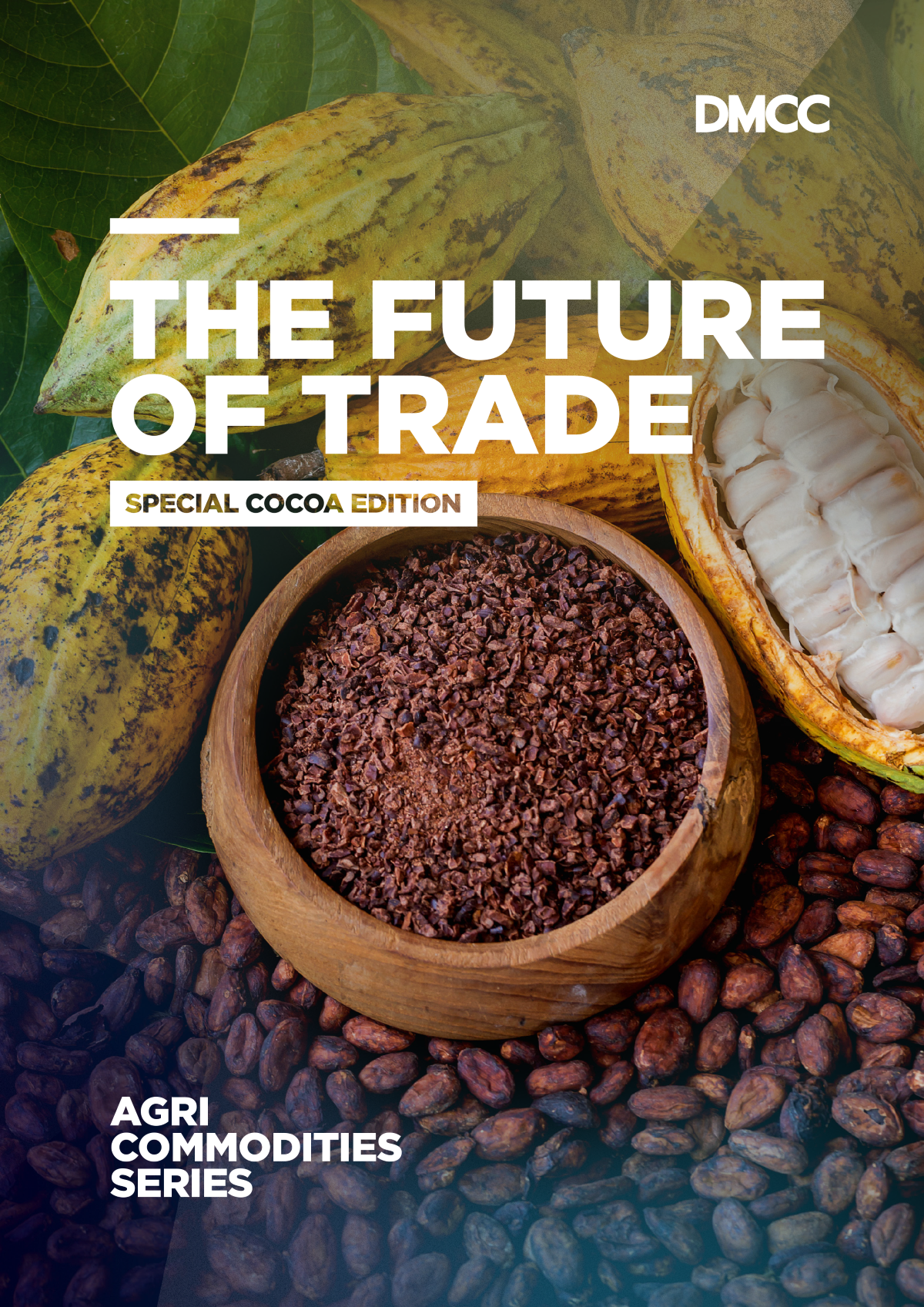
The Dubai Multi Commodities Centre (DMCC) has released a comprehensive report titled “The Future of Trade Special Cocoa Edition,” part of its Agri Commodities Series. The report examines the global cocoa market’s critical challenges from production shortages and price volatility to digital innovation, ethical sourcing, and shifting consumer demand toward wellness and sustainability. This news story is based on the key findings of the DMCC report, one of the most detailed and forward-looking analyses of the cocoa sector and Dubai’s growing role in it.

A Crisis of Supply and Unequal Returns

The global cocoa market is valued at around US$16.6 billion in 2025 and is expected to reach US$26.2 billion by 2035. However, behind this growth lies a deep imbalance. The 2023/24 crop year recorded one of the steepest production declines in decades down 13% to 4.4 million tonnes resulting in a deficit of nearly half a million tonnes and pushing prices to record highs. Cocoa grindings also fell by 5% to 4.8 million tonnes, according to the International Cocoa Organization (ICCO).

The roots of the crisis lie in West Africa, which produces over 60% of the world’s cocoa from Côte d’Ivoire, Ghana, Nigeria, and Cameroon. Devastating outbreaks of black pod and swollen shoot disease, erratic rainfall, and ageing trees have crippled production. Ghana’s regulator has already warned that output could drop another 10% in the 2025/26 season.

“Our cocoa plantations are ageing and have suffered from years of underinvestment,” says Kwadwo Boachie-Adjei, founder of Kumbi Cocoa. “Farmers lack access to quality fertilizers and seedlings because the financial resources needed to reinvest in their communities have not been flowing back at the scale required. The cycle of low productivity and limited incomes must change.”

Despite record-high international prices, farmers in Ghana and Côte d’Ivoire still receive fixed farmgate rates set by governments too low to cover replanting or disease control. “For every one-dollar chocolate bar, farmers receive just two cents,” notes Mauro Danilo Ribezzi, founder of the Ribezzi Group. “The economics of cocoa are fragile people will simply walk away.”

Meanwhile, processors and brands are struggling with soaring energy, transport, and financing costs. Companies are resorting to shrinkflation and reformulation: Mars Inc. cut 10 grams from its Galaxy bar, while Nestlé dropped the word “chocolate” from some UK products that now fall below the 20% cocoa-content threshold.

Although chocolate still dominates around 85% of cocoa demand, consumer preferences are shifting toward functional, ethical, and health-oriented products. The premium chocolate market is projected to grow from US$31.9 billion in 2024 to US$40.6 billion by 2030, while demand for raw cacao marketed as a superfood rich in antioxidants is forecast to surge from US$14.3 billion in 2024 to US$23.6 billion by 2033. Cocoa butter, a staple in cosmetics and pharmaceuticals, is set to nearly double in value to US$9.37 billion by 2032.

At the same time, the industry faces new compliance pressures. The European Union’s Deforestation-Free Products Regulation and Corporate Sustainability Due Diligence Directive require companies to prove that their cocoa is not sourced from deforested areas and that human rights are upheld throughout supply chains. Cocoa cultivation has caused over 37% forest loss in Côte d’Ivoire’s protected areas and 13% in Ghana, making traceability and digital monitoring essential for market access and premium pricing.

Dubai: A New Global Nexus for Cocoa Trade

Amid these structural pressures, Dubai is emerging as a stabilizing force in global commodity flows. Leveraging its strategic location between Africa, Asia, and Europe, the UAE has built a resilient trade ecosystem capable of absorbing global shocks. According to the DMCC report, the UAE imported US$17.3 million worth of cocoa beans in 2023 96% of which came from Côte d’Ivoire and exported US$16.4 million, mainly to Iran, Malaysia, and Saudi Arabia. While modest compared to European hubs, these figures highlight Dubai’s growing relevance in both upstream and downstream cocoa trade.

Building on the success of the DMCC Coffee Centre and Tea Centre, Dubai is now planning to launch a DMCC Cacao Centre that will offer integrated services including grading, blending, storage, branding, and structured trade finance all under one roof. The initiative aims to transform Dubai into a full-service hub for cocoa trade and value addition in the Middle East.

“The DMCC provides African producers with what they have long lacked direct access to markets and capital,” says Boachie-Adjei.

“The beauty of the DMCC ecosystem,” adds Ribezzi, “is that we don’t just operate as traders but as facilitators connecting farmers, financiers, and buyers across borders.”

The report also underscores how technology is redefining cocoa trade. Blockchain-enabled traceability ensures regulatory compliance and transparency, while mobile-first fintech platforms allow farmers to receive payments directly cutting out intermediaries and ensuring faster, fairer compensation. Emerging models such as tokenized assets and decentralized finance (DeFi) could soon unlock new credit channels for smallholders historically excluded from the banking system.

Looking further ahead, the industry is experimenting with lab-grown cocoa to overcome climate and disease risks. Startups are cultivating cocoa cells that yield mass without farms, a concept already supported by major players such as Barry Callebaut and Japan’s Meiji. Other innovators are developing cocoa-free chocolate alternatives using ingredients like carob and upcycled fibers to reduce dependency on volatile bean supply. Meanwhile, West African research programs are advancing disease-resistant and high-yield varieties through genetic innovation and agroforestry models.

The DMCC report concludes that the future of cocoa rests on five pillars: climate-adapted farming, transparent supply chains, diversified production, financial innovation, and equitable participation. It calls for producer nations to move beyond being raw suppliers and instead become true partners in global value creation.

With its neutral trade infrastructure and forward-looking policies, Dubai is poised to redefine the cocoa economy shifting it from a system marked by inequality and volatility to one built on sustainability, inclusivity, and shared prosperity.