Specialty Coffee Pricing in Dubai: Fair or Overpriced?

Focus Keyphrase specialty coffee pricing Dubai
Slug specialty-coffee-pricing-dubai
SEO Title Specialty Coffee Pricing in Dubai: Fair or Overpriced?
Meta Description (141 chars) Dubai coffee experts clash over pricing. Some say costs justify the price. Others call it greed. A full investigation.
Tags specialty coffee, Dubai coffee, coffee pricing, cafés, Dragoslav Džudović, Sigrid Ballard, Sarah Sahwan, Qussay Al Jabal, Albina Khamidullina

Executive Summary

  • Specialty coffee prices in Dubai have risen significantly, sparking debate among industry experts.
  • Dragoslav Džudović breaks down the real cost of a cup: between AED 15 and AED 35 before profit.
  • Sarah Sahwan argues that some cafés add a “greed” margin, with markups exceeding 200%.
  • Qusai Al Jabal insists that high prices are only fair for rare, exceptional beans.
  • Albina Khamidullina finds prices reasonable from an industry perspective, but admits specialty coffee is a luxury for most consumers.
  • Most experts agree that there is a noticeable gap between price and quality in many cafés.
  • No single business model fits all. Low‑price high‑volume and high‑price curated experiences can both work.

Specialty Coffee Pricing in Dubai: Fair or Overpriced?

Dubai’s specialty coffee scene has expanded rapidly in recent years. Prices have risen just as fast, especially for manual brews like V60 and filter coffee. This growth has opened a wider debate. Is specialty coffee still an everyday product? Or has it become an exclusive, luxury experience?

Qahwa World asked nine leading experts for their views. Their answers range from defending prices as a true reflection of operational costs to condemning them as unjustified. This investigation presents their full responses.

The Cost Reality: A Detailed Breakdown

Dragoslav Džudović, a well‑known barista and coffee consultant, offers a rare numerical breakdown. He insists that most consumers do not understand the real cost of a single cup.

“The real cost of one take‑away cup of coffee with milk, depending on the location in the UAE, ranges from AED 15‑25 to AED 25‑35+. Yes, you are reading that correctly. That is the cost. Let’s break it down per cup: Cost of goods – AED 4‑7 (beans, milk, packaging). Labour – 40% of the cost, which is AED 5‑15 (time to make the drink, service, salary, visa, gratuity, accommodation, insurance, and other benefits). Operating costs – AED 4‑10 (rent, utilities, AC, coffee machine, ice makers, chillers, freezers, etc.). Do not forget license, permits, marketing, insurance, fit‑out, POS, and bank fees.”

Therefore, when a café charges AED 35 for a cup, it may not be excessive. Many cafés, however, set their prices based on competition, not on real costs. Dragoslav warns that this approach is not sustainable. He adds that most small cafés fail in their first year because of miscalculations.

Sigrid Ballard, a specialty coffee expert, supports this view. She explains that Dubai’s pricing is higher than many global markets, but it reflects the city’s operational reality.

“In Dubai, rent and operational costs are the biggest drivers, especially in prime hospitality and lifestyle locations. While green coffee quality matters, the final retail price is more heavily influenced by location costs, staffing, fit‑out investments, and overall brand positioning.”

Samson Kibunja, a seasoned barista, adds that price should never be seen in isolation. He argues that a cup of coffee is the result of a long chain.

“The price of coffee is shaped by an entire ecosystem. Dubai is a market where high operational standards and premium locations significantly affect pricing. A cup of coffee is ultimately the result of a long chain – from farm to roasting, training, equipment, hospitality, and final service.”

Albina Khamidullina, from drinkit, offers a nuanced perspective. She agrees that costs justify prices, but she also acknowledges the consumer’s reality.

“I think specialty coffee is priced pretty reasonably, given the cost of beans, labor, and rent. But I say this as an industry worker, and I understand all the costs that go into the final price of the product. It is reasonably priced, but to the final consumer, it still might be too expensive.

Specialty coffee, unfortunately, is a luxury in most places. The biggest factor is rent, then labor (not only salaries, but visas, insurance, etc.), and of course, the CAPEX, and the coffee shop’s need to get its return on investment. At most specialty coffee places, a V60 cup costs 50‑60 dirhams.

I consider it more of a luxury than an everyday product, given that you can get a decent cup of coffee for 15‑20 dirhams. (We at DrinkIt serve only specialty beans, and you can get an americano for 15 dirhams, a filter for 17, and a V60 for 25 dirhams, which is a very good price considering market benchmarks.)

The current market lacks a consistent place where you get the same great product and service every time. There are a lot of amazing places in Dubai, but no two visits are the same in terms of quality. For sure, there is a big gap between the price and the product’s quality.

But in this case, the surroundings need to be taken into consideration: what’s the interior like, how many people work there, is it a prime location, and do they use loud marketing? It’s all included in the price of the final product. It depends on the business model and the brand’s goals. Both ways have their benefits, so I cannot answer this question without knowing the goals. We at DrinkIt try to find the gold standard between them.”

The Counterview: Overpricing and the “Greed” Factor

Sarah Sahwan, founder of The Optimist café, is blunt. She believes that some cafés charge far more than necessary.

“I believe the two biggest factors are rent, and greed. A coffee cup costs range  5 – 10  dirhams and that’s excluding the cost of labor and other expenses such as the rent, utilities and inflation  , which means there is room to mark up the price – but not by 200%. In malls, a cup of coffee now ranges between AED 25 and AED 50, and not all of them offer good quality.”

Hassa bint Ghuwaifa, an Emirati journalist and coffee enthusiast, also finds prices too high. She compares Dubai to other Gulf markets and sees a clear gap.

“Prices are high, especially compared to the Gulf region. It has become normal for a single cup to exceed AED 45. Specialty coffee is still a daily product for many, but at an abnormally high price. There is a clear gap between price and quality. I have paid over AED 70 for a cup that was worth every dirham. But I have also paid half that price for cups I regretted drinking.”

Stefan Kica, an industry observer, summarises his position even more sharply.

“As a regular consumer, prices are very high. As a B2B user, they are very affordable. That difference is the problem. Specialty coffee has become a luxury product. The market misses affordable coffee for everyone. There is a gap between price and quality – overpriced with no reason.”

A Conditional View: Quality and Rarity as Justification

Qusai Al Jabal, co‑founder of JabalBon Coffee Farm in Yemen and founder of Mokha Roots in Dubai, offers a more nuanced perspective. He does not reject high prices outright. Instead, he ties them to quality.

“It depends on the quality. It is too expensive if a café serves average coffee but charges a premium price. However, the high price is fair when you are drinking rare, high‑quality beans that are hard to grow, harvest, and ship. The biggest factors in Dubai are high rent in prime locations and luxury shop fit‑outs. Specialty coffee is moving fast toward luxury. It has become a luxury ritual.”

Qussai also warns about the gap between appearance and substance. “If coffee is expensive, the quality in the cup must match the price. It is wrong to buy cheap, low‑grade coffee, mark up the price ten times just because the shop is trendy.”

Syed Naveed, a well‑known coffee blogger and photographer, takes a middle position. He finds pricing fair compared to commercial coffee. But he admits that some extremes are hard to defend.

“Against commercial coffee, I find it fair. The quality in the cup, the sourcing story, the experience inside a specialty café – all of it adds up. But pricing can get out of hand fast when you move into micro‑lots and nano‑lots. The most extreme example recently has to be the Nido 7, priced at a thousand dollars. That is not a cup of coffee anymore. That is a statement.”

Syed also notes that green coffee prices have been climbing, and roasters can no longer absorb the increase. Rent, electricity, water, logistics, and labour have all gone up. As a result, a cappuccino can easily hit AED 30 or more in some places.

Where Do the Experts Stand? A Quick Summary

Expert Stance on Pricing Most Sustainable Model
Dragoslav Džudović High, but reflects real costs (AED 15‑35 cost) Low price with high volume after correct cost calculation
Sigrid Ballard High but justified by rent and operations Balanced: quality + efficiency + repeatable price
Samson Kibunja Fair when seen as part of a whole ecosystem Both models can work with integrity
Albina Khamidullina Reasonable from industry side, but luxury for consumers Depends on brand goals; drinkit seeks middle ground
Sarah Sahwan Unreasonable; greed is a major factor Lower pricing with higher volume
Hassa bint Ghuwaifa Too high compared to Gulf neighbours Lower prices with special higher‑priced options
Stefan Kica Very high as a consumer Low price with high volume
Qusai Al Jabal Fair only for rare, high‑quality beans Higher pricing with curated experience
Syed Naveed Fair vs commercial, but extreme micro‑lots overpriced Both work if the concept is strong

Frequently Asked Questions

Q: Why is specialty coffee in Dubai so expensive compared to other cities?
A: According to experts, the main reasons are high commercial rents, operational costs, staffing expenses, imported beans, and business models that focus on premium experiences. Dragoslav’s breakdown shows that the real cost per cup can reach AED 35 before any profit.
Q: Do all experts agree that prices are unfair?
A: No. Opinions are divided. Some, like Dragoslav and Sigrid, say prices reflect a high‑cost environment. Others, like Sarah and Stefan, call them excessive. Qussay and Albina argue that high prices can be fair if the coffee quality is exceptional, but Albina adds that for consumers it remains a luxury.
Q: What does Sarah Sahwan mean by “greed” as a factor?
A: She believes some cafés mark up prices by more than 200% without a corresponding increase in quality. In her view, a cup that costs AED 5 – 10 excluding the cost of labor, other expenses such as the rent utilities and inflation, to make should not be sold for AED 45 unless there is a real reason, such as rare beans or a unique experience.
Q: Is specialty coffee in Dubai an everyday product or a luxury?
A: It is both, depending on the café and the customer. Some experts say it remains accessible through various price points. Albina notes that while industry workers see reasonable pricing, for most consumers it is a luxury, especially when V60 costs 50‑60 dirhams at many places.
Q: Which business model is most sustainable according to the investigation?
A: There is no single answer. Dragoslav and Sarah favour lower prices with higher volume. Qusai prefers higher prices with a curated experience. Albina says it depends on brand goals, and DrinkIt tries to find a middle ground.
Q: What is missing from the current Dubai coffee market?
A: Experts point to a lack of transparency, consumer education, and a real connection to coffee farms. Albina adds that consistency is lacking: no two visits to the same café guarantee the same quality.
Mokha 1450 Immersive Coffee Experience Redefines Tasting in Dubai

Dubai – Qahwa World

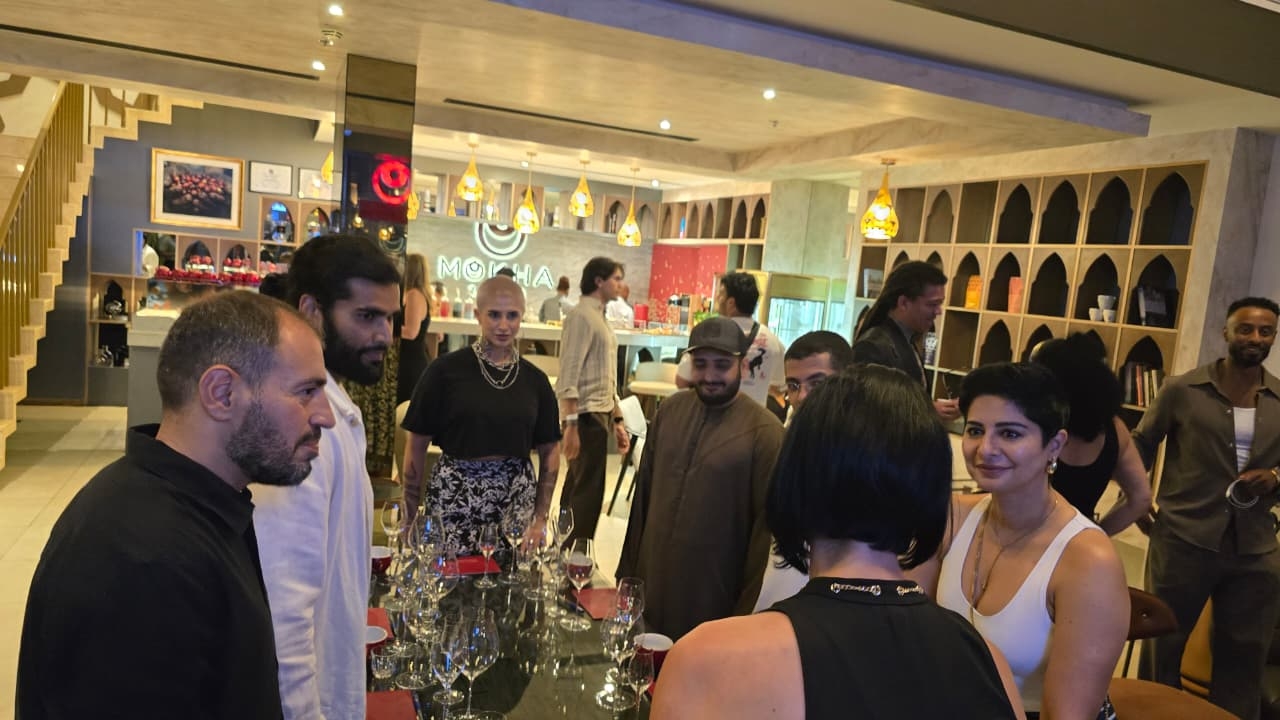
By invitation from Mr. Garfield Kerr, CEO of Mokha 1450, I attended yesterday evening a truly exceptional event held at Mokha 1450 Café in Golden Mile, Palm Jumeirah, Dubai, as part of an immersive experience that reintroduced coffee as a multi-sensory art combining science, innovation, and culture.

Honestly, when I first read about the event and learned that attendance required prior registration and an entry fee, I expected the turnout to be limited, perhaps only a small number of participants. However, I was genuinely surprised by the remarkable and distinguished attendance, as the venue was filled with guests who either registered in advance or joined directly on site, in a scene that reflected genuine interest in this unique experience.

As I observed the interaction inside the venue, I had a clear feeling that what I was witnessing was a direct reflection of the spirit of Dubai, a city that never stops embracing new experiences and creating momentum around innovative ideas. This is also what Mokha 1450 represents, embodying the same spirit: elegance in concept, boldness in execution, and innovation in experience.

The atmosphere throughout the evening was almost like a dreamlike scene, as guests were immersed in an extraordinary journey through the world of coffee in all its details. Visitors moved between different tasting stations offering coffees from various origins, prepared using innovative methods that reflect the philosophy of the team led by Sigrid Ballard and her specialized staff.

What truly stood out was the way the experience was presented. It was not merely a tasting session, but a complete sensory journey blending aroma, taste, and knowledge, revealing how coffee can evolve into a full cognitive experience.

As part of the program, participants experienced an olfactory and tasting journey that highlighted the scientific relationship between the senses of smell and taste, and how sensory signals converge in the brain to form the perception of flavor.

The event also featured several curated stations, including cold brew coffee prepared using a slow steeping method for eighteen hours with carefully selected beans graded above ninety points, revealing rich and complex notes ranging from tropical fruits and berries to honey and exotic spices.

In another station, the pour over brewing method was demonstrated, relying on precise manual pouring, where technique, timing, and extraction ratio directly influence clarity and balance in the cup.

One of the most remarkable highlights of the evening was the psychology of glassware experience, which demonstrated how the shape, weight, and balance of a cup can influence flavor perception, not only aesthetically, but also in terms of sensation, taste, and overall impression.

Throughout the evening, the Mokha 1450 team also presented innovative creations such as the smoky signature drink and the Desert Flower experience, alongside live brewing sessions in front of guests, adding an interactive dimension that brought the audience closer to the craft of coffee making.

The experience was accompanied by a curated musical journey inspired by coffee producing countries such as Yemen, Ethiopia, Colombia, Jamaica, and Cuba, giving the event a global dimension that reflects the journey of coffee across continents.

In conclusion, this was not merely a tasting evening, but a complete experience that redefined the relationship between humans and coffee, and reinforced Mokha 1450’s position as one of the leading concepts in experiential specialty coffee in Dubai and the region.

DrinKit Opens Its 10th Branch in Dubai

Dubai – Qahwa World

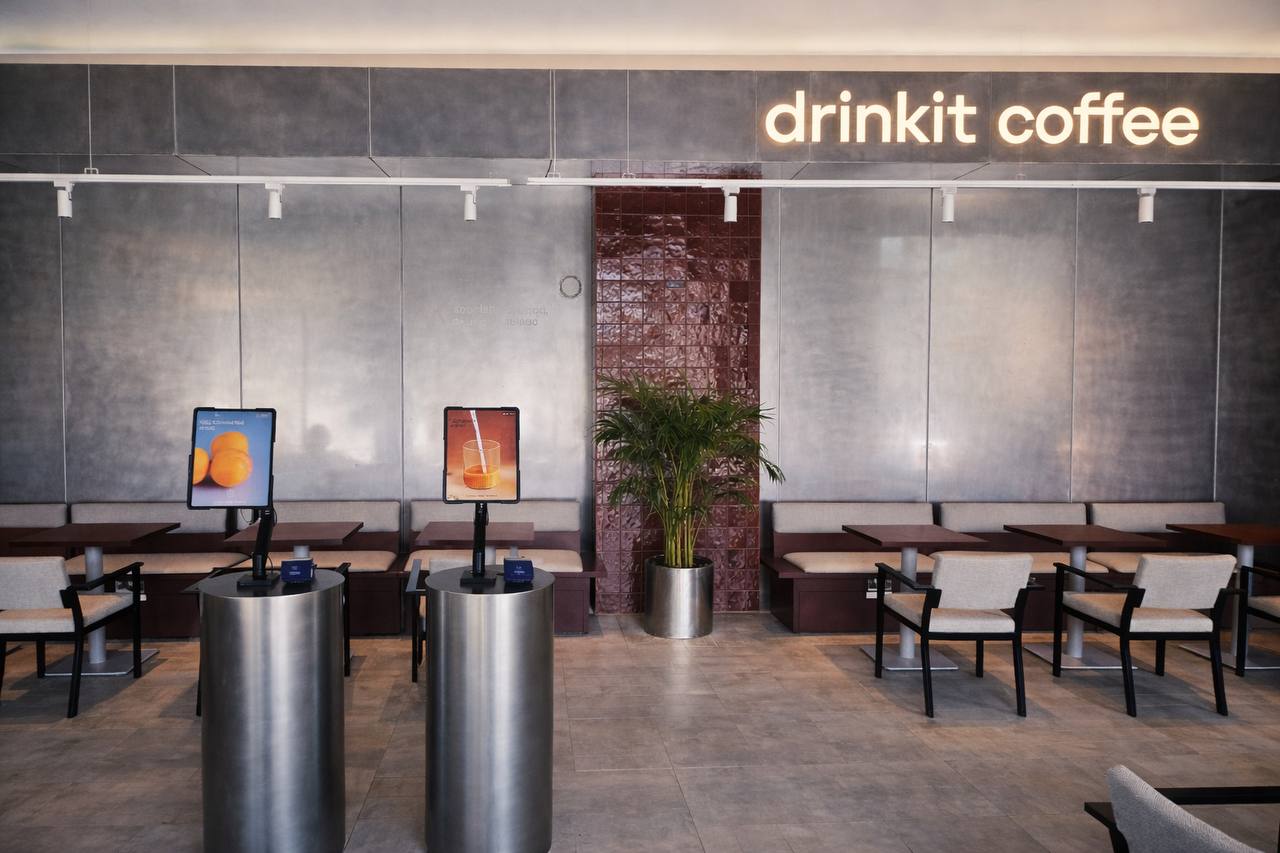
DrinKit continues to stand out as one of the most inspiring success stories in the coffee sector, advancing its journey as Dubai’s first digital coffee shop concept. The company has announced the opening of its 10th branch in Emaar Creek Harbour, bringing its global network to 182 locations and positioning it among the fastest growing modern coffee chains.

Katerina Borodich, CEO of DrinKit in the UAE and the Middle East, stated that this opening ranks among the brand’s strongest launches to date. The branch began operations without any prior announcement, yet recorded 86 transactions on its first day, an early and positive indicator of strong performance from the outset.

This branch holds particular significance due to its location within a fully integrated residential community in Dubai Creek Harbour. It is also the largest DrinKit location in the UAE in terms of space. The choice reflects a strategic shift toward expansion in residential neighborhoods that rely on daily coffee consumption rather than focusing only on commercial or tourist areas.

Initial indicators point to strong performance in terms of average order value, reinforcing expectations for future growth at this location, which benefits from rising population density and a fast paced urban lifestyle.

This expansion also highlights the acceleration of DrinKit’s strategy in the Middle East, as the company continues its growth phase with plans to open additional branches across Dubai in the near future.

According to internal company data, Drinkit now operates 10 stores in Dubai, including four under the franchise model, reflecting its transition toward a scalable and replicable operating system.

This growth signals a broader shift in the Gulf coffee market, where brands are increasingly targeting residential communities to meet rising daily demand for coffee as part of modern lifestyles.

With 10 branches in Dubai and 182 worldwide, Drinkit continues to strengthen its presence in the UAE market as part of a wider expansion strategy.

The Great Pivot: How Dubai and Asia Are Redefining Green Coffee Trading

A structural shift is moving the global coffee trade away from its historic Western centers toward a faster, proximity-driven system anchored in Dubai, Singapore, and Shanghai.

Source: Dubai – Qahwa World | April 2026

The global green coffee trade is undergoing one of the most significant transformations in its modern history. For decades, pricing power, logistics, and financial control were concentrated along a North Atlantic axis defined by New York, London, and Rotterdam. That structure is now being rebalanced.Across the Eastern hemisphere, a new trading corridor is taking shape. Dubai, Singapore, and Shanghai are emerging not only as logistics hubs but as integrated ecosystems that combine finance, infrastructure, and demand. This shift reflects deeper changes in consumption patterns, capital flows, and supply chain design.

By 2034, the global green coffee market is projected to reach between USD 54.5 billion and USD 61.4 billion. Much of that expansion is expected to come from Asia-Pacific and the Middle East, regions that are redefining how coffee is traded and where value is created.

A Market Rewritten by Demand

Growth in coffee consumption is no longer evenly distributed. Mature markets in Europe and North America are expanding slowly, while demand across Asia and the Middle East is accelerating.

Region Growth Market Profile
North America and Europe 0.5% to 1.2% Mature markets with premium focus
China 5% to 7% Rapid import growth and domestic roasting
India 6% to 8% Expanding café culture
Middle East 4% to 6% High-value consumption growth
Southeast Asia 5% to 7% Strong robusta base with specialty shift

This divergence is reshaping global trade routes. Coffee is increasingly flowing within an interconnected system that links producing countries directly with emerging consumption centers.

Value Moves Closer to Origin

A parallel shift is taking place within producing countries. Nations such as Vietnam, Indonesia, and Ethiopia are expanding their processing and roasting capacity, allowing them to retain a larger share of the value chain.

Mid-stream hubs in the Eastern corridor are reinforcing this trend. By enabling processing and packaging closer to origin, they reduce reliance on traditional Western intermediaries and increase margins across the supply chain.

The result is a measurable redistribution of value, with producers capturing an estimated 15% to 20% more than under legacy trade structures.

Speed as a Competitive Advantage

Logistics has become a defining factor in the new trading environment. Shorter routes between producing regions and Eastern hubs are reducing transit times and increasing flexibility.

Route Transit Time
East Africa to Rotterdam 35 to 45+ days
East Africa to Dubai 7 to 14 days
Southeast Asia to Europe 30 to 40 days
Southeast Asia to Singapore or Shanghai 5 to 12 days

Reduced transit time improves cash flow efficiency, lowers inventory risk, and helps preserve coffee quality. These advantages are becoming central to competitive positioning.

A New Financial Architecture

The financial systems supporting coffee trade are evolving alongside physical infrastructure. Traditional reliance on futures markets and bank-led financing is being complemented by more flexible models.

Feature Legacy Model Emerging Model
Financial Instruments Futures-based pricing Direct contracts
Assets Heavy infrastructure Platform-based systems
Finance Bank-led FinTech and sovereign capital
Execution Multi-day cycles Near real-time

Dubai as a Trade Platform

Dubai has positioned itself as a central node in this transformation. Integrated infrastructure allows multiple stages of the coffee supply chain to operate within a single ecosystem, reducing friction and improving efficiency.

Facilities such as the DMCC Coffee Centre combine storage, processing, roasting, and logistics, creating a unified platform that connects producers directly with high-growth markets.

Industry events, including World of Coffee Dubai, are reinforcing this role by facilitating direct trade relationships and improving transparency between origin and buyers.

Outlook to 2035

The global coffee trade is gradually moving toward diversified pricing systems and decentralized trade flows. Fixed-price agreements, quality-based valuation, and traceability tools are becoming more prominent.

By 2035, the Eastern Growth Corridor is expected to capture a significant share of incremental trade value, reflecting a long-term structural shift rather than a temporary adjustment.

Conclusion

The future of green coffee trading is being reshaped by proximity, speed, and integration. The shift toward Dubai, Singapore, and Shanghai reflects deeper changes in how markets function and where value is created.

What was once a centralized system is becoming a distributed network. Those positioned closest to both origin and demand are increasingly defining the next phase of the global coffee economy.

Kim Thompson: Coffee on the Edge of Disruption

Dubai – Ali Alzakary

The global coffee industry has spent the past few years navigating one disruption after another—from pandemic shutdowns and climate volatility in producing countries to freight crises that reshaped global shipping routes. As the global coffee market grapples with volatility—production reaching around 175 million bags in 2025 while costs continue to rise due to climate pressures and freight disruptions—the ongoing conflict in the Middle East is adding a new layer of uncertainty to an already fragile supply chain.

Coffee moves through one of the most complex trade networks in the food and beverage sector. Green beans travel from farms across Latin America, Africa and Asia through international ports and maritime corridors before reaching roasters, cafés and consumers. Any disruption to shipping routes, insurance costs or regional logistics can quickly ripple across the industry. For specialty coffee—where freshness, tight margins and long-term sourcing relationships define the business—the impact can be felt even faster.

To understand how the sector is reacting, we spoke with Kim Thompson, Co-Founder  at RAW Coffee Company in Dubai. From monitoring shipments already at sea to preparing technical support systems for cafés, Thompson explains how roasters are navigating rising costs, uncertain logistics and a rapidly shifting geopolitical landscape.

You may like: Oil Surge Could Brew Higher Coffee Prices 

In this conversation, she offers a clear view of what café operators are worrying about right now, how long menu prices can realistically hold, and why the coffee industry’s resilience often comes down to relationships built across the supply chain.

  • Has the “fear factor” kicked in yet? Are you seeing cafés or hotels panic-buying and stockpiling coffee to guard against a potential shortage?

Not really. The reality of the café industry is that most operators are managing week-to-week cash flow, not building strategic stockpiles. Right now the conversations we’re having are far more about cost control than hoarding inventory.

The other factor is freshness. Speciality coffee isn’t a commodity that sits in a warehouse for months. We roast weekly and deliver fresh, so stockpiling doesn’t really fit how quality coffee businesses operate.

Our expectation is that the real response, if there is one, will likely come after Eid al-Fitr, once operators have had time to assess the geopolitical situation and think through their own coping strategies. At the moment, people are watching closely rather than panicking.

  • The coffee you’re roasting today was bought at pre-war prices — how long can you hold your current menu prices before new logistics costs force your hand?

The uncomfortable truth is that price pressure in coffee started well before this conflict. The industry has already been absorbing significant increases at origin, higher processing costs, and rising freight prices for the past two years.

We have already had to adjust pricing once, simply because the economics of producing high-quality coffee have changed globally.

If shipping routes tighten or logistics costs spike again because of regional instability, there’s only so much the supply chain can absorb. Roasters can cushion the impact for a period of time, but eventually the math catches up with everyone.

Coffee has historically been underpriced for the amount of work and risk involved in producing it. What we are seeing now is the global market slowly correcting that reality.

  • Are there specific “origins” or specialty grades that are now effectively “cut off” due to their transit routes through the conflict zone?

At the moment nothing is completely cut off, but logistics has become far more complicated overnight.

We currently have multiple containers on the water and are actively tracking them while exploring alternative routing options that avoid the Strait of Hormuz.

In many ways it feels like a return to the early COVID-19 playbook—scenario planning, contingency routing, and leaning heavily on relationships across the supply chain to keep things moving.

The specialty coffee industry is surprisingly resilient because it’s built on long-term relationships with producers, exporters and logistics partners. When things get unpredictable, those relationships become incredibly valuable.

  • What’s the plan for equipment and spare parts? Is there a risk that a broken espresso machine could stay down because of shipping delays?

Equipment supply is definitely something we’re watching closely, but fortunately we forecasted and planned ahead. We have several containers on the water carrying both commercial and domestic machines, so supply may get tight but we’re not walking into this empty-handed.

More importantly, we have invested heavily in our technical infrastructure. We run a full in-house service department with extensive spare parts inventory, qualified technicians, and swap-out machines available for our commercial partners.

In practical terms, if a café’s machine goes down, we’re structured to keep them operating. The bigger challenge in this industry is rarely the machine itself—it’s the global logistics that sit behind everything.

Drinkit Expands in Dubai as Network Revenue Jumps 2.5 Times

DUBAI – QAHWA WORLD

Drinkit, the global café chain operating under a digital-first model and founded in 2016 as part of Dodo Brands, is accelerating its expansion in Dubai following strong year-on-year growth across its network.

According to Katerina Borodich, Chief Executive Officer of Drinkit UAE, the brand is set to double its local network this year. Seven franchise partners were signed last year, with new outlets now launching. Among the most anticipated upcoming locations are Dubai Hills and Creek Harbour. Franchise interest is also increasing, reflecting growing investor confidence in the concept.

YOU MAY LIKE: Abu Dhabi Prepares to Welcome “Drinkit” from April

Strong Year-on-Year Growth

In January, network revenue increased 2.5 times compared to the same month last year, while the number of operating locations doubled year-on-year.

Mature stores continue to post solid gains. Marina Gate recorded 60 percent growth, maintaining similar momentum for the third consecutive year. Bay Avenue rose 58 percent compared to January 2025, while EMAAR Square reported 32 percent growth.

Performance varies by micro-location dynamics. Marina Gate and Bay Avenue benefit from additional footfall generated by surrounding residential and retail traffic, while EMAAR Square operates within a business district environment with more structured demand patterns.

You can also read: Drinkit CEO Announces Sub-40 Month Payback Period for Dubai Coffee Shops

Operational Performance

The EMAAR Square location has on occasion reached daily revenue of 10,000 dirhams, with a peak of 374 transactions in a single day. Despite its compact layout, the team continues to optimize operations to handle high customer volumes efficiently.

Unit Economics and Payback Strategy

Drinkit’s first Marina outlet reached monthly revenue of 72,000 US dollars, delivering a 26 percent store-level earnings margin after royalties. A franchise unit launched in October has already become the third highest-performing outlet in the Dubai network, generating 48,800 US dollars in monthly revenue.

As of November, the average retail payback period stood at 40 months, excluding the Mirdif location. Since then, operational refinements have reduced unit costs by 2 percent. Delivery currently represents 13 percent of total network revenue, with further growth potential identified. The target payback period is 30 months.

Preparing for Seasonal Shifts

With Ramadan approaching, typically a challenging period for retail activity, the focus remains on maintaining profitability while scaling operations sustainably.

Drinkit’s recent performance underscores the continued dynamism of Dubai’s specialty coffee market, as international café concepts pursue disciplined expansion strategies supported by franchise partnerships and operational efficiency.

UAE AeroPress Championship 2025 Kicks Off Tomorrow

A Celebration of the UAE’s “Qahwa Culture” in an Atmosphere of Challenge and Creativity

Dubai – Qahwa World

The UAE AeroPress Championship 2025 kicks off tomorrow in its ninth edition, bringing together more than 250 competitors from across the Emirates — alongside café owners, coffee experts, and enthusiasts — in a spectacular celebration of coffee culture under the theme “A Celebration of Qahwa Culture in the Emirates.”

Proudly supported by Qahwa World as the official media partner, the three-day event will take place from November 6th to 8th at Almas Tower – Jumeirah Lake Towers, Dubai. Doors open at 4:30 PM, with competitions beginning at 6:00 PM daily. Admission is free for all coffee lovers across the UAE.

Building on the tremendous success of last year’s championship — recognized as the largest AeroPress competition in the world by number of participants — this year’s edition highlights the harmony between traditional Arabic coffee and modern brewing methods such as the AeroPress, reflecting the UAE’s dynamic and culturally rich coffee landscape.

Ahmed Bin Sulayem, Executive Chairman and Chief Executive Officer of DMCC, said: “The AeroPress Championship serves as a platform that unites excellence in brewing, cultural expression, and global connection. Hosting this event at Almas Tower, supported by the DMCC Coffee Centre — which processed more than 7,400 metric tonnes of coffee in 2024 — reaffirms our ongoing commitment to strengthening Dubai’s position as a global hub for coffee heritage, trade, and innovation.”

Garfield Kerr, CEO of Mokha 1450 and the event’s organizer, added: “The UAE has become one of the world’s leading destinations for specialty coffee, thanks to its long-standing relationship with Arabic qahwa. This championship celebrates that heritage and gives participants the opportunity to showcase their passion, creativity, and brewing artistry.”

Championship Schedule

  • November 6th: Regional Championship 1 – Abu Dhabi, Ras Al Khaimah, Sharjah, Umm Al Quwain

  • November 7th: Regional Championship 2 – Dubai, Ajman, Fujairah

  • November 8th: National Championship – featuring 21 finalists from across the Emirates

The national champion will go on to represent the UAE at the World AeroPress Championship in Seoul, South Korea, on December 5th and 6th, 2025.

More Than a Competition

Beyond its competitive spirit, the UAE AeroPress Championship is a community celebration, offering coffee tastings, interactive experiences, and AeroPress giveaways, along with opportunities to connect with local roasters and coffee brands — all in a vibrant, inclusive atmosphere that embodies the true spirit of qahwa culture.

Sponsors and Partners

Organizer: Mokha 1450
Host: DMCC Coffee Centre – Almas Tower
Gold Sponsors: Polpanorte, Aiya Matcha, CMI Coffee, Boncafé, Oatly, Lohas Beans
Silver Sponsors: Stree F&B, KGN Coffee, RAW Coffee Company, Coffee Museum, Karam Coffee
Bronze Sponsors: Steens Middle East, Brewing Gadgets, Victoria Arduino
Media Partner: Qahwa World

The UAE AeroPress Championship is more than just a brewing competition — it is a living expression of community, creativity, and the enduring spirit of coffee in the Emirates.

Dubai Outdoes Dubai and Serves the World’s Most Expensive Cup of Coffee Once Again

Dubai – Qahwa World

Dubai has done it again—setting a new record for the world’s most expensive cup of coffee and, remarkably, outdoing its own achievement. During an exclusive Panama Night event hosted by Julith Café, the city witnessed the official launch of Nido 7 Geisha, a legendary brew now served to the public at an unprecedented price of AED 3,600 (around USD 1,000) per cup.

Just six weeks after Dubai entered the Guinness World Records in mid-September, when Roasters Café served a cup priced at AED 2,500, Julith has taken the crown with an even higher price tag — proving once more that in Dubai, even records don’t stand still for long.

The rare Nido 7 Geisha beans were acquired by Julith in August at the Best of Panama 2025 auction, following a tense bidding war that drew 549 bids from elite roasters and collectors worldwide. The Dubai café purchased just 20 kilograms of the beans for AED 2,218,785 (USD 604,080)—the highest price ever paid for coffee.

Grown near Panama’s Baru Volcano, Nido 7 Geisha is cultivated in unique microclimates that produce its distinctive floral and fruity profile. It earned an exceptional 98 points at the Best of Panama competition, with six of the 22 judges awarding a perfect 100 points, setting a new global benchmark for coffee excellence.

world’s most expensive coffee Dubai

Serkan Sagsoz, Julith’s Head Roaster and Turkey’s Barista Champion, commented: “We’re not chasing publicity; we’re crafting an experience. This coffee captures the essence of patience, artistry, and nature. Every cup is a story — not just a drink.”

Sagsoz added that a portion of the beans has been reserved for His Highness Sheikh Mohammed bin Rashid Al Maktoum, Vice President and Prime Minister of the UAE, and Ruler of Dubai, in appreciation of his vision and leadership, and in recognition of Dubai’s growing role as a capital of global coffee culture.

The Geisha Panama Experience now available at Julith offers an intimate sensory journey for up to four guests, guided by expert baristas who share the story of the beans from Panama’s misty highlands to Julith’s meticulous roasting in Dubai. Guests describe the brew as a harmony of jasmine, citrus, apricot, and peach, with a honey-like sweetness that lingers.

Founded in August 2025, Julith Café merges a roastery, café, boutique store, and social space under one roof. Its name derives from Just Like This, reflecting a philosophy of elegance in simplicity. The café sources its beans from Hacienda La Esmeralda, the renowned Peterson family estate that first introduced Geisha coffee to the world and continues to set the gold standard for specialty coffee cultivation.

With this new record, Dubai once again proves that it doesn’t just follow global trends — it creates them, cup after cup.

Mokha 1450 Opens Its New Boutique in Dubai Inside Modora’s Luxury Showroom

Dubai – Qahwa World

In an exceptional evening that brought together coffee, art, and beauty, Mokha 1450, Dubai’s pioneer of specialty coffee, inaugurated its new boutique in the city. — located within the newly opened Modora showroom in Al Barsha 2.
The showroom was launched by GMG, a global well-being company, as a distinguished brand for premium furniture and home décor, expanding its home division and reinforcing its presence in the luxury lifestyle and retail sectors across the UAE.

The opening ceremony was attended by Garfield Kerr, President of the Specialty Coffee Association and Founder of Mokha 1450; Rob Canning, General Manager of Modora; Khalid Al Mulla, President of the Specialty Coffee Association – UAE Chapter; and Federico Ortile, General Manager of the Simonelli Foundation in the Middle East, along with prominent business leaders and coffee enthusiasts from across Dubai.

During his speech, Rob Canning described the new venue as “a space that merges the serenity of nature with refined elegance,” emphasizing the goal of creating “an environment where everyone can feel at home — where calm, design, and a five-star experience coexist.”

He noted that the café within the showroom offers “a wonderful space to relax, enjoy a cup of coffee, and meet clients in comfort,” adding that Modora was designed “not as a traditional furniture store, but as a place that expresses emotion, style, and cultural diversity — reflecting the spirit of the UAE and its people.”

His words echoed the essence of Mokha 1450’s philosophy, where craftsmanship, creativity, and sensory experience come together to elevate every space it touches. With its meticulous attention to detail and devotion to innovation, Mokha 1450 continues to transform each location into a destination of refined taste — one that embodies Dubai’s timeless appreciation for excellence and the art of coffee.

From a business perspective, Mohammad A. Baker, Vice Chairman and CEO of GMG, noted that “the launch of Modora marks a major step in GMG’s growth journey, tapping into a home and furniture design market valued at around USD 3.7 million, projected to surpass USD 5.7 million by 2033.”

He added that Modora “strengthens GMG’s presence in the premium furniture segment while supporting local talent, suppliers, and innovation across the retail value chain.”

The UAE’s luxury home and furniture sector continues to expand, driven by booming residential and hospitality markets and a growing interest in sustainable design. Industry data shows that the market reached USD 2.19 billion in 2024, with strong growth expected in the coming years.

Dubai’s real estate momentum underscores this trend — property sales surged 40% in the first half of 2025, reaching AED 326.6 billion compared to AED 233 billion during the same period in 2024. This surge in upscale residential projects is fueling demand for high-end interiors and elegant living concepts.

Developed to meet this rising demand, Modora introduces a design philosophy rooted in craftsmanship and aesthetic distinction, offering collections that span bedrooms, dining rooms, living spaces, tables, rugs, glassware, and accessories — all tailored to contemporary living in the UAE.

The presence of Mokha 1450 within Modora’s refined space is more than a visual complement — it represents a synergy of design and sensory experience, where aroma meets artistry, and where the language of coffee becomes part of Dubai’s ever-evolving narrative of luxury and innovation.

Visitor Registration Now Open for World of Coffee Dubai 2026!

Dubai – Qahwa World

Visitor registration is now officially open for World of Coffee Dubai 2026, the Middle East’s leading event for coffee professionals and enthusiasts!
Secure your ticket today and take advantage of exclusive early bird rates, available for a limited time only. Don’t miss this chance to connect with global coffee leaders, explore the latest innovations, and build valuable connections with top roasters, producers, and industry experts from around the world.

Now celebrating its 5th edition, World of Coffee Dubai has established itself as the premier platform for the specialty coffee community in the Middle East, bringing together producers, manufacturers, retailers, and traders under one roof.

The event is organized by DXB LIVE in collaboration with the Specialty Coffee Association (SCA), uniting the vibrant UAE coffee scene with the wider regional and global coffee industry in one dynamic and inspiring setting.

Why Participate?
Whether you’re looking to expand your business, explore emerging trends, or enter the Middle East’s booming coffee market, World of Coffee Dubai 2026 offers unparalleled opportunities for growth and collaboration.

The event will feature:
• A vibrant trade show floor showcasing global coffee innovations.
• The Roaster Village, spotlighting top artisan roasters.
• UAE National Coffee Championships, highlighting the country’s best baristas.
• The SCA Community Lounge, a hub for networking and collaboration.
• The Best New Product Competition & Display, unveiling cutting-edge technologies and products.
• Inspiring lectures and workshops designed to educate, connect, and inspire.

Available Passes
Choose the pass that best fits your visit and enjoy access to the world’s most dynamic coffee event:

Pass Type Access Duration Price (AED) Details Buy
SCA Member (Single Day Pass) 1 Day 90 (Incl. 5% VAT) View Details → Buy Now
Single Day Visitor Pass 1 Day 95 (Incl. 5% VAT) View Details → Buy Now
SCA Member (3 Day Pass) 3 Days 240 (Incl. 5% VAT) View Details → Buy Now
Three-Day Visitor Pass 3 Days 265 (Incl. 5% VAT) View Details → Buy Now

All passes are now available for purchase—book early to secure your spot at the most anticipated coffee event in the region.

Be part of shaping the future of coffee. Register today and join thousands of professionals and enthusiasts who will gather in Dubai to celebrate innovation, culture, and excellence in coffee.

📍 Venue: Dubai World Trade Centre
📅 Dates: 18–20 January 2026

Kim Thompson Reveals to Qahwa World the Vision Behind RAW’s New Barista Training Centre

Dubai – Ali Al Zakary

Dubai marked a new milestone in its speciality coffee journey on September 25, 2025, when RAW Coffee Company, in collaboration with MILKLAB, inaugurated the RAW × MILKLAB Barista Training Centre at its roastery and café in Al Quoz. Described as the first of its kind in the UAE, the initiative brought together RAW’s deep-rooted expertise in specialty coffee with MILKLAB’s innovative portfolio of barista-grade plant-based milks.

The centre aims to raise barista skills, respond to the growing demand for plant-based alternatives, and strengthen ties within the local and regional coffee community. Yet beyond the launch itself lies a wider story—one of vision, change, and the future of coffee education.

In an exclusive conversation with Qahwa World, Kim Thompson, Co-Founder and Director of Culture & Brand at RAW Coffee Company, explained the motivations behind the project. “There’s nothing more certain than change and our industry is experiencing plenty of it. The way people consume coffee is evolving, with new trends in flavor preference, preparation, and lifestyle. We felt it was the right time to re-examine how customers enjoy their coffee and to help the next generation of baristas adapt and excel. At RAW, we’re passionate about supporting this evolution through education. We were impressed by MilkLab’s commitment to quality and sustainability, particularly in how their range of plant-based milks is developed in collaboration with baristas and produced using responsible farming practices. Their products align perfectly with our values and the standards we uphold in specialty coffee.”

For Thompson, the collaboration with MILKLAB was not a coincidence but the result of shared values. “We love meaningful collaborations especially those rooted in shared values of quality and authenticity. Murad Janakat from JAR Premium Foods introduced us to the MilkLab range, and we were immediately impressed by both the taste and texture of their milks and their versatility across our coffee menu. What makes this partnership unique is that it brings together two brands that genuinely care about improving the barista and customer experience—MilkLab through innovation in product, and RAW through education, quality, and community. Together, we’re bridging the gap between product and practice.”

Kim Thompson

The new training centre, she emphasized, was created with one core goal: to raise quality standards across the industry by empowering baristas. “We believe that every coffee served should represent the care, knowledge, and passion behind it. By equipping baristas with a deeper understanding of the ingredients they use daily, we’re supporting both consistency and creativity in cafés throughout the region.”

Importantly, the programs are not reserved solely for industry professionals. Thompson stressed that the centre was designed to cater to a wide audience. “The training programs will cater to a broad audience, from professionals working in busy cafés to individuals passionate about improving their home coffee skills. Sessions will be practical, hands-on, and tailored to real-life scenarios in the café environment. Each course explores the science and art behind milk texturing, highlighting how different fat and protein levels influence performance and flavor. It’s about creating confidence, whether you’re a barista steaming milk for 200 coffees a day or a coffee lover perfecting your morning ritual.”

As Dubai’s coffee scene grows increasingly vibrant and competitive, Thompson sees consistency and education as the biggest challenges. “Dubai’s coffee scene is vibrant, diverse, and increasingly sophisticated. But as the market expands, consistency and education remain key challenges. RAW has always believed that real progress comes from collaboration and knowledge-sharing rather than competition. This new centre extends our long-standing training program, which already includes SCA-certified courses in barista skills, brewing, and sensory development. By adding a dedicated plant-based milk training series, we’re providing operators and baristas with an additional layer of expertise that will translate directly to better customer experiences.”

Choosing plant-based milk as a central theme, she explained, was not just a trend but a reflection of consumer behavior. “Consumer behavior has shifted dramatically. We’ve seen a growing movement toward plant-based choices and a preference for cold, convenient, and on-the-go beverages. Our aim is to help baristas stay ahead of these trends and serve these drinks with the same care and consistency as dairy-based beverages. Each MilkLab milk has its own characteristics, from almond to oat to coconut, and learning how to bring out the best in each creates a more balanced, enjoyable cup. It’s about understanding the ingredient, respecting it, and ensuring the final experience in the cup is exceptional.”

In closing, Thompson highlighted that empowering baristas is the most effective way to elevate consumer awareness and appreciation of specialty coffee. “Empowering baristas is one of the most powerful ways to elevate consumer understanding. When baristas are confident, knowledgeable, and passionate, that energy translates to the customer, through every interaction and every cup. Education creates connection. And connection builds loyalty. By investing in the skills of the people behind the bar, we’re not only improving quality standards but also deepening the relationship between consumers and specialty coffee itself.”

With this vision, the RAW × MILKLAB Barista Training Centre emerges not just as an educational facility but as a shared space for practice, dialogue, and community. And as Kim Thompson underscored in her conversation with Qahwa World, it is also a sign of Dubai’s growing role as a global hub where innovation, sustainability, and specialty coffee culture intersect.

New Barista Training Center Launched in Dubai

Dubai – Qahwa World

Raw Coffee Company, in collaboration with Milk Lab, inaugurated a new Barista Training Center on Thursday at Raw Coffee’s headquarters in Dubai’s Al Quoz Creative District. This step marks the beginning of a new chapter in barista education, where specialty coffee meets expertly crafted milk.

The opening ceremony, attended by officials, industry leaders, hospitality professionals, and specialized media, featured Kim Thompson, co-founder of Raw Coffee Company, who outlined the background of the initiative, sayingWe place great importance on collaboration between brands that share the same values. Recently, we began working with Sage, a manufacturer of excellent coffee machines. However, we noticed complaints from customers because the coffee being used was not always suitable. This highlights the importance of partnerships and the need for alignment between machines, coffee, and training. We also discovered Milk Lab, and it was not only about improving taste but also about their commitment to sustainability. Mr. Murad Jankat, Head of JAR Foods Middle East, proposed the idea of dedicating a training center to plant-based milks, and we welcomed this step. We believe that success lies in the person standing between the machine and the customer, who manages all the variables.”

For his part, Peter Brown, International Business Development Director at Milk Lab, emphasized that the brand, which will celebrate its 10th anniversary this October, was founded to solve a genuine problem: “When almond milk was introduced in Australian supermarkets in 2013, it became popular among health-conscious consumers. But it didn’t work well in coffee it would curdle due to acidity. That’s why Milk Lab invested 12 to 18 months in research and development, involving experts from across the coffee sector baristas, roasters, café owners, and Q-Graders to create a product designed specifically for coffee.”

He added: “Since then, we have expanded to offer a variety of options including almond, soy, dairy, lactose-free, and others, while always keeping coffee as the hero. Our motto is Made for Baristas, and today we are present in more than 30 markets. In the Middle East, almond milk accounts for about 55% of the market. Our strategic partner JAR has played an important role in raising awareness of the brand across the GCC and Jordan. We are not trying to be everything to everyone; our focus is to be the leader in milk designed for specialty coffee, while continuing to invest in the professional community that supports this industry.”

From her side, Purity Kariuki from Raw Coffee Company said: “Training has always been at the heart of our business. Excellent equipment and great products mean nothing without well-trained people. Traditionally, training programs focused on dairy milk, as it is stable, easy to use, and does not overpower coffee flavors. Plant-based milks, however, often produced inconsistent results almond could be overpowering, soy could curdle, and coconut could be watery. Our partnership with Milk Lab changed that. We began pairing specific coffees with specific milks: coconut with fruity Ethiopian coffees, oat with our house blend for its sweetness and creaminess, and almond as a balanced option. This led us to launch a dedicated training program starting with our B2B partners and later opened to a wider audience to share this knowledge and raise coffee quality standards.”

Meanwhile, Matt Toogood, CEO of Raw Coffee Company, stressed the complexity of the market, saying: “The coffee market in Dubai and the Middle East is crowded and complex, and consumers are often confused about what specialty coffee truly means. This is why the idea of a School of Milk was created to raise standards, provide clarity, and strengthen the sector as a whole. This collaboration is not only about combining coffee with milk; it is a practical step to advance the industry, making it clearer, more sustainable, and higher in quality for everyone.”

For his part, Murad Jankat, Head of JAR Foods Middle East, noted that Milk Lab adapts its products to the preferences of different regions including Levantine consumers frequenting Dubai cafés to ensure the best alignment between milk styles and local coffee offerings. Raw Coffee Company, led by Purity and her team, will manage the training programs and oversee the new center in line with the needs of the regional market.