ICO Coffee Market Report June 2026: Prices Rebound on El Niño Fears

Author: Qahwa World – London
Source: International Coffee Organization (ICO) – Coffee Market Report, June 2026
Date: July 2026

ICO Coffee Market Report June 2026: Prices Rebound on El Niño Fears

Executive Summary

  • The ICO Composite Indicator Price (I‑CIP) averaged 248.90 US cents/lb in June 2026, down 2.8% from May. However, prices rebounded sharply by 17.4% from a two-year low on June 9 to a two-month high at month-end.
  • Super El Niño fears (67% confidence) and excessive rainfall in Brazil (1,956% above average in Minas Gerais) slowed the harvest and raised quality concerns, reversing the downward trend.
  • Robusta prices rose 1.7% to 169.39 US cents/lb, while Brazilian Naturals fell 7.4% to 272.01 US cents/lb.
  • US certified Arabica stocks fell 13.3% to 0.41 million bags, the lowest since February 2024. London Robusta stocks rose 4.8% to 0.68 million bags.
  • Global green bean exports fell 4.1% to 10.8 million bags in May 2026, driven by a 17.2% drop in Brazilian Naturals. Robusta exports rose 4.8%.
  • The Strait of Hormuz closure added 10-14 days to shipping routes, raising fuel costs 68% and fertilizer prices 25%.
  • The USDA forecast a record Brazilian 2026/27 crop at 71.9 million bags (+14%), while Rabobank raised its global Arabica surplus estimate by 35.7%.

The ICO Composite Indicator Price averaged 248.90 US cents per pound in June 2026. This was a 2.8% decrease from May 2026.

Prices continued their downward trend in early June. They fell to 231.96 US cents/lb on June 9, the lowest level in nearly two years. However, prices then rebounded sharply by 17.4%.

They reached a two-month high of 272.39 US cents/lb at the end of the month. Weather emerged as the principal driver of coffee price dynamics in June.

The Colombian Milds and Robustas recorded modest gains. The Colombian Milds rose 0.4% to 324.60 US cents/lb. Robustas increased 1.7% to 169.39 US cents/lb.

In contrast, the Other Milds declined 2.4% to 307.83 US cents/lb. The Brazilian Naturals fell 7.4% to 272.01 US cents/lb. London Robusta stocks rose 4.8% to 0.68 million bags.

US certified Arabica stocks fell 13.3% to 0.41 million bags. This was the lowest level since February 2024. The market became increasingly nervous as inventories tightened.

Super El Niño Fears Drive Rebound

Market sentiment shifted abruptly in June. Growing confidence that El Niño would develop into a Super El Niño halted the downward price movement on June 9.

The Japan Meteorological Agency and NOAA released reports on June 10 and 11. They indicated 67% confidence in a Super El Niño event, the highest confidence level on record.

These forecasts raised concerns about the potential impact on the 2026/27 coffee harvest. The effects vary across regions and seasons.

Reduced rainfall is expected in the Caribbean, Central America, and Mexico. Raised temperatures and reduced rainfall are forecast for northern Brazil and parts of South America.

Increased rainfall is expected in southern Brazil and Bolivia. More erratic rainfall and flooding are forecast for East Africa. Drought conditions are expected in Southeast Asia.

On June 17 and 24, Safras & Mercado reported that Brazil’s 2026/27 coffee harvest was progressing slowly. The harvest reached 39% and 44% completion, respectively.

The delay was concentrated in Arabica areas. Excess rainfall disrupted harvesting and drying operations, particularly in Minas Gerais. The 44% completion figure on June 24 was below the 51% recorded a year earlier and the five-year average of 47%.

On June 29, Somar Meteorologia measured 31.3 mm of rainfall in Minas Gerais. This was equivalent to 1,956% of the historical average for the period. The unusually high precipitation occurred during the normally dry season. It delayed harvesting and drying operations and raised concerns over bean quality.

Strait of Hormuz Disruptions Add Supply Pressure

The Strait of Hormuz was effectively closed from February 28. This forced Asia-Europe shipping routes to divert via the Cape of Good Hope. Transit times increased by 10 to 14 days.

Bunker fuel prices were up 68% from mid-to-late February. Container spot rates roughly doubled. Fertilizer prices increased 25%.

A gradual reopening occurred on June 22-23 following the U.S.-Iran agreement on June 17. This pushed Robusta prices to a one-week low. However, attacks on the Ever Lovely on June 25 and the Kiku on June 27 renewed geopolitical tensions within days. The associated premiums returned quickly.

Combined ICE-certified stocks fell to 1.09 million bags on June 30. This was the lowest level since February 2024. The decline signaled tighter availability of deliverable stocks. The market was left with limited buffers against unforeseen supply disruptions.

Supply Fundamentals and Bearish Factors

On June 1, the USDA forecast Brazil’s 2026/27 crop at a record level. The forecast was 14% above the previous season. Rabobank raised its 2026/27 global Arabica surplus estimate by 35.7%.

These forecasts reinforced previous positive reports. CONAB’s official second survey projected Brazil’s total crop at 66.7 million bags. Safras & Mercado projected a total crop increase of 13.4%.

In late May, the USDA revised its estimate of Vietnam’s 2025/26 output upwards to 31.7 million bags. It forecast production at 32.5 million bags for 2026/27. The dollar index stood at 101.6 during the week of June 22. This was close to a 15-month high, creating a headwind for coffee prices.

The arbitrage between the London and New York futures markets contracted by 13.3% to 100.86 US cents/lb in June 2026. Intra-day volatility of the I-CIP decreased by 0.2 percentage points to 8.6%.

Exports: Arabica Declines, Robusta Gains

Global green bean exports totalled 10.8 million bags in May 2026. This was a 4.1% decline compared to 11.26 million bags in May 2025. All coffee groups recorded declines except Robustas.

Robusta exports were up 4.8% to 4.34 million bags. This was driven mainly by Brazil, where exports surged by 195.6% to 0.61 million bags. The sharp rise reflects differences in harvest timing between the current and previous Robusta harvests.

Colombian Milds exports fell by 1.7% to 0.98 million bags. This marked the seventh consecutive month of negative growth. Other Milds shipments fell by 2.8% to 2.75 million bags. This was the first negative growth observed in coffee year 2025/26.

Brazilian Naturals exports fell by 17.2% to 2.73 million bags. This marked the 15th consecutive month of negative growth. The declines were primarily driven by Brazil and Ethiopia.

Total Arabica exports decreased to 6.46 million bags in May 2026. This was a 9.3% drop from 7.12 million bags in May 2025. As a result, Arabica’s share of total green bean exports fell to 60.2% from 64.0% a year earlier.

Table 1: Green Bean Exports by Coffee Group (million 60‑kg bags)

Coffee Group May 2025 May 2026 Change
Robustas 4.14 4.34 +4.8%
Colombian Milds 0.99 0.98 -1.7%
Other Milds 2.82 2.75 -2.8%
Brazilian Naturals 3.30 2.73 -17.2%

Exports by Region: Mixed Performance

Global exports of all forms of coffee decreased by 3.2% to 12.38 million bags in May 2026. The dynamics across the four regions were mixed.

Exports from Asia & Oceania were up 0.4% to 4.32 million bags. India led the growth with exports increasing 33.7% to 0.74 million bags. However, this was largely offset by decreases in Indonesia and Vietnam.

Africa’s exports decreased by 24.1% to 1.63 million bags. The contraction was driven largely by Ethiopia and Uganda. Their combined exports fell to an estimated 1.31 million bags from 1.77 million bags in May 2025.

South America’s exports increased by 4.3% to 4.29 million bags. This was the first monthly increase in 18 months. The upturn was driven mainly by Brazil, whose exports were up 4.3%.

The Caribbean, Mexico & Central America decreased by 3.8% to 2.14 million bags. This was the first negative growth in coffee year 2025/26, driven mainly by Nicaragua.

Soluble coffee exports increased by 3.6% to 1.51 million bags. Vietnam, Brazil, and India were the largest exporters. Roasted bean exports were up 10.8% to 0.07 million bags.

Frequently Asked Questions

What was the ICO composite price in June 2026?

The I-CIP averaged 248.90 US cents/lb in June 2026, a 2.8% decrease from May. However, prices rebounded sharply from a two-year low on June 9 to a two-month high by month-end.

What caused the price rebound in June?

Super El Niño fears (67% confidence) and excessive rainfall in Brazil (1,956% above average in Minas Gerais) slowed the harvest and raised quality concerns, reversing the downward trend.

How did coffee stocks perform in June?

US certified Arabica stocks fell 13.3% to 0.41 million bags, the lowest since February 2024. London Robusta stocks rose 4.8% to 0.68 million bags. Combined ICE-certified stocks fell to 1.09 million bags.

How did the Strait of Hormuz closure affect coffee prices?

The closure added 10-14 days to shipping routes, raising bunker fuel costs 68%, container spot rates by about 100%, and fertilizer prices 25%.

What were the export trends in May 2026?

Global green bean exports fell 4.1% to 10.8 million bags. Robusta exports rose 4.8%, while Brazilian Naturals fell 17.2%. Total Arabica exports were down 9.3%.

What was Brazil’s harvest outlook in June?

The USDA forecast a record 2026/27 Brazilian crop at 71.9 million bags (+14%). However, excessive rainfall in June slowed harvesting, with only 44% completed by June 24, below the five-year average of 47%.


Author: Qahwa World – London | Source: International Coffee Organization – Coffee Market Report, June 2026 | Date: July 2026

Margin Hikes Drive Coffee Prices Lower

Source: Commodity Bulletin / ICE / USDA / ICO
Author: Editorial Team
Date: July 10, 2026

Margin Hikes Drive Coffee Prices Lower

  • September arabica fell 13.65 cents (-3.92%), while robusta dropped 191 points (-4.72%) on Friday.
  • ICE raised margin requirements twice in one week, reducing liquidity and forcing fund liquidation.
  • Funds increased net-long robusta positions to 44,195 contracts, the highest in over two years.
  • Brazil’s harvest is only 52% complete, behind last year’s 60% and the 55% five-year average.
  • El Niño concerns grow as forecasts warn of delayed rainfall during Brazil’s flowering period.
  • USDA projects a record 71.9 million-bag Brazilian crop for 2026/27, up 14% from last year.
  • Global 2025/26 production is forecast at a record 178.848 million bags.

Coffee prices ended the week sharply lower. September arabica fell 13.65 cents to close at 3.92% lower. September robusta dropped 191 points, a decline of 4.72%. The selloff extended the extreme volatility seen over recent sessions.

The decline followed two margin requirement increases by the Intercontinental Exchange. Higher margins reduced market liquidity. This forced many commodity funds to liquidate positions. The result amplified one-sided price movements.

Speculative Positioning Adds Pressure

Fund positioning has added to the downward pressure. According to Friday’s Commitment of Traders report, funds increased their net-long robusta position. They added 5,607 contracts in the week ending July 7. Their total reached 44,195 contracts. This is the highest level in more than two years.

Such concentrated long positions can accelerate price declines. This happens when investors begin unwinding their holdings. The current market structure remains vulnerable to further selloffs.

Brazil Harvest Behind Schedule

Earlier this week, coffee prices had surged on supply concerns. Arabica reached a 5½-month high on Monday. Robusta climbed to a five-month high on Tuesday. These gains were supported by delays in Brazil’s harvest.

According to Safras & Mercado, Brazil’s 2026/27 coffee harvest was 52% complete as of July 1. This compares with 60% at the same time last year. The five-year average stands at 55%. The slower pace reflects persistent rainfall disruptions.

Brazil Coffee Harvest Progress (as of July 1, 2026)
Period Harvest Progress
Current year (2026) 52%
Previous year (2025) 60%
Five-year average 55%

Weather and El Niño Concerns

Weather concerns continue to underpin the market. Forecasts from Rural Clima indicate rainfall across much of Brazil during mid-July. This could negatively affect coffee crops. Heavy rains over the past month have already disrupted harvesting activities. They may have also reduced crop quality.

Growing concerns over El Niño continue to influence market sentiment. Commercial warned that the phenomenon could delay rainfall in Brazil. The critical flowering period in September and October is at risk. This could potentially affect the 2026/27 crop.

The U.S. Climate Prediction Center also issued a warning this week. The developing El Niño event could become one of the strongest in more than 75 years. This increases the risk of floods, droughts, and temperature extremes across Asia and South America.

Meanwhile, Somar Meteorologia reported that no rainfall was recorded in Minas Gerais. This is Brazil’s largest coffee-growing state. The dry spell occurred during the week ending July 5.

Inventory and Supply Data

ICE-certified coffee inventories remain an important market support. Arabica stocks fell to 344,269 bags on Friday. This is their lowest level in more than 2¼ years. Robusta inventories, however, have recovered from a two-year low. They rose from 3,631 lots on May 15 to 4,200 lots. This is the highest level in about 3½ months.

Bearish Supply Outlook

Despite recent weather-related support, the broader supply outlook remains bearish. On June 3, the USDA Foreign Agricultural Service projected a record Brazilian coffee crop. The forecast stands at 71.9 million bags for 2026/27. This represents a 14% increase from the previous year.

Rabobank also raised its forecast for the global arabica surplus. The new estimate is 9.5 million bags. This is up from 7.0 million bags previously. In addition, Cecafé reported that Brazil’s green coffee exports rose 4.2% year-on-year in May. The total reached 2.73 million bags.

Vietnam is also adding to supply expectations. The country’s National Statistics Office reported strong export figures. Coffee exports during January–June 2026 increased 7.3% year-on-year to 1.05 million metric tons. Vietnam’s 2025 coffee exports rose 17.5% to 1.58 million metric tons. Production for 2025/26 is expected to increase 6% to a four-year high of 1.76 million metric tons (29.4 million bags).

Global Coffee Supply Forecasts
Indicator Value
Global 2025/26 production (USDA) 178.848 million bags (record)
Brazil 2026/27 crop (USDA FAS) 71.9 million bags (record)
Global arabica surplus (Rabobank) 9.5 million bags
Vietnam 2025 coffee exports 1.58 million metric tons (+17.5%)
Vietnam 2025/26 production 1.76 million metric tons (4-year high)
Global ending stocks (USDA) 20.148 million bags (-5.4%)

The International Coffee Organization previously reported global coffee exports for the current marketing year. Exports declined 0.3% year-on-year to 138.658 million bags.

According to the USDA’s biannual report, global coffee production for 2025/26 is forecast to reach a record 178.848 million bags. This represents a 2% increase from the previous year. Arabica production is expected to decline 4.7% to 95.515 million bags. Robusta production is projected to rise 10.9% to 83.333 million bags.

The USDA forecasts Brazil’s 2025/26 production at 63 million bags. This is down 3.1% from the previous year. Vietnam’s output is expected to increase 6.2% to 30.8 million bags. Global ending stocks are forecast to fall 5.4% to 20.148 million bags from 21.307 million bags a year earlier.

Frequently Asked Questions

Why did coffee prices fall sharply on Friday?September arabica fell 3.92% and robusta dropped 4.72% after ICE raised margin requirements twice in one week, reducing liquidity and forcing fund liquidation.

What is the current fund positioning in coffee?Funds increased their net-long robusta position to 44,195 contracts, the highest level in more than two years, making the market vulnerable to rapid selloffs.

How is Brazil’s 2026/27 coffee harvest progressing?The harvest is 52% complete as of July 1, behind last year’s 60% and the five-year average of 55%, due to persistent rainfall delays.

What is the El Niño risk for coffee production?El Niño could delay rainfall in Brazil during the September-October flowering period, potentially damaging the 2026/27 crop, with forecasts suggesting one of the strongest events in 75 years.

What does the supply outlook show?USDA projects a record 71.9 million-bag Brazilian crop for 2026/27, while Vietnam’s exports rose 7.3% in early 2026, signaling ample global supply.

What is the global production forecast?USDA forecasts record global production of 178.848 million bags for 2025/26, with robusta up 10.9% and arabica down 4.7%.

$1.5M Initiative Modernizes Coffee Breeding

Source: World Coffee Research / FFAR
Author: Qahwa World
Date: June 5, 2026

$1.5M Initiative Modernizes Coffee Breeding

  • World Coffee Research launched a $1.5 million project to modernize coffee breeding tools.
  • New molecular breeding tools can shorten variety development timelines by half or more.
  • The research targets major threats: coffee leaf rust, coffee berry disease, fruit rot, and berry borer.
  • A public-private partnership includes FFAR funding and industry co-investment from Taylors of Harrogate and Coffee Circle.
  • Global partners include Cenicafé, KALRO, and USDA-ARS.
  • Three workstreams cover arabica markers, robusta genotyping, and breeder training.
  • Record-high 2025 prices reflect urgent need for more resilient coffee varieties.

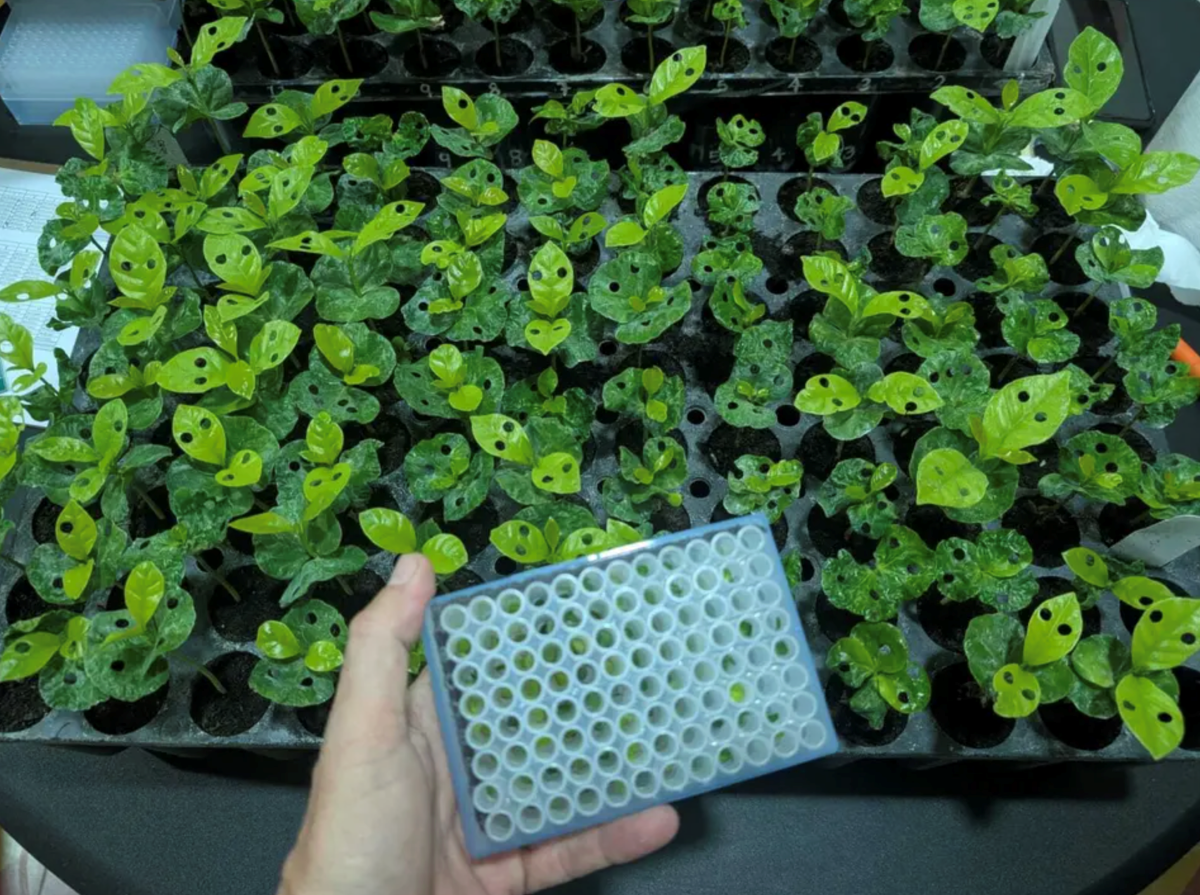
World Coffee Research announced a $1.5 million project to modernize coffee breeding. The initiative develops high-precision tools to make breeding faster, better, and cheaper. These tools will accelerate the creation of high-performing varieties for the next era of coffee.

Using molecular breeding approaches, breeding timelines can be shortened by half or more. The project is supported by a grant from the Foundation for Food & Agriculture Research. Industry partners Taylors of Harrogate and Coffee Circle are matching the investment.

Closing Coffee’s Innovation Gap

Other major crops have benefited from modern genomic revolutions. Coffee breeding has remained largely stuck in traditional methods. Record-high prices in 2025 reflect a profound underinvestment in coffee R&D. The industry faces a USD$126–405 million per year gap.

This underinvestment has left farmers vulnerable to evolving environmental stressors. More productive and resilient varieties are urgently needed. This project aims to address that gap directly.

Three Workstreams Drive the Research

The project includes three technical workstreams. Each targets a critical area of coffee breeding innovation.

Project Technical Workstreams
Workstream Focus Expected Impact
Arabica Marker Mapping Coffee leaf rust, berry disease, fruit rot, berry borer Faster disease resistance selection
Robusta Genotyping Tool 3,500 genetic markers for Coffea canephora Modern genetic roadmap for robusta
Breeder Training Genomic approaches for national breeders Global technology transfer

The first workstream focuses on arabica genetic markers. It targets devastating pests and diseases. These include coffee leaf rust, coffee berry disease, coffee fruit rot, and coffee berry borer. Together, these cause hundreds of millions in annual production losses.

The second workstream creates a foundational genotyping tool for robusta. Robusta now accounts for over 40% of global production. The tool utilizes 3,500 genetic markers. A similar tool for arabica was developed in 2025. It is already being used in the Innovea Global Coffee Breeding Network.

The third workstream trains national breeders from multiple origin countries. This ensures advanced tools integrate into local programs. The goal is delivering improved trees to farmers’ fields faster.

Global Scientific Partnership

The initiative leverages a global network of technical experts. In East Africa, WCR works with KALRO to advance tools for coffee berry disease resistance. The USDA-ARS at TARS in Puerto Rico conducts screening for coffee leaf rust and fungal pathogens. In Colombia, Cenicafé collaborates on berry borer marker development.

“Cenicafe is pleased to be part of this collaborative research program and to host plant breeders from around the world. The future of global coffee production and climate adaptation will depend on scientific excellence and the development of productive, resilient, high-quality varieties. Collaborative science ensures the best cup remains on the tables of millions.”

— Santiago Jaramillo, Scientific Director, Cenicafé

Industry Support for the Initiative

Keith Writer, Supply Director at Taylors of Harrogate, emphasized the importance of this work. “Taylors depends on the success of many origins around the world to source the high-quality coffee our customers love. Their success depends on coffee farmers having access to new, climate-resilient varieties as quickly as possible. Bringing coffee breeding into the future is essential for farmers and essential for our entire industry.”

Leadership Perspectives

Dr. Jennifer “Vern” Long, CEO of World Coffee Research, highlighted the project’s foundational nature. “Better coffee starts with better trees. This project is about building foundational technology that will benefit our entire sector. We are providing the industry with the insurance it needs to thrive.”

Dr. Kathy Munkvold, Scientific Program Director at FFAR, noted the broader impact. “This research will equip breeders with the tools they need to accelerate the development of improved coffee varieties, helping farmers reduce losses and strengthen productivity.”

Frequently Asked Questions

What is the goal of this $1.5 million project?The project aims to modernize coffee breeding through molecular tools, making breeding faster, better, and cheaper for the entire sector.

How much time can the new tools save?Molecular breeding approaches can shorten variety development timelines from 25-30 years by half or more.

What diseases are being targeted?The research targets coffee leaf rust, coffee berry disease, coffee fruit rot, and coffee berry borer.

Who are the project partners?Partners include FFAR, Taylors of Harrogate, Coffee Circle, Cenicafé, KALRO, and USDA-ARS.

What is the Innovea Global Coffee Breeding Network?It is a WCR network that uses shared science to advance coffee breeding goals globally. The arabica genotyping tool is already in use there.

Is this project using genetic modification?No, molecular breeding uses the plant’s natural genetic diversity without involving genetic modification.

Coffee Prices Surge 16% on Brazil Harvest Delays and Weather Risks

Source: Barchart – Adapted by Qahwa World |
Author: Qahwa World |
Date: July 6, 2026

Coffee Prices Surge 16% on Brazil Harvest Delays and Weather Risks

Key Takeaways:

  • Arabica prices jumped 16.19% to a 5.5-month high; robusta rose 8.83% to a 5-month high.
  • Brazil’s 2026/27 coffee harvest was only 52% complete as of July 1, behind last year’s 60% and the 55% five-year average.
  • Rain is forecast for mid-July in Brazil, which could be detrimental to coffee crops.
  • ICE arabica inventories fell to a 27-month low of 366,756 bags.
  • El Niño concerns are supporting prices, with a 67% chance of a “Super El Niño.”
  • USDA forecasts a record Brazil 2026/27 crop of 71.9 million bags (+14% y/y), which remains a bearish factor.
  • Vietnam’s coffee exports rose 7.3% in the first half of 2026, pressuring robusta prices.

Coffee prices catapulted higher on Monday, with arabica posting a 5.5-month high and robusta reaching a 5-month high amid a delayed coffee harvest in Brazil. September arabica futures closed up 16.19%, while September robusta futures gained 8.83%.

According to Safras & Mercado, Brazil’s 2026/27 coffee harvest was 52% complete as of July 1, behind last year’s comparable level of 60% and the five-year average of 55%.

Harvest Delay and Rain Forecast Drive Prices Higher

Gains in coffee accelerated on Monday after meteorologist Rural Clima said rain is forecast for a large part of Brazil in the middle of July, which could be “detrimental” to crops, including coffee. Also, Monday’s rally in the Brazilian real to a two-week high against the dollar discourages coffee sales from Brazil’s producers and is supportive for prices.

Coffee prices have moved sharply higher over the past month as heavy rains in Brazil disrupted fieldwork and may have lowered coffee crop quality. Brazilian coffee farmers are also holding back on sales, hoping prices will rise and bracing for the potential impact of this year’s El Niño weather event.

Exchange Inventories at 27-Month Lows

ICE coffee inventories have trended lower over the past three months, supporting coffee prices. ICE arabica coffee inventories fell to a 27-month low of 366,756 bags on Monday. Meanwhile, ICE robusta inventories fell to a two-year low of 3,631 lots on May 15 but have since risen to a three-month high of 4,109 lots last Friday.

Indicator Value Significance
September Arabica Futures +16.19% 5.5-month high
September Robusta Futures +8.83% 5-month high
ICE Arabica Stocks 366,756 bags 27-month low
Brazil Harvest Completion 52% Below last year’s 60%
ICE Robusta Stocks 4,109 lots 3-month high

El Niño Concerns Support Prices and Threaten Next Year’s Crop

Concerns that an El Niño weather pattern could hurt Brazil’s coffee crop next year are bullish for prices. Coffee trader Commercial said the El Niño pattern may delay rains in Brazil this September and October, when tree flowering normally occurs, potentially damaging the 2026/27 crop.

The US National Oceanic and Atmospheric Administration (NOAA) estimates a 67% probability of a “Super El Niño” this year that could be the strongest on record. On June 10, the Japan Meteorological Agency confirmed an El Niño pattern had formed across the equatorial Pacific, setting the stage for months of possible floods, droughts, and temperature fluctuations that could hinder coffee production in Asia and South America.

Bearish Factors: Record Crop Forecasts and Vietnam Exports

Despite recent gains, the broader market remains under pressure from expectations of abundant coffee supplies. On June 3, the USDA’s Foreign Agricultural Service (FAS) forecast a record 2026/27 Brazil coffee crop of 71.9 million bags, up 14% from the previous year. Rabobank also increased its forecast for the global arabica surplus in 2026/27 to 9.5 million bags, up from 7 million bags previously.

In Vietnam, the world’s largest robusta producer, coffee exports in the first half of 2026 rose 7.3% year-on-year to 1.05 million metric tons. Vietnam’s 2025 coffee exports jumped 17.5% to 1.58 million metric tons. Vietnam’s 2025/26 coffee production is also expected to increase by 6% year-on-year to 1.76 million metric tons, equivalent to approximately 29.4 million bags.

Indicator 2025/26 Year-on-Year Change
Global Coffee Production 178.85 million bags +2.0%
Arabica Production 95.52 million bags -4.7%
Robusta Production 83.33 million bags +10.9%
Ending Stocks 20.15 million bags -5.4%

Frequently Asked Questions About the Coffee Price Surge

Q: Why did coffee prices surge 16%?

A: Due to Brazil’s delayed harvest (52% complete vs. 60% last year), rain forecasts for mid-July that could damage crops, and inventories falling to 27-month lows.

Q: How does El Niño affect coffee prices?

A: El Niño could delay flowering rains in Brazil during September-October, potentially damaging the 2026/27 crop and supporting higher prices.

Q: How do Vietnam’s exports influence prices?

A: Rising Vietnamese exports increase robusta supply, which puts downward pressure on prices.

Q: What is the current level of exchange inventories?

A: ICE arabica stocks fell to 366,756 bags (a 27-month low), while robusta stocks rose to 4,109 lots (a 3-month high).

Q: Will prices continue to rise?

A: It depends on weather developments in Brazil, the severity of any crop damage, El Niño developments, and inventory trends.

The coffee market faces heightened uncertainty. While large surplus expectations remain in the background, delayed harvests, weather risks, falling inventories, and El Niño concerns are reshaping the balance. Investors are closely watching weather developments in Brazil and inventory trends to determine the next direction for prices.

Prepared and edited by: Qahwa World – Based on a Barchart report by Rich Asplund (adapted).

All rights reserved. Republication with attribution permitted.

Publication date: July 6, 2026

Coffee Is Under Threat: How Scientists Are Fighting to Save It from Extinction

Source: Nature – Adapted by Qahwa World |
Author: Qahwa World |
Date: July 1, 2026

Coffee Is Under Threat: How Scientists Are Fighting to Save It from Extinction

Key Takeaways:

  • Coffee is critically threatened by climate change, with arabica suffering or dying when temperatures rise just a few degrees.
  • Robusta requires massive amounts of water and its yields drop drastically in drought conditions.
  • Ethiopia, the homeland of arabica coffee, is preserving genetic diversity through conservation areas and living collections of over 12,000 plants.
  • Scientists are exploring wild coffee species such as C. liberica, C. excelsa, and C. stenophylla that are more climate-resilient.
  • C. stenophylla, a forgotten species from the 18th century, tastes remarkably similar to specialty arabica from Rwanda.
  • Chemical tricks like grinding frozen beans can improve extraction and reduce waste, allowing better flavor from less coffee.

“A mathematician is a machine for turning coffee into theorems”, a quote often attributed to the late Hungarian mathematician Paul Erdős. Coffee is one of the world’s favorite drinks and an essential stimulant for many researchers. But its future is uncertain. “Coffee is critically threatened by climate change,” says Kassahun Tesfaye, a plant geneticist at Addis Ababa University.

Nearly all the 10 million tonnes of coffee beans consumed annually around the world come from two plant species: the strong and often bitter robusta (Coffea canephora) and the more delicate-tasting arabica (Coffea arabica). Unfortunately, arabica suffers or dies when temperatures rise just a few degrees, and robusta requires massive amounts of water and its yields drop drastically in a drought. Researchers are racing to keep the world’s coffee drinkers awake – and preserve the livelihoods of the many lower-income-country farmers who grow the cash crop.

The Birthplace of Arabica and Genetic Diversity in Ethiopia

Ethiopians are proud of their country for being the homeland of arabica coffee. The Ethiopian government has been establishing conservation areas to preserve the natural genetic diversity of the species. It also grows more than 12,000 arabica plants in living collections at the Ethiopian Biodiversity Institute in Addis Ababa and at the Ethiopian Institute of Agricultural Research in Jimma. The government is betting that these plants will provide the material for breeding – or genetically engineering – arabica cultivars with traits designed to withstand high temperatures and drought.

Wild Coffee Species: Liberica, Excelsa, and Stenophylla

As temperatures increase, arabica cultivation might need to move to increasingly higher terrain to stay cool, which will not be easy for owners of small coffee plantations. Another solution is to grow other species of coffee plant that can better withstand climate change. There are 134 known wild coffee species, and a few are being grown for their climate resilience, including C. liberica and C. excelsa.

Aaron Davis, a researcher at the Royal Botanic Gardens, Kew, says “the success stories are always about changing the species” that farmers grow. In wet regions, that could mean switching from arabica to robusta, but in other places it could instead mean growing C. liberica, which tolerates higher temperatures than arabica does and does not require as much water.

Davis has also tried a “bonkers” coffee species, Coffea stenophylla, which was described by a Swedish botanist in West Africa in the 18th century and then largely forgotten by science. “It still freaks me out, because here we have a coffee which isn’t related to arabica, occurs in an extreme environment – and yet tastes like a very specific arabica from Rwanda.” The challenge, he says, will be to breed varieties of C. stenophylla that are productive and that farmers find easy to grow.

Species Characteristics Challenges
Arabica (Coffea arabica) Delicate taste, most popular Heat-sensitive, dies with slight temperature rise
Robusta (Coffea canephora) Strong, bitter, heat-tolerant High water demand, yields drop in drought
Liberica (Coffea liberica) Heat-tolerant, tropical fruit flavors Different taste, not for everyone
Excelsa (Coffea excelsa) Climate-resilient, fruity and almondy notes Rarely cultivated, not well known
Stenophylla (Coffea stenophylla) Tastes like Rwanda arabica, tolerates harsh conditions Low productivity, cultivation challenges

Chemistry Tricks: Grinding Frozen Beans and Improving Extraction

Some researchers are looking for ways to get more out of the shrinking arabica supply. Christopher Hendon, a materials scientist at the University of Oregon, says: “There’s a lot you can do at the consuming side.” Hendon and his collaborators have found that grinding coffee beans at below freezing temperatures results in smaller particles. However, counter-intuitively, they also found that finer grinds do not necessarily yield tastier brews. Smaller particles tend to aggregate through electrostatic forces, reducing the surface area exposed to water – and thus the amount of chemicals entering solution – but tweaks to the grinding techniques, such as starting with moist beans, can help reduce the clumping.

Somewhat surprisingly, coarser grinds can also release more of the good stuff into an espresso, but this happens only when beans are put under pressures as low as 7 atmospheres. (A typical coffee-house machine works at around 10 atmospheres.)

Chemistry: The Key to Coffee’s Future

Chemistry is also crucial to investigating alternative coffee plants and how to turn them into desirable products. Hendon says the science of coffee is still young, and researchers are working to develop reproducible and objective techniques. “Compositional measurement is a big challenge,” says Hendon, “and so is assigning a numerical value to flavor.” A typical cup of coffee might contain more than 2,000 organic compounds, and their concentrations vary greatly depending on how and where the plant is grown – and how the beans are roasted.

Tesfaye emphasizes that scientists, of all people, should care about coffee’s future, not just because science is good for coffee, but because coffee is good for science, too. “Many discoveries and knowledge are generated after having a cup of coffee.”

Frequently Asked Questions About Coffee’s Future Under Climate Change

Q: Why is coffee threatened with extinction?

A: Due to climate change. Arabica is highly sensitive to rising temperatures, while robusta requires large amounts of water and suffers from drought.

Q: What are the proposed solutions to save coffee?

A: Solutions include preserving arabica genetic diversity, breeding heat and drought-resistant varieties, cultivating wild species like liberica, excelsa, and stenophylla, and improving grinding and extraction techniques.

Q: What is Coffea stenophylla?

A: A wild coffee species described in the 18th century and then largely forgotten. It tastes similar to specialty arabica from Rwanda and tolerates harsh environmental conditions.

Q: How can chemistry help address the coffee crisis?

A: Through improved grinding and extraction techniques, such as grinding frozen beans, to extract better flavor from less coffee, and developing objective methods to measure flavor.

Q: What is Ethiopia’s role in preserving coffee?

A: Ethiopia is the homeland of arabica coffee. The government is establishing conservation areas and living collections of over 12,000 plants to preserve genetic diversity.

Coffee faces an existential threat from climate change, but scientists around the world are working tirelessly to save it. From preserving genetic diversity in Ethiopia, to exploring resilient wild species, to improving grinding and extraction techniques, the future of coffee depends on scientific creativity and international collaboration. As one researcher said, “Many discoveries are generated after having a cup of coffee.” Let us work together to preserve this precious beverage for generations to come.

Prepared and edited by: Qahwa World – Based on an article in Nature.

All rights reserved. Republication with attribution permitted.

Publication date: July 1, 2026

Drier Weather in Brazil Aids Coffee Harvest and Weighs on Prices

Source: Barchart – Adapted by Qahwa World |
Author: Qahwa World |
Date: June 22, 2026

Drier Weather in Brazil Aids Coffee Harvest and Weighs on Prices

Key Takeaways:

  • Arabica prices fell 0.73% and robusta fell 1.76% to a one-week low, as drier weather in Brazil is expected to allow the harvest to resume.
  • The reopening of the Strait of Hormuz eases supply disruptions, lowering shipping, insurance, and fuel costs.
  • ICE arabica inventories fell to a 27-month low of 394,267 bags.
  • El Niño concerns support prices, with a 67% chance of a “Super El Niño” this year.
  • USDA forecasts a record Brazil 2026/27 crop of 71.9 million bags (+14% y/y).
  • Vietnam’s exports rose 7.9% in the first five months of 2026, with production expected at 29.4 million bags (+6%).
  • Global production in 2025/26 is projected at 178.85 million bags (+2.0%), with ending stocks falling 5.4%.

Coffee prices came under pressure today, with robusta falling sharply to a one-week low. The decline came as expectations of drier weather in Brazil raised hopes that the country’s coffee harvest can resume. September arabica futures fell 0.73%, while July robusta futures dropped 1.76%.

Prices had rallied to five-week highs last Thursday amid persistent rain in Brazil, which delayed the harvest. However, improving weather conditions are now reversing that trend, as harvesting activities are expected to accelerate in key coffee regions.

Drier Weather Resumes Harvest and Pressures Prices

Meteorological agencies forecast drier weather across Brazil’s key coffee-growing regions in the coming days, allowing farmers to resume harvesting activities that had been halted by heavy rains. This development is expected to increase supply in global markets, especially with expectations of a bumper harvest this year. The improved weather conditions have led to a decline in prices, as traders took advantage of the favorable weather to accelerate profit-taking.

Strait of Hormuz Reopening Eases Supply Disruptions

Authorities announced the reopening of the Strait of Hormuz to maritime traffic, easing supply disruptions that have affected the market in recent months. The reopening is expected to lower shipping rates, insurance premiums, fuel costs, and fertilizer prices, thereby reducing overall costs for importers and roasters. This development represents an additional bearish factor, as lower logistics costs remove some of the support that had been underpinning prices during the closure.

Indicator Value Significance
September Arabica Futures -0.73% Decline on improving weather
July Robusta Futures -1.76% One-week low
ICE Arabica Stocks 394,267 bags 27-month low
ICE Robusta Stocks 4,032 lots 2.25-month high
Strait of Hormuz Reopened Easing supply disruptions

Exchange Inventories at Multi-Year Lows

ICE arabica coffee inventories fell to 394,267 bags last Thursday, the lowest level in 27 months. This decline in inventories supports prices and reflects tight physical supplies. In contrast, ICE robusta inventories jumped from a two-year low of 3,631 lots on May 15 to 4,032 lots, the highest level in 2.25 months.

El Niño Concerns Support Prices and Threaten Next Year’s Crop

Concerns over the impact of an El Niño weather pattern on Brazil’s next coffee crop continue to support prices. Coffee trader Commercial warned that El Niño could delay the arrival of seasonal rains during Brazil’s critical flowering period in September and October, potentially damaging the 2026/27 crop. The US National Oceanic and Atmospheric Administration (NOAA) estimates a 67% probability of a “Super El Niño” this year, which could be the strongest on record. The Japan Meteorological Agency confirmed on June 10 that El Niño conditions have formed across the equatorial Pacific, setting the stage for months of floods, droughts, and temperature fluctuations that could hinder coffee production in Asia and South America.

Large Crops Continue to Weigh on the Market

Despite recent gains, the broader market remains under pressure from expectations of abundant coffee supplies. On June 3, the USDA’s Foreign Agricultural Service (FAS) projected Brazil’s 2026/27 coffee production at a record 71.9 million bags, up 14% from the previous year. Rabobank also increased its forecast for the global arabica surplus in 2026/27 to 9.5 million bags, up from 7 million bags previously. In addition, Cecafé reported on June 11 that Brazil’s green coffee exports rose 4.2% year-on-year in May to 2.73 million bags.

Vietnam Expands Exports and Production, Adding Pressure

Vietnam, the world’s largest robusta producer, continues to increase exports, adding further pressure on prices. According to Vietnam’s National Statistics Office on June 2, coffee exports during the first five months of 2026 reached 922,000 metric tons, up 7.9% from the same period a year earlier. Full-year exports in 2025 rose 17.5% to 1.58 million metric tons. Vietnam’s 2025/26 coffee production is also expected to increase by 6% year-on-year to 1.76 million metric tons, equivalent to approximately 29.4 million bags.

Global Production Outlook and Inventories Point to a Delicate Balance

The International Coffee Organization (ICO) reported on November 7 that global coffee exports during the current marketing year (October–September) totaled 138.66 million bags, slightly down 0.3% from the previous year. Meanwhile, the USDA’s FAS projects global coffee production in 2025/26 to reach a record 178.85 million bags, up 2% year-on-year. The forecast includes arabica production of 95.52 million bags (-4.7%) and robusta production of 83.33 million bags (+10.9%). The USDA estimates Brazil’s 2025/26 coffee crop at 63 million bags, down 3.1% from the previous year, while Vietnam’s production is expected to rise 6.2% to 30.8 million bags. Global ending stocks are forecast to decline by 5.4% to 20.15 million bags in 2025/26, compared with 21.31 million bags in 2024/25.

Indicator 2025/26 Year-on-Year Change
Global Coffee Production 178.85 million bags +2.0%
Arabica Production 95.52 million bags -4.7%
Robusta Production 83.33 million bags +10.9%
Ending Stocks 20.15 million bags -5.4%

Frequently Asked Questions About Coffee Price Movements

Q: Why did coffee prices decline today?

A: Due to expectations of drier weather in Brazil allowing the harvest to resume, and the reopening of the Strait of Hormuz easing supply disruptions.

Q: How does the reopening of the Strait of Hormuz affect coffee prices?

A: It is expected to lower shipping, insurance, and fuel costs, reducing costs for importers and roasters and putting downward pressure on prices.

Q: What is the current level of exchange inventories?

A: ICE arabica stocks fell to 394,267 bags (a 27-month low), while robusta stocks rose to 4,032 lots (a 2.25-month high).

Q: How do Vietnam’s exports influence prices?

A: Rising Vietnamese exports increase robusta supply, which puts downward pressure on prices.

Q: What is the impact of El Niño on coffee prices?

A: El Niño could delay flowering rains in Brazil during September-October, potentially damaging the 2026/27 crop and supporting higher prices.

The coffee market remains caught between supportive factors (El Niño concerns, falling inventories) and bearish factors (improving weather in Brazil, Strait of Hormuz reopening, record crop expectations, rising Vietnamese production). Improving weather conditions and the reopening of the strait add additional downward pressure, though El Niño concerns and declining inventories still provide some support. All eyes remain on weather developments in Brazil and inventory trends to determine the next direction for prices.

Prepared and edited by: Qahwa World – Based on a Barchart report by Rich Asplund (adapted).

All rights reserved. Republication with attribution permitted.

Publication date: June 22, 2026

Dollar Strength Weighs on Coffee Prices

Source: Barchart – Adapted by Qahwa World |
Author: Qahwa World |
Date: June 19, 2026

Dollar Strength Weighs on Coffee Prices, Capping Gains Despite Brazil Harvest Delays

Key Takeaways:

  • Arabica prices closed down 0.99% as the dollar index surged to a 13-month high, triggering long liquidation in coffee futures.
  • ICE arabica inventories fell to a 27-month low of 394,267 bags.
  • Rainfall expected in Brazil could delay the harvest, but next week may bring dry weather to key coffee regions.
  • El Niño concerns support prices, with a 67% chance of a “Super El Niño” this year.
  • USDA forecasts a record Brazil 2026/27 crop of 71.9 million bags (+14% y/y).
  • Vietnam’s exports rose 7.9% in the first five months of 2026, with production expected at 29.4 million bags (+6%).
  • Strait of Hormuz disruptions continue to support prices through higher shipping and insurance costs.

Coffee prices closed mixed on Thursday, giving up early gains as the dollar index surged to a 13-month high, triggering a wave of long liquidation in coffee futures. July arabica futures fell 0.99%, while July robusta futures edged up 0.14%.

Prices had rallied sharply over the past week, reaching five-week highs amid concerns that persistent rain in Brazil would delay the coffee harvest. However, gains faded after meteorologist Climatempo said Brazil’s key coffee-growing regions are expected to see mostly dry weather next week.

Dollar and Weather Determine Price Direction

The dollar index rose to a 13-month high, making dollar-denominated commodities more expensive for holders of other currencies and triggering selling in coffee futures. On the weather front, forecaster Vaisala expects moderate to heavy rainfall across Brazil’s coffee-growing regions this week, which could delay the harvest and reduce immediate supplies. However, Climatempo’s forecast of dry weather next week eased some concerns.

Exchange Inventories at Multi-Year Lows

ICE arabica coffee inventories fell to 394,267 bags on Thursday, the lowest level in 27 months. This decline in inventories supports prices and reflects tight physical supplies. In contrast, ICE robusta inventories jumped from a two-year low of 3,631 lots on May 15 to 4,032 lots, the highest level in 2.25 months.

Indicator Value Significance
July Arabica Futures -0.99% Decline pressured by dollar strength
July Robusta Futures +0.14% Slight gain
ICE Arabica Stocks 394,267 bags 27-month low
ICE Robusta Stocks 4,032 lots 2.25-month high
Dollar Index 13-month high Pressure on commodities

El Niño Concerns Support Prices and Threaten Next Year’s Crop

Concerns over the impact of an El Niño weather pattern on Brazil’s next coffee crop continue to support prices. Coffee trader Commercial warned that El Niño could delay the arrival of seasonal rains during Brazil’s critical flowering period in September and October, potentially damaging the 2026/27 crop. The US National Oceanic and Atmospheric Administration (NOAA) estimates a 67% probability of a “Super El Niño” this year, which could be the strongest on record. The Japan Meteorological Agency confirmed that El Niño conditions have formed across the equatorial Pacific, setting the stage for months of floods, droughts, and temperature fluctuations that could hinder coffee production in Asia and South America.

Large Crops Continue to Weigh on the Market

Despite recent gains, the broader market remains under pressure from expectations of abundant coffee supplies. On June 3, the USDA’s Foreign Agricultural Service (FAS) projected Brazil’s 2026/27 coffee production at a record 71.9 million bags, up 14% from the previous year. Rabobank also increased its forecast for the global arabica surplus in 2026/27 to 9.5 million bags, up from 7 million bags previously. In addition, Cecafé reported that Brazil’s green coffee exports rose 4.2% year-on-year in May to 2.73 million bags.

Vietnam Expands Exports and Production, Adding Pressure

Vietnam, the world’s largest robusta producer, continues to increase exports, adding further pressure on prices. According to Vietnam’s National Statistics Office, coffee exports during the first five months of 2026 reached 922,000 metric tons, up 7.9% from the same period a year earlier. Full-year exports in 2025 rose 17.5% to 1.58 million metric tons. Vietnam’s 2025/26 coffee production is also expected to increase by 6% year-on-year to 1.76 million metric tons, equivalent to approximately 29.4 million bags.

Strait of Hormuz Disruptions Continue to Support Prices

Ongoing geopolitical tensions in the Strait of Hormuz continue to disrupt global coffee supplies and support prices. The closure has tightened supplies by raising shipping rates, insurance premiums, fuel costs, and fertilizer prices, increasing costs for importers and roasters. This geopolitical factor adds an additional layer of support to prices amid continued instability in the region.

Global Production Outlook and Inventories Point to a Delicate Balance

The International Coffee Organization (ICO) reported that global coffee exports during the current marketing year (October–September) totaled 138.66 million bags, slightly down 0.3% from the previous year. Meanwhile, the USDA’s FAS projects global coffee production in 2025/26 to reach a record 178.85 million bags, up 2% year-on-year. The forecast includes arabica production of 95.52 million bags (-4.7%) and robusta production of 83.33 million bags (+10.9%). The USDA estimates Brazil’s 2025/26 coffee crop at 63 million bags, down 3.1% from the previous year, while Vietnam’s production is expected to rise 6.2% to 30.8 million bags. Global ending stocks are forecast to decline by 5.4% to 20.15 million bags in 2025/26, compared with 21.31 million bags in 2024/25.

Indicator 2025/26 Year-on-Year Change
Global Coffee Production 178.85 million bags +2.0%
Arabica Production 95.52 million bags -4.7%
Robusta Production 83.33 million bags +10.9%
Ending Stocks 20.15 million bags -5.4%

Frequently Asked Questions About Coffee Price Movements

Q: Why did arabica prices decline despite concerns over Brazil harvest delays?

A: Due to the dollar index surging to a 13-month high, triggering long liquidation in futures contracts, combined with forecasts of dry weather in Brazil next week.

Q: How does El Niño affect coffee prices?

A: El Niño could delay flowering rains in Brazil during September-October, potentially damaging the 2026/27 crop and supporting higher prices.

Q: How do Vietnam’s exports influence prices?

A: Rising Vietnamese exports increase robusta supply, which puts downward pressure on prices.

Q: What is the current level of exchange inventories?

A: ICE arabica stocks fell to 394,267 bags (a 27-month low), while robusta stocks jumped to 4,032 lots (a 2.25-month high).

Q: Will prices continue to be volatile?

A: Yes, with continued tension between supportive factors (harvest delays, El Niño concerns, falling inventories) and bearish factors (dollar strength, record crop expectations, rising Vietnamese production).

The coffee market remains caught between immediate bullish factors (harvest delays, falling inventories, El Niño risks) and structural bearish factors (dollar strength, record crop expectations, rising Vietnamese production and exports). The dollar’s surge to a 13-month high adds an additional layer of complexity, making commodities more expensive for holders of other currencies. All eyes remain on weather developments in Brazil and dollar movements to determine the next direction for prices.

Prepared and edited by: Qahwa World – Based on a Barchart report by Rich Asplund (adapted).

All rights reserved. Republication with attribution permitted.

Publication date: June 19, 2026

Coffee Prices Continue to Rise Supported by Brazil Harvest Delays and El Niño Risks

Source: Barchart – Adapted by Qahwa World |
Author: Qahwa World |
Date: June 17, 2026

Coffee Prices Continue to Rise Supported by Brazil Harvest Delays and El Niño Risks

Key Takeaways:

  • Arabica prices rose 2.85% to a two-week high, robusta gained 1.36% to a five-week high.
  • Rainfall expected in Brazil may delay the harvest and reduce immediate supplies.
  • ICE arabica inventories fell to 397,242 bags – the lowest level in seven months.
  • El Niño risks threaten the critical flowering period in Brazil (September-October) and could impact the 2026/27 crop.
  • USDA forecasts a record Brazil 2026/27 crop of 71.9 million bags (+14% y/y).
  • Vietnam’s exports rose 7.9% in the first five months of 2026, with production expected at 29.4 million bags (+6%).
  • Shipping disruptions in the Strait of Hormuz are increasing transport costs and supporting prices.

Coffee prices continued to rise on Tuesday, supported by concerns that persistent rainfall in Brazil could delay the country’s coffee harvest. July Arabica futures gained 2.85%, while July Robusta futures advanced 1.36%. Arabica reached a two-week high, while robusta climbed to its highest level in five weeks.

The rally comes despite expectations of a record Brazilian crop, as the market appears to be focusing on immediate supply-side factors, including weather and declining inventories.

Harvest Delays Raise Supply Concerns

Weather remains a key driver of the market. Forecasting company Vaisala expects moderate to heavy rainfall across Brazil’s major coffee-growing regions this week, potentially slowing harvesting activities and delaying supplies reaching the market. Further supporting prices, ICE-monitored arabica inventories have been trending lower for the past three months. Arabica stocks fell to 397,242 bags on Monday, the lowest level in nearly seven months. Robusta inventories, however, have recovered from a two-year low of 3,631 lots recorded on May 15, rising to 3,991 lots.

Indicator Value Change
July Arabica Futures +2.85% Two-week high
July Robusta Futures +1.36% Five-week high
ICE Arabica Stocks 397,242 bags Seven-month low
ICE Robusta Stocks 3,991 lots Recovered from two-year low

El Niño Risks Loom Over Next Year’s Crop

Market participants are also monitoring the development of an El Niño weather pattern, which could affect Brazil’s next coffee crop. Coffee trader Volcafe has warned that El Niño could delay the arrival of seasonal rains during Brazil’s critical flowering period in September and October, potentially impacting the 2026/27 harvest. The US National Oceanic and Atmospheric Administration (NOAA) estimates a 67% probability of a strong El Niño event this year. Meanwhile, the Japan Meteorological Agency has confirmed that El Niño conditions have developed across the equatorial Pacific. Such weather patterns can trigger droughts, floods, and temperature extremes that may disrupt coffee production in both South America and Asia.

Large Crops Continue to Weigh on the Market Despite Temporary Gains

Despite recent gains, the broader market remains under pressure from expectations of abundant coffee supplies. Earlier this month, arabica futures fell to a 19-month low, while robusta touched a two-month low after forecasts pointed to a record Brazilian crop. On June 3, the USDA’s Foreign Agricultural Service (FAS) projected Brazil’s 2026/27 coffee production at a record 71.9 million bags, up 14% from the previous year. Rabobank also increased its forecast for the global arabica surplus in 2026/27 to 9.5 million bags, up from 7 million bags previously. In addition, Cecafé reported that Brazil’s green coffee exports rose 4.2% year-on-year in May to 2.73 million bags.

Indicator Value Change
USDA Brazil 2026/27 Crop Forecast 71.9 million bags +14%
Rabobank Global Arabica Surplus 9.5 million bags (was 7 million)
Brazil Green Coffee Exports (May) 2.73 million bags +4.2%

Vietnam Expands Exports and Production, Adding Pressure on Prices

Vietnam, the world’s largest robusta producer, continues to increase exports, adding further pressure to prices. According to Vietnam’s National Statistics Office, coffee exports during the first five months of 2026 reached 922,000 metric tons, up 7.9% from the same period a year earlier. Full-year exports in 2025 rose 17.5% to 1.58 million metric tons. Vietnam’s 2025/26 coffee production is also expected to increase by 6% year-on-year to 1.76 million metric tons, equivalent to approximately 29.4 million bags. This increase in production and exports adds further supply to the global market, particularly in the robusta segment.

Shipping Disruptions Support Prices

Geopolitical tensions affecting shipping routes have also contributed to market strength. Disruptions to traffic through the Strait of Hormuz have increased freight rates, insurance premiums, fuel costs, and fertilizer prices, raising costs throughout the coffee supply chain. This geopolitical factor adds an additional layer of support to prices, as these higher costs are passed on to importers, roasters, and ultimately consumers.

Global Production Outlook and Inventories Point to a Delicate Balance

The International Coffee Organization (ICO) reported that global coffee exports during the current marketing year (October–September) totaled 138.66 million bags, slightly down 0.3% from the previous year. Meanwhile, the USDA’s FAS projects global coffee production in 2025/26 to reach a record 178.85 million bags, up 2% year-on-year. The forecast includes arabica production of 95.52 million bags (-4.7%) and robusta production of 83.33 million bags (+10.9%). The USDA estimates Brazil’s 2025/26 coffee crop at 63 million bags, down 3.1% from the previous year, while Vietnam’s production is expected to rise 6.2% to 30.8 million bags. Global ending stocks are forecast to decline by 5.4% to 20.15 million bags in 2025/26, compared with 21.31 million bags in 2024/25, indicating that inventories may remain relatively tight despite rising production.

Indicator 2025/26 Year-on-Year Change
Global Coffee Production 178.85 million bags +2.0%
Arabica Production 95.52 million bags -4.7%
Robusta Production 83.33 million bags +10.9%
Ending Stocks 20.15 million bags -5.4%

Frequently Asked Questions About Coffee Price Movements

Q: Why are coffee prices rising despite expectations of a record crop in Brazil?

A: Because of immediate factors such as harvest delays due to rain, inventories falling to a seven-month low, and concerns about El Niño impact on next year’s crop.

Q: How does El Niño affect coffee prices?

A: El Niño could delay flowering rains in Brazil during September-October, potentially damaging the 2026/27 crop and supporting higher prices.

Q: How do Vietnam’s exports influence prices?

A: Rising Vietnamese exports increase robusta supply, which puts downward pressure on prices.

Q: What is the current level of exchange inventories?

A: ICE arabica stocks fell to 397,242 bags (a seven-month low), while robusta stocks rose to 3,991 lots from a two-year low.

Q: Will prices continue to rise?

A: It depends on weather developments in Brazil, El Niño risks, ongoing shipping disruptions, and the scale of the expected surplus from the record crop.

The coffee market remains caught between immediate bullish factors (harvest delays, falling inventories, El Niño risks, shipping disruptions) and structural bearish factors (record crop expectations, rising Vietnamese production and exports). All eyes remain on weather developments in Brazil to determine the next direction for prices.

Prepared and edited by: Qahwa World – Based on a Barchart report.

All rights reserved. Republication with attribution permitted.

Publication date: June 17, 2026

International Coffee Organization Releases Coffee Market Report for May 2026

Source: International Coffee Organization (ICO) – May 2026 Report |
Author: Qahwa World |
Date: June 13, 2026

International Coffee Organization Releases Coffee Market Report for May 2026

Key Takeaways:

  • The ICO Composite Indicator Price (I‑CIP) averaged 256.05 US cents/lb in May 2026, down 3.8% from April.
  • Brazilian Naturals fell 6.4% to 293.73 US cents/lb, while Robustas rose 1.1% to 166.51 US cents/lb.
  • ICE‑certified Arabica stocks fell 13.5% to 0.48 million bags – a multi‑month low.
  • CONAB raised its Brazil 2026/27 production forecast to a record 66.7 million bags, with Arabica up 28% y/y.
  • Global green bean exports declined 1.9% in April 2026 to 10.51 million bags, while Robusta exports rose 11.2%.
  • Vietnam’s April 2026 exports jumped 12.1% to 3.41 million bags – the country’s largest April volume on record.
  • The New York–London futures arbitrage narrowed 13.1% to 116.39 US cents/lb, reflecting improved Brazil arabica prospects.

The International Coffee Organization (ICO) published its monthly coffee market report for May 2026, showing a continued downward drift in prices as expectations of ample supply strengthened. The ICO Composite Indicator Price (I‑CIP) averaged 256.05 US cents/lb in May 2026, a 3.8% decrease from April 2026. The market continued to react to an improved supply outlook, reinforced by CONAB’s reaffirmation of a record outlook for Brazil’s production in crop year 2026/27.

Despite the decline, prices remain relatively elevated by historical standards. The drop reflects growing market expectations of a possible global surplus in coffee year 2026/27, combined with harvest pressure from Brazil and persistent backwardation in financial markets.

Group Indicator Performance: Arabicas Decline, Robustas Edge Up

Colombian Milds averaged 323.45 US cents/lb in May 2026, down 3.3% from April. Other Milds fell 4.8% to 315.42 US cents/lb. Brazilian Naturals dropped 6.4% to 293.73 US cents/lb – the steepest decline among the groups. In contrast, Robustas rose 1.1% to 166.51 US cents/lb.

On the futures markets, New York arabica futures fell 5.8% to 268.18 US cents/lb, while London robusta futures gained 0.8% to 151.79 US cents/lb. The arbitrage between the two futures markets contracted by 13.1% to 116.39 US cents/lb, highlighting in particular the improving prospects for arabica production in Brazil.

Group May 2026 (US cents/lb) Change vs April
ICO Composite 256.05 -3.8%
Colombian Milds 323.45 -3.3%
Other Milds 315.42 -4.8%
Brazilian Naturals 293.73 -6.4%
Robustas 166.51 +1.1%

Certified Stocks at Multi‑Month Lows

ICE‑certified robusta stocks fell 0.1% from April to May 2026, closing the month at 0.64 million bags. US‑certified arabica stocks also declined, dropping 13.5% to 0.48 million bags – the lowest level in months. The continued drawdown in certified stocks suggests persistent market uncertainty, as nearby contract premiums are not yet high enough to incentivize deliveries into certified warehouses.

CONAB Forecast: Record Brazil 2026/27 Crop

In mid‑May, Brazil’s National Supply Company (CONAB) released its second crop survey. It raised the total 2026/27 production forecast by about 0.5 million bags to a record 66.7 million bags. Arabica production was increased by 1.67 million bags to 45.8 million bags (+28% y/y). Robusta production was cut by about 1.2 million bags to 20.9 million bags (still a +0.8% y/y increase). CONAB also reported a 3.9% increase in coffee area to 2.34 million hectares, with yields rising to 34.4 bags per hectare. However, CONAB noted that carry‑over stocks remain low and highlighted continued growth in global demand, which tempered some of the market’s bearish sentiment.

Green Bean Exports: Overall Decline, Robusta Growth

Total global green bean exports reached 10.51 million bags in April 2026, down 1.9% from 10.71 million bags in April 2025. All coffee groups recorded declines except Robustas. Details:

  • Colombian Milds: down 14.0% to 0.78 million bags.
  • Other Milds: down 1.1% to 2.31 million bags.
  • Brazilian Naturals: down 14.8% to 2.91 million bags.
  • Robustas: up 11.2% to 4.50 million bags.

As a result, the Arabicas’ share of total green bean exports for the first seven months of coffee year 2025/26 fell to 60.4%, down from 64.2% in the same period a year earlier.

Group April 2026 (million bags) Change vs April 2025
Colombian Milds 0.78 -14.0%
Other Milds 2.31 -1.1%
Brazilian Naturals 2.91 -14.8%
Robustas 4.50 +11.2%

Regional Performance: Asia & Oceania Lead Growth

Total exports of all forms of coffee (green, soluble, roasted) fell 0.9% to 12.05 million bags in April 2026 compared with 12.17 million bags in April 2025. Regional dynamics were mixed:

  • Asia & Oceania: Up 7.3% to 4.64 million bags, led by Vietnam. Vietnamese exports jumped 12.1% to 3.41 million bags – the country’s largest April export volume on record.
  • Africa: Down 22.1% to 1.54 million bags, driven by sharp declines in Ethiopia and Uganda.
  • South America: Down 1.2% to 3.99 million bags, with Colombia recording its fifth consecutive monthly decline.
  • Caribbean, Mexico & Central America: Up 3.3% to 1.88 million bags, led by Honduras (+23.0%).

Price Volatility and El Niño Risks

The intra‑day volatility of the I‑CIP averaged 8.8% in May 2026, down 0.2 percentage points from April. Volatility for Brazilian Naturals and Robustas also declined, while Colombian Milds volatility increased slightly. On the futures markets, New York arabica volatility stood at 10.2%, and London robusta volatility at 10.1%.

The US National Oceanic and Atmospheric Administration (NOAA) estimates an 82% probability that El Niño conditions will emerge between May and July, with a 67% chance of a “Super El Niño”. Such a pattern could delay Brazil’s September‑October 2026 flowering rains, potentially damaging the 2026/27 crop. However, the impact of El Niño in Brazil is complex – it can be positive or negative depending on region, intensity, and timing.

Frequently Asked Questions About the ICO May 2026 Coffee Market Report

Q: What is the ICO Composite Indicator Price?

A: It is a weighted average of the four ICO group indicator prices (Colombian Milds, Other Milds, Brazilian Naturals, and Robustas).

Q: Why did arabica prices fall while robusta prices rose in May 2026?

A: Arabica fell due to record Brazil crop expectations, while robusta demand remained strong amid Red Sea shipping disruptions.

Q: What do falling certified stocks indicate?

A: They suggest that nearby contract premiums are not high enough to encourage deliveries into warehouses, reflecting persistent market uncertainty despite surplus expectations.

Q: How could El Niño affect coffee prices?

A: A “Super El Niño” could delay flowering rains in Brazil and damage next year’s crop, which would support higher prices. But the effect varies by region.

Q: What is the expected global coffee surplus for 2026/27?

A: CONAB’s record Brazil crop points to a significant surplus, but low carry‑over stocks and strong demand may limit its size.

The global coffee market remains caught between large surplus expectations on one hand, and low inventories, El Niño risks, and supply chain disruptions on the other. The ICO’s May 2026 report confirms that 2026 will be a pivotal year for the world’s coffee balance.

Prepared and edited by: Qahwa World – Based on the International Coffee Organization (ICO) market report for May 2026 (CMR-0526).

All rights reserved. Republication with attribution permitted.

Publication date: June 13, 2026

Coffee Prices Jump as Persistent Rain in Brazil Delays the Coffee Harvest

Source: Barchart (adapted) |
Author: Coffee World |
Date: June 12, 2026

Coffee Prices Jump as Persistent Rain in Brazil Delays the Coffee Harvest

Key Takeaways:

  • July arabica rose 2.17% and July robusta rose 3.19% to one‑week highs.
  • Moderate to heavy rain is forecast across Brazil’s coffee regions this week and may extend into next week.
  • ICE arabica inventories fell to a 6.5‑month low of 402,709 bags.
  • Concerns over a “Super El Niño” that could damage Brazil’s 2026/27 coffee crop are supporting prices.
  • The USDA FAS forecasts a record Brazil 2026/27 crop of 71.9 million bags, up 14% y/y.
  • Vietnam’s coffee exports rose 7.9% in January‑May 2026, adding bearish pressure.
  • The ongoing closure of the Strait of Hormuz continues to disrupt supplies and support prices.

Coffee prices jumped to one‑week highs today amid concerns that persistent rain in Brazil will delay the coffee harvest. July arabica futures rose 2.17%, while July robusta futures gained 3.19%. Forecaster Vaisala said moderate to heavy rainfall is forecast across Brazil’s coffee‑growing regions this week, and the showers could extend into next week.

The rally comes after arabica hit a 19‑month low on Tuesday, driven by expectations of a bumper Brazilian crop. However, the current rains have renewed worries about harvest delays and quality.

Persistent Rain Threatens to Delay Brazil’s Harvest

According to Vaisala, moderate to heavy rain is expected across Brazil’s coffee regions this week, with the potential to continue into next week. This could disrupt harvesting activities that have already begun and affect bean quality. Delayed harvests typically lead to a higher proportion of defective beans and lower overall quality, reducing the supply of high‑grade coffee in the market. As a result, futures prices rose sharply, with short covering amplifying the move.

Exchange Inventories Fall to Multi‑Month Lows

ICE arabica coffee inventories fell to 402,709 bags on Wednesday, a 6.5‑month low. Meanwhile, ICE robusta inventories remained near a two‑year low at 3,713 lots. The decline in inventories supports prices by signaling tight near‑term supplies.

“Super El Niño” Threatens Brazil’s 2026/27 Crop

Concerns are growing that an El Niño weather pattern could hurt Brazil’s coffee crop next year. Coffee trader Commercial said El Niño may delay rains in Brazil during September and October, the period when tree flowering normally occurs, damaging the 2026/27 crop. The US National Oceanic and Atmospheric Administration (NOAA) estimates a 67% probability of a “Super El Niño” this year, which could be the strongest on record. On Wednesday, the Japan Meteorological Agency confirmed that an El Niño pattern has formed across the equatorial Pacific, setting the stage for months of floods, droughts, and temperature fluctuations that could hinder coffee production in Asia and South America.

Source Brazil 2026/27 Crop Forecast (million bags)
USDA FAS 71.9 Coffee Trading Academy 71.4 Marex Group 75.9 Sucafina 75.4 StoneX 75.3

Vietnam Exports and Surplus Forecasts Cap Gains

On the other hand, large surplus expectations still loom. Last Wednesday, the USDA FAS forecast a record Brazil 2026/27 crop of 71.9 million bags, up 14% y/y. Rabobank raised its 2026/27 global arabica surplus estimate to 9.5 million bags from 7.0 million bags previously. Vietnam’s coffee exports rose 7.9% in the first five months of 2026, and its 2025/26 production is projected to climb 6% to 29.4 million bags. These factors limit the upside for prices in the longer term.

Type 2025/26 Forecast (million bags) Year-on-Year Change
Arabica 95.52 -4.7%
Robusta 83.33 +10.9%
Global Total 178.85 +2.0%

Strait of Hormuz Closure Supports Prices

The ongoing closure of the Strait of Hormuz continues to disrupt global coffee supplies, supporting prices. The closure has tightened supplies by raising shipping rates, insurance, fertilizer, and fuel costs, increasing costs for importers and roasters. This geopolitical factor adds another layer of uncertainty to the market.

Frequently Asked Questions About Coffee Price Moves

Q: Why did coffee prices jump today?

A: Because of forecasts for heavy rain in Brazil’s coffee regions, which could delay the harvest and affect quality.

Q: How does El Niño affect coffee prices?

A: El Niño could delay rains in Brazil and damage tree flowering, reducing next year’s crop and supporting higher prices.

Q: How do Vietnam’s exports influence prices?

A: Higher Vietnamese exports increase robusta supply, which tends to cap price gains in the medium term.

Q: What is the current level of exchange inventories?

A: ICE arabica inventories fell to 402,709 bags, a 6.5‑month low; robusta inventories near two‑year lows.

Q: Will prices continue to rise?

A: It depends on weather developments in Brazil, the severity of any El Niño impact, and geopolitical tensions.

The coffee market faces heightened uncertainty. While large surplus expectations remain in the background, current rains, El Niño risks, and Strait of Hormuz disruptions are reshaping the balance. Investors are closely watching weather developments in Brazil and inventory trends.

Prepared and edited by: Coffee World – Based on a Barchart report by Rich Asplund (adapted).

All rights reserved. Republication with attribution permitted.

Publication date: June 12, 2026

Japan Meteorological Agency Confirms El Niño, Lifting Coffee Prices

Source: Barchart (adapted) |
Author: Qahwa World |
Date: June 11, 2026

Japan Meteorological Agency Confirms El Niño, Lifting Coffee Prices

Key Takeaways:

  • July arabica closed up 1.64% and July robusta up 1.85% after Japan confirmed El Niño formation.
  • El Niño could bring months of floods, droughts, and temperature swings, threatening coffee production in Asia and South America.
  • Arabica had fallen to a 19-month low on Tuesday amid forecasts of a bumper Brazil crop.
  • USDA FAS forecasts a record Brazil 2026/27 crop of 71.9 million bags, up 14% year on year.
  • Vietnam’s coffee exports rose 7.9% in January-May 2026, pressuring robusta.
  • ICE arabica inventories fell to a 6.5-month low of 402,709 bags on Wednesday.
  • NOAA estimates a 67% chance of a “Super El Niño” that could be the strongest on record.

Coffee prices settled sharply higher on Wednesday as short covering emerged after the Japan Meteorological Agency confirmed an El Niño weather pattern had formed across the equatorial Pacific. This sets the stage for months of floods, droughts, and temperature fluctuations later this year that could hinder coffee production in Asia and South America.

July arabica coffee closed up 1.64%, and July robusta closed up 1.85%. The rally followed Tuesday’s declines, when arabica fell to a 19-month low and robusta slid to a two-month low amid expectations of a bumper Brazilian crop this year.

Record Brazil Crop Forecast Still Weighs on Prices

Last Wednesday, the USDA Foreign Agricultural Service (FAS) forecast a record 2026/27 Brazil coffee crop of 71.9 million bags, up 14% year on year. Rabobank also raised its 2026/27 global arabica surplus estimate to 9.5 million bags from 7.0 million bags previously.

On May 7, the Coffee Trading Academy projected Brazil’s 2026/27 harvest would increase by 12% to 71.4 million bags. On March 19, Marex Group projected a record 75.9 million bags, surpassing Sucafina’s 75.4 million bag forecast. StoneX raised its estimate to 75.3 million bags on March 12. StoneX projects the 2026 global coffee surplus will expand to 10 million bags, up from 1.8 million bags in 2025 – the largest surplus in six years.

Source Brazil 2026/27 Crop Forecast (million bags)
USDA FAS 71.9
Coffee Trading Academy 71.4
Marex Group 75.9
Sucafina 75.4
StoneX 75.3

Strong Vietnam Exports Pressure Robusta; Inventories Fall

Last Tuesday, Vietnam’s National Statistics Office reported that the country’s coffee exports from January to May 2026 rose 7.9% year on year to 922,000 metric tons. Vietnam’s 2025 coffee exports jumped 17.5% to 1.58 million metric tons. Vietnam’s 2025/26 coffee production is projected to climb 6% to a four-year high of 1.76 million metric tons (29.4 million bags).

In contrast, ICE arabica coffee inventories fell to a 6.5-month low of 402,709 bags on Wednesday. ICE robusta inventories fell to a two-year low of 3,631 lots on May 15 and are now slightly higher at 3,713 lots. The decline in inventories provides some support to prices.

El Niño Confirmation Raises Concerns; Strait of Hormuz Disruptions Persist

The Japan Meteorological Agency confirmed that an El Niño weather pattern has formed across the equatorial Pacific. This could bring months of floods, droughts, and temperature swings that may hinder coffee production in Asia and South America. Coffee trader Commercial stated that El Niño may delay rains in Brazil during September and October, when tree flowering normally occurs, hurting the 2026/27 crop.

The US National Oceanic and Atmospheric Administration (NOAA) estimates a 67% probability of a “Super El Niño” this year, which could be the strongest on record.

Furthermore, the ongoing closure of the Strait of Hormuz continues to disrupt global coffee supplies and is bullish for prices. The closure has tightened supplies by raising shipping rates, insurance, fertilizer, and fuel costs, increasing costs for importers and roasters.

Mixed Outlook for Global Production and Stocks

The International Coffee Organization (ICO) reported on November 7 that global coffee exports for the current marketing year (October to September) fell 0.3% to 138.658 million bags. The USDA FAS bi-annual report on December 18 projected that 2025/26 world coffee production will increase 2.0% to a record 178.848 million bags. Arabica production is expected to fall 4.7% to 95.515 million bags, while robusta production rises 10.9% to 83.333 million bags.

The USDA FAS also forecasts that 2025/26 ending stocks will fall 5.4% to 20.148 million bags, down from 21.307 million bags in 2024/25. This decline reflects strong global demand and persistent supply chain pressures.

Type 2025/26 Forecast (million bags) Year-on-Year Change
Arabica 95.52 -4.7%
Robusta 83.33 +10.9%
Global Total 178.85 +2.0%

Frequently Asked Questions About El Niño and Coffee Prices

Q: Why did coffee prices rise after the El Niño confirmation?

A: Because El Niño can cause floods and droughts that hinder coffee production in Asia and South America, reducing supply and lifting prices.

Q: What is the probability of a “Super El Niño” this year?

A: NOAA estimates a 67% chance of a Super El Niño, which could be the strongest on record.

Q: How do Vietnam’s exports affect robusta prices?

A: Higher Vietnamese exports increase global robusta supply, putting downward pressure on prices.

Q: What is the current level of ICE arabica inventories?

A: They fell to a 6.5-month low of 402,709 bags on Wednesday.

Q: What is the global coffee surplus forecast for 2026?

A: StoneX expects a surplus of 10 million bags, the largest in six years, but El Niño could alter this outlook.

The coffee market remains caught between large surplus expectations on one hand and climate risks from El Niño plus geopolitical tensions in the Strait of Hormuz on the other. Confirmation of El Niño adds a new layer of uncertainty and could reshape market balances in the coming months.

Prepared and edited by: Qahwa World – Based on a Barchart report by Rich Asplund (adapted).

All rights reserved. Republication with attribution permitted.

Publication date: June 11, 2026

Brazil Coffee Harvest Pressures Weigh on Prices

Source: Barchart (adapted) |
Author: Qahwa World |
Date: June 8, 2026

Brazil Coffee Harvest Pressures Weigh on Prices

Key Takeaways:

  • July arabica futures fell 0.37% today; July robusta rose 0.60%.
  • Arabica hit a 19-month low last week, robusta a 7-week low.
  • USDA forecasts a record Brazil 2026/27 crop of 71.9 million bags, up 14% year on year.
  • Rabobank raised its global arabica surplus estimate to 9.5 million bags.
  • Vietnam’s coffee exports rose 7.9% in the first five months of 2026.
  • ICE arabica inventories fell to a 5.75-month low of 419,504 bags.
  • El Niño risks and Strait of Hormuz closure provide price support.

Coffee prices traded mixed today as the ongoing harvest in Brazil continues to weigh on prices. July arabica futures fell 0.37%, while July robusta rose 0.60%. Weakness in the Brazilian real, which fell to a two-month low against the dollar, also pressured prices by encouraging export sales from Brazilian producers.

Last week, arabica fell to a 19-month low, and robusta slid to a seven-week low. The outlook for a record Brazil coffee crop remains the primary bearish factor, though some supportive elements exist.

Record Brazil Crop Forecast Weighs on Prices

Last Wednesday, the USDA Foreign Agricultural Service (FAS) forecast a record 2026/27 Brazil coffee crop of 71.9 million bags. That is a 14% increase year on year. Rabobank also raised its 2026/27 global arabica surplus estimate to 9.5 million bags, up from 7.0 million bags previously.

On May 7, the Coffee Trading Academy projected Brazil’s 2026/27 harvest would increase by 12% to 71.4 million bags. On March 19, Marex Group projected a record 75.9 million bags, surpassing Sucafina’s 75.4 million bag forecast. StoneX raised its estimate to 75.3 million bags on March 12.

As a result, coffee prices have trended lower over the past six weeks amid an improved global supply outlook. StoneX projects the 2026 global coffee surplus will expand to 10 million bags, up from 1.8 million bags in 2025. That would be the largest surplus in six years.

Source Brazil 2026/27 Crop Forecast (million bags)
USDA FAS 71.9
Coffee Trading Academy 71.4
Marex Group 75.9
Sucafina 75.4
StoneX 75.3

Strong Vietnam Exports Pressure Robusta; Inventories Fall

Last Tuesday, Vietnam’s National Statistics Office reported that the country’s coffee exports from January to May 2026 rose 7.9% year on year to 922,000 metric tons. Vietnam’s 2025 coffee exports jumped 17.5% to 1.58 million metric tons. Vietnam’s 2025/26 coffee production is projected to climb 6% to a four-year high of 1.76 million metric tons (29.4 million bags).

In contrast, ICE arabica coffee inventories fell to a 5.75-month low of 419,504 bags last Friday. ICE robusta inventories fell to a two-year low of 3,631 lots on May 15 and are now slightly higher at 3,732 lots. The decline in inventories provides some support to prices.

El Niño Concerns and Strait Disruptions Support Prices

Concerns are growing that an El Niño weather pattern could hurt Brazil’s coffee crop next year. Coffee trader Commercial stated that El Niño may delay rains in Brazil during September and October, when tree flowering normally occurs. That would damage the 2026/27 crop.

The US National Oceanic and Atmospheric Administration (NOAA) estimates an 82% probability that El Niño conditions will emerge between May and July and persist through the end of the year. There is a 67% chance of a “Super El Niño.”

Moreover, the ongoing closure of the Strait of Hormuz has disrupted global coffee supplies and is bullish for prices. The closure has tightened supplies by raising shipping rates, insurance, fertilizer, and fuel costs, increasing costs for importers and roasters.

On the bearish side, the International Coffee Organization (ICO) reported on November 7 that global coffee exports for the current marketing year (October to September) fell 0.3% to 138.658 million bags. The USDA FAS bi-annual report on December 18 projected that 2025/26 world coffee production will increase 2.0% to a record 178.848 million bags. Arabica production is expected to fall 4.7% to 95.515 million bags, while robusta production rises 10.9% to 83.333 million bags.

Type 2025/26 Forecast (million bags) Year-on-Year Change
Arabica 95.52 -4.7%
Robusta 83.33 +10.9%
Global Total 178.85 +2.0%

Ending Stocks Continue to Decline

The USDA FAS forecasts that 2025/26 ending stocks will fall 5.4% to 20.148 million bags, down from 21.307 million bags in 2024/25. This decline comes despite higher production expectations. It reflects strong global demand and persistent supply chain pressures.

However, prices may face additional pressure if large surplus forecasts materialize, especially with recovering production in Brazil and Vietnam. Investors remain watchful of weather developments in South America and geopolitical tensions in the Arabian Gulf region.

Frequently Asked Questions About Coffee Price Movements

Q: Why are arabica prices falling despite lower exchange inventories?

A: Because of record Brazil crop forecasts and rising Vietnam exports, which increase global supply and weigh on prices.

Q: How do Vietnam’s exports affect robusta prices?

A: Rising Vietnamese exports increase global robusta supply, putting downward pressure on prices.

Q: What is the impact of El Niño on coffee prices?

A: El Niño could delay rains in Brazil, harming tree flowering and reducing next year’s crop. This would support higher prices.

Q: How does the Strait of Hormuz closure affect the coffee market?

A: The closure disrupts shipping routes and raises transport, insurance, and fuel costs, increasing costs for importers and roasters.

Q: What is the global coffee surplus forecast for 2026?

A: StoneX expects the surplus to reach 10 million bags, the largest in six years, driven by higher production in Brazil and Vietnam.

The coffee market remains torn between large surplus expectations on one hand and tight spot supplies, weather risks, and geopolitical tensions on the other. Investors continue to monitor exchange inventories and weather developments in Brazil closely.


Prepared and edited by: Qahwa World – Based on a Barchart report by Rich Asplund (adapted).

All rights reserved. Republication with attribution permitted.

Publication date: June 8, 2026