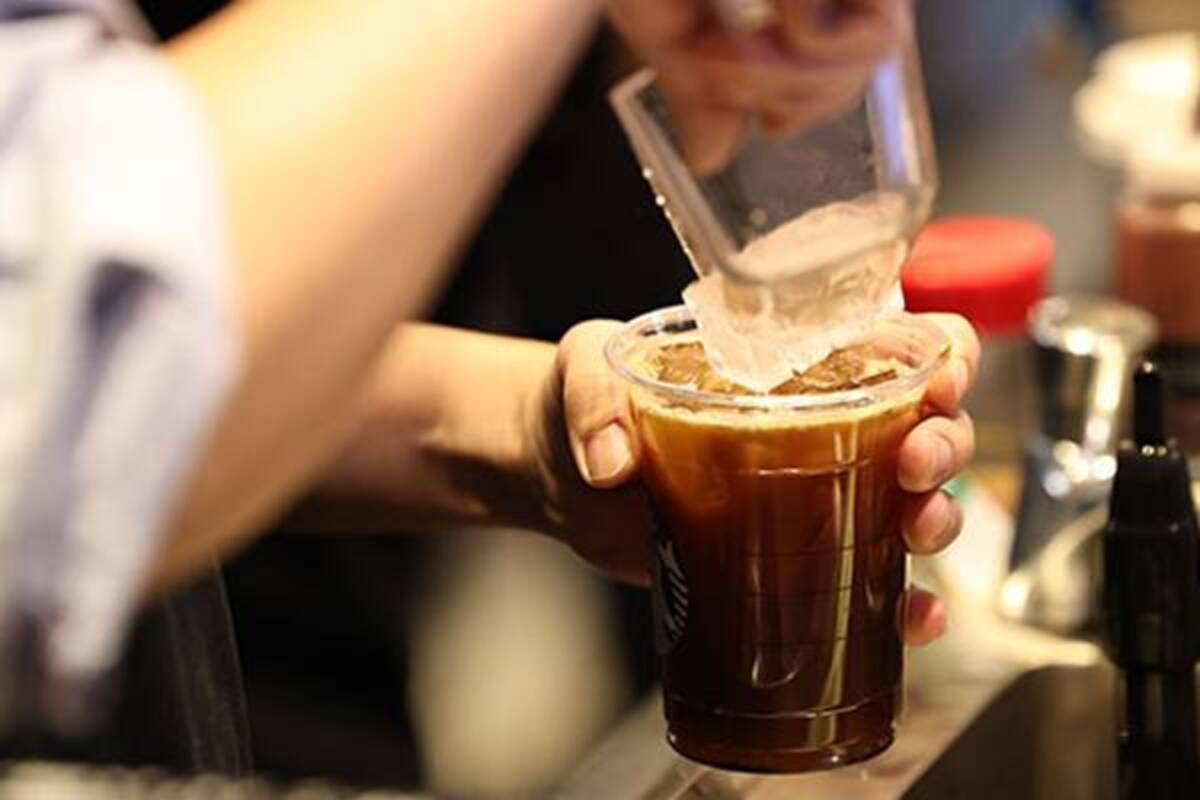
South Korea Tightens Regulations on Decaffeinated Coffee

Dubai – Qahwa World

South Korea’s Ministry of Food and Drug Safety has announced stricter regulations for decaffeinated coffee products, stating that products will only be allowed to carry the “decaffeinated” label if they contain no more than 0.1% residual caffeine in the coffee beans.

The new labeling standards are set to take effect on January 1, 2028.

Under the current rules, at least 90% of the caffeine must be removed from coffee for it to be classified as decaffeinated. However, existing regulations do not specify the final amount of caffeine that may remain in the product. The term “decaffeinated” also does not necessarily mean that the coffee is completely caffeine-free, which can lead to consumer misunderstanding.

The ministry explained that some decaffeinated coffee products may still contain relatively high levels of residual caffeine, especially when made from naturally high-caffeine coffee beans. This, officials said, conflicts with consumer expectations that decaffeinated coffee should contain little to no caffeine.

To reduce confusion, the updated standards will focus on the amount of caffeine remaining in the beans, aligning South Korea’s regulations more closely with international standards, including those used in the United States.

In a related move, the ministry also strengthened labeling requirements for alcoholic beverages amid a rise in collaborative products featuring alcohol brands packaged in designs resembling ordinary food products.
European Commission Expands EUDR Scope to Include Soluble Coffee

Dubai – Qahwa World

The European Commission has unveiled a new package of measures aimed at simplifying the implementation of the EU Deforestation Regulation (EUDR), while also expanding the regulation to include soluble coffee.

The announcement brings greater clarity to a regulation that has faced repeated delays since it was first proposed in 2021. The EUDR officially entered into force in 2023 and was initially scheduled to apply by the end of 2024. However, concerns from industries and producing countries over preparedness and compliance requirements led to multiple postponements.

The Commission now says it is focused on ensuring the regulation becomes fully operational by 30 December 2026.

As part of the latest revisions, EU officials estimate the simplification measures could lower annual compliance and administrative costs for affected companies by approximately 75 per cent compared with the original framework.

For the coffee sector, one of the most significant developments is the decision to add soluble coffee to the regulation’s scope. Industry representatives believe the move will create more consistent rules across coffee categories and strengthen fair competition within the European market.

Eileen Gordon-Laity, Secretary General of the European Coffee Federation, said the inclusion of soluble coffee would support equal treatment across the sector while reinforcing the environmental objectives of the regulation. She noted that aligned requirements are important for companies preparing for compliance ahead of the implementation deadline.

The updated package also includes changes to the EUDR digital system, with simplified paperwork requirements for smaller producers such as farmers and foresters.

Meanwhile, companies placing products on the market for the first time, including coffee roasters and major importers, will continue to face full due diligence obligations. Businesses further down the supply chain will mainly be responsible for collecting supplier reference numbers rather than independently verifying compliance.

The Commission also proposed removing leather and retreaded tyres from the regulation’s scope. Certain packaging materials, waste products, and product samples would also receive exemptions. In addition, several palm oil derivatives are expected to be added alongside soluble coffee.

Environmental groups have called on the European Union to avoid further delays in implementing the law. Anke Schulmeister-Oldenhove from WWF’s European Policy Office said the regulation must now move from discussion to action, warning that continued postponements could weaken both enforcement efforts and environmental credibility.

The draft Delegated Act is open for public feedback until 1 June 2026.


China Keeps Maximum Lead Limit for Coffee Unchanged Until 2026

Beijing – Qahwa World

In its recently revised national food safety standard, China has maintained the maximum allowable limit for lead in both green and roasted coffee beans at 0.5 mg/kg, a level that will remain in effect when the new regulation comes into force in September 2026.

The decision is part of the broader “National Food Safety Standard on Maximum Levels of Contaminants in Foods (GB 2762-2025),” jointly released by China’s National Health Commission (NHC) and the State Administration for Market Regulation (SAMR) on September 25, 2025.

While the updated standard introduces several revisionsincluding adjustments to nitrite limits in packaged drinking water and the addition of new categories like edible bird’s nestthe lead threshold for coffee beans remains consistent with the previous 2022 standard. This provides continuity for international coffee exporters and domestic stakeholders who rely on the Chinese market.

The standard specifies that the lead limit applies to the edible part of the product. For coffee, this means the beans as consumed or processed, ensuring that safety assessments are based on what is ultimately ingested by consumers.

The finalized GB 2762-2025 will officially replace the current GB 2762-2022 on September 2, 2026, giving producers, exporters, and regulators over a year to adapt to the updated requirements.

Stakeholders are encouraged to review the full standard to assess its comprehensive impact on their operations. An unofficial English translation has been provided by the USDA Foreign Agricultural Service in its recent GAIN report.