Yannis Apostolopoulos: Rising Coffee Consumption Reshapes Global Market Dynamics

Bangkok – Qahwa World

Chief Executive of the Specialty Coffee Association, Yannis Apostolopoulos, told the Bangkok Post that the global coffee market is undergoing a structural transformation, as coffee-producing countries are no longer limited to exporting but are also emerging as major consumption markets, reshaping global demand dynamics.

He noted that this shift is clearly visible in countries such as Brazil, which combines its position as one of the world’s largest coffee producers with being one of the fastest-growing consumption markets. Brazil currently ranks just after the United States in coffee consumption, with expectations that it could eventually become the world’s largest coffee-consuming nation, significantly influencing global supply and demand balance.

Apostolopoulos also highlighted the rapid growth of Thailand’s coffee market, both in terms of consumption and service quality development. He pointed to the expansion of specialty coffee shops and rising consumer awareness, alongside the emergence of local producers delivering high-quality coffee with distinctive sensory profiles. He added that Thailand’s development trajectory resembles the earlier evolution of South Korea’s coffee culture.

Regarding the concept of specialty coffee, he explained that it involves transforming coffee from a traditional commodity into a value-based product that can be measured through precise criteria. These include origin, variety, processing method, and sensory characteristics, all of which enhance transparency and increase market value.

He further noted that the sector is supported by global training programmes reaching around 80,000 participants annually, covering brewing, roasting, and sensory skills, as well as specialised programmes in sustainability, equipment maintenance, and coffee shop management. New initiatives have also been launched to support the retail sector and entrepreneurs.

Commenting on rising global coffee prices, Apostolopoulos said the increase is driven by multiple factors, including climate change, production disruptions, and imbalances between supply and demand. He stressed that current prices more accurately reflect market realities compared to previous years, particularly as past prices had fallen below production costs before climate pressures, supply chain disruptions, and the Covid-19 pandemic significantly altered the market.

The remarks come as World of Coffee Bangkok 2026 is being held at BITEC, Halls 98–99, from Thursday to Saturday, bringing together global stakeholders from across the coffee industry in a professional platform aimed at strengthening trade, partnerships, and the development of the specialty coffee sector.

Global Coffee Prices Fall as Brazil Crop Outlook Signals Oversupply

Dubai – Qahwa World

Global coffee prices declined at the start of the week as expectations of strong supply weighed on market sentiment, particularly with Brazil’s harvest approaching.

Arabica coffee had already fallen to its lowest level in several weeks, pressured by forecasts pointing to a potentially record-breaking Brazilian crop for the 2026/27 season. Analysts from multiple firms have raised their production estimates, with projections suggesting output could exceed 75 million bags. If realized, this would mark a significant increase from the previous season and reinforce expectations of abundant supply.

The global balance is also shifting. Current estimates indicate that the coffee market could move into a much larger surplus in 2026, compared to a relatively modest surplus the year before. This outlook has contributed to the recent downward trend in prices.

Vietnam is adding further pressure to the market. As the world’s leading robusta producer, the country has reported rising export volumes in early 2026, continuing the strong performance seen last year. Production is also expected to increase, reaching a multi-year high and boosting global robusta availability.

Despite the broader bearish outlook, some factors are offering limited support to prices. Robusta inventories monitored by exchanges have recently dropped to their lowest level in over a year, indicating tighter short-term supply.

There are also ongoing concerns about global trade conditions. Higher shipping and logistics costs continue to affect the coffee sector, increasing expenses for exporters and roasters and adding uncertainty to supply chains.

Meanwhile, Brazil’s recent export data shows a decline compared to the same period last year, suggesting a temporary tightening in available shipments even as larger future harvests are anticipated.

Looking ahead, global coffee production for the 2025/26 season is still expected to reach a record level. While arabica output may see a slight decrease, robusta production is forecast to rise significantly, helping to balance overall supply. Ending stocks are projected to decline modestly, indicating that while supply is strong, stock levels may not increase dramatically.

Rising Heat Threatens the Future of Coffee

New York – Qahwa World

A new analysis by Climate Central (an independent group of scientists and communicators that studies and reports on climate change and its impacts on people’s lives, operating as a policy-neutral nonprofit) is raising a clear warning for the global coffee industry.

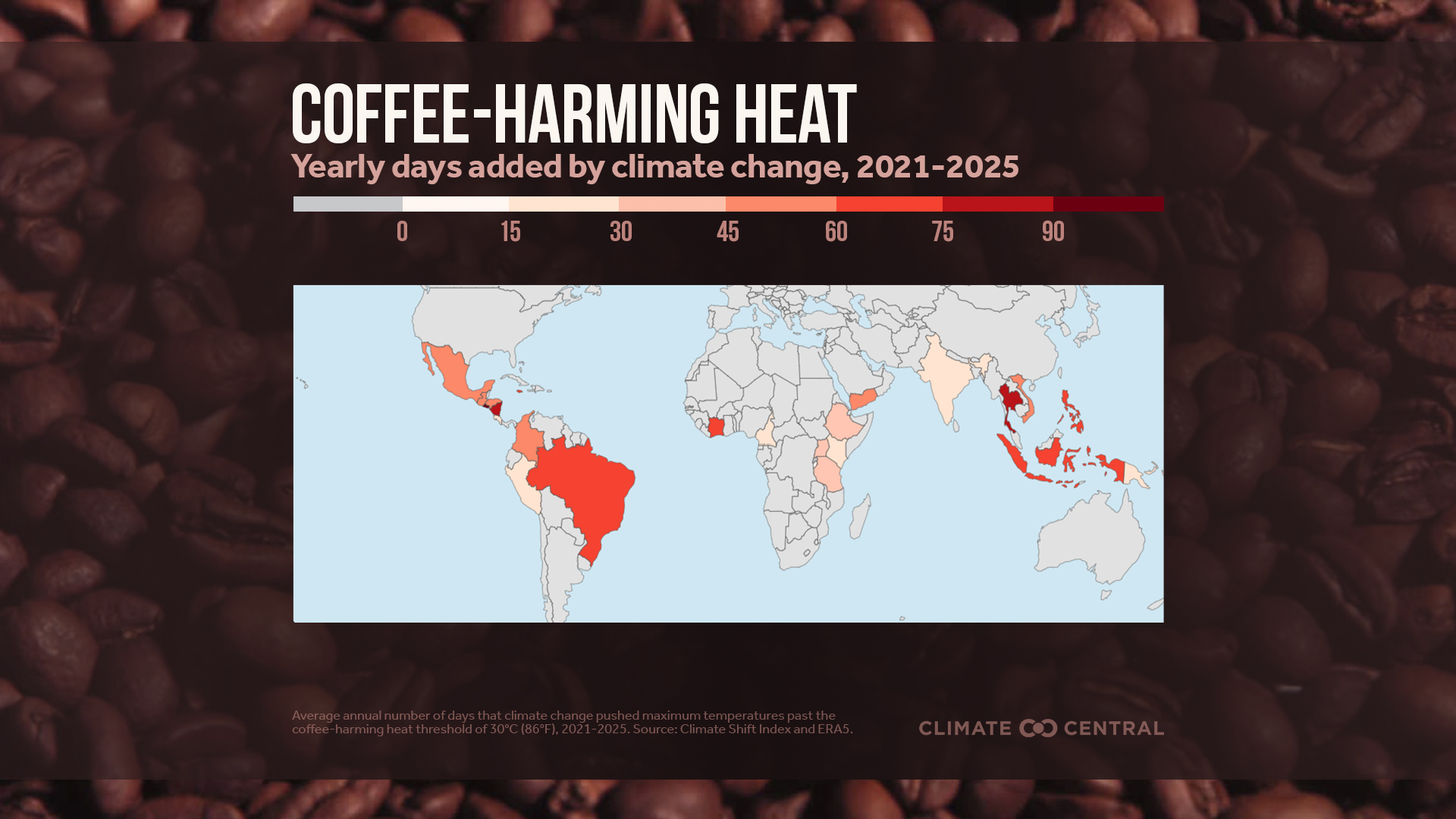
Data shows that coffee-growing regions across Latin America, Africa, and Southeast Asia are experiencing rising temperatures at an accelerated pace, faster than at any time in the modern agricultural era. An analysis of daily temperatures across coffee-producing areas reveals that plants are increasingly exposed to heat levels beyond their natural limits, placing significant pressure on yields, bean quality, and farm sustainability.

The findings indicate that extreme heat events exceeding critical thresholds for coffee plants are becoming more frequent in major producing countries such as Brazil, Colombia, Vietnam, Ethiopia, and Indonesia. These conditions are negatively affecting both major types of coffee, including those known for higher quality and those considered more resilient, impacting both quantity and quality of production.

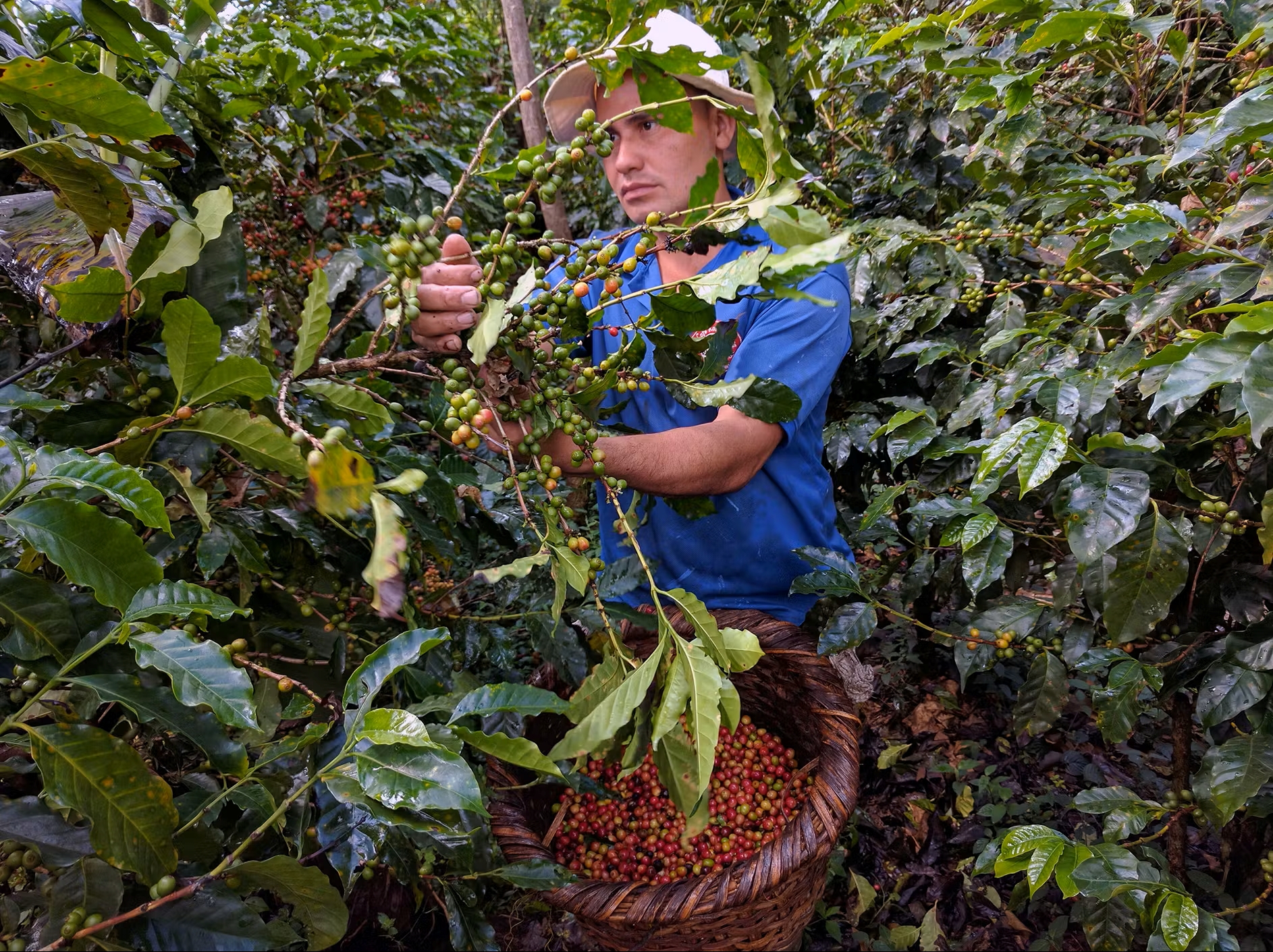
This trend is occurring alongside broader climate instability, including irregular rainfall patterns and longer periods of drought. Farmers are reporting noticeable disruptions in flowering seasons, faster development cycles, and sudden weather shifts that damage flowers and coffee cherries. These changes make it increasingly difficult to predict key production stages and raise the risks of lower yields and soil stress.


View this post on Instagram


A post shared by Coffee Qahwa (@qahwaworld)

The impact is not limited to farms. It is also affecting global markets, where reduced harvests have led to sharp price volatility. These conditions have contributed to elevated coffee prices in recent periods, driven by tighter supply and growing uncertainty in the market.

The analysis also points to a possible shift in coffee-growing geography, with production gradually moving toward higher elevations or areas previously considered unsuitable. While this may create new economic opportunities, it also poses environmental risks, particularly deforestation as farming expands into cooler and ecologically sensitive regions.

At the same time, experts stress the importance of adaptation. Proposed solutions include the use of shade trees, improving soil health, adjusting farming practices, and supporting smallholder farmers to strengthen their resilience to rising temperatures. There is also a strong emphasis on adopting long-term strategies rather than short-term fixes.

The message is clear. Coffee-growing regions around the world are entering a period of profound climate change. Adaptation is no longer optional. It is becoming a decisive factor in determining the future of coffee production and its sustainability in the years ahead.

Keurig Dr Pepper and JDE Peet’s: What Comes After the Deal Completion?

Amsterdam / Texas / Massachusetts – Qahwa World

The completion of Keurig Dr Pepper’s acquisition of JDE Peet’s is no longer the story itself. The real focus now shifts to what this deal means for the future of the global coffee industry.

With the transaction valued at approximately $18 billion now finalized, attention is turning to how this combined entity will reshape competition across more than 100 markets worldwide. The deal brings together a strong single-serve coffee platform in North America with a broad international footprint spanning multiple coffee segments.

Keurig Dr Pepper acquired 96.22% of JDE Peet’s shares at €31.85 per share, representing a total consideration of about €14.86 billion. The offer saw strong shareholder participation, with more than 466 million shares tendered by the close of the acceptance period on March 27, 2026.

You may like: JDE Peet’s Transfers Shares to Employees Under Incentive Plans

Having surpassed the 95% ownership threshold, the company is moving toward delisting JDE Peet’s from the Amsterdam exchange by the end of April, with the possibility of further steps to fully acquire the remaining shares.

A New Global Coffee Giant

This combination goes beyond a traditional merger. It creates a business expected to generate nearly $16 billion in annual revenue within a global coffee market valued at around $400 billion.

The new entity brings together a wide portfolio of well-known brands, including Jacobs, Douwe Egberts, Peet’s, L’OR, and Senseo. This positions it to compete across all segments—from roast and ground coffee to single-serve systems and premium offerings—covering a broad range of consumer preferences and price points.

Strategic Separation: Coffee and Beverages

One of the most significant next steps is the planned separation into two independent companies by the end of 2026.

The first will be a dedicated global coffee company, built to expand its international presence while leveraging brand strength, innovation, and local market expertise.

Read also: KDP Acquires JDE Peet’s, Names Oliveira Coffee CEO

The second will focus on refreshment beverages in North America, generating more than $11 billion in revenue and built on a portfolio of established brands across soft drinks, energy, and functional beverages.

This strategic split is designed to give each business greater operational focus and flexibility, allowing them to pursue growth strategies tailored to their respective markets.

Leadership and Integration Focus

Rafael Oliveira will lead the coffee business during this transition, bringing extensive international experience in consumer goods. Tim Cofer will lead the beverage-focused company following the separation.

Integration efforts are centered on delivering approximately $400 million in cost synergies over three years, alongside strengthening innovation capabilities and product development.

Financing Structure and Financial Outlook

The transaction was financed through a combination of new debt, preferred equity investment, industrial partnerships, assumption of existing liabilities, and available cash.

The deal is expected to be around 10% accretive to earnings per share in the first full year after closing, with combined net leverage estimated at approximately 4.5 times.

A Turning Point for the Coffee Industry

This transaction comes at a time when the global coffee sector faces ongoing supply challenges and shifting consumer preferences toward higher-quality and more diverse offerings.

You may read: Keurig Dr Pepper Seals $15.7 Billion JDE Peet’s Deal as 96% of Shares Tendered

Against this backdrop, the combined company is positioned to accelerate innovation, expand across channels, and strengthen its presence in fast-growing segments.

Integration is already underway, with a focus on operational efficiency and ensuring a smooth transition for employees, customers, and partners.

The completion of the deal marks the beginning of a new phase—one that could significantly reshape the structure and competitive dynamics of the global coffee industry.

Arabica Drops, Robusta Rises Amid Global Coffee Supply

Dubai – Qahwa World

Global coffee prices showed mixed trends this week. Arabica coffee declined to a one-and-a-half-week low, while Robusta coffee gained support from tight supply conditions.

The main pressure on Arabica prices comes from forecasts of a record Brazil coffee crop, the world’s largest coffee producer. Several international agencies raised estimates for the 2026/27 season to around 75 million bags, a strong year-on-year increase boosting the global supply outlook.

Despite climatic challenges, such as below-average rainfall in key regions like Minas Gerais, Brazilian production continues to rise.

The strength of the Brazilian real limited Arabica losses by reaching a three-week high against the U.S. dollar, reducing exporters’ incentives to sell.

Meanwhile, Robusta coffee prices were supported by falling ICE-certified inventories to a 3.5-month low, reflecting tight supply amid strong demand, especially for instant coffee production.

Global logistics disruptions, including the closure of the Strait of Hormuz, increased shipping, insurance, and fuel costs, affecting importers and roasters worldwide.

Market pressures persist due to rising Arabica inventories and declining Brazilian green coffee exports, reflecting fluctuations in the global coffee market.

Globally, coffee production is expected to reach record levels in 2026/27, driven mainly by Robusta growth. Vietnam, the largest Robusta producer, continues to expand exports and output, adding downward pressure on prices.

Overall, the global coffee market reflects a delicate balance between abundant Arabica supplies and relatively tight Robusta stocks, along with climate effects, currency fluctuations, and logistical challenges, keeping prices volatile in the near term.

Costa Rican Coffee Farmers Hit by Strong Colón and Falling Prices

Dubai – Qahwa World

Coffee growers across Costa Rica are facing mounting financial pressure as two powerful forces converge: a sharply stronger national currency and declining global coffee prices. Industry leaders warn that the combination could significantly reduce farm income in the coming harvest and deepen the economic strain on rural coffee communities.

For a sector long recognized for producing high-quality Arabica coffee, the current environment highlights how global market shifts and domestic economic trends can quickly reshape the outlook for producers.

  • Currency Strength Erodes Export Earnings

Coffee in Costa Rica is sold on international markets in United States dollar, while most production costs—such as wages, fertilizers, transportation, and farm maintenance—are paid in Costa Rican colón.

You may read:Brazil’s Specialty Coffee Sector Gains Global Momentum

As the colón strengthens, every dollar earned from coffee exports converts into fewer colones. This reduces the real income farmers receive even when the global coffee price remains stable.

Exchange-rate data released by the Banco Central de Costa Rica show the dollar trading near ₡470 in mid-March 2026, significantly stronger for the local currency compared with rates above ₡680 only a few years earlier.

For export sectors such as coffee, the shift has created a challenging environment. While a strong currency can help reduce the cost of imported goods for consumers, it often compresses margins for industries that rely on international sales.

  • Factors Behind the Strong Colón

Economists attribute the strength of the Costa Rican currency to several economic trends that have increased the supply of foreign currency in the country.

Read also: Global Study Maps the “Carbon Footprint” of Latin American Coffee

Strong tourism revenues, expanding exports from companies operating in special economic zones, and steady foreign investment have all contributed to increased inflows of dollars into the national economy. Lower energy import costs have also reduced the demand for foreign currency.

In response to these pressures, the Banco Central de Costa Rica has purchased large amounts of dollars in foreign-exchange markets in an effort to moderate fluctuations and build international reserves. Despite these efforts, the colón has remained relatively strong compared with historical averages.

  • Global Coffee Prices Move Lower

At the same time that currency movements are reducing local earnings, international coffee prices have begun to retreat from the highs seen in recent years.

You can also read: AI and Gas Chromatography Identify Coffee Origins

Prices for Arabica coffee traded on the Intercontinental Exchange in New York surged during 2025 amid global supply concerns. However, market sentiment has shifted as forecasts point to increased production in several major coffee-growing countries.

A major factor influencing the outlook is the expected harvest in Brazil, the world’s largest coffee producer. Production forecasts indicate the possibility of a larger crop in the 2026–2027 season, which could add significant supply to global markets and place additional downward pressure on prices.

For Costa Rican producers, the combination of falling prices and currency shifts means revenues could decline even further in the coming harvest cycle.

  • Rural Communities at Stake

Coffee remains a central pillar of rural economic life in Costa Rica. The industry provides employment for tens of thousands of workers throughout the year, along with additional seasonal jobs during harvest.

Production is concentrated in well-known coffee-growing regions such as Tarrazú, Pérez Zeledón, and Coto Brus, where generations of families have cultivated coffee as their primary source of income.

Small farms dominate the sector. A large majority of producers operate relatively small holdings, and many rely on modest harvest volumes each year. These producers are often the most vulnerable to price volatility and economic shocks.

Read also: ICO February 2026 Report: Has the Inflationary Wave Receded?

Over the past decade, the number of registered coffee growers in the country has declined as some farmers left the sector due to rising costs and uncertain profitability.

  • Growing Concern Among Industry Leaders

The Costa Rican Coffee Institute has described the current situation as a serious challenge for the industry and has called for continued dialogue with policymakers about possible support measures.

Proposals being discussed include improved credit access for farmers, targeted programs to support rural communities, and long-term initiatives focused on innovation, sustainability, and productivity.

Industry representatives emphasize that strengthening the resilience of coffee farms will be essential if Costa Rica is to maintain its reputation as a producer of high-quality coffee in a rapidly changing global market.

  • A Defining Moment for Costa Rica’s Coffee Sector

Costa Rica’s coffee industry has long been regarded as a symbol of national agricultural identity and quality. Yet the sector now finds itself navigating a complex mix of economic pressures beyond farmers’ control.

If global prices continue to soften while the national currency remains strong, growers may face increasingly difficult decisions about the future of their farms.

For thousands of coffee-growing families, the coming seasons could determine whether coffee cultivation remains a sustainable livelihood—or whether the country’s historic coffee landscape begins to change in fundamental ways.

Brazil’s Specialty Coffee Sector Gains Global Momentum

Dubai – Qahwa World

The United States Department of Agriculture (USDA) published a detailed report titled “Brewing Opportunity – Brazil’s Specialty Coffee Sector Shows Strong Potential,” examining the rapid development of Brazil’s specialty coffee industry and the opportunities and challenges shaping its future.

Brazil remains the largest coffee producer and exporter in the world, while also ranking as the second-largest coffee-consuming country. Historically, the nation exported its highest-quality beans while domestic consumption focused largely on lower-grade coffee. In recent years, however, this pattern has begun to shift. Brazilian consumers are increasingly developing a taste for specialty coffee, driving growth in both production and local demand.

According to the report, the expansion of the specialty segment is supported by several structural advantages. Brazil benefits from favorable climatic conditions that allow the cultivation of diverse coffee varieties across multiple regions. In addition, the country has developed a strong network of research institutions, cooperatives, and producer organizations that focus on improving quality, innovation, and technical expertise within the coffee sector.

At the same time, the domestic market for coffee continues to expand, with consumers showing greater interest in differentiated products and higher-quality beans.

You may read: Russia’s Imports of Brazilian Coffee Fall to Six-Month Low

Despite this progress, the report notes that Brazil’s specialty coffee sector still faces several structural challenges. Many producers struggle with limited access to rural credit, making it difficult to finance investments in equipment and infrastructure. Post-harvest processing facilities—such as washing stations, pulpers, sorting machines, and drying systems—also remain insufficient in some areas, limiting the ability of farmers to produce and market high-quality coffee.

Producers have also reported uneven access to technical assistance and a limited number of certified warehouses and exporters, which can reduce profitability and hinder broader participation in the specialty coffee market, particularly among small-scale farmers.

Although specialty coffee generally costs about 50 percent more than conventional coffee, the segment offers advantages beyond price. Buyers often establish longer-term relationships with producers, which can provide farmers with greater stability and security for future harvests.

  • Major Coffee-Producing Regions

Specialty coffee production in Brazil is concentrated mainly in high-altitude regions, where elevation and moderate temperatures contribute to denser beans and more complex flavor profiles.

You may read: Brazil Crop Expectations Pressure Global Coffee Prices

The state of Minas Gerais stands as Brazil’s leading producer of arabica and specialty coffees. Regions such as Sul de Minas, Cerrado Mineiro, Matas de Minas, and Mantiqueira de Minas form a well-organized production chain that includes farmers, cooperatives, exporters, warehouses, and research institutions. Minas Gerais alone produces around 24 million bags of coffee annually, representing nearly half of Brazil’s total coffee output.

Each sub-region offers distinctive characteristics. Cerrado Mineiro became the first coffee region in Brazil to receive Designation of Origin status, while Sul de Minas is known for its concentration of small farms and its large cooperative structure. Mantiqueira de Minas has gained international recognition for its high-altitude coffees, where significant temperature variation between day and night allows cherries to ripen slowly, resulting in sweeter and more aromatic beans.

In Espírito Santo, Brazil’s second-largest coffee-producing state, production is dominated by robusta—locally known as conilon—though high-altitude areas also produce quality arabica coffee. Regions such as Caparaó and Montanhas do Espírito Santo are known for small family farms and coffees with aromatic complexity and balanced acidity.

The state of São Paulo also contributes to the specialty segment through regions such as Alta Mogiana and Média Mogiana, where coffees typically display balanced acidity, strong aroma, and a creamy body.

You may read:Coffee Prices Rise as Brazilian Real Strength Sparks Short Covering

Other regions across Brazil contribute unique characteristics as well. Rondônia, located in the Amazon region, specializes in conilon production, while Paraná, historically a major coffee producer, continues to maintain output through small farms supported by cooperatives and research institutions. Meanwhile, Bahia, one of the country’s newer coffee regions, has gained attention for its use of advanced technology and mechanized farming systems, which support high productivity levels.

  • Quality Standards and Classification

Brazil follows internationally recognized quality standards for specialty coffee. The evaluation system used by the Specialty Coffee Association scores arabica coffees on a 100-point scale, with coffees scoring 80 points or higher classified as specialty grade.

Coffees are evaluated according to sensory characteristics such as aroma, flavor, acidity, body, sweetness, balance, uniformity, and aftertaste, while also being assessed for physical defects.

Brazil also uses national classification systems aligned with these international standards. The country’s official classification process evaluates cup quality using descriptors such as strictly soft, soft, and hard, among others.

In May 2025, the Brazil Specialty Coffee Association adopted a new evaluation protocol known as Coffee Value Assessment, designed to create a more standardized approach to assessing quality and to improve communication between producers and international buyers.

You may read:Brazil Rain and Vietnam Surplus Sink Coffee Futures

Brazilian producers may also use additional certification programs—such as organic or fair-trade certifications—to meet international market requirements, although these certifications do not automatically classify a coffee as specialty.

The quality of Brazilian robusta and conilon coffee has also improved in recent years, contributing to stronger demand and higher prices. Brazil is currently the second-largest producer of robusta coffee globally, behind Vietnam.

  • Challenges Affecting Growth

The report highlights genetics as another key factor in specialty coffee production. However, inconsistencies between international and national databases for coffee cultivars sometimes create challenges. Some varieties recognized internationally for exceptional quality are not officially registered for cultivation in Brazil, while many important Brazilian cultivars are absent from international quality catalogues.

These discrepancies can complicate certification and recognition processes for producers and may increase production costs or reduce profitability.

Specialty coffee production also requires significant investments in cultivation techniques and post-harvest infrastructure. Because these investments can be costly, the specialty coffee sector in Brazil remains concentrated among a relatively limited number of producers.

  • Growing Interest Among Brazilian Consumers

Although Brazil has long been a global coffee powerhouse, domestic appreciation for specialty coffee is relatively recent. Since the early 2000s, coffee culture has evolved significantly as consumers began exploring higher-quality beans, alternative brewing methods, and greater transparency regarding coffee origins.

You may read:India’s Quiet Coffee Superpower

Recent consumer surveys show that some Brazilians have reduced overall coffee consumption in response to rising prices. Nevertheless, demand for specialty coffee continues to grow. The report indicates that consumption of specialty coffee in Brazil has been increasing by about 15 percent per year, significantly faster than the growth of traditional coffee consumption.

Specialty coffee consumption in the country is estimated at around 70,000 tons annually, representing approximately five to ten percent of total coffee consumption.

Consumers interested in specialty coffee tend to seek differentiated beans, visit cafés that emphasize brewing quality, and show greater interest in sustainability practices and traceability.

  • Trade Trends and Export Markets

Brazilian export data does not track specialty coffee as a separate category. Instead, exporters often group it under “differentiated coffees,” which include beans certified for quality, sustainability, or other distinctive characteristics.

According to export data, Brazil shipped 8.1 million bags of differentiated coffees in 2025, representing about 20 percent of the country’s total coffee exports. Although export volumes declined compared with the previous year, revenues increased significantly to approximately 3.5 billion dollars, partly due to favorable exchange rates.

The United States remained the largest destination for Brazilian differentiated coffees, importing about 1.3 million bags, followed by Germany, Belgium, the Netherlands, and Italy. European markets often function as distribution hubs that supply specialty coffee to other regions.

  • Global Promotion and Future Outlook

Brazil is actively promoting its specialty coffee sector internationally through initiatives designed to strengthen its presence in global markets. One such program focuses on marketing Brazilian specialty coffees through trade fairs, branding campaigns, and partnerships with international buyers.

Priority markets include the United States, Japan, China, South Korea, the United Arab Emirates, France, and Australia, while processed coffee products such as roasted and ground coffee are being promoted in markets including Canada, Chile, China, and the United States.

The initiative is scheduled to run until 2027 and aims to expand Brazil’s leadership in the global specialty coffee sector.

The report concludes that rising international demand for traceable, sustainable, and high-quality coffee—combined with ongoing improvements in production and promotion—positions Brazil’s specialty coffee industry for continued growth in the years ahead.

Kim Thompson: Coffee on the Edge of Disruption

Dubai – Ali Alzakary

The global coffee industry has spent the past few years navigating one disruption after another—from pandemic shutdowns and climate volatility in producing countries to freight crises that reshaped global shipping routes. As the global coffee market grapples with volatility—production reaching around 175 million bags in 2025 while costs continue to rise due to climate pressures and freight disruptions—the ongoing conflict in the Middle East is adding a new layer of uncertainty to an already fragile supply chain.

Coffee moves through one of the most complex trade networks in the food and beverage sector. Green beans travel from farms across Latin America, Africa and Asia through international ports and maritime corridors before reaching roasters, cafés and consumers. Any disruption to shipping routes, insurance costs or regional logistics can quickly ripple across the industry. For specialty coffee—where freshness, tight margins and long-term sourcing relationships define the business—the impact can be felt even faster.

To understand how the sector is reacting, we spoke with Kim Thompson, Co-Founder  at RAW Coffee Company in Dubai. From monitoring shipments already at sea to preparing technical support systems for cafés, Thompson explains how roasters are navigating rising costs, uncertain logistics and a rapidly shifting geopolitical landscape.

You may like: Oil Surge Could Brew Higher Coffee Prices 

In this conversation, she offers a clear view of what café operators are worrying about right now, how long menu prices can realistically hold, and why the coffee industry’s resilience often comes down to relationships built across the supply chain.

  • Has the “fear factor” kicked in yet? Are you seeing cafés or hotels panic-buying and stockpiling coffee to guard against a potential shortage?

Not really. The reality of the café industry is that most operators are managing week-to-week cash flow, not building strategic stockpiles. Right now the conversations we’re having are far more about cost control than hoarding inventory.

The other factor is freshness. Speciality coffee isn’t a commodity that sits in a warehouse for months. We roast weekly and deliver fresh, so stockpiling doesn’t really fit how quality coffee businesses operate.

Our expectation is that the real response, if there is one, will likely come after Eid al-Fitr, once operators have had time to assess the geopolitical situation and think through their own coping strategies. At the moment, people are watching closely rather than panicking.

  • The coffee you’re roasting today was bought at pre-war prices — how long can you hold your current menu prices before new logistics costs force your hand?

The uncomfortable truth is that price pressure in coffee started well before this conflict. The industry has already been absorbing significant increases at origin, higher processing costs, and rising freight prices for the past two years.

We have already had to adjust pricing once, simply because the economics of producing high-quality coffee have changed globally.

If shipping routes tighten or logistics costs spike again because of regional instability, there’s only so much the supply chain can absorb. Roasters can cushion the impact for a period of time, but eventually the math catches up with everyone.

Coffee has historically been underpriced for the amount of work and risk involved in producing it. What we are seeing now is the global market slowly correcting that reality.

  • Are there specific “origins” or specialty grades that are now effectively “cut off” due to their transit routes through the conflict zone?

At the moment nothing is completely cut off, but logistics has become far more complicated overnight.

We currently have multiple containers on the water and are actively tracking them while exploring alternative routing options that avoid the Strait of Hormuz.

In many ways it feels like a return to the early COVID-19 playbook—scenario planning, contingency routing, and leaning heavily on relationships across the supply chain to keep things moving.

The specialty coffee industry is surprisingly resilient because it’s built on long-term relationships with producers, exporters and logistics partners. When things get unpredictable, those relationships become incredibly valuable.

  • What’s the plan for equipment and spare parts? Is there a risk that a broken espresso machine could stay down because of shipping delays?

Equipment supply is definitely something we’re watching closely, but fortunately we forecasted and planned ahead. We have several containers on the water carrying both commercial and domestic machines, so supply may get tight but we’re not walking into this empty-handed.

More importantly, we have invested heavily in our technical infrastructure. We run a full in-house service department with extensive spare parts inventory, qualified technicians, and swap-out machines available for our commercial partners.

In practical terms, if a café’s machine goes down, we’re structured to keep them operating. The bigger challenge in this industry is rarely the machine itself—it’s the global logistics that sit behind everything.

Oil Surge Could Brew Higher Coffee Prices

Dubai – Qahwa World

Rising oil prices linked to escalating tensions in the Middle East are raising fresh concerns across the coffee sector, with vendors warning that higher fuel costs could eventually translate into more expensive coffee for businesses and consumers.

Crude oil climbed above 90 dollars per barrel on Friday, a level that industry participants say may increase the cost of transporting coffee beans across global supply chains. Because coffee is largely traded internationally and shipped over long distances, higher energy prices can quickly affect freight and logistics costs.

You may like: Vietnam’s Coffee Crisis Could Disrupt Global Supply Chains 

The concern comes only months after the United States removed most tariffs on coffee and several agricultural products last November, a move that had provided temporary relief to importers, roasters and coffee retailers.

  • Shipping Costs Back in Focus

Coffee businesses say transportation costs remain one of the most sensitive factors affecting the price of beans. Any sustained increase in oil prices could raise the cost of shipping green coffee from producing countries to roasting and consuming markets.

Industry observers note that global coffee prices have already been under pressure due to supply challenges in recent years.

According to the World Bank, coffee prices have remained relatively high after adverse weather conditions in several coffee-producing regions reduced harvests and tightened global supply. Earlier expectations suggested that prices might gradually ease this year as production recovered.

However, the recent geopolitical tensions and the accompanying surge in oil prices could introduce new cost pressures, particularly through higher freight rates and supply chain expenses.

  • Uncertain Outlook for Coffee Markets

For coffee retailers and roasters, the coming months may depend largely on how energy markets evolve. Higher fuel costs can affect nearly every stage of the coffee supply chain, from farm transportation and export logistics to international shipping.

While the full impact remains uncertain, market participants say sustained increases in oil prices could add another layer of volatility to an already sensitive global coffee market.


Vietnam’s Coffee Crisis Could Disrupt Global Supply Chains

Dubai – Qahwa World

A report published by BeverageDaily warns that challenges facing coffee production in Vietnam could trigger new volatility in global coffee markets, potentially affecting supply chains and prices in the coming years.

Although global coffee prices have recently shown signs of easing, the difficulties confronting Vietnamese coffee farmers may reverse that trend if production declines continue.

  • Vietnam’s Key Role in the Global Coffee Market

Vietnam is the world’s second-largest coffee producer after Brazil and the leading global producer of Robusta coffee. This variety accounts for more than forty percent of global production and plays a central role in commercial coffee blends widely used by major manufacturers such as Nestlé.

You may like: Exclusive: Tobbi Vu on Launching Dubai’s First Vietnamese Specialty Coffee

According to figures cited in the report, Vietnam exports more than 1.5 million metric tons of coffee annually. In 2025, the country’s coffee exports reached approximately 8.92 billion dollars, representing a 58.8 percent increase compared with 2024, largely driven by high Robusta prices.

  • Climate Pressures and Rising Land Costs

Coffee production in Vietnam’s Central Highlands has been increasingly affected by extreme weather conditions. Severe floods and prolonged rainfall last year reduced yields and created concerns among traders, given Vietnam’s central role in global Robusta supply.

At the same time, rising land prices in coffee-growing regions are adding further pressure. Infrastructure development and expanding investment in agriculture have pushed land values higher, encouraging some farmers to sell their farms rather than continue production under tightening profit margins.

Industry observers say coffee farmers today must simultaneously manage climate risks, financial pressures and rising production costs, making the sustainability of farming operations more difficult.

  • Tax Policy Changes

The report also highlights regulatory challenges faced by the Vietnamese coffee sector during 2025 after the introduction of a five-percent value-added tax on certain semi-processed agricultural products, including coffee beans.

Exporters argued that the measure complicated trade procedures and tied up cash flow because exported green coffee is typically zero-rated. Vietnamese authorities later amended the legislation, and the previous tax treatment was restored starting in early 2026.

  • Smaller Roasters May Feel the Impact First

According to the report, disruptions in Vietnam’s coffee sector may initially affect smaller and medium-sized roasters, particularly in Europe, Asia and Australia, which rely heavily on stable supplies of affordable green coffee.

Yoc also read: How Vietnam Turned Coffee Into a Way of Life?

Large multinational companies generally have greater flexibility through diversified sourcing and long-term contracts. Nevertheless, price increases may eventually reach consumers, often with a delay ranging from twelve to twenty-four months.

  • A Possible Shift Toward Higher Value Production

With climate and land constraints limiting expansion in production volume, Vietnam’s coffee industry may increasingly focus on quality improvement and value-added activities.

Some producers may expand into roasting and semi-processed coffee products rather than exporting raw beans alone, a development that could diversify global supply chains over time.

Read also: Brazil Rain and Vietnam Surplus Sink Coffee Futures

The report also notes growing international interest in high-quality Robusta coffees, sometimes referred to as fine Robusta, as climate pressures make Arabica production more vulnerable in certain regions.

  • Investments to Strengthen the Supply Chain

Major coffee companies, including Nestlé, continue to invest in Vietnam’s coffee sector in an effort to strengthen supply chains and promote sustainable farming practices.

Programs supporting drought-resistant coffee seedlings, farm renovation and regenerative agriculture aim to improve productivity and resilience among thousands of farmers in Vietnam’s Central Highlands.

Despite these initiatives, the report suggests that the global coffee industry may still face recurring supply pressures if climate challenges and production costs continue to rise in key producing countries.

Coffee Prices Rise on Supply Concerns

Dubai – Qahwa World

Global coffee prices moved higher on Thursday as renewed concerns about supply disruptions supported the market. Arabica futures climbed to their highest level in about two weeks, while robusta contracts also posted modest gains.

Market sentiment was influenced by fresh export data from Brazil. The country’s Ministry of Trade reported that Brazilian coffee exports in February declined by 17.4 percent compared with the same month a year earlier, totaling about 142,000 metric tons. The drop raised questions about near-term supply availability from the world’s largest coffee producer.

Shipping conditions in global trade routes also contributed to the cautious mood in the market. Disruptions affecting shipping lanes through the Strait of Hormuz have increased transportation costs, including higher freight rates, insurance premiums and fuel expenses. These factors are expected to add pressure to import costs for coffee traders and roasters.

Despite the upward move in prices, a stronger U.S. dollar limited the extent of the gains. A firmer dollar generally makes dollar-denominated commodities such as coffee more expensive for buyers using other currencies.

Weather developments in Brazil continue to play an important role in shaping market expectations. Recent rainfall has improved soil moisture conditions in Minas Gerais, the country’s main arabica-producing region. According to meteorological data, the area received significantly above-average precipitation during the week ending February 20, helping improve crop prospects.

Coffee prices have experienced notable volatility in recent weeks. Earlier in the month, both arabica and robusta futures fell sharply amid expectations of a large Brazilian harvest. Brazil’s national crop supply agency projected that the country’s coffee output in 2026 could reach a record 66.2 million bags, driven by stronger arabica production and a moderate increase in robusta volumes.

Global supply forecasts have also pointed to expanding production. Banking sector estimates suggest worldwide coffee output may reach around 180 million bags in the 2026/27 season, an increase of roughly eight million bags compared with the previous year.

Meanwhile, Vietnam continues to expand its presence in the robusta market. Official data show the country recorded strong export growth at the start of the year, with shipments rising sharply compared with the same period last year. Vietnam remains the world’s largest producer of robusta coffee, and its production is expected to grow further in the current crop cycle.

Coffee inventories monitored by the Intercontinental Exchange have also shown signs of recovery after reaching multi-month lows late last year. Higher stock levels can weigh on prices because they signal improved supply availability in the market.

At the same time, production trends in other origins remain mixed. Colombia, the world’s second-largest arabica producer, recently reported a significant decline in January coffee output compared with the previous year, a factor that provided some support to global prices.

Overall, the coffee market continues to balance opposing forces: concerns over logistics and regional production setbacks on one side, and expectations of larger global harvests on the other. Traders are closely watching weather conditions, export flows and shipping developments for further direction in the weeks ahead.

JDE Peet’s EGM adopts all resolutions in relation to KDP Offer

Amsterdam – Qahwa World

JDE Peet’s N.V. announced that its Extraordinary General Meeting has approved all agenda items connected to the recommended public offer submitted by Kodiak BidCo B.V., an indirectly wholly owned subsidiary of Keurig Dr Pepper Inc., to acquire all issued and outstanding shares in the company’s capital.

The approved resolutions include the post-closing restructuring measures, the appointment of the nominated board members effective as of the settlement date, amendments to the company’s articles of association, and the granting of full and final discharge to the resigning non-executive directors.

You may like JDE Peet’s Reports. 15.3% Growth: A New Era in Global Coffee

Following the adoption of the post-offer restructuring resolutions, the acceptance threshold required to complete the transaction has been reduced from 95% to 80% of the company’s outstanding capital as of the tender closing date.

The company stated that the voting results of the Extraordinary General Meeting will be published on its website, while draft minutes of the meeting will be made available no later than three months after its conclusion.

The offer period is set to expire on March 27, 2026, at 17:40 CET, unless extended. Shareholders who wish to tender their shares are advised to contact their financial intermediaries to confirm the applicable deadlines, which may fall earlier than the official expiration time.

Read Also: Keurig Dr Pepper Launches €31.85-Per-Share Offer for JDE Peet’s

The company emphasised that the information contained in the announcement does not constitute an offer to sell or a solicitation to purchase securities. Any transaction will be conducted strictly in accordance with the approved offer memorandum and the dedicated transaction webpage.