European Commission Simplifies Deforestation Regulation.. What’s New?

By Ali Al Zakary – Dubai | May 8, 2026 | 9 min read

European Commission Simplifies Deforestation Regulation (EUDR 2023/1115): Soluble Coffee In, Leather Out, US Demands Rejected

📋 Executive Summary – What’s New in the Simplification?

  • Micro & small operators (under 10 employees or €2M turnover): exempt from geolocation coordinates (postal address accepted).
  • Compliance costs reduced by 75% annually.
  • Soluble coffee (HS 2101 11 00) added to the product scope.
  • Leather (HS 4101, 4104, 4107) temporarily excluded (subject to review).
  • US demand rejected: geolocation still mandatory for low-risk countries (non-small operators).
  • 📅 Final deadline unchanged: December 30, 2026.
  • 🇺🇸 US exports at risk: estimated $9 billion annually.

Background and Legal Context

Before diving into the details, it is essential to recall that the European Union Deforestation Regulation (Regulation 2023/1115) was amended in December 2025, following requests from member states and the private sector, after it became clear that the original text was so burdensome as to disrupt supply chains. The amendments mandated the Commission to prepare a “simplification review report” to ensure ease of application before the final deadline, which remains fixed at December 30, 2026. This report is what we discuss today.

The Simplification Package – Four Key Pillars

The Commission did not issue a single report but rather an integrated package of four interconnected elements:

  • Formal Report to the European Parliament and Council: Describes all measures implemented since June 2023 and estimates a reduction in annual compliance costs for companies by 75%.
  • Updated Guidance Document (third edition): Provides practically binding clarifications on the definition of “agricultural use” and the role of certification schemes in risk assessment.
  • Revised Frequently Asked Questions (fifth iteration): Addresses marginal cases such as e-commerce, micro and small primary operators, and alternative geolocation methods.
  • Draft Delegated Act amending the product scope: Proposes the addition of 17 codes, deletion of 3 codes, and replacement of 1 code.

Radical Change in Product Scope – Soluble Coffee In, Leather Out

This was arguably the most anticipated item. The Commission has developed a hybrid methodology to evaluate each product individually, combining quantitative and qualitative assessments.

Soluble coffee (HS 2101 11 00): The report states that its exclusion had created a “fragmented approach” in the coffee sector, whereby an illegal producer could convert beans into soluble coffee to evade scrutiny. This decision now subjects all forms of coffee (beans, roasted, soluble) to the same standards.

Leather (HS 4101, 4104, 4107): This exclusion surprised the global leather industry. The report gives four reasons: differentiation of the leather value chain from meat value chains, asymmetries in trade flows, relatively low economic value of hides compared to meat, and the risk of creating an unbalanced approach because downstream leather goods remain outside the scope. Warning: This exclusion may be reconsidered if evidence of circumvention emerges.

Summary of HS Code Changes

Change Type Number of Codes Examples
✅ Added 17 2101 11 00 (soluble coffee), 0206 21 00 (frozen cattle tongue)
❌ Excluded 3 4101 (raw hides), 4104 (tanned leather), 4107 (finished leather)
🔄 Replaced 1 Retreaded tyres replaced with new rubber treads

New Information System – Grouping Feature and Contingency Plan

  • Simplified declaration form for micro and small operators.
  • Updated APIs for large companies.
  • Detailed contingency plan for system unavailability.
  • Voluntary grouping feature: allows companies to group several due diligence statements into one file.

Operator Categorisation – Three Tiers, Different Obligations

Tier Description Key Obligations
Upstream operators Producers, large exporters Full due diligence, geolocation coordinates, statement per shipment
Micro & small operators Fewer than 10 employees or under €2M turnover One-time simplified declaration, postal address instead of coordinates
Downstream operators & traders Distributors, non-SME retailers Keep partner records, verify only if substantiated concerns exist

Low-Risk Countries – Geolocation Not Waived

This is the provision that caused US frustration. Operators sourcing exclusively from “low-risk” countries benefit from partial simplification under Article 13 of the regulation:

  • ✅ Relieved of risk assessment (Article 10) and risk mitigation (Article 11).
  • Not relieved of providing geolocation coordinates (unless they are micro/small operators).

Implication for the United States: Even if classified as “low risk” (as recognised by the August 2025 US-EU Framework Agreement), non-small US exporters must still provide geolocation coordinates. Washington has protested this as “burdensome and disproportionate.”

Global Law Repository and Proportionate Evidence

The Commission committed to establishing a central repository of relevant legislation for each producing country, to be ready by December 2026. The repository will cover land use rights, environmental protection, forest-related rules, indigenous peoples’ rights, labour rights, tax, anti-corruption, trade and customs regulations.

Proportionality principle: High-risk supply chains require in-depth, plot-by-plot evidence collection. Areas posing negligible risk (e.g., US, Western Europe) should not be required to systematically collect comprehensive legal documentation.

US Reaction – $9 Billion in Exports at Risk

Washington points out that 36% of US land area (331 million hectares) is forested, and forest carbon stocks increased by 3.6% since 2010. Despite this, US sources estimate that full application of the regulation could negatively affect US agricultural and forestry exports worth up to nine billion dollars annually, including beef, coffee (all forms), cocoa, soybeans, wood, rubber, and derived products.

The August 2025 US-EU Framework Agreement recognised that US production poses negligible risk to global deforestation. However, the May 4, 2026 simplification package contained no response to the core US demand: exempting low-risk countries from geolocation requirements.

Conclusion

In the final analysis, the European simplification package brought:

  • Good news for micro and small operators (75% cost reduction, postal address option).
  • Bad news for the global leather industry (temporary exclusion, subject to review).
  • Surprise for soluble coffee sector (full inclusion after having been previously excluded).
  • 🚫 No news for exporters from low-risk countries (geolocation mandate remains).

The file remains open for further negotiations before the December 30, 2026 deadline. Will Washington accept this “European disregard” or resort to countermeasures? Only the coming days will tell.

❓ Frequently Asked Questions (FAQ)

Q: Has the deforestation regulation been completely cancelled?
A: No. It has been simplified to reduce burdens on small companies. The final deadline remains December 30, 2026.

Q: How do small companies benefit?
A: Companies with fewer than 10 employees or annual turnover below €2 million submit a one-time simplified declaration and may use a postal address instead of geolocation coordinates.

Q: Is soluble coffee now covered by the regulation?
A: Yes. HS code 2101 11 00 (soluble coffee) has been added to close a loophole that allowed circumvention.

Q: Why was leather excluded?
A: Due to the differentiation of the leather value chain from meat, asymmetrical trade flows, low economic value of hides relative to meat, and risk of imbalance. However, the exclusion is subject to review if circumvention evidence emerges.

Q: Did the simplification satisfy US demands?
A: No. The core US demand — exempting low-risk countries from geolocation requirements — was rejected. US exporters (non-small) still must provide coordinates.

Q: What is the final compliance deadline?
A: December 30, 2026. The simplification changed procedures, not the deadline.


✍️ About the author: Ali Al Zakary – Journalist based in Dubai, specialised in European Union affairs and international environmental legislation. He has been covering the EU Deforestation Regulation (EUDR) since 2023 and has published over 30 reports and analyses on its developments and impact on Arab and global markets.

Sources: European Commission package documents (May 4, 2026), August 2025 US-EU Framework Agreement, US Department of Agriculture forest data (2025).

European Commission Expands EUDR Scope to Include Soluble Coffee

Dubai – Qahwa World

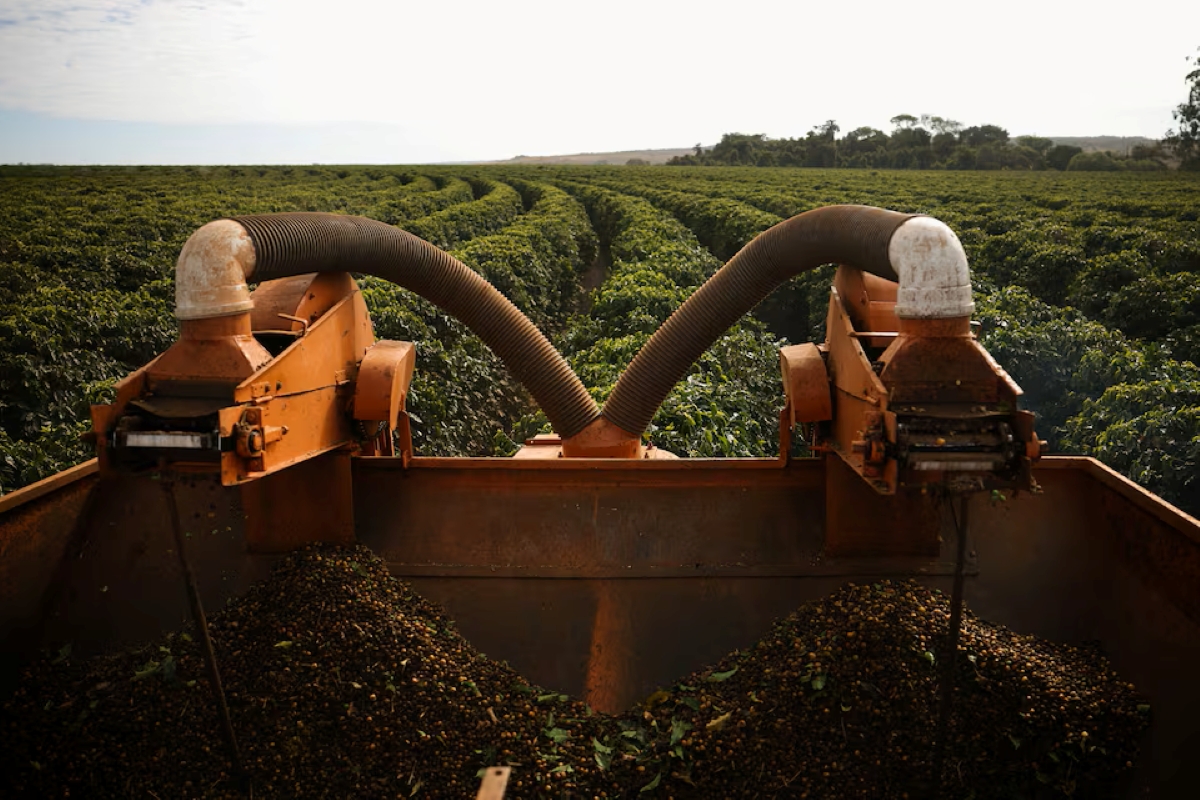
The European Commission has unveiled a new package of measures aimed at simplifying the implementation of the EU Deforestation Regulation (EUDR), while also expanding the regulation to include soluble coffee.

The announcement brings greater clarity to a regulation that has faced repeated delays since it was first proposed in 2021. The EUDR officially entered into force in 2023 and was initially scheduled to apply by the end of 2024. However, concerns from industries and producing countries over preparedness and compliance requirements led to multiple postponements.

The Commission now says it is focused on ensuring the regulation becomes fully operational by 30 December 2026.

As part of the latest revisions, EU officials estimate the simplification measures could lower annual compliance and administrative costs for affected companies by approximately 75 per cent compared with the original framework.

For the coffee sector, one of the most significant developments is the decision to add soluble coffee to the regulation’s scope. Industry representatives believe the move will create more consistent rules across coffee categories and strengthen fair competition within the European market.

Eileen Gordon-Laity, Secretary General of the European Coffee Federation, said the inclusion of soluble coffee would support equal treatment across the sector while reinforcing the environmental objectives of the regulation. She noted that aligned requirements are important for companies preparing for compliance ahead of the implementation deadline.

The updated package also includes changes to the EUDR digital system, with simplified paperwork requirements for smaller producers such as farmers and foresters.

Meanwhile, companies placing products on the market for the first time, including coffee roasters and major importers, will continue to face full due diligence obligations. Businesses further down the supply chain will mainly be responsible for collecting supplier reference numbers rather than independently verifying compliance.

The Commission also proposed removing leather and retreaded tyres from the regulation’s scope. Certain packaging materials, waste products, and product samples would also receive exemptions. In addition, several palm oil derivatives are expected to be added alongside soluble coffee.

Environmental groups have called on the European Union to avoid further delays in implementing the law. Anke Schulmeister-Oldenhove from WWF’s European Policy Office said the regulation must now move from discussion to action, warning that continued postponements could weaken both enforcement efforts and environmental credibility.

The draft Delegated Act is open for public feedback until 1 June 2026.


EU’s New Deforestation Law Proposal Sparks Frustration Among Brazilian Exporters and Raises Coffee Market Concerns

São Paulo – Qahwa World

A new European Commission proposal to relax the implementation of the EU Deforestation Regulation (EUDR) has triggered frustration among Brazilian coffee, soybean, and beef exporters, who were among the first to invest heavily in sustainable supply-chain compliance to secure early access to European markets.

According to a Rabobank report seen by Reuters, the proposed changes — which include postponing enforcement deadlines and easing penalties — could undermine the financial incentives that originally drove agribusinesses to adopt deforestation-free practices ahead of schedule.

The current law requires exporters of coffee, cocoa, palm oil, soy, wood, and beef to the European Union to provide due-diligence statements proving that their products are not linked to deforestation.

Under the new proposal, large companies would begin compliance checks from June 30, 2026, while smaller firms with fewer than 50 employees would have until December 30, 2026 to submit their declarations.

Rabobank analyst Marcela Marini emphasized that the delayed enforcement could erode the competitive advantage of those who acted early: “Companies that invested ahead of time were aiming for preferential access to the European market. The absence of fines and delayed enforcement weakens the incentive for sustainability premiums.”

The report also warned that the revision may disrupt global coffee supply chains, especially as the industry intensifies efforts toward traceability and environmental transparency.

The European Parliament is expected to review the proposal in the coming weeks. If approved, the regulation will still take effect in 2025, but with softer requirements and extended timelines — a move that some experts fear could dilute Europe’s commitment to fighting deforestation and impact the global push for sustainable coffee production.

EU Eases EUDR Rules to Ensure Smooth Rollout by 2025

Brussels – Qahwa World

The European Commission has announced adjustments to the EU Deforestation Regulation (EUDR) aimed at ensuring its timely implementation by 30 December 2025. The changes include lighter reporting requirements, deadline extensions for small businesses, and simplified due diligence obligations to reduce administrative complexity and IT system strain.

The EUDR, which targets commodities linked to deforestation such as coffee, cocoa, palm oil, paper, and wood, will require importers to prove that their products have not contributed to forest degradation anywhere in the world after 31 December 2020. Initially scheduled for December 2024, the regulation was postponed by one year to give coffee producers and other stakeholders additional time to comply.

Under the updated proposal introduced on 21 October 2025, micro and small enterprises will receive an additional 12-month extension to 30 December 2026. Large and medium-sized companies must still meet the 30 December 2025 deadline but will benefit from a six-month grace period for checks and enforcement. To streamline the process, the Commission will now require only a single due diligence statement across a product’s entire supply chain, easing the burden for businesses and simplifying data management within the EU’s internal systems.

The revised framework maintains that “upstream” operators—those first placing regulated commodities on the EU market—will continue to exercise due diligence. “Downstream” operators, typically traders handling products already imported into the EU, will no longer be obligated to submit separate compliance statements.

Environmental groups have cautiously welcomed the move, seeing it as a pragmatic step to avoid further delays, though some have expressed concern that the changes could weaken the regulation’s impact. “We reiterate our call to address the specific challenges millions of smallholders face in producing EUDR-compliant products and the disproportionate burden placed on their shoulders,” the Rainforest Alliance said in a statement.

The WWF offered a stronger critique, calling the decision “a shameful surrender to political pressure.” Anke Schulmeister-Oldenhove, Senior Forest Policy Officer at WWF, said the Commission’s reference to IT system issues “feels like a perfect scapegoat to water down the regulation.”

The proposed amendments will still need formal approval by the European Parliament and the European Council before implementation. If adopted, they would mark a significant shift in how the EU enforces environmental due diligence, with major implications for global trade in deforestation-linked commodities, including coffee.

EU Confirms Delay to Deforestation Regulation

Brussels – Qahwa World

The European Commission has confirmed a further one-year delay to the European Union Deforestation Regulation (EUDR), citing IT system capacity issues and risks of disruption to supply chains.

The regulation, which entered into force in June 2023, sets strict due diligence requirements for commodities including palm oil, cattle, soy, coffee, cocoa, timber, rubber, and derived products such as beef, furniture, and chocolate. Originally scheduled for application from December 30, 2024, implementation was already postponed once to December 2025. The new proposal extends the deadline by an additional 12 months.

“While our simplification efforts have been substantial, we have concluded that we cannot meet the original deadline without causing disruptions to our businesses and supply chains,” said European Commission trade spokesperson Olof Gill. He added that the IT platform designed to handle compliance documentation faces “serious capacity concerns given the projected load.”

Environment Commissioner Jessika Roswall stressed that the delay provides “the necessary time to get the IT system capacity that we need.” She also rejected suggestions that the decision was linked to ongoing trade talks with the United States or Indonesia, noting that the U.S. has already been recognized as posing “negligible risk” to global deforestation.

The proposal must now be approved by EU member states and the European Parliament.

The delay was welcomed by the European People’s Party (EPP), parliament’s largest group, which has long argued the regulation placed disproportionate burdens on small and medium-sized businesses, including coffee roasters, foresters, and farmers. “If the deforestation regulation had entered into force unchanged on 1 January, it would have caused unsolvable problems,” said EPP environment spokesperson Peter Liese.

Christine Schneider, the parliament’s lead negotiator on EUDR, called for a “zero-risk category” to exempt commodities and regions with no deforestation link from additional documentation requirements.

However, environmental organizations sharply criticized the move. The WWF described the delay as “a massive embarrassment for President von der Leyen and her Commission,” warning it reflects a lack of political will to ensure timely enforcement. The Greens’ agriculture coordinator Thomas Waitz called it “a dark day for global forest protection,” accusing the Commission of bowing to pressure from the agricultural and sawmill lobbies.

The Commission’s decision underscores a broader trend of prioritizing industrial competitiveness over environmental regulation. Earlier this year, a majority of EU members had already urged postponement. Critics fear that repeated delays undermine the EU’s credibility as a leader in global climate and forest protection efforts.

The debate also resonates with global commodity markets, from agriculture and biofuels to biomass and petrochemicals, where compliance costs, supply chain transparency, and IT readiness remain pressing concerns.