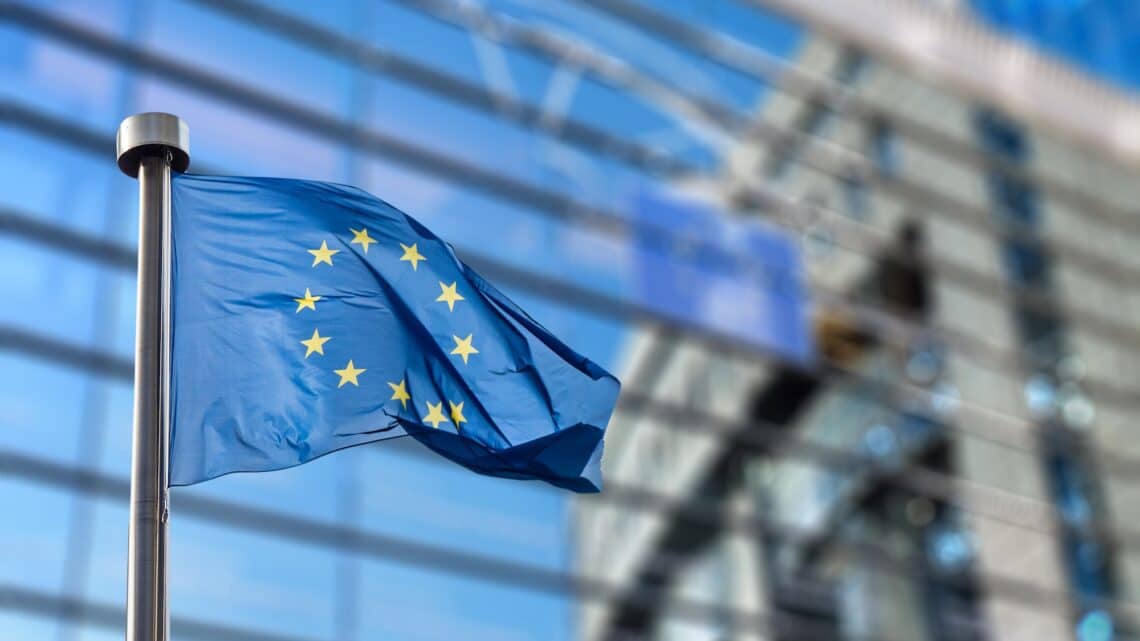
European Commission Expands EUDR Scope to Include Soluble Coffee

Dubai – Qahwa World

The European Commission has unveiled a new package of measures aimed at simplifying the implementation of the EU Deforestation Regulation (EUDR), while also expanding the regulation to include soluble coffee.

The announcement brings greater clarity to a regulation that has faced repeated delays since it was first proposed in 2021. The EUDR officially entered into force in 2023 and was initially scheduled to apply by the end of 2024. However, concerns from industries and producing countries over preparedness and compliance requirements led to multiple postponements.

The Commission now says it is focused on ensuring the regulation becomes fully operational by 30 December 2026.

As part of the latest revisions, EU officials estimate the simplification measures could lower annual compliance and administrative costs for affected companies by approximately 75 per cent compared with the original framework.

For the coffee sector, one of the most significant developments is the decision to add soluble coffee to the regulation’s scope. Industry representatives believe the move will create more consistent rules across coffee categories and strengthen fair competition within the European market.

Eileen Gordon-Laity, Secretary General of the European Coffee Federation, said the inclusion of soluble coffee would support equal treatment across the sector while reinforcing the environmental objectives of the regulation. She noted that aligned requirements are important for companies preparing for compliance ahead of the implementation deadline.

The updated package also includes changes to the EUDR digital system, with simplified paperwork requirements for smaller producers such as farmers and foresters.

Meanwhile, companies placing products on the market for the first time, including coffee roasters and major importers, will continue to face full due diligence obligations. Businesses further down the supply chain will mainly be responsible for collecting supplier reference numbers rather than independently verifying compliance.

The Commission also proposed removing leather and retreaded tyres from the regulation’s scope. Certain packaging materials, waste products, and product samples would also receive exemptions. In addition, several palm oil derivatives are expected to be added alongside soluble coffee.

Environmental groups have called on the European Union to avoid further delays in implementing the law. Anke Schulmeister-Oldenhove from WWF’s European Policy Office said the regulation must now move from discussion to action, warning that continued postponements could weaken both enforcement efforts and environmental credibility.

The draft Delegated Act is open for public feedback until 1 June 2026.
 

Why Dubai Coffee Traders Must Prepare for EUDR now?

The December 2026 EUDR deadline will reshape how African coffee reaches European consumers — and traders in the Gulf are caught in the middle.

By Raymond Reuel Wayesu

Dubai has become the Middle East’s dominant coffee trading hub, with re-exports valued at nearly $1 billion annually and over 615 licensed traders operating through the DMCC Coffee Centre. Much of this coffee originates in East Africa — Ethiopia, Uganda, and Kenya — and is destined for European roasters and retailers.
But a regulatory storm is approaching that threatens to disrupt these established trade flows.

  • What is the EUDR?

The EU Deforestation Regulation (Regulation 2023/1115), which takes effect on 30 December 2026, requires that all coffee entering the European market be verified as “deforestation-free” with plot-level geolocation data. Importers must submit Due Diligence Statements proving their coffee was not grown on land deforested after December 2020.
The scale of this requirement is unprecedented. For Uganda alone, this means geolocating approximately 1.7 million smallholder coffee farmers, each cultivating an average of just 0.18 hectares.

  • Why should Dubai-based traders care?

Here’s the critical issue: traceability chains break when coffee passes through intermediary hubs.

Research from CIFOR-ICRAF found that EUDR compliance maps contain significant accuracy problems—claiming “12% more forest globally than national FAO data” with an “18% chance that a spatial unit marked as forest is considered non-forest in other data” (van Noordwijk et al., 2025). The same researchers warn that smallholders practising agroforestry – the very farmers who have preserved Africa’s remaining coffee forests – could become “collateral damage” of poorly designed compliance systems.

For traders handling mixed-origin lots, the risk compounds. Under EUDR, mixing compliant and non-compliant coffee renders entire shipments non-compliant. Industry analysis estimates that 50% of EU coffee imports are “disenfranchised” — passing through multiple intermediaries with up to ten handlers between farmer and exporter.

The Overseas Development Institute warns that Ethiopia could face “an 18.4% drop in overall exports and a 0.6% decrease in GDP” if coffee exports to the EU cease (Keane et al., 2024). Uganda, now Africa’s largest coffee exporter by volume with 60% of exports destined for Europe, faces similar exposure. UNCTAD’s analysis is stark: “Traceable coffee is only possible with an estimated 10% of Ugandan producers” given its 1.8 million smallholder farming households.

A Stanford-led review concludes that “despite zero-deforestation commitments, high rates of deforestation persist” and that “supply chain initiatives only cover a small share of tropical deforestation” (Lambin & Furumo, 2023). Wageningen University researchers examining Cameroon and Ethiopia warn that “smallholder farmers may face greater challenges than currently anticipated by the EU” due to “limited awareness and infrastructural gaps that hinder traceability” (Ten Hove et al., 2025).

The traders who solve this traceability gap will maintain their EU market access. Those who don’t risk being cut off from Europe’s €8 billion coffee market — or facing penalties of up to 4% of EU turnover.

  • What can traders do now?

With 12 months until enforcement, the window for preparation is narrowing. Practical steps include auditing your supply chain exposure to identify which suppliers and origins lack plot-level geolocation data, engaging with origin-country traceability initiatives such as Uganda’s National Traceability System, and evaluating compliance technology partners.

  • A note on validation

Full disclosure: I’m the founder of ProofSource, a coffee traceability platform being developed for EUDR compliance. But I’m sharing this analysis because the problem is real and urgent — regardless of which solution traders ultimately choose.
We’re currently in validation mode, offering free 30-day EUDR Readiness Assessments to coffee exporters and traders. This diagnostic service maps your supply chain exposure, identifies traceability gaps, and delivers a personalised compliance roadmap — before we build our full platform. We believe in testing whether the market truly needs what we’re building before we build it. Request your assessment at proofsource.vercel.app

Building the complete solution — particularly the satellite verification infrastructure needed to verify deforestation-free status at scale — requires significant investment. We’re actively seeking partnerships with climate-focused research institutions, coffee industry funds, and innovation programmes in the Gulf region who share our mission of protecting smallholder market access while preventing deforestation.

If you’re a Dubai- or Abu Dhabi-based trader wanting to understand your EUDR exposure, or a research institution interested in collaborating on coffee supply chain traceability, I welcome the conversation.

The December 2026 deadline will arrive faster than anyone expects. The traders who act now will be positioned to maintain their European market access. Those who wait may find themselves scrambling — or shut out entirely.

Raymond Reuel Wayesu is the founder of ProofSource and a PhD candidate in machine learning and computer vision for agriculture.
Contact: [email protected] | [email protected]