Global Coffee Logistics Under Pressure: Strait of Hormuz & Red Sea Disruptions

Author: Qahwa World – Logistics Desk
Source: Industry logistics report, Q2 2026 (carrier data, analyst estimates)
Date: May 27, 2026

Global Coffee Logistics Under Pressure: Strait of Hormuz & Red Sea Disruptions

Executive Summary

  • A near‑total blockade of the Strait of Hormuz by Iranian forces has reduced container traffic by more than 95%, stranding roughly 500,000 TEUs in the Gulf region.
  • Brent crude has risen above $90 per barrel, and carriers have imposed emergency fuel surcharges, some retroactively.
  • Red Sea instability has forced over 75% of container ships to reroute around the Cape of Good Hope, adding 10‑14 days to Asia‑Europe voyages and absorbing 15‑20% of vessel capacity.
  • Brazil’s agricultural export corridors are overwhelmed, causing truck queues, terminal congestion, and competition for containers – directly affecting coffee shipments.
  • Schedule reliability among top carriers ranges from 46.6% (Wan Hai) to 72.3% (Hapag‑Lloyd), with most carriers in the 60‑70% range.
  • Capacity is tight or manageable depending on the trade lane, with spot rates rising and container shortages reported from Honduras and Nicaragua.
  • These logistics pressures are delaying coffee deliveries, raising inventory costs, and adding uncertainty to global coffee supply chains.

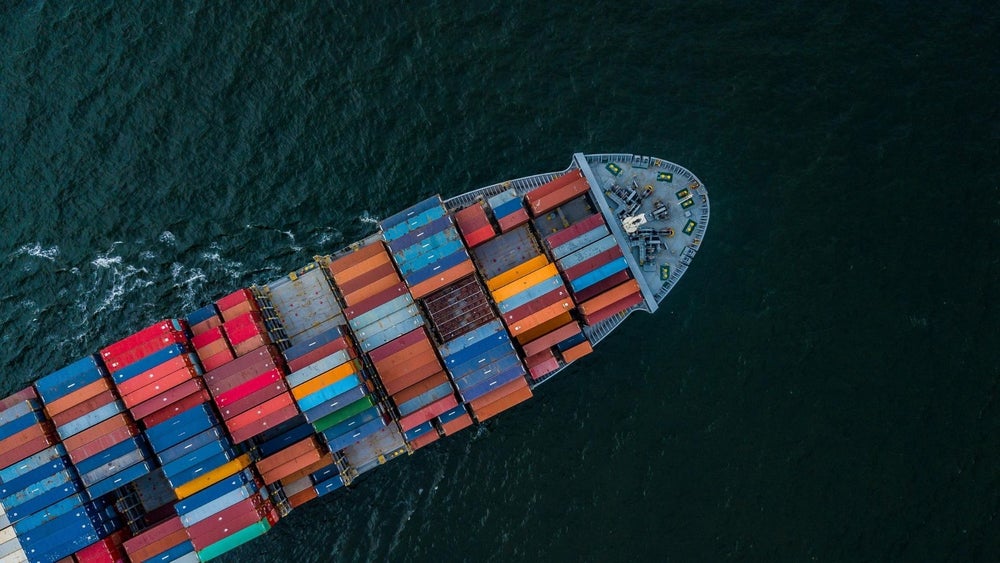
The global logistics system is under severe strain in the second quarter of 2026. Two major maritime chokepoints – the Strait of Hormuz and the Red Sea – are simultaneously disrupted, pushing freight rates higher and delaying shipments of coffee and other goods.

For coffee exporters and importers, these disruptions mean longer transit times, higher costs, and increased uncertainty. The situation is compounded by congestion at Brazilian ports during peak agricultural export season.

Strait of Hormuz: Near‑Total Blockade

As of May 2026, severe instability in the Strait of Hormuz has caused container shipping traffic to drop by more than 95%. Iranian forces have established a near‑total blockade.

Daily ship transits fell from roughly 130 in February 2026 to nearly zero in March. Approximately 3,200 vessels are trapped in the Gulf or waiting outside the strait.

About 500,000 TEUs (Twenty‑Foot Equivalent Units) are stranded at Gulf ports or at sea, creating severe equipment imbalances worldwide.

War‑risk insurance premiums have become prohibitive or have been withdrawn, making passage through the area commercially unviable for many carriers.

Shipping lines are rerouting vessels around the Cape of Good Hope, increasing transit times and adding significant costs for trade routes linking Asia, the Middle East and Europe.

The disruption has also pushed Brent crude prices above $90 per barrel. This fuel shock increases pressure on global supply chains beyond freight and logistics costs alone.

Analysts anticipate prolonged disruption. Even after restrictions ease, recovery will likely take months due to vessel backlogs, equipment shortages and network imbalances.

Red Sea: Rerouting and Capacity Crunch

Red Sea instability, driven by Houthi militant attacks, has forced over 75% of container ships to reroute around the Cape of Good Hope. This adds roughly 10‑14 days to Asia‑Europe voyages.

The crisis has caused a roughly 90% drop in Suez Canal container transit. Extended voyages have absorbed significant shipping capacity, leading to a 15‑20% reduction in available capacity.

Ships are arriving off‑schedule, causing congestion at various transshipment hubs. Spot freight rates on Asia‑Europe routes have increased substantially.

The longer route has resulted in higher fuel consumption, increasing CO2 emissions by over 30%. While some ceasefires were proposed in early 2025, uncertainty remains high.

Analysts predict long‑term structural changes to shipping routes and sustained higher costs for the foreseeable future.

Fuel Surcharges and Rising Freight Costs

Fuel surcharges, often called Bunker Adjustment Factors (BAF), are additional fees added to container shipping rates to account for changes in fuel prices.

As of April 2026, higher fuel costs combined with route disruptions have pushed these charges up significantly. Ocean carriers like MSC, CMA CGM, and Maersk have implemented emergency fuel surcharges, sometimes applied retroactively to cargo already in transit.

These surcharges increase overall freight costs for coffee exporters, especially those shipping from East Africa, Asia, and Latin America to Europe and North America.

Brazil Export Logistics Under Pressure

Brazil’s large soybean and agricultural harvest has overwhelmed northern logistics corridors, especially around Amazon export terminals such as Miritituba.

Truck queues have stretched for kilometers, slowing inland transportation and export throughput. Although soybeans were the primary cargo affected, coffee exporters face indirect impacts.

These include reduced truck availability, terminal congestion, chassis shortages, and rail prioritization toward grains. Brazilian coffee exporters are seeing increased inland freight volatility and tighter booking windows.

Meanwhile, expectations for a strong Brazilian coffee crop (66.7 million bags in 2026) are increasing export demand forecasts for the second half of the year, which could further strain logistics.

Schedule Reliability and Trade Lane Conditions

Schedule reliability among top carriers varies widely. In March 2026, Hapag‑Lloyd was the most reliable top‑13 carrier with 72.3%, followed by Maersk at 70.8%.

Eight carriers had reliability in the 60‑70% range, two were in the 50‑60% range, and Wan Hai was the least reliable at 46.6%.

Only two carriers recorded a month‑over‑month decline in schedule reliability, while 11 of the 13 carriers recorded a year‑over‑year improvement.

The Gemini Cooperation recorded 76.8% schedule reliability across all arrivals in February/March 2026, followed by MSC at 65.4% and Ocean Alliance at 65.9%.

Table 1: Trade Lane Conditions (Q2 2026)

Trade Lane Capacity Rate Trend Key Issues
APAC to Global Flat (no space issue) Increasing Spot rates rising
India to Global Tight Slight upward Container availability limited
Brazil to Global Manageable Stable Port congestion, gate windows, occasional rollovers
Central America (CAM) to Global Tight Container shortages (20s and 40s) from Honduras/Nicaragua
East Africa to Global Good Congestion in Dar es Salaam and Mombasa

Implications for Coffee Supply Chains

The combination of these logistics pressures is hitting coffee exporters and importers hard. Coffee shipments from East Africa (Ethiopia, Uganda, Kenya, Tanzania) face congestion at Mombasa and Dar es Salaam.

Central American coffee (Honduras, Nicaragua, Guatemala) is facing container shortages, particularly for 20‑foot and 40‑foot units, delaying exports to the United States and Europe.

Brazilian coffee exporters are competing with soybeans and other grains for trucking and terminal capacity. Inland freight volatility is rising, and booking windows are tighter.

Rerouting around the Cape of Good Hope adds 10‑14 days to Asia‑Europe shipments. For coffee from Vietnam and Indonesia to Europe, transit times have increased significantly, affecting freshness and quality.

Emergency fuel surcharges are raising delivered costs for coffee importers. These costs will eventually be passed down the supply chain to roasters and consumers.

Schedule reliability remains below pre‑crisis levels. This means coffee buyers cannot rely on predictable delivery windows, forcing them to hold more inventory, which ties up capital.

Frequently Asked Questions

How has the Strait of Hormuz blockade affected coffee shipping?

The blockade has stranded about 500,000 TEUs in the Gulf, caused massive rerouting around the Cape of Good Hope, and triggered emergency fuel surcharges, all of which increase coffee shipping costs and delays.

What is the impact on coffee from East Africa?

East African ports (Mombasa, Dar es Salaam) are congested, and container availability is tight, delaying shipments from Ethiopia, Uganda, Kenya, and Tanzania.

How are Central American coffee exports affected?

Honduras and Nicaragua face container shortages for 20‑foot and 40‑foot units, slowing coffee exports to the United States and Europe.

What is the outlook for schedule reliability?

Most top carriers have 60‑70% reliability, but the trend is improving year‑over‑year. Hapag‑Lloyd leads at 72.3%.

Will freight rates continue to rise?

Yes. Emergency fuel surcharges and capacity shortages are pushing spot rates higher, and analysts expect sustained high costs due to prolonged rerouting.

How is Brazil’s coffee harvest affecting logistics?

A record coffee crop (66.7 million bags) is competing with soybeans for trucking and terminal capacity, causing congestion and tighter booking windows.


Author: Qahwa World – Logistics Desk | Source: Industry logistics report, carrier data, analyst estimates | Date: May 27, 2026

Trump Tariffs Reshape Global Coffee Trade

Dubai – Qahwa World

Tariff policies introduced during 2025 have contributed to significant shifts in the global coffee trade, pushing industry players to rethink supply chains and accelerate structural changes across the sector.

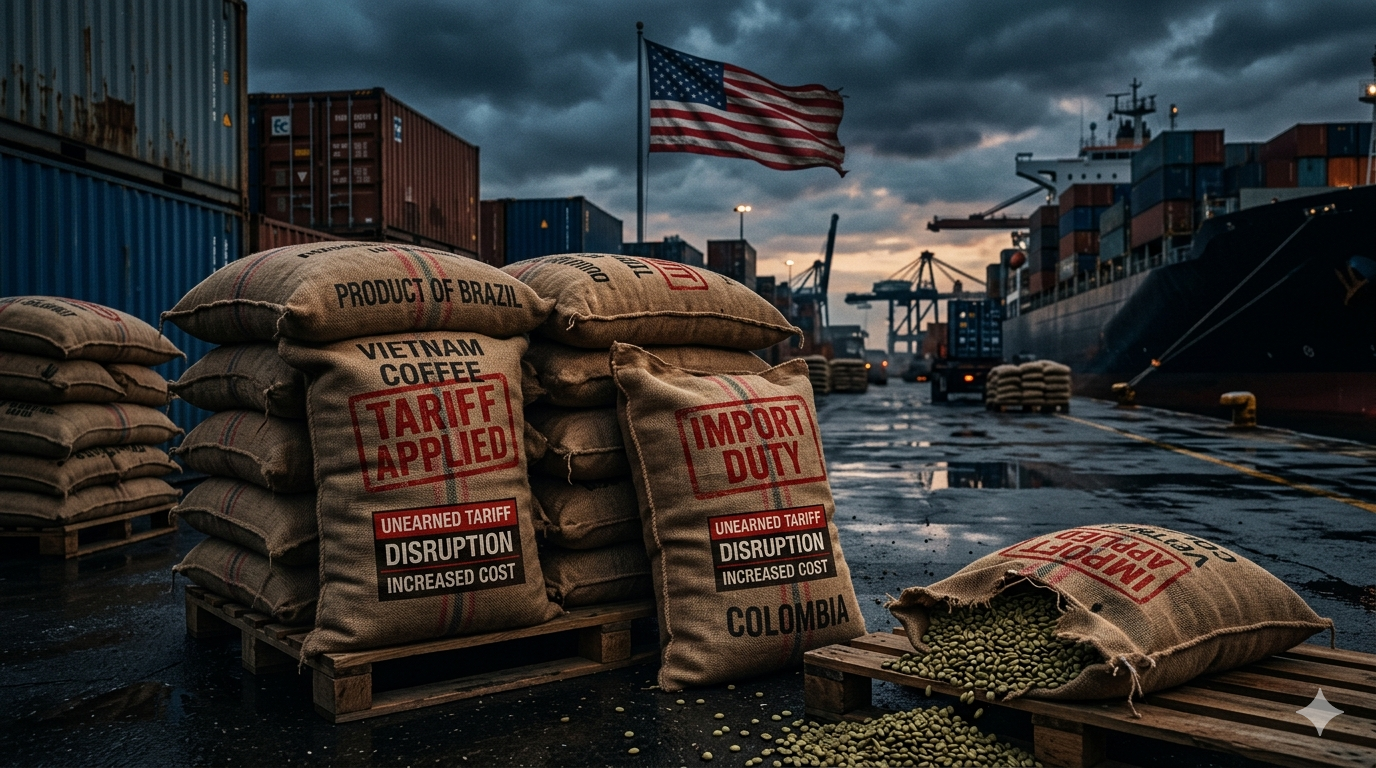
In 2025, broad tariff measures were imposed on imports of green coffee beans and roasting equipment. The initial rate started at around 10%, but in some cases increased substantially on major coffee-producing countries such as Brazil, Vietnam, Indonesia, and Mexico.

These measures were not applied consistently over time. Later adjustments, exemptions, and partial rollbacks were introduced following trade negotiations and policy revisions, including relief for certain agricultural goods that are not domestically produced, such as coffee. Despite this, the early phase of the tariffs had already created noticeable disruption.

The impact included higher roasted coffee prices in certain markets, shifts in export flows, and widespread instability across global supply chains.

  • Supply Chain Disruption

The changes exposed how sensitive the global coffee system is to trade policy shifts. Key developments included:

A decline in exports from Brazil to the United States, with redirected shipments toward Asia and the Middle East
Increased tariff pressure on exports from Vietnam, Indonesia, and Mexico, pushing buyers to search for alternative origins
Rising costs for coffee equipment such as grinders and espresso machines due to import dependencies

Frequent policy changes made long-term planning difficult, increasing operational uncertainty and raising costs across the supply chain.

  • Beyond Beans: Equipment and Infrastructure

The impact was not limited to green coffee. Imported roasting and café equipment also became more expensive, increasing the cost of opening or upgrading coffee shops.

This added pressure came on top of ongoing global supply chain disruptions, including higher raw material costs and shipping delays in recent years.

  • Market Adaptation Strategies

As costs rose, market participants explored different ways to adapt, including:

Rerouting shipments through countries with lower tariff exposure
Reclassifying origin within multi-stage production chains
Establishing roasting and packaging operations in third countries to alter customs classification

Large multinational companies were generally better positioned to implement such strategies due to capital availability and infrastructure flexibility.

  • Historical Context of Coffee Trade Workarounds

Attempts to bypass trade restrictions are not new in coffee history. Over centuries, coffee spread globally through a mix of legal trade, secrecy, and strategic relocation of plants and beans.

Historical examples include:

Early movement of coffee cultivation from its origin regions into Asia and the Americas through controlled and often restricted transfers
The spread of coffee plants to Southeast Asia and Latin America via maritime trade routes in earlier centuries
Historical episodes in Europe where coffee was heavily taxed or restricted, leading to informal trade networks and enforcement efforts

These patterns show that trade restrictions have historically encouraged alternative distribution channels.

  • Shifting Global Demand

Several broader trends accelerated during this period:

Growth in coffee consumption in Asia and the Middle East
Expansion of domestic consumption in producing countries
Increasing focus on supply diversification by major importers
Stronger regulatory attention in some markets on sustainability and climate-related sourcing

Together, these shifts suggest a gradual rebalancing of global coffee consumption and trade flows.

  • Uncertain Long-Term Outcomes

The long-term effects of these tariff-related disruptions remain unclear. Some analysts expect elevated price levels to persist even after policy normalization, due to accumulated supply chain inefficiencies.

While tariffs are often intended to support domestic industries, the observed effects in many cases have included:

Increased costs for importers and roasters, particularly smaller businesses
Higher consumer prices in retail and café markets
Reduced supply chain efficiency due to rerouting and compliance complexity
Limited direct benefit to producers in developing countries in many cases

Larger companies have generally been better able to absorb shocks, potentially contributing to greater consolidation within the industry.

  • Conclusion

The tariff developments of 2025 may represent a turning point in the global coffee trade system. Combined with shifting consumption patterns, rising new markets, and evolving supply chain strategies, the industry appears to be entering a new structural phase.

The key question moving forward is whether these changes will lead to a more resilient and balanced global coffee economy, or further concentrate influence among large multinational players.

Coffee has always moved across borders in response to economic and political pressure. Once again, it is adapting—reshaping itself along with the global systems that depend on it.

Coffee Break Dubai: Government Confidence, Market Shifts, and Hard Truths Facing the Coffee Industry

Dubai — Qahwa World

The first Coffee Break forum, held yesterday in Dubai, brought together senior leaders from the coffee, hospitality, logistics, media, and investment sectors to discuss the growing structural pressures facing the global coffee industry.

Organized by Mokha 1450 in partnership with Modora, the event went beyond discussion, offering a detailed real-time reading of how the sector is reacting to overlapping global disruptions.

Despite the complexity of challenges, a consistent theme emerged throughout the sessions: Dubai’s business environment continues to operate with a high level of institutional confidence, repeatedly linked by speakers to government crisis management performance and long-term economic stability.

  • SPEAKERS LIST (FULL PARTICIPANTS)

The session featured a high-level panel including:

  • Abdulla Al Shaibani — Group CEO, Axceed LLC
  • Garfield Kerr — CEO, Mokha 1450 and Former President of the Specialty Coffee Association
  • Khalid Al Mulla — CEO, Dubai Coffee Museum
  • Jennifer Pettinger-Haines — Founder and CEO, The GRIF Collective
  • Paul Clifford — Industry Editor and Analyst
  • Zeena Zalamea — Moderator, Broadcaster and Entrepreneur

GOVERNMENT CONFIDENCE AS A CORE BUSINESS FOUNDATION

A central thread across discussions was the role of government performance during crises, particularly the COVID 19 pandemic.

Speakers described how the UAE maintained operational continuity during global shutdowns, reopened faster than most major economies, and minimized long-term disruption to business ecosystems.

This experience created what participants described as a “structural confidence layer” that continues to shape decision-making today.

Rather than reacting defensively to current market pressures, companies are maintaining operations, focusing on internal stability, and prioritizing workforce wellbeing.

One speaker emphasized that during crises, the primary concern shifted away from business survival toward emotional and organizational stability within teams, supported by confidence in national systems.

  • ABDULLA AL SHAIBANI: LEADERSHIP UNDER STRUCTURAL CHANGE

Abdulla Al Shaibani highlighted that leadership in the current cycle is no longer defined by expansion, but by resilience management.

He emphasized that the priority for landlords and operators alike is stability rather than aggressive growth, stressing that maintaining continuity with tenants and partners is now the key objective.

He also noted that supporting smaller business ecosystems through flexible operational frameworks is essential during periods of uncertainty.

  • GARFIELD KERR: SUPPLY CHAIN DISRUPTION AND INDUSTRY PRESSURE

Garfield Kerr described significant disruption across global coffee logistics, particularly in air freight and container movement.

He explained that shipping costs have increased sharply, forcing businesses to pause shipments, delay projects, and reallocate inventory already positioned at origin.

He added that specialty coffee operators are now managing a fragile balance between cost pressure and quality preservation, especially as green coffee prices continue to rise globally.

  • JENNIFER PETTINGER-HAINES: THE TWO SPEED MARKET

Jennifer Pettinger-Haines presented data analysis covering approximately 400 venues across Dubai, revealing a clear structural divide:

  • Community cafés and neighborhood venues: growth of 30 to 40 percent in some cases
  • Fine dining restaurants: declines reaching 70 to 80 percent

She explained that this divergence reflects a fundamental shift in consumer behavior toward proximity, affordability, and familiarity.

Community driven venues are benefiting from consistent local demand, while high-end restaurants remain heavily dependent on tourism and discretionary spending.

  • PAUL CLIFFORD: PRICING STRATEGY AND BRAND RISK

Paul Clifford warned against aggressive discounting strategies, stating that repeated price reductions can permanently damage brand perception.

Once a brand is positioned at a lower price point, restoring premium positioning becomes significantly more difficult.

He noted that many operators are instead restructuring offerings by simplifying menus, reducing service formats, adjusting portions, and forming supplier collaborations rather than competing through pricing alone.

  • KHALID AL MULLA: LOGISTICS AND SYSTEM STABILITY

Khalid Al Mulla emphasized that government intervention extends beyond regulation into active operational support during crises.

He referenced past interventions that protected businesses from immediate financial collapse and ensured continuity of operations.

He also highlighted current logistics diversification strategies, including alternative shipping routes and regional port redistribution to reduce dependency on single supply corridors.

  • INDUSTRY TRANSFORMATION ACROSS OPERATIONS

Across the sector, businesses are adjusting core operations:

  • Reduced operating hours in line with demand
  • Workforce restructuring
  • Menu redesign due to cost inflation
  • Ingredient substitution and sourcing recalibration
  • Training program expansion

At the same time, companies are investing in internal capability development to prepare for post-crisis recovery cycles.

  • DIFFERENT ECONOMIC REALITIES WITHIN ONE MARKET

Speakers noted a widening gap between companies:

  • Well capitalized operators are investing and repositioning
  • Smaller operators are focused on survival and liquidity management

Overall performance remains below historical averages, with many businesses operating near break-even thresholds.

  • HOSPITALITY ASSET UNDERUTILIZATION

Hotel infrastructure was identified as an underutilized resource due to reduced occupancy rates.

Proposals included repurposing unused spaces into coworking environments, delivery kitchens, and hybrid operational models to improve asset efficiency.

  • SHIFTING CUSTOMER DEMOGRAPHICS

A key strategic concern raised was the under engagement of younger consumer groups.

Speakers noted that this demographic represents a growing opportunity but requires new approaches in branding, product development, and communication strategy.

  • ORIGIN LEVEL PRESSURE IN THE COFFEE CHAIN

At production level, rising costs and low farmer returns continue to threaten long-term sustainability.

Some producers are exiting the industry entirely, while younger generations are increasingly avoiding agricultural participation.

Sustainability investment and fairer value distribution were highlighted as critical structural requirements.

  • OUTLOOK: CONTROLLED OPTIMISM

Despite challenges, sentiment remained cautiously positive.

Most participants expect partial recovery within 12 to 24 months based on historical cycles in hospitality markets.

A widespread view emerged that current disruptions are cyclical rather than structural, shaping investment and operational decisions across the sector.

  • CONCLUSION

The Coffee Break forum in Dubai highlighted an industry under simultaneous global pressures but actively adapting across every layer of its value chain.

From supply chains to consumer behavior, the sector is undergoing structural recalibration.

At the center of this transition is sustained confidence in the UAE’s institutional stability and crisis management capability, which continues to influence strategic decisions across the industry.

Iran War Drives Coffee Prices Higher as Supply Risks Intensify

Dubai – Qahwa World

Coffee futures rose sharply on Wednesday, hitting a 3.5-week high as markets reacted to escalating disruptions linked to the Iran war and concerns over global supply chains.

The main driver of the rally was growing uncertainty around the Strait of Hormuz, a critical global shipping route. Traders fear that prolonged conflict could keep the passage restricted, pushing up shipping costs, insurance premiums, fuel expenses, and overall logistics costs for coffee exporters and importers.

At the same time, tightness in robusta supply added upward pressure on prices, with ICE inventories recently falling to their lowest level in more than a year.

However, the broader market picture remains mixed. Arabica coffee had recently slipped to a seven-week low due to expectations of a very large Brazilian crop, with multiple forecasts pointing to a record harvest in the 2026/27 season. Larger projected global surpluses in the coming year are also seen as a long-term limiting factor for prices.

On the supply side, Vietnam continues to support global availability through strong export volumes, reflecting higher production levels in the world’s largest robusta-producing country. Meanwhile, Brazil’s export figures have shown recent declines compared with last year, and uneven rainfall in key growing regions is raising some concern about yield stability.

Longer-term projections from agricultural agencies still point to rising global production, particularly in robusta coffee, while arabica output is expected to decline. Even so, global ending stocks are forecast to tighten slightly in future seasons.

Overall, coffee markets are being pulled between short-term geopolitical disruption linked to the Iran war and longer-term expectations of strong global supply growth.

Global Coffee Leaders Launch First-Ever Deforestation Mapping Initiative

Amsterdam – Qahwa World

Leading global coffee companies have launched a landmark industry initiative aimed at transforming how deforestation risks are identified and managed across coffee-producing regions worldwide, through a unified satellite-based mapping system.

The Coffee Canopy Partnership brings together major players in the global coffee value chain, including JDE Peet’s, Louis Dreyfus Company, Sucden, Neumann Kaffee Gruppe, Touton, Sucafina, and Tchibo, in an unprecedented pre-competitive collaboration designed to create the first comprehensive and openly accessible global map of coffee production landscapes.

Developed in partnership with Airbus, the initiative will use very high-resolution satellite imagery combined with artificial intelligence and ground verification to map coffee farms, detect forest loss, and distinguish between natural forests and agroforestry systems such as shade-grown coffee, which have historically been misclassified in land-use datasets.

The program is designed to address one of the sector’s most persistent structural challenges: the lack of reliable, harmonized geospatial data on coffee cultivation. This data gap has contributed to inconsistencies in sustainability monitoring and, in some cases, the unintended exclusion of smallholder farmers from regulated markets.

The initiative launches with a large-scale pilot across East Africa, covering Ethiopia, Tanzania, Kenya, Uganda, Burundi, and Rwanda. The pilot will map approximately 1.2 million square kilometers of coffee-growing landscapes and serve as the foundation for a global rollout planned for 2027.

At the core of the project is the creation of two key geospatial datasets. The first will reconstruct a baseline of coffee cultivation for 2020–2021, correcting historical misclassifications of agricultural land as forest. The second will provide an updated view of coffee production landscapes for 2024–2025, enabling the detection of land-use change and potential deforestation over time.

The initiative comes as the industry prepares for stricter regulatory enforcement under the European Union Deforestation Regulation (EUDR), which restricts market access for commodities linked to deforestation after December 2020. Industry participants warn that without accurate mapping, agroforestry-based coffee systems risk being incorrectly classified, potentially affecting millions of smallholder farmers.

Speaking at the launch, Laurent Sagarra of JDE Peet’s said the initiative represents a shift away from fragmented sustainability efforts toward a shared, landscape-level approach. He emphasized that the goal is not to create another certification scheme, but to build a collaborative infrastructure capable of reducing deforestation risk across the entire sector.

Airbus Defence and Space highlighted the role of satellite technology and artificial intelligence in enabling this transformation, noting that high-resolution Earth observation data can provide the transparency required to strengthen both environmental protection and supply chain resilience.

Supporting institutions, including the UK Foreign, Commonwealth & Development Office and the UN Food and Agriculture Organization, have endorsed the pilot phase. FAO representatives noted that the initiative aligns with broader efforts to promote transparent and inclusive data systems for sustainable commodity production.

Industry participants described the project as a shift toward shared infrastructure for sustainability, arguing that collective data systems can reduce duplication, improve consistency, and enable more effective decision-making across governments, producers, and traders.

If successfully scaled, the Coffee Canopy Partnership is expected to become a global reference system for monitoring coffee-related land use change, supporting deforestation-free supply chains while protecting the livelihoods of smallholder farmers and strengthening long-term climate resilience in coffee-producing regions.


The Great Pivot: How Dubai and Asia Are Redefining Green Coffee Trading

A structural shift is moving the global coffee trade away from its historic Western centers toward a faster, proximity-driven system anchored in Dubai, Singapore, and Shanghai.

Source: Dubai – Qahwa World | April 2026

The global green coffee trade is undergoing one of the most significant transformations in its modern history. For decades, pricing power, logistics, and financial control were concentrated along a North Atlantic axis defined by New York, London, and Rotterdam. That structure is now being rebalanced.Across the Eastern hemisphere, a new trading corridor is taking shape. Dubai, Singapore, and Shanghai are emerging not only as logistics hubs but as integrated ecosystems that combine finance, infrastructure, and demand. This shift reflects deeper changes in consumption patterns, capital flows, and supply chain design.

By 2034, the global green coffee market is projected to reach between USD 54.5 billion and USD 61.4 billion. Much of that expansion is expected to come from Asia-Pacific and the Middle East, regions that are redefining how coffee is traded and where value is created.

A Market Rewritten by Demand

Growth in coffee consumption is no longer evenly distributed. Mature markets in Europe and North America are expanding slowly, while demand across Asia and the Middle East is accelerating.

Region Growth Market Profile
North America and Europe 0.5% to 1.2% Mature markets with premium focus
China 5% to 7% Rapid import growth and domestic roasting
India 6% to 8% Expanding café culture
Middle East 4% to 6% High-value consumption growth
Southeast Asia 5% to 7% Strong robusta base with specialty shift

This divergence is reshaping global trade routes. Coffee is increasingly flowing within an interconnected system that links producing countries directly with emerging consumption centers.

Value Moves Closer to Origin

A parallel shift is taking place within producing countries. Nations such as Vietnam, Indonesia, and Ethiopia are expanding their processing and roasting capacity, allowing them to retain a larger share of the value chain.

Mid-stream hubs in the Eastern corridor are reinforcing this trend. By enabling processing and packaging closer to origin, they reduce reliance on traditional Western intermediaries and increase margins across the supply chain.

The result is a measurable redistribution of value, with producers capturing an estimated 15% to 20% more than under legacy trade structures.

Speed as a Competitive Advantage

Logistics has become a defining factor in the new trading environment. Shorter routes between producing regions and Eastern hubs are reducing transit times and increasing flexibility.

Route Transit Time
East Africa to Rotterdam 35 to 45+ days
East Africa to Dubai 7 to 14 days
Southeast Asia to Europe 30 to 40 days
Southeast Asia to Singapore or Shanghai 5 to 12 days

Reduced transit time improves cash flow efficiency, lowers inventory risk, and helps preserve coffee quality. These advantages are becoming central to competitive positioning.

A New Financial Architecture

The financial systems supporting coffee trade are evolving alongside physical infrastructure. Traditional reliance on futures markets and bank-led financing is being complemented by more flexible models.

Feature Legacy Model Emerging Model
Financial Instruments Futures-based pricing Direct contracts
Assets Heavy infrastructure Platform-based systems
Finance Bank-led FinTech and sovereign capital
Execution Multi-day cycles Near real-time

Dubai as a Trade Platform

Dubai has positioned itself as a central node in this transformation. Integrated infrastructure allows multiple stages of the coffee supply chain to operate within a single ecosystem, reducing friction and improving efficiency.

Facilities such as the DMCC Coffee Centre combine storage, processing, roasting, and logistics, creating a unified platform that connects producers directly with high-growth markets.

Industry events, including World of Coffee Dubai, are reinforcing this role by facilitating direct trade relationships and improving transparency between origin and buyers.

Outlook to 2035

The global coffee trade is gradually moving toward diversified pricing systems and decentralized trade flows. Fixed-price agreements, quality-based valuation, and traceability tools are becoming more prominent.

By 2035, the Eastern Growth Corridor is expected to capture a significant share of incremental trade value, reflecting a long-term structural shift rather than a temporary adjustment.

Conclusion

The future of green coffee trading is being reshaped by proximity, speed, and integration. The shift toward Dubai, Singapore, and Shanghai reflects deeper changes in how markets function and where value is created.

What was once a centralized system is becoming a distributed network. Those positioned closest to both origin and demand are increasingly defining the next phase of the global coffee economy.

KitKat Heist Turns Into a Global Story Captivating Millions

Dubai – Qahwa World

In one of the most unusual cargo theft incidents in Europe recently, a truck carrying more than 413,000 KitKat bars, with a total weight of nearly 12 tons, disappeared while en route from a factory in central Italy to Poland. The incident occurred on March 26, 2026, and neither the truck nor its contents have been recovered so far.

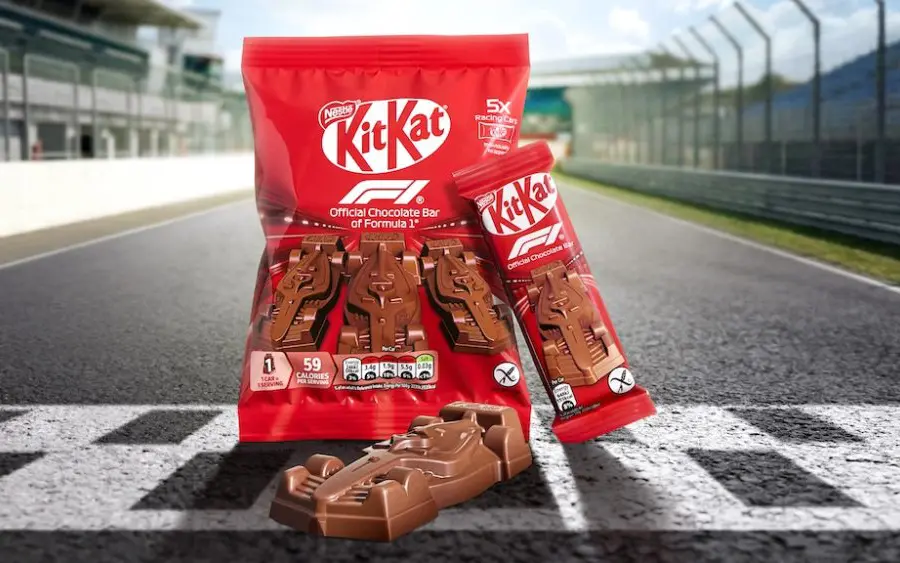
Swiss giant Nestlé, the owner of the KitKat brand, confirmed the incident in an official statement released late last week. The company said the shipment included a new range of products, among them a special edition inspired by Formula 1, with chocolate bars shaped like miniature race cars. No injuries were reported, and authorities have yet to disclose details about how the theft was carried out, though it appears to have been a highly organized operation targeting the truck on a European highway.

Instead of issuing a routine statement, Nestlé chose a different approach. On April 1, 2026, the company launched an interactive online tool called the “KitKat Tracker,” emphasizing that it was not an April Fool’s joke. The tool allows consumers to enter the eight-digit code printed on the back of any KitKat wrapper to check whether it belongs to the stolen batch. If a match is found, users are encouraged to report it so the information can be shared with authorities.

This move significantly changed consumer behavior. Buying chocolate is no longer a routine act—it now involves checking the wrapper and verifying the code. Some consumers even share their results on social media, creating widespread engagement without a traditional advertising campaign. Nestlé also noted that cargo theft has become an increasing issue in Europe, but it used this incident as an opportunity to connect with the public in a creative way.

As a result, what could have been a reputational setback turned into a widely discussed story. Media outlets covered the incident extensively, while social platforms filled with user-generated content and reactions. Although the stolen shipment could still appear in unofficial markets, the tracking tool helps make identification easier. Nestlé stated that market supply would not be significantly affected, while the media buzz has made the product even more appealing.

From a business perspective, this case stands out as a strong example of crisis management. Rather than damaging the brand, the incident strengthened consumer engagement. The product itself has not changed, but its story has become far more compelling.

As of April 4, 2026, the truck and its 413,000 chocolate bars remain missing, with investigations ongoing across several European countries. Meanwhile, consumers continue to take part in the story—buying, checking, and following updates.

In the end, this is more than just a chocolate theft. It is a story of how a major company turned an unexpected crisis into an engaging narrative that captured global attention.

Sharp Rise in Coffee Prices in Russia

Moscow – Qahwa World

A cup of coffee in Russia is no longer just a simple daily habit, it has become a growing expense that consumers are clearly beginning to feel. Within just one year, the equation has changed: the same amount of money that once covered five cups of coffee now barely pays for four.

Data indicates a noticeable increase in coffee prices across all categories. Ground coffee has risen by around 20%, while coffee beans have increased by approximately 16%. Instant coffee has also gone up, with the price of a small jar climbing from about 350 to 400 rubles.

This surge is not driven by local factors alone, but reflects broader global shifts. Unstable weather conditions in major producing countries such as Brazil and Vietnam have reduced output, as droughts and frost have negatively impacted harvests.

At the same time, supply chains are under pressure due to higher transportation costs and ongoing geopolitical tensions, directly affecting the cost of coffee imports. In Russia, these pressures are compounded by the weakening of the local currency, making imports even more expensive.

You may read: 70% of Russians drink coffee daily

Additionally, businesses are facing rising operational costs, including taxes, energy prices, rent, and transportation. All of these factors ultimately feed into the final price paid by consumers.

Meanwhile, global demand for coffee continues to grow. [conclusion] Market estimates suggest that coffee consumption could increase by about one-third over the current decade, adding further pressure on supply and keeping prices elevated.

Given these conditions, analysts do not expect a significant decline in prices in the near term. Instead, prices are likely to continue rising at a moderate pace, potentially increasing by an additional 10–20% depending on the type and quality of coffee.

In the end, coffee is no longer just a stable, everyday commodity. it has become a reflection of broader changes in the global economy, from climate challenges to shifting supply chains and trade dynamics.

Vietnam Suspends Decree 46, Easing Coffee Trade

Dubai – Qahwa World

Vietnam’s suspension of Decree 46, a new food safety regulation governing all imported food and ingredients, has brought temporary relief to the coffee industry after weeks of disruption to supply chains.

Introduced at the end of January, Decree 46 tightened how food imports are managed at Vietnam’s borders. It replaced a more flexible framework with stricter approval procedures, including additional certification, registration, and physical inspections before products could enter the market. For many import-reliant sectors, including coffee, the impact was immediate.

Coffee businesses were hit on multiple fronts. Shipments of high‑quality green coffee, roasted products, and key processing inputs began to slow as importers adjusted to the new documentation and inspection requirements. Clearance times that previously took only a few days stretched to several weeks, creating bottlenecks at major ports as containers waited for checks and approvals. For an industry built on tight delivery schedules and thin margins, these delays quickly translated into operational and financial pressure.

Vietnam plays a central role in global coffee flows, not only as the world’s largest robusta producer but also as a processing and re‑export hub. Coffee is imported into the country for blending and processing before being shipped back out to international markets. That system depends heavily on efficiency and predictability at the border. By imposing full food‑safety compliance procedures on a wide range of imports, Decree 46 disrupted both.

One of the most sensitive areas was raw materials imported for re‑export. Under the previous rules, such shipments often benefited from simplified procedures because they were not intended for domestic consumption. Decree 46 removed much of that flexibility, requiring full compliance even for goods destined for re‑export. This added time, cost, and administrative complexity for coffee traders who route beans and semi‑finished products through Vietnam as part of global supply chains.

The specialty coffee segment also felt the strain. Imports of premium green coffee, small‑batch roasted products, flavorings, and other inputs used in high‑value offerings faced additional testing and approval steps. Smaller businesses, which typically operate with lean inventories, reported immediate pressure as delays threatened their ability to meet contracts and serve customers on time. Packaging materials and additives used in roasting, processing, and manufacturing coffee products were similarly drawn into the stricter regime, forcing companies to contend with more extensive compliance demands across their operations.

Industry reaction was swift. Business associations and trade groups representing food and beverage importers warned that the abrupt shift had created serious bottlenecks, with large numbers of shipments held at ports and border gates. They raised concerns about rising storage costs, the risk of contractual penalties, and knock‑on effects on domestic production that depends on imported inputs, including those used in coffee manufacturing and export.

In response, the government moved to stabilize the situation. On 4 February, authorities suspended the effectiveness of Decree 46 and temporarily reinstated the previous regulatory framework. This decision effectively returned import procedures to the more familiar rules that had been in place before the decree, allowing stuck shipments to begin moving again and easing congestion at key ports. For coffee traders and processors, the suspension has provided short‑term relief and a chance to clear backlogs.

However, the issue is far from settled. Officials have framed the suspension as a temporary measure while they review implementation challenges and consider adjustments to the regulation. Trading partners and industry groups have called for clearer guidance, more transparency, and adequate transition periods before any new rules take effect. The government has indicated that tighter control over food imports remains a strategic goal, suggesting that some form of stricter regime will likely return once technical and procedural issues are addressed.

For the coffee sector, this pause is being treated as a preparation window rather than a return to business as usual. Companies are reassessing their documentation workflows, compliance systems, and supply chain structures in anticipation that more demanding requirements will come back in some form. Import‑dependent roasters and exporters are also exploring options to diversify logistics routes, adjust contract terms, or build greater buffer stocks to cope with potential future disruptions.

The recent experience has highlighted just how sensitive the coffee trade is to regulatory shifts at key origin and transit points. Delays at Vietnam’s ports can quickly cascade into late deliveries, contract disputes, and price volatility along the supply chain. While the suspension of Decree 46 has eased immediate pressure, it has also sent a clear message: the operating environment for food and coffee imports in Vietnam is changing, and adaptation will be essential to maintain a smooth flow of trade.

You can adjust this text by shortening the background on regulation if your audience already knows Decree 46, or by expanding the “industry reaction” and adding quotes if you have direct sources from coffee companies or associations.

The Next Matcha Supply Shock

By Fabricio Scocco

The global matcha market is standing at a precarious crossroads. While the vibrant green powder has become a staple of wellness culture in the Northern Hemisphere, a new player is beginning to stir: South America. As an industry, we must face a sobering reality—matcha production is not infinitely scalable. When South America fully “activates” its demand, we will see a massive stress test on an already fragile global system.

  • Current Market Snapshot

In South America, market maturity is still in its infancy. While the presence of matcha is visible in specialty cafes and among wellness-focused early adopters, there is a significant gap between interest and education.

On the ground, we observe frequent confusion between ceremonial and culinary grades, and even between true matcha and generic green powders. Furthermore, access to fresh matcha is extremely limited. Information regarding transparent origin, milling dates, and harvest standards remains largely unavailable to the general consumer.

  • Structural Constraints

Matcha production is inherently limited by nature and craft. Key bottlenecks include:

Limited cultivation regions and strict shade-growing requirements.

Labor-intensive harvesting processes.

Physical limits on stone-milling capacity.

High risks of quality degradation at scale.

Ceremonial-grade matcha is already scarce, and producers are prioritizing long-term buyers with predictable volumes.

  • The South American Activation

When demand in South America accelerates, we anticipate several global shifts:

Supply Pressure: Increased competition for high-grade matcha will lead to longer lead times and price volatility.

Quality Risks: A surge in demand increases the likelihood of old stock being sold as premium, blends with filters, and mislabeling of origins.

Logistics: Matcha is highly sensitive to oxygen, light, and heat. Long transport routes into South America increase the risk of degradation, making freshness management a core competitive advantage.

  • Strategic Opportunities

For South American brands and global producers, the advantage will not come from mass availability, but from precision.

Producers: Secure long-term partnerships before demand spikes to protect pricing integrity.

Distributors: Act as quality gatekeepers by investing in cold chain awareness and faster stock rotation.

South American Brands: Focus on workshops, tastings, and transparent communication to build trust before scaling.

  • Bottom Line

South America is late to the trend, but it is not irrelevant. The winners in this market will not be those who sell the most matcha, but those who secure supply early, protect quality relentlessly, and educate before scaling. This market will reward patience and credibility over speed alone.

Bridging the Gap: An Exclusive Dialogue with Vanusia Nogueira on the Global Coffee Crisis and the Path to 2026

From regulatory hurdles like the EUDR to the volatile C-Market and climate resilience, the Director General of the International Coffee Organization (ICO) outlines a strategic roadmap for a fairer global coffee value chain.

Dubai – Ali Alzakary

The International Coffee Organization (ICO) is the primary intergovernmental body dedicated to fostering a sustainable coffee sector. At its helm stands Mrs. Vanusia Nogueira, a visionary leader whose tenure has been defined by a relentless pursuit of equity for smallholder farmers.

This exclusive interview marks a historic moment—the first dialogue granted by the Director General to an Arabic media outlet. We are profoundly grateful to Mrs. Nogueira for graciously accepting our invitation. Beyond her professional stature, her humility and the sincerity with which she approached this conversation were truly remarkable. In an industry often characterized by formal diplomacy, her transparency and candor provided a clear and honest look at the challenges facing our sector. We are deeply indebted to her for her time, her precision, and the kindness she showed throughout this significant exchange.

  • Now that we are well into 2026, how do you personally see the ICO’s role in helping smallholder farmers cope with regulations like the EUDR and other environmental requirements?

The ICO acts as a vital bridge between producing and consuming nations. With 75% to 80% of global coffee producers being smallholders, our role is to make policymakers understand the ground-level challenges. There is often a lot of good intentions behind regulations, but policymakers and consumers are often unaware of how difficult it is to comply in the field. We educate these stakeholders and bring together partners—governments, development agencies, and the industry—to provide the technical and financial support that vulnerable communities need to make these transitions feasible and viable.

  • Traceability and data systems are becoming unavoidable. How can we ensure these costs don’t end up being paid mainly by small farmers?

We are building partnerships with the consuming side—the industry and governments—to support the infrastructure needed, from geolocations to databases. In many countries, the key issue is internal infrastructure, such as internet access. We are working with partners like the German, UK, and Italian governments to implement these systems. Furthermore, we need to educate consumers on why it is fair to pay a little more. Transparency is essential; we must show that these margins are necessary for producers to survive and thrive.

  • Looking back at 2025, has the industry made progress toward a “living income,” or are we still stuck with the C-Market logic?

Vanusia Nogueira: The sector learned in the past two years that a living income is not just about price. It is about closing gaps in productivity, yield, and infrastructure like healthcare and education. While producers in some regions reached a comfortable level last year due to higher prices, others are still struggling. A key solution is for small producers to stop working in isolation; they must organize into cooperatives or associations to access new markets and technical assistance together.

  • Regarding the climate impact on specific origins—in Yemen, for example, the harvest has become fragmented into multiple stages and quantities are dropping. How do you view this?

The situation in Yemen—where you have three or four harvests from the same tree instead of one—is a clear symptom of climate change that we must analyze deeply. We have seen similar shifts in Brazil. We need to understand if the traditional varieties in Yemen—which is one of the original homes of Arabica—are still suitable for this new climate or if we need to renovate the plantations with more resilient strains. Yemen’s heritage is a global priority, and scientists must work to find solutions that protect its unique productivity.

  • There is a growing debate about responsibility. Are large roasters and traders doing enough today?

I see major roasters and traders working very closely with producing countries on “pre-competitive” actions to address these challenges. I am in constant contact with global industry leaders, and I am confident they are totally open to new solutions and are supporting the initiatives needed to stabilize the sector.

  • How should the sector approach lab-grown and alternative coffee products without losing the value of natural coffee?

Vanusia Nogueira: Communication and clarity are paramount. It must be clear to everyone what is “real coffee” and what is a substitute. Natural coffee has scientifically proven health benefits, whereas the impact of chemical or artificial alternatives is often unmentioned. In countries like Brazil and Vietnam, regulations already exist to ensure that packaging for substitutes cannot claim to be “coffee.” We must continue to express why natural coffee remains superior for health and culture.

  • Price swings have been extreme. What is actually driving this volatility?

It is a matter of a “short blanket”—supply and demand. Severe weather events since 2021—frosts in Brazil, droughts in Vietnam and Africa, and typhoons—have lowered production while consumption is surging, particularly in the Middle East and Asia. We are currently working with AI experts to create models that can better predict these events to help us protect production in the short and long term.

  • Markets like the Middle East are now shaping their own identities. How does the ICO plan to engage with them?

The Middle East is a driver of the industry. Saudi Arabia became an official member of the ICO six months ago, and I visited Riyadh recently to touch base with the situation there. I also heard incredible things about the “World of Coffee Dubai” event two weeks ago—people told me it was a truly “crazy” and amazing event. We need to be present in these markets, working as partners to improve communication and support these maturing consumer bases.

  • What role can consumer regions—including the Arab world—play in supporting producers beyond certifications?

The Arab world can play a strategic role as a “catalytic investor.” Beyond labels, their impact lies in investment, partnership, and system-building. They can help de-risk innovation and climate adaptation at the origin. By supporting logistics, research, and digital agriculture, they can help reshape how value and responsibility are shared across the sector.

  • If you could speak directly to the global sector in 2026, what would you say needs to change most urgently?

Vanusia Nogueira: What needs to change most urgently is how risk and value are distributed. Today, smallholders absorb most of the impact of price volatility and climate change. Coffee must be treated not just as a commodity, but as a global public good. If producers earn a prosperous income, the entire sector becomes resilient. That change cannot wait.

  • Editorial Highlights

“Coffee must be treated not just as a commodity, but as a global public good that supports livelihoods, ecosystems, and cultures.”

“Yemen is the cradle of Arabica; we must ensure that its historic coffee heritage survives the challenges of a changing climate.”

“The ‘World of Coffee Dubai’ was an amazing, high-energy event that proved the Arab world is now a central driver of the global coffee industry.”

“A living income is not just about prices—it is about productivity, healthcare, and education. Doubling prices is not enough if the foundation is missing.”

“We must be clear with consumers: natural coffee has scientifically proven health benefits that chemical substitutes simply cannot match.”

“The Arab world has the power to be a ‘catalytic investor,’ moving beyond labels to truly de-risk innovation at the origin.”


European Parliament Delays EUDR Implementation for Second Time

BRUSSELS Qahwa World

The European Union voted on November 26, 2025, to approve a new and unprecedented delay to the implementation of the “European Union Deforestation Regulation” (EUDR), a move that reflects the scale of the logistical and political challenges facing the continent’s most prominent environmental legislation. The delay decision secured the approval of a majority of 402 votes to 250, granting trade sectors an additional year to prepare.

The Deforestation Regulation mandates that companies importing seven key commodities, including coffee, cocoa, palm oil, and rubber, must prove they are free from any link to deforestation that occurred after the end of 2020. This requires “Due Diligence” systems based on precise geographical location data.

The delay came in response to concerns raised by Member States and the trade community, particularly regarding the readiness of the EU’s central IT system (TRACES) and the burden the law imposes on smallholder farmers and Small and Medium-sized Enterprises (SMEs).

The new decision established the official compliance deadlines as follows:

  • Large and Medium Operators: The deadline is December 30, 2026.
  • Micro and Small Enterprises: The deadline is June 30, 2027.

The Parliament also approved crucial “simplification” measures, most notably reducing the due diligence requirements for small companies, and including a clause mandating the European Commission to conduct a comprehensive review of the regulation by April 2026 to assess the administrative burdens. Another notable amendment was the exclusion of printed materials such as books and newspapers from the regulation’s scope.

This postponement has sparked mixed reactions, revealing deep polarization in the market. While small producers and farmers welcomed the extra time to invest in traceability systems, multinational companies that initiated compliance earlyincluding major coffee firmsexpressed their disappointment.

These companies warned that repeated delays “increase legal uncertainty in the market and harm pioneer companies” that committed to the requirements early. Conversely, environmental organizations voiced concern that the delay represents a green light for more deforestation-linked commodities to enter the European market for an additional year.

Next Steps

The November 26th vote is a key legislative step, but the decision is not yet final. The amended text must now enter into “Trilogue” negotiations between the Parliament, the Council, and the Commission to reach a final consensus formula before it can be ratified and published in the Official Journal to become law with the new dates.