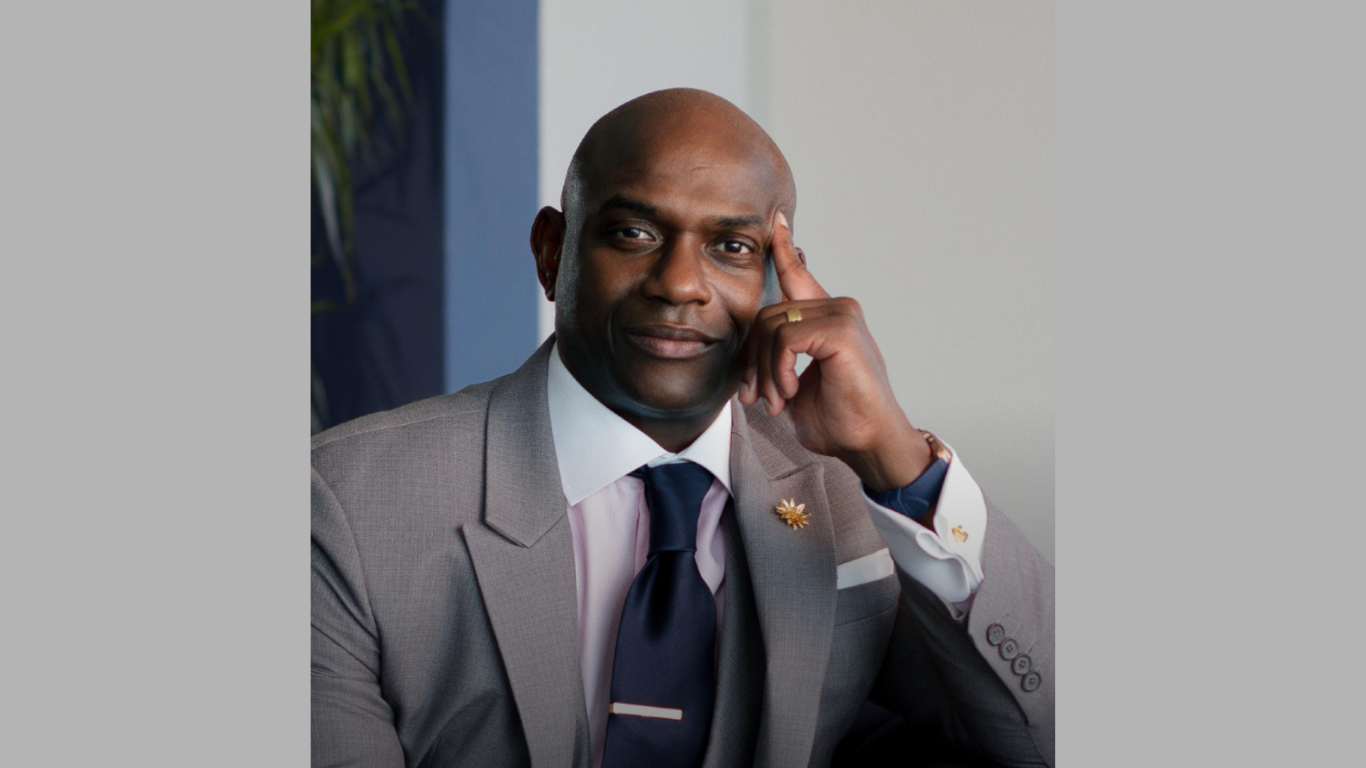
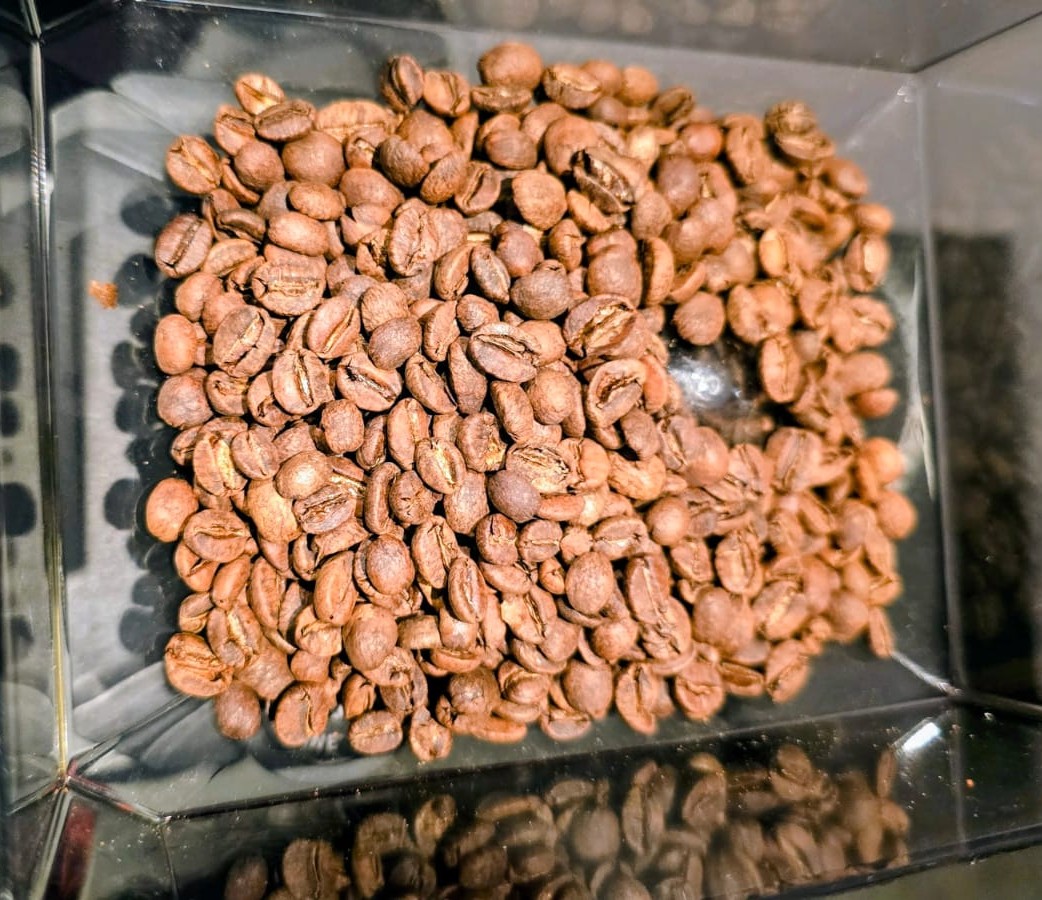
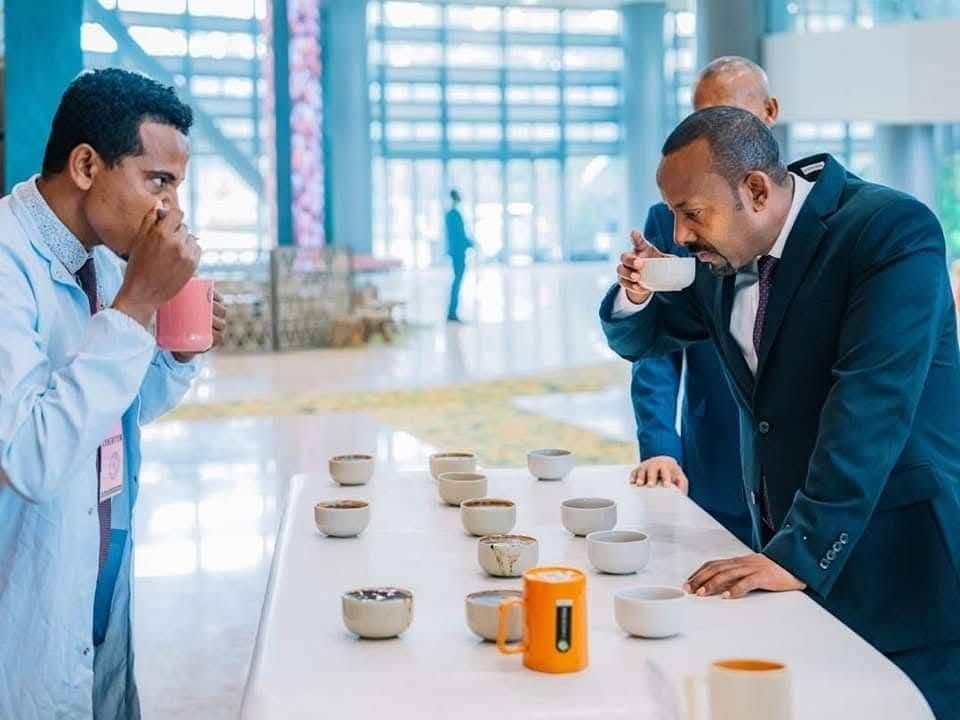
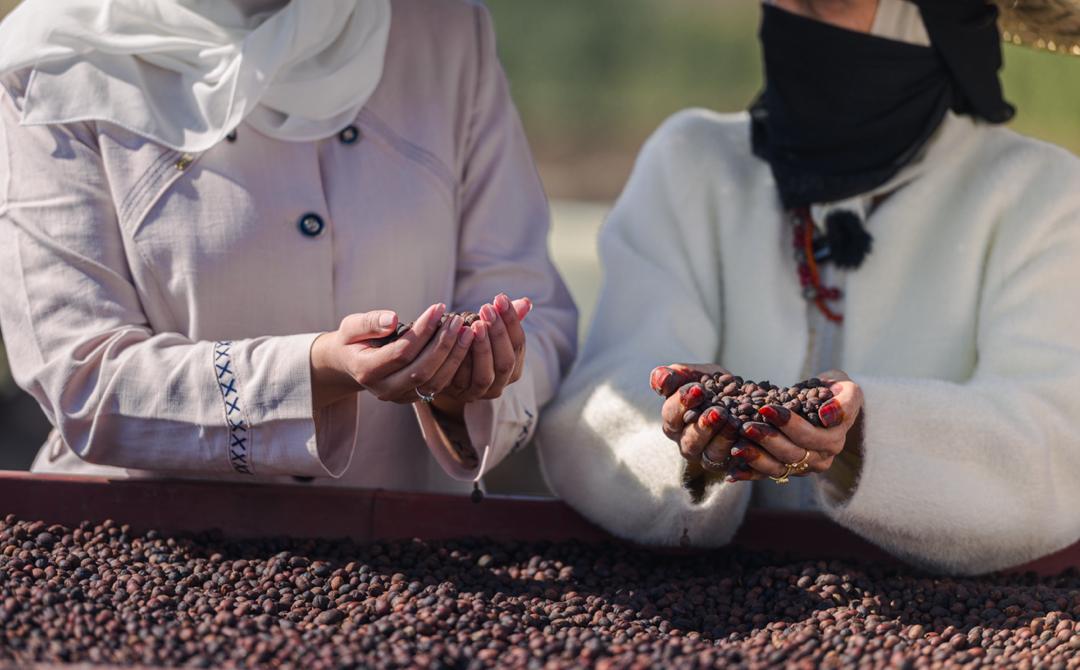
Garfield Kerr: Coffee is the World’s Premier and Most Definitive Functional Beverage

DUBAI – Ali Alzakary

Mr. Garfield Kerr, CEO of Mokha 1450, a leading specialty coffee chain in Dubai and the UAE, confirmed that coffee is the world’s premier and most definitive functional beverage.

Speaking to Hospitality News ME magazine in issue no. 157, published for the period from May to July 2026, Mr. Garfield said that modern scientific research has settled the decades-long debate surrounding coffee and dispelled old myths. Furthermore, he affirmed its role as the first, most versatile, and most effective functional beverage in history.

He explained that coffee’s roots as a functional beverage date back to 15th-century Yemen, where Sufi communities consumed coffee to maintain focus and alertness during long hours of prayer.

He added that claims circulating in the mid-20th century regarding coffee’s negative health impacts, such as stunted growth or irritability, were based on inaccurate studies flawed by small sample sizes and methodological errors.

However, he noted that comprehensive meta-analyses emerging in the 1990s and 2000s shifted this perception and uncovered coffee’s immense health benefits.

Mr. Garfield clarified that what places coffee at the forefront of functional beverages is its richness in plant-based and bioactive compounds.

He confirmed that caffeine belongs to the methylxanthine class. This class contributes to stimulating the central nervous system and increasing alertness by blocking adenosine receptors. Additionally, it inhibits phosphodiesterase enzymes.

He added that coffee contains antioxidant compounds such as chlorogenic acids and polyphenols. These compounds work to reduce oxidative stress, protect the liver and kidneys, and inhibit the growth of harmful bacteria in the digestive tract.

Mr. Garfield stated that black coffee provides immediate advantages for athletes and fitness enthusiasts, as it contributes to enhancing cardiovascular performance, accelerating muscle glycogen resynthesis, and stimulating fat oxidation at rest and during exercise.

Additionally, he added that it lowers perceived exertion and elevates pain thresholds during physical activity. Moreover, it elevates mood and suppresses appetite.

He reviewed the scientific evidence confirming coffee’s long-term health benefits, confirming that it significantly reduces the risks of heart attack, stroke, and heart failure. In addition, it lowers the risk of type 2 diabetes, liver cirrhosis, and pancreatic and liver cancers.

He added that coffee provides neuroprotection against diseases such as Parkinson’s, Alzheimer’s, and dementia. Besides, it lowers rates of depression and the overall risk of mortality.

He noted that these functional properties of coffee gain added significance alongside the growth of the global functional beverage market. Currently, this market is valued at approximately $130 billion and projected to reach $200 billion by 2030.

Mr. Garfield emphasized that black coffee remains the safest and most effective option compared to synthetic alternatives, such as energy drinks packed with sugar and unstudied additives.

He explained that the safe consumption rate of coffee, ranging between three to five cups per day, falls within normal limits for most consumers. Thus, its abuse is rare.

Mr. Garfield concluded his discussion by highlighting the future horizons of coffee science, pointing to ongoing research regarding coffee’s impact on the gut microbiome in collaboration with food chemistry researcher Aysenur Santaroğlu.

He confirmed that coffee is a complex chemical system rich in compounds such as melanoidins, diterpenes, and polyphenols, noting that the interaction of these compounds with gut bacteria could open new doors in preventative medicine and longevity enhancement, ensuring this beverage remains the most ubiquitous and effective functional drink throughout history.

Coffee Drinkers Shift to Whole Beans as Prices Soar

Source: Qahwa World / Lavazza Group
Author: Editorial Team
Date: July 21, 2026

Coffee Drinkers Shift to Whole Beans as Prices Soar

  • Consumers are buying less but better coffee as global prices remain elevated.
  • Whole bean demand surged 46% year-over-year, according to consumer data.
  • Home brewing equipment sales jumped: drip coffee makers up 66%, espresso machines up 50%.
  • Lavazza reported strong 2025 revenue of €3.9 billion, up 15.7%.
  • Lavazza plans to launch Tablì, a sustainable single-serve system using compressed coffee tablets.
  • Nielsen data shows whole bean sales outpacing overall coffee category across UK and Europe.
  • Price volatility is expected to persist, with no retail price cuts in sight.

Global coffee prices have remained elevated for four consecutive years. Consumers are adapting by buying less but better. This trend toward whole bean coffee and bean-to-cup machines represents a significant market shift.

Giuseppe Lavazza, Chairman of the Lavazza Group, called it the sector’s most important trend. “People are looking for beans,” he said. “They enjoy replicating the coffee shop experience at home. Maybe they prefer to consume a little less but of better quality.”

The Trend Emerged in 2024

This shift did not appear overnight. Early indicators were visible in 2024, well before the price peaks of 2025 intensified the movement. Pattern, a consumer demand analysis firm, reported whole bean coffee demand surged 46% year-over-year. This growth was accompanied by strong increases in home brewing equipment.

Drip coffee makers rose 66%. Espresso machines increased 50%. Accessories such as bean storage also grew 20%. The report highlighted a broader move toward serious at-home coffee preparation. Whole beans serve as the starting point for better freshness and flavor.

Multiple National Coffee Association surveys showed sustained high levels of at-home coffee consumption. Around 81% of past-day drinkers consumed coffee at home in some periods. Out-of-home consumption recovered post-pandemic, but the at-home habit remained strong. Consumers continued seeking premium experiences and better value.

2024 Early Indicators – Consumer Demand Growth
Category Growth
Whole bean coffee demand +46%
Drip coffee makers +66%
Espresso machines +50%
Bean storage accessories +20%

Current Reality: Price Surge Accelerates Change

Record-high coffee prices in 2025 pushed the trend into the mainstream. Poor harvests in Brazil and Vietnam drove the price surge. Climate change impacts, geopolitical disruptions, and financial speculation also contributed.

Nielsen data for the year to May 2026 shows the shift clearly. In the United Kingdom, whole-bean sales rose 20.3% by volume. This far outpaced the overall at-home coffee category, which grew just 2.8%. Value sales jumped 36.8%, while bean-to-cup machine sales increased 33.5%.

In Europe, France saw 35% growth by value. Italy recorded 33% growth. Germany, Europe’s largest coffee market, saw 31.2% growth. Whole beans have now surpassed traditional roast-and-ground coffee in volume in Germany.

In the United States, the shift was more modest but consistent. Whole-bean unit sales rose 3.2% over 52 weeks to June 2026. Meanwhile, pod sales fell 4.9% and ground coffee declined 3.9%.

Nielsen Data – Whole Bean Sales Growth (Year to May 2026)
Market Growth
United Kingdom (volume) +20.3%
United Kingdom (value) +36.8%
France (value) +35.0%
Italy (value) +33.0%
Germany (value) +31.2%
United States (unit sales) +3.2%

Why Prices Soared

The coffee market has faced four years of upheaval. Adverse weather and weak harvests in Brazil and Vietnam were key factors. Climate change impacts, including El Niño risks, added pressure. Geopolitical disruptions, higher shipping costs, and financial speculation in futures markets also played a role.

In the UK, at-home coffee prices rose another 6.3% in the year to May 2026. Roasters found it harder to manage costs by blending cheaper Robusta with Arabica. Both varieties hit record levels simultaneously.

Lavazza noted that futures prices have eased from 2025 peaks. However, the market remains too volatile for widespread retail price cuts. “We think there is not time to think about a possible cut in prices,” he said. “The possibility of another increase is not totally over.” At least two strong harvests in Brazil and Vietnam will be needed to rebuild global inventories.

Lavazza’s Performance and Strategic Response

Despite industry challenges, Lavazza reported strong 2025 results. Revenue reached €3.9 billion, up 15.7%. EBITDA rose 8.8% to €340 million. The company is innovating to stay ahead.

Lavazza plans to launch Tablì in the UK in September 2026. This is a single-serve system using compressed coffee tablets. It addresses waste and recycling concerns associated with plastic and aluminum pods. “Capsule is over,” Lavazza declared. “This is a new benchmark.”

Broader Implications and Future Outlook

Consumer behavior is evolving. Coffee remains recession-resistant. However, buyers are trading down in volume while trading up in quality and experience. The “less but better” philosophy reflects economic pressure and a desire for premium at-home rituals.

The pandemic-initiated home-brewing boom has become structural. Demand for whole beans rewards freshness, flavor complexity, and better value per cup. Persistent climate risks, cautious buying by roasters, and farmers holding stock in hope of higher prices continue to shape the market.

Volatility is now “the new constant,” according to Lavazza. Opportunities remain in premium home equipment, sustainable packaging innovations, and single-origin and specialty offerings.

“People are looking for beans and they enjoy maybe to replicate at home the experience of the coffee shop. Maybe they prefer to consume a little less but of better quality.”

— Giuseppe Lavazza, Chairman, Lavazza Group

Conclusion

What began as a noticeable trend in 2024 has evolved into a major market shift in 2026. Soaring prices amplified the movement. Consumers are not abandoning coffee. They are redefining how they enjoy it. As Lavazza observed, this represents a “fundamental transformation in terms of supply and demand.”

For roasters, retailers, and consumers alike, the message is clear. Quality, freshness, and thoughtful preparation are winning out in an era of higher costs and greater awareness.

Frequently Asked Questions

What is the “less but better” coffee trend?Consumers are buying less coffee in volume but choosing higher quality whole beans and premium home brewing equipment to replicate café experiences at home.

How much did whole bean demand surge?Whole bean coffee demand surged 46% year-over-year, according to consumer demand analysis from Pattern.

What are the key market data highlights?In the UK, whole-bean sales rose 20.3% by volume. France saw 35% value growth, Italy 33%, and Germany 31.2%.

Why are coffee prices so high?Poor harvests in Brazil and Vietnam, climate change, geopolitical disruptions, and financial speculation have driven prices to record levels.

What is Lavazza’s new Tablì product?Tablì is a single-serve system using compressed coffee tablets instead of plastic or aluminum pods, addressing waste and recycling concerns.

Will coffee prices come down soon?Lavazza says prices remain too volatile for retail cuts. At least two strong harvests in Brazil and Vietnam are needed to rebuild inventories.

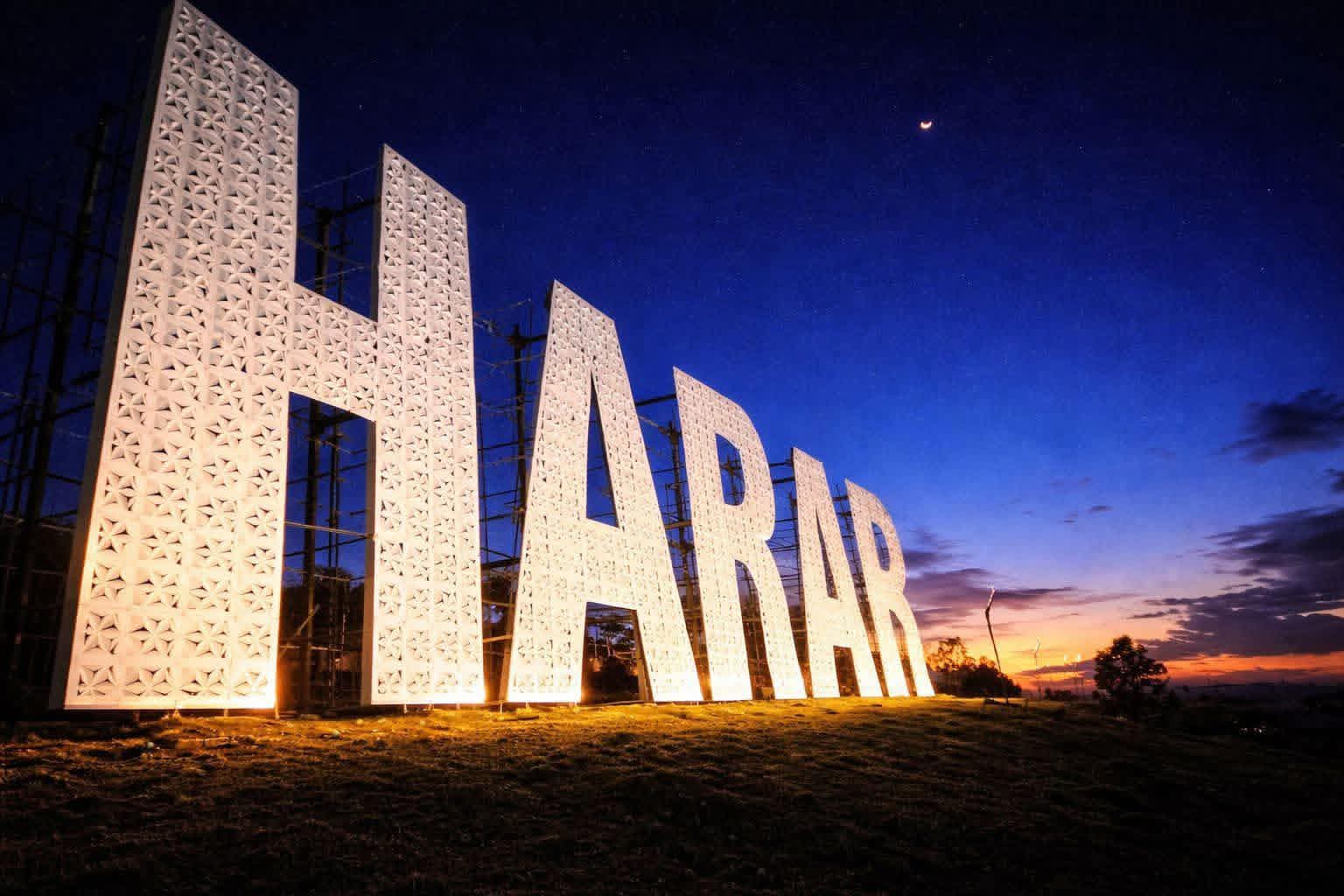
Harar: Where Coffee, Faith and Footsteps Meet

Harar blends centuries of coffee heritage, Islamic history and warm hospitality. The inaugural Great Harar Run offers visitors a new way to discover one of Ethiopia’s most remarkable cities.

By Tewodros Balcha | Exclusive for Qahwa World

Thousands of runners passed through the ancient gates of Harar today, transforming one of Africa’s oldest living cities into the newest stage of Ethiopia’s celebrated running culture.

The inaugural Ethio Telecom Great Harar Run was more than a sporting event. It was an invitation to experience a city where coffee, faith and hospitality have shaped everyday life for centuries.

Long before the starter’s whistle echoed through the narrow streets of Harar Jugol, generations of traders, scholars and pilgrims had followed these same paths. Today, athletes from Ethiopia and abroad joined that long procession, discovering a city whose history is inseparable from the story of coffee itself.

A City Built on Faith and Exchange

Perched in the eastern highlands of Ethiopia, Harar has been a crossroads between Africa and the Arabian Peninsula for centuries. According to local tradition, the city traces its origins to the 10th century and the arrival of Sheikh Abadir Umar ar-Rida, whose legacy remains deeply woven into Harar’s religious identity.

Known as Madinat al-Awliya, or the City of Saints, Harar is home to an extraordinary concentration of historic mosques, shrines and Islamic schools within its centuries-old walls. In 2006, Harar Jugol was inscribed as a UNESCO World Heritage Site, recognized for its unique urban heritage and cultural significance.

For generations, merchants crossed these gates carrying coffee, spices, textiles and ideas, linking Ethiopia with the Red Sea, Arabia and beyond.

Where Coffee Became a Tradition

Coffee’s wild origins lie in Ethiopia’s forests, but Harar played a defining role in transforming coffee from a native plant into one of the world’s earliest traded agricultural products.

For centuries, the region became one of Ethiopia’s most important coffee-growing and trading centers. Caravans carried Harar’s beans across ancient trade routes to the ports of the Red Sea, where Arab merchants introduced Ethiopian coffee to markets throughout the Middle East before it eventually reached Europe.

Today, Harar remains one of Ethiopia’s most celebrated coffee origins. Its naturally processed coffees are prized for their distinctive character, often revealing notes of blueberry, dried fruit, spice, chocolate and floral aromas. Long before the term “specialty coffee” existed, generations of farmers in Harar had already developed traditions of careful cultivation, harvesting and natural drying that continue to define the region’s reputation.

More Than a Cup

In Harar, coffee is not simply served.

It is prepared.

Guests are welcomed with freshly roasted beans, their aroma filling the room before the coffee is carefully brewed and shared. The ceremony unfolds without haste, turning every cup into an expression of hospitality rather than a simple refreshment.

Visitors from across the Arab world often find something familiar in this ritual. While traditions differ from one region to another, the values are instantly recognizable: generosity, conversation and the belief that welcoming a guest begins with coffee.

A Living Heritage

Walking through Harar Jugol is unlike visiting an open-air museum.

Its narrow alleyways remain full of daily life. Children play beneath centuries-old walls. Markets continue to trade much as they have for generations. Historic houses, colorful courtyards and neighborhood mosques remain part of a living city rather than preserved exhibits.

Arabic manuscripts copied by generations of scholars helped establish Harar as an important center of Islamic learning in the Horn of Africa. The city’s traditions continue to be passed from one generation to the next, making Harar a place where history is experienced rather than observed.

Running Through History

The Ethio Telecom Great Harar Run added a new chapter to that living history.

As the final stop of this year’s Discover Ethiopia Classics series, the event attracted thousands of participants, including elite athletes, local residents and visitors from nine countries.

Organized by the internationally respected Great Ethiopian Run, the event brought one of Africa’s leading road-racing organizations to one of Ethiopia’s oldest cities. Known globally for staging the annual Great Ethiopian Run in Addis Ababa, the organization has helped establish Ethiopia as one of the world’s premier destinations for distance running.

Yet in Harar, the route itself became part of the experience.

Runners passed through the ancient gates of Jugol, wound through historic neighborhoods and emerged into streets where coffee ceremonies welcomed visitors at every turn. As evening approached, the city’s famous hyena feeders prepared for another night of a tradition that has fascinated visitors for generations.

In Harar, even a road race becomes an encounter with history.

More Than a Destination

Every generation believes it has discovered authentic travel.

Harar has never needed to reinvent itself.

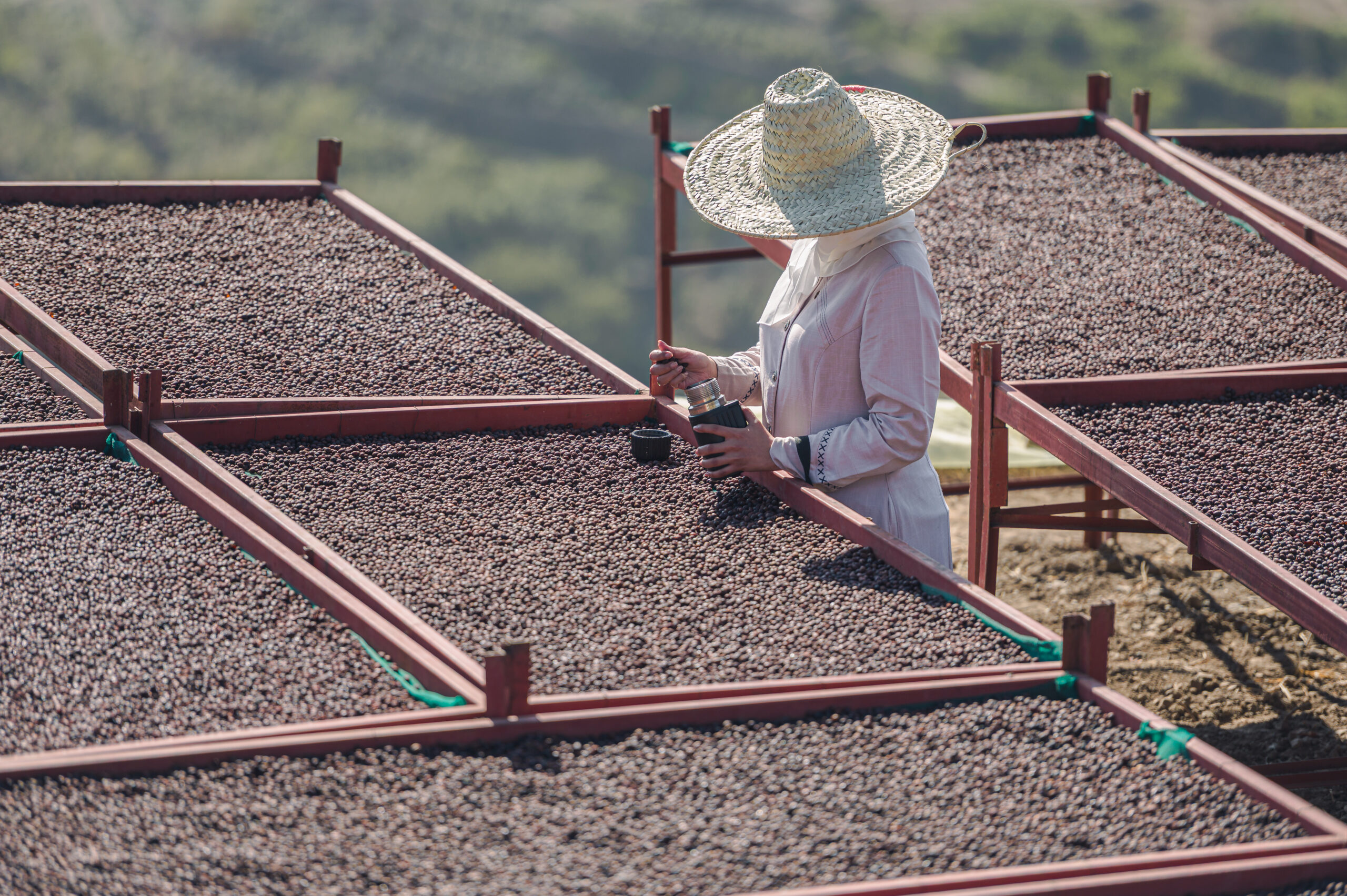
Visitors who arrive a day before the race can wander through the old city at their own pace, explore nearby coffee farms, watch naturally processed coffee drying beneath the Ethiopian sun and experience ceremonies that remain central to everyday life.

The race offers a reason to come.

The city offers every reason to stay.

Some places are remembered for their monuments.

Harar is remembered for its people, its coffee and the quiet generosity with which it welcomes every visitor.

Some cities you visit.

Harar is one you carry with you.

Ethiopia Coffee Revenue Tops 3 Billion

Source: Official government reports & Daily Coffee News analysis
Author: Qahwa World
Date: July 8, 2026

Ethiopia Coffee Revenue Tops 3 Billion

  • Ethiopia earned 3.1 billion dollars from coffee exports in a single year.
  • This represents a 719.6% increase compared to 20 years ago.
  • The country ranks third globally and first in Africa for coffee exports.
  • One year’s income exceeded the total of the previous 17 years combined.
  • Rising global demand for organic coffee opens new opportunities for Ethiopia.
  • A comparison with Brazil reveals Ethiopia’s competitive edge in sustainable farming.
  • The analysis recommends increased technical and financial support for farmers.

Ethiopia announced a historic achievement in its coffee sector. Export revenues surpassed the 3 billion dollar mark. This reflects a strategic transformation in farming and marketing policies.

Annual revenues reached 3.1 billion dollars. This surpasses the total earned over the previous 17 years. That total stood at only 3.3 billion dollars.

Historical Numbers Confirm Accelerated Growth

Official data compared current performance with past periods. The results showed enormous revenue growth. For example, 20 years ago, revenues were only 366 million dollars. Today, they stand at 3.1 billion dollars.

In addition, the net increase over 20 years exceeded 2.6 billion dollars. This translates to a growth rate of 719.6%. In contrast, income more than doubled within the last 5 years alone.

Ethiopian Coffee Export Revenue Comparison (in billions USD)
Period Revenue Net Increase Growth Rate
20 years ago 0.366 +2.634 719.6%
10 years ago 0.722 +2.278 315.5%
5 years ago 0.907 +2.093 230.7%
Current year 3.100

Strategic Opportunities Amid Brazil’s Crisis

Brazil, the world’s largest coffee producer, faces severe climate challenges. Production in Minas Gerais state has been heavily damaged. As a result, Brazil’s export capacity has declined.

In contrast, Ethiopia possesses unique natural advantages. It is the birthplace of Arabica coffee. Moreover, its farming relies on organic and forest-based systems. Therefore, it can fill the gap in European and Asian markets.

Organic Coffee and the Competitive Edge

Brazilian farmers are shifting to chemical fertilizers. They aim to quickly compensate for lost production. However, this reduces the quality of organic coffee.

Meanwhile, Ethiopian coffee remains natural and chemical-free. Furthermore, Ethiopia’s agroforestry system complies with new EU regulations. This strengthens its position in the global market. Consequently, the value of its exports continues to rise.

Required Steps to Maximize Gains

The report urged immediate action. First, increase productivity through technical support for farmers. Second, improve quality control to maintain global reputation. Third, provide affordable financing for sustainable agricultural projects.

In addition, leverage strong diplomatic ties with Asia. Especially China, which is a vast emerging market. Ultimately, this will enable Ethiopia to turn its origin advantage into true market dominance.

Frequently Asked Questions

What is Ethiopia’s current coffee export value?Ethiopia’s coffee exports reached 3.1 billion dollars last year, setting a new record.

What was the export value 20 years ago?The value was only 366 million dollars, which means a massive growth of over 700%.

What is Ethiopia’s global ranking in coffee exports?Ethiopia ranks third globally after Brazil and Colombia, and first in Africa.

How does Ethiopia benefit from Brazil’s crisis?It can compensate for the global supply shortage, especially in Europe and Asia, thanks to the quality of its organic and natural beans.

What are the main challenges for the sector?The sector needs more farmer support, better infrastructure, and increased funding to meet new market requirements.

Is Ethiopian coffee completely organic?Yes, the vast majority is grown naturally on small farms or in forests, without any chemical inputs.

Ethiopia Surpasses $3 Billion Coffee Export Target, Sets Sights on $6 Billion

Source: Ethiopian Ministry of Agriculture – Official Statement |
Author: Qahwa World |
Date: July 4, 2026

Ethiopia Surpasses $3 Billion Coffee Export Target, Sets Sights on $6 Billion

Key Takeaways:

  • Ethiopia has generated more than $3 billion in coffee export earnings during the 2025/26 fiscal year – the country’s strongest coffee export performance on record.
  • The achievement represents a significant increase from the $2.65 billion earned in the previous fiscal year.
  • The government is now targeting $6 billion in annual coffee export earnings within five years.
  • The strategy aims to raise average coffee productivity from about 9 quintals per hectare to 21 quintals per hectare.
  • Coffee remains Ethiopia’s largest agricultural export and a major source of foreign exchange earnings.
  • The initiative was developed in collaboration with the Ethiopian Coffee and Tea Authority.

Ethiopia has generated more than $3 billion in coffee export earnings during the 2025/26 fiscal year, surpassing a government target and marking the country’s strongest coffee export performance on record. This milestone comes as Ethiopia continues to cement its position as the birthplace of Arabica coffee and one of the world’s leading specialty coffee origins.

Announcing the milestone, Ethiopian Agriculture Minister Addisu Arega said the achievement reflects improvements in production, productivity and quality across the coffee value chain. The result represents a significant increase from the $2.65 billion earned in the previous fiscal year.

The Ambitious Target: $6 Billion Within Five Years

Speaking during discussions on a new national coffee development framework, Addisu said Ethiopia is targeting annual coffee export earnings of $6 billion within five years. The strategy aims to raise average coffee productivity from about 9 quintals per hectare to 21 quintals per hectare. The initiative, developed in collaboration with the Ethiopian Coffee and Tea Authority, seeks to accelerate productivity growth, improve quality standards and strengthen the country’s competitiveness in global coffee markets.

Fiscal Year Coffee Export Earnings Change
2024/2025 $2.65 billion
2025/2026 $3.0+ billion +13.2%
2030/2031 Target $6.0 billion +100%

Boosting Productivity: From 9 to 21 Quintals per Hectare

Raising productivity from 9 to 21 quintals per hectare represents a major transformation for the sector. This will require significant investment in improving agricultural practices, providing high-quality inputs, training farmers, and developing infrastructure. The strategy also includes improving quality standards to enhance the reputation of Ethiopian coffee in global markets and increasing competitiveness, especially in the specialty coffee segment for which Ethiopia is renowned.

Coffee: The Backbone of Ethiopia’s Economy and a Key Source of Foreign Exchange

Coffee remains Ethiopia’s largest agricultural export and a major source of foreign exchange earnings, supporting millions of smallholder farmers while reinforcing the country’s position as the birthplace of Arabica coffee and one of the world’s leading specialty coffee origins. This achievement represents an important step in Ethiopia’s strategy to strengthen coffee’s role in economic development and achieve ambitious growth targets.

The Road to $6 Billion: Challenges and Opportunities

Despite the significant achievement, Ethiopia’s coffee sector faces challenges including climate change, weak infrastructure in some areas, and the need to improve market access. However, opportunities are also substantial, especially with growing global demand for specialty coffee and Ethiopia’s renowned reputation in this field. The new strategy provides a clear roadmap to turn these opportunities into tangible reality, with a focus on quality, sustainability, and innovation.

Frequently Asked Questions About Ethiopia’s Coffee Export Achievements

Q: How much did Ethiopia earn from coffee exports in fiscal year 2025/2026?

A: More than $3 billion, the highest level ever recorded.

Q: What is Ethiopia’s new coffee export target?

A: Ethiopia is targeting $6 billion annually within five years.

Q: How does Ethiopia plan to achieve this target?

A: By raising average productivity from 9 quintals per hectare to 21 quintals, improving quality, and strengthening competitiveness.

Q: Why is coffee important to Ethiopia’s economy?

A: Coffee is Ethiopia’s largest agricultural export and a key source of foreign exchange, supporting millions of farmers.

Q: Which authority oversees coffee sector development in Ethiopia?

A: The Ethiopian Ministry of Agriculture, in collaboration with the Ethiopian Coffee and Tea Authority.

Ethiopia’s surpassing of the $3 billion coffee export mark is a milestone in the country’s history, reflecting ongoing efforts to improve production and quality. With the ambitious target of reaching $6 billion, Ethiopia is drawing a roadmap for its future as a global coffee power, while preserving its position as the birthplace of Arabica. The road is long, but the will and vision are strong.

Prepared and edited by: Qahwa World – Based on an official statement from the Ethiopian Ministry of Agriculture.

All rights reserved. Republication with attribution permitted.

Publication date: July 4, 2026

On the Eve of the World of Coffee Brussels, CQI CEO Delivers a Message on 2026 Achievements and Future Plans

Source: Coffee Quality Institute (CQI) – CEO Message |
Author: Qahwa World |
Date: June 24, 2026

On the Eve of the World of Coffee Brussels, CQI CEO Delivers a Message on 2026 Achievements and Future Plans

Key Takeaways:

  • On the eve of the World of Coffee trade show in Brussels, the CEO of the Coffee Quality Institute (CQI) delivers a message to the international community, reviewing achievements from the first half of 2026.
  • The Institute launched two new programs: the Matching Grant Fund to support coffee-growing communities, and the CQI Insider program to connect coffee professionals worldwide.
  • Following a comprehensive upgrade, the renowned “Coffee Corps” program has been relaunched, with the first volunteers already selected for the new version.
  • Version 3.0 of the Processing Professional (PHP) course completed its review and has been delivered in Africa, Asia, and Latin America.
  • The fifth cohort of the Processing Expert Course, the Institute’s most advanced program, has been convened.
  • In Brussels, CQI is preparing to welcome visitors at Booth 7655 with live demonstrations, tastings, and meetings with key partners.

On the eve of the World of Coffee Brussels, taking place from June 25 to 27, Michael Sheridan, CEO of the Coffee Quality Institute (CQI), delivered a message to the international coffee community. He reviewed the achievements of the first half of 2026, a period marked by significant milestones and qualitative developments, while also announcing the Institute’s participation in the event with a rich program featuring live demonstrations, tastings, and meetings with prominent partners.

This message comes at a critical time, as the global coffee industry undergoes rapid transformation, highlighting the growing role of educational and training institutions in enhancing production quality and improving producers’ livelihoods — priorities that remain at the core of CQI’s mission.

New Programs to Support Producers and the Coffee Community

Among the key highlights of the message was the launch of two new programs during the first half of the year. The first is the “Matching Grant Fund,” an initiative designed to catalyze co-investment in coffee-growing communities by providing matching financial grants to support development projects in producing regions. The second is “CQI Insider,” a digital platform that aims to connect the global community of coffee professionals, creating a space for communication and the exchange of experiences and ideas among those working across all stages of the value chain — from the farm to the cup.

Coffee Corps Relaunched After Comprehensive Upgrade

In addition, the Institute relaunched the “CQI Coffee Corps” program, one of its most celebrated initiatives in history, following a comprehensive upgrade and refinement. The first group of volunteers has already been selected for the new version of the platform, which is designed to strengthen peer-to-peer education among coffee professionals and enable them to share field knowledge and expertise directly. This program reflects the Institute’s commitment to building a more connected and collaborative coffee community.

Training Programs Development and Curriculum Updates

In the training domain, the first half of the year witnessed a significant achievement with the completion of a comprehensive review and two successful pilots of Version 3.0 of the Processing Professional (PHP) course, one of the Institute’s most impactful programs. The updated course has already been delivered across three continents — Africa, Asia, and Latin America — reflecting the Institute’s global reach and its ability to connect with coffee-producing regions worldwide.

Additionally, the fifth cohort of the Processing Expert Course was convened, representing the Institute’s most advanced training program, designed to develop a select group of experts in coffee processing. Students from this cohort are expected to transition soon from the classroom to the field, applying their learning in real-world settings and contributing to raising quality standards across the coffee industry.

Area Achievement
New Programs Matching Grant Fund, CQI Insider
Peer-to-Peer Education Coffee Corps relaunched, first volunteers selected
Processing Professional (PHP) v3.0 completed and delivered across 3 continents
Advanced Training 5th cohort of Processing Expert Course convened
International Engagements Dubai, Addis Ababa, Tampa, San Diego, Bangkok, Lima, and Brussels

Participation in Brussels 2026: Exclusive Activities at Booth 7655

As part of these ongoing efforts, CQI is participating in the World of Coffee Brussels 2026, one of the most significant global events in the specialty coffee sector. Booth 7655 at the Brussels Expo Convention Center will serve as the hub for the Institute’s activities, featuring live demonstrations, tastings, and meetings with prominent partners and experts.

Key highlights of the Institute’s three-day program include:

  • Exploring the New Le Nez du Café Kit: Featuring Viva Lenoir, President of the company behind the kit’s creation, who will be available to answer questions and share what’s new in this updated edition of the aroma training kit.
  • Live High-Precision Moisture Meter Demonstrations: Presented by Ben Collier, Managing Director of Sinar Technology, highlighting the importance of moisture meters and sharing maintenance tips.
  • Fine Canephora Coffee Tasting: With Lukas Harbig, creator of the Canephorum event, and partner Gloria Pedroza, Head of NKG’s Quality Services Department. Visitors will have the opportunity to taste exceptional Canephora coffees and gain insights into the latest developments in this segment.
  • Meet & Greet with Bean Voyage: As part of the Women Powered Coffee Summit, representatives from the organization will meet with booth visitors to discuss the role of women in the coffee industry.

Day Activity Time
June 25 CQI Pin Distribution & Le Nez du Café Exploration All Day
June 25 Meet & Greet: Bean Voyage | Women Powered Coffee Summit 10:30 AM
June 25-27 Sinar Technology Moisture Meter Talks 1:00 & 3:00 PM
June 27 Fine Canephora Tasting with Lukas Harbig & Gloria Pedroza 1:00 PM

Looking Ahead: The Second Half of 2026 Promises Even More

CEO Michael concluded his message by indicating that the second half of 2026 will be even more eventful, with plans to launch new programs, update training curricula, forge strategic partnerships, and implement ambitious investments and projects — all aimed at fulfilling the Institute’s core mission: improving coffee quality and the lives of those who produce it worldwide. He emphasized that updates on these initiatives will be announced in the coming months, inviting the coffee community to follow and participate in these developments.

Frequently Asked Questions About CQI and Brussels Activities

Q: What is the Coffee Quality Institute (CQI)?

A: A non-profit organization dedicated to improving coffee quality and the lives of producers through education, training, and research. It is one of the most prominent institutions in the specialty coffee sector.

Q: What is the CQI Coffee Corps program?

A: A peer-to-peer education program that connects coffee professionals worldwide to share field knowledge and expertise. It was recently relaunched after a comprehensive upgrade.

Q: Where is CQI’s booth located at the Brussels show?

A: At Booth 7655 at the Brussels Expo Convention Center, throughout the show from June 25 to 27.

Q: What is the Le Nez du Café kit?

A: A specialized training tool designed to teach and develop aroma recognition and tasting skills in coffee. A new updated edition has just been released.

Q: What is the Processing Expert Course?

A: CQI’s most advanced training program, designed to develop elite experts in coffee processing. Its fifth cohort was convened in 2026.

The Coffee Quality Institute combines ambitious vision with tangible actions through its participation in the Brussels trade show and its review of first-half achievements. From developing training programs and relaunching educational initiatives to forging strategic partnerships, CQI continues to strengthen its position as a leading force in improving coffee quality worldwide. We invite you to visit Booth 7655 in Brussels and join the Institute’s diverse activities, which bring together education, tasting, and professional networking.

Prepared and edited by: Qahwa World – Based on the Coffee Quality Institute (CQI) CEO message.

All rights reserved. Republication with attribution permitted.

Publication date: June 24, 2026

Victoria Arduino at World of Coffee Brussels 2026: A Journey Through Origins, Heritage, and Innovation

Source: Victoria Arduino – Press Release |
Author: Qahwa World |
Date: June 23, 2026

Victoria Arduino at World of Coffee Brussels 2026: A Journey Through Origins, Heritage, and Innovation

Key Takeaways:

  • Victoria Arduino will participate in World of Coffee Brussels 2026 from June 25–27 at Booth 11322.
  • The brand will showcase its vision of professional coffee: a blend of innovation, design, and performance.
  • The booth features dedicated coffee stations: “Coffee from the Origins” with Eagle One and “Italian Premium Heritage” with Eagle Tempo.
  • The E1 Prima PRO station will host guest roasters: Da Matteo (June 25), OR Coffee (June 26), and Le Joeli Coeur Specialty Roaster (June 27).
  • “But First Coffee” area offers tastings, signature drinks, and exclusive collaborations across the three days.
  • The L’Atelier project redefines customization in professional coffee machines, transforming the machine into a bespoke design piece.

From June 25–27, 2026, Victoria Arduino will take center stage at World of Coffee Brussels 2026, one of the most anticipated events for the international specialty coffee community. In the vibrant heart of Europe, the brand will showcase its vision of professional coffee: a perfect blend of innovation, design, and performance, created to empower baristas and deliver memorable coffee experiences.

Visit us at Booth 11322 to discover Victoria Arduino’s solutions up close and enjoy three days dedicated to coffee excellence.

A Journey Through Origins, Heritage, and Innovation

Inside the booth, visitors will embark on an immersive journey through dedicated coffee stations designed to showcase different extraction methods and tasting experiences.

Coffee from the Origins with Eagle One: With Eagle One, Victoria Arduino presents the “Coffee from the Origins” concept – an experience dedicated to exploring coffee origins and their impact in the cup. In collaboration with Lohas Beans, visitors will discover aromatic profiles that tell the story of unique territories, varieties, and processing methods, celebrating the most authentic expression of coffee’s raw material.

Italian Premium Heritage with Eagle Tempo: With Eagle Tempo, the spotlight shifts to “Italian Premium Heritage”, a concept that celebrates the culture of Italian espresso and its continuous evolution. In partnership with Filicori Zecchini, one of Italy’s historic coffee roasters, visitors will have the opportunity to taste blends that embody the perfect balance between tradition, quality, and innovation, offering a contemporary interpretation of Italian coffee excellence. Two coffee machines, two complementary visions of coffee, united by the same pursuit of quality in every cup.

Date Roaster / Collaborator Activity
June 25 Da Matteo Brewing sessions on E1 Prima PRO
June 25 Corica + Coffee Foundation Espresso & Flat White tastings, music event
June 26 OR Coffee Brewing sessions on E1 Prima PRO
June 26 Andrea Villa (Italian CIGS Champion) Signature Morning Aperitivo creations
June 26 Ditta Artigianale × Vivoli Original Italian Affogato
June 27 Le Joeli Coeur Specialty Roaster Brewing sessions on E1 Prima PRO
June 27 Belga & Co Espresso, Americano & Flat White

E1 Prima PRO: Roaster Creativity on Stage

The E1 Prima PRO station will host an exciting lineup of guest roasters throughout the event. Each day will begin with Lift Up!, serving coffee every morning on E1 Prima PRO. The guest roaster schedule includes: Da Matteo on June 25, OR Coffee on June 26, and Le Joeli Coeur Specialty Roaster on June 27. A dynamic program designed to highlight the versatility of E1 Prima PRO while offering visitors an ongoing exploration of different styles, origins, and interpretations of contemporary coffee.

L’Atelier: Where Design Meets Customization

Brussels will also host L’Atelier, Victoria Arduino’s project redefining customization in the world of professional coffee machines. Inspired by the universe of luxury ateliers, L’Atelier transforms the coffee machine into a truly bespoke object: not merely a professional tool, but a distinctive design element capable of expressing identity, creativity, and style.

“But First Coffee”: Tastings, Signature Drinks, and Exclusive Collaborations

A highlight of the booth experience will be “But First Coffee” (Booth 11322), a dedicated space celebrating specialty coffee through tastings, roaster takeovers, and exclusive sensory experiences.

June 25: The day begins with a selection of espresso and flat white beverages by Corica. In the afternoon, a special event with Coffee Foundation will showcase the value of a partnership built on dialogue, shared values, and positive impact. The experience will be enhanced by music, creating a welcoming environment for connection and conversation among coffee professionals.

June 26: OR Coffee will take over the morning session at But First Coffee, serving Double Espresso XPL03 Costa Rica Anaerobic and Flat White. In a dedicated area of the bar, Andrea Villa, Italian CIGS Champion, will present a series of exclusive Signature Morning Aperitivo creations, offering an innovative interpretation of the meeting point between coffee and mixology. In the afternoon, visitors can enjoy a truly Italian experience: the Original Italian Affogato, created through a collaboration between Victoria Arduino, Ditta Artigianale, and Vivoli, one of Italy’s most renowned gelato makers.

June 27: The final day will feature Belga & Co, serving a selection of Espresso, Americano and Flat White.

A Different Experience Every Day: Three days, multiple roasters, and a continuous program of tastings, meetings, and special collaborations designed to showcase the many facets of contemporary coffee culture.

See You in Brussels

World of Coffee Brussels 2026 will be the perfect opportunity to step into the world of Victoria Arduino, where excellence, design, and coffee culture come together to create unique experiences. Visit us at Booth 11322 and discover the future of coffee.

Frequently Asked Questions About Victoria Arduino at World of Coffee Brussels 2026

Q: When will World of Coffee Brussels 2026 take place?

A: From June 25–27, 2026.

Q: Where is the Victoria Arduino booth located?

A: At Booth 11322.

Q: Which coffee machines will be showcased at the booth?

A: The Eagle One, Eagle Tempo, and E1 Prima PRO.

Q: Which roasters will be guest features on E1 Prima PRO?

A: Da Matteo (June 25), OR Coffee (June 26), and Le Joeli Coeur Specialty Roaster (June 27).

Q: What is the “But First Coffee” experience?

A: A dedicated space for tastings, roaster takeovers, and exclusive sensory experiences across the three days, with collaborations with Corica, Coffee Foundation, OR Coffee, Vivoli, and Belga & Co.

World of Coffee Brussels 2026 is the perfect platform to discover Victoria Arduino’s vision of professional coffee, where excellence, design, and coffee culture come together in a unique experience. Don’t miss the opportunity to visit Booth 11322 and discover the future of coffee.

Stay updated on Victoria Arduino events and news at www.victoriaarduino.com and follow us on Instagram at @victoriaarduinoofficial

Prepared and edited by: Qahwa World – Based on a press release from Victoria Arduino.

All rights reserved. Republication with attribution permitted.

Publication date: June 23, 2026

Maryam Tabatabaei: A Journey of Passion in Dubai’s Specialty Coffee Scene

Source: Qahwa World – Exclusive Interview |
Author: Ali Alzakary |
Date: June 17, 2026

Maryam Tabatabaei: A Journey of Passion in Dubai’s Specialty Coffee Scene

Key Takeaways:

  • Maryam Tabatabaei is a specialty coffee expert, holding certifications in coffee evaluation, training, roasting, and competition judging.
  • She believes training is at the core of her work and finds the greatest reward in seeing trainees grow and succeed in the coffee industry.
  • She founded The Coffee Atelier as a learning space that combines professionalism with creativity.
  • She defines specialty coffee as quality, transparency, and respect for everyone in the coffee chain – not just high cost or complexity.
  • She believes coffee is a means of connection across cultures, and that hospitality and passion are universal values.
  • Her advice to those who love coffee but doubt their career prospects: start learning, stay curious, and be patient.

Maryam Tabatabaei is one of the experienced professionals in Dubai’s specialty coffee scene. She holds multiple certifications in coffee evaluation, training, roasting, and competition judging. Her work spans several areas: training, roasting, judging, and sensory analysis.

In this interview, Maryam talks about her beginnings with coffee, her experience in training, her perspective on Dubai’s coffee scene, and her advice for those who aspire to work in this field.

We invite you to read the interview and learn from her experience.

Do you remember the first coffee that truly surprised you?

Absolutely. It was the first time I tasted a naturally processed specialty coffee with intense fruit notes. Until then, coffee was simply coffee to me. Discovering flavors like berries, tropical fruits, and chocolate in a single cup completely changed my understanding of what coffee could be.

When did you realize coffee was going to become more than just a job for you?

I realized it when I started teaching others. Seeing students become passionate about coffee and watching their skills develop gave me a sense of purpose beyond making drinks. That’s when coffee became a lifelong journey rather than just a profession.

What still excites you about coffee today?

Coffee never stops teaching me something new. Whether it’s a new origin, a unique processing method, or helping someone discover a flavor they’ve never experienced before, there is always something new to explore.

You work in education, roasting, judging, and sensory. Which part feels most like you?

Training feels most like me. I enjoy sharing knowledge and helping people grow. Roasting and judging are incredibly rewarding, but seeing students gain confidence and succeed in their coffee careers is what fulfills me the most.

What’s something people misunderstand about specialty coffee?

Many people think specialty coffee is about being expensive or complicated. In reality, it’s about quality, transparency, and respect for everyone involved in the coffee chain – from the farmer to the person preparing the cup.

Has coffee changed the way you see people or culture?

Definitely. Coffee has allowed me to connect with people from many different countries and backgrounds. It has taught me that while cultures may differ, hospitality, passion, and the desire to connect over a cup of coffee are universal.

What was going through your mind during the roasting championship?

A mixture of excitement, focus, and responsibility. I knew every decision could affect the final result. At the same time, I reminded myself to trust my training, experience, and understanding of the coffee.

Do you still get nervous judging competitions or teaching students?

Yes, and I think that’s a good thing. A little nervousness means I care about doing my best. Whether I’m judging a competition or teaching a class, I want to give participants the attention and respect they deserve.

What’s the most rewarding moment you’ve had with a student?

Seeing a former student become a successful coffee professional and knowing I played a small part in their journey. Those moments remind me why education is so important.

What kind of atmosphere did you want to create with The Coffee Atelier?

I wanted The Coffee Atelier to be a place where people feel comfortable learning, asking questions, and developing their skills. A place that combines professionalism with creativity and genuine passion for coffee.

Dubai’s coffee scene is growing fast. What makes you hopeful about it?

The level of curiosity and commitment I see from young professionals. More people are interested in quality, training, and understanding coffee deeply rather than simply following trends. That gives me a lot of hope for the future.

What advice would you give someone who loves coffee but doubts they can make a career from it?

Start learning, stay curious, and be patient. The coffee industry offers many paths beyond being a barista. If you’re passionate and willing to keep improving, there is absolutely a place for you in this industry.

After all the certifications and competitions, what does a “good cup of coffee” mean to you now?

A good cup of coffee is one that creates a meaningful experience. Technical perfection matters, but ultimately, a great coffee is one that brings enjoyment, connection, and appreciation for the work behind it.

When you’re not analyzing coffee professionally, how do you actually enjoy drinking it?

I prefer simple brewing methods that allow me to relax and enjoy the coffee without overthinking it. Sometimes I just want to sit quietly and appreciate the cup rather than analyze every flavor note.

What keeps you motivated to continue learning in coffee?

The fact that coffee is a world without an endpoint. There is always another origin to explore, another technique to learn, and another person to inspire. That endless opportunity for growth keeps me motivated every day.

This interview offers insight into Maryam Tabatabaei’s experience in the specialty coffee world, her professional journey, and her perspective on training and development. We invite you to read the full interview and benefit from her expertise.

Interview conducted by: Qahwa World – with Maryam Tabatabaei, specialty coffee expert and founder of The Coffee Atelier in Dubai.

All rights reserved. Republication with attribution permitted.

Publication date: June 17, 2026

The Memory of Stone: Why Water Chemistry Defines Your Coffee

Source: Coffee Consulate |
Author: Dr. Steffen Schwarz |
Date: June 10, 2026

The Memory of Stone in Every Cup: Why Water Is Never Neutral and Geology Guides Every Brew

Key Takeaways:

  • Water is not an empty stage for coffee – it carries a chemical memory of its journey through rocks, soils, and aquifers.
  • Calcium, magnesium, hydrogen carbonate, and other ions are the handwriting of landscape, directly influencing extraction and flavor.
  • Alkalinity buffering capacity can either mute brilliance or soften harshness; there is no universal ideal.
  • Hardness is not a single parameter: carbonate vs. non-carbonate hardness behave very differently in the cup and inside machines.
  • Water acts as a selective solvent – mineral composition determines which coffee compounds are extracted and how.
  • Two waters with identical total hardness can produce completely different sensory results based on their ionic profile.
  • Every café must balance three competing demands: cup quality, extraction chemistry, and equipment longevity.

Water is the most invisible origin in coffee. We speak passionately about species, cultivars, terroir, fermentation, roasting curves, grinder geometry, pressure profiling, extraction yield, and sensory balance. Yet the substance that makes up nearly the entire beverage often enters the conversation as though it were simply there – transparent, obedient, replaceable. A background element.

But water is not an empty stage on which coffee performs. Water has already lived a life before it reaches the portafilter, dripper, boiler, or cup. It has crossed atmospheric boundaries, touched minerals, moved through soil, followed fractures in rock, rested in aquifers, passed through cities, pipes, filters, valves, and heat exchangers. It arrives carrying a memory – not in the mystical sense, but in the rigorously chemical sense that every litre contains evidence of its journey.

The Planetary Distillation

The water cycle is often presented as a simple loop: ocean, sun, evaporation, cloud, rain, river, ocean again. Yet within that familiar diagram lies one of the most consequential processes for the coffee world. The oceans are Earth’s largest water reservoirs. Solar energy lifts water molecules from the sea surface into the atmosphere while most dissolved salts remain behind. This is the planet’s great distillation process.

As air cools, water vapour condenses around particles. Clouds form. Droplets grow. Gravity returns them to Earth as rain, snow, hail, or mist. Some precipitation flows back to rivers and oceans. Some infiltrates the soil and becomes groundwater. For coffee, the critical moment begins when atmospheric water becomes geological water.

When Rain Meets Rock

Rain does not fall onto an abstract Earth. It falls onto basalt and limestone, granite and dolomite, volcanic ash and clay, forest humus and urban asphalt. Even before entering the soil, water absorbs carbon dioxide and becomes mildly acidic. Within the soil, this process intensifies. Plant roots respire. Microorganisms decompose organic matter. Fungi, bacteria, humic substances, and organic acids transform the ground into a living reactor.

As water moves through this environment, it gains chemical agency. It becomes a patient solvent. It asks the rock a question: What will you give me? Limestone answers quickly. While calcium carbonate is only sparingly soluble in pure water, carbonic acid changes the equation. Calcium carbonate, carbon dioxide, and water combine to produce dissolved calcium and hydrogen carbonate. Dolomite contributes magnesium. This is one of the principal pathways through which soft rainwater becomes hard water. Carbonate hardness is therefore geology expressed through ions. It is also the beginning of alkalinity – the water’s capacity to neutralise acids.

Why Alkalinity Matters

Alkalinity matters because coffee is an acid-rich system. Chlorogenic acids and their degradation products, citric acid, malic acid, quinic acid, acetic acid, lactic acid, and numerous other compounds contribute to perceptions of brightness, fruitiness, freshness, sweetness, bitterness, and balance. Water with high alkalinity does more than simply make coffee taste “less acidic.” It changes the sensory architecture of the cup. It can soften harshness, but it can also mute brilliance. It can create comfort, but it can also sacrifice precision.

The Same Chemistry Inside the Machine

The carbonate system has a second life inside brewing equipment. When calcium hydrogen carbonate is heated, it can release carbon dioxide and water while precipitating calcium carbonate. This is scale: the white crust inside kettles, the narrowing of boiler tubes, the insulating layer on heating elements, and the mineral deposits that accumulate inside espresso machines. It is the same chemistry that forms stalactites, miniaturised and accelerated within stainless steel and brass.

For machine manufacturers, hardness is therefore not merely a flavour issue. It is material destiny. It influences maintenance intervals, warranty risks, boiler design, temperature stability, flow resistance, and corrosion management. A water that produces an excellent cup may be destructive to equipment if its carbonate chemistry is ignored. Conversely, water treated aggressively to protect equipment may become sensorially lifeless.

Hardness Is Not One Thing

Total hardness is largely the sum of calcium and magnesium ions, typically expressed as calcium carbonate equivalents. Carbonate hardness is the portion associated with hydrogen carbonate and alkalinity. Non-carbonate hardness arises when calcium and magnesium are paired with ions such as sulphate, chloride, or nitrate.

Gypsum, for example, tells a different geological story from limestone. Water dissolving gypsum acquires calcium and sulphate rather than calcium and hydrogen carbonate. The calcium still contributes to hardness, but sulphate changes conductivity, taste, precipitation behaviour, and interactions with coffee compounds. Sulphate-rich waters often taste dry, firm, and mineral-driven. Chloride-rich waters present different sensory characteristics. As a result, two waters with identical hardness values can behave very differently.

Parameter Definition Sensory / Technical Impact
Total Hardness Calcium + magnesium (as CaCO₃ equivalents) Extraction efficiency, mouthfeel, scale potential
Carbonate Hardness Associated with HCO₃⁻ and alkalinity Buffer against acidity; affects brightness and sharpness
Non‑Carbonate Hardness Calcium/magnesium with sulphate, chloride, nitrate Changes conductivity, dryness, mineral character
Alkalinity Acid‑buffering capacity (HCO₃⁻, CO₃²⁻) Mutes acidity; high alkalinity flattens sensory profile
TDS (Total Dissolved Solids) Sum of all dissolved minerals and ions General mineral load; high TDS ≠ better flavour

The Three Dimensions of Water

For coffee professionals, understanding water requires separating at least three key dimensions: Hardness (how much calcium and magnesium are present), Alkalinity (how much acid-buffering capacity the water possesses), and Total Dissolved Solids (the total quantity of dissolved material). A water can be low in hardness yet high in alkalinity. It can be high in hardness yet relatively low in alkalinity. It can be soft but salty. A water report is only the beginning of interpretation.

Water as a Selective Solvent

Water is often described simply as a solvent, but this can be misleading. Water extracts selectively, and dissolved ions influence that selectivity. Coffee contains compounds capable of interacting with metal ions, including carboxylates, phenolic groups, hydroxyl groups, and nitrogen-containing structures. Magnesium and calcium are both divalent cations, yet they differ in size, hydration behaviour, and coordination chemistry. Sodium behaves differently again. Mineral composition therefore influences which compounds move from coffee grounds into the beverage, how quickly they move, and how they are ultimately perceived. More minerals do not automatically mean more flavour.

The Bus Metaphor

Imagine water as a bus travelling through a city of coffee compounds. If the bus is completely empty, it has enormous capacity. It can pick up many passengers – perhaps too many. Extremely low-mineral water can sometimes extract aggressively and unevenly, resulting in sharp acidity, thinness, harshness, or a disconnected sensory profile. If the bus is already crowded with ions, fewer seats remain available. Extraction behaviour changes. Too many occupied seats may produce muted acidity, dull aromatics, chalkiness, dryness, or bitterness. The goal is neither an empty bus nor an overcrowded one. The goal is the right bus, carrying the right number of passengers, travelling through the right neighbourhood at the right speed.

Water Is Part of the Recipe

Extraction yield is not a trophy to be maximised. It is a variable to be balanced. The best extraction is not necessarily the highest extraction, but the one that creates the most coherent relationship between acidity, sweetness, bitterness, body, aroma, aftertaste, and mouthfeel. Water quietly governs this relationship. There is no universal water that reveals every coffee equally well. A bright, washed high-altitude Arabica may lose its defining character in highly alkaline water. A darker espresso blend may become brittle or sour if buffering is insufficient. Water is always part of the recipe.

The Gulf of Naples: A Geological Classroom

The Gulf of Naples provides a remarkable illustration of this principle. Within a relatively small geographic area, water tells several distinct geological stories. To the west, the Phlegraean Fields form a volcanic caldera characterised by complex hydrothermal systems. Elsewhere in Naples, groundwater chemistry varies significantly among aquifers, influenced by geological structures, fault systems, volcanic activity, and carbon dioxide migration. The distances are small. The waters are not. For coffee professionals, this is not merely a geological curiosity. It is an operational reality. Two cafés sharing the same regional coffee culture may nevertheless be working with fundamentally different water chemistries. Often, the stone beneath the city influences the cup more than anyone realises.

The Memory of Stone

The phrase “memory of stone” is not poetic decoration. It is applied science expressed memorably. Water remembers limestone as calcium and hydrogen carbonate. It remembers dolomite as calcium, magnesium, and alkalinity. It remembers gypsum as calcium and sulphate. It remembers volcanic systems through carbon dioxide, sulphur compounds, chloride, heat, and altered water-rock interactions. It remembers seawater intrusion through sodium and chloride. It remembers treatment systems through what has been removed, exchanged, or added. By the time water meets coffee, its memory has become functionality.

The Professional Challenge

Water must satisfy two competing demands: produce excellent coffee and protect brewing equipment. Activated carbon may remove chlorine and off-flavours but does not solve hardness problems. Ion-exchange systems reduce scale potential but alter flavour chemistry. Reverse osmosis removes most dissolved ions but generally requires remineralisation for flavour and equipment compatibility. Blending, bypass control, and targeted remineralisation are not luxuries. They are professional tools. The challenge is never purely sensory or purely technical. It is a three-way negotiation among cup quality, extraction chemistry, and equipment longevity.

There Is No Such Thing as “Just Water”

Understanding water for coffee means recognising four distinct origins: hydrological origin (where the water has travelled), geological origin (which rocks, soils, and gases it encountered), technical origin (how humans treated it before brewing), and sensory origin (how it behaves during extraction). A strong coffee programme must understand all four. Roasters should evaluate coffees using the waters of the markets they serve. Machine manufacturers must engineer around real-world water conditions. Café operators should recognise that filtration is simultaneously a flavour decision, a maintenance decision, and a brand decision.

Conclusion

The greatest mistake is searching for a single ideal water as though coffee were one fixed problem. Professional guidelines and target ranges are valuable, but they are maps – not landscapes. Applied coffee science begins when we stop asking whether water is good and start asking what it is good for. The bus must not be empty, nor overcrowded. The stone must be heard, but not allowed to drown out the coffee. The machine must be protected without sterilising the cup. The minerals must assist, not dominate. In the end, every cup is a meeting of two landscapes. Coffee brings the landscape of the plant: climate, soil, altitude, cultivar, farming, fermentation, drying, storage, and roasting. Water brings the landscape of preparation: sea, cloud, rain, soil, stone, aquifer, treatment, and machine. When these landscapes align, we describe the coffee as expressive, sweet, transparent, structured, elegant, and alive. Yet part of that praise belongs to the water. The finest cup is never coffee alone. It is coffee translated by water that has learned just enough from stone.

Frequently Asked Questions About Water Chemistry in Coffee

Q: Why does water have a “memory” of stone?

A: Not in a mystical sense, but chemically: every litre of water contains dissolved ions (calcium, magnesium, hydrogen carbonate, etc.) from the rocks and soils it has passed through. Those ions directly affect coffee extraction and flavour.

Q: Is there a single ideal water for all coffees?

A: No. A bright, washed high-altitude Arabica may suffer in highly alkaline water, while a darker espresso blend may become sour if alkalinity is too low. Water must be matched to the coffee and brewing method.

Q: What is the difference between carbonate and non-carbonate hardness?

A: Carbonate hardness (calcium/magnesium with hydrogen carbonate) contributes to alkalinity and scale. Non-carbonate hardness (calcium/magnesium with sulphate, chloride, or nitrate) affects conductivity, dryness, and mineral perception without buffering acidity.

Q: Can low-mineral water produce good coffee?

A: Sometimes, but very low TDS water can extract aggressively and unevenly, leading to sharp acidity or thinness. A balanced mineral profile is usually preferable.

Q: How should a café choose a water treatment system?

A: By balancing three factors: cup quality (sensory profile), extraction chemistry (mineral interaction), and equipment longevity (scale prevention). There is no one‑size‑fits‑all solution.

By Dr. Steffen Schwarz – Coffee Consulate

All rights reserved. Republication with attribution permitted.

Publication date: June 10, 2026
Myasah Ali: When a Yemeni Woman Writes Coffee’s History with the Ink of Passion and Pioneering

Source: Coffee World – Exclusive Interview |
Author: Ali Alzakary |
Date: June 8, 2026

Myasah Ali: When a Yemeni Woman Writes Coffee’s History with the Ink of Passion and Pioneering

Key Takeaways from the Interview:

  • Myasah Ali started her specialty coffee journey in 2021 in the heart of Sana’a, despite COVID-19 and Yemen’s difficult circumstances.
  • The brand name “Myasah” is a tribute to her grandmother, who gave up her coffee land inheritance in Haraz to protect her family.
  • Her biggest challenge came not from farmers but from traders who deliberately misled her with false advice to discourage her because she was a woman alone in the export field.
  • She learned from her mistakes never to trust inexperienced traders blindly; now formal contracts and legal governance are the foundation of her work.
  • She believes that Muslim women since the Prophet’s time engaged in trade, dialogue, and public life – her work today is a natural role, not a battle against society.
  • Her message to every young Yemeni woman: focus on your dream, people will rarely support you, your persistence and commitment are your true strength.

In the corridors of Sana’a, where history breathes the aroma of coffee, and specifically from the heart of “Myasah Coffee,” a story begins that goes far beyond mere commerce. It is the story of a Yemeni woman, Myasah Ali, whose project did not emerge from a vacuum.

If Sana’a is the headquarters from which the company launched, the roots of the story run deep, intertwining with the historic soil of Haraz – the region that gifted the world the finest coffee across the ages.

This fusion between the bustling capital and the timeless heritage of Haraz created a hidden yet powerful bond that led Myasah to establish an entity whose name now echoes in international forums. In this compelling interview, we dive deep into that memory to discover how Myasah turned this profound connection into a driving force to rewrite the professional history of Yemeni specialty coffee. We invite you to explore this inspiring journey in the lines ahead.

Entering the Coffee World in 2021 Amid Difficult Circumstances: Passion or Challenge?

Honestly, the beginning was not a choice between passion and challenge. Both came together. Passion was the initial spark, but passion alone is not enough to sustain you, especially at the time and under the conditions I started in – the COVID-19 crisis was just unfolding, and its global impact was making itself felt.

That is precisely where the challenge entered. It was a personal challenge to prove that no matter how complex the surrounding circumstances, they cannot prevent me from achieving my goal. The challenge became the engine that drove me to produce specialty coffee to high standards, capable of competing strongly in the global specialty coffee market.

What Is the Secret Behind the Name “Myasah” as Your Company’s Brand?

This brand is the least I could offer to my grandmother, who named me and raised me. Her family was among the wealthiest and largest coffee farm owners in Haraz. However, after her parents passed away, she gave up all that inheritance and moved to Sana’a to avoid disputes over inheritance and to ensure her family’s safety.

This enterprise is a tribute to her sacrifice – every inch of land she let go for our sake. And my name is the greatest guarantee and commitment to the quality and luxury of what I present to the world. The link between Sana’a, where the company is based, and Haraz, where the roots lie, is a bond of blood and memory.

The Biggest Challenge: Working in a Field Described as “A Man’s World”

Yes, indeed. Exporting is one thing; going into the field is another. I am a city girl and did not know the villages. But my family’s support and their mindset were my first pillar of strength. The positive shock in the field was that women are present in coffee farms and work there more than men, so I never felt alien.

I earned respect and established my presence through credibility in dealing, and through the cleanliness and quality of the product I offer. Clean work always asserts itself. Everyone who has dealt with me in this market realized that behind this name stands a woman who accepts nothing less than the best.

How Did Myasah Build Trust with Yemeni Farmers?

I built trust with farmers simply by keeping promises and committing to them. The Yemeni farmer buys word and credibility before anything else. As for the hardest moment that changed my thinking, it was not with farmers but with traders’ mistreatment and their attempts to mislead me. Being a lone woman exporting in this field, some deliberately gave me wrong advice and misinformation, aiming to discourage me and make me give up.

I quickly understood the game and shifted from good faith to smart caution. I started asking the same question to multiple traders, then analysing and doing the opposite of their misleading advice. That experience taught me to rely only on my own research, and to trust my managerial instinct to protect my business. Knowledge is the strongest weapon in the export world.

The Secret Behind Ensuring the Highest Quality Standards at “Myasah Coffee”

The secret lies in the unique evaluation mindset I follow. I do not treat coffee as a merchant wanting to sell without enjoyment. Instead, I always put myself in the place of the farmer, the trader, and the final cupper. Before I ship any batch, I consider myself a stranger tasting that coffee and evaluating it with strictness.

This role‑playing prevents me from compromising on any detail, and makes me eager to deliver the highest level of quality and cleanliness, because I want the cupper to feel the same passion and effort that went into every single bean. Each bean carries within it the heritage of Haraz and the precision management of Sana’a.

Losses Along the Way: The Mistake She Wishes She Had Avoided

The mistake I wish I had avoided was giving my trust to an inexperienced trader. In my early days, out of an emotional impulse, I decided to help someone whom all the other traders had rejected. Unfortunately, because of him, I not only lost money but also lost a name and reputation I was just building. However, I quickly corrected the situation and completely changed my mentality and business system.

Emotion has no place in business. Since then, official approved contracts, rigorous verification of partners, and legal governance have become the foundation of every shipment, to protect the name “Myasah Coffee” – especially since it is my personal name and there is no room for mistakes.

Has Myasah Overcome the Stereotype of Yemeni Women?

The weight my name has gained today comes from the deep expertise I have built and my continuous drive to improve it. As for the idea of victory, I have not defeated anyone, because there is no person in front of me I wish to compete with. My ambition is to compete with myself and develop my work only. Regarding the stereotype:

Muslim women since the time of the Prophet, peace be upon him, sold, bought, engaged in dialogue in scholarly gatherings, participated in battles, and in every aspect of life. What I do today is not a battle against society. It is simply the practice of my natural and active role as an ambitious woman in the business world.

Balancing Global Standards with the Authenticity of Yemeni Coffee

Flavour and authenticity have not changed. The trees, soil, and climate in Haraz are constant factors that give coffee its historical identity. Global standards have not altered the essence of the coffee; they have improved the way we handle it.

The difference today lies in refining harvesting methods, drying, roasting, and storage to keep pace with the times, inventing new machines and doing deep work.

Adhering to these standards does not cancel authenticity but protects it, and ensures that this historical legacy is presented to international customers in the highest quality and cleanest possible form.

What Does It Mean That “Myasah Coffee” Has Reached Global Markets?

The feeling that overwhelms me is true, deep pride in myself, in a success I have lived step by step thanks to God, and then to my own effort that never stopped or retreated despite all the pressures and problems. I cannot describe the feeling.

Today I start my morning with a cup of coffee produced by my own company, knowing that I am offering the world an ideal product at the highest standards. I have achieved successes and accomplishments that many men in this market have themselves testified were beyond the possible.

The arrival of “Myasah Coffee” to these international markets is confirmation that determination can always make a difference.

Myasah’s Message to Every Young Yemeni Woman Who Aspires to Her Dream

The message I want to give to every young Yemeni woman is: focus on your dream and your goal, as long as you clearly see the outcome and the position you want to reach. And always remember that no one else sees this vision.

Most people will not support you, and the bad words, envy, and enemies will not stop appearing on your path. So never pay attention to them. Be very careful in choosing those around you to be a real support. Persistence and holding onto your dream are the true power that can break any obstacle or societal perception.

Always keep one certainty in your heart: Whoever has God with them has no one against them.

Frequently Asked Questions About Myasah Ali and Yemeni Coffee

Q: When was Myasah Coffee founded?

A: It was founded in 2021 in Sana’a, Yemen, amid the COVID-19 crisis and difficult local circumstances.

Q: Why did Myasah choose “Myasah” as her brand name?

A: As a tribute to her grandmother, who bore the same name and gave up her coffee land inheritance in Haraz to protect her family.

Q: What was Myasah’s biggest challenge at the start of her journey?

A: Traders trying to mislead her with false advice to discourage her because she was a lone woman in the coffee export field.

Q: How does Myasah deal with Yemeni farmers?

A: She relies on keeping promises and commitments. She says the Yemeni farmer buys word and credibility before anything else.

Q: What is Myasah’s message to young Yemeni women?

A: Focus on your dream, ignore negative talk, and stay persistent – that is the real power to break any obstacle.

Myasah Ali is an inspiring model for Yemeni and Arab women in the specialty coffee industry. Her determination, wisdom, and commitment to her roots have turned her brand into a respected name in global markets. We hope this story inspires everyone who seeks to turn passion into a profession, no matter the challenges.

Interview conducted by Coffee World – with Myasah Ali, founder of “Myasah Coffee” in Sana’a, Yemen.

All rights reserved. Republication with attribution permitted.

Publication date: June 8, 2026

The Mountain Knows: Running and Coffee at 2,400 Metres Above Addis Ababa

Source: Qahwa World – Special coverage from Addis Ababa |
Author: Tewodros Balcha |
Photographer: Buna Kurs & Inter American Coffee |
Date: June 7, 2026

The Mountain Knows: Running and Coffee at 2,400 Metres Above Addis Ababa

Key Takeaways:

  • Ethiopia gave the world both coffee and legendary distance runners. Both thrive at altitude.
  • The Entoto Park CBE Run happens on the first Saturday of every month – 5km, free, no prizes.
  • Haile Gebreselassie, the greatest distance runner, now grows coffee in the Sheka forest under his own name.
  • The Ethiopian coffee ceremony and long-distance running share the same wisdom: patience, surrender, respect for time.
  • At 2,400 metres, the air asks something of you. Runners and coffee cherries both mature slower – and better – at altitude.
  • This is not a race. It is a monthly community ritual: coffee, eucalyptus, and a mountain that knows what it means to show up.

On a Saturday morning in Addis Ababa, at 2,400 metres above sea level, somewhere between a cup of coffee and a finish line, I think I understood something about Ethiopia that no guidebook had managed to explain.

The bus from 6 Kilo area leaves at 6:30 in the morning and it is already full. Not full in the polite, managed way of a shuttle service — full in the way Addis Ababa is full of things: pressing, warm, alive with conversation in three languages at once. Someone has brought a thermos. The eucalyptus smell hits before the park gates do, that particular green-grey sharpness that belongs to Entoto and nowhere else. By the time we are winding up the hillside road in the half-dark, I notice that nobody on this bus is anxious. There is no pre-race tension of the kind I know from European starting pens. People are laughing. An older woman in a white compression sock and a bright yellow headband is asleep against the window. A teenager is filming a reel of the trees. It is June 6th, the first Saturday of the month, and we are going to run.

What Entoto Asks of You

Entoto Natural Park sits on the northern rim of Addis Ababa at somewhere between 2,400 and 3,000 metres. The city sprawls below it; the sky above it feels closer than it should. The air is genuinely different up here — not thin in the gasping, dramatic way of high-altitude mountaineering literature, but thin in a way you only notice a few minutes into exertion, when your lungs quietly inform you that the usual arrangement is not going to apply today.

The Entoto Park CBE Run has been going since late 2024, organized under the Great Ethiopian Run umbrella, supported by the Commercial Bank of Ethiopia’s CBE Birr Plus platform, and held on the first Saturday of every month. Five kilometres. Free entrance. Capped at 700 runners. Registration opens at 6 AM on the last Monday of the month and fills, reliably, fast.

The course is a masterpiece of honest cruelty. The organizers have named each kilometre after a bird — a decision that sounds whimsical until you are running it and realize the names are doing real descriptive work. Uphill, then descent, then a flat middle, then the steepest climb, then a final swoop to the finish. Five kilometres. Five birds. Five completely different conversations between your body and the road. Running the fourth kilometre this morning — steep asphalt between tall eucalyptus, the city somewhere invisible below — I found myself thinking about what it means to be built for something difficult. About whether the difficulty is the point.

A Crowd That Does Not Perform

There is a photograph I keep coming back to from this morning. Hundreds of people, hands raised, Ethiopian flags threading through the crowd, the Addis Ababa Tourism Commission banner marking the edge of the frame. The eucalyptus trees are tall and pale behind them. Everyone is mid-motion, mid-joy. What strikes me is that nobody is performing for the camera. This is not a branded moment — or rather, it is branded, the purple of the Commercial Bank’s CBE Run signage is everywhere — but the joy inside the frame is not manufactured. These are people who woke up early and got on a bus and came to a mountain to run five kilometres together, and they are visibly, plainly happy about it.

At Entoto this morning, the DJ was already playing when we arrived. Someone handed me a coffee — I will come back to the coffee — and I stood at the start area and thought: this is what running looks like when it has not been turned into content yet.

The Man Who Built This

Haile Gebreselassie is 51 years old and was at Entoto this morning. Two Olympic gold medals, four World Championship titles, 27 world records across distances from 1,500 metres to the marathon. He held the marathon world record for years. The Amharic messages circulating in the lead-up to today’s run included the line: ሀይሌ በእንጦጦ አብሮን አለ — Haile is with us at Entoto. Not WILL BE. IS. Present tense. As if his presence is already a fact of the mountain.

But what I find more interesting than the records is what Haile has done with the decades since them. He founded the Great Ethiopian Run in 2001, which has grown into the largest road race in Africa, with over 40,000 participants annually. He runs an annual Girls Run race in Addis, specifically to create space for young women. And he has built the Entoto Park CBE Run into something that functions as a monthly community ritual rather than a competitive event — there are no prizes for winners. No prizes for winners. Think about what that signals, especially under the banner of a man who spent his career winning things. It says: this run is not about hierarchy. It is about showing up.

The Cup Before the Gun

The Entoto Park CBE Run offers complimentary coffee before and after the race. This is listed in the race day services alongside the baggage area and the DJ set. It is not an afterthought or a sponsor activation. It is infrastructure. I drank mine standing at the edge of the starting area, in that specific quality of early Addis light — not yet warm, the eucalyptus still holding onto the night’s cold — and I thought about something I had been turning over for weeks. Ethiopia is the country that gave the world coffee. Coffea arabica is indigenous to the highlands of Ethiopia. Ethiopia also, with some consistency, gives the world its fastest distance runners. Two things — coffee and running — that the rest of the world imports from Ethiopia. Both growing at altitude. Both demanding patience and the willingness to suffer usefully. And now, on a mountain above Addis Ababa, being served one alongside the other, before 700 people go out into the eucalyptus together.

Haile’s Other Harvest

In 2014, Haile Gebreselassie became a coffee farmer. The Ethiopian government gave him 1,500 hectares of land in Yeppo Village, in the Sheka forests of southwestern Ethiopia. He transformed it into a coffee estate. The Sheka forest sits at 1,600 to 1,800 metres, within a zone recognized by UNESCO as a biosphere reserve. The farm is divided into more than 50 identifiable plots, each with specific varieties and processing methods. Washed and natural, and this year for the first time, honey processed. The coffee is called Haile Coffee. What I find moving about the enterprise is what Haile has said about it: “Coffee is such a big part of the culture in Ethiopia. We Ethiopians have a unique opportunity to share our culture with people around the world.” And then, characteristically, he reached for the language of athletics: “You need three things to win. Discipline, hard work and commitment. No one will make it without those three.” He is describing coffee farming the way he describes marathon training. The patience required to tend a coffee estate is the same patience required to run a 2:03 marathon. You cannot shortcut either.

What the Ceremony Knows That the Race Does Not

The Ethiopian coffee ceremony — bunna maflat — takes the better part of an hour. The green beans are washed and roasted over charcoal, slowly, until the smoke carries their particular smell. They are ground by hand. The coffee is brewed in a clay jebena and served in small handle-less cups. Three rounds: abol, tona, baraka. The third, baraka, means blessing. You cannot rush this. Long-distance running, done properly, operates on the same principle. Runners who go out too fast in the first kilometre pay for it in the fourth and fifth. The body has its own timeline and it will be respected. Both traditions encode this wisdom in ritual. The ceremony says: sit down, the coffee will take as long as it takes. The race says: start slow, find your rhythm, let the road come to you. These are the same instruction in different forms.

The Mountain This Morning

The first kilometre was uphill, lungs adjusting, the city falling away behind you faster than you would expect. The eucalyptus are planted in long rows and the light comes through them in columns. There is no sound except breathing and footfall. The second kilometre, descending, was where I remembered why I run. The fourth kilometre nearly broke me. At 2,400 metres, steep uphill deep into a run that already has climbing in its legs, is a genuine negotiation between your will and your physiology. And then the final descent. The finish line. Afterward I had another coffee.

Why This Matters – For Both Worlds

If you are a coffee person: Ethiopia is not just an origin. It is the place where coffee is understood as a practice, a social technology, a form of time kept together. The bunna ceremony is not a tourist experience — it is how Ethiopians structure hospitality and community. If you are a runner: the Entoto Park CBE Run is what community running looks like when it is not organized primarily as content. No prizes. A DJ. Complimentary coffee. 700 people on a mountain. And if you belong to both worlds simultaneously: there is something almost embarrassingly perfect about standing at a starting line at altitude in the country that invented coffee, holding a cup of coffee, about to run through a forest, before a legend who decided that the same discipline, hard work, and commitment that made him a champion could grow a great cup of coffee in a UNESCO biosphere reserve.

Baraka

The third cup in the Ethiopian coffee ceremony is the blessing. By the time I drank mine today — standing near the finish line, the race over, the crowd dispersing slowly into the eucalyptus morning — the Entoto light had changed completely. I thought about Haile on his farm in Sheka, applying to coffee the same three things he applied to running: discipline, hard work, commitment. I thought about altitude — how it shapes coffee cherries by slowing their maturation, concentrating their sugars and acids into something more complex. How it shapes runners’ bodies by demanding more of their cardiovascular systems. How Entoto, right now, on the first Saturday of every month, is doing both things simultaneously — maturing runners slowly, in the thin air, at 2,400 metres, into something more than they were at the start line. The coffee was good. The run was hard. Neither needed to be anything else.


Event information: The Entoto Park CBE Run takes place on the first Saturday of every month in Entoto Natural Park, Addis Ababa. Registration opens at 6:00 AM on the last Monday of the month via CBE Birr Plus. Transport from 6 Kilo from 6:30 AM. Free entrance. Complimentary coffee included. Haile Coffee is available internationally at haile.coffee.

Coverage by Qahwa World × Buna Kurs – Addis Ababa. Photography by Buna Kurs and Inter American Coffee.

All rights reserved. Republication with attribution permitted.

Publication date: June 7, 2026

US Coffee Consumption 2026 by the Numbers

Source: National Coffee Association (NCA) |
Author: Qahwa World |
Date: June 6, 2026

US Coffee Consumption 2026 by the Numbers: The Rise of Specialty Coffee and What It Means for Global Markets

Key Numbers:

  • 66% of American adults drank coffee yesterday – more than any other beverage including water.
  • 47% drank specialty coffee daily, surpassing traditional coffee (42%).
  • 58% had specialty coffee in the past week, a 10-point increase since 2021.
  • 45% of Americans consumed espresso-based beverages weekly (lattes, cappuccinos, espressos).
  • Age group 25-39 leads consumption: 69% weekly for specialty coffee.
  • Hispanic Americans are the highest specialty coffee consumers (67% weekly).
  • Northeast and West regions have the highest consumption (64% and 61% weekly).
  • Medium roast is the most popular (58%), followed by dark (39%) and light (13%).

The 2026 National Coffee Data Trends report, released by the National Coffee Association (NCA), confirms that coffee remains America’s favorite beverage. 66% of adults drank coffee yesterday, ahead of tap or bottled water. However, the real story lies in a deep shift within the US market.

For the first time, specialty coffee is achieving sustainable growth over traditional coffee. This shift reflects changing consumer tastes and carries major implications for global production, arabica and robusta futures, roasting strategies, and distribution worldwide. In this report, we present the most revealing numbers and analyze what they mean for the global coffee market.

1. Daily and Weekly Consumption Basics

January 2026 data shows specialty coffee outpacing traditional coffee in daily consumption for the first time on a broad scale. Daily specialty coffee penetration reached 47%, versus 42% for traditional coffee. On a weekly basis, 58% of Americans drank specialty coffee, compared to 62% for traditional coffee – a very close gap.

Coffee Type Daily Penetration Weekly Penetration
Specialty Coffee 47% 58%
Traditional Coffee 42% 62%
Espresso Based Beverages (EBBs) 29% 45%
Cold Specialty Beverages (N-EBBs)* 17% 27%

* Includes cold brew, frozen blended coffee, and nitro coffee.

Since 2021, weekly specialty coffee consumption has increased by 10 percentage points (from 48% to 58%). Meanwhile, weekly traditional coffee consumption has remained stable at around 62%. This means nearly all growth in the US coffee market comes from the specialty segment.

2. Who Drinks Specialty Coffee? Demographic Profile

By age: The 25-39 age group is the strongest driver. 69% of them drank specialty coffee in the past week, versus only 46% of those aged 60+. Moreover, 60% of the 25-39 group consumed espresso beverages, and 40% drank cold specialty drinks. Young adults (18-24) prefer specialty (50%) over traditional (40%), signaling a lasting generational shift.

Age Group Specialty (Weekly) Espresso Beverages Cold Specialty
18-24 50% 38% 33%
25-39 69% 60% 40%
40-59 60% 47% 27%
60+ 46% 30% 13%

By ethnicity: Hispanic Americans are the highest specialty coffee consumers (67% weekly), followed by Asian Americans (64%). African Americans (57%) and Caucasian Americans (56%) follow. Hispanic Americans also lead in espresso beverages (57%) and cold specialty drinks (39%).

By region: The Northeast leads with 64% weekly specialty consumption, followed by the West (61%), then the South (57%), and finally the Midwest (49%).

3. How Do Americans Drink Their Specialty Coffee?

Temperature: 43% prefer hot specialty coffee, while 32% consume it cold. In contrast, traditional coffee is 54% hot and only 13% cold. Specialty coffee thus dominates the cold beverage market year-round, even in January.

Roast level: Medium roast is the most popular (58%), followed by dark roast (39%), then light roast (13%). This confirms a preference for balanced, classic flavors.

Additives (sweeteners and whiteners): 59% of specialty coffee drinkers use sweeteners or flavored syrup. 58% use whiteners (milk, cream, or milk alternatives). The 25-39 age group records the highest sweetener usage (70%). Hispanic Americans are more likely to add white sugar and honey.

Out-of-home preparation: 36% of specialty coffee drinkers buy their coffee away from home (cafés, restaurants, workplaces), compared to only 23% of traditional drinkers. This highlights the importance of the hospitality and café sector for specialty coffee growth.

4. What Do These Numbers Mean for the Global Coffee Market?

The US shift to specialty coffee is not just a local taste change; it is a strong signal for global markets.

1. Demand for high-quality arabica will increase: Specialty coffee’s heavy reliance on arabica puts pressure on producing countries to increase output while maintaining quality. However, a record Brazil 2026/27 crop (71.9 million bags) may create a temporary surplus, but strong US demand will absorb much of it.

2. Arabica prices may find support despite surplus: Prices usually fall when supply rises. Yet 58% of Americans drinking specialty coffee weekly means that any production increase may be met by rising consumption, limiting price collapse. Additionally, tight spot supplies (falling exchange inventories) support prices in the short term.

3. Robusta market faces pressure: As traditional coffee’s share declines, Vietnam increases its robusta exports. This could lead to a robusta surplus and downward pressure on prices. Roasters will need to find new uses for robusta.

4. Flavor innovation and new formats are essential: 35% of specialty coffee drinkers consider flavor part of the definition of “specialty coffee.” The strong preference for sweet flavors forces producers to develop blends that meet these tastes. Meanwhile, the popularity of cold drinks requires investment in chilled distribution channels.

5. Demographic shifts reshape global marketing: Specialty coffee’s concentration among 25-39 year olds and Hispanic Americans means brands must redirect their campaigns and sales channels. Higher out-of-home consumption (36%) benefits global café chains.

6. Supply chain and climate challenges remain: With El Niño and Strait of Hormuz disruptions persisting, specialty coffee supply chains become more fragile. Prices may experience sharp volatility despite a theoretical surplus.

5. What Does This Mean for the Arab World, Especially the Gulf?

The Gulf market is experiencing massive growth in specialty coffee. US data confirms this is a global trend. For coffee-importing Arab countries, this means:

  • Higher prices: If strong US demand continues, arabica prices may rise globally, increasing import costs for local roasters and cafés.
  • Opportunity for differentiation: Arab cafés can play on distinctive flavors (spice, floral, fruit) that US specialty drinkers are open to. This opens doors for collaboration with US roasters or exporting innovative Arab blends.
  • Need for investment in education and training: To meet global quality standards, the Gulf coffee sector must strengthen Q Grader and sensory analysis programs, just as labs like Kanamori Coffee Lab do in Japan.

Frequently Asked Questions About US Coffee Consumption 2026

Q: What percentage of Americans drink coffee daily compared to other beverages?

A: 66% drink coffee daily, making it the most consumed beverage ahead of tap or bottled water.

Q: Has specialty coffee truly overtaken traditional coffee?

A: In daily consumption, yes: 47% specialty vs. 42% traditional. Weekly, traditional still leads slightly (62% vs. 58%).

Q: Which age group consumes the most specialty coffee?

A: The 25-39 age group, at 69% weekly.

Q: What is the most popular roast in America?

A: Medium roast (58%), followed by dark (39%), then light (13%).

Q: How do these numbers affect global coffee prices?

A: Strong US demand for arabica supports prices, while Brazil’s record crop may create temporary surplus. Robusta prices trend downward due to Vietnam exports.

Q: Which flavors do US specialty coffee drinkers prefer most?

A: Sweet flavors: chocolate (85%), caramel and brown sugar (78%), vanilla (79%).

The 2026 data shows that specialty coffee is no longer a luxury but the backbone of the US coffee market. This sends clear messages to producers, roasters, and investors worldwide: quality, innovation, and understanding demographic shifts are the keys to success in the coming decade.

Prepared and edited by: Qahwa World – Based on the National Coffee Association’s 2026 National Coffee Data Trends Specialty Coffee Report.

All rights reserved. Republication with attribution permitted.

Publication date: June 6, 2026