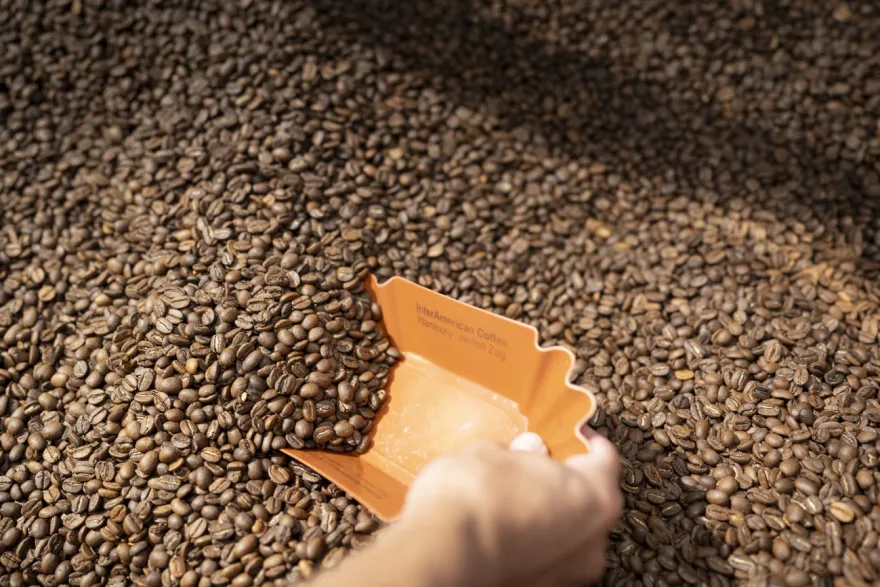
How Switzerland Became the World’s Second Largest Coffee Exporter?

Author: Coffee World
Source: Swissinfo
Date: May 16, 2026

Executive Summary:

  • Switzerland ranks second globally in coffee exports, with an annual value of 3.3 billion Swiss francs ($4.2 billion).
  • Green coffee enters Switzerland at $5 per kilogram, and after roasting, its value jumps to $26.80 per kilo.
  • Coffee accounts for 33% of Swiss agricultural exports, surpassing cheese and chocolate.
  • A legal concept called “substantial transformation” allows Switzerland to label roasted coffee as Swiss-made.
  • Swiss companies produce about 70% of all fully automatic coffee machines sold worldwide.
  • An estimated 60–70% of the global green coffee trade passes through Swiss trading desks.
  • The success of capsule coffee systems, especially Nespresso, boosted Swiss exports sharply from the early 2000s.

Switzerland has achieved an economic miracle that defies logic. Despite being a small country with a climate unsuitable for growing coffee, it has become the world’s second largest coffee exporter. Only Brazil exports more. According to recent figures, Switzerland ships coffee worth about 3.3 billion Swiss francs ($4.2 billion) annually, outpacing giants like Colombia, Ethiopia, and Vietnam all of which actually grow coffee.

The secret lies in processing, not farming. Switzerland imports green (unroasted) coffee beans from producing nations, then roasts and packages them locally. International trade rules consider roasting a “substantial transformation.” This legal nuance allows Swiss companies to label the final product as Swiss-made, even though the beans came from elsewhere.

From $5 to $26.80: The Value-Add of Roasting

According to the Swiss Trade Monitor from the University of St. Gallen, green coffee enters Switzerland at an average price of $5 per kilogram. After local roasting plants process the beans, their export value reaches $26.80 per kilo. This massive increase makes coffee Switzerland’s most important agricultural export today. With a share of around 33%, coffee even surpasses traditional exports such as cheese and chocolate.

In terms of pure export volume, Switzerland lags slightly behind Italy and Germany. However, its specialization in high-priced, portioned products such as capsules explains why it leads these countries in total export value.

‘Substantial Transformation’: The Legal Trick Behind the Success

Why is coffee that is only roasted in Switzerland allowed to carry a Swiss cross on its packaging? The answer is a legal finesse called “substantial transformation.” Under international trade law, a product’s country of origin is the nation where the product underwent its last substantial transformation. For coffee, customs authorities worldwide have ruled that roasting green beans qualifies as such a transformation. This subtlety has turned Switzerland into one of the world’s largest coffee-producing countries—without a single coffee plantation on its soil.

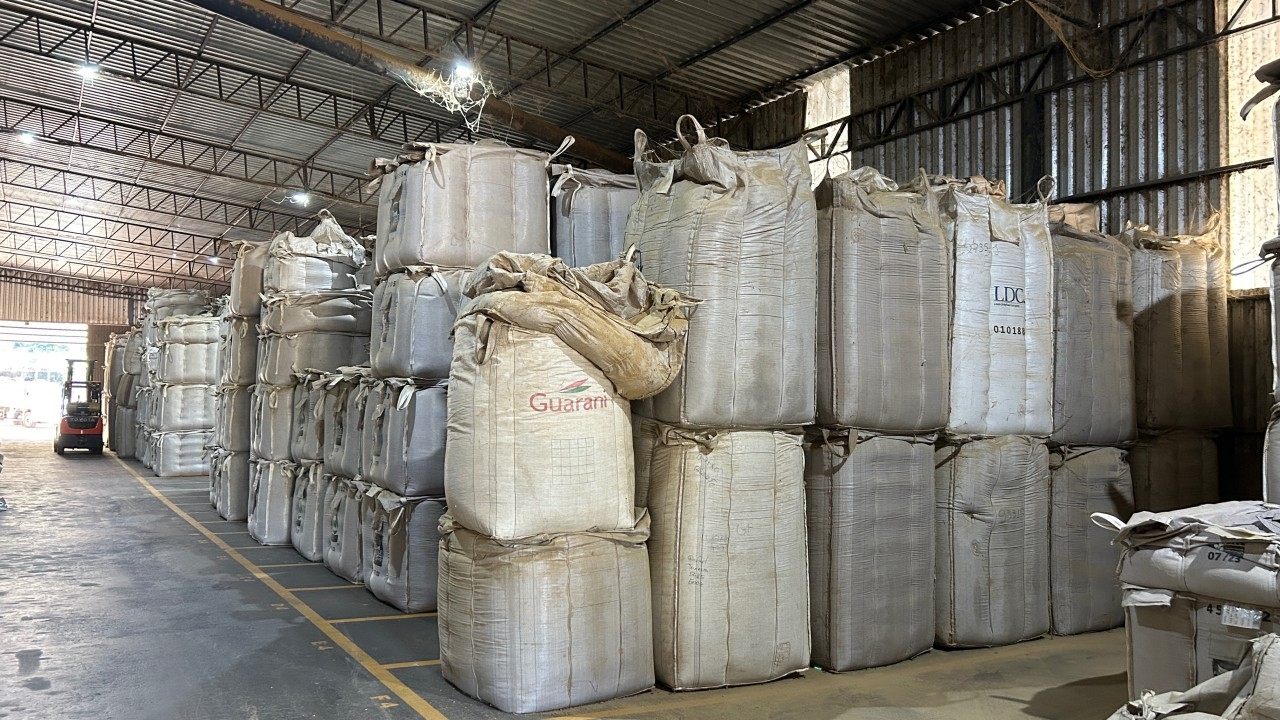
Nearly all green coffee arrives via the Rhine River. Beans first reach seaports such as Antwerp, Rotterdam, or Hamburg. Barges then transport them up the Rhine to Basel, where many large green coffee trading companies have set up their headquarters.

‘Coffee Valley’ and Global Leadership in Coffee Machines

Around Lake Geneva and in eastern Switzerland, entire ecosystems have developed. Experts often call this region “Coffee Valley.” It hosts not only giants like Nestlé (with Nescafé and Nespresso) but also the industry’s technology leaders.

Switzerland is the undisputed leader in the market for fully automatic coffee machines. About 70% of all such machines sold worldwide come from Switzerland. Leading manufacturers include Jura, Schaerer, and Thermoplan. Thermoplan, for example, supplies all coffee machines for Starbucks branches worldwide. Swiss suppliers of highly specialized precision components also drive this success. These plastic parts must withstand extreme pressures of up to 20 bar and temperatures of 100°C—essential for brewing fine espresso.

Switzerland as a Global Green Coffee Trading Hub

Switzerland’s role as a commodity trading center also explains its coffee dominance. According to the Swiss Trade Monitor, an estimated 60% to 70% of the global green coffee trade passes through Swiss desks. In addition, more than 40 members of the Swiss Coffee Trade Association control over half of all green coffee traded worldwide.

Export figures jumped sharply from the early 2000s onward, largely due to the success of capsule systems. Market leader Nespresso produces its capsules for the global market exclusively in three Swiss factories. Switzerland is also a major exporter of instant coffee and other highly processed specialties positioned in premium segments worldwide.

Key Data: Switzerland and the Global Coffee Trade

Indicator Value
Switzerland’s global coffee export rank Second (after Brazil)
Annual coffee export value 3.3 billion CHF ($4.2 billion)
Green coffee import price (per kg) $5.00
Roasted coffee export price (per kg) $26.80
Coffee’s share of Swiss agricultural exports 33%
Global market share of Swiss automatic coffee machines 70%
Estimated global green coffee trade via Swiss desks 60–70%

The Dark Side: Colonial Roots and Ethical Challenges

Any celebration of Switzerland’s coffee success must acknowledge the industry’s colonial origins. Although Switzerland never had its own colonies, prominent Swiss families owned coffee plantations. The Escher family, for example, owned a coffee plantation in Cuba. According to historical records, slaves guarded by dogs worked there for 14 hours a day. Some Swiss families were also deeply involved in transporting slaves and coffee—a practice researchers call “triangular business.”

Today, the industry still struggles with its image. Ecological and social problems persist in coffee-growing countries. After the European Union enacted a regulation on deforestation-free products, Switzerland launched the Swiss Platform for Sustainable Coffee. Targeted projects aim to improve living conditions for small farmers and make supply chains more transparent. However, critics doubt the platform’s success. They note that the model relies on voluntary action rather than binding legal obligations.

Therefore, the final chapter of the Swiss coffee saga remains unwritten. Global interdependencies continue to draw criticism, and sustainability challenges await stricter, more effective solutions.

Frequently Asked Questions (FAQ)

1. How does Switzerland export coffee without growing it?

Switzerland imports green coffee beans from producing countries, then roasts and processes them locally. Under international trade law, roasting counts as “substantial transformation,” allowing Swiss origin labeling.

2. What is the annual value of Swiss coffee exports?

Switzerland exports coffee worth about 3.3 billion Swiss francs ($4.2 billion) per year, making it the world’s second largest exporter after Brazil.

3. What share of the global coffee machine market does Switzerland hold?

Swiss companies produce approximately 70% of all fully automatic coffee machines sold worldwide, led by Jura, Schaerer, and Thermoplan.

4. What is “Coffee Valley” in Switzerland?

“Coffee Valley” refers to the ecosystem around Lake Geneva and eastern Switzerland, where major companies like Nestlé (Nespresso, Nescafé) and coffee machine technology leaders are based.

5. What criticisms does the Swiss coffee industry face?

Critics point to colonial-era roots (Swiss-owned plantations using slave labor) and ongoing environmental and social issues in producing countries. They also argue that Switzerland’s sustainability model is voluntary, not legally binding.

6. How did capsule coffee boost Swiss exports?

Nespresso produces all its capsules exclusively in three Swiss factories. The success of capsule systems from the early 2000s sharply increased Swiss coffee exports, especially in high-value product categories.

Coffee World – Report based on data from Swissinfo.ch, University of St. Gallen’s Swiss Trade Monitor, and the Swiss Coffee Trade Association.
Published: May 16, 2026 | Figures subject to updates based on latest official releases.

Russia’s Green Coffee Market Records Historic Growth in 2026

Mocow-QahwaWorld

Russia’s green coffee market posted significant growth in 2026, supported by rising global prices and sustained domestic demand, according to a recent analysis by ROIF Expert. The expansion reflects not only higher market value but also increased import volumes and consumption levels, reinforcing Russia’s position as a key destination for global coffee exporters.

Market Value Jumps by 92 Billion Rubles

The market value of green coffee increased by approximately 92 billion rubles between its lowest and highest recent levels, marking one of the strongest gains in the sector. The growth is largely attributed to higher global coffee prices, influenced by weather-related challenges in major producing countries such as Brazil and Vietnam.

While import volumes continued to rise, value growth outpaced physical expansion, reflecting sustained price pressure across global supply chains.

Imports Remain the Core Driver

Russia relies almost entirely on imports to meet its green coffee demand. Between 2025 and 2026, total import volumes reached around 286,000 tons.

  • Import value increased by 45.5% in the first nine months of 2025, reaching $924.7 million
  • Vietnam recorded a 1.5x increase in exports
  • Brazil nearly doubled its export volumes
  • Indonesia strengthened its position among top suppliers with 1.6x growth

Despite ongoing sanctions, supply flows remained stable. The primary challenge involved payment restrictions, prompting companies to adapt through alternative channels, including intermediary countries such as Turkey, China, and the UAE, as well as increased direct shipping routes.

Consumption Reaches Record Levels

Consumption indicators show continued growth, with per capita coffee consumption reaching its highest recorded levels. Approximately 70% of the population consumes coffee daily, while a majority consider it an essential part of their routine.

Home consumption is expected to grow by 15% by the end of 2026, alongside increasing demand for specialty coffee and whole beans.

Shifts in Supply Chains

Supply chains are gradually shifting toward Asian producers, particularly Vietnam and Indonesia, while overall trade flows remain relatively stable. At the same time, the market continues to face pricing pressures and logistical risks linked to geopolitical factors.

Outlook Through 2033

The baseline scenario outlined in the report suggests steady growth over the coming years, supported by consistent demand and expanding import activity.

  • Projected annual growth between 3% and 5.5%
  • Moderate increase in global price levels
  • Continued rise in per capita consumption
  • Further diversification of import sources

The market is expected to maintain positive momentum, demonstrating resilience in the face of external pressures.

Implications for Industry Stakeholders

The Russian market offers strong opportunities for global exporters, given its full dependence on imports. Domestic players are increasingly focused on higher-quality offerings and cost management, while consumers benefit from a broader range of products.

From an investment perspective, the sector shows the ability to convert price pressures into growth drivers, enhancing its medium-term appeal.

Conclusion

Russia’s green coffee market in 2026 reflects a mature and resilient sector. The sharp increase in market value and sustained demand indicate a continued upward trajectory, with growth expected to extend through the end of the decade.


The Great Pivot: How Dubai and Asia Are Redefining Green Coffee Trading

A structural shift is moving the global coffee trade away from its historic Western centers toward a faster, proximity-driven system anchored in Dubai, Singapore, and Shanghai.

Source: Dubai – Qahwa World | April 2026

The global green coffee trade is undergoing one of the most significant transformations in its modern history. For decades, pricing power, logistics, and financial control were concentrated along a North Atlantic axis defined by New York, London, and Rotterdam. That structure is now being rebalanced.Across the Eastern hemisphere, a new trading corridor is taking shape. Dubai, Singapore, and Shanghai are emerging not only as logistics hubs but as integrated ecosystems that combine finance, infrastructure, and demand. This shift reflects deeper changes in consumption patterns, capital flows, and supply chain design.

By 2034, the global green coffee market is projected to reach between USD 54.5 billion and USD 61.4 billion. Much of that expansion is expected to come from Asia-Pacific and the Middle East, regions that are redefining how coffee is traded and where value is created.

A Market Rewritten by Demand

Growth in coffee consumption is no longer evenly distributed. Mature markets in Europe and North America are expanding slowly, while demand across Asia and the Middle East is accelerating.

Region Growth Market Profile
North America and Europe 0.5% to 1.2% Mature markets with premium focus
China 5% to 7% Rapid import growth and domestic roasting
India 6% to 8% Expanding café culture
Middle East 4% to 6% High-value consumption growth
Southeast Asia 5% to 7% Strong robusta base with specialty shift

This divergence is reshaping global trade routes. Coffee is increasingly flowing within an interconnected system that links producing countries directly with emerging consumption centers.

Value Moves Closer to Origin

A parallel shift is taking place within producing countries. Nations such as Vietnam, Indonesia, and Ethiopia are expanding their processing and roasting capacity, allowing them to retain a larger share of the value chain.

Mid-stream hubs in the Eastern corridor are reinforcing this trend. By enabling processing and packaging closer to origin, they reduce reliance on traditional Western intermediaries and increase margins across the supply chain.

The result is a measurable redistribution of value, with producers capturing an estimated 15% to 20% more than under legacy trade structures.

Speed as a Competitive Advantage

Logistics has become a defining factor in the new trading environment. Shorter routes between producing regions and Eastern hubs are reducing transit times and increasing flexibility.

Route Transit Time
East Africa to Rotterdam 35 to 45+ days
East Africa to Dubai 7 to 14 days
Southeast Asia to Europe 30 to 40 days
Southeast Asia to Singapore or Shanghai 5 to 12 days

Reduced transit time improves cash flow efficiency, lowers inventory risk, and helps preserve coffee quality. These advantages are becoming central to competitive positioning.

A New Financial Architecture

The financial systems supporting coffee trade are evolving alongside physical infrastructure. Traditional reliance on futures markets and bank-led financing is being complemented by more flexible models.

Feature Legacy Model Emerging Model
Financial Instruments Futures-based pricing Direct contracts
Assets Heavy infrastructure Platform-based systems
Finance Bank-led FinTech and sovereign capital
Execution Multi-day cycles Near real-time

Dubai as a Trade Platform

Dubai has positioned itself as a central node in this transformation. Integrated infrastructure allows multiple stages of the coffee supply chain to operate within a single ecosystem, reducing friction and improving efficiency.

Facilities such as the DMCC Coffee Centre combine storage, processing, roasting, and logistics, creating a unified platform that connects producers directly with high-growth markets.

Industry events, including World of Coffee Dubai, are reinforcing this role by facilitating direct trade relationships and improving transparency between origin and buyers.

Outlook to 2035

The global coffee trade is gradually moving toward diversified pricing systems and decentralized trade flows. Fixed-price agreements, quality-based valuation, and traceability tools are becoming more prominent.

By 2035, the Eastern Growth Corridor is expected to capture a significant share of incremental trade value, reflecting a long-term structural shift rather than a temporary adjustment.

Conclusion

The future of green coffee trading is being reshaped by proximity, speed, and integration. The shift toward Dubai, Singapore, and Shanghai reflects deeper changes in how markets function and where value is created.

What was once a centralized system is becoming a distributed network. Those positioned closest to both origin and demand are increasingly defining the next phase of the global coffee economy.

Invisible Gravity in Coffee

By Dr. Steffen Schwarz

If you stand at the edge of a coffee farm at dawn, the industry looks almost impossibly fragmented. It is a mosaic of small plots and a patchwork of varieties where thousands of decisions are made by hand: when to prune, when to fertilize, and when to pick. Multiply that landscape by the number of farms worldwide, and the picture becomes geological in scale.

Yet, the moment the coffee cherry leaves the farm gate, a different geography takes over—not of soil and altitude, but of finance, logistics, risk, and ownership. While often described as “complex,” the sector hides a simpler truth: most of the value chain is governed by a small number of capital-intensive control points. Whoever owns these points sets the tempo for the entire industry.

The Five-Part Series: An Overview

This article serves as the “overview lens” for a five-part series designed for decision-makers. Over the coming weeks, we will dive deep into:

  1. Green Coffee: The industrialization of uncertainty.

  2. Roasted Coffee & Brand Ownership: The architecture of portfolios.

  3. Coffee Technology & Manufacturing: The power of installed bases.

  4. Coffee Service: The economics of high-frequency traffic.

To map this landscape, I use a “triangulation” approach: public filings, official acquisition reports, and corporate self-descriptions. While private groups remain opaque, that very opacity allows capital to concentrate through information arbitrage.

YOU MAY LIKE THIS: Steffen Schwarz: A Silent Shift Towards Canephora is Redefining Europe’s Coffee Preferences

1. Green Coffee: Managing the Industrial Flow

Coffee is biologically diverse but industrially standardized. To turn variable seeds into repeatable contract specifications, the system requires massive infrastructure.

Supply is heavily concentrated at the source: a handful of countries represent the bulk of global supply. At the demand end, the EU and the US act as regulatory gatekeepers; their decisions effectively become global requirements.

The Power of Working Capital Coffee moves through time before it moves through taste. Financing harvests and managing long ocean lead times requires immense balance sheets. Major merchant houses do not just trade; they process, insure, and provide credit.

  • ECOM Agroindustrial: Integrated from procurement to primary processing.

  • Sucafina: A “farm to roaster” footprint across multiple continents.

  • COFCO International: Connecting China’s state-linked system to global supply, signaling coffee’s role in geopolitics.

  • Volcafe (Hartree Partners): The 2025 acquisition of Volcafe by Hartree Partners signals that coffee is increasingly attractive to energy and commodity-scale capital.

2. Roasted Coffee: The Illusion of Plurality

In the roasting segment, concentration is often masked by brand diversity. A single group may own dozens of brands, appearing as “competitors” on a shelf while negotiating as a single entity.

  • The Nestlé-Starbucks Alliance: The Global Coffee Alliance allows Nestlé to leverage Starbucks’ brand power with its own industrial scale.

  • The “Coffee Champion” Logic: In August 2025, Keurig Dr Pepper announced the acquisition of JDE Peet’s. This move consolidates single-serve systems and global brand portfolios, reducing the number of global negotiating counterparts.

3. Technology: The Lever of Structural Power

Machinery is where chemistry meets economics. Equipment determines labor deployment, consistency, and data harvesting.

Platform Strategy Industrial holdings are building “professional coffee hubs.”

  • De’Longhi Group: By combining Eversys (super-automatic) and La Marzocco (traditional heritage), they control both high-volume convenience and premium café credibility.

  • Ali Group & Artemis Holding: Brands like Rancilio and Franke Coffee Systems are now part of massive foodservice portfolios that prioritize service ecosystems and connectivity over mere “engineering.”

4. Coffee Service: Real Estate and Routine

On the street, coffee looks diverse. On the balance sheet, it is a game of infrastructure.

  • Starbucks: With over 40,000 stores globally as of late 2024, it is less a retailer and more a global infrastructure.

  • Coca-Cola (Costa Coffee): Coffee is used as a strategic complement to a broader beverage empire, appearing in offices, petrol stations, and micro-markets.

  • Private Equity: Roark Capital (Dunkin’) and JAB (Panera/Pret) treat coffee as a high-frequency traffic driver within franchised systems.

Conclusion: Becoming Competent in Concentration

The coffee industry remains plural at the creative frontier—independent roasters still set sensory trends. However, this “long tail” lives within an environment shaped by capital-heavy platforms.

Strategy for the modern manager is not about resisting this gravity, but understanding it. Only by separating the physics of these four interlocking systems—finance, branding, engineering, and operations—can one make intelligent decisions about the future.

What’s New in the Dubai Coffee Auction 2026

Dubai Qahwa World

The Dubai Coffee Auction returns this year as part of World of Coffee Dubai 2026, promising a bigger and more exciting experience than ever. The three-day event, taking place from 18 to 20 January 2026, offers roasters, café owners, and coffee enthusiasts the opportunity to explore and purchase some of the world’s finest coffees and innovative equipment.

Auction Event Schedule:

18 January Coffee Equipment Showcase: Exhibitors will present a curated auction of specialized, high-end, and custom coffee equipment, providing attendees with an exclusive chance to explore the tools shaping modern coffee craftsmanship.

19 January Premium Coffee Auction: Participants can bid on rare and specialty coffee lots, both in person and online through cupping bidding sessions, offering a more interactive experience for buyers worldwide.

20 January Green Coffee Auction: A curated selection of pre-screened, top-tier green coffees will be showcased to buyers through in-person cupping sessions, emphasizing quality and exclusivity.

Organisers confirmed that this year’s auction introduces new experiences designed to connect buyers with rare microlots, specialty coffee, and advanced equipment, reinforcing Dubai’s position as a global hub for coffee lovers and the coffee industry.

The auction first launched last year during World of Coffee Dubai 2025, marking the region’s first-ever rare coffee auction, featuring around 20 collections of specialty and rare coffee beans.

The auction is the result of a strategic partnership between World of Coffee and the Coffee Centre of DMCC, aiming to strengthen Dubai’s role as a global coffee hub. Attendees can participate in person, while remote participants can join through a sophisticated digital platform.

In its inaugural edition, the Dubai Coffee Auction achieved record prices, with 16 collections of some of the rarest and finest beans offered by 11 producers from nine countries, including 11 collections of Geisha coffee, covering six different varieties, making the auction a global showcase of the world’s top coffee producers.

The highest-priced coffee in the auction was natural Geisha from the “Finca Sofia” farm in Panama, sold at $10,020 per kilogram, while another variety from the same farm reached $8,614 per kilogram, and a selection from “Finca La Mula” sold for $2,620 per kilogram. Meanwhile, Oma Natural coffee from Ethiopia reached $1,100 per kilogram, setting a new record for Ethiopian coffee.

The “Kona SL 34” variety from Hawaii also achieved a new U.S. coffee record at $950 per kilogram, an eightfold increase over the previous highest price paid for Kona coffee.

Geisha coffee is considered one of the rarest and most expensive coffees globally, known for its unique floral and citrus notes such as jasmine, and a smooth texture. Its origins trace back to Ethiopia, specifically the village of Geisha, and it was transplanted to Panama in the 1960s, where it thrives in high-altitude farms.

Additionally, “La Yamafrom producerLos Rodriguezbecame the most expensive Bolivian coffee ever sold, fetching $350 per kilogram.

Specialty coffee, in general, is classified as coffee scoring 80 points or higher on a 100-point scale used in the Specialty Coffee Association’s cupping form. All lots presented in the auction scored 92 points or higher, reflecting their high quality.

Auction prices are driven by three main factors: superior quality, which typically scores above 90 points in cupping tests; rarity, as limited production increases demand; and the producer’s reputation and story, which add value and attract buyers seeking consistency and excellence.

EU’s New Organic Regulation Reshapes Coffee Value Chains Worldwide

Brussels – Qahwa Wolrd

The European Union’s latest update to its organic regulation—Regulation (EU) 2018/848, which took full effect on October 1, 2025—marks a pivotal moment for the global coffee sector. The law replaces the long-standing “equivalency” model for non-EU organic imports, introducing a unified standard that all producers must now meet to access the European organic market.

A Tougher Landscape for Organic Coffee

Coffee producers and roasters are navigating a period of significant disruption. The EU’s new organic legislation joins other major frameworks such as the Deforestation Regulation (EUDR) and mandatory Due Diligence rules, forming part of a broader push for transparency and sustainability across agricultural supply chains.

Globally, organic coffee represents a small but valuable portion of the estimated 11 million metric tons of coffee produced each year. Its importance lies in the specialty and premium markets, where consumers demand traceability and environmentally responsible sourcing. Yet, for thousands of smallholders in Latin America, Africa, and Southeast Asia—many of whom have long relied on local certification systems—the new EU framework introduces new hurdles.

Under the previous equivalence system, non-EU countries could certify organic products according to their own standards, provided they broadly aligned with EU rules. That flexibility has now ended. From October 2025, all organic coffee imported into the EU must fully comply with the EU’s own organic standards, covering soil fertility, crop rotation, certification procedures, and cooperative governance structures.

Key Changes and Their Impacts

1. End of the Equivalence Model
All non-EU organic producers must now adhere directly to EU standards. The change eliminates national variations, enforcing uniform practices such as strict crop rotation, total prohibition of synthetic inputs, and certification of entire farming units as organic.
Impact: The removal of flexibility poses particular challenges for smallholders working in agroforestry or mixed-farming systems, who may now need to alter long-established practices or risk losing access to the EU market.

2. Stricter Group Certification Rules
Only legally recognised cooperatives or producer associations can now hold organic certificates. Private companies can no longer do so on behalf of farmers. Additionally, groups are limited to a maximum of 2,000 producers, and mixed groups—containing both organic and non-organic members—are prohibited.
Farms larger than five hectares or with annual sales above €25,000 must undergo individual audits.
Impact: Compliance and administrative costs are increasing sharply. Many smallholders face the burden of restructuring cooperatives or creating new associations to meet the legal requirements, potentially pushing the smallest players out of the organic sector.

3. Mandatory Three-Year Transition Period
All farms must now complete a minimum three-year conversion process before qualifying for organic certification—regardless of their previous practices or ecological conditions.
Impact: This universal rule raises barriers for newcomers, slows returns on investment, and could reduce the number of regions entering the organic coffee market.

4. Stricter EU Controls and Testing
Certification bodies must now be EU-recognised, and all coffee lots are subject to more frequent laboratory testing for chemical residues. Delays of one to two weeks are common as producers await results before exporting.
Impact: These tighter controls safeguard label integrity but cause certification bottlenecks, increase costs, and delay shipments—particularly harming smallholder-based supply chains that operate on thin margins.

5. Rising Costs and a Shift in Market Dynamics
The cumulative effect of these measures is a rise in certification expenses and operational complexity. The stricter requirements are expected to reduce the supply of certified organic coffee, driving up prices in Europe and possibly pushing exporters to target less-regulated markets.
Impact: European roasters face tighter supplies and higher costs, while producers are forced to balance compliance with commercial viability.

Implications for Coffee Roasters

The new framework compels European roasters to reassess sourcing strategies and brand positioning:

  • Brand Philosophy: Roasters must decide whether to continue carrying the official EU organic label or to highlight broader sustainability credentials instead.

  • Sourcing Viability: Some origins may lose certification, necessitating portfolio diversification to secure reliable supply.

  • Supplier Due Diligence: Strong partnerships with compliant cooperatives and exporters are now crucial to ensure certification integrity and continuity.

EFICO’s Role in Supporting the Transition

Belgium-based EFICO, a major green coffee importer, is assisting roasters and cooperatives through this regulatory transition. The company offers three main sourcing options:

  • Certified Organic Coffee – fully compliant with Regulation (EU) 2018/848.

  • ‘Organic by Nature’ Coffee – produced under sustainable, chemical-free conditions.

  • Conventional Coffee – high-quality, consistently sourced.

EFICO’s Certified Organic Portfolio:

  • Robusta: India

  • Arabica: Central America (Peru, Honduras, Mexico, Nicaragua) and Ethiopia

EFICO continues to guide partners on certification strategies and compliance requirements to help maintain a stable and transparent coffee supply chain amid Europe’s evolving organic landscape.

Lavazza Doubles UK Profits Despite Record Coffee Costs in 2025

London – Qahwa World

Italian coffee giant Lavazza has doubled its UK profits despite grappling with severe supply chain disruption and record-high green coffee costs. Strategic price increases and high-profile sponsorships have helped the brand maintain momentum in one of its key European markets.

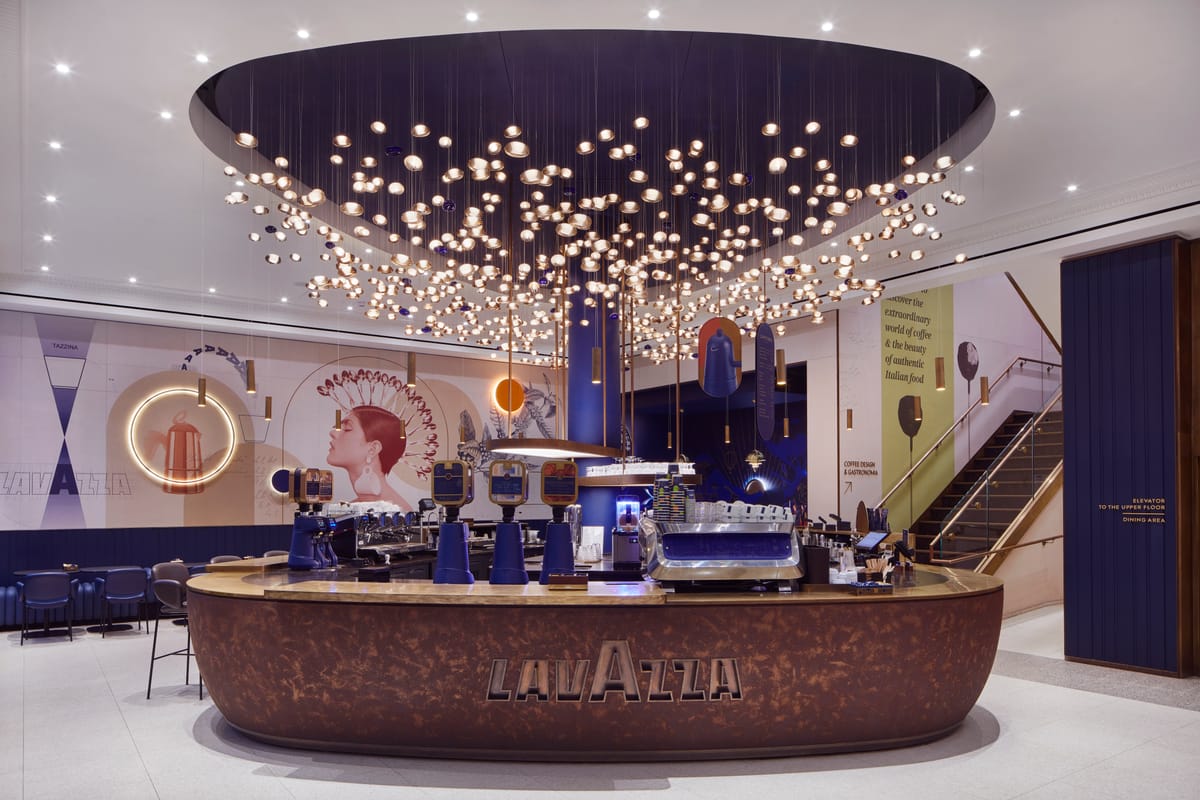
Lavazza UK reported a pre-tax profit of £3.2 million ($4.3m) in 2024, compared with £1.5 million ($2m) the previous year. Sales rose 8% year-on-year to £110.3 million ($149m), marking the second consecutive year revenues surpassed the £100m threshold. The Turin-based roaster strengthened its UK presence through partnerships with Wimbledon, Arsenal Football Club, and Ascot Racecourse, initiatives that it said significantly boosted brand visibility and consumer recognition. Lavazza has also operated a flagship store in London since 2021, reinforcing its retail footprint.

In its Companies House filing, the company acknowledged “unprecedented” cost pressures tied to climate change, geopolitical tensions, and volatile green coffee markets. Despite leveraging Lavazza Group’s global procurement strategies to hedge against volatility, it admitted that part of the inflationary burden had to be passed on to consumers. “The company benefits from the policies adopted by the Lavazza Group to limit the impact of volatility within the coffee market,” Lavazza UK stated. “However, despite these measures, the company has had to mitigate the increased risk by passing some inflation to its customers and consumers.”

According to company figures, UK households consume 13 million cups of Lavazza coffee every week and use 1.4 million capsules. Raising prices has been a key lever for sustaining modest revenue growth and absorbing cost pressures in an environment where inflation has pushed up the cost of everyday goods. Data from consumer watchdog Which? indicates that retail coffee prices in the UK climbed by up to 40% in the 12 months to March 2025.

Still, there are signs of relief. Speaking to UK press in July 2025, Lavazza Group Chairman Giuseppe Lavazza suggested that record coffee prices may have already peaked, potentially bringing stability to supermarket shelves. On a global scale, the group absorbed €600m ($658m) in additional costs since 2022 but nonetheless achieved record revenues of €3.35bn ($3.67bn) in 2024, underlining the strength of its brand across more than 140 markets.

Founded in 1895, Lavazza remains one of the world’s most prominent coffee roasters. Its performance in the UK highlights how strategic pricing and brand-building investments have enabled it to withstand inflationary shocks while continuing to expand its international footprint.

The green coffee industry needs $452 million to overcome the “innovation crisis”

A recent white paper released by World Coffee Research (WCR) highlights a critical shortfall in research and development (R&D) funding within the coffee sector, posing a threat to the diversity and quality of green coffee. The non-profit organization estimates that an annual investment of approximately $452 million is essential over the next decade to sustain the current state of coffee that consumers worldwide have come to enjoy.

Without such investments, the study suggests that the industry could witness widespread consolidation in coffee production, accompanied by a significant decline in the diversity of high-quality arabica coffee varieties and their origins. This potential crisis is primarily attributed to the impacts of climate change and the pressures faced by producers amid escalating global demand.

The white paper refers to the $452 million financial benchmark as an “investment gap” and characterizes the situation in the global green coffee sector as an “innovation crisis.” Dr. Mywish Maredia, the lead researcher and a development economics professor at Michigan State University, emphasizes that this scale of underinvestment is unsustainable if the world wishes to continue enjoying its favorite beverage. Increasing global investments in coffee R&D is seen as crucial to fostering innovation across various countries, addressing climate change challenges, and combating poverty while averting further consolidation of production.

WCR, a non-profit based in Portland, Oregon, advocates for increased funding across the global coffee industry, which it claims has been disproportionately underfunded compared to other agricultural sectors of similar consumer value. The authors specifically highlight the need for R&D funding in the coffee sectors of Latin America and Africa, citing historical deficiencies.

The paper unveils previously undisclosed financial statistics, revealing that the current global investment in coffee R&D stands at $115 million per year, with 90% originating from the public sector and 10% from the private sector. This amounts to just under half a cent for every dollar of green coffee produced globally. Despite green coffee constituting about 4.8% of the total value of agricultural output in 45 coffee-producing countries, the investment in the sector is merely 1.8%, the paper contends.

In conclusion, the authors assert that a nearly four-fold increase in R&D investments is imperative to prevent further consolidation and loss of commercial green coffee diversity. They advocate for allocating a fraction of retail profits, stating, “For an industry with a retail value of more than US$200 billion, this would mean setting aside less than 0.3 cents for every $1 of coffee retailed to consumers.” The urgency of increased funding is underscored as essential to safeguard the future of the global coffee industry.