Yannis Apostolopoulos: Rising Coffee Consumption Reshapes Global Market Dynamics

Bangkok – Qahwa World

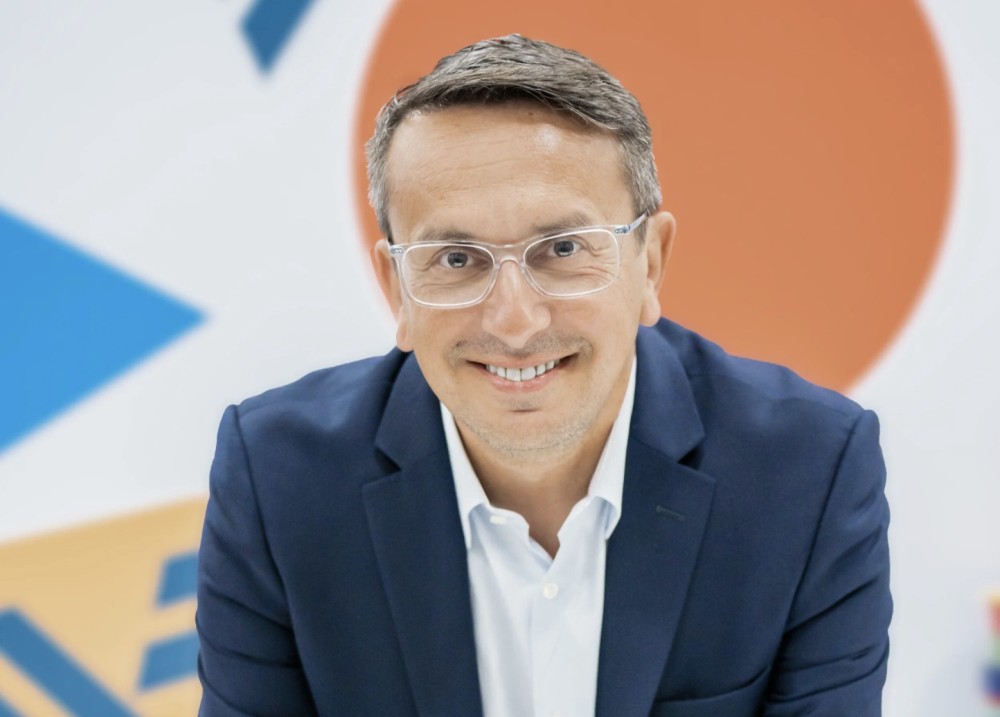
Chief Executive of the Specialty Coffee Association, Yannis Apostolopoulos, told the Bangkok Post that the global coffee market is undergoing a structural transformation, as coffee-producing countries are no longer limited to exporting but are also emerging as major consumption markets, reshaping global demand dynamics.

He noted that this shift is clearly visible in countries such as Brazil, which combines its position as one of the world’s largest coffee producers with being one of the fastest-growing consumption markets. Brazil currently ranks just after the United States in coffee consumption, with expectations that it could eventually become the world’s largest coffee-consuming nation, significantly influencing global supply and demand balance.

Apostolopoulos also highlighted the rapid growth of Thailand’s coffee market, both in terms of consumption and service quality development. He pointed to the expansion of specialty coffee shops and rising consumer awareness, alongside the emergence of local producers delivering high-quality coffee with distinctive sensory profiles. He added that Thailand’s development trajectory resembles the earlier evolution of South Korea’s coffee culture.

Regarding the concept of specialty coffee, he explained that it involves transforming coffee from a traditional commodity into a value-based product that can be measured through precise criteria. These include origin, variety, processing method, and sensory characteristics, all of which enhance transparency and increase market value.

He further noted that the sector is supported by global training programmes reaching around 80,000 participants annually, covering brewing, roasting, and sensory skills, as well as specialised programmes in sustainability, equipment maintenance, and coffee shop management. New initiatives have also been launched to support the retail sector and entrepreneurs.

Commenting on rising global coffee prices, Apostolopoulos said the increase is driven by multiple factors, including climate change, production disruptions, and imbalances between supply and demand. He stressed that current prices more accurately reflect market realities compared to previous years, particularly as past prices had fallen below production costs before climate pressures, supply chain disruptions, and the Covid-19 pandemic significantly altered the market.

The remarks come as World of Coffee Bangkok 2026 is being held at BITEC, Halls 98–99, from Thursday to Saturday, bringing together global stakeholders from across the coffee industry in a professional platform aimed at strengthening trade, partnerships, and the development of the specialty coffee sector.

Dubai Remains the Only Destination for “World of Coffee” in the Middle East

Dubai – Ali Alzakary

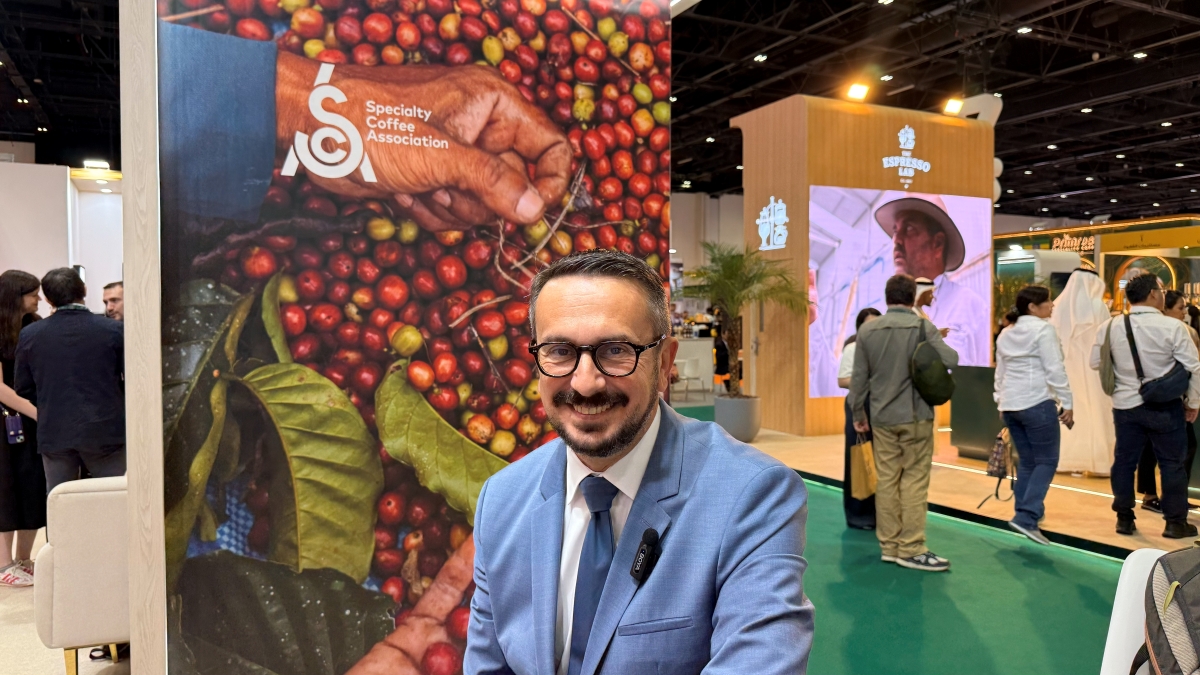
In an exclusive conversation with Qahwa World, Mr. Yannis Apostolopoulos, CEO of the Specialty Coffee Association, shared key insights on the growth and future of the “World of Coffee” exhibition, confirming that Dubai remains the sole destination for the show in the foreseeable future. He also spoke candidly about the transition following the end of the partnership with the Coffee Quality Institute (CQI) and the strong rollout of the Coffee Value Assessment (CVA) system.

Apostolopoulos highlighted that this year marks the fifth edition of the “World of Coffee,” which has grown tremendously. The number of exhibitors and attendees has surpassed any previous year, already 30% higher than before. He emphasized that the exhibition offers a unique opportunity for professionals to meet and conduct business. While it is fundamentally a trade show, it also fosters a sense of community and highlights the booming specialty coffee industry in the region.

“What we bring is a unique opportunity for people to come together and trade. At its core, this is a trade show, but it’s also about fostering a sense of community and showcasing how the specialty coffee industry is booming in the region. The Middle East has become one of the fastest-growing regions for specialty coffee in recent years, and you can feel that energy here at the show,” said Apostolopoulos.

Regarding the possibility of hosting editions in other Middle Eastern countries, Apostolopoulos confirmed that Dubai remains the ideal hub. He noted their ongoing partnership with DXB Live in Dubai, which will be renewed this year. Dubai provides excellent access from across the Middle East and the world, making it ideal for exhibitors and attendees. He added that while other countries may be considered in the future, this is not part of any immediate plans.

“At the moment, we have a partnership with DXB Live for Dubai, which we’re renewing this year. Dubai is a great hub with excellent access from across the Middle East and the world, making it ideal for exhibitors and attendees. Maybe in the future we’ll consider other countries, but not in the immediate plans,” said Apostolopoulos.

Apostolopoulos also discussed developments in the Coffee Value Assessment (CVA) system. He mentioned the transitional phase following the partnership with CQI and confirmed that many participants have already moved to the new program. There are now over 10,000 new Q graders and significantly more instructors, particularly in producing countries such as Colombia, Brazil, Indonesia, and Vietnam, which he recently visited. He stressed that the system allows producers to communicate clearly and objectively about the intrinsic and extrinsic attributes of coffee, while the trade sector explores how best to use the CVA framework to capture the quality of every coffee in everyday transactions.

“There has been some transition after our partnership with CQI, but many people have already moved to the new program. We now have over 10,000 new Q graders and significantly more instructors, especially in producing countries. We’re making targeted efforts to increase instructors in places like Colombia, Brazil, Indonesia, and Vietnam, where I was recently. Producers are seeing the value because you can communicate more clearly and objectively the attributes that are intrinsic and extrinsic to the coffee. The trade is figuring out the next steps of how to use the CVA paradigm and the new evaluation for quality and capturing the picture of every coffee in everyday trade,” said Apostolopoulos.

He affirmed that CVA benefits the industry as a whole, helping capture and share detailed data on coffee with producers and buyers, enabling clearer communication and maximizing coffee value.

“Absolutely. That’s the idea. CVA is part of the evolution of our understanding of coffee. We now care about more aspects of coffee than ever before, and CVA helps capture that information and share it with producers and buyers. This allows everyone to communicate more clearly and find ways to maximize the value of coffees,” said Apostolopoulos.


Yannis Apostolopoulos Speaks Frankly About the Past, Present, and Future of Specialty Coffee

Dubai – Qahwa World

The 5th Wave Podcast published a long interview with Yannis Apostolopoulos, CEO of the Specialty Coffee Association (SCA), under the title “The Past, Present and Future of Specialty Coffee.”
Given the importance of the insights shared, Qahwa World republishes the full conversation with minor editorial adaptation.

In today’s episode we’re speaking with Yannis Apostolopoulos, CEO of the Specialty Coffee Association.

First established in the 1980s, the SCA is the largest coffee trade body globally and represents thousands of coffee professionals – from producers to baristas – all over the world.

In this conversation, Yannis discusses the evolution of the SCA and its ongoing efforts to make coffee more sustainable, equitable, and resilient, through research, standards, and education. He also shares his perspectives on the key challenges and opportunities in the industry, from climate change and sustainability to navigating economic uncertainty and the evolving role of technology and AI.

5thwave-the-business-of-c the-past-present-and-futu
Transcribed by TurboScribe.ai. Go Unlimited to remove this message.
One of the conversations that needs to be at the forefront is about risk. Who is taking the risk and who gets compensated for that risk? Welcome back to the 5th Wave Podcast. I’m Geoffrey Young, Editor-in-Chief of 5th Wave.

In today’s episode, I’m delighted to be joined by Yanis Apostolopoulos, CEO of the Specialty Coffee Association. First established in the 1980s, the Specialty Coffee Association, or the SCA as it’s often known, is the largest global coffee trade body representing thousands of coffee professionals from producers to baristas all over the world. In our conversation, Yanis discusses the evolution of the SCA and their ongoing efforts to make coffee more sustainable, more equitable, and more resilient through research standards and education.

He also shares his perspective on the key challenges and opportunities for our industry, from climate change and sustainability to navigating economic uncertainty and the evolving role of technology and AI. Welcome, Yanis. It’s very nice to be here.

Very nice to see you, Geoffrey. We see each other around the world at different spots and really, really excited to have you here actually in the studio, in Serendipity Studios. I wonder if you’d just give us a little bit of intro just on your own career and what drew you into the world of coffee.

So first of all, thank you for having me. It’s really an honor and a pleasure to be here. Well, coffee is an interesting story.

My background is mostly in wines and spirits. And around 2009, the business I used to work for decided to get into coffee. And the more I get to know coffee, I just think that coffee has this amazing, I would say, attribute that brings people in.

And you meet people, the community, the actual beverage. It’s so unique in many ways. I think it was the first time in my career that I realized, okay, I’ve been selling wine, spirits, or soft drinks.

But this time, it’s something that it’s actually good for your health. And you can contribute in making an impact or a difference in the world by impacting the livelihoods of many people. And that’s what drew me into specialty coffee.

I got involved as a volunteer in the Greek chapter, then as a board director. And then during, I would say, the initial conversations between the merger between SCAA and SCAE, the European and the American organization, I found myself working for SCAE and leading eventually SCAE around end of 2018. Wow.

So that’s a good seven years already. Almost seven. Yeah.

Little I know that the year after I become the CEO, there would be COVID and everything would change in the world, at least when it comes to trade shows, because as you remember, it used to be just trade shows. Now we’re doing much, much more. And we at SCAE are trying to make coffee better, to make coffee more sustainable, equitable, and thriving as an endeavor for everyone in the value chain.

And we do that by doing research. We use the research to set standards. And one of our most famous standards is the capping form and the capping protocol, which we recently changed based on the work we’ve done around the coffee value assessment system.

And then we educate people around the world in using those standards and trying to make them get skills to, I would say, focus on the gaps that we have in the coffee industry. And then we do events to try to bring people together and use those opportunities to disseminate the information of our research and standards. So research events and bring people together at events.

Yeah. Yeah. I mean, it’s a formidable organization, I must say.

I was wondering if you could share how many people the SCAE educates in a given year. It’s very interesting. First of all, I have to say that it’s a collective effort.

I have an amazing team of people. They are really passionate about making coffee better. It’s a collective effort from the SCAE board that changed a lot over the years, but also the executive team.

On an annual basis, we educate over 80,000 people globally. It’s really something which I find it very interesting because a lot of people want to get engaged in the coffee industry. We have a lot of, say, churn when it comes to people who are trying to find a career in the coffee industry.

And what we’re trying is to provide tools and education to do so. It’s very interesting. And I think professions around hospitality are going to be much, much more attractive in the future, given the changes that we’re going to see in the global workplace with AI.

I think people will always enjoy experiences in food, in coffee. And coffee is a very human product at the end of the day. Exactly.

Now, thinking about those gaps, what do you think are the key issues that you and your organization are faced with out there in a world? For our industry, you get to speak to a whole array of human beings, from coffee farmers to people that produce equipment, to traders, to all the way down to the baristas, the roasters, and everything. The array of people that you talk to on a daily basis, it must give you a good instinct in terms of what are the big topics for our industry that we need to face over the next decade or two. What are you concerned with? …
 

Specialty Coffee Association (SCA) Releases 2023 Annual Report

In a year marked by remarkable progress and innovation, the Specialty Coffee Association (SCA) unveils its highly anticipated 2023 Annual Report. Led by CEO Yannis Apostolopoulos, the SCA’s endeavors have propelled the global specialty coffee industry forward, cementing its commitment to enhancing sustainability, fostering community engagement, and delivering unparalleled service.

Global Impact through Sustainability

Central to the SCA’s mission is its Sustainable Coffee Agenda, a framework aimed at promoting equitable value distribution throughout the coffee supply chain. In 2023, the SCA reached two significant milestones in this regard. Firstly, it formally introduced the Sustainable Coffee Agenda and its theory of change, solidifying its dedication to sustainable practices. Secondly, the SCA launched the Coffee Value Assessment, a groundbreaking tool designed to facilitate transparent discussions about value distribution. With a focus on community integration, the SCA plans to embed these initiatives across all programs, fostering a culture of sustainability within the industry.

Expanding Horizons and Local Engagement

Expanding its global footprint, the SCA hosted events beyond traditional hubs, including Latin America and the Asia Pacific region. Through initiatives like the World of Coffee Panama 2026 and World of Coffee Busan 2024, the SCA forged connections within local communities, enriching experiences for coffee enthusiasts worldwide. Furthermore, the association revamped its membership model and enhanced support for chapters and guilds, ensuring greater accessibility and relevance within local coffee communities.

Empowering Growth and Education

With a focus on professional development, the SCA expanded its educational offerings, catering to diverse needs within the industry. Notably, efforts were made to address information gaps among coffee producers, supported by the Coffee Value Assessment’s insights. By investing in accessible education across multiple platforms and languages, the SCA continues to empower individuals and drive innovation within the specialty coffee sector.

Strengthening Infrastructure and Financial Resilience

Amidst challenges posed by the COVID-19 pandemic, the SCA navigated financial hurdles, achieving a remarkable turnaround in 2023. From a significant negative equity of -US$1.8M, the association successfully built an equity of US$12.5M, ensuring robust financial reserves for the future. This achievement underscores the SCA’s commitment to financial sustainability and resilience in the face of uncertainty.

Looking Ahead

As the SCA embarks on its journey into 2024, CEO Yannis Apostolopoulos expresses optimism for the future. With ongoing initiatives such as the rollout of the new membership model and continued research endeavors, the SCA remains steadfast in its mission to elevate the specialty coffee experience worldwide. As stakeholders anticipate upcoming events in Chicago, Busan, and Copenhagen, excitement brews for the innovative strides ahead in the world of specialty coffee.

The release of the 2023 Annual Report marks a pivotal moment in the SCA’s journey, reaffirming its dedication to excellence and progress within the global coffee community.

To read the report, click here