DMCC Webinar Highlights Growth in Coffee Trade Between Colombia and the UAE

Economic and Logistics Partnerships Drive Record Trade Expansion and Strengthen Global Presence of Colombian Coffee

Dubai – Qahwa World

The Dubai Multi Commodities Centre DMCC organized a virtual webinar titled “Made for Trade Live: Colombia in Focus”, in partnership with the Embassy of the United Arab Emirates in Colombia, the Chambers of Commerce of Manizales, Armenia and Quindío, and Cali, as well as IKOR Global. This DMCC Colombia coffee webinar highlighted trade growth by bringing together public and private sector stakeholders to explore trade, investment opportunities, and developments in the coffee sector between Colombia and the UAE. Notably, the DMCC Colombia coffee webinar trade growth emphasis reflects the expanding role of Colombian coffee in international markets.

Ahmed Bin Sulayem, Executive Chairman and Chief Executive Officer of DMCC, stated that the Comprehensive Economic Partnership Agreement signed in 2024 eliminated 95% of tariffs, noting that bilateral trade is expected to exceed USD 1 billion within five years. Moreover, as discussed during the DMCC Colombia coffee webinar, trade growth for Colombian coffee is likely to accelerate under these new measures.

He added that DMCC hosts more than 26,000 companies, contributes over 15% of Dubai’s foreign direct investment flows, and around 7% of Dubai’s GDP. The member base includes more than 200 companies from Latin America, including 30 from Colombia, with Colombian membership growing by 50% over the past two years, representing nearly 20% of DMCC’s South American companies. This expansion aligns with the ongoing DMCC Colombia coffee webinar trade growth strategy.

Colombia, the world’s third-largest coffee producer and exporter, recorded export growth of 17% in 2024, driven by a 132% increase in exports to China, which is expected to overtake the United States as Colombia’s second-largest export destination. Furthermore, the DMCC Colombia coffee webinar trade growth was a key driver discussed during this international event.

The DMCC Coffee Centre spans 15,000 square meters and includes temperature-controlled storage, processing, roasting, packaging, and distribution facilities, serving 350 companies. A total of 8,200 metric tons of coffee were processed in 2025, including Colombian coffee, as highlighted in the DMCC Colombia coffee webinar focused on trade growth.

During the second coffee auction at World of Coffee Dubai World of Coffee Dubai, Geisha coffee from Panama achieved a record price of USD 30,240 per kilogram in 2025. The 2026 edition recorded the highest number of international origins ever represented, attracting more than 17,000 participants, with plans for further expansion in 2027. Also, the DMCC Colombia coffee webinar trade growth focus signaled continued opportunities in global coffee markets.

The webinar also announced the launch of the DMCC Cacao Centre, with the global cacao market projected to reach USD 26.2 billion by 2035. The centre currently hosts 88 companies operating in cacao trading, chocolate manufacturing, and confectionery. During the DMCC Colombia coffee webinar trade growth topic, diversification into cacao was discussed as complementary to coffee.

DMCC also hosts more than 4,000 technology companies active in artificial intelligence, robotics, crypto, tokenization, and trade finance. The DMCC Phoenix initiative was launched last November, while DMCC FINEX includes around 2,000 companies and is expected to exceed 5,000 in the future, bringing the total ecosystem close to 50,000 companies. Innovation was a key theme in the DMCC Colombia coffee webinar’s trade growth agenda.

Mohammed Al Shamsi, Ambassador of the United Arab Emirates to Colombia, stated that the UAE has expressed concern regarding recent regional tensions, noting 50 years of diplomatic relations between the two countries. This milestone was acknowledged during the DMCC Colombia coffee webinar trade growth segment.

He said non-oil trade in 2025 exceeded USD 2 billion, surpassing the CEPA target of USD 1 billion within less than two years, even before ratification, with expectations of further doubling after approval. He also highlighted the growing presence of the Juan Valdez brand across UAE cities. Additionally, the DMCC Colombia coffee webinar trade growth theme supports greater market access for Colombian coffee brands.

The Chamber of Commerce of Manizales por Caldas reported that Caldas ranks as the ninth-largest exporting department in Colombia, with exports exceeding USD 1,363 million, representing 3.4% of national exports. Coffee remains the flagship product, with external sales reaching USD 19 million and growth of 52% between 2020 and 2024. This reflects the DMCC Colombia coffee webinar trade growth impact.

The Chamber of Commerce of Cali highlighted a model based on four pillars: investment, internationalization, innovation, and integration. In Valle del Cauca, 71 companies exported coffee in 2025 across 362 export operations, reaching USD 318 million in international sales. Cali accounts for 50% of exporting companies, followed by Cartago at 23% and Sevilla at 14%. The United States represents 46% of exports, followed by Germany, Japan, Canada, the Netherlands, and China. These trends were reviewed in the DMCC Colombia coffee webinar, emphasizing trade growth.

Ricardo Muñoz, Coordinator of the Specialty Coffee Program at the Chamber of Commerce of Armenia and Quindío, stated that the program has been active for 15 years, with coffee accounting for around 80% of Quindío’s exports despite its small size. The region focuses on micro-lots and has developed infrastructure for milling, processing, and roasting. DMCC Colombia coffee webinar trade growth themes were mentioned in relation to the specialty coffee sector.

A DMCC presentation highlighted Dubai’s strategic location, enabling access to 2.5 billion people within a four-hour flight radius and up to 5 billion people within broader connectivity. Dubai is ranked as the most competitive economy in the Arab world and a global hub hosting more than 200 nationalities. The DMCC Colombia coffee webinar trade growth was a major consideration in positioning Dubai as a hub.

Mohammed Mohammed, Senior Manager Corporate Sales at DMCC: “Dubai offers you accessibility and connectivity. With a four-hour flight, Dubai offers you access to around 2.5 billion population. If you double that number of flights, it will get you access to 5 billion population. The most important part, you don’t need to fly to Dubai to set up your business. You can do it digitally.” For example, when considering DMCC Colombia coffee webinar trade growth, digital connectivity makes expanding into new markets easier.

Gulfood Gulfood recorded more than 6,800 participants and 133,000 visitors, generating over USD 20 billion in trade deals, while GITEX GITEX attracted more than 5,500 participants from over 190 countries. Dubai’s trade and wholesale sector accounts for around 23% of its economy, with more than 90 million passengers passing through its airports annually. Notably, DMCC Colombia coffee webinar trade growth supports wider trade events and partnerships.

Mike Butler, Coffee Ecosystem Manager at DMCC, stated that the Coffee Centre was established in 2019 in Jebel Ali Free Zone on a 15,000 square meter site powered by 75% solar energy. It hosts more than 300 members across the global coffee value chain and provides services including storage, logistics, processing, roasting, and capsule production. This infrastructure was highlighted as part of the DMCC Colombia coffee webinar trade growth model.

IKOR Global Managing Director Tatiana Córdoba stated that Colombian coffee exports to the UAE reached USD 16 million in 2024 and USD 17.3 million in 2025, reflecting 9% growth, with 70% of exports directed to the United States, Europe, and Canada. These figures were analyzed at the DMCC Colombia coffee webinar focused on trade growth.

She highlighted that the UAE connects more than 2 billion people within less than four hours of flight time. Additionally, DMCC Colombia coffee webinar trade growth opportunities were emphasized regarding global connectivity.

Anastasia, from Finca Dontulio Group: “When we think about DMCC we consider it’s the backbone of our green coffee logistics… DMCC helps us to eliminate that risk. When we talk about our business model, we definitely think about the coffee and the quality of it, but more importantly we think about building something meaningful across borders, bringing finest Colombian coffee to the world without compromise and this is where DMCC played a key role, it enabled us to scale sustainably and maintain excellence at every step.” The DMCC Colombia coffee webinar trade growth findings support this international approach.

The webinar concluded with the announcement of upcoming events, including World of Coffee from 26 to 28 January, Gulfood from 15 to 19 March Gulfood, and an additional event scheduled in Abu Dhabi in November. This schedule was part of DMCC Colombia coffee webinar trade growth announcements.

Cofix Russia May Be Sold for Up to 1.4 Billion Rubles

Moscow – Qahwa World

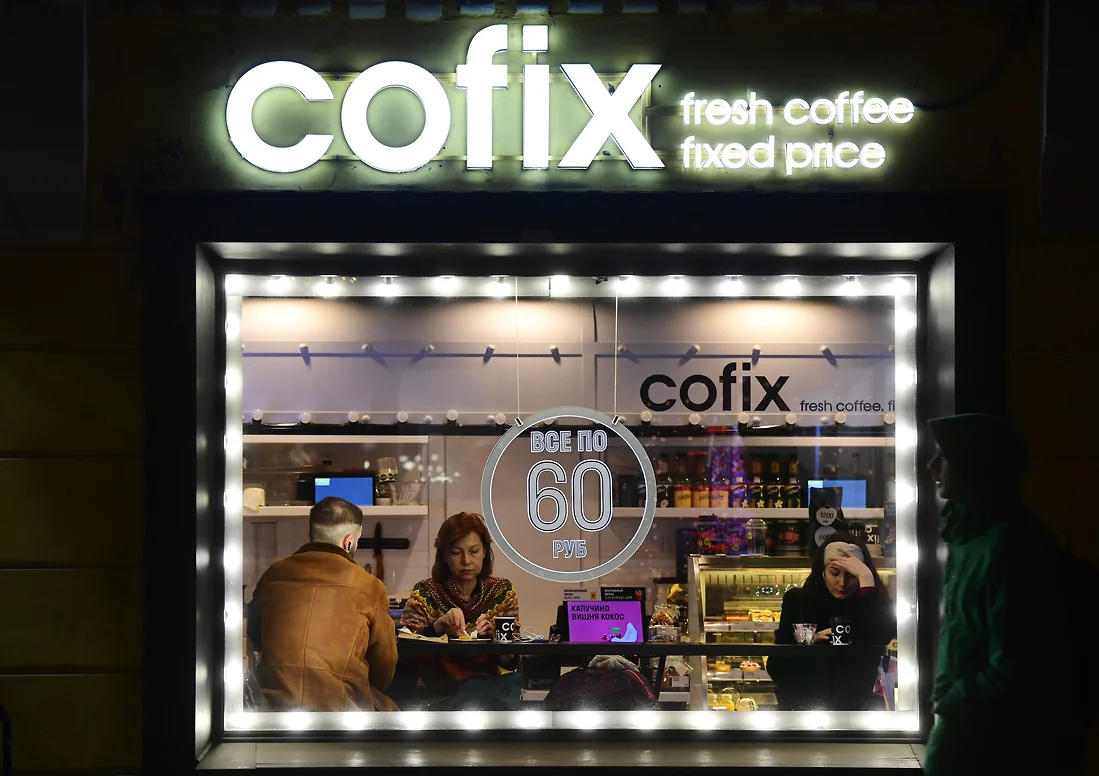
The Russian division of the international coffee chain Cofix is reportedly being prepared for sale, with its valuation estimated between 1.25 and 1.4 billion rubles. According to market sources, a leading candidate to acquire the business is the investment firm Бумеранг Капитал, established in 2024 by Ваган Гаспарян, a former executive of Sberbank Capital. Both parties have declined to comment publicly.

Cofix currently operates around 290 outlets across Russia, many under franchise agreements. The chain maintains a presence in Kazan with two locations — one on Bauman Street and another in the MEGA shopping center. In terms of scale, Cofix ranks among the top five coffee chains in the country, following competitors such as Coffee Like, One Price Coffee, and Surf Coffee. Despite this, the sector remains highly fragmented: the largest operators collectively control no more than 20% of a market estimated at 13,000–15,000 coffee outlets.

Industry analysts suggest that acquiring Cofix could strengthen Бумеранг Капитал’s position in the foodservice sector by improving supply chains and consolidating operations. The fund has already been active in this space, including the recent purchase of the specialty coffee brand Даблби.

The potential deal comes at a challenging time for the coffee market in Russia. In the first months of 2026, sales of ready-made coffee declined by 4% compared to the previous year, while takeaway coffee dropped by 2%. Market participants attribute this trend to rising raw material costs and weakening consumer demand. Estimates indicate that coffee bean costs have risen by 25–30% over the past year, while customer traffic in coffee shops has decreased by around 20%.

Founded in Israel in 2013 by entrepreneurs Ави Кац and Бенни Паркаш, Cofix originally built its brand around a fixed low-price model. In recent years, however, the company has gradually shifted away from this concept, partly due to increasing competition from retail chains, where consumers are opting for more affordable in-store coffee options.

The Russian operating entity, Urban Cofix Russia LLC, reported revenue of 3.01 billion rubles in 2025, with a net profit of 68.1 million rubles, reflecting relatively modest margins.

The broader foodservice industry is also undergoing contraction. In 2025, approximately 35,400 foodservice businesses closed across Russia, including restaurants, cafés, and bars. Regional markets such as Tatarstan are expected to see further closures, particularly in the mid-range segment, driven by rising costs and shifting consumer behavior.

While experts believe the chain coffee segment will continue to expand overall, they also anticipate a slowdown in the pace of new outlet openings as market conditions remain tight.

Starbucks and Boyu Capital Finalize Joint Venture to Drive Growth in China

Dubai – Qahwa World

April 2, 2026 – Seattle – Starbucks Coffee Company has completed its joint venture agreement with investment firm Boyu Capital, marking a key step in its long-term strategy to expand in China.

The deal, first announced in November 2025, underscores Starbucks’ confidence in China as one of its most important growth markets. The partnership is designed to strengthen the company’s presence, improve local market adaptation, and enhance the customer experience while maintaining brand standards.

Under the agreement, funds managed by Boyu Capital now hold a 60 percent stake in Starbucks’ retail operations in China. Starbucks retains a 40 percent share and continues to own the brand and intellectual property, licensing them to the joint venture.

You may read: Starbucks Returns to Growth for the First Time in Two Years

The new entity currently oversees around 8,000 coffee shops, which will gradually transition to a licensed operating model. Over time, the partners aim to expand the network to as many as 20,000 locations.

Company leadership highlighted that combining Starbucks’ global brand strength with Boyu Capital’s local expertise is expected to support expansion into new cities, reach more customers, and reinforce the company’s position in a highly competitive market.

The strategy will place strong emphasis on local adaptation, including tailored beverage offerings, food options, digital engagement, and store formats designed to meet the needs of diverse communities across China.

The partnership is also expected to improve operational efficiency, support faster expansion, and strengthen long-term profitability.

With the transaction now complete, both parties are moving into the operational phase of the joint venture, focusing on growth, innovation, and delivering a consistent coffee experience across the Chinese market.

Keurig Dr Pepper Seals $15.7 Billion JDE Peet’s Deal as 96% of Shares Tendered

BURLINGTON, MA / AMSTERDAM – Qahwa World

In a move that reshapes the global coffee landscape, Keurig Dr Pepper Inc. (KDP) has officially declared its multi-billion-euro takeover bid for JDE Peet’s N.V. unconditional. The announcement comes after an overwhelming majority of shareholders backed the deal, signalling the end of JDE Peet’s era as a standalone public company on the Euronext Amsterdam.

According to a joint statement released Friday, approximately 466.7 million shares were tendered during the initial offer period, representing a staggering 96.22% of the company’s total share capital. The aggregate value of the tendered shares stands at approximately €14.86 billion (approx. $15.7 billion).

You may Read: Keurig Dr Pepper Launches €31.85-Per-Share Offer for JDE Peet’s

Transaction Finalized

With the 80% minimum acceptance threshold easily surpassed and all other conditions met, the Offeror (Kodiak BidCo B.V.) has confirmed that the deal is now legally binding.

Key Dates to Watch:

  • Settlement Date: Payment to shareholders who participated in the initial offer will be made on April 1, 2026.

  • Post-Closing Acceptance Period: A final window for remaining shareholders to tender their shares will run from March 30 to April 13, 2026.

  • Delisting: JDE Peet’s and KDP will now begin the process of delisting the stock from Euronext Amsterdam “as soon as possible”.

Strategic Integration

The merger brings together KDP’s North American dominance—fuelled by the Keurig brewing system and brands like Dr Pepper and Green Mountain—with JDE Peet’s massive international footprint. JDE Peet’s, which generated nearly €10 billion in sales in 2025, operates in over 100 markets with iconic brands, including Peet’s, L’OR, and Jacobs.

“This is more than a financial transaction; it is the union of two coffee powerhouses,” noted industry analysts. “KDP is now positioned as a truly global titan in both the hot and cold beverage sectors.”

Read also: JDE Peet’s Transfers Shares to Employees Amid Keurig Dr Pepper Takeover Offer

Next Steps for Shareholders

For the 3.78% of shareholders who have not yet tendered their shares, KDP has announced it will initiate statutory buy-out proceedings to acquire 100% ownership. Those who tender during the upcoming post-closing period will receive the same offer price as the initial participants, with payments expected within five business days following the April 13 deadline.

Upon settlement on April 1, a pre-approved reshuffling of the board of directors will take effect, marking the official integration of JDE Peet’s into the KDP corporate structure.

Invisible Gravity in Coffee

By Dr. Steffen Schwarz

If you stand at the edge of a coffee farm at dawn, the industry looks almost impossibly fragmented. It is a mosaic of small plots and a patchwork of varieties where thousands of decisions are made by hand: when to prune, when to fertilize, and when to pick. Multiply that landscape by the number of farms worldwide, and the picture becomes geological in scale.

Yet, the moment the coffee cherry leaves the farm gate, a different geography takes over—not of soil and altitude, but of finance, logistics, risk, and ownership. While often described as “complex,” the sector hides a simpler truth: most of the value chain is governed by a small number of capital-intensive control points. Whoever owns these points sets the tempo for the entire industry.

The Five-Part Series: An Overview

This article serves as the “overview lens” for a five-part series designed for decision-makers. Over the coming weeks, we will dive deep into:

  1. Green Coffee: The industrialization of uncertainty.

  2. Roasted Coffee & Brand Ownership: The architecture of portfolios.

  3. Coffee Technology & Manufacturing: The power of installed bases.

  4. Coffee Service: The economics of high-frequency traffic.

To map this landscape, I use a “triangulation” approach: public filings, official acquisition reports, and corporate self-descriptions. While private groups remain opaque, that very opacity allows capital to concentrate through information arbitrage.

YOU MAY LIKE THIS: Steffen Schwarz: A Silent Shift Towards Canephora is Redefining Europe’s Coffee Preferences

1. Green Coffee: Managing the Industrial Flow

Coffee is biologically diverse but industrially standardized. To turn variable seeds into repeatable contract specifications, the system requires massive infrastructure.

Supply is heavily concentrated at the source: a handful of countries represent the bulk of global supply. At the demand end, the EU and the US act as regulatory gatekeepers; their decisions effectively become global requirements.

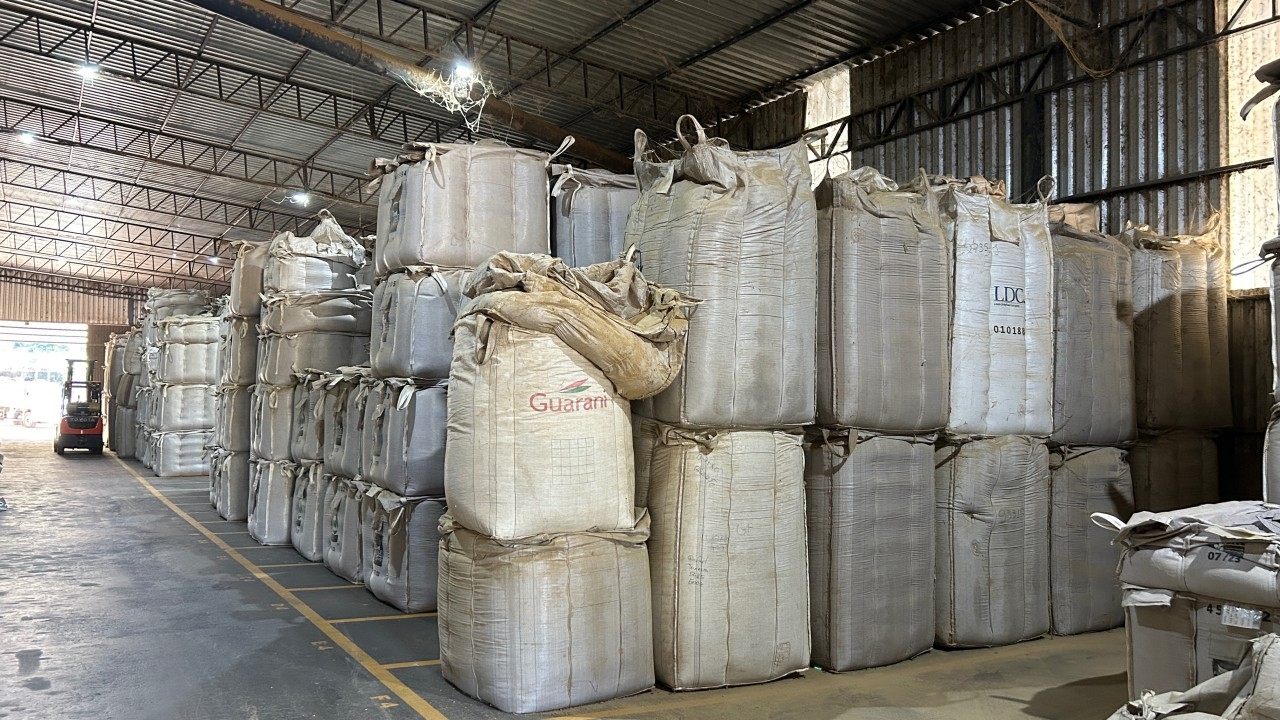
The Power of Working Capital Coffee moves through time before it moves through taste. Financing harvests and managing long ocean lead times requires immense balance sheets. Major merchant houses do not just trade; they process, insure, and provide credit.

  • ECOM Agroindustrial: Integrated from procurement to primary processing.

  • Sucafina: A “farm to roaster” footprint across multiple continents.

  • COFCO International: Connecting China’s state-linked system to global supply, signaling coffee’s role in geopolitics.

  • Volcafe (Hartree Partners): The 2025 acquisition of Volcafe by Hartree Partners signals that coffee is increasingly attractive to energy and commodity-scale capital.

2. Roasted Coffee: The Illusion of Plurality

In the roasting segment, concentration is often masked by brand diversity. A single group may own dozens of brands, appearing as “competitors” on a shelf while negotiating as a single entity.

  • The Nestlé-Starbucks Alliance: The Global Coffee Alliance allows Nestlé to leverage Starbucks’ brand power with its own industrial scale.

  • The “Coffee Champion” Logic: In August 2025, Keurig Dr Pepper announced the acquisition of JDE Peet’s. This move consolidates single-serve systems and global brand portfolios, reducing the number of global negotiating counterparts.

3. Technology: The Lever of Structural Power

Machinery is where chemistry meets economics. Equipment determines labor deployment, consistency, and data harvesting.

Platform Strategy Industrial holdings are building “professional coffee hubs.”

  • De’Longhi Group: By combining Eversys (super-automatic) and La Marzocco (traditional heritage), they control both high-volume convenience and premium café credibility.

  • Ali Group & Artemis Holding: Brands like Rancilio and Franke Coffee Systems are now part of massive foodservice portfolios that prioritize service ecosystems and connectivity over mere “engineering.”

4. Coffee Service: Real Estate and Routine

On the street, coffee looks diverse. On the balance sheet, it is a game of infrastructure.

  • Starbucks: With over 40,000 stores globally as of late 2024, it is less a retailer and more a global infrastructure.

  • Coca-Cola (Costa Coffee): Coffee is used as a strategic complement to a broader beverage empire, appearing in offices, petrol stations, and micro-markets.

  • Private Equity: Roark Capital (Dunkin’) and JAB (Panera/Pret) treat coffee as a high-frequency traffic driver within franchised systems.

Conclusion: Becoming Competent in Concentration

The coffee industry remains plural at the creative frontier—independent roasters still set sensory trends. However, this “long tail” lives within an environment shaped by capital-heavy platforms.

Strategy for the modern manager is not about resisting this gravity, but understanding it. Only by separating the physics of these four interlocking systems—finance, branding, engineering, and operations—can one make intelligent decisions about the future.

Luckin Coffee Explores Potential Acquisition of Blue Bottle Coffee

Dubai – Qahwa World

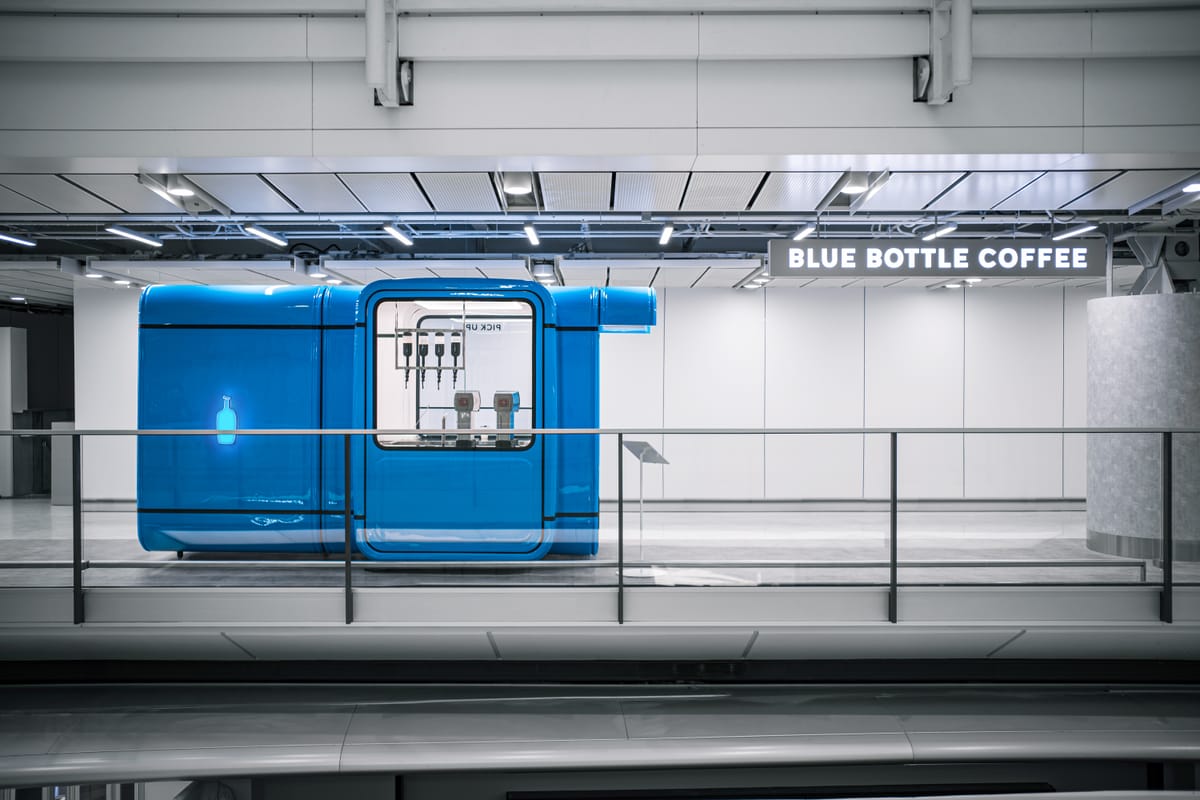
Chinese coffee chain Luckin Coffee is reportedly evaluating a potential acquisition of Blue Bottle Coffee, the specialty coffee brand majority-owned by Nestlé, as part of its strategy to strengthen its presence in the premium coffee segment.

Sources indicate that Luckin and its main investor, Centurium Capital, are pursuing moves to build a portfolio of premium coffee brands and expand their global footprint. This potential bid follows reports that Nestlé was considering selling its stake in the California-based Blue Bottle, which it acquired in 2017 for $425 million, valuing the company at roughly $700 million. Current estimates suggest the brand could now be sold at a lower price.

Blue Bottle Coffee operates over 100 boutique cafés in the United States and East Asia, including 12 locations in mainland China and four in Hong Kong.

In addition to Blue Bottle, Luckin and Centurium are said to be exploring a bid for Lucky Ace International Ltd., the holder of master franchise rights for Japanese specialty chain % Arabica in China and Hong Kong. % Arabica currently runs 84 outlets in mainland China and 15 in Hong Kong.

Centurium Capital, which had previously shown interest in Coca-Cola’s Costa Coffee, appears to have shifted focus toward the Luckin expansion strategy.

Luckin Coffee, China’s largest coffee chain with more than 29,000 stores nationwide, significantly outpaces its nearest competitor, Cotti Coffee. Centurium became Luckin’s controlling shareholder in January 2022, holding over 50% of voting rights, following previous investments that helped the company recover from accounting issues and restructure debt.

Beyond China, Luckin has expanded internationally with 68 stores in Singapore, 45 in Malaysia, and five in the United States. CEO Jinyi Guo announced in November 2025 that the company is preparing for a new public listing in the United States.