C20 Global Coffee Sustainability Summit to Unite Industry Leaders in London, Driving Action from Farm to Cup

Source: C20 Non‑Profit Institution – Press Release |
Author: Qahwa World |
Date: June 10, 2026

C20 Global Coffee Sustainability Summit to Unite Industry Leaders in London, Driving Action from Farm to Cup

Key Highlights:

  • The C20 Global Coffee Sustainability Summit will take place in London on June 23–24, 2026, at Camden Town Hall, King’s Cross.
  • The event runs under the theme “Beyond Sustainability,” moving from dialogue to tangible impact.
  • Over 120 senior delegates representing more than 100 companies from across the value chain will attend.
  • Day One focuses on producer countries: climate change, regenerative agriculture, social justice, water security.
  • Day Two shifts to consumer markets: regenerative café culture, energy transition, zero‑waste ecosystems.
  • Headline speakers include Christiana Figueres, Vanúsia Nogueira, Dr. Aaron Davis, Kate O’Brien, David Browning.
  • The C20 is not a one‑off event but a year‑round engine for change with digital town halls, podcasts, and shared sustainability tools.

The global coffee industry is set to convene in London this month for the C20 Global Coffee Sustainability Summit, a high‑profile, action‑oriented gathering dedicated to securing a sustainable future for the sector. Taking place on June 23–24, 2026, at King’s Cross, the summit is organized by the non‑profit C20 institution and promises to be a pivotal moment for collaboration across the entire value chain.

Under the tagline “Beyond Sustainability,” the summit moves from dialogue to tangible impact, addressing critical challenges from climate change and water security to social justice and regenerative business models. The event will bring together 120+ senior delegates representing over 100 companies, including agricultural innovators, CEOs, roasters, retailers, barista champions, and farmers.

Two‑Day Agenda: From Origin to Market

The meticulously crafted programme is split across two days, each focusing on a different pillar of the coffee ecosystem.

Day One (June 23) – The Lens of Origin: The opening day will tackle the most pressing issues facing coffee‑producing countries. Keynotes and panels will feature leading voices such as Vanúsia Nogueira (CEO, International Coffee Organization), Dr. Aaron Davis (Senior Researcher, Royal Botanical Gardens, Kew), and Kate O’Brien (CEO, Costa Foundation). Sessions will cover climate change and the rise of regenerative agriculture; social justice, human equity, and the economics of farming as a business; water security and agroforestry; and a “Green Blueprint” for scaling organic and regenerative models.

Day Two (June 24) – The Global North & Market Perspective: The focus shifts to consumer regions, exploring how cafes, roasters, and retailers can drive systemic change. Thought‑leaders like Christiana Figueres (Former Executive Secretary, UNFCCC)—who will deliver a welcome address—Tom Molnar (Gails) and Cemal Ezel (Change Please) will headline. Key themes include building a regenerative café culture; the great energy transition: decarbonising the coffee chain; engineering a zero‑waste coffee ecosystem; connecting consumers and baristas as sustainability advocates; and the institutional roadmap for a shared 2026‑2030 Sustainability Toolkit.

Item Details
Full Name C20 Global Coffee Sustainability Summit
Dates June 23–24, 2026
Venue Camden Town Hall, King’s Cross, London
Organizer C20 Non‑Profit Institution
Delegates 120+ senior delegates
Companies represented 100+ companies

World‑Class Speakers from Across the Industry

The headline speaker lineup represents a cross‑section of global expertise, including:

  • Christiana Figueres – Former Executive Secretary, UNFCCC.
  • Vanúsia Nogueira – CEO, International Coffee Organization.
  • Dr. Aaron Davis – Senior Researcher, Royal Botanical Gardens, Kew.
  • Kate O’Brien – CEO, Costa Foundation.
  • David Browning – CEO, Enveritas.
  • Etelle Higonnet – Founder, Coffee Watch.
  • Kasper Hülsen – CCO, Slow Forest.
  • Sebastian Neilson – CEO, Slow Forest.
  • Lee Holdstock – Head of Regulatory & Trade Affairs, Soil Association.
  • Roxy Rocks-Engelman – Interim Director, Project Waterfall.

Additional insights will come from Taylors of Harrogate, UCL, Slow Forest, Marks & Spencer, Gail’s, Enveritas, Trabocca, Colonna Coffee, Origin, Bean Voyage, Notpla, and more.

Beyond the Summit: A Year‑Round Engine for Change

The C20 is not a one‑off event but the centerpiece of a year‑round, non‑profit initiative. The organization works directly with industry partners to co‑create tools, frameworks, and resources designed to embed responsibility into the everyday workings of the coffee supply chain.

Post‑summit, C20 will activate a continuous programme including: bi‑monthly Advisory Board and sub‑committee meetings (focusing on EUDR compliance, carbon sequestration, etc.); 24+ digital town halls and webinars featuring expert curators; a tier‑one digital Resource Library with white papers and the foundational C20 Priorities Report; a media ecosystem of 12 deep‑dive podcasts and a monthly executive intelligence summary; as well as strategic site audits, best‑practice tours, and speaking slots at major international trade shows.

Tickets and Participation

The summit will take place at Camden Town Hall, King’s Cross, London. A range of ticket options is available:

  • 2‑Day Full Summit Pass (Industry): £595
  • 2‑Day Full Summit Pass (NGO/SME*): £395
  • 1‑Day Summit Pass (Industry): £295
  • 1‑Day Summit Pass (NGO/SME*): £195

(NGO/SME discount code available by email.)

Tickets include access to all lectures, keynotes, panels, and networking sessions, as well as a seat at the inaugural Global Coffee Sustainability Awards (date and location TBC).

Ticket Type Price (GBP)
2‑Day Pass – Industry £595
2‑Day Pass – NGO/SME £395
1‑Day Pass – Industry £295
1‑Day Pass – NGO/SME £195

With the global coffee sector at a crossroads, the C20 Global Coffee Sustainability Summit positions itself as the essential platform for leaders committed to moving from intention to action – from the farm to the final sip.

Frequently Asked Questions About the C20 Summit

Q: When and where will the summit take place?

A: June 23–24, 2026, at Camden Town Hall, King’s Cross, London.

Q: Who is organizing the summit?

A: The C20 non‑profit institution.

Q: How many participants are expected?

A: Over 120 senior delegates representing more than 100 companies.

Q: What are the main themes of the two days?

A: Day One focuses on origin countries (climate, regenerative agriculture, social justice, water security). Day Two focuses on consumer markets (regenerative café culture, decarbonisation, zero‑waste).

Q: How can I register?

A: Via the C20 website. Discounts are available for NGOs and SMEs.

Q: Will there be activities after the summit?

A: Yes, a year‑round programme including digital town halls, podcasts, resource libraries, and strategic audits.

The C20 Global Coffee Sustainability Summit is the platform that brings industry leaders together to turn challenges into opportunities. Do not miss your chance to help shape the future of sustainable coffee – from the farm to the cup. Register now and secure your seat at this historic event.

Prepared and edited by: Qahwa World – Based on a press release from the C20 non‑profit institution.

All rights reserved. Republication with attribution permitted.

Publication date: June 10, 2026

Sucafina: 43% Responsible Sourcing and $7.4M Sustainability Investment in 2025

Author: Coffee World
Source: Sucafina 2025 Sustainability Report
Date: May 2026

Executive Summary:

  • Sucafina achieved 43% of its sales as responsibly sourced or traceable to farm level in 2025.
  • The company invested $7.42 million in training and community support projects.
  • Coffee was sourced from 214,313 certified farmers worldwide.
  • Sucafina monitored 437,602 plots across 18 countries for deforestation risk, with 99.2% deforestation-free.
  • The company distributed 895,085 high-quality coffee seedlings and 203,748 native tree seedlings.
  • Sucafina added “Accountability” as its seventh corporate value and adopted a “Connected Value” strategy.
  • The company launched IMPACT Industrial to extend its responsible sourcing program to soluble coffee manufacturing.

Sucafina, a global leader in farm-to-roaster coffee trading, announced exceptional results in its 2025 annual sustainability report. The announcement came during a year marked by global uncertainty, rising costs, and evolving regulations. The company achieved record numbers in its IMPACT responsible sourcing program, raised its external investments in sustainability initiatives to unprecedented levels, and simplified its strategy while adding “Accountability” as its seventh corporate value.

Nicolas A. Tamari, CEO of Sucafina, said: “Despite a difficult start to 2025, the second half of the year revealed a more encouraging reality. We saw renewed commitment from customers who realized that sustainability, traceability, human rights, and environmental stewardship are not options.

They are integral to brand value and consumer trust. By the end of the year, we reached an important milestone: 43% of our sales were responsibly sourced or traceable to farm level. This is a strong signal that our long-term investments are aligning with market expectations.”

Key Sustainability Figures for 2025

Indicator Value
Certified farmers sourced from 214,313
High-quality coffee seedlings distributed 895,085
Farm plots monitored for deforestation 437,602 (covering 674,161 hectares in 18 countries)
Deforestation-free plots 99.2%
Native tree seedlings distributed 203,748
Farmers certified under IMPACT Verification 69,229
Total employee training hours 11,971
Investment in training and community projects $7.42 million
Permanent employees trained in occupational health and safety 680
EcoVadis award Bronze (top 35%)

Strategic Update: Simplification, Integration, and Accountability

After five years of implementing its 2030 sustainability strategy, Sucafina conducted a comprehensive mid-term review. This resulted in an updated and simplified strategy centered on the concept of “Connected Value.” The five IMPACT program goals (Livelihoods, Regenerative Agriculture, Climate Action, Community Well-being, Forest Conservation) were integrated into three main pillars: Investing in Farmers, Caring for People, and Protecting the Planet. The company also added a seventh corporate value: Accountability, joining Adaptability, Humility, Entrepreneurship, Integrity, Expertise, and Passion.

In a strategic move, Sucafina decided to step away from the Science Based Targets initiative (SBTi) framework and transition toward a customized climate action pathway for its operations and supply chain.

The company will focus on practical interventions that achieve measurable emissions reductions and enhance resilience in coffee-producing regions, rather than compliance with a framework that does not always adapt to the reality of agricultural commodity trading.

Key Field Projects and Initiatives

Investing in Farmers
Sucafina’s Regenerative Agriculture methodology underwent external verification. It assesses the implementation of 15 targeted practices linked to four environmental dimensions: soil, water, biodiversity, and greenhouse gas emissions.

Pilot farms were established in Uganda and elsewhere. Notable projects include the SEMEIA project in Brazil (in partnership with Itochu and Ajinomoto AGF), a four-year initiative supporting nine farmers in Arabica and Robusta regions.

The project has planted 30,000 new coffee trees, installed composting units, and planted 6,680 native trees, aiming to reduce emissions and production costs by 2028.

Other initiatives include the Tools for Prosperity project in Uganda distributing basic agricultural tools, and the Regeneration Stimulation project in Rwanda (with 100WEEKS and Ahold Delhaize) where 95-97% of incentivized farmers performed radical pruning compared to 63% in the non-incentivized group.

Caring for People (Communities and Employees)
The REACH project in Uganda (with JDE Peet’s, Elucid, and RVO) developed a digital health financing platform serving 2,700 farming families, addressing challenges of treatment costs and distance.

Women’s savings and lending groups (VSLAs) were established in Burundi, Rwanda, and Kenya, along with support for livestock and beekeeping as additional income sources. For child protection, Sucafina joined the Child Rights Coalition in Uganda (with ChildFund, JDE Peet’s, Nestlé, NKG, Volcafe) to implement a system for monitoring and addressing child labor risks.

In education, the company built classrooms in Colombia (funded by 1% of Sucafina Instant’s net profits), supported early childhood programs in Guatemala with Seeds for Progress, and improved school facilities in Uganda.

Following Cyclone Sinar in Indonesia’s Gayo communities, Sucafina distributed emergency food packages to 913 farmers and 69 suppliers via two air freight shipments.

Protecting the Planet
For deforestation monitoring and EUDR compliance, Sucafina monitored 437,602 farm plots, with 99.2% deforestation-free.

The company developed an EUDR compliance methodology that includes geodata collection, satellite risk assessment, secondary verification, and support for environmental restoration efforts (including distribution of 203,748 native tree seedlings).

Solar energy was installed at the Beyers Koffie plant in Belgium: 642 high-efficiency solar panels (285.69 kWp capacity) produce approximately 243,000 kWh annually, covering 4-5% of the plant’s total electricity consumption.

In Rwanda, an agroforestry program in partnership with the London School of Economics distributed 110,064 regionally appropriate shade trees to 3,735 farmers with cash incentives for tree regeneration.

IMPACT Industrial: Extending the Program to Manufacturing

Sucafina unveiled a new track within its IMPACT program: IMPACT Industrial, designed to cover the production and manufacturing stages of soluble coffee.

The initiative aims to assess environmental, social, and governance practices among manufacturing partners and open constructive dialogue to improve performance in a stage that has historically lacked visibility and standardization.

Sucafina’s Operational Scale in 2025

Indicator Value
Permanent employees 1,528 (38% women)
Seasonal employees 7,138 (54% women)
Green coffee traded 541,000 metric tons
Certified farmers sourced from 214,313
Market share More than 1 in every 20 coffee cups consumed globally passes through Sucafina’s supply chains

Frequently Asked Questions (FAQ)

1. What percentage of Sucafina’s sales were responsibly sourced in 2025?

43% of total sales were responsibly sourced or traceable to farm level.

2. How much did Sucafina invest in sustainability projects in 2025?

The company invested $7.42 million in training and community support projects through the Kahawatu Foundation and other initiatives.

3. What is the new corporate value added by Sucafina?

Sucafina added “Accountability” as its seventh corporate value, alongside Adaptability, Humility, Entrepreneurship, Integrity, Expertise, and Passion.

4. What is the new IMPACT Industrial track?

A new track within the IMPACT program designed to assess environmental, social, and governance practices among soluble coffee manufacturing partners and improve transparency in that stage.

5. How is Sucafina addressing EU Deforestation Regulation compliance?

The company developed a compliance methodology including geodata collection, satellite risk assessment, and secondary verification, resulting in 99.2% of monitored land being deforestation-free.

6. What are the goals of the SEMEIA project in Brazil?

The four-year project aims to reduce emissions and production costs by 2028 through new tree planting, composting units, and native tree cultivation.

Coffee World – Based on Sucafina’s 2025 Sustainability Report.
Published: May 2026

Sustainability Day Sets the Technical and Policy Tone at AFCC&E

Addis Ababa – Qahwa World × Buna Kurs

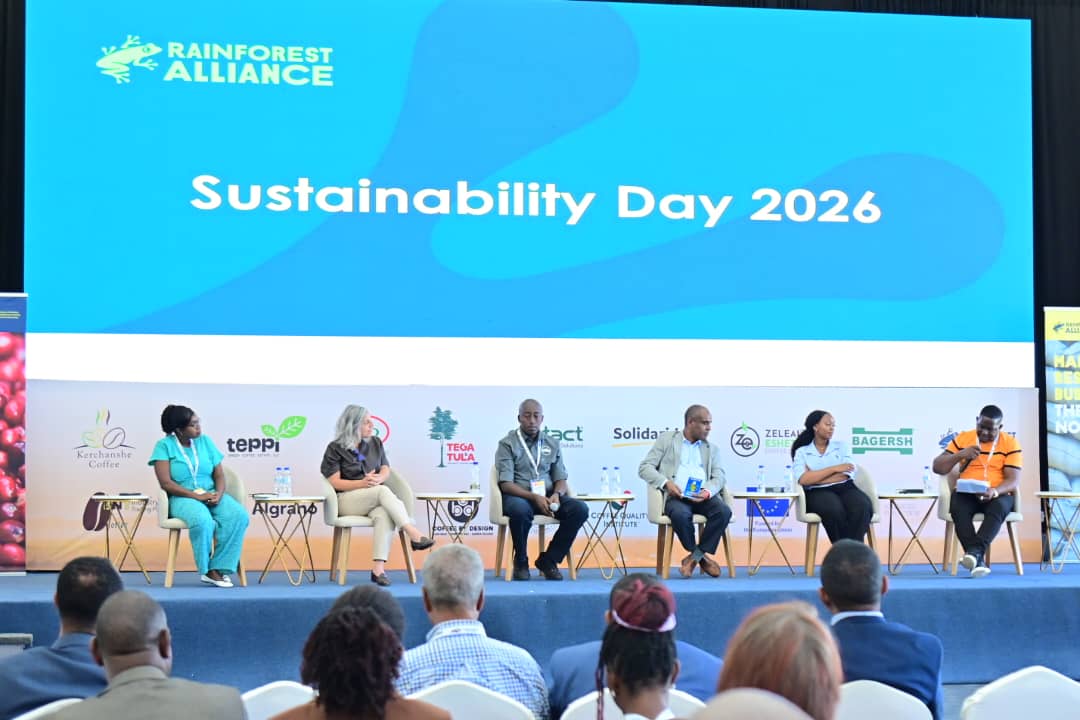
Day One of the 22nd African Fine Coffees Conference & Exhibition (AFCC&E) concluded in Addis Ababa with sustainability firmly positioned as the cornerstone of this year’s continental coffee dialogue. Following the morning’s high-level opening ceremony, the conference program transitioned into the 7th AFCA Sustainability Day, delivered in partnership with the Rainforest Alliance under the theme “Sustainability in Every Cup: Brewing a Regenerative Future, Today.”

At the center of the day’s agenda was the presentation and launch of the Rainforest Alliance Regenerative Agriculture Standard (RAS), a new certification framework designed to move beyond compliance toward ecosystem restoration and long-term farmer resilience across tropical landscapes.

Across the venue, the exhibition hall remained active throughout the day, with strong foot traffic from producers, exporters, buyers, service providers, and development partners. Exhibitors noted a visibly expanded floor layout and higher engagement compared to previous editions, reflecting both the growing scale of the event and renewed market interest in African coffee origins.

The Sustainability Day program highlighted how regenerative agriculture is being applied in practice across East Africa, with experiences shared from Kenya, Uganda, and Ethiopia, including MSuLLi, Mountain Harvest, Moplaco Farm, and sector partners working at farm, landscape, and market levels. A dedicated youth testimony segment reinforced a growing generational consensus: sustainability is no longer an add-on, but a prerequisite for remaining competitive in the global coffee sector.

Afternoon sessions shifted the discussion to the value of sustainability standards within the global supply chain, examining how certification, traceability, and transparency are increasingly shaping trade relationships. Panels featuring exporters, producers, and international buyers addressed the commercial realities of sustainability, with participation from Midrock Investments Group, Touton, ECOM, AMG Coffee Export, Preferred by Nature, and regional producer representatives.

Beyond the conference hall, B2B cupping sessions continued alongside networking activities, offering international buyers early exposure to coffees from across Africa while reinforcing the link between quality, sustainability, and market access.

Day One concluded with an invitation-only policy and networking reception, followed by the Opening Cocktail at the AICC Amphitheater, marking the informal start of a week expected to shape Africa’s coffee sustainability agenda for years to come.

JDE Peet’s Unveils Nature Plan for Sustainable Coffee

Dubai – Qahwa World

JDE Peet’s has introduced a new Nature Transition Plan aimed at strengthening regenerative agriculture practices and supporting deforestation-free coffee supply chains. The plan, titled Grounded in Nature, outlines a science-based approach to protecting ecosystems, improving farmer resilience, and safeguarding the long-term future of coffee production.

According to the company, the plan aligns with global nature and biodiversity frameworks and translates sustainability commitments into measurable, time-bound actions. It builds on nearly ten years of work under JDE Peet’s Common Grounds program, which has reached close to one million coffee farmers since 2015.

The initiative focuses on ensuring that coffee sourcing contributes to positive environmental outcomes while maintaining sourcing diversity across producing countries. JDE Peet’s emphasized that nature-related risks are already affecting farmers and supply chains, making coordinated action across the coffee sector increasingly urgent.

Key objectives of the Nature Transition Plan include advancing sector-wide efforts to eliminate deforestation from coffee supply chains, expanding regenerative farming practices across an additional 200,000 hectares by 2030, and progressing toward fully responsibly sourced green coffee by 2028. The company reported that responsibly sourced green coffee reached 83.2 percent globally in 2024.

The plan follows a structured approach based on assessing supply chain risks, implementing targeted farmer programs, and tracking progress through transparent measurement and reporting. JDE Peet’s also tailors its mitigation strategies to different coffee-producing regions, reflecting variations in farming systems and production intensity.

Through this roadmap, the company aims to link environmental protection with farmer livelihoods and long-term supply security, positioning nature conservation as a core pillar of the future coffee economy.

Regenerative Agriculture Boosts Vietnamese Coffee Farmers’ Income by 150%

Dubai – Qahwa World

Vietnamese coffee farmers have achieved a remarkable 150% increase in income by shifting to regenerative agriculture, an innovative approach that promotes environmental sustainability while improving crop quality and productivity.

According to a report by Nestlé Vietnam, the adoption of regenerative practices under the NESCAFÉ Plan has enabled farmers to save 40%–60% of irrigation water, reduce chemical fertilizers and pesticides by 20%, and significantly increase yields and income.

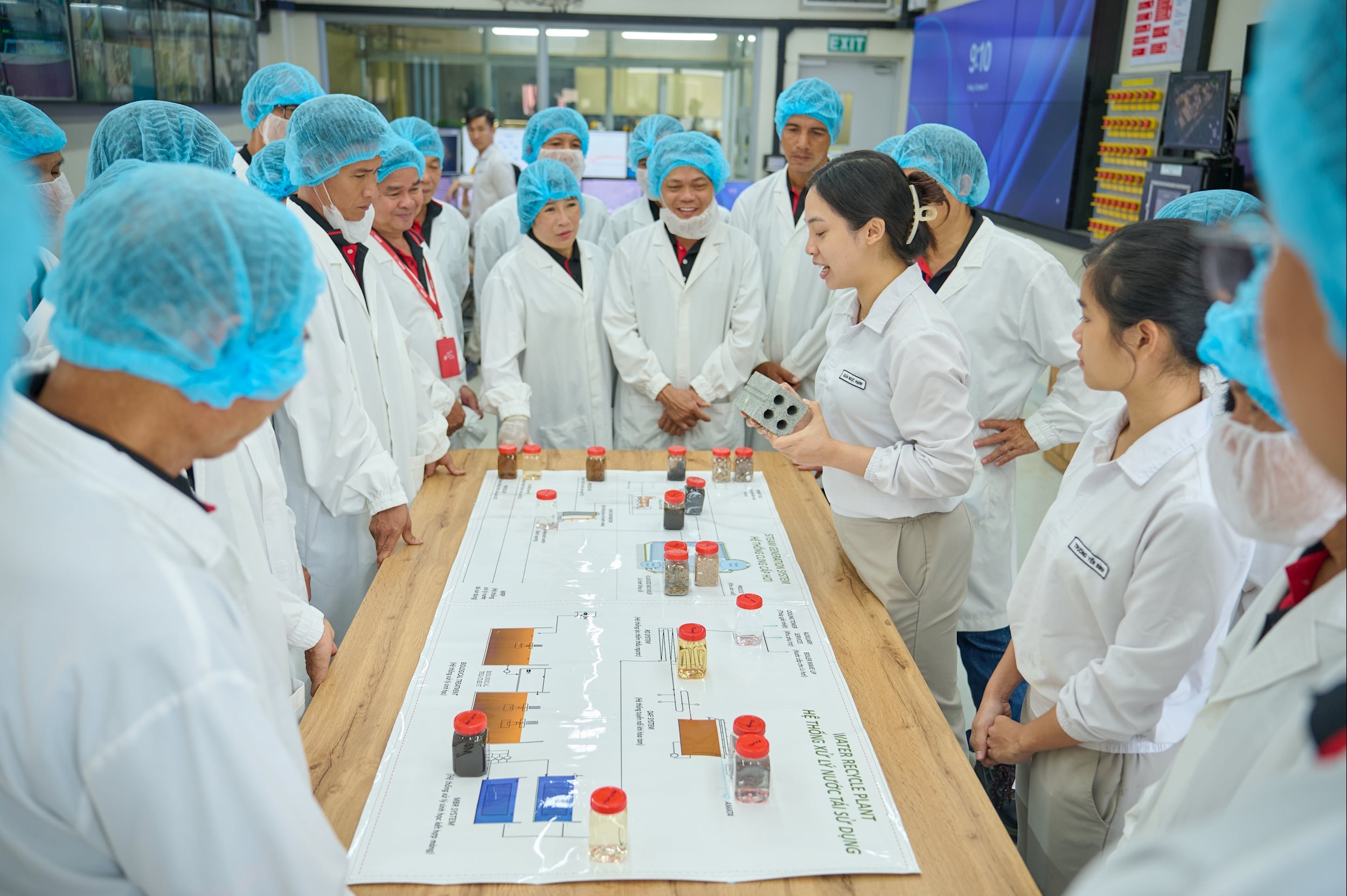
The initiative was highlighted during a seminar titled “The Role of Farmers in Regenerative Agriculture”, held on October 31 at the Nestlé Trị An factory in Dong Nai province, where more than 60 outstanding farmers and agricultural sustainability experts gathered to celebrate success stories from the program.

Binu Jacob, Managing Director of Nestlé Vietnam, stated during the event: “At Nestlé, people are at the heart of our sustainability journey. The NESCAFÉ Plan represents a long-term commitment to support farmers in implementing regenerative agriculture to enhance their income and quality of life.”

Jacob added that close cooperation with farmers is vital to building a more sustainable future for Vietnam’s coffee industry, reflecting Nestlé’s dedication to both environmental and social responsibility.

Truong Hoang Phuong, Director of Nestlé Trị An Factory, emphasized that farmers are the starting point of coffee quality, saying: “The quality of coffee begins in the field. Farmers are the foundation of success, while the factory amplifies their efforts by bringing this value to global markets.”

The event also featured a tour of the factory’s modern coffee processing facilities, where farmers learned about production technologies and the journey of Vietnamese coffee beans now exported to over 40 international markets, including Europe, Japan, South Korea, and the United States.

Farmers shared their experiences in adopting regenerative agriculture and digital farm management to improve soil health and productivity. Dao Duy Quynh, a farmer from Gia Lai province, said:

“The program completely changed how we work. We learned to farm in ways that protect the environment while increasing our income.”

Since its launch in 2011, the NESCAFÉ Plan has delivered more than 467,000 training sessions on sustainable coffee farming, provided improved seedlings to around 21,000 farmers annually, and distributed over 86 million high-yield, pest- and drought-resistant plants, helping rejuvenate over 86,000 hectares of aging coffee farms.

This transformation marks a significant milestone in promoting sustainable coffee production in Vietnam, supporting a greener and more responsible coffee economy, and reinforcing the country’s position as one of the world’s leading coffee producers and exporters.


JDE Peet’s Calls on Coffee Industry to Embrace Regenerative Agriculture Roadmap

Amsterdam – Qahwa World

On International Coffee Day, JDE Peet’s (EURONEXT: JDEP) marked the tenth anniversary of its Common Grounds farmer programmes with a strong call for the global coffee industry to implement the Regenerative Agriculture Coffee Roadmap. The company stressed that urgent action is needed to secure the future of coffee as climate change continues to disrupt production through unseasonal weather, rising temperatures, and shifting rainfall patterns.

Laurent Sagarra, Vice President of Engagement at JDE Peet’s, said that resilient supply chains benefit everyone, from consumers and companies to farmers themselves. He noted that the company has already reached nearly one million farmers over the past decade, but warned that the scale of climate risk demands faster, collective action. “We cannot wait another century to support the millions of farmers who still need help,” he said. “The time to act is now.”

JDE Peet’s farmer programmes, launched in 2015 as part of the company’s Common Grounds sustainability strategy, aim to strengthen coffee-growing communities by promoting regenerative agriculture, improving farmer livelihoods, and fostering thriving coffee regions. Using a data-driven approach verified by independent assessments, the programmes have already made measurable progress. More than 835,000 farmers in 29 countries have benefited, half of the farms involved have adopted regenerative practices such as soil management and water conservation, and 83.2 percent of the company’s green coffee is now responsibly sourced worldwide, including 100 percent in Europe.

The roadmap JDE Peet’s is urging the industry to adopt outlines proven regenerative practices that can reduce greenhouse gas emissions, restore ecosystems, and boost coffee production. Studies suggest that supporting farmers to transition could increase global coffee exports by 30 percent, improve the incomes of more than three million smallholder farmers, and cut emissions by 3.5 million tons of CO₂e annually.

With 12.5 million coffee farmers worldwide, many managing less than one hectare of land, the company underlined that the challenges cannot be met by one player alone. As it celebrates ten years of engagement with farmers, JDE Peet’s is pressing the entire industry to join forces in ensuring that coffee has a sustainable and resilient future.

Rainforest Alliance Launches First Regenerative Agriculture Certification for Coffee

Dubai, 9 September 2025 (Qahwa World) – The Rainforest Alliance has announced the launch of the world’s first dedicated regenerative agriculture certification for coffee, a milestone that seeks to transform farming practices from simply reducing harm to actively restoring ecosystems and improving farmer livelihoods. The new “regenerative” seal is expected to appear on consumer coffee bags starting in 2026.

This initiative follows the release of version 1.4 of the Sustainable Agriculture Standard, which will take effect in October 2025. The revised standard reduces the number of requirements from 221 spread across seven categories to 148 requirements consolidated into three, making certification more straightforward for farmers while maintaining its credibility. Alongside this streamlining, certificate holders now have the option to add 17 regenerative requirements to their existing certification, or to pursue a standalone regenerative certification consisting of 119 requirements focused on soil health, biodiversity, water management, climate resilience, and farmer livelihoods.

The Rainforest Alliance has framed regenerative agriculture as a shift beyond a “do no harm” mindset toward one of repair and restoration. The new certification aims to make coffee part of an ecological recovery process that benefits both the land and the farming communities that depend on it. The organization emphasized that every future cup of coffee should give back more than it takes. A recent report by TechnoServe supported this view, finding that the transition to regenerative agriculture in key coffee-producing countries could significantly increase exports and raise farmer incomes.

Implementation of the new certification has already begun in coffee farms across Brazil, Costa Rica, Mexico, and Nicaragua. The first coffees carrying the regenerative seal are expected to reach international markets in 2026, targeting consumers who increasingly demand sustainable and credible products. The launch also coincides with sector-wide initiatives such as RegenCoffee, introduced by the Global Coffee Platform to create a common language around regenerative agriculture, further strengthening Rainforest Alliance’s leadership in this field.

Beyond the environmental and social dimensions, the development comes at a critical moment as the European Union’s deforestation-free supply chain law (EUDR) is set to take effect on 30 December 2025. The law will require companies to prove that commodities entering EU markets are not linked to deforestation. Observers note that the regenerative certification could provide companies with an essential tool to comply with these new requirements, especially in the coffee sector, which faces growing regulatory scrutiny.

Despite the enthusiasm, there are concerns that additional certification layers could impose extra burdens on smallholder farmers who already struggle with limited resources. The Rainforest Alliance has responded by stressing that the new standard was developed over years of research and consultation with farmers, companies, and civil society groups. The goal, it said, is not to increase burdens but to build long-term resilience and open new opportunities for market access.

By combining the streamlined Sustainable Agriculture Standard with the launch of the first regenerative certification for coffee, the Rainforest Alliance is signaling a strategic shift in its vision. The initiative goes beyond traditional sustainability frameworks, aiming to create a new agricultural model that balances environmental protection, agricultural economics, and social development. With this step, the global coffee sector enters a new chapter in which every cup of coffee is not just a beverage, but a contribution to restoring the planet and securing a more sustainable future.