Kim Thompson: Coffee on the Edge of Disruption

Dubai – Ali Alzakary

The global coffee industry has spent the past few years navigating one disruption after another—from pandemic shutdowns and climate volatility in producing countries to freight crises that reshaped global shipping routes. As the global coffee market grapples with volatility—production reaching around 175 million bags in 2025 while costs continue to rise due to climate pressures and freight disruptions—the ongoing conflict in the Middle East is adding a new layer of uncertainty to an already fragile supply chain.

Coffee moves through one of the most complex trade networks in the food and beverage sector. Green beans travel from farms across Latin America, Africa and Asia through international ports and maritime corridors before reaching roasters, cafés and consumers. Any disruption to shipping routes, insurance costs or regional logistics can quickly ripple across the industry. For specialty coffee—where freshness, tight margins and long-term sourcing relationships define the business—the impact can be felt even faster.

To understand how the sector is reacting, we spoke with Kim Thompson, Co-Founder  at RAW Coffee Company in Dubai. From monitoring shipments already at sea to preparing technical support systems for cafés, Thompson explains how roasters are navigating rising costs, uncertain logistics and a rapidly shifting geopolitical landscape.

You may like: Oil Surge Could Brew Higher Coffee Prices 

In this conversation, she offers a clear view of what café operators are worrying about right now, how long menu prices can realistically hold, and why the coffee industry’s resilience often comes down to relationships built across the supply chain.

  • Has the “fear factor” kicked in yet? Are you seeing cafés or hotels panic-buying and stockpiling coffee to guard against a potential shortage?

Not really. The reality of the café industry is that most operators are managing week-to-week cash flow, not building strategic stockpiles. Right now the conversations we’re having are far more about cost control than hoarding inventory.

The other factor is freshness. Speciality coffee isn’t a commodity that sits in a warehouse for months. We roast weekly and deliver fresh, so stockpiling doesn’t really fit how quality coffee businesses operate.

Our expectation is that the real response, if there is one, will likely come after Eid al-Fitr, once operators have had time to assess the geopolitical situation and think through their own coping strategies. At the moment, people are watching closely rather than panicking.

  • The coffee you’re roasting today was bought at pre-war prices — how long can you hold your current menu prices before new logistics costs force your hand?

The uncomfortable truth is that price pressure in coffee started well before this conflict. The industry has already been absorbing significant increases at origin, higher processing costs, and rising freight prices for the past two years.

We have already had to adjust pricing once, simply because the economics of producing high-quality coffee have changed globally.

If shipping routes tighten or logistics costs spike again because of regional instability, there’s only so much the supply chain can absorb. Roasters can cushion the impact for a period of time, but eventually the math catches up with everyone.

Coffee has historically been underpriced for the amount of work and risk involved in producing it. What we are seeing now is the global market slowly correcting that reality.

  • Are there specific “origins” or specialty grades that are now effectively “cut off” due to their transit routes through the conflict zone?

At the moment nothing is completely cut off, but logistics has become far more complicated overnight.

We currently have multiple containers on the water and are actively tracking them while exploring alternative routing options that avoid the Strait of Hormuz.

In many ways it feels like a return to the early COVID-19 playbook—scenario planning, contingency routing, and leaning heavily on relationships across the supply chain to keep things moving.

The specialty coffee industry is surprisingly resilient because it’s built on long-term relationships with producers, exporters and logistics partners. When things get unpredictable, those relationships become incredibly valuable.

  • What’s the plan for equipment and spare parts? Is there a risk that a broken espresso machine could stay down because of shipping delays?

Equipment supply is definitely something we’re watching closely, but fortunately we forecasted and planned ahead. We have several containers on the water carrying both commercial and domestic machines, so supply may get tight but we’re not walking into this empty-handed.

More importantly, we have invested heavily in our technical infrastructure. We run a full in-house service department with extensive spare parts inventory, qualified technicians, and swap-out machines available for our commercial partners.

In practical terms, if a café’s machine goes down, we’re structured to keep them operating. The bigger challenge in this industry is rarely the machine itself—it’s the global logistics that sit behind everything.
Oil Surge Could Brew Higher Coffee Prices

Dubai – Qahwa World

Rising oil prices linked to escalating tensions in the Middle East are raising fresh concerns across the coffee sector, with vendors warning that higher fuel costs could eventually translate into more expensive coffee for businesses and consumers.

Crude oil climbed above 90 dollars per barrel on Friday, a level that industry participants say may increase the cost of transporting coffee beans across global supply chains. Because coffee is largely traded internationally and shipped over long distances, higher energy prices can quickly affect freight and logistics costs.

You may like: Vietnam’s Coffee Crisis Could Disrupt Global Supply Chains 

The concern comes only months after the United States removed most tariffs on coffee and several agricultural products last November, a move that had provided temporary relief to importers, roasters and coffee retailers.

  • Shipping Costs Back in Focus

Coffee businesses say transportation costs remain one of the most sensitive factors affecting the price of beans. Any sustained increase in oil prices could raise the cost of shipping green coffee from producing countries to roasting and consuming markets.

Industry observers note that global coffee prices have already been under pressure due to supply challenges in recent years.

According to the World Bank, coffee prices have remained relatively high after adverse weather conditions in several coffee-producing regions reduced harvests and tightened global supply. Earlier expectations suggested that prices might gradually ease this year as production recovered.

However, the recent geopolitical tensions and the accompanying surge in oil prices could introduce new cost pressures, particularly through higher freight rates and supply chain expenses.

  • Uncertain Outlook for Coffee Markets

For coffee retailers and roasters, the coming months may depend largely on how energy markets evolve. Higher fuel costs can affect nearly every stage of the coffee supply chain, from farm transportation and export logistics to international shipping.

While the full impact remains uncertain, market participants say sustained increases in oil prices could add another layer of volatility to an already sensitive global coffee market.


Coffee Prices Rise on Supply Concerns

Dubai – Qahwa World

Global coffee prices moved higher on Thursday as renewed concerns about supply disruptions supported the market. Arabica futures climbed to their highest level in about two weeks, while robusta contracts also posted modest gains.

Market sentiment was influenced by fresh export data from Brazil. The country’s Ministry of Trade reported that Brazilian coffee exports in February declined by 17.4 percent compared with the same month a year earlier, totaling about 142,000 metric tons. The drop raised questions about near-term supply availability from the world’s largest coffee producer.

Shipping conditions in global trade routes also contributed to the cautious mood in the market. Disruptions affecting shipping lanes through the Strait of Hormuz have increased transportation costs, including higher freight rates, insurance premiums and fuel expenses. These factors are expected to add pressure to import costs for coffee traders and roasters.

Despite the upward move in prices, a stronger U.S. dollar limited the extent of the gains. A firmer dollar generally makes dollar-denominated commodities such as coffee more expensive for buyers using other currencies.

Weather developments in Brazil continue to play an important role in shaping market expectations. Recent rainfall has improved soil moisture conditions in Minas Gerais, the country’s main arabica-producing region. According to meteorological data, the area received significantly above-average precipitation during the week ending February 20, helping improve crop prospects.

Coffee prices have experienced notable volatility in recent weeks. Earlier in the month, both arabica and robusta futures fell sharply amid expectations of a large Brazilian harvest. Brazil’s national crop supply agency projected that the country’s coffee output in 2026 could reach a record 66.2 million bags, driven by stronger arabica production and a moderate increase in robusta volumes.

Global supply forecasts have also pointed to expanding production. Banking sector estimates suggest worldwide coffee output may reach around 180 million bags in the 2026/27 season, an increase of roughly eight million bags compared with the previous year.

Meanwhile, Vietnam continues to expand its presence in the robusta market. Official data show the country recorded strong export growth at the start of the year, with shipments rising sharply compared with the same period last year. Vietnam remains the world’s largest producer of robusta coffee, and its production is expected to grow further in the current crop cycle.

Coffee inventories monitored by the Intercontinental Exchange have also shown signs of recovery after reaching multi-month lows late last year. Higher stock levels can weigh on prices because they signal improved supply availability in the market.

At the same time, production trends in other origins remain mixed. Colombia, the world’s second-largest arabica producer, recently reported a significant decline in January coffee output compared with the previous year, a factor that provided some support to global prices.

Overall, the coffee market continues to balance opposing forces: concerns over logistics and regional production setbacks on one side, and expectations of larger global harvests on the other. Traders are closely watching weather conditions, export flows and shipping developments for further direction in the weeks ahead.

Top 20 Most Powerful Coffee Companies in the World 2026

The Map of Influence and the $200 Billion Battle

DUBAI – QAHWA WORLD

In 2026, the coffee sector has transcended being a mere consumer commodity to become one of the most complex and influential sectors in the global economy. As the market value surpasses the $200 billion mark, the map of power has been redrawn. “Store count” is no longer the sole metric of success; instead, Big Data, Sustainable Supply Chains, and Digital Delivery Speed have become the primary engines of growth. This report highlights the 20 titans shaping the coffee landscape in 2026 based on operating income, market influence, and geographical footprint.

Top 10 Coffee Companies in the Retail Sector (Coffee Chains)

  1. Starbucks – USA:

    • Revenue: ~$39.2 Billion.

    • Footprint: +40,000 stores in 86 countries.

    • Analysis: Remains the dominant global force. In 2026, it successfully integrated the “Deep Brew” AI to predict customer orders with 95% accuracy and solidified its position in China despite fierce competition.

  2. Luckin Coffee – China:

    • Revenue: ~$6.8 Billion.

    • Footprint: +22,000 stores (surpassing Starbucks in Asia by count).

    • Analysis: Operates on a “Cloud Cafe” model with 100% digital ordering. Its strength lies in low overhead costs and lightning-fast expansion.

  3. Tim Hortons – Canada:

    • Revenue: ~$4.8 Billion.

    • Footprint: +5,900 stores.

    • Analysis: The powerhouse of the RBI group. It expanded aggressively in 2026 into emerging markets like India and the Philippines while maintaining absolute dominance in Canada.

  4. McCafé – USA:

    • Estimated Revenue: ~$3.5 Billion (as a standalone segment).

    • Footprint: Available in most McDonald’s locations (+40,000 points).

    • Analysis: The “silent” competitor to Starbucks. In 2026, it pivoted toward high-quality specialty beans to compete with premium cafes at economy prices.

  5. Dunkin’ – USA:

    • Footprint: +13,500 stores.

    • Analysis: Under Inspire Brands, Dunkin’ has transformed into a tech-centric company, with 60% of sales processed via mobile apps in 2026.

  6. Costa Coffee – UK:

    • Footprint: +4,300 stores and +16,000 “Costa Express” machines.

    • Analysis: Its true strength in 2026 lies in “Smart Vending,” delivering cafe-quality coffee in gas stations and airports, backed by Coca-Cola’s logistics.

  7. Panera Bread – USA:

    • Revenue: ~$6.2 Billion.

    • Analysis: A pioneer in the “Subscription Economy.” In 2026, its “Unlimited Sip Club” reached record numbers, ensuring steady recurring cash flow.

  8. Cotti Coffee – China:

    • Footprint: +8,000 stores.

    • Analysis: The challenger that was born big. It follows an aggressive pricing strategy, securing the 8th spot globally by store count in record time.

  9. Peet’s Coffee – USA:

    • Analysis: Focuses on “Coffee Purists.” In 2026, it became the go-to reference for fresh-roasted coffee in the premium US and Asian markets.

  10. Caribou Coffee – USA:

    • Footprint: +850 stores.

    • Analysis: Despite a smaller footprint, it dominates the US Midwest and maintains a powerful presence in the Middle East through franchising.

Top 10 Coffee Companies in the Manufacturing Sector (Packaged & Home Coffee)

  1. Nestlé – Switzerland:

    • Coffee Revenue: +$26.5 Billion.

    • Brands: Nescafé, Nespresso, Starbucks At Home.

    • Analysis: The “Central Bank of Coffee.” Dominates soluble coffee and capsules, holding the largest R&D budget for climate-resilient coffee strains.

  2. JDE Peet’s – Netherlands:

    • Revenue: ~$10.2 Billion.

    • Analysis: The European giant with over 50 brands. In 2026, it strengthened its grip on packaged coffee in emerging markets.

  3. Keurig Dr Pepper – USA:

    • Revenue: ~$15.5 Billion (Total Group).

    • Analysis:* Controls the “Single-Serve” system in North America and serves as a manufacturing partner for over 100 other brands.

  4. Lavazza – Italy:

    • Revenue: ~$3.4 Billion.

    • Analysis: The icon of Italian coffee. In 2026, it successfully acquired several specialty roasters in Europe to boost its “Premium” segment presence.

  5. Tchibo – Germany:

    • Analysis: A unique business model combining coffee trade with consumer goods, holding a dominant position in Germany and Eastern Europe.

  6. Olam Food Ingredients (OFI) – Singapore:

    • Analysis: The “Back-end Engine.” The largest supplier of green beans and processed coffee to most companies on this list, making it a strategic player in global pricing.

  7. UCC (Ueshima Coffee Co.) – Japan:

    • Analysis: A leader in Ready-to-Drink (RTD) and canned coffee innovation. Dominates the Asian market and owns model estates in Hawaii and Brazil.

  8. Melitta – Germany:

    • Analysis: Controls both the brewing equipment and the coffee itself, providing a competitive edge in the “At-Home” segment.

  9. illycaffè – Italy:

    • Analysis: While not the largest by revenue, it is the strongest in “Reputation.” In 2026, illy remains the gold standard for the luxury hotel and restaurant sector worldwide.

  10. Strauss Coffee – Brazil/Israel:

    • Analysis: Dominates the Brazilian market (the world’s largest producer) and holds leading market shares in Russia and Eastern European countries.

Key Indicators for 2026

  • Digital Transformation: 45% of sales for major companies (like Starbucks and Luckin) are now conducted via mobile apps.

  • Sustainability: Net-zero carbon commitment has become a prerequisite for staying on the list; Nestlé and Lavazza have invested billions in sustainable supply chains.

  • Specialty Growth: Giants are increasingly acquiring small specialty roasters to cater to Gen Z preferences.

  • The Asia Market: China is no longer an “emerging” market; it has become the “Main Engine” for global store growth.

Major Trends of 2026

This report shows that the gap between “cup sellers” and “coffee manufacturers” is narrowing. Power in 2026 belongs to companies that own Customer Data and control the Supply Chain from Farm to Cup. We also note the rise of Ready-to-Drink (RTD) coffee as the fastest-growing segment, prompting giants like Nestlé and Coca-Cola (Costa) to inject massive investments.

Research Note: This data was compiled based on fiscal year-end reports for 2025 and growth projections for Q1 2026. Financial figures reflect market value and operational cash flows.

Ethiopian Coffee Lifts Russia Trade to $435m in 2025 Surge

DUBAI – QAHWA WORLD

Trade between Russia and Ethiopia climbed to more than $435 million in 2025, nearly tripling from the previous year, reflecting a rapidly strengthening economic relationship anchored by commodities, agriculture, and expanding technology ties.

The figures were disclosed by Russia’s Ambassador to Ethiopia, Evgeny Terekhin, in comments to Russian state media. He attributed the growth to rising Russian exports of fertilisers, agricultural machinery, and energy equipment, alongside increased Ethiopian exports of coffee, flowers, and textiles.

Coffee has emerged as the standout driver of the trade surge. Ethiopian beans—particularly the Sidamo and Harar varieties—have seen growing demand among Russian consumers.

According to the ambassador, Ethiopia’s coffee exports to Russia rose from about $46 million in 2024 to an inflation-adjusted $123 million in 2025. Import volumes more than doubled over the same period, increasing from 8,300 tonnes to approximately 18,300 tonnes.

“Traditional export items are acting as growth drivers,” Terekhin said, pointing to sustained demand on both sides.

Beyond agricultural trade, cooperation is expanding into digital commerce. Ethiopian authorities have granted Russian online marketplaces a regulatory “green corridor,” easing market entry requirements. Wildberries and Russ—now operating under the merged entity RWB—are preparing to begin operations in Ethiopia after adapting their platforms to local market conditions.

“The entry of Russian tech companies into the Ethiopian market is no longer theoretical,” Terekhin said, noting that technical integration and product localisation are already underway.

The strengthening trade relationship also includes industrial ambitions. At a bilateral intergovernmental commission meeting in November 2025, Russian aluminium producer Rusal signed agreements with Ethiopian Investment Holdings to explore the construction of an aluminium plant in Ethiopia.

If realised, the project could deepen industrial cooperation and expand Russia’s footprint in East Africa, further broadening a partnership that is increasingly being shaped by coffee-led trade growth.

African Fine Coffees Conference 2026 Ends with Strong Market Signals

Addis Ababa  – Qahwa World × Buna Kurs

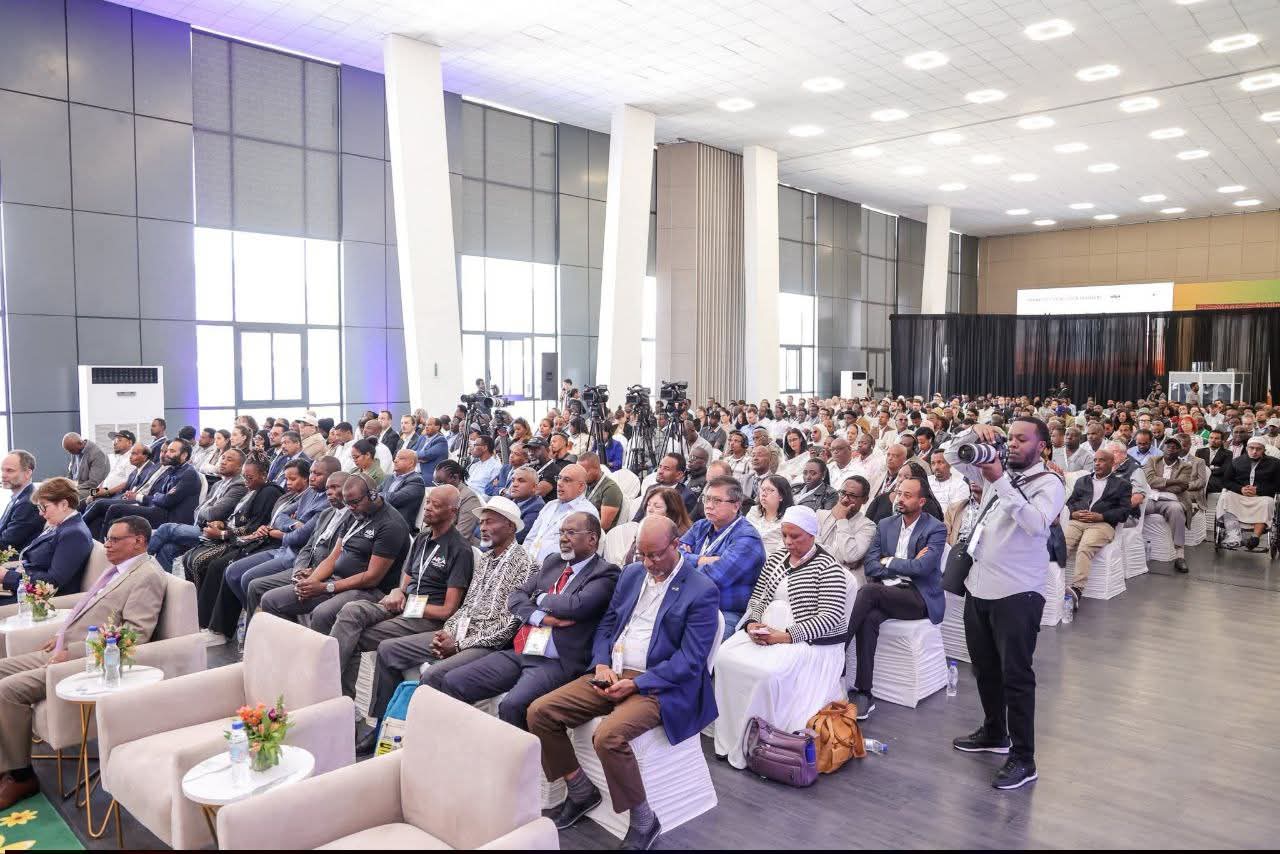
The 22nd African Fine Coffees Conference & Exhibition (AFCC&E) concluded in Addis Ababa, capping three days of trade engagement, policy dialogue, and industry competition that brought the global African coffee value chain together under one roof.

Held at the Addis International Convention Center (AICC) alongside the 3rd African Coffee Week, the conference drew a strong international turnout, reinforcing AFCC&E’s role as the central meeting point for the continent’s coffee sector.

The final day focused on concluding business discussions, announcing competition outcomes, and consolidating the policy and market signals that shaped the week’s conversations. Across the exhibition floor, exporters, roasters, and traders used the final hours to finalize cupping sessions and advance logistics discussions. Activity remained high in the B2B Cupping Pavilion, where verified seller sessions offered buyers access to late-stage samples and origin briefings.

The Africa Barista Championship concluded with the crowning of the 2026 Champion, following a closely contested finale that highlighted the growing professionalism of Africa’s coffee service sector. In the Regional Taste of Harvest competition, top honors were awarded to leading producers, reflecting the momentum for African specialty coffees in premium markets.

The Burundi Taste of Harvest Auction also closed on the final day, with winning lots achieving premium prices, underlining sustained buyer appetite for traceable, high-quality African coffees.

Beyond competitions, discussions highlighted producer preparedness for the European Union Deforestation Regulation (EUDR). Exhibitors showcased geolocation mapping and traceability systems aimed at securing continued access to European markets. The UNIDO-led ACT Coffee Programme was also referenced as a framework for strengthening competitive value chains through industrial development at origin.

International roasters noted that logistics, financing, and risk management remain the primary constraints to scaling sourcing from Africa. The conference formally concluded with the official handover ceremony, where the African Fine Coffees Association announced the host for the 23rd AFCC&E in 2027.

The event closed with a gala dinner and awards ceremony at Friendship Park, bringing together delegates and partners to mark the end of the African Coffee Week programme.

AFCA 2026 Officially Opens in Addis Ababa

Brewing Africa’s Next Generation

Addis Ababa – Qahwa World x Buna Kurs

The 22nd African Fine Coffees Conference & Exhibition (AFCC&E) officially opened today at the Addis International Convention Center (AICC), marking a major milestone for Africa’s coffee sector. Following yesterday’s pre-conference Sustainability Day workshops, the event welcomed over 2,000 delegates from more than 25 countries, including government officials, private sector leaders, international buyers, and coffee experts.

A Vision for the Future This year’s theme, “Brewing Africa’s Next Generation,” underscores a commitment to modernizing the value chain, integrating youth into the sector, and building climate resilience. AFCA Chairperson Amir Hamza described the event as a “homecoming for coffee,” adding: “Africa will no longer just supply fine coffees to the world—we will define the future of coffee.”

Breaking Trade Barriers A highlight of the opening was the high-level panel discussion, “Why Do Roasters Find It Harder to Buy Directly from Africa?” presented by Algrano. Strategic partner Algrano brought a delegation of over 20 international buyers from the US and Europe to engage directly with African producers. Panelists focused on solutions to logistics bottlenecks, financing gaps, and late contracting that often hinder smallholder farmers from accessing global markets.

Exhibition Floor Highlights The trade floor is now fully buzzing with booths showcasing innovations in coffee technology, logistics, and premium green coffee. Cupping sessions are underway, featuring the winners from AFCA’s flagship competition, the Taste of Harvest, in addition to fresh Ethiopian harvests.

Delegates also explored value-addition technologies aimed at moving beyond raw bean exports to roasting and branding at origin. Policy initiatives introduced today include a gender-responsive framework designed to increase women’s participation in agricultural extension and decision-making, developed in partnership with the Ethiopian government and GIZ.

Economic and Sectoral Momentum The conference is already shaping critical discussions on coffee strategy, and analysts note that initiatives highlighted at AFCA are being seen as a platform to position Africa as a proactive player in global coffee pricing and innovation. The conference continues tomorrow and will feature the finals of the Africa Barista Championship and the Regional Taste of Harvest Competition, in addition to AFCA’s Burundi Taste of Harvest Auction.

Brazilian Coffee Ends 2025 with Record Revenues Exceeding $15.6 Billion

São Paulo – Qahwa World

In a detailed economic report reflecting major shifts in global commodity markets, the Brazilian Coffee Exporters Council (Cecafé) announced the conclusion of 2025 with an unprecedented financial performance. Despite ongoing supply chain disruptions and geopolitical volatility, Brazil achieved a historic record in coffee export revenues, reinforcing its position as a leading force in the global agricultural economy.

  • Cecafé: The Reference Authority for Data and Policy

The Brazilian Coffee Exporters Council (Cecafé) is the official body representing coffee exporters in Brazil and is responsible for monitoring coffee trade flows to more than 120 countries worldwide. According to Cecafé’s December 2025 report, these exceptional financial results demonstrate the sector’s ability to adapt to global price fluctuations, supported by strategic investments in quality enhancement and value creation for Brazilian coffee in international markets.

  • Financial Performance Analysis: Value Growth Amid Lower Volumes

Based on data analyzed by Cecafé, Brazil’s coffee export revenues reached $15.586 billion in 2025, marking a 24.1% increase compared with the previous year. This figure represents the highest export revenue level in Brazil’s coffee trade history.

Notably, this record revenue was achieved despite a 20.8% decline in shipment volumes. Brazil exported 40.049 million 60-kg bags in 2025, down from more than 50 million bags in 2024. The increase in revenues was driven by a sharp rise in the average export price, which reached $389.17 per bag, up 56.4% year on year. This pricing dynamic allowed exporters to generate higher returns with lower volumes, supporting crop sustainability and helping preserve domestic stocks affected by adverse climatic conditions.

  • A Reshaped Trade Map: Germany Takes the Lead

The year 2025 marked a significant shift in Brazil’s coffee export destinations. According to Cecafé, the United States fell to second place among Brazil’s largest coffee importers, while Germany emerged as the leading destination.

Germany imported 5.409 million bags, representing a 6.1% increase, while U.S. imports declined sharply by 33.9%, totaling 5.381 million bags. Cecafé attributes this contraction in the U.S. market primarily to the imposition of 50% import tariffs on Brazilian coffee during parts of the year, which reduced the product’s competitiveness and redirected volumes toward European and Asian markets.

In parallel, Japan recorded growth of 19.4%, while China posted a 19.5% increase, highlighting the success of Cecafé’s market diversification strategy and its focus on emerging economic powers in Asia.

  • Differentiated Coffees: Driving Qualitative Growth

Cecafé’s report also highlights the strong performance of the “Differentiated Coffees” segment, which includes coffees certified for high quality standards or sustainable production practices. This segment generated $3.525 billion in revenue, accounting for 22.6% of total export earnings.

Although shipment volumes in this category declined by 15.1%, their total value increased by 39.1%. Márcio Ferreira, President of Cecafé, noted that global consumers are increasingly willing to pay premium prices for coffees that ensure environmental and social sustainability—an area in which Brazil has strengthened its position through advanced agricultural technologies.

  • Logistics Challenges: The Cost of Success

Despite the strong financial results, 2025 was not without challenges. Cecafé reported severe logistical constraints at Brazilian ports, particularly at the Port of Santos. According to the report, 55% of vessels experienced schedule delays, disrupting the shipment of thousands of containers each month.

These delays resulted in operational losses amounting to millions of Brazilian reais, driven by demurrage charges and additional storage costs. Cecafé emphasized that improving port infrastructure and ensuring a steady supply of containers are essential to sustaining record export performance in the coming years.

  • Outlook for 2026: Sustainability and Innovation

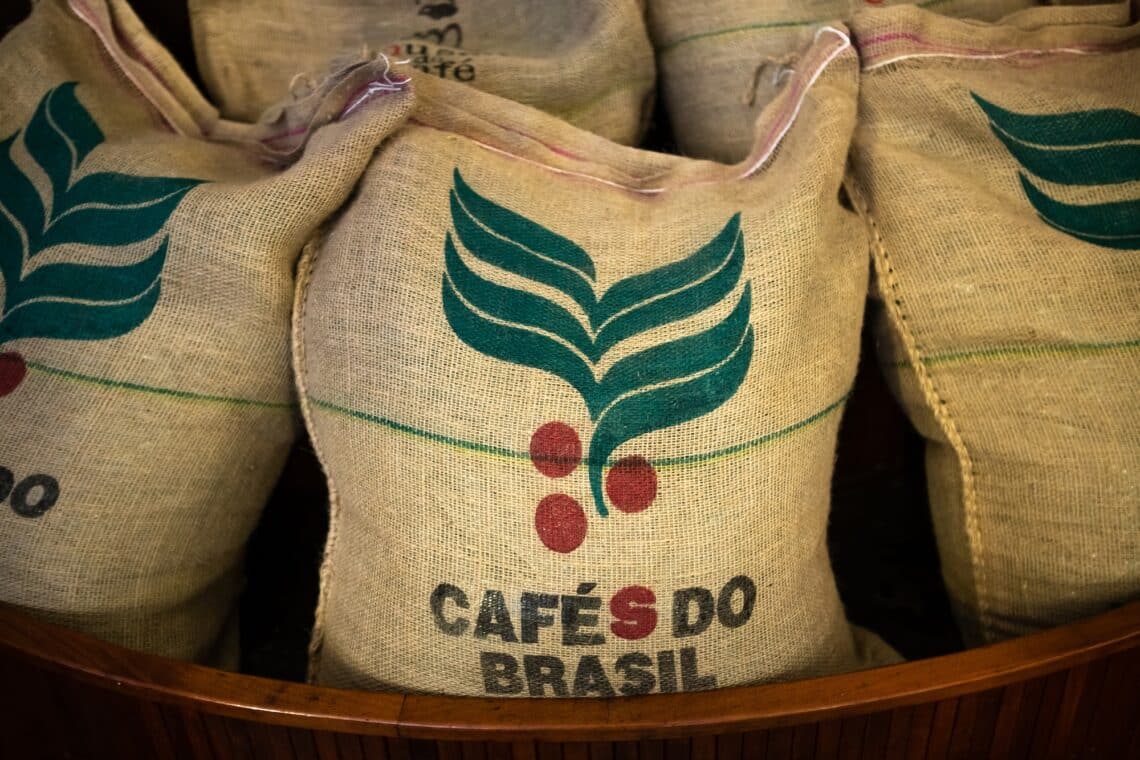
Cecafé’s December 2025 report concludes with an optimistic outlook led by Marcos Matos, CEO of the Brazilian Coffee Exporters Council. He stated that the “Cafés do Brasil” brand has become a global benchmark, successfully combining large-scale production with environmental responsibility.

According to the report, Brazil—through Cecafé—not only supplies approximately one-third of global coffee demand, but also leads efforts in agricultural digitalization, labor rights protection, and forest conservation, positioning Brazilian coffee as a reliable and sustainable choice for the future.

  • Conclusion

Generating more than $15.6 billion in export revenues in a single year is not merely a statistical milestone, but a clear indicator of the strength and global standing of Brazilian coffee. It also underscores the central role played by the Brazilian Coffee Exporters Council (Cecafé) in guiding the sector toward new levels of financial and professional achievement.

South Korea’s Coffee Import Bill Hits Record $1.38 Billion in 2025

SEOUL – Qahwa World

South Korea’s coffee import bill reached a record high in 2025, driven by rising global coffee prices and a weakened local currency, according to data released on Sunday.

According to Yonhap News Agency, South Korea imported more than 2 trillion won (US$1.38 billion) worth of coffee in 2025, marking the first time in the country’s history that coffee imports have surpassed the 2-trillion-won threshold.

Data from the Korea Agro-Fisheries & Food Trade Corporation showed that the total value of coffee imports climbed to 2.65 trillion won, representing a 41% increase compared to 2024. In U.S. dollar terms, coffee imports rose 35% year on year to US$1.86 billion, up from US$1.38 billion the previous year.

The sharp increase was largely attributed to a surge in global coffee prices, which reached a record high of more than US$4 per pound in February 2025 before easing to around US$3.5 per pound. The impact of higher prices was compounded by the weakness of the Korean won, which traded near multi-year lows for much of the year, pushing up import costs when calculated in local currency.

Despite the rise in import value, coffee import volumes declined slightly. Total coffee imports fell by 46 tons from the previous year to 215,792 tons in 2025, indicating that higher prices and currency effects—rather than increased volumes—were the primary drivers behind the record import bill.

South Korea remains one of Asia’s most active coffee markets, with sustained consumer demand continuing to support imports amid ongoing volatility in global coffee prices.

The World’s Mood, Tuned to an Emirati Rhythm

By: Ali Al Amodi

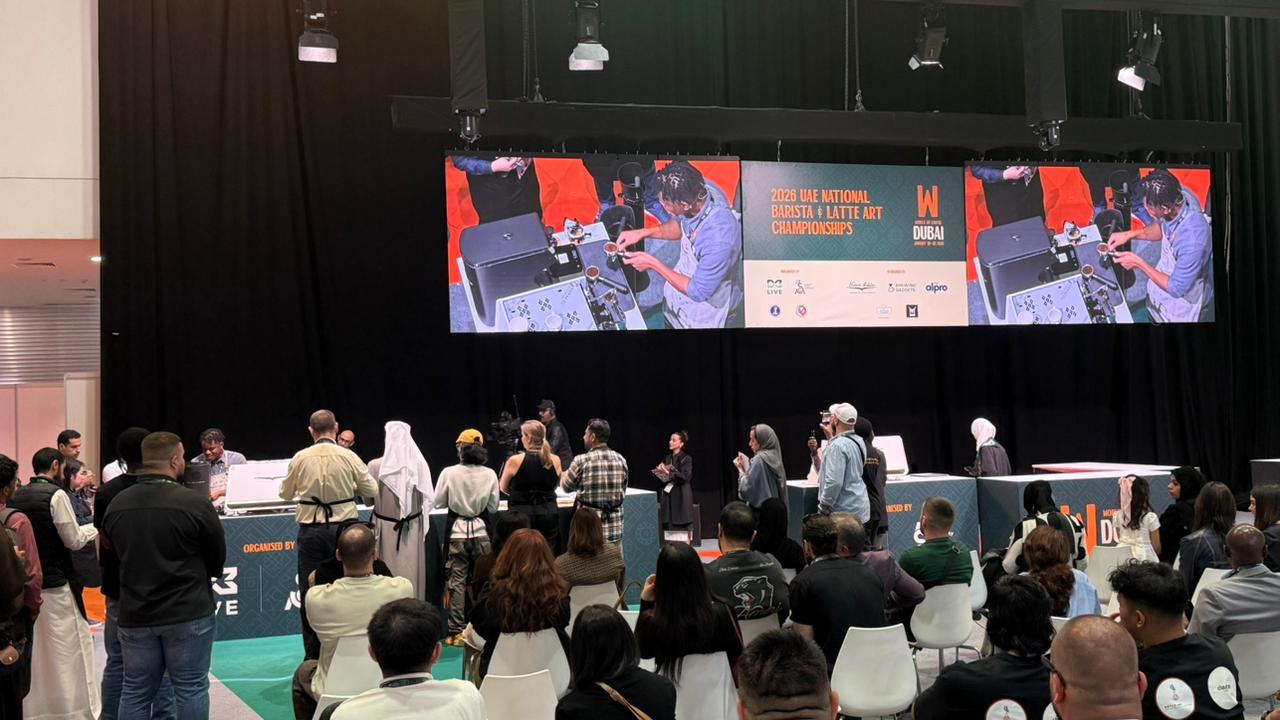
In a world where a cup of coffee sets the rhythm of daily life, World of Coffee Dubai 2026 proved to be far more than a specialized industry event. It stood as a reflection of a city that knows how to turn the impossible into reality. From the heart of Dubai, the world’s largest global platform for coffee trade took shape—an irony that perfectly captures the meaning of vision and the ability to transform geography into opportunity.

Hosted at the Dubai World Trade Centre, the exhibition presented a striking scene: pavilions from 78 countries, more than 2,100 companies and brands, and an area exceeding 20,000 square meters. Together, they told the story of coffee’s journey from distant mountain farms to the consumer’s cup at the far edges of the world. This was not merely a commercial showcase, but a vibrant network of relationships, knowledge exchange, and advanced technologies in roasting, processing, and brewing.

The visit of His Highness Sheikh Mohammed bin Rashid Al Maktoum, Vice President and Prime Minister of the UAE and Ruler of Dubai, carried special significance. It underscored that attention to this sector is part of a broader vision that sees the creative economy and global value chains as key drivers of development. Coffee—often described as “setting the world’s mood”—has also become an indicator of market vitality and growth opportunities, at a time when the global coffee market is moving toward hundreds of billions of dollars. Record-breaking prices at premium coffee auctions clearly signal rising global demand for high-quality coffee.

World of Coffee Dubai encapsulates a powerful Emirati lesson: success is not measured by natural resources, but by vision, connectivity, and the courage to invest in the future. In the coffee cup that begins the day for millions lies the story of a city that chose to become a meeting point for the world—and succeeded.

By hosting this global event, Dubai once again confirms that it does not wait to be invited into the future; it takes the initiative to shape it. From a coffee exhibition to a global economic platform, a clear Emirati philosophy emerges: transforming everyday details into major opportunities and building a global reputation based on quality, organization, and innovation. Thus, the morning cup of coffee becomes yet another witness to the story of a city that truly masters the art of inspiration.

Perhaps the most striking aspect of World of Coffee Dubai is the human and cultural diversity flowing through its halls. Here, a farmer from Latin America meets a roaster from Asia, while an African trader sits beside a European investor—united by a single shared language: coffee.

It is a convergence created by a city that believes its true role is to be a bridge, not a barrier, and an open marketplace for ideas as much as for trade.

Brazil Coffee Export Revenue Hits Record Despite Falling Volumes

Dubai – Qahwa World

Brazil’s coffee export revenue reached a historic high of $15.6 billion in 2025, despite a significant decline in shipment volumes, according to the latest report from Cecafé, the Brazilian Coffee Exporters Council.

Released on January 19, the report shows that total coffee exports fell by more than 10 million 60-kilogram bags, dropping from a record 50,584,170 bags in 2024 to 40,049,222 bags in 2025—a decrease of over 20 percent. Even so, the 2025 figure remains higher than exports recorded in any year between 2020 and 2023.

Cecafé President Márco Ferreira attributed the surge in export earnings to steadily rising coffee prices throughout 2025. He noted that higher average monthly prices, combined with continued investment by Brazilian growers in technology, innovation, and quality, helped elevate both the standard and market value of Brazilian coffee.

The report also highlights the impact of United States tariffs, which led to a 55 percent decline in exports to the U.S. between August and November. The tariffs included a 40 percent national emergency levy, introduced on July 30, alongside a 10 percent reciprocal tariff. Both measures were lifted on November 12.

As a result of reduced U.S. demand, Germany emerged as Brazil’s largest coffee importer in 2025, followed by Italy, Japan, and Belgium.

Looking ahead, Ferreira expects Brazilian coffee exports in 2026 to once again exceed 40 million 60-kilogram bags, reinforcing the country’s position as the world’s largest coffee producer. By comparison, the record 2024 harvest generated approximately $12.5 billion in export revenue, while the 2023 crop earned $6.2 billion.

Dubai Coffee Auction 2026 Concludes with Over $70,000 in Sales

Dubai, UAE – Qahwa World

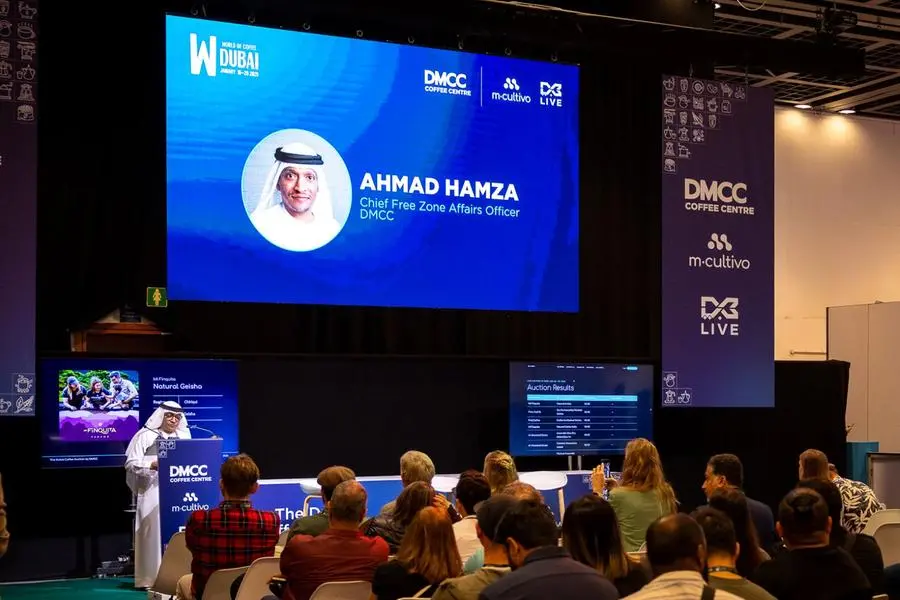
The Dubai Multi Commodities Centre (DMCC) concluded the second edition of the “Dubai Coffee Auction,” with total specialty coffee sales exceeding $70,000, reflecting continued global demand for high-quality, traceable coffee.

The auction featured coffee from 13 different producing countries, marking the widest geographic range ever represented in a single coffee auction. Notably, the event included the first international sale of coffee from the continental United States and recorded the second-highest auction price for Bolivian coffee, highlighting strong international competition among buyers.

Held as part of the World of Coffee Dubai 2026, the auction attracted buyers from across the global specialty coffee market, with 1,364 bids submitted. The platform provided producers with a transparent and organized marketplace to reach international buyers directly.

This edition was part of a three-auction program over the Expo’s three days, including the “Coffee Equipment Auction” and the “Microlot Auction,” culminating in the “Exhibitors’ Coffee Auction,” showcasing a diverse range of coffees to an international audience.

DMCC’s Coffee Centre, located in the Jebel Ali Free Zone, offers integrated facilities including storage, processing, roasting, logistics, and training, connecting producers from Latin America, Africa, and Asia with global markets efficiently.

The World of Coffee Dubai 2026 ran from January 18 to 20 at the Dubai World Trade Centre, featuring over 2,100 companies and brands from the global specialty coffee industry.