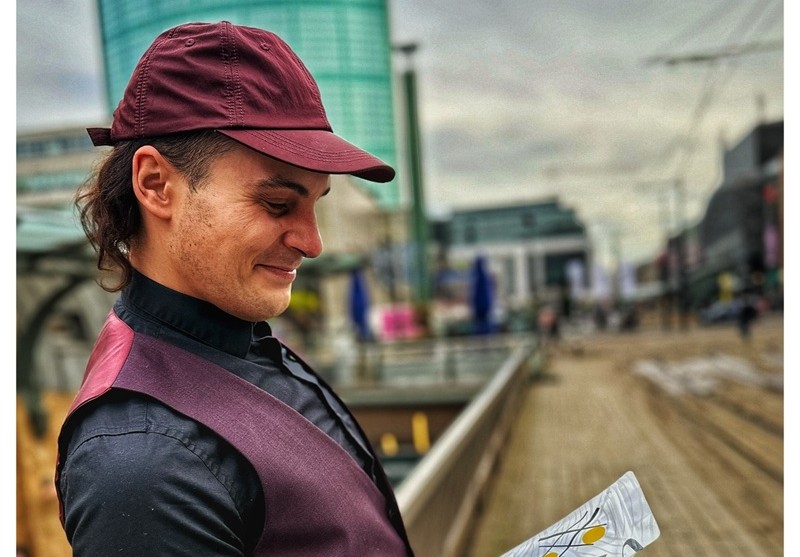
Garfield Kerr: Coffee is the World’s Premier and Most Definitive Functional Beverage

DUBAI – Ali Alzakary

Mr. Garfield Kerr, CEO of Mokha 1450, a leading specialty coffee chain in Dubai and the UAE, confirmed that coffee is the world’s premier and most definitive functional beverage.

Speaking to Hospitality News ME magazine in issue no. 157, published for the period from May to July 2026, Mr. Garfield said that modern scientific research has settled the decades-long debate surrounding coffee and dispelled old myths. Furthermore, he affirmed its role as the first, most versatile, and most effective functional beverage in history.

He explained that coffee’s roots as a functional beverage date back to 15th-century Yemen, where Sufi communities consumed coffee to maintain focus and alertness during long hours of prayer.

He added that claims circulating in the mid-20th century regarding coffee’s negative health impacts, such as stunted growth or irritability, were based on inaccurate studies flawed by small sample sizes and methodological errors.

However, he noted that comprehensive meta-analyses emerging in the 1990s and 2000s shifted this perception and uncovered coffee’s immense health benefits.

Mr. Garfield clarified that what places coffee at the forefront of functional beverages is its richness in plant-based and bioactive compounds.

He confirmed that caffeine belongs to the methylxanthine class. This class contributes to stimulating the central nervous system and increasing alertness by blocking adenosine receptors. Additionally, it inhibits phosphodiesterase enzymes.

He added that coffee contains antioxidant compounds such as chlorogenic acids and polyphenols. These compounds work to reduce oxidative stress, protect the liver and kidneys, and inhibit the growth of harmful bacteria in the digestive tract.

Mr. Garfield stated that black coffee provides immediate advantages for athletes and fitness enthusiasts, as it contributes to enhancing cardiovascular performance, accelerating muscle glycogen resynthesis, and stimulating fat oxidation at rest and during exercise.

Additionally, he added that it lowers perceived exertion and elevates pain thresholds during physical activity. Moreover, it elevates mood and suppresses appetite.

He reviewed the scientific evidence confirming coffee’s long-term health benefits, confirming that it significantly reduces the risks of heart attack, stroke, and heart failure. In addition, it lowers the risk of type 2 diabetes, liver cirrhosis, and pancreatic and liver cancers.

He added that coffee provides neuroprotection against diseases such as Parkinson’s, Alzheimer’s, and dementia. Besides, it lowers rates of depression and the overall risk of mortality.

He noted that these functional properties of coffee gain added significance alongside the growth of the global functional beverage market. Currently, this market is valued at approximately $130 billion and projected to reach $200 billion by 2030.

Mr. Garfield emphasized that black coffee remains the safest and most effective option compared to synthetic alternatives, such as energy drinks packed with sugar and unstudied additives.

He explained that the safe consumption rate of coffee, ranging between three to five cups per day, falls within normal limits for most consumers. Thus, its abuse is rare.

Mr. Garfield concluded his discussion by highlighting the future horizons of coffee science, pointing to ongoing research regarding coffee’s impact on the gut microbiome in collaboration with food chemistry researcher Aysenur Santaroğlu.

He confirmed that coffee is a complex chemical system rich in compounds such as melanoidins, diterpenes, and polyphenols, noting that the interaction of these compounds with gut bacteria could open new doors in preventative medicine and longevity enhancement, ensuring this beverage remains the most ubiquitous and effective functional drink throughout history.

Maryam Tabatabaei: A Journey of Passion in Dubai’s Specialty Coffee Scene

Source: Qahwa World – Exclusive Interview |
Author: Ali Alzakary |
Date: June 17, 2026

Maryam Tabatabaei: A Journey of Passion in Dubai’s Specialty Coffee Scene

Key Takeaways:

  • Maryam Tabatabaei is a specialty coffee expert, holding certifications in coffee evaluation, training, roasting, and competition judging.
  • She believes training is at the core of her work and finds the greatest reward in seeing trainees grow and succeed in the coffee industry.
  • She founded The Coffee Atelier as a learning space that combines professionalism with creativity.
  • She defines specialty coffee as quality, transparency, and respect for everyone in the coffee chain – not just high cost or complexity.
  • She believes coffee is a means of connection across cultures, and that hospitality and passion are universal values.
  • Her advice to those who love coffee but doubt their career prospects: start learning, stay curious, and be patient.

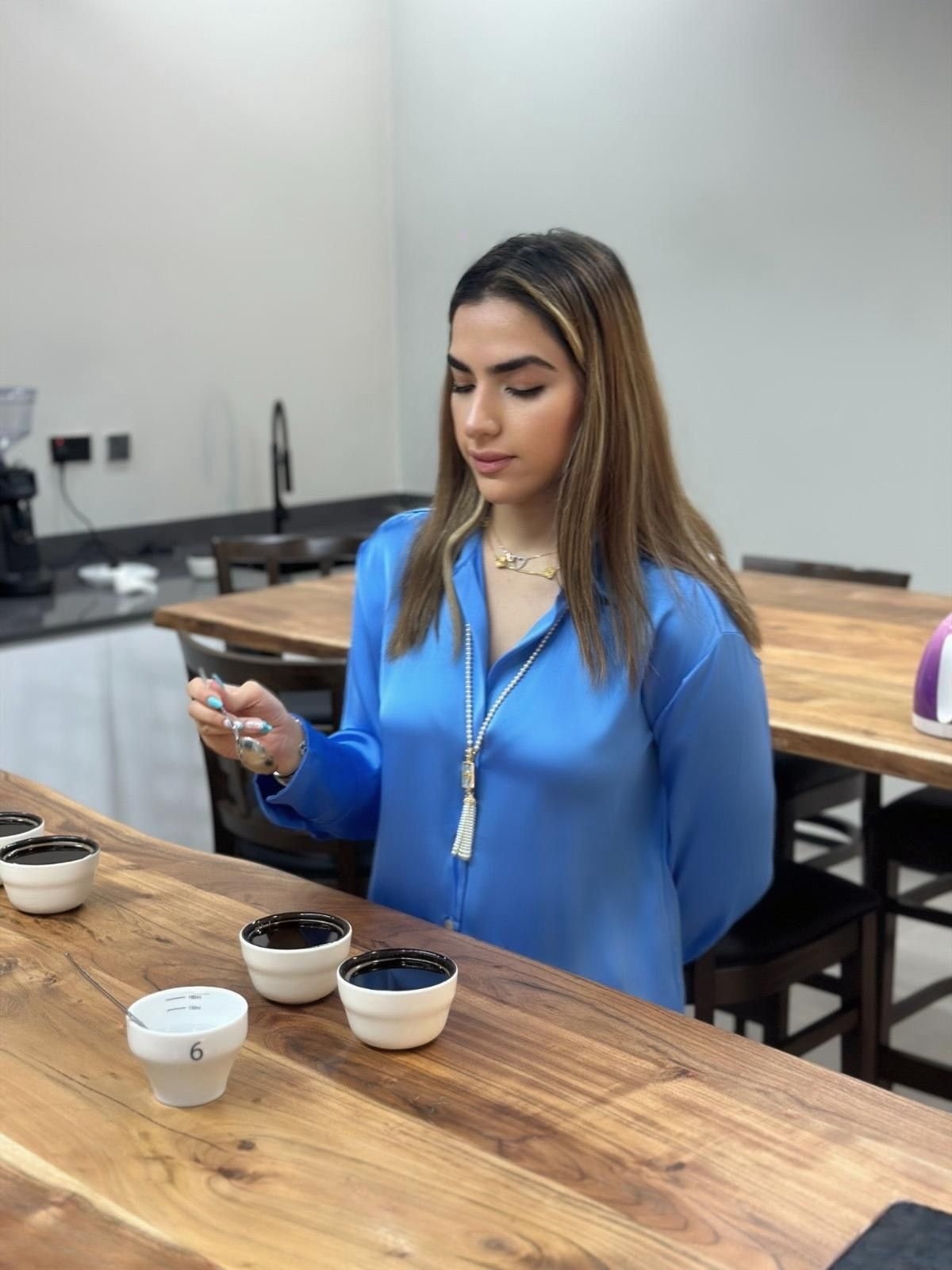
Maryam Tabatabaei is one of the experienced professionals in Dubai’s specialty coffee scene. She holds multiple certifications in coffee evaluation, training, roasting, and competition judging. Her work spans several areas: training, roasting, judging, and sensory analysis.

In this interview, Maryam talks about her beginnings with coffee, her experience in training, her perspective on Dubai’s coffee scene, and her advice for those who aspire to work in this field.

We invite you to read the interview and learn from her experience.

Do you remember the first coffee that truly surprised you?

Absolutely. It was the first time I tasted a naturally processed specialty coffee with intense fruit notes. Until then, coffee was simply coffee to me. Discovering flavors like berries, tropical fruits, and chocolate in a single cup completely changed my understanding of what coffee could be.

When did you realize coffee was going to become more than just a job for you?

I realized it when I started teaching others. Seeing students become passionate about coffee and watching their skills develop gave me a sense of purpose beyond making drinks. That’s when coffee became a lifelong journey rather than just a profession.

What still excites you about coffee today?

Coffee never stops teaching me something new. Whether it’s a new origin, a unique processing method, or helping someone discover a flavor they’ve never experienced before, there is always something new to explore.

You work in education, roasting, judging, and sensory. Which part feels most like you?

Training feels most like me. I enjoy sharing knowledge and helping people grow. Roasting and judging are incredibly rewarding, but seeing students gain confidence and succeed in their coffee careers is what fulfills me the most.

What’s something people misunderstand about specialty coffee?

Many people think specialty coffee is about being expensive or complicated. In reality, it’s about quality, transparency, and respect for everyone involved in the coffee chain – from the farmer to the person preparing the cup.

Has coffee changed the way you see people or culture?

Definitely. Coffee has allowed me to connect with people from many different countries and backgrounds. It has taught me that while cultures may differ, hospitality, passion, and the desire to connect over a cup of coffee are universal.

What was going through your mind during the roasting championship?

A mixture of excitement, focus, and responsibility. I knew every decision could affect the final result. At the same time, I reminded myself to trust my training, experience, and understanding of the coffee.

Do you still get nervous judging competitions or teaching students?

Yes, and I think that’s a good thing. A little nervousness means I care about doing my best. Whether I’m judging a competition or teaching a class, I want to give participants the attention and respect they deserve.

What’s the most rewarding moment you’ve had with a student?

Seeing a former student become a successful coffee professional and knowing I played a small part in their journey. Those moments remind me why education is so important.

What kind of atmosphere did you want to create with The Coffee Atelier?

I wanted The Coffee Atelier to be a place where people feel comfortable learning, asking questions, and developing their skills. A place that combines professionalism with creativity and genuine passion for coffee.

Dubai’s coffee scene is growing fast. What makes you hopeful about it?

The level of curiosity and commitment I see from young professionals. More people are interested in quality, training, and understanding coffee deeply rather than simply following trends. That gives me a lot of hope for the future.

What advice would you give someone who loves coffee but doubts they can make a career from it?

Start learning, stay curious, and be patient. The coffee industry offers many paths beyond being a barista. If you’re passionate and willing to keep improving, there is absolutely a place for you in this industry.

After all the certifications and competitions, what does a “good cup of coffee” mean to you now?

A good cup of coffee is one that creates a meaningful experience. Technical perfection matters, but ultimately, a great coffee is one that brings enjoyment, connection, and appreciation for the work behind it.

When you’re not analyzing coffee professionally, how do you actually enjoy drinking it?

I prefer simple brewing methods that allow me to relax and enjoy the coffee without overthinking it. Sometimes I just want to sit quietly and appreciate the cup rather than analyze every flavor note.

What keeps you motivated to continue learning in coffee?

The fact that coffee is a world without an endpoint. There is always another origin to explore, another technique to learn, and another person to inspire. That endless opportunity for growth keeps me motivated every day.

This interview offers insight into Maryam Tabatabaei’s experience in the specialty coffee world, her professional journey, and her perspective on training and development. We invite you to read the full interview and benefit from her expertise.

Interview conducted by: Qahwa World – with Maryam Tabatabaei, specialty coffee expert and founder of The Coffee Atelier in Dubai.

All rights reserved. Republication with attribution permitted.

Publication date: June 17, 2026

Laila Binbrek: Bridging Cultures Through Art – Exclusive Interview

Source: Exclusive Interview |
Author: Qahwa World |
Date: June 12, 2026

Laila Binbrek: Bridging Cultures Through Art – An Exclusive Interview with the Director of the UAE National Pavilion at the Venice Biennale

Key Takeaways:

  • Laila Binbrek has lived in five countries: the UAE, Canada, Saudi Arabia, Egypt, and England – shaping her layered, evolving cultural identity.
  • As Director of the UAE National Pavilion, she translates Emirati heritage into universal language through rigorous research and authentic dialogue.
  • The UAE won the Golden Lion at the Venice Biennale in 2021 – a historic recognition of years of cultural investment.
  • Her background as a painter and sculptor influences her administrative and curatorial decisions, treating management as “cultural composition.”
  • Nearly 300 interns have been sent to Venice through the Pavilion’s program, returning as confident contributors to global cultural conversations.
  • Binbrek believes art is the most powerful tool for community integration, fostering empathy and exchange beyond language and geography.

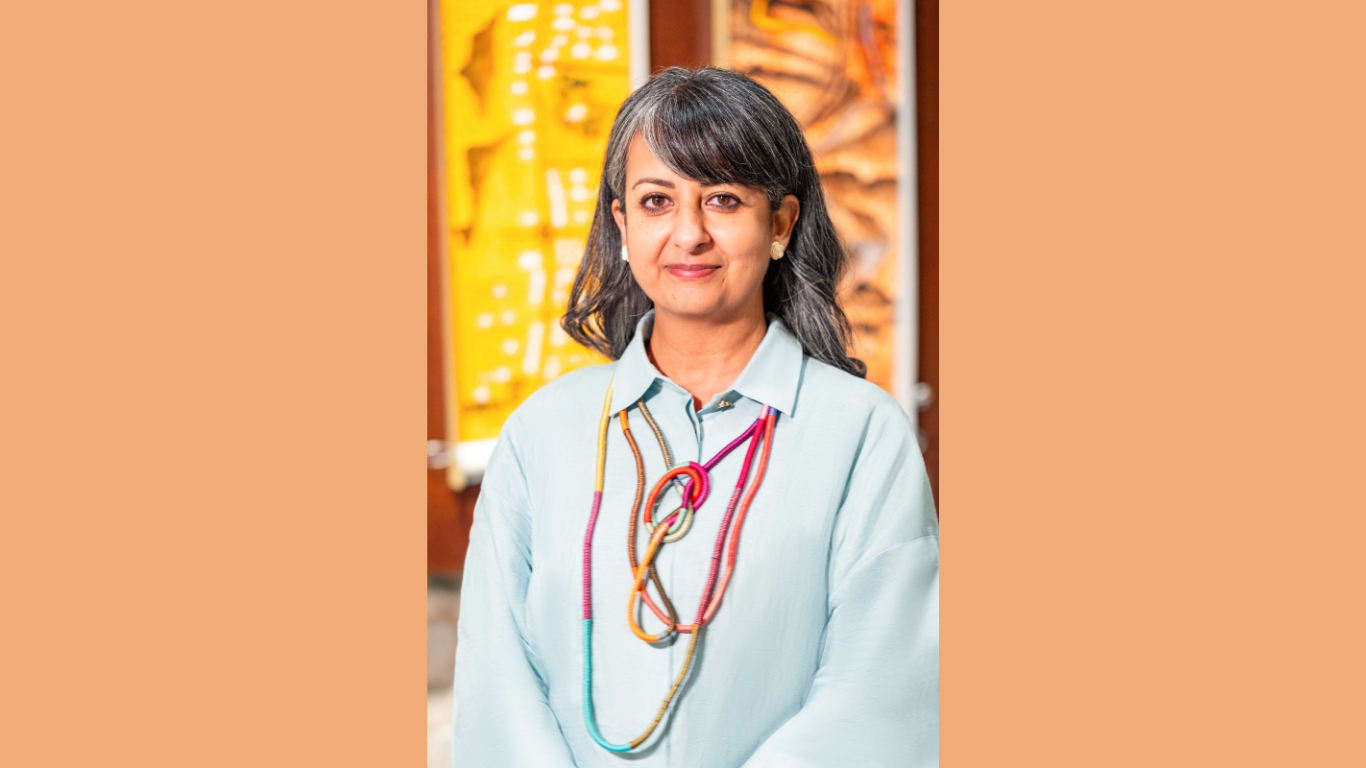
Not everyone who manages art was once an artist. And not every artist can translate their inner passion into an institutional vision that spans decades. Laila Binbrek bridges both worlds: the eye of an artist trained in painting and sculpture in Canada, and the strategic mind that leads the UAE National Pavilion at the world’s most prestigious art forum.

Five countries have shaped her. The UAE, Canada, Saudi Arabia, Egypt, and England – each leaving its mark on her soul. She has come to believe that identity is not fixed, but layered and continuously evolving. This movement between geographies did not scatter her; it gave her a rare gift: the ability to translate – not simply between languages, but between worldviews.

In 2021, at a defining moment, Laila stood with her team as news broke that the UAE had won the Golden Lion at the Venice Biennale. It was not merely an award. It was international recognition of years of quiet investment in artists, researchers, and cultural infrastructure. Proof that a nuanced narrative emerging from the UAE could stand at the center of global cultural conversation.

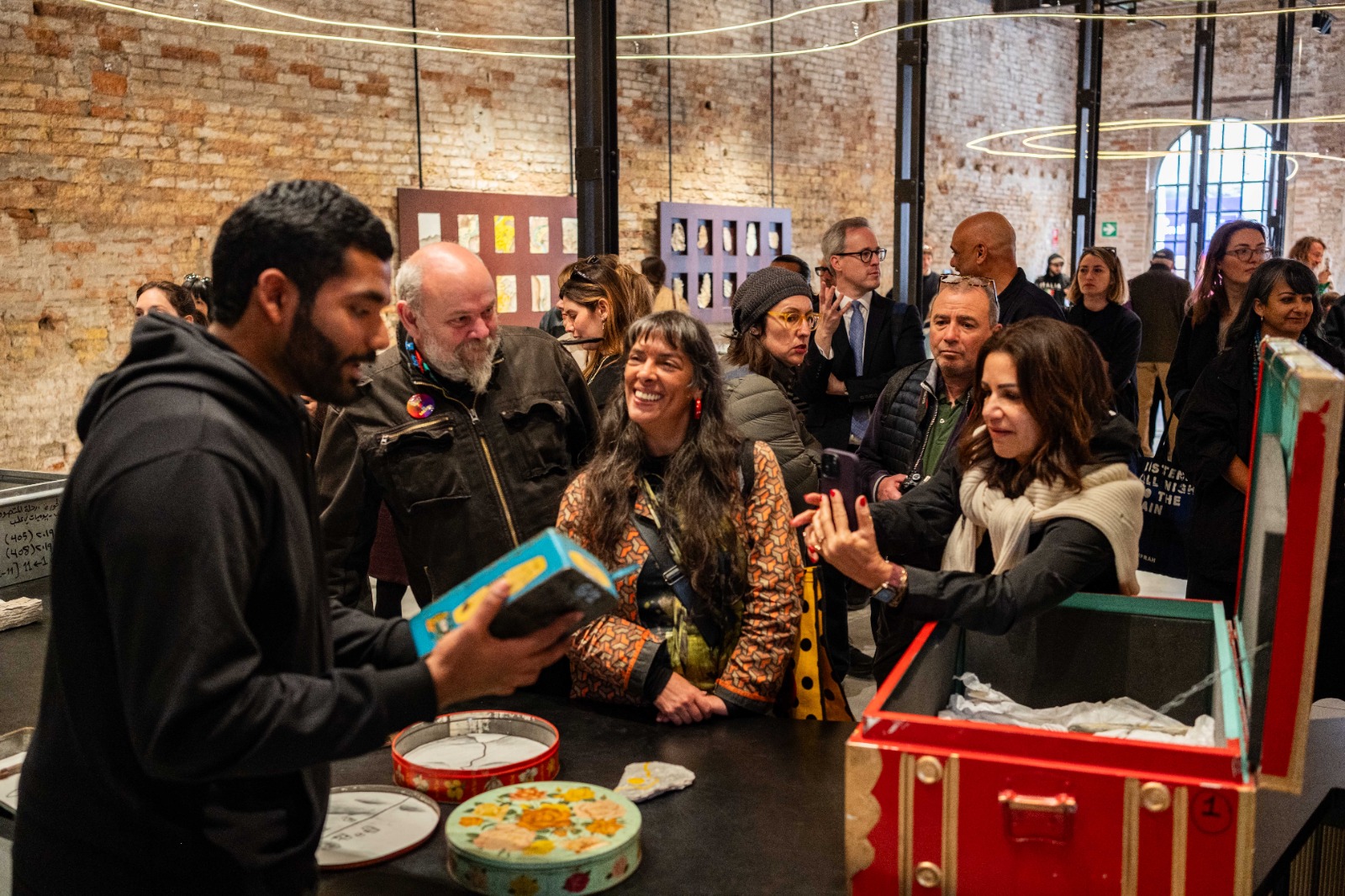
Yet Laila did not stop at the victory. She launched an internship program, sending nearly 300 young men and women to Venice as ambassadors of their culture. They return carrying new confidence, broader horizons, and the realization that they are not spectators in the global cultural scene – but active contributors.

In this deep interview, Laila Binbrek reveals her philosophy of building bridges between undiscovered Emirati heritage and global audiences. She speaks of the transition from painting and sculpture to directing a national pavilion, and of her firm belief that art is the most powerful tool for bringing diverse communities together. We invite you to discover the story of the UAE Pavilion at the Venice Biennale through the eyes of the woman behind it – a journey of layered identity, historic achievement, and a vision reaching into the future.

Theme 1: Cultural Identity & Global Bridges

Q: A Journey Across Five Nations: You have lived in Canada, the UAE, Saudi Arabia, Egypt, and England. How has this nomadic lifestyle shaped your “cultural identity”? Is there a specific “essence” or memory from each country that still influences your perspective today?

Having lived across multiple countries, I’ve come to understand identity not as something fixed, but as something layered and continuously evolving. Each place has shaped how I listen, observe, and understand the ways I, and the people around me, construct meaning and belonging. Moving between geographies and between cultures has given me an appreciation for openness and the idea that multiple identities can coexist without contradiction. This exposure enabled me to develop deep understanding of culture and the value of continuity, tradition, and the sense that culture is lived, organic, and constantly in motion.

Collectively I would say my experiences have made me deeply attentive to translation — not simply between languages, but between worldviews. They’ve shaped my belief that cultural work is ultimately about building bridges between contexts while preserving complexity and nuance.

Q: The Venice Biennale: As the Director of the National Pavilion UAE, how do you manage to “translate” the undiscovered aspects of Emirati heritage into a universal language that resonates with a global audience in Venice?

Participating in the Venice Biennale offers an opportunity to participate and invite dialogue that transcends geographies. When an exhibition is deeply honest in its engagement with place, this is where resonance can happen: not through simplification, but through invitation and dialogue.

The UAE signed a long term agreement with La Biennale in 2013. This gave us the opportunity to build our narratives over time, and each year that we participate provides an opportunity to move beyond familiar or stereotypical narratives and instead, together with each curatorial team, we create space for a more complex, nuanced story that highlights the intellectual depth of UAE cultural production that has emerged.

Our role is to frame conversations and our stories thoughtfully so that its specificity becomes the very source of its universality. We do this through rigorous research, close collaboration with artists and curators, and by grounding each exhibition in questions that are both locally rooted and globally resonant.

Q: The Golden Lion Achievement: Winning the Golden Lion in 2021 was a historic milestone. Can you describe the moment you realized the UAE had won? How has this achievement redefined your vision for the pavilion’s future?

It was an extraordinary moment — one marked by celebration and by a profound sense of responsibility.

The realization that the UAE had been awarded the Golden Lion was deeply moving because it represented international recognition not only of a single exhibition, but of years of sustained investment in artists, curators, research, and cultural infrastructure.

What made that moment particularly meaningful was what it symbolized: that a nuanced, critically engaged narrative emerging from the UAE could stand at the center of a global cultural conversation.

The achievement also shifted our perspective on what is possible. It reaffirmed that the pavilion’s role is not simply to participate, but to lead — to commission scholarship, to support experimental artistic practices, and to cultivate future generations through initiatives like the Venice Internship, whose alumni are now contributing across the UAE’s cultural sector.

The award raised the bar for all of us. It reinforced our commitment to building a pavilion that is not defined by singular milestones, but by long-term impact: creating a lasting intellectual and cultural legacy that continues to shape how the UAE is understood globally.

Theme 2: The Artist Behind the Director

Q: From Sculpture to Strategy: Your background is in Fine Arts, specifically painting and sculpture. How does the “artist’s eye” within you influence your high-level administrative decisions and the way you curate the National Pavilion?

An artist is constantly balancing intuition and experimentation with discipline, concept with execution, and vision with material constraints. Those same principles can apply to all walks of life, and in this particular instance to directing a national pavilion.

My background as an artist trained me to understand how ideas take form, the value of experimentation, and how meaning is constructed through context, proportion, rhythm, and relationships between elements.

It allows me to approach administration not as purely operational work, but as a form of cultural composition. Building an exhibition, cultivating partnerships, mentoring emerging talent, and shaping long-term institutional vision all require the same sensitivity to structure, coherence, and intention that artistic practice demands.

The artist’s eye also fosters patience with experimentation. Some of the most meaningful cultural outcomes emerge through processes that are repetitive and exploratory. My role is often to create the conditions in which that experimentation can flourish while ensuring it is supported by rigorous frameworks and timelines.

Q: “Mirror, Mirror”: Your artwork is part of the permanent collection at the Canadian Museum of History. If you were to create a new piece today that captures the spirit of the contemporary UAE art scene, what materials and emotions would it embody?

If I were to create a work today reflecting the contemporary UAE art scene, it would be deeply concerned with transformation — with the tension between permanence and flux.

The contemporary UAE art scene is defined by remarkable intellectual openness. It is shaped by conversations across generations, geographies, and disciplines. There is an energy of becoming — a confidence in experimentation coupled with an ongoing negotiation with history, language, and belonging. There is a sense of both restlessness and quiet assurance: the sense of a culture continuously defining itself while remaining deeply anchored in place.

Theme 3: Community Engagement & Mentorship

Q: The Venice Internship Program: You’ve sent nearly 300 interns to Venice as cultural ambassadors. What is the most profound transformation you see in these young Emiratis after they experience the global stage?

What is most remarkable is the shift in confidence.

Many arrive with curiosity and potential, but Venice often gives them something transformative: the realization that they belong within global cultural conversations — not as observers, but as contributors. The experience exposes them to international artistic discourse at the highest level while positioning them as representatives of the UAE. That combination of responsibility and exposure often catalyzes extraordinary growth.

Our aim is that they return with expanded horizons, sharper critical perspectives, and a deeper understanding of the importance of culture in cultural diplomacy. The purpose has never been simply to provide exposure; it is to cultivate a generation capable of building and sustaining the cultural infrastructure of the future. Seeing that long-term impact unfold is one of the most rewarding aspects of my work.

What is particularly meaningful is seeing how many alumni have gone on to shape the UAE’s cultural ecosystem — across museums, foundations, galleries, academia, and creative institutions. That is the program’s greatest success.

Q: The Power of Community: From Dubai to Toronto, your career has focused on community engagement through the arts. Why do you believe art is the most effective tool for bringing diverse communities together?

Art creates forms of connection that often transcend the limitations of language, geography, and difference.

What makes it uniquely powerful is its ability to create shared space — spaces where people can encounter perspectives outside their own and engage with complexity through curiosity rather than defensiveness.

Throughout my work, I have seen how art opens pathways for dialogue that other forms of engagement often cannot. It allows people to enter difficult or unfamiliar conversations through emotion, imagination, and reflection. It provides opportunities for people to recognize both difference and commonality — to see how distinct lived experiences can coexist, inform one another, and generate richer understandings of the world.

At its core, community is built through empathy and exchange. Art cultivates both.

This interview offers a window into an integrated cultural philosophy. Behind every national pavilion at the Venice Biennale lies a vision, a team, and a story. Laila Binbrek presents a model of cultural leadership that does not separate art from cultural policy, nor training from building the next generation, nor the local from the global.

Explore more about the UAE National Pavilion at the Venice Biennale, and the programs and initiatives led by Laila and her team, by following the Pavilion’s official channels and the Venice Biennale website. This conversation is just the beginning of a deeper understanding of how the UAE builds a cultural bridge to the world.

Interview conducted by Qahwa World – with Laila Binbrek, Director of the UAE National Pavilion at the Venice Biennale.

All rights reserved. Republication with attribution permitted.

Publication date: June 12, 2026

Myasah Ali: When a Yemeni Woman Writes Coffee’s History with the Ink of Passion and Pioneering

Source: Coffee World – Exclusive Interview |
Author: Ali Alzakary |
Date: June 8, 2026

Myasah Ali: When a Yemeni Woman Writes Coffee’s History with the Ink of Passion and Pioneering

Key Takeaways from the Interview:

  • Myasah Ali started her specialty coffee journey in 2021 in the heart of Sana’a, despite COVID-19 and Yemen’s difficult circumstances.
  • The brand name “Myasah” is a tribute to her grandmother, who gave up her coffee land inheritance in Haraz to protect her family.
  • Her biggest challenge came not from farmers but from traders who deliberately misled her with false advice to discourage her because she was a woman alone in the export field.
  • She learned from her mistakes never to trust inexperienced traders blindly; now formal contracts and legal governance are the foundation of her work.
  • She believes that Muslim women since the Prophet’s time engaged in trade, dialogue, and public life – her work today is a natural role, not a battle against society.
  • Her message to every young Yemeni woman: focus on your dream, people will rarely support you, your persistence and commitment are your true strength.

In the corridors of Sana’a, where history breathes the aroma of coffee, and specifically from the heart of “Myasah Coffee,” a story begins that goes far beyond mere commerce. It is the story of a Yemeni woman, Myasah Ali, whose project did not emerge from a vacuum.

If Sana’a is the headquarters from which the company launched, the roots of the story run deep, intertwining with the historic soil of Haraz – the region that gifted the world the finest coffee across the ages.

This fusion between the bustling capital and the timeless heritage of Haraz created a hidden yet powerful bond that led Myasah to establish an entity whose name now echoes in international forums. In this compelling interview, we dive deep into that memory to discover how Myasah turned this profound connection into a driving force to rewrite the professional history of Yemeni specialty coffee. We invite you to explore this inspiring journey in the lines ahead.

Entering the Coffee World in 2021 Amid Difficult Circumstances: Passion or Challenge?

Honestly, the beginning was not a choice between passion and challenge. Both came together. Passion was the initial spark, but passion alone is not enough to sustain you, especially at the time and under the conditions I started in – the COVID-19 crisis was just unfolding, and its global impact was making itself felt.

That is precisely where the challenge entered. It was a personal challenge to prove that no matter how complex the surrounding circumstances, they cannot prevent me from achieving my goal. The challenge became the engine that drove me to produce specialty coffee to high standards, capable of competing strongly in the global specialty coffee market.

What Is the Secret Behind the Name “Myasah” as Your Company’s Brand?

This brand is the least I could offer to my grandmother, who named me and raised me. Her family was among the wealthiest and largest coffee farm owners in Haraz. However, after her parents passed away, she gave up all that inheritance and moved to Sana’a to avoid disputes over inheritance and to ensure her family’s safety.

This enterprise is a tribute to her sacrifice – every inch of land she let go for our sake. And my name is the greatest guarantee and commitment to the quality and luxury of what I present to the world. The link between Sana’a, where the company is based, and Haraz, where the roots lie, is a bond of blood and memory.

The Biggest Challenge: Working in a Field Described as “A Man’s World”

Yes, indeed. Exporting is one thing; going into the field is another. I am a city girl and did not know the villages. But my family’s support and their mindset were my first pillar of strength. The positive shock in the field was that women are present in coffee farms and work there more than men, so I never felt alien.

I earned respect and established my presence through credibility in dealing, and through the cleanliness and quality of the product I offer. Clean work always asserts itself. Everyone who has dealt with me in this market realized that behind this name stands a woman who accepts nothing less than the best.

How Did Myasah Build Trust with Yemeni Farmers?

I built trust with farmers simply by keeping promises and committing to them. The Yemeni farmer buys word and credibility before anything else. As for the hardest moment that changed my thinking, it was not with farmers but with traders’ mistreatment and their attempts to mislead me. Being a lone woman exporting in this field, some deliberately gave me wrong advice and misinformation, aiming to discourage me and make me give up.

I quickly understood the game and shifted from good faith to smart caution. I started asking the same question to multiple traders, then analysing and doing the opposite of their misleading advice. That experience taught me to rely only on my own research, and to trust my managerial instinct to protect my business. Knowledge is the strongest weapon in the export world.

The Secret Behind Ensuring the Highest Quality Standards at “Myasah Coffee”

The secret lies in the unique evaluation mindset I follow. I do not treat coffee as a merchant wanting to sell without enjoyment. Instead, I always put myself in the place of the farmer, the trader, and the final cupper. Before I ship any batch, I consider myself a stranger tasting that coffee and evaluating it with strictness.

This role‑playing prevents me from compromising on any detail, and makes me eager to deliver the highest level of quality and cleanliness, because I want the cupper to feel the same passion and effort that went into every single bean. Each bean carries within it the heritage of Haraz and the precision management of Sana’a.

Losses Along the Way: The Mistake She Wishes She Had Avoided

The mistake I wish I had avoided was giving my trust to an inexperienced trader. In my early days, out of an emotional impulse, I decided to help someone whom all the other traders had rejected. Unfortunately, because of him, I not only lost money but also lost a name and reputation I was just building. However, I quickly corrected the situation and completely changed my mentality and business system.

Emotion has no place in business. Since then, official approved contracts, rigorous verification of partners, and legal governance have become the foundation of every shipment, to protect the name “Myasah Coffee” – especially since it is my personal name and there is no room for mistakes.

Has Myasah Overcome the Stereotype of Yemeni Women?

The weight my name has gained today comes from the deep expertise I have built and my continuous drive to improve it. As for the idea of victory, I have not defeated anyone, because there is no person in front of me I wish to compete with. My ambition is to compete with myself and develop my work only. Regarding the stereotype:

Muslim women since the time of the Prophet, peace be upon him, sold, bought, engaged in dialogue in scholarly gatherings, participated in battles, and in every aspect of life. What I do today is not a battle against society. It is simply the practice of my natural and active role as an ambitious woman in the business world.

Balancing Global Standards with the Authenticity of Yemeni Coffee

Flavour and authenticity have not changed. The trees, soil, and climate in Haraz are constant factors that give coffee its historical identity. Global standards have not altered the essence of the coffee; they have improved the way we handle it.

The difference today lies in refining harvesting methods, drying, roasting, and storage to keep pace with the times, inventing new machines and doing deep work.

Adhering to these standards does not cancel authenticity but protects it, and ensures that this historical legacy is presented to international customers in the highest quality and cleanest possible form.

What Does It Mean That “Myasah Coffee” Has Reached Global Markets?

The feeling that overwhelms me is true, deep pride in myself, in a success I have lived step by step thanks to God, and then to my own effort that never stopped or retreated despite all the pressures and problems. I cannot describe the feeling.

Today I start my morning with a cup of coffee produced by my own company, knowing that I am offering the world an ideal product at the highest standards. I have achieved successes and accomplishments that many men in this market have themselves testified were beyond the possible.

The arrival of “Myasah Coffee” to these international markets is confirmation that determination can always make a difference.

Myasah’s Message to Every Young Yemeni Woman Who Aspires to Her Dream

The message I want to give to every young Yemeni woman is: focus on your dream and your goal, as long as you clearly see the outcome and the position you want to reach. And always remember that no one else sees this vision.

Most people will not support you, and the bad words, envy, and enemies will not stop appearing on your path. So never pay attention to them. Be very careful in choosing those around you to be a real support. Persistence and holding onto your dream are the true power that can break any obstacle or societal perception.

Always keep one certainty in your heart: Whoever has God with them has no one against them.

Frequently Asked Questions About Myasah Ali and Yemeni Coffee

Q: When was Myasah Coffee founded?

A: It was founded in 2021 in Sana’a, Yemen, amid the COVID-19 crisis and difficult local circumstances.

Q: Why did Myasah choose “Myasah” as her brand name?

A: As a tribute to her grandmother, who bore the same name and gave up her coffee land inheritance in Haraz to protect her family.

Q: What was Myasah’s biggest challenge at the start of her journey?

A: Traders trying to mislead her with false advice to discourage her because she was a lone woman in the coffee export field.

Q: How does Myasah deal with Yemeni farmers?

A: She relies on keeping promises and commitments. She says the Yemeni farmer buys word and credibility before anything else.

Q: What is Myasah’s message to young Yemeni women?

A: Focus on your dream, ignore negative talk, and stay persistent – that is the real power to break any obstacle.

Myasah Ali is an inspiring model for Yemeni and Arab women in the specialty coffee industry. Her determination, wisdom, and commitment to her roots have turned her brand into a respected name in global markets. We hope this story inspires everyone who seeks to turn passion into a profession, no matter the challenges.

Interview conducted by Coffee World – with Myasah Ali, founder of “Myasah Coffee” in Sana’a, Yemen.

All rights reserved. Republication with attribution permitted.

Publication date: June 8, 2026

“Your Senses Belong Only to You” – Fuki Kanamori on Her Journey from Government Clerk to Japanese Coffee Expert

This Fuki Kanamori interview explores the world of Japanese coffee.

Interview: Qahaw World |
Interviewer: Ali AlZakary |
Date: June 2, 2026

“Your Senses Belong Only to You”: Fuki Kanamori on Her Journey from Government Clerk to Japanese Coffee Expert

Key Takeaways from the Interview:

  • “Coffee moves you” – a philosophy that reflects a man who started her journey after age 40.
  • Language barriers and lack of information were the biggest obstacles to professional growth.
  • Kanamori Coffee Lab: a lighthouse for those who want to avoid detours in specialty coffee education.
  • Science is just a tool. Never forget the person you are serving.
  • Japanese consumers blend old Kissaten craftsmanship with modern specialty coffee.
  • Ambition to collaborate with the Gulf region to share sensory education expertise.

As part of “Qahwa World’s” mission to explore inspiring coffee experiences around the globe, we now come to Japan. This is our first interview with one of the most prominent specialty coffee figures in the Land of the Rising Sun.

Fuki Kanamori was not always an expert in roasting and sensory analysis. He started her career as a local government employee. Then, in her late thirties, everything changed. He suddenly realized that he wanted a career where he could truly create and feel.

Thus, she embarked on the journey of founding “Kanamori Coffee Lab.” Today, she is a renowned educator and a certified Q Grader.

In this in-depth interview conducted by writer and specialist analyst Ali Al Zakary, Fuki Kanamori reveals her unique philosophy summarized by her beautiful slogan: “Coffee moves you.”

He talks about language challenges, her vision to close the information gap in Japan, and her passion for transferring sensory knowledge to new generations. He also offers golden advice to anyone starting their coffee journey today.

Do not miss the opportunity to learn from this inspiring Japanese experience.

Your philosophy is captured by the beautiful slogan, “Coffee moves you!” How did coffee personally move you in your early days, and what was the turning point that inspired you to pursue this career professionally, specifically focusing on roasting, brewing, and sensory analysis?

It all began in my late 30s when I had a sudden realization: “I want a career where I can truly create and feel.” Until then, I was working as a local government employee at a city office. Driven by this new passion, I taught myself by reading every coffee book I could find.

However, no matter how much I read, I simply could not grasp the complex flavor descriptions written on the pages. It was incredibly frustrating. I became determined to capture those professional sensory perceptions with my own five senses and verify the “right answers” for myself.

That was the true turning point that led me to immerse myself completely in studying to become a Q Grader. It was a late-blooming challenge, starting well after I turned 40.

Transitioning from a passionate coffee lover to a recognized Coffee Educator and Sensory Professional requires an intense journey of training. What were the most significant challenges you faced in refining your skills in roasting and advanced sensory perception?

The greatest obstacles I faced were the language barrier and a severe lack of accessible information. While certain aspects of the Japanese coffee scene are highly advanced, it is completely polarized. Japan has lagged behind global trends in cutting-edge roasting theories and advanced sensory education.

The vast majority of truly valuable primary information is published in English and originates from overseas. If you try to learn solely through Japanese accessible data, you quickly hit a wall. Navigating that language barrier to directly grasp global standards and core theories was an immense challenge.

You founded “Kanamori Coffee Lab” as an all-encompassing platform. What is the core mission and vision that the lab aims to achieve within both the Japanese and global coffee communities?

Our mission is twofold: to be a space where anyone who wants to learn can access genuine skills and knowledge without getting lost, and to convey the pure joy of trusting one’s own senses and expressing them freely.

In Japan’s polarized information landscape, I want the lab to be a lighthouse, the shortest route for people who, just like my former self, yearn to dive deeper but want to avoid unnecessary detours.

By delivering authentic, vivid information, we aim to contribute deeply to the Japanese community. Globally, our vision is to share Japan’s unique, delicate craftsmanship while creating an experimental space where professionals can connect and inspire one another through sensory perception, transcending language barriers altogether.

As a Sensory Professional, how do you bridge the gap between rigid, precise science and the emotional, human experience when training students and professionals at your lab?

Science and data are merely tools; they are never the end goal. At my lab, I instill a deep, foundational understanding of theory rather than just handing out superficial recipes.

If you master the core theory, you can adapt flexibly using your own five senses, no matter how the environment, machinery, or brewing tools change.

At the same time, I always remind my students: “The language used between professionals is entirely different from the language used with customers. No matter how deeply or professionally you specialize, you must never forget the person you are serving.”

You must hold rigid scientific theory within yourself, but translate it into a shared, emotional experience and language for the customer. Teaching the balance of these two pillars is the only way to bridge that gap.

The coffee education and training sector is evolving rapidly. What unique methodologies or principles distinguish Kanamori Coffee Lab from other training centers focused on specialty coffee?

The biggest distinction is that we do not offer generic, one-size-fits-all lectures. Instead, we clarify each student’s unique dream and ideal future, and provide unwavering, side-by-side mentorship to get them there.

Because I took a long detour and achieved my own dream later in life, I understand exactly where students stumble and face difficulties. Age, gender, and previous career background do not matter.

“Anyone can make coffee their professional career, no matter when they start.” I want to prove this through my own actions.

Our core strength lies in this completely personalized mentorship designed to turn individual dreams into reality, rather than just teaching standard “correct answers.”

Our readers and specialty coffee professionals love getting a glimpse into the daily routines of experts. What is your personal, go-to protocol for evaluating your morning coffee? Furthermore, what is your favorite Japanese brewing/dripping tool, and why do you prefer it?

To me, morning coffee is “a legal stimulant that moves my mind and soul.” As someone who struggles with mornings and tends to be indecisive early in the day, coffee is the essential element that puts me on the starting line and grants me the power of decisiveness.

My protocol is simple: I drink a single glass of water, and right after, I drink my coffee without thinking about anything at all.

Doing this allows my day to truly begin, much like putting on a final touch of perfume before leaving the house. Drinking coffee in this flat, neutral state is how I face my physical condition and the bean’s potential head-on.

My favorite Japanese tool is the “Tarachine Dripper.” Crafted with traditional Arita ware porcelain, it beautifully depicts Katsushika Hokusai’s Thirty-Six Views of Mount Fuji, embodying a distinct Japanese aesthetic.

Functionally, its sharp conical design engineered at an angle below 30 degrees maximizes extraction consistency. For brewing a clean, energetic cup that awakens my mind and soul, there is simply nothing better.

Japan’s coffee culture beautifully harmonizes tradition, like the historic Kissaten shops, with the cutting-edge modernism of specialty coffee. How do you view this balance, and what uniquely defines the modern Japanese consumer’s approach to coffee appreciation?

I believe Japanese consumers possess an extraordinarily high level of appreciation and attentiveness toward micro-details. On one hand, you have the traditional Kissaten culture, defined by the meticulous care of brewing a single cup over time and the comfort of the space.

On the other hand, you have modern specialty coffee, characterized by clean, cutting-edge flavor profiles. While these two worlds might seem contradictory at first glance, Japanese consumers beautifully bridge them through a shared “profound respect for craftsmanship.”

Instead of merely chasing trends, they value the underlying story and the minute details within a single cup. This unique perspective allows a new standard like “Neo-Kissaten” to emerge naturally, evolving and integrating modern technology without destroying the old culture.

Japanese roasters and baristas are globally renowned for their meticulous attention to micro-details in both roasting and extraction profiles. In your opinion, how has this distinct Japanese philosophy shaped the global specialty coffee community?

This artisan philosophy, which you could call an obsession with micro-details, has elevated the overall precision and consistency of the global specialty coffee community to a higher level. The way Japanese baristas and roasters constantly refine their craft down to a single second, 0.1 grams, or one degree has served as massive inspiration to professionals worldwide.

The fact that highly sophisticated tools like the Tarachine Dripper are born in Japan is a testament to this mindset. This precise approach and dedication to mindfulness have become essential puzzle pieces in shaping what is now considered the global standard.

Every market has its hurdles. What are the most pressing challenges currently facing the coffee sector in Japan, whether regarding supply chains, climate change, or evolving consumer tastes among the younger generation?

I feel the most pressing challenge is the polarization of information and the resulting barriers to entry. While climate change and supply chain disruptions are global issues, Japan faces a unique hurdle: access to accurate, cutting-edge theories and information is restricted to a limited group.

Because of this information gap, passionate amateurs and the younger generation trying to enter the industry often get trapped by outdated conventional wisdom or rigid recipes, leading to early frustration.

Eliminating this information disparity and building an environment where the next generation can enjoy and explore coffee freely on a global standard is what Japan needs most right now.

The Arab world, particularly the Gulf region, is experiencing unprecedented, massive growth in the specialty coffee sector and sensory education. How do you view this rapid expansion, and are there any future plans for Kanamori Coffee Lab to collaborate or offer educational programs in the Middle East?

I have immense respect for the sheer passion and breathtaking speed of evolution within the specialty coffee sector in the Arab world, particularly the Gulf region.

Their dedication to hungrily pursuing authentic education and achieving the absolute pinnacle of quality resonates deeply with the philosophy of our lab.

While we do not have any concrete plans at the moment, I would absolutely love the opportunity to connect with their vibrant community and collaborate by bringing our sensory education and hands-on mentorship to the Middle East.

In closing, what golden piece of advice would you offer to emerging roasters and young cuppers who are just beginning their journeys in the coffee industry today?

My golden piece of advice is this: “Your five senses belong to you and you alone. No one has the right to deny or invalidate what you perceive.” The coffee world is flooded with “correct answers,” data, and the opinions of experts. However, the flavors you personally perceive as delicious and the moments you define as beautiful are where everything truly begins. Knowledge and technical skills can always be acquired later.

Trust your own senses and never be afraid to express them. That single courageous step will eventually lead to a cup of coffee that genuinely moves someone else’s heart.

This interview was conducted by Ali Al Zakary as part of the “Qahwa World” series exploring distinctive coffee experiences worldwide. We hope that Fuki Kanamori’s journey inspires every Arab who aspires to turn their passion for coffee into a refined profession. Share your thoughts and questions with us, and stay tuned for our upcoming interviews from the coffee capitals of the world.

Interview by: Ali Al Zakari – Edited and produced by the “Coffee World” team – in collaboration with Kanamori Coffee Lab, Tokyo, Japan.

Publication date: June 2, 2026

Specialty Coffee Pricing in Dubai: Fair or Overpriced?

Focus Keyphrase specialty coffee pricing Dubai
Slug specialty-coffee-pricing-dubai
SEO Title Specialty Coffee Pricing in Dubai: Fair or Overpriced?
Meta Description (141 chars) Dubai coffee experts clash over pricing. Some say costs justify the price. Others call it greed. A full investigation.
Tags specialty coffee, Dubai coffee, coffee pricing, cafés, Dragoslav Džudović, Sigrid Ballard, Sarah Sahwan, Qussay Al Jabal, Albina Khamidullina

Executive Summary

  • Specialty coffee prices in Dubai have risen significantly, sparking debate among industry experts.
  • Dragoslav Džudović breaks down the real cost of a cup: between AED 15 and AED 35 before profit.
  • Sarah Sahwan argues that some cafés add a “greed” margin, with markups exceeding 200%.
  • Qusai Al Jabal insists that high prices are only fair for rare, exceptional beans.
  • Albina Khamidullina finds prices reasonable from an industry perspective, but admits specialty coffee is a luxury for most consumers.
  • Most experts agree that there is a noticeable gap between price and quality in many cafés.
  • No single business model fits all. Low‑price high‑volume and high‑price curated experiences can both work.

Specialty Coffee Pricing in Dubai: Fair or Overpriced?

Dubai’s specialty coffee scene has expanded rapidly in recent years. Prices have risen just as fast, especially for manual brews like V60 and filter coffee. This growth has opened a wider debate. Is specialty coffee still an everyday product? Or has it become an exclusive, luxury experience?

Qahwa World asked nine leading experts for their views. Their answers range from defending prices as a true reflection of operational costs to condemning them as unjustified. This investigation presents their full responses.

The Cost Reality: A Detailed Breakdown

Dragoslav Džudović, a well‑known barista and coffee consultant, offers a rare numerical breakdown. He insists that most consumers do not understand the real cost of a single cup.

“The real cost of one take‑away cup of coffee with milk, depending on the location in the UAE, ranges from AED 15‑25 to AED 25‑35+. Yes, you are reading that correctly. That is the cost. Let’s break it down per cup: Cost of goods – AED 4‑7 (beans, milk, packaging). Labour – 40% of the cost, which is AED 5‑15 (time to make the drink, service, salary, visa, gratuity, accommodation, insurance, and other benefits). Operating costs – AED 4‑10 (rent, utilities, AC, coffee machine, ice makers, chillers, freezers, etc.). Do not forget license, permits, marketing, insurance, fit‑out, POS, and bank fees.”

Therefore, when a café charges AED 35 for a cup, it may not be excessive. Many cafés, however, set their prices based on competition, not on real costs. Dragoslav warns that this approach is not sustainable. He adds that most small cafés fail in their first year because of miscalculations.

Sigrid Ballard, a specialty coffee expert, supports this view. She explains that Dubai’s pricing is higher than many global markets, but it reflects the city’s operational reality.

“In Dubai, rent and operational costs are the biggest drivers, especially in prime hospitality and lifestyle locations. While green coffee quality matters, the final retail price is more heavily influenced by location costs, staffing, fit‑out investments, and overall brand positioning.”

Samson Kibunja, a seasoned barista, adds that price should never be seen in isolation. He argues that a cup of coffee is the result of a long chain.

“The price of coffee is shaped by an entire ecosystem. Dubai is a market where high operational standards and premium locations significantly affect pricing. A cup of coffee is ultimately the result of a long chain – from farm to roasting, training, equipment, hospitality, and final service.”

Albina Khamidullina, from drinkit, offers a nuanced perspective. She agrees that costs justify prices, but she also acknowledges the consumer’s reality.

“I think specialty coffee is priced pretty reasonably, given the cost of beans, labor, and rent. But I say this as an industry worker, and I understand all the costs that go into the final price of the product. It is reasonably priced, but to the final consumer, it still might be too expensive.

Specialty coffee, unfortunately, is a luxury in most places. The biggest factor is rent, then labor (not only salaries, but visas, insurance, etc.), and of course, the CAPEX, and the coffee shop’s need to get its return on investment. At most specialty coffee places, a V60 cup costs 50‑60 dirhams.

I consider it more of a luxury than an everyday product, given that you can get a decent cup of coffee for 15‑20 dirhams. (We at DrinkIt serve only specialty beans, and you can get an americano for 15 dirhams, a filter for 17, and a V60 for 25 dirhams, which is a very good price considering market benchmarks.)

The current market lacks a consistent place where you get the same great product and service every time. There are a lot of amazing places in Dubai, but no two visits are the same in terms of quality. For sure, there is a big gap between the price and the product’s quality.

But in this case, the surroundings need to be taken into consideration: what’s the interior like, how many people work there, is it a prime location, and do they use loud marketing? It’s all included in the price of the final product. It depends on the business model and the brand’s goals. Both ways have their benefits, so I cannot answer this question without knowing the goals. We at DrinkIt try to find the gold standard between them.”

The Counterview: Overpricing and the “Greed” Factor

Sarah Sahwan, founder of The Optimist café, is blunt. She believes that some cafés charge far more than necessary.

“I believe the two biggest factors are rent, and greed. A coffee cup costs range  5 – 10  dirhams and that’s excluding the cost of labor and other expenses such as the rent, utilities and inflation  , which means there is room to mark up the price – but not by 200%. In malls, a cup of coffee now ranges between AED 25 and AED 50, and not all of them offer good quality.”

Hassa bint Ghuwaifa, an Emirati journalist and coffee enthusiast, also finds prices too high. She compares Dubai to other Gulf markets and sees a clear gap.

“Prices are high, especially compared to the Gulf region. It has become normal for a single cup to exceed AED 45. Specialty coffee is still a daily product for many, but at an abnormally high price. There is a clear gap between price and quality. I have paid over AED 70 for a cup that was worth every dirham. But I have also paid half that price for cups I regretted drinking.”

Stefan Kica, an industry observer, summarises his position even more sharply.

“As a regular consumer, prices are very high. As a B2B user, they are very affordable. That difference is the problem. Specialty coffee has become a luxury product. The market misses affordable coffee for everyone. There is a gap between price and quality – overpriced with no reason.”

A Conditional View: Quality and Rarity as Justification

Qusai Al Jabal, co‑founder of JabalBon Coffee Farm in Yemen and founder of Mokha Roots in Dubai, offers a more nuanced perspective. He does not reject high prices outright. Instead, he ties them to quality.

“It depends on the quality. It is too expensive if a café serves average coffee but charges a premium price. However, the high price is fair when you are drinking rare, high‑quality beans that are hard to grow, harvest, and ship. The biggest factors in Dubai are high rent in prime locations and luxury shop fit‑outs. Specialty coffee is moving fast toward luxury. It has become a luxury ritual.”

Qussai also warns about the gap between appearance and substance. “If coffee is expensive, the quality in the cup must match the price. It is wrong to buy cheap, low‑grade coffee, mark up the price ten times just because the shop is trendy.”

Syed Naveed, a well‑known coffee blogger and photographer, takes a middle position. He finds pricing fair compared to commercial coffee. But he admits that some extremes are hard to defend.

“Against commercial coffee, I find it fair. The quality in the cup, the sourcing story, the experience inside a specialty café – all of it adds up. But pricing can get out of hand fast when you move into micro‑lots and nano‑lots. The most extreme example recently has to be the Nido 7, priced at a thousand dollars. That is not a cup of coffee anymore. That is a statement.”

Syed also notes that green coffee prices have been climbing, and roasters can no longer absorb the increase. Rent, electricity, water, logistics, and labour have all gone up. As a result, a cappuccino can easily hit AED 30 or more in some places.

Where Do the Experts Stand? A Quick Summary

Expert Stance on Pricing Most Sustainable Model
Dragoslav Džudović High, but reflects real costs (AED 15‑35 cost) Low price with high volume after correct cost calculation
Sigrid Ballard High but justified by rent and operations Balanced: quality + efficiency + repeatable price
Samson Kibunja Fair when seen as part of a whole ecosystem Both models can work with integrity
Albina Khamidullina Reasonable from industry side, but luxury for consumers Depends on brand goals; drinkit seeks middle ground
Sarah Sahwan Unreasonable; greed is a major factor Lower pricing with higher volume
Hassa bint Ghuwaifa Too high compared to Gulf neighbours Lower prices with special higher‑priced options
Stefan Kica Very high as a consumer Low price with high volume
Qusai Al Jabal Fair only for rare, high‑quality beans Higher pricing with curated experience
Syed Naveed Fair vs commercial, but extreme micro‑lots overpriced Both work if the concept is strong

Frequently Asked Questions

Q: Why is specialty coffee in Dubai so expensive compared to other cities?
A: According to experts, the main reasons are high commercial rents, operational costs, staffing expenses, imported beans, and business models that focus on premium experiences. Dragoslav’s breakdown shows that the real cost per cup can reach AED 35 before any profit.
Q: Do all experts agree that prices are unfair?
A: No. Opinions are divided. Some, like Dragoslav and Sigrid, say prices reflect a high‑cost environment. Others, like Sarah and Stefan, call them excessive. Qussay and Albina argue that high prices can be fair if the coffee quality is exceptional, but Albina adds that for consumers it remains a luxury.
Q: What does Sarah Sahwan mean by “greed” as a factor?
A: She believes some cafés mark up prices by more than 200% without a corresponding increase in quality. In her view, a cup that costs AED 5 – 10 excluding the cost of labor, other expenses such as the rent utilities and inflation, to make should not be sold for AED 45 unless there is a real reason, such as rare beans or a unique experience.
Q: Is specialty coffee in Dubai an everyday product or a luxury?
A: It is both, depending on the café and the customer. Some experts say it remains accessible through various price points. Albina notes that while industry workers see reasonable pricing, for most consumers it is a luxury, especially when V60 costs 50‑60 dirhams at many places.
Q: Which business model is most sustainable according to the investigation?
A: There is no single answer. Dragoslav and Sarah favour lower prices with higher volume. Qusai prefers higher prices with a curated experience. Albina says it depends on brand goals, and DrinkIt tries to find a middle ground.
Q: What is missing from the current Dubai coffee market?
A: Experts point to a lack of transparency, consumer education, and a real connection to coffee farms. Albina adds that consistency is lacking: no two visits to the same café guarantee the same quality.

Mexican Coffee Must Not Disappear Behind Intermediaries: A Conversation with José Manuel Hernández García

Author: Ali Alzakary
Source: Qahwa World
Date: May 20, 2026This article features a José Manuel Hernández García interview.

Executive Summary:

  • José Manuel Hernández García, a mechatronics engineer from Coatepec, Mexico, is building digital traceability systems and opening new trade routes for Mexican coffee to the Middle East and Eurasia.
  • Severe drought in 2024/2025 affected Mexican coffee production, pushing prices higher and forcing farms to adopt new water management strategies.
  • EUDR regulations pose a risk of excluding small farmers. The response is to help producers meet traceability requirements without being left behind.
  • Dubai serves as a strategic hub for roasting and distributing Mexican coffee across the Middle East, adapting to local consumption styles including espresso and Turkish coffee.
  • Armenia was chosen as a gateway to Russia and Eurasia because of its trade framework, avoiding the complexities of direct business with Russia and the limitations of Turkey.
  • The “Todos Somos Mexico” movement turned coffee into a tool for economic diplomacy, uniting producers, governments, embassies, and consulates to present Mexico internationally.
  • A new Latin American platform is being developed to connect producers directly with buyers in the Middle East and Eurasia, supporting transparency, fair trade, and direct negotiation.

José Manuel Hernández García grew up in Coatepec, Veracruz, one of Mexico’s most recognized coffee producing regions. He was surrounded by coffee farms and the people who work them. But instead of staying on the farm, he became a mechatronics engineer.

Instead of exporting coffee the traditional way, he built digital traceability systems, opened new trade routes to the Middle East and Eurasia, and founded “Todos Somos México,” a movement that uses coffee as a tool for economic diplomacy. At only 29 years old, he is now developing a Latin American platform to connect producers from Mexico and beyond with strategic markets in Dubai, Armenia, Russia, and the GCC.

In this interview, he speaks openly about drought, EUDR regulations, fair returns for small farmers, and why he chose Armenia over Turkey as a gateway to Eurasia. Do not just drink your coffee. Know the story behind it.

Here is the full interview.

As a mechatronics engineer who grew up in Coatepec, one of Mexico’s most recognized coffee producing regions, how has your technical background influenced the production systems and digital traceability processes at Casa Tostadora Briones?

Growing up in Coatepec gave me a direct connection to coffee culture from an early age, while my background in mechatronics engineering helped me approach the coffee industry from a systems, technology, and process perspective.

At Casa Tostadora Briones, we focus heavily on organization, traceability, quality control, and long term scalability. My technical background has influenced how we structure information, manage producer relationships, monitor quality standards, and develop more efficient commercial and export processes.

One of the projects we are currently developing focuses on improving traceability directly at the farm level. Our goal is to build systems that allow buyers to follow the coffee journey more closely, from the moment harvesting begins to the movement and processing of each coffee lot.

We are also exploring the implementation of AI assisted technologies for coffee quality analysis, including colorimetry and density evaluation systems, to help improve consistency, transparency, and quality control throughout the supply chain.

I believe technology can help create stronger connections between producers and international markets while bringing more transparency and value to Mexican coffee.

Mexican coffee producers are facing major climate related challenges, including droughts, along with ongoing instability in global coffee prices. How are these factors affecting the consistency and quality of your specialty coffee, and how do you balance fair returns for producers while staying competitive in international markets?

The 2024 2025 coffee harvest in Mexico was heavily affected by severe drought conditions, which significantly impacted production volumes and contributed to a major increase in coffee prices across the market.

In many coffee producing regions, farmers faced water shortages, irregular rainfall, and higher stress on coffee plants, directly affecting consistency, cherry development, and overall production planning.

One of the biggest challenges today is not only maintaining coffee quality, but also adapting farms to increasingly unstable climate conditions.

In response to this, some coffee farms in Mexico are beginning to implement new water management strategies, including the construction of water reservoirs, the development of water wells, and more efficient irrigation systems to help secure water access during critical periods.

At the same time, technology is becoming increasingly important. We are working toward implementing monitoring systems that help analyze water needs at the farm level, allowing producers to make more informed decisions based on environmental and production conditions.

Regarding fair returns for producers, our approach is to avoid competing only through low prices. If the international market demands specialty coffee, traceability, consistency, and origin, then the producer must also receive a fair value for that work.

We balance this by building relationships with markets that understand quality and origin, especially in regions such as the Middle East and Eurasia. Instead of reducing the value paid to producers, we work on improving market positioning, logistics, traceability, and commercial strategy so Mexican coffee can remain competitive internationally without weakening the producer’s income.

For us, competitiveness does not mean paying less at origin. It means creating a stronger value chain where the producer, the exporter, and the international buyer can all participate in a sustainable and transparent way.

With the European Union Deforestation Regulation (EUDR) introducing strict geolocation and traceability requirements, how are you preparing to meet these standards while ensuring that small coffee farmers are not left out of global trade opportunities?

The EUDR represents a major turning point for the coffee industry. Traceability is no longer only a commercial advantage. It is becoming a requirement for access to some of the most important international markets.

At Casa Tostadora Briones, we are preparing by strengthening traceability directly from the farm level. This includes producer identification, farm and plot geolocation, documentation of coffee lots, and better digital organization of information throughout the supply chain.

One of the most important elements of our work is that we already have producer groups in different coffee growing regions of Mexico. For example, in one region of Veracruz, specifically in Cordoba, we work with a group of around 200 small producers. They have the quality, the knowledge of the land, and the potential to produce excellent coffee, but many of them are not familiar with the international rules, documentation, certifications, and traceability requirements that global markets increasingly demand.

This is where our role becomes very important. We do not only act as an exporter. We also work as a bridge between producers and international markets, helping them understand what each market requires and supporting them in the process of improving coffee quality, organizing information, and moving toward standardization according to buyer expectations.

We are also working toward integrating technology that allows us to follow the movement of coffee from the moment the harvest begins, through processing, commercialization, and export. The goal is to give international buyers more transparency while helping producers become better prepared for new global requirements.

One of the biggest risks of regulations like EUDR is that small producers could be left behind simply because they do not always have access to digital tools, technical support, or administrative systems. We believe companies like ours must help prevent that.

For us, compliance should not become an exclusion filter. It should become a path toward better organization, stronger traceability, and greater participation for small producers in global trade.

The future of Mexican coffee depends on combining origin, technology, traceability, and inclusion.

You are currently leading expansion efforts from Dubai to strengthen the presence of Mexican coffee in the Middle East. What makes this region strategically important for you, and how do you plan to position Mexican coffee in such a highly competitive specialty coffee market?

Dubai, and the United Arab Emirates in general, are strategically important for us because coffee is one of the most important beverages not only in the UAE, but across the Middle East. Coffee is deeply connected to hospitality, business, family, and daily life in the region.

We are also seeing important changes in nearby markets. For example, Russia has traditionally been a tea consuming market, but coffee consumption has been growing significantly, creating new opportunities for coffee producers and brands.

The UAE is also one of the most important logistics and commercial hubs in the world. From Dubai, we can import green coffee, roast it locally to preserve freshness, and distribute it across different channels. This gives us a major advantage because freshness is essential for positioning high quality coffee in a competitive market.

Our current focus is to enter and develop the HORECA sector by adapting Mexican coffee to the local culture of consumption. In the Middle East, every country has its own way of drinking coffee, and if you do not adapt, you are out of the market.

That is why our strategy is not only to sell Mexican coffee as an origin, but to understand how it can perform in espresso, specialty brewing, Turkish style preparations, and other local preferences.

From Dubai, we also see the opportunity to re export Mexican coffee to the GCC and other strategic markets. This allows us to use Dubai as a platform to build a long term presence for Mexican coffee across the Middle East and beyond.

The goal is to position Mexico as a serious, consistent, and adaptable coffee origin in one of the most dynamic coffee regions in the world.

Your expansion strategy has also included Armenia as a gateway to Russia and the wider Eurasian market. Why did you choose Armenia for this role, and what were the biggest challenges in opening these new commercial routes?

Armenia became part of our expansion strategy because we saw an opportunity to build a new bridge between Mexico, the Middle East, Russia, and the wider Eurasian market.

Russia is a large and important market, but because of the current restrictions and sanctions environment, doing business directly with Russia is not simple. At the same time, this has created a market where many international players have stepped back, leaving space for new routes and alternative commercial structures.

At the beginning, we considered Istanbul as a possible hub for Eurasia. However, when you analyze the geopolitical and logistical situation, Turkey presents certain limitations for this specific strategy. Doing business with Russia can be complex, and there is also no open land border between Turkey and Armenia, which makes regional coverage more difficult.

Armenia, on the other hand, has strong commercial ties with Russia and is part of a trade framework that allows access to Russia and other Eurasian markets under more favorable conditions. This gives us the possibility to receive payments, work with regional partners, and explore re export opportunities to countries within that framework.

For us, Armenia can become a strategic platform. Our vision is to import Mexican green coffee, evaluate where it is most efficient to roast or process it, and then re export it to Russia and other Eurasian destinations.

One of the biggest challenges we have faced in Armenia is the high import tax, which can reach around 20 percent. That is where the strategy becomes important: understanding where the coffee should be imported, where it should be roasted or processed, and from where it should be re exported in order to remain competitive.

Opening this type of route requires solving logistics, customs, payments, documentation, local partnerships, and market adaptation at the same time.

Another important challenge is education. Mexican coffee is not yet strongly positioned in Armenia or Russia, so we have to explain the origin, the quality, the regions, and the value behind the product.

For us, Armenia represents a strategic door into Eurasia and a way to continue opening international routes for Mexican and Latin American coffee beyond traditional markets.

Through your leadership in the “Todos Somos Mexico” initiative, how were you able to turn coffee from an agricultural product into a tool for economic diplomacy and international representation for Mexico?

“Todos Somos Mexico (We are all Mexico)” was born when we decided to take Mexican coffee to new horizons, especially to the Middle East.

When we began exploring these markets, we realized that Mexican coffee was not strongly positioned internationally. But we also realized something deeper: in many cases, there was limited knowledge about Mexico itself, its coffee regions, its producers, its culture, and its capacity to participate in high value global markets.

We also saw that Mexican coffee often does not go far beyond the United States. Many small producers remain disconnected from international opportunities because they do not have access to the right networks, market information, export structures, or institutional support.

That is why we decided that our mission could not be only to sell coffee. We needed to position Mexican coffee and Mexico at the same time.

We began visiting farms, listening directly to the needs of coffee growers, and understanding the reality behind each region. From there, we started bringing together small producers, civil associations, state governments, and institutions under one shared vision.

The Ministry of Tourism of Mexico also joined this effort, allowing us to present not only coffee, but also Mexico’s culture, identity, and regional diversity at World of Coffee Dubai 2026. Mexican embassies in the Middle East and consulates also became part of this representation.

That is how “Todos Somos Mexico” was born: as a movement to unite coffee producing regions, producers, institutions, governments, embassies, and consulates under one international message.

For me, coffee became a tool for economic diplomacy because it allowed us to speak about Mexico through its people, its land, its culture, and its productive capacity.

The message is simple: no one should be left out of this great representation. Mexican coffee must become a bridge that opens doors for more producers, strengthens Mexico’s image abroad, and creates long term opportunities in strategic markets.

After bringing together producers, organizations, and diplomatic representatives under one shared vision, what real impact did local Mexican coffee farmers experience on the ground?

The first real impact was visibility.

For many years, many small coffee farmers in Mexico produced high quality coffee, but once their coffee entered the commercial chain, their identity often disappeared. Exporters or intermediaries would buy the coffee, but the final presentation usually focused only on the exporting company or the final brand, without mentioning the farm, the producer, the region, or the story behind that coffee.

From the beginning, we decided to change that.

For us, origin and traceability are not only technical concepts. They are also a way to give recognition back to the people who produce the coffee. That is why one of the first steps was to document the farm, the region, the producer, and the story behind each coffee lot, so the final buyer can understand where the coffee comes from and who is behind it.

Through “Todos Somos Mexico”, producers began to see that their coffee could be represented internationally with their own identity, not only as an anonymous product inside a supply chain.

On the ground, this created more awareness about what global markets require: traceability, quality consistency, documentation, standardization, and storytelling. Producers started to understand that international positioning requires more than a good cup. It requires organization, information, and long term preparation.

Another important impact is that this work also encourages other exporters and companies to become more conscious about how small producers are treated. When the market begins to value the farm, the region, and the producer behind the coffee, the entire supply chain is pushed toward more transparency and responsibility.

In our case, the objective is also to generate more resources and reinvest part of that value back into coffee growing communities. This reinvestment is essential because coffee production in Mexico has not been growing as it should. In many regions, instead of increasing, production has been decreasing.

Mexico has excellent coffee, diverse microclimates, rich soil, altitude, and strong producing communities. The potential is there. But without reinvestment, technical support, infrastructure, and long term planning, it is very difficult for producers to increase production and improve consistency.

That is also part of our objective: to use international positioning to create a stronger cycle where better markets can generate more value, and that value can return to the communities to help increase production, improve quality, and strengthen the future of Mexican coffee.

Of course, this is a long term process. The impact is not immediate for every producer, and there is still a lot of work to do. But the first step was to return visibility to the producer and open a door that did not exist before.

For us, the real impact is creating a path where more producers can access better markets, better information, better recognition, reinvestment, and better opportunities without losing their identity along the way.

You are now developing a Latin American platform aimed at connecting producers and coffee brands with strategic markets in the Middle East and Eurasia. What are the main operational and technological features of this platform, and how will it support transparency and fair trade?

The Latin American platform we are developing is designed to connect producers and coffee brands from Mexico and Latin America with strategic markets in the Middle East and Eurasia.

The idea is not to create a simple buy and sell marketplace. We want to build a commercial, technological, and marketing arm for producers, allowing them to reach international buyers without leaving behind their farms or losing control of their origin.

When I first arrived in Dubai, this is exactly the kind of support I would have wanted to find. I would have wanted a structure, guidance, market access, local support, and a platform that could help me understand how to enter such a competitive and complex market.

That experience became part of the vision. What we had to learn by ourselves, we now want to make possible for producers across Mexico and Latin America.

Through the platform, producers will be able to present their coffee directly to buyers, including information about the farm, region, process, quality profile, available volume, and traceability. The goal is to bring the final buyer closer to the producer, instead of hiding the producer behind layers of intermediaries.

Operationally, the platform will support direct negotiation, local roasting, local distribution, storage, HORECA opportunities, retail access, and market positioning in strategic locations such as Dubai. This means a producer in Mexico or Latin America could access the Middle East market without having to immediately open a company, travel constantly, or build an entire local operation from zero.

The technology behind this platform is already developed. We are currently refining the final details before announcing the official launch. The same visibility work that we started with Mexican coffee, documenting producers, farms, regions, stories, and origin, will now be expanded to Latin America.

This technology will allow buyers to receive information when harvesting begins, follow the movement of coffee lots from the farm, and access more transparent information throughout the supply chain.

But the platform is not only about sending one container to the Middle East and considering the work finished. In many cases, sending a container can be the easy part. The real challenge is creating a market for each producer or coffee brand, with its own narrative, identity, and story.

This is extremely important because if a buyer changes suppliers, the producer should not disappear from the market completely. If the farm, the region, and the story have already been positioned, the producer has a stronger foundation to continue building commercial opportunities beyond one single buyer.

In terms of fair trade, the platform supports transparency by giving producers visibility and a more active role in the commercial process. When the producer can be seen, contacted, and recognized, the value of the coffee is less likely to disappear inside the supply chain.

For buyers, the platform creates direct access to origin, better information, stronger traceability, and a more human connection with the people behind the coffee.

For producers, it becomes a way to negotiate, position their brand, access local roasting and distribution, and enter strategic international markets while continuing to focus on what they do best: producing coffee.

Our long term vision is to help Mexican and Latin American coffee compete globally with stronger organization, better technology, and a more direct connection between origin and demand.

As a 29 year old entrepreneur who has built international trade networks and commercial infrastructure across multiple regions, what vision is guiding your efforts to shape the future of Latin American coffee in emerging global markets?

My vision is to help Mexican and Latin American coffee move from being seen only as a raw material to becoming a stronger global value proposition with origin, identity, traceability, and direct market presence.

Mexico and Latin America have some of the best coffee producing regions in the world. We have altitude, soil, microclimates, producers, culture, and quality. But there is still so much to explore, to learn, and to implement. In many cases, producers still do not have enough access to international markets, commercial infrastructure, technology, or the right positioning.

Since I left Mexico, my main objective has been very clear: to continue being a bridge for producers, to keep opening routes, and to create new paths for Mexican and Latin American coffee in markets where our origins are still not fully recognized.

At 29, I understand that this is only the beginning. Building international routes takes time, patience, trust, and a lot of work. But I also believe this is the right moment. Emerging markets such as the Middle East and Eurasia are looking for quality, origin, consistency, and new stories. Mexico and Latin America have all of that, but we need to present it with better organization, stronger strategy, and greater unity.

What we started with Mexican coffee, we now want to expand to Latin America. The goal is to create more visibility, more transparency, and more commercial opportunities for producers, while helping buyers access coffee with real origin and a human story behind it.

For me, the future of Mexican and Latin American coffee is about exporting better, with more value, more recognition, and more participation from the people who actually produce the coffee.

If we can combine technology, traceability, logistics, local roasting, market adaptation, and international partnerships, Mexican and Latin American coffee can become much stronger in emerging global markets.

That is the vision guiding my work: to keep building bridges, opening routes, and creating opportunities so producers from Mexico and Latin America can participate in the world with more dignity, more visibility, and more future.

Ali Alzakary – Conducted this interview for Qahwa World.
Published: May 20, 2026
Fabricio Scocco Fioravante: Incremental Progress on a Regulation That Needed Recalibration

Netherlands – Ali Azakary | Qahwa World

On May 4, the European Commission published its “simplification” package for the Deforestation Regulation. Some saw it as genuine relief. Others called it cosmetic.

Qahwa World concludes its interview series with industry experts. After Dr. Steffen Schwarz, Kim Thompson, Burke Campbell, John Seroney, and Michael Trung, our sixth and final guest is Fabricio Scocco Fioravante, founder of Takumi Collective in the Netherlands.

Fabricio is a specialty coffee importer and roaster who works directly with smallholder producers in Latin America and Africa. He represents the voice of the European importer dealing with micro-lots and direct trade relationships, offering a different perspective from his more critical counterparts.

Here is what he said.

  • What is your overall take on the EU simplification decision? Does it truly reduce the burden, or is it mostly cosmetic?

Fabricio Scocco Fioravante: I think it’s a step in the right direction, but honestly, it’s incremental progress on a regulation that was already overdue for recalibration.

The burden reduction for small operators is real and welcome. But the structural complexity hasn’t disappeared. For those of us working with micro-lot and direct-trade supply chains, traceability was already part of how we operate. The issue was never the principle. It was the bureaucratic weight that falls unevenly across the chain.

  • Who benefits the most from this simplification in your opinion?

Fabricio Scocco Fioravante: Interestingly, large companies with compliance infrastructure absorb this more easily than anyone else. Small independent roasters and importers like us still face disproportionate administrative overhead relative to our volume.

The biggest real-world benefit goes to low-risk country exporters and small producers who now have clearer, lighter obligations. That part I genuinely welcome.

  • Soluble coffee is now fully covered, after being excluded before. How do you see this affecting coffee traders and roasters worldwide?

Fabricio Scocco Fioravante: This closes a loophole that was always philosophically inconsistent. If the regulation is about deforestation risk in the supply chain, soluble coffee was never exempt from that risk. It was just exempt from the paperwork.

Including it levels the playing field and forces industrial processors to operate under the same traceability logic that specialty roasters were already working towards. Long overdue.

  • Is the global coffee supply chain truly ready for the December 30, 2026 deadline? If not, which part of the industry will take the biggest hit?

Fabricio Scocco Fioravante: No, not fully. The geolocation requirement is technically sound but practically uneven.

In well-organized origins like Colombia or parts of Ethiopia, this is manageable. In fragmented smallholder landscapes – certain regions of Uganda, the Democratic Republic of Congo, parts of Asia – plot-level geolocation is still a serious challenge.

The part of the industry that will take the biggest hit is mid-tier importers working with aggregated lots from complex origins who don’t have direct farm relationships. Direct-trade and specialty channels are better positioned, but even we feel the pressure.

Qahwa World – With this, we conclude our six-part interview series. Thank you for following.

Read the related stories:

Michael Trung: EUDR Simplification Offers No Real Value – Just a Compliance Tax

John Seroney: The Real Cost is Farm Mapping and Digital Registration

Burke Campbell – “European Simplification is Cosmetic. The Burden Exported to Honduras Has Not Changed”

Kim Thompson: Sustainability Rules Must Not Punish the Producers Who Need Market Access Most

Dr. Steffen Schwarz: EUDR Simplification Remains an Administrative Monster

EUDR Simplification: Six Voices from the Coffee Industry Speak

European Commission Simplifies Deforestation Regulation.. What’s New?


Michael Trung: EUDR Simplification Offers No Real Value – Just a Compliance Tax

Vietnam – Ali Azakary | Qahwa World

On May 4, the European Commission published its “simplification” package for the Deforestation Regulation. Some saw it as genuine relief. Others called it cosmetic.

Qahwa World continues its interview series with industry experts. After Dr. Steffen Schwarz from Germany, Kim Thompson from Dubai, Burke Campbell from Honduras, and John Seroney from Kenya, our fifth guest is Michael Trung.

Michael is a specialty coffee consultant, SCA certified trainer, and founder of iO Coffee Vietnam. With 25 years of experience in international logistics and global trade, he brings a unique perspective on supply chain complexity, data sovereignty, and the real costs of compliance. He is known for his sharp critique of regulations that create administrative burdens without delivering meaningful value to farmers or consumers.

Here is what he said.

  • What is your overall take on the EU simplification decision? Does it truly reduce the burden, or is it mostly cosmetic?

Michael Trung: Personally, I do not believe this EUDR “simplification” provides real value to farmers or consumers. From my 25 years in international logistics, it appears the geolocation requirements and increased documentation complexity will lead primarily to one outcome: increased costs for the entire supply chain.

The intention may be noble, but the instrument is flawed. Instead of empowering the farmer, these regulations act as a “compliance tax.” The producer pays for the paperwork, the middleman pays for verification, and the consumer pays a higher price – but the farm-gate profit rarely sees a meaningful increase.

  • Who benefits the most from this simplification in your opinion?

Michael Trung: I see a clear and concerning parallel here with USDA and EU Organic certifications. Historically, those certifications have proven that while the intent is noble, the administrative and logistical costs often swallow the premiums.

The real beneficiaries are not the farmers. They are the compliance technology vendors, the auditing firms, and the large corporations that can spread these costs across massive volumes. Small and medium players get crushed by the overhead. The simplification does not change this structural reality.

  • Soluble coffee is now fully covered, after being excluded before. How do you see this affecting coffee traders and roasters worldwide?

Michael Trung: Adding soluble coffee closes a loophole, but it also adds another layer of complexity to an already overburdened system. Soluble coffee supply chains are often multi-origin and fragmented. Requiring polygon-level traceability for every component will drive further consolidation.

The ones who will suffer are the smaller traders and processors who lack the infrastructure to meet these demands. They will either be forced into expensive partnerships or pushed out of the market entirely. The coffee itself will not become more sustainable – it will simply become more expensive to document.

  • Is the global coffee supply chain truly ready for the December 30, 2026 deadline? If not, which part of the industry will take the biggest hit?

Michael Trung: No, the global supply chain is not ready. From my experience in logistics, the geolocation requirements and the need for verified polygon data across millions of small plots is a logistical nightmare.

The hardest hit will be the smallholder farmers and the small to medium exporters in countries like Vietnam, Indonesia, and parts of Africa. They lack the digital infrastructure and the financial resources to comply. The EUDR, with its mandatory geolocation, feels like “Organic Certification on steroids.” It moves beyond simple quality standards into a realm of data sovereignty and technical barriers that the global supply chain is simply not prepared for.

We need to ask: who controls this data? Who bears the cost? And what happens to the farmers who cannot afford to play the game?

Qahwa World – Episode Six tomorrow with Fabricio Scocco Fioravante from the Netherlands.

Read the related stories:

John Seroney: The Real Cost is Farm Mapping and Digital Registration

Burke Campbell – “European Simplification is Cosmetic. The Burden Exported to Honduras Has Not Changed”

Kim Thompson: Sustainability Rules Must Not Punish the Producers Who Need Market Access Most

Dr. Steffen Schwarz: EUDR Simplification Remains an Administrative Monster

EUDR Simplification: Six Voices from the Coffee Industry Speak

European Commission Simplifies Deforestation Regulation.. What’s New?


John Seroney: The Real Cost is Farm Mapping and Digital Registration

Kenya – Ali Azakary | Qahwa World

On May 4, the European Commission published its “simplification” package for the Deforestation Regulation. Some saw it as genuine relief. Others called it cosmetic.

Qahwa World continues its interview series with industry experts. After Dr. Steffen Schwarz from Germany, Kim Thompson from Dubai, and Burke Campbell from Honduras, our fourth guest is John Seroney.

John is a Kenyan coffee entrepreneur, global trade advocate, and sustainability leader. As Founder and CEO of Sumseron Coffee, he has built a purpose-driven specialty coffee enterprise connecting smallholder farmers and cooperatives in Kenya directly to international markets while championing sustainable and inclusive coffee trade. Under his leadership, Sumseron Coffee has expanded across Africa, Europe, Asia, the Middle East, and North America. John is internationally recognized for his voice on global coffee policy, sustainability, and traceability, and has worked closely with farmers, cooperatives, women, and youth in agriculture to create sustainable economic empowerment at origin. His vision is to build globally respected African coffee brands that empower farmers, transform communities, and create sustainable impact from farm to cup.

Here is what he said.

  • What is your overall take on the EU simplification decision? Does it truly reduce the burden, or is it mostly cosmetic?

John Seroney: Overall, the EU simplification package is a positive step, but I would say it only partially reduces the burden. The administrative clarification helps, especially for operators already investing in traceability systems, but the core compliance requirements remain very demanding for producing countries.

The real challenge is not paperwork alone. It is the cost of farm mapping, farmer registration, digital traceability, satellite verification, and continuous monitoring across fragmented smallholder systems. For many African coffee origins, implementation is still expensive and technically challenging.

  • Who benefits the most from this simplification in your opinion?

John Seroney: In my opinion, the biggest beneficiaries are larger companies and well-organized supply chains that already have compliance infrastructure in place. Multinational traders and larger exporters can adapt faster because they have resources, technology partners, and direct compliance teams.

Small producers may benefit indirectly in the long term if they are integrated into organized value chains, but many still face financial and technical barriers. Low-risk countries also gain some operational advantage, although maintaining geolocation requirements means compliance pressure still exists.

  • Soluble coffee is now fully covered, after being excluded before. How do you see this affecting coffee traders and roasters worldwide?

John Seroney: The inclusion of soluble coffee is very significant. It closes an important loophole and means that all parts of the coffee industry will now be expected to demonstrate traceability and deforestation-free sourcing.

This will increase pressure on traders, roasters, and soluble manufacturers to strengthen supply chain transparency. It could also reshape sourcing behavior, with buyers prioritizing origins and exporters that can provide verified traceability data consistently.

  • Is the global coffee supply chain truly ready for the December 30, 2026 deadline? If not, which part of the industry will take the biggest hit?

John Seroney: Honestly, I do not believe the global coffee supply chain is fully ready yet, especially among smallholder-driven origins in Africa and parts of Asia.

While some exporters and cooperatives have made strong progress, many farmers still lack proper digital records, polygon mapping, or awareness of EUDR requirements. The biggest impact will likely fall on smallholder farmers, small exporters, and smaller cooperatives that may struggle with compliance costs and technical capacity.

Without financial support, training, and practical implementation partnerships from buyers and governments, there is a real risk that smaller producers could be excluded from the European market despite producing high-quality coffee sustainably for generations.

At the same time, EUDR can become an opportunity if implemented collaboratively. It has the potential to strengthen transparency, improve farm-level data systems, and reward sustainable coffee production, but only if origin countries are treated as true partners in the transition process.

Qahwa World – Episode Five tomorrow with Michael Trung from Vietnam.

Read the related stories:

Burke Campbell: “European Simplification is Cosmetic. The Burden Exported to Honduras Has Not Changed”

Kim Thompson: Sustainability Rules Must Not Punish the Producers Who Need Market Access Most

Dr. Steffen Schwarz: EUDR Simplification Remains an Administrative Monster

EUDR Simplification: Six Voices from the Coffee Industry Speak

European Commission Simplifies Deforestation Regulation.. What’s New?


Burke Campbell – “European Simplification is Cosmetic. The Burden Exported to Honduras Has Not Changed”

Dubai – Ali Azakary | Qahwa World

On May 4, the European Commission published its “simplification” package for the Deforestation Regulation. Some saw it as genuine relief. Others called it cosmetic.

Qahwa World continues its interview series with industry experts. After Dr. Steffen Schwarz from Germany and Kim Thompson from Dubai, our third guest is Burke Campbell.

Burke is a Canadian of Cree-Métis heritage who left the Alberta oil sands to work in coffee farms in Honduras. His journey connects resource extraction, economic sovereignty, and sustainable development. From his personal awakening to the parallel between Indigenous communities in Canada and coffee farmers in Honduras, through his pioneering work connecting Yemen’s ancient coffee heritage to modern markets, Burke’s story is one of resilience, vision, and an uncompromising pursuit of justice.

Here is what he said.

  • What is your overall take on the EU simplification decision? Does it truly reduce the burden, or is it mostly cosmetic?

Burke Campbell: Cosmetic. The real problem is who pays the documentation tax, and the May package left that architecture in place.

The Commission missed its own statutory April 30 deadline by four days, then released four instruments on May 4. They did not reopen the regulation. They cleaned up the paperwork around it.

The 75 percent compliance cost reduction announced by Commissioner Roswall was largely legislated on December 18, 2025, when the Council and Parliament shifted the due diligence filing burden away from EU traders and onto whoever first places the product on the market. The May package recycles that and adds a few line items. Soluble coffee in. Leather out.

Read the line the Commission used about its own simplified regime. The Commission itself admits that the SME and primary operator route covers close to one hundred percent of farmers and foresters in the EU. Brussels has functionally exempted itself from a regulation it is still asking a Honduran cooperative, an Ethiopian farmer, and a Ugandan smallholder to comply with. They simplified the part of the regulation that touched them. The rest stands.

I write this from Copán Ruinas, Honduras. An Alliance Bioversity and CIAT estimate places around 85 percent of producers in this country in the at-risk category for EU market exclusion, and more than half of our coffee leaves through European ports. The May package did nothing for them. Brussels reduced the burden it was carrying. The burden Brussels exported is unchanged.

  • Who benefits the most from this simplification?

Burke Campbell: Big companies. Not small producers, and not low-risk exporting countries.

Small producers do not benefit. Outside the EU they do not get the simplified declaration relief that European primary operators receive. They build the polygons themselves and pay every line of the cost.

Low-risk exporting countries get a label, not relief. A Vietnamese exporter still owes geolocation. A Colombian cooperative still owes geolocation. The “low-risk” classification means simplified due diligence. You skip the formal risk assessment step. The polygon is still required. The compliance vendor still gets paid. The country gets a sticker on the file.

Look at where the money actually lands. All of it north.

The compliance technology sector. The Mannheim platform that Goldman Sachs bought into for 120 million dollars in 2024 runs the books for more than 1,300 customers. The two billion euros in residual annual compliance cost the Commission says is left in the system after simplification is structurally allocated to this sector. Goldman bought in early so it could collect.

The big trader-roasters. They have already absorbed the cost. The downstream operator architecture means smaller importers behind them just collect reference numbers, not run their own due diligence. The supply chain runs through the platforms the big traders own. The moat is real.

The European farmer and forester. Through the small and micro primary operator route they receive a one-time simplified declaration, a postal address instead of a polygon, and in many cases a national database the member state authority will pre-fill for them.

Who pays. Smallholder cooperatives in Honduras, Ethiopia, Uganda, Colombia, Indonesia, Peru. Mid-size specialty importers in Europe without proprietary platforms. The two billion does not stay in the countries that grew the coffee. It moves north.

  • Soluble coffee is now fully covered, after being excluded before. How do you see this affecting coffee traders and roasters worldwide?

Burke Campbell: The loophole was real. If you processed non-compliant green coffee outside the EU and brought the finished instant in as an extract, you had not technically placed deforestation-linked coffee on the market. Closing it on the law’s own terms was correct.

For green coffee traders the change is administrative. The major traders already polygon-trace the green beans they handle. They add a line to their books for soluble extracts and concentrates. The systems exist. The marginal cost is low. They will absorb it.

For roasters the picture splits. A specialty roaster importing green coffee and roasting it in Hamburg or Milan was never in the soluble category. Their position is unchanged. The companies whose position changes are the integrated roaster-processors. Their soluble lines now sit inside the same chain of custody architecture as their green portfolio. Mass balance accounting gets harder under EUDR rules. Each component has to be deforestation-free and individually polygon-mapped. You cannot blend a non-compliant lot into a compliant one and call the result compliant. The whole batch has to be clean.

For origin processors the change is structural. Vietnam exports about 3.3 million bags of soluble and roasted in green bean equivalent, with 60 percent bound for Europe. Nestlé is putting another 75 million dollars into its Dong Nai plant. Trung Nguyen 75 million into Đắk Lắk. Highlands Coffee 20 million into Bà Rịa-Vũng Tàu. Food Empire 80 million into a freeze-dry facility in Bình Định. Those facilities will absorb plot-level traceability cost on top of green bean traceability cost. The shipper exporting unprocessed green to Hamburg now carries a lighter compliance load than the country that processes its own beans before they leave.

That is the deeper point. The regulation now taxes origin processing. Vertical integration. Value retained in producing countries. The pathway out of green bean dependence is processing at origin. The Commission has just made that pathway more expensive than green bean export.

  • Is the global coffee supply chain truly ready for the December 30, 2026 deadline? If not, which part of the industry will take the biggest hit?

Burke Campbell: No.

One thing first about the premise. The “except small producers” exemption you mentioned is an EU internal rule. A primary operator inside an EU member state, classified small or micro, can submit a one-time declaration through a cooperative, use a postal address instead of a polygon, and in many cases have the member state authority pre-fill the document from a national database that already exists. None of this is on offer to a small producer in Vietnam, India, Colombia, Honduras, Ethiopia, or anywhere else outside the Union. The exemption is for European small producers. Foreign smallholders in low-risk countries still build the polygons themselves and pay every line of the cost.

That single clause is the asymmetry.

The deadline is locked. December 30, 2026 for large and medium operators. June 30, 2027 for most micro and small operators outside timber. The Commission’s own information system was on limited operability from February 16 until mid-April because it could not handle the submissions it was designed to receive. It reopens in stages from June. Six months of integration time for several hundred thousand operators globally.

The polygon is the regulation’s central instrument. Once you have drawn it, your land is recorded in the EU’s traceability system, attached to every shipment that originates there.

Biggest hits, in order. African and Central American smallholder cooperatives without national traceability infrastructure. Ethiopia has approximately four million smallholders, mostly half-hectare plots, mostly shade grown, mostly unmapped. Honduras has, by Alliance Bioversity and CIAT’s estimate, around 85 percent of producers in the at-risk category, and more than half of its coffee export revenue going to Europe. Uganda has spent $9.15 million on its national register and will probably make the deadline. Then mid-size European specialty importers without proprietary platforms. Then Vietnamese and Indian instant processors, newly in scope after the soluble inclusion.

Effectively immune. The major traders with proprietary infrastructure. Nestlé, JDE Peet’s, NKG, Volcafe, Sucafina, ECOM, Olam, Louis Dreyfus, Touton, Lavazza, illycaffè. The Italian leather lobby that got leather pulled from the list. The carve-outs go to lobbies that can write back. The architecture stays where there is no lobby on the other side.

The supply chain is not ready. The architecture decides who gets to be ready.

They built a green wall. The farmers it claims to protect have been on the other side of green walls for 400 years. The trick is not to climb over. The trick is to stop accepting that the wall is the only door.

Qahwa World – Episode Four tomorrow with John Seroney from Kenya.

Read the related stories:

Kim Thompson: Sustainability Rules Must Not Punish the Producers Who Need Market Access Most

Dr. Steffen Schwarz: EUDR Simplification Remains an Administrative Monster

EUDR Simplification: Six Voices from the Coffee Industry Speak

European Commission Simplifies Deforestation Regulation.. What’s New?


Kim Thompson: Sustainability Rules Must Not Punish the Producers Who Need Market Access Most

Dubai – Ali Azakary | Qahwa World

On May 4, the European Commission published its “simplification” package for the Deforestation Regulation. Some saw it as genuine relief. Others called it cosmetic.

Qahwa World continues its interview series with industry experts. After Dr. Steffen Schwarz from Germany, our second guest is Kim Thompson, Co-Founder of RAW Coffee Company in Dubai. Kim is one of the pioneers of specialty coffee in Dubai, with real contributions to supporting smallholder farmers, especially in several producing and low-income countries.

Here is what she said.

  • What is your overall take on the EU simplification decision? Does it truly reduce the burden, or is it mostly cosmetic?

Kim Thompson: Our overall take is that the simplification helps, but only around the edges. It reduces some paperwork and gives smaller primary operators a more realistic route in, but it does not remove the biggest pressure point: traceability back to farm level.

The EU says the package could reduce annual compliance costs by around 75 percent, but geolocation, legality checks, and responsibility still sit heavily in the supply chain.

Our view is simple: the intention is right, but implementation has to be practical, fair, and producer focused. Traceability is important. Protecting forests is important. But if compliance becomes a paperwork race won only by the biggest players, then the coffee industry has not solved the problem. It has just moved the burden further down the chain.

  • Who benefits the most from this simplification in your opinion?

Kim Thompson: The biggest winners are not necessarily the smaller farmers and cooperative groups who are our direct trade partners. The real advantage goes to larger organizations and companies, and to origins that already have digital traceability systems, mapped farms, organized exporters, and strong documentation.

Low-risk countries get some relief on risk assessment, but they still need geolocation data, so it is not a free pass.

  • Soluble coffee is now fully covered, after being excluded before. How do you see this affecting coffee traders and roasters worldwide?

Kim Thompson: Logically, it makes sense. If green coffee is covered, soluble coffee should not sit outside the system. Otherwise, the industry risks moving deforestation exposure into a different product category rather than solving it.

But this will affect traders, instant coffee manufacturers, private label suppliers, and roasters using soluble ingredients, because they now need the same confidence in origin data and documentation.

  • Is the global coffee supply chain truly ready for the December 30, 2026 deadline? If not, which part of the industry will take the biggest hit?

Kim Thompson: Is the global coffee supply chain ready by December 30, 2026? Honestly, no. Not even close.

Larger companies are much closer. The vulnerable part is the smallholder end: farmers, collectors, cooperatives, and exporters in fragmented supply chains where coffee changes hands many times before export.

These people may be producing responsibly, but if they cannot prove it in the format the EU wants, they risk being excluded. That is the real concern for us: sustainability rules must not end up punishing the very producers who need market access the most.

Qahwa World – Episode Three tomorrow with Burke Campbell from Honduras.

Read the related stories:

Dr. Steffen Schwarz: EUDR Simplification Remains an Administrative Monster

EUDR Simplification: Six Voices from the Coffee Industry Speak

European Commission Simplifies Deforestation Regulation.. What’s New?