Nuova Simonelli at World of Coffee Bangkok 2026

Bangkok – Qahwa World

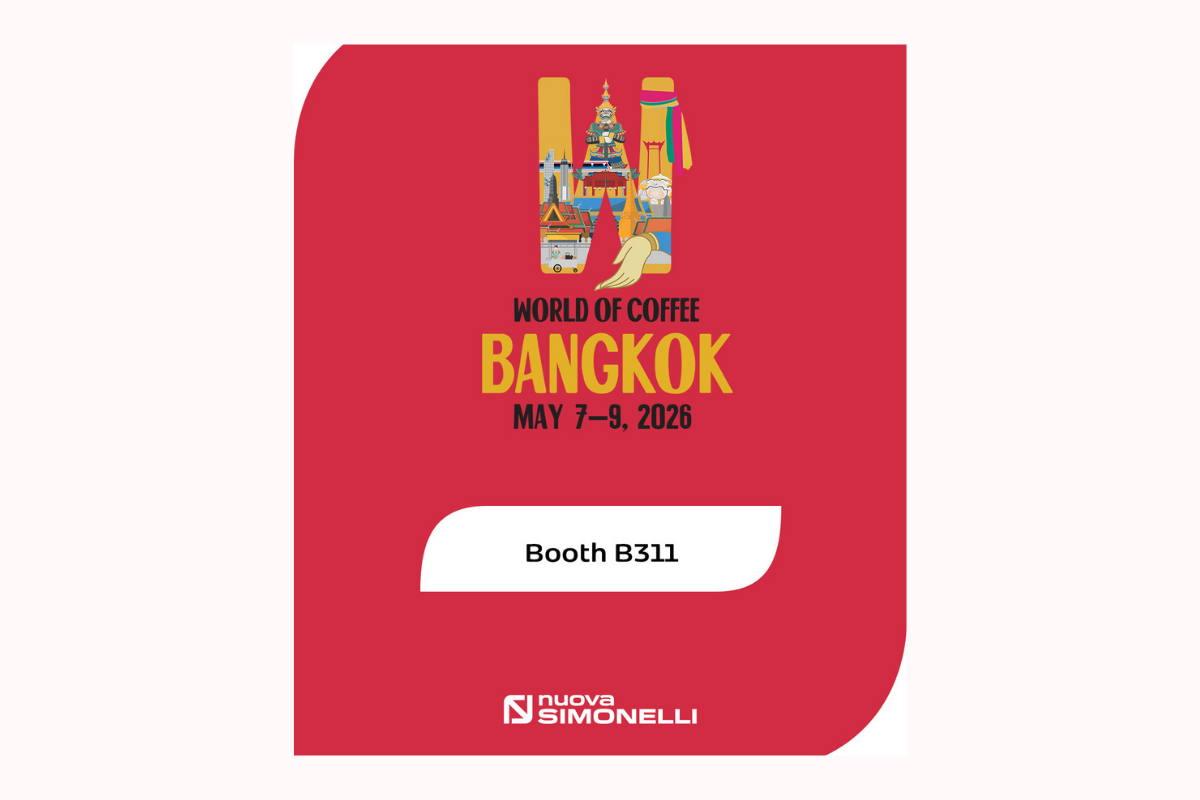
From May 7 to 9, Nuova Simonelli will take part in World of Coffee Bangkok 2026, bringing innovation and energy to the heart of the Asian coffee industry. Visitors can find the brand at booth B311, where technology, experience, and great coffee come together.

Nuova Simonelli area: a future experience

Inside the brand space, visitors will enjoy a fully hands-on experience designed for baristas, roasters, and coffee chains.

The event will feature the official launch of a new evolution of the iconic coffee machine, designed to simplify daily work, improve efficiency, and support sustainability.

A high-performance professional machine will also be available for hands-on testing, created for fast-paced environments without compromising cup quality.

Smart automation technology

Intelligent automation with zero stress. Visitors will experience smart automation technology that simplifies daily operations, standardizes preparation, and ensures consistent quality even during peak hours.

An experience beyond the booth

Booth B311 will be more than an exhibition space. It will be a dynamic hub for meeting, tasting, and exchanging ideas between coffee professionals and an international audience.

Guests are invited to try the machines, explore the technology, and engage with the future of coffee innovation.

Invitation

Visit the booth, test the equipment, and discover how coffee meets smart innovation.

Yemeni Coffee Culture Expands Rapidly Across the United States

SUNNYVALE – AP

Hundreds of years ago, Yemen helped introduce coffee to the world. Today, the mountainous, war-affected country is exporting something new: its distinctive coffeehouse culture.

Yemeni coffeehouses are rapidly expanding across the United States. According to Technomic, a restaurant industry consulting firm, the number of cafés operated by six major Yemeni-style chains grew by 50% last year, reaching 136 locations. This figure does not include the many independent cafés and smaller chains serving Yemeni coffee and tea.

Several factors are driving this growth. Many Yemeni cafés stay open late—sometimes past 3 a.m., especially during Ramadan—offering a social alternative for Americans who do not drink alcohol. A recent Gallup poll found that only 54% of U.S. adults reported drinking alcohol last year, the lowest rate in 90 years.

“Generally in the Middle East, our nightlife is coffee,” said Ahmad Badr, a franchise owner of Arwa Yemeni Coffee in Sunnyvale. “People gather in coffee shops, play games, and talk. We wanted to bring that here.”

Demographic shifts are also contributing to the trend. The Arab American population in the U.S. grew by 43% between 2010 and 2024, compared to roughly 10% growth for the overall population, according to the Arab American Institute.

While many Yemeni cafés are located in states with large Arab American communities—such as Michigan, California, and Texas—they are also appearing in more diverse locations, including Georgia, Kansas, and Maine.

A taste of home

For many Yemeni Americans, these cafés offer more than just beverages—they provide a connection to home.

Faris Almatrahi, co-founder of Texas-based Arwa Yemeni Coffee, said Yemen’s ongoing civil war, which began in 2014, has made travel difficult. His company, which operates 11 cafés and has 30 more in development, aims to recreate the atmosphere of Yemen.

Locations feature desert-inspired tones, mosque-like archways, and decorative elements reminiscent of traditional Yemeni culture.

“One way to experience Yemen without traveling there was to bring it here,” Almatrahi said. “It’s emotional—it really transports us back.”

However, he noted that most customers are not of Arab descent. Growing interest in global flavors and authentic cultural experiences—often fueled by social media—has broadened the appeal.

Menus typically include traditional drinks like Adeni tea, a spiced tea similar to chai, and qishr, made from dried coffee cherry husks. Familiar beverages such as lattes are often infused with spices or honey.

Food offerings may include khaliat nahal (Yemeni honeycomb bread filled with cheese and drizzled with honey) and basboosa, a syrup-soaked semolina cake flavored with lemon or rose water. Many cafés also serve more familiar items like matcha lattes and fruit-based drinks.

Expanding tastes

Industry experts say culturally specific cafés have become a major driver of growth in the U.S. coffee sector.

Peter Giuliano of the Specialty Coffee Association noted similar trends among Latin and Vietnamese coffee brands expanding their presence.

Customers are increasingly curious about new coffee profiles. Cindy Donovan, who recently visited a Yemeni café in Sunnyvale, described the experience as eye-opening.

“The flavors are more refined and mellow, but also richer,” she said. “The cardamom adds something really special—very flavorful without being heavy.”

Yemeni coffee is often sun-dried, a process that enhances its complexity, bringing out notes of chocolate and fruit. Many drinks are prepared using hawaij, a traditional spice blend that may include cardamom, ginger, cinnamon, cloves, coriander, or nutmeg.

Preparation methods also differ. “Our coffee and tea are not made with fully automatic machines,” said Mohamed Nasser of Haraz Coffee House. “We manually blend, boil, and prepare everything to achieve the perfect taste and color.”

A rich history

Coffee’s roots run deep in Yemen. While the plant is believed to have originated in Ethiopia, it was cultivated in Yemen by the 15th century, where it was used by monks to stay awake during prayers.

For about 200 years, Yemen controlled the global coffee trade before coffee plants were transported to other regions, breaking its monopoly.

In recent decades, renewed investment from entrepreneurs, organizations, and coffee specialists has helped revive Yemen’s coffee industry. Despite ongoing challenges, coffee remains one of the country’s most promising economic sectors.

“We see ourselves as ambassadors of our culture,” Almatrahi said. “Through these cafés, we share our hospitality and show what Yemen has to offer.”

Read the related stories:

Qahwah House: Bringing the Soul of Yemeni Coffee to Cahaba Heights

Yemeni Coffee Shops Expand Across Ann Arbor

Yemeni Coffee Craze Reaches Visalia with Bold Flavors and Slow Brews

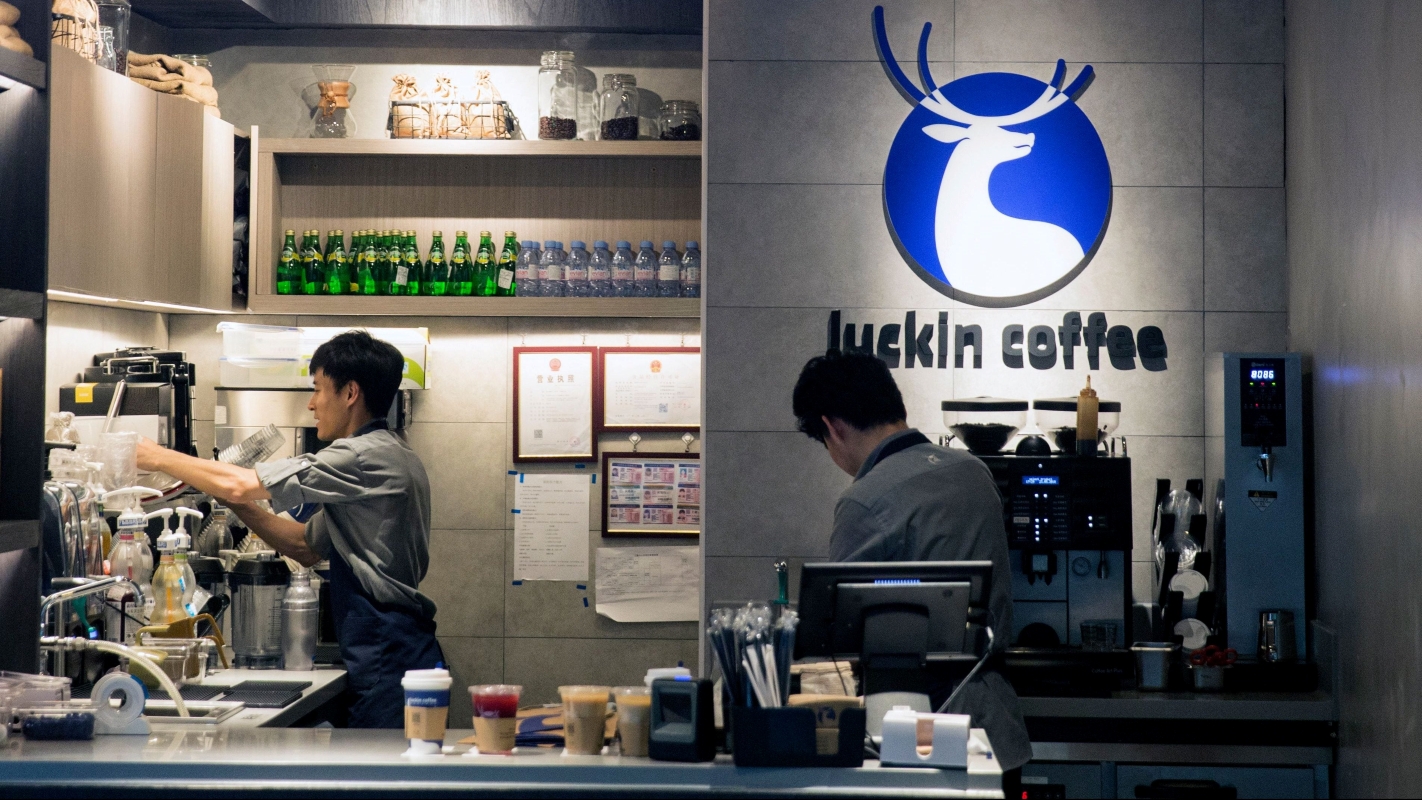
Luckin Coffee unveils $300M share buyback

Dubai – Qahwa World

Luckin Coffee has reported strong first-quarter 2026 results, highlighted by a major share repurchase program and continued rapid expansion across its global store network. These results have drawn fresh attention to the recent Luckin Coffee share buyback.

The company posted net revenues of approximately RMB 12.0 billion (US$1.7–1.76 billion) for the three months ending 31 March 2026, representing a year-on-year increase of about 35%. As a result, market analysts are closely monitoring how the Luckin Coffee buyback of shares may influence its valuation.

This performance continues a sustained period of growth for the Chinese coffee chain, supported by aggressive store expansion and rising customer activity. Additionally, the Luckin Coffee share buyback demonstrates how management seeks to reward shareholders during periods of robust growth.

Store network expansion

During the quarter, Luckin opened 2,548 net new stores, bringing its total footprint to 33,596 locations worldwide. Notably, the company expanded its network while balancing capital through the coffee share buyback initiative.

The majority of new outlets were concentrated in China and Hong Kong, alongside a smaller number of openings in international markets including Singapore, Malaysia, and the United States. Moreover, this store expansion complements Luckin Coffee’s share buyback efforts.

$300 million buyback program

Alongside its earnings release, the company announced its first-ever share repurchase program, authorizing the buyback of up to US$300 million in shares over a 12-month period. Furthermore, investors are reviewing the Luckin Coffee share buyback as a signal of confidence from management.

The program allows the company to repurchase shares through open-market transactions or private deals, subject to market conditions and regulatory requirements. Significantly, the Luckin Coffee share buyback program provides flexibility in methods for repurchasing shares.

[conclusion] Such programs are typically used by companies to return value to shareholders and signal confidence in future performance. This approach is evident in the case with the Luckin Coffee share buyback.

Growth drivers and operations

Luckin’s growth was supported by:

  • Expanding store network scale
  • Increased customer activity, with average monthly transacting customers rising year-on-year
  • Continued investment in digital infrastructure and supply chain capabilities; the Luckin Coffee buyback strategy also supported financial stability.

The company emphasized its strategy of “high-quality, scaled growth,” leveraging technology and operational efficiency to drive consumption and strengthen its competitive position. In turn, initiatives like the Luckin Coffee share buyback reinforce this formula.

Margin pressure and mixed signals

Despite strong revenue growth, some indicators showed pressure:

  • Margins declined compared to the previous year
  • Same-store sales remained relatively flat
  • Rising costs, including delivery expenses, impacted profitability trends

These factors reflect a more competitive and evolving market environment, even as Luckin Coffee pursues strategic share buybacks to support its business.

Outlook

Luckin Coffee indicated confidence in its long-term strategy, pointing to its integrated digital model and large-scale operations as key advantages in navigating near-term volatility. Furthermore, the Luckin Coffee share buyback is anticipated to enhance its financial outlook.

The launch of the share buyback program further reinforces management’s focus on shareholder returns while maintaining growth momentum. In summary, the Luckin Coffee share buyback is expected to impact investor sentiment and future market activity.

Korean Innovation Transforms Coffee Waste into High-Performance Thermal Insulation

SEOUL – Qahwa World

As the global search intensifies for effective solutions to both the climate crisis and the growing burden of organic waste, a recent scientific breakthrough offers an unexpected answer from within a coffee cup. A study published in Biochar (2026) reveals that researchers from Jeonbuk National University have developed a high-performance thermal insulation material made entirely from coffee waste. In other words, the team successfully created coffee waste thermal insulation with remarkable properties.

Led by Sung Jin Kim and Seong Yun Kim, the research team successfully engineered an eco-friendly material that matches the efficiency of top-tier petroleum-based industrial insulators. This development marks an important milestone in coffee waste thermal insulation innovation.

  • The Context: Millions of Tons of Coffee Waste

Coffee is the second most traded commodity in the world after crude oil. This immense global consumption generates approximately 8 million tons of spent coffee grounds (SCG) annually. Most of this waste ends up in landfills, where it decomposes and releases methane, a greenhouse gas significantly more potent than carbon dioxide, or is incinerated, contributing to air pollution.

This environmental challenge provided the foundation for the study, which aims to convert coffee waste into a valuable resource for the construction industry by using it for coffee waste thermal insulation.

  • The Technical Challenge: Enhancing Porosity

The effectiveness of thermal insulation depends largely on a material’s ability to trap air, as stagnant air is a natural insulator. However, raw coffee waste has relatively low porosity, around 46 percent, making it unsuitable for direct use.

To overcome this, researchers subjected the coffee waste to a controlled carbonization process at 700 degrees Celsius. Unlike conventional methods that use inert atmospheres, this process was conducted in an ambient atmosphere, allowing oxygen to interact with the material. This reaction expanded the internal structure, increasing porosity to an impressive 71 percent.

The resulting material, known as biochar, features a network of macropores that effectively trap insulating air. Therefore, the study showed that coffee waste thermal insulation could provide significant benefits compared to traditional options.

  • Breakthrough Innovation: Pore Restoration Technology

A major obstacle emerged when integrating the porous biochar with binding materials. Typically, liquid polymers seep into and clog pores, reducing insulation performance.

To address this, the team developed an innovative pore restoration technique:

Protective mixture: Biochar is combined with a green solvent, propylene glycol.
Molecular shielding: The solvent temporarily fills the pores and prevents the binding polymer, ethyl cellulose, from entering during processing.
Final evaporation: After forming the panels, the solvent is removed under vacuum conditions, restoring the material’s porous structure.

This process enabled the material to achieve a thermal conductivity of 0.04 W m⁻¹ K⁻¹, comparable to conventional polystyrene insulation without the associated environmental harm.

  • Real-World Applications: Smarter Solar Buildings

The study extended beyond laboratory testing to simulate real-world applications, particularly in building-integrated photovoltaic systems. Solar panels generate electricity but also produce significant heat that can increase indoor cooling demands.

When the coffee-based insulation was applied beneath solar panels, it effectively reduced heat transfer and kept indoor spaces cooler. This dual-function solution addresses both waste management and energy efficiency.

  • Sustainability and Biodegradability

Unlike traditional insulation materials, which can persist in the environment for centuries, the coffee-based material is biodegradable. Tests showed that it lost more than 10 percent of its weight within 21 days when exposed to natural enzymes, indicating its potential to return safely to the environment as a carbon-rich soil additive.

  • A Vision for the Future

This innovation represents more than just a new building material. It reflects a broader shift toward total sustainability in the coffee sector. By transforming waste into a high-value construction resource, the research opens pathways for collaboration between coffee producers and the building industry.

It is a compelling example of how science can convert everyday waste into advanced solutions that support environmental protection and sustainable urban development, with coffee waste thermal insulation standing out as a promising advancement.

ICC 2026 Trieste to Focus on Climate, Consumers and Coffee Circularity

Trieste, Italy – Qahwa World

The International Coffee Convention (ICC) 2026 will be held in Trieste this October, bringing together scientists, industry leaders and policy experts to address some of the most pressing challenges facing the global coffee sector.

Under the theme Coffee at the Crossroads: Climate, Consumers and Circularity, the event will examine how coffee production and trade are adapting to climate change, shifting consumer demand and the growing push toward circular and sustainable systems.

The ICC has positioned itself as a unique international forum that connects applied scientific research with real-world decision making across the coffee value chain. Unlike traditional trade fairs or academic conferences, the convention is designed to translate research into practical insight for industry professionals.

Previous editions were held in Mannheim in 2023 and 2024, where the format gained recognition for combining interdisciplinary science with industry-focused discussion. The 2026 edition continues this model with a programme structured around six key tracks.

These cover climate and agriculture, sustainability and processing, market and consumer trends, technology and innovation, ethics and social equity, and trade and regulation. Topics include climate resilience in coffee farming, circular economy approaches in processing, digital transformation, supply chain transparency, and evolving regulatory frameworks in major coffee markets.

The convention brings together a wide range of expertise, including agronomists, economists, geneticists, sensory scientists and behavioural researchers, alongside producers, traders, roasters and technology providers. Organisers say this mix is intended to strengthen collaboration between research and industry practice.

ICC 2026 will also open a call for papers, inviting contributions that combine scientific rigor with practical relevance. Submissions are expected to address challenges and opportunities across the coffee sector, from cultivation and processing to technology, sustainability and trade.

The two day event focuses on concentrated dialogue, applied insight and professional networking, with an emphasis on connecting science and industry in a way that supports real decision making.

Previous ICC proceedings and conference materials remain publicly accessible, offering insights into the research and discussions from earlier editions.

Lavazza Launches Regenerative Coffee for Professionals

Dubai – Qahwa World

On Earth Day, Lavazza has introduced La Reserva de ¡Tierra! Selection, its first coffee for the professional channel certified under the regenerative agriculture standard developed by the Rainforest Alliance.

The launch marks a new step in the company’s sustainability strategy, combining existing Rainforest Alliance Sustainable Agriculture certification with the newer regenerative agriculture certification. The dual certification reflects farming practices aimed at restoring ecosystems, improving soil health, protecting biodiversity, and supporting coffee-growing communities.

The development follows a multi-year effort by Lavazza to integrate regenerative agriculture across its supply chain. Since 2023, the group has advanced projects through its research, development, and corporate social responsibility teams in origin countries, focusing on agronomic practices, environmental impact measurement, traceability, and farmer engagement.

In parallel, the company has supported an early implementation program in Honduras, where more than 70 farms have achieved certification under the Rainforest Alliance Regenerative Agriculture Standard. The initiative included technical training, operational support, and structured guidance to assist farmers in transitioning to regenerative practices.

According to Lavazza, this combined approach has enabled the faster introduction of a coffee product meeting both certification standards, building on its partnership with the Rainforest Alliance that dates back more than two decades.

The Rainforest Alliance Regenerative Agriculture Standard is designed to promote a “Nature Positive” approach to farming. It emphasizes soil restoration, climate resilience through agroforestry, biodiversity protection, improved water management, and better livelihoods for farming communities.

La Reserva de ¡Tierra! Selection is a 100% Arabica blend, combining natural coffees from Brazil with washed coffees from Honduras. Developed for the food service sector, it offers a balanced flavor profile with notes of jasmine, almonds, and milk chocolate, and is designed for consistent extraction in professional settings.

The blend includes coffee sourced from certified farms in Brazil and Honduras, along with a portion from a project supported by the Lavazza Foundation in Brazil’s Minas Gerais region. The initiative focuses on farmer training, agricultural planning, and improvements to living conditions.

Lavazza said the new product will be available in international markets starting in June, supported by a digital campaign highlighting its regenerative agriculture efforts and collaboration with certified farms.

Founded in Turin in 1895, Lavazza operates in more than 140 markets and remains one of the leading global coffee companies, with a portfolio that includes several international brands. The Rainforest Alliance continues to work with farmers, companies, and communities worldwide to promote sustainable agriculture and environmental conservation.

Global Coffee Prices Fall as Brazil Crop Outlook Signals Oversupply

Dubai – Qahwa World

Global coffee prices declined at the start of the week as expectations of strong supply weighed on market sentiment, particularly with Brazil’s harvest approaching.

Arabica coffee had already fallen to its lowest level in several weeks, pressured by forecasts pointing to a potentially record-breaking Brazilian crop for the 2026/27 season. Analysts from multiple firms have raised their production estimates, with projections suggesting output could exceed 75 million bags. If realized, this would mark a significant increase from the previous season and reinforce expectations of abundant supply.

The global balance is also shifting. Current estimates indicate that the coffee market could move into a much larger surplus in 2026, compared to a relatively modest surplus the year before. This outlook has contributed to the recent downward trend in prices.

Vietnam is adding further pressure to the market. As the world’s leading robusta producer, the country has reported rising export volumes in early 2026, continuing the strong performance seen last year. Production is also expected to increase, reaching a multi-year high and boosting global robusta availability.

Despite the broader bearish outlook, some factors are offering limited support to prices. Robusta inventories monitored by exchanges have recently dropped to their lowest level in over a year, indicating tighter short-term supply.

There are also ongoing concerns about global trade conditions. Higher shipping and logistics costs continue to affect the coffee sector, increasing expenses for exporters and roasters and adding uncertainty to supply chains.

Meanwhile, Brazil’s recent export data shows a decline compared to the same period last year, suggesting a temporary tightening in available shipments even as larger future harvests are anticipated.

Looking ahead, global coffee production for the 2025/26 season is still expected to reach a record level. While arabica output may see a slight decrease, robusta production is forecast to rise significantly, helping to balance overall supply. Ending stocks are projected to decline modestly, indicating that while supply is strong, stock levels may not increase dramatically.

Trump Tariffs Reshape Global Coffee Trade

Dubai – Qahwa World

Tariff policies introduced during 2025 have contributed to significant shifts in the global coffee trade, pushing industry players to rethink supply chains and accelerate structural changes across the sector.

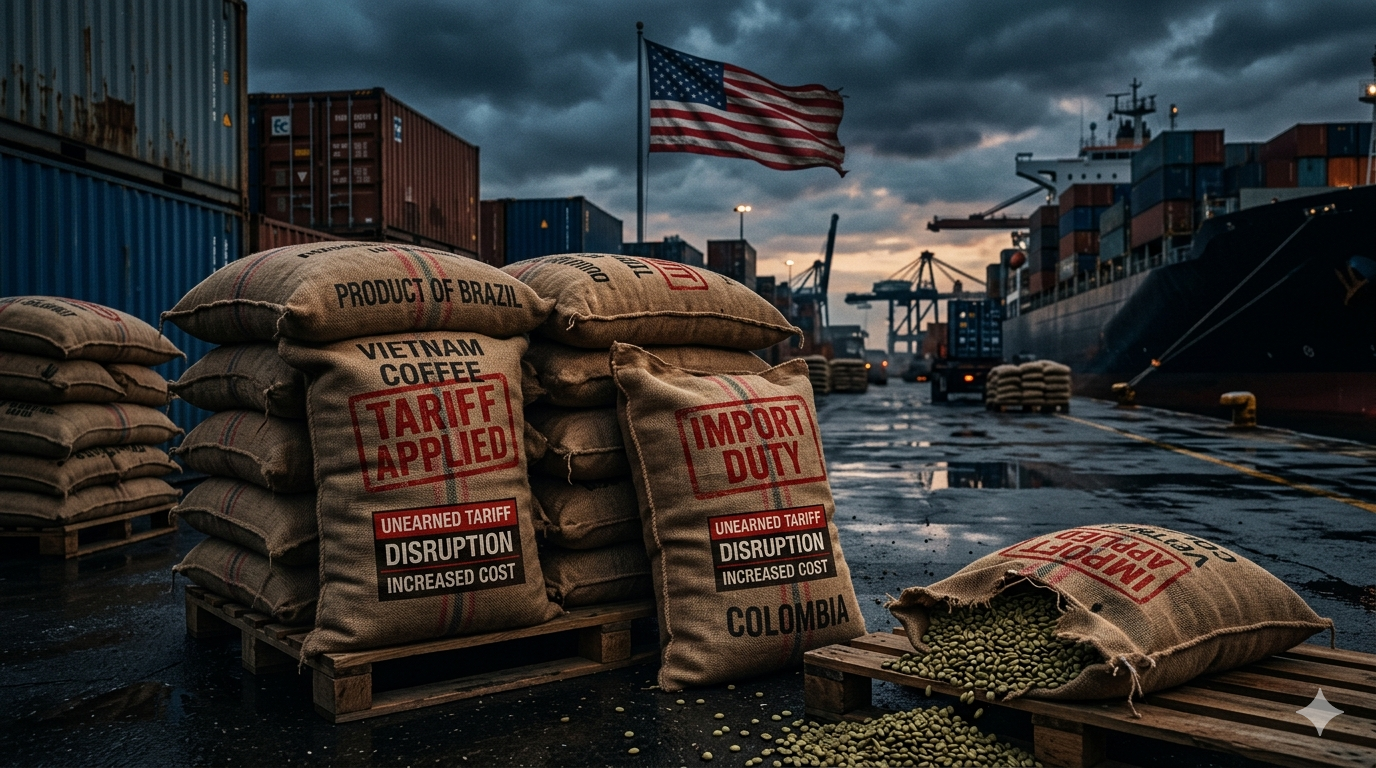
In 2025, broad tariff measures were imposed on imports of green coffee beans and roasting equipment. The initial rate started at around 10%, but in some cases increased substantially on major coffee-producing countries such as Brazil, Vietnam, Indonesia, and Mexico.

These measures were not applied consistently over time. Later adjustments, exemptions, and partial rollbacks were introduced following trade negotiations and policy revisions, including relief for certain agricultural goods that are not domestically produced, such as coffee. Despite this, the early phase of the tariffs had already created noticeable disruption.

The impact included higher roasted coffee prices in certain markets, shifts in export flows, and widespread instability across global supply chains.

  • Supply Chain Disruption

The changes exposed how sensitive the global coffee system is to trade policy shifts. Key developments included:

A decline in exports from Brazil to the United States, with redirected shipments toward Asia and the Middle East
Increased tariff pressure on exports from Vietnam, Indonesia, and Mexico, pushing buyers to search for alternative origins
Rising costs for coffee equipment such as grinders and espresso machines due to import dependencies

Frequent policy changes made long-term planning difficult, increasing operational uncertainty and raising costs across the supply chain.

  • Beyond Beans: Equipment and Infrastructure

The impact was not limited to green coffee. Imported roasting and café equipment also became more expensive, increasing the cost of opening or upgrading coffee shops.

This added pressure came on top of ongoing global supply chain disruptions, including higher raw material costs and shipping delays in recent years.

  • Market Adaptation Strategies

As costs rose, market participants explored different ways to adapt, including:

Rerouting shipments through countries with lower tariff exposure
Reclassifying origin within multi-stage production chains
Establishing roasting and packaging operations in third countries to alter customs classification

Large multinational companies were generally better positioned to implement such strategies due to capital availability and infrastructure flexibility.

  • Historical Context of Coffee Trade Workarounds

Attempts to bypass trade restrictions are not new in coffee history. Over centuries, coffee spread globally through a mix of legal trade, secrecy, and strategic relocation of plants and beans.

Historical examples include:

Early movement of coffee cultivation from its origin regions into Asia and the Americas through controlled and often restricted transfers
The spread of coffee plants to Southeast Asia and Latin America via maritime trade routes in earlier centuries
Historical episodes in Europe where coffee was heavily taxed or restricted, leading to informal trade networks and enforcement efforts

These patterns show that trade restrictions have historically encouraged alternative distribution channels.

  • Shifting Global Demand

Several broader trends accelerated during this period:

Growth in coffee consumption in Asia and the Middle East
Expansion of domestic consumption in producing countries
Increasing focus on supply diversification by major importers
Stronger regulatory attention in some markets on sustainability and climate-related sourcing

Together, these shifts suggest a gradual rebalancing of global coffee consumption and trade flows.

  • Uncertain Long-Term Outcomes

The long-term effects of these tariff-related disruptions remain unclear. Some analysts expect elevated price levels to persist even after policy normalization, due to accumulated supply chain inefficiencies.

While tariffs are often intended to support domestic industries, the observed effects in many cases have included:

Increased costs for importers and roasters, particularly smaller businesses
Higher consumer prices in retail and café markets
Reduced supply chain efficiency due to rerouting and compliance complexity
Limited direct benefit to producers in developing countries in many cases

Larger companies have generally been better able to absorb shocks, potentially contributing to greater consolidation within the industry.

  • Conclusion

The tariff developments of 2025 may represent a turning point in the global coffee trade system. Combined with shifting consumption patterns, rising new markets, and evolving supply chain strategies, the industry appears to be entering a new structural phase.

The key question moving forward is whether these changes will lead to a more resilient and balanced global coffee economy, or further concentrate influence among large multinational players.

Coffee has always moved across borders in response to economic and political pressure. Once again, it is adapting—reshaping itself along with the global systems that depend on it.

India’s Coffee Market Gains Momentum as Specialty Segment and Café Chains Expand

Dubai – Qahwa World

The Cimbali Group has shared new insights on its LinkedIn account highlighting the ongoing transformation of India’s coffee market, driven by the rise of specialty coffee and the rapid expansion of café chains.

Traditionally a tea-dominated country, India is witnessing a steady increase in coffee consumption, particularly among younger, urban consumers. Changing lifestyles, rising disposable incomes, and greater exposure to global coffee trends are contributing to this shift. According to industry estimates referenced in the report, the Indian coffee market is expected to grow at an annual rate of around 9–10 percent through 2030.

The report points to the growing influence of specialty coffee across major cities such as Bangalore, Mumbai, and Delhi, as well as emerging urban centers including Ahmedabad, Surat, and Jaipur. Independent cafés and local roasters are introducing single-origin coffees, alternative brewing methods, and a stronger focus on traceability, reflecting a shift in consumer preferences toward quality and transparency.

At the same time, organized coffee chains are accelerating the development of café culture across the country. Brands such as Starbucks, Blue Tokai, Third Wave Coffee, and Café Coffee Day continue to expand in both metropolitan and tier-two cities, contributing to the normalization of coffee as a daily habit and social experience. The coffee retail chain segment in India was valued at over $500 million in 2023 and is projected to grow steadily.

The LinkedIn post also includes industry perspectives from Arun, Chief Operating Officer at Fresh & Honest Café Ltd, who notes that the entry of new international players is expected to further reshape the market. He highlights emerging formats such as grab-and-go outlets, app-based ordering, and compact kiosks, alongside beverage innovation tailored to local tastes.

As the market evolves, the focus is increasingly shifting toward consistency and quality. The report emphasizes that scaling high-quality coffee requires not only premium beans but also reliable equipment, precise extraction, and well-trained professionals. Investment in barista training and operational standards is becoming essential for businesses aiming to maintain consistency across multiple locations.

The Cimbali Group concludes that the next phase of growth in India’s coffee industry will depend on the ability of operators to combine quality, technology, and skilled workforce development, as coffee continues to transition from a growing trend into a well-established culture.

Coffee Break Dubai: Government Confidence, Market Shifts, and Hard Truths Facing the Coffee Industry

Dubai — Qahwa World

The first Coffee Break forum, held yesterday in Dubai, brought together senior leaders from the coffee, hospitality, logistics, media, and investment sectors to discuss the growing structural pressures facing the global coffee industry.

Organized by Mokha 1450 in partnership with Modora, the event went beyond discussion, offering a detailed real-time reading of how the sector is reacting to overlapping global disruptions.

Despite the complexity of challenges, a consistent theme emerged throughout the sessions: Dubai’s business environment continues to operate with a high level of institutional confidence, repeatedly linked by speakers to government crisis management performance and long-term economic stability.

  • SPEAKERS LIST (FULL PARTICIPANTS)

The session featured a high-level panel including:

  • Abdulla Al Shaibani — Group CEO, Axceed LLC
  • Garfield Kerr — CEO, Mokha 1450 and Former President of the Specialty Coffee Association
  • Khalid Al Mulla — CEO, Dubai Coffee Museum
  • Jennifer Pettinger-Haines — Founder and CEO, The GRIF Collective
  • Paul Clifford — Industry Editor and Analyst
  • Zeena Zalamea — Moderator, Broadcaster and Entrepreneur

GOVERNMENT CONFIDENCE AS A CORE BUSINESS FOUNDATION

A central thread across discussions was the role of government performance during crises, particularly the COVID 19 pandemic.

Speakers described how the UAE maintained operational continuity during global shutdowns, reopened faster than most major economies, and minimized long-term disruption to business ecosystems.

This experience created what participants described as a “structural confidence layer” that continues to shape decision-making today.

Rather than reacting defensively to current market pressures, companies are maintaining operations, focusing on internal stability, and prioritizing workforce wellbeing.

One speaker emphasized that during crises, the primary concern shifted away from business survival toward emotional and organizational stability within teams, supported by confidence in national systems.

  • ABDULLA AL SHAIBANI: LEADERSHIP UNDER STRUCTURAL CHANGE

Abdulla Al Shaibani highlighted that leadership in the current cycle is no longer defined by expansion, but by resilience management.

He emphasized that the priority for landlords and operators alike is stability rather than aggressive growth, stressing that maintaining continuity with tenants and partners is now the key objective.

He also noted that supporting smaller business ecosystems through flexible operational frameworks is essential during periods of uncertainty.

  • GARFIELD KERR: SUPPLY CHAIN DISRUPTION AND INDUSTRY PRESSURE

Garfield Kerr described significant disruption across global coffee logistics, particularly in air freight and container movement.

He explained that shipping costs have increased sharply, forcing businesses to pause shipments, delay projects, and reallocate inventory already positioned at origin.

He added that specialty coffee operators are now managing a fragile balance between cost pressure and quality preservation, especially as green coffee prices continue to rise globally.

  • JENNIFER PETTINGER-HAINES: THE TWO SPEED MARKET

Jennifer Pettinger-Haines presented data analysis covering approximately 400 venues across Dubai, revealing a clear structural divide:

  • Community cafés and neighborhood venues: growth of 30 to 40 percent in some cases
  • Fine dining restaurants: declines reaching 70 to 80 percent

She explained that this divergence reflects a fundamental shift in consumer behavior toward proximity, affordability, and familiarity.

Community driven venues are benefiting from consistent local demand, while high-end restaurants remain heavily dependent on tourism and discretionary spending.

  • PAUL CLIFFORD: PRICING STRATEGY AND BRAND RISK

Paul Clifford warned against aggressive discounting strategies, stating that repeated price reductions can permanently damage brand perception.

Once a brand is positioned at a lower price point, restoring premium positioning becomes significantly more difficult.

He noted that many operators are instead restructuring offerings by simplifying menus, reducing service formats, adjusting portions, and forming supplier collaborations rather than competing through pricing alone.

  • KHALID AL MULLA: LOGISTICS AND SYSTEM STABILITY

Khalid Al Mulla emphasized that government intervention extends beyond regulation into active operational support during crises.

He referenced past interventions that protected businesses from immediate financial collapse and ensured continuity of operations.

He also highlighted current logistics diversification strategies, including alternative shipping routes and regional port redistribution to reduce dependency on single supply corridors.

  • INDUSTRY TRANSFORMATION ACROSS OPERATIONS

Across the sector, businesses are adjusting core operations:

  • Reduced operating hours in line with demand
  • Workforce restructuring
  • Menu redesign due to cost inflation
  • Ingredient substitution and sourcing recalibration
  • Training program expansion

At the same time, companies are investing in internal capability development to prepare for post-crisis recovery cycles.

  • DIFFERENT ECONOMIC REALITIES WITHIN ONE MARKET

Speakers noted a widening gap between companies:

  • Well capitalized operators are investing and repositioning
  • Smaller operators are focused on survival and liquidity management

Overall performance remains below historical averages, with many businesses operating near break-even thresholds.

  • HOSPITALITY ASSET UNDERUTILIZATION

Hotel infrastructure was identified as an underutilized resource due to reduced occupancy rates.

Proposals included repurposing unused spaces into coworking environments, delivery kitchens, and hybrid operational models to improve asset efficiency.

  • SHIFTING CUSTOMER DEMOGRAPHICS

A key strategic concern raised was the under engagement of younger consumer groups.

Speakers noted that this demographic represents a growing opportunity but requires new approaches in branding, product development, and communication strategy.

  • ORIGIN LEVEL PRESSURE IN THE COFFEE CHAIN

At production level, rising costs and low farmer returns continue to threaten long-term sustainability.

Some producers are exiting the industry entirely, while younger generations are increasingly avoiding agricultural participation.

Sustainability investment and fairer value distribution were highlighted as critical structural requirements.

  • OUTLOOK: CONTROLLED OPTIMISM

Despite challenges, sentiment remained cautiously positive.

Most participants expect partial recovery within 12 to 24 months based on historical cycles in hospitality markets.

A widespread view emerged that current disruptions are cyclical rather than structural, shaping investment and operational decisions across the sector.

  • CONCLUSION

The Coffee Break forum in Dubai highlighted an industry under simultaneous global pressures but actively adapting across every layer of its value chain.

From supply chains to consumer behavior, the sector is undergoing structural recalibration.

At the center of this transition is sustained confidence in the UAE’s institutional stability and crisis management capability, which continues to influence strategic decisions across the industry.

From Vilnius to the World: The Story Behind Huracán Coffee’s Historic Win

An exclusive interview with Vytautas Kratulis, founder of the World’s Best Coffee Roaster 2026

Dubai – Ali Alzakary

When Huracán Coffee was crowned World’s Best Coffee Roaster 2026 at the Global Coffee Awards in San Salvador, it was more than a victory. It marked a defining moment for the global coffee industry. For the first time, a roaster from the Baltic region reached the top, standing alongside and above long-established coffee markets in Europe and North America.

This achievement reflects years of work, consistency, and a deep understanding of coffee that goes far beyond roasting alone. Behind it is Vytautas Kratulis, a figure whose journey is closely tied to the transformation of Lithuania itself. From the uncertainty that followed independence in the early 1990s to building one of the most respected specialty coffee companies in the world, his path mirrors the rise of a new coffee culture in an emerging region.

In this exclusive conversation with Qahwa World, Kratulis shares his story, his philosophy, and his perspective on what it truly means to produce great coffee today.

Read the full interview below.

  • To start, could you briefly introduce yourself and share the story behind Huracán Coffee?

When the Soviet Union collapsed, everything changed. Lithuania became independent in 1991, just as I turned seventeen. It was a complete reset. There were no clear rules, no stable systems, only a strong sense that we had to build a country from the ground up, including its economy, institutions, and businesses.

There was chaos, many crises, very little money, and almost no legal framework. But for a young person, it also meant freedom and possibility. Many of us wanted to travel, to see the world, and at the same time take part in building something new in a country that was just taking shape.

I started working in a distribution company handling commercial coffee brands from Sweden, Austria, Poland, and Germany. My job was simple, placing products on shelves. But the deeper I got into it, the more questions I had. I began to notice that people cared about good coffee. They were looking for it.

It also connected to my personal experience. In my family, coffee had meaning. My mother suffered from migraines, and coffee helped her. At that time, truly good coffee was rare, and because of that, its value felt higher than it does today. When something good appeared, people noticed. I kept seeing this pattern. People appreciated quality, even if they did not always have the words to describe it.

Then one day I tasted freshly roasted coffee for the first time. It was presented by a Polish entrepreneur selling drum roasting machines. That moment changed everything for me. I bought a roaster.

At that time, there was no concept of specialty coffee as we understand it today. There was no internet as we know it, no structured information, and I had no awareness of the specialty coffee movement until 2004.

In 2004, I attended an exhibition in Athens, where I met key figures from what was then the Specialty Coffee Association of Europe. That experience gave me a completely new perspective.

After returning to Vilnius, I opened the first dedicated specialty coffee shop in Lithuania, established a local SCA chapter, and organized the first national championship under international rules. We also sent our first national champion to the World Barista Championship in Seattle. That was how the Baltic region began connecting with the global specialty coffee community.

A major turning point in my career came in 2005, when I was invited to judge at the Cup of Excellence in Nicaragua. That was my first visit to a coffee origin. There, I met many of the people who shaped the specialty coffee movement. It was also my first time sitting at a Cup of Excellence cupping table. Since then, I have served as a judge in competitions in nearly every producing country that participates in the program.

  • How did you feel when you heard you had won World’s Best Coffee Roaster?

It is hard to put into words. Even if we had received silver or bronze, the feeling would have been very strong. But when you are ranked number one, you begin to reflect and look for the reasons behind it.

Looking back now, it is clear that this did not happen by chance. The result follows the work. But in that moment, the only thought was that you are simply lucky to be there.

When we received a bronze medal in the filter category in Europe and qualified for the final, we already celebrated it as the highest point in our journey. Going into the world final, we did not expect this kind of recognition, especially considering the level of markets like the United States, Canada, the United Kingdom, and Scandinavia.

Today, access to great coffee is relatively equal. Roasters can find and buy exceptional lots, visit producers, and operate within well-established logistics. We all see each other’s work.

The difference lies in the market itself. In more developed markets, demand for quality is stronger and more consistent. People can pursue quality without compromise, and good coffee becomes part of everyday life.

In my local market, I am still shaped by a less mature consumer. Expectations are different, and that naturally defines certain limits.

  • What do you think made the biggest difference in this competition?

We received a strong number of medals across different categories and subcategories, close to a fifth of all awards. That range made a difference.

Beyond filter coffee, which we understand well, we also have long experience preparing roasts for milk-based drinks. We have had six national barista champions come through our team.

In areas like omni roasting, which is not something we do every day, it was a new challenge. Still, we performed well and received recognition.

Timing also played a role. It was a moment when many of our carefully sourced lots had just arrived. Every year, we make a point of buying something special, competition-level coffees. This allowed us to present strong coffees across many categories.

We prepared seriously. We had a plan for what to present, when to roast, and how to approach the competition.

We did not expect to win. But we knew how to present ourselves with respect at the highest level.

  • How would you describe your approach to roasting in simple terms?

We believe roasting should be adapted to purpose.

For milk-based drinks, we adjust the coffee to work well with milk. For filter coffee, we roast light so the coffee can express its natural character, including origin and variety.

Espresso is different. We prefer sweetness and balance, with more roundness in the cup, not just strong acidity. Our style sits somewhere between Italian and Scandinavian approaches.

Acidity is important, but we do not push it to the front. We value origin, freshness, precision, and preparation. At the same time, we do not follow trends blindly.

  • How important are your relationships with coffee farmers?

They are very important.

It is always a special feeling to know that a farmer is waiting for your order, expecting your visit, and welcoming you.

These relationships take years to build. It is about understanding each other. In the end, what a farmer chooses to sell you becomes how that country is experienced in your market.

For example, we have worked with the Pacas family in El Salvador since 2008. It is not only about rare varieties, but also about everyday coffees that truly represent a country.

I try to visit producing countries regularly to see progress and changes.

  • What is your view on blind tasting competitions?

From my perspective, they can reflect quality if the system is well structured.

Consistency, standardized preparation, and experienced judges are essential. These factors allow for objective evaluation.

I still consider Cup of Excellence the most advanced system. At the same time, Global Coffee Awards offers something valuable by comparing coffees from different countries without bias.

  • What does this win mean for the Baltic region?

It is a significant result for our region.

Our customers are part of this achievement. They trusted us for many years. I hope it gives confidence to other roasters.

At the same time, the market is still developing. Awareness and consistency are improving, but there is still a gap compared to more mature markets.

  • What are your plans after this win?

This result confirmed that what we do resonates globally.

We will continue focusing on coffee. We have expanded into products like cold brew concentrate and specialty instant coffee, as well as collaborations with other industries.

Looking ahead, I would like to be more present in the Arab coffee scene. I believe we have something meaningful to contribute there.

  • What advice would you give to roasters who want to reach this level?

Do not focus too much on others. Follow your own path.

Take part and do not let fear of losing stop you. Many strong players never even try.

This interview reflects a journey built over decades, shaped by curiosity, persistence, and a deep respect for coffee at every stage of its value chain. Huracán Coffee’s achievement is not only a win, but a signal that the global coffee map continues to evolve, opening space for new regions and new voices.
Asia-Pacific Coffee Consumption Trends Report

Dubai – Qahwa World

Sucafina published an important report today titled “Inside Asia Pacific’s Evolving Coffee Consumption Landscape.” Due to its relevance for understanding shifting global coffee demand, Coffee World is republishing the findings to help raise awareness of the key trends shaping the region’s coffee markets.

Coffee consumption across the Asia-Pacific region is undergoing rapid transformation, shaped by premiumization, evolving lifestyles, and the parallel growth of convenience-driven and specialty coffee segments. Markets including Taiwan, South Korea, Australia and New Zealand, China, and Japan are each following distinct development paths while sharing broader regional dynamics.

  • Taiwan: A Dual-Track Consumption Market

Taiwan’s coffee market is strongly influenced by young urban consumers and fast-paced city lifestyles. Convenience-store chains such as 7-ELEVEN (CITY CAFÉ and CITY PRIMA) and FamilyMart (Let’s Café) dominate daily consumption, offering consistent quality and accessible pricing.
At the same time, specialty cafés are expanding, driven by consumer interest in origin, processing methods, and brewing techniques. Domestic specialty production is also emerging, particularly in regions such as Alishan, though limited supply and high prices remain constraints.
The result is a dual-market structure where convenience-driven and experience-focused consumption coexist. Taiwan imported around 726,000 bags in 2025, reflecting steady growth supported by premiumization and stable commercial demand.

  • South Korea: A Highly Polarized “Barbell” Market

South Korea remains one of the highest per-capita coffee-consuming markets in Asia, with annual consumption estimated at 400–420 cups per person. The market is increasingly polarized between low-cost franchise chains and high-end specialty cafés, with limited space for mid-tier operators.
Industry standards have risen significantly, with many chains now avoiding lower-scoring commercial beans and instead emphasizing higher-quality offerings. Specialty cafés are differentiating through rare origins, unique varieties, and enhanced in-store experiences.
Ready-to-drink coffee continues to grow at a steady rate, supported by office workers and home café culture. Decaf consumption has also expanded consistently over the long term, while demand for African and Latin American specialty coffees continues to rise.

  • Australia & New Zealand: Shift Toward At-Home Consumption

In Australia and New Zealand, rising living costs are reshaping coffee consumption patterns. While overall demand remains strong, more consumers are shifting away from cafés toward supermarkets, e-commerce, subscription services, and ready-to-drink formats.
The market is becoming increasingly polarized between value-driven private label products and premium, traceable specialty offerings, particularly in New Zealand. Fresh coffee is showing strong supermarket growth, while instant coffee and pods are stabilizing.
New trends include iced and infused coffee formats, as well as growing demand for premium decaf and alternative beverages. Despite cost pressures across the supply chain, daily coffee consumption remains high across both markets.

  • China: Rapid Expansion Driven by Low Prices and Scale

China continues to be one of the fastest-growing coffee markets globally, supported by rapid consumer adoption and highly efficient supply chains. Large coffee chains dominate the market through extensive store networks and price-competitive offerings.
Average cup prices remain low, contributing to strong mass-market accessibility but also increasing pressure on premium positioning. Consumer preferences continue to lean toward milk-based and blended beverages, driving continuous menu innovation.
Import demand remains strong and evolving, with shifts in sourcing origins reflecting the market’s rapid development.

  • Japan: Mature and Stable Consumption Market

Japan’s coffee market is highly mature, with long-established consumption habits and relatively stable demand. While demographic aging has contributed to slight declines, overall consumption remains steady.
The country imports significant volumes of green coffee and soluble coffee annually. A strong ready-to-drink culture persists, supported by widespread vending machine distribution and convenience store expansion.
Specialty coffee remains a smaller segment but continues to grow through curated and experiential offerings. One emerging format is the “coffee omakase,” a highly curated tasting experience that emphasizes exclusivity and craftsmanship.

  • Regional Outlook: Fragmentation and Innovation

Across Asia-Pacific, coffee demand remains structurally strong, with continued expansion in both commercial and specialty segments. However, markets are increasingly fragmented, with clear separation between value-driven and premium consumer behavior.
Innovation in both product development and café concepts is becoming a defining factor in competitiveness. Across the region, operators are adapting to increasingly distinct local demand patterns, reinforcing Asia-Pacific’s role as a key driver of global coffee market evolution.