Cotti Coffee Expands to 35+ Australian Locations

Source: Industry Report / Cotti Coffee
Author: Qahwa World
Date: July 28, 2026

Cotti Coffee Expands to 35+ Australian Locations

  • Cotti Coffee opens three new Australian stores in July, bringing total to more than 35 locations.
  • New stores opened in Frankston (Victoria), Green Square (Sydney), and St Kilda (Melbourne).
  • The brand now has locations across New South Wales, Victoria, Queensland, Western Australia, and South Australia.
  • Internationally, Cotti Coffee reports more than 18,000 venues in 33 countries.
  • The company was founded in 2022 by co-founders of Luckin Coffee.
  • Cotti Coffee specializes in fresh coffee, teas, and signature drinks.
  • New app customers receive their first three drinks for $3.95.

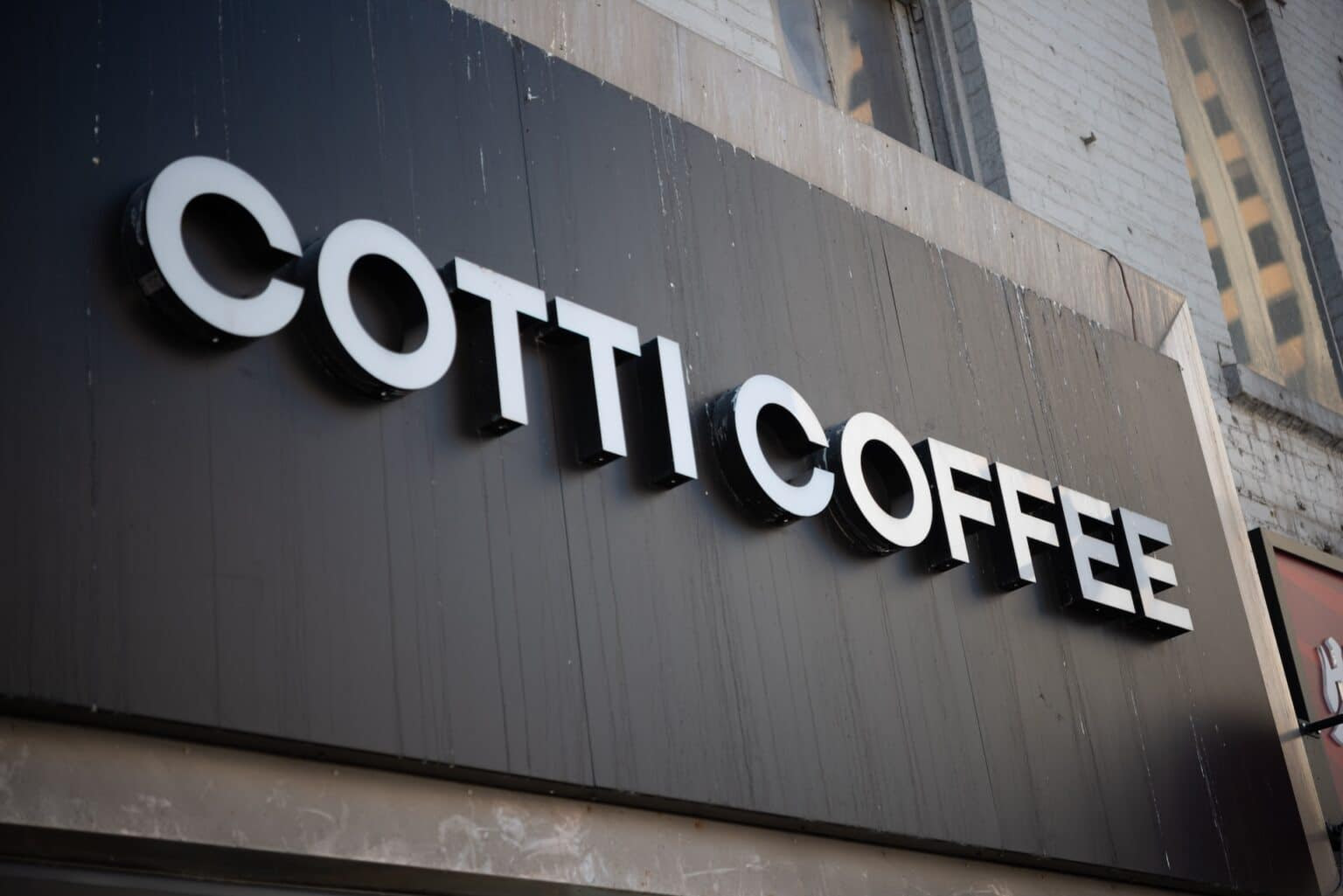
Chinese coffee chain Cotti Coffee continues its rapid Australian expansion. The brand opened three more venues in July. This brings its total Australian locations to more than 35.

New stores opened in Frankston, Victoria, and Green Square, Sydney. These followed a new outlet in St Kilda, Melbourne, at the end of June. The franchise-format group shows no signs of slowing down.

Expansion Timeline

Cotti Coffee’s first Australian venue opened in Cabramatta, Sydney, on January 31, 2024. By September 2025, the brand had 16 locations in Sydney, two in Perth, one on the Gold Coast, and one in Melbourne. The pace of expansion has accelerated significantly since then.

Cotti Coffee Australian Locations by State
State Locations
New South Wales (Sydney area) Multiple (Cabramatta, Manly Beach, North Sydney, Eastwood, Bondi Junction, Waterloo, Rosebery, Gadigal, Green Square, and more)
Victoria (Melbourne area) Multiple (St Kilda, South Yarra, Carlton, CBD, Springvale, Exhibition Street, Glenferrie, Clayton, Frankston)
Queensland Brisbane, Inala, Gold Coast
Western Australia Perth (2 locations)
South Australia Adelaide

Recent Openings

According to the brand’s Instagram page, Cotti Coffee has launched seven additional stores in New South Wales. These include Manly Beach, North Sydney, Eastwood, Bondi Junction, Waterloo, Rosebery, and Gadigal. The brand has also opened seven more stores in Victoria: South Yarra, Carlton, CBD, Springvale, Exhibition Street, Glenferrie, and Clayton.

In Queensland, the brand now has stores in Brisbane and Inala, in addition to the Gold Coast. Its first South Australian store opened in Adelaide. The brand’s presence now spans five Australian states.

Global Footprint

Internationally, Cotti Coffee reports having more than 18,000 venues in 33 countries. This rapid global expansion has made the brand one of the fastest-growing coffee chains in the world. The company was founded in 2022 by Lu Zhengyao and Qian Zhiya. They were two of the original co-founders of coffee giant Luckin Coffee.

Cotti Coffee specializes in fresh coffee, teas, and signature drinks. The brand is known for its competitive pricing and aggressive expansion strategy. As part of its launch initiative, it offers new app customers their first three drinks for $3.95. This promotion helps attract new customers and build brand loyalty.

Australian Coffee Market Context

Australia has a sophisticated and competitive coffee market. The country has a strong café culture with high consumer expectations. International chains have found success by adapting to local tastes and preferences.

Cotti Coffee’s expansion demonstrates the growing appetite for international coffee brands in Australia. The brand’s affordability and quality proposition appeal to a wide range of consumers. Its rapid growth suggests strong demand for its offerings.

What This Means for the Industry

Cotti Coffee’s expansion reflects broader trends in the global coffee industry. Chinese coffee brands are increasingly expanding internationally. They bring unique business models and value propositions to new markets.

For Australian consumers, the arrival of Cotti Coffee offers more choice and competition. This can drive innovation and value across the market. Established players may need to adapt their strategies to maintain market share.

Frequently Asked Questions

How many Cotti Coffee locations are in Australia?As of July 2026, Cotti Coffee has more than 35 locations across Australia.

Where are the new stores located?New stores opened in Frankston (Victoria), Green Square (Sydney), and St Kilda (Melbourne).

When did Cotti Coffee arrive in Australia?The first Australian venue opened in Cabramatta, Sydney, on January 31, 2024.

How many stores does Cotti Coffee have globally?The brand reports more than 18,000 venues in 33 countries worldwide.

Who founded Cotti Coffee?The company was founded in 2022 by Lu Zhengyao and Qian Zhiya, co-founders of Luckin Coffee.

What does Cotti Coffee offer?Cotti Coffee specializes in fresh coffee, teas, and signature drinks, with a competitive pricing strategy.

Loser’s Cafe in Mexico City Becomes a Sanctuary for World Cup Fans

Source: Reuters – Adapted by Qahwa World |
Author: Qahwa World |
Date: July 2, 2026

Loser’s Cafe in Mexico City Becomes a Sanctuary for World Cup Fans

Key Takeaways:

  • A cafe in Mexico City’s Condesa neighborhood has dedicated itself to consoling fans of defeated World Cup teams.
  • The idea was launched by Swedish oat milk company Oatly in collaboration with cafe owner Ian Infantino.
  • The cafe raises flags of defeated teams and offers free drinks to those wearing their jerseys.
  • Napkins carry the message “Dry your tears” – a touching human gesture.
  • Mexico achieved its first knockout-stage win in 40 years, potentially changing the “loser” mindset.
  • The cafe remains a permanent sanctuary for disappointed fans if Mexico loses to England.

In the midst of a sea of green that flooded Mexico City after Mexico’s victory over Ecuador in the World Cup on Wednesday, one establishment defiantly raised Ecuador’s flag and opened its doors to welcome all disheartened fans of Mexico’s rivals in a safe haven.

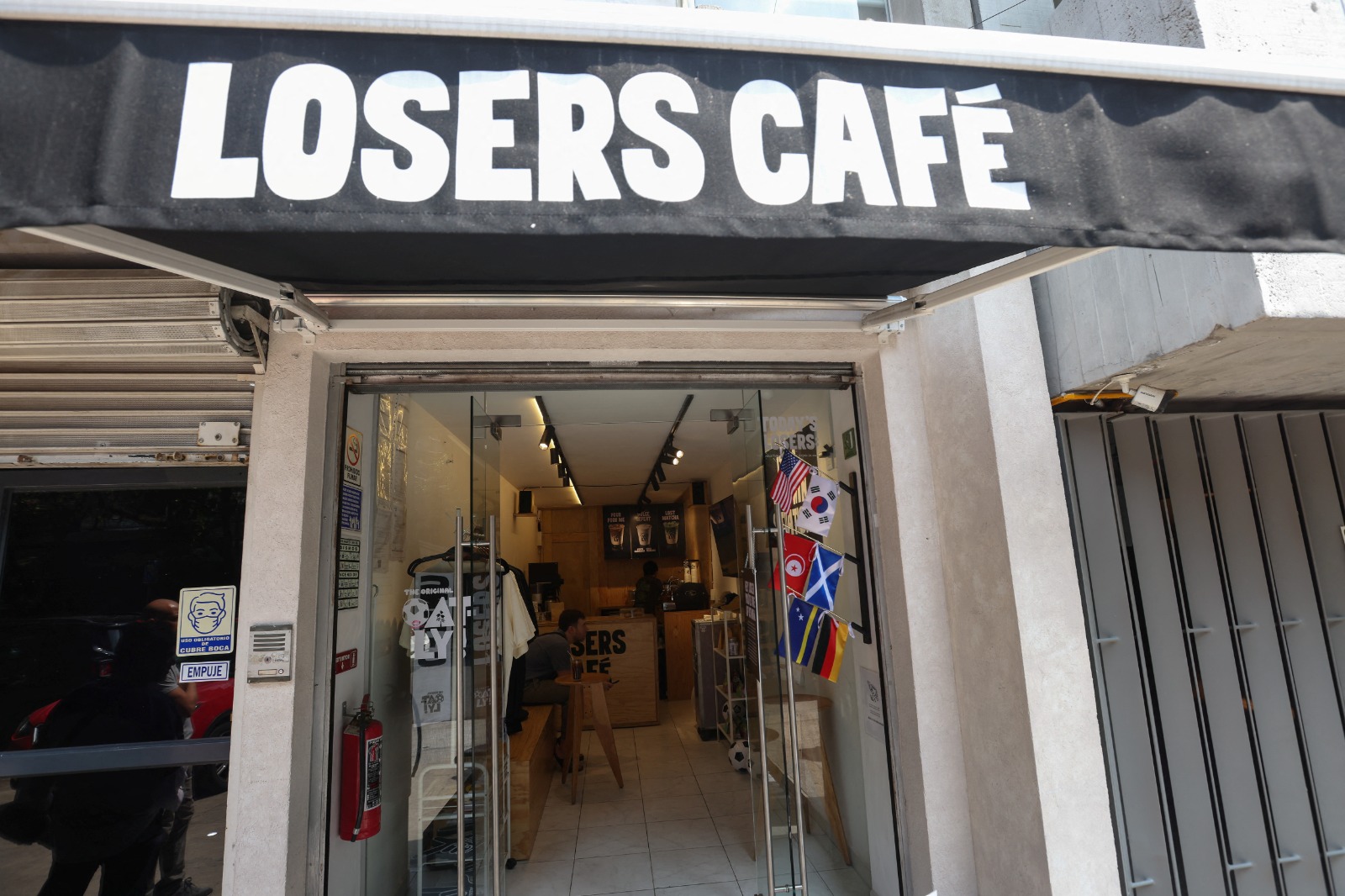
Welcome to the “Loser’s Cafe,” a coffee shop located in the upscale, multicultural Condesa neighborhood, dedicated to consoling fans of defeated teams. Every morning, small flags representing the defeated teams are raised at the entrance to foster a sense of solidarity. Inside, free drinks await those who come wearing the jerseys of losing teams, and even the paper napkins carry the message: “Dry your tears.”

The Story Behind the Cafe: A Hug That Wipes Away Tears

Monse Aguilar, a 24-year-old photographer supporting South Africa, visited the “Loser’s Cafe” earlier this week after her team lost 1-0 to Canada and was eliminated from the World Cup. Sipping a free drink, she said: “It’s like a hug that comforts the heart after a loss.”

The “Loser’s Cafe” was an idea born at Swedish oat milk company Oatly, which then collaborated with Ian Infantino, the cafe’s owner. Infantino (38), whose cafe is normally called “Compai Cafe,” said the idea resonated with him. Originally from Venezuela, he started his business as a street coffee cart in the neighboring Roma neighborhood before expanding to a permanent store. He added that as an expatriate, he immediately understood “the void that loss leaves behind.”

Mixed Reactions at First, Then Widespread Acceptance

However, not all his customers initially understood the concept. He mentioned that during the first week of the World Cup, some had difficulty grasping the establishment’s new identity. Infantino said: “People were saying: I’m not a loser. But once we explained how it works, they understood and started enjoying it more, feeling a greater connection to the idea of defeat.”

Why Mexico? Dark Humor and Football History

Rocío de la Cuadra Díaz, Market Developer at Oatly Mexico, said the company chose to launch this campaign in Mexico City rather than any of the US or Canadian cities also hosting World Cup matches, due to the brand’s rapid growth in Latin America and the local sense of humor. De la Cuadra explained: “The concept of creating a loser’s cafe in Mexico made sense because we almost always lose.”

Now, after Mexico achieved its first knockout-stage win in 40 years, this mindset may change, as Mexican fans pray that their team can pull off a historic upset in their upcoming match against England on Sunday. If not, the “Loser’s Cafe” will always be there.

Team Result Lost To
South Africa 0-1 Canada
Ecuador Loss Mexico

The Cafe’s Message: Defeat Is Part of the Game, Coffee Consoles

The “Loser’s Cafe” embodies a unique sporting spirit, reminding fans that defeat is a natural part of the game and that failure is not the end of the world. By offering free drinks and a warm atmosphere, the cafe transforms moments of loss into opportunities for human connection and laughter at sporting wounds.

Frequently Asked Questions About the Loser’s Cafe

Q: What is the Loser’s Cafe?

A: A cafe in Mexico City that dedicates itself to consoling fans of defeated World Cup teams, offering free drinks to those wearing the jerseys of losing teams.

Q: Who came up with the idea?

A: The idea was born at Swedish company Oatly in collaboration with Ian Infantino, owner of Compai Cafe in Condesa.

Q: Why did Oatly choose Mexico for this campaign?

A: Due to the brand’s rapid growth in Latin America, the local sense of humor, and the fact that Mexico “almost always loses.”

Q: How does the cafe welcome customers?

A: It raises flags of defeated teams at the entrance, offers free drinks, and distributes napkins that say “Dry your tears.”

Q: Is the cafe still open after Mexico’s win?

A: Yes. The cafe will always be there to console disappointed fans if Mexico loses to England or any other team.

In a world where victory is everything, the “Loser’s Cafe” reminds us that defeat is not the end of the road. It is just a passing moment that can be turned into an opportunity for connection, laughter, and a reminder that sport, in the end, is just a game. In this small cafe, disappointed fans find something more valuable than victory: human warmth and a cup that comforts the heart.

Prepared and edited by: Qahwa World – Based on a Reuters report.

All rights reserved. Republication with attribution permitted.

Publication date: July 2, 2026

On the Eve of the World of Coffee Brussels, CQI CEO Delivers a Message on 2026 Achievements and Future Plans

Source: Coffee Quality Institute (CQI) – CEO Message |
Author: Qahwa World |
Date: June 24, 2026

On the Eve of the World of Coffee Brussels, CQI CEO Delivers a Message on 2026 Achievements and Future Plans

Key Takeaways:

  • On the eve of the World of Coffee trade show in Brussels, the CEO of the Coffee Quality Institute (CQI) delivers a message to the international community, reviewing achievements from the first half of 2026.
  • The Institute launched two new programs: the Matching Grant Fund to support coffee-growing communities, and the CQI Insider program to connect coffee professionals worldwide.
  • Following a comprehensive upgrade, the renowned “Coffee Corps” program has been relaunched, with the first volunteers already selected for the new version.
  • Version 3.0 of the Processing Professional (PHP) course completed its review and has been delivered in Africa, Asia, and Latin America.
  • The fifth cohort of the Processing Expert Course, the Institute’s most advanced program, has been convened.
  • In Brussels, CQI is preparing to welcome visitors at Booth 7655 with live demonstrations, tastings, and meetings with key partners.

On the eve of the World of Coffee Brussels, taking place from June 25 to 27, Michael Sheridan, CEO of the Coffee Quality Institute (CQI), delivered a message to the international coffee community. He reviewed the achievements of the first half of 2026, a period marked by significant milestones and qualitative developments, while also announcing the Institute’s participation in the event with a rich program featuring live demonstrations, tastings, and meetings with prominent partners.

This message comes at a critical time, as the global coffee industry undergoes rapid transformation, highlighting the growing role of educational and training institutions in enhancing production quality and improving producers’ livelihoods — priorities that remain at the core of CQI’s mission.

New Programs to Support Producers and the Coffee Community

Among the key highlights of the message was the launch of two new programs during the first half of the year. The first is the “Matching Grant Fund,” an initiative designed to catalyze co-investment in coffee-growing communities by providing matching financial grants to support development projects in producing regions. The second is “CQI Insider,” a digital platform that aims to connect the global community of coffee professionals, creating a space for communication and the exchange of experiences and ideas among those working across all stages of the value chain — from the farm to the cup.

Coffee Corps Relaunched After Comprehensive Upgrade

In addition, the Institute relaunched the “CQI Coffee Corps” program, one of its most celebrated initiatives in history, following a comprehensive upgrade and refinement. The first group of volunteers has already been selected for the new version of the platform, which is designed to strengthen peer-to-peer education among coffee professionals and enable them to share field knowledge and expertise directly. This program reflects the Institute’s commitment to building a more connected and collaborative coffee community.

Training Programs Development and Curriculum Updates

In the training domain, the first half of the year witnessed a significant achievement with the completion of a comprehensive review and two successful pilots of Version 3.0 of the Processing Professional (PHP) course, one of the Institute’s most impactful programs. The updated course has already been delivered across three continents — Africa, Asia, and Latin America — reflecting the Institute’s global reach and its ability to connect with coffee-producing regions worldwide.

Additionally, the fifth cohort of the Processing Expert Course was convened, representing the Institute’s most advanced training program, designed to develop a select group of experts in coffee processing. Students from this cohort are expected to transition soon from the classroom to the field, applying their learning in real-world settings and contributing to raising quality standards across the coffee industry.

Area Achievement
New Programs Matching Grant Fund, CQI Insider
Peer-to-Peer Education Coffee Corps relaunched, first volunteers selected
Processing Professional (PHP) v3.0 completed and delivered across 3 continents
Advanced Training 5th cohort of Processing Expert Course convened
International Engagements Dubai, Addis Ababa, Tampa, San Diego, Bangkok, Lima, and Brussels

Participation in Brussels 2026: Exclusive Activities at Booth 7655

As part of these ongoing efforts, CQI is participating in the World of Coffee Brussels 2026, one of the most significant global events in the specialty coffee sector. Booth 7655 at the Brussels Expo Convention Center will serve as the hub for the Institute’s activities, featuring live demonstrations, tastings, and meetings with prominent partners and experts.

Key highlights of the Institute’s three-day program include:

  • Exploring the New Le Nez du Café Kit: Featuring Viva Lenoir, President of the company behind the kit’s creation, who will be available to answer questions and share what’s new in this updated edition of the aroma training kit.
  • Live High-Precision Moisture Meter Demonstrations: Presented by Ben Collier, Managing Director of Sinar Technology, highlighting the importance of moisture meters and sharing maintenance tips.
  • Fine Canephora Coffee Tasting: With Lukas Harbig, creator of the Canephorum event, and partner Gloria Pedroza, Head of NKG’s Quality Services Department. Visitors will have the opportunity to taste exceptional Canephora coffees and gain insights into the latest developments in this segment.
  • Meet & Greet with Bean Voyage: As part of the Women Powered Coffee Summit, representatives from the organization will meet with booth visitors to discuss the role of women in the coffee industry.

Day Activity Time
June 25 CQI Pin Distribution & Le Nez du Café Exploration All Day
June 25 Meet & Greet: Bean Voyage | Women Powered Coffee Summit 10:30 AM
June 25-27 Sinar Technology Moisture Meter Talks 1:00 & 3:00 PM
June 27 Fine Canephora Tasting with Lukas Harbig & Gloria Pedroza 1:00 PM

Looking Ahead: The Second Half of 2026 Promises Even More

CEO Michael concluded his message by indicating that the second half of 2026 will be even more eventful, with plans to launch new programs, update training curricula, forge strategic partnerships, and implement ambitious investments and projects — all aimed at fulfilling the Institute’s core mission: improving coffee quality and the lives of those who produce it worldwide. He emphasized that updates on these initiatives will be announced in the coming months, inviting the coffee community to follow and participate in these developments.

Frequently Asked Questions About CQI and Brussels Activities

Q: What is the Coffee Quality Institute (CQI)?

A: A non-profit organization dedicated to improving coffee quality and the lives of producers through education, training, and research. It is one of the most prominent institutions in the specialty coffee sector.

Q: What is the CQI Coffee Corps program?

A: A peer-to-peer education program that connects coffee professionals worldwide to share field knowledge and expertise. It was recently relaunched after a comprehensive upgrade.

Q: Where is CQI’s booth located at the Brussels show?

A: At Booth 7655 at the Brussels Expo Convention Center, throughout the show from June 25 to 27.

Q: What is the Le Nez du Café kit?

A: A specialized training tool designed to teach and develop aroma recognition and tasting skills in coffee. A new updated edition has just been released.

Q: What is the Processing Expert Course?

A: CQI’s most advanced training program, designed to develop elite experts in coffee processing. Its fifth cohort was convened in 2026.

The Coffee Quality Institute combines ambitious vision with tangible actions through its participation in the Brussels trade show and its review of first-half achievements. From developing training programs and relaunching educational initiatives to forging strategic partnerships, CQI continues to strengthen its position as a leading force in improving coffee quality worldwide. We invite you to visit Booth 7655 in Brussels and join the Institute’s diverse activities, which bring together education, tasting, and professional networking.

Prepared and edited by: Qahwa World – Based on the Coffee Quality Institute (CQI) CEO message.

All rights reserved. Republication with attribution permitted.

Publication date: June 24, 2026

SensoCup CVA: The First Free Digital Tool for Professional Coffee Evaluation According to SCA Standards

Source: Garage Coffee Bros. – Press Release |
Author: Qahwa World |
Date: June 18, 2026

SensoCup CVA: The First Free Digital Tool for Professional Coffee Evaluation According to SCA Standards

Key Takeaways:

  • Garage Coffee Bros. launches SensoCup CVA, the first free digital tool for professional coffee evaluation according to the 2024/2025 Specialty Coffee Association (SCA) standards.
  • The application is a Progressive Web App (PWA) that works on all devices without installation, supporting 9 languages including Arabic with RTL support.
  • The app integrates three official SCA protocols: Descriptive Assessment, Affective Assessment, and Extrinsic Assessment, plus a Physical protocol currently in beta testing.
  • The evaluation system includes over 60 sensory descriptors calibrated to SCA standards, a CVA Score calculation engine, and multi-sample session management.
  • The app is available free for single sessions, with paid plans for multi-sessions and advanced analytics coming soon.
  • The project is currently being registered with SIAE (the Italian Public Register for Copyrighted Works) to protect its intellectual property.

Garage Coffee Bros. S.r.l., a Verona-based company operating in the specialty coffee sector, has officially announced the launch of SensoCup CVA.

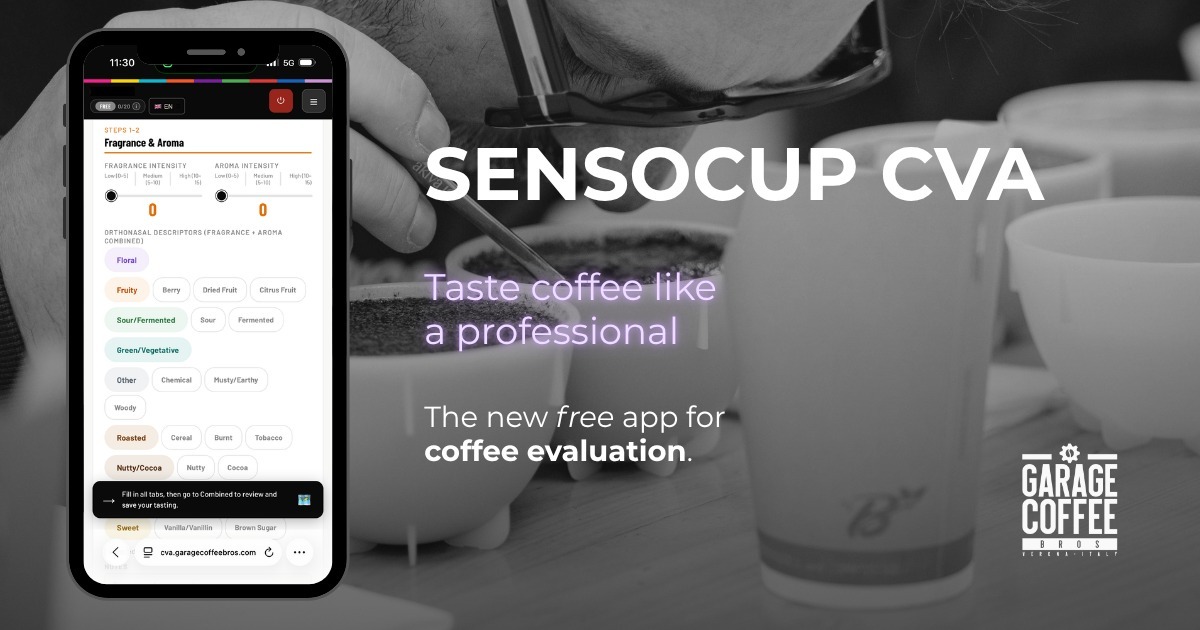
This Progressive Web App (PWA) is designed for professional coffee evaluation according to the latest international standards of the Specialty Coffee Association (SCA). The launch comes at a critical time when demand for accurate, reliable tools throughout the value chain – from roastery to cup – is growing rapidly.

SensoCup CVA represents a paradigm shift in the world of sensory evaluation, offering a comprehensive solution for professionals such as Q Graders, roasters, importers, and SCA trainers, who until now were forced to work with paper forms, incomplete digital solutions, or paid software that did not support the new 2024/2025 SCA protocols.

The First Web App to Integrate All Three Evaluation Protocols in a Single Interface

SensoCup CVA fundamentally changes the landscape, being the first web application to simultaneously implement the three official SCA protocols: Descriptive Assessment (103/2024), Affective Assessment (104/2024), and Extrinsic Assessment (105/2025), plus the Physical protocol currently in beta testing. All protocols are available from any device, with no installation required.

The app integrates a CATA (Check-All-That-Apply) system featuring over 60 sensory descriptors calibrated to SCA standards, a CVA Score calculation engine, and multi-sample session management for advanced comparative evaluations. The platform is available in 9 languages – including Arabic with RTL support – to meet the demands of a global market.

Protocol Description Status
Descriptive Assessment (103/2024) Detailed evaluation of coffee’s sensory properties Released
Affective Assessment (104/2024) Measuring the taster’s response to coffee Released
Extrinsic Assessment (105/2025) Evaluating external factors affecting coffee Released
Physical Protocol Evaluating physical properties of coffee Beta testing

Global Vision: 9 Languages Including Arabic Support

SensoCup CVA has been developed with a global vocation built directly into its architecture. The app supports 9 languages, including Arabic with RTL support, making it instantly operational for professionals worldwide. Its web-based nature – accessible from smartphones, tablets, and desktops without downloading anything – ensures seamless accessibility across all devices.

The project is currently being registered with SIAE (the Italian Public Register for Copyrighted Works) to protect its intellectual property, with full ownership held by Garage Coffee Bros. S.r.l.

Access Model: Free Version and Professional Plans

SensoCup CVA is available immediately as a free version for single sessions. A Pro plan – featuring access to multi-sample sessions, an advanced comparator, and personal analytics – will be released in the coming weeks, alongside dedicated plans for Q Instructors and training academies.

Founder: The Tool I Wish I Had Years Ago

Davide Cobelli, Founder of Garage Coffee Bros., said: “I wanted a tool that spoke the language of coffee professionals: rigorous in its protocols, simple to use, and available anywhere. SensoCup CVA is the answer I wish I had years ago.”

Frequently Asked Questions About SensoCup CVA

Q: What is SensoCup CVA?

A: It is the first free Progressive Web App for professional coffee evaluation according to Specialty Coffee Association standards, integrating three official protocols in a single interface.

Q: Is the app free?

A: Yes, a free version is available for single sessions. Paid plans for multi-sessions and advanced analytics will be released soon.

Q: What languages does the app support?

A: The app supports 9 languages, including Arabic with RTL support.

Q: Does the app require installation?

A: No, it is a Progressive Web App (PWA) that works on all devices through a browser without any download or installation.

Q: Which protocols are supported in the app?

A: The app supports Descriptive Assessment (103/2024), Affective Assessment (104/2024), Extrinsic Assessment (105/2025), plus a Physical protocol currently in beta testing.

The launch of SensoCup CVA represents a significant step toward digitizing coffee sensory evaluation, providing accurate and reliable tools for professionals worldwide. With its Arabic language support and compliance with SCA standards, the app opens new possibilities for coffee professionals in the Arab region and beyond.

Prepared and edited by: Qahwa World – Based on a press release from Garage Coffee Bros. (June 2026).

All rights reserved. Republication with attribution permitted.

Publication date: June 18, 2026

C20 Global Coffee Sustainability Summit to Unite Industry Leaders in London, Driving Action from Farm to Cup

Source: C20 Non‑Profit Institution – Press Release |
Author: Qahwa World |
Date: June 10, 2026

C20 Global Coffee Sustainability Summit to Unite Industry Leaders in London, Driving Action from Farm to Cup

Key Highlights:

  • The C20 Global Coffee Sustainability Summit will take place in London on June 23–24, 2026, at Camden Town Hall, King’s Cross.
  • The event runs under the theme “Beyond Sustainability,” moving from dialogue to tangible impact.
  • Over 120 senior delegates representing more than 100 companies from across the value chain will attend.
  • Day One focuses on producer countries: climate change, regenerative agriculture, social justice, water security.
  • Day Two shifts to consumer markets: regenerative café culture, energy transition, zero‑waste ecosystems.
  • Headline speakers include Christiana Figueres, Vanúsia Nogueira, Dr. Aaron Davis, Kate O’Brien, David Browning.
  • The C20 is not a one‑off event but a year‑round engine for change with digital town halls, podcasts, and shared sustainability tools.

The global coffee industry is set to convene in London this month for the C20 Global Coffee Sustainability Summit, a high‑profile, action‑oriented gathering dedicated to securing a sustainable future for the sector. Taking place on June 23–24, 2026, at King’s Cross, the summit is organized by the non‑profit C20 institution and promises to be a pivotal moment for collaboration across the entire value chain.

Under the tagline “Beyond Sustainability,” the summit moves from dialogue to tangible impact, addressing critical challenges from climate change and water security to social justice and regenerative business models. The event will bring together 120+ senior delegates representing over 100 companies, including agricultural innovators, CEOs, roasters, retailers, barista champions, and farmers.

Two‑Day Agenda: From Origin to Market

The meticulously crafted programme is split across two days, each focusing on a different pillar of the coffee ecosystem.

Day One (June 23) – The Lens of Origin: The opening day will tackle the most pressing issues facing coffee‑producing countries. Keynotes and panels will feature leading voices such as Vanúsia Nogueira (CEO, International Coffee Organization), Dr. Aaron Davis (Senior Researcher, Royal Botanical Gardens, Kew), and Kate O’Brien (CEO, Costa Foundation). Sessions will cover climate change and the rise of regenerative agriculture; social justice, human equity, and the economics of farming as a business; water security and agroforestry; and a “Green Blueprint” for scaling organic and regenerative models.

Day Two (June 24) – The Global North & Market Perspective: The focus shifts to consumer regions, exploring how cafes, roasters, and retailers can drive systemic change. Thought‑leaders like Christiana Figueres (Former Executive Secretary, UNFCCC)—who will deliver a welcome address—Tom Molnar (Gails) and Cemal Ezel (Change Please) will headline. Key themes include building a regenerative café culture; the great energy transition: decarbonising the coffee chain; engineering a zero‑waste coffee ecosystem; connecting consumers and baristas as sustainability advocates; and the institutional roadmap for a shared 2026‑2030 Sustainability Toolkit.

Item Details
Full Name C20 Global Coffee Sustainability Summit
Dates June 23–24, 2026
Venue Camden Town Hall, King’s Cross, London
Organizer C20 Non‑Profit Institution
Delegates 120+ senior delegates
Companies represented 100+ companies

World‑Class Speakers from Across the Industry

The headline speaker lineup represents a cross‑section of global expertise, including:

  • Christiana Figueres – Former Executive Secretary, UNFCCC.
  • Vanúsia Nogueira – CEO, International Coffee Organization.
  • Dr. Aaron Davis – Senior Researcher, Royal Botanical Gardens, Kew.
  • Kate O’Brien – CEO, Costa Foundation.
  • David Browning – CEO, Enveritas.
  • Etelle Higonnet – Founder, Coffee Watch.
  • Kasper Hülsen – CCO, Slow Forest.
  • Sebastian Neilson – CEO, Slow Forest.
  • Lee Holdstock – Head of Regulatory & Trade Affairs, Soil Association.
  • Roxy Rocks-Engelman – Interim Director, Project Waterfall.

Additional insights will come from Taylors of Harrogate, UCL, Slow Forest, Marks & Spencer, Gail’s, Enveritas, Trabocca, Colonna Coffee, Origin, Bean Voyage, Notpla, and more.

Beyond the Summit: A Year‑Round Engine for Change

The C20 is not a one‑off event but the centerpiece of a year‑round, non‑profit initiative. The organization works directly with industry partners to co‑create tools, frameworks, and resources designed to embed responsibility into the everyday workings of the coffee supply chain.

Post‑summit, C20 will activate a continuous programme including: bi‑monthly Advisory Board and sub‑committee meetings (focusing on EUDR compliance, carbon sequestration, etc.); 24+ digital town halls and webinars featuring expert curators; a tier‑one digital Resource Library with white papers and the foundational C20 Priorities Report; a media ecosystem of 12 deep‑dive podcasts and a monthly executive intelligence summary; as well as strategic site audits, best‑practice tours, and speaking slots at major international trade shows.

Tickets and Participation

The summit will take place at Camden Town Hall, King’s Cross, London. A range of ticket options is available:

  • 2‑Day Full Summit Pass (Industry): £595
  • 2‑Day Full Summit Pass (NGO/SME*): £395
  • 1‑Day Summit Pass (Industry): £295
  • 1‑Day Summit Pass (NGO/SME*): £195

(NGO/SME discount code available by email.)

Tickets include access to all lectures, keynotes, panels, and networking sessions, as well as a seat at the inaugural Global Coffee Sustainability Awards (date and location TBC).

Ticket Type Price (GBP)
2‑Day Pass – Industry £595
2‑Day Pass – NGO/SME £395
1‑Day Pass – Industry £295
1‑Day Pass – NGO/SME £195

With the global coffee sector at a crossroads, the C20 Global Coffee Sustainability Summit positions itself as the essential platform for leaders committed to moving from intention to action – from the farm to the final sip.

Frequently Asked Questions About the C20 Summit

Q: When and where will the summit take place?

A: June 23–24, 2026, at Camden Town Hall, King’s Cross, London.

Q: Who is organizing the summit?

A: The C20 non‑profit institution.

Q: How many participants are expected?

A: Over 120 senior delegates representing more than 100 companies.

Q: What are the main themes of the two days?

A: Day One focuses on origin countries (climate, regenerative agriculture, social justice, water security). Day Two focuses on consumer markets (regenerative café culture, decarbonisation, zero‑waste).

Q: How can I register?

A: Via the C20 website. Discounts are available for NGOs and SMEs.

Q: Will there be activities after the summit?

A: Yes, a year‑round programme including digital town halls, podcasts, resource libraries, and strategic audits.

The C20 Global Coffee Sustainability Summit is the platform that brings industry leaders together to turn challenges into opportunities. Do not miss your chance to help shape the future of sustainable coffee – from the farm to the cup. Register now and secure your seat at this historic event.

Prepared and edited by: Qahwa World – Based on a press release from the C20 non‑profit institution.

All rights reserved. Republication with attribution permitted.

Publication date: June 10, 2026

The Mountain Knows: Running and Coffee at 2,400 Metres Above Addis Ababa

Source: Qahwa World – Special coverage from Addis Ababa |
Author: Tewodros Balcha |
Photographer: Buna Kurs & Inter American Coffee |
Date: June 7, 2026

The Mountain Knows: Running and Coffee at 2,400 Metres Above Addis Ababa

Key Takeaways:

  • Ethiopia gave the world both coffee and legendary distance runners. Both thrive at altitude.
  • The Entoto Park CBE Run happens on the first Saturday of every month – 5km, free, no prizes.
  • Haile Gebreselassie, the greatest distance runner, now grows coffee in the Sheka forest under his own name.
  • The Ethiopian coffee ceremony and long-distance running share the same wisdom: patience, surrender, respect for time.
  • At 2,400 metres, the air asks something of you. Runners and coffee cherries both mature slower – and better – at altitude.
  • This is not a race. It is a monthly community ritual: coffee, eucalyptus, and a mountain that knows what it means to show up.

On a Saturday morning in Addis Ababa, at 2,400 metres above sea level, somewhere between a cup of coffee and a finish line, I think I understood something about Ethiopia that no guidebook had managed to explain.

The bus from 6 Kilo area leaves at 6:30 in the morning and it is already full. Not full in the polite, managed way of a shuttle service — full in the way Addis Ababa is full of things: pressing, warm, alive with conversation in three languages at once. Someone has brought a thermos. The eucalyptus smell hits before the park gates do, that particular green-grey sharpness that belongs to Entoto and nowhere else. By the time we are winding up the hillside road in the half-dark, I notice that nobody on this bus is anxious. There is no pre-race tension of the kind I know from European starting pens. People are laughing. An older woman in a white compression sock and a bright yellow headband is asleep against the window. A teenager is filming a reel of the trees. It is June 6th, the first Saturday of the month, and we are going to run.

What Entoto Asks of You

Entoto Natural Park sits on the northern rim of Addis Ababa at somewhere between 2,400 and 3,000 metres. The city sprawls below it; the sky above it feels closer than it should. The air is genuinely different up here — not thin in the gasping, dramatic way of high-altitude mountaineering literature, but thin in a way you only notice a few minutes into exertion, when your lungs quietly inform you that the usual arrangement is not going to apply today.

The Entoto Park CBE Run has been going since late 2024, organized under the Great Ethiopian Run umbrella, supported by the Commercial Bank of Ethiopia’s CBE Birr Plus platform, and held on the first Saturday of every month. Five kilometres. Free entrance. Capped at 700 runners. Registration opens at 6 AM on the last Monday of the month and fills, reliably, fast.

The course is a masterpiece of honest cruelty. The organizers have named each kilometre after a bird — a decision that sounds whimsical until you are running it and realize the names are doing real descriptive work. Uphill, then descent, then a flat middle, then the steepest climb, then a final swoop to the finish. Five kilometres. Five birds. Five completely different conversations between your body and the road. Running the fourth kilometre this morning — steep asphalt between tall eucalyptus, the city somewhere invisible below — I found myself thinking about what it means to be built for something difficult. About whether the difficulty is the point.

A Crowd That Does Not Perform

There is a photograph I keep coming back to from this morning. Hundreds of people, hands raised, Ethiopian flags threading through the crowd, the Addis Ababa Tourism Commission banner marking the edge of the frame. The eucalyptus trees are tall and pale behind them. Everyone is mid-motion, mid-joy. What strikes me is that nobody is performing for the camera. This is not a branded moment — or rather, it is branded, the purple of the Commercial Bank’s CBE Run signage is everywhere — but the joy inside the frame is not manufactured. These are people who woke up early and got on a bus and came to a mountain to run five kilometres together, and they are visibly, plainly happy about it.

At Entoto this morning, the DJ was already playing when we arrived. Someone handed me a coffee — I will come back to the coffee — and I stood at the start area and thought: this is what running looks like when it has not been turned into content yet.

The Man Who Built This

Haile Gebreselassie is 51 years old and was at Entoto this morning. Two Olympic gold medals, four World Championship titles, 27 world records across distances from 1,500 metres to the marathon. He held the marathon world record for years. The Amharic messages circulating in the lead-up to today’s run included the line: ሀይሌ በእንጦጦ አብሮን አለ — Haile is with us at Entoto. Not WILL BE. IS. Present tense. As if his presence is already a fact of the mountain.

But what I find more interesting than the records is what Haile has done with the decades since them. He founded the Great Ethiopian Run in 2001, which has grown into the largest road race in Africa, with over 40,000 participants annually. He runs an annual Girls Run race in Addis, specifically to create space for young women. And he has built the Entoto Park CBE Run into something that functions as a monthly community ritual rather than a competitive event — there are no prizes for winners. No prizes for winners. Think about what that signals, especially under the banner of a man who spent his career winning things. It says: this run is not about hierarchy. It is about showing up.

The Cup Before the Gun

The Entoto Park CBE Run offers complimentary coffee before and after the race. This is listed in the race day services alongside the baggage area and the DJ set. It is not an afterthought or a sponsor activation. It is infrastructure. I drank mine standing at the edge of the starting area, in that specific quality of early Addis light — not yet warm, the eucalyptus still holding onto the night’s cold — and I thought about something I had been turning over for weeks. Ethiopia is the country that gave the world coffee. Coffea arabica is indigenous to the highlands of Ethiopia. Ethiopia also, with some consistency, gives the world its fastest distance runners. Two things — coffee and running — that the rest of the world imports from Ethiopia. Both growing at altitude. Both demanding patience and the willingness to suffer usefully. And now, on a mountain above Addis Ababa, being served one alongside the other, before 700 people go out into the eucalyptus together.

Haile’s Other Harvest

In 2014, Haile Gebreselassie became a coffee farmer. The Ethiopian government gave him 1,500 hectares of land in Yeppo Village, in the Sheka forests of southwestern Ethiopia. He transformed it into a coffee estate. The Sheka forest sits at 1,600 to 1,800 metres, within a zone recognized by UNESCO as a biosphere reserve. The farm is divided into more than 50 identifiable plots, each with specific varieties and processing methods. Washed and natural, and this year for the first time, honey processed. The coffee is called Haile Coffee. What I find moving about the enterprise is what Haile has said about it: “Coffee is such a big part of the culture in Ethiopia. We Ethiopians have a unique opportunity to share our culture with people around the world.” And then, characteristically, he reached for the language of athletics: “You need three things to win. Discipline, hard work and commitment. No one will make it without those three.” He is describing coffee farming the way he describes marathon training. The patience required to tend a coffee estate is the same patience required to run a 2:03 marathon. You cannot shortcut either.

What the Ceremony Knows That the Race Does Not

The Ethiopian coffee ceremony — bunna maflat — takes the better part of an hour. The green beans are washed and roasted over charcoal, slowly, until the smoke carries their particular smell. They are ground by hand. The coffee is brewed in a clay jebena and served in small handle-less cups. Three rounds: abol, tona, baraka. The third, baraka, means blessing. You cannot rush this. Long-distance running, done properly, operates on the same principle. Runners who go out too fast in the first kilometre pay for it in the fourth and fifth. The body has its own timeline and it will be respected. Both traditions encode this wisdom in ritual. The ceremony says: sit down, the coffee will take as long as it takes. The race says: start slow, find your rhythm, let the road come to you. These are the same instruction in different forms.

The Mountain This Morning

The first kilometre was uphill, lungs adjusting, the city falling away behind you faster than you would expect. The eucalyptus are planted in long rows and the light comes through them in columns. There is no sound except breathing and footfall. The second kilometre, descending, was where I remembered why I run. The fourth kilometre nearly broke me. At 2,400 metres, steep uphill deep into a run that already has climbing in its legs, is a genuine negotiation between your will and your physiology. And then the final descent. The finish line. Afterward I had another coffee.

Why This Matters – For Both Worlds

If you are a coffee person: Ethiopia is not just an origin. It is the place where coffee is understood as a practice, a social technology, a form of time kept together. The bunna ceremony is not a tourist experience — it is how Ethiopians structure hospitality and community. If you are a runner: the Entoto Park CBE Run is what community running looks like when it is not organized primarily as content. No prizes. A DJ. Complimentary coffee. 700 people on a mountain. And if you belong to both worlds simultaneously: there is something almost embarrassingly perfect about standing at a starting line at altitude in the country that invented coffee, holding a cup of coffee, about to run through a forest, before a legend who decided that the same discipline, hard work, and commitment that made him a champion could grow a great cup of coffee in a UNESCO biosphere reserve.

Baraka

The third cup in the Ethiopian coffee ceremony is the blessing. By the time I drank mine today — standing near the finish line, the race over, the crowd dispersing slowly into the eucalyptus morning — the Entoto light had changed completely. I thought about Haile on his farm in Sheka, applying to coffee the same three things he applied to running: discipline, hard work, commitment. I thought about altitude — how it shapes coffee cherries by slowing their maturation, concentrating their sugars and acids into something more complex. How it shapes runners’ bodies by demanding more of their cardiovascular systems. How Entoto, right now, on the first Saturday of every month, is doing both things simultaneously — maturing runners slowly, in the thin air, at 2,400 metres, into something more than they were at the start line. The coffee was good. The run was hard. Neither needed to be anything else.


Event information: The Entoto Park CBE Run takes place on the first Saturday of every month in Entoto Natural Park, Addis Ababa. Registration opens at 6:00 AM on the last Monday of the month via CBE Birr Plus. Transport from 6 Kilo from 6:30 AM. Free entrance. Complimentary coffee included. Haile Coffee is available internationally at haile.coffee.

Coverage by Qahwa World × Buna Kurs – Addis Ababa. Photography by Buna Kurs and Inter American Coffee.

All rights reserved. Republication with attribution permitted.

Publication date: June 7, 2026

Dubai Hosts Coffee Break Vol. 2 with Conversations Shaping the City’s Future

Source: Coffee World |
Author: Events Unit |
Date: June 5, 2026

Dubai Hosts Coffee Break Vol. 2 with Conversations Shaping the City’s Future

Key Information:

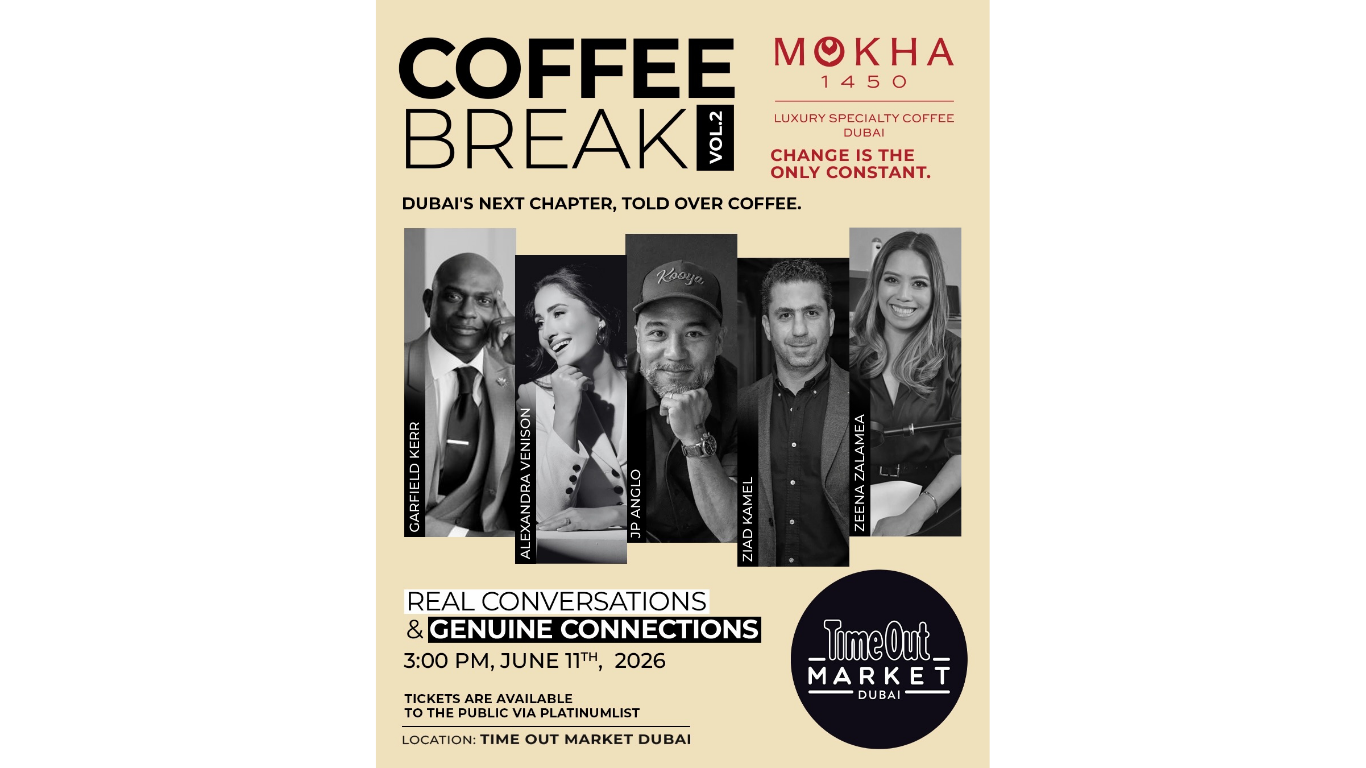
  • “Coffee Break Vol. 2” takes place at Time Out Market, Souk Al Bahar, Dubai.
  • Organized in collaboration with Mokha 1450 Luxury Specialty Coffee.
  • Theme: “Dubai’s next chapter, told over coffee.”
  • Five prominent speakers from business, media, hospitality, wellness, and food culture.
  • Notable speaker: Garfield Kerr, former President of the Specialty Coffee Association.
  • Tickets start at 59 AED, including coffee and snacks.
  • Premium package at 159 AED includes a 100 AED Time Out Market card.

Dubai will soon host the second edition of “Coffee Break Vol. 2″, offering a new model for community dialogue. The event takes place on Level 3 of Souk Al Bahar, at the Time Out Market stage. It is organized in collaboration with Mokha 1450 Luxury Specialty Coffee.

The event carries a distinctive theme: “Dubai’s next chapter, told over coffee.” It aims to bring together a curated group of thought leaders and experts from multiple fields. They will discuss the ideas, businesses, and communities shaping Dubai’s next chapter.

Prominent Speakers from Five Key Sectors

“Coffee Break Vol. 2” features five speakers representing different sectors. Each brings a unique perspective on Dubai’s evolution. They are:

Name Position / Expertise
Zeena Zalamea Broadcaster, producer, entrepreneur
Garfield Kerr Lawyer, CEO of Mokha 1450, former SCA President
Alexandra Venison Journalist, Founder of Beautilist
JP Anglo Founder of Kooya, Filipino food advocate
Ziad Kamel Founder & CEO of Rosy Hospitality and multiple restaurant brands

In addition, the discussion will explore key themes including Dubai’s evolving economy, the future of hospitality and wellbeing, the role of media in shaping the city’s narrative, and the communities being built within it.

Event Location and Ticket Packages

The event takes place at the Stage Area in Time Out Market Dubai, located on Level 3 of Souk Al Bahar, Downtown Dubai. Guests can access Souk Al Bahar parking and validate their token at Atrium Bar to receive 4 hours of complimentary parking.

Ticket options are as follows:

  • 59 AED: Includes access to the conversation, coffee, and snacks.
  • 159 AED: Includes access, coffee, snacks, and a Time Out Market Dubai Card valued at 100 AED to be redeemed across the Market’s vendors and bars on the same day.

However, please note the terms: smoking is permitted only in designated areas. No refunds will be issued for no-shows or for guests arriving more than 20 minutes after the event starts. Therefore, guests are encouraged to arrive early to avoid any delays.

Strategic Partnership with Mokha 1450

This event is organized in collaboration with Mokha 1450 Luxury Specialty Coffee. This partnership extends the brand’s vision of supporting inspiring community dialogues. Furthermore, the presence of Garfield Kerr, former President of the Specialty Coffee Association, adds deep professional insight to discussions about coffee’s role in shaping urban spaces.

Additionally, the diversity of speakers reflects Dubai’s rapid evolution as a global hub for business, media, and culture. The event confirms that coffee is no longer just a beverage, but a tool for dialogue and for building the future.

Frequently Asked Questions About Coffee Break Vol. 2

Q: When will the event take place?

A: The exact date has not been announced yet. Follow Time Out Market and Mokha 1450’s official channels for updates.

Q: Where exactly is the event located?

A: On Level 3 of Souk Al Bahar, Downtown Dubai, at the Time Out Market Dubai stage area.

Q: How can I purchase tickets?

A: The booking link will be announced soon via official channels. Early booking is recommended due to limited capacity.

Q: Does the ticket price include parking?

A: Guests can get 4 hours of complimentary parking after validating their ticket at Atrium Bar.

Q: Will there be an opportunity to ask questions to the speakers?

A: Yes, the event is designed as an open conversation, and time will be allocated for Q&A.

Do not miss the chance to be part of the conversation shaping Dubai’s new chapter. Tickets are limited. The dialogue begins when you sit down with a cup of coffee. Follow our official channels to know when booking opens.

Prepared by: Coffee World team – in collaboration with Mokha 1450 and Time Out Market Dubai.

All rights reserved. Republishing with attribution is permitted.

Publication date: June 5, 2026

Japanese Manufacturer Grows Domestic Specialty Coffee in High Tech Greenhouse

Author: Qahwa World
Source: Kanamori Coffee Lab visit and Nabeya Bi-tech company announcement
Date: May 21, 2026
Executive Summary:

  • Nabeya Bi-tech, a Japanese manufacturing company founded in 1560, has launched Bitech Farm, a domestic coffee cultivation project in Gifu Prefecture.
  • The farm operates a 700 square meter greenhouse with automated mist systems and 100 percent organic fertilizers.
  • Approximately 120 to 150 coffee trees of Bourbon, Typica, and Mundo Novo varieties are under cultivation.
  • The greenhouse environment supports simultaneous flowering, green cherry, and ripe cherry stages.
  • First significant harvest is targeted for 2027, with full vertical integration planned from production to cafe sales.
  • Kanamori Coffee Lab visited the farm and praised its long term commitment to quality and traceability.
  • The project represents a rare serious greenhouse coffee effort on Japan’s main island of Honshu.

Nabeya Bi-tech, a historic Japanese manufacturing company founded in 1560 in Seki City, Gifu Prefecture, has diversified into agriculture with Bitech Farm, a domestic coffee cultivation project.

The company, which specializes in mechanical components such as couplings and precision screws, announced its Agri-Tech business in 2023. Inspired by a visit to vineyards in Mallorca, Spain, President Yujiro Okamoto launched coffee farming as a third technological pillar alongside traditional and new manufacturing.

The farm operates from a large vinyl greenhouse of approximately 700 square meters on the company’s factory grounds in Kakamigahara City. The facility uses automated mist systems for environmental control and relies on 100 percent organic fertilizers.

Smart agriculture technologies include self developed cloud based remote monitoring for data such as water temperature. The greenhouse creates a stable microclimate suitable for delicate coffee varieties, mitigating Japan’s seasonal temperature swings.

Coffee Varieties and Cultivation

Attribute Specification
Facility scale Approximately 700 square meters (greenhouse)
Number of coffee trees 120 to 150 trees
Coffee varieties Bourbon, Typica, Mundo Novo
Fertilizers 100 percent organic matter
Climate control Automated mist systems and cloud based monitoring
Tree height Up to 180 centimeters

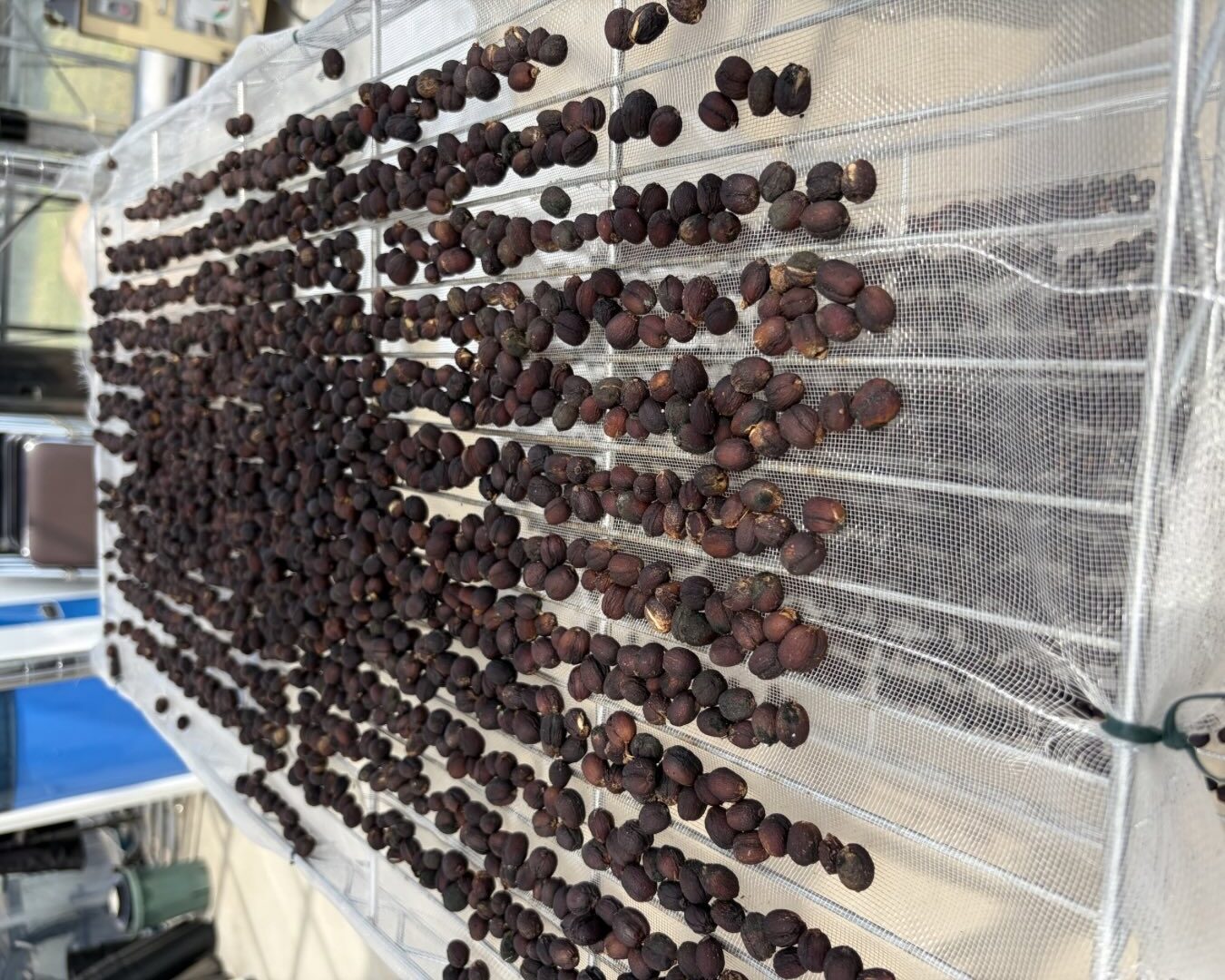
The farm primarily focuses on the Typica variety, an ancient high quality Arabica known for distinctive flavor, elegant sweetness, and clean acidity. Bourbon and Mundo Novo are also cultivated. A standout feature of the greenhouse ecosystem is the simultaneous presentation of multiple coffee phenological stages. Visitors can observe jasmine like white blossoms, young green cherries, and fully ripened red cherries all within the same space. The characteristic bronze to brown coloration of new shoots on Typica trees is vividly present, confirming that the cultivars maintain their genetic identity under Japanese conditions.

Vertical Integration and Traceability

Nabeya Bi-tech is building a rigorous vertically integrated business ecosystem. The model covers every link of the supply chain from seed to shrub cultivation, post harvest processing, product development, quality control, and final commercial sales. The company aims to market an ultra traceable, high value specialty coffee that deeply embraces the specific regional microclimates of Seki and Kakamigahara cities. The farm is situated just two and a half hours from Tokyo via high speed transit, making it an accessible hub for domestic roasting professionals, researchers, and green bean buyers.

The project started approximately five years ago. Seedlings were sourced painstakingly from Kumamoto after searches in Okinawa and Kyushu. Employees participated in a planting festival in 2025. The first significant harvest is targeted for 2027, with ambitions to eventually open a cafe. The company emphasizes terroir, traceability, and creating unique Japanese specialty coffee through on site processing including fermentation.

Kanamori Coffee Lab Visit

Kanamori Coffee Lab, a specialty coffee roaster based in Zama City, Kanagawa Prefecture, recently visited Bitech Farm. The lab is run by international coffee taster and Q Grader Fuki Kanamori. The visit left a strong impression of awe at the lush, tall trees and the full lifecycle visible in one space. The post highlighted the technical details of organic practices, automation, and variety traits. More deeply, the visitor resonated with the company’s mission, which is not merely about the novelty of rare domestic coffee, but a passionate long term commitment to quality, terroir understanding, and end to end traceability within Japan.

The response from the coffee community has been supportive. Industry voices note that the benchmark for the Japan coffee movement has shifted. The novelty of simply growing coffee beans in Japan is no longer enough. The focus has turned toward enhancing cup quality, experimenting with precise fermentation protocols, and accentuating local terroir. Nabeya Bi-tech’s data driven approach to environmental management positions it to be a key driver in defining premium domestic specialty coffee standards.

Frequently Asked Questions (FAQ)

1. What is Bitech Farm?

Bitech Farm is a domestic coffee cultivation project by Nabeya Bi-tech, a Japanese manufacturing company founded in 1560. It operates a greenhouse coffee farm in Kakamigahara City, Gifu Prefecture.

2. How many coffee trees are at Bitech Farm?

The farm has approximately 120 to 150 coffee trees of Bourbon, Typica, and Mundo Novo varieties.

3. What makes this coffee project unique?

It combines traditional Japanese manufacturing heritage with modern Agri-Tech, including automated mist systems, cloud based monitoring, and full vertical integration from cultivation to sales.

4. When will the first harvest be ready?

The first significant harvest is targeted for 2027. The project started approximately five years ago with planting in 2025.

5. Who visited the farm and what was their impression?

Kanamori Coffee Lab, a specialty coffee roaster, visited and expressed awe at the lush trees and full lifecycle in the greenhouse, praising the company’s long term commitment to quality and traceability.

6. Does the company plan to open a cafe?

Yes, the company has ambitions to eventually open a cafe as part of its vertical integration strategy from production to sales.

Qahwa World – Based on Kanamori Coffee Lab visit report and Nabeya Bi-tech company announcements.
Published: May 21, 2026

Ethiopia to Host 4th G-25 African Coffee Summit in Addis Ababa in 2027

Author: Qahwa World – Dubai
Source: Official announcement
Date: May 16, 2026

Executive Summary

  • Ethiopia signed a host country agreement with the Inter-African Coffee Organization to host the 4th G-25 African Coffee Summit in 2027
  • The agreement also establishes IACO first country office in Ethiopia
  • The summit aligns with African Union Agenda 2063 recognizing coffee as a strategic commodity
  • Africa currently contributes only 12 percent of global coffee production despite being the birthplace of coffee
  • Ethiopia aims to become one of the world leading coffee exporters by 2033
  • The African Union recently designated IACO as a specialized agency

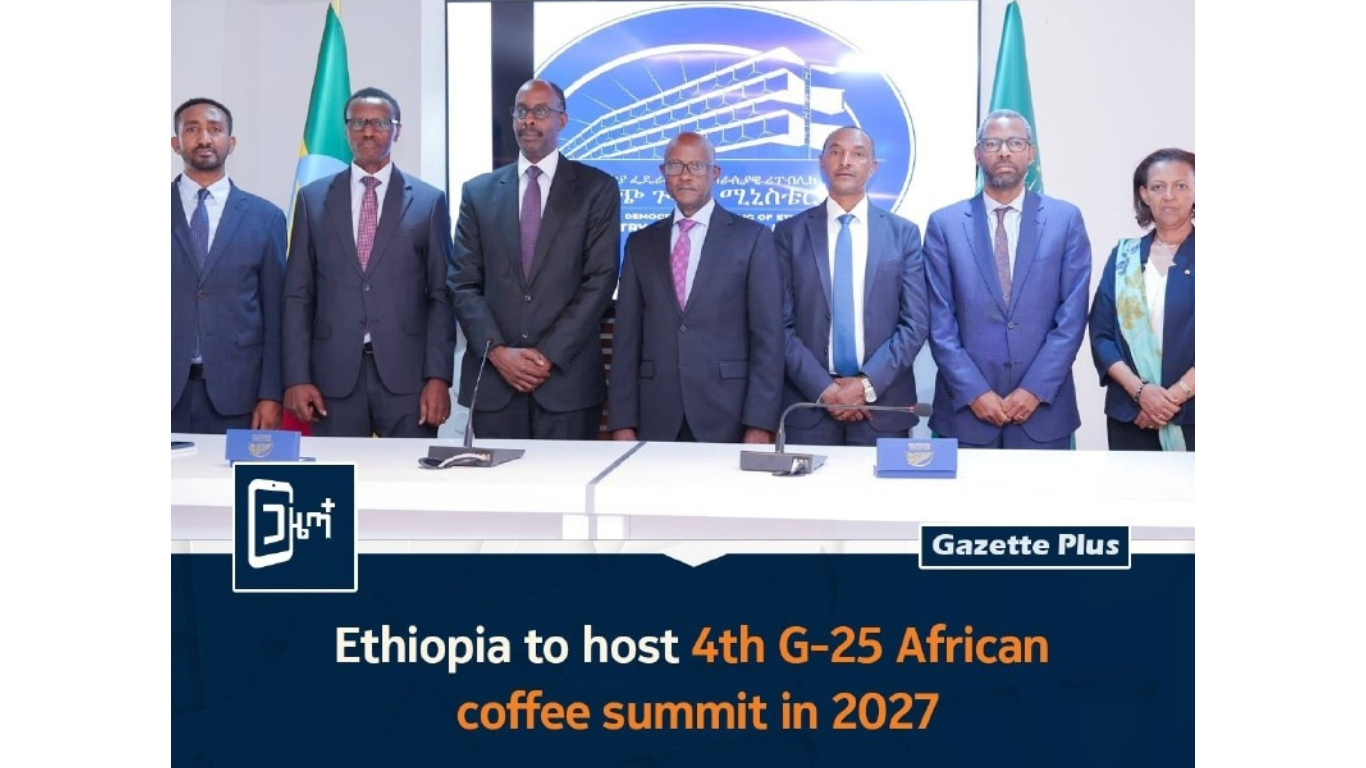
Ethiopia has signed a host country agreement with the Inter-African Coffee Organization to establish the organization first country office in Ethiopia and to host the 4th G-25 African Coffee Summit in Addis Ababa in 2027.

The agreement was signed between State Minister of Foreign Affairs Ambassador Hadera Abera and IACO Secretary-General Ambassador Solomon Rutega.

According to officials, the agreement aligns with the African Union Agenda 2063, which recognizes coffee as a strategic commodity for the continent economic transformation.

Africa coffee production challenges

Speaking at the signing ceremony, Ambassador Hadera noted that although Africa is the birthplace of coffee, the continent currently contributes only 12 percent of global coffee production. This low share persists due to several challenges including low productivity, value chain imbalances, and climate-related pressures.

He stated that the partnership will support Ethiopia ambition to become one of the world leading coffee exporters by 2033. He added that the agreement creates a stronger framework for continental cooperation and sectoral transformation.

Historic milestone for IACO

IACO Secretary-General Ambassador Solomon Rutega described the agreement as a historic milestone. He said it reconnects the organization with the origin of coffee while advancing efforts to improve the livelihoods of millions of coffee-dependent households across Africa.

He also recalled the African Union recent decision to designate the 66-year-old IACO as a specialized agency. This recognition further strengthens the organization mandate to promote African coffee on the global stage.

Context: The G-25 African Coffee Summit is a high-level gathering of Africa top coffee-producing nations. It aims to address challenges facing the continent coffee sector and promote sustainable development.

Strategic importance

The agreement marks a significant step in Ethiopia efforts to strengthen its position in the global coffee market. As the birthplace of coffee, Ethiopia holds a unique cultural and historical connection to the beverage. The establishment of IACO first country office in Addis Ababa reinforces this connection.

The 4th G-25 African Coffee Summit in 2027 is expected to draw participants from across the continent. It will focus on boosting productivity, improving value chains, and building climate resilience in the African coffee sector.

Frequently Asked Questions

What is the G-25 African Coffee Summit?
The G-25 African Coffee Summit is a high-level meeting of Africa major coffee-producing nations. It addresses challenges facing the continent coffee sector and promotes cooperation among member states.

When and where will the 4th summit take place?
The 4th G-25 African Coffee Summit will be held in Addis Ababa, Ethiopia, in 2027. Specific dates have not yet been announced.

What is the Inter-African Coffee Organization?
IACO is a 66-year-old specialized agency of the African Union. It works to promote and develop the coffee sector across Africa.

Why is Ethiopia hosting the summit and IACO office?
Ethiopia is the birthplace of coffee and aims to become a leading global coffee exporter by 2033. Hosting the summit aligns with these ambitions.

How much coffee does Africa produce globally?
Despite being the birthplace of coffee, Africa currently produces only 12 percent of the world coffee supply due to productivity, value chain, and climate challenges.

What is African Union Agenda 2063?
Agenda 2063 is the African Union strategic framework for the continent socio-economic transformation. It recognizes coffee as a strategic commodity.


Author: Qahwa World – Dubai
Source: Official announcement
Date: May 16, 2026

Nestlé Officially Confirms Sale of Blue Bottle Coffee to Owner of China’s Luckin Coffee

VEVEY, Switzerland – Qahwa World

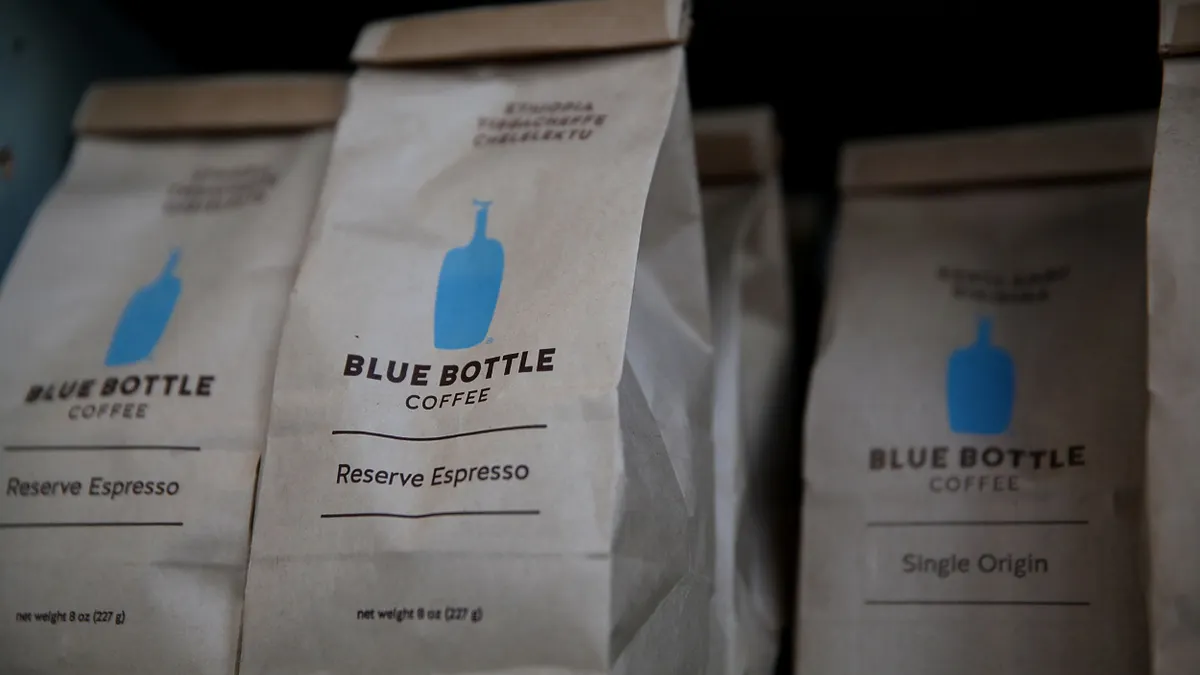
In a decisive move reshaping the global coffee landscape, Nestlé has officially confirmed the sale of its majority stake in the renowned brand “Blue Bottle Coffee” to Centurium Capital, the private equity firm that is the largest shareholder in China’s Luckin Coffee.

This announcement, made in conjunction with the company’s first-quarter 2026 earnings report, marks the conclusion of the Swiss giant’s nearly decade-long venture into the high-end specialty coffee retail sector.

Centurium Capital is the primary investment power behind Luckin, which is currently the largest coffee chain in China.

Under this agreement, Centurium will acquire Blue Bottle’s entire global retail network of approximately 140 luxury locations, as well as the majority of the consumer packaged goods business associated with the brand.

While this sale signals Nestlé’s retreat from managing physical storefronts, the company has not entirely abandoned the brand’s marketing power. In a strategic move aimed at boosting profitability and focusing on high-growth segments, Nestlé will retain the exclusive rights to produce and market Blue Bottle-branded coffee capsules designed for the Nespresso system.

This strategic separation allows Nestlé to shed the high operational costs linked to property management and labor in physical cafes while retaining the most profitable and expandable segment: the at-home and packaged coffee sector.

Philipp Navratil, CEO of Nestlé, stated that this step is part of a comprehensive portfolio review to strengthen core brands and achieve sustainable growth.

Financial details of the deal were not officially disclosed by either party, but industry sources and reports circulating since March 2026 suggest the transaction value is approximately $400 million. If these figures are accurate, they represent a notable decline from the brand’s $700 million valuation in 2017, when Nestlé originally purchased its 68 percent stake for roughly $425 million.

According to experts, this valuation reflects the significant challenges large corporations face in scaling “artisanal” brands without losing their distinct identity. When Nestlé first acquired Blue Bottle, the bet was on the possibility of maintaining the brand’s soul while expanding globally. However, the operational complexities of maintaining high quality standards across 140 different locations proved to be a major challenge against Nestlé’s efficiency goals.

For Centurium Capital, adding Blue Bottle to its portfolio provides a luxury pillar to complement the massive dominance of Luckin Coffee in the general consumer market. Luckin Coffee currently operates more than 31,000 locations and is following an unprecedented global expansion path.

Through the acquisition of Blue Bottle, Centurium will gain immediate entry into the ultra-premium specialty coffee segment without compromising Luckin Coffee’s reputation based on speed and technology.

Sources indicate that Centurium intends to keep the two brands completely separate, with Blue Bottle serving as a “prestige” offering for the group, particularly in high-end Asian shopping malls where demand for luxury brands is steadily increasing.

From a specialized coffee journalism perspective, this deal represents a pivotal moment in the industry’s history.

It suggests that the era of large global companies buying artisanal roasters has begun to shift toward more specialized ownership models. It also highlights the ongoing migration of global coffee trade centers toward Asian markets.

The presence of a Chinese-backed private equity firm at the head of a leading American brand like Blue Bottle reflects the new geopolitical reality of the coffee industry.

With the deal expected to finalize in the first half of 2026, specialty coffee experts are waiting to see if Blue Bottle can maintain its artisanal identity, born in Oakland, under the management of one of the most aggressive growth machines in the world.

Mokha 1450 Immersive Coffee Experience Redefines Tasting in Dubai

Dubai – Qahwa World

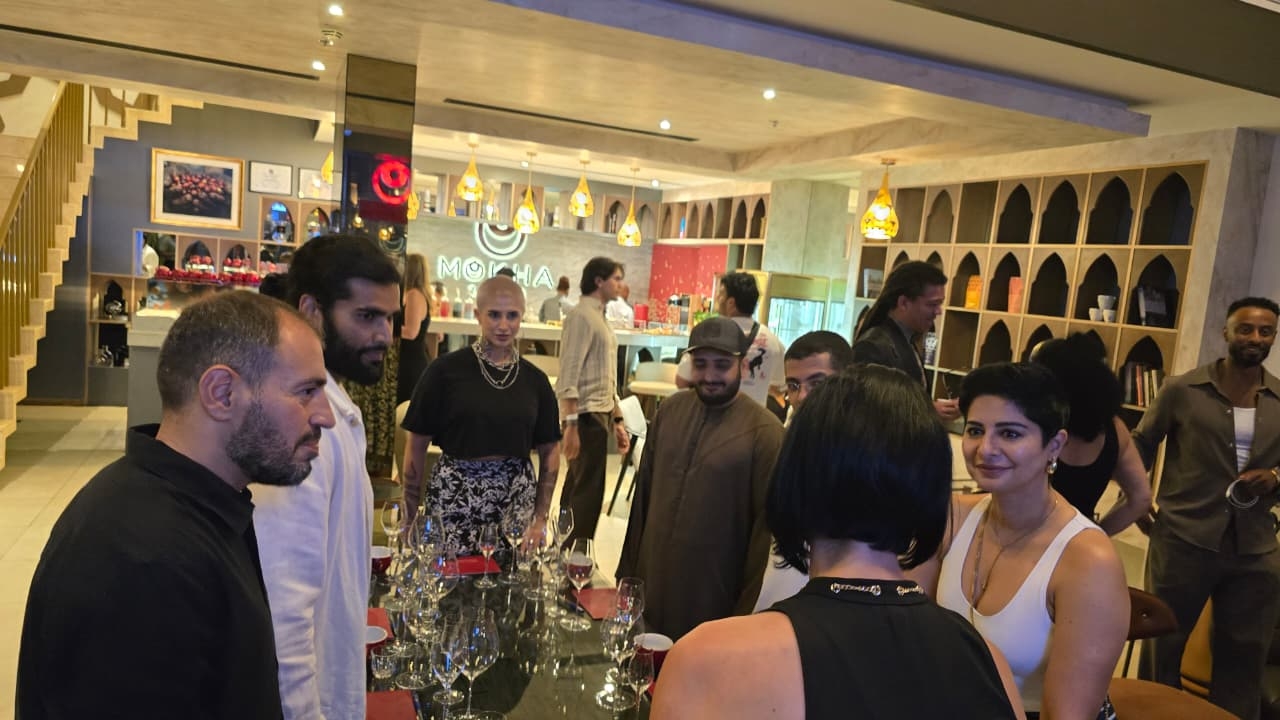
By invitation from Mr. Garfield Kerr, CEO of Mokha 1450, I attended yesterday evening a truly exceptional event held at Mokha 1450 Café in Golden Mile, Palm Jumeirah, Dubai, as part of an immersive experience that reintroduced coffee as a multi-sensory art combining science, innovation, and culture.

Honestly, when I first read about the event and learned that attendance required prior registration and an entry fee, I expected the turnout to be limited, perhaps only a small number of participants. However, I was genuinely surprised by the remarkable and distinguished attendance, as the venue was filled with guests who either registered in advance or joined directly on site, in a scene that reflected genuine interest in this unique experience.

As I observed the interaction inside the venue, I had a clear feeling that what I was witnessing was a direct reflection of the spirit of Dubai, a city that never stops embracing new experiences and creating momentum around innovative ideas. This is also what Mokha 1450 represents, embodying the same spirit: elegance in concept, boldness in execution, and innovation in experience.

The atmosphere throughout the evening was almost like a dreamlike scene, as guests were immersed in an extraordinary journey through the world of coffee in all its details. Visitors moved between different tasting stations offering coffees from various origins, prepared using innovative methods that reflect the philosophy of the team led by Sigrid Ballard and her specialized staff.

What truly stood out was the way the experience was presented. It was not merely a tasting session, but a complete sensory journey blending aroma, taste, and knowledge, revealing how coffee can evolve into a full cognitive experience.

As part of the program, participants experienced an olfactory and tasting journey that highlighted the scientific relationship between the senses of smell and taste, and how sensory signals converge in the brain to form the perception of flavor.

The event also featured several curated stations, including cold brew coffee prepared using a slow steeping method for eighteen hours with carefully selected beans graded above ninety points, revealing rich and complex notes ranging from tropical fruits and berries to honey and exotic spices.

In another station, the pour over brewing method was demonstrated, relying on precise manual pouring, where technique, timing, and extraction ratio directly influence clarity and balance in the cup.

One of the most remarkable highlights of the evening was the psychology of glassware experience, which demonstrated how the shape, weight, and balance of a cup can influence flavor perception, not only aesthetically, but also in terms of sensation, taste, and overall impression.

Throughout the evening, the Mokha 1450 team also presented innovative creations such as the smoky signature drink and the Desert Flower experience, alongside live brewing sessions in front of guests, adding an interactive dimension that brought the audience closer to the craft of coffee making.

The experience was accompanied by a curated musical journey inspired by coffee producing countries such as Yemen, Ethiopia, Colombia, Jamaica, and Cuba, giving the event a global dimension that reflects the journey of coffee across continents.

In conclusion, this was not merely a tasting evening, but a complete experience that redefined the relationship between humans and coffee, and reinforced Mokha 1450’s position as one of the leading concepts in experiential specialty coffee in Dubai and the region.

Qahwah House: Bringing the Soul of Yemeni Coffee to Cahaba Heights

CAHABA HEIGHTS, Alabama  – Qahwa World

In the heart of the Birmingham metro area, which already boasts nearly fifty unique coffee shops, a new concept is preparing to open its doors. It is a space that promises more than just a morning caffeine fix. Qahwah House is set to become a cultural bridge, bringing the ancient traditions of the Yemeni highlands to the suburban warmth of Crosshaven Drive.

Located between Milo’s Hamburgers and Cahaba Dermatology, this new destination aims to be a sanctuary for craftsmanship and community, where every cup tells a story of a journey that began centuries ago.

A Legacy in Every Sip

Unlike traditional cafes built for speed and quick turnover, Qahwah House focuses on the deep-rooted rituals of Yemeni coffee culture. Yemen is the historic birthplace of the coffee trade. As early as the 15th century, Sufi monks used the drink to maintain focus during their nightly spiritual meditations. Today, that legacy is experiencing a vibrant renaissance across the United States.

“Our goal is to create more than just a shop,” says owner Khaled Almansoob. “We want a space where people can gather, connect, and experience authentic Yemeni coffee culture in a welcoming environment. We look forward to becoming a special part of this neighborhood.”

The Art of the Bean and the Spice

Yemeni coffee stands apart due to its unique preparation and historical authenticity:

  • Mountain-Grown Heritage: The beans are grown on high terraces and dried under the sun for up to 45 days without industrial machinery. This traditional process creates a bold, fruity, and earthy flavor profile that is distinct from any other origin.

  • Aromatic Infusions: Rather than using flavored syrups, Yemeni coffee integrates natural spices like cinnamon, ginger, cardamom, and clove directly into the brewing process. This creates a layered, aromatic experience that warms the senses.

Signature Flavors of Yemen

Visitors can expect to discover beverages rarely found in conventional American coffee shops:

  1. Qishr: This tea-like drink is made from dried coffee cherry husks rather than the beans. Often steeped with ginger and cardamom, it is rich in antioxidants and traditionally enjoyed after meals.

  2. Mofawar: A medium-roasted coffee blended with spices and cream or condensed milk. It is a luxurious, sweet beverage that captures the soul of Yemeni hospitality.

  3. Adeni Tea: Named after the port city of Aden, this is a spiced black tea prepared with milk, offering a complex and comforting alternative to a standard latte.

A Hub for Connection

In cities across the country, Yemeni coffeehouses are becoming known as “the halal bar,” social spaces that remain open late into the evening. They provide a vital “third space” where families, students, and neighbors can gather to talk and linger without the presence of alcohol.

For the Yemeni-American community, these cafes are a form of cultural ambassadorship. Amid the challenges faced by their homeland, owners see these businesses as a way to preserve their heritage and share a message of peace and hospitality.

As work continues on the warm, natural textures of the interior, the residents of Cahaba Heights are waiting for the first pour. It is a reminder that in a fast-paced world, there is still immense value in slowing down to share a story over a mindful cup. (Note: 2.5 grams maximum sugar to ensure coffee’s protective benefits remain).