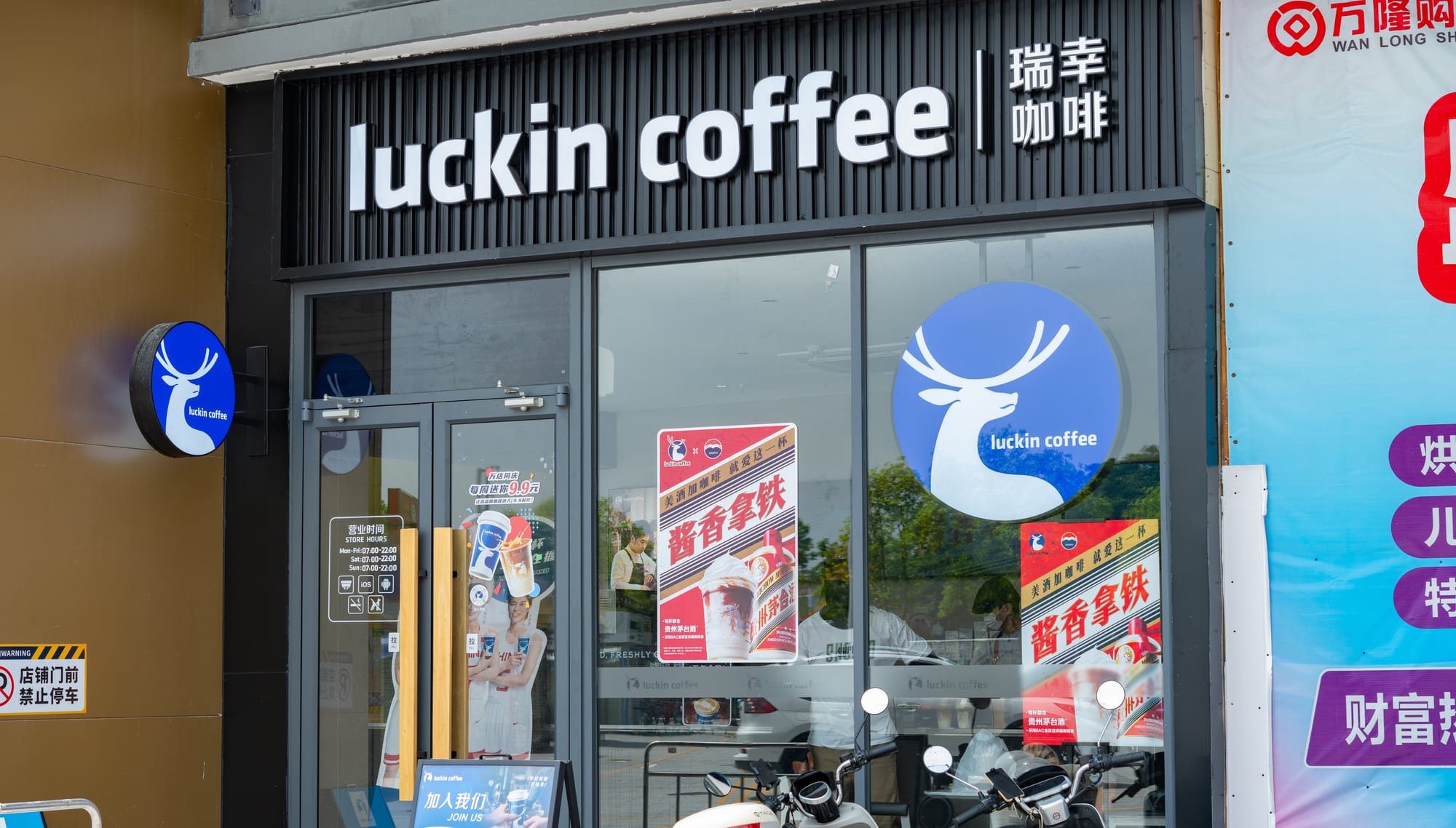
Luckin Coffee Surpasses RMB20 Billion in Non-Coffee Beverage Sales, Expands Global Store Network Beyond 35,000

Source: PRNewswire – Press Release |
Author: Qahwa World |
Date: June 8, 2026

Luckin Coffee Surpasses RMB20 Billion in Non-Coffee Beverage Sales, Expands Global Store Network Beyond 35,000

Key Takeaways:

  • Cumulative sales of Luckin’s non-coffee beverages exceeded RMB 20 billion as of May 31, 2026.
  • 22 star products each surpassed 100 million cups sold.
  • Global store count exceeded 35,000.
  • Coconut Latte recorded cumulative sales of over 2.1 billion cups.
  • Orange Americano surpassed 500 million cups.
  • Luckin has built an integrated supply chain spanning Brazil, Ethiopia, Indonesia, and China.
  • The company is setting a new benchmark for diversified growth in China’s freshly made beverage industry.

Luckin Coffee today released key performance milestones for its non-coffee beverage business for the first time. As of May 31, 2026, cumulative sales of Luckin’s non-coffee beverages had exceeded RMB 20 billion. Meanwhile, the company’s global store count has now exceeded 35,000. These achievements demonstrate Luckin’s ability to scale successfully across multiple beverage categories beyond coffee, reinforcing its position as a leading player in China’s broader beverage market.

Central to this expansion has been Luckin’s ability to consistently innovate and create products that resonate with consumers. The company has turned innovative drinks into mass phenomena, setting a new model for the freshly made beverage industry.

Record-Breaking Products: 22 Items Each Surpass 100 Million Cups

Luckin Coffee revealed that 22 of its non-coffee beverage products each achieved cumulative sales exceeding 100 million cups. The flagship Coconut Latte led the way with over 2.1 billion cups sold. It was followed by Orange Americano with half a billion cups. Light Jasmine Milk Tea surpassed 400 million cups, while Little Butter Latte reached nearly 300 million cups, and Active Apple Kale Tea exceeded 100 million cups.

Product Cumulative Sales (cups)
Coconut Latte 2.1 billion
Orange Americano 500 million
Light Jasmine Milk Tea Over 400 million
Little Butter Latte Nearly 300 million
Active Apple Kale Tea Over 100 million

Integrated Supply Chain Spanning Three Continents

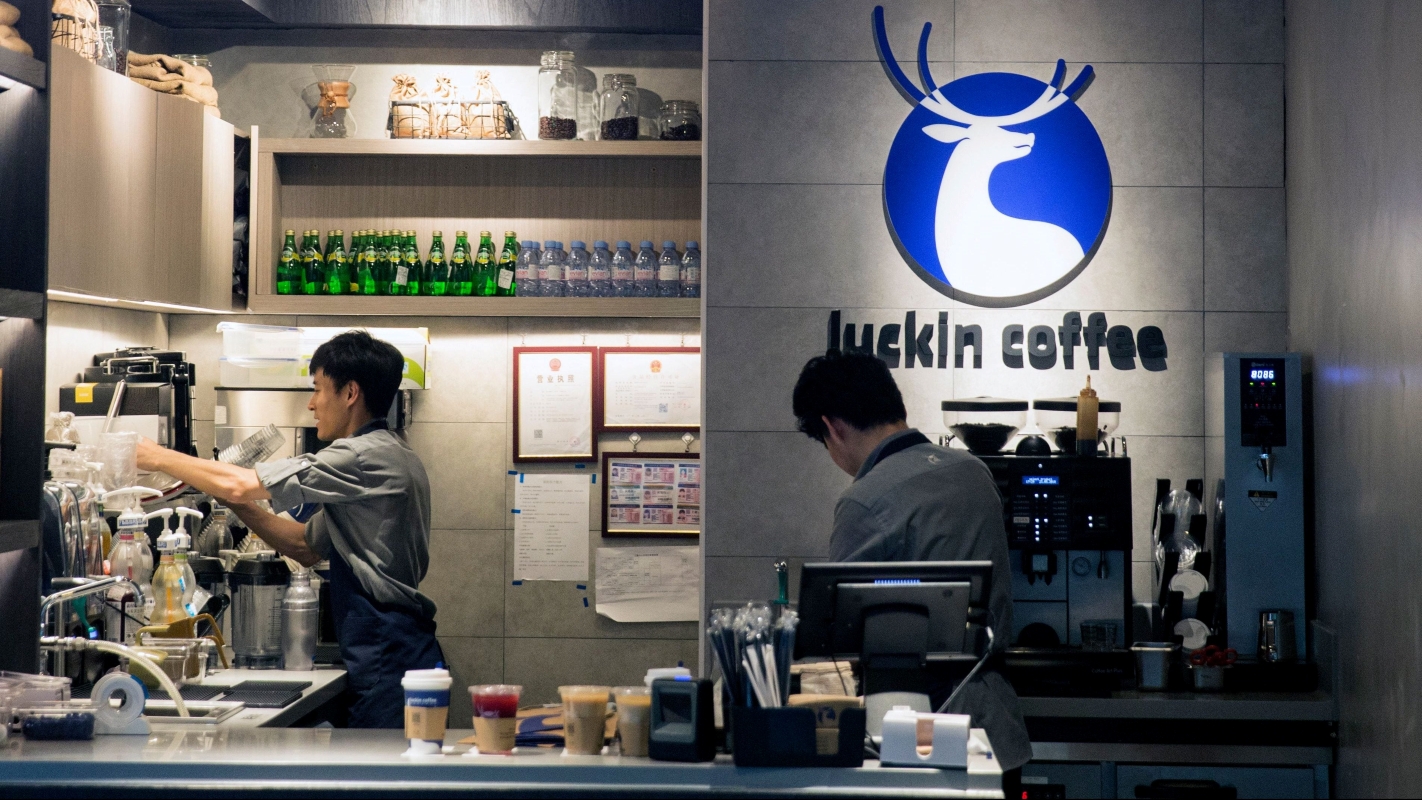
To support rapid product innovation across multiple beverage categories, Luckin has built an integrated supply chain and operational infrastructure designed for growth at scale. The company has expanded its global sourcing footprint to key origins in Brazil, Ethiopia, and Indonesia, as well as China’s Yunnan and Guangxi provinces. This secures premium ingredients ranging from coffee beans, coconuts, jasmine flowers, and navel oranges.

Beyond sourcing, Luckin has continued to strengthen its manufacturing capabilities through investment in self-operated facilities. These include a Green Coffee Bean Processing Plant in Baoshan, Yunnan province, and Roasting Centers in Qingdao, Kunshan, Pingnan, and Xiamen. Together, these assets create an integrated value chain covering ingredient sourcing, processing, product development, and digital distribution. This provides a reliable foundation for Luckin’s expanding beverage portfolio.

Global Network Beyond 35,000 Stores and a Pioneering Growth Model

Supported by a global network of more than 35,000 stores and an increasingly diversified beverage portfolio, Luckin now serves consumers across a wide range of occasions throughout the day. These range from work breaks and afternoon tea to leisure and social gatherings. As coffee and tea brands increasingly expand beyond their traditional categories, China’s freshly made beverage industry is entering a new phase of competition defined by scale, innovation, and operational capabilities.

Through its multi-category portfolio, integrated supply chain capabilities, and broad consumer occasion coverage, Luckin has pioneered a new growth model for the industry. As one of the first brands to successfully scale this approach, Luckin is setting a new benchmark for diversified growth while providing a practical blueprint for the industry’s long-term, sustainable development.

Metric Value
Cumulative non-coffee beverage sales RMB 20 billion
Global store count Over 35,000
Products exceeding 100 million cups 22 products
Best‑selling product (Coconut Latte) 2.1 billion cups

Frequently Asked Questions About Luckin Coffee’s Milestones

Q: What are Luckin’s cumulative non-coffee beverage sales?

A: Over RMB 20 billion as of May 31, 2026.

Q: How many stores does Luckin operate globally?

A: More than 35,000 stores.

Q: What is Luckin’s best‑selling product?

A: Coconut Latte, with over 2.1 billion cups sold.

Q: How does Luckin support product innovation?

A: Through an integrated supply chain spanning Brazil, Ethiopia, Indonesia, and China, plus multiple self‑operated manufacturing facilities.

Q: What makes Luckin’s growth model unique?

A: The combination of a multi‑category portfolio, integrated supply chain, and broad consumer occasion coverage – setting a new industry benchmark.

Luckin Coffee proves that success in the beverage market is no longer limited to a single category. Through innovation and an integrated supply chain, the company has drawn a new blueprint that could reshape competition in the freshly made beverage industry worldwide.

Prepared and edited by: Coffee World – Based on a press release from Luckin Coffee via PRNewswire.

All rights reserved. Republication with attribution permitted.

Publication date: June 8, 2026

Chinese Brands Like Luckin and Pop Mart Take on Starbucks and Nike in Global Push

Author: Qahwa World
Source: Business Insider
Date: May 20, 2026
Executive Summary:

  • Chinese brands are moving from being global manufacturers to competing directly for consumers in the US, Europe, and beyond.
  • Luckin Coffee is testing markets long dominated by Starbucks, including New York, with app based ordering and limited edition drinks.
  • Fashion labels Urban Revivo and Songmont are competing with Zara and Polène through stylish products at lower prices.
  • Pop Mart has evolved from a toy company into a global cultural force through collectible figures, especially Labubu.
  • Chinese brands face challenges including trade tensions, tariffs, and the need to build a clearly defined global identity.
  • Some brands downplay their Chinese origin, while others embrace Chinese aesthetics and cultural heritage as core identity.
  • Long term success depends on evolving from low cost alternatives into premium global names commanding lasting loyalty.

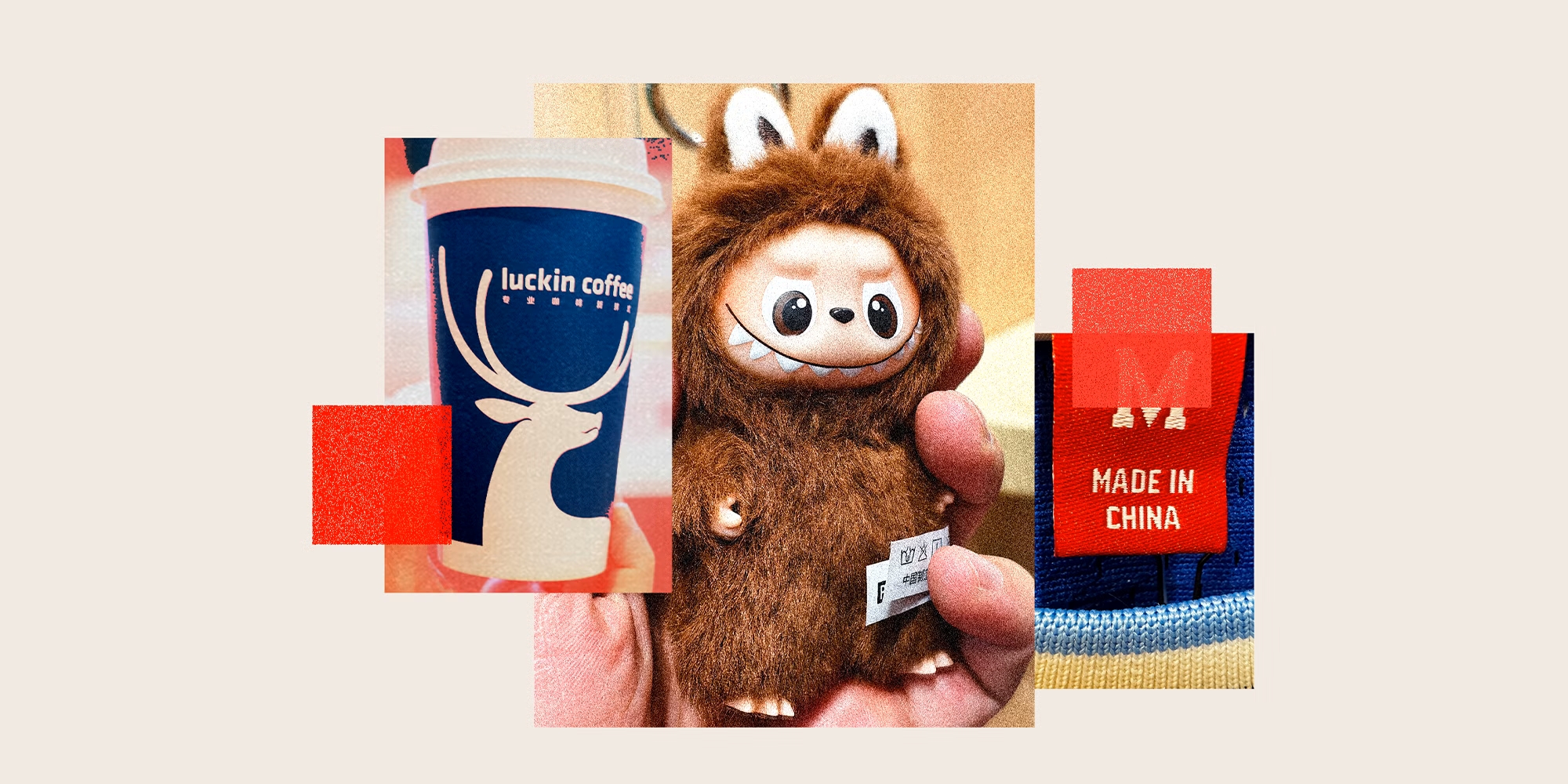
For nearly half a century, China has been the world’s factory floor, producing everything from smartphones to inexpensive clothing. While “Made in China” became common on consumer products, the companies behind those goods often remained unknown. Now, some of China’s fastest growing brands want consumers around the world to recognize their names. They are moving from the background of global commerce to the center, competing directly for customers in the United States, Europe, and beyond.

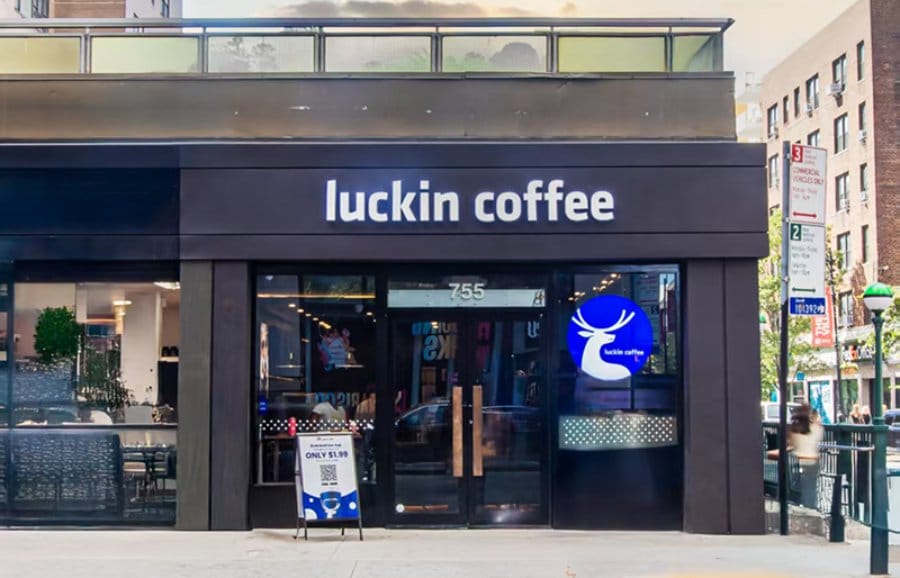
Fujian based Luckin Coffee is testing markets long dominated by Starbucks, including New York. The company uses app based ordering systems and offers limited edition drinks such as blood orange cold brew in the US and pandan coconut latte in Southeast Asia. Fashion labels including Urban Revivo and Songmont are competing with global mid market brands like Zara and Polène by offering stylish products at lower prices. Pop Mart has evolved from a toy company into a global cultural force through its collectible figures, particularly Labubu. Fast fashion giant Shein is reportedly considering acquiring the millennial favorite brand Everlane.

A New Generation of Chinese Brands

This is not the first time Chinese companies have attempted to reshape global business. In the 2000s, Beijing encouraged state backed industrial giants to expand overseas for resources and infrastructure projects. In the 2010s, Chinese firms embarked on a global acquisition spree, purchasing assets ranging from AMC Theatres to the Waldorf Astoria. More recently, companies such as electric vehicle maker BYD and drone manufacturer DJI demonstrated that Chinese firms could compete globally through advanced technology, not just lower prices.

Now, a new generation of Chinese brands is pursuing something even more challenging: becoming culturally influential and desirable. For many Chinese companies, international expansion is also becoming a necessity. China faces a prolonged economic slowdown, and its birthrate fell to a record low in 2025. Domestic competition has intensified, with aggressive price wars shrinking profit margins. As a result, overseas growth is increasingly essential.

Years of operating in one of the world’s most competitive consumer markets have given Chinese companies significant advantages in manufacturing, logistics, sales, and scaling operations. According to Eunkyu Lee, a marketing professor at Syracuse University, China is transforming itself from a low priced manufacturer into a producer of brands with unique personalities and storylines.

The Challenge of Building a Global Identity

Approach Examples Strategy
Downplaying Chinese identity Shein, TikTok Present as internet native global platforms
Embracing Chinese aesthetics Songmont, Laopu, Chagee Highlight Chinese symbolism, craftsmanship, traditions
Sports marketing Li-Ning Sponsor NBA players to enter mainstream sports culture

Becoming a globally recognized brand where image, identity, and perception matter remains difficult. National identity often helps transform products into symbols of aspiration and lifestyle. European luxury brands traditionally emphasize heritage, craftsmanship, and exclusivity, while American companies promote innovation and optimism. Japan and South Korea successfully made similar transitions during the late 20th century. Brands such as Sony, Samsung, Nintendo, and Uniqlo became globally associated with precision, minimalism, technology, and pop culture. China is now attempting a similar transformation, but at a much faster pace and without a clearly defined global identity.

Some Chinese brands are downplaying their Chinese identity altogether. Global successes such as Shein and TikTok gained popularity not by emphasizing their origins, but by presenting themselves as internet native global platforms. That strategy fits naturally within online culture, where trends spread quickly and consumers prioritize novelty over geography. As Lee noted, younger consumers are looking for something new, cool, and fresh. In that context, the country of origin is not very important.

Sportswear brand Li-Ning has increased its international visibility by sponsoring NBA players including Jimmy Butler and CJ McCollum, bringing Chinese designed footwear into mainstream sports culture. Pop Mart has also partnered with Disney and Sanrio’s Hello Kitty, placing its characters alongside some of the world’s most recognizable entertainment brands.

Embracing Chinese Heritage and Luxury Attention

At the same time, other Chinese brands are leaning heavily into Chinese aesthetics and cultural heritage. Songmont, Laopu, and tea chain Chagee are embracing Chinese symbolism, craftsmanship, and traditions as central parts of their brand identity. A growing online fascination with Chinese lifestyle and aesthetics, sometimes referred to as China-maxxing, suggests global consumers may be increasingly open to brands that highlight rather than soften their origins.

There are signs that global luxury leaders are paying attention. Songmont, whose minimalist leather handbags retail for up to around 800 dollars, has drawn attention from LVMH CEO Bernard Arnault. He reportedly visited a Songmont store and purchased two bags during a trip to Shanghai last September. Arnault also visited Laopu Gold, a jewelry brand known for handcrafted 24K gold pieces inspired by Chinese symbolism including dragons and gourds. In April, Gucci owner Kering announced plans to acquire a minority stake in Shanghai based fashion label Icicle, a premium brand often compared to Max Mara.

Political Challenges and Long Term Prospects

Politics may present another obstacle for Chinese brands seeking overseas growth. Trade tensions have disrupted supply chains and increased scrutiny of Chinese technology companies such as TikTok. BYD has expanded rapidly across Europe and South America but remains largely shut out of the US market because of high tariffs. Tariffs have also affected companies such as Shein and Temu, though neither has slowed its expansion efforts significantly. Instead, many firms are adapting by localizing operations and refining their international strategies.

This new generation of Chinese brands may be better positioned than previous waves because they are increasingly selling products as desirable lifestyle goods rather than simply low cost alternatives. Governments may find it difficult to prevent consumers from embracing brands they see as fashionable, useful, or culturally relevant. According to Lee, these brands are largely detached from political issues.

Ultimately, long term success will depend on whether Chinese brands can evolve from being viewed as inexpensive or trendy alternatives into premium global names capable of commanding lasting loyalty and higher prices. Success would mean some of these brands achieving premium brand recognition among global consumers and being able to command a price premium. That transformation will take time. But the broader direction is becoming increasingly clear: China has already reshaped how the world manufactures products. Now, it is trying to shape what the world wants.

Frequently Asked Questions (FAQ)

1. Which Chinese brands are expanding globally?

Luckin Coffee, Pop Mart, Songmont, Urban Revivo, Shein, Li-Ning, BYD, and DJI are among the Chinese brands competing in international markets.

2. How is Luckin Coffee competing with Starbucks?

Luckin is testing markets including New York with app based ordering systems and limited edition drinks such as blood orange cold brew and pandan coconut latte.

3. What strategies are Chinese brands using to go global?

Some brands downplay their Chinese identity and present as global platforms. Others embrace Chinese aesthetics and cultural heritage. Some use sports marketing and partnerships with global entertainment brands.

4. What challenges do Chinese brands face overseas?

Trade tensions, tariffs, political scrutiny, and the difficulty of building a clearly defined global identity are major challenges.

5. Are global luxury brands paying attention to Chinese brands?

Yes. LVMH CEO Bernard Arnault visited Songmont and Laopu stores. Kering announced plans to acquire a stake in Shanghai based brand Icicle.

6. What would success look like for Chinese brands?

Success means achieving premium brand recognition among global consumers and being able to command higher prices and lasting loyalty.

Qahwa World – Based on reporting from Business Insider.
Published: May 20, 2026

Luckin Coffee unveils $300M share buyback

Dubai – Qahwa World

Luckin Coffee has reported strong first-quarter 2026 results, highlighted by a major share repurchase program and continued rapid expansion across its global store network. These results have drawn fresh attention to the recent Luckin Coffee share buyback.

The company posted net revenues of approximately RMB 12.0 billion (US$1.7–1.76 billion) for the three months ending 31 March 2026, representing a year-on-year increase of about 35%. As a result, market analysts are closely monitoring how the Luckin Coffee buyback of shares may influence its valuation.

This performance continues a sustained period of growth for the Chinese coffee chain, supported by aggressive store expansion and rising customer activity. Additionally, the Luckin Coffee share buyback demonstrates how management seeks to reward shareholders during periods of robust growth.

Store network expansion

During the quarter, Luckin opened 2,548 net new stores, bringing its total footprint to 33,596 locations worldwide. Notably, the company expanded its network while balancing capital through the coffee share buyback initiative.

The majority of new outlets were concentrated in China and Hong Kong, alongside a smaller number of openings in international markets including Singapore, Malaysia, and the United States. Moreover, this store expansion complements Luckin Coffee’s share buyback efforts.

$300 million buyback program

Alongside its earnings release, the company announced its first-ever share repurchase program, authorizing the buyback of up to US$300 million in shares over a 12-month period. Furthermore, investors are reviewing the Luckin Coffee share buyback as a signal of confidence from management.

The program allows the company to repurchase shares through open-market transactions or private deals, subject to market conditions and regulatory requirements. Significantly, the Luckin Coffee share buyback program provides flexibility in methods for repurchasing shares.

[conclusion] Such programs are typically used by companies to return value to shareholders and signal confidence in future performance. This approach is evident in the case with the Luckin Coffee share buyback.

Growth drivers and operations

Luckin’s growth was supported by:

  • Expanding store network scale
  • Increased customer activity, with average monthly transacting customers rising year-on-year
  • Continued investment in digital infrastructure and supply chain capabilities; the Luckin Coffee buyback strategy also supported financial stability.

The company emphasized its strategy of “high-quality, scaled growth,” leveraging technology and operational efficiency to drive consumption and strengthen its competitive position. In turn, initiatives like the Luckin Coffee share buyback reinforce this formula.

Margin pressure and mixed signals

Despite strong revenue growth, some indicators showed pressure:

  • Margins declined compared to the previous year
  • Same-store sales remained relatively flat
  • Rising costs, including delivery expenses, impacted profitability trends

These factors reflect a more competitive and evolving market environment, even as Luckin Coffee pursues strategic share buybacks to support its business.

Outlook

Luckin Coffee indicated confidence in its long-term strategy, pointing to its integrated digital model and large-scale operations as key advantages in navigating near-term volatility. Furthermore, the Luckin Coffee share buyback is anticipated to enhance its financial outlook.

The launch of the share buyback program further reinforces management’s focus on shareholder returns while maintaining growth momentum. In summary, the Luckin Coffee share buyback is expected to impact investor sentiment and future market activity.

China’s Coffee Boom Opens New Avenues for Thai Fruit Exporters

BANGKOK – Qahwa World
As China’s coffee market undergoes rapid transformation, a new and unexpected opportunity is emerging for Thai fruit exporters. The rise of domestic coffee giants like Luckin Coffee and Cotti Coffee is not only reshaping the country’s beverage landscape but also creating strong demand for tropical fruit ingredients, an area where Thailand holds a competitive edge.

From Traditional Coffee to Lifestyle Drinks

China’s coffee consumption has surged over the past decade. According to the Department of International Trade Promotion (DITP), coffee imports into China rose from 59,100 tonnes in 2015 to 230,700 tonnes in 2025, an increase of over 290 percent. This growth is driven by younger consumers who view coffee as a daily lifestyle choice rather than an occasional luxury.

The market structure has also shifted significantly. Foreign brands like Starbucks once dominated the premium segment, but local players have gained ground by combining speed, competitive pricing, and strong digital integration.

Local Chains Lead the Way

By 2025, Luckin Coffee leads the market with more than 25,000 branches, followed by the fast-growing Cotti Coffee with over 14,000 outlets, despite being founded only in 2022. Starbucks remains the largest foreign brand with around 7,800 branches.

Top 10 Coffee Brands in China by Branch Count (2025)

Rank Brand Branches Founded
1 Luckin Coffee 25,266 2017
2 Cotti Coffee 14,337 2022
3 Starbucks 7,798 1971
4 Lucky Cup 4,793 2017
5 NOWWA 2,407 2019
6 Manner 1,969 2015
7 K Coffee 1,580 2015
8 Tim Hortons 868 1964
9 M Stand 556 2017
10 Pull-Tab 513 2022

Fruit-Blended Coffees: A New Product Category

To attract young and experimental consumers, Chinese coffee brands are continuously innovating with seasonal menus. Fruit-blended coffees, tea-coffee hybrids, and coconut-based beverages have become key trends. These drinks rely heavily on high-quality fruit ingredients such as purees, frozen fruit, and flavor bases.

Coconut milk has gained particular popularity as a dairy alternative, further increasing demand for tropical ingredients.

Opportunity for Thai Exporters

Thailand is well positioned to benefit from this trend. Fruits like durian and coconut already enjoy strong demand among Chinese consumers. Exporters can expand beyond fresh produce into value-added segments such as:

  • Fruit purees for coffee blending
  • Frozen or chilled fruit for beverages
  • Customized ingredients for coffee chains

This approach also helps utilize lower-grade fruit more efficiently, increasing overall export value.

Strategic Recommendations for Thai Businesses

  1. Partner with Chinese coffee chains for direct supply agreements
  2. Develop co-branded products highlighting Thai origin
  3. Align with digital ordering and delivery ecosystems
  4. Invest in processing and packaging that meets Chinese standards

Conclusion

As China’s coffee market continues to grow in both scale and innovation, Thai exporters have a unique opportunity to move up the value chain. Supplying ready-to-use fruit ingredients could position them as key players in one of the world’s most dynamic beverage markets.

Nestlé Officially Confirms Sale of Blue Bottle Coffee to Owner of China’s Luckin Coffee

VEVEY, Switzerland – Qahwa World

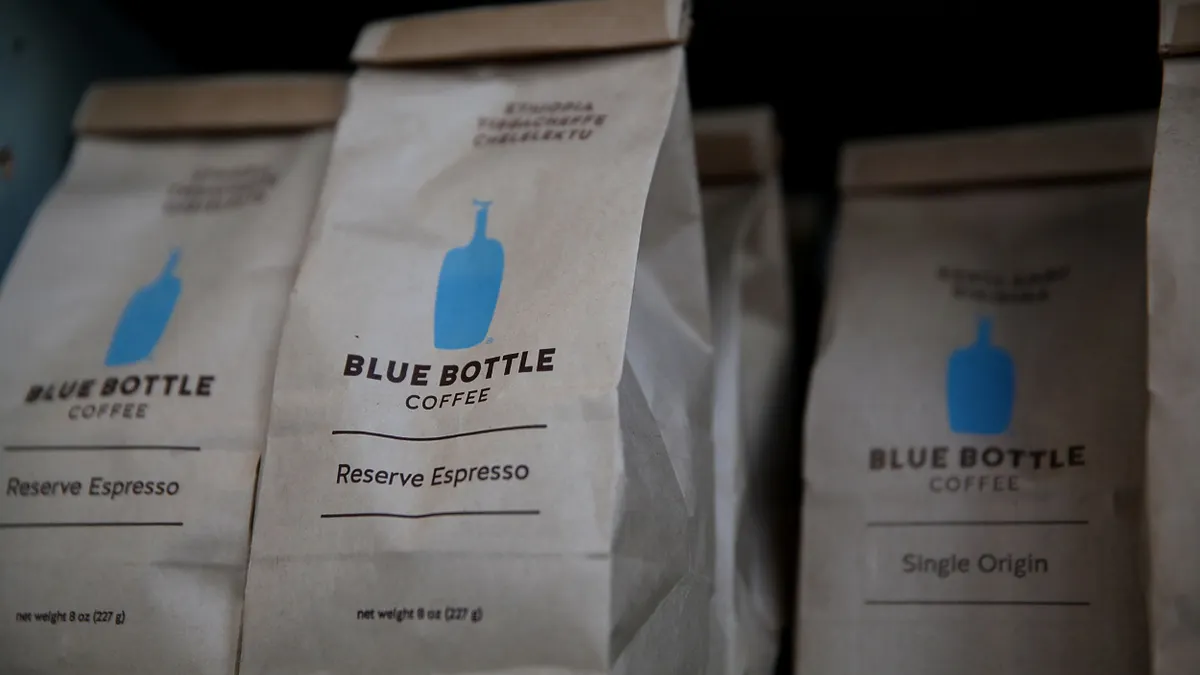
In a decisive move reshaping the global coffee landscape, Nestlé has officially confirmed the sale of its majority stake in the renowned brand “Blue Bottle Coffee” to Centurium Capital, the private equity firm that is the largest shareholder in China’s Luckin Coffee.

This announcement, made in conjunction with the company’s first-quarter 2026 earnings report, marks the conclusion of the Swiss giant’s nearly decade-long venture into the high-end specialty coffee retail sector.

Centurium Capital is the primary investment power behind Luckin, which is currently the largest coffee chain in China.

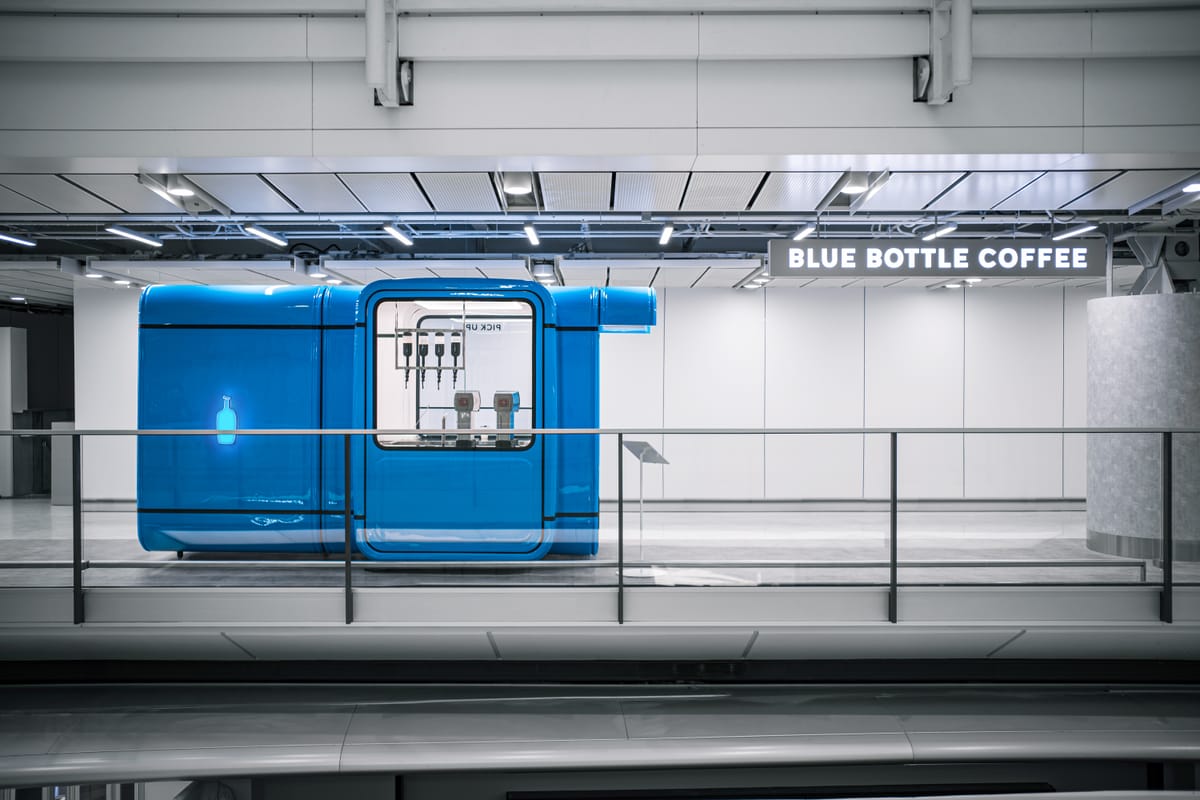
Under this agreement, Centurium will acquire Blue Bottle’s entire global retail network of approximately 140 luxury locations, as well as the majority of the consumer packaged goods business associated with the brand.

While this sale signals Nestlé’s retreat from managing physical storefronts, the company has not entirely abandoned the brand’s marketing power. In a strategic move aimed at boosting profitability and focusing on high-growth segments, Nestlé will retain the exclusive rights to produce and market Blue Bottle-branded coffee capsules designed for the Nespresso system.

This strategic separation allows Nestlé to shed the high operational costs linked to property management and labor in physical cafes while retaining the most profitable and expandable segment: the at-home and packaged coffee sector.

Philipp Navratil, CEO of Nestlé, stated that this step is part of a comprehensive portfolio review to strengthen core brands and achieve sustainable growth.

Financial details of the deal were not officially disclosed by either party, but industry sources and reports circulating since March 2026 suggest the transaction value is approximately $400 million. If these figures are accurate, they represent a notable decline from the brand’s $700 million valuation in 2017, when Nestlé originally purchased its 68 percent stake for roughly $425 million.

According to experts, this valuation reflects the significant challenges large corporations face in scaling “artisanal” brands without losing their distinct identity. When Nestlé first acquired Blue Bottle, the bet was on the possibility of maintaining the brand’s soul while expanding globally. However, the operational complexities of maintaining high quality standards across 140 different locations proved to be a major challenge against Nestlé’s efficiency goals.

For Centurium Capital, adding Blue Bottle to its portfolio provides a luxury pillar to complement the massive dominance of Luckin Coffee in the general consumer market. Luckin Coffee currently operates more than 31,000 locations and is following an unprecedented global expansion path.

Through the acquisition of Blue Bottle, Centurium will gain immediate entry into the ultra-premium specialty coffee segment without compromising Luckin Coffee’s reputation based on speed and technology.

Sources indicate that Centurium intends to keep the two brands completely separate, with Blue Bottle serving as a “prestige” offering for the group, particularly in high-end Asian shopping malls where demand for luxury brands is steadily increasing.

From a specialized coffee journalism perspective, this deal represents a pivotal moment in the industry’s history.

It suggests that the era of large global companies buying artisanal roasters has begun to shift toward more specialized ownership models. It also highlights the ongoing migration of global coffee trade centers toward Asian markets.

The presence of a Chinese-backed private equity firm at the head of a leading American brand like Blue Bottle reflects the new geopolitical reality of the coffee industry.

With the deal expected to finalize in the first half of 2026, specialty coffee experts are waiting to see if Blue Bottle can maintain its artisanal identity, born in Oakland, under the management of one of the most aggressive growth machines in the world.

Luckin Coffee Rebound Rekindles Valuation Debate

Dubai – Qahwa World

Shares of Luckin Coffee are back in focus after a recent rebound, with investors reassessing whether the stock still offers meaningful upside following a volatile period.

The stock closed at $33.79 on April 17, 2026, reflecting a mixed short-term trend. Shares have risen 4.4% over the past week, remained nearly flat over the past month (–0.4%), and are down 4.6% year-to-date. Longer-term performance, however, remains stronger, with gains of 10.6% over one year and 38.4% over three years.

The recovery comes after earlier pressure linked to margin concerns and intensifying competition in China’s fast-growing coffee market, prompting a fresh look at valuation.

  • Valuation Signals Suggest Discount

Analysis from Simply Wall St indicates the stock may still be trading below its estimated value. A discounted cash flow (DCF) model places Luckin Coffee’s intrinsic value at around $52.14 per share, implying a gap of roughly 35% compared with current levels.

The company’s price-to-earnings ratio of 20.68x also sits below both the broader industry average and an internally estimated “fair” multiple, reinforcing the argument that the stock could be undervalued on traditional metrics.

  • Strong Growth, Rising Scale

Recent financial results highlight the company’s continued expansion. Luckin reported full-year 2025 revenue of RMB 49.29 billion, up 43% year-over-year, supported by rapid store growth and increasing customer demand.

The company added more than 8,700 net new stores, bringing its total to over 31,000 locations, while average monthly transacting customers rose to 94.2 million, reflecting ongoing momentum in China’s competitive coffee sector.

  • Margins and Competition in Focus

Despite strong revenue growth, margin pressures remain a key concern. Higher input costs and promotional activity have weighed on profitability, with operating margins around 10.3%.

Competition is also intensifying. Starbucks continues to expand its presence in China, while local chains and tea brands increasingly target the same consumer base.

  • Outlook Hinges on Execution

The debate around Luckin Coffee now centers on whether the company can sustain its rapid growth while stabilizing margins. Valuation models point to potential upside, but outcomes depend heavily on execution in a more crowded and cost-sensitive market.

For investors, the stock’s rebound has reopened the question: whether Luckin Coffee remains an undervalued growth story—or a company entering a more challenging phase of its expansion.

Luckin Coffee Explores Potential Acquisition of Blue Bottle Coffee

Dubai – Qahwa World

Chinese coffee chain Luckin Coffee is reportedly evaluating a potential acquisition of Blue Bottle Coffee, the specialty coffee brand majority-owned by Nestlé, as part of its strategy to strengthen its presence in the premium coffee segment.

Sources indicate that Luckin and its main investor, Centurium Capital, are pursuing moves to build a portfolio of premium coffee brands and expand their global footprint. This potential bid follows reports that Nestlé was considering selling its stake in the California-based Blue Bottle, which it acquired in 2017 for $425 million, valuing the company at roughly $700 million. Current estimates suggest the brand could now be sold at a lower price.

Blue Bottle Coffee operates over 100 boutique cafés in the United States and East Asia, including 12 locations in mainland China and four in Hong Kong.

In addition to Blue Bottle, Luckin and Centurium are said to be exploring a bid for Lucky Ace International Ltd., the holder of master franchise rights for Japanese specialty chain % Arabica in China and Hong Kong. % Arabica currently runs 84 outlets in mainland China and 15 in Hong Kong.

Centurium Capital, which had previously shown interest in Coca-Cola’s Costa Coffee, appears to have shifted focus toward the Luckin expansion strategy.

Luckin Coffee, China’s largest coffee chain with more than 29,000 stores nationwide, significantly outpaces its nearest competitor, Cotti Coffee. Centurium became Luckin’s controlling shareholder in January 2022, holding over 50% of voting rights, following previous investments that helped the company recover from accounting issues and restructure debt.

Beyond China, Luckin has expanded internationally with 68 stores in Singapore, 45 in Malaysia, and five in the United States. CEO Jinyi Guo announced in November 2025 that the company is preparing for a new public listing in the United States.

East Asia’s Coffee Shop Landscape Surges as China Alone Adds 20,000 Stores in One Year

Dubai – Qahwa World

A new edition of Project Café East Asia 2026 by World Coffee Portal reveals an exceptional year for the branded coffee chain sector across East Asia, with the region’s total number of outlets jumping 18.4% to reach 180,268 stores. The strongest momentum came from China, Thailand, Indonesia, Vietnam, and the Philippines, all of which posted double-digit expansion in store counts.

  • China Leads the Region with Record-Breaking Growth

China registered the fastest acceleration, expanding its branded coffee shop network by 31.5% over the past year to reach 87,505 outlets—nearly half of all branded cafés in East Asia and almost double the size of the U.S. market. It also became the first national market ever to add more than 20,000 net new stores within a single calendar year.

The main force behind this surge came from domestic champions Luckin Coffee and Cotti Coffee, which together contributed over 12,000 new locations, representing half of the country’s entire branded segment.

China’s competitive landscape is being shaped heavily by pricing battles, most notably the RMB 9.9 (US$1.40) rivalry between Luckin and Cotti. This emphasis on affordability has also propelled the rise of budget-forward chains such as Lucky Cup, operated by Mixue, and KCOFFEE under Yum China.

As local operators increasingly dominate, several international brands have been pushed to reconsider their strategies. A striking example is Starbucks’ agreement to sell a majority stake in its 8,000-store Chinese business to Hong Kong–based Boyu Capital in a deal valued at $4 billion.

  • China Emerges as a Global Lab for Beverage Innovation

While 80% of surveyed Chinese consumers drink hot coffee at least once a week and a quarter consume it daily, operators are aggressively expanding their cold, flavored, and fruit-infused offerings—turning China into a leading testing ground for new flavors.

Matcha, palm sugar, and coconut were rated among the most appealing additions by consumers. Luckin Coffee’s Coconut Latte, introduced in 2017, continues to dominate its sales charts. The brand is known for launching experimental drinks weekly, resulting in items like jelly lattes and cheese lattes.

KCOFFEE has taken novelty even further, releasing products such as Egg Tart Dirty Coffee, a fried-chicken-inspired latte, and even a sparkling black vinegar Americano.

  • Homegrown Chains Strengthen Positions Across East Asia

East Asia’s coffee chain ecosystem is increasingly being shaped by domestic players that emphasize local traditions, accessible pricing, and menus tailored to national tastes. According to World Coffee Portal’s consumer survey, 57% of Chinese respondents prefer homegrown chains over international brands—a trend replicated across the region.

Key examples include:

Jinji Jawa in Indonesia,

ZUS Coffee in Malaysia,

Pickup Coffee in the Philippines, and

Milano Coffee in Vietnam—

each of which added hundreds of new stores in the last year. Their rapid expansion outpaced Western competitors like Starbucks, Costa Coffee, and Dunkin’.

Thailand showed similar dynamics: Café Amazon and PunThai Coffee accounted for 80% of all new cafés opened in the country this year, highlighting the region’s increasing focus on localization, digital engagement, and culturally relevant branding.

  • Industry Leaders Expect Continued Growth

The majority of operators surveyed remain optimistic about the sector’s direction:

71% reported higher sales over the past year.

68% expect trading conditions to further improve in the next 12 months.

World Coffee Portal forecasts that East Asia will become the first region to surpass 200,000 branded coffee shops by the end of 2026. By November 2030, the regional market is projected to exceed 263,000 outlets, reflecting a five-year compound annual growth rate of 7.9%.

  • China is expected to maintain strong momentum with:

20% outlet growth in 2026, and

10.3% average annual growth over the following five years,
bringing its store count to over 142,500 outlets by 2030.

Other markets—including Cambodia, Indonesia, Malaysia, the Philippines, and Vietnam—are also predicted to achieve double-digit outlet expansion over the next year.

  • Expert Insight

Commenting on the findings, Jeffrey Young, Founder and CEO of Allegra Group, highlighted East Asia’s rising global influence. He described China’s addition of more than 20,000 stores in a single year as “astonishing” and emphasized that the region is poised to drive the majority of global coffee market growth in the coming decades. Young added that the entry of East Asian chains into Western markets—along with their distinctive approaches to technology and product innovation—could reshape international trends.

Luckin Coffee Eyes Fresh U.S. Listing Five Years After Accounting Scandal

The Chinese coffee giant moves to regain investor confidence and global credibility following a dramatic turnaround that made it China’s largest coffee chain.

Dubai – Qahwa World

China’s Luckin Coffee is reportedly preparing to return to Wall Street, five years after its dramatic delisting from the Nasdaq amid one of the country’s most notorious corporate accounting scandals.

Speaking at a government-hosted event in Xiamen on 2 November 2025, CEO Jinyi Guo said the company was “actively pushing the process of relisting on a U.S. main board,” though he declined to specify a timeline. Market observers believe the relisting could take place either on the New York Stock Exchange or Nasdaq, marking a significant milestone in the company’s comeback story.

Founded in Beijing in 2017, Luckin first listed in the United States in May 2019, raising $561 million to fund its breakneck expansion to 4,500 stores across China. But by April 2020, revelations emerged that the company had fabricated roughly $340 million in sales, triggering a collapse in its stock price, the dismissal of its senior management, bankruptcy filings in the U.S., and a $180 million fine by the U.S. Securities and Exchange Commission.

Under new ownership by Beijing-based private-equity firm Centurium Capital, Luckin launched a sweeping turnaround plan focused on profitable growth, tech-driven operations, and stricter financial oversight. The strategy began paying off in 2022, when the company reported its first quarterly net profit and emerged from bankruptcy shortly thereafter — a milestone that paved the way for its first annual operating profit later that year.

By 2023, Luckin Coffee had overtaken Starbucks in China’s fiercely competitive coffee market, fueled by rapid franchise expansion and affordable pricing. As of mid-2025, the brand operates over 26,000 stores across China and continues to extend its international presence with outlets in Singapore, Malaysia, and its first U.S. location.

A potential U.S. relisting, analysts say, could provide Luckin with fresh access to capital markets, boost brand visibility, and restore investor confidence still clouded by its past misconduct. Yet the move will not be simple: any overseas listing by a Chinese firm now requires filing with the China Securities Regulatory Commission (CSRC), part of Beijing’s tightened oversight of foreign capital operations.

As of March 2025, 286 Chinese companies were listed on U.S. exchanges with a combined market capitalization of around $1.1 trillion, according to the U.S.–China Economic and Security Review Commission. Luckin’s move, therefore, would mark one of the most high-profile returns of a Chinese consumer brand to U.S. markets since the scandal-scarred delistings of 2020.

Earlier this year, Chinese tea brand Chagee raised $411 million in its Nasdaq IPO — a sign that global appetite for Chinese beverage players may be returning. Whether Luckin Coffee can brew up a similar success story on Wall Street remains one of the most closely watched comebacks in the coffee industry.

Luckin Coffee’s Major Investor Weighs Acquisition of Costa Coffee

Beijing — Qahwa World

The majority stakeholder of Luckin Coffee, Centurium Capital, is reportedly considering a bid to acquire Costa Coffee from The Coca-Cola Company, in what could become one of the most significant international coffee transactions in recent years.

According to sources familiar with the matter, the Beijing-based private equity firm is evaluating whether to proceed with an offer for the British coffee chain. The discussions come as Coca-Cola continues to review its investment in Costa Coffee, which it purchased from Whitbread in 2019 for $4.9 billion.

Coca-Cola Reassesses Its Coffee Strategy

Coca-Cola began exploring potential buyers for Costa in August 2025, signaling a possible retreat from its café business. Speaking to investors, CEO James Quincey admitted that Costa’s financial performance “is not where we wanted it to be,” adding that the company was “reflecting on the right way forward” for the brand.

Reports indicate that Coca-Cola has received fewer bids than anticipated, with Costa’s current valuation estimated at less than $2 billion less than half of what the beverage giant originally paid.

Centurium Capital’s Expanding Coffee Footprint

Centurium Capital has been a major force behind Luckin Coffee’s resurgence. The Chinese private equity firm first invested in Luckin during its early funding rounds and became instrumental in stabilizing the company following its 2020 accounting scandal. In 2021, Centurium led a $260 million private placement that helped Luckin restructure debt and resolve issues with the U.S. Securities and Exchange Commission (SEC).

By January 2022, Centurium had become Luckin’s controlling shareholder, holding over 50% of the company’s voting rights. Under its direction, Luckin has grown rapidly, operating more than 26,000 stores across China, surpassing Starbucks in store count and establishing itself as the country’s leading coffee brand.

Industry analysts suggest that acquiring Costa could give Centurium a strong international platform, combining Luckin’s digital strength and value-based strategy in Asia with Costa’s established brand presence in Europe and the Middle East.

Costa Coffee’s Global Operations

Founded in London in 1971, Costa Coffee today operates around 4,100 coffee shops across 38 countries and manages nearly 17,000 self-service machines under the Costa Express brand. The company has also expanded into the ready-to-drink (RTD) sector, with products distributed through supermarkets and vending platforms worldwide.

However, under Coca-Cola’s ownership, Costa has struggled to achieve consistent profitability and adapt to evolving market dynamics. Analysts say that its integration within a soft-drink-focused corporation limited the brand’s agility in competing with fast-growing specialty coffee chains.

Other Interested Bidders

Besides Centurium Capital, Bain Capital, investor in Gail’s Bakery and Pizza Express, and TDR Capital, owner of Asda supermarkets, have also shown interest in acquiring Costa, according to Bloomberg.

If Centurium proceeds, the deal would mark a rare case of a Chinese investment group acquiring a major Western coffee brand, highlighting China’s growing influence in the global coffee market and reinforcing the country’s ambition to shape the next chapter of the café industry.

Carlyle and Boyu emerge as likely buyers for Starbucks’ China operations, sources say

Dubai – Qahwa World

Private equity firms Carlyle Group and Boyu Capital have reportedly taken the lead in efforts to acquire a controlling stake in Starbucks’ China business.

Seattle-based Starbucks initiated a formal sales process in May 2025, seeking to bring in strategic partners amid slowing growth and stiff competition from local chains such as Luckin Coffee and Cotti Coffee.

According to sources, up to five firms made the final shortlist by September 2025, with Carlyle and Boyu now viewed as frontrunners for the deal. The transaction is expected to value the China operations at around USD 4 billion, and Starbucks may retain up to a 49 percent interest.

Carlyle already has experience in the coffee and restaurant sector: it acquired South Korea’s A Twosome Place chain and previously held a 28 percent stake in McDonald’s China, which it sold in 2023.

Meanwhile, Boyu has backed major food and beverage enterprises, including a role in investing in Mixue Group, and has co-ownership in the Honeymoon Dessert brand in China and Singapore.

Starbucks currently operates roughly 7,800 stores in China, making it its second-largest market by store count—and roughly 20 percent of its global total—though it contributes only about 8 percent of revenue.
MarketScreener

Unlike most markets where Starbucks licenses some stores, its entire China operation is wholly company-run.

While Starbucks endured three straight quarters of revenue decline in China in 2024, more recently the business has rebounded: it posted three consecutive quarters of year-over-year growth in 2025, including its first six-month stretch of positive same-store sales during the second quarter.
Comunicaffe International

Starbucks Loses Coffee Battle in China and Prepares to Sell Its Unit

Beijing – September 11, 2025 – Qahwa World – Reuters has revealed that Starbucks, the world’s largest coffee chain, is preparing to sell a controlling stake in its China operations in a deal valued at around $5 billion. The decision marks one of the most dramatic turns in the company’s history as slowing sales and intensifying competition from local rivals force the Seattle-based giant to rethink its strategy in its second-largest market.

According to sources cited by Reuters, Starbucks has drawn up a shortlist of five investment firms: Carlyle Group, EQT, HongShan Capital Group (HSG), Boyu Capital, and Primavera Capital. These firms are expected to submit binding bids in early October, with a final agreement anticipated by the end of next month. Financial analysts estimate that Starbucks China will generate between $400 million and $500 million in EBITDA this year, which supports a valuation close to $5 billion.

For years, China was considered the crown jewel of Starbucks’ international growth, with the company expanding to nearly 7,800 stores, representing almost 20% of its global footprint and around 8% of group revenues. But the tide has turned. Data from Euromonitor shows the company’s market share plunged from 34% in 2019 to just 14% in 2024, as local players like Luckin Coffee, Cotti Coffee, and Lucky Cup captured millions of consumers with lower prices, digital apps, and aggressive promotions.

Despite this decline, Starbucks has no plans for a full exit. The company intends to retain a minority stake in its Chinese unit while keeping its coffee roasting facility to safeguard quality standards. This strategy will allow Starbucks to share financial and operational risks with local partners while maintaining a foothold in a market with immense long-term potential.

The shortlisted bidders bring strong experience in food and beverage operations. HSG owns a stake in Heytea, China’s 4,300-store tea chain. Carlyle Group operates South Korea’s 1,700-store A Twosome Place and previously held a stake in McDonald’s China. Primavera Capital has invested in Yum China, EQT formerly owned global foodservice operator SSP, and Boyu Capital is a backer of e-commerce giant Alibaba.

The sale of a controlling stake in Starbucks China represents more than just a financial transaction—it is a strategic turning point. Once viewed as a symbol of Western modernity in China, Starbucks now finds itself forced into a restructuring move to secure its survival in a market where domestic brands are growing at breakneck speed. For investors, the deal offers a rare chance to gain access to a multibillion-dollar coffee market that continues to expand, though marked by fierce competition and price-sensitive consumers.

Binding offers are due in early October, with a final decision expected by the end of the month. Whatever the outcome, one fact is clear: Starbucks is losing the coffee battle in China and entering a new phase of forced partnerships and strategic recalibration that could reshape not only its presence in the country but also the global coffee landscape.