Luckin Coffee unveils $300M share buyback

Dubai – Qahwa World

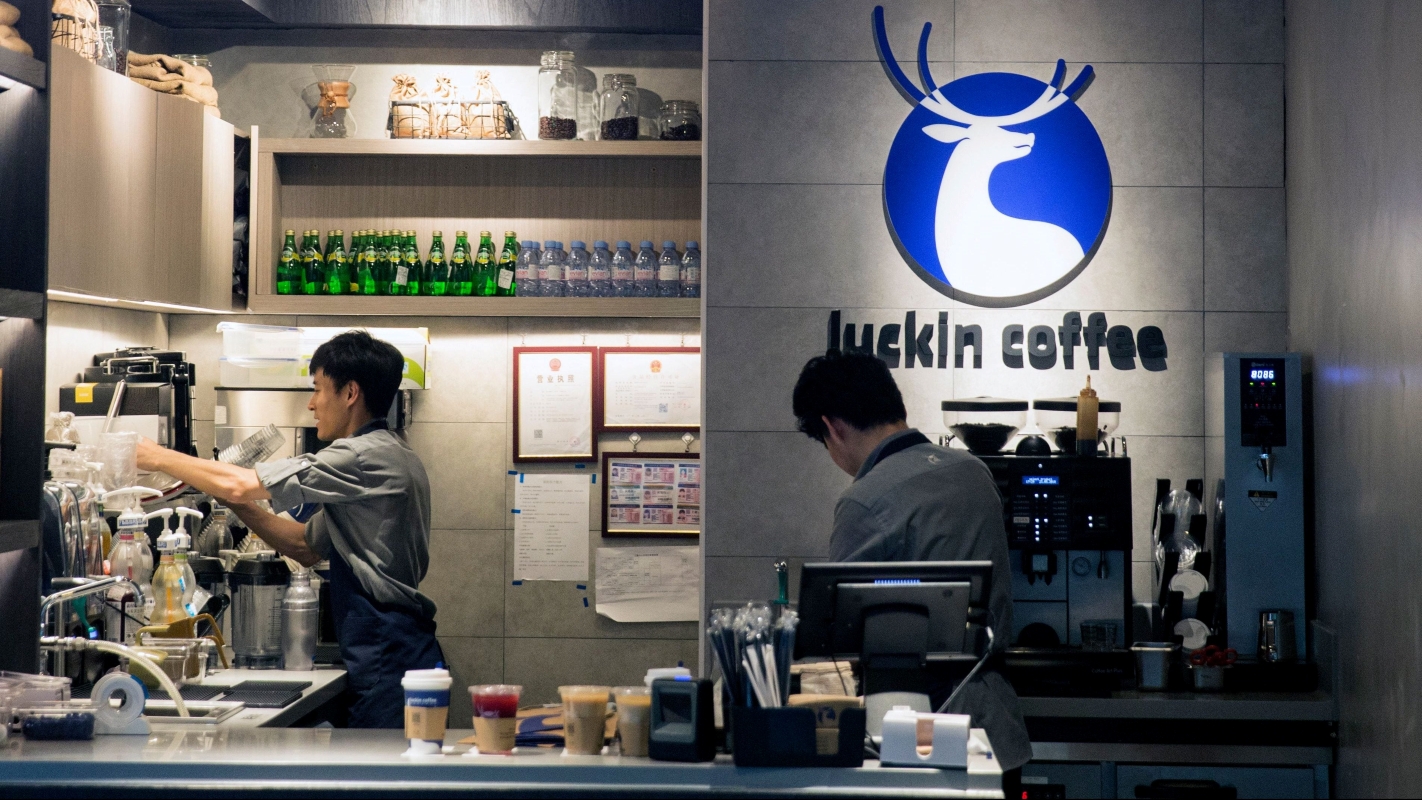
Luckin Coffee has reported strong first-quarter 2026 results, highlighted by a major share repurchase program and continued rapid expansion across its global store network. These results have drawn fresh attention to the recent Luckin Coffee share buyback.

The company posted net revenues of approximately RMB 12.0 billion (US$1.7–1.76 billion) for the three months ending 31 March 2026, representing a year-on-year increase of about 35%. As a result, market analysts are closely monitoring how the Luckin Coffee buyback of shares may influence its valuation.

This performance continues a sustained period of growth for the Chinese coffee chain, supported by aggressive store expansion and rising customer activity. Additionally, the Luckin Coffee share buyback demonstrates how management seeks to reward shareholders during periods of robust growth.

Store network expansion

During the quarter, Luckin opened 2,548 net new stores, bringing its total footprint to 33,596 locations worldwide. Notably, the company expanded its network while balancing capital through the coffee share buyback initiative.

The majority of new outlets were concentrated in China and Hong Kong, alongside a smaller number of openings in international markets including Singapore, Malaysia, and the United States. Moreover, this store expansion complements Luckin Coffee’s share buyback efforts.

$300 million buyback program

Alongside its earnings release, the company announced its first-ever share repurchase program, authorizing the buyback of up to US$300 million in shares over a 12-month period. Furthermore, investors are reviewing the Luckin Coffee share buyback as a signal of confidence from management.

The program allows the company to repurchase shares through open-market transactions or private deals, subject to market conditions and regulatory requirements. Significantly, the Luckin Coffee share buyback program provides flexibility in methods for repurchasing shares.

[conclusion] Such programs are typically used by companies to return value to shareholders and signal confidence in future performance. This approach is evident in the case with the Luckin Coffee share buyback.

Growth drivers and operations

Luckin’s growth was supported by:

  • Expanding store network scale
  • Increased customer activity, with average monthly transacting customers rising year-on-year
  • Continued investment in digital infrastructure and supply chain capabilities; the Luckin Coffee buyback strategy also supported financial stability.

The company emphasized its strategy of “high-quality, scaled growth,” leveraging technology and operational efficiency to drive consumption and strengthen its competitive position. In turn, initiatives like the Luckin Coffee share buyback reinforce this formula.

Margin pressure and mixed signals

Despite strong revenue growth, some indicators showed pressure:

  • Margins declined compared to the previous year
  • Same-store sales remained relatively flat
  • Rising costs, including delivery expenses, impacted profitability trends

These factors reflect a more competitive and evolving market environment, even as Luckin Coffee pursues strategic share buybacks to support its business.

Outlook

Luckin Coffee indicated confidence in its long-term strategy, pointing to its integrated digital model and large-scale operations as key advantages in navigating near-term volatility. Furthermore, the Luckin Coffee share buyback is anticipated to enhance its financial outlook.

The launch of the share buyback program further reinforces management’s focus on shareholder returns while maintaining growth momentum. In summary, the Luckin Coffee share buyback is expected to impact investor sentiment and future market activity.

India’s Coffee Market Gains Momentum as Specialty Segment and Café Chains Expand

Dubai – Qahwa World

The Cimbali Group has shared new insights on its LinkedIn account highlighting the ongoing transformation of India’s coffee market, driven by the rise of specialty coffee and the rapid expansion of café chains.

Traditionally a tea-dominated country, India is witnessing a steady increase in coffee consumption, particularly among younger, urban consumers. Changing lifestyles, rising disposable incomes, and greater exposure to global coffee trends are contributing to this shift. According to industry estimates referenced in the report, the Indian coffee market is expected to grow at an annual rate of around 9–10 percent through 2030.

The report points to the growing influence of specialty coffee across major cities such as Bangalore, Mumbai, and Delhi, as well as emerging urban centers including Ahmedabad, Surat, and Jaipur. Independent cafés and local roasters are introducing single-origin coffees, alternative brewing methods, and a stronger focus on traceability, reflecting a shift in consumer preferences toward quality and transparency.

At the same time, organized coffee chains are accelerating the development of café culture across the country. Brands such as Starbucks, Blue Tokai, Third Wave Coffee, and Café Coffee Day continue to expand in both metropolitan and tier-two cities, contributing to the normalization of coffee as a daily habit and social experience. The coffee retail chain segment in India was valued at over $500 million in 2023 and is projected to grow steadily.

The LinkedIn post also includes industry perspectives from Arun, Chief Operating Officer at Fresh & Honest Café Ltd, who notes that the entry of new international players is expected to further reshape the market. He highlights emerging formats such as grab-and-go outlets, app-based ordering, and compact kiosks, alongside beverage innovation tailored to local tastes.

As the market evolves, the focus is increasingly shifting toward consistency and quality. The report emphasizes that scaling high-quality coffee requires not only premium beans but also reliable equipment, precise extraction, and well-trained professionals. Investment in barista training and operational standards is becoming essential for businesses aiming to maintain consistency across multiple locations.

The Cimbali Group concludes that the next phase of growth in India’s coffee industry will depend on the ability of operators to combine quality, technology, and skilled workforce development, as coffee continues to transition from a growing trend into a well-established culture.

DrinKit Opens Its 10th Branch in Dubai

Dubai – Qahwa World

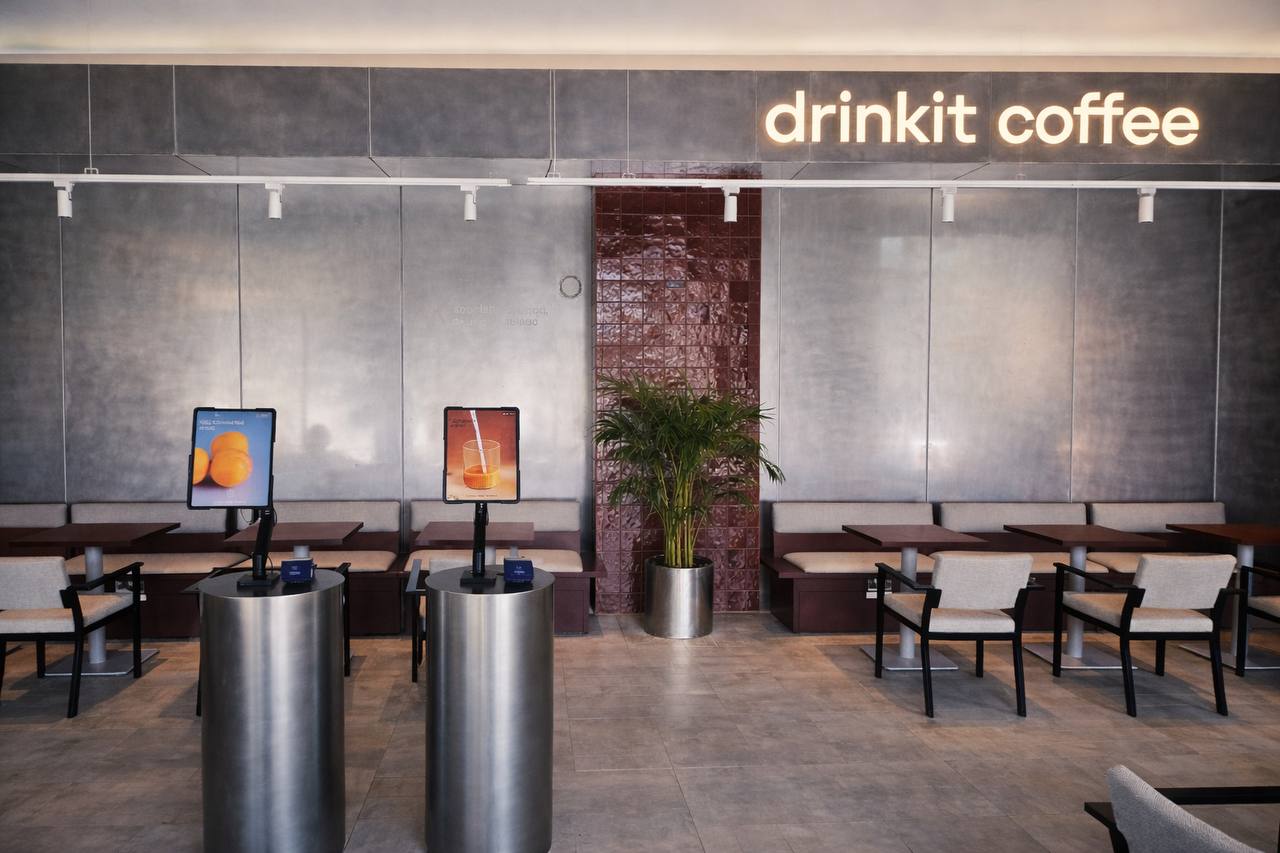
DrinKit continues to stand out as one of the most inspiring success stories in the coffee sector, advancing its journey as Dubai’s first digital coffee shop concept. The company has announced the opening of its 10th branch in Emaar Creek Harbour, bringing its global network to 182 locations and positioning it among the fastest growing modern coffee chains.

Katerina Borodich, CEO of DrinKit in the UAE and the Middle East, stated that this opening ranks among the brand’s strongest launches to date. The branch began operations without any prior announcement, yet recorded 86 transactions on its first day, an early and positive indicator of strong performance from the outset.

This branch holds particular significance due to its location within a fully integrated residential community in Dubai Creek Harbour. It is also the largest DrinKit location in the UAE in terms of space. The choice reflects a strategic shift toward expansion in residential neighborhoods that rely on daily coffee consumption rather than focusing only on commercial or tourist areas.

Initial indicators point to strong performance in terms of average order value, reinforcing expectations for future growth at this location, which benefits from rising population density and a fast paced urban lifestyle.

This expansion also highlights the acceleration of DrinKit’s strategy in the Middle East, as the company continues its growth phase with plans to open additional branches across Dubai in the near future.

According to internal company data, Drinkit now operates 10 stores in Dubai, including four under the franchise model, reflecting its transition toward a scalable and replicable operating system.

This growth signals a broader shift in the Gulf coffee market, where brands are increasingly targeting residential communities to meet rising daily demand for coffee as part of modern lifestyles.

With 10 branches in Dubai and 182 worldwide, Drinkit continues to strengthen its presence in the UAE market as part of a wider expansion strategy.

Indonesia’s Specialty Coffee Takeoff

Dubai – Qahwa World

Walk down a Jakarta side street at 7 a.m. and you can watch Indonesia’s coffee story unfold in real time: a plastic stool at a warung, a QR code on a grab-and-go kiosk, and a young professional ordering a single-origin pour-over on her way to the office. Indonesia is no longer just a coffee origin on a cupping table in Europe or the US; it is becoming one of the most dynamic coffee-drinking countries in the world.

Over the past decade, and especially since the pandemic, Indonesians have quietly transformed their relationship with coffee—from dark, sugar-laden robusta in glass cups to iced specialty beverages ordered through delivery apps and omakase-style tasting bars in the capital. The result is a market that is maturing on several levels at once: economically, culturally, and sensorially.

  • A producer that learned to drink its own coffee

Indonesia has long been a heavyweight in green coffee production, growing both arabica and robusta across islands like Sumatra, Java, Sulawesi, and Flores. The country contributes about 5% of global coffee exports and generates well over US$1.5 billion in export revenue from coffee each year, placing it among the world’s top producers.

You may read: Indonesia’s Top 9 Coffees in 2026

For decades, much of that coffee left the country, while domestic drinkers were served largely commodity-grade robusta, roasted dark and drowned in sugar, condensed milk, or spices. The local market revolved around warungs, kopi tubruk at home, and bustling kopitiams where coffee was one part caffeine, one part nostalgia.

What has changed is not only volume, but intent. Domestic consumption has surged, with coffee drinking shifting from a habit of necessity or tradition into a lifestyle that young Indonesians actively curate. Deloitte and other market analysts now point out that Indonesia’s coffee consumption has tripled compared with pre-pandemic levels, pushing it into the ranks of the world’s top five coffee-consuming countries. At the same time, analysts estimate the value of the country’s coffee market could reach roughly US$12.6 billion by 2030 if current growth continues at around 5% a year.

This turn inward matters. In a global market increasingly shaken by climate shocks and price volatility, a strong domestic demand base gives producers and roasters more options—and more leverage—than relying on export markets alone.

  • Chains, kiosks, and a new middle ground

To understand Indonesia’s current boom, it helps to look at what happened between the traditional warung and the high-end café. When international chains first arrived in the early 2000s, they brought espresso-based beverages and a new café aesthetic—but at a price point that was out of reach for many, with a single cup easily costing more than a third of the median daily income at the time.

Local entrepreneurs spotted the gap. Brands like Kopi Kenangan built their model on an accessible promise: modern coffee, familiar flavours, and digital convenience at a fraction of international chain prices. Founded in 2017, Kopi Kenangan expanded at breakneck speed, reaching roughly 900 stores across Indonesia by early 2025 and proving that there was appetite for something between the plastic stool and the plush armchair.

Their success coincided with a broader shift toward convenience formats. A wave of ready-to-drink (RTD) bottles, small grab-to-go kiosks, and café counters inside convenience stores—such as FamiCafé—pushed coffee into transit hubs, malls, petrol stations, and office towers. During the pandemic, this convenience-first model was supercharged: a study of Indonesia’s coffee market found that takeaway and online coffee orders rose by more than 5%, while average ticket sizes climbed from one drink per order to three as consumers leaned on delivery apps for their daily caffeine fix.

Today, Indonesia’s coffee landscape feels layered rather than linear. On the same street, you might see:

  • A traditional kopitiam serving kopi susu with breakfast.

  • A domestic chain offering flavoured iced lattes at a mass-market price.

  • A specialty barista weighing single-origin beans on a scale.

Instead of one model replacing another, they are stacking on top of one another—each speaking to a different moment, budget, and taste preference.

  • Youth, film, and the social life of coffee

Demographics are doing a lot of heavy lifting in Indonesia’s coffee story. Roughly 40% of the population is between 20 and 40 years old, a cohort that has more disposable income than their parents and a very different attitude toward consumption. Coffee is not just fuel; it is part of how they signal identity, spend time with friends, and document their day on social media.

Culture has played its role too. The 2015 release of Filosofi Kopi, a film centred on a specialty coffee shop in Jakarta, helped bring barista culture and single-origin storytelling into mainstream conversation. Café work, once viewed as a stopgap job, began to look like a creative, aspirational profession. Many young Indonesians saw in coffee a way to blend craft, hospitality, and entrepreneurship.

This shift is visible in the sheer number of cafés and coffee stalls that have opened over the last decade. Industry stakeholders now describe Indonesia as one of the countries with the highest café counts in the world, driven by small entrepreneurs, local chains, and increasingly sophisticated independent shops. In major cities, weekend “café-hopping” has become a common pastime for Gen Z and young professionals, who are as interested in interior design and latte art as they are in origin stories.

  • Jakarta’s specialty vanguard—and beyond

If chains and kiosks are the mass engine of growth, Jakarta’s specialty scene is the R&D lab. The city has become a playground for roasters, baristas, and café owners who want to push the sensory and experiential boundaries of coffee.

One of the most visible figures in this movement is Mikael Jasin, 2024 World Barista Champion and three-time Indonesia Barista Champion. His Jakarta concept, Omakafé, applies an omakase-style format to coffee, guiding guests through multi-course tasting experiences that showcase different origins, processes, and brew methods. The format signals something important: Indonesian consumers are increasingly willing not just to drink coffee, but to be educated, surprised, and entertained by it.

Jasin also serves as Chief of Coffee Innovation at Fore Coffee, a domestic specialty chain that raised around Rp 353.44 billion (approximately US$21 million) in an initial public offering on the Indonesia Stock Exchange. Following its IPO, Fore launched an experience-focused store in South Jakarta’s Panglima Polim area, centered on a slow bar where baristas talk guests through flavour profiles, extraction, and the differences between Indonesia’s growing regions.

Specialty is not staying in the capital. Cities like Surabaya, Bandung, Medan, and Bali are seeing a wave of new roasteries and cafés, ranging from minimalist espresso bars to drive-thru outlets connected to local chains. Brands such as Expat. Roasters have used airports and high-traffic locations as gateways, introducing both domestic and international travellers to Indonesian specialty coffee on their way in and out of the country.

Events have amplified this momentum. In May 2025, the World of Coffee trade show came to Jakarta for the first time, bringing international buyers, equipment manufacturers, and coffee professionals into direct contact with Indonesia’s rapidly evolving scene. Organisers noted not just the energy on the show floor but the diversity of approaches—from experimental processing and origin-focused menus to highly localised drink concepts that foreground Indonesian flavours.

  • A market growing in many directions at once

Looking at the numbers, there is little sign that Indonesia’s coffee boom is a short-lived trend. USDA forecasts for 2024/25 predicted domestic consumption at around 4.8 million 60 kg bags, up by 10,000 bags year-on-year, even as some export volumes softened due to production challenges. That apparent contradiction—strong local demand alongside tighter export supply—suggests more of Indonesia’s coffee is staying at home, and importantly, that more of it is being consumed in higher-value formats.

Crucially, growth is not confined to one end of the market. High-end specialty bars and omakase experiences are expanding at the same time as affordable grab-and-go concepts and convenience-store counters like FamiCafé. Together, they are building what industry observers describe as a multi-layered coffee ecosystem, where consumers can trade up or down depending on the occasion without leaving the category.

The pandemic also left a structural imprint on behaviour. As delivery apps became a habitual part of daily life, coffee companies used them not just as logistics channels but as discovery tools—testing limited-time flavours, seasonal drinks, and co-branded collaborations that could be scaled up if they went viral. This test-and-learn approach has kept the market nimble and responsive to shifting tastes, especially among younger drinkers.

At the same time, the steady rise of ready-to-drink and bottled coffee formats has opened new profit pools beyond the café counter. RTD options now sit in fridges in supermarkets, mini-marts, and even small neighbourhood shops, extending coffee consumption into moments and locations that a traditional café could not reach.

  • Taking Indonesian coffee culture abroad

As domestic demand matures, Indonesian coffee concepts are traveling. Kopi Kenangan was among the first homegrown chains to test international waters, rolling out stores in markets such as India, Australia, Singapore, Malaysia, and the Philippines. Their proposition—sweet, iced, and often dairy-forward beverages at accessible prices—translates well in other parts of Asia-Pacific where climate, income levels, and taste preferences are broadly similar.

Other Indonesian brands have followed, with Fore Coffee opening in Singapore to tap into that city’s role as a regional hub for café culture and food trends. These expansions function as both business experiments and cultural exports: they carry Indonesian flavour combinations, branding, and service styles into markets that are already crowded with global coffee names.

On a smaller scale but with significant symbolic impact, Indonesian-owned and Indonesian-inspired specialty cafés have started to appear in cities across the United States, a country that imports around 12% of Indonesia’s coffee. Spots like Kopiku in San Francisco, DUA DC in Washington, D.C., and Hijau in San Jose build their identities explicitly around Indonesian origins and culture, moving international perception beyond the usual shorthand of “Sumatra” or kopi luwak.

These cafés are often where international consumers encounter drinks like kopi susu, pandan lattes, or beverages sweetened with palm sugar (gula merah) for the first time. As Kangmin Kim of Exporum notes, globalisation and social media now make it far easier for these Southeast Asian-inspired drinks to gain attention, with a single viral post capable of propelling a niche menu item into mainstream curiosity.

  • Authenticity, accessibility, and what comes next

If there is a single through-line in Indonesia’s specialty coffee journey, it is the pairing of authenticity with accessibility. Rather than abandoning traditional flavours and formats, many of the most successful brands have reinterpreted them—bottled es kopi susu sold online during the pandemic, pandan- or palm-sugar-inflected lattes served in sleek urban cafés, or single-origin flights built around Indonesian terroirs that local drinkers can claim as their own.

Indonesia’s young, urbanising population, rising incomes, and long-standing coffee culture give it a rare combination of depth and momentum. The country is simultaneously a major producer and an increasingly sophisticated consumer, with domestic chains and independent shops continuously testing the limits of what coffee can be and who it is for.

The question now is less whether Indonesia’s coffee market will continue to grow, and more how far its influence will reach. As local chains expand regionally, RTD formats travel, and Indonesian-inspired cafés multiply abroad, the flavours and formats born in Jakarta, Surabaya, or Medan are likely to shape how the world drinks coffee in the decade ahead.
Starbucks aims to reach 1,000 stores in India by 2028

Dubai – Qahwa World

Starbucks’ global leadership has reaffirmed India’s position as one of the company’s most dynamic international markets, announcing new growth targets and fresh support for the country’s coffee sector.

The company’s Chief Executive, Brian Niccol, said in an interview with CNBC TV18 that India is now among the fastest-growing territories for the brand. The joint venture between the US coffee chain and Tata Consumer Products is expected to reach 500 stores this month, marked by the opening of a second Reserve location in the Delhi NCR area.

Niccol confirmed that the long-term ambition is to expand the network to 1,000 stores by 2028, emphasizing that success depends on pairing the company’s global expertise with a strong local presence. He highlighted that the strategy includes rolling out more premium formats aligned with the wider “Back to Starbucks” roadmap.

Starbucks first entered India in 2012 with a store in Mumbai and established a roasting facility in Karnataka the following year.

Alongside its retail growth plans, Starbucks also announced a new initiative aimed at strengthening India’s coffee value chain. Through the newly launched Farmer Support Partnership, the company’s global procurement and trading arm—Starbucks Coffee Trading Company—will work with growers in major producing regions including Karnataka, Tamil Nadu, Andhra Pradesh, and Kerala. The programme is designed to create technical model farms, promote best agricultural practices, and connect local producers with Starbucks’ global farming network.

The initiative will also support trials of new coffee varietals and collaborate with existing Farmer Support Centers located in countries such as Indonesia, China, and Costa Rica. Niccol said the partnership aims to train 10,000 farmers, combining Starbucks’ agronomy knowledge with Tata Starbucks’ understanding of local conditions.

Tata Consumer Products recently reported that Tata Starbucks returned to like-for-like sales growth for the first time in a year, supported in part by a government reduction in food and beverage taxes. The brand recorded 8% revenue growth in the second quarter ending 30 September 2025.

Coca-Cola Reassesses Its $5 Billion Coffee Investment

Dubai – Qahwa World

Coca-Cola is reconsidering its coffee strategy after its $5.1 billion acquisition of Costa Coffee failed to deliver the expected results.

CEO James Quincey admitted during the company’s recent earnings call that the “investment hypothesis didn’t work out as we expected.” The beverage giant had hoped Costa would drive significant growth beyond its traditional retail outlets, but that expansion has not materialized.

Despite the setback, Quincey emphasized that coffee remains a “super attractive category,” noting that Coca-Cola continues to invest in Costa’s UK operations and in expanding automated coffee machines under the Costa brand. However, he acknowledged that the business “hasn’t yet created the multiplier effect we were looking for.”

Coca-Cola is currently “reflecting” on how to position its coffee business moving forward. Reports from Reuters in August indicated that the company may be exploring a potential sale of Costa Coffee, though Quincey did not comment on that possibility.

Coca-Cola’s stock rose about 4% on Tuesday following its announcement that net sales increased by 5% to $12.46 billion in the third quarter.

The company’s coffee ventures also include experiments with Coca-Cola Coffee, a beverage blending the brand’s classic soda with coffee extract.

Iced Drinks and Matcha Fuel Record Summer Sales for The Nero Group

Dubai – Qahwa World

London – The Nero Group, operator of several well-known coffeehouse brands, has reported its strongest-ever summer performance, with iced beverages and matcha-based drinks driving substantial sales growth across its network.

The company achieved £166 million ($220 million) in revenue during the first quarter ending 31 August 2025, marking a 9% increase compared to the same period last year. Like-for-like sales rose by 6%, reflecting solid customer demand across all key markets.

The Group’s leading brand, Caffè Nero, recorded its best-ever first-quarter performance in the United Kingdom, generating £97 million ($128 million) in sales — a 7% year-on-year rise. Across the group’s five coffee chains, summer sales of iced beverages surged 49%, supported by the growing popularity of iced matcha options introduced this year.

According to The Nero Group, its seasonal menu expansion — particularly the launch of iced matcha — played a pivotal role in attracting new and returning customers. More than 1.3 million cups of matcha drinks were sold during the summer months alone.

“The opening quarter has been outstanding, giving us a very strong start to our financial year. Our iced drinks campaign, especially our matcha and iced coffee selections, resonated extremely well with customers,” said Gerry Ford, the group’s Founder and CEO.

The company added 13 new stores during the quarter, expanding its global footprint to 1,150 outlets across its five brands: Caffè Nero, Coffee#1, 200 Degrees, Harris + Hoole, and FCB Coffee. The UK remains its largest market, with over 630 Caffè Nero locations and nearly 200 outlets under its other banners.

Beyond the UK, Caffè Nero continued to perform well across Europe and the United States, with particularly strong results in Turkey, Sweden, Ireland, and Cyprus. In the US, the brand now operates 41 stores, primarily in Boston, Massachusetts, where trading remains robust despite intense competition.

Founded in 1997, Caffè Nero has grown into one of the most recognizable European coffee chains, known for its premium café experience and strong community presence. The Nero Group’s performance this year builds on last year’s record £626.4 million ($853.1 million) in annual sales, supported by the acquisitions of 200 Degrees and FCB Coffee in late 2024 — both of which have strengthened the group’s position in the specialty coffee market.

Bain Capital Submits Bid to Acquire Costa Coffee from Coca-Cola

Dubai – Qahwa World

US private equity firm Bain Capital has made an initial bid to acquire Costa Coffee from beverage giant The Coca-Cola Company, according to sources familiar with the matter.

The bid was submitted through Bain Capital’s Special Situations unit, which has invested more than $17bn since its launch in 2018 and currently manages over $21.6bn in assets. The investment group already counts boutique bakery-café chain Gail’s and restaurant brand PizzaExpress among its portfolio.

The development follows less than two weeks after Apollo Global Management, once considered the frontrunner, withdrew its interest in the UK-based coffee chain. Reports indicate that Coca-Cola has received fewer offers than expected for Costa, which operates more than 4,100 outlets worldwide. London-based TDR Capital, which has stakes in UK supermarket Asda and QSR brand Popeyes, also submitted a preliminary bid last month.

Coca-Cola has been exploring a sale of Costa since August 2025, nearly seven years after acquiring the company from Whitbread in January 2019 for $4.9bn. Speaking after Coca-Cola’s second-quarter earnings release earlier this year, CEO James Quincey admitted that the group’s investment in Costa Coffee “is not where we wanted it to be.”

A sale would likely see Coca-Cola incur losses of several billion dollars compared to its original purchase price. However, the company is expected to retain ownership of Costa’s ready-to-drink (RTD) beverage portfolio.

Founded in 1971, Costa Coffee is the UK’s largest coffee chain, with its home market accounting for around two-thirds of its global footprint. The brand reported 9% year-on-year sales growth in the 12 months ending 31 December 2023, reaching £1.2bn ($1.6bn), with the UK contributing 96% of total sales.

Pret A Manger Aims to Double UK Stores Following Strong 2024 Growth

Pret A Manger is preparing for a major expansion across the UK after reporting robust growth in 2024.

The London-based coffee and food-to-go chain, which currently operates 500 stores in the UK and another 200 across 20 international markets, achieved 10% year-on-year revenue growth in 2024, reaching £1.2bn ($1.6bn). Adjusted EBITDA rose 36% to £98m ($133m).

Chief Executive Pano Christou, who has led the JAB Holding-backed business since 2019, said Pret aims to double its UK footprint to 1,000 outlets by focusing on city centres and transport hubs. “Customers love the brand on the go. Our travel business has really exploded in recent years. We have eight locations at Heathrow and will add two more next year,” he told reporters.

Pret ended 2024 with 717 outlets across 21 global markets. Alongside its expansion plans, the chain will introduce new value-driven offerings, including a £6-£7 ($8.14-$9.50) lunchtime meal deal trial in the UK. The initiative, already successful in France, is expected to boost sales and afternoon footfall.

The company has also launched a premium ‘Super Plates’ salad range in 250 UK stores and overhauled its Club Pret subscription, scrapping its five-coffees-a-day offer for £30 ($38.99). Additionally, a new store format targeting dine-in and family groups has been unveiled in its home market.

Beyond the UK, Pret is seeking significant growth in the US, where it operates 70 stores generating approximately $100m annually, mainly in New York. Christou highlighted transport hubs along the East Coast as the primary focus for expansion. In October 2023, Pret signed a joint venture with franchise partner Dallas International to triple its US footprint by 2029, and in July 2025, it appointed former Tim Hortons executive Felipe Athayde as President of its North America business.

“2024 was another year of growth for Pret, where we took disciplined decisions to protect sales despite intense pressures on the hospitality industry. Our priority now is to drive transactions and sustainable growth by offering great value for Pret customers,” Christou said.

Coca-Cola Weighs Future of Costa Coffee Amid Strategic Review

Dubai, 24 August 2025 (Qahwa World) – The Coca-Cola Company is considering a possible sale of Costa Coffee, the British café chain it acquired in 2018, in what could become one of the most significant moves in the global coffee sector this year. According to reports confirmed by individuals familiar with the discussions, the U.S. beverage giant has hired investment bank Lazard to explore strategic options for Costa, ranging from a complete divestment to other restructuring paths. Early conversations have reportedly taken place with a limited number of potential bidders, including private equity firms, with indicative offers expected later this autumn.

The development marks a dramatic turn for Coca-Cola, which purchased Costa Coffee for more than $5 billion only seven years ago. At the time, the acquisition was presented as a bold entry into the booming global coffee market, positioning Coca-Cola to compete directly with established players such as Starbucks and Nestlé. With over 4,000 stores worldwide, including more than 2,700 outlets in the United Kingdom and Ireland, Costa provided the Atlanta-based company with an immediate international footprint in coffee retail, a sector where it had previously lacked presence.

Yet the performance of Costa under Coca-Cola’s ownership has fallen short of expectations. While revenues have grown modestly, the chain has struggled with profitability in the face of rising costs, increased competition, and shifting consumer behavior. In 2023, Costa’s revenues climbed by 9 percent to nearly £1.22 billion, but the company recorded a pre-tax loss of £9.6 million. The figure represented a sharp contrast with the £245.9 million profit reported just one year earlier, underscoring the financial pressure weighing on the brand.

Several factors appear to have contributed to Costa’s difficulties. Inflation has raised the cost of raw coffee beans and other inputs, while the high-street café market in the United Kingdom has grown more crowded with independent operators and international rivals. Additionally, some smaller branches in towns such as Andover and Lyme Regis have recently closed, fueling concerns that the chain has been unable to maintain momentum outside its core metropolitan strongholds.

The possibility of a sale, first reported by Sky News and later confirmed by other outlets, has already sparked debate over how much Costa is worth in the current environment. Industry analysts have suggested that the chain could fetch as little as £2 billion—less than half of what Coca-Cola paid in 2018. Such a valuation would reflect the challenges the brand faces as well as the cautious outlook of investors weighing long-term demand trends.

Coca-Cola executives have acknowledged the need to reassess the company’s position in the coffee category. In an earnings call last month, Chief Executive James Quincey stated that Costa had not delivered on the original investment hypothesis, noting that the company was now reflecting on lessons learned and exploring new avenues for growth in coffee. At the same time, he emphasized that Costa continues to operate successfully day to day, suggesting that any decision would be carefully measured rather than abrupt.

The discussions around Costa also fit into a broader wave of corporate restructuring across the global food and beverage industry. With inflation altering cost structures and consumers increasingly prioritizing health, sustainability, and transparency, large companies are rethinking their portfolios to adapt. Coca-Cola has already made moves in this direction, most recently announcing a shift to real cane sugar in its U.S. beverages as part of a campaign to respond to rising health awareness.

Should a sale move forward, it would reshape the global coffee landscape. Costa, with operations spanning more than 50 countries, represents one of the few brands capable of challenging Starbucks on a multi-regional scale. A new owner could seek to revitalize the brand with fresh investment and focus, while Coca-Cola would gain flexibility to redirect resources toward other categories. On the other hand, if bids fall short of expectations, the company may choose to retain Costa and pursue an internal restructuring to restore profitability.

For now, the process remains in early stages, and no definitive outcome has been decided. What is clear, however, is that Coca-Cola’s venture into the café business—once considered a cornerstone of its diversification strategy—is under critical review. Whether Costa changes hands or undergoes a major transformation within the Coca-Cola system, the decision will send ripples through both the corporate boardrooms and coffee shops that make up an increasingly competitive global market.

Blank Street Coffee: From Brooklyn Cart to $500 Million Brand

In just four years, Blank Street Coffee has grown from a single cart in Brooklyn to a business worth $500 million, operating 90 locations and generating $149 million annually.

Unlike traditional coffee shops that offer sprawling spaces, endless menus, and a co-working vibe, Blank Street took the opposite approach. Its stores average just 500 square feet, with a stripped-down menu and fast, efficient service. Rent costs are around $3,500 a month—a fraction of the $15,000 many New York cafés pay.

At the core of this efficiency are high-tech espresso machines capable of producing 90 cups an hour with only one or two staff members. Orders are streamlined through mobile apps and contactless payments, keeping the customer experience minimal and frictionless.

But the real secret lies in Blank Street’s marketing. Pop-up events create long queues that double as free advertising when shared across Instagram. Limited-edition collaborations and sleek, photogenic setups keep the brand in constant conversation. Customers believe they are supporting a cool indie spot, while in reality, they are fueling a data-driven system built for viral moments.

The branding is smart: local partnerships, clean design, and prices that undercut Starbucks by about 25%. The result is a company that feels small and neighborhood-friendly while running like a perfectly optimized machine.

Founded in 2020 by two former venture capitalists, Blank Street was designed to reimagine coffee culture. Instead of reinventing coffee itself, the company focused on serving it faster, cheaper, and more shareable online.

Today, Blank Street operates across New York, Boston, DC, and even London. Its mission remains clear: to make coffee a simple, affordable daily ritual while blending efficiency, technology, and social buzz.

For Blank Street, the formula is simple—strip away the excess, keep prices low, and make every latte Instagram-worthy. Turns out, you don’t need to change coffee. You just need to change the business model.

👉 Visit Blank Street Coffee

The Rise of Coffee Chains

By: Serkan Oral

The 21st century is the age of coffee chains more than any other. Coffee beans are becoming as valuable as gold. The sector continues its upward trend, driven by the rapid expansion of coffee chains worldwide.

Let’s talk numbers.
Between 2015 and 2024, global coffee imports reached a total of $370.3 billion. The United States accounted for $69.2 billion of this total, followed by Germany with $41.9 billion and France with $28.9 billion. Other major importers included Italy, Canada, Belgium, Spain, Japan, the Netherlands, and Switzerland, with their combined imports amounting to $238.5 billion. Altogether, the top 10 coffee importers represented 64.4% of the global market during the past decade.

There are also emerging markets on the rise.

Meanwhile, Brazil stood as the world’s largest coffee exporter, with exports over the past decade totaling $360.3 billion, followed by Switzerland with $28.7 billion and Colombia with $28.6 billion. Other significant exporters were Germany, Vietnam, Italy, Honduras, France, Belgium, and Indonesia.

Türkiye carries a dual identity in the global coffee story — as both the heir to the Ottoman coffee legacy and as a modern hub for new-generation coffee culture.

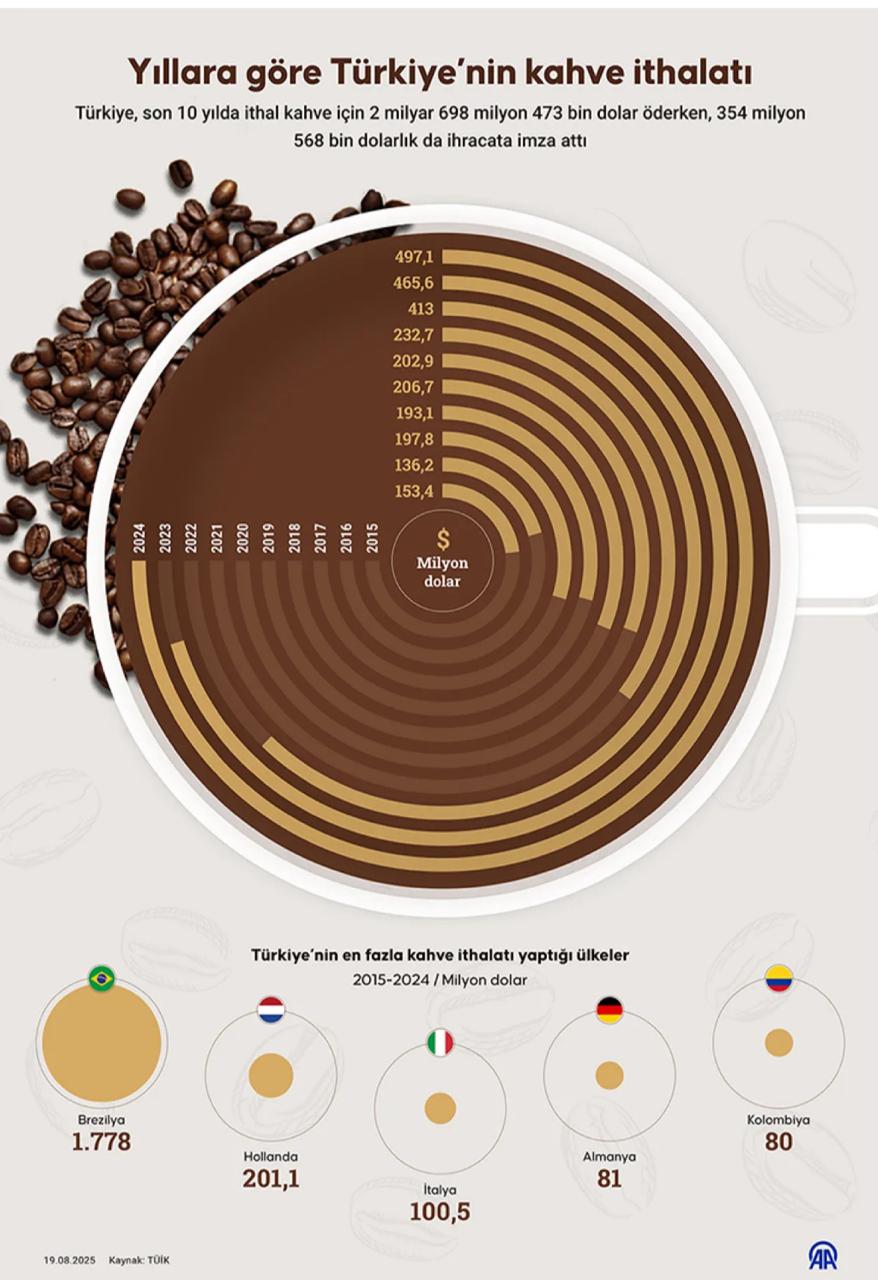
Türkiye’s coffee imports between 2015 and 2024 reached $2.7 billion, with prices for imported coffee rising from $153.4 million in 2015 to $497.1 million in 2024, marking an increase of 224%, according to the national statistical bureau TurkStat.

On the export side, Türkiye recorded $354.5 million worth of coffee exports over the last decade, including $55.6 million in the first half of this year alone.

Türkiye imported most of its coffee from Brazil, totaling $1.7 billion, followed by the Netherlands with $201.1 million, Italy with $100.5 million, Germany with $80.9 million, and Colombia with $79.9 million. The country’s imports stood at $472.5 million as of June, with Brazil remaining its top supplier.

The world’s coffee consumption — both hot and iced — over the past decade totaled $370.3 billion, according to data from the International Trade Center (ITC). The United States was the largest importer, while Brazil dominated exports.

Personally, I prefer iced coffee on summer afternoons, but I always start my day with a hot Turkish coffee. For Turks, the tradition of the 11 a.m. coffee break continues as a nationwide ritual. Around the world, specialty coffee is also gaining momentum, and habits are evolving quickly.

The golden era of coffee and coffee shops has already begun, spreading across continents. More lovely qahwa days are on the horizon.