Nuova Simonelli at World of Coffee Bangkok 2026

Bangkok – Qahwa World

From May 7 to 9, Nuova Simonelli will take part in World of Coffee Bangkok 2026, bringing innovation and energy to the heart of the Asian coffee industry. Visitors can find the brand at booth B311, where technology, experience, and great coffee come together.

Nuova Simonelli area: a future experience

Inside the brand space, visitors will enjoy a fully hands-on experience designed for baristas, roasters, and coffee chains.

The event will feature the official launch of a new evolution of the iconic coffee machine, designed to simplify daily work, improve efficiency, and support sustainability.

A high-performance professional machine will also be available for hands-on testing, created for fast-paced environments without compromising cup quality.

Smart automation technology

Intelligent automation with zero stress. Visitors will experience smart automation technology that simplifies daily operations, standardizes preparation, and ensures consistent quality even during peak hours.

An experience beyond the booth

Booth B311 will be more than an exhibition space. It will be a dynamic hub for meeting, tasting, and exchanging ideas between coffee professionals and an international audience.

Guests are invited to try the machines, explore the technology, and engage with the future of coffee innovation.

Invitation

Visit the booth, test the equipment, and discover how coffee meets smart innovation.

Italian Coffee Giants Unite to Launch Mazzer x Slayer Grinder

New collaboration brings precision-focused innovation to professional coffee grinding

Milan – Qahwa World

Two leading names in Italy’s coffee equipment industry have joined forces to introduce a new grinder designed for professional use, marking a notable collaboration in the speciality coffee sector.

The partnership between Cimbali Group and Mazzer has resulted in the Mazzer x Slayer grinder, unveiled during the Grind Chronicles. The project represents the first tangible outcome of their combined efforts.

The grinder has been developed to enhance the interaction between barista and equipment, with a focus on design, usability, and precision. Drawing inspiration from the Slayer espresso machine experience, the new model aims to extend that same level of control and attention to detail to the grinding stage.

Presented as a prototype, the machine operates at low speed and incorporates a grind-by-weight system, making it suitable for medium- to high-volume coffee environments. It features an integrated load cell and 69 mm conical burrs, designed to deliver consistent and accurate dosing across different working conditions.

The design also reflects elements associated with Slayer machines, offering a cohesive workflow from grinding through to extraction. This approach is intended to support baristas in maintaining consistency while optimising daily operations.

Frédéric Thil, managing director of Cimbali Group, stated that the collaboration brings together complementary expertise to develop reliable, high-performance solutions for coffee professionals. He emphasised the importance of precision, consistency, and control in elevating both workflow and cup quality.

Giovanni Mazzer, President of Mazzer, described the partnership as a meaningful collaboration between companies that share common values and a strong connection to espresso heritage. He noted the potential to deliver advanced technological solutions alongside a high standard of service.

The final version of the Mazzer x Slayer grinder is expected to be officially introduced to the market at the London Coffee Festival 2026 in May 2026.

Invisible Gravity in Coffee

By Dr. Steffen Schwarz

If you stand at the edge of a coffee farm at dawn, the industry looks almost impossibly fragmented. It is a mosaic of small plots and a patchwork of varieties where thousands of decisions are made by hand: when to prune, when to fertilize, and when to pick. Multiply that landscape by the number of farms worldwide, and the picture becomes geological in scale.

Yet, the moment the coffee cherry leaves the farm gate, a different geography takes over—not of soil and altitude, but of finance, logistics, risk, and ownership. While often described as “complex,” the sector hides a simpler truth: most of the value chain is governed by a small number of capital-intensive control points. Whoever owns these points sets the tempo for the entire industry.

The Five-Part Series: An Overview

This article serves as the “overview lens” for a five-part series designed for decision-makers. Over the coming weeks, we will dive deep into:

  1. Green Coffee: The industrialization of uncertainty.

  2. Roasted Coffee & Brand Ownership: The architecture of portfolios.

  3. Coffee Technology & Manufacturing: The power of installed bases.

  4. Coffee Service: The economics of high-frequency traffic.

To map this landscape, I use a “triangulation” approach: public filings, official acquisition reports, and corporate self-descriptions. While private groups remain opaque, that very opacity allows capital to concentrate through information arbitrage.

YOU MAY LIKE THIS: Steffen Schwarz: A Silent Shift Towards Canephora is Redefining Europe’s Coffee Preferences

1. Green Coffee: Managing the Industrial Flow

Coffee is biologically diverse but industrially standardized. To turn variable seeds into repeatable contract specifications, the system requires massive infrastructure.

Supply is heavily concentrated at the source: a handful of countries represent the bulk of global supply. At the demand end, the EU and the US act as regulatory gatekeepers; their decisions effectively become global requirements.

The Power of Working Capital Coffee moves through time before it moves through taste. Financing harvests and managing long ocean lead times requires immense balance sheets. Major merchant houses do not just trade; they process, insure, and provide credit.

  • ECOM Agroindustrial: Integrated from procurement to primary processing.

  • Sucafina: A “farm to roaster” footprint across multiple continents.

  • COFCO International: Connecting China’s state-linked system to global supply, signaling coffee’s role in geopolitics.

  • Volcafe (Hartree Partners): The 2025 acquisition of Volcafe by Hartree Partners signals that coffee is increasingly attractive to energy and commodity-scale capital.

2. Roasted Coffee: The Illusion of Plurality

In the roasting segment, concentration is often masked by brand diversity. A single group may own dozens of brands, appearing as “competitors” on a shelf while negotiating as a single entity.

  • The Nestlé-Starbucks Alliance: The Global Coffee Alliance allows Nestlé to leverage Starbucks’ brand power with its own industrial scale.

  • The “Coffee Champion” Logic: In August 2025, Keurig Dr Pepper announced the acquisition of JDE Peet’s. This move consolidates single-serve systems and global brand portfolios, reducing the number of global negotiating counterparts.

3. Technology: The Lever of Structural Power

Machinery is where chemistry meets economics. Equipment determines labor deployment, consistency, and data harvesting.

Platform Strategy Industrial holdings are building “professional coffee hubs.”

  • De’Longhi Group: By combining Eversys (super-automatic) and La Marzocco (traditional heritage), they control both high-volume convenience and premium café credibility.

  • Ali Group & Artemis Holding: Brands like Rancilio and Franke Coffee Systems are now part of massive foodservice portfolios that prioritize service ecosystems and connectivity over mere “engineering.”

4. Coffee Service: Real Estate and Routine

On the street, coffee looks diverse. On the balance sheet, it is a game of infrastructure.

  • Starbucks: With over 40,000 stores globally as of late 2024, it is less a retailer and more a global infrastructure.

  • Coca-Cola (Costa Coffee): Coffee is used as a strategic complement to a broader beverage empire, appearing in offices, petrol stations, and micro-markets.

  • Private Equity: Roark Capital (Dunkin’) and JAB (Panera/Pret) treat coffee as a high-frequency traffic driver within franchised systems.

Conclusion: Becoming Competent in Concentration

The coffee industry remains plural at the creative frontier—independent roasters still set sensory trends. However, this “long tail” lives within an environment shaped by capital-heavy platforms.

Strategy for the modern manager is not about resisting this gravity, but understanding it. Only by separating the physics of these four interlocking systems—finance, branding, engineering, and operations—can one make intelligent decisions about the future.

The World’s Mood, Tuned to an Emirati Rhythm

By: Ali Al Amodi

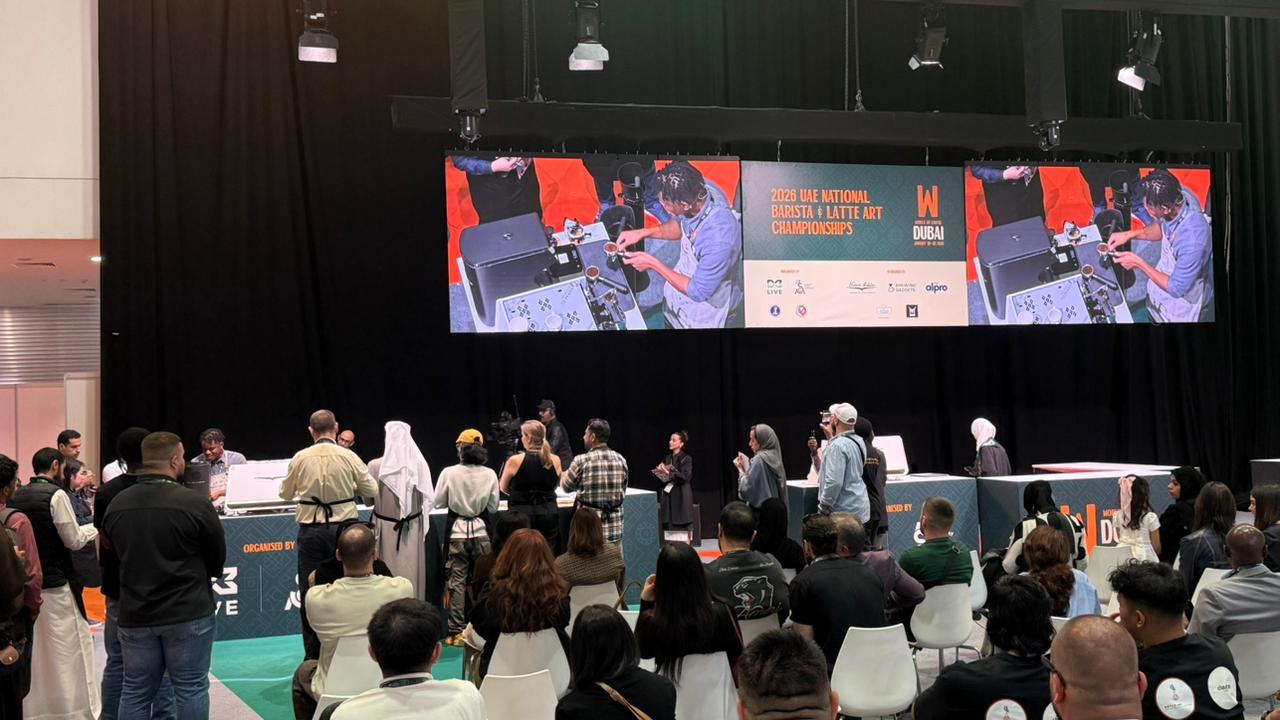
In a world where a cup of coffee sets the rhythm of daily life, World of Coffee Dubai 2026 proved to be far more than a specialized industry event. It stood as a reflection of a city that knows how to turn the impossible into reality. From the heart of Dubai, the world’s largest global platform for coffee trade took shape—an irony that perfectly captures the meaning of vision and the ability to transform geography into opportunity.

Hosted at the Dubai World Trade Centre, the exhibition presented a striking scene: pavilions from 78 countries, more than 2,100 companies and brands, and an area exceeding 20,000 square meters. Together, they told the story of coffee’s journey from distant mountain farms to the consumer’s cup at the far edges of the world. This was not merely a commercial showcase, but a vibrant network of relationships, knowledge exchange, and advanced technologies in roasting, processing, and brewing.

The visit of His Highness Sheikh Mohammed bin Rashid Al Maktoum, Vice President and Prime Minister of the UAE and Ruler of Dubai, carried special significance. It underscored that attention to this sector is part of a broader vision that sees the creative economy and global value chains as key drivers of development. Coffee—often described as “setting the world’s mood”—has also become an indicator of market vitality and growth opportunities, at a time when the global coffee market is moving toward hundreds of billions of dollars. Record-breaking prices at premium coffee auctions clearly signal rising global demand for high-quality coffee.

World of Coffee Dubai encapsulates a powerful Emirati lesson: success is not measured by natural resources, but by vision, connectivity, and the courage to invest in the future. In the coffee cup that begins the day for millions lies the story of a city that chose to become a meeting point for the world—and succeeded.

By hosting this global event, Dubai once again confirms that it does not wait to be invited into the future; it takes the initiative to shape it. From a coffee exhibition to a global economic platform, a clear Emirati philosophy emerges: transforming everyday details into major opportunities and building a global reputation based on quality, organization, and innovation. Thus, the morning cup of coffee becomes yet another witness to the story of a city that truly masters the art of inspiration.

Perhaps the most striking aspect of World of Coffee Dubai is the human and cultural diversity flowing through its halls. Here, a farmer from Latin America meets a roaster from Asia, while an African trader sits beside a European investor—united by a single shared language: coffee.

It is a convergence created by a city that believes its true role is to be a bridge, not a barrier, and an open marketplace for ideas as much as for trade.

WOCD 2026 Unveils a Science-Driven Lecture Programme

Dubai – Qahwa World

World of Coffee Dubai 2026 is set to feature a cutting-edge programme of lectures that bring technology, neuroscience, and coffee science to the forefront of the global coffee conversation. Hosted at the Dubai World Trade Centre, Za’abeel Hall 6, the event will gather leading experts to explore innovation, sustainability, and the science behind coffee.

On 19 January 2026, Kato Joshua, Founder of the Institute for Tech Diplomacy and Resource Governance (ITDRG), will present “Coffee Diplomacy: Leveraging Technology to Strengthen Global Coffee Governance.” Joshua will examine how AI and blockchain can enhance transparency, equity, and sustainable trade, particularly in African coffee supply chains. The lecture introduces coffee diplomacy as a framework to support ethical trade, strengthen governance, and foster global collaboration among producers and traders.

Kato Joshua

Innovation continues on 18 January 2026 with Mario Ubiali, Founder and CEO of Thimus, delivering “The Milan Neurobrew: How Neuroscience Helped Create a New Breed of RTD Coffee Drink.” The session will highlight how sensory neuroscience drives rapid prototyping of ready-to-drink coffee products, creating human-centric, de-risked innovations that align with consumer behaviour. Ubiali is a two-time TEDx speaker, professor of Neuroscience for Marketing, and contributor to Nature Human Behavior.

Mario Ubiali

Also on 18 January 2026, coffee science enthusiasts will benefit from James Harper’s lecture, “The Science of Roasting & Energy Transfer: Mastering the Thermodynamics of Flavour.” Harper, creator of the Filter Stories podcast, will explore the evolution of roasting from early machines to modern convective systems, explaining how heat transfer and chemical reactions shape coffee flavour. Known for making complex science accessible, Harper bridges history, physics, and practical roasting insights.

James Harper

These sessions position World of Coffee Dubai 2026 as a global platform for knowledge exchange, emphasizing transparency, innovation, and scientific understanding across the coffee industry.

The New Global Coffee Order: Major Transformations Shaping the Industry’s Future

Dubai – Qahwa World

The coffee industry is witnessing an unprecedented transformation, reshaping itself under pressures that span climate, economics, trade, and consumer behavior. The World Coffee Portal’s recent two-part analytical study, titled “Coffee’s New World Order”, provides a deep dive into these sweeping changes, offering a comprehensive view of how the global coffee system is evolving before our eyes.

Climate Pressures and Production Volatility

Global coffee production is now more vulnerable than ever. In 2025, Brazil, the world’s largest arabica producer, faced severe heatwaves and erratic rainfall, pushing arabica prices to historic highs. Meanwhile, Vietnam, a key robusta supplier, suffered prolonged droughts that impacted yields, raising the cost of instant coffee ingredients to levels unseen in nearly half a century.

These climate challenges are compounding existing market pressures. Futures markets, historically driven by stable inventory practices, are now in backwardation, discouraging stockpiling and amplifying shortages. As a result, the world is seeing unprecedented fluctuations in both commodity prices and availability, affecting roasters, exporters, and consumers alike.

Trade Policies and Global Ripple Effects

Recent trade developments have intensified the industry’s volatility. When the United States imposed significant tariffs on Brazilian coffee, supply chains were forced to adapt quickly. European and Asian markets absorbed redirected volumes, leading Germany to surpass the US as Brazil’s largest export destination. Meanwhile, China has actively expanded imports to secure long-term supply for its growing domestic chains, including large-scale deals by regional players to stock thousands of stores.

These developments illustrate that coffee is no longer a commodity confined to traditional trade patterns. Instead, it is part of a dynamic, multi-polar market, where emerging economies increasingly influence global flows, pricing, and strategies.

Consumer Trends and Emerging Markets

The World Coffee Portal study emphasizes that consumption patterns are shifting globally. Asia, the Middle East, and Latin America are no longer passive markets. Local brands are rapidly innovating, offering products tailored to regional tastes, from fruit-infused coffee drinks to digital-first ordering experiences. These trends challenge legacy Western models of expansion, demonstrating that global dominance in coffee is no longer guaranteed by scale alone.

Specialty Coffee Under Pressure

Specialty coffee, long seen as insulated from commodity pressures, now faces both opportunities and risks. Automation and technological advances can reduce operational costs, but the premium coffee segment must balance quality, exclusivity, and affordability. Experts highlight that consumer expectations remain high; price increases must be justified by superior flavor, traceability, and experience. The premium market’s future will hinge on its ability to navigate these competing demands.

Sustainability and Climate Resilience

With 70% of global coffee produced by smallholders, sustainability is central to industry stability. Climate resilience, yield improvements, and farmer support are critical to safeguarding the coffee supply chain. While development aid has declined, private sector initiatives and collaborative programs—such as G7-backed funds and proposed levies on green coffee—are emerging as essential mechanisms to ensure long-term sustainability.

The End of Cheap Coffee?

The era of inexpensive, untraceable coffee is drawing to a close. Rising costs, climate impacts, and supply chain disruptions are driving prices upward, even as global demand remains robust. Consumers may pay more, but the industry is evolving toward efficiency, transparency, and collaboration, creating a new paradigm for how coffee is grown, traded, and consumed worldwide.

The World Coffee Portal’s study offers a rare and detailed glimpse into this evolving global landscape, providing essential insights for industry leaders, traders, and enthusiasts alike. The global coffee order is changing—and those who adapt quickly will define the next era of the industry.
Starbucks Unveils AI Barista That Predicts Coffee Orders Before Customers Arrive

Dubai – Qahwa World

Starbucks is integrating artificial intelligence into its daily operations as part of a broader plan to enhance efficiency and customer experience. CEO Brian Niccol confirmed the company’s AI-driven direction during Salesforce’s Dreamforce 2025 event in San Francisco, according to Fortune.

Niccol explained that Starbucks is developing internal technologies designed to help baristas prepare drinks in real time — and potentially predict customers’ orders before they even place them. While the company is still in the learning and experimentation phase, Niccol emphasized that AI is already helping Starbucks pursue its ambition of becoming “the world’s great customer service company again.”

The “Green Dot Assist”

One of the company’s most advanced tools so far is called Green Dot Assist, described as a “barista assistant.” Piloted in June and now rolled out to additional stores, it operates as a chatbot-like system that supports store leaders in day-to-day operations — including guidance on drink preparation, troubleshooting equipment issues, and managing workflow.

A Starbucks spokesperson told TODAY.com that the tool is intended to assist employees rather than replace them, helping make their work smoother and more efficient.

Predictive Coffee Ordering

Niccol also noted that the Starbucks app remains central to the company’s AI strategy. He outlined a future scenario where customers might not even need to open the app — instead, they could simply say, “Hey, I need my Starbucks order. I’ll be there in 10 minutes,” and the AI system would have the drink ready upon arrival.

Despite these advancements, Niccol clarified that Starbucks is “not near” the stage of using a fully robotic workforce. The company, he said, remains committed to a “real craft” experience by having more human partners in stores to serve customers personally rather than relying on automation.

The Broader AI Movement in Coffee

Starbucks is not alone in exploring AI integration. At Hudson Yards in New York City, an AI-powered robotic barista named Jarvis is already preparing drinks for customers — even engaging with them via gestures and conversation before requesting a tip.

As AI technology continues to evolve, coffee chains around the world are experimenting with automation to strike a balance between innovation and preserving the artistry that defines the coffee experience.

Cropster Acquires South Korean Coffee Tech Company

Dubai – Qahwa World

Austria-based Cropster, a leading developer of smart software solutions for the coffee industry, has announced the acquisition of Firescope, a South Korean technology company specializing in coffee roasting software. The move marks a key step in Cropster’s expansion strategy across Asia and its broader plan to strengthen its position in global coffee technology.

Firescope, founded in 2020 in Seoul, provides cloud-based roasting software used by more than 3,000 independent coffee roasters in South Korea and Japan. The acquisition will enable Cropster to expand its footprint in East Asia’s rapidly growing specialty coffee market. The financial terms of the deal were not disclosed.

Founded in 2008 by Andreas Idl, Norbert Niederhauser, and Martin Wiesinger, Cropster creates digital tools that improve efficiency, consistency, and traceability across the entire coffee value chain — from green coffee trading and roasting to retail operations and cafés.

In 2024, Cropster sold a majority stake to the Oslo-based investment firm Verdane, providing the company with a strong financial foundation to pursue mergers and acquisitions aimed at building an integrated digital ecosystem for the coffee industry.

Under the new agreement, Firescope will continue operating as a standalone platform until the second half of 2026, after which it will be integrated into Cropster’s ecosystem. This integration will allow Firescope’s services to reach new markets beyond East Asia for the first time.

Cropster also plans to use Firescope’s Seoul headquarters as its new regional hub for sales and technical support in Asia, further strengthening its presence in the region.

“Asia plays a central role in the growth of the global specialty coffee sector, and this acquisition positions Cropster as a leader in providing comprehensive digital solutions across the region,” said Ralph Karg, Director at Verdane.

Andreas Idl, Co-Founder and CEO of Cropster, emphasized that this acquisition is the beginning of a larger strategy:

“Our vision is to digitalize the entire coffee journey — from cultivation and production to roasting, distribution, and cafés. Firescope represents a key part of this vision, and we plan to pursue additional acquisitions to achieve our ‘crop-to-cup’ mission.”

Today, Cropster works with thousands of coffee companies in more than 100 countries, including well-known specialty coffee brands such as Blue Bottle Coffee, WatchHouse, Five Elephant, Verve Coffee Roasters, and Bunista. Firescope’s clients include HOWW Coffee, Your Home Coffee Roasters, Koffee Sniffer, and Indigo Coffee Roasters.

With this acquisition, Cropster reinforces its role as a global leader in coffee technology, advancing its goal of creating a connected, data-driven ecosystem that supports innovation across the entire coffee supply chain.

JDE Peet’s Opens Transformed Innovation Laboratory in Utrecht to Accelerate Coffee Breakthroughs

Amsterdam – Qahwa World

JDE Peet’s (EURONEXT: JDEP) has announced the opening of its fully revamped modular Innovation Laboratory in Utrecht, the Netherlands, marking a major milestone in its efforts to accelerate next-generation coffee breakthroughs.

The upgraded facility reinforces the company’s commitment to scaling customer-led innovations and highlights the strategic importance of its global R&D center in Utrecht. With a modular setup, the Innovation Lab allows teams to rapidly develop new coffee products, processes, and packaging materials that can be quickly scaled across JDE Peet’s global manufacturing network.

This investment complements the recent opening of the company’s innovation facility in Joure, which focuses on next-generation extraction and freeze-drying technologies. Together, both facilities represent a combined investment of €8 million.

Key focus areas for the Utrecht Innovation Lab include single-serve, capsule, ready-to-drink, and instant coffee formats, alongside the development of sustainable packaging solutions. In support of JDE Peet’s Common Grounds sustainability goals, the new laboratory also integrates advanced heating and ventilation systems designed to recycle heat and reduce energy consumption.

Carolyn Adams, Chief R&D Officer at JDE Peet’s, said:

“We’re proud that our next generation of coffee innovations will be developed in the home of our oldest and most beloved brands – Douwe Egberts. Coffee is one of the most exciting and fast-evolving consumer categories, with new flavors and formats emerging almost every week. The agile, modular setup of our Innovation Lab enables us to rapidly respond to consumer insights and quickly scale new flavors and formats – whether hot, cold, wet, or dry – to full factory production. As we deliver our ‘Reignite the Amazing’ strategy, this investment will allow us to significantly accelerate the time-to-market of the next generation of coffee breakthroughs in response to changing consumer needs and trends.”

The Utrecht Innovation Laboratory offers a flexible, modular workspace equipped with advanced technologies for coffee product development. These include high-precision grinders and capsule fillers for single-serve and portioned espresso, technologies for JDE Peet’s liquid Cafitesse products, facilities for ready-to-drink cold coffee, and advanced freeze-drying systems for next-generation instant coffee — an important growth area for the company.

Recent innovations developed at the Utrecht Lab include improved non-dairy creamers, energy-efficient roasting methods, home-recyclable paper packaging for freeze-dried instant coffee in the UK, and the ongoing development of mono-material packaging to enhance recyclability.

From Blockchain to Artificial Intelligence: Technology Reshapes the Future of Coffee

Dubai, 17 September 2025 (Qahwa World) –The DMCC Coffee Centre, part of Dubai Multi Commodities Centre, has stressed in its latest Future of Trade Agri Series report that technological innovation is becoming a decisive force in reshaping the global coffee industry. At a time when the sector is grappling with climate change, market volatility, and fragile supply chains, tools such as blockchain, artificial intelligence (AI), and circular economy models are no longer optional experiments but essential solutions that can secure coffee’s future.

For decades, the industry has struggled with a lack of transparency. Coffee beans often move through complex trade routes, making it difficult for consumers to know their origin or production conditions, while smallholder farmers rarely capture the full value of their work. The report highlights blockchain as a game-changer, offering tamper-proof digital records that track beans “from farm to cup.” Every shipment can be linked to certified data on origin, processing, and storage. This level of transparency not only builds consumer trust but also allows farmers to earn fairer prices by showcasing quality and differentiation, narrowing the gap between farmgate prices and final retail value.

The digital transformation extends to trade and finance. The DMCC Coffee Centre emphasizes the role of infrastructure like the Tradeflow platform, where coffee ownership is transferred only after arrival, inspection, and storage under controlled conditions. This system reduces informational risks and enhances trust between buyers and sellers. It also enables the use of digitally tokenized products that provide greater security and clarity of ownership, paving the way for smoother inventory financing and working capital solutions in a sector long plagued by data gaps. In short, Dubai’s coffee hub combines reliable digital records with physical oversight to reduce friction and empower smaller players.

Artificial intelligence is another pillar of this transformation. On the farm, predictive algorithms analyze climate, soil, and humidity data to guide planting and harvesting schedules, mitigating the effects of droughts and erratic seasons while improving yields. At the market level, AI-powered demand forecasting helps roasters and traders anticipate shifting consumer preferences, particularly the rise of specialty coffee among millennials and Gen Z. This allows for better inventory management, targeted product development, and even the creation of blends tailored to specific taste profiles.

The report also points to the rapid shift toward direct-to-consumer channels. Coffee brands are increasingly bypassing traditional retail by building digital platforms, offering subscription models, virtual tasting experiences, and loyalty programs. These innovations shorten the distance between roaster and consumer, while giving small businesses tools to tell the “story of coffee”—origin, processing, and roast profile—in ways that translate into real economic value.

Meanwhile, the circular economy is redefining coffee’s environmental footprint. Millions of tons of coffee waste once treated as byproducts are now being converted into new resources. Startups are turning spent coffee grounds into biofuels, fertilizers, and even textile materials. Packaging innovation is also gaining traction, with compostable capsules, recyclable materials, and structured collection programs that reduce waste and lower carbon emissions. These efforts, the report argues, are not only about image but also about cutting costs and meeting stricter sustainability criteria in key markets.

At the heart of this transformation remains the human factor. Coffee depends on more than 25 million smallholder farmers worldwide, and digital adoption must ultimately improve their livelihoods, not just introduce high-tech systems. The DMCC Coffee Centre underscores the importance of affordable tools—such as low-cost sensors and mobile advisory apps—combined with fair contracts that reflect the quality of specialty coffee. When digital transparency is paired with equitable pricing, the weakest link in the chain becomes stronger, and smallholders can withstand climate and market shocks more effectively.

The report also draws attention to rising compliance demands, including deforestation regulations and origin tracking requirements, which are pushing the industry toward standardized data systems. By providing exporters with shared verification platforms and importers with unified benchmarks, compliance becomes less of a burden and more of an opportunity to unlock premium markets. With Dubai evolving into a logistics and cultural hub for coffee—offering shared roasting, packaging, and storage facilities—the emirate demonstrates how producers in Africa and Latin America can connect to demanding consumers in Asia and the Gulf through clearer traceability, faster access, and reduced risk.

In conclusion, the DMCC Coffee Centre makes clear that coffee’s survival will not depend on wishful thinking but on the adoption of a responsible digital transformation. Blockchain provides transparency, AI enhances precision, direct digital channels strengthen relationships, and circular economy solutions turn waste into resources. Yet the true value of these tools lies in translating them into better farmer incomes, greater consumer confidence, and a more resilient industry. Far from replacing the cultural essence of coffee, technology is extending it: knowledge accumulated through centuries, now reinforced by intelligent systems that give the sector a realistic path to endure and thrive in an era of uncertainty.

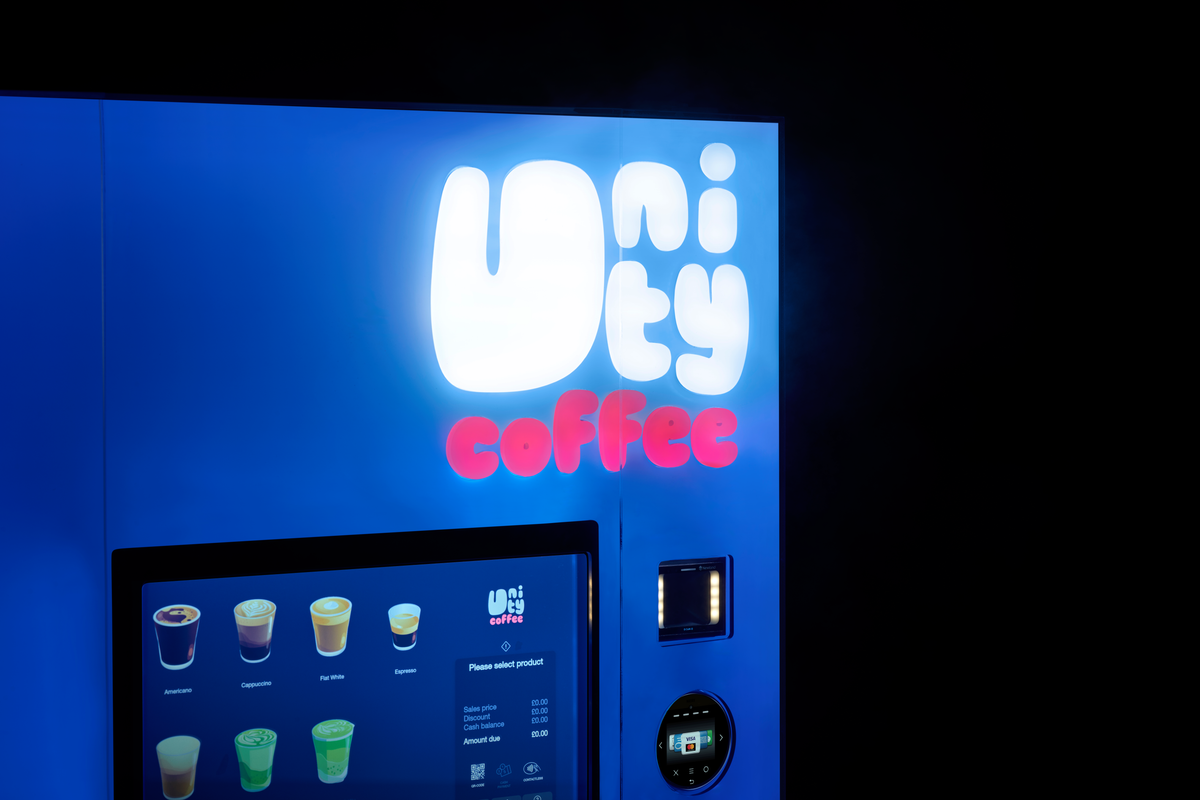
Unity Coffee Launches to Redefine the UK’s Self-Serve Coffee Market

Dubai, 2 September 2025 (Qahwa World) – Scott Martin, the entrepreneur who pioneered the UK’s self-serve coffee sector, has returned with a bold new venture, Unity Coffee, which aims to disrupt the market through digital-first innovation, premium quality, and fairer value.

The brand is rolling out this month across the United Kingdom, targeting retail, travel, leisure, and education venues. With a plan to install more than 500 units in the next two years, Unity Coffee positions itself as a challenger brand ready to compete directly with industry giants.

Built on a FinTech platform, Unity Coffee is the first self-service coffee concept of its kind, offering customers a seamless mobile-first journey. Consumers can order and pay through the brand’s dedicated app while benefiting from agile pricing, real-time promotions, and personalized loyalty rewards. The machines are designed to ensure consistency across a wide menu that includes espresso, specialty coffee drinks, matcha, and hot chocolate, with both dairy and plant-based milk options.

“The coffee-to-go market has let customers down for years with overpriced drinks and tired, repetitive experiences,” said Martin. “Unity Coffee is leading a new movement, delivering exceptional coffee at fairer prices through smart technology, dynamic loyalty, and instant rewards. We’re going to take on big coffee and give the power back to the people.”

Martin is no stranger to innovation. In 1998, he co-founded Coffee Nation, which quickly grew to nearly 900 machines and captured almost half of the UK’s self-serve market. The company was acquired by Whitbread in 2011 for £59.5 million ($77.3 million) and rebranded as Costa Express. Under Martin’s leadership, the network expanded to 14,000 machines before becoming part of Coca-Cola’s £3.9 billion ($5.4 billion) acquisition of Costa Coffee in 2019.

Unity Coffee has secured backing from investors with strong expertise across hospitality, retail, manufacturing, and packaging, ensuring both financial strength and operational insight. Martin himself continues to advise on other innovative ventures, including UK specialty coffee group Grind, self-serve solutions firm BoxBar, and Singapore-based Crown Digital, the developer of the robotic barista concept ELLA.

The launch of Unity Coffee comes at a time when self-service technologies are gaining renewed attention across global retail. With its FinTech foundation, wide product range, and consumer-first approach, the brand is positioning itself not just as a coffee provider but as part of a broader digital transformation in the coffee-to-go sector.

Simonelli Group Showcases Innovation at Fine Food Australia 2025

Dubai, 20 August 2025 (Qahwa World) – Simonelli Group has announced its participation at Fine Food Australia 2025, the country’s leading trade event for the foodservice and hospitality industry, taking place from September 8 to 11 at ICC Sydney. Visitors will find the group at Booth A40, where it will present a range of cutting-edge technologies from its two leading brands, Nuova Simonelli and Victoria Arduino.

Nuova Simonelli will present the NUOVA Aurelia, an advanced professional espresso machine featuring E-Milk and C-Automation technologies. E-Milk technology enables automatic frothing with up to nine customizable recipes at the push of a button, ensuring consistency in milk-based beverages. C-Automation, powered by artificial intelligence, connects the Aurelia machine with the GX grinder, analyzing coffee flow and automatically adjusting grind settings. This integration improves workflow speed by up to 20%, reduces training costs, minimizes human error, and cuts waste during recipe setup.

Victoria Arduino will highlight its Black Eagle Maverick espresso machine, designed for both high performance and sustainability. Equipped with T3 Genius, PBtech, Gravitech, and Advanced Steam-by-Wire technologies, the Maverick allows precise control over temperature, infusion, and steam. Alongside it, the Mythos grinder, engineered specifically for the specialty coffee sector, will be featured with its Clima Pro, Gravitech, and HighSpeed technologies, ensuring efficient grinding and consistent quality.

Also on display will be the Eagle One, a contemporary espresso machine combining sleek design with NEO (New Engine Optimization) technology for energy efficiency and exceptional performance. The Eagle Tempo, designed for cafés, restaurants, roasters, pastry shops, and chains, will also be introduced. With high production capacity, NEO technology, and a unique design, Eagle Tempo aims to deliver excellent results while reducing energy use and waste.

At Fine Food Australia 2025, Simonelli Group will not only present its latest professional equipment but also offer visitors the opportunity to experience the future of coffee preparation through tastings, demonstrations, and live interactions with baristas and experts. With its commitment to innovation, sustainability, and workflow efficiency, the company aims to set new standards for the global coffee and hospitality industry.