Ultrasonic Espresso: UNSW Researchers Develop Cold-Water Brewing Method That Cuts Energy Use by 75%

Source: University of New South Wales (UNSW) – Journal of Food Engineering |
Author: Qahwa World |
Date: June 11, 2026

Ultrasonic Espresso: UNSW Researchers Develop Cold-Water Brewing Method That Cuts Energy Use by 75%

Key Takeaways:

  • UNSW Sydney researchers developed a method to brew espresso-strength coffee using room-temperature water and ultrasonic sound waves.
  • The technology reduces energy consumption by up to 75% compared to traditional espresso.
  • The brewing process takes less than 3 minutes and produces coffee with similar richness and concentration to regular espresso.
  • Acoustic cavitation creates tiny jets that break down coffee grounds, accelerating extraction.
  • Blind taste tests with 100 participants found no significant sensory differences between ultrasonic and traditional espresso.
  • Ultrasonic filter coffee received higher ratings than conventionally brewed filter coffee, especially in perceived bitterness.
  • The technology is scalable for industrial coffee production, benefiting ready-to-drink manufacturers.

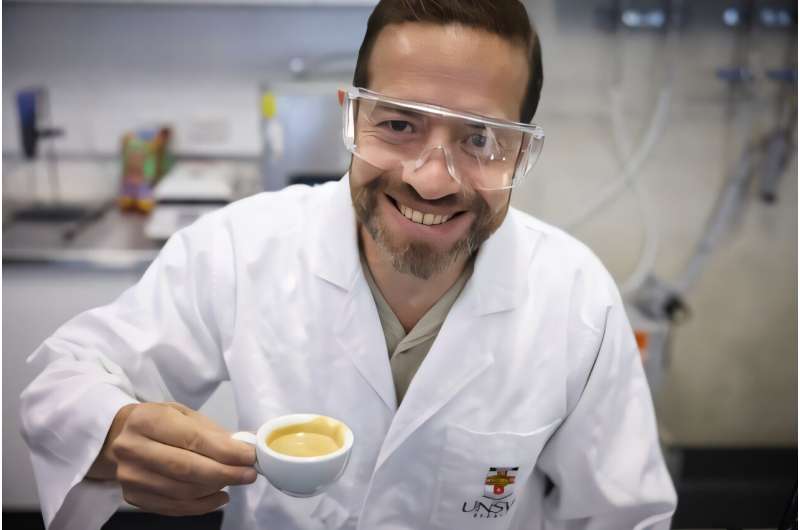
Researchers at the University of New South Wales (UNSW) Sydney have developed a new coffee brewing method that produces espresso-strength coffee using room-temperature water and ultrasonic sound waves, potentially reducing energy consumption by up to 75%.

The innovation challenges one of espresso’s core assumptions—that high-temperature water is essential for extracting the flavor, body, and caffeine concentration associated with traditional espresso. Led by Dr. Francisco Trujillo from UNSW’s School of Chemical Engineering, the research team created what they call an “ultrasonic espresso,” a process that uses high-frequency sound waves to accelerate extraction without the need for heated water. Their findings were published in the Journal of Food Engineering.

How the Technology Works

The system transforms a standard coffee filter basket into an ultrasonic reactor. A small metal transducer attached to the side of the basket generates ultrasonic vibrations that travel through both the coffee grounds and the water. These vibrations create a phenomenon known as acoustic cavitation—the rapid formation and collapse of microscopic bubbles within the liquid. As the bubbles collapse near the coffee particles, they generate tiny jets that break down the surface of the grounds, allowing flavor compounds, oils, and caffeine to be extracted more rapidly. According to the researchers, this process enables espresso-strength extraction at room temperature while significantly reducing energy requirements.

From Cold Brew to Espresso

The technology builds on earlier work by Dr. Trujillo’s team, which used ultrasound to reduce cold-brew preparation times from 12–24 hours to just a few minutes. While successful, the earlier method produced coffee with the characteristic flavor profile of cold brew—typically smoother, less concentrated, and lower in caffeine than espresso. The team’s latest research focused on achieving the intensity and concentration associated with traditional espresso. After testing a range of variables, including grind size, brew ratio, and ultrasound application time, the researchers identified an optimal extraction window of approximately 2.5 to 3 minutes. “The most important factor was the brew ratio, which determines the final concentration of the beverage,” Dr. Trujillo explained. “We also found that finer grinding accelerated extraction and helped achieve espresso-like characteristics.”

Blind Taste Tests Show Comparable Results

To evaluate the sensory quality of the ultrasonic coffee, the researchers conducted a blind tasting study involving around 100 regular coffee drinkers. Participants sampled four beverages: traditional espresso, ultrasonic espresso, traditional filter coffee, and ultrasonic filter coffee. All samples were prepared under controlled conditions, cooled to the same temperature, and served in coded cups in random order. Participants rated each coffee on aroma, flavor, bitterness, and overall preference using a nine-point scale.

Coffee Type Result Compared to Traditional
Ultrasonic Espresso No significant differences across any sensory category
Ultrasonic Filter Coffee Higher overall ratings, especially lower perceived bitterness

The results showed no significant differences between traditional espresso and ultrasonic espresso across any of the sensory categories. Most participants were unable to distinguish between the two brewing methods. The ultrasonic filter coffee performed even better, receiving higher overall ratings than conventionally brewed filter coffee, particularly in perceived bitterness. According to the researchers, the findings demonstrate that ultrasonic extraction can maintain—or in some cases improve—coffee quality despite eliminating the heat typically associated with brewing.

Commercial Potential

While the technology could eventually be adapted for home coffee machines, the researchers believe its greatest impact may be in industrial coffee production. Manufacturers of ready-to-drink coffee beverages could benefit from both reduced energy consumption and faster processing times. Because the process produces a concentrated coffee extract, it could be used directly in ready-to-drink products or shipped as a concentrate for later dilution into cold brew, milk-based beverages, and other coffee drinks. “There are companies that produce coffee products on an industrial scale, and we are confident this ultrasound system can be scaled up to meet their needs,” said Dr. Trujillo. “The energy savings and rapid processing time make it particularly attractive for commercial applications.” If successfully commercialized, ultrasonic brewing could offer a new pathway for producing espresso-strength coffee while reducing both energy consumption and production costs.

Frequently Asked Questions About Ultrasonic Espresso

Q: What are the main advantages of ultrasonic espresso?

A: It cuts energy use by 75%, uses room-temperature water, and produces espresso-strength coffee in under 3 minutes.

Q: Does the coffee taste different from traditional espresso?

A: Blind taste tests found no significant differences in aroma, flavor, or bitterness between ultrasonic and traditional espresso.

Q: How does ultrasound accelerate coffee extraction?

A: Acoustic cavitation creates tiny bubbles that collapse near coffee particles, generating micro-jets that break down the grounds and release flavors faster.

Q: Can this technology be used at home?

A: Currently designed for industrial applications, but it could potentially be adapted for home coffee machines in the future.

Q: What are the commercial applications?

A: Producing coffee concentrates for ready-to-drink beverages, reducing energy costs in factories, and accelerating cold brew production.

Ultrasonic espresso technology could redefine coffee brewing in the future. By cutting energy and time while maintaining quality, it opens new possibilities for both home and industrial production.

Prepared and edited by: Qahwa World – Based on a study from the University of New South Wales (UNSW) published in the Journal of Food Engineering.

Reference: Nikunj Naliyadhara et al., “Ultrasound Enables Espresso‑Strength Coffee Brewing in 2–3 Minutes at Low Temperature with Lower Energy Consumption,” Journal of Food Engineering, 2026.

All rights reserved. Republication with attribution permitted.

Publication date: June 11, 2026

What Must Be Done to Stop Exporting Raw Coffee and Selling It Cheap?

Source: Qahwa World World (translated from Vietnamese) |
Author: Nguyễn Nghĩa |
Date: June 7, 2026

What Must Be Done to Stop Exporting Raw Coffee and Selling It Cheap?

Key Points:

  • Lam Dong, Vietnam’s largest coffee-growing province, still exports nearly 100% raw beans at low prices.
  • In the first 4 months of 2026, export volume rose 9.4% but value fell 10.3% year-on-year.
  • Processing accounts for 60% of a coffee’s quality and refinement.
  • International standards (EUDR, Net Zero, ESG) are becoming mandatory market access requirements.
  • A strategic shift to deep processing and modern technology is urgently needed.
  • Cooperatives must become the pillar linking small farmers.

Despite being the largest coffee province in Vietnam, Lam Dong remains trapped in the cycle of exporting raw beans at low prices. The time has come for this strategic commodity to undergo a revolution, shifting from raw beans to refined processing to enhance value.

The Paradox of the “Brown Gold” Capital

In 2025, among agricultural, forestry, and fishery exports to key markets such as the European Union, coffee, together with seafood and cashew nuts, led the value, accounting for 49%, 15%, and 14% respectively.

In the first four months of 2026, Vietnam’s coffee export picture remained dynamic, with volume reaching approximately 791,090 tonnes and value reaching 3.66 billion USD. However, behind these numbers lies a troubling reality: export volume increased by 9.4%, but value decreased by 10.3% compared to the same period last year.

This decline exposes a fundamental weakness of the coffee industry: over-reliance on raw bean exports. Lam Dong province has the largest coffee growing area in the country, with about 314,000 hectares currently under harvest, average yield of 3.2 tonnes of green beans per hectare. The paradox is stark: nearly 100% of export output remains raw green beans. Yet processing accounts for up to 60% of a coffee’s flavour and refinement.

Technology as the Gateway to the Value Chain

According to the Vietnam Coffee and Cocoa Association, Vietnam has joined a total of 17 bilateral and multilateral free trade agreements (FTAs). New generation FTAs such as EVFTA, CPTPP and RCEP open up favourable tariff opportunities, but the path is also full of technical barriers.

If Lam Dong continues with a small-scale, fragmented production model lacking long-term chain linkages, the coffee industry will be pushed into a weak position. “Large markets do not just buy coffee beans; they buy the ‘environmental ethics’ of the production process. International standards are becoming increasingly stringent: the EU Deforestation Regulation (EUDR), Net Zero commitments, labour rights, and ESG governance standards are becoming mandatory passports for market access,” Mr. Tuan emphasised.

Standard / Requirement Impact on Coffee Exports
EUDR (Anti-deforestation) Traceability and proof of forest-free production
Net Zero / ESG Carbon footprint, social responsibility, governance
4C, Rainforest Alliance, VietGAP Minimum entry certificates for premium markets

What Must Be Done?

To stop exporting raw beans and selling cheap, Lam Dong’s coffee industry needs a restructuring strategy. The core focus is to strongly attract investment in deep processing technology. “We need to design and issue preferential policies on taxes, land funds, and green credit to invite large investors to build modern, large-scale integrated processing plants.

Attention should be paid to attracting investment in producing ground roasted coffee, specialty instant coffee for export. Only by boldly investing in modern drying technology can the value of coffee beans be multiplied,” shared Mr. Bach Thanh Tuan, Vice President of the Vietnam Coffee and Cocoa Association.

Alongside attracting investment, economists also argue that internal strength must be consolidated by promoting collective economic development. Cooperatives and co-operative groups must truly become the backbone to link small farm households, consolidate output, and thereby enhance negotiation and pricing power.

The shift from quantity to quality, from raw exports to refined processing, requires the joint effort of government, businesses, and farmers. When cultivation, care, and deep processing technology are prioritised, combined with market-oriented thinking, Lam Dong’s coffee beans will certainly shed the “cheap price tag” and confidently compete through the brand and value of the very land that grew them.

Original Vietnamese article by Nguyễn Nghĩa – Translated and adapted by Coffee World.

All rights reserved. Republication with attribution permitted.

Publication date: June 7, 2026

An Extraordinary Interview with Professor Chahan Yeretzian, Pioneer of Cell-Grown Coffee

Dubai – Ali Alzakary
For three decades, Professor Chahan Yeretzian has been one of the most respected voices in coffee science. As Emeritus Professor of Analytical Chemistry and head of the ZHAW Coffee Excellence Centre at the Zurich University of Applied Science (ZHAW) in Switzerland, he has witnessed every major shift in how we understand, roast, and taste the world’s most beloved beverage. But five years ago, even he found himself entertaining an idea that many in the industry dismissed as science fiction: growing coffee not on mountainsides, but in bioreactors.

Today, that once-outlandish vision is close to commercial reality. Food Brewer AG, working closely with Professor Yeretzian’s team, is preparing to bring cell-cultured coffee to market by late 2027. The natural coffee bean, he has long argued, functions as a “pressurised micro-reactor” essential for flavour development. So how do you replicate that inside a steel tank? Can lab-grown cells ever deliver the sensory complexity of a great espresso? And what happens to the millions of smallholder farmers across the Coffee Belt if production shifts to laboratories in Zurich or Singapore?

We sent these questions, probing, sceptical, and deeply curious, to Professor Yeretzian. His answers arrived with characteristic rigour, honesty, and a surprising dose of optimism. He does not see cell-grown coffee as a replacement for tradition. He sees it as a necessary complement, a tool for stability, and perhaps even an invitation to rethink what coffee can be.

What follows is an extraordinary interview about an extraordinary idea. Read on.

The “Micro-Reactor” Challenge

Professor, you have famously described the natural coffee bean as a “pressurized micro-reactor” essential for flavor development. Given that cell-cultured biomass lacks this physical structure, how close can we realistically get to that “god shot” of espresso? Are we chasing a chemical mirror image, or is the goal to create an entirely new sensory category?

Your 2024 study showed that lab-grown samples hit about 40 percent of the aromatic intensity of traditional beans. From a chemist’s perspective, is that “flavor gap” a temporary hurdle of scaling, or an inherent limitation of growing cells outside the cherry?

My interest in cell-grown coffee comes from multiple directions.

First, sustainability and supply. When I started in coffee science and research thirty years ago, sustainability in coffee plantations and cell-grown coffee were hardly subjects in science and economics. My growing interest began five years ago, from the realisation that traditional coffee cultivation had become so successful and was produced in such huge volumes that at some point in the future, (i) the demand for traditional farm-grown coffee would outstrip supply, (ii) coffee prices would rise with no return, and (iii) coffee consumption would become unsustainable in terms of climate change, water, life cycle assessment, and so on. Even if I was not and am not a proponent of substituting farm-grown coffee with cell-grown coffee, it seemed obvious to me that cell-grown coffee, as an option to close the gap between supply and demand of traditional mainstream coffee, was a very good solution.

“Cell-grown coffee is neither meant to replace traditional coffee, nor is it my ambition to replace high-quality specialty coffee. For the moment, it shall close the gap and aim at the quality of mainstream coffee.”

Cell-grown coffee is neither meant to replace traditional coffee, nor is it my ambition to replace high-quality specialty coffee. For the moment, cell-grown coffee shall close the gap and aim at the quality of mainstream coffee, not specialty coffee. But if the price of traditional coffee continues to climb and the quality of cell-grown coffee improves, which it will, it is possible and even probable that cell-grown coffee competes with, or partly displaces, farm-grown specialty coffee.

As of today, cell-grown coffee does not reach the intensity of a good espresso. But a project between Food Brewer AG and the Coffee Excellence Centre of the ZHAW, sponsored by the Swiss National Science Foundation, has precisely that objective: to find strategies and technologies to increase the flavour intensity and improve the profile, both the sensory experience and the chemical composition, of cell-grown coffee to mimic farm-grown coffee. While this will increase and evolve over the coming years, I expect the intensity and profile will reach the target of mimicking a good farm-grown coffee within twelve months, though not necessarily a “god shot” of espresso.

In conclusion, while the flavour profile of good espresso is a target of the ongoing project for the next twelve months, in the long term we want to create an entirely new sensory category with a possible signature flavour profile. We could try to create a flavour that people recognise as coffee from, say, Food Brewer, a common base and core with an individual, proprietary top note. I wrote a book chapter on the flavour pyramid, together with Imre Blank and Stefan Palzers, in 2007.

Second, energy consumption. The realisation that cell-grown coffee, first ground as green coffee and then roasted, versus traditional coffee, first roasted as whole beans and then ground, leads to an overall tenfold lower energy consumption during roasting. This is because of smaller particle size, shorter roasting time, slightly lower temperature, and drier coffee particles. Even if roasting accounts for only about five percent of the total carbon footprint along the whole value chain, it remains a factor in reducing energy consumption. With expected higher and more volatile energy costs in the future, the more stable and predictable costs of cell-grown coffee become an advantage.

Third, technology. Coffee is traditionally roasted as whole beans to make them brittle and easy to grind, after which the roasted beans are ground. But after reviewing the literature on roasting, I believe flavour formation during roasting is under-researched, and I expect science will strongly improve roasting technology. While the image of a “pressurized micro-reactor” remains correct, roasting technology can be modified and adapted for ground green coffee, for example, by adding fat during roasting or using a coarse grind. Research on defects by the ZHAW, sponsored by the SCA, also shows that broken beans have a smaller sensory impact than previously believed.

Fourth, mimicking the sensory profile of traditional coffee. For an expert, the intensity of a “god shot” espresso can only be reached by roasting intact beans. But here comes the but: the sensory profile of roasted ground coffee depends mainly on three parameters: grind size (the coarser the grind, the closer the sensory profile to whole-bean roasting; larger than 700 micrometres is ideal), freshness, and addition of fat during roasting to selectively capture fat-soluble coffee flavour compounds.

Fifth, creating novel sensory profiles. Cell-grown coffee is authentic coffee. This gives it the freedom to taste outside the traditional framework of an espresso. In recent years, we have come to accept and even love the flavour profiles of fermented coffee, fruity and sweet, notes that we would not have recognised as coffee fifteen years ago. Since cell-grown coffee is authentic, we could and should be free to create entirely new flavour profiles. Be creative. But cell-grown coffee will also be able to reproduce traditional espresso, and I hope soon at a stable and good price. One additional trend I see is the transition from espresso to other cup formats, such as filter coffee. Soon, the benchmark may shift from traditional espresso to filter coffee.

In conclusion, cultured coffee has the structure of ground green coffee and indeed lacks the structure of a tree-grown whole bean as a “pressurized micro-reactor” for roasting and flavour formation. The whole-bean structure is important but probably not absolutely necessary for coffee flavour development. There are potential structural workarounds, such as pressing the cell-grown powder into a bean-like structure to use existing roasting equipment, a “plug-and-play” solution; grinding or growing coarse; or adding some fat during roasting to catch and encapsulate fat-soluble flavour compounds. There are also potentially new roasting technologies that can add intensity.

“Cell-grown coffee is authentic coffee. This gives it the freedom to taste outside the traditional framework of an espresso… we should be free to create entirely new flavour profiles.”

For the moment, the intensity of coffee prepared with cell-grown coffee is less than fifty percent of good traditional coffee. Still, we first want to mimic traditional coffee, which I assume will be successful within twelve months. Once achieved, cell-cultured coffee has the freedom to chase an entirely new sensory category, composed of base, core, and top note. We are already accepting and partly loving coffee with novel flavour notes that did not previously belong to the flavour world of coffee, such as strongly fermented coffee or very lightly roasted coffee, as long as it is coffee. So I assume the current “flavour gap” is a temporary hurdle.

There is an ongoing larger science project, one million Swiss francs, between Food Brewer AG and the Coffee Excellence Centre of the ZHAW, largely financed by InnoSuisse, on flavour enhancement, matching the profile to traditional coffee, scaling to larger production volumes, and a comparative life cycle assessment of cell-grown versus traditional coffee. The research in this collaboration aims to mimic the pressurised micro-reactor and close the existing gap, and multiple strategies are being explored. Furthermore, cell-cultured coffee contains most of the coffee-specific precursors and volatiles, which can be tasted in the cup. Missing or low levels of precursors, such as chlorogenic acids due to structural differences, can be boosted by modifications during roasting: addition of fat, coarser grind, post-processing, and new roasting technologies.

Disruption and the Global Value Chain

The industry is watching Food Brewer AG and its recent funding rounds very closely. As this technology moves from the lab to the shelf, how do you see the pricing architecture evolving? Will lab-grown coffee debut as a premium sustainability play, or is it positioned as a high-volume solution to stabilize a volatile commodities market?

There is a brewing concern about the “de-skilling” of the coffee origin. If we shift production to bioreactors in Zurich or Singapore, what happens to the socio-economic fabric of the Coffee Belt? Can this technology coexist with smallholder farmers, or are we looking at a future where the Global North produces its own supply?

Concerning Food Brewer AG, this company has in opinion the most advanced in cell-cultured products. They already produce very good cell-cultured chocolate in large volumes and will soon also produce good cell-cultured coffee in larger quantities. Food Brewer’s ambition is to offer a price-competitive cell-cultured coffee. Their foremost aim is to be a reliable addition to conventionally farmed coffee, both in terms of pricing and volume. At the same time, Food Brewer wants to reduce the dependence of companies on farm-grown coffee.

Initially, Food Brewer will likely price cell-cultured cocoa above commodity prices while scaling up. The same will be true for coffee. But I expect the bulk of cell-cultured coffee production will soon be for mainstream quality products, priced equally to or even lower than traditional mainstream coffee. In the future, Food Brewer does not exclude positioning selected varieties as premium specialty coffee.

In conclusion, Food Brewer’s target is to close the gap between demand and supply, and to stabilise the price of coffee in the commodities market. After an initial premium positioning, and as volume increases, the price will decrease and become equal to or lower than farm-grown commodity coffee. But if the price of traditional coffee continues to rise, cell-grown coffee could take a larger share of the coffee market than simply closing the gap.

“The low-skilled and price-sensitive commodity coffee market will probably shift partly to cell-grown coffee. Food Brewer will then complement traditional coffee farming.”

Now, to the question of de-skilling and the socio-economic fabric of the Coffee Belt. In my opinion, these are not the same thing. I expect farm-grown coffee production will shift in the future towards higher-priced and highly skilled high-quality coffee. Traditional high-quality coffee farming and the skills related to it are essential for the world’s coffee supply. These traditions and the know-how, especially in post-harvest treatment and fermentation for flavour development, are also guiding how cell-cultured coffee is being developed. In contrast, the low-skilled and price-sensitive commodity coffee market will probably shift partly to cell-grown coffee. Food Brewer will then complement traditional coffee farming.

The Transparency and Health Factor

One of the most striking findings in your research was the sharp decline in caffeine and chlorogenic acids in cultured cells. Beyond the buzz, these compounds are tied to the health benefits consumers associate with coffee. In your view, will “cellular coffee” ever be able to claim the same nutraceutical profile as a farm-grown bean?

While cell-cultured coffee is marketed as “deforestation-free,” has there been a rigorous Life Cycle Assessment comparing the energy footprint of massive bioreactors against traditional, carbon-sequestering agroforestry?

I think and hope that cell-cultured coffee will be able to claim a similar nutraceutical reputation and profile as a farm-grown bean. Perhaps even better. For the moment, caffeine and chlorogenic acids are indeed lower in cultured coffee. But in principle, secondary metabolites like caffeine and chlorogenic acids can be increased; this remains to be shown and done. Lower caffeine and chlorogenic acids could also be seen as a health advantage. Indeed, we see health trends moving towards caffeine-free or low-caffeine coffee consumption. So cell-grown coffee also has properties that could position it as “healthy coffee.”

Cell-cultured coffee from Food Brewer contains caffeine in the culture broth, which could, if needed, be purified and added post-cultivation.

As for life cycle assessments: LCAs on plant cell-based production have shown the potential to reduce water usage, footprint, and global warming by nearly ninety percent. Part of the InnoSuisse project is to challenge and specify this number.

Regulatory Hurdles and Market Adoption

We are seeing regulatory movement in Singapore and the European Union, but the “consumer ick factor” remains a hurdle for many biotech foods. How do you plan to bridge the narrative gap? Do you see hybrid blends, mixing traditional beans with lab-grown biomass, as the necessary “Trojan Horse” for mass-market acceptance?

As someone who has shaped coffee science for over three decades, how do you define “Coffee” today? Does the definition lie in the DNA of the plant, or in the traditional ritual of the harvest?

Transparency is key to winning consumer acceptance. It is essential to involve consumers and explain that the technology reproduces what nature does. Cell-cultured coffee does not use any gene manipulation. It simply takes cells from coffee plants and forms them directly into ground green coffee.

In fact, it is a form of “more efficient farming,” and that explains the lower life cycle assessment. In traditional farming, coffee cells are taken from a tree, go from fields to greenhouses to the tree itself. They are harvested, processed, and transported over large distances before roasting, grinding, and extraction. Traditional coffee also uses a great deal of water. In cell-cultured coffee, we go directly to the tree, take cells, culture them in reactors, and form ground green coffee directly. It then has to be dried, roasted, and extracted.

“Cell-cultured coffee does not use any gene manipulation. It simply takes cells from coffee plants and forms them directly into ground green coffee. It is a form of more efficient farming.”

Hybrid blended products are one possibility for familiarising consumers with cell-cultured coffee, again, provided the hybrid nature of the product is transparently communicated. For some companies, hybrid blends could be the ultimate solution, allowing them to sell more of their products without ever moving to pure cell-grown coffee. In that case, cell-grown is not just a “Trojan horse”; it is the ultimate goal.

As for how I define coffee today: for me, the smell and taste are crucial. But other factors are very important to people as well: the mental and physical energy it provides, the health it promotes, and its role as a social facilitator. I believe that for most consumers, the experience is the most important factor, once they begin to trust the new food. They already accept artificial vanilla.

The Road Ahead

With commercialization targets set for late 2027, what is the single biggest “make or break” factor for this project over the next 18 months? Is it the science of the roast, or the economics of the bioreactor?

Looking ahead to 2050, will the “Specialty Coffee” of the future be defined by a specific terroir in Ethiopia, or by a specific bio-recipe developed in a lab?

The legal hurdle. Cell-grown coffee must become legally accepted in large markets. From a toxicological point of view, cell-grown products have been tested in research for many years; they are becoming good and are non-toxic. But the legal hurdle remains. How long it will take is difficult to predict. I hope about one year.

The second factor is successful scaling to achieve attractive unit economics, price. That is the single biggest “make or break” factor.

The third factor is industry transparency together with consumer acceptance. Some foods have already shown the way: chocolate, vanilla, and others.

Looking ahead to 2050: in my view, both will coexist. Cell-based and farm-grown coffee will coexist, with cellular technology always trying to learn from and be inspired by nature. The beauty of cell-grown coffee technology is the possibility of making rare varieties more accessible, since these varieties have very little success in nature due to low yields or weak immune systems. The technology has shown that these varieties often thrive in bioreactors. Furthermore, this could help conserve rare species for future generations.

“My prediction for 2050: farm-grown coffee will continue to largely define the future… but cell-grown coffee will be accepted, particularly in the mainstream market.”

Cell-cultured coffee technology will also probably allow variation according to consumer needs: variable acidity, variable caffeine content, low bitterness, higher sweetness, higher cocoa notes, and so on.

My prediction for 2050: farm-grown coffee will continue to largely define the future. Cell-grown coffee will be accepted by the population, particularly in the mainstream market. But there will also be spots in the specialty coffee market carved out by cell-grown production, depending on the price of farm-grown coffee. The advanced skills needed to produce cell-grown coffee will be established. Cell-grown coffee will allow production where coffee is drunk, with short transportation, in the quality and quantity needed, without sensory variation and with far fewer by products.
 

ICO and ITC Expand Training Programme to Strengthen Links Between Origin and Specialty Coffee Markets

Dubai – Qahwa World

The International Coffee Organization highlights a strategic direction focused on building stronger connections between origin and specialty markets, emphasizing that stronger links between origin and specialty markets mean stronger opportunities for coffee producers.

The organization expresses pride in its partnership with the International Trade Centre in supporting initiatives designed to bridge this gap, connect producers more directly with high value markets, promote value addition at origin, and strengthen knowledge across the coffee value chain. The shared objective is clearly defined as working towards a coffee sector that is more inclusive, transparent and sustainable for everyone.

This vision is further reflected in the initiative titled Bridging the gap between origin and specialty coffee markets, which brings together Ethiopia, Honduras and other producing countries through a structured training partnership.

The programme demonstrates how coffee producers and cooperatives are being guided to understand specialty markets, build skills to connect with the right buyers, and communicate their identity with confidence. The central idea is a shift in role, expressed in the objective to evolve from simply delivering their coffee to actively selling it.

The International Trade Centre has partnered with the Specialty Coffee Association and the International Coffee Organization to deliver a series of practical workshops under the banner Introduction to Specialty Coffee Markets. These workshops are implemented through ITC’s ACP Business-Friendly and CLEAR Supply Chains projects, and are designed to strengthen market readiness and commercial positioning for coffee producers across origin countries.

The training structure is consistent across sessions and focuses on three core areas. It begins with understanding what makes a coffee specialty and how farm level decisions shape quality. It continues with identifying the right market segment for a given coffee profile. It concludes with learning how to communicate effectively with buyers and telling the cooperative’s story in a way that resonates across cultures and commercial contexts.

The first edition took place on 3 February 2026 in Addis Ababa, Ethiopia, bringing together 21 participants including cooperative representatives from Uganda. The session was delivered by Sara Yirga, a certified specialty coffee trainer and ITC consultant based in Ethiopia. A second edition followed on 19 March in San Pedro Sula, Honduras, with 32 participants consisting of 17 men and 15 women from cooperatives and producer organizations across the country, led by Andrés Montenegro, Specialty Coffee Association Sustainability Director. A third edition is planned ahead of World of Coffee Brussels which takes place on 24 June this year, with further editions planned across producing countries before year’s end.

The Honduras session brought together stakeholders from across the value chain including cooperatives, roasters and exporters. Participants described the training as a turning point in how they understand their position in the global specialty market. In Ethiopia, feedback highlighted immediate practical changes, including plans to approach different markets with greater specificity, tailor farm stories to buyer profiles, and engage more actively in the wider coffee world through events and social media.

  • Participant reflections illustrate the impact of the programme.

Karla María Cartagena from Cafico stated: “Participating in this workshop was a very enriching experience. It allowed us to strengthen our knowledge about specialty coffee markets and reaffirm the value of the work we do as an organization to position our coffee internationally.”

Orlin Alvarado from Proexo noted: “The training provided key tools for improving decision-making across the coffee value chain, from understanding intrinsic and extrinsic coffee attributes to learning how to strategically position our coffee in the specialty segment.”

Kristy Matamoros from Olanch Café said: “For Olanch Café, participating in this workshop reaffirms our commitment to excellence. A practical, dynamic, and enriching experience that broadened our strategic vision and motivates us to continue elevating our role within specialty coffee.”

Maira Lizzeth Gómez from COMIPRONIL Cooperative in Honduras shared: “It was our first time participating in a training on this topic. This learning motivates us to continue improving our processes and to identify new opportunities in the specialty coffee market. I am deeply grateful for these opportunities that strengthen our capabilities and contribute to the growth of our cooperative.”

From Ethiopia, Degaga Wakahum of Yedesta Buna Trading PLC said: “The introduction to the specialty marketing pilot programme was really good. It put everything in simple terms and made it easy to understand. Now I can easily compile information and put it in a way that the market can easily understand and aligned with the value attributes they want to focus on.”

Horom Teshome from Buunni Coffee added: “This training focused on three main areas: knowing the product, the market, and the right fit. It was a very insightful training. Especially for someone like me who’s very new to the coffee industry. It was practical, engaging, and experimental.”

The broader project framework is anchored in two major development initiatives. The ACP Business-Friendly Programme is funded by the European Union and the Organisation of African, Caribbean and Pacific States and jointly implemented by ITC’s Alliances for Action, the World Bank and UNIDO. It aims to improve the ability of agribusiness firms in ACP countries to compete, grow and prosper in domestic, regional, and international markets through inclusive and sustainable agricultural value chains that value all stakeholders from farm to shelf.

The CLEAR Supply Chains project, funded by the European Union, brings together the International Trade Centre, the International Labour Organization as the leading UN agency, the Food and Agricultural Organization, and the United Nations Children’s Fund. It focuses on addressing the root causes of child labour in supply chains, with a primary focus on coffee, while supporting farmer organizations, micro, small and medium enterprises, and value chain actors in strengthening commercial value, sustainability, Human Rights and Environmental Diligence alignment, and incomes for smallholder farmers in coffee producing countries including Uganda, Honduras, DRC and Vietnam.

Together, these efforts reflect a coordinated approach to strengthening origin capacity, improving market access, and building a more transparent and sustainable global coffee sector.

Lavazza Launches Regenerative Coffee for Professionals

Dubai – Qahwa World

On Earth Day, Lavazza has introduced La Reserva de ¡Tierra! Selection, its first coffee for the professional channel certified under the regenerative agriculture standard developed by the Rainforest Alliance.

The launch marks a new step in the company’s sustainability strategy, combining existing Rainforest Alliance Sustainable Agriculture certification with the newer regenerative agriculture certification. The dual certification reflects farming practices aimed at restoring ecosystems, improving soil health, protecting biodiversity, and supporting coffee-growing communities.

The development follows a multi-year effort by Lavazza to integrate regenerative agriculture across its supply chain. Since 2023, the group has advanced projects through its research, development, and corporate social responsibility teams in origin countries, focusing on agronomic practices, environmental impact measurement, traceability, and farmer engagement.

In parallel, the company has supported an early implementation program in Honduras, where more than 70 farms have achieved certification under the Rainforest Alliance Regenerative Agriculture Standard. The initiative included technical training, operational support, and structured guidance to assist farmers in transitioning to regenerative practices.

According to Lavazza, this combined approach has enabled the faster introduction of a coffee product meeting both certification standards, building on its partnership with the Rainforest Alliance that dates back more than two decades.

The Rainforest Alliance Regenerative Agriculture Standard is designed to promote a “Nature Positive” approach to farming. It emphasizes soil restoration, climate resilience through agroforestry, biodiversity protection, improved water management, and better livelihoods for farming communities.

La Reserva de ¡Tierra! Selection is a 100% Arabica blend, combining natural coffees from Brazil with washed coffees from Honduras. Developed for the food service sector, it offers a balanced flavor profile with notes of jasmine, almonds, and milk chocolate, and is designed for consistent extraction in professional settings.

The blend includes coffee sourced from certified farms in Brazil and Honduras, along with a portion from a project supported by the Lavazza Foundation in Brazil’s Minas Gerais region. The initiative focuses on farmer training, agricultural planning, and improvements to living conditions.

Lavazza said the new product will be available in international markets starting in June, supported by a digital campaign highlighting its regenerative agriculture efforts and collaboration with certified farms.

Founded in Turin in 1895, Lavazza operates in more than 140 markets and remains one of the leading global coffee companies, with a portfolio that includes several international brands. The Rainforest Alliance continues to work with farmers, companies, and communities worldwide to promote sustainable agriculture and environmental conservation.

Cell-Cultured Coffee Moves Closer to Market

Zurich  — Qahwa World

As climate change and surging global demand strain traditional coffee farming, a laboratory-grown alternative is moving from an experimental concept to a potential market contender. Cell-cultured coffee, produced by nurturing coffee plant cells in bioreactors and then harvesting, drying, roasting, and brewing the resulting biomass, has secured significant new funding and regulatory momentum over the past 18 months, according to industry developments and foundational research led by Professor Chahan Yeretzian.

Yeretzian, who retired in early 2026 as head of the Zurich University of Applied Sciences (ZHAW) Coffee Excellence Center after more than three decades of pioneering work, laid the analytical groundwork for this emerging category. His landmark 2024 study, published in ACS Food Science & Technology, provided the first rigorous, side-by-side chemical and sensory comparison of cell-cultured coffee (CC) and traditional farm-grown beans (TC). The paper’s three-step analytical platform, examining unroasted precursors, roasted volatiles, and brewed sensory profiles, demonstrated that while the two are chemically distinct, the lab-grown version can be optimized to deliver authentic coffee character.

The findings have since become a blueprint for commercial players. In February 2025, Zurich-based Food Brewer AG closed a CHF 5 million seed extension, bringing its total funding to approximately CHF 10 million. Strategic investors include Lindt & Sprüngli and Sparkalis, the venture arm of Puratos, both of which are actively testing the company’s coffee and cocoa biomass for potential integration into products. Food Brewer grows cells sourced locally in Switzerland, processes them through lyophilization and roasting, and is scaling production under controlled bioreactor conditions, precisely the approach Yeretzian’s research showed could preserve aroma precursors without relying on tropical agriculture.

You may read: A Cell-Cultured Coffee Revolution Gains Momentum

A parallel effort in Asia is also gaining traction. In April 2025, Singapore-based Another Food announced plans for large-scale commercialization, beginning in Singapore and expanding into Thailand and Malaysia. The startup positions its non-GMO, cell-derived coffee as a hedge against supply-chain volatility, price swings, and quality inconsistencies caused by climate impacts on conventional farming.

These developments echo the vision Yeretzian outlined in late 2024 interviews and earlier writings. “If we love coffee so much, can part of the supply come from sources that are less harmful to the environment and more efficient?” he asked. The 2024 paper reinforced that cell-cultured coffee need not merely imitate traditional beans but could expand the category. By adjusting precursor compounds, including sugars, amino acids, lipids, chlorogenic acids, and caffeine, scientists can explore novel flavor profiles beyond the constraints of the coffee bean’s natural matrix.

The study’s detailed results underscored both promise and challenges. Unroasted cell-cultured biomass showed dramatically higher monosaccharides (52% of dry weight, primarily glucose and fructose) but far lower levels of amino acids (0.07%), lipids (1.98%), chlorogenic acids (0.07%), caffeine (0.15%), and trigonelline (absent). After roasting in a custom nanoroaster, the aroma profile registered only about 40% of the intensity of traditional coffee, with fewer pyrazines, Strecker aldehydes, and guaiacols, but a pronounced dominance of furfurals (54% of volatiles versus 10–15% in conventional roasts). Sensory panels noted milder bitterness and acidity, lower extraction yields due to the powder-like structure, and reduced psychoactive effects resulting from lower caffeine and chlorogenic acid content.

Yeretzian and co-authors, including lead analyst Jaloliddin Khushvakov and VTT Technical Research Centre of Finland cell-culture expert Heiko Rischer, concluded that the bean’s physical structure acts as a “pressurized microreactor” essential for full flavor development. They emphasized that these differences are not insurmountable barriers; rather, they open doors to customization and hybrid products that blend cell-cultured and traditional coffee.

Regulatory pathways remain the primary hurdle. As a novel food, cell-cultured coffee requires formal approvals in major markets. Submissions are now under review in the United States, Singapore, and the European Union, with analysts projecting clearances within the next 12 to 24 months. Industry observers note that beanless surrogate coffees, which do not use coffee cellular material, have reached shelves more quickly, but cell-cultured versions benefit from a stronger scientific foundation and clearer environmental credentials.

Market forecasts reflect growing confidence. The global cell-cultured coffee sector, valued at roughly $173–362 million in 2024–2025, is projected to expand at a compound annual growth rate of 16–21%, potentially reaching hundreds of millions of dollars by the early 2030s as production scales and costs decline.

Yeretzian has consistently framed cell-cultured coffee as a complement, not a replacement, for farm-grown beans. In his emeritus role, the research he championed continues to influence the Coffee Excellence Center and the startups now translating it into products. The 2024 paper’s analytical platform has already become an industry standard for evaluating any coffee alternative.

For an industry facing deforestation, carbon emissions, and unpredictable harvests, the convergence of Yeretzian’s decades of aroma chemistry expertise with fresh capital and regulatory progress marks a pivotal moment. If approvals materialize as expected, the first commercial cell-cultured coffees could appear on shelves or in blends by late 2027 or 2028, not as a wholesale substitute for tradition, but as a scientifically validated innovation that could help secure coffee’s future while expanding its sensory possibilities.

EFICO GROUP: A Century of Responsible Coffee – 2025 Report

Brussels – Qahwa World

EFICO GROUP has officially published its 2025 Communication on Progress (CoP), reaffirming its commitment to the ten principles of the United Nations Global Compact. The report highlights how the company integrates human rights, labour standards, environmental responsibility, and anti-corruption practices into operations, partnerships, and decision-making across the global coffee value chain.

  • Sustainability at the Core

For EFICO, sustainability is central to its identity. As a specialist in green coffee since 1926, the company embeds responsible practices at every stage — from sourcing and supplier engagement to efficient internal operations. EFICO ensures a consistent supply of high-quality, fully traceable coffee while creating lasting positive impact for producers, communities, and stakeholders.

You may Like: EU’s New Organic Regulation Reshapes Coffee Value Chains Worldwide

In 2025, EFICO strengthened its focus on traceable and sustainable sourcing, collaborating directly with farmers, cooperatives, and local exporters to promote economic resilience and environmental stewardship. By prioritising verified and certified coffees, the group supports practices that protect biodiversity, conserve natural resources, and improve livelihoods in coffee-growing regions.

  • Transparency: The Foundation of Trust

Transparency guides EFICO’s operations. The 2025 CoP provides clear insights into practices, measurable progress, ongoing initiatives, and areas targeted for improvement. By openly sharing successes and challenges, the company ensures decisions are informed, accountable, and aligned with the expectations of partners, clients, and civil society.

You may like: Brazil Coffee Harvest 2025/2026: A Decent Crop Amid Market Volatility

  • The Power of Partnerships

Meaningful change requires collaboration. EFICO maintains long-term relationships with coffee producers, cooperatives, roasters, traders, institutional partners, and civil society organisations. These partnerships deliver practical solutions that empower communities, strengthen the coffee sector, and support environmental protection. Joint projects, knowledge sharing, and co-developed programmes help address challenges like climate change, market volatility, and social inequalities in coffee-growing regions.

  • Walking the Talk: Action and Impact

EFICO emphasises measurable action. The 2025 CoP highlights the company’s approach to monitoring outcomes, reviewing performance indicators, and adapting strategies based on results. This cycle drives improvements in product quality, service excellence, operational efficiency, and sustainability performance. Through transparent reporting, EFICO ensures commitments translate into tangible benefits — from better farming practices and reduced environmental footprints to stronger community development.

  • Celebrating 100 Years and Looking Ahead

2026 marks 100 years of EFICO GROUP in the coffee industry. A century of experience, trusted partnerships, and deep market knowledge has enabled EFICO to consistently deliver high-quality, traceable coffee while supporting producers and communities.

Read Also: Harvesting Coffee and Carbon: A New Chapter in Sustainable Coffee Production

Entering its second century, EFICO remains committed to responsible sourcing, ethical trading, and long-term positive impact. Lessons from the past, combined with forward-looking innovation, position the company to navigate future challenges and opportunities in the evolving coffee landscape.

The full EFICO Group 2025 Communication on Progress is available in English, French, and Spanish. Stakeholders worldwide can access the detailed report to explore the company’s sustainability, transparency, and partnership-driven initiatives.

🔗 Access the report: EFICO 2025 Communication on Progress

  • About EFICO Group

EFICO, along with CUPRIMA, the EFICO Foundation, and SEABRIDGE, forms a dynamic group dedicated to responsible practices in the global coffee industry. Quality, sustainability, and meaningful long-term impact define every aspect of its operations — from green coffee trading and roasting solutions to community-focused projects and efficient logistics.

By combining nearly a century of heritage with a progressive vision, EFICO Group strives to build a sustainable, equitable, and resilient coffee sector for generations to come.

Coffee Sector Adopts Procurement Principles to Strengthen Farmer Livelihoods

BONN – Qahwa World

Leading players in the global coffee sector have announced two new procurement principles aimed at supporting the long-term economic sustainability of coffee farmers. The principles, developed over nine months by the Global Coffee Platform (GCP), IDH, and Solidaridad, focus on building strategic partnerships and promoting sustainable coffee production, marking a coordinated effort to encourage more responsible sourcing practices across the industry.

The initiative involved 14 major coffee companies, including Caravela, ECOM, illycaffè, JDE Peet’s, Louis Dreyfus Company, Neumann Kaffee Gruppe, Taylors of Harrogate, UCC, and Volcafe. The principles build on insights from the 2024 report The Grounds for Sharing, which examined the challenges and opportunities for farmer resilience in global coffee supply chains.

You may Like: Launch of Global Platform for Coffee Industry to Transform 40 Million Tons of Biowaste into Business Opportunities

  • Shifting Toward Long-Term Collaboration

The first principle, strategic partnerships, emphasizes moving away from short-term transactions and toward longer-term, trust-based collaborations between farmers, traders, roasters, and retailers. According to Annette Pensel, Executive Director of GCP, “Ensuring the long-term economic viability of sustainable coffee farming and overall farmer prosperity is essential for a resilient supply and competitive coffee sector. This requires shared responsibility and a more coordinated approach across the industry.”

The second principle, Sustainable Coffee Production, encourages conditions that allow farmers to recover their costs and invest in long-term improvements to both their livelihoods and farming systems. Mette-Marie Hansen of IDH said, “By embedding longer-term partnerships and sustainable production conditions, companies can contribute to more resilient supply chains and improved economic viability for farmers. At IDH, this work is seen as a foundation for scaling more responsible purchasing practices across the sector.”

You may read: ICO Launches 2026 Global Campaign: Coffee is Part of the Solution

Andrea Olivar from Solidaridad added that the principles are intended to create a framework where all stakeholders in coffee supply chains—farmers, traders, and retailers—benefit from their efforts. “These principles are fundamental to promoting the prosperity of coffee producers while securing supply for the global market,” she said.

The release of the principles highlights the critical role of procurement in shaping the conditions in which farmers operate. While procurement alone cannot solve all challenges facing coffee producers, when combined with supportive public policies, inclusive finance, and improved farm practices, it can significantly enhance farmer resilience and economic outcomes.

Read also: ICO Relaunches Global Coffee Sustainability Platform with Enhanced Tools

The publication Identifying Common Procurement Principles Specific to Coffee is now available, signaling a growing industry commitment to responsible sourcing and long-term sustainability in coffee production.

Coffee Pulp in Brazil: When the Coffee Cherry Refuses to Be Waste

Why the future of coffee may depend not only on what ends up in the cup, but on how the industry learns to use everything beyond it.

By Dr. Steffen Schwarz 

The modern coffee industry has become exceptionally skilled at valuing one thing with remarkable precision: the bean.

Across the global supply chain, coffee seeds are classified by density, moisture, screen size, defect counts, volatile compounds, roast response, extraction behavior, and cup profile. They are traded across oceans, insured, hedged, certified, marketed, and, in the finest corners of the sector, narrated with almost ritual reverence.

Yet behind this sophistication lies a more uncomfortable truth: the coffee industry still operates largely as a linear economic system. Value is extracted from the coffee cherry, refined through a chain of transactions, and what remains behind is often treated as waste rather than opportunity.

That “waste” is not small. In fact, it represents the majority of the coffee fruit.

The green bean that dominates the imagination of producers, traders, roasters, and baristas is only a fraction of the material reality of coffee. The skin, pulp, mucilage, parchment, husk, silverskin, and spent grounds together form a vast landscape of underused biomass.

You may Read: India’s Quiet Coffee Superpower

For decades, the conventional coffee economy has largely ignored these materials because they fall outside the narrow scope of the primary commercial product. Nature, however, does not recognize waste in the same way human supply chains do. It recognizes nutrients, energy, cycles, and time.

  • Rethinking the Coffee Economy

This is where the idea of a circular coffee economy becomes transformative.

Circularity is not merely another sustainability slogan. It challenges the very way the coffee industry understands value creation. Instead of treating everything beyond the bean as residue, it invites the sector to see the entire coffee cherry as part of a broader economic and ecological system.

Once this perspective is adopted, coffee no longer appears as a simple value chain running from farm to cup. It begins to resemble a living network where ecological health, agricultural practices, processing technologies, materials science, consumer behavior, and farmer livelihoods are deeply interconnected.

  • This shift comes at a crucial moment.

Coffee production is increasingly under pressure from climate change. Rising temperatures, altered rainfall patterns, and increased disease pressure are reshaping the environments where coffee—especially Arabica—has historically thrived. Producers are often forced to move cultivation to higher altitudes, placing additional pressure on fragile forest ecosystems.

At the same time, soil health is declining in many growing regions, input costs remain volatile, and smallholder farmers frequently carry the economic risks of a system they did not design.

The traditional model of coffee production is therefore not only environmentally incomplete—it is strategically fragile.

  • The Hidden Scale of Coffee Biomass

Coffee remains one of the world’s most influential agricultural commodities, supporting economies in more than 80 producing countries and shaping daily routines for hundreds of millions of people.

Yet the scale of unused material generated by coffee processing is staggering.

According to the Coffee Development Report 2022–23, global coffee processing generates more than 40.68 million tonnes of biomass each year. Around 72% of this renewable organic material—approximately 29.34 million tonnes—originates in coffee-producing countries, where its economic potential remains largely untapped.

You may also read: Invisible Gravity in Coffee

More than 86% of the coffee cherry is typically discarded as agricultural waste or by-products. By the time coffee becomes the beverage celebrated worldwide, only a small fraction of the original fruit remains in the cup.

This single statistic fundamentally challenges the traditional perception of value in the coffee sector.

For more than a century, coffee has been marketed as though the bean were the entire product and everything else merely a logistical problem. In biophysical terms, the opposite is closer to reality: the bean is simply the most commercially visible fraction of a much larger material system.

  • From Waste to Resource

Mismanaged biological residues from coffee production can create serious environmental problems. Improperly handled pulp, wastewater, and organic waste contribute to water pollution, oxygen depletion in ecosystems, and greenhouse gas emissions.

But once these materials are viewed as resources rather than waste, entirely new possibilities emerge.

Coffee pulp and husk can be used for compost, fertilizers, biochar, food ingredients, fibers, fuels, and biomaterials. Silverskin—the thin layer released during roasting—can be transformed into valuable compounds. Spent coffee grounds can enter industrial applications ranging from energy production and biocomposites to textiles, paper, and construction materials.

None of these pathways will scale automatically. But the conceptual shift is profound.

The question is no longer whether value exists beyond the bean. The real question is who will capture that value, where it will be developed, and who will benefit from it.

  • Keeping Value at Origin

A key challenge is ensuring that circular innovation benefits coffee-producing regions rather than shifting most economic value to consumer markets.

If new uses for coffee by-products emerge primarily in wealthy countries while producing nations remain responsible for waste management and environmental costs, the promise of circularity risks becoming hollow.

A genuine circular coffee economy must expand value creation at origin. Farmers, cooperatives, and local enterprises should have the opportunity to participate in emerging markets for by-products, technologies, and materials derived from coffee.

This is where regenerative agriculture becomes closely linked to circular thinking.

Regenerative systems emphasize soil health, biodiversity, water management, and ecological resilience. Practices such as agroforestry, cover cropping, improved nutrient cycling, and reduced reliance on synthetic inputs can strengthen farming systems while supporting long-term productivity.

Circularity without regeneration risks becoming merely a materials strategy applied to an exhausted agricultural base.

  • From Value Chain to Value Circle

The coffee industry often speaks about the “coffee value chain.” But the concept of a chain suggests a one-directional process: inputs enter at one end, value exits at the other.

The future of coffee may depend less on perfecting that chain and more on creating a circular system where materials, nutrients, and economic benefits continuously flow through interconnected loops.

In such a model, farmers, processors, traders, roasters, retailers, and consumers all become part of a broader ecosystem rather than isolated links in a linear sequence.

Read also: The Coffee Leaf’s Second Life

This transition will require new forms of collaboration across disciplines that historically operated separately—agronomy, processing, roasting, packaging, sustainability management, and policy.

A Strategic Opportunity for the Coffee Sector

The shift toward circular coffee systems presents challenges. Knowledge remains fragmented, regulations for by-products are inconsistent, and infrastructure for recovery and reuse varies widely across regions.

Small and medium-sized enterprises also face significant risks when attempting to scale new applications for coffee by-products.

  • Yet the opportunity is equally significant.

Circularity has the potential to create new income streams for farmers, new materials for industry, improved environmental outcomes, and a more resilient global coffee system.

For the coffee sector, this is not merely a sustainability conversation—it is a strategic one.

The next era of knowledge in coffee will not come solely from deeper understanding of roasting curves, fermentation techniques, or flavor chemistry. It will emerge from learning to see the coffee system as a whole.

Because the future of coffee may ultimately depend on a simple question asked at the edge of a processing station, beside a pile of discarded cherry pulp:

What if this is not a waste but the beginning of something new?

Invisible Microbes: Shaping Coffee, Soil & Health

By: Dr. Steffen Schwarz

We are instinctively drawn to what we can see. A ripening coffee cherry that blushes from green to red. A glossy crema that signals freshness. A rust lesion that alarms us because it is visible proof that something is wrong. Yet the most decisive actors in coffee, in agriculture, and even in our own bodies are neither red nor glossy nor easily photographed. They are everywhere and they are mostly invisible.

Microbes are not a footnote to life; they are the operating system. They are the chemistry department, the security service, the recycling authority and, when conditions allow, the saboteurs. The paradox is that the more fundamental their role, the less our minds register their presence. We do not wake up grateful for the bacteria that helped us digest last night’s meal, or for the fungi that keep pathogens in check, or for the unseen communities in soil that decide whether coffee roots can afford to grow deep, to flower, to carry fruit, and to fill seed cells with the precursors that later become aroma.

We notice microbes when they frighten us: infections, mould, spoilage, toxins, off-notes. But the story of microbes is not primarily a story of threat. It is a story of protection and possibility, and coffee is one of the most compelling stages on which this story plays out.

Consider, for a moment, the human body as a coffee farm. It has roots (our gut lining), pathways (blood vessels), a protective canopy (skin and mucosal surfaces), and a constant flow of nutrients. Now imagine trying to run that farm as a sterile monoculture. You would quickly discover that sterility is not the same as health.

On our skin and in our digestive tract, lactic acid bacteria help create a low-pH, competitive environment that makes it difficult for many unwanted organisms to establish themselves. They are, in a very literal sense, an invisible inner and outer shield. Their protective effect does not come from heroism, but from metabolism: they consume available nutrients, occupy space, produce organic acids and other inhibitory compounds, and communicate with our immune system in ways that shape how aggressively we respond to real danger.

In the same way, the coffee plant is not a solitary organism standing against the world. It is a holobiont: a living consortium in which the plant’s physiology and the microbiome’s chemistry co-produce resilience. When that consortium is diverse and well-fed, the plant often behaves as if it has more options. When it is impoverished, the plant behaves as if it is constantly paying interest on ecological debt.

This is why the discovery of antibiotics was not merely a triumph of medicine; it was an insight into microbial ecology. Penicillin did not arrive as an alien weapon—it was a fungal strategy in a microscopic war over resources. Microbes have been inventing chemical solutions to competition for billions of years, and we have merely learned to borrow some of them.

In coffee production, a similar borrowing is underway, sometimes consciously and often accidentally. We borrow microbial enzymes to break down mucilage, microbial acids to steer fermentation, microbial antagonism to suppress plant disease, and microbial symbioses to mobilise nutrients that would otherwise remain locked in soil minerals. The question for coffee decision-makers is no longer whether microbes matter. It is whether we are willing to manage them with the same seriousness with which we manage varieties, shade, irrigation, logistics, and roasting curves.

To understand what microbes do for coffee, it helps to divide their world into two connected theatres: the living plant in its soil, and the harvested fruit in its processing environment.

In the field, microbes occupy the rhizosphere (the narrow, intensely active zone around roots), the surfaces of plant tissues (the episphere), and the interior of the plant (the endosphere). This is not microbiological trivia; it is functional geography. Roots release exudates—sugars, amino acids, organic acids, and signalling molecules—that act like a targeted investment portfolio. The plant spends carbon to recruit allies. In return, certain bacteria and fungi enhance nutrient uptake, produce phytohormones, suppress pathogens, and improve tolerance to stress.

A coffee farm is therefore also a microbial habitat-engineering project, whether the manager intends it or not.

Research across gradients of management intensification shows that soil microbial community composition often shifts more strongly with management category than with geography. Managed plots tend to show lower soil moisture, lower pH, altered nitrogen and phosphorus patterns, and an increasing C:N ratio. More revealing than chemistry alone is biology: the cast of microbial characters changes even when overall diversity appears similar.

This matters because nutrient cycling is a microbial business. Nitrogen fixation, organic matter mineralisation, phosphorus mobilisation, and carbon turnover all depend on microbial metabolism. When soils acidify under long-term management pressure, enzyme activity shifts, carbon processing changes, and nutrient availability becomes less predictable. From the cup’s perspective, these changes influence precursor formation long before fermentation begins. Coffee flavour is not only post-harvest artistry; it is the downstream expression of upstream microbial economics.

Among the most underappreciated allies are arbuscular mycorrhizal fungi, which extend the plant’s effective foraging area through fungal hyphae that transport water and nutrients in exchange for carbon. These living logistics networks are shaped by agricultural practices, with more ecologically managed systems often supporting richer and more resilient mycorrhizal communities.

Similarly, plant growth-promoting rhizobacteria solubilise phosphate, fix nitrogen, produce hormone-like compounds, and contribute to induced systemic resistance. Yet their application remains limited, partly because microbes are context-sensitive. A strain that thrives in a trial may fail in a field whose pH, moisture, and microbial competition do not support it. The inoculant is only as effective as the habitat built for it.

If the field is one theatre, post-harvest processing is the other. Here, microbes finally step into the spotlight. Coffee fermentation is the managed decomposition of fruit material around a seed. Microorganisms degrade mucilage and produce organic acids, alcohols, and other metabolites that influence sensory outcomes.

Lactic acid bacteria deserve special attention. Much like in the human body, their production of lactic acid lowers pH, suppresses undesirable organisms, and shapes microbial succession. Their influence is not merely “acidity,” but chemistry: enzyme activity, compound diffusion, and microbial competition all respond to pH. Under well-managed conditions, lactic acid bacteria can contribute to cleaner fermentations and structured flavour profiles. Under unmanaged conditions, the same invisibility can become a liability, allowing spoilage pathways or safety risks to emerge.

This is why starter cultures matter. A starter culture is a decision to replace uncertainty with intention. But success depends on ecosystem design: temperature, oxygen availability, hygiene, water quality, and cherry integrity all determine whether a culture becomes a conductor or merely another instrument in a loud orchestra.

Fermentation is not a recipe. It is a living system with feedback loops. Microbes are its sensors and actuators.

When we connect both theatres—field and processing—the picture becomes clear. The microbial community on the cherry does not begin in the tank. It begins in the soil. Soil management shapes plant nutrition; plant nutrition shapes fruit chemistry; fruit chemistry shapes fermentation; fermentation shapes roasting behaviour and cup expression. The cup is a microbial narrative written in chapters.

For quality managers, producers, roasters, and buyers, this means one thing: microbial management is a strategic lever. In the field, organic matter inputs, shade systems, erosion control, and pH stewardship select microbial partners. In processing, hygiene is population control, temperature is succession management, and water quality is a selective pressure.

The invisible is not optional. Microbes will always participate. The only question is whether they participate as allies or as uncontrolled variables.

The most advanced coffee operations of the future will not be those chasing novelty, but those translating applied science into repeatable microbial stewardship—quietly, credibly, and precisely. By finally taking the invisible seriously, we may produce coffees that are more expressive, more consistent, and more sustainable—because we stopped trying to manage coffee without managing life’s smallest majority.

How to Make Your Coffee Habit More Sustainable

By: Maya Maceka

Global coffee consumption continues to rise, with billions of cups consumed every day. In the United States alone, roughly two-thirds of adults drink coffee daily, making it one of the most popular beverages nationwide. While coffee is deeply embedded in daily life and culture, its growing demand comes with significant environmental and social consequences.

From deforestation and water pollution to carbon emissions and waste generated at home, coffee’s footprint extends far beyond the cup. Understanding how coffee is grown, traded, brewed, and consumed is the first step toward making more responsible choices.

This guide explores practical ways to build a more sustainable coffee routine, focusing on responsible sourcing, waste reduction, and energy-efficient brewing—small changes that can create meaningful impact when adopted widely.

Where Coffee Is Grown

Coffee comes from the Coffea plant, which thrives in warm, humid regions near the equator. It is cultivated in more than 70 countries within what is commonly known as the “coffee belt,” stretching across Latin America, Africa, the Middle East, and Southeast Asia.

High-quality coffee is often associated with higher elevations, typically between 1,000 and 2,000 meters above sea level. These regions offer moderate temperatures, reliable rainfall, and fertile soils—conditions that allow coffee cherries to mature slowly and develop more complex flavors.

Slower growth at higher altitudes can also reduce caffeine levels and pest pressure, sometimes allowing farmers to rely less on chemical treatments. When combined with shade-grown methods, high-altitude farming can support biodiversity and soil health.

Main Coffee Bean Varieties

The global market is dominated by two species: Arabica and Robusta.

Arabica accounts for the majority of coffee consumed worldwide and is valued for its smoother, often fruity or floral profile. It grows best at higher elevations but is more sensitive to temperature changes, pests, and disease, making it increasingly vulnerable to climate stress.

Robusta thrives in warmer, lower-altitude environments and is more resilient. It contains higher caffeine levels and produces a stronger, more bitter flavor. Its durability allows it to maintain yields where Arabica struggles, which is why it plays a key role in many espresso blends.

A third variety, Liberica, represents only a small fraction of global production today. Grown mainly in parts of Southeast Asia, it is known for its distinctive, woody flavor and niche appeal.

Different beans suit different brewing styles. Arabica is often favored for black coffee and pour-over methods, while Robusta is commonly used in espresso-based drinks for its body and crema. Many commercial coffees blend both.

What Makes Coffee Sustainable?

Coffee farming has far-reaching environmental and social impacts. Conventional production methods can contribute to forest loss, soil degradation, chemical runoff, and greenhouse gas emissions. At the same time, millions of smallholder farmers face economic instability despite producing most of the world’s coffee.

A large share of coffee’s total carbon footprint originates at the farming stage, with emissions tied to land-use change, fertilizers, and processing. Meanwhile, much of the financial value generated from coffee is concentrated in consuming countries rather than at origin.

Sustainable coffee seeks to address these challenges by balancing environmental protection with fair economic outcomes for farmers.

Key Sustainable Coffee Practices

Several approaches are shaping a more responsible coffee sector:

  • Shade-grown farming supports wildlife, protects soil, and helps store carbon by growing coffee under tree canopies.

  • Organic cultivation avoids synthetic chemicals, relying instead on natural soil management and pest control.

  • Regenerative agriculture focuses on restoring ecosystems by improving soil health, increasing biodiversity, and capturing carbon.

  • Certifications such as Organic, Bird-Friendly, or Regenerative Organic aim to verify responsible practices, though transparency and enforcement remain critical.

  • Fair trade and direct trade models work to improve farmer income and working conditions by setting minimum prices or reducing intermediaries.

Transitioning to these systems can be costly and challenging for farmers, particularly in the short term, but long-term benefits include resilience, ecosystem protection, and improved livelihoods.

Making Your Coffee Routine More Sustainable at Home

Most coffee drinkers now brew at home, which means household habits play a growing role in coffee’s overall environmental impact.

Choose Responsible Coffee Beans

Beans account for a large portion of coffee’s environmental footprint. Choosing coffee produced using sustainable or ethical practices can significantly reduce that impact and help support farming communities.

Avoid Instant Coffee

Instant coffee requires additional processing and higher energy use compared to whole or ground beans. Its packaging is also more resource-intensive, making it a less sustainable option overall.

Look Beyond Labels

Certifications can offer helpful guidance, but they are not foolproof. Transparency, traceability, and clear sourcing information are just as important as logos on packaging.

Support Direct-Trade and Local Roasters

Buying from roasters that work directly with producers can improve transparency, reduce supply chain emissions, and ensure farmers receive a larger share of the value.

Reducing Waste from Coffee Consumption

Even sustainably grown coffee can generate unnecessary waste if consumption habits are inefficient.

Skip Single-Use Pods

Disposable coffee pods create long-lasting waste and are difficult to recycle. Refillable pods or pod-free brewing methods are far more sustainable alternatives.

Reuse Coffee Grounds

Used coffee grounds can be composted or repurposed for gardening, deodorizing, cleaning, or creative household uses.

Use a Reusable Cup

Single-use cups are rarely recycled due to plastic linings. Bringing a reusable cup reduces waste, conserves resources, and often keeps drinks warmer for longer.

Be Mindful of Packaging

Many coffee bags contain mixed materials that limit recyclability. Packaging choices still account for a small but meaningful share of coffee’s carbon footprint.

Sustainable Brewing Methods and Equipment

Brewing methods vary widely in energy use and waste output.

Manual methods such as pour-over, French press, moka pot, Turkish coffee, and cold brew require minimal energy and produce little waste. Cold brew, in particular, allows large batches to be prepared without heat.

Electric machines can be more sustainable if they are energy-efficient, durable, and compatible with reusable filters. Features such as automatic shut-off, insulated boilers, repairable components, and verified energy certifications help reduce long-term environmental impact.

Final Thoughts

Making coffee more sustainable does not require abandoning the ritual altogether. It begins with informed choices—selecting responsibly sourced beans, reducing waste, and choosing efficient brewing methods.

Each step of coffee’s journey, from farm to cup, carries environmental and social costs. By making thoughtful adjustments, consumers can help reduce those impacts while still enjoying one of the world’s most beloved beverages. Over time, these choices can contribute to a coffee industry that is fairer, cleaner, and more resilient.

The New Global Coffee Order: Major Transformations Shaping the Industry’s Future

Dubai – Qahwa World

The coffee industry is witnessing an unprecedented transformation, reshaping itself under pressures that span climate, economics, trade, and consumer behavior. The World Coffee Portal’s recent two-part analytical study, titled “Coffee’s New World Order”, provides a deep dive into these sweeping changes, offering a comprehensive view of how the global coffee system is evolving before our eyes.

Climate Pressures and Production Volatility

Global coffee production is now more vulnerable than ever. In 2025, Brazil, the world’s largest arabica producer, faced severe heatwaves and erratic rainfall, pushing arabica prices to historic highs. Meanwhile, Vietnam, a key robusta supplier, suffered prolonged droughts that impacted yields, raising the cost of instant coffee ingredients to levels unseen in nearly half a century.

These climate challenges are compounding existing market pressures. Futures markets, historically driven by stable inventory practices, are now in backwardation, discouraging stockpiling and amplifying shortages. As a result, the world is seeing unprecedented fluctuations in both commodity prices and availability, affecting roasters, exporters, and consumers alike.

Trade Policies and Global Ripple Effects

Recent trade developments have intensified the industry’s volatility. When the United States imposed significant tariffs on Brazilian coffee, supply chains were forced to adapt quickly. European and Asian markets absorbed redirected volumes, leading Germany to surpass the US as Brazil’s largest export destination. Meanwhile, China has actively expanded imports to secure long-term supply for its growing domestic chains, including large-scale deals by regional players to stock thousands of stores.

These developments illustrate that coffee is no longer a commodity confined to traditional trade patterns. Instead, it is part of a dynamic, multi-polar market, where emerging economies increasingly influence global flows, pricing, and strategies.

Consumer Trends and Emerging Markets

The World Coffee Portal study emphasizes that consumption patterns are shifting globally. Asia, the Middle East, and Latin America are no longer passive markets. Local brands are rapidly innovating, offering products tailored to regional tastes, from fruit-infused coffee drinks to digital-first ordering experiences. These trends challenge legacy Western models of expansion, demonstrating that global dominance in coffee is no longer guaranteed by scale alone.

Specialty Coffee Under Pressure

Specialty coffee, long seen as insulated from commodity pressures, now faces both opportunities and risks. Automation and technological advances can reduce operational costs, but the premium coffee segment must balance quality, exclusivity, and affordability. Experts highlight that consumer expectations remain high; price increases must be justified by superior flavor, traceability, and experience. The premium market’s future will hinge on its ability to navigate these competing demands.

Sustainability and Climate Resilience

With 70% of global coffee produced by smallholders, sustainability is central to industry stability. Climate resilience, yield improvements, and farmer support are critical to safeguarding the coffee supply chain. While development aid has declined, private sector initiatives and collaborative programs—such as G7-backed funds and proposed levies on green coffee—are emerging as essential mechanisms to ensure long-term sustainability.

The End of Cheap Coffee?

The era of inexpensive, untraceable coffee is drawing to a close. Rising costs, climate impacts, and supply chain disruptions are driving prices upward, even as global demand remains robust. Consumers may pay more, but the industry is evolving toward efficiency, transparency, and collaboration, creating a new paradigm for how coffee is grown, traded, and consumed worldwide.

The World Coffee Portal’s study offers a rare and detailed glimpse into this evolving global landscape, providing essential insights for industry leaders, traders, and enthusiasts alike. The global coffee order is changing—and those who adapt quickly will define the next era of the industry.