Luckin Coffee unveils $300M share buyback

Dubai – Qahwa World

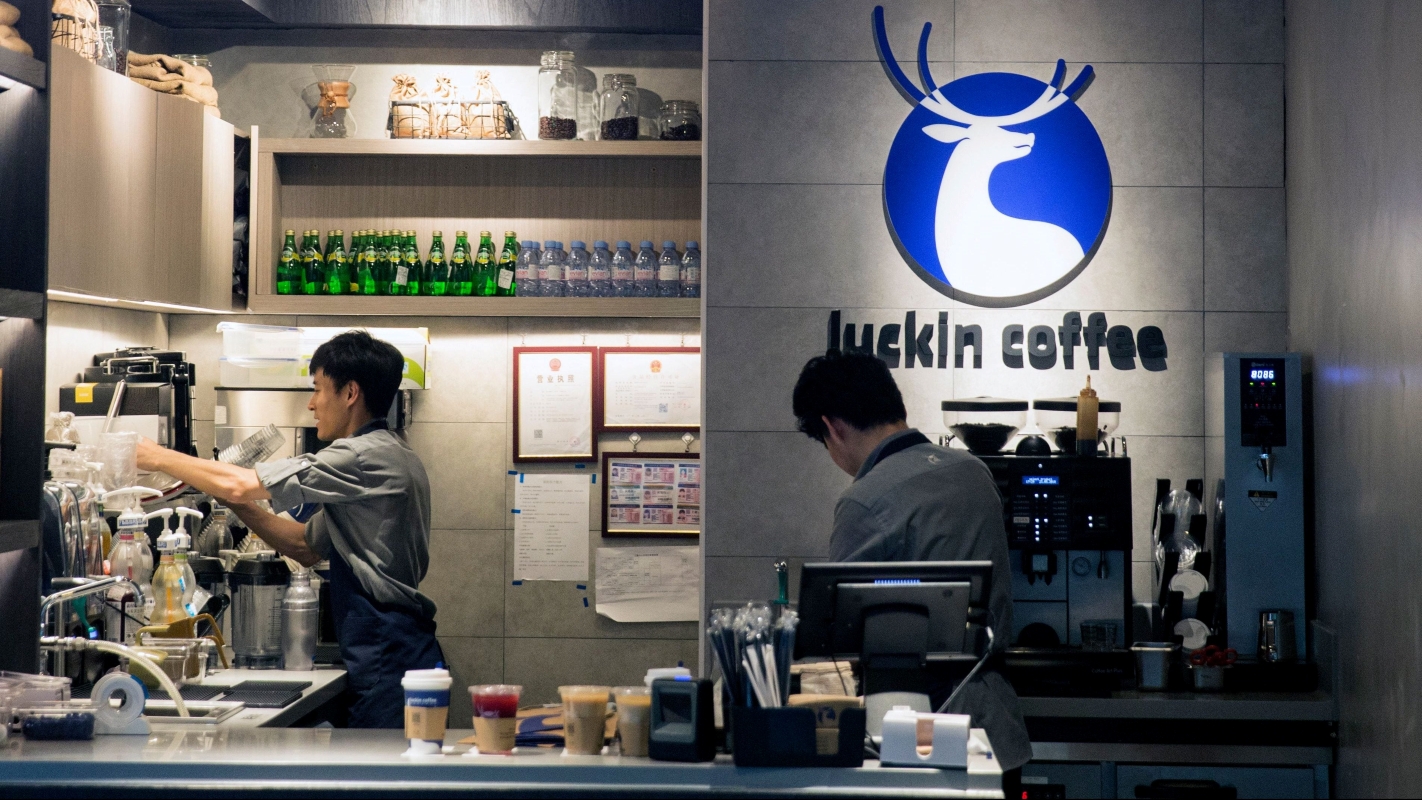
Luckin Coffee has reported strong first-quarter 2026 results, highlighted by a major share repurchase program and continued rapid expansion across its global store network. These results have drawn fresh attention to the recent Luckin Coffee share buyback.

The company posted net revenues of approximately RMB 12.0 billion (US$1.7–1.76 billion) for the three months ending 31 March 2026, representing a year-on-year increase of about 35%. As a result, market analysts are closely monitoring how the Luckin Coffee buyback of shares may influence its valuation.

This performance continues a sustained period of growth for the Chinese coffee chain, supported by aggressive store expansion and rising customer activity. Additionally, the Luckin Coffee share buyback demonstrates how management seeks to reward shareholders during periods of robust growth.

Store network expansion

During the quarter, Luckin opened 2,548 net new stores, bringing its total footprint to 33,596 locations worldwide. Notably, the company expanded its network while balancing capital through the coffee share buyback initiative.

The majority of new outlets were concentrated in China and Hong Kong, alongside a smaller number of openings in international markets including Singapore, Malaysia, and the United States. Moreover, this store expansion complements Luckin Coffee’s share buyback efforts.

$300 million buyback program

Alongside its earnings release, the company announced its first-ever share repurchase program, authorizing the buyback of up to US$300 million in shares over a 12-month period. Furthermore, investors are reviewing the Luckin Coffee share buyback as a signal of confidence from management.

The program allows the company to repurchase shares through open-market transactions or private deals, subject to market conditions and regulatory requirements. Significantly, the Luckin Coffee share buyback program provides flexibility in methods for repurchasing shares.

[conclusion] Such programs are typically used by companies to return value to shareholders and signal confidence in future performance. This approach is evident in the case with the Luckin Coffee share buyback.

Growth drivers and operations

Luckin’s growth was supported by:

  • Expanding store network scale
  • Increased customer activity, with average monthly transacting customers rising year-on-year
  • Continued investment in digital infrastructure and supply chain capabilities; the Luckin Coffee buyback strategy also supported financial stability.

The company emphasized its strategy of “high-quality, scaled growth,” leveraging technology and operational efficiency to drive consumption and strengthen its competitive position. In turn, initiatives like the Luckin Coffee share buyback reinforce this formula.

Margin pressure and mixed signals

Despite strong revenue growth, some indicators showed pressure:

  • Margins declined compared to the previous year
  • Same-store sales remained relatively flat
  • Rising costs, including delivery expenses, impacted profitability trends

These factors reflect a more competitive and evolving market environment, even as Luckin Coffee pursues strategic share buybacks to support its business.

Outlook

Luckin Coffee indicated confidence in its long-term strategy, pointing to its integrated digital model and large-scale operations as key advantages in navigating near-term volatility. Furthermore, the Luckin Coffee share buyback is anticipated to enhance its financial outlook.

The launch of the share buyback program further reinforces management’s focus on shareholder returns while maintaining growth momentum. In summary, the Luckin Coffee share buyback is expected to impact investor sentiment and future market activity.

Coffee Planet continues expansion in the Gulf after 20 years in the UAE

Dubai – Qahwa World

UAE-based coffee company Coffee Planet is planning further expansion across the GCC and selected international markets as it marks 20 years of operations in the region.

The company, which began in 2005 supplying coffee to petrol station convenience stores in the UAE, has since expanded into retail, hospitality, and corporate channels. A roasting facility established in Dubai in 2008 supported its early growth and helped broaden its distribution capabilities.

Coffee Planet now operates across roasting, distribution, retail, and technical services. Its production is based in the UAE, which the company says supports its supply chain and operational flexibility as demand grows.

The company reports it supplies coffee to a wide range of sectors, including hospitality, corporate clients, public sector entities, travel, and retail. It states that its products are used by a significant share of higher-end hotels in the UAE, alongside a wider network of business customers and retail partners.

Over the past decade, Coffee Planet reports a compound annual growth rate (CAGR) of 10.7%, with revenue increasing by 19% in 2025. It says it now serves more than 1,000 business-to-business clients and distributes over 21 million cups of coffee per month across the GCC.

“Allan Jones, Founder & Chairman, said the company has focused on building long-term partnerships and consistent service delivery. He also noted a broader regional shift towards locally based operations, which he said supports responsiveness and scale.”

The company operates a roasting facility in Jebel Ali with an annual capacity of around 5,000 tonnes and a site area of approximately 26,000 sq. ft. It produces a range of coffee products and operates an in-house laboratory for quality control and product development.

Coffee Planet estimates its facility produces more than 450 stock-keeping units (SKUs) per month across its proprietary and private label ranges. It also states that local production has helped reduce reliance on imports and improve supply continuity.

Looking ahead, the company expects roasting volumes to grow by 25–30% in 2026. Planned expansion includes new roasting operations in the UAE and Saudi Arabia, as well as further growth in existing and new markets including the GCC, UK, Egypt, Pakistan, Seychelles, and Singapore.

In addition to its roasting operations, Coffee Planet provides equipment management and technical services, overseeing more than 8,000 coffee machines in the UAE and handling over 2,000 service calls per month, according to the company.

As part of its leadership update, Founder and Chairman Allan Jones will assume the additional role of Chief Executive Officer. The company said the change is intended to align strategic direction with day-to-day operations as it enters its next phase of expansion.

About Coffee Planet
Founded in Dubai in 2005, Coffee Planet is a coffee company operating across roasting, distribution, retail, and related services. It serves business and consumer markets across the GCC and selected international locations, with a portfolio that includes private label production, café operations, and technical support services.

Keurig Dr Pepper Seals $15.7 Billion JDE Peet’s Deal as 96% of Shares Tendered

BURLINGTON, MA / AMSTERDAM – Qahwa World

In a move that reshapes the global coffee landscape, Keurig Dr Pepper Inc. (KDP) has officially declared its multi-billion-euro takeover bid for JDE Peet’s N.V. unconditional. The announcement comes after an overwhelming majority of shareholders backed the deal, signalling the end of JDE Peet’s era as a standalone public company on the Euronext Amsterdam.

According to a joint statement released Friday, approximately 466.7 million shares were tendered during the initial offer period, representing a staggering 96.22% of the company’s total share capital. The aggregate value of the tendered shares stands at approximately €14.86 billion (approx. $15.7 billion).

You may Read: Keurig Dr Pepper Launches €31.85-Per-Share Offer for JDE Peet’s

Transaction Finalized

With the 80% minimum acceptance threshold easily surpassed and all other conditions met, the Offeror (Kodiak BidCo B.V.) has confirmed that the deal is now legally binding.

Key Dates to Watch:

  • Settlement Date: Payment to shareholders who participated in the initial offer will be made on April 1, 2026.

  • Post-Closing Acceptance Period: A final window for remaining shareholders to tender their shares will run from March 30 to April 13, 2026.

  • Delisting: JDE Peet’s and KDP will now begin the process of delisting the stock from Euronext Amsterdam “as soon as possible”.

Strategic Integration

The merger brings together KDP’s North American dominance—fuelled by the Keurig brewing system and brands like Dr Pepper and Green Mountain—with JDE Peet’s massive international footprint. JDE Peet’s, which generated nearly €10 billion in sales in 2025, operates in over 100 markets with iconic brands, including Peet’s, L’OR, and Jacobs.

“This is more than a financial transaction; it is the union of two coffee powerhouses,” noted industry analysts. “KDP is now positioned as a truly global titan in both the hot and cold beverage sectors.”

Read also: JDE Peet’s Transfers Shares to Employees Amid Keurig Dr Pepper Takeover Offer

Next Steps for Shareholders

For the 3.78% of shareholders who have not yet tendered their shares, KDP has announced it will initiate statutory buy-out proceedings to acquire 100% ownership. Those who tender during the upcoming post-closing period will receive the same offer price as the initial participants, with payments expected within five business days following the April 13 deadline.

Upon settlement on April 1, a pre-approved reshuffling of the board of directors will take effect, marking the official integration of JDE Peet’s into the KDP corporate structure.

Coca-Cola Confirms Continued Ownership of Costa Coffee

DUBAI – QAHWA WORLD

Coca-Cola has officially ended months of market speculation by announcing it will keep Costa Coffee as a wholly-owned subsidiary. Despite rumors of a potential divestment throughout 2025, the beverage giant has opted to maintain its hold on the international coffee chain.

The decision was confirmed by Coca-Cola CFO John Murphy during a recent interview with Bloomberg. While private equity interest—specifically from TDE Capital—was reported late last year, Murphy clarified that the company intends to keep Costa 100 per cent owned within its current portfolio. However, one area remains in flux as the company is still reviewing its operations in the Chinese market to determine the best path forward.

While financial filings from the UK Companies House showed an operating loss of approximately $18.42 million in 2024, the brand’s core remains resilient. Performance in the primary markets of the UK and Ireland is characterized as strong, and Costa continues to dominate as the UK’s largest coffee chain. On a global scale, the brand manages over 4,000 retail locations and a massive network of 14,000 “smart café” automated machines across more than 30 countries.

READ ALSO:

Costa Coffee on the Edge of Sale: Losses in the UK, Growth in Asia

Coca-Cola Weighs Future of Costa Coffee Amid Strategic Review

Starbucks Returns to Growth for the First Time in Two Years

Dubai – Qahwa World

Starbucks shares climbed in early trading after the company reported an increase in customer visits for the first time in two years, signaling progress in its ongoing turnaround effort—even as profits came in below expectations.

The coffee chain said transaction growth returned during its fiscal first quarter, helping lift same-store sales. Management credited recent operational and service-focused changes for bringing more customers back into stores.

Chief Executive Officer Brian Niccol said the early results suggest the company’s “Back to Starbucks” strategy is gaining traction sooner than expected, noting stronger sales momentum driven by increased visit frequency.

Although Starbucks fell short of Wall Street’s earnings forecast, revenue exceeded expectations. Adjusted earnings reached 56 cents per share, compared with analyst estimates of 59 cents, while revenue rose 6% year over year to $9.92 billion.

Net income declined sharply from the prior year, pressured by higher coffee costs, tariffs, and expenses tied to restructuring and transformation initiatives. Excluding one-time items, profitability remained more stable.

Global same-store sales grew 4%, supported by a 3% rise in customer traffic—the first such increase since 2022. Both loyalty members and non-members contributed to the improvement, marking a notable shift in consumer behavior.

In the U.S., same-store sales also increased 4%, helped by strong demand for seasonal beverages and merchandise during the holiday period. Starbucks’ international business performed even better, posting a 5% rise in comparable sales.

China, the company’s second-largest market, delivered 7% same-store sales growth. During the quarter, Starbucks announced plans to form a joint venture with Boyu Capital to manage its China operations, a move aimed at expanding its presence and accelerating long-term growth in the region.

Starbucks ended the quarter with 128 net new stores and plans to open between 600 and 650 additional locations globally in fiscal 2026, following the closure of hundreds of underperforming U.S. stores last year.

Looking ahead, the company forecast adjusted earnings per share of $2.15 to $2.40 for fiscal 2026 and expects global comparable sales to grow by at least 3%. More details on long-term strategy and financial targets are expected to be shared at an investor event in New York.

Global Coffee Market Value to Hit $186.5 Billion by 2033

The Fourth Wave Defines Trends and Shapes the Global Coffee Market Landscape

Dublin — Qahwa World

The global coffee industry is no longer just about waking up; it is about waking up to a new economic reality. According to a landmark report released yesterday by ResearchAndMarkets.com, the global coffee market is projected to surge from US$ 121.69 billion in 2024 to US$ 186.55 billion by 2033, driven by a compound annual growth rate (CAGR) of 4.86%.

While the headline figures suggest steady growth, the underlying currents reveal a volatile, transformative landscape. As we approach the end of 2025, the industry is navigating a “perfect storm” of climate-induced price shocks, a regulatory overhaul in Europe, and a massive consumption pivot toward the Asia-Pacific region.

The Asian Renaissance: Beyond the Tea Leaf

The report identifies the Asia Pacific (APAC) region as the primary engine of future growth, a trend confirmed by on-the-ground developments in late 2024 and 2025.

While Europe remains the revenue leader, Asia is where the volume is shifting. The “Third Wave” of coffeecharacterized by artisanal appreciation and traceabilityhas made landfall in traditionally tea-drinking nations.

India’s Awakening: The data aligns with India’s aggressive rise as both a consumer and exporter. Just this week, Starbucks reaffirmed its commitment to the subcontinent, celebrating its 500th store opening in Delhi NCR. Under the leadership of new global CEO Brian Niccol, the Seattle giant is doubling down on India, announcing a Farmer Support Partnership aiming to train 10,000 local farmers by 2030. This is a strategic hedge; as growth in China faces stiff competition from local price-warriors like Luckin Coffee, India represents the next great frontier for premiumization.

The Robusta Revival: Vietnam and Indonesia are capitalizing on the global shortage of Arabica beans. With climate change shrinking Arabica’s arable land, high-quality Asian Robusta (often called “Fine Robusta”) is entering the mainstream blends of major roasters to keep price points stable.

The Price of Sustainability: The EUDR Factor

The report highlights “sustainability benchmarking” as a key competitive differentiator, but in late 2025, sustainability is less about marketing and more about regulatory survival.

The industry is currently breathing a collectivealbeit temporarysigh of relief following the European Union’s decision to delay the Deforestation Regulation (EUDR) implementation to December 2026. This regulation, which bans the import of commodities linked to deforestation, threatened to disrupt supply chains for major players like Lavazza, JDE Peet’s, and Nestlé.

However, the delay is not a cancellation. Companies like Lavazza are aggressively pushing their “Roadmap to Zero,” aiming for carbon neutrality in Scope 1 and 2 emissions. The report notes that eco-friendly packaging and circular economy initiatives are no longer optional “nice-to-haves” but essential for maintaining market access in the premium European bloc.

Corporate Battlegrounds: The Fight for the Morning (and Afternoon)

The competitive landscape section of the report details a bifurcation in strategy among key players:

1. The Experience Economy: Starbucks vs. The World

Starbucks is currently executing its “Back to Starbucks” strategy. After a rocky 2024, the focus has returned to operational speed and the “human connection.” However, they face a new breed of competitor.

2. The Speed Demons: Dutch Bros

The report lists Dutch Bros as a key disruptor, and for good reason. The drive-thru chain has been on a tear in 2025, aggressively expanding its footprint with approximately 160 new shops opening this year alone. Their modelhigh-sugar, high-caffeine, cold beverages tailored for Gen Zis stealing the afternoon “treat” occasion from traditional coffee houses. Their target of 4,000 locations long-term suggests they are moving from a regional cult favorite to a national heavyweight.

3. The At-Home Revolution: Nestlé

Nestlé continues to dominate the at-home segment. With inflation keeping some consumers out of cafes, the “coffee shop at home” trend remains sticky. Nestlé’s 2025 innovation pipeline has heavily favored cold brew solutions and functional coffees (blends with added vitamins or adaptogens), catering to health-conscious millennials who want cafe quality at kitchen table prices.

Outlook: The Tech-Infused Bean

Looking toward 2033, the report suggests that technology will play a pivotal role. From AI-driven agronomy helping farmers navigate erratic weather patterns in Brazil to precision brewing systems in cafes, the “Fourth Wave” of coffee will be defined by data.

As the market marches toward that $186.55 billion valuation, the winners will be those who can balance the rising cost of green coffee (up 30-40% in mid-2025) with the consumer’s demand for ethics, quality, and convenience.

Coca-Cola Reassesses Its $5 Billion Coffee Investment

Dubai – Qahwa World

Coca-Cola is reconsidering its coffee strategy after its $5.1 billion acquisition of Costa Coffee failed to deliver the expected results.

CEO James Quincey admitted during the company’s recent earnings call that the “investment hypothesis didn’t work out as we expected.” The beverage giant had hoped Costa would drive significant growth beyond its traditional retail outlets, but that expansion has not materialized.

Despite the setback, Quincey emphasized that coffee remains a “super attractive category,” noting that Coca-Cola continues to invest in Costa’s UK operations and in expanding automated coffee machines under the Costa brand. However, he acknowledged that the business “hasn’t yet created the multiplier effect we were looking for.”

Coca-Cola is currently “reflecting” on how to position its coffee business moving forward. Reports from Reuters in August indicated that the company may be exploring a potential sale of Costa Coffee, though Quincey did not comment on that possibility.

Coca-Cola’s stock rose about 4% on Tuesday following its announcement that net sales increased by 5% to $12.46 billion in the third quarter.

The company’s coffee ventures also include experiments with Coca-Cola Coffee, a beverage blending the brand’s classic soda with coffee extract.