How Switzerland Became the World’s Second Largest Coffee Exporter?

Author: Coffee World
Source: Swissinfo
Date: May 16, 2026

Executive Summary:

  • Switzerland ranks second globally in coffee exports, with an annual value of 3.3 billion Swiss francs ($4.2 billion).
  • Green coffee enters Switzerland at $5 per kilogram, and after roasting, its value jumps to $26.80 per kilo.
  • Coffee accounts for 33% of Swiss agricultural exports, surpassing cheese and chocolate.
  • A legal concept called “substantial transformation” allows Switzerland to label roasted coffee as Swiss-made.
  • Swiss companies produce about 70% of all fully automatic coffee machines sold worldwide.
  • An estimated 60–70% of the global green coffee trade passes through Swiss trading desks.
  • The success of capsule coffee systems, especially Nespresso, boosted Swiss exports sharply from the early 2000s.

Switzerland has achieved an economic miracle that defies logic. Despite being a small country with a climate unsuitable for growing coffee, it has become the world’s second largest coffee exporter. Only Brazil exports more. According to recent figures, Switzerland ships coffee worth about 3.3 billion Swiss francs ($4.2 billion) annually, outpacing giants like Colombia, Ethiopia, and Vietnam all of which actually grow coffee.

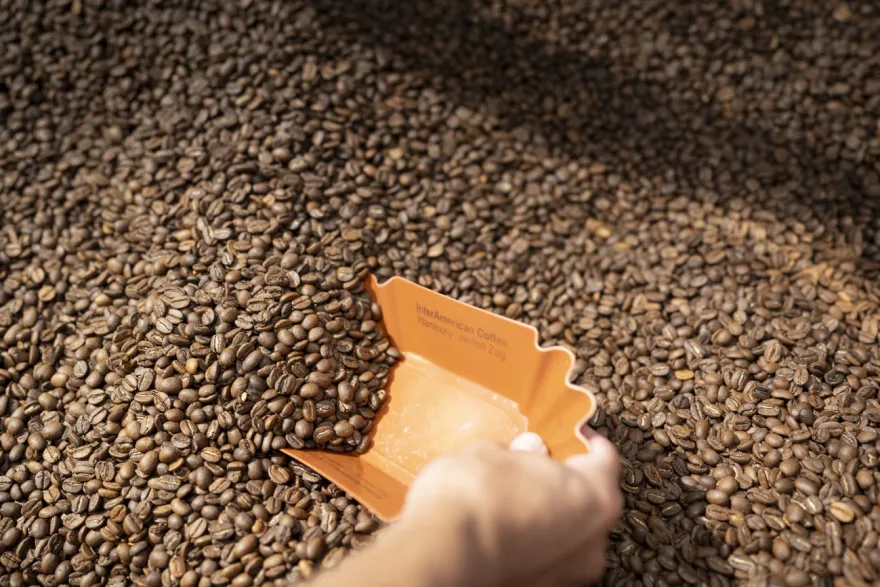
The secret lies in processing, not farming. Switzerland imports green (unroasted) coffee beans from producing nations, then roasts and packages them locally. International trade rules consider roasting a “substantial transformation.” This legal nuance allows Swiss companies to label the final product as Swiss-made, even though the beans came from elsewhere.

From $5 to $26.80: The Value-Add of Roasting

According to the Swiss Trade Monitor from the University of St. Gallen, green coffee enters Switzerland at an average price of $5 per kilogram. After local roasting plants process the beans, their export value reaches $26.80 per kilo. This massive increase makes coffee Switzerland’s most important agricultural export today. With a share of around 33%, coffee even surpasses traditional exports such as cheese and chocolate.

In terms of pure export volume, Switzerland lags slightly behind Italy and Germany. However, its specialization in high-priced, portioned products such as capsules explains why it leads these countries in total export value.

‘Substantial Transformation’: The Legal Trick Behind the Success

Why is coffee that is only roasted in Switzerland allowed to carry a Swiss cross on its packaging? The answer is a legal finesse called “substantial transformation.” Under international trade law, a product’s country of origin is the nation where the product underwent its last substantial transformation. For coffee, customs authorities worldwide have ruled that roasting green beans qualifies as such a transformation. This subtlety has turned Switzerland into one of the world’s largest coffee-producing countries—without a single coffee plantation on its soil.

Nearly all green coffee arrives via the Rhine River. Beans first reach seaports such as Antwerp, Rotterdam, or Hamburg. Barges then transport them up the Rhine to Basel, where many large green coffee trading companies have set up their headquarters.

‘Coffee Valley’ and Global Leadership in Coffee Machines

Around Lake Geneva and in eastern Switzerland, entire ecosystems have developed. Experts often call this region “Coffee Valley.” It hosts not only giants like Nestlé (with Nescafé and Nespresso) but also the industry’s technology leaders.

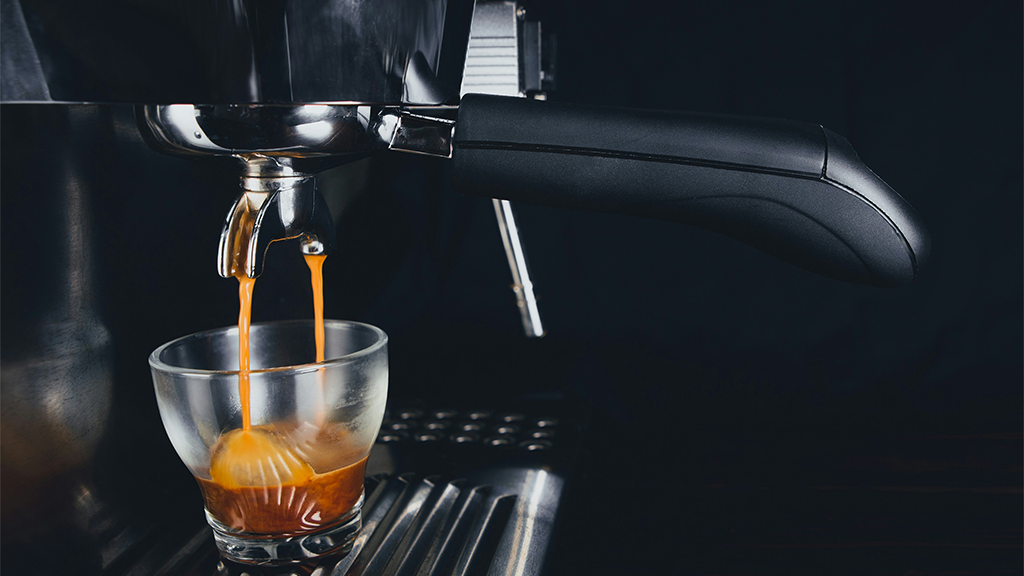
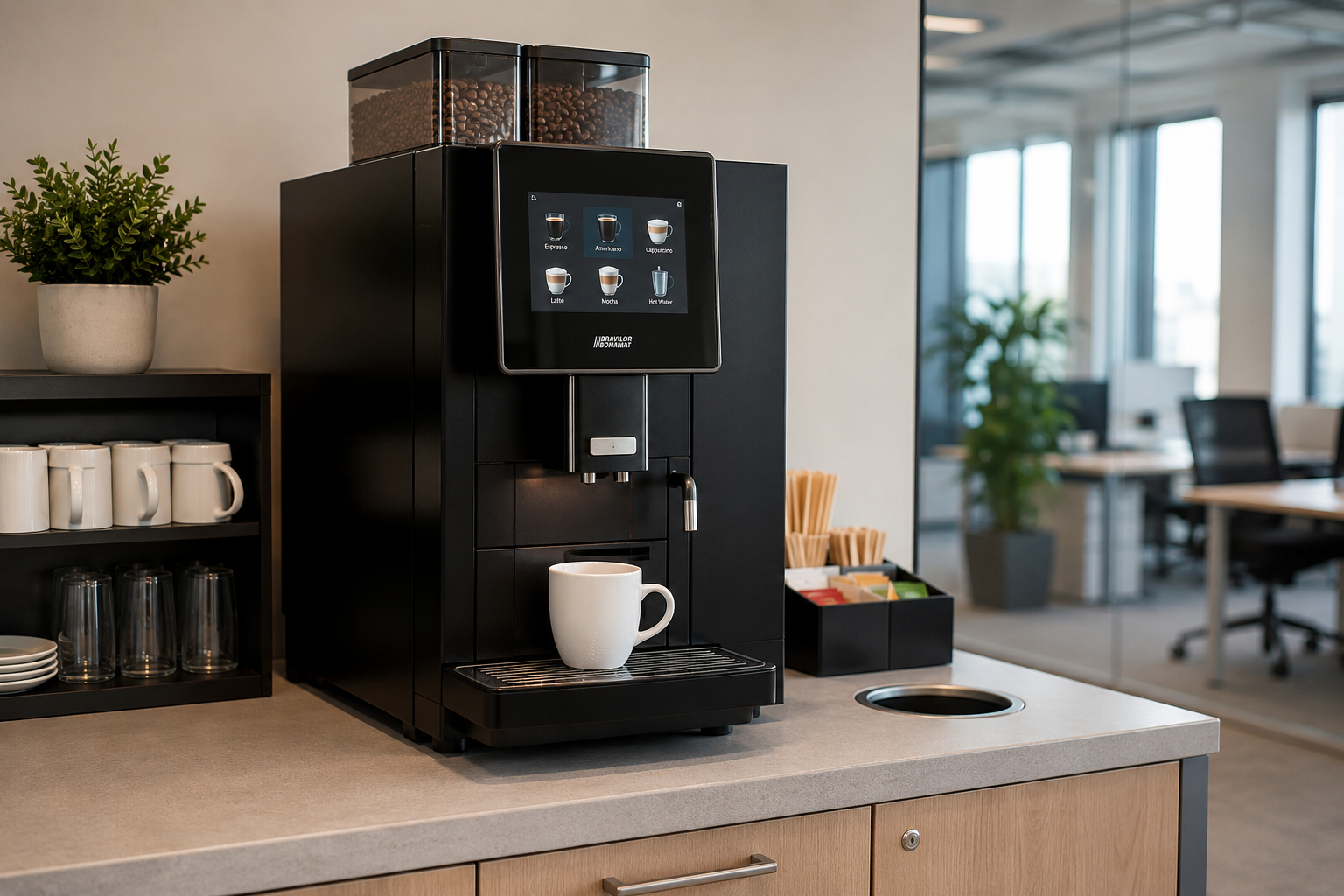
Switzerland is the undisputed leader in the market for fully automatic coffee machines. About 70% of all such machines sold worldwide come from Switzerland. Leading manufacturers include Jura, Schaerer, and Thermoplan. Thermoplan, for example, supplies all coffee machines for Starbucks branches worldwide. Swiss suppliers of highly specialized precision components also drive this success. These plastic parts must withstand extreme pressures of up to 20 bar and temperatures of 100°C—essential for brewing fine espresso.

Switzerland as a Global Green Coffee Trading Hub

Switzerland’s role as a commodity trading center also explains its coffee dominance. According to the Swiss Trade Monitor, an estimated 60% to 70% of the global green coffee trade passes through Swiss desks. In addition, more than 40 members of the Swiss Coffee Trade Association control over half of all green coffee traded worldwide.

Export figures jumped sharply from the early 2000s onward, largely due to the success of capsule systems. Market leader Nespresso produces its capsules for the global market exclusively in three Swiss factories. Switzerland is also a major exporter of instant coffee and other highly processed specialties positioned in premium segments worldwide.

Key Data: Switzerland and the Global Coffee Trade

Indicator Value
Switzerland’s global coffee export rank Second (after Brazil)
Annual coffee export value 3.3 billion CHF ($4.2 billion)
Green coffee import price (per kg) $5.00
Roasted coffee export price (per kg) $26.80
Coffee’s share of Swiss agricultural exports 33%
Global market share of Swiss automatic coffee machines 70%
Estimated global green coffee trade via Swiss desks 60–70%

The Dark Side: Colonial Roots and Ethical Challenges

Any celebration of Switzerland’s coffee success must acknowledge the industry’s colonial origins. Although Switzerland never had its own colonies, prominent Swiss families owned coffee plantations. The Escher family, for example, owned a coffee plantation in Cuba. According to historical records, slaves guarded by dogs worked there for 14 hours a day. Some Swiss families were also deeply involved in transporting slaves and coffee—a practice researchers call “triangular business.”

Today, the industry still struggles with its image. Ecological and social problems persist in coffee-growing countries. After the European Union enacted a regulation on deforestation-free products, Switzerland launched the Swiss Platform for Sustainable Coffee. Targeted projects aim to improve living conditions for small farmers and make supply chains more transparent. However, critics doubt the platform’s success. They note that the model relies on voluntary action rather than binding legal obligations.

Therefore, the final chapter of the Swiss coffee saga remains unwritten. Global interdependencies continue to draw criticism, and sustainability challenges await stricter, more effective solutions.

Frequently Asked Questions (FAQ)

1. How does Switzerland export coffee without growing it?

Switzerland imports green coffee beans from producing countries, then roasts and processes them locally. Under international trade law, roasting counts as “substantial transformation,” allowing Swiss origin labeling.

2. What is the annual value of Swiss coffee exports?

Switzerland exports coffee worth about 3.3 billion Swiss francs ($4.2 billion) per year, making it the world’s second largest exporter after Brazil.

3. What share of the global coffee machine market does Switzerland hold?

Swiss companies produce approximately 70% of all fully automatic coffee machines sold worldwide, led by Jura, Schaerer, and Thermoplan.

4. What is “Coffee Valley” in Switzerland?

“Coffee Valley” refers to the ecosystem around Lake Geneva and eastern Switzerland, where major companies like Nestlé (Nespresso, Nescafé) and coffee machine technology leaders are based.

5. What criticisms does the Swiss coffee industry face?

Critics point to colonial-era roots (Swiss-owned plantations using slave labor) and ongoing environmental and social issues in producing countries. They also argue that Switzerland’s sustainability model is voluntary, not legally binding.

6. How did capsule coffee boost Swiss exports?

Nespresso produces all its capsules exclusively in three Swiss factories. The success of capsule systems from the early 2000s sharply increased Swiss coffee exports, especially in high-value product categories.

Coffee World – Report based on data from Swissinfo.ch, University of St. Gallen’s Swiss Trade Monitor, and the Swiss Coffee Trade Association.
Published: May 16, 2026 | Figures subject to updates based on latest official releases.

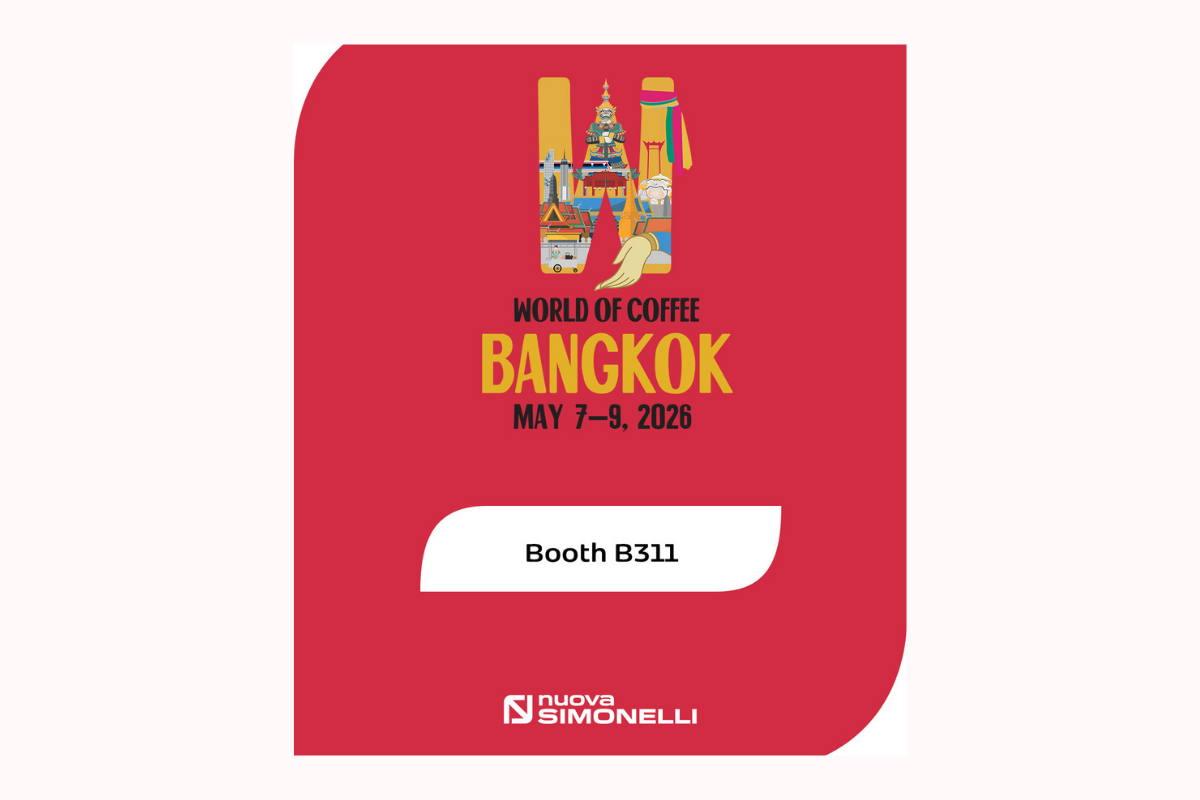
Nuova Simonelli at World of Coffee Bangkok 2026

Bangkok – Qahwa World

From May 7 to 9, Nuova Simonelli will take part in World of Coffee Bangkok 2026, bringing innovation and energy to the heart of the Asian coffee industry. Visitors can find the brand at booth B311, where technology, experience, and great coffee come together.

Nuova Simonelli area: a future experience

Inside the brand space, visitors will enjoy a fully hands-on experience designed for baristas, roasters, and coffee chains.

The event will feature the official launch of a new evolution of the iconic coffee machine, designed to simplify daily work, improve efficiency, and support sustainability.

A high-performance professional machine will also be available for hands-on testing, created for fast-paced environments without compromising cup quality.

Smart automation technology

Intelligent automation with zero stress. Visitors will experience smart automation technology that simplifies daily operations, standardizes preparation, and ensures consistent quality even during peak hours.

An experience beyond the booth

Booth B311 will be more than an exhibition space. It will be a dynamic hub for meeting, tasting, and exchanging ideas between coffee professionals and an international audience.

Guests are invited to try the machines, explore the technology, and engage with the future of coffee innovation.

Invitation

Visit the booth, test the equipment, and discover how coffee meets smart innovation.

From Black Wine to Coffee: Lessons from China’s Market History

By: Lucy Wen

When coffee first arrived in China, people didn’t even know what to call it. Some called it “Black Wine.” Others drank it as a digestive aid. At one point, it was even sold in pharmacies as cough medicine. While this seems amusing today, it reveals a key lesson: how a completely foreign product enters a new market.

Stage One: When Coffee Was Just Functional
In the earliest records, coffee wasn’t a lifestyle or cultural symbol. It was simply something foreigners drank after meals to aid digestion. Naturally, people interpreted it based on what they knew: a dark liquid plus post-meal use became “Black Wine.” At this stage, coffee wasn’t “coffee”; it was a functional product trying to fit into an existing category. In 1853, at the Old Deji Pharmacy in Shanghai, coffee was even sold as “cough syrup.”

Stage Two: When the Market Tries to Make Sense of It
As coffee became more visible, understanding didn’t come immediately. Different names appeared, and interpretations varied. Some saw it as medicine, others as a novelty drink. This confusion wasn’t rejection; it was the market trying to understand. When a product is new, people evaluate it through familiar categories rather than on its own terms.

Stage Three: When Understanding Becomes Standard
It wasn’t until the early 20th century that one name, “coffee” (咖啡), became widely accepted. That marked the start of broader consumption. Once people agreed on what the product was, they could decide whether they wanted it. Language didn’t just describe coffee; it unlocked the market.

Lessons for Coffee Businesses Today
Working with coffee machines and international trade reveals a similar pattern in emerging markets. The challenge is often not naming; it’s understanding. Customers aren’t just asking, “Which machine is better?” They are asking: What is espresso? Why does pressure matter? Is this a daily drink or a business opportunity? The gap is not the product itself; it’s education. Sometimes, people need clarity on what a machine does before they are ready to buy it.

The Real Takeaway
China didn’t just take time to accept coffee; it took time to understand it. Entering a new market is not about pushing products. It’s about translating value. Before someone buys your machine, they need to understand the experience behind it. Once they do, everything else becomes much easier.

Demand for Home Coffee Machines in Russia Rises by 10% in 2025

Moscow – Qahwa World

The market for home coffee machines and brewers in Russia saw significant growth during the first nine months of 2025. The number of appliances sold increased by 10% compared to the same period in 2024, reaching approximately 1.7 million units. However, the total market value grew more modestly by 7%, totaling 25.5 billion rubles, according to data shared with “Vedomosti” by Nikolai Semenov, head of the small household appliances department at the retailer “M.video.”

This growth, which confirms Russia’s transition from a traditionally “tea” country to a “coffee” country, is attributed to the rising trend of preparing coffee at home. A representative for “Wildberries” noted that the turnover of coffee makers on their platform doubled (+107%) during the first three quarters of the current year compared to the previous year, with an average price of about 4,000 rubles per device.

The majority of sales are concentrated in budget-friendly devices, with appliances costing up to 5,000 rubles accounting for about half of all unit sales. Overall, the average price of coffee machines dropped by 13% in 2025 compared to 2024. Experts explain this shift by consumers opting for cheaper models, the increased share of sales through online marketplaces offering competitive prices, and the proliferation of various Chinese brands.

In terms of market share by brand, the Italian brand Delonghi remains the leader in terms of revenue, capturing about a third of total revenue and 15% of units sold. The mass segment is dominated by Russian brands such as Vitek, Kitfort, Lumme, and Redmond, as well as the American brand Polaris, with models typically priced up to 10,000 rubles.

By appliance type, automatic coffee machines account for about 25% of all sales. Espresso portafilter machines hold a share of 20–22%, while traditional filter coffee makers form 21–23% of the market. Capsule coffee makers maintain a stable share of about 14–15%.

It is worth noting that prices for natural coffee (beans and ground) have also risen sharply, increasing by 29.4% compared to the previous year, reaching 2030 rubles per 1 kg, according to “Izvestia.” However, this increase has not deterred consumers from continuing to consume coffee. Instead, it has encouraged many to invest in home machines as a more economical long-term alternative to purchasing beverages at coffee shops, where the prices for ready-made coffee have increased by 13–25%.

Victoria Arduino Unveils L’Atelier — A New Creative Space at HOST Milano 2025

Milan— Qahwa World

At this year’s HOST Milano, Victoria Arduino is introducing L’Atelier by Victoria Arduino, a new creative concept that merges craftsmanship, design, and innovation into a single narrative space.

Drawing inspiration from the world of luxury ateliers, L’Atelier reimagines the traditional perception of coffee machines — presenting them not just as professional tools but as unique works of art. The new project reflects Victoria Arduino’s longstanding values of Italian excellence, artisanal partnerships, and an unwavering dedication to detail.

L’Atelier is conceived as both a showcase and an experiential journey through the essence of creativity and customization. It highlights the deep connection between coffee culture and high-end design, positioning Victoria Arduino as a key player in bridging the worlds of specialty coffee and luxury craftsmanship.

For its debut edition, Victoria Arduino has partnered with three distinguished Italian artisans and design houses:

BTB Progetto Pelle – Renowned leather artisans known for their bespoke panels and luxury finishes inspired by interior and fashion design.

Intreccio Vivo – A new generation of weavers preserving the art of midollino and raffia weaving, creating biodegradable decorative surfaces.

Vesta – Experts in sustainable, high-end composite materials used by leading international fashion brands.

Through these collaborations, L’Atelier embodies the harmony between sustainability, design, and artisanal mastery. It stands as a symbol of how traditional craftsmanship and modern innovation can coexist within the evolving world of coffee.

Visitors can experience this new chapter of Victoria Arduino’s creative vision at HOST Milano 2025, Hall 16 — Stand A11 – A19 – C12 – C20.

Breville Eyes China’s Coffee Market as U.S. Tariffs Pressure Sales

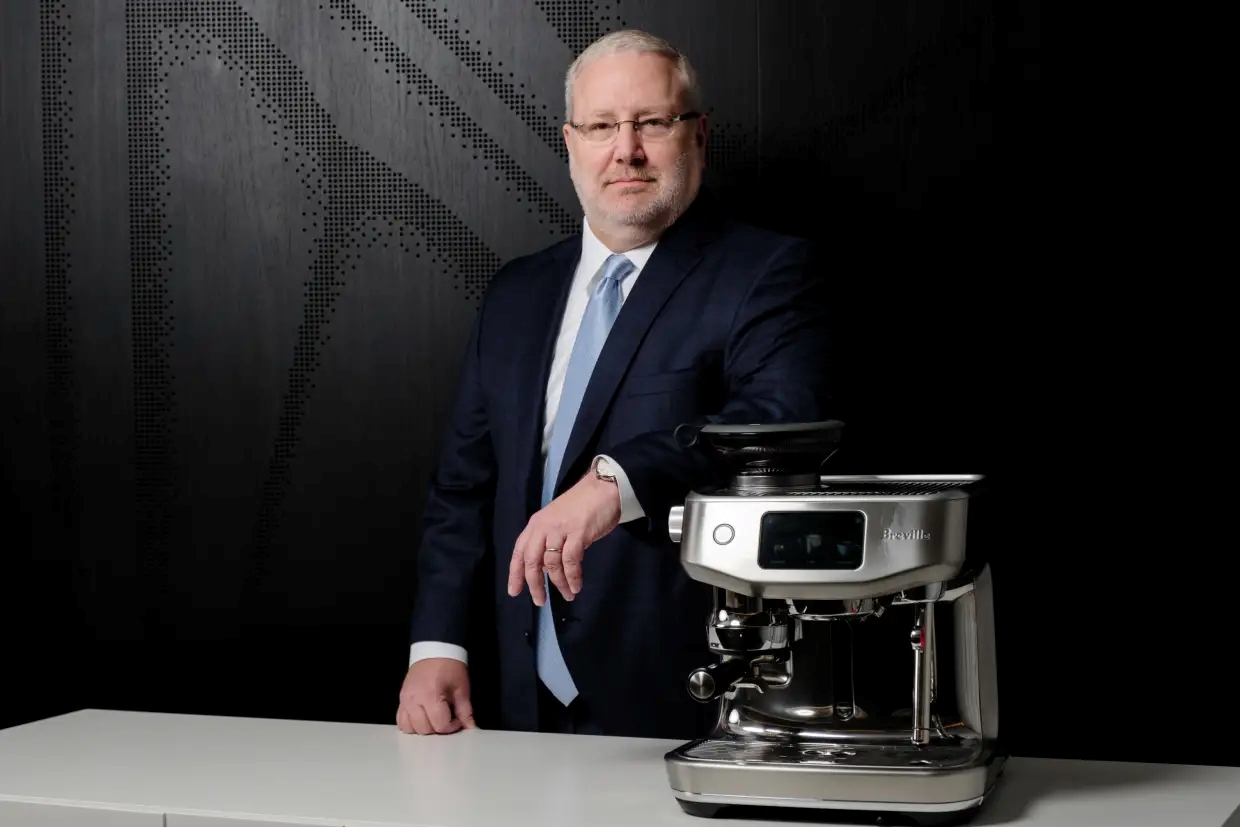
Dubai, 21 August 2025 (Qahwa World) – Breville is looking to China and the Middle East as promising new growth markets for its coffee appliances, aiming to balance the impact of U.S. tariffs on its business. Chief executive Jim Clayton said rising demand for premium coffee machines in these regions provides long-term opportunity, even as higher import duties in the United States pose near-term challenges.

The company, which generates about 40 percent of its revenue from the U.S., has shifted part of its production from China to facilities in Indonesia and Mexico. Clayton confirmed that this diversification strategy will continue through the year to reduce exposure to higher costs.

For the year ending June 30, Breville posted revenue of $1.7 billion, an increase of nearly 11 percent, while operating profit rose just over 10 percent to $204.5 million. Despite the strong performance, investor concerns about tariffs weighed on the share price. Clayton acknowledged that higher input costs remain an issue for the U.S. market but said the company would manage these pressures through supplier negotiations, selective price increases, and new product launches.

Recent highlights include the launch of the Oracle Dual Boiler coffee machine in Australia, with a new grinder and a compact smart oven scheduled for release this month. Coffee appliances remain the company’s leading category, helping Breville deliver double-digit growth across all three of its regional markets in 2025. The business has increased revenue and profit every year since 2015, even during challenging conditions.

Analyst opinions are mixed. Some warn that U.S. tariffs could affect earnings through FY27, raising questions about consensus forecasts of flat growth this year and a return to double-digit gains next year. Others view the current slowdown as temporary, pointing to Breville’s consistent record of expansion and opportunities in international markets. UBS projects that the $5 billion company could more than double sales over the next decade, driven by coffee market growth globally and particularly in China.

Founded over 90 years ago, Breville has grown into a global brand with a presence in more than 70 countries. Known under the Breville and Sage names, the company has built a reputation for innovation in small appliances and premium coffee equipment. Its teams of engineers, designers, and food technologists have helped place Breville at the forefront of its category. The company also emphasizes sustainability and ethical practices across its operations, with a focus on reducing environmental impact and contributing positively to society.

Clayton said that early results in China and the Middle East are encouraging, though still in the early stages, and that both regions represent significant long-term potential. To close out the financial year, Breville declared a final dividend of 19 cents per share, bringing the full-year payout to 37 cents, payable on October 2.