Coffee Planet continues expansion in the Gulf after 20 years in the UAE

Dubai – Qahwa World

UAE-based coffee company Coffee Planet is planning further expansion across the GCC and selected international markets as it marks 20 years of operations in the region.

The company, which began in 2005 supplying coffee to petrol station convenience stores in the UAE, has since expanded into retail, hospitality, and corporate channels. A roasting facility established in Dubai in 2008 supported its early growth and helped broaden its distribution capabilities.

Coffee Planet now operates across roasting, distribution, retail, and technical services. Its production is based in the UAE, which the company says supports its supply chain and operational flexibility as demand grows.

The company reports it supplies coffee to a wide range of sectors, including hospitality, corporate clients, public sector entities, travel, and retail. It states that its products are used by a significant share of higher-end hotels in the UAE, alongside a wider network of business customers and retail partners.

Over the past decade, Coffee Planet reports a compound annual growth rate (CAGR) of 10.7%, with revenue increasing by 19% in 2025. It says it now serves more than 1,000 business-to-business clients and distributes over 21 million cups of coffee per month across the GCC.

“Allan Jones, Founder & Chairman, said the company has focused on building long-term partnerships and consistent service delivery. He also noted a broader regional shift towards locally based operations, which he said supports responsiveness and scale.”

The company operates a roasting facility in Jebel Ali with an annual capacity of around 5,000 tonnes and a site area of approximately 26,000 sq. ft. It produces a range of coffee products and operates an in-house laboratory for quality control and product development.

Coffee Planet estimates its facility produces more than 450 stock-keeping units (SKUs) per month across its proprietary and private label ranges. It also states that local production has helped reduce reliance on imports and improve supply continuity.

Looking ahead, the company expects roasting volumes to grow by 25–30% in 2026. Planned expansion includes new roasting operations in the UAE and Saudi Arabia, as well as further growth in existing and new markets including the GCC, UK, Egypt, Pakistan, Seychelles, and Singapore.

In addition to its roasting operations, Coffee Planet provides equipment management and technical services, overseeing more than 8,000 coffee machines in the UAE and handling over 2,000 service calls per month, according to the company.

As part of its leadership update, Founder and Chairman Allan Jones will assume the additional role of Chief Executive Officer. The company said the change is intended to align strategic direction with day-to-day operations as it enters its next phase of expansion.

About Coffee Planet
Founded in Dubai in 2005, Coffee Planet is a coffee company operating across roasting, distribution, retail, and related services. It serves business and consumer markets across the GCC and selected international locations, with a portfolio that includes private label production, café operations, and technical support services.

Indonesia Eyes Further Growth in Coffee Exports to Russia

Moscow — Qahwa World

Indonesia may continue expanding its coffee exports to Russia following strong growth in 2025, although logistical and financial hurdles remain, according to an industry representative.

A supplier speaking at the “Coffee Tea Cacao & HoReCa Expo” in Moscow said that while Indonesia is unlikely to surpass Vietnam as Russia’s top coffee exporter, there is still room to increase overall shipment volumes.

Trade data previously showed that Indonesia strengthened its position among Russia’s leading coffee suppliers during the first nine months of 2025, with export values rising significantly compared to the previous year. Vietnam, however, maintained its lead by a wide margin.

Industry participants point to transportation difficulties and payment processing issues as the main constraints affecting further expansion. Despite these challenges, there is optimism that improving bilateral relations could help ease some of these barriers.

Russia is not yet among Indonesia’s top coffee export destinations, but demand in the market has been steadily increasing in recent years, making it more attractive for exporters.

Recent high-level talks between officials from both countries have also included discussions on facilitating financial transactions, which could support future trade growth.

From Cup to Concrete: How Coffee Waste Is Building a Greener Future

Dubai – Qahwa World

Two years after Australian researchers first turned yesterday’s espresso shots into tomorrow’s building material, the “coffee concrete” revolution is no longer a lab curiosity. It is now being used on the streets of Victoria and reshaping how the world thinks about waste.

As a coffee expert who has spent two decades tracing every bean from farm to cup, I can say this: the humble spent coffee ground, once a soggy pile thrown away without a second thought, is now a high performance material in the construction industry. In 2026, the story is getting even better.

The Science, Brewed to Perfection

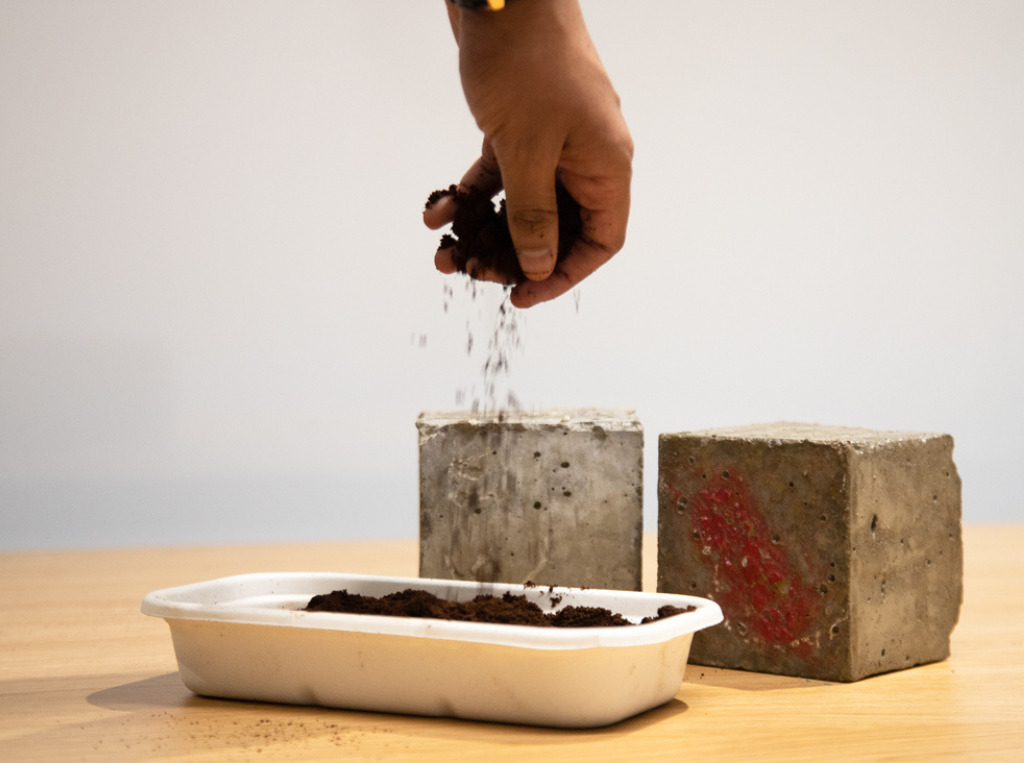
Back in 2023, engineers at RMIT University discovered that pyrolyzing spent coffee grounds at 350°C in the absence of oxygen creates a porous, carbon rich biochar. Replacing up to 15 percent of the sand in a standard concrete mix with this biochar increases compressive strength by nearly 30 percent. Higher temperatures do not perform as well. The optimal point is a precise low and slow process.

This is not just stronger concrete. It is smarter concrete. A peer reviewed life cycle analysis published in November 2025 showed it can reduce the material’s carbon footprint by up to 26 percent, cut fossil fuel use by 31 percent, and ease pressure on diminishing river sand supplies.

RMIT has also reported that the same coffee derived biochar improves thermal insulation in cement composites by up to 20 percent. Buildings made with it stay cooler in summer and warmer in winter. This leads to lower energy use and reduced emissions over time.

Real Streets, Real Impact

The results are already visible in real world projects.

In October 2024, the first section of coffee biochar concrete was laid on Victoria’s Big Build project in Pakenham. Five tonnes of spent coffee grounds, equal to about 140000 cups of coffee, were converted into two tonnes of biochar for a 30 cubic metre footpath. There was no smell and no visible difference, only improved strength and sustainability.

A parallel trial in Gisborne with Macedon Ranges Shire Council tested coffee and wood chip biochar side by side. Researchers continue to monitor long term performance under foot traffic, weather conditions, and freeze thaw cycles. Early results are promising.

A Circular Gift for the Coffee Industry

This development has direct implications for café owners, roasters, and coffee drinkers.

Globally, tens of millions of tonnes of spent coffee grounds are produced each year. Most are still sent to landfill, where they release methane. Now, this waste can be reused in a way that benefits both the environment and the industry.

Cafés that join collection programs may eventually turn their daily waste into revenue or carbon credits. A single cup of coffee could contribute to building stronger and more energy efficient schools and hospitals. This is a practical example of a circular economy.

Dr Rajeev Roychand and the RMIT team have stated they are ready to scale the technology. They are working with contractors and local councils and presenting the material in major exhibitions. The next steps include commercial standards, larger pilot projects, and expanded supply chains, all progressing in 2026.

The Bigger Picture

This innovation stands out as one of the most effective responses to coffee waste. It does not require changes in how coffee is prepared. It simply redefines the value of what remains after brewing.

From coffee farms in Ethiopia and Colombia to urban infrastructure in Melbourne and beyond, coffee is proving it can play a role far beyond consumption. It can contribute to building a more sustainable and resilient world.

In 2026, the future of construction carries a subtle trace of coffee.

Ahmed Al-Qahwa is Qahwa World’s lead voice on sustainable coffee innovation. He has visited RMIT’s laboratories and walked the Pakenham trial site.

Share this story with your local café or council. The coffee grounds from your cup could one day be part of the ground beneath your feet.

Coffee Sector Lags on Deforestation Commitments, Forest 500 Finds

DUBAI – Qahwa World

The European Union’s landmark Deforestation Regulation (EUDR) is driving corporate change across Europe, yet the coffee sector remains one of the weakest performers on key deforestation-risk indicators, according to the 2026 edition of the Forest 500 report released by UK-based environmental NGO Global Canopy.

Now in its 12th year, the annual Forest 500 assessment ranks 500 companies with the greatest influence over nine forest-risk commodities: beef, cocoa, coffee, leather, palm oil, pulp and paper, rubber, soy, and timber, using only publicly available information disclosed on company websites.

Global Canopy has publicly opposed further delays or simplifications to the EUDR. The Forest 500 initiative is supported by Climate Arc and the Norwegian Agency for Development Cooperation (Norad).

“While some battles have been won, this year’s Forest 500 data shows that the fight against deforestation is still being needlessly lost,” the report’s executive summary states. “The year 2025 was at the heart of high-profile corporate targets to end deforestation, but these have now been missed. As in previous years, too few companies are acting with enough urgency.”

Limited Progress Across Sectors

Just 68 of the 500 companies (14%) referenced the EUDR in their public deforestation-related disclosures. Traceability mechanisms showed improvement across eight of the nine commodities. However, the report describes the EUDR as arriving “in a delayed and diluted form” following the EU’s decision to postpone enforcement to December 30, 2026 for large and medium operators and traders, and June 30, 2027 for micro and small operators.

The regulation, adopted in 2023 and originally scheduled for late 2024 enforcement, aims to block deforestation-linked products from entering European supply chains.

Mixed Results for Coffee

The coffee sector delivered a mixed performance. The share of Forest 500 companies with a public deforestation-free commitment for coffee rose to 47% in 2025, up from 44% the year before. Public evidence of traceability systems also improved, climbing to 18% from 14%.

Yet on one of the report’s most concrete metrics, the percentage of companies publicly reporting that more than half their coffee volumes are deforestation- and conversion-free, coffee ranked near the bottom of all nine commodities at just 5%, down from 7% in 2024. Only leather scored lower, at 1%.

How Companies Are Scored and Categorized

Each company receives a percentage score: 25% based on the strength of its commitments and 75% on implementation, reporting, and verification.

The report groups companies into three categories:

  • Leaders: Strong commitments across all relevant commodities and significantly stronger implementation than peers.
  • Late Majority: Some intent to address deforestation, but only partial commitments and weak implementation progress.
  • Laggards: No zero-deforestation or conversion-free commitments at all.

Separately, the report identifies 14 companies that backtracked on deforestation action and 24 “persistent laggards” that have failed to publish any deforestation commitment since 2014.

Coffee Sector Standouts

Among coffee-relevant companies, Nestlé is the only Leader highlighted, scoring 71%. The company disclosed that at least 80% of its volumes in beef, coffee, palm oil, pulp and paper, and soy were deforestation- and conversion-free in 2025.

Italian firm FinLav appears in the Laggard category with a 23% score. Vietnamese coffee company Thang Loi Coffee Joint Stock Company is listed among the 14 backtrackers.

Several major roasters and buyers fall into the Late Majority: Starbucks (36%), JDE Peet’s (41%), Keurig Dr Pepper (26%), and JM Smucker (14%). On the trading side, scores include Louis Dreyfus (65%), Neumann Kaffee Gruppe (45%), Ecom Agroindustrial (38%), and Sucafina (36%).

Important Context

The Forest 500 captures only a slice of the global coffee industry and evaluates companies solely on what they publicly disclose on their own websites; it does not independently verify on-the-ground performance.

The full 2026 Forest 500 report is available at forest500.org.

Amsterdam Coffee Festival 2026 Opens in the Dutch Capital

Strong International Participation and Growing Focus on Coffee Innovation and Technology

Amsterdam – Tareq Alshameri

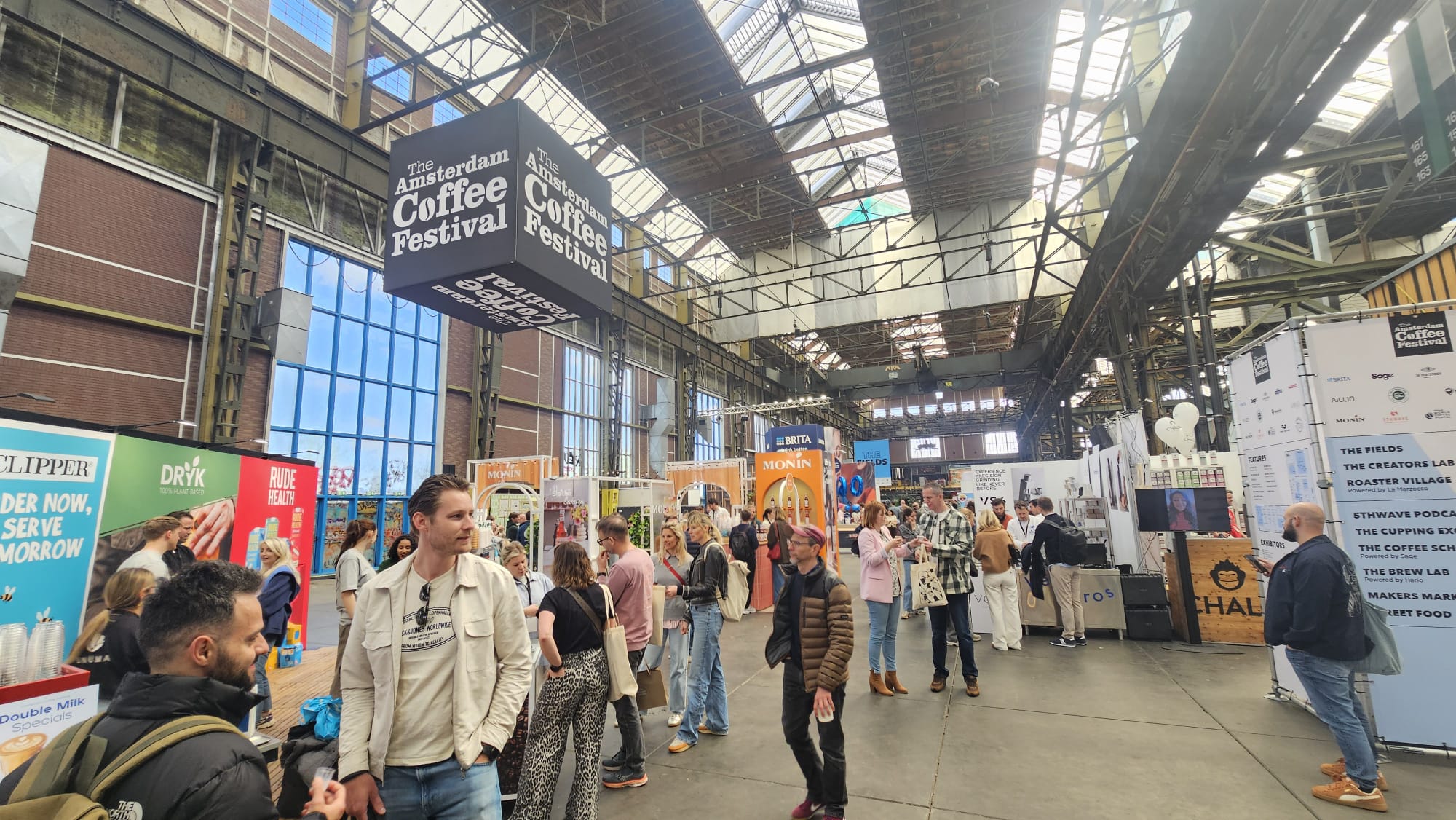
The Amsterdam Coffee Festival 2026 has officially opened in the Dutch capital, drawing a notable presence of visitors and coffee industry professionals, alongside broad participation from international companies and organizations operating in the sector. The event continues to reinforce its position as one of Europe’s leading platforms dedicated to the coffee industry.

The Amsterdam Coffee Festival 2026 is taking place from 16 to 18 April 2026 at the NDSM Loods venue, located at NDSM-Plein 85 in Amsterdam. The three-day event brings together specialty coffee activities, live roasting demonstrations, workshops, as well as entertainment elements including music, beverages, and cocktails, according to official event information.

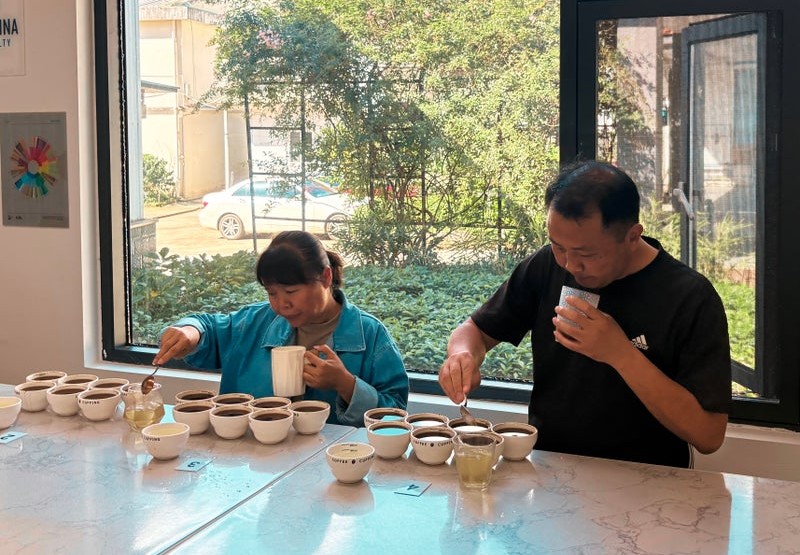
This year’s program offers a diverse mix of educational and sensory experiences, featuring specialty coffee tasting sessions, training workshops for professional baristas, and interactive activities such as a Roasters Village concept, live latte art demonstrations, and cupping experiences, in addition to music performances and supporting entertainment events.

According to Amsterdam event listings, ticket prices start from approximately €12, making the festival accessible to a wide audience ranging from industry professionals to coffee enthusiasts.

This year’s edition has also seen a strong commercial and public turnout, with exhibition spaces dedicated to showcasing the latest innovations in coffee equipment and technology, including brewing machines, roasting systems, and digital solutions across the production and consumption chain.

A noticeable trend in this edition is the increasing integration of modern technologies. Several companies are presenting solutions based on artificial intelligence to enhance coffee preparation experiences through interactive systems capable of analyzing user preferences and offering personalized recommendations. Advanced equipment also enables greater precision in roasting and extraction processes.

The festival program also includes a series of training workshops for baristas and coffee professionals, alongside live competitions and professional cupping sessions, offering visitors the opportunity to explore modern brewing techniques and develop practical skills in the field.

The event hosts a diverse range of international organizations and institutions active in the coffee sector, along with companies from various European and global markets, reflecting the growing international dimension of the industry in both commercial exchange and knowledge sharing.

Economically, the festival contributes to boosting tourism and commercial activity in Amsterdam, attracting visitors from within the Netherlands and abroad. It also serves as an important networking platform for industry professionals to explore partnerships and business opportunities.

Overall, the Amsterdam Coffee Festival 2026 highlights the ongoing shift toward innovation and sustainability within the coffee industry, as companies continue to develop solutions that combine quality, efficiency, and evolving global consumer expectations.

The festival further strengthens its position as a platform that blends professional, commercial, and cultural dimensions within an industry that continues to expand and evolve rapidly worldwide.

Brazil Export Decline Supports Coffee Prices

Dubai – Qahwa World

Coffee prices moved higher midweek, with both arabica and robusta futures posting gains. Robusta led the advance, reaching its strongest level in roughly one and a half weeks, supported by tightening near-term supplies.

A key factor behind the upward movement is reduced export activity from Brazil. Recent figures indicate that shipments of green coffee declined in March compared to the same month last year. Broader trade data also shows a sharp drop in overall coffee exports, reinforcing concerns about limited supply from the world’s leading producer.

In the robusta segment, falling inventories have added to the bullish sentiment. Exchange-monitored stockpiles have dropped to their lowest levels in more than a year, highlighting ongoing supply tightness in the physical market.

Weather conditions are also contributing to price support. Brazil’s main arabica-growing region, Minas Gerais, has received significantly less rainfall than usual in recent weeks. Reduced precipitation during key crop development stages may affect yields, adding uncertainty to future supply.

However, the broader outlook remains complex. Earlier projections of a large upcoming Brazilian crop continue to weigh on market sentiment. Several forecasts point to record production in the 2026/27 season, with global supply potentially expanding into a sizeable surplus.

At the same time, rising certified inventories for arabica have recently pressured prices, reflecting improved availability in some segments of the market.

Global logistics challenges are adding another layer of influence. Disruptions to major shipping routes have increased freight, insurance, and fuel costs, raising expenses for importers and roasters and contributing to overall market volatility.

Meanwhile, Vietnam continues to strengthen its position in the robusta sector. Strong export performance and expectations of increased production could help offset supply constraints from Brazil.

Earlier in the year, coffee prices declined sharply amid expectations of abundant global output. Forecasts suggest that worldwide production could reach record levels in the coming seasons, driven largely by Brazil and Vietnam.

Even so, global stock levels are expected to edge lower, with ending inventories projected to decline compared to the previous season. This balance between strong production and tightening stocks underscores the mixed and evolving outlook for the global coffee market.


Russia’s Green Coffee Market Records Historic Growth in 2026

Mocow-QahwaWorld

Russia’s green coffee market posted significant growth in 2026, supported by rising global prices and sustained domestic demand, according to a recent analysis by ROIF Expert. The expansion reflects not only higher market value but also increased import volumes and consumption levels, reinforcing Russia’s position as a key destination for global coffee exporters.

Market Value Jumps by 92 Billion Rubles

The market value of green coffee increased by approximately 92 billion rubles between its lowest and highest recent levels, marking one of the strongest gains in the sector. The growth is largely attributed to higher global coffee prices, influenced by weather-related challenges in major producing countries such as Brazil and Vietnam.

While import volumes continued to rise, value growth outpaced physical expansion, reflecting sustained price pressure across global supply chains.

Imports Remain the Core Driver

Russia relies almost entirely on imports to meet its green coffee demand. Between 2025 and 2026, total import volumes reached around 286,000 tons.

  • Import value increased by 45.5% in the first nine months of 2025, reaching $924.7 million
  • Vietnam recorded a 1.5x increase in exports
  • Brazil nearly doubled its export volumes
  • Indonesia strengthened its position among top suppliers with 1.6x growth

Despite ongoing sanctions, supply flows remained stable. The primary challenge involved payment restrictions, prompting companies to adapt through alternative channels, including intermediary countries such as Turkey, China, and the UAE, as well as increased direct shipping routes.

Consumption Reaches Record Levels

Consumption indicators show continued growth, with per capita coffee consumption reaching its highest recorded levels. Approximately 70% of the population consumes coffee daily, while a majority consider it an essential part of their routine.

Home consumption is expected to grow by 15% by the end of 2026, alongside increasing demand for specialty coffee and whole beans.

Shifts in Supply Chains

Supply chains are gradually shifting toward Asian producers, particularly Vietnam and Indonesia, while overall trade flows remain relatively stable. At the same time, the market continues to face pricing pressures and logistical risks linked to geopolitical factors.

Outlook Through 2033

The baseline scenario outlined in the report suggests steady growth over the coming years, supported by consistent demand and expanding import activity.

  • Projected annual growth between 3% and 5.5%
  • Moderate increase in global price levels
  • Continued rise in per capita consumption
  • Further diversification of import sources

The market is expected to maintain positive momentum, demonstrating resilience in the face of external pressures.

Implications for Industry Stakeholders

The Russian market offers strong opportunities for global exporters, given its full dependence on imports. Domestic players are increasingly focused on higher-quality offerings and cost management, while consumers benefit from a broader range of products.

From an investment perspective, the sector shows the ability to convert price pressures into growth drivers, enhancing its medium-term appeal.

Conclusion

Russia’s green coffee market in 2026 reflects a mature and resilient sector. The sharp increase in market value and sustained demand indicate a continued upward trajectory, with growth expected to extend through the end of the decade.


DrinKit Opens Its 10th Branch in Dubai

Dubai – Qahwa World

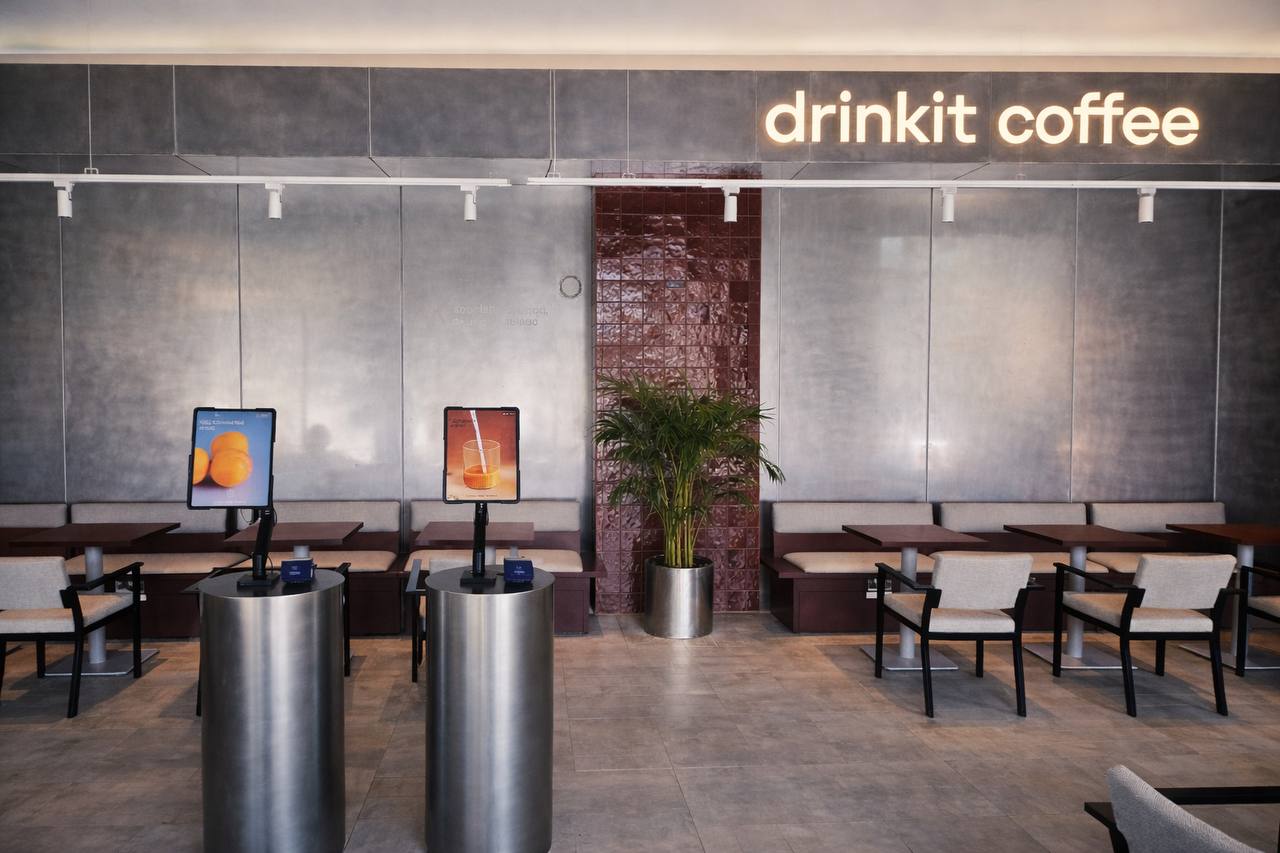
DrinKit continues to stand out as one of the most inspiring success stories in the coffee sector, advancing its journey as Dubai’s first digital coffee shop concept. The company has announced the opening of its 10th branch in Emaar Creek Harbour, bringing its global network to 182 locations and positioning it among the fastest growing modern coffee chains.

Katerina Borodich, CEO of DrinKit in the UAE and the Middle East, stated that this opening ranks among the brand’s strongest launches to date. The branch began operations without any prior announcement, yet recorded 86 transactions on its first day, an early and positive indicator of strong performance from the outset.

This branch holds particular significance due to its location within a fully integrated residential community in Dubai Creek Harbour. It is also the largest DrinKit location in the UAE in terms of space. The choice reflects a strategic shift toward expansion in residential neighborhoods that rely on daily coffee consumption rather than focusing only on commercial or tourist areas.

Initial indicators point to strong performance in terms of average order value, reinforcing expectations for future growth at this location, which benefits from rising population density and a fast paced urban lifestyle.

This expansion also highlights the acceleration of DrinKit’s strategy in the Middle East, as the company continues its growth phase with plans to open additional branches across Dubai in the near future.

According to internal company data, Drinkit now operates 10 stores in Dubai, including four under the franchise model, reflecting its transition toward a scalable and replicable operating system.

This growth signals a broader shift in the Gulf coffee market, where brands are increasingly targeting residential communities to meet rising daily demand for coffee as part of modern lifestyles.

With 10 branches in Dubai and 182 worldwide, Drinkit continues to strengthen its presence in the UAE market as part of a wider expansion strategy.

Coffee Still Leads US Beverage Choices in 2026, NCA Finds

Dubai – Qahwa World

According to the Spring 2026 National Coffee Data Trends (NCDT) report released by the National Coffee Association (NCA), coffee continues to rank as the most popular beverage among American adults. Nearly 195 million U.S. adults — roughly 73% of the adult population — drink coffee each week, maintaining its position at the top of the country’s beverage hierarchy.

Past-day consumption remains steady at 66% of American adults, consistent with levels observed since 2022. Weekly drinking habits show similar stability. This confirms coffee’s enduring role in daily life, surpassing other beverages such as bottled water, tea, soda, and juice in long-running surveys dating back to 1950.

Key highlights from the Spring 2026 NCDT report

The data, collected between January 5 and 20, 2026, from a nationally representative sample of 1,850 U.S. adults who consumed a beverage other than tap water in the previous day, reveals several consistent and evolving patterns:

  • Morning rituals and home brewing dominate: Among past-day coffee drinkers, 82% prepare their coffee at home, while 28% have it prepared away from home. Consumption remains highly habitual: 86% drink coffee first thing in the morning, followed by 38% later in the morning, 22% in the afternoon, and 11% in the evening. These patterns have shown little change since 2022, underscoring coffee’s deep integration into daily routines.
  • Traditional coffee holds firm: 62% of American adults consumed traditional coffee in the past week, unchanged from 2022.
  • Specialty coffee sees notable growth: Past-week specialty coffee consumption has risen by 9.4% since 2022, increasing from 53% to 58% of American adults. This growth is largely driven by espresso-based beverages, which rose from 40% to 45% in past-week consumption. Specific increases include:
    • Lattes: from 17% to 21%
    • Straight espresso: from 16% to 20%

This shift reflects growing consumer interest in café-style drinks, likely supported by the rise of at-home espresso machines, premium pods, and broader engagement with specialty coffee culture.

NCA leadership on coffee’s lasting role

NCA President and CEO Bill Murray said:

“Coffee has long been a touchstone in Americans’ daily lives and a powerhouse in our economy, adapting to fit different tastes, trends, budgets, and routines over time. We expect that to continue for many decades to come.”

This adaptability is reflected in coffee’s economic impact. The industry supports 2.2 million U.S. jobs, operates in every state and territory, and contributes nearly $350 billion to the economy annually.

Why this matters

The 2026 findings highlight coffee’s resilience. While overall consumption has plateaued at historically high levels since 2022, the rise in specialty and espresso-based drinks points to a maturing market in which consumers increasingly prioritize quality, variety, and experience, whether at home or on the go.

As the longest-running study of its kind, conducted twice yearly since 1950, the NCDT remains a key benchmark for the coffee industry.

For the full Spring 2026 NCDT report, visit ncausa.org/NCDT. Media highlights are also available for download. The National Coffee Association, founded in 1911, represents businesses accounting for 90% of U.S. coffee commerce.


Keurig Dr Pepper Reports 97.75% of JDE Peet’s Shares Tendered

Keurig Dr Pepper says post-closing acceptance period lifts its holding to 97.75% of shares, paving the way for buy-out proceedings and delisting from Euronext Amsterdam.

BURLINGTON, Mass., FRISCO, Texas and AMSTERDAM – Qahwa World

Keurig Dr Pepper Inc. (“KDP”) (NASDAQ: KDP) and JDE Peet’s N.V. (“JDE Peet’s”) (EURONEXT: JDEP) jointly announced that the post-closing acceptance period relating to the Offer (the “Post-Closing Acceptance Period”) expired today at 17:40 CEST.

During the Post-Closing Acceptance Period, 7,821,867 shares were tendered under the Offer, representing approximately 1.61% of the shares and an aggregate value of approximately €249,126,463.95. Together with the 466,712,270 shares that were already acquired by the Offeror, the Offeror will hold a total of 474,534,137 shares, representing approximately 97.75% of the shares and an aggregate value of approximately €15,113,912,263.45.

With reference to the Offer Memorandum, shareholders who accepted the Offer during the Post-Closing Acceptance Period will receive the Offer Price for each tendered share transferred for acceptance pursuant to the Offer during the Post-Closing Acceptance Period, under the terms and conditions of the Offer and subject to its restrictions. Settlement of the shares tendered during the Post-Closing Acceptance Period will occur, and payment of the Offer Price for each such share will be made, on April 15, 2026. The Offeror cannot guarantee that shareholders who tendered their shares for acceptance will receive payment on this date.

As a result of the acquisition of more than 95% of the shares by the Offeror, the Offeror will initiate statutory buy-out proceedings in accordance with Section 5.13.2 (Buy-Out Proceedings) of the Offer Memorandum and will implement the post-closing demerger in accordance with Section 5.13.4 (Post-Closing Demerger) of the Offer Memorandum. As previously announced, it has been decided, in consultation with Euronext, that the last day of trading of the shares will be April 29, 2026, and that the shares will be delisted from Euronext Amsterdam on April 30, 2026.

Announcements

Any announcements contemplated by the Offer Memorandum will be made by press release. Any press release issued by the Offeror will be made available on KDP’s website. Any press release issued by JDE Peet’s will be made available on JDE Peet’s website.

Offer Memorandum; Position Statement

Digital copies of the Offer Memorandum are available on the websites of JDE Peet’s and KDP. Digital copies of the Position Statement are available on JDE Peet’s website. Copies of the Offer Memorandum will be made available, upon request, free of charge at the offices of JDE Peet’s. The websites of JDE Peet’s and KDP do not constitute a part of, and are not incorporated by reference into, the Offer Memorandum and the Position Statement.

Notice to shareholders of JDE Peet’s in the United States

The tender offer is being made for the ordinary shares of JDE Peet’s, a public limited liability company incorporated under the laws of the Netherlands with shares listed on Euronext Amsterdam. US shareholders should note that the tender and related documents are subject to Dutch disclosure and procedural requirements, which differ from those of the United States.

JDE Peet’s shares are not listed on a US securities exchange and the company is not subject to the reporting requirements of the US Securities Exchange Act of 1934, and does not file reports with the US Securities and Exchange Commission (SEC).

The tender offer is being made in the United States in compliance with, and in reliance on, the exemption provided by Rule 14d-1(d), known as the “Tier II” exemption, under the Exchange Act and otherwise in accordance with Dutch law.

Receipt of cash pursuant to the tender offer by a US holder of JDE Peet’s shares will be a taxable transaction under US federal income tax law and applicable state, local and foreign tax laws. Each holder is advised to consult an independent professional adviser regarding the tax consequences.

It may be difficult for US holders to enforce their rights under US securities laws, as JDE Peet’s is located outside the United States and some or all of its officers and directors may reside outside the United States.

To the extent permissible under applicable law, JDE Peet’s and its affiliates or brokers may purchase shares outside the tender offer in the open market or through private transactions at prevailing or negotiated prices. Such purchases will not exceed the tender offer price. No purchases will be made in the United States on behalf of KDP.

Neither the SEC nor any US state securities commission has approved or disapproved the tender offer or passed upon its merits. Any representation to the contrary is a criminal offence in the United States.

Restrictions

The distribution of this press release may be restricted in certain jurisdictions. Persons who receive this document should inform themselves of and observe any such restrictions. Failure to comply may constitute a violation of applicable securities laws. Neither KDP nor JDE Peet’s assumes responsibility for any such violations.

This announcement is for information purposes only and does not constitute an offer or invitation to acquire or dispose of any securities or investment advice.

Forward-looking statements

This press release contains forward-looking statements relating to the impact of the transaction, future financial performance, cost savings and synergies. These statements are subject to risks and uncertainties that could cause actual results to differ materially.

Neither KDP nor JDE Peet’s undertakes any obligation to update forward-looking statements except as required by law.

Cell-Cultured Coffee Moves Closer to Market

Zurich  — Qahwa World

As climate change and surging global demand strain traditional coffee farming, a laboratory-grown alternative is moving from an experimental concept to a potential market contender. Cell-cultured coffee, produced by nurturing coffee plant cells in bioreactors and then harvesting, drying, roasting, and brewing the resulting biomass, has secured significant new funding and regulatory momentum over the past 18 months, according to industry developments and foundational research led by Professor Chahan Yeretzian.

Yeretzian, who retired in early 2026 as head of the Zurich University of Applied Sciences (ZHAW) Coffee Excellence Center after more than three decades of pioneering work, laid the analytical groundwork for this emerging category. His landmark 2024 study, published in ACS Food Science & Technology, provided the first rigorous, side-by-side chemical and sensory comparison of cell-cultured coffee (CC) and traditional farm-grown beans (TC). The paper’s three-step analytical platform, examining unroasted precursors, roasted volatiles, and brewed sensory profiles, demonstrated that while the two are chemically distinct, the lab-grown version can be optimized to deliver authentic coffee character.

The findings have since become a blueprint for commercial players. In February 2025, Zurich-based Food Brewer AG closed a CHF 5 million seed extension, bringing its total funding to approximately CHF 10 million. Strategic investors include Lindt & Sprüngli and Sparkalis, the venture arm of Puratos, both of which are actively testing the company’s coffee and cocoa biomass for potential integration into products. Food Brewer grows cells sourced locally in Switzerland, processes them through lyophilization and roasting, and is scaling production under controlled bioreactor conditions, precisely the approach Yeretzian’s research showed could preserve aroma precursors without relying on tropical agriculture.

You may read: A Cell-Cultured Coffee Revolution Gains Momentum

A parallel effort in Asia is also gaining traction. In April 2025, Singapore-based Another Food announced plans for large-scale commercialization, beginning in Singapore and expanding into Thailand and Malaysia. The startup positions its non-GMO, cell-derived coffee as a hedge against supply-chain volatility, price swings, and quality inconsistencies caused by climate impacts on conventional farming.

These developments echo the vision Yeretzian outlined in late 2024 interviews and earlier writings. “If we love coffee so much, can part of the supply come from sources that are less harmful to the environment and more efficient?” he asked. The 2024 paper reinforced that cell-cultured coffee need not merely imitate traditional beans but could expand the category. By adjusting precursor compounds, including sugars, amino acids, lipids, chlorogenic acids, and caffeine, scientists can explore novel flavor profiles beyond the constraints of the coffee bean’s natural matrix.

The study’s detailed results underscored both promise and challenges. Unroasted cell-cultured biomass showed dramatically higher monosaccharides (52% of dry weight, primarily glucose and fructose) but far lower levels of amino acids (0.07%), lipids (1.98%), chlorogenic acids (0.07%), caffeine (0.15%), and trigonelline (absent). After roasting in a custom nanoroaster, the aroma profile registered only about 40% of the intensity of traditional coffee, with fewer pyrazines, Strecker aldehydes, and guaiacols, but a pronounced dominance of furfurals (54% of volatiles versus 10–15% in conventional roasts). Sensory panels noted milder bitterness and acidity, lower extraction yields due to the powder-like structure, and reduced psychoactive effects resulting from lower caffeine and chlorogenic acid content.

Yeretzian and co-authors, including lead analyst Jaloliddin Khushvakov and VTT Technical Research Centre of Finland cell-culture expert Heiko Rischer, concluded that the bean’s physical structure acts as a “pressurized microreactor” essential for full flavor development. They emphasized that these differences are not insurmountable barriers; rather, they open doors to customization and hybrid products that blend cell-cultured and traditional coffee.

Regulatory pathways remain the primary hurdle. As a novel food, cell-cultured coffee requires formal approvals in major markets. Submissions are now under review in the United States, Singapore, and the European Union, with analysts projecting clearances within the next 12 to 24 months. Industry observers note that beanless surrogate coffees, which do not use coffee cellular material, have reached shelves more quickly, but cell-cultured versions benefit from a stronger scientific foundation and clearer environmental credentials.

Market forecasts reflect growing confidence. The global cell-cultured coffee sector, valued at roughly $173–362 million in 2024–2025, is projected to expand at a compound annual growth rate of 16–21%, potentially reaching hundreds of millions of dollars by the early 2030s as production scales and costs decline.

Yeretzian has consistently framed cell-cultured coffee as a complement, not a replacement, for farm-grown beans. In his emeritus role, the research he championed continues to influence the Coffee Excellence Center and the startups now translating it into products. The 2024 paper’s analytical platform has already become an industry standard for evaluating any coffee alternative.

For an industry facing deforestation, carbon emissions, and unpredictable harvests, the convergence of Yeretzian’s decades of aroma chemistry expertise with fresh capital and regulatory progress marks a pivotal moment. If approvals materialize as expected, the first commercial cell-cultured coffees could appear on shelves or in blends by late 2027 or 2028, not as a wholesale substitute for tradition, but as a scientifically validated innovation that could help secure coffee’s future while expanding its sensory possibilities.

Strength in the Brazilian Real Boosts Coffee Prices

Dubai – Qahwa World

Coffee futures moved higher on Friday, supported by currency strength and supply dynamics. May arabica coffee (KCK26) rose by +6.40 points (+2.18%), while May ICE robusta coffee (RMK26) gained +14 points (+0.42%).

Arabica prices reached a one-week high, while robusta rebounded from its lowest level in 8.5 months in nearby futures. The rally was largely driven by the appreciation of the Brazilian real, which climbed to a two-year high against the US dollar. A stronger real tends to discourage export selling by Brazilian producers, tightening global supply.

Supply Trends and Inventory Movements

Tight robusta supplies continue to support prices. ICE-monitored robusta inventories declined to 3,977 lots, marking a 1.25-year low. In contrast, arabica inventories have increased, limiting price gains. ICE arabica stocks rose to 585,621 bags on March 18, the highest level in more than six months.

Shipping Disruptions Impact Global Trade

The closure of the Strait of Hormuz has disrupted global shipping routes, tightening coffee supplies worldwide. The disruption has increased freight rates, insurance costs, and fuel expenses, raising overall costs for coffee importers and roasters.

Weather Conditions in Brazil Support Prices

Weather conditions in Brazil are also providing support. Somar Meteorologia reported that Minas Gerais, the country’s largest arabica-growing region, received 11.7 mm of rainfall last week, representing only 47% of the historical average. Below-normal rainfall may affect crop development and support prices.

Record Crop Expectations Weigh on Market Sentiment

Despite current support factors, expectations of a record Brazilian coffee crop continue to pressure the market. On March 19, Marex Group Plc projected Brazil’s 2026/27 coffee production at 75.9 million bags, exceeding Sucafina’s estimate of 75.4 million bags and marking a 15.5% year-on-year increase.

On March 12, StoneX raised its forecast to 75.3 million bags, up from a previous estimate of 70.7 million bags. The firm also expects the global coffee surplus to expand to 10 million bags in 2026, compared to 1.8 million bags in 2025, representing the largest surplus in six years.

Vietnam Export Growth Pressures Robusta

Rising exports from Vietnam, the world’s largest robusta producer, are weighing on prices. Vietnam’s National Statistics Office reported that coffee exports in the first quarter of 2026 increased by 14% year-on-year to 585,000 metric tons.

In 2025, exports rose by 17.5% to 1.58 million metric tons. Production for the 2025/26 season is expected to increase by 6% to 1.76 million metric tons (29.4 million bags), reaching a four-year high.

Decline in Brazilian Exports Offers Support

Recent export data from Brazil provided additional support to prices. Cecafe reported that green coffee exports in February fell by 27% year-on-year to 2.3 million bags. Meanwhile, Brazil’s Trade Ministry reported a 31% decline in March exports to 151,000 metric tons.

Recent Price Trends and Global Outlook

Coffee prices declined sharply in February, with arabica falling to a 16.75-month low on February 24 due to expectations of strong Brazilian supply.

Brazil’s crop agency Conab projected on February 5 that 2026 coffee production would rise by 17.2% year-on-year to a record 66.2 million bags. Arabica output is expected to increase by 23.2% to 44.1 million bags, while robusta production is forecast to grow by 6.3% to 22.1 million bags.

Rabobank reported on March 4 that global coffee production for the 2026/27 season is expected to reach a record 180 million bags, about 8 million bags higher than the previous year.

Global Trade and Production Forecasts

The International Coffee Organization (ICO) reported on November 7 that global coffee exports for the current marketing year (October to September) declined by 0.3% year-on-year to 138.658 million bags.

The USDA’s Foreign Agriculture Service (FAS) projected in its December 18 report that global coffee production for 2025/26 will increase by 2.0% to a record 178.848 million bags. Arabica production is expected to decline by 4.7% to 95.515 million bags, while robusta output is forecast to rise by 10.9% to 83.333 million bags.

FAS also estimates that Brazil’s 2025/26 coffee production will fall by 3.1% to 63 million bags, while Vietnam’s production will increase by 6.2% to 30.8 million bags. Ending stocks for the 2025/26 season are projected to decline by 5.4% to 20.148 million bags, down from 21.307 million bags in 2024/25.