South Korea Tightens Regulations on Decaffeinated Coffee

Dubai – Qahwa World

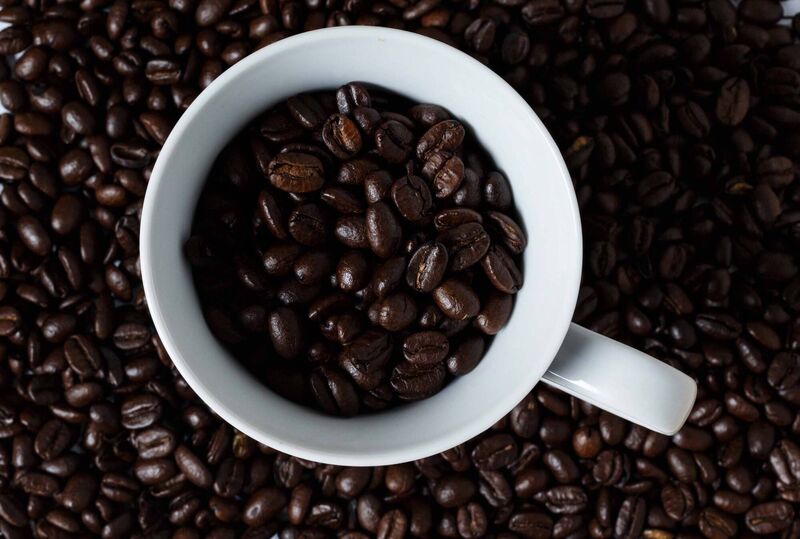
South Korea’s Ministry of Food and Drug Safety has announced stricter regulations for decaffeinated coffee products, stating that products will only be allowed to carry the “decaffeinated” label if they contain no more than 0.1% residual caffeine in the coffee beans.

The new labeling standards are set to take effect on January 1, 2028.

Under the current rules, at least 90% of the caffeine must be removed from coffee for it to be classified as decaffeinated. However, existing regulations do not specify the final amount of caffeine that may remain in the product. The term “decaffeinated” also does not necessarily mean that the coffee is completely caffeine-free, which can lead to consumer misunderstanding.

The ministry explained that some decaffeinated coffee products may still contain relatively high levels of residual caffeine, especially when made from naturally high-caffeine coffee beans. This, officials said, conflicts with consumer expectations that decaffeinated coffee should contain little to no caffeine.

To reduce confusion, the updated standards will focus on the amount of caffeine remaining in the beans, aligning South Korea’s regulations more closely with international standards, including those used in the United States.

In a related move, the ministry also strengthened labeling requirements for alcoholic beverages amid a rise in collaborative products featuring alcohol brands packaged in designs resembling ordinary food products.

Strong Dollar Weighs on Coffee Prices

Dubai – Qahwa World

Coffee futures closed lower on Tuesday as a stronger U.S. dollar pressured commodity markets. This is a clear example of how a Strong Dollar Weighs on Coffee Prices. July arabica coffee contracts (KCN26) fell 0.76%, while July robusta futures (RMN26) declined 0.63%.

Losses were limited by tightening certified coffee inventories. ICE arabica stocks dropped to a 2.5-month low of 471,831 bags, while robusta inventories fell to a two-year low of 3,664 lots.

The ongoing closure of the Strait of Hormuz continued to disrupt global coffee trade flows, increasing shipping, insurance, fuel, and fertilizer costs for importers and roasters.

Brazil’s weaker export performance also supported prices. Cecafe reported that Brazil’s March green coffee exports declined 10% year-on-year to 2.65 million bags, while the country’s Trade Ministry said total March coffee exports fell 31% to 151,000 metric tons.

Meanwhile, rising supplies from Vietnam weighed on robusta prices. Vietnam’s coffee exports during January–April 2026 increased 15.8% year-on-year to 810,000 metric tons, according to the National Statistics Office. The country’s 2025/26 coffee production is expected to rise 6% to a four-year high of 1.76 million metric tons.

Expectations of a larger Brazilian crop also added bearish pressure. Recent forecasts from the Coffee Trading Academy, Marex Group, Sucafina, and StoneX all point to strong production in Brazil’s 2026/27 season, with estimates ranging from 71.4 million to 75.9 million bags.

StoneX also expects the global coffee surplus to expand to 10 million bags in 2026, compared with 1.8 million bags in 2025.

The USDA’s Foreign Agricultural Service forecasts global coffee production in 2025/26 will reach a record 178.848 million bags, driven by stronger robusta output, while global ending stocks are projected to decline 5.4% to 20.148 million bags.

World Coffee Championships Adopts “Chinese Taipei” Designation for Taiwanese Competitors

Dubai – Qahwa World

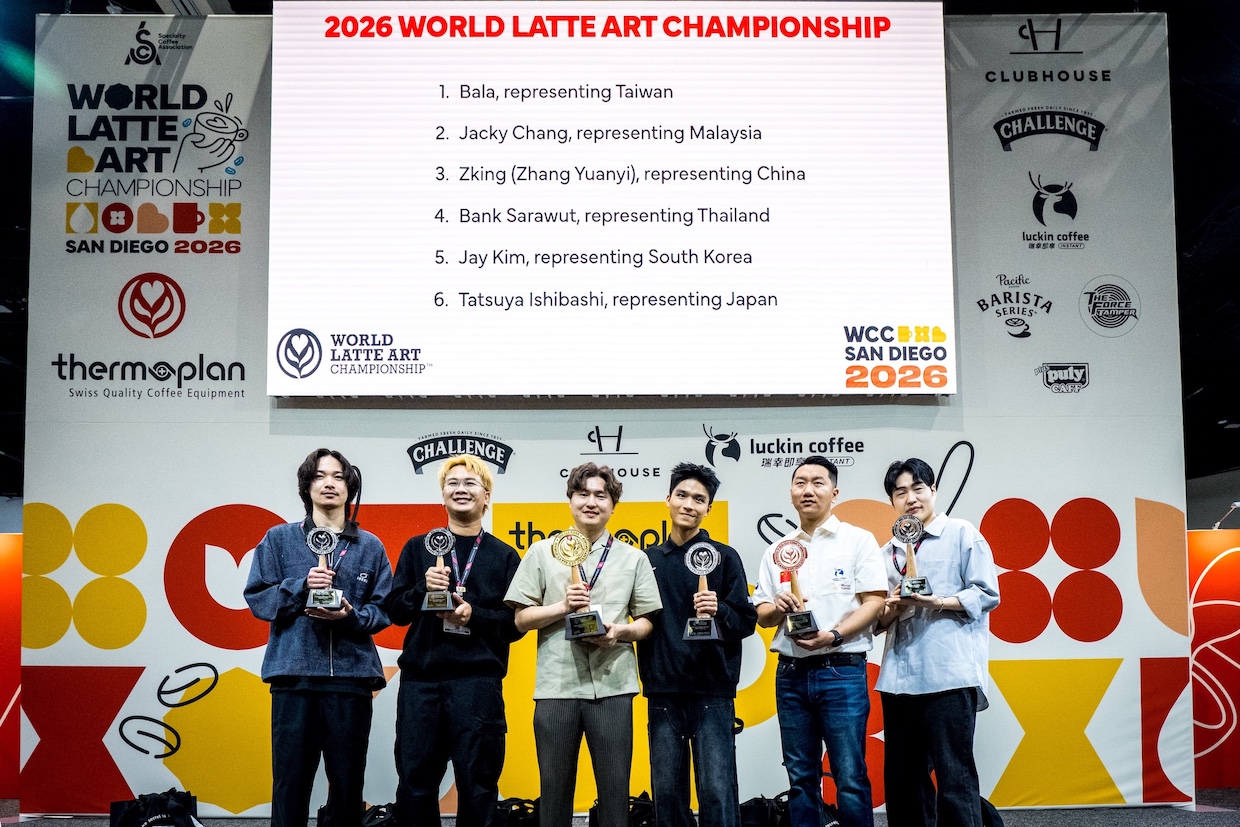
The World Coffee Championships (WCC), a global series of seven annual skill-based coffee competitions operated under the Specialty Coffee Association, has updated how it officially designates competitors from Taiwan. This World Coffee Championships Taiwan Chinese Taipei change reflects the new naming convention. Effective April 28, the organization will list Taiwanese competitors under the name “Chinese Taipei,” aligning its terminology with international sporting bodies such as the International Olympic Committee and FIFA.

According to a statement released by the WCC, the change is described as an administrative update that does not affect eligibility, qualification pathways, or the competitive experience of participants. The organization emphasized that competitors will continue to be recognized and celebrated individually for their achievements on the global stage. In fact, this World Coffee Championships Taiwan Chinese Taipei change is presented as a procedural modification rather than a shift in the event’s core values.

The WCC also addressed its broader intent in the announcement, stating that the adjustment was made in line with global naming conventions used in international sport. It further stressed that its commitment to showcasing excellence in coffee and supporting the global specialty coffee community remains unchanged. Importantly, the World Coffee Championships Taiwan Chinese Taipei change aims to ensure consistency across international events.

However, the update has drawn significant attention within the coffee industry and beyond, particularly in Taiwan’s active specialty coffee sector. Taiwanese competitors have participated in WCC events under the “Taiwan” designation since 2007, and the change has been met with concern from parts of the local coffee community. Still, this World Coffee Championships Taiwan Chinese Taipei change has become a significant topic of discussion among industry professionals.

The Taiwan Coffee Association, which organizes WCC-sanctioned events in Taiwan, stated that it did not initiate the change and has historically worked to preserve the “Taiwan” designation in international competitions. The association characterized participation under “Chinese Taipei” as a necessary condition moving forward.

Prominent voices in the coffee community have also expressed unease. Some professionals argue that the change goes beyond administrative labeling and touches deeper issues of identity, representation, and historical recognition within the specialty coffee world.

Coffee professionals, including past WCC champions, have publicly questioned the retroactive application of the naming update across official records and digital platforms. Concerns have been raised about consistency, transparency in decision-making, and how such changes may impact the historical record of competition results.

In Taiwan, the issue has also reached political attention. Lawmakers have called for clarification from relevant authorities, suggesting that the change may warrant diplomatic review given its broader implications beyond the coffee sector.

From a coffee industry perspective, the development highlights an ongoing tension between global standardization and regional identity. The specialty coffee community has long emphasized values such as traceability, origin integrity, and producer recognition—principles that some stakeholders feel intersect with how competitors and producing communities are represented on the world stage. Lastly, the World Coffee Championships Taiwan Chinese Taipei change will likely influence future conversations around producer representation internationally.

At the same time, the WCC maintains that its focus remains unchanged: celebrating skill, craftsmanship, and innovation among baristas, roasters, and coffee professionals worldwide.

As the specialty coffee sector continues to expand globally, this development underscores how even administrative decisions within competition frameworks can resonate far beyond the stage—shaping conversations around identity, governance, and the cultural meaning of coffee itself.
Lavazza Launches Regenerative Coffee for Professionals

Dubai – Qahwa World

On Earth Day, Lavazza has introduced La Reserva de ¡Tierra! Selection, its first coffee for the professional channel certified under the regenerative agriculture standard developed by the Rainforest Alliance.

The launch marks a new step in the company’s sustainability strategy, combining existing Rainforest Alliance Sustainable Agriculture certification with the newer regenerative agriculture certification. The dual certification reflects farming practices aimed at restoring ecosystems, improving soil health, protecting biodiversity, and supporting coffee-growing communities.

The development follows a multi-year effort by Lavazza to integrate regenerative agriculture across its supply chain. Since 2023, the group has advanced projects through its research, development, and corporate social responsibility teams in origin countries, focusing on agronomic practices, environmental impact measurement, traceability, and farmer engagement.

In parallel, the company has supported an early implementation program in Honduras, where more than 70 farms have achieved certification under the Rainforest Alliance Regenerative Agriculture Standard. The initiative included technical training, operational support, and structured guidance to assist farmers in transitioning to regenerative practices.

According to Lavazza, this combined approach has enabled the faster introduction of a coffee product meeting both certification standards, building on its partnership with the Rainforest Alliance that dates back more than two decades.

The Rainforest Alliance Regenerative Agriculture Standard is designed to promote a “Nature Positive” approach to farming. It emphasizes soil restoration, climate resilience through agroforestry, biodiversity protection, improved water management, and better livelihoods for farming communities.

La Reserva de ¡Tierra! Selection is a 100% Arabica blend, combining natural coffees from Brazil with washed coffees from Honduras. Developed for the food service sector, it offers a balanced flavor profile with notes of jasmine, almonds, and milk chocolate, and is designed for consistent extraction in professional settings.

The blend includes coffee sourced from certified farms in Brazil and Honduras, along with a portion from a project supported by the Lavazza Foundation in Brazil’s Minas Gerais region. The initiative focuses on farmer training, agricultural planning, and improvements to living conditions.

Lavazza said the new product will be available in international markets starting in June, supported by a digital campaign highlighting its regenerative agriculture efforts and collaboration with certified farms.

Founded in Turin in 1895, Lavazza operates in more than 140 markets and remains one of the leading global coffee companies, with a portfolio that includes several international brands. The Rainforest Alliance continues to work with farmers, companies, and communities worldwide to promote sustainable agriculture and environmental conservation.

Global Coffee Prices Fall as Brazil Crop Outlook Signals Oversupply

Dubai – Qahwa World

Global coffee prices declined at the start of the week as expectations of strong supply weighed on market sentiment, particularly with Brazil’s harvest approaching.

Arabica coffee had already fallen to its lowest level in several weeks, pressured by forecasts pointing to a potentially record-breaking Brazilian crop for the 2026/27 season. Analysts from multiple firms have raised their production estimates, with projections suggesting output could exceed 75 million bags. If realized, this would mark a significant increase from the previous season and reinforce expectations of abundant supply.

The global balance is also shifting. Current estimates indicate that the coffee market could move into a much larger surplus in 2026, compared to a relatively modest surplus the year before. This outlook has contributed to the recent downward trend in prices.

Vietnam is adding further pressure to the market. As the world’s leading robusta producer, the country has reported rising export volumes in early 2026, continuing the strong performance seen last year. Production is also expected to increase, reaching a multi-year high and boosting global robusta availability.

Despite the broader bearish outlook, some factors are offering limited support to prices. Robusta inventories monitored by exchanges have recently dropped to their lowest level in over a year, indicating tighter short-term supply.

There are also ongoing concerns about global trade conditions. Higher shipping and logistics costs continue to affect the coffee sector, increasing expenses for exporters and roasters and adding uncertainty to supply chains.

Meanwhile, Brazil’s recent export data shows a decline compared to the same period last year, suggesting a temporary tightening in available shipments even as larger future harvests are anticipated.

Looking ahead, global coffee production for the 2025/26 season is still expected to reach a record level. While arabica output may see a slight decrease, robusta production is forecast to rise significantly, helping to balance overall supply. Ending stocks are projected to decline modestly, indicating that while supply is strong, stock levels may not increase dramatically.

China’s Coffee Boom Opens New Avenues for Thai Fruit Exporters

BANGKOK – Qahwa World
As China’s coffee market undergoes rapid transformation, a new and unexpected opportunity is emerging for Thai fruit exporters. The rise of domestic coffee giants like Luckin Coffee and Cotti Coffee is not only reshaping the country’s beverage landscape but also creating strong demand for tropical fruit ingredients, an area where Thailand holds a competitive edge.

From Traditional Coffee to Lifestyle Drinks

China’s coffee consumption has surged over the past decade. According to the Department of International Trade Promotion (DITP), coffee imports into China rose from 59,100 tonnes in 2015 to 230,700 tonnes in 2025, an increase of over 290 percent. This growth is driven by younger consumers who view coffee as a daily lifestyle choice rather than an occasional luxury.

The market structure has also shifted significantly. Foreign brands like Starbucks once dominated the premium segment, but local players have gained ground by combining speed, competitive pricing, and strong digital integration.

Local Chains Lead the Way

By 2025, Luckin Coffee leads the market with more than 25,000 branches, followed by the fast-growing Cotti Coffee with over 14,000 outlets, despite being founded only in 2022. Starbucks remains the largest foreign brand with around 7,800 branches.

Top 10 Coffee Brands in China by Branch Count (2025)

Rank Brand Branches Founded
1 Luckin Coffee 25,266 2017
2 Cotti Coffee 14,337 2022
3 Starbucks 7,798 1971
4 Lucky Cup 4,793 2017
5 NOWWA 2,407 2019
6 Manner 1,969 2015
7 K Coffee 1,580 2015
8 Tim Hortons 868 1964
9 M Stand 556 2017
10 Pull-Tab 513 2022

Fruit-Blended Coffees: A New Product Category

To attract young and experimental consumers, Chinese coffee brands are continuously innovating with seasonal menus. Fruit-blended coffees, tea-coffee hybrids, and coconut-based beverages have become key trends. These drinks rely heavily on high-quality fruit ingredients such as purees, frozen fruit, and flavor bases.

Coconut milk has gained particular popularity as a dairy alternative, further increasing demand for tropical ingredients.

Opportunity for Thai Exporters

Thailand is well positioned to benefit from this trend. Fruits like durian and coconut already enjoy strong demand among Chinese consumers. Exporters can expand beyond fresh produce into value-added segments such as:

  • Fruit purees for coffee blending
  • Frozen or chilled fruit for beverages
  • Customized ingredients for coffee chains

This approach also helps utilize lower-grade fruit more efficiently, increasing overall export value.

Strategic Recommendations for Thai Businesses

  1. Partner with Chinese coffee chains for direct supply agreements
  2. Develop co-branded products highlighting Thai origin
  3. Align with digital ordering and delivery ecosystems
  4. Invest in processing and packaging that meets Chinese standards

Conclusion

As China’s coffee market continues to grow in both scale and innovation, Thai exporters have a unique opportunity to move up the value chain. Supplying ready-to-use fruit ingredients could position them as key players in one of the world’s most dynamic beverage markets.

Record Brazil Crop Expectations Weigh on Coffee Prices Despite Supply Tightness

Dubai – Qahwa World

Coffee markets are drifting lower, weighed down by mounting expectations of a very large crop in Brazil, even as supply-side tensions prevent sharper declines.

Arabica futures have slipped to their weakest levels in several weeks, reflecting growing confidence among analysts that Brazil’s next harvest could reach record territory. Forecasts from firms such as Marex Group, Sucafina, and StoneX all point toward a historically large 2026/27 crop clustered in the mid-70 million bag range. If realized, that would mark a significant year-on-year increase and help expand the global coffee surplus.

The supply outlook is also being shaped by developments in Vietnam, the world’s leading robusta producer. Export volumes have surged, with early-year shipments showing strong annual growth. Production is likewise expected to rise, potentially reaching a multi-year high, adding further pressure on prices.

Yet the market narrative is not entirely bearish. Tight inventories are offering some support, particularly for robusta, where exchange-monitored stockpiles have dropped to their lowest level in over a year, highlighting ongoing short-term supply constraints.

Geopolitical tensions are adding another layer of complexity. Disruptions linked to the Strait of Hormuz have pushed up freight and insurance costs, complicating global trade flows and increasing expenses for coffee importers and roasters.

Meanwhile, export data from Cecafé and Brazil’s trade authorities show a decline in March shipments compared to last year, lending some support to prices. Weather concerns also persist in key regions such as Minas Gerais, where below-average rainfall could still impact yields.

Global institutions, including the International Coffee Organization and the USDA Foreign Agricultural Service, continue to point to a nuanced outlook: overall production may rise, but with diverging trends between arabica and robusta, and tightening stock levels.

Taken together, the coffee market is navigating a delicate balance between expectations of abundant future supply and the realities of present-day constraints.

Coffee Prices Rise Amid Supply Concerns and Shipping Disruptions

Dubai – Qahwa World

Coffee futures moved higher, supported by growing concerns over global supply disruptions and tightening inventories. Arabica and robusta contracts both posted gains, with robusta showing stronger momentum.

A key driver behind the price increase is rising tension around the Strait of Hormuz. Reports of shipping disruptions have heightened concerns about global trade flows, leading to increased freight costs, insurance premiums, and fuel expenses. These factors are adding pressure on coffee importers and roasters, contributing to upward price movement.

Robusta prices are receiving additional support from declining exchange inventories, which have dropped to their lowest level in over a year. This signals tighter short-term availability in the market.

However, expectations of a large upcoming harvest in Brazil are limiting stronger price rallies. Several industry forecasts point to a record crop for the 2026/27 season, with projections consistently above 75 million bags. At the same time, estimates suggest a significant global surplus could emerge in 2026, potentially the largest in several years.

Vietnam’s export performance is also weighing on the market, particularly for robusta. Shipments have increased notably in early 2026, following strong export growth in the previous year. Production in Vietnam is also expected to rise, reaching multi-year highs, which could further ease supply constraints.

On the other hand, reduced exports from Brazil are offering some support to prices. Recent data shows a decline in shipments compared to last year, tightening near-term availability in the global market.

Weather conditions in Brazil remain another important factor. Below-average rainfall in key growing regions, particularly Minas Gerais, has raised concerns about crop yields, adding a bullish element to price outlooks.

Looking at the broader picture, global export volumes have shown slight weakness, while production forecasts indicate modest overall growth. Arabica output is expected to decline, while robusta production is projected to increase significantly. Meanwhile, global coffee inventories are forecast to shrink, suggesting that supply pressures may persist despite higher production in some regions.

Coffee Markets Decline as Supply Fears Subside

Dubai – Qahwa World

Coffee futures moved lower at the end of the week, with both arabica and robusta contracts posting notable losses. Arabica dropped to its lowest level in about a week, while robusta also weakened.

The decline was linked in part to improving conditions in global shipping. Iran’s announcement that the Strait of Hormuz has reopened helped calm earlier concerns about disruptions, suggesting smoother trade flows and reducing anxiety over supply constraints.

Earlier in the week, arabica had already been under pressure, touching a one-month low as expectations grew for a strong harvest in Brazil. Several industry forecasts point toward a record crop in the 2026/27 season, with estimates clustering above 75 million bags. Some analysts also anticipate a significant expansion in the global coffee surplus, potentially reaching its highest level in several years.

Meanwhile, Vietnam continues to play a major role on the supply side. The country, the leading producer of robusta coffee, has reported rising export volumes. Shipments in the first quarter increased compared to the same period last year, and full-year exports have also shown solid growth. Production in the current season is expected to climb to a multi-year high, adding further pressure to prices.

Despite this broader supply outlook, some factors are offering limited support. Inventories of robusta monitored by the ICE exchange have declined to their lowest level in over a year, indicating tighter availability in certified stocks.

In Brazil, export data has been mixed. Recent figures show a drop in shipments compared to last year, which may lend some support to prices. Weather is also being closely watched, as below-average rainfall in key growing regions like Minas Gerais could affect crop yields.

On the global stage, export volumes have edged slightly lower in the current marketing year, according to international data. However, overall production is still expected to rise in the 2025/26 season, driven by gains in robusta output despite a projected decline in arabica production.

Looking ahead, forecasts suggest Brazil’s total production may ease slightly, while Vietnam’s output is likely to increase. At the same time, global ending stocks are expected to shrink, reflecting ongoing shifts in supply and demand dynamics.

Starbucks and Nestlé launch cold coffee concentrate for global markets

Dubai – Qahwa World

Nestlé and Starbucks are set to introduce a new ready-to-mix product aimed at the growing demand for cold coffee. The companies will roll out Starbucks Coffee Craft Concentrate in 2026 under their Global Coffee Alliance.

Made with Arabica coffee, the concentrate will be available in two flavors: Rich Black and Signature Caramel. The product is scheduled to debut in Japan, South Korea, and the United Kingdom, followed by expansion across Europe and Asia in 2027.

Ethel Touitou said the new product is designed to give consumers more control over how they prepare coffee at home. By simply adding water, milk, or plant-based alternatives, users can create a variety of iced drinks, including americanos and caramel-style beverages.

The Global Coffee Alliance, launched in 2018, combines Nestlé’s manufacturing and distribution capabilities with Starbucks’ brand presence. As a result, Starbucks-branded packaged products are now sold in nearly 80 markets worldwide.

Nik Dodi said the launch reflects the continued expansion of the partnership, bringing Starbucks-style coffee experiences into more homes and new consumption occasions.

Industry forecasts indicate continued growth in the cold coffee segment, with the global market expected to exceed $4 billion by 2030, driven by increasing consumer interest in convenient and customizable chilled beverages.

Brazil Crop Expectations Weigh on Coffee Prices

Dubai – Qahwa World

Coffee prices remain under pressure as the market continues to digest expectations of a large upcoming crop in Brazil. May arabica coffee declined by 0.65%, while May robusta slipped 0.69%, extending recent losses.

Arabica futures recently touched a three-week low, while robusta fell to its weakest nearby level in eight months. The downward trend is largely driven by forecasts pointing to record production in Brazil. Estimates from multiple analysts suggest the 2026/27 crop could reach between 75.3 and 75.9 million bags, representing a significant year-on-year increase.

At the same time, projections indicate a widening global coffee surplus. Estimates suggest the surplus could expand to 10 million bags in 2026, up sharply from 1.8 million bags in 2025, marking the largest surplus in six years.

Additional pressure is coming from Vietnam, the world’s leading robusta producer. Coffee exports from Vietnam rose 14% year-on-year in the first quarter, reaching 585,000 metric tons. Full-year exports in 2025 increased by 17.5%, while production for the 2025/26 season is expected to rise 6% to a four-year high.

Despite these bearish factors, some elements are offering support to prices. Weather conditions in Brazil remain a concern, with below-average rainfall in key growing regions such as Minas Gerais. Recent data shows rainfall at just 47% of the historical average, raising questions about crop development.

Supply dynamics are also mixed. Robusta inventories have tightened, with exchange-monitored stocks falling to a 15-month low. In contrast, arabica inventories have increased, reaching their highest level in over six months, adding further pressure to that segment of the market.

Export data from Brazil has provided some price support. Green coffee exports fell 27% year-on-year in February, while March exports dropped 31%, indicating a slowdown in shipments.

Looking back, coffee prices already experienced a sharp selloff in February, when arabica dropped to a 16.75-month low amid early signs of a strong Brazilian crop. Brazil’s official crop agency has projected a substantial increase in production, while global output is also expected to reach record levels in the 2026/27 season.

On a broader scale, global coffee production is forecast to rise modestly in 2025/26, driven by strong growth in robusta output, particularly from Vietnam. However, ending stocks are expected to decline, suggesting that supply tightness could still emerge in certain segments of the market.

Lablibell Bajarias Wins Lavazza Barista Challenge 2026

Turin – Qahwa World

The international final of the Lavazza Barista Challenge 2026 concluded in Turin with a standout victory for Lablibell Bajarias of the United Arab Emirates, who secured the top title among competitors representing 20 countries.

The prestigious competition brought together leading coffee professionals from around the world, each showcasing a high level of expertise across multiple disciplines. Participants were evaluated on technical extraction skills, the creation of innovative signature beverages, presentation, and their ability to deliver exceptional customer engagement.

Hosted in Turin, a city synonymous with Italy’s rich coffee heritage, the event served as both a celebration of tradition and a platform for modern innovation. Competitors demonstrated not only precision in brewing techniques but also creativity in crafting unique coffee experiences that reflect evolving consumer expectations.

You may read: Lablibell Crowned UAE Lavazza Barista Champion

Bajarias’ performance stood out for its balance of technical mastery and creativity, earning recognition from the panel of judges and securing the United Arab Emirates a prominent place on the global coffee stage.

The Lavazza Barista Challenge continues to highlight the growing importance of education, craftsmanship, and innovation within the international coffee community. This year’s edition reinforced the industry’s dynamic nature, where tradition meets forward-thinking approaches to coffee preparation and service.

As the competition concludes, it leaves a clear message: the future of coffee lies in the hands of skilled professionals who are redefining excellence through passion, precision, and innovation.