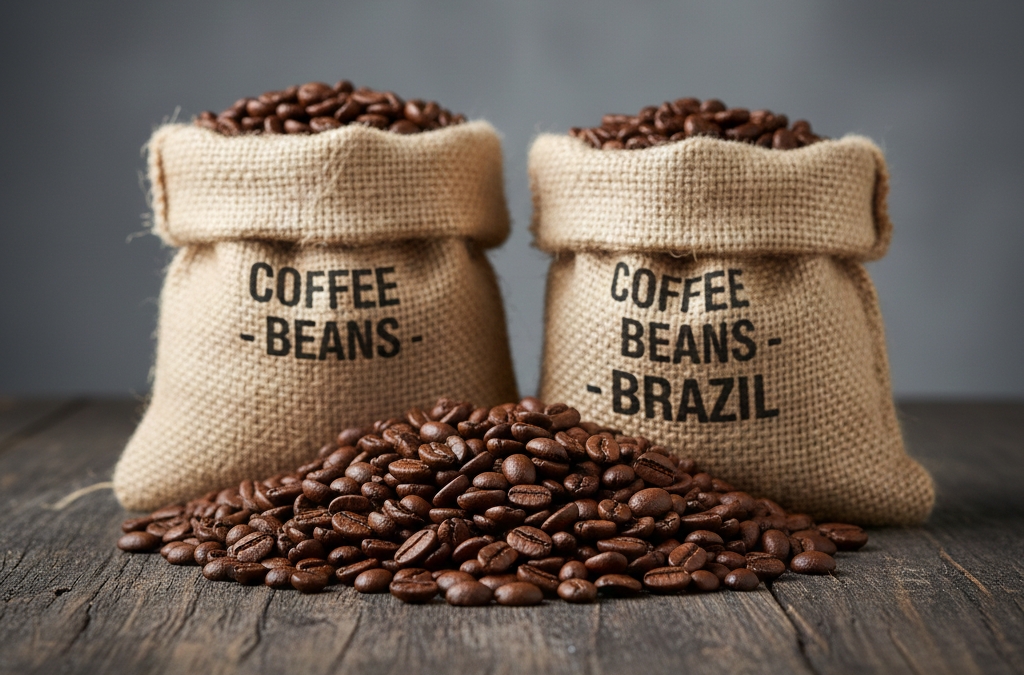
Coffee Prices Decline as Expectations of Ample Brazilian Crop Weigh on Market

Author: Qahwa World
Source: Barchart (Rich Asplund)
Date: May 18, 2026 Coffee prices decline ample supplies is the main story as the market experiences significant changes.
Executive Summary:

  • July arabica coffee fell to a 1.5 year low on Monday, closing down 1.01 percent. July robusta posted a 4 week low, closing down 1.75 percent.
  • The Coffee Trading Academy projects Brazil’s 2026/27 harvest will increase 12 percent year on year to 71.4 million bags.
  • Marex Group and StoneX both forecast record Brazilian crops exceeding 75 million bags for 2026/27.
  • StoneX projects the 2026 global coffee surplus will expand to 10 million bags, the largest in six years.
  • Vietnam coffee exports rose 15.8 percent in the first four months of 2026 compared to the same period last year.
  • ICE robusta inventories fell to a two year low last Friday, while arabica inventories dropped to a 2.75 month low.
  • The closure of the Strait of Hormuz continues to disrupt global coffee supplies, supporting prices.

Coffee prices extended their sharp losses from last Friday on May 18, 2026. July arabica coffee futures closed down 1.01 percent, reaching a one and a half year low. July robusta coffee fell 1.75 percent, hitting a four week low. The declines were driven largely by expectations of a larger Brazilian coffee crop and surging exports from Vietnam.

Market analysts are forecasting a record harvest in Brazil for the 2026/27 season. On May 7, the Coffee Trading Academy projected Brazil’s crop would increase 12 percent year on year to 71.4 million bags. Earlier forecasts from Marex Group and StoneX were even higher. Marex projected a record 75.9 million bags, while StoneX raised its estimate to 75.3 million bags. StoneX also predicted that the global coffee surplus would expand from 1.8 million bags in 2025 to 10 million bags in 2026, the largest surplus in six years.

Vietnam, the world’s largest robusta producer, is also adding to supply pressure. According to Vietnam’s National Statistics Office, coffee exports in the first four months of 2026 rose 15.8 percent year on year to 810,000 metric tons. For the full year 2025, Vietnam’s coffee exports jumped 17.5 percent to 1.58 million metric tons. Production for the 2025/26 season is projected to climb 6 percent to a four year high of 1.76 million metric tons, equivalent to 29.4 million bags.

Inventories and Supply Disruptions

ICE coffee inventories have trended lower over the past two months, which typically supports prices. ICE robusta inventories fell to a two year low of 3,631 lots last Friday. ICE arabica coffee inventories dropped to a 2.75 month low of 462,777 bags on Monday. Despite these declines, the broader supply outlook remains bearish.

Meanwhile, smaller exports from Brazil are providing some support. On May 12, Cecafe reported that Brazil’s April green coffee exports fell 1.3 percent year on year to 2.76 million bags. Additionally, the ongoing closure of the Strait of Hormuz has disrupted global coffee supplies. The closure has increased shipping rates, insurance costs, fertilizer and fuel prices, raising costs for coffee importers and roasters. This factor remains bullish for prices.

Key Market Data

Indicator Value
July arabica coffee close (May 18) Down 1.01% to 1.5 year low
July robusta coffee close (May 18) Down 1.75% to 4 week low
Brazil 2026/27 crop forecast (Coffee Trading Academy) 71.4 million bags (+12% y/y)
Brazil 2026/27 crop forecast (Marex Group) 75.9 million bags (record)
Brazil 2026/27 crop forecast (StoneX) 75.3 million bags (record)
Projected 2026 global coffee surplus 10 million bags (largest in 6 years)
Vietnam coffee exports (Jan-Apr 2026) 810,000 MT (+15.8% y/y)
ICE robusta inventories (May 15) 3,631 lots (2 year low)
ICE arabica inventories (May 18) 462,777 bags (2.75 month low)

Global Export and Production Outlook

On November 7, the International Coffee Organization reported that global coffee exports for the current marketing year (October to September) fell 0.3 percent year on year to 138.658 million bags. This decline is a bearish factor for prices.

The USDA Foreign Agriculture Service released a bi-annual report on December 18 projecting that world coffee production in 2025/26 would increase 2.0 percent year on year to a record 178.848 million bags. Within that total, arabica production is expected to decrease 4.7 percent to 95.515 million bags, while robusta production is forecast to rise 10.9 percent to 83.333 million bags. The USDA also forecast that Brazil’s 2025/26 coffee production would decline 3.1 percent to 63 million bags, while Vietnam’s output would rise 6.2 percent to a four year high of 30.8 million bags. Ending stocks for 2025/26 are projected to fall 5.4 percent to 20.148 million bags from 21.307 million bags in 2024/25.

Frequently Asked Questions (FAQ)

1. Why are coffee prices falling?

Coffee prices are under pressure mainly due to expectations of a larger Brazilian coffee crop for 2026/27 and surging exports from Vietnam, which point to a global surplus.

2. How low did arabica coffee prices go?

July arabica coffee futures fell to a one and a half year low on May 18, 2026, closing down 1.01 percent.

3. What is the projected Brazilian coffee crop for 2026/27?

Forecasts vary, but the Coffee Trading Academy projects 71.4 million bags, while Marex Group and StoneX project record crops above 75 million bags.

4. How much did Vietnam’s coffee exports increase?

Vietnam’s coffee exports rose 15.8 percent in the first four months of 2026 compared to the same period last year, reaching 810,000 metric tons.

5. What is the expected global coffee surplus for 2026?

StoneX projects the 2026 global coffee surplus will expand to 10 million bags, the largest surplus in six years.

6. How does the Strait of Hormuz closure affect coffee prices?

The closure disrupts global coffee supplies by increasing shipping rates, insurance, and fuel costs, which is a bullish factor supporting prices.

Qahwa World – Based on market reports from Barchart by Rich Asplund.
Published: May 18, 2026

Coffee Prices Supported by Shrinking ICE Inventories as Supply Tightens

Author: Qahwa World – Dubai. This article reviews ICE coffee inventories and coffee prices projections for 2026.

Executive Summary

  • July arabica coffee gained 0.21%, while July robusta rose 2.24% to a seven-week high
  • ICE robusta inventories fell to a two-year low of 3,642 lots
  • ICE arabica stocks dropped to a 2.5-month low of 471,831 bags
  • Brazil April green coffee exports declined 1.3% year-over-year to 2.76 million bags
  • Vietnam January-April coffee exports surged 15.8% to 810,000 metric tons
  • Global coffee surplus projected to reach 10 million bags in 2026, largest in six years

Coffee futures settled higher in Wednesday trading as shrinking exchange inventories continued to provide market support, with robusta prices climbing to their highest level in nearly two months.

July arabica coffee on the New York exchange rose 0.60 points, or 0.21 percent, while July robusta coffee on the London exchange advanced 78 points, or 2.24 percent, reaching a seven-week peak.

Tightening stocks on the Intercontinental Exchange remained the primary bullish factor for the market. Robusta inventories fell to a two-year low of 3,642 lots on Wednesday, while arabica stocks dropped to a two-and-a-half-month low of 471,831 bags earlier in the week.

Reduced shipments from Brazil also provided price support. The country’s April green coffee exports declined 1.3 percent compared to the same period last year, totaling 2.76 million bags, according to industry data.

Disruptions in key shipping routes have raised concerns over global coffee supply chains, contributing to higher costs for freight, insurance, fertilizers, and fuel for importers and roasters.

On the bearish side, rising shipments from Vietnam, the world’s largest robusta producer, continued to weigh on the market. Vietnamese coffee exports during the first four months of 2026 increased 15.8 percent year-over-year to 810,000 metric tons. The country’s total coffee exports for 2025 also rose 17.5 percent to 1.58 million metric tons.

Supply outlook: Vietnam coffee production for the 2025/2026 season is projected to increase 6 percent to 1.76 million metric tons (29.4 million bags), which would mark a four-year high for the Southeast Asian producer.

Expectations of a larger Brazilian harvest are also placing downward pressure on prices. Recent projections indicate Brazil 2026/2027 coffee harvest could rise 12 percent year-over-year to 71.4 million bags.

Several trading firms have issued forecasts pointing to record production levels. A major commodities brokerage projected Brazil 2026/2027 crop at 75.9 million bags, while another trading firm raised its estimate to a record 75.3 million bags.

The global coffee surplus in 2026 could expand to 10 million bags, compared with 1.8 million bags in 2025, which would represent the largest surplus in six years, according to industry analysts.

Global coffee exports for the current October-September marketing year slipped 0.3 percent year-over-year to 138.66 million bags, based on data from the International Coffee Organization.

Looking further ahead, the United States Department of Agriculture Foreign Agricultural Service projects that global coffee production in 2025/2026 will rise 2 percent year-over-year to a record 178.85 million bags. The agency forecasts arabica production to decline 4.7 percent to 95.52 million bags, while robusta production is expected to increase 10.9 percent to 83.33 million bags.

Brazil production for 2025/2026 is forecast to fall 3.1 percent to 63 million bags, while Vietnam output is projected to rise 6.2 percent to a four-year high of 30.8 million bags.

The USDA also expects ending stocks for the 2025/2026 season to decline 5.4 percent to 20.15 million bags, down from 21.31 million bags in the previous season.

Frequently Asked Questions

Why did coffee prices rise recently?
Coffee prices moved higher primarily due to shrinking ICE inventories. Arabica stocks fell to a 2.5-month low, while robusta inventories dropped to a two-year low, tightening available supply.

How did Brazil coffee exports perform in April?
Brazil April green coffee exports declined 1.3 percent year-over-year to 2.76 million bags, providing some support to coffee prices.

What is happening with Vietnam coffee exports?
Vietnam coffee exports surged 15.8 percent in the first four months of 2026 to 810,000 metric tons, which has weighed on prices due to increased supply from the world largest robusta producer.

What is the global coffee surplus forecast for 2026?
The global coffee surplus in 2026 could expand to 10 million bags, up from 1.8 million bags in 2025, marking the largest surplus in six years.

What does the USDA forecast for global coffee production?
The USDA projects global coffee production will reach a record 178.85 million bags in 2025/2026, a 2 percent increase year-over-year, with robusta driving the growth.

How are Strait of Hormuz disruptions affecting coffee prices?
Disruptions in the Strait of Hormuz have raised concerns over global coffee supply chains, increasing shipping, insurance, fertilizer, and fuel costs for importers and roasters, which supports higher coffee prices.


Strong Dollar Weighs on Coffee Prices

Dubai – Qahwa World

Coffee futures closed lower on Tuesday as a stronger U.S. dollar pressured commodity markets. This is a clear example of how a Strong Dollar Weighs on Coffee Prices. July arabica coffee contracts (KCN26) fell 0.76%, while July robusta futures (RMN26) declined 0.63%.

Losses were limited by tightening certified coffee inventories. ICE arabica stocks dropped to a 2.5-month low of 471,831 bags, while robusta inventories fell to a two-year low of 3,664 lots.

The ongoing closure of the Strait of Hormuz continued to disrupt global coffee trade flows, increasing shipping, insurance, fuel, and fertilizer costs for importers and roasters.

Brazil’s weaker export performance also supported prices. Cecafe reported that Brazil’s March green coffee exports declined 10% year-on-year to 2.65 million bags, while the country’s Trade Ministry said total March coffee exports fell 31% to 151,000 metric tons.

Meanwhile, rising supplies from Vietnam weighed on robusta prices. Vietnam’s coffee exports during January–April 2026 increased 15.8% year-on-year to 810,000 metric tons, according to the National Statistics Office. The country’s 2025/26 coffee production is expected to rise 6% to a four-year high of 1.76 million metric tons.

Expectations of a larger Brazilian crop also added bearish pressure. Recent forecasts from the Coffee Trading Academy, Marex Group, Sucafina, and StoneX all point to strong production in Brazil’s 2026/27 season, with estimates ranging from 71.4 million to 75.9 million bags.

StoneX also expects the global coffee surplus to expand to 10 million bags in 2026, compared with 1.8 million bags in 2025.

The USDA’s Foreign Agricultural Service forecasts global coffee production in 2025/26 will reach a record 178.848 million bags, driven by stronger robusta output, while global ending stocks are projected to decline 5.4% to 20.148 million bags.

Arabica Coffee Prices Drop on Outlook for Large Brazilian Harvest

Dubai – Qahwa Word

Arabica coffee futures fell to a two-week low on Thursday, weighed down by growing expectations of a bumper crop in Brazil. These developments have had a significant impact on arabica coffee prices, especially given Brazil’s bumper crop forecasts. Meanwhile, robusta prices edged higher. In fact, arabica coffee prices may fluctuate in response to Brazil bumper crop news.

July arabica coffee (KCN26) settled down 10.60 points, or 3.73%, while July ICE robusta coffee (RMN26) gained 19 points (+0.56%).

Brazilian Production Forecasts Weigh on Prices
Several recent projections point to a significantly larger Brazilian coffee harvest in 2026/27, putting pressure on arabica markets. Notably, arabica coffee prices are closely tied to Brazil bumper crop expectations, making these forecasts crucial for analysts.

  • The Coffee Trading Academy estimated last Thursday that Brazil’s 2026/27 crop could rise 12% from the previous year to 71.4 million bags. Moreover, fluctuations in arabica coffee prices strongly reflect Brazil’s bumper crop predictions.

  • On March 19, Marex Group Plc projected a record 75.9 million bags, slightly above Sucafina’s forecast of 75.4 million bags (a 15.5% year‑on‑year increase).

  • StoneX raised its estimate for Brazil’s 2026/27 production to a record 75.3 million bags on March 12, up from a November forecast of 70.7 million bags. This kind of Brazil bumper crop forecast is a key driver for arabica coffee prices.

StoneX also predicted that the global coffee surplus in 2026 would grow to 10 million bags, up from 1.8 million bags in 2025 – the largest surplus in six years. As a result, arabica coffee prices, Brazil, and bumper crop numbers remain intertwined topics for market participants.

Vietnam’s Strong Exports Pressure Robusta
Robusta prices face headwinds from surging Vietnamese shipments. Vietnam’s National Statistics Office reported on Saturday that the country’s coffee exports from January to April 2026 rose 15.8% year‑on‑year to 810,000 metric tons. For the full year 2025, Vietnamese exports jumped 17.5% to 1.58 million metric tons. Additionally, Vietnam’s 2025/26 coffee production is expected to climb 6% year‑on‑year to a four‑year high of 1.76 million metric tons (29.4 million bags).

Strait of Hormuz Closure Creates Supply Concerns
The ongoing shutdown of the Strait of Hormuz has disrupted global coffee supply chains, supporting prices broadly. Higher shipping rates, insurance premiums, and increased costs for fertilizer and fuel have tightened available supplies, raising expenses for coffee importers and roasters. All these factors can indirectly affect arabica coffee prices, especially if Brazil expects another bumper crop.

Tight Inventories and Lower Brazilian Exports Provide Support
Signs of limited immediate supplies are also underpinning the market:

  • ICE arabica coffee inventories dropped to a 2.5‑month low of 483,292 bags on Thursday. This reduction coincides with a growing focus on Brazil bumper crop forecasts and arabica coffee prices.

  • ICE robusta inventories hit a 16.25‑month low of 3,755 lots last Tuesday.

Brazil’s export figures have also trended lower. On April 14, Cecafe reported that Brazil’s green coffee exports in March fell 10% year‑on‑year to 2.65 million bags. Earlier, on April 7, the country’s Trade Ministry noted that total March coffee exports declined 31% year‑on‑year to 151,000 metric tons. Therefore, arabica coffee prices in Brazil remain sensitive to both export volumes and bumper crop projections. It’s worth noting that Brazil’s bumper crop continues to make arabica coffee prices extremely volatile.

Global Export and Production Outlook
On November 7, the International Coffee Organization (ICO) said global coffee exports for the current marketing year (October to September) slipped 0.3% year‑on‑year to 138.658 million bags.

Looking further ahead, the USDA’s Foreign Agriculture Service (FAS) projected in its December 18 biannual report that world coffee production in 2025/26 would rise 2.0% year‑on‑year to a record 178.848 million bags. Within that total, arabica production is forecast to decline 4.7% to 95.515 million bags, while robusta production is expected to increase 10.9% to 83.333 million bags. The global market continues to monitor arabica coffee prices, Brazil, and potential bumper crop impacts for the coming years.

For Brazil, the FAS sees 2025/26 production falling 3.1% to 63 million bags, while Vietnam’s output is projected to grow 6.2% to a four‑year high of 30.8 million bags. Ending stocks for 2025/26 are forecast to decrease 5.4% to 20.148 million bags, down from 21.307 million bags in 2024/25. In summary, arabica coffee prices, Brazil, and the bumper crop outlook will remain central themes for the global coffee market throughout 2026.

Coffee Prices Get Support from Brazilian Real Strength

Dubai – Qahwa World

Coffee futures traded sharply higher today. Arabica coffee rose to its highest level in one week. July arabica gained 3.43 percent. July robusta added 1.5 percent.

A major supporting factor is the strength of the Brazilian real. The currency surged to a two and a quarter year high against the US dollar. A stronger real discourages Brazilian coffee farmers from selling their crops overseas, which pushes prices upward.

Additional support comes from the ongoing closure of the Strait of Hormuz. This disruption has raised global shipping rates, insurance costs, fertilizer and fuel expenses. Coffee importers and roasters now face higher costs, tightening global supplies.

On the negative side, expectations of a large Brazilian coffee crop are limiting gains. The Coffee Trading Academy projected last Thursday that Brazil’s 2026/2027 harvest will increase 12 percent year over year to 71.4 million bags.

On March 19, Marex Group Plc forecast a record Brazilian crop of 75.9 million bags for the same season. That surpassed Sucafina’s forecast of 75.4 million bags, which represented a 15.5 percent annual increase. On March 12, StoneX raised its Brazil production estimate to a record 75.3 million bags, up from a November estimate of 70.7 million bags. StoneX also projected the 2026 global coffee surplus would expand to 10 million bags from 1.8 million bags in 2025. That would be the largest surplus in six years.

For robusta coffee, soaring exports from Vietnam are a bearish factor. Vietnam is the world’s largest robusta producer. On Saturday, Vietnam’s National Statistics Office reported that the country’s coffee exports from January to April 2026 rose 15.8 percent year over year to 810,000 metric tons. Vietnam’s 2025 coffee exports jumped 17.5 percent annually to 1.58 million metric tons. In addition, Vietnam’s 2025/2026 coffee production is projected to climb 6 percent year over year to a four year high of 1.76 million metric tons, or 29.4 million bags.

Tightness in arabica supplies is supporting prices. ICE arabica coffee inventories fell to a two and a quarter month low of 494,508 bags on April 21.

Smaller exports from Brazil also help support prices. On April 14, Cecafe reported that Brazil’s March green coffee exports fell 10 percent year over year to 2.65 million bags. On April 7, Brazil’s Trade Ministry reported that March coffee exports fell 31 percent annually to 151,000 metric tons.

Robusta coffee also sees bullish signs from tighter supplies. ICE robusta inventories fell to a sixteen and a quarter month low of 3,755 lots last Tuesday.

As a bearish factor, the International Coffee Organization reported on November 7 that global coffee exports for the current marketing year, which runs October through September, fell 0.3 percent year over year to 138.658 million bags.

The USDA’s Foreign Agriculture Service said in its biannual report on December 18 that world coffee production in 2025/2026 would increase 2.0 percent annually to a record 178.848 million bags. That includes a 4.7 percent decrease in arabica production to 95.515 million bags and a 10.9 percent increase in robusta production to 83.333 million bags. The USDA forecasted that Brazil’s 2025/2026 coffee production would decline 3.1 percent to 63 million bags. Vietnam’s coffee output would rise 6.2 percent to a four year high of 30.8 million bags. The USDA also forecasts that 2025/2026 ending stocks will fall 5.4 percent to 20.148 million bags from 21.307 million bags in 2024/2025.

Coffee Futures Rebound as Dollar Weakness Triggers Short Covering

Dubai – Qahwa World

Coffee prices climbed back from one-and-a-half-week lows on Friday, ending the session in positive territory. The turnaround came as the U.S. dollar dropped to a two-week low, prompting traders to cover short positions in the coffee market. This price recovery was also influenced by coffee futures short covering as traders adjusted their positions. Notably, coffee futures short covering has played a key role in recent market movements.

July arabica coffee rose 0.85 cents (0.30%), while July robusta coffee gained 3 points (0.09%).

Early Losses on Brazil Crop Outlook

Prices initially moved lower on expectations of a larger harvest in Brazil. The Coffee Trading Academy projected Thursday that Brazil’s 2026/27 coffee crop would rise 12% year-over-year to 71.4 million bags.

Just days earlier, arabica had touched a 1.75-month low following forecasts of a record Brazilian harvest. On March 19, Marex Group predicted a record 75.9 million bags for 2026/27, beating Sucafina’s estimate of 75.4 million bags (up 15.5% annually). StoneX also raised its production outlook for Brazil to an all-time high of 75.3 million bags on March 12, up from a prior forecast of 70.7 million bags. Additionally, StoneX expects the global coffee surplus to balloon from 1.8 million bags in 2025 to 10 million bags in 2026 — the widest surplus in six years. As a result, coffee futures short covering activity may increase amid these predictions.

Vietnamese Exports Weigh on Robusta

Soaring shipments from Vietnam, the world’s top robusta producer, are putting pressure on robusta prices. Vietnam’s National Statistics Office reported on April 3 that first-quarter 2026 coffee exports rose 14% year-over-year to 585,000 metric tons. For all of 2025, exports jumped 17.5% to 1.58 million metric tons. Moreover, Vietnam’s 2025/26 production is expected to climb 6% to a four-year high of 1.76 million metric tons (29.4 million bags).

Supply Tightness Offers Support

On the bullish side, arabica supplies are showing signs of tightness. ICE arabica coffee inventories fell to a two-month low of 494,508 bags on Tuesday, contributing to coffee futures short covering by traders seeking to limit risk.

Similarly, robusta supplies are tightening — ICE robusta stocks dropped to a 16-month low of 3,755 lots last Tuesday.

Geopolitical and Export Factors

Ongoing concerns over a prolonged U.S.-Iran conflict and potential closure of the Strait of Hormuz are also supporting prices. Such disruptions have raised shipping rates, insurance premiums, and costs for fertilizers, fuel, importers, and roasters. Therefore, it is evident that coffee futures short covering remains a significant factor in this volatile environment.

Brazilian export data further supports prices. Cecafe reported on April 14 that Brazil’s March green coffee exports fell 10% year-over-year to 2.65 million bags. Brazil’s Trade Ministry also noted on April 7 that March coffee exports dropped 31% from a year ago to 151,000 metric tons.

Bearish Reports and Forecasts

On the downside, the International Coffee Organization (ICO) said on November 7 that global coffee exports for the current marketing year (October–September) edged down 0.3% year-over-year to 138.658 million bags.

The USDA’s Foreign Agriculture Service (FAS) projected in its December 18 biannual report that world coffee production for 2025/26 would rise 2% to a record 178.848 million bags. That includes a 4.7% drop in arabica output (to 95.515 million bags) and a 10.9% increase in robusta production (to 83.333 million bags). The FAS also forecast Brazil’s 2025/26 crop falling 3.1% to 63 million bags, while Vietnam’s output rises 6.2% to a four-year high of 30.8 million bags. Ending stocks for 2025/26 are expected to decline 5.4% to 20.148 million bags, down from 21.307 million bags in 2024/25.

Global Coffee Prices Fall as Brazil Crop Outlook Signals Oversupply

Dubai – Qahwa World

Global coffee prices declined at the start of the week as expectations of strong supply weighed on market sentiment, particularly with Brazil’s harvest approaching.

Arabica coffee had already fallen to its lowest level in several weeks, pressured by forecasts pointing to a potentially record-breaking Brazilian crop for the 2026/27 season. Analysts from multiple firms have raised their production estimates, with projections suggesting output could exceed 75 million bags. If realized, this would mark a significant increase from the previous season and reinforce expectations of abundant supply.

The global balance is also shifting. Current estimates indicate that the coffee market could move into a much larger surplus in 2026, compared to a relatively modest surplus the year before. This outlook has contributed to the recent downward trend in prices.

Vietnam is adding further pressure to the market. As the world’s leading robusta producer, the country has reported rising export volumes in early 2026, continuing the strong performance seen last year. Production is also expected to increase, reaching a multi-year high and boosting global robusta availability.

Despite the broader bearish outlook, some factors are offering limited support to prices. Robusta inventories monitored by exchanges have recently dropped to their lowest level in over a year, indicating tighter short-term supply.

There are also ongoing concerns about global trade conditions. Higher shipping and logistics costs continue to affect the coffee sector, increasing expenses for exporters and roasters and adding uncertainty to supply chains.

Meanwhile, Brazil’s recent export data shows a decline compared to the same period last year, suggesting a temporary tightening in available shipments even as larger future harvests are anticipated.

Looking ahead, global coffee production for the 2025/26 season is still expected to reach a record level. While arabica output may see a slight decrease, robusta production is forecast to rise significantly, helping to balance overall supply. Ending stocks are projected to decline modestly, indicating that while supply is strong, stock levels may not increase dramatically.

Coffee Prices Rise as Iran Conflict Disrupts Global Shipping

Dubai – Qahwa World

Coffee prices climbed on Thursday as escalating tensions in the Middle East raised concerns about global supply chains and shipping routes.

May arabica coffee futures increased by 6.75 points (2.35%), while May robusta contracts gained 82 points (2.31%), reflecting market reactions to geopolitical developments affecting maritime trade.

The rise follows reports that the Strait of Hormuz, a critical global shipping corridor, could face disruption due to the ongoing conflict involving Iran. Statements from Iranian leadership suggested the strategic waterway could be used as leverage, while defense officials in the United Kingdom indicated evidence that mines may be placed in the strait.

The potential closure of the route has pushed up global shipping rates, insurance costs, and fuel expenses, increasing operational costs for coffee importers, traders, and roasters worldwide.

You may read: Global Coffee Exports Surge Amid Asian Growth and Latin American Decline

However, gains in coffee prices remain limited due to favorable weather conditions in Brazil. Forecasts indicate rainfall in major coffee-growing regions, which could support crop development and ease supply concerns.

Adding further pressure on prices, commodity analytics firm StoneX raised its forecast for Brazil’s 2026/27 coffee production to a record 75.3 million bags, compared with its previous estimate of 70.7 million bags.

Meteorological data from Somar Meteorologia also showed that Brazil’s largest arabica-producing region, Minas Gerais, received 14.9 mm of rainfall last week, equivalent to about 35% of the historical average.

Meanwhile, Brazilian export data offered some support to the market. According to Cecafe, Brazil’s green coffee exports fell 27% year-on-year in February, while the country’s Trade Ministry reported a 17.4% annual decline, bringing total shipments to 142,000 metric tons.

Inventory movements are also shaping market sentiment. Stocks of arabica monitored by the Intercontinental Exchange (ICE) recently reached a five-month high of 564,626 bags before easing slightly to 552,192 bags. Robusta inventories also rose to a 3.5-month high earlier this month before declining modestly.

Read also: ICO February 2026 Report: Has the Inflationary Wave Receded?

Earlier in February, coffee prices dropped sharply amid expectations of a strong Brazilian crop. Brazil’s agricultural supply agency Conab projected the country’s 2026 coffee production at 66.2 million bags, including 44.1 million bags of arabica and 22.1 million bags of robusta.

On a global scale, Rabobank estimates coffee production could reach 180 million bags in the 2026/27 season, an increase of roughly 8 million bags compared with the previous year.

Vietnam, the world’s largest robusta producer, continues to influence market dynamics. Government statistics show Vietnam’s coffee exports rose 14% year-on-year in January–February 2026 to 366,000 metric tons, while exports in 2025 climbed 17.5% to 1.58 million metric tons. Production in the 2025/26 season is projected to reach 1.76 million metric tons, the highest level in four years.

Read Also: Coffee Prices Drop on Brazil Weather and Rising Stocks

Despite these supply signals, the International Coffee Organization (ICO) reported that global coffee exports for the current marketing year have declined 0.3% year-on-year to 138.658 million bags.

Looking ahead, the USDA’s Foreign Agricultural Service forecasts global coffee production in 2025/26 at 178.848 million bags, with arabica output expected to decline 4.7% and robusta production projected to increase 10.9%. Ending global stocks are expected to fall 5.4% to 20.148 million bags.

Market analysts say the coffee sector remains caught between geopolitical risks affecting trade routes and expectations of strong global production, creating a volatile outlook for prices in the months ahead.

Brazil Crop Expectations Pressure Global Coffee Prices

Dubai – Qahwa World

Coffee futures closed lower at the end of the week as expectations of stronger global production continued to weigh on sentiment. The market reaction reflects growing confidence that supply conditions may improve in the upcoming seasons, particularly with Brazil at the center of the outlook.

A recent projection from Rabobank indicates that global coffee production could reach 180 million bags in the 2026/27 season, potentially marking a record and representing an increase of around 8 million bags compared with the previous year. The forecast has reinforced a broader shift in market expectations after months dominated by tight supply concerns.

In Brazil, fresh estimates from Conab point to a significant rebound in output for 2026. The agency projects total production at 66.2 million bags, up 17.2% year-on-year. Arabica output is expected to rise more sharply, increasing 23.2% to 44.1 million bags, while robusta production is forecast to grow 6.3% to 22.1 million bags.

Weather conditions have contributed to the improved outlook. Data from Somar Meteorologia show that Minas Gerais, Brazil’s largest arabica-producing region, received rainfall above the historical average during mid-February. Adequate moisture during key crop development stages has strengthened expectations for higher yields, adding pressure to prices that have already retreated from recent highs.

Vietnam has also played a role in easing supply concerns. As the world’s leading robusta producer, the country reported a sharp year-on-year increase in coffee exports in January, according to official statistics. Full-year 2025 exports also recorded solid growth. Production for the 2025/26 season is projected to reach approximately 1.76 million metric tons, or about 29.4 million bags, reflecting a four-year high. The expansion in Vietnamese output continues to influence the robusta segment in particular.

Exchange-monitored inventories have shown signs of recovery as well. Certified arabica stocks tracked by ICE have risen from their lows reached late last year, while robusta inventories have also moved higher after touching multi-month troughs. The increase in available certified stocks signals improved short-term supply availability.

At the same time, some supply-side developments have provided limited support. Brazil’s Trade Ministry reported a year-on-year decline in January coffee exports. In Colombia, the National Federation of Coffee Growers announced that January production fell sharply compared with the same month last year, tightening availability in the washed arabica segment.

On the global level, the International Coffee Organization has reported a slight decline in coffee exports for the current October–September marketing year. However, the broader outlook remains shaped by expectations of higher output. The USDA Foreign Agricultural Service projects world coffee production in 2025/26 at nearly 179 million bags, with robusta output increasing while arabica production is forecast to decline modestly. Ending stocks are expected to ease compared with the previous season.

Overall, improved crop prospects in Brazil, expanding robusta production in Vietnam, and recovering inventories are collectively reshaping the global coffee balance, placing downward pressure on prices as the market reassesses supply risks.

Coffee Prices Mixed as Brazil Rainfall Lags and Vietnam Exports Surge

Dubai – Qahwa World

Coffee futures ended mixed on Monday, January 5, with arabica prices settling higher while robusta declined to a one-week low. March arabica coffee rose about 0.6%, supported by below-normal rainfall in Brazil and a stronger Brazilian real, while March robusta fell between 1% and 2.5% under pressure from rising Vietnamese supplies.

Arabica prices drew support after Somar Meteorologia reported that Minas Gerais—Brazil’s largest arabica-growing region—received just 47.9 millimeters of rain in the week ending January 2, only 67% of the historical average. Weather concerns remain important for Brazil, the world’s largest arabica producer. Additional support came from the Brazilian real strengthening to a three-week high against the U.S. dollar, which discourages Brazilian growers from selling coffee into export markets.

In contrast, robusta prices weakened as supply concerns eased. Vietnam’s National Statistics Office reported that 2025 coffee exports surged 17.5% year over year to 1.58 million metric tons. Vietnam is the world’s largest robusta producer, and expectations for higher output continue to weigh on prices. Production for the 2025/26 season is projected to rise about 6%, with industry groups suggesting output could climb as much as 10% if weather remains favorable.

Inventory trends remain mixed but generally supportive. ICE-monitored arabica inventories fell to a 1.75-year low in November before rebounding modestly in late December, while robusta inventories also recovered slightly after hitting a one-year low earlier in the month. Meanwhile, U.S. coffee stocks remain tight after American buyers sharply reduced Brazilian purchases last fall due to temporary import tariffs, which caused U.S. imports from Brazil to drop more than 50% year over year during that period.

Longer-term supply expectations continue to pressure the market. Brazil’s crop agency Conab recently raised its 2025 production estimate to 56.54 million bags. Globally, the USDA projects world coffee production in 2025/26 will rise 2% to a record level, driven by strong growth in robusta output despite a projected decline in arabica production. Ending stocks are expected to fall modestly, offering some offsetting support.

Overall, the coffee market remains caught between near-term weather and currency support for arabica and ample robusta supplies led by Vietnam, keeping prices volatile and direction mixed.

Coffee Prices Rise as Brazilian Real Strengthens and Supply Risks Grow

Dubai – Qahwa World

Coffee futures finished higher on Friday after reversing early weakness, supported by currency movements and renewed supply concerns. March arabica coffee contracts rose sharply, while March robusta prices posted a modest gain.

A key driver of the rebound was strength in Brazil’s currency. The Brazilian real climbed to its strongest level in roughly two weeks against the U.S. dollar, making exports less attractive for Brazilian producers. That shift prompted short covering in coffee futures and helped lift prices into the close.

Weather-related disruptions in Southeast Asia are also lending support. Severe flooding in Indonesia has affected a significant portion of arabica-growing areas in northern Sumatra. Industry officials estimate the damage could cut Indonesia’s coffee exports by up to 15% during the 2025/26 season. Indonesia is a major global supplier, particularly of robusta coffee, and any reduction in output adds to market uncertainty.

Concerns about Brazil’s crop conditions have not faded. Recent data from a private weather firm showed that Minas Gerais—Brazil’s largest arabica-producing region—received far less rainfall than normal in late December. Below-average moisture during this critical period has raised doubts about yield potential for the upcoming harvest.

Inventory trends remain another supportive factor. Arabica coffee stocks monitored by ICE fell to multi-year lows in November before rebounding modestly in recent weeks. Robusta inventories followed a similar pattern, touching their lowest levels in a year before seeing a short-term recovery. Despite the recent uptick, overall stock levels remain relatively tight by historical standards.

On the demand side, U.S. coffee inventories remain constrained. Earlier trade barriers sharply reduced American purchases of Brazilian coffee during late summer and early fall. Although those tariffs have since been reduced, imports have yet to fully recover, leaving supply channels under pressure.

Still, longer-term supply expectations continue to cap rallies. Brazil’s national crop agency recently raised its estimate for the country’s 2025 coffee output, citing improved conditions compared with earlier forecasts. Meanwhile, robusta markets remain weighed down by strong production and export data from Vietnam.

Vietnamese coffee shipments surged late last year, and output for the 2025/26 season is expected to rise further if weather remains favorable. As the world’s largest robusta producer, Vietnam’s expanding supply continues to temper bullish sentiment in that segment of the market.

Globally, mixed signals persist. While international coffee exports have edged slightly lower year over year, production forecasts point to a record crop in the coming season. Arabica output is projected to decline, but gains in robusta production are expected to more than offset those losses. Ending stocks are forecast to fall modestly, suggesting a tighter balance than last year but not an outright shortage.

Overall, coffee prices are being pulled in opposite directions—near-term supply risks and currency dynamics are supporting the market, while expectations of ample global production continue to limit upside potential.

Vietnam’s Coffee Exports Hit Record Levels and Set Sights on New Growth in 2026

Ho Chi Minh  – Qahwa World

Vietnam has closed the 2024–2025 coffee season with unprecedented results, marking the highest performance in the history of its coffee industry. The country’s coffee export value reached USD 8.4 billion, according to the Vietnam Coffee and Cocoa Association (VICOFA), which held its annual conference on 24 October 2025 in Ho Chi Minh City, attended by representatives from the Ministry of Agriculture and Environment, exporters, and local producers.

Data released by the association shows that from October 2024 to September 2025, Vietnam exported over 1.5 million tons of coffee—an increase of 1.8 % in volume and 55.5 % in export value compared with the previous season. The average export price reached USD 5,610 per ton, up 52.7 % year on year.

Europe remained Vietnam’s largest export market, accounting for about 47 % of total shipments—more than 710,000 tons—valued at over USD 4 billion. Within that figure, the 27 European Union countries represented 40.1 % of the total exported volume and 39.4 % of export value, reaffirming the country’s strong foothold in European markets despite tightening sustainability regulations.

Speaking at the event, Hoang Trung, Deputy Minister of Agriculture and Environment, praised the industry’s achievements as a result of joint efforts among farmers, exporters, and government agencies to improve product quality and expand international market access. He reported that the total coffee cultivation area reached 731.9 thousand hectares, including 678.5 thousand hectares in production, while re-planted areas covered 20 thousand hectares, achieving 96.4 % of the national re-planting plan.

According to the deputy minister, favorable weather conditions and high coffee prices encouraged farmers to invest in intensive cultivation and rejuvenate plantations, leading to higher productivity and improved bean quality. Government estimates suggest that total coffee production could approach 2 million tons this year—an impressive achievement demonstrating Vietnam’s resilience amid global agricultural volatility.

A key highlight of the conference was the announcement that cooperation between VICOFA, government authorities, and international partners had resulted in the creation of a national traceability database covering 137,000 hectares of coffee farms, which is now being expanded to 462,000 hectares, or about 80 % of the total coffee area in the Central Highlands. Thanks to this initiative, the European Union has classified Vietnam as a “low-risk” country under the EUDR (Deforestation Regulation), requiring inspection of only 1 % of imported shipments. Trung described this classification as “a recognition of Vietnam’s transparency, accountability, and environmental responsibility within the coffee sector.”

He further noted that programs dedicated to specialty and high-quality coffee, as well as sustainable low-emission initiatives, have significantly contributed to increasing the added value of Vietnamese coffee and strengthening its brand identity on the global stage.

The report also showed that by mid-October 2025, Vietnam had already exported 1.27 million tons of coffee, valued at USD 7.21 billion—a 12.5 % rise in volume and more than 62 % growth in value compared with the same period a year earlier. This performance highlights a strategic shift from expanding output to enhancing value and quality, underscoring the success of Vietnam’s transformation from a commodity-based producer to a sustainability-driven exporter.

During the event, VICOFA projected that coffee production for the 2025–2026 season could increase by 10 % from the previous year if favorable weather continues. The association said that encouraging price levels had motivated farmers to increase investments in crop care and expand their cultivated areas, raising prospects for another strong season ahead.

Deputy Minister Hoang Trung outlined several key directions for sustaining growth and maintaining competitiveness:

  • Expand sustainable production by adopting international certification standards such as RA, 4C, FLO, and C.A.F.E. Practices.
  • Strengthen traceability and deep processing to reduce dependence on raw-bean exports.
  • Adopt low-emission cultivation techniques to cut fertilizer and pesticide use and promote water-efficient irrigation.
  • Diversify markets beyond Europe toward Asia and Southeast Asia, leveraging cross-border e-commerce opportunities.
  • Promote the “Vietnam Coffee” brand in specialty segments through global marketing and participation in exhibitions and trade fairs.
  • Foster stronger linkages across the supply chain—from farmers and cooperatives to processors and exporters—to ensure equitable and sustainable growth.
  • Enhance awareness and compliance with import-market requirements, especially environmental and traceability regulations under the EU EUDR.

The conference concluded with a shared conviction among participants that, with its robust agricultural base, growing commitment to sustainability, and rapidly improving quality standards, Vietnam is on course to strengthen its position as one of the world’s leading coffee exporters. As the new 2025–2026 season approaches, the sector looks set for further expansion, higher value, and record-breaking achievements in the years ahead.