El Niño: What It Is and How It Affects Coffee

Author: Qahwa World – Climate Desk

Source: NOAA, WMO, ICO, StoneX, industry sources
Date: May 22, 2026

Executive Summary

  • There is a 96% probability that El Niño will persist through the Northern Hemisphere winter of 2026‑2027.
  • Sea surface temperatures in the Niño 3.4 region have already exceeded the +0.5°C El Niño threshold.
  • Vietnam and Indonesia face drought and higher temperatures, threatening Robusta yields.
  • Brazil may see irregular rainfall during critical flowering (August‑October 2026), reducing Arabica quality.
  • Colombia and Central America face mixed risks: excess rain (leaf rust) or drought.
  • Analysts expect higher coffee price volatility in 2027, with Robusta supply risks pushing futures higher.
  • Smallholder farmers in vulnerable regions could face income losses, food insecurity, and migration pressure.

As of mid‑May 2026, the tropical Pacific is showing unmistakable signs of a rapid transition toward El Niño conditions.

According to the NOAA Climate Prediction Center’s ENSO Diagnostic Discussion released on May 14, there is an 82% probability that El Niño will emerge between May and July 2026, rising to a 96% chance that it will persist through the Northern Hemisphere winter of 2026‑2027.

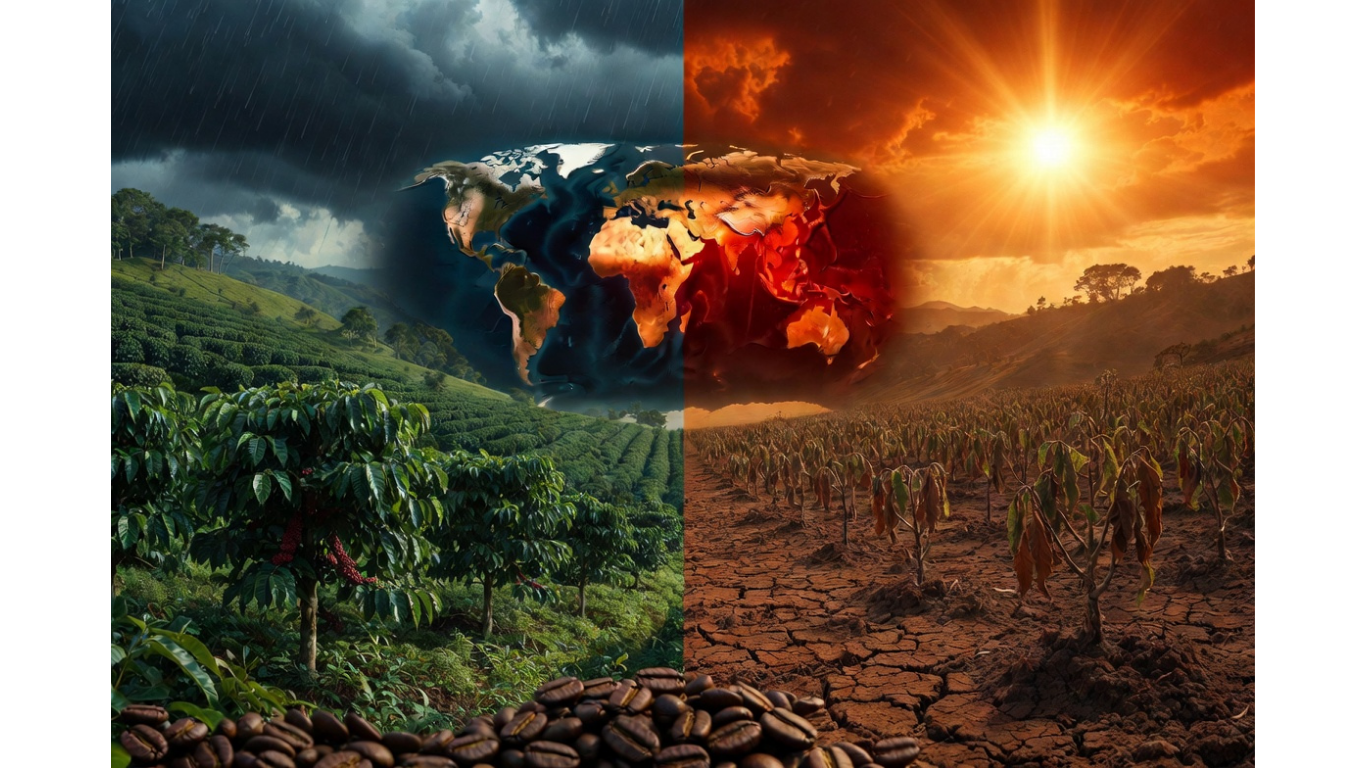
Scientists are closely monitoring whether this event could evolve into a Super El Niño, potentially rivaling the record‑strength episodes of 1982‑83, 1997‑98, or 2015‑16. With sea surface temperatures in key Niño regions already warming sharply, the stage is set for significant disruptions to global weather patterns — from devastating floods in South America to severe droughts across Southeast Asia and parts of East Africa.

What Is El Niño?

El Niño (Spanish for “The Little Boy” or “Christ Child”) is the warm phase of the El Niño‑Southern Oscillation (ENSO), Earth’s most influential climate variability pattern. Under normal conditions, strong easterly trade winds push warm surface water westward across the equatorial Pacific toward Indonesia, allowing cold, nutrient‑rich water to upwell off the coasts of Peru and Ecuador. During El Niño, these trade winds weaken or reverse. Warm water spreads eastward, suppressing upwelling and altering atmospheric circulation patterns worldwide.

The counterpart, La Niña, brings cooler waters and opposite weather effects. ENSO events typically occur every 2‑7 years and last 9‑18 months.

Current Status – May 2026

The equatorial Pacific is currently in a transitional state following a weak La Niña. Sea surface temperatures in the Niño 3.4 region have risen rapidly, with recent weekly values exceeding the +0.5°C El Niño threshold.

Multiple international models, including those from NOAA, the ECMWF, and the WMO, show high confidence in El Niño development by mid‑to‑late 2026. While peak strength remains uncertain, some projections suggest anomalies could exceed +2.0°C, raising the possibility of a strong‑to‑very‑strong event.

Global Weather Impacts

El Niño redistributes heat and moisture across the planet:

  • South America (Peru, Ecuador, northern Brazil): Increased rainfall and flooding risks, potential damage to infrastructure and agriculture.
  • Southeast Asia, Indonesia, Australia: Significantly reduced rainfall, drought, higher wildfire risk, water shortages.
  • East Africa: Wetter‑than‑average conditions, increased flood and disease risks.
  • Southern United States: Wetter winters; Northern US and Canada often milder.
  • Global: Elevated average temperatures (El Niño typically adds ~0.1–0.3°C to global surface temperatures).

Impact on Global Coffee Production

Coffee is one of the most climate‑sensitive major commodities. With roughly 12.5 million farming families dependent on it worldwide, any major ENSO event sends ripples through prices, quality, and livelihoods. The 2026‑2027 El Niño is expected to affect both Arabica and Robusta differently across key origins.

1. Brazil – The World’s Largest Producer

Brazil faces a complex outlook. While the current 2026/27 harvest is projected to be strong, El Niño could disrupt the critical flowering period (August‑October 2026) through irregular rainfall or excessive heat. Historical patterns show El Niño often brings drier conditions to key Arabica regions in Minas Gerais and São Paulo, potentially reducing bean size, increasing defects, and lowering quality.

2. Vietnam and Indonesia – Robusta Heartlands

These two giants are highly vulnerable to El Niño‑induced drought and elevated temperatures. Reduced rainfall and prolonged dry seasons can stress Robusta trees, leading to smaller beans, lower yields, and higher production costs due to increased irrigation needs. The 2015‑16 El Niño caused notable declines in Robusta output in these regions.

3. Colombia, Central America, and East Africa

Colombia and Central America face mixed signals: potential for excessive rainfall in some areas (increasing fungal diseases like coffee leaf rust) or drought in others. Ethiopia and Kenya may see wetter conditions that boost yields in some highlands but heighten disease pressure and complicate harvesting.

Overall Market Outlook

Analysts anticipate higher price volatility in 2027 as the event peaks. While Brazil’s large crop may buffer total volume in the short term, quality concerns and Robusta supply risks could push Arabica and Robusta futures higher. The ICO and major traders are already factoring these risks into their forecasts.

Broader Economic and Humanitarian Implications

  • Price Spikes: Coffee futures have already shown sensitivity to El Niño headlines, with short covering observed.
  • Smallholder Farmers: Millions in vulnerable regions face income losses, food insecurity, and potential migration pressures.
  • Supply Chain: Roasters, traders, and consuming countries should prepare for tighter specialty‑grade supplies and elevated costs.
  • Compounding Factors: Persistent low stocks, high input costs (fertilizers, labor), and climate change amplify risks.

Recommendations and Preparedness

For Governments and International Organizations: Strengthen early warning systems, support farmers with drought‑resistant varieties, irrigation, shade management, and crop insurance. The WMO, FAO, and ICO should coordinate contingency planning.

For the Coffee Industry: Diversify sourcing strategies, invest in sustainable practices that build resilience, and monitor ENSO updates monthly.

For Consumers: Expect potential price increases in premium and everyday coffee blends throughout 2027. Supporting traceable, climate‑smart coffee can help mitigate long‑term risks.

Frequently Asked Questions

What is the probability that El Niño will persist through winter 2026/2027?

NOAA estimates a 96% probability that El Niño will persist through the Northern Hemisphere winter of 2026‑2027.

Which coffee origins are most at risk from this El Niño?

Vietnam and Indonesia (Robusta) face drought; Brazil (Arabica) may see irregular flowering; Colombia and Central America face mixed flood/drought risks.

How could El Niño affect coffee prices?

Analysts expect higher price volatility in 2027. Robusta supply risks could push futures higher, and specialty‑grade supplies may tighten.

What can smallholder farmers do to prepare?

Governments and organizations should provide drought‑resistant varieties, irrigation support, shade management, and crop insurance.

How does this El Niño compare to past events?

Models suggest it could become a strong‑to‑very‑strong event, potentially rivaling 1982‑83, 1997‑98, or 2015‑16, but final strength remains uncertain.

What are the broader economic risks beyond coffee?

Smallholder farmers face income losses and food insecurity; supply chains face tighter supplies and elevated costs; migration pressures may increase.


Author: Qahwa World – Climate Desk | Source: NOAA, WMO, ICO, StoneX, industry sources | Date: May 22, 2026

ICC 2026 Trieste to Focus on Climate, Consumers and Coffee Circularity

Trieste, Italy – Qahwa World

The International Coffee Convention (ICC) 2026 will be held in Trieste this October, bringing together scientists, industry leaders and policy experts to address some of the most pressing challenges facing the global coffee sector.

Under the theme Coffee at the Crossroads: Climate, Consumers and Circularity, the event will examine how coffee production and trade are adapting to climate change, shifting consumer demand and the growing push toward circular and sustainable systems.

The ICC has positioned itself as a unique international forum that connects applied scientific research with real-world decision making across the coffee value chain. Unlike traditional trade fairs or academic conferences, the convention is designed to translate research into practical insight for industry professionals.

Previous editions were held in Mannheim in 2023 and 2024, where the format gained recognition for combining interdisciplinary science with industry-focused discussion. The 2026 edition continues this model with a programme structured around six key tracks.

These cover climate and agriculture, sustainability and processing, market and consumer trends, technology and innovation, ethics and social equity, and trade and regulation. Topics include climate resilience in coffee farming, circular economy approaches in processing, digital transformation, supply chain transparency, and evolving regulatory frameworks in major coffee markets.

The convention brings together a wide range of expertise, including agronomists, economists, geneticists, sensory scientists and behavioural researchers, alongside producers, traders, roasters and technology providers. Organisers say this mix is intended to strengthen collaboration between research and industry practice.

ICC 2026 will also open a call for papers, inviting contributions that combine scientific rigor with practical relevance. Submissions are expected to address challenges and opportunities across the coffee sector, from cultivation and processing to technology, sustainability and trade.

The two day event focuses on concentrated dialogue, applied insight and professional networking, with an emphasis on connecting science and industry in a way that supports real decision making.

Previous ICC proceedings and conference materials remain publicly accessible, offering insights into the research and discussions from earlier editions.

Global Roadmap to Accelerate the Genetic Improvement of Robusta Coffee

Dubai – Qahwa World

At a time when the global coffee sector stands at a historic crossroads, the journal Frontiers in Plant Science has published one of the most significant research papers of the last decade. It is not merely an academic study but a “rescue document” for the future of coffee. The paper, led by Dr. Robert Kawuki, a Robusta breeding expert at World Coffee Research (WCR), with the participation of 14 researchers representing eight international programs across three continents, outlines for the first time a clear technological path to accelerate the genetic improvement of Robusta coffee (Coffea canephora).

  • Robusta: From “Alternative” to Economic “Pillar”

The face of the global coffee market has changed dramatically. While Robusta represented only 25% of global production in the 1990s, its share has jumped today to exceed 40%. This rise was not accidental; it came in response to the resilience of this species and its ability to withstand higher temperatures compared to the sensitive “Arabica.” However, the study emphasizes that Robusta did not receive its due share of research and genetic development throughout the last century, leaving it operating far below its potential productive and qualitative capacities.

  • Anatomy of Obstacles: Why Have We Been Delayed for Decades?

The study identifies the “wounds” that hindered the crop’s development, as researchers pinpointed three main obstacles:

Fragmentation of Genetic Resources: National breeding programs have operated in isolated islands, with an almost total absence of exchange of genetic material and shared data.

Long Breeding Cycles: The process of developing and distributing a new variety to farmers takes more than 20 years. The research describes this duration as “catastrophic” given the accelerating pace of climate change, which alters the farming environment within a single generation of farmers.

Weak Technical Investment: Robusta has remained reliant on traditional selection methods, while other crops have made massive leaps using genomics and artificial intelligence.

  • The Roadmap: A New “Operating System” for the Industry

The most important conclusion of the paper is the necessity of transforming coffee breeding from “research projects” into a “shared global infrastructure.” The recommendations are summarized in core points:

Demand-Led Breeding: For the first time, there is an emphasis on designing coffee varieties based on “Product Profiles.” This means the researcher must consider the farmer’s needs (high yield and resistance) and the market’s needs (sensory quality) before beginning the hybridization process.

Genetic Acceleration Technologies: The paper calls for the immediate integration of Genomics-assisted selection and digital phenotyping tools. These tools allow for the evaluation of thousands of seedlings in record time and with extreme accuracy, reducing the variety development cycle by more than 50%.

The 3-Year Rule: The study revealed a stunning technical result: evaluating a tree’s productivity in its first three years provides an accurate indicator of over 80% of its long-term performance. This discovery alone will save breeding programs years of unnecessary waiting.

  • The 64% Alliance: A Global Transcontinental Force

What gives this research paper immense executive credibility is the participation of researchers from countries that control 64% of the world’s Robusta exports: Vietnam, Brazil, Indonesia, India, Uganda, Ghana, and Rwanda. These partners now form the backbone of the “Innovea” global network, which seeks to unify genetic breeding efforts to serve as the “infrastructure” serving coffee farmers worldwide.

  • Final Recommendations to Ensure Supply Sustainability

The research paper concludes with an urgent call to decision-makers in the coffee industry: Investing in Robusta improvement is not a luxury; it is “insurance” against potential climatic collapse. The study recommends:

Increasing Sustainable Funding: Moving away from short-term grants toward building investment funds that support long-term breeding programs.

Enhancing Access Pathways: There is no benefit in innovating excellent varieties if they do not reach the farmer quickly and at an affordable price.

Cross-Border Collaboration: Breaking down barriers of secrecy and exchanging genetic resources is the only way to face shared global threats like “leaf rust” and drought.

Conclusion:

The future of global coffee is now linked to the seriousness of implementing this “roadmap.” Robusta is not just a “cheaper alternative” to Arabica; it is the crop that will carry the burden of sustaining the global cup in the coming decades, and scientific research is the only weapon we have to make this cup resilient, profitable, and of high quality.

Global Coffee Leaders Launch First-Ever Deforestation Mapping Initiative

Amsterdam – Qahwa World

Leading global coffee companies have launched a landmark industry initiative aimed at transforming how deforestation risks are identified and managed across coffee-producing regions worldwide, through a unified satellite-based mapping system.

The Coffee Canopy Partnership brings together major players in the global coffee value chain, including JDE Peet’s, Louis Dreyfus Company, Sucden, Neumann Kaffee Gruppe, Touton, Sucafina, and Tchibo, in an unprecedented pre-competitive collaboration designed to create the first comprehensive and openly accessible global map of coffee production landscapes.

Developed in partnership with Airbus, the initiative will use very high-resolution satellite imagery combined with artificial intelligence and ground verification to map coffee farms, detect forest loss, and distinguish between natural forests and agroforestry systems such as shade-grown coffee, which have historically been misclassified in land-use datasets.

The program is designed to address one of the sector’s most persistent structural challenges: the lack of reliable, harmonized geospatial data on coffee cultivation. This data gap has contributed to inconsistencies in sustainability monitoring and, in some cases, the unintended exclusion of smallholder farmers from regulated markets.

The initiative launches with a large-scale pilot across East Africa, covering Ethiopia, Tanzania, Kenya, Uganda, Burundi, and Rwanda. The pilot will map approximately 1.2 million square kilometers of coffee-growing landscapes and serve as the foundation for a global rollout planned for 2027.

At the core of the project is the creation of two key geospatial datasets. The first will reconstruct a baseline of coffee cultivation for 2020–2021, correcting historical misclassifications of agricultural land as forest. The second will provide an updated view of coffee production landscapes for 2024–2025, enabling the detection of land-use change and potential deforestation over time.

The initiative comes as the industry prepares for stricter regulatory enforcement under the European Union Deforestation Regulation (EUDR), which restricts market access for commodities linked to deforestation after December 2020. Industry participants warn that without accurate mapping, agroforestry-based coffee systems risk being incorrectly classified, potentially affecting millions of smallholder farmers.

Speaking at the launch, Laurent Sagarra of JDE Peet’s said the initiative represents a shift away from fragmented sustainability efforts toward a shared, landscape-level approach. He emphasized that the goal is not to create another certification scheme, but to build a collaborative infrastructure capable of reducing deforestation risk across the entire sector.

Airbus Defence and Space highlighted the role of satellite technology and artificial intelligence in enabling this transformation, noting that high-resolution Earth observation data can provide the transparency required to strengthen both environmental protection and supply chain resilience.

Supporting institutions, including the UK Foreign, Commonwealth & Development Office and the UN Food and Agriculture Organization, have endorsed the pilot phase. FAO representatives noted that the initiative aligns with broader efforts to promote transparent and inclusive data systems for sustainable commodity production.

Industry participants described the project as a shift toward shared infrastructure for sustainability, arguing that collective data systems can reduce duplication, improve consistency, and enable more effective decision-making across governments, producers, and traders.

If successfully scaled, the Coffee Canopy Partnership is expected to become a global reference system for monitoring coffee-related land use change, supporting deforestation-free supply chains while protecting the livelihoods of smallholder farmers and strengthening long-term climate resilience in coffee-producing regions.


EFICO Coffee Sourcing Strategy 2025 and Global Market Trends

Dubai – Qahwa World

The coffee market has always been volatile, but in recent years fluctuations have intensified. While prices were historically shaped by harvest expectations, weather patterns, and supply–demand dynamics, financial market mechanisms, including speculative trading and algorithm-driven strategies are increasingly amplifying price swings, sometimes exceeding underlying supply fundamentals.

At the same time, climate change remains the most significant long-term challenge facing the sector. Across producing regions, erratic weather patterns—from prolonged droughts to unexpected rainfall and extreme storms—disrupt harvest cycles, reduce yields, and create growing uncertainty throughout the global coffee value chain.

In 2025, several of these pressures converged. Arabica prices surged on the New York C-Market amid drought-affected Brazilian crops and delayed harvests in parts of Central America. Logistical bottlenecks, geopolitical tensions, and lingering trade policies—including tariffs introduced under the Trump administration—added further complexity to the global trading environment. Meanwhile, regulatory developments in the European Union—notably the EU Deforestation Regulation (EUDR) and updated organic standards—introduced additional compliance requirements for actors across the coffee value chain.

Despite this challenging environment, EFICO achieved strategic growth in 2025, moving more coffee than ever while continuing to build on nearly a century of experience in connecting coffee value chain partners. Through strategic sourcing and transparent collaboration with partner farmers, cooperatives, exporters, and roasters, EFICO works to strengthen every link in the chain—helping partners navigate market volatility, regulatory complexity, and climate-related challenges.

EFICO | Connecting the coffee value chain

For nearly a century, EFICO has connected coffee value chain partners through long-term, trusted relationships that foster resilience and shared growth. Through its origin offices and green coffee trading teams, EFICO works closely with partner farmers, cooperatives, and exporters, providing market access, technical guidance, and sustainability support while maintaining lasting partnerships with partner roasters worldwide.

Complementing its operational sourcing work, the EFICO Foundation supports coffee-producing communities worldwide—structurally supporting coffee farmers and their families while positively impacting livelihoods, prosperity, and the environment.

Purpose-driven local partnerships

EFICO’s sourcing strategy is built on purpose-driven partnerships across the coffee value chain, starting at origin. By collaborating closely with cooperatives, local exporters, and trusted supply partners, EFICO works to ensure a transparent and resilient coffee supply while reinvesting value locally in coffee-producing regions.

In 2025, 85% of EFICO’s coffee continued to be sourced from local actors, reflecting the company’s long-standing commitment to locally rooted supply chains. Within this share, cooperatives represented 23% of total sourcing volumes, while local exporters accounted for 57%, showing a slight shift compared to 2024. International exporters remained stable at 15% for the third consecutive year.

These long-term partnerships support local economies, strengthen farming communities, and reinforce resilience throughout the broader coffee value chain—particularly in times of market volatility and environmental uncertainty.

EFICO’s sourcing offices in Ethiopia, Central America, and Brazil remain central to this strategy. Beyond operational hubs, they serve as centers of adaptive collaboration, connecting EFICO directly to coffee-growing regions. By working closely with partner farmers, cooperatives, and suppliers on the ground, these origin offices help partner farmers navigate fluctuating market conditions, climate challenges, and evolving regulatory requirements, while strengthening relationships with partner roasters worldwide.

Certified, verified vs non-verified coffee

In 2025, EFICO recorded remarkable growth in absolute terms, with certified volumes increasing by 34% compared to last year, while shares among Rainforest Alliance, Fairtrade, and Organic remained stable, reflecting continued commitment to certifications.

Rainforest Alliance held the largest share at 64%, also leading in absolute growth, while Fairtrade and Organic recorded the largest relative growth, recovering from the decline observed in 2024 as premiums increased and market prices remained high.

A shift in origins was observed, with a lower share of Organic and Fairtrade sourced from Central America in favour of Latin America, Africa, and Asia.

However, overall coffee sourcing volumes increased even faster than certified volumes. As a result, the relative share of certified and verified coffee represented 49% of total sourcing—marking the third consecutive year of modest relative decrease.

Despite this shift, EFICO’s sourcing remains above the global market average, as reported by the Global Coffee Platform in 2024, which registered 47% sustainable sourcing under third-party schemes.

These dynamics reflect broader market conditions. During periods of high and volatile coffee prices, certification models can become more complex for both producers and buyers, as certification costs and administrative requirements must be balanced against market opportunities.

Strategic sourcing: key origins

The world map provides a 2025 snapshot of coffee origins, showing the shares of certified, verified, and non-verified coffee. These patterns vary across EFICO’s key coffee-producing regions, reflecting differences in sourcing volumes, certifications, and partnerships.

For a more detailed view, EFICO analysed sourcing data from its major origins—Brazil, Central America, and Ethiopia—and included Uganda as a key Robusta origin without a permanent EFICO office.

Brazil

Brazil remained EFICO’s largest sourcing origin in 2025, accounting for approximately one-third of total sourcing volumes. The country continues to provide high-quality Arabica coffees that form an essential component of both blends and single-origin offerings.

In 2025, 47% of EFICO’s Brazilian sourcing was certified. An additional 17% was verified under EFICO’s internal sustainability standards, including 6% independently verified and 11% aligned with partner-based sustainability systems. This brings the total share meeting certification or verification criteria to 64%.

At the same time, 85% of Brazilian coffee volumes were sourced from local actors, reinforcing EFICO’s long-standing commitment to strong local partnerships.

While certified volumes increased in absolute terms, the relative share of certified coffee declined slightly as conventional volumes expanded more rapidly amid strong market demand.

Central America

Central America remained one of EFICO’s most important regions for certified sourcing in 2025. 66% of coffees sourced from the region were certified, with Rainforest Alliance representing the largest share and showing the strongest growth.

Fairtrade sourcing also showed steady growth during the year, while Organic-certified coffees declined both in absolute volumes and relative share.

This trend reflects a combination of market dynamics and regulatory developments: high and volatile coffee prices influenced producer and buyer decisions, while the increasing complexity of complying with updated EU organic requirements made sourcing fully compliant Organic coffees more challenging in some producing countries.

Across the region, 79% of EFICO’s sourcing came from local actors, reinforcing long-standing partnerships with cooperatives and exporters.

Through the ongoing work of the EFICO Foundation, EFICO supports projects that promote training and education, sustainable income, infrastructure support with the aim of positively impacting coffee farmers’ livelihoods, prosperity, and environment.

Ethiopia

Ethiopia experienced significant growth in sourcing volumes in 2025, with total volumes more than doubling compared to the previous year. While much of this increase occurred in conventional coffees, certified volumes also expanded.

In total, 21% of Ethiopian coffees sourced by EFICO were certified, with an additional 19% meeting EFICO’s internal sustainability standards, bringing the total share aligned with sustainability criteria to 40%.

Local partnerships remain central to EFICO’s sourcing approach in Ethiopia, with 80% of volumes sourced from local actors.

A key partner in this development is KURU, EFICO’s long-standing sourcing partner in Ethiopia, which expanded its operations to eight washing and collecting stations in 2025—four more than in 2024.

This expansion strengthens processing capacity and traceability while reinforcing EFICO’s direct connection to coffee-producing communities.

Uganda

Uganda is included in this 2025 analysis because sourcing volumes from the country have grown significantly, making it a strategic addition to EFICO’s Robusta portfolio.

Within just two years, Uganda has become EFICO’s third-most important origin for Robusta coffee, even though sourcing remains predominantly conventional.

79% of Ugandan volumes were sourced from local actors, highlighting EFICO’s commitment to building sustainable, locally rooted supply relationships, even in regions without a permanent origin office.

EUDR readiness & supplier engagement

In 2025, EFICO continued its efforts to ensure compliance with the EU Deforestation Regulation, despite the late announcement of another one-year delay in its entry into application.

By the end of the year, 93% of geolocation datasets submitted for EUDR contracts were approved according to EFICO’s strictest standards and assessments.

A major step was the launch of EFICO’s supplier portal, improving data collection, traceability, segregation at shipment level, and annual legality reporting, including topics such as human rights and traceability.

Togo field engagement

Togo was selected for focused engagement to support suppliers less familiar with geolocation and traceability requirements.

Since early 2024, EFICO has trained local field teams to collect, harmonise, and validate farmer and plot-level data. Over 2025, nearly 10,000 GPS points were collected.

A second field visit in December 2025 implemented ground truthing procedures to verify deforestation alerts and assess multi-tier supply chains.

Most coffee plots are managed under agroforestry systems. Satellite-based alerts initially identified potential deforestation risks, but field verification ruled out most cases, confirming only a few instances linked to expansion into previously forested land.

Non-compliant plots were segregated within EFICO’s traceability systems, while farmers received training on deforestation prevention and sustainable land-use alternatives.

EFICO’s 2025 strategy highlights a balance between market resilience, sustainability, regulatory readiness, and long-term partnerships across the global coffee value chain.

Brazil’s Coffee Reality: When Climate Pressure Collides With Market Demand

Dubai – Qahwa World

This analysis is based on reporting first published by Dialogue Earth and written by Kevin Damasio. It has been adapted and republished by Qahwa World.

In the hills of Minas Gerais, where much of the world’s Arabica coffee is grown, a quiet transformation is underway. What was once a cycle of seasonal uncertainty has become a continuous struggle shaped by climate instability and shifting global demand.

This is no longer just a farming challenge. It is a defining moment for the future of coffee.

From Climate Variability to Climate Disruption

For generations, Brazilian coffee farmers adapted to occasional droughts, frosts, and irregular rains. Today, those events are no longer exceptions. They are part of a persistent pattern.

Longer dry periods, rising temperatures, and unpredictable rainfall are disrupting the biological rhythm of coffee itself. Flowering cycles are affected. Bean development becomes uneven. Yields lose consistency.

In regions like southern Minas Gerais, farmers are not asking if the weather will affect production. They are asking how severe the impact will be each year.

Scientific projections reinforce what farmers already experience on the ground. A significant share of Brazil’s Arabica-growing land faces the risk of becoming economically unviable in the coming decades if warming trends continue.

High Prices, Fragile Foundations

At the global level, coffee prices have surged as supply tightens. Brazil continues to generate record export revenues, even as shipment volumes fluctuate.

But this apparent strength hides a more fragile reality.

Higher prices are not translating into long-term security for producers. The cost of keeping coffee trees productive is rising. Irrigation systems, soil management, and climate-resistant varieties require investment. Losses from extreme weather events reduce financial resilience.

For many farmers, especially smallholders, the margin between survival and loss is narrowing.

The market is rewarding scarcity, but the conditions behind that scarcity are weakening the system that produces coffee.

The Retreat From Organic

One of the most telling shifts is happening in the field. Organic coffee production, once a growing segment, is under pressure.

Organic methods demand more labor, stricter management, and often higher costs. Under stable conditions, these systems can deliver value through quality and certification premiums. Under climate stress, they become harder to sustain.

As a result, some farmers are returning to conventional practices to secure more predictable yields. Even when they continue to limit chemical use, the shift reflects a deeper tension between sustainability and economic survival.

This raises an important question for the global coffee industry. Can sustainability commitments hold when producers face increasing climate risk and financial pressure?

Adaptation Becomes a Daily Practice

Across Minas Gerais, adaptation is no longer a long-term strategy. It is part of daily decision-making.

Farmers are replanting with more resilient Arabica varieties. They are improving soil cover to retain moisture. They are installing protective systems against hail and excessive sun.

Tree planting is gaining ground as a practical response. Shade reduces heat stress, stabilizes production, and creates microclimates that are more forgiving under extreme conditions.

Yet adaptation comes at a cost. Not every producer has equal access to credit, technical knowledge, or time to experiment. This creates a widening gap between those who can adjust and those who struggle to keep up.

Agroforestry and the Search for Balance

Among the emerging approaches, agroforestry stands out as both a return to coffee’s origins and a potential path forward.

By integrating trees, crops, and ecological processes, agroforestry systems aim to recreate the natural environment in which Arabica evolved. These systems can improve soil health, regulate water cycles, and reduce exposure to extreme weather.

Early results suggest strong potential in terms of resilience and quality. However, productivity gains are not always immediate, and management is more complex.

For many farmers, the question is not whether agroforestry works, but whether it is economically viable in the short term.

Without stronger institutional support, technical guidance, and market incentives, adoption is likely to remain limited.

A Changing Demand Landscape

While production faces mounting pressure, demand continues to expand.

Asia is becoming an increasingly influential force in global coffee consumption. Countries such as China, India, Indonesia, and Vietnam are reshaping how coffee is consumed, marketed, and valued.

For Brazilian producers and cooperatives, this shift offers new opportunities. It also introduces new expectations around volume, consistency, and price competitiveness.

This creates a delicate balance. Expanding into new markets may require scaling production, while climate realities are pushing toward more cautious and diversified farming systems.

The Future Is Being Rewritten in the Field

What is happening in Minas Gerais reflects a broader transformation across the global coffee sector.

Climate change is no longer a distant threat. It is actively redefining how coffee is grown. At the same time, market dynamics continue to evolve, creating both opportunity and pressure.

Farmers are responding with a mix of resilience, experimentation, and compromise. Some invest in new technologies. Others return to conventional methods. A few explore more complex ecological systems.

There is no single path forward.

What is clear is that the future of coffee will not be shaped by price alone. It will depend on how well the industry supports those at its foundation, the farmers who are adapting in real time to an increasingly uncertain environment.

For coffee, this is not just a moment of challenge. It is a moment of redefinition.
Rising Heat Threatens the Future of Coffee

New York – Qahwa World

A new analysis by Climate Central (an independent group of scientists and communicators that studies and reports on climate change and its impacts on people’s lives, operating as a policy-neutral nonprofit) is raising a clear warning for the global coffee industry.

Data shows that coffee-growing regions across Latin America, Africa, and Southeast Asia are experiencing rising temperatures at an accelerated pace, faster than at any time in the modern agricultural era. An analysis of daily temperatures across coffee-producing areas reveals that plants are increasingly exposed to heat levels beyond their natural limits, placing significant pressure on yields, bean quality, and farm sustainability.

The findings indicate that extreme heat events exceeding critical thresholds for coffee plants are becoming more frequent in major producing countries such as Brazil, Colombia, Vietnam, Ethiopia, and Indonesia. These conditions are negatively affecting both major types of coffee, including those known for higher quality and those considered more resilient, impacting both quantity and quality of production.

This trend is occurring alongside broader climate instability, including irregular rainfall patterns and longer periods of drought. Farmers are reporting noticeable disruptions in flowering seasons, faster development cycles, and sudden weather shifts that damage flowers and coffee cherries. These changes make it increasingly difficult to predict key production stages and raise the risks of lower yields and soil stress.


View this post on Instagram


A post shared by Coffee Qahwa (@qahwaworld)

The impact is not limited to farms. It is also affecting global markets, where reduced harvests have led to sharp price volatility. These conditions have contributed to elevated coffee prices in recent periods, driven by tighter supply and growing uncertainty in the market.

The analysis also points to a possible shift in coffee-growing geography, with production gradually moving toward higher elevations or areas previously considered unsuitable. While this may create new economic opportunities, it also poses environmental risks, particularly deforestation as farming expands into cooler and ecologically sensitive regions.

At the same time, experts stress the importance of adaptation. Proposed solutions include the use of shade trees, improving soil health, adjusting farming practices, and supporting smallholder farmers to strengthen their resilience to rising temperatures. There is also a strong emphasis on adopting long-term strategies rather than short-term fixes.

The message is clear. Coffee-growing regions around the world are entering a period of profound climate change. Adaptation is no longer optional. It is becoming a decisive factor in determining the future of coffee production and its sustainability in the years ahead.

Brazil’s Robusta Coffee Expands as Climate Hits Global Crops

Dubai – Qahwa World

A report published by The Guardian highlights how Brazil’s long-overlooked robusta coffee is gaining new importance as climate change disrupts traditional coffee cultivation worldwide.

In the Brazilian Amazon, the story of robusta is closely tied to the resilience of Indigenous communities. When the Paiter Suruí people regained control of their land in 1981 after expelling invaders, they faced a difficult choice: whether to keep the coffee plantations left behind. While some associated the crop with a painful past and chose to destroy it, others preserved the trees.

Decades later, those surviving plantations have become a source of livelihood and environmental stewardship. Today, coffee is not only an economic activity but also part of a broader effort to protect the forest.

You may read: Brazil Crop Expectations Pressure Global Coffee Prices

Celeste Paytxayeb Suruí, an Indigenous barista and producer, has become one of the leading voices promoting what is now known as “Amazonian robusta,” grown in Rondônia, in Brazil’s western Amazon. Around 140 Suruí families cultivate coffee on small plots within the Sete de Setembro Indigenous territory, where high temperatures and abundant rainfall provide ideal conditions for the crop—similar to its origins in Central Africa.

A Changing Role for Robusta

For decades, robusta coffee was widely viewed as inferior to arabica, often criticized for its bitterness and relegated to low-cost blends. However, as The Guardian reports, this perception is shifting.

Researchers and farmers are working to improve robusta’s quality, while its natural tolerance to heat is making it increasingly important in a warming world. Its share of global coffee production has risen significantly, reaching 44% in 2023 compared to 28% in the early 1990s.

Climate change is a key driver behind this shift. Rising temperatures are affecting all major coffee-producing regions, including Brazil, which now experiences significantly more extreme heat days each year.

You may also read: Brazil’s Specialty Coffee Sector Gains Global Momentum

Yet robusta is not immune. In 2024, drought conditions in Rondônia reduced production on Suruí lands by 40%, reflecting the crop’s dependence on rainfall. Similar weather events in Brazil and Vietnam contributed to sharp increases in global coffee prices.

Looking ahead, research suggests that the land suitable for growing coffee could shrink by at least half by 2050, affecting both arabica and robusta.

Science and Innovation

To address these challenges, Brazilian researchers have been working to develop more resilient coffee varieties. The country’s agricultural research body, Embrapa, has spent over two decades improving robusta, significantly increasing its productivity.

Read also: Coffee Prices Drop on Brazil Weather and Rising Stocks

Amazonian robusta itself is the result of natural crossings between conilon and robusta plants. Scientists are now testing dozens of new hybrids designed to withstand higher temperatures, resist drought, and deliver improved flavor.

Experts also emphasize the importance of proper harvesting and post-harvest techniques. Selecting ripe cherries and carefully processing them can dramatically enhance the final cup quality, helping reposition robusta in specialty markets.

Coffee and Forest Conservation

The report underscores the close relationship between coffee cultivation and forest ecosystems. Coffee plants benefit from shaded environments, stable temperatures, and natural pollinators—all of which forests provide.

Despite this, large areas of Rondônia were cleared in past decades for cattle ranching, leaving coffee to occupy only a small portion of the land. In contrast, the Suruí community has followed a different path, implementing a long-term environmental management plan since 2004 that prioritizes reforestation and sustainable land use.

A Model from Family Farms

The report also highlights the example of the Bento family near the city of Cacoal. On their 12-hectare farm, they manage the entire coffee process—from cultivation to roasting—and welcome visitors to learn about their methods.

Their approach includes water-efficient irrigation, tree planting to protect water sources, beekeeping to support pollination, and crop rotation to maintain soil health. These practices have earned them repeated sustainability awards and demonstrate how small-scale farming can remain both productive and environmentally responsible.

Read Also: Coffee Pulp in Brazil: When the Coffee Cherry Refuses to Be Waste

Balancing Opportunity and Risk

Rising coffee prices and growing demand for robusta present new opportunities, but also potential risks. Some experts warn that expansion could lead to large-scale monoculture plantations, increasing pressure on forests.

They stress that sustainable outcomes depend on careful planning, strong environmental policies, and support for small farmers. There are also calls for consumers to make more informed choices when purchasing coffee.

Redefining Taste and Value

Another challenge lies in changing how robusta is evaluated. Traditionally judged by standards developed for arabica, robusta has often been misunderstood.

Researchers are now developing new tasting frameworks tailored specifically to canephora coffees, recognizing that robusta has its own distinct flavor profile rather than being a lower-quality alternative.

A Broader Vision for the Amazon

Beyond coffee, scientists and advocates are calling for a broader shift toward valuing forest-based products such as Brazil nuts, açaí, cocoa, and cupuaçu. They argue that Indigenous knowledge—historically overlooked—should play a central role in shaping sustainable economic models.

As Paytxayeb Suruí emphasizes in The Guardian’s report, protecting the Amazon must also mean supporting the people who live within it.

Her message reflects a wider call for collective responsibility: safeguarding the future of coffee, and the forests that sustain it, will require coordinated action from producers, governments, and consumers alike.

Global Study Maps the “Carbon Footprint” of Latin American Coffee

Dubai – Qahwa World

A comprehensive international study released in March 2026 has revealed a sharp disparity in the carbon footprint of coffee production across five major Latin American nations. This landmark report establishes the first precise scientific baseline—using primary data collected directly from farms—to address climate change challenges within the global coffee sector.

The study, conducted by Conservation International in collaboration with the Sustainable Coffee Challenge and Meo Carbon Solutions, analyzed supply chains in Brazil, Colombia, Honduras, Mexico, and Peru. The findings provide a “wake-up call” for the industry, highlighting how specific farming practices, particularly fertilization and waste management, dictate environmental impact.

  • The Emission Gap: Colombia Leads while Mexico Sets a Benchmark

Detailed data shows that coffee production in Colombia generates the highest greenhouse gas emission intensity, averaging 5.59 kg of carbon dioxide equivalent (CO2-eq) per kilogram of green coffee. Honduras followed with 4.87 kg. In Brazil, the results varied by variety, with Arabica recording 3.22 kg compared to 2.51 kg for Robusta.

Conversely, Mexico emerged as the country with the lowest emissions in the study group, averaging just 1.46 kg. Experts attribute this lower footprint to specific traditional farming practices, including greater reliance on natural shade and organic soil health.

  • Fertilizers: The Primary Climate Culprit

According to the extensive technical report, the most significant “hotspot” for emissions in Latin American coffee is fertilizer and nutrient application. In Colombia and Brazil, fertilization accounts for approximately 60% of the total carbon footprint. This is primarily due to the heavy use of nitrogen-based inputs, which release potent greenhouse gases when interacting with the soil.

In other regions, the drivers differ. In Peru, “crop residues” and unmanaged organic decomposition were identified as the primary sources of emissions. Meanwhile, in Honduras, the traditional wet processing of coffee cherries—specifically the management of wastewater at the farm level—contributes significantly to the national baseline.

  • A “Pre-Competitive” Global Alliance

The study is the result of an unprecedented “pre-competitive” alliance involving major global coffee brands, roasters, and suppliers. Giants such as Nestlé, Starbucks, and JDE Peet’s contributed by sharing primary data and technical oversight to harmonize carbon accounting standards across the industry.

This collaboration aims to empower stakeholders to direct investments toward “regenerative agriculture.” These practices focus on reducing chemical dependency, improving on-farm waste management, and enhancing the soil’s ability to sequester carbon rather than release it.

  • A Roadmap for Investors and Farmers

The report concludes with actionable recommendations, stressing that reducing the carbon footprint is no longer just an environmental goal but a commercial necessity. As international environmental regulations tighten, understanding these baselines is essential for maintaining global market access.

The findings confirm that transitioning to integrated nutrient management, improving water efficiency, and recycling coffee by-products into natural fertilizers are the most effective ways to bridge the carbon gap revealed in countries like Colombia and Honduras.

Climate Crisis Threatens Global Coffee Production

DUBAI – QAHWA WORLD

New analysis shows the world’s top five coffee-producing nations are experiencing dozens of additional high-heat days annually — putting global supply, prices, and farmer livelihoods at risk.

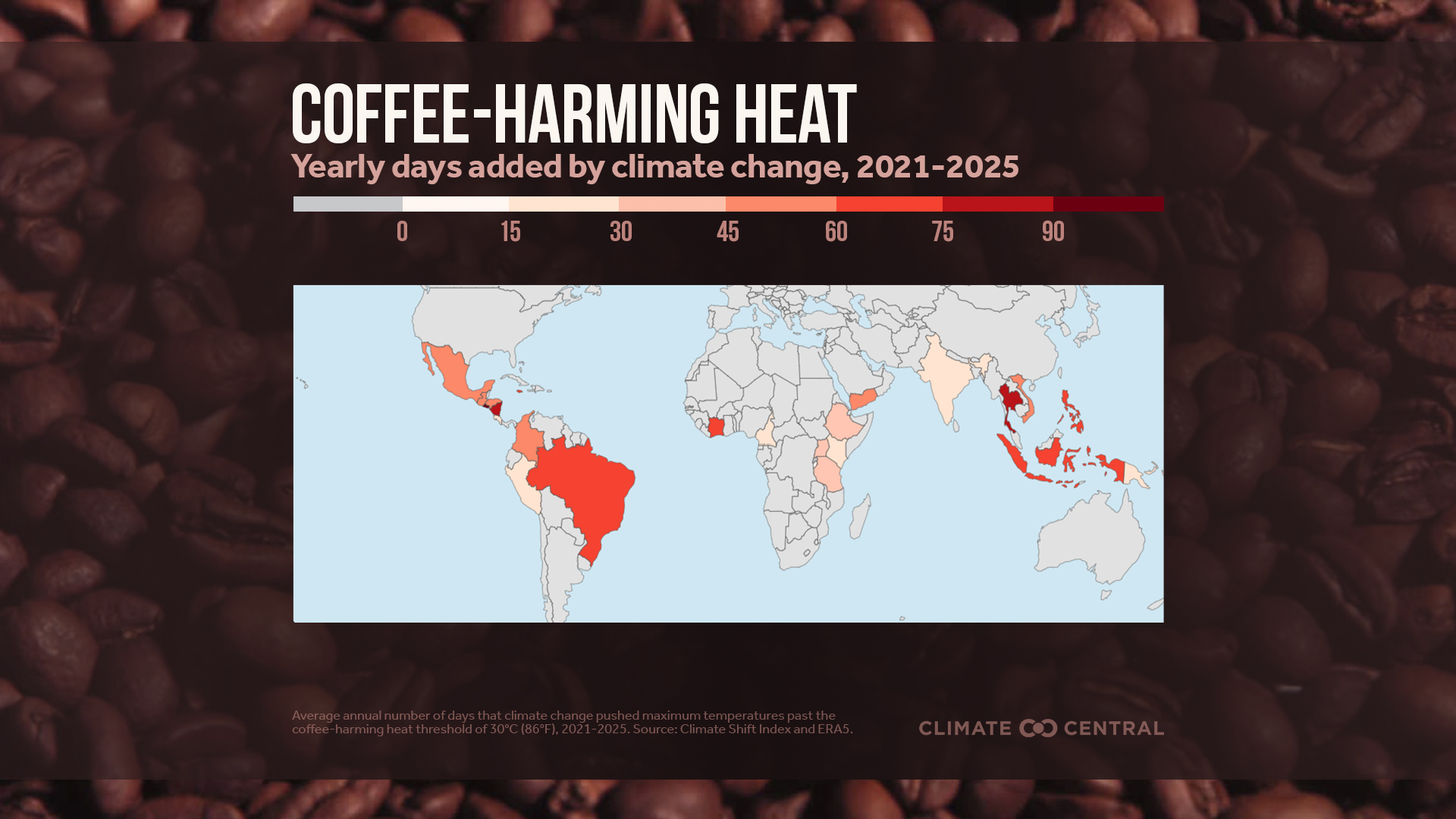
The global coffee industry is entering a critical phase as climate change intensifies across the tropical “coffee belt” between the Tropic of Cancer and the Tropic of Capricorn. A recent analysis by Climate Central found that the five largest coffee-producing countries — responsible for 75% of global supply — have experienced an average of 57 additional days per year above 30°C between 2021 and 2025 due to climate change.

Temperatures above this threshold are particularly harmful to coffee trees, especially Arabica, the premium variety that dominates specialty markets.

  • Ethiopia: Coffee’s Birthplace Under Growing Pressure

In Ethiopia — widely recognized as the birthplace of coffee — more than four million households depend on coffee as their primary source of income. The sector contributes nearly one-third of the country’s export earnings.

Officials from the Oromia Coffee Farmers Cooperatives Union report that rising heat is already affecting yields and increasing tree vulnerability to disease. Reduced shade cover and stronger direct sunlight are compounding the stress on farms.

  • El Salvador and Brazil Among the Hardest Hit

The analysis found that El Salvador recorded 99 additional days of coffee-damaging heat during the 2021–2025 period — the highest among major producers.

Meanwhile, Brazil — the world’s largest coffee producer, accounting for roughly 37% of global output — experienced 70 additional days above 30°C. Given Brazil’s dominant role in global supply, prolonged heat stress raises concerns about market stability and price volatility.

  • Why 30°C Is a Critical Threshold

Coffee trees require stable temperature ranges and balanced rainfall patterns. Arabica, in particular, begins to suffer productivity losses when temperatures consistently exceed 30°C. Prolonged heat can result in:

  1. Lower cherry production
  2. Reduced bean quality
  3. Increased pest and disease outbreaks
  4. Higher production costs

These factors directly affect both yield and cup quality, creating ripple effects throughout the supply chain.

  • Record Prices Reflect Climate Strain

Globally, approximately two billion cups of coffee are consumed daily. Any disruption in producing countries quickly impacts international markets.

According to the World Bank, prices for Arabica and Robusta nearly doubled between 2023 and 2025, reaching record highs in February 2025.

The surge reflects tightening supply conditions, climate-driven production challenges, and structural vulnerabilities within the coffee value chain.

  • Smallholder Farmers on the Front Line

Smallholder farmers produce between 60% and 80% of the world’s coffee. Yet climate adaptation funding reaching these producers remains limited, leaving many with constrained capacity to respond to rising temperatures.

Without stronger climate adaptation strategies — including shade management, climate-resilient varieties, and financial support — suitable growing areas may shrink or shift to higher elevations, increasing long-term production risks.

  • The Future of Coffee at a Crossroads

Coffee is more than a commodity; it is a cultural and economic pillar supporting millions of livelihoods worldwide. As heat extremes intensify across major producing regions, the industry faces structural transformation driven by climate realities.

The central question is no longer whether climate change affects coffee — but how quickly producers, governments, and markets can adapt to safeguard the future of one of the world’s most consumed beverages.


Robusta: A Climate-Resilient Future

Dubai – Qahwa World

As climate change and escalating environmental pressures create unprecedented challenges for global coffee production, the industry is facing a critical turning point that threatens the sustainability of the entire supply chain. In response, World Coffee Research (WCR) is spearheading a massive international effort to develop high-performing, climate-resilient varieties designed to thrive in an increasingly volatile environment. A major strategic shift occurred in late 2025 when WCR integrated Robusta breeding into its Innovea Global Coffee Breeding Network. This expansion recognizes that relying solely on Arabica is no longer a viable long-term strategy in the face of rapid global warming. As a committed member of WCR, Sucafina has expressed its pride in supporting this essential research, emphasizing that investing in variety development is the only definitive way to safeguard the future of coffee and secure the livelihoods of millions of farmers who form the backbone of the industry.

Coffee-growing conditions worldwide are undergoing forced evolution, requiring farmers at origin to adapt to weather patterns that no longer follow traditional predictability. Additionally, they must battle new strains of pests and diseases that thrive in rising temperatures. Strengthening the long-term resilience of the coffee supply has become a top priority, as high-performing varieties act as a vital shield, helping farmers mitigate climate stress while ensuring reliable, high-quality yields. However, the industry faces a significant temporal challenge: the process of developing, scientifically testing, and commercially releasing a new variety typically spans several decades—a timeframe the world cannot afford given the acceleration of climate change. Addressing these challenges requires practical, long-term collaboration, which is the core mission of WCR as an industry-driven research organization dedicated to identifying and developing the coffee varieties of tomorrow.

The launch of the Innovea program in 2022 marked a revolution in coffee breeding, designed to accelerate development by uniting national research institutes, governments, and the private sector across 11 countries in Latin America, Africa, and Asia. Operating under standardized trial protocols, the network coordinates breeding efforts on a global scale, testing candidates across diverse soils, climates, and disease pressures. By pooling massive datasets and cross-border expertise, promising varieties are identified far more rapidly than through traditional methods, while ensuring they are perfectly suited for local farming systems. This innovative approach received global acclaim when Innovea was named one of TIME’s Best Inventions of 2025, recognizing its power to provide tangible solutions to one of agriculture’s most complex challenges.

Vern Long, CEO of WCR, explains that the program’s structure allows for a step change in variety performance faster than ever before, shortening development timelines from 30 years down to just eight. As climate challenges intensify, a continuous global pipeline of improved varieties will provide farmers with the tools needed to reduce risk and stabilize their income. Historically, breeding efforts focused almost exclusively on Arabica, despite the rise of Robusta, which now accounts for approximately 40% of global production. This shift is driven by Robusta’s natural heat tolerance and market dynamics. Robusta possesses greater genetic diversity than Arabica, yet its breeding is more complex as it cannot self-pollinate, requiring sophisticated management of parent plants. By late 2025, Robusta was fully integrated into the Innovea network, bringing in major producers like Vietnam and Ghana alongside enhanced programs in India, Indonesia, Rwanda, and Uganda. Together, these nations represent 64% of global Robusta production. The ultimate goal is to move these varieties from the lab to the field, evaluating thousands of candidates to identify the best performers that will secure a stable and sustainable foundation for the future of coffee.

Climate Innovation Takes Center Stage at 7th African Coffee Scientific Conference

Addis Ababa – Qahwa World × Buna Kurs

Following yesterday’s high-level policy commitments, the focus of the Third African Coffee Week shifted today from the corridors of power to the laboratory and the field. Scientists, researchers, and agronomists gathered at the Skylight Hotel for the 7th African Coffee Scientific Conference, under the theme “Climate-Resilient Coffee: Innovation for a Sustainable Future”.

While Day One established the policy framework for the continent, Day Two provided the scientific “how-to,” focusing on breeding, pest management, and the institutionalization of African coffee research.

A New Era for Robusta: The Regional Breeding Network

A major highlight of the morning session was the formal launch of the Robusta breeding network, a collaborative initiative involving Ghana, Uganda, and Rwanda. Led by Robert Kawuki, the network aims to modernize breeding efforts for a variety that is increasingly seen as a cornerstone of climate adaptation due to its relative heat tolerance compared to Arabica.

The session, moderated by Dr. Geofrey Arinaitwe, also delved into the genetic foundations of Ethiopian coffee. Researchers Natol Bakala and Wakuma Merga presented findings on the genetic diversity of “Laage” coffee landraces, emphasizing that preserving Ethiopia’s unique genetic reservoir is critical for the global coffee industry’s survival.

Science-Driven Adaptation and Pest Management

As climate change shifts ecological zones, the conference addressed the alarming migration of pests and diseases. Kifle Belachew Bekele presented a critical study on why Coffee Leaf Rust (Hemileia vastatrix) has begun migrating to highland Arabica growing areas in Ethiopia—territories previously considered “safe” due to their altitude.

Other scientific breakthroughs discussed included:

  • Disease Resistance: Admikew Getaneh shared research on the phytochemical basis of resistance to Coffee Wilt Disease, while Monyo Grace presented new F1 hybrid genotypes resistant to Coffee Berry Disease.

  • Eco-Innovation: Mariamawit S. Kassa explored “Beyond the Brew,” highlighting the hidden potential of spent coffee grounds, while Mohammed Aman discussed using the Desmodium plant for sustainable production.

  • Pest Control: Innovative “locally made” traps for the Black Coffee Twig Borer in Northern Tanzania were showcased by Aden Mbuba as a low-cost, high-efficiency solution for smallholders.

Institutionalizing Knowledge: The African Coffee Research Center

The afternoon session marked a pivotal moment for the continent’s intellectual infrastructure. The Inter-African Coffee Organisation (IACO) and the African Coffee Research Network (ACRN) announced the establishment of the African Coffee Research Center. This center is designed to be the “brain” of the continent’s coffee sector, ensuring that the research presented today translates into scalable field solutions.

To wrap up the day’s proceedings, the Secretary General of IACO and the Chairperson of the ACRN officially launched the new coffee manual, a comprehensive guide intended to harmonize best practices across Africa’s diverse coffee-growing regions.

The conference concluded with closing remarks from the IACO Chairman, signaling a transition from scientific theory to a unified, continental implementation strategy.