Dutch Bros Over-Indexes on Coffee and Energy Boost Ritual

Source: Morning Consult / Bill Pink
Author: Editorial Team
Date: July 27, 2026

Dutch Bros Over-Indexes on Coffee and Energy Boost Ritual

  • Dutch Bros holds 2.0 mental market share against 2.2 market share, a near-perfect match.
  • The brand over-indexes on morning coffee (+9.3), energy boost (+9.1), and coffee to share with coworkers (+10.0).
  • Dutch Bros ranks fourth on raw coffee association at ~21%, behind Starbucks, Dunkin’, and McDonald’s.
  • Mental market share among 18-to-34 adults is 3.2, compared to just 1.2 among 65+.
  • The brand’s reach is the real constraint: 51.8% of category buyers bring Dutch Bros to mind.
  • Dutch Bros under-indexes on sit-down occasions like family breakfast (-7.1) and weekend brunch (-5.7).
  • Emotional connection stands at 2.8, offering room for deeper customer loyalty.

Dutch Bros has built a national brand identity. However, its actual footprint remains concentrated in the West and Sun Belt. At 2.0 mental market share, it is a fraction of Starbucks or Dunkin’ in raw scale. Yet on the occasions that define the category’s center, it punches well above its weight.

These occasions include morning coffee, the energy boost, and coffee shared with coworkers. The ceiling is not relevance; it is reach. With mental market share and converted share nearly identical, this is not a conversion problem. It is a distribution story — an emerging regional brand whose differentiation is genuinely strong.

The Category Entry Points Dutch Bros Wins

Dutch Bros’ Mental Advantage profile reads like a coffee-led brand several times its size. The relative signal is real, even where the absolute reach is not yet there. The brand over-indexes on the coffee and energy boost ritual.

Dutch Bros Mental Advantage on Key Occasions
Occasion Mental Advantage
Bringing coffee to share with coworkers +10.0
Picking up a coffee to start my day +9.3
Need to boost energy/focus before a demanding morning +9.1
Grabbing breakfast on the way to work −1.0
Meeting someone for coffee and conversation +2.0
Treating myself to something special to start the day +4.0

Given its size, Dutch Bros over-performs on these daily coffee occasions. These sit at the heart of the category. Dutch Bros leans into them more than its footprint would predict. Its identity is coherent and correctly pointed at the occasions that generate frequency.

The Reach Constraint: Fourth Place in Raw Association

Absolute reach on these same occasions is a distant fourth. On each of these coffee occasions, Dutch Bros ranks fourth on raw association at roughly 21 percent. This is well behind Starbucks (around 40 to 48 percent), Dunkin’, and McDonald’s.

The relative strength is genuine, and it is important not to overread it. Dutch Bros over-indexes because it is small and focused. It is not challenging the leaders for these occasions today. The lean is a foundation to grow from rather than a position of strength to defend. Scale context matters here too. The three chains ahead of it operate many times Dutch Bros’ store count. The national sample includes large regions where the brand has no locations at all.

The Right Absences to Have

Dutch Bros is absent from the sit-down occasions, which is the right absence to have. The brand under-indexes on family breakfast with a Mental Advantage of −7.1. It also under-indexes on weekend brunch at −5.7. For a drive-thru coffee brand, these are the correct occasions to cede. The absences are consistent with a focused coffee proposition rather than a sign of missing breadth.

Mind and Market Are Already Matched

Dutch Bros holds 2.0 mental market share against 2.2 market share. The gap of negative 0.2 is essentially even. Unlike brands whose share runs ahead of or behind their mental availability, Dutch Bros converts the mental availability it has almost exactly. There is no conversion inefficiency to fix and no share running ahead of memory to defend. What limits the brand is the raw size of its mental footprint.

Dutch Bros: Mental vs Market Share
Metric Value
Mental Market Share 2.0
Market Share 2.2
Gap −0.2 (essentially even)
Category Buyers who think of Dutch Bros 51.8%
Network Size 6.5
Emotional Connection 2.8

Penetration is the ceiling. Dutch Bros is brought to mind by 51.8 percent of category buyers. This is far below the coffee leaders. Its associative Network Size is 6.5, narrower than the national chains. The brand’s problem is not what people think of it. It is that too few people think of it at all. Every occasion it over-indexes on is capped by this reach ceiling.

A Distinctly Younger Base

Dutch Bros’ mental market share is 3.2 among 18-to-34 adults. This compares to just 1.2 among the 65-plus group. This is the sharpest young skew of any brand in its size class. Its strength is generational, concentrated in the audience forming its coffee habits now and most open to a newer brand. This is the most valuable possible profile for a small brand with room to grow.

Dutch Bros Mental Market Share by Age Group
Age Group Mental Market Share
18-34 3.2
35-64 ~2.0
65+ 1.2

What to Do About It

Dutch Bros has the rare combination of a focused, correctly-aimed identity and a young base. It is held back almost entirely by how few people it reaches. The strategy is expansion of mental availability on the occasions the brand already fits, without repositioning.

Grow penetration on the coffee occasions it already over-indexes on. The morning coffee, the energy boost, and coffee for coworkers are where Dutch Bros’ Mental Advantage is strongest. Building raw awareness on exactly these occasions, instead of diversifying into new ones, compounds an existing strength and moves the brand up from its fourth-place absolute standing.

Lead with the young base. The 3.2 mental market share among 18-to-34 adults is the brand’s most valuable asset. Concentrating reach-building where the brand already skews is more efficient than competing head-on with the national chains for older or broader audiences.

Continue to deepen emotional connection as reach grows. With emotional connection at 2.8, Dutch Bros should pair awareness growth with reasons to feel loyalty that go beyond recognition. For a brand this size, converting new awareness into genuine attachment on the coffee ritual is what will eventually let its mental market share climb past the specialist tier.

About the Research

Morning Consult conducts over 30,000 daily proprietary surveys in 45 countries. The research covers more than 5,000 brands and 50 economic indicators. The category advantage research measures both mental availability and emotional closeness. It uncovers Category Entry Points and pinpoints growth opportunities.
Frequently Asked Questions

What is Dutch Bros’ mental market share?Dutch Bros holds 2.0 mental market share, compared to 2.2 market share, making the gap essentially even.

On which occasions does Dutch Bros over-index?Dutch Bros over-indexes on morning coffee (+9.3), energy boost (+9.1), and coffee to share with coworkers (+10.0).

Why is Dutch Bros ranked fourth in raw association?At roughly 21% association, Dutch Bros ranks fourth behind Starbucks (~40-48%), Dunkin’, and McDonald’s due to its smaller footprint.

What is the brand’s reach limitation?Only 51.8% of category buyers bring Dutch Bros to mind, limiting its growth potential across all occasions.

How does Dutch Bros perform among younger consumers?Mental market share among 18-to-34 adults is 3.2, compared to just 1.2 among 65+, showing a strong generational skew.

What is the strategic recommendation for Dutch Bros?Expand mental availability on existing coffee occasions, lead with the young base, and deepen emotional connection as reach grows.

Harar: Where Coffee, Faith and Footsteps Meet

Harar blends centuries of coffee heritage, Islamic history and warm hospitality. The inaugural Great Harar Run offers visitors a new way to discover one of Ethiopia’s most remarkable cities.

By Tewodros Balcha | Exclusive for Qahwa World

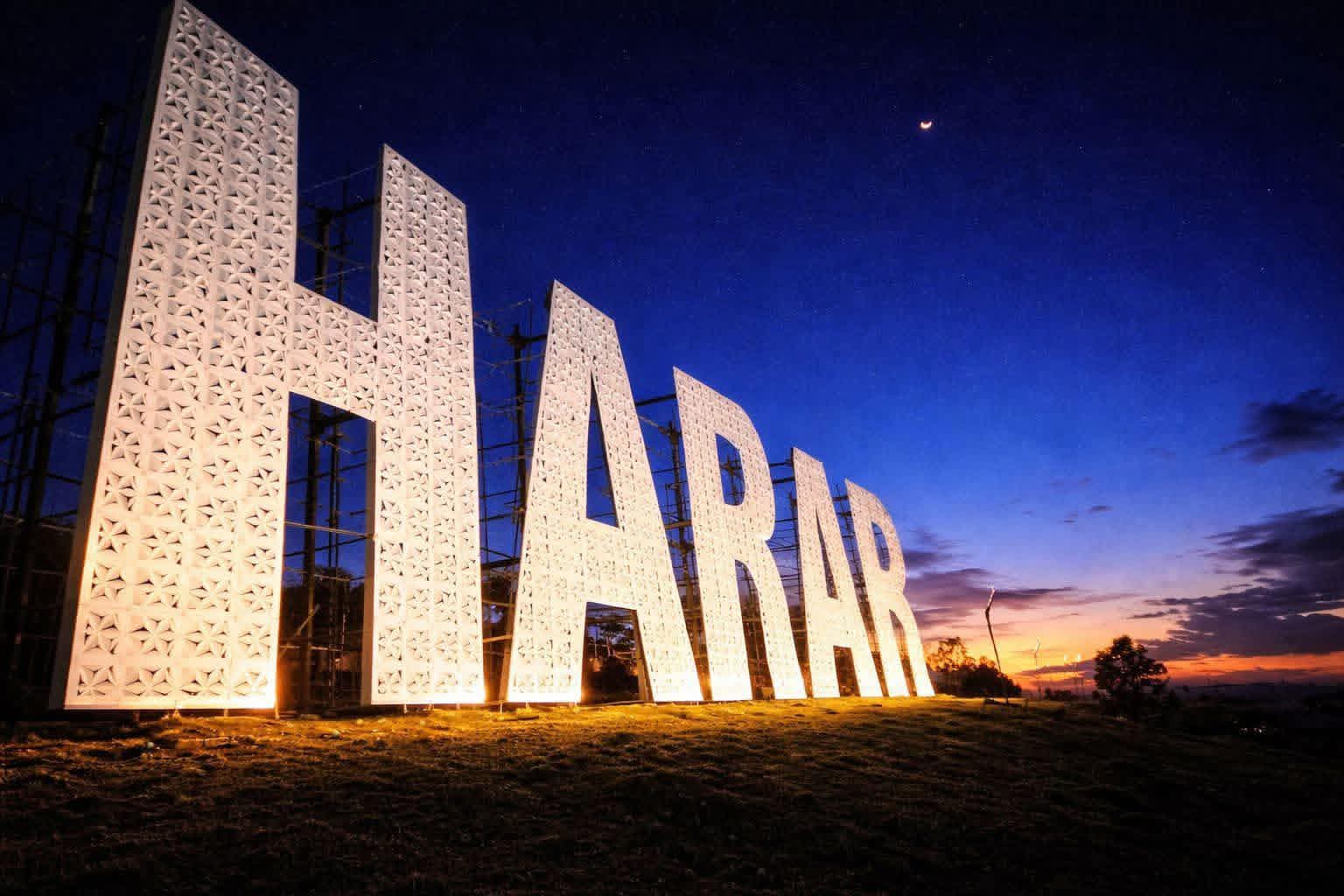
Thousands of runners passed through the ancient gates of Harar today, transforming one of Africa’s oldest living cities into the newest stage of Ethiopia’s celebrated running culture.

The inaugural Ethio Telecom Great Harar Run was more than a sporting event. It was an invitation to experience a city where coffee, faith and hospitality have shaped everyday life for centuries.

Long before the starter’s whistle echoed through the narrow streets of Harar Jugol, generations of traders, scholars and pilgrims had followed these same paths. Today, athletes from Ethiopia and abroad joined that long procession, discovering a city whose history is inseparable from the story of coffee itself.

A City Built on Faith and Exchange

Perched in the eastern highlands of Ethiopia, Harar has been a crossroads between Africa and the Arabian Peninsula for centuries. According to local tradition, the city traces its origins to the 10th century and the arrival of Sheikh Abadir Umar ar-Rida, whose legacy remains deeply woven into Harar’s religious identity.

Known as Madinat al-Awliya, or the City of Saints, Harar is home to an extraordinary concentration of historic mosques, shrines and Islamic schools within its centuries-old walls. In 2006, Harar Jugol was inscribed as a UNESCO World Heritage Site, recognized for its unique urban heritage and cultural significance.

For generations, merchants crossed these gates carrying coffee, spices, textiles and ideas, linking Ethiopia with the Red Sea, Arabia and beyond.

Where Coffee Became a Tradition

Coffee’s wild origins lie in Ethiopia’s forests, but Harar played a defining role in transforming coffee from a native plant into one of the world’s earliest traded agricultural products.

For centuries, the region became one of Ethiopia’s most important coffee-growing and trading centers. Caravans carried Harar’s beans across ancient trade routes to the ports of the Red Sea, where Arab merchants introduced Ethiopian coffee to markets throughout the Middle East before it eventually reached Europe.

Today, Harar remains one of Ethiopia’s most celebrated coffee origins. Its naturally processed coffees are prized for their distinctive character, often revealing notes of blueberry, dried fruit, spice, chocolate and floral aromas. Long before the term “specialty coffee” existed, generations of farmers in Harar had already developed traditions of careful cultivation, harvesting and natural drying that continue to define the region’s reputation.

More Than a Cup

In Harar, coffee is not simply served.

It is prepared.

Guests are welcomed with freshly roasted beans, their aroma filling the room before the coffee is carefully brewed and shared. The ceremony unfolds without haste, turning every cup into an expression of hospitality rather than a simple refreshment.

Visitors from across the Arab world often find something familiar in this ritual. While traditions differ from one region to another, the values are instantly recognizable: generosity, conversation and the belief that welcoming a guest begins with coffee.

A Living Heritage

Walking through Harar Jugol is unlike visiting an open-air museum.

Its narrow alleyways remain full of daily life. Children play beneath centuries-old walls. Markets continue to trade much as they have for generations. Historic houses, colorful courtyards and neighborhood mosques remain part of a living city rather than preserved exhibits.

Arabic manuscripts copied by generations of scholars helped establish Harar as an important center of Islamic learning in the Horn of Africa. The city’s traditions continue to be passed from one generation to the next, making Harar a place where history is experienced rather than observed.

Running Through History

The Ethio Telecom Great Harar Run added a new chapter to that living history.

As the final stop of this year’s Discover Ethiopia Classics series, the event attracted thousands of participants, including elite athletes, local residents and visitors from nine countries.

Organized by the internationally respected Great Ethiopian Run, the event brought one of Africa’s leading road-racing organizations to one of Ethiopia’s oldest cities. Known globally for staging the annual Great Ethiopian Run in Addis Ababa, the organization has helped establish Ethiopia as one of the world’s premier destinations for distance running.

Yet in Harar, the route itself became part of the experience.

Runners passed through the ancient gates of Jugol, wound through historic neighborhoods and emerged into streets where coffee ceremonies welcomed visitors at every turn. As evening approached, the city’s famous hyena feeders prepared for another night of a tradition that has fascinated visitors for generations.

In Harar, even a road race becomes an encounter with history.

More Than a Destination

Every generation believes it has discovered authentic travel.

Harar has never needed to reinvent itself.

Visitors who arrive a day before the race can wander through the old city at their own pace, explore nearby coffee farms, watch naturally processed coffee drying beneath the Ethiopian sun and experience ceremonies that remain central to everyday life.

The race offers a reason to come.

The city offers every reason to stay.

Some places are remembered for their monuments.

Harar is remembered for its people, its coffee and the quiet generosity with which it welcomes every visitor.

Some cities you visit.

Harar is one you carry with you.

Turkish Coffee & Arabic Coffee..Two Cups, One Soul

Source: Qahwa World |
Author: Serkan Oral |
Date: June 23, 2026

Turkish Coffee & Arabic Coffee — Two Cups, One Soul

From the Article:

  • Turkish and Arabic coffee share a common historical root, stretching from the highlands of Ethiopia through Yemen to the Islamic world.
  • Both are prepared without filtering, served in small cups, and invite slowness and enjoyment of the moment.
  • Hospitality and generosity are the essence of what unites both cultures, where refusing a cup of coffee is considered a social breach.
  • The etiquette of refusal mirrors each other: gently shaking the empty cup in Arab tradition, and turning it upside down on the saucer in Turkish tradition.
  • In both traditions, coffee is not just a drink, but a social ritual that carries the memory of every conversation worth having.
  • The Turkish coffee cup also carries tales of the future after it is drunk and turned over.

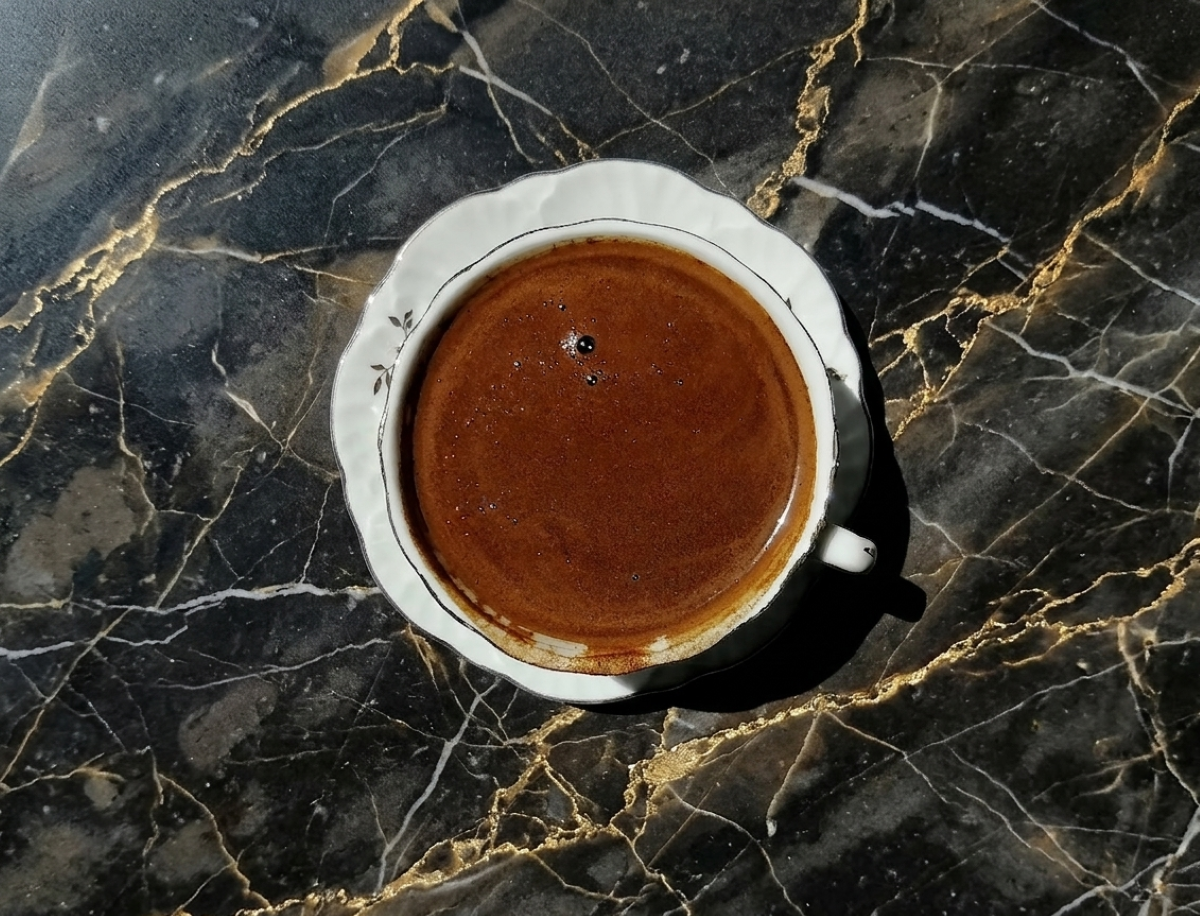
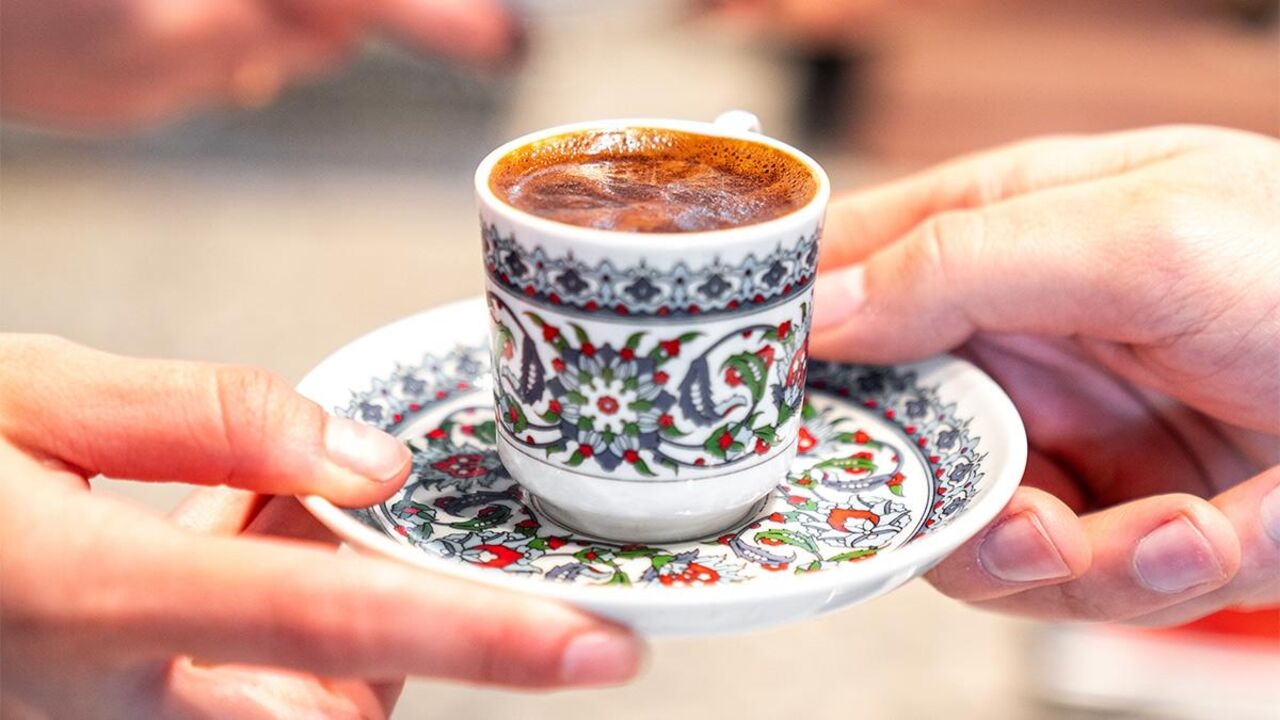
They arrive unannounced, the way hospitality always does in this part of the world. A small cup, thick and dark, placed before you without being asked. Whether you are sitting in a coffeehouse in Istanbul or a majlis in Dubai or Riyadh, the gesture is the same: I see you, you are welcome here, stay a while. Turkish coffee and Arabic coffee come from different hands and different traditions, but they share a deeper kinship than most people realize.

I feel the similarities at specialty coffee houses in Dubai or Jeddah, enjoying warm conversations with friends. Two cups from two cultures, but one soul.

One Root, One Shared Story

Both trace their roots to the same origin story. Coffee was born in the highlands of Ethiopia, traveled through Yemen, and spread across the Arab world before reaching the Ottoman Empire in the sixteenth century. Istanbul and the Arab capitals fell in love with it almost simultaneously, and each civilization made the drink its own. What emerged were two distinct rituals that nevertheless rhyme with each other in remarkable ways.

Preparation and Ritual – Mirror Images

The most obvious similarity is the method. Both are prepared without filters, brewed slowly and deliberately, served in small portions. Neither is meant to be rushed. The grounds in Turkish coffee settle at the bottom of the cup; the spices in Arabic coffee — cardamom, sometimes saffron or cloves — drift and steep. In both traditions, the coffee itself is almost secondary to what surrounds it: the conversation, the silence, the act of sitting together.

Hospitality: Where the Two Worlds Converge

Hospitality is where the two cultures converge most powerfully. Refusing a cup of Turkish coffee is a mild social offense. Refusing Arabic coffee is much the same. Both are offered at moments of significance: welcoming a guest, marking a celebration, sealing an agreement, mourning a loss. The cup is never just a cup. It is a small ceremony, a way of saying that the person across from you deserves your time and your attention.

The Etiquette of Refusal – Silent Signals, One Meaning

Even the rules of refusal mirror each other. In Gulf Arab tradition, you wiggle the empty cup slightly to signal you have had enough. In Turkish tradition, leaving your cup turned upside down on the saucer sends a similar message. Different gestures, identical meaning: a quiet, polite negotiation between guest and host conducted entirely without words.

What Unites Is Greater Than What Divides

What separates them — the roast, the spices, the presence or absence of sugar — matters less than what unites them. Both are instruments of slowness in a world that rewards speed. Both insist that some things should not be automated, bottled, or consumed on the go. And both carry, in every small cup, the memory of every conversation that was ever worth having.

A Cup That Carries Future Tales

And for Turkish coffee lovers, that small cup also gives you tales of the future after it is drunk and turned over. Fortune-telling from the cup is not mere entertainment; it is a continuation of the ritual itself: sitting together, reflecting, and speaking of the unknown in the language of generosity and curiosity.

Frequently Asked Questions About Turkish and Arabic Coffee

Q: Are Turkish and Arabic coffee from the same origin?

A: Yes, both trace back to the same historical source: the highlands of Ethiopia and Yemen, before branching into different traditions in the Arab world and the Ottoman Empire.

Q: What are the most important similarities between them?

A: The method of preparation without filtering, serving in small cups, and the focus on the social ritual and hospitality rather than the drink itself.

Q: How does the etiquette of refusal differ between the two cultures?

A: In Arab tradition, you gently shake the empty cup; in Turkish tradition, you turn the cup upside down. But the meaning is the same: a polite signal that you have had enough.

Q: Why is coffee considered part of hospitality in both cultures?

A: Because serving coffee is a social ritual that expresses welcome and respect, whether in Arab gatherings or Turkish coffeehouses.

Q: What is the significance of fortune-telling from the cup in Turkish culture?

A: It is an extension of the coffee ritual itself, where people gather to reflect and talk after the drink, in an atmosphere of familiarity and generosity.

Turkish coffee and Arabic coffee are not just two different drinks. They are two faces of the same coin: a culture of hospitality, slowness, and celebration of the moment. In a fast-paced world, these two cups remind us that some traditions are worth preserving, and that good conversation and good company deserve a cup to be sipped slowly, and a heart to be filled with stories.

By: Serkan Oral – Qahwa World.

All rights reserved. Republication with attribution permitted.

Publication date: June 23, 2026

Turkish Coffee Culture: From Kahvehane to Specialty Bars

Author: Qahwa World
Source: Original reporting on Turkish coffee culture
Date: May 30, 2026

Turkish Coffee Culture: From Kahvehane to Specialty Bars

Executive Summary:

  • Turkish coffee culture is one of the world’s oldest. UNESCO recognizes it for its brewing rituals and social traditions.
  • Key features include very fine grind, brewing in a cezve, and serving with water and a sweet treat.
  • Turkish and Lebanese coffee are similar but different. Lebanese coffee often contains cardamom.
  • Specialty coffee arrived in Turkey in the early 2010s. Kronotrop was a pioneer in Istanbul.
  • At first, consumers disliked lighter roasts. They found them too sour compared to traditional coffee.
  • By 2015, a coffee renaissance took hold. Today, specialty coffee coexists with traditional kahvehane.
  • Turkey’s coffee story now blends heritage with innovation. The cezve and V60 share the same tables.

Coffee is more than just a drink. In many countries, it has become a ritual. It is a language of social interaction. It also expresses national identity. Some people drink coffee slowly during long conversations. Others grab it on the go in paper cups. Some build entire philosophies around its preparation. Turkey is often the first country that comes to mind for old coffee traditions. However, modern coffee trends have reached Turkey as well. This article looks at the history of Turkish coffee culture. It also examines how specialty coffee is changing it.

A Tradition Rooted in the Ottoman Empire

Turkish coffee culture is among the oldest in the world. Historians agree that coffee arrived in the Ottoman Empire during the sixteenth century. It came from Yemen. During the reign of Sultan Suleiman the Magnificent, coffee became part of court life. By the mid-1550s, the first coffeehouses opened in Istanbul. They were called kahvehane, which means houses of coffee. These places quickly became more than just coffee shops. Men gathered there to play backgammon. They listened to poetry and music. They also discussed current events. Through the Ottoman Empire, coffee spread to Europe in the seventeenth century. It reached Venice, Paris, London, and Vienna. From there, it continued its journey across the world.

Forty Years in One Cup

UNESCO recognizes Turkish coffee culture on its Intangible Cultural Heritage list. The recognition includes the rituals of preparation and service. The defining feature of Turkish coffee is its very fine grind. The coffee is ground almost into powder. It is brewed in a cezve, which many know as a Turkish coffee pot. The coffee is not filtered. Therefore, the grounds remain in the cup. This produces a dense, rich, and full-bodied drink.

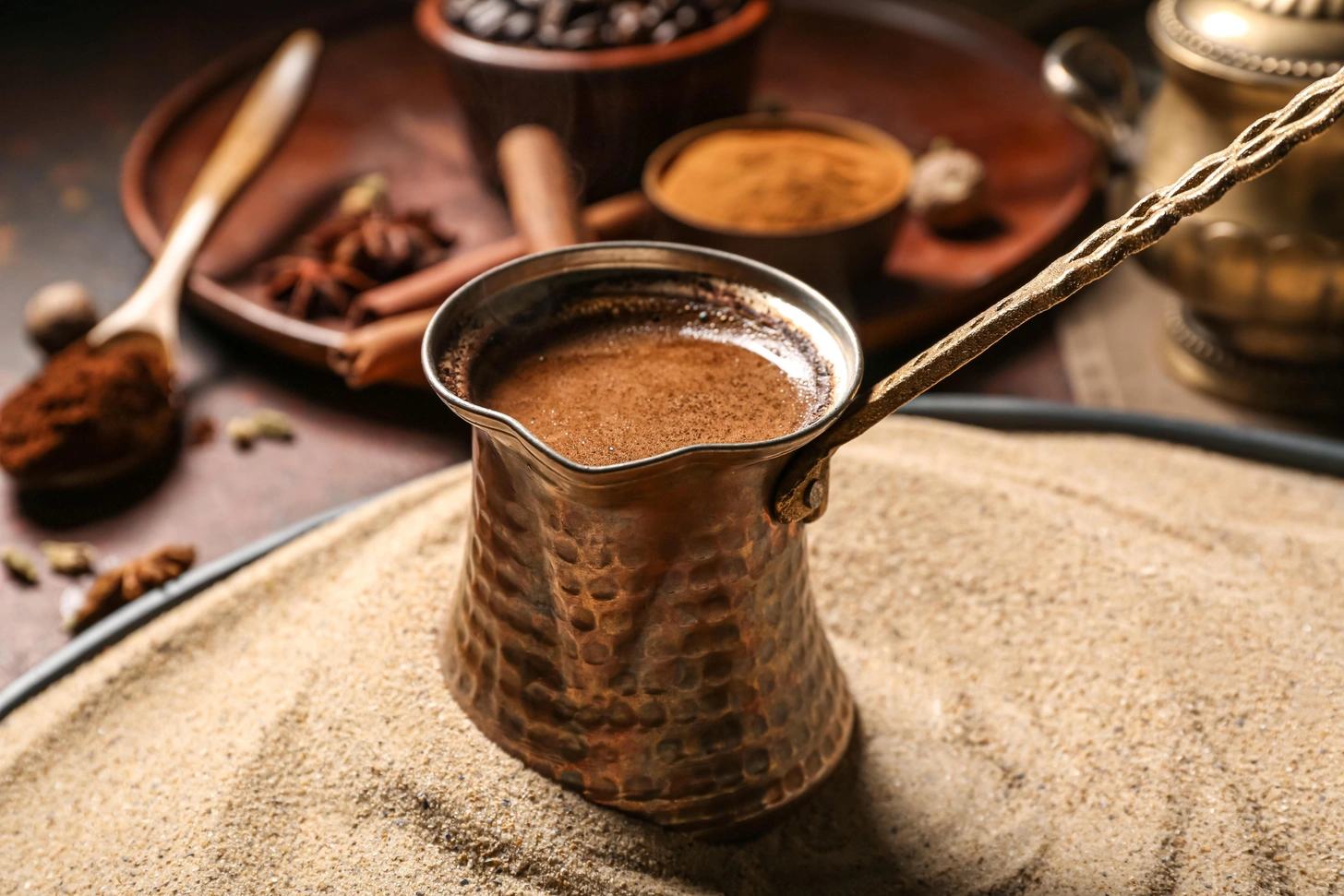
Turkish coffee is never made in haste. It heats slowly over low heat. Another traditional method uses hot sand. This allows the cezve to heat evenly from all sides. As a result, the extraction is smoother. The flavor profile becomes distinctive. Foam is considered essential. In Turkey, a thick foam layer shows the brewer’s skill. Serving coffee is also part of the ritual. A glass of water and a sweet treat usually accompany the coffee. The sweet treat is often Turkish delight or baklava. The water cleanses the palate before the first sip. The sweetness complements the coffee’s bitterness.

People order Turkish coffee according to sweetness levels. Sade means no sugar. Orta means medium sweetness. Şekerli means sweet. Another tradition is fortune-telling from coffee grounds. After finishing the coffee, the cup is turned upside down onto a saucer. Once the grounds settle, patterns on the cup’s walls are interpreted as symbols. For many Turkish families, this remains a popular social activity. A famous Turkish proverb says: “The memory of a cup of coffee lasts forty years.” In Turkish, it is “Bir kahvenin kırk yıl hatırı vardır.” This emphasizes that sharing coffee creates lasting bonds of friendship and respect.

Turkish Coffee and Its Lebanese Cousin

At first glance, Turkish and Lebanese coffee look almost identical. Both are brewed in a cezve. Neither is filtered. Both belong to the broader Middle Eastern coffee tradition. However, notable differences exist. Turkish coffee is generally denser. Its flavor is more straightforward. Traditional recipes rarely include spices. This allows the coffee’s own characteristics to take center stage. Lebanese coffee, in contrast, is often more aromatic. Cardamom is frequently added, sometimes generously. This creates a warm, spicy aroma with subtle citrus notes.

The cultural context also differs. In Turkey, coffee is closely linked to extended conversations, family gatherings, and coffeehouse culture. In Lebanon, coffee often serves as a symbol of hospitality. It is offered to guests as a matter of etiquette. Despite these differences, coffee represents far more than caffeine in both countries. It remains a slow, thoughtful ritual embedded in everyday life.

The Rise of Specialty Coffee

The twentieth century made coffee widely available. The twenty-first century has, in some ways, made it more exclusive again. This is due to the rise of specialty coffee. The term “specialty coffee” emerged in the 1970s. However, it became a global phenomenon only in recent decades. The Third Wave Coffee movement transformed how people view coffee quality and origin. Specialty coffee emphasizes transparency. Consumers are encouraged to know not only the variety and country of origin. They also learn about the specific region, farm, and altitude. Like wine, coffee is now appreciated for its terroir and flavor complexity.

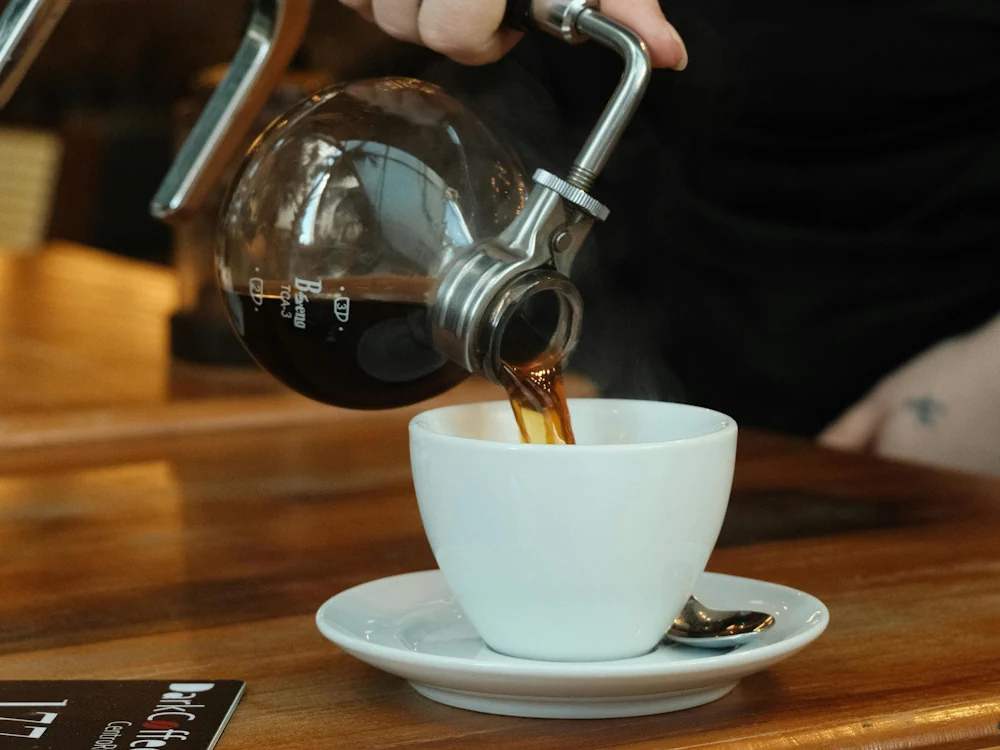
Instead of bitterness alone, drinkers now seek fruity, floral, and tea-like characteristics. An Ethiopian coffee may exhibit jasmine-like notes. A Kenyan coffee may suggest red currant or pomegranate. The specialty movement has also popularized alternative brewing methods. These include V60, AeroPress, Chemex, siphon brewing, and various pour-over techniques. Baristas are seen as skilled professionals. Coffee shops have become destinations for culinary experiences.

Turkey’s Third Wave Coffee Revolution

Turkey has deep-rooted coffee traditions. Therefore, it might seem unlikely for specialty coffee to flourish there. Nevertheless, the Third Wave movement has established a significant presence over the past fifteen years. The first specialty cafés appeared in Istanbul in the early 2010s. Among the pioneers was Kronotrop Coffee Bar, founded in 2012. It introduced many Turkish consumers to alternative brewing methods and modern coffee culture.

Initially, reactions were mixed. Turkish tastes had been shaped by dark, strong coffee for centuries. Lightly roasted beans with bright acidity seemed unfamiliar. Many customers described such coffees as “too sour.” They simply differed from traditional expectations. However, by the middle of the decade, Istanbul was experiencing a genuine coffee renaissance. Independent roasters emerged. Baristas began training according to international standards. Coffee shops evolved into modern social spaces with minimalist design and open brewing stations.

Today, specialty coffee is part of everyday urban life in cities such as Istanbul, Ankara, and Izmir. Modern cafés offer pour-overs, filter coffee, cold brew, and sophisticated espresso blends. They serve these alongside traditional Turkish coffee. Outside the largest cities, specialty coffee remains relatively niche. In tourist destinations such as Antalya, specialty cafés are becoming more common. However, traditional Turkish coffee culture continues to dominate. Even so, new coffee trends are steadily taking root. This creates a unique coexistence between centuries-old traditions and contemporary specialty coffee culture.

Turkey’s coffee story is no longer defined solely by the cezve and the kahvehane. Instead, it reflects an ongoing dialogue between heritage and innovation. Traditional Turkish coffee and modern specialty coffee increasingly share the same table.

Frequently Asked Questions (FAQ)

1. What makes Turkish coffee unique?

Very fine grind, brewing in a cezve, no filtration, slow heating, essential foam, and serving with water and sweets.

2. What is a kahvehane?

A traditional Turkish coffeehouse from the 16th century. It was a social gathering place for men to play games, listen to music, and discuss news.

3. Is Turkish coffee the same as Lebanese coffee?

No. Turkish coffee is denser and without spices. Lebanese coffee often includes cardamom and uses lighter roasts.

4. When did specialty coffee arrive in Turkey?

Early 2010s. Kronotrop Coffee Bar (founded 2012) was a pioneer of the third wave movement in Turkey.

5. How did Turkish consumers react to specialty coffee at first?

Reactions were mixed. Many found lighter roasts too sour compared to traditional dark Turkish coffee.

6. Where can you find specialty coffee in Turkey today?

Major cities like Istanbul, Ankara, and Izmir. Traditional kahvehane culture still dominates in rural areas.

Qahwa World – Original reporting on Turkish coffee culture.
Published: May 30, 2026

Carolina Gutierrez: In Specialty Coffee, Hospitality Matters More Than Complexity

Author: Carolina Gutierrez
Source: LinkedIn
Date: May 20, 2026

Executive Summary:

  • The best coffee experiences are built on hospitality, connection, simplicity, and humility, not on ego.
  • Consumers rarely build loyalty to a brand simply because they were educated. They return because of how the experience made them feel.
  • People remember experiences far more emotionally than they remember technical details, according to consumer behavior research.
  • Most consumers seek comfort, trust, familiarity, and connection, not complexity.
  • The most successful industries evolved by becoming more accessible, not more intimidating. Wine and craft beer are examples.
  • Specialty coffee sometimes confuses passion with correction, making people feel unwelcome for not knowing enough.
  • The future of specialty coffee belongs to brands that make people feel included first and educated second.

Carolina Gutierrez, a specialty coffee leader focused on coffee quality and education across the Middle East and Africa, recently shared a reflective post on LinkedIn about the state of specialty coffee culture. Her message centered on a simple but often overlooked truth: the best coffee experiences are not built on ego. They are built on hospitality, connection, simplicity, and humility.

Gutierrez observed that while the specialty coffee industry says it wants more people to appreciate high quality coffee, it sometimes makes people feel unwelcome for not knowing enough. She argued that this matters more than many professionals realize. Consumers rarely build loyalty to a brand simply because they were educated. They return because of how the experience made them feel.

The Gap Between Expertise and Accessibility

Gutierrez pointed out that consumer behavior research has shown for years that people remember experiences far more emotionally than they remember technical details. Yet in coffee, professionals sometimes overcomplicate the experience in an attempt to communicate expertise. Processing methods, extraction theory, total dissolved solids, and flavor notes all matter. But most consumers are not searching for complexity. They are searching for comfort, trust, familiarity, and connection.

She emphasized that this is not a weakness in consumer behavior. It is simply human behavior. The most successful industries evolved when they became more accessible, not more intimidating. Wine evolved. Craft beer evolved. The strongest hospitality brands learned how to simplify experiences instead of overcomplicating them. Even companies like Apple built global loyalty by making complex things feel intuitive. Gutierrez believes coffee should learn from that example.

Passion Versus Correction

Gutierrez offered a critical observation about specialty coffee culture. She wrote that specialty coffee sometimes confuses passion with correction. A consumer enjoying sugar, flavored drinks, dark roast, or commercial coffee does not mean they have bad taste. It simply means that is where they are in their journey. People should not feel pressured to understand coffee before they feel welcome in it.

She concluded that complexity may impress professionals, but simplicity is what grows industries. The future of specialty coffee, in her view, will belong to the brands and professionals who make people feel included first and educated second.

Frequently Asked Questions (FAQ)

1. What is the main argument of Carolina Gutierrez’s post?

She argues that specialty coffee should prioritize hospitality, connection, simplicity, and humility over ego and technical expertise to make consumers feel welcome.

2. Why do consumers return to a coffee brand according to Gutierrez?

Consumers return because of how the experience made them feel, not simply because they were educated about coffee.

3. What does consumer behavior research say about memory and emotion?

Research shows that people remember experiences far more emotionally than they remember technical details.

4. What mistake does specialty coffee sometimes make?

Specialty coffee sometimes confuses passion with correction, making people feel unwelcome for not knowing enough about coffee.

5. What industries have successfully evolved by becoming more accessible?

Wine, craft beer, and strong hospitality brands have evolved by simplifying experiences instead of overcomplicating them. Apple also made complex technology feel intuitive.

6. What does Gutierrez believe is the future of specialty coffee?

The future belongs to brands and professionals who make people feel included first and educated second.

Carolina Gutierrez – Specialty Coffee Leader | Coffee Quality & Education Leadership | Driving Growth & Innovation across the Middle East & Africa.
Published on Qahwa World: May 20, 2026

Iran’s café culture buckles as everyday life contracts

Source: Iran International
Author: Maryam Sinaiee
Date: May 16, 2026, 08:37 GMT+1The Iran café crisis economic collapse has been making headlines in recent months.

Executive Summary

  • Café operating costs in Tehran have more than doubled, while customer numbers have fallen by up to 50 percent in recent months.
  • The head of Tehran’s coffee shop union says up to 40 percent of cafés have shut down.
  • Tehran alone had around 6,000 cafés before the crisis, but many can no longer survive.
  • Coffee bean prices in Iran have nearly doubled compared to pre-war levels, while a cup of coffee costs up to four times more in some cafés.
  • Many young people and women have lost their jobs due to closures and downsizing, with hiring frozen even at surviving cafés.
  • Advertising companies have stopped buying coffee for office kitchens for the first time in 20 years, as work freezes and projects get canceled.

Rising costs and widespread café closures

Iran’s deepening economic crisis is pushing cafés and coffee culture toward collapse. Soaring prices and falling incomes force both businesses and customers to cut back. Mohsen Mobarra, head of the union overseeing coffee shops in Tehran, told economic daily Donya-e-Eqtesad that café operating costs have more than doubled. Meanwhile, customer numbers have dropped by as much as 50 percent in recent months, with up to 40 percent of cafés shutting down.

Mobarra explained that continuing operations does not mean profitability. The profits of these businesses are steadily shrinking. As a result, cafés that rent their locations or lack strong financial backing are heading toward closure.

From social spaces to memories

Over the past two decades, cafés became an important part of urban life in Iran. They took root in Tehran before spreading across the country. With affordable entertainment options limited, they emerged as some of the few accessible spaces where young Iranians could socialize, work and spend time outside the home.

Many cafés evolved into more than places to drink coffee or eat light meals. They hosted poetry nights, small music performances, photography exhibitions and informal gatherings. They became rare spaces for social interaction at a time when few other public spaces remained accessible. Until a few months ago, Tehran alone had around 6,000 cafés of different sizes in operation. But the collapse in consumers’ purchasing power has hit the industry hard.

Real stories: Young workers losing hope

Sanaz, a 28-year-old receptionist at a private company, said she and her friends used to visit cafés several times a week. But now, with sharp increases in the costs of food, transportation and housing, even such small pleasures require careful calculation. She added: “I have to calculate every expense, even this simple form of entertainment, just to make it to the end of the month — assuming I don’t lose my job. If I lose my job, after years of financial independence, I’ll have to move back to my parents’ home in my hometown.”

The closures and downsizing have also eliminated jobs for many workers, most of them young people and women. Shana, 26, completed professional barista training before finding work at one of the branches of the well-known Saedi Nia café chain. In January, the chain’s branches were abruptly shut down after the owner voiced support for opposition protesters. Shortly afterward, war broke out. She says: “Even cafés that have survived the economic downturn are not hiring new staff anymore. Many are actually laying off existing employees. I have no hope that even by learning new skills like cooking or other work, I’ll be able to find a job. The economy keeps getting worse every day, and the job market is shrinking.”

Indicator Previous Level Current Level Change
Operating cafés in Tehran About 6,000 40% drop ~2,400 closed
Café operating costs Baseline More than double Increase >100%
Customer numbers Normal level Up to 50% drop Sharp decline
Coffee bean price Pre-war level Nearly double Increase ~100%
Price per coffee cup Regular price Up to 4 times higher Increase up to 300%

Coffee itself becomes a luxury

Tea remains Iran’s dominant traditional drink, but coffee consumption expanded rapidly in recent years. Now, however, the sharp rise in foreign currency prices and disruptions to imports have pushed coffee prices so high that many households are cutting consumption or abandoning it altogether. Although global coffee prices have declined, the cost of coffee beans in Iran — largely imported through the United Arab Emirates before the war — has nearly doubled compared to pre-war levels.

The increase has directly affected café prices. With rents and other expenses also rising, the price of a cup of coffee in some cafés has climbed by as much as four times. One café owner told Donya-e-Eqtesad that even cafés specializing in basic coffee drinks are seeing falling demand because many people can no longer justify going out even for coffee.

Impact on other sectors: Offices and companies

Tara, the manager of an advertising company with ten employees, said coffee has become so expensive that even buying it for office use is increasingly difficult. She adds: “For the first time in the past twenty years, I’ve had to stop buying coffee for the office kitchen, where it was always available for employees alongside tea. It’s not just about coffee prices. Since last summer’s war, work has effectively been frozen. Clients have even canceled half-finished projects, and everyone knows the company is taking its last breaths. If this situation continues, we’ll have no choice but to shut down.”

Frequently Asked Questions (FAQ)

1. What percentage of cafés have closed in Tehran due to the economic crisis?

According to the head of Tehran’s coffee shop union, up to 40 percent of cafés have shut down in recent months.

2. How much have customer numbers dropped at Iranian cafés?

Customer numbers have fallen by as much as 50 percent compared to previous periods, severely impacting revenues.

3. How have coffee prices changed in Iran?

Coffee bean prices have nearly doubled compared to pre-war levels, while a cup of coffee costs up to four times more in some cafés.

4. Why did the Saedi Nia café chain close?

The chain’s branches were abruptly shut down in January after the owner voiced support for opposition protesters, and war broke out shortly afterward.

5. Is there hope for improvement in the café job market?

Reports indicate that even cafés that have survived the downturn are not hiring new staff, and many are laying off existing workers as the crisis worsens daily.

6. How has the crisis affected coffee availability in workplaces?

Some companies, including advertising firms, have stopped buying coffee for their office kitchens for the first time in 20 years due to rising prices and frozen work.

Author: Maryam Sinaiee  |
Source: Iran International  |
Publication date: May 16, 2026

Kazakhstan Coffee Culture: Rising Consumption and Health Effects

Author: Coffee World
Source: El.kz
Date: May 17, 2026
Executive Summary:

  • Coffee consumption in Kazakhstan rose by approximately 24 percent over the past year.
  • In the capital Astana, sales increased by 31 percent, while Almaty recorded a 16 percent rise.
  • The most coffee-consuming age group is between 18 and 40 years old.
  • Cappuccino and latte account for 77 percent of coffee shop sales.
  • The average price of a cappuccino is now 1160 tenge, an 8 percent increase from last year.
  • Scientific studies suggest coffee may protect against chronic diseases by interacting with NR4A1 receptors.
  • Doctors warn against excessive coffee consumption due to effects on sleep and the nervous system.

Coffee culture in Kazakhstan has seen a notable shift in recent years, becoming part of the daily routine for residents of major cities. Data indicates a rise in coffee consumption of nearly 24 percent over the past year, with even higher figures in major cities. In the capital Astana, sales increased by about 31 percent, while Almaty saw a 16 percent rise, making the capital one of the country’s most active coffee markets.

According to industry sources, a significant portion of urban residents choose coffee daily, especially those between 18 and 40 years old. Many buy at least one cup per day, and some consume several cups. Kazakhs often order coffee in the morning and the first half of the day when they need to focus on work and maintain concentration.

Shifts in Kazakhstan’s Coffee Culture

Coffee shop owners note that the primary audience consists of young and active citizens up to 35 or 40 years old. Drinks are often purchased on the way to work, during working hours, or in the evening after the day ends.

Classic milk-based drinks remain the most popular. Cappuccino and latte sales account for about 77 percent of total sales. Americano and black coffee hold a smaller share, but interest in filter coffee and alternative brewing methods is gradually growing.

Coffee experts confirm that many customers have become regular visitors. People increasingly return to the same coffee shops at specific times, whether in the morning, at lunchtime, or after work.

Coffee Prices in Kazakhstan

Drink prices in coffee shops have increased by about 8 percent over the past year. The average price of a cappuccino is currently about 1160 tenge, while a latte costs approximately 1200 tenge, and an Americano costs about 880 tenge.

Despite the price increase, the number of customers has not decreased. Industry insiders explain this by noting that coffee has become part of many people’s daily rhythm. Even with rising prices, people continue to buy their usual drinks, though some may choose smaller sizes or more affordable establishments.

Coffee from a Scientific Perspective

Interest in coffee from researchers is also growing. Scientists are studying how compounds in coffee can help the body fight age-related changes.

Research suggests that coffee may provide protective effects through interaction with the NR4A1 receptor, a protein associated with stress, inflammation, and cell regeneration. It was previously known that moderate coffee consumption is linked to a lower risk of chronic diseases, but the exact mechanism of this effect remained unclear for a long time.

Researchers at the Texas A&M University College of Veterinary Medicine and Biomedical Sciences have proven that polyphenols and chlorogenic acid can influence processes related to aging and inflammation. However, specialists emphasize that the effect depends on individual characteristics and is not universal.

Doctors remind about the importance of moderation. In small amounts, coffee can aid concentration and reduce fatigue, but excessive consumption can cause sleep problems, anxiety, and increased stress on the nervous system.

Most Popular Drinks in Kazakhstan

Drink Sales Rank Approximate Price (tenge)
Cappuccino First 1160
Latte Second 1200
Americano Third 880

Classic milk-based drinks remain at the forefront in Kazakhstan. Cappuccino holds first place, followed by latte, then Americano, which is preferred by lovers of strong flavors.

Coffee experts note that Americano is especially popular in the morning. Customers often order it to go on their way to work or during short breaks.

Women tend to choose milk-based drinks and seasonal offerings, while men prefer stronger options like Americano and espresso. At the same time, tastes are gradually diversifying, with a growing number of customers trying filter coffee, cold drinks, and alternative brewing methods.

Frequently Asked Questions (FAQ)

1. How much did coffee consumption increase in Kazakhstan over the past year?

Coffee consumption in Kazakhstan rose by approximately 24 percent, with a 31 percent increase in Astana and a 16 percent increase in Almaty.

2. What is the most coffee-consuming age group?

The age group from 18 to 40 years old consumes the most coffee in Kazakhstan.

3. What are current coffee prices in Kazakhstan?

The average price of a cappuccino is about 1160 tenge, a latte is 1200 tenge, and an Americano is 880 tenge, an 8 percent increase from last year.

4. What are the potential health benefits of coffee?

Studies suggest coffee may protect against chronic diseases by interacting with the NR4A1 receptor, a protein associated with stress, inflammation, and cell regeneration.

5. What are the harms of excessive coffee consumption?

Excessive coffee consumption can cause sleep problems, anxiety, and increased stress on the nervous system, so doctors recommend moderation.

6. Which drinks do women prefer and which do men prefer?

Women prefer milk-based drinks and seasonal offerings, while men prefer stronger drinks like Americano and espresso.

Qahwa World – Report based on data from the El.kz.Published: May 17, 2026

Russia Transforms from Tea Country to Coffee Country

Author: Qahwa World
Source: Industry reports and TASS news agency
Date: May 17, 2026

Executive Summary:

  • Economist Svetlana Ilyashenko announces that Russia has completely transformed from a tea country to a coffee country.
  • The turning point was 2016, when coffee imports exceeded tea imports for the first time in history by 4 percent.
  • Russian per capita coffee consumption rose from 200 grams per year to 2.1 kilograms by 2021.
  • Ready-made coffee sales in retail stores increased by 50 percent in 2025 alone.
  • The share of large supermarket chains in the hot beverage market jumped from 17 percent in 2023 to 35 percent in 2026.
  • Coffee history in Russia dates back 360 years to 1665 when it was prescribed as medicine to Tsar Alexis I.
  • Peter the Great introduced coffee to the Russian court after his trip to Holland and ordered the first cafes to open in 1724.
  • The Russian “Raf” coffee drink has become a globally recognized achievement within specialty coffee culture.

Economist Svetlana Ilyashenko, Associate Professor in the Trade Policy Department at Plekhanov Russian University of Economics, announced that Russia has completed its historic transformation to become a coffee country in every sense. This transformation comes after Russia remained a traditional tea country for centuries. Ilyashenko confirmed to TASS that statistics prove this fact beyond dispute. The decisive turning point came in 2016, when coffee import volumes exceeded tea imports for the first time in history by 4 percent.

The numbers tell the story of a silent but rapid revolution. At the beginning of the millennium, Russian per capita coffee consumption did not exceed 200 grams per year. Today, that figure has increased more than tenfold. By 2021, consumption reached 2.1 kilograms per person, and growth remained strong in recent years. In 2025 alone, ready-made coffee sales in retail stores increased by 50 percent. The share of large supermarket chains in the hot beverage market jumped from 17 percent in 2023 to 35 percent in 2026.

What is more striking is that coffee is no longer an additional drink. It has replaced tea in its traditional position as the daily morning drink, as well as a drink for business and professional meetings. This transformation is not just a change in numbers. It is a deep cultural shift.

A Long Historical Journey Spanning More Than 360 Years

The beginnings of coffee in Russia go back more than 360 years. In 1665, the English doctor Samuel Collins prescribed coffee to Tsar Alexis I as an effective remedy against headaches, colds, and bloating. Coffee at that time was imported from Persia and the Ottomans. It was very rare and expensive. People did not view it as a daily drink, but rather as a rare medicine.

The pivotal moment came with Tsar Peter the Great. During his grand tour of Europe between 1697 and 1698, and during his stay in Holland, he came to love coffee very much. He returned to Russia determined to spread it. He introduced coffee to the court and to official assemblies known as assemblées. He ordered it to be served for free to visitors in the Kunstkamera, Russia’s first museum. In 1724, he issued an order to open simple coffee houses in Saint Petersburg.

The elite continued to monopolize coffee throughout the 18th century. Empress Anna Ivanovna opened the first real coffee house in 1740. Catherine the Great was one of coffee’s biggest fans. She drank 4 to 6 cups per day, and often prepared them herself.

The 19th Century: Coffee Houses Become Cultural Centers

In the 19th century, coffee houses transformed into important cultural centers in Moscow and Saint Petersburg. People gathered at famous places like the Wolf and Beranger coffee house in Petersburg. It is said that the poet Alexander Pushkin visited this coffee house before his final duel. Coffee’s popularity increased after the War of 1812, when Russian soldiers returned from Europe loving this drink. Despite that, tea remained the most popular drink. This was due to its extensive trade with China and its low price compared to coffee.

During the Soviet era, coffee became a luxury and rare commodity. It was sometimes viewed as a bourgeois drink. Tea, however, remained the daily drink for all people due to its availability and low price.

The Real Revolution After 1991

After the collapse of the Soviet Union, doors opened wide. 1996 saw the opening of the first modern coffee chain called Coffee Bean. Then major Russian chains emerged such as Coffee House, Shokoladnitsa, and Kofemania. In 2007, Starbucks entered the Russian market.

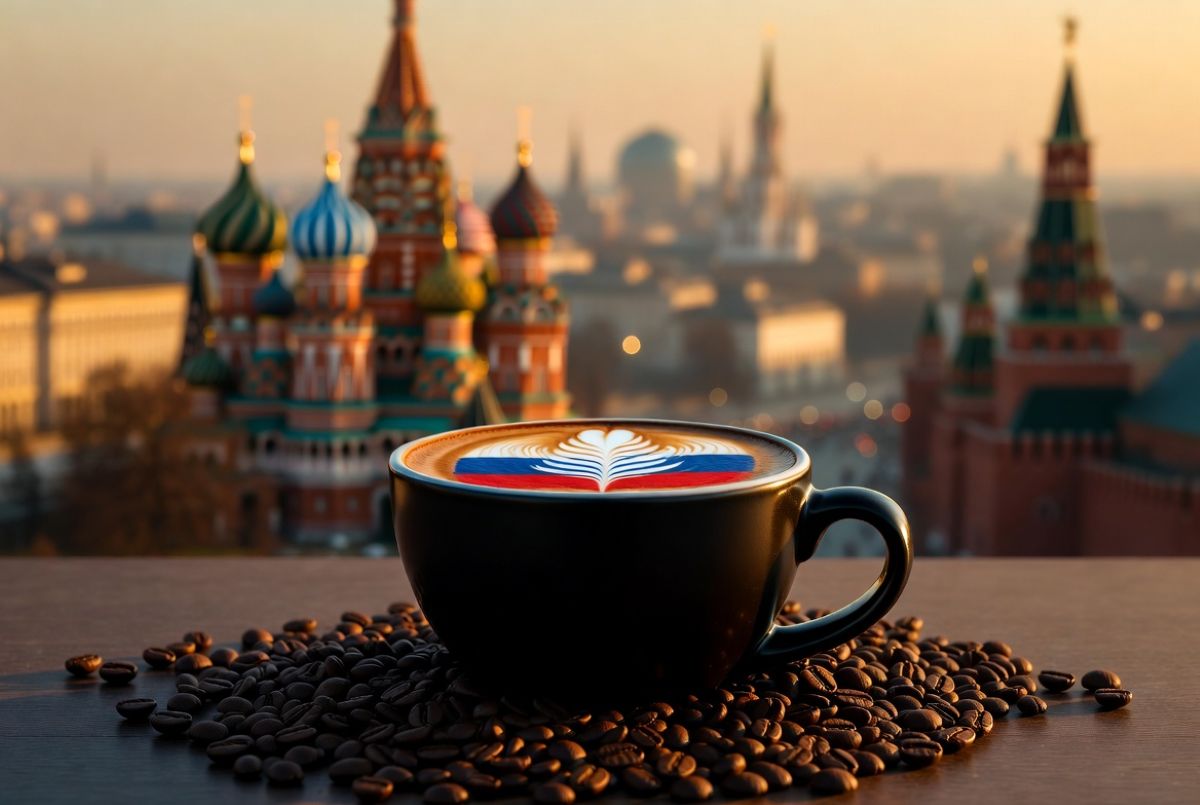
Since 2010, the second and third waves of coffee culture have spread across Russia. Specialty coffee spread, along with high-quality beans and alternative brewing methods. The Russian “Raf” drink became a globally recognized achievement. In 2016, the historic turning point that Ilyashenko spoke about occurred, with coffee imports exceeding tea imports for the first time.

Coffee to Go: The New Lifestyle

Today, the “coffee to go” style rules in Russia. In Moscow, the number of fast coffee points increased by 5 percent in 2025. In contrast, traditional coffee houses declined by 12 percent. Large supermarket chains such as Pyaterochka, Magnit, Lenta, and others have entered the coffee market strongly. These stores use coffee to attract customers and increase the average check. They also benefit from their massive scale to offer competitive prices.

A Deep Cultural Shift, Not Just Numbers

This is no longer just an increase in consumption. It is a change in lifestyle and daily rituals. Coffee has become a symbol of the new generation, specifically the age group from 25 to 45 years. Coffee has become the drink of productivity, work, quick meetings, and fast-paced urban life. Tea, meanwhile, remains associated with family warmth and classical traditions.

Russia has not only imported coffee culture. It has developed its own version of coffee culture. This unique blend combines American speed, European quality, and traditional Russian hospitality.

Key Data: Russia’s Transformation into a Coffee Country

Indicator Value
Per capita consumption in 2000 200 grams per year
Per capita consumption in 2021 2.1 kg per year
Ready-made coffee sales increase 2025 50 percent
Supermarket chain share of hot beverages 2023 17 percent
Supermarket chain share 2026 35 percent
Turning point for coffee vs tea imports 2016
Fast coffee point increase in Moscow 2025 5 percent
Traditional coffee house decline in Moscow 2025 12 percent

Future Forecast for the Russian Coffee Market

Svetlana Ilyashenko expects continued strong growth in the coming years. Growth will be noticeable especially in several areas. First is cold coffee, which is growing in popularity during summer. Second is specialty coffee, which attracts lovers of unique flavors. Third is home coffee subscriptions, which offer convenience to consumers. Fourth is luxury coffee machines, which have become a symbol of upscale homes and offices.

The conclusion that can be drawn from the expert’s statements is that coffee has won in Russia. The transformation has become an irreversible reality. The only remaining question now is: what will the Russian coffee culture look like in the next two or three decades?

Frequently Asked Questions (FAQ)

1. When did coffee imports exceed tea imports in Russia for the first time?

That happened in 2016, when coffee import volumes exceeded tea imports by 4 percent, according to expert Svetlana Ilyashenko.

2. What was Russian per capita coffee consumption in 2021?

Russian per capita coffee consumption reached 2.1 kilograms per year by 2021, compared to just 200 grams at the beginning of the millennium.

3. Who first introduced coffee to Russia?

Tsar Peter the Great introduced coffee to Russia after his trip to Europe and Holland, where he loved the drink and ordered it to be served at court and in coffee houses.

4. What is the Russian “Raf” coffee drink?

The “Raf” drink is a Russian innovation in the coffee world that has become globally recognized. It falls within specialty coffee culture.

5. How has coffee consumption style changed recently in Russia?

The “coffee to go” style has spread significantly. Fast coffee points in Moscow increased by 5 percent in 2025, while traditional coffee houses declined by 12 percent.

6. What areas does the expert expect to grow in the Russian coffee market?

Svetlana Ilyashenko expects strong growth in cold coffee, specialty coffee, home subscriptions, and luxury coffee machines.

Qahwa World – Report based on statements by economist Svetlana Ilyashenko to the TASS news agency, with data from Plekhanov Russian University of Economics.
Published: May 17, 2026. Figures subject to updates based on latest official releases.

Between Poison and Coffee… The Art of the Perfect Reply

By: Rached Dabdob

Between poison and coffee lies the brilliance of a well-crafted reply. Coffee has always occupied a place in the history of political sparring, where great conflicts are often distilled into a single sentence. Perhaps the famous exchange between Winston Churchill and Nancy Astor remains the finest example of what Arabs describe as “effortless mastery”; words that appear simple, yet are impossible to imitate.

Although historians largely agree that the dialogue was merely an old anecdote that gained popularity over time, its enduring association with politicians reveals much about the nature of human conversation. When Lady Astor reportedly said, “If I were your wife, I would put poison in your coffee,” she was not expressing literal violence as much as what might be called “desperation in expression.” Churchill’s wit emerged in his ability to embrace the premise and reverse it instantly: “If you were my wife, I would drink it.” In a single stroke, he made death seem preferable to her companionship.

Yet such moments also remind us of a deeper lesson rooted in our values: true victory does not lie in silencing an opponent, but in rising above them. In the arena some describe as “reflective intelligence,” Muawiya ibn Abi Sufyan stands as a timeless example. He once said, “I would be ashamed if any sin were greater than my capacity to forgive.”

It is said that a man once insulted him publicly in his own gathering, relentlessly attacking him before the people, while Muawiya remained smiling and unmoved. When the man finally finished, Muawiya turned to those around him and asked, “What do you think should be done with him?” They advised punishment, but he replied, “No. Rather, we shall give him money, for he insulted us only because of the hardship of his condition.” In that moment, overlooking the insult became an act of political wisdom, transforming an enemy into a grateful man with a single gesture of generosity.

In the same spirit, Al-Ahnaf ibn Qays became known as “the Forbearing Sage of the Arabs.” One of the most eloquent stories told about him recounts how a man followed him, hurling vulgar insults without pause, while Al-Ahnaf neither answered nor turned around. But as they approached the neighborhood of his tribe, Al-Ahnaf stopped and calmly said, “If there is anything left in you to say, then say it now. I fear the young men of my people may hear you and harm you.” Here we understand that his silence was not born of fear, but of dignity; a refusal to descend into the mire of abuse, and even a protection of the fool from the recklessness of youth.

Today, we continue to witness many examples of such restraint, especially across social media platforms. Many insist that those driven by insults and vulgarity possess a spirit foreign to authentic Arab culture, for the Arab character was shaped by noble virtues that remain a cornerstone of its upbringing. How beautiful it is when a person combines the sharpness of intellect with the elegance of morality; through this balance, nations rise and civilizations mature.

And so, one cannot help but ask: will outsiders learn the etiquette of forbearance and dignity, just as they once learned from the Arabs how to drink coffee?

Brazil’s Coffee Market Growth: How Domestic Consumption Strengthens the Industry

Dubai – Qahwa World
Brazil continues to lead the global coffee industry, not only as the largest producer but also as one of the biggest consumers. This balance between production and domestic demand has created a resilient coffee sector that can adapt to global market shifts.

Key Insights

  • Brazil is a top global coffee producer and consumer.
  • Specialty coffee accounts for approximately 5–10% of the domestic market.
  • Urban demand is driving growth in premium and traceable coffee.
  • Strong local consumption helps offset export market risks.

Brazil’s Coffee Production and Domestic Demand

Brazil’s coffee production continues to expand, with forecasts pointing to record output in the coming seasons. At the same time, domestic consumption remains strong, supporting the industry from within.

Coffee is deeply embedded in Brazilian culture, consumed daily across all regions and social groups. This widespread consumption provides stability, even during periods of global trade uncertainty.

In recent years, specialty coffee has emerged as a fast-growing segment. More consumers are seeking higher-quality beans, better traceability, and unique flavour profiles, contributing to a shift in purchasing behaviour.

The Historical Roots of Coffee Culture in Brazil

Coffee has been part of Brazil’s identity for centuries. Since its introduction in the 18th century, cultivation has expanded across major regions such as Minas Gerais, São Paulo, and Rio de Janeiro.

As Brazil became a dominant force in global coffee production, it also developed a strong domestic coffee tradition. One of the most iconic examples is cafezinho, a small, sweetened coffee that remains a staple of daily life.

Historically, higher-quality beans were exported, while domestic consumption focused on darker roasts. However, industry efforts in the early 2000s helped improve quality awareness among consumers, encouraging a more refined approach to coffee drinking.

The Rise of Specialty Coffee in Brazil

Brazil’s specialty coffee sector has grown steadily over the past two decades. Industry initiatives, competitions, and educational programs have encouraged producers to prioritise quality alongside volume.

Consumers are now more interested in origin, processing methods, and sensory characteristics. This shift is particularly evident in major cities, where independent cafés and roasters are shaping modern coffee culture.

While traditional brewing methods remain popular, espresso-based drinks and manual brewing techniques such as pour-over are becoming more common in homes and cafés.

Balancing Volume and Quality

Brazil’s strength lies in its ability to produce coffee at scale while improving quality standards. Many producers are expanding their roles, investing in technology, and developing new strategies to differentiate their products.

A strong domestic market supports these efforts by creating opportunities to sell higher-value coffee locally, increasing profitability and reducing reliance on exports.

Responding to Global Market Challenges

Global trade disruptions have highlighted the importance of domestic consumption. In recent years, uncertainty in export markets has encouraged Brazilian producers to diversify their strategies.

Some are focusing more on local sales, strengthening internal supply chains and supporting long-term industry stability.

Future Outlook for Brazil’s Coffee Industry

Brazil’s coffee sector remains one of the most advanced and adaptable in the world. Its combination of large-scale production, strong domestic consumption, and a growing specialty segment positions it for continued success.

As other coffee-producing countries aim to expand their domestic markets, Brazil provides a clear example of how internal demand can support sustainable growth.

Related stories:

Brazil’s Coffee Reality: When Climate Pressure Collides With Market Demand

Brazil Breeds New Coffee to Face Climate Threat

Brazil’s Robusta Coffee Expands as Climate Hits Global Crops


Yemeni Coffee Culture Expands Rapidly Across the United States

SUNNYVALE – AP

Hundreds of years ago, Yemen helped introduce coffee to the world. Today, the mountainous, war-affected country is exporting something new: its distinctive coffeehouse culture.

Yemeni coffeehouses are rapidly expanding across the United States. According to Technomic, a restaurant industry consulting firm, the number of cafés operated by six major Yemeni-style chains grew by 50% last year, reaching 136 locations. This figure does not include the many independent cafés and smaller chains serving Yemeni coffee and tea.

Several factors are driving this growth. Many Yemeni cafés stay open late—sometimes past 3 a.m., especially during Ramadan—offering a social alternative for Americans who do not drink alcohol. A recent Gallup poll found that only 54% of U.S. adults reported drinking alcohol last year, the lowest rate in 90 years.

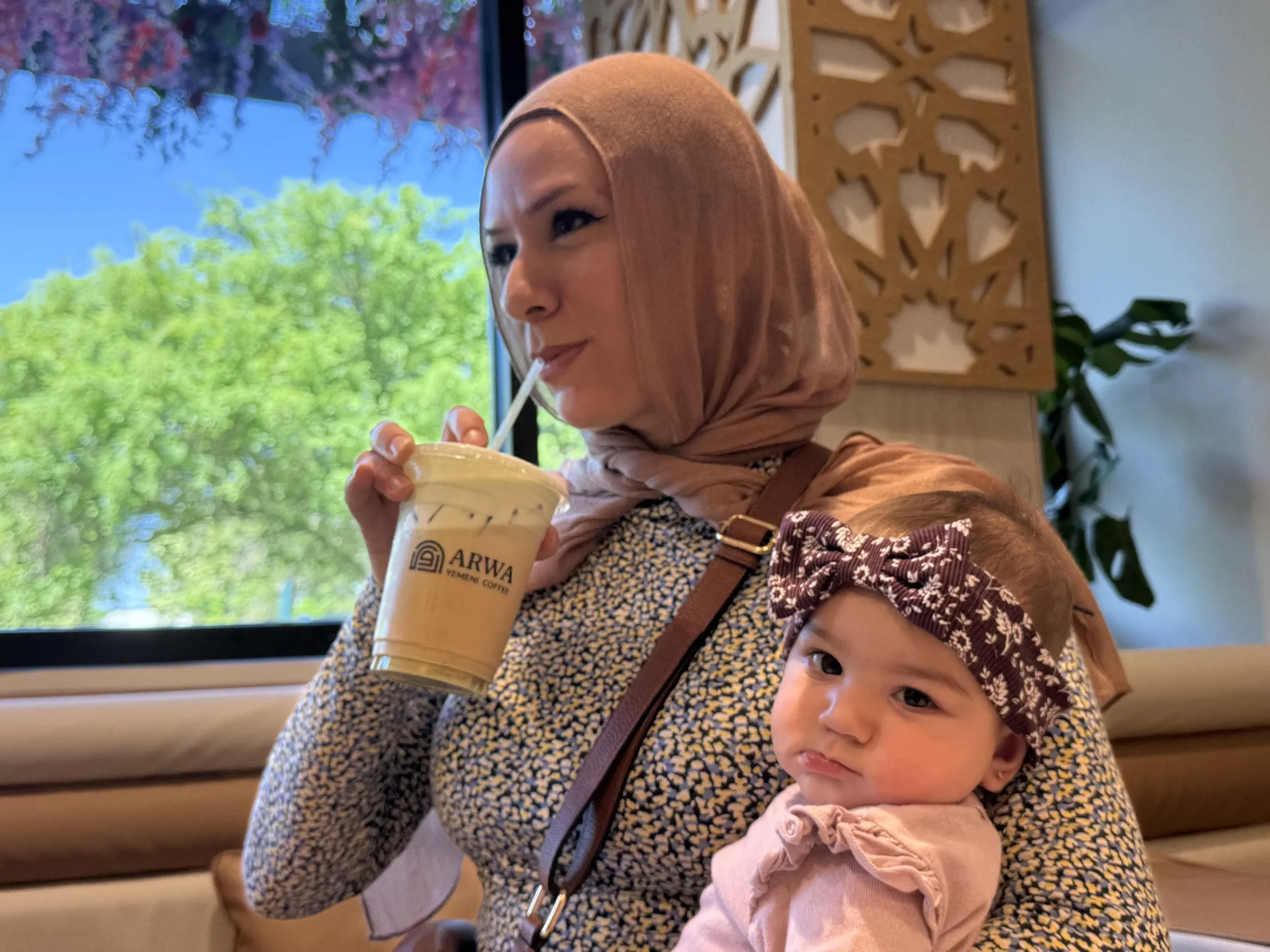
“Generally in the Middle East, our nightlife is coffee,” said Ahmad Badr, a franchise owner of Arwa Yemeni Coffee in Sunnyvale. “People gather in coffee shops, play games, and talk. We wanted to bring that here.”

Demographic shifts are also contributing to the trend. The Arab American population in the U.S. grew by 43% between 2010 and 2024, compared to roughly 10% growth for the overall population, according to the Arab American Institute.

While many Yemeni cafés are located in states with large Arab American communities—such as Michigan, California, and Texas—they are also appearing in more diverse locations, including Georgia, Kansas, and Maine.

A taste of home

For many Yemeni Americans, these cafés offer more than just beverages—they provide a connection to home.

Faris Almatrahi, co-founder of Texas-based Arwa Yemeni Coffee, said Yemen’s ongoing civil war, which began in 2014, has made travel difficult. His company, which operates 11 cafés and has 30 more in development, aims to recreate the atmosphere of Yemen.

Locations feature desert-inspired tones, mosque-like archways, and decorative elements reminiscent of traditional Yemeni culture.

“One way to experience Yemen without traveling there was to bring it here,” Almatrahi said. “It’s emotional—it really transports us back.”

However, he noted that most customers are not of Arab descent. Growing interest in global flavors and authentic cultural experiences—often fueled by social media—has broadened the appeal.

Menus typically include traditional drinks like Adeni tea, a spiced tea similar to chai, and qishr, made from dried coffee cherry husks. Familiar beverages such as lattes are often infused with spices or honey.

Food offerings may include khaliat nahal (Yemeni honeycomb bread filled with cheese and drizzled with honey) and basboosa, a syrup-soaked semolina cake flavored with lemon or rose water. Many cafés also serve more familiar items like matcha lattes and fruit-based drinks.

Expanding tastes

Industry experts say culturally specific cafés have become a major driver of growth in the U.S. coffee sector.

Peter Giuliano of the Specialty Coffee Association noted similar trends among Latin and Vietnamese coffee brands expanding their presence.

Customers are increasingly curious about new coffee profiles. Cindy Donovan, who recently visited a Yemeni café in Sunnyvale, described the experience as eye-opening.

“The flavors are more refined and mellow, but also richer,” she said. “The cardamom adds something really special—very flavorful without being heavy.”

Yemeni coffee is often sun-dried, a process that enhances its complexity, bringing out notes of chocolate and fruit. Many drinks are prepared using hawaij, a traditional spice blend that may include cardamom, ginger, cinnamon, cloves, coriander, or nutmeg.

Preparation methods also differ. “Our coffee and tea are not made with fully automatic machines,” said Mohamed Nasser of Haraz Coffee House. “We manually blend, boil, and prepare everything to achieve the perfect taste and color.”

A rich history

Coffee’s roots run deep in Yemen. While the plant is believed to have originated in Ethiopia, it was cultivated in Yemen by the 15th century, where it was used by monks to stay awake during prayers.

For about 200 years, Yemen controlled the global coffee trade before coffee plants were transported to other regions, breaking its monopoly.

In recent decades, renewed investment from entrepreneurs, organizations, and coffee specialists has helped revive Yemen’s coffee industry. Despite ongoing challenges, coffee remains one of the country’s most promising economic sectors.

“We see ourselves as ambassadors of our culture,” Almatrahi said. “Through these cafés, we share our hospitality and show what Yemen has to offer.”

Read the related stories:

Qahwah House: Bringing the Soul of Yemeni Coffee to Cahaba Heights

Yemeni Coffee Shops Expand Across Ann Arbor

Yemeni Coffee Craze Reaches Visalia with Bold Flavors and Slow Brews

Mokha 1450 Immersive Coffee Experience Redefines Tasting in Dubai

Dubai – Qahwa World

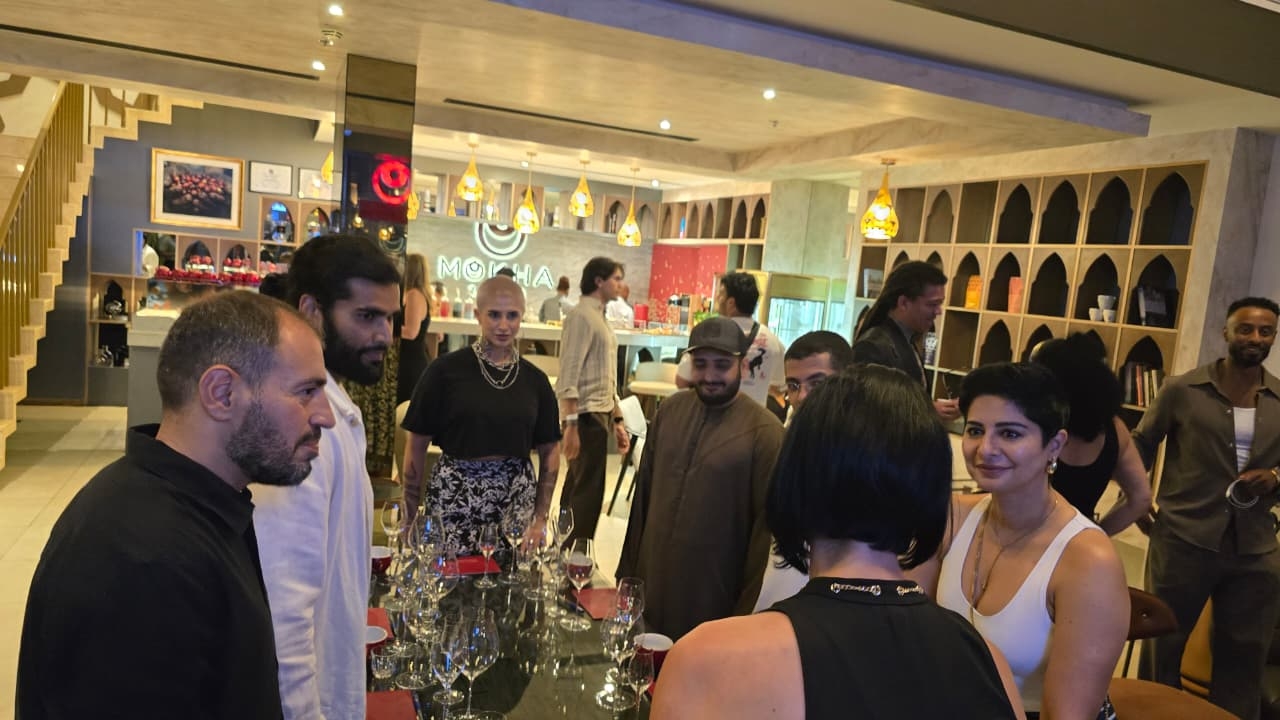
By invitation from Mr. Garfield Kerr, CEO of Mokha 1450, I attended yesterday evening a truly exceptional event held at Mokha 1450 Café in Golden Mile, Palm Jumeirah, Dubai, as part of an immersive experience that reintroduced coffee as a multi-sensory art combining science, innovation, and culture.

Honestly, when I first read about the event and learned that attendance required prior registration and an entry fee, I expected the turnout to be limited, perhaps only a small number of participants. However, I was genuinely surprised by the remarkable and distinguished attendance, as the venue was filled with guests who either registered in advance or joined directly on site, in a scene that reflected genuine interest in this unique experience.

As I observed the interaction inside the venue, I had a clear feeling that what I was witnessing was a direct reflection of the spirit of Dubai, a city that never stops embracing new experiences and creating momentum around innovative ideas. This is also what Mokha 1450 represents, embodying the same spirit: elegance in concept, boldness in execution, and innovation in experience.

The atmosphere throughout the evening was almost like a dreamlike scene, as guests were immersed in an extraordinary journey through the world of coffee in all its details. Visitors moved between different tasting stations offering coffees from various origins, prepared using innovative methods that reflect the philosophy of the team led by Sigrid Ballard and her specialized staff.

What truly stood out was the way the experience was presented. It was not merely a tasting session, but a complete sensory journey blending aroma, taste, and knowledge, revealing how coffee can evolve into a full cognitive experience.

As part of the program, participants experienced an olfactory and tasting journey that highlighted the scientific relationship between the senses of smell and taste, and how sensory signals converge in the brain to form the perception of flavor.

The event also featured several curated stations, including cold brew coffee prepared using a slow steeping method for eighteen hours with carefully selected beans graded above ninety points, revealing rich and complex notes ranging from tropical fruits and berries to honey and exotic spices.

In another station, the pour over brewing method was demonstrated, relying on precise manual pouring, where technique, timing, and extraction ratio directly influence clarity and balance in the cup.

One of the most remarkable highlights of the evening was the psychology of glassware experience, which demonstrated how the shape, weight, and balance of a cup can influence flavor perception, not only aesthetically, but also in terms of sensation, taste, and overall impression.

Throughout the evening, the Mokha 1450 team also presented innovative creations such as the smoky signature drink and the Desert Flower experience, alongside live brewing sessions in front of guests, adding an interactive dimension that brought the audience closer to the craft of coffee making.

The experience was accompanied by a curated musical journey inspired by coffee producing countries such as Yemen, Ethiopia, Colombia, Jamaica, and Cuba, giving the event a global dimension that reflects the journey of coffee across continents.

In conclusion, this was not merely a tasting evening, but a complete experience that redefined the relationship between humans and coffee, and reinforced Mokha 1450’s position as one of the leading concepts in experiential specialty coffee in Dubai and the region.