India’s Coffee Market Gains Momentum as Specialty Segment and Café Chains Expand

Dubai – Qahwa World

The Cimbali Group has shared new insights on its LinkedIn account highlighting the ongoing transformation of India’s coffee market, driven by the rise of specialty coffee and the rapid expansion of café chains.

Traditionally a tea-dominated country, India is witnessing a steady increase in coffee consumption, particularly among younger, urban consumers. Changing lifestyles, rising disposable incomes, and greater exposure to global coffee trends are contributing to this shift. According to industry estimates referenced in the report, the Indian coffee market is expected to grow at an annual rate of around 9–10 percent through 2030.

The report points to the growing influence of specialty coffee across major cities such as Bangalore, Mumbai, and Delhi, as well as emerging urban centers including Ahmedabad, Surat, and Jaipur. Independent cafés and local roasters are introducing single-origin coffees, alternative brewing methods, and a stronger focus on traceability, reflecting a shift in consumer preferences toward quality and transparency.

At the same time, organized coffee chains are accelerating the development of café culture across the country. Brands such as Starbucks, Blue Tokai, Third Wave Coffee, and Café Coffee Day continue to expand in both metropolitan and tier-two cities, contributing to the normalization of coffee as a daily habit and social experience. The coffee retail chain segment in India was valued at over $500 million in 2023 and is projected to grow steadily.

The LinkedIn post also includes industry perspectives from Arun, Chief Operating Officer at Fresh & Honest Café Ltd, who notes that the entry of new international players is expected to further reshape the market. He highlights emerging formats such as grab-and-go outlets, app-based ordering, and compact kiosks, alongside beverage innovation tailored to local tastes.

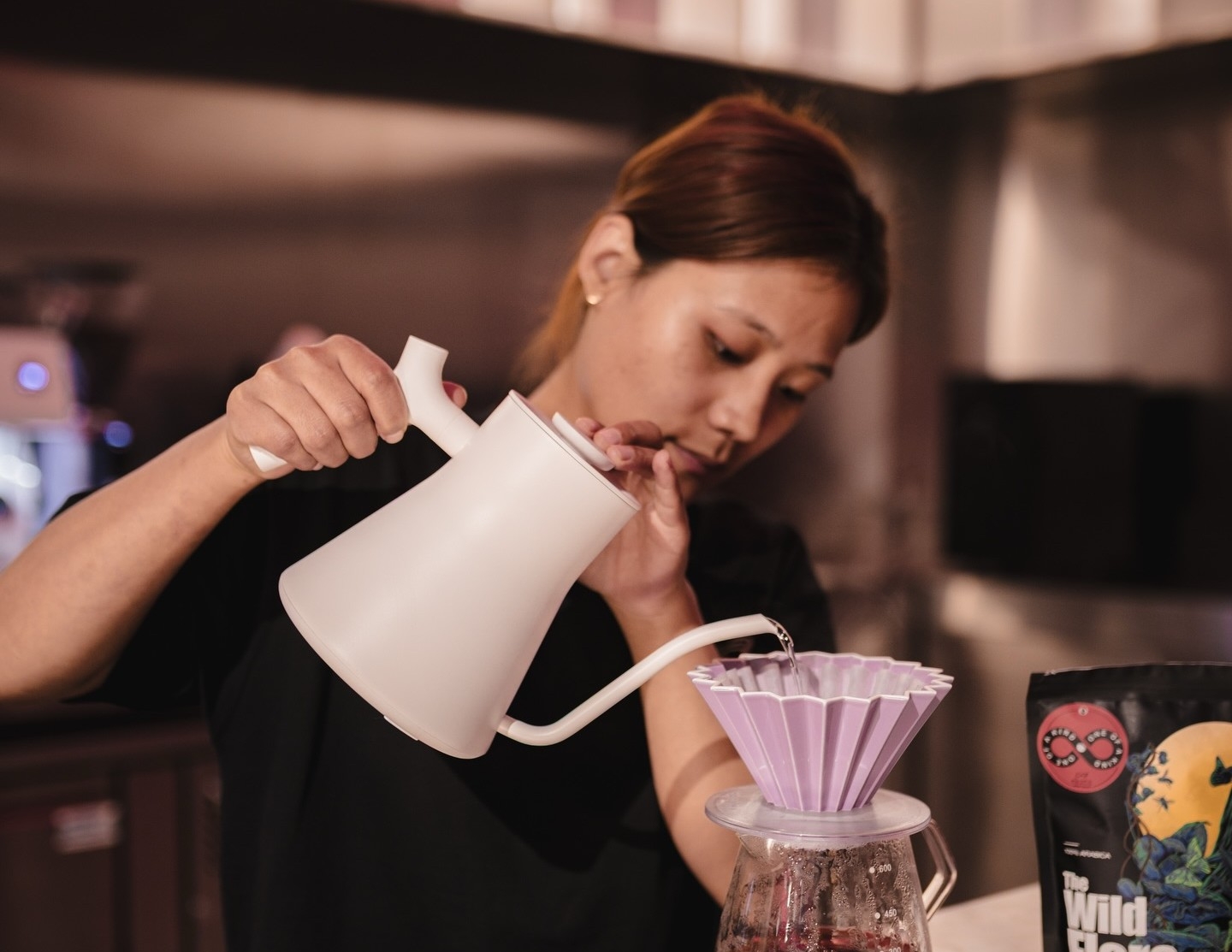
As the market evolves, the focus is increasingly shifting toward consistency and quality. The report emphasizes that scaling high-quality coffee requires not only premium beans but also reliable equipment, precise extraction, and well-trained professionals. Investment in barista training and operational standards is becoming essential for businesses aiming to maintain consistency across multiple locations.

The Cimbali Group concludes that the next phase of growth in India’s coffee industry will depend on the ability of operators to combine quality, technology, and skilled workforce development, as coffee continues to transition from a growing trend into a well-established culture.

Australia’s Coffee Powerhouse

Dubai – Qahwa World

Few countries have shaped modern café culture like Australia. Its cafés are defined not by a single invention, but by a relentless commitment to quality. Coffee is precise, roasting is meticulous, and hospitality is at the heart of every interaction. Every cup is expected to impress, and the people behind the counter take that responsibility seriously.

Industry insiders often point to a combination of skill, competition, and dedication as the secret of Australia’s edge. With talented baristas and customers who know what good coffee should taste like, the country has created a culture that leads the world in coffee.

Australia’s influence goes far beyond its borders. Drinks like the flat white and long black are now served in cafés from London to Tokyo. Australian baristas and roasters have helped shape coffee scenes across Asia, Europe, and the Middle East. They are exporting not just beverages, but a way of thinking about coffee that values craftsmanship, precision, and the overall experience.

You may read: Specialty Coffee Trends Shaping Australia’s Café Scene in 2026

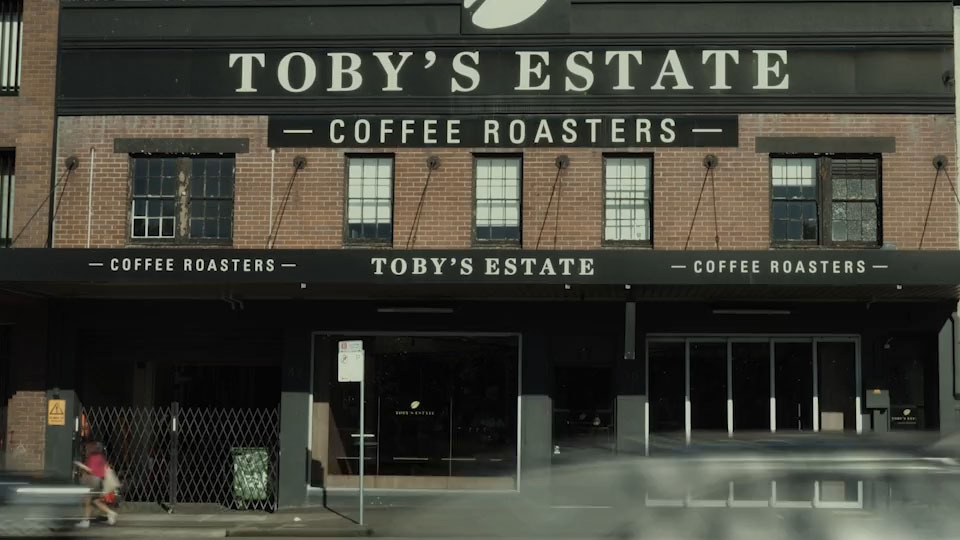
Global rankings consistently recognize Australian cafés. Names like Toby’s Estate in Sydney, Proud Mary in Melbourne, and Coffee Anthology in Brisbane are celebrated internationally. Their success is not a one-time achievement. It reflects consistent excellence in coffee, hospitality, and the way cafés make customers feel welcome.

Jody Leslie, General Manager of Toby’s Estate, emphasizes that exceptional coffee is now just the starting point. “The real difference is the full experience,” she says. “The energy behind the bar, the team who remember your name and perfect your pour, it all resonates with people. Topping global rankings was a milestone, but it reflects daily dedication to creating a space where people want to linger.”

Veneziano Coffee Roasters takes this approach further, designing every interaction around how customers naturally engage with coffee. Brand Strategist Sarah Eagles notes, “Our café culture leads because it is relentlessly customer-driven. We respond to preferences for iced options, speed without losing soul, and evolving café atmospheres. Strong branding and authentic community ties make the experience feel forward-thinking and human at the same time.”

  • Foundations of a Coffee Nation

Australia’s rise in coffee culture is rooted in history. Italian immigrants brought espresso traditions to a tea-centric nation in the mid-20th century. Over time, these influences combined with local conditions, including abundant high-quality dairy, to create milk-based drinks like the flat white, now a global favorite.

You may also read: From Australia to the UAE: The Coffee Club’s Menu Gets Even More Exciting

Independent cafés flourished in cities like Melbourne and Sydney, allowing experimentation and innovation. Roasters and baristas were pushed by competition, and standards for quality grew steadily higher. Adam Wang, founder of Brisbane’s Coffee Anthology, describes this synergy as the country’s advantage. “It is never just about the coffee,” he says. “Baristas connect with guests like friends. Passion for craft shines through, and skills rank among the world’s finest.”

Coffee Anthology is also known for variety. It rotates multiple local roasters daily while offering international options at consistent pricing. “Guests explore different origins and styles without barriers,” Wang explains. Veneziano uses consumer intelligence and systems to ensure consistency while allowing teams to focus on hospitality. Eagles adds, “Technology gives us precision and flow, letting human connection take center stage.”

  • Looking Ahead

With global recognition comes scrutiny. Maintaining elite standards while responding to new expectations is the next challenge. Leslie reflects, “Now it is about harmonizing technology and automation with the human desire for meaningful moments. Quality coffee remains non-negotiable.”

Eagles predicts success for cafés that evolve without losing their essence. “Those who listen, adapt boldly, and stay authentic will endure. Technology helps precision and flow, letting hospitality shine. Innovation paired with heart wins.”

Wang sees a growing divergence: some cafés focus on pure coffee mastery, while others explore inventive beverages. “Matcha and non-traditional drinks are rising,” he says. “Tomorrow’s stars may include creations we cannot even imagine today.”

Australia’s café culture did not reach global recognition by accident. It was built through decades of craftsmanship, hospitality, and constant refinement. With a strong presence in 2026 and cafés that continue to innovate, the nation’s coffee story is evolving, shaping the global conversation one cup at a time.

The Unwritten Rules of Vienna’s Coffee Culture

In the city that turned coffee into an art, patience is the first lesson every traveler must learn.

Dubai – Qahwa World

At nine in the morning, sunlight filters through the tall arched windows of Café Central, one of Vienna’s most famous coffeehouses. The marble columns gleam softly, the air is filled with the sound of porcelain cups, and newspapers rustle in quiet harmony. An American visitor approaches the counter, smartphone in hand, ready to order a “coffee” to go. A few steps away, an elderly Viennese gentleman settles into his red velvet chair, opens his morning paper, and begins his two-hour ritual with a Melange.
That simple contrast captures everything foreign visitors often misunderstand about Vienna’s UNESCO-protected café culture—a world where time slows, where coffee is not consumed but inhabited, and where rushing through a cup is not merely impolite, but a missed encounter with history itself.

From Yemen to the Danube: The Birth of a Coffee Civilization

The story of Vienna’s cafés begins far beyond Europe. In the 15th century, coffee was cultivated in Yemen’s highlands and shipped from the port of Mokha, the gateway from which the beverage began its global journey. Ottoman traders carried it north to Istanbul, where it became a social ritual and a symbol of refinement.

When the Ottoman siege of Vienna in 1683 ended, legend tells of coffee beans left behind in the camps. The Viennese took these beans and turned them into a new kind of institution—a place that combined Arab hospitality, Ottoman ritual, and European intellectualism.
From these early experiments grew a café tradition unlike any other in the world—one that would come to define Vienna’s identity as the capital of conversation.

By the 19th century, Vienna’s coffeehouses had evolved into living salons. Poets, philosophers, and revolutionaries gathered under their chandeliers. Sigmund Freud drafted theories at Café Landtmann. Stefan Zweig, chronicler of Europe’s cultural soul, described the cafés as “democratic clubs open to everyone for the price of a cup of coffee.” These were not cafés in the commercial sense—they were temples of thought.

Where Time Itself Is Served Slowly

To walk into a Viennese café expecting quick service is to misunderstand its essence. Each of the 17 UNESCO-listed coffeehouses operates on a rhythm established over centuries. Waiters in pressed black jackets and silver trays move deliberately, never hastily.
As Maria Schneider, who has served at Café Central for nearly three decades, explains: “Within two minutes, I can tell who’s a tourist. They look at their watches while waiting for coffee. Locals know coffee comes when it’s ready.”

That wait is not inefficiency—it’s grace. In Vienna, slowness is a form of respect. It allows space for silence, conversation, and observation. The waiter’s distance, often mistaken for coldness, is part of the city’s etiquette. “We provide perfect service, not friendliness,” says Thomas Vogel of Café Sperl. “I’m not your buddy—I’m a professional.”

In a Viennese café, the waiter is not a server but a conductor, maintaining harmony between solitude and society.

Seven Unwritten Rules Every Visitor Should Know

Vienna’s café culture follows codes that no guidebook fully explains. They are unwritten, passed down through habit rather than instruction.
Here are the seven principles that distinguish a local from a hurried traveler:

  1. Never rush your coffee. Time is the invisible ingredient in every cup.

  2. Don’t say “coffee.” Order it by name: Melange or Einspänner.

  3. Wait for table service. Approaching the counter breaks the ritual.

  4. Speak softly. Silence and conversation share equal value.

  5. Pair your drink with pastry. A Melange without Sachertorte is incomplete.

  6. Ask for the check—don’t wait for it. Say “Darf ich bitte zahlen?” and tip 10–15% in cash on the saucer.

  7. Linger. The moment you stop watching the clock, you become part of the city.

A Cultural Mirror in a Cup

Survey data from Vienna’s cafés reveals a consistent pattern: 74% of tourists try to order at the counter, 61% ask for “coffee”, and 68% leave within 30 minutes—while only 12% of locals do. The average Viennese spends 87 minutes per visit, often reading several newspapers.
At Café Sperl, established in 1880, more than a dozen newspapers still hang from wooden racks. To the locals, this is not nostalgia—it is continuity.

“Here,” says café owner Karl Weber, “we don’t drink coffee to stay awake—we drink it to be with people, or to be alone.”
That simple philosophy defines Vienna’s genius: the café is both a private refuge and a public salon. It bridges solitude and society, art and routine.

Why Vienna’s Coffeehouses Endure

Across the world, cafés have evolved—Italy’s espresso bars celebrate speed, France’s brasseries celebrate conversation, and the Arabian majlis celebrates hospitality. Vienna alone turned coffee into a meditation on time itself.

To drink coffee in Vienna is to join a centuries-long dialogue that began in Yemen’s mountains, sailed across Ottoman trade routes, and found permanence on the cobblestones of Europe.
In an age obsessed with productivity, Vienna’s cafés quietly remind us that reflection, too, is a form of work.

A Lesson in Invisibility

Three days after his first hurried visit, the same American tourist returns to Café Central. This time, he orders properly—“Einen Melange, bitte.” He addresses the waiter as “Herr Ober.” He opens the Wiener Zeitung, leaves his phone in his pocket, and doesn’t glance at the time. The waiter nods subtly, recognizing not a customer, but a participant in a tradition.
He has achieved the highest honor Vienna offers: to disappear among locals, cup in hand, perfectly at ease in the art of doing nothing.
Reborn Coffee Secures $1 Million Deal to Launch in South Korea

Dubai, 14 August 2025 – (Qahwa World) – U.S.-based specialty coffee chain Reborn Coffee Inc. (NASDAQ: REBN) has signed a $1 million exclusive licensing agreement with Reborn Korea Co., Ltd. to establish and operate branded coffee shops across South Korea, marking the company’s official entry into one of the world’s most dynamic coffee markets.

Under the agreement, Reborn Korea will lead store development, operations, and brand growth in the country, bringing the company’s signature cold brew, sprouted coffee, and artisanal bakery offerings to local consumers. Menus will be adapted to suit South Korean tastes and café culture.

Flagship Store in Central Seoul

The first location is set to open this autumn in Gwanghwamun, directly opposite the main gate of Gyeongbokgung Palace, a major historical landmark. The three-story flagship headquarters at 24 Yulgok-ro will combine:

  • Ground floor: spacious café and bakery corner

  • Second floor: roasting research lab and interactive sprouted coffee zone

  • Third floor: training facilities for baristas and bakers, plus administrative offices
    Guests will also have access to panoramic rooftop and terrace views of Gwanghwamun and Bugaksan mountain.

A company representative described the venue as “a new landmark where premium coffee meets artisan baking, offering a full 4th Wave coffee experience in the heart of Seoul.”

Nationwide Rollout Planned

Following the flagship launch, Reborn Korea plans to open directly operated outlets in Gwangjin, Nami Island, and Bundang, before expanding to other key cities by the end of the year. The strategy aims to create a nationwide retail network and attract potential franchisees.

Why South Korea?

South Korea ranks third globally in per capita coffee consumption, driven by a vibrant café scene and strong demand for high-quality coffee. This makes it a strategic target for Reborn Coffee’s global expansion.

Part of a Wider Global Push

This move follows the company’s recent licensing agreements in the Middle East, China’s Guangdong and Liaoning provinces, and new market entries in Georgia and Armenia.