Global Leaders Unite to Advance Coffee Education

Source: Fondazione Ernesto Illy ETS / UNIDO / SCA / ICO
Author: Editorial Team
Date: July 15, 2026

Global Leaders Unite to Advance Coffee Education

  • Global coffee leaders convened at World of Coffee Brussels for a landmark panel discussion on education.
  • The event celebrated 15 years of the Master in Coffee Economics and Science – Ernesto Illy.
  • The Ernesto Illy Master Alumni Community was officially launched as a global professional network.
  • Panelists explored collaborative frameworks for workforce development in African producing countries.
  • UNIDO’s ACT Coffee Programme and Coffee Training Centres were highlighted as key capacity-building platforms.
  • Ethiopia’s Coffee Training Centre has already certified hundreds of professionals across Africa.
  • Speakers emphasized education as the most sustainable investment in coffee’s future.

Global leaders in coffee, education, and international development convened at World of Coffee Brussels 2026. The event featured a landmark panel discussion on education’s role in shaping the coffee sector’s future. Organized by Fondazione Ernesto Illy ETS, UNIDO, SCA, and ICO, the event marked 15 years of the Master in Coffee Economics and Science.

The panels celebrated the program’s legacy and launched its Alumni Community. Participants also explored collaborative frameworks for workforce development in African producing countries. The message was clear: education is the most sustainable investment in coffee’s future.

Panel I: 15 Years of the Ernesto Illy Master

The first session celebrated 15 editions of the Master in Coffee Economics and Science. It is the only international first-level Master’s programme taught in English. The panel featured founding faculty members, industry partners, and alumni from Costa Rica and Ethiopia.

Speakers included Anna Illy, Sunalini Menon, Eliana Cossio, Daniel Sanchez, and Addisu Dulacha Gobana. The session culminated in the official launch of the Ernesto Illy Master Alumni Community. This global professional network extends the programme’s impact beyond the classroom.

Panel I Speakers – 15 Years of the Ernesto Illy Master
Speaker Affiliation
Anna Illy Chair, Fondazione Ernesto Illy ETS
Sunalini Menon President, CoffeeLab Limited
Eliana Cossio Chief Research Officer, SCA
Daniel Sanchez Alumni 2018, Costa Rica
Addisu Dulacha Gobana Alumni 2019, Ethiopia

“The Master in Coffee Economics and Science – Ernesto Illy was born from a bold vision: to recognize coffee not just as a product, but as a field of knowledge bringing together science, economics, culture, and sustainability in a truly multidisciplinary and international dialogue. Fifteen editions later, it has grown into much more than an academic program: it is a global community of 300 passionate professionals who share a deeper understanding of coffee from plant to cup. With the launch of the Ernesto Illy Master Alumni Community, this shared knowledge becomes an even stronger force: connecting people, inspiring ideas and shaping the future of coffee.”

— Anna Illy, Chair, Fondazione Ernesto Illy ETS

Panel II: Innovation for Capacity Building

The second session examined how international organisations, governments, and the private sector can strengthen human capital. Focus areas included UNIDO/ACT Programme Coffee Training Centres. These are skills platforms across East African countries. The panel also discussed SCA Coffee Education Systems and new collaboration models for Africa.

Ethiopia’s Coffee Training Centre experience was presented by Dr. Adugna Debela, Director General of ECTA. Speakers included Vanusia Nogueira, Iannis Apostolopoulos, Providence Mavubi, Stijn De Lameilliere, and Wouter Cools.

Panel II Speakers – Innovation for Capacity Building
Speaker Affiliation
Vanusia Nogueira Executive Director, ICO
Iannis Apostolopoulos CEO, Specialty Coffee Association
Providence Mavubi Director, Agribusiness, UNIDO
Dr. Adugna Debela Director General, ECTA
Stijn De Lameilliere GPE/WB
Wouter Cools ILO

Shared Conviction: Skills Advancement is Key

Across both panels, a shared conviction emerged. Sustainable transformation requires investing in the enabling environment for skills advancement. This includes robust institutions and accessible training pathways. Internationally recognised certification frameworks are also essential. They allow local professionals to compete, innovate, and lead.

Coffee Training Centres play a crucial role. They equip local actors with technical skills. They link them to advanced training opportunities. This lays the foundation for inclusive value chain participation. It also increases local value addition.

Leadership Perspectives

“For decades, the ICO has recognized that education, skill development, and the transfer of innovation and technology are essential to building a more resilient, sustainable, and prosperous coffee sector. Partnerships are the catalyst for this change, connecting local talent with global expertise, strong institutions, and internationally recognized training and certification pathways. Together, we can transform capacity building into lasting economic and social progress for coffee-producing countries.”

— Vanusia Nogueira, Executive Director, ICO

“Education is not merely a tool for knowledge transfer – it is a foundational investment in the long-term resilience and inclusiveness of the coffee sector. Through its ACT Coffee Programme, UNIDO is committed to building the enabling environment in which skills advancement can take root and thrive. Coffee Training Centres across Africa are proof that when we invest in people, we invest in the entire value chain.”

— Providence Mavubi, Director, Agribusiness and Infrastructure Development, UNIDO

“The Ethiopia Coffee Training Centre demonstrates what becomes possible when local expertise meets international standards. Our producers and professionals are not only learning – they are leading.”

— Dr. Adugna Debela, Director General, ECTA

“Building a more equitable coffee sector begins with creating more access for the people within our industry. SCA is proud to be part of a growing ecosystem of organizations that recognize education as the foundation of a resilient, inclusive value chain. When local professionals have access to internationally recognized pathways, everyone in coffee benefits.”

— Yannis Apostolopoulos, CEO, SCA

Spotlight: Ethiopia’s Coffee Training Centre

The Ethiopian Coffee and Tea Authority hosts the Coffee Training Centre within its premises in Addis Ababa. It was established with AICS funding and UNIDO technical support. Partners include Illycaffè and the Ernesto Illy Foundation.

The centre is equipped with roasting, brewing, and sensory laboratories. It delivers internationally standardized training across the post-harvest coffee value chain. The centre has already certified hundreds of professionals from across Africa.

About the Organizations

Fondazione Ernesto Illy ETS was established to preserve and promote the legacy of Ernesto Illy. It focuses on scientific research, education, and sustainability projects for coffee value chains. The Foundation’s core value is Ethics.

UNIDO is the UN’s specialized agency for inclusive and sustainable industrial development. It supports sustainable supply chains and strengthens agribusinesses. Its ACT Coffee Programme enhances climate resilience and local value addition in Africa.

The International Coffee Organization is the only intergovernmental organization dedicated to coffee sector sustainability. It provides official statistics and facilitates technical cooperation projects.

The Specialty Coffee Association is the global stage for specialty coffee. It brings together diverse voices across the value chain to spark dialogue and fuel innovation.

Frequently Asked Questions

What event took place at World of Coffee Brussels?Global coffee leaders convened for a panel discussion on education, celebrating 15 years of the Master in Coffee Economics and Science and launching its Alumni Community.

What is the Ernesto Illy Master program?It is the only international first-level Master’s programme in Coffee Economics and Science taught in English. It brings together science, economics, culture, and sustainability.

What is the Ernesto Illy Master Alumni Community?It is a global professional network and digital platform launched to extend the programme’s impact beyond the classroom, connecting 300 professionals worldwide.

What are Coffee Training Centres?They are skills platforms across East African countries supported by UNIDO’s ACT Coffee Programme, providing internationally standardized training.

What is the Ethiopia Coffee Training Centre?It is a training centre in Addis Ababa equipped with roasting, brewing, and sensory laboratories, delivering standardized training across the coffee value chain.

How many professionals has the Ethiopia CTC trained?The centre has already certified hundreds of professionals from across Africa since its establishment.

Coffee Is Under Threat: How Scientists Are Fighting to Save It from Extinction

Source: Nature – Adapted by Qahwa World |
Author: Qahwa World |
Date: July 1, 2026

Coffee Is Under Threat: How Scientists Are Fighting to Save It from Extinction

Key Takeaways:

  • Coffee is critically threatened by climate change, with arabica suffering or dying when temperatures rise just a few degrees.
  • Robusta requires massive amounts of water and its yields drop drastically in drought conditions.
  • Ethiopia, the homeland of arabica coffee, is preserving genetic diversity through conservation areas and living collections of over 12,000 plants.
  • Scientists are exploring wild coffee species such as C. liberica, C. excelsa, and C. stenophylla that are more climate-resilient.
  • C. stenophylla, a forgotten species from the 18th century, tastes remarkably similar to specialty arabica from Rwanda.
  • Chemical tricks like grinding frozen beans can improve extraction and reduce waste, allowing better flavor from less coffee.

“A mathematician is a machine for turning coffee into theorems”, a quote often attributed to the late Hungarian mathematician Paul Erdős. Coffee is one of the world’s favorite drinks and an essential stimulant for many researchers. But its future is uncertain. “Coffee is critically threatened by climate change,” says Kassahun Tesfaye, a plant geneticist at Addis Ababa University.

Nearly all the 10 million tonnes of coffee beans consumed annually around the world come from two plant species: the strong and often bitter robusta (Coffea canephora) and the more delicate-tasting arabica (Coffea arabica). Unfortunately, arabica suffers or dies when temperatures rise just a few degrees, and robusta requires massive amounts of water and its yields drop drastically in a drought. Researchers are racing to keep the world’s coffee drinkers awake – and preserve the livelihoods of the many lower-income-country farmers who grow the cash crop.

The Birthplace of Arabica and Genetic Diversity in Ethiopia

Ethiopians are proud of their country for being the homeland of arabica coffee. The Ethiopian government has been establishing conservation areas to preserve the natural genetic diversity of the species. It also grows more than 12,000 arabica plants in living collections at the Ethiopian Biodiversity Institute in Addis Ababa and at the Ethiopian Institute of Agricultural Research in Jimma. The government is betting that these plants will provide the material for breeding – or genetically engineering – arabica cultivars with traits designed to withstand high temperatures and drought.

Wild Coffee Species: Liberica, Excelsa, and Stenophylla

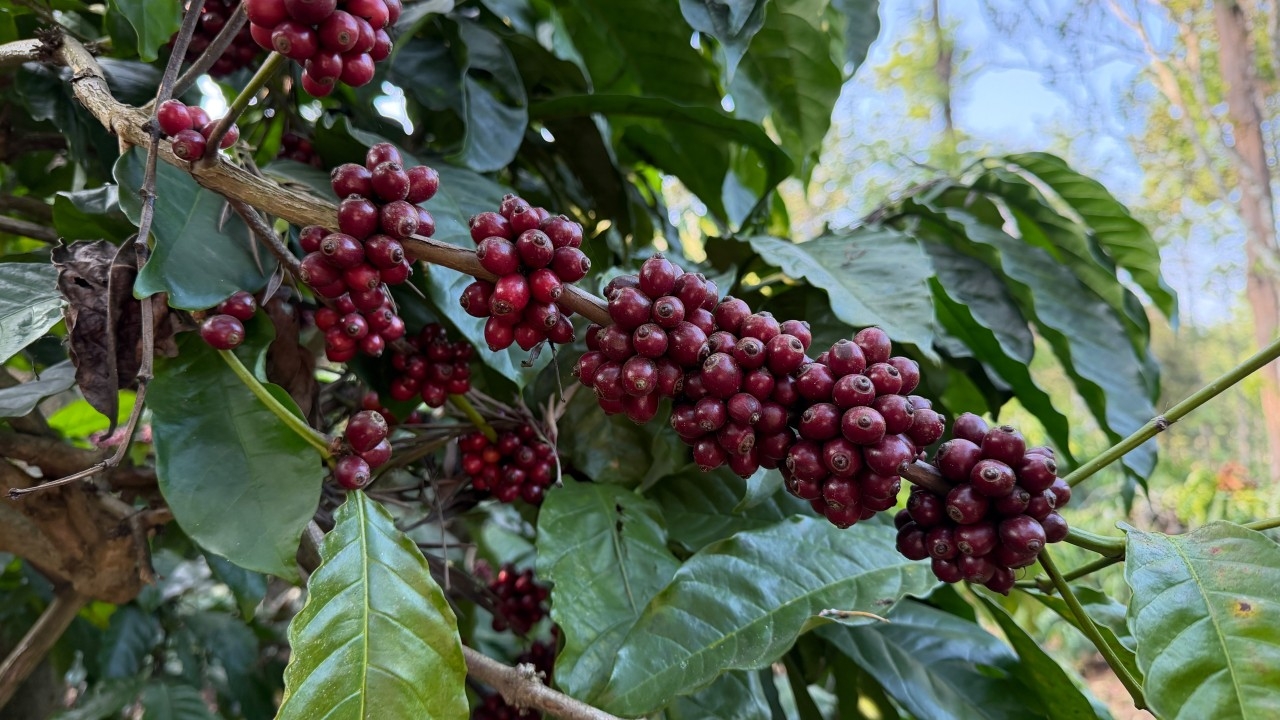
As temperatures increase, arabica cultivation might need to move to increasingly higher terrain to stay cool, which will not be easy for owners of small coffee plantations. Another solution is to grow other species of coffee plant that can better withstand climate change. There are 134 known wild coffee species, and a few are being grown for their climate resilience, including C. liberica and C. excelsa.

Aaron Davis, a researcher at the Royal Botanic Gardens, Kew, says “the success stories are always about changing the species” that farmers grow. In wet regions, that could mean switching from arabica to robusta, but in other places it could instead mean growing C. liberica, which tolerates higher temperatures than arabica does and does not require as much water.

Davis has also tried a “bonkers” coffee species, Coffea stenophylla, which was described by a Swedish botanist in West Africa in the 18th century and then largely forgotten by science. “It still freaks me out, because here we have a coffee which isn’t related to arabica, occurs in an extreme environment – and yet tastes like a very specific arabica from Rwanda.” The challenge, he says, will be to breed varieties of C. stenophylla that are productive and that farmers find easy to grow.

Species Characteristics Challenges
Arabica (Coffea arabica) Delicate taste, most popular Heat-sensitive, dies with slight temperature rise
Robusta (Coffea canephora) Strong, bitter, heat-tolerant High water demand, yields drop in drought
Liberica (Coffea liberica) Heat-tolerant, tropical fruit flavors Different taste, not for everyone
Excelsa (Coffea excelsa) Climate-resilient, fruity and almondy notes Rarely cultivated, not well known
Stenophylla (Coffea stenophylla) Tastes like Rwanda arabica, tolerates harsh conditions Low productivity, cultivation challenges

Chemistry Tricks: Grinding Frozen Beans and Improving Extraction

Some researchers are looking for ways to get more out of the shrinking arabica supply. Christopher Hendon, a materials scientist at the University of Oregon, says: “There’s a lot you can do at the consuming side.” Hendon and his collaborators have found that grinding coffee beans at below freezing temperatures results in smaller particles. However, counter-intuitively, they also found that finer grinds do not necessarily yield tastier brews. Smaller particles tend to aggregate through electrostatic forces, reducing the surface area exposed to water – and thus the amount of chemicals entering solution – but tweaks to the grinding techniques, such as starting with moist beans, can help reduce the clumping.

Somewhat surprisingly, coarser grinds can also release more of the good stuff into an espresso, but this happens only when beans are put under pressures as low as 7 atmospheres. (A typical coffee-house machine works at around 10 atmospheres.)

Chemistry: The Key to Coffee’s Future

Chemistry is also crucial to investigating alternative coffee plants and how to turn them into desirable products. Hendon says the science of coffee is still young, and researchers are working to develop reproducible and objective techniques. “Compositional measurement is a big challenge,” says Hendon, “and so is assigning a numerical value to flavor.” A typical cup of coffee might contain more than 2,000 organic compounds, and their concentrations vary greatly depending on how and where the plant is grown – and how the beans are roasted.

Tesfaye emphasizes that scientists, of all people, should care about coffee’s future, not just because science is good for coffee, but because coffee is good for science, too. “Many discoveries and knowledge are generated after having a cup of coffee.”

Frequently Asked Questions About Coffee’s Future Under Climate Change

Q: Why is coffee threatened with extinction?

A: Due to climate change. Arabica is highly sensitive to rising temperatures, while robusta requires large amounts of water and suffers from drought.

Q: What are the proposed solutions to save coffee?

A: Solutions include preserving arabica genetic diversity, breeding heat and drought-resistant varieties, cultivating wild species like liberica, excelsa, and stenophylla, and improving grinding and extraction techniques.

Q: What is Coffea stenophylla?

A: A wild coffee species described in the 18th century and then largely forgotten. It tastes similar to specialty arabica from Rwanda and tolerates harsh environmental conditions.

Q: How can chemistry help address the coffee crisis?

A: Through improved grinding and extraction techniques, such as grinding frozen beans, to extract better flavor from less coffee, and developing objective methods to measure flavor.

Q: What is Ethiopia’s role in preserving coffee?

A: Ethiopia is the homeland of arabica coffee. The government is establishing conservation areas and living collections of over 12,000 plants to preserve genetic diversity.

Coffee faces an existential threat from climate change, but scientists around the world are working tirelessly to save it. From preserving genetic diversity in Ethiopia, to exploring resilient wild species, to improving grinding and extraction techniques, the future of coffee depends on scientific creativity and international collaboration. As one researcher said, “Many discoveries are generated after having a cup of coffee.” Let us work together to preserve this precious beverage for generations to come.

Prepared and edited by: Qahwa World – Based on an article in Nature.

All rights reserved. Republication with attribution permitted.

Publication date: July 1, 2026

Panama’s coffee terroir is no longer just a story. It’s becoming science

Source: Ennio Cantergiani (l’Académie du Café – Switzerland)
Author: Qahwa World – Dubai
Date: May 24, 2026

Panama’s coffee terroir is no longer just a story. It’s becoming science

Executive Summary

  • A 2025 study in Food Science & Nutrition proved that Panamanian Geisha coffee differs by production zone using sensory analysis.
  • Samples: washed Geisha from Boquete, Renacimiento, Tierras Altas, and Potrerillos Arriba from 2023-2024 harvest.
  • Statistical analysis showed Boquete, Renacimiento, and Tierras Altas are distinguishable at 95% confidence interval.
  • Same variety, same process, different cup. That is terroir validated by science, not just poetry.
  • Differences were driven by aroma and flavor attributes, not physicochemical parameters like density or pH.
  • Panama’s Technological University (UTP) is now building a chemical fingerprint lab for coffee aromas using GC-MS technology.

From Poetic Narrative to Scientific Proof

For years, the uniqueness of Boquete coffee has been described in poetic terms – volcanic soils, mountain mists, the bajareque wind, the flanks of Barú volcano. Beautiful narrative. But is it science? In 2025, we got a serious answer.

A study published in Food Science & Nutrition (Ledezma et al., 2025) collected washed Geisha samples from four Panamanian production zones – Boquete, Renacimiento, Tierras Altas, and Potrerillos Arriba – from the 2023-2024 harvest. Standardized roasting. Standardized brewing. A screened consumer panel using the RATA (Rate-All-That-Apply) method, with correspondence analysis, multiple factor analysis, and discriminant analysis.

The Result: Terroir Statistically Confirmed

The study found that Boquete, Renacimiento, and Tierras Altas are statistically distinguishable – at a 95% confidence interval – based on aroma, flavor, and taste attributes. Same variety. Same process. Different cup. That is terroir. Interestingly, physicochemical parameters alone did not drive the differences. The signal came from sensory attributes – which tells us that the expression of terroir in Panamanian Geisha is primarily aromatic and flavor-driven, not a matter of density, pH, or Brix.

Production Zone Statistical Distinction Primary Driver
Boquete Distinguishable at 95% Sensory (aroma, flavor)
Renacimiento Distinguishable at 95% Sensory attributes
Tierras Altas Distinguishable at 95% Sensory attributes
Potrerillos Arriba Less distinct Further study needed

What Panama Is Building on Top of That

In parallel, the Technological University of Panama (UTP), funded by SENACYT, has launched pioneering research to create a chemical fingerprint of Panamanian coffee aromas using advanced analytical techniques (GC-MS) – specifically targeting the Chiriquí Highlands. For the first time, Panama now has the national infrastructure to conduct aroma analysis without sending samples abroad. The goal: scientifically protect designations of origin and give producers tools to optimize fermentation, drying, and roasting based on their specific terroir signature.

Why This Matters Beyond Panama

This is exactly the trajectory the specialty coffee world needs to follow. Wine has had appellation science for decades. Coffee is just beginning to build its equivalent – moving from storytelling to molecular evidence. For Q Graders, sensory scientists, and specialty buyers, this is a pivotal moment: the tools to validate what our palates have long suspected are finally being developed at origin.

Frequently Asked Questions (FAQ)

1. What does the Ledezma study prove about Panamanian Geisha coffee?

It proves that Boquete, Renacimiento, and Tierras Altas produce sensorially distinct coffee at 95% confidence, despite same variety and processing.

2. Are physicochemical parameters enough to distinguish terroir?

No. The study found that differences were driven by sensory attributes (aroma and flavor), not density, pH, or Brix.

3. What is the new project at the Technological University of Panama?

A project to create a chemical fingerprint of Panamanian coffee aromas using GC-MS technology, allowing local analysis without sending samples abroad.

4. What is the goal of this scientific initiative?

To scientifically protect designations of origin and provide producers with tools to optimize processing based on their specific terroir signature.

5. Why is this a milestone for the specialty coffee industry?

It moves coffee from storytelling to molecular evidence, similar to what the wine industry achieved decades ago with appellation science.

6. What is the reference for the scientific study?

Ledezma et al. (2025). Sensory Perception and Physicochemical Characteristics of Geisha Coffee From Different Production Zones in Panama. Food Science & Nutrition. DOI: 10.1002/fsn3.71278

Author: Ennio Cantergiani (l’Académie du Café – Switzerland)  |
Publication date: May 24, 2026

The Coffee That Was Never as “Robust” as Its Name Promised

By: Dr. Steffen Schwarz, Coffee Consulate

There is a word in coffee that has done more damage than most people realise. It is short, convenient, commercially familiar, and scientifically careless. The Coffea canephora Robusta myth is a prime example of how a term can become misleading in the world of coffee.

For decades, the global coffee industry has used the name “Robusta” as if it described a species, a flavour profile, a production system, a price category, and a climate promise all at once. It is a compression of botany into marketing. Like many convenient mistakes, it has quietly shaped how people think.

“Robusta” is not just a name. It is a mindset that has shaped how the industry underestimates Coffea canephora.

Say the word often enough and the assumption follows. Canephora must be robust. Tougher. Simpler. Less fragile. Less complex. Less deserving of precision. Less worthy of sensory ambition. Less in need of science.

But Coffea canephora is not a slogan. It is a species with deep genetic history, regional diversity, ecological vulnerability, breeding potential, and a future that may become central to the survival of coffee as we know it.

The false name has made the industry lazy. Worse, it has made the industry dangerously confident.

When Language Meets Climate Reality

The irony is difficult to ignore. At the moment coffee is entering one of the most unstable climatic periods in its cultivated history, the species most often described as “robust” is revealing how misleading that label can be.

Canephora can be productive. It can be vigorous. It can tolerate conditions under which many Arabica systems struggle. Yet drought does not read marketing language. Heat stress does not respect trade vocabulary.

Climate does not respond to terminology. Drought and heat expose biological reality, not branding.

Across Africa, Asia, and Latin America, the real question is no longer whether Canephora sounds strong. It is whether the right genetics, farming systems, nursery practices, disease resistance, root architecture, flowering behaviour, pollination compatibility, and processing ambitions can be brought together fast enough to make the crop resilient in the world that is arriving.

A Species of Diversity, Not Simplicity

Coffea canephora is not a single blunt instrument. It is a complex diploid species, largely outcrossing, genetically diverse, and historically rooted in the tropical forests of Central and West Africa.

Its major genetic groups, often described as Congolese and Guinean, express very different traits. Growth habit, caffeine content, bean weight, drought response, disease resistance, maturation timing, and agronomic behaviour vary across the species. The Brazilian conilon group adds further complexity, shaped by hybridisation and farmer selection.

This diversity is not a complication. It is the foundation of Canephora’s future.

The future of Canephora will not be built from a single type, but from its genetic diversity.

Progress depends on understanding which genetic resources carry the traits that matter, where they perform best, under which production systems, and for which market demands.

The Cost of Assumptions

The problem with calling a species “robust” is not linguistic. It is strategic.

It encourages underinvestment in fragility. It replaces measurement with assumption. It links lower market prices with lower intellectual attention.

Climate change is now exposing the cost of that mindset.

Assumed resilience is one of the most dangerous risks in a climate-unstable future.

Prolonged drought, higher temperatures, irregular flowering, shifting pest pressure, and changing disease dynamics cannot be addressed with outdated assumptions. They require precision.

Climate Stress Is Not Singular

Drought is perhaps the clearest example. Canephora does not simply tolerate dry conditions without consequence.

Water deficit reduces photosynthesis, increases oxidative stress, and disrupts flowering and fruit development. When combined with heat, the effects intensify.

In Uganda, prolonged drought and high temperatures have been linked with increased vulnerability to black coffee twig borer and Coffee Wilt Disease. In Asia and Brazil, drought stress and elevated soil temperatures increase the impact of root knot nematodes.

Climate stress rarely acts alone. It weakens plants, favours opportunistic pests and pathogens, and turns manageable challenges into systemic risks.

Coffee Wilt Disease and the Limits of Rhetoric

Coffee Wilt Disease remains one of the most powerful reminders that Canephora’s future cannot be secured through language alone.

Resilience is not a label. It is a result of science, systems, and execution.

Caused by Fusarium xylarioides, the disease devastated production in Uganda in the 1990s and early 2000s. Nearly half of the country’s Canephora trees were lost, with economic damage estimated at around 100 million US dollars.

This was not theoretical. It was a national agricultural crisis.

Uganda’s response was significant. Research institutions developed and released ten Coffee Wilt Disease resistant KR varieties. It was a major achievement in applied breeding.

But resistance alone does not solve the problem.

The Nursery Bottleneck

Canephora’s biology complicates propagation. As an outcrossing species, seed propagation produces variability. Seedlings do not reliably retain the characteristics of the parent plant.

For disease resistance, uniformity, and quality, clonal propagation becomes essential.

This shifts attention to nurseries, where the success or failure of breeding programmes is determined in practical terms.

The future of coffee can depend on something as simple as how a mother plant is bent.

A 2025 study examining KR1, KR3, and KR4 varieties demonstrated how simple interventions can transform outcomes. By adjusting the bending angle of mother plants and applying targeted NPK fertilisation, researchers significantly improved suckering performance.

Horizontally bent mother plants produced the strongest results. Fertiliser further enhanced growth. The interaction between variety, plant architecture, and nutrient management proved decisive.

This is not a minor technical detail. It is the logistics of resilience.

Where Science Becomes Operational

Applied coffee science is most powerful when it connects theory with practice.

Breeders may develop resistant genotypes. Pathologists may understand disease mechanisms. Geneticists may map diversity. Yet without effective nursery systems, these advances do not reach farmers.

A horizontally bent mother plant may not appear as significant as genomic innovation, but it can determine how quickly improved material is deployed at scale.

Rethinking Canephora Quality

The long standing perception of Canephora as inherently inferior in cup quality is no longer defensible.

High quality Canephora is not a contradiction. It is a frontier.

Selective breeding for cup potential, improved harvesting practices, better post harvest processing, controlled fermentation, and precise roasting are all necessary.

Canephora does not need to replicate Arabica. It has its own sensory identity, including structure, body, spice, cocoa, nutty profiles, and tactile depth.

A System That Must Work Together

The future of Canephora depends on coordination across the value chain.

Breeders, farmers, nurseries, processors, roasters, researchers, and buyers must operate within aligned systems. Without this, progress remains fragmented.

Why Naming Still Matters

Calling the species Coffea canephora is not a matter of academic correctness.

It is about restoring clarity.

Accurate language drives accurate thinking. Accurate thinking drives better coffee systems.

Accurate thinking drives investment. Investment enables science. Science shapes outcomes in the field.

The Decade Ahead

Canephora is not invincible. It is not inferior.

It is diverse, vulnerable, productive, promising, and still insufficiently understood.

  • Can breeding cycles be shortened without losing rigour?
  • Can resistant varieties be multiplied efficiently?
  • Can quality become a primary breeding objective?
  • Can climate adaptation become proactive rather than reactive?

Conclusion

The coffee industry has spent decades hiding Canephora behind the wrong name.

That era is ending.

Coffea canephora must be understood as it is. A species with its own biology, its own challenges, and its own future.

Its resilience will not be assumed. It will be built through science, precision, and attention.

And that begins with calling it by its proper name.

An Extraordinary Interview with Professor Chahan Yeretzian, Pioneer of Cell-Grown Coffee

Dubai – Ali Alzakary
For three decades, Professor Chahan Yeretzian has been one of the most respected voices in coffee science. As Emeritus Professor of Analytical Chemistry and head of the ZHAW Coffee Excellence Centre at the Zurich University of Applied Science (ZHAW) in Switzerland, he has witnessed every major shift in how we understand, roast, and taste the world’s most beloved beverage. But five years ago, even he found himself entertaining an idea that many in the industry dismissed as science fiction: growing coffee not on mountainsides, but in bioreactors.

Today, that once-outlandish vision is close to commercial reality. Food Brewer AG, working closely with Professor Yeretzian’s team, is preparing to bring cell-cultured coffee to market by late 2027. The natural coffee bean, he has long argued, functions as a “pressurised micro-reactor” essential for flavour development. So how do you replicate that inside a steel tank? Can lab-grown cells ever deliver the sensory complexity of a great espresso? And what happens to the millions of smallholder farmers across the Coffee Belt if production shifts to laboratories in Zurich or Singapore?

We sent these questions, probing, sceptical, and deeply curious, to Professor Yeretzian. His answers arrived with characteristic rigour, honesty, and a surprising dose of optimism. He does not see cell-grown coffee as a replacement for tradition. He sees it as a necessary complement, a tool for stability, and perhaps even an invitation to rethink what coffee can be.

What follows is an extraordinary interview about an extraordinary idea. Read on.

The “Micro-Reactor” Challenge

Professor, you have famously described the natural coffee bean as a “pressurized micro-reactor” essential for flavor development. Given that cell-cultured biomass lacks this physical structure, how close can we realistically get to that “god shot” of espresso? Are we chasing a chemical mirror image, or is the goal to create an entirely new sensory category?

Your 2024 study showed that lab-grown samples hit about 40 percent of the aromatic intensity of traditional beans. From a chemist’s perspective, is that “flavor gap” a temporary hurdle of scaling, or an inherent limitation of growing cells outside the cherry?

My interest in cell-grown coffee comes from multiple directions.

First, sustainability and supply. When I started in coffee science and research thirty years ago, sustainability in coffee plantations and cell-grown coffee were hardly subjects in science and economics. My growing interest began five years ago, from the realisation that traditional coffee cultivation had become so successful and was produced in such huge volumes that at some point in the future, (i) the demand for traditional farm-grown coffee would outstrip supply, (ii) coffee prices would rise with no return, and (iii) coffee consumption would become unsustainable in terms of climate change, water, life cycle assessment, and so on. Even if I was not and am not a proponent of substituting farm-grown coffee with cell-grown coffee, it seemed obvious to me that cell-grown coffee, as an option to close the gap between supply and demand of traditional mainstream coffee, was a very good solution.

“Cell-grown coffee is neither meant to replace traditional coffee, nor is it my ambition to replace high-quality specialty coffee. For the moment, it shall close the gap and aim at the quality of mainstream coffee.”

Cell-grown coffee is neither meant to replace traditional coffee, nor is it my ambition to replace high-quality specialty coffee. For the moment, cell-grown coffee shall close the gap and aim at the quality of mainstream coffee, not specialty coffee. But if the price of traditional coffee continues to climb and the quality of cell-grown coffee improves, which it will, it is possible and even probable that cell-grown coffee competes with, or partly displaces, farm-grown specialty coffee.

As of today, cell-grown coffee does not reach the intensity of a good espresso. But a project between Food Brewer AG and the Coffee Excellence Centre of the ZHAW, sponsored by the Swiss National Science Foundation, has precisely that objective: to find strategies and technologies to increase the flavour intensity and improve the profile, both the sensory experience and the chemical composition, of cell-grown coffee to mimic farm-grown coffee. While this will increase and evolve over the coming years, I expect the intensity and profile will reach the target of mimicking a good farm-grown coffee within twelve months, though not necessarily a “god shot” of espresso.

In conclusion, while the flavour profile of good espresso is a target of the ongoing project for the next twelve months, in the long term we want to create an entirely new sensory category with a possible signature flavour profile. We could try to create a flavour that people recognise as coffee from, say, Food Brewer, a common base and core with an individual, proprietary top note. I wrote a book chapter on the flavour pyramid, together with Imre Blank and Stefan Palzers, in 2007.

Second, energy consumption. The realisation that cell-grown coffee, first ground as green coffee and then roasted, versus traditional coffee, first roasted as whole beans and then ground, leads to an overall tenfold lower energy consumption during roasting. This is because of smaller particle size, shorter roasting time, slightly lower temperature, and drier coffee particles. Even if roasting accounts for only about five percent of the total carbon footprint along the whole value chain, it remains a factor in reducing energy consumption. With expected higher and more volatile energy costs in the future, the more stable and predictable costs of cell-grown coffee become an advantage.

Third, technology. Coffee is traditionally roasted as whole beans to make them brittle and easy to grind, after which the roasted beans are ground. But after reviewing the literature on roasting, I believe flavour formation during roasting is under-researched, and I expect science will strongly improve roasting technology. While the image of a “pressurized micro-reactor” remains correct, roasting technology can be modified and adapted for ground green coffee, for example, by adding fat during roasting or using a coarse grind. Research on defects by the ZHAW, sponsored by the SCA, also shows that broken beans have a smaller sensory impact than previously believed.

Fourth, mimicking the sensory profile of traditional coffee. For an expert, the intensity of a “god shot” espresso can only be reached by roasting intact beans. But here comes the but: the sensory profile of roasted ground coffee depends mainly on three parameters: grind size (the coarser the grind, the closer the sensory profile to whole-bean roasting; larger than 700 micrometres is ideal), freshness, and addition of fat during roasting to selectively capture fat-soluble coffee flavour compounds.

Fifth, creating novel sensory profiles. Cell-grown coffee is authentic coffee. This gives it the freedom to taste outside the traditional framework of an espresso. In recent years, we have come to accept and even love the flavour profiles of fermented coffee, fruity and sweet, notes that we would not have recognised as coffee fifteen years ago. Since cell-grown coffee is authentic, we could and should be free to create entirely new flavour profiles. Be creative. But cell-grown coffee will also be able to reproduce traditional espresso, and I hope soon at a stable and good price. One additional trend I see is the transition from espresso to other cup formats, such as filter coffee. Soon, the benchmark may shift from traditional espresso to filter coffee.

In conclusion, cultured coffee has the structure of ground green coffee and indeed lacks the structure of a tree-grown whole bean as a “pressurized micro-reactor” for roasting and flavour formation. The whole-bean structure is important but probably not absolutely necessary for coffee flavour development. There are potential structural workarounds, such as pressing the cell-grown powder into a bean-like structure to use existing roasting equipment, a “plug-and-play” solution; grinding or growing coarse; or adding some fat during roasting to catch and encapsulate fat-soluble flavour compounds. There are also potentially new roasting technologies that can add intensity.

“Cell-grown coffee is authentic coffee. This gives it the freedom to taste outside the traditional framework of an espresso… we should be free to create entirely new flavour profiles.”

For the moment, the intensity of coffee prepared with cell-grown coffee is less than fifty percent of good traditional coffee. Still, we first want to mimic traditional coffee, which I assume will be successful within twelve months. Once achieved, cell-cultured coffee has the freedom to chase an entirely new sensory category, composed of base, core, and top note. We are already accepting and partly loving coffee with novel flavour notes that did not previously belong to the flavour world of coffee, such as strongly fermented coffee or very lightly roasted coffee, as long as it is coffee. So I assume the current “flavour gap” is a temporary hurdle.

There is an ongoing larger science project, one million Swiss francs, between Food Brewer AG and the Coffee Excellence Centre of the ZHAW, largely financed by InnoSuisse, on flavour enhancement, matching the profile to traditional coffee, scaling to larger production volumes, and a comparative life cycle assessment of cell-grown versus traditional coffee. The research in this collaboration aims to mimic the pressurised micro-reactor and close the existing gap, and multiple strategies are being explored. Furthermore, cell-cultured coffee contains most of the coffee-specific precursors and volatiles, which can be tasted in the cup. Missing or low levels of precursors, such as chlorogenic acids due to structural differences, can be boosted by modifications during roasting: addition of fat, coarser grind, post-processing, and new roasting technologies.

Disruption and the Global Value Chain

The industry is watching Food Brewer AG and its recent funding rounds very closely. As this technology moves from the lab to the shelf, how do you see the pricing architecture evolving? Will lab-grown coffee debut as a premium sustainability play, or is it positioned as a high-volume solution to stabilize a volatile commodities market?

There is a brewing concern about the “de-skilling” of the coffee origin. If we shift production to bioreactors in Zurich or Singapore, what happens to the socio-economic fabric of the Coffee Belt? Can this technology coexist with smallholder farmers, or are we looking at a future where the Global North produces its own supply?

Concerning Food Brewer AG, this company has in opinion the most advanced in cell-cultured products. They already produce very good cell-cultured chocolate in large volumes and will soon also produce good cell-cultured coffee in larger quantities. Food Brewer’s ambition is to offer a price-competitive cell-cultured coffee. Their foremost aim is to be a reliable addition to conventionally farmed coffee, both in terms of pricing and volume. At the same time, Food Brewer wants to reduce the dependence of companies on farm-grown coffee.

Initially, Food Brewer will likely price cell-cultured cocoa above commodity prices while scaling up. The same will be true for coffee. But I expect the bulk of cell-cultured coffee production will soon be for mainstream quality products, priced equally to or even lower than traditional mainstream coffee. In the future, Food Brewer does not exclude positioning selected varieties as premium specialty coffee.

In conclusion, Food Brewer’s target is to close the gap between demand and supply, and to stabilise the price of coffee in the commodities market. After an initial premium positioning, and as volume increases, the price will decrease and become equal to or lower than farm-grown commodity coffee. But if the price of traditional coffee continues to rise, cell-grown coffee could take a larger share of the coffee market than simply closing the gap.

“The low-skilled and price-sensitive commodity coffee market will probably shift partly to cell-grown coffee. Food Brewer will then complement traditional coffee farming.”

Now, to the question of de-skilling and the socio-economic fabric of the Coffee Belt. In my opinion, these are not the same thing. I expect farm-grown coffee production will shift in the future towards higher-priced and highly skilled high-quality coffee. Traditional high-quality coffee farming and the skills related to it are essential for the world’s coffee supply. These traditions and the know-how, especially in post-harvest treatment and fermentation for flavour development, are also guiding how cell-cultured coffee is being developed. In contrast, the low-skilled and price-sensitive commodity coffee market will probably shift partly to cell-grown coffee. Food Brewer will then complement traditional coffee farming.

The Transparency and Health Factor

One of the most striking findings in your research was the sharp decline in caffeine and chlorogenic acids in cultured cells. Beyond the buzz, these compounds are tied to the health benefits consumers associate with coffee. In your view, will “cellular coffee” ever be able to claim the same nutraceutical profile as a farm-grown bean?

While cell-cultured coffee is marketed as “deforestation-free,” has there been a rigorous Life Cycle Assessment comparing the energy footprint of massive bioreactors against traditional, carbon-sequestering agroforestry?

I think and hope that cell-cultured coffee will be able to claim a similar nutraceutical reputation and profile as a farm-grown bean. Perhaps even better. For the moment, caffeine and chlorogenic acids are indeed lower in cultured coffee. But in principle, secondary metabolites like caffeine and chlorogenic acids can be increased; this remains to be shown and done. Lower caffeine and chlorogenic acids could also be seen as a health advantage. Indeed, we see health trends moving towards caffeine-free or low-caffeine coffee consumption. So cell-grown coffee also has properties that could position it as “healthy coffee.”

Cell-cultured coffee from Food Brewer contains caffeine in the culture broth, which could, if needed, be purified and added post-cultivation.

As for life cycle assessments: LCAs on plant cell-based production have shown the potential to reduce water usage, footprint, and global warming by nearly ninety percent. Part of the InnoSuisse project is to challenge and specify this number.

Regulatory Hurdles and Market Adoption

We are seeing regulatory movement in Singapore and the European Union, but the “consumer ick factor” remains a hurdle for many biotech foods. How do you plan to bridge the narrative gap? Do you see hybrid blends, mixing traditional beans with lab-grown biomass, as the necessary “Trojan Horse” for mass-market acceptance?

As someone who has shaped coffee science for over three decades, how do you define “Coffee” today? Does the definition lie in the DNA of the plant, or in the traditional ritual of the harvest?

Transparency is key to winning consumer acceptance. It is essential to involve consumers and explain that the technology reproduces what nature does. Cell-cultured coffee does not use any gene manipulation. It simply takes cells from coffee plants and forms them directly into ground green coffee.

In fact, it is a form of “more efficient farming,” and that explains the lower life cycle assessment. In traditional farming, coffee cells are taken from a tree, go from fields to greenhouses to the tree itself. They are harvested, processed, and transported over large distances before roasting, grinding, and extraction. Traditional coffee also uses a great deal of water. In cell-cultured coffee, we go directly to the tree, take cells, culture them in reactors, and form ground green coffee directly. It then has to be dried, roasted, and extracted.

“Cell-cultured coffee does not use any gene manipulation. It simply takes cells from coffee plants and forms them directly into ground green coffee. It is a form of more efficient farming.”

Hybrid blended products are one possibility for familiarising consumers with cell-cultured coffee, again, provided the hybrid nature of the product is transparently communicated. For some companies, hybrid blends could be the ultimate solution, allowing them to sell more of their products without ever moving to pure cell-grown coffee. In that case, cell-grown is not just a “Trojan horse”; it is the ultimate goal.

As for how I define coffee today: for me, the smell and taste are crucial. But other factors are very important to people as well: the mental and physical energy it provides, the health it promotes, and its role as a social facilitator. I believe that for most consumers, the experience is the most important factor, once they begin to trust the new food. They already accept artificial vanilla.

The Road Ahead

With commercialization targets set for late 2027, what is the single biggest “make or break” factor for this project over the next 18 months? Is it the science of the roast, or the economics of the bioreactor?

Looking ahead to 2050, will the “Specialty Coffee” of the future be defined by a specific terroir in Ethiopia, or by a specific bio-recipe developed in a lab?

The legal hurdle. Cell-grown coffee must become legally accepted in large markets. From a toxicological point of view, cell-grown products have been tested in research for many years; they are becoming good and are non-toxic. But the legal hurdle remains. How long it will take is difficult to predict. I hope about one year.

The second factor is successful scaling to achieve attractive unit economics, price. That is the single biggest “make or break” factor.

The third factor is industry transparency together with consumer acceptance. Some foods have already shown the way: chocolate, vanilla, and others.

Looking ahead to 2050: in my view, both will coexist. Cell-based and farm-grown coffee will coexist, with cellular technology always trying to learn from and be inspired by nature. The beauty of cell-grown coffee technology is the possibility of making rare varieties more accessible, since these varieties have very little success in nature due to low yields or weak immune systems. The technology has shown that these varieties often thrive in bioreactors. Furthermore, this could help conserve rare species for future generations.

“My prediction for 2050: farm-grown coffee will continue to largely define the future… but cell-grown coffee will be accepted, particularly in the mainstream market.”

Cell-cultured coffee technology will also probably allow variation according to consumer needs: variable acidity, variable caffeine content, low bitterness, higher sweetness, higher cocoa notes, and so on.

My prediction for 2050: farm-grown coffee will continue to largely define the future. Cell-grown coffee will be accepted by the population, particularly in the mainstream market. But there will also be spots in the specialty coffee market carved out by cell-grown production, depending on the price of farm-grown coffee. The advanced skills needed to produce cell-grown coffee will be established. Cell-grown coffee will allow production where coffee is drunk, with short transportation, in the quality and quantity needed, without sensory variation and with far fewer by products.

 

ICC 2026 Trieste to Focus on Climate, Consumers and Coffee Circularity

Trieste, Italy – Qahwa World

The International Coffee Convention (ICC) 2026 will be held in Trieste this October, bringing together scientists, industry leaders and policy experts to address some of the most pressing challenges facing the global coffee sector.

Under the theme Coffee at the Crossroads: Climate, Consumers and Circularity, the event will examine how coffee production and trade are adapting to climate change, shifting consumer demand and the growing push toward circular and sustainable systems.

The ICC has positioned itself as a unique international forum that connects applied scientific research with real-world decision making across the coffee value chain. Unlike traditional trade fairs or academic conferences, the convention is designed to translate research into practical insight for industry professionals.

Previous editions were held in Mannheim in 2023 and 2024, where the format gained recognition for combining interdisciplinary science with industry-focused discussion. The 2026 edition continues this model with a programme structured around six key tracks.

These cover climate and agriculture, sustainability and processing, market and consumer trends, technology and innovation, ethics and social equity, and trade and regulation. Topics include climate resilience in coffee farming, circular economy approaches in processing, digital transformation, supply chain transparency, and evolving regulatory frameworks in major coffee markets.

The convention brings together a wide range of expertise, including agronomists, economists, geneticists, sensory scientists and behavioural researchers, alongside producers, traders, roasters and technology providers. Organisers say this mix is intended to strengthen collaboration between research and industry practice.

ICC 2026 will also open a call for papers, inviting contributions that combine scientific rigor with practical relevance. Submissions are expected to address challenges and opportunities across the coffee sector, from cultivation and processing to technology, sustainability and trade.

The two day event focuses on concentrated dialogue, applied insight and professional networking, with an emphasis on connecting science and industry in a way that supports real decision making.

Previous ICC proceedings and conference materials remain publicly accessible, offering insights into the research and discussions from earlier editions.

Cell-Cultured Coffee Moves Closer to Market

Zurich  — Qahwa World

As climate change and surging global demand strain traditional coffee farming, a laboratory-grown alternative is moving from an experimental concept to a potential market contender. Cell-cultured coffee, produced by nurturing coffee plant cells in bioreactors and then harvesting, drying, roasting, and brewing the resulting biomass, has secured significant new funding and regulatory momentum over the past 18 months, according to industry developments and foundational research led by Professor Chahan Yeretzian.

Yeretzian, who retired in early 2026 as head of the Zurich University of Applied Sciences (ZHAW) Coffee Excellence Center after more than three decades of pioneering work, laid the analytical groundwork for this emerging category. His landmark 2024 study, published in ACS Food Science & Technology, provided the first rigorous, side-by-side chemical and sensory comparison of cell-cultured coffee (CC) and traditional farm-grown beans (TC). The paper’s three-step analytical platform, examining unroasted precursors, roasted volatiles, and brewed sensory profiles, demonstrated that while the two are chemically distinct, the lab-grown version can be optimized to deliver authentic coffee character.

The findings have since become a blueprint for commercial players. In February 2025, Zurich-based Food Brewer AG closed a CHF 5 million seed extension, bringing its total funding to approximately CHF 10 million. Strategic investors include Lindt & Sprüngli and Sparkalis, the venture arm of Puratos, both of which are actively testing the company’s coffee and cocoa biomass for potential integration into products. Food Brewer grows cells sourced locally in Switzerland, processes them through lyophilization and roasting, and is scaling production under controlled bioreactor conditions, precisely the approach Yeretzian’s research showed could preserve aroma precursors without relying on tropical agriculture.

You may read: A Cell-Cultured Coffee Revolution Gains Momentum

A parallel effort in Asia is also gaining traction. In April 2025, Singapore-based Another Food announced plans for large-scale commercialization, beginning in Singapore and expanding into Thailand and Malaysia. The startup positions its non-GMO, cell-derived coffee as a hedge against supply-chain volatility, price swings, and quality inconsistencies caused by climate impacts on conventional farming.

These developments echo the vision Yeretzian outlined in late 2024 interviews and earlier writings. “If we love coffee so much, can part of the supply come from sources that are less harmful to the environment and more efficient?” he asked. The 2024 paper reinforced that cell-cultured coffee need not merely imitate traditional beans but could expand the category. By adjusting precursor compounds, including sugars, amino acids, lipids, chlorogenic acids, and caffeine, scientists can explore novel flavor profiles beyond the constraints of the coffee bean’s natural matrix.

The study’s detailed results underscored both promise and challenges. Unroasted cell-cultured biomass showed dramatically higher monosaccharides (52% of dry weight, primarily glucose and fructose) but far lower levels of amino acids (0.07%), lipids (1.98%), chlorogenic acids (0.07%), caffeine (0.15%), and trigonelline (absent). After roasting in a custom nanoroaster, the aroma profile registered only about 40% of the intensity of traditional coffee, with fewer pyrazines, Strecker aldehydes, and guaiacols, but a pronounced dominance of furfurals (54% of volatiles versus 10–15% in conventional roasts). Sensory panels noted milder bitterness and acidity, lower extraction yields due to the powder-like structure, and reduced psychoactive effects resulting from lower caffeine and chlorogenic acid content.

Yeretzian and co-authors, including lead analyst Jaloliddin Khushvakov and VTT Technical Research Centre of Finland cell-culture expert Heiko Rischer, concluded that the bean’s physical structure acts as a “pressurized microreactor” essential for full flavor development. They emphasized that these differences are not insurmountable barriers; rather, they open doors to customization and hybrid products that blend cell-cultured and traditional coffee.

Regulatory pathways remain the primary hurdle. As a novel food, cell-cultured coffee requires formal approvals in major markets. Submissions are now under review in the United States, Singapore, and the European Union, with analysts projecting clearances within the next 12 to 24 months. Industry observers note that beanless surrogate coffees, which do not use coffee cellular material, have reached shelves more quickly, but cell-cultured versions benefit from a stronger scientific foundation and clearer environmental credentials.

Market forecasts reflect growing confidence. The global cell-cultured coffee sector, valued at roughly $173–362 million in 2024–2025, is projected to expand at a compound annual growth rate of 16–21%, potentially reaching hundreds of millions of dollars by the early 2030s as production scales and costs decline.

Yeretzian has consistently framed cell-cultured coffee as a complement, not a replacement, for farm-grown beans. In his emeritus role, the research he championed continues to influence the Coffee Excellence Center and the startups now translating it into products. The 2024 paper’s analytical platform has already become an industry standard for evaluating any coffee alternative.

For an industry facing deforestation, carbon emissions, and unpredictable harvests, the convergence of Yeretzian’s decades of aroma chemistry expertise with fresh capital and regulatory progress marks a pivotal moment. If approvals materialize as expected, the first commercial cell-cultured coffees could appear on shelves or in blends by late 2027 or 2028, not as a wholesale substitute for tradition, but as a scientifically validated innovation that could help secure coffee’s future while expanding its sensory possibilities.

The Science Behind the Perfect Espresso

Dubai – Qahwa World

Coffee lovers often search for the ideal espresso, but scientists are now asking whether it can be understood—and even predicted—using mathematics and physics.

A group of international researchers from science and environmental fields recently explored how brewing behavior might be described through mathematical modeling, focusing on how water interacts with compacted coffee grounds inside an espresso machine.

The Role of the Coffee “Puck”

At the center of the study is the coffee puck—the tightly packed layer of ground coffee used during espresso extraction. When hot water passes through it under pressure, it extracts flavor compounds, oils, and caffeine.

The structure of this coffee puck plays a major role in how evenly water flows and how much flavor is extracted.

Many factors influence this process, including how fine the coffee is ground, how densely it is packed, and how long water interacts with it.

How the Research Was Conducted

To better understand the internal structure of coffee beds, researchers tested different grind sizes using beans from multiple origins. They examined how particles arranged themselves when compressed into espresso-like samples.

  • Multiple grind sizes ranging from fine to coarse were tested
  • Samples were packed under controlled conditions
  • Advanced 3D imaging was used to study internal pore spaces

Using high-resolution imaging technology, the team mapped tiny gaps between coffee particles. These spaces determine how easily water can move through the puck.

Simulating Water Flow Through Coffee

The researchers applied computer-based models inspired by percolation principles, which describe how fluids move through connected structures.

These simulations helped reveal how water distributes itself inside different coffee structures and how extraction efficiency changes with grind size and density.

What Affects Espresso Extraction?

According to the study, several physical properties influence the brewing process:

  • Particle size of ground coffee
  • Density of the packed puck
  • Connectivity of internal pore spaces
  • Surface area exposed to water

Together, these factors determine how long water remains in contact with the coffee and how much material is extracted.

Why This Research Matters

While the study is highly technical, its practical applications may include improving brewing equipment, optimizing grinder settings, and helping industrial coffee systems produce more consistent results.

However, researchers also emphasize that even with advanced models, personal taste still plays a major role in defining what makes the “perfect” espresso.

Conclusion

Science may be able to describe and predict how espresso extraction works, but the final judgment of quality still belongs to the drinker.


Brazil Breeds New Coffee to Face Climate Threat

Campinas – Qahwa World

A recent report published by Reuters highlights growing efforts by Brazilian researchers to safeguard the future of arabica coffee as climate pressures intensify worldwide.

At the Campinas Agronomy Institute in southeastern Brazil, agronomist Oliveiro Guerreiro Filho is working among a diverse collection of coffee plants that differs sharply from the uniform rows seen across most commercial farms. The site brings together a wide range of species, including 15 rare and non-commercial varieties such as racemosa, liberica and stenophylla.

Researchers believe these lesser-known species may hold the genetic traits needed to strengthen arabica, which remains the most widely consumed coffee in the world.

You may like: Brazilian farmer aims to sell rare coffee for nearly $20,000 per bag

Scientists warn that arabica is increasingly vulnerable to rising temperatures and shifting weather patterns. Production in key countries, including Brazil, is expected to face mounting pressure in the coming decades.

According to a report by Rabobank, up to 20 percent of current arabica-growing areas could become unsuitable for cultivation by 2050.

In response, researchers are working to introduce genetic material from more resilient species into arabica plants. The goal is to develop new varieties that can better tolerate heat, drought and disease.

Liberica has attracted particular attention due to its ability to withstand hotter and drier conditions. Farmers in Southeast Asia, especially in Indonesia and Malaysia, have already begun testing the species on a small scale.

Jason Liew, founder of a coffee plantation in Malaysia’s Johor state, said liberica performs well in high temperatures and shows strong resistance to disease.

Brazilian researchers are focusing on transferring such traits into arabica, given its dominant position in global markets.

Guerreiro Filho said the institute has spent years working to transfer drought-tolerance genes from racemosa into arabica in an effort to produce more resilient plants.

The process is long and complex. It involves cross-breeding and exposing new hybrids to harsh conditions to identify the strongest varieties. This work can take between 20 and 30 years.

You may like to read: Coffee Pulp in Brazil: When the Coffee Cherry Refuses to Be Waste

Beyond climate resilience, researchers are also testing hybrids for improved resistance to pests and diseases while maintaining quality. Some crosses have shown stronger resistance to coffee rust, while others perform better against leaf miner larvae.

Rodolfo Oliveira of Brazil’s agricultural research agency emphasized that working with alternative coffee species is essential, noting that arabica has a very narrow genetic base, which increases its vulnerability to environmental threats.

As climate challenges continue to grow, efforts like those underway in Campinas may play a critical role in securing the future of coffee production.

AI and Gas Chromatography Identify Coffee Origins

Dubai – Qahwa World

Researchers have developed a new method that can help identify the country of origin of coffee by analyzing its aromatic compounds. The approach combines gas chromatography with artificial intelligence (AI) to create chemical fingerprints capable of distinguishing coffees from different producing regions.

Volatile compounds play a major role in shaping coffee’s aroma and flavor. These compounds are responsible for many of the subtle sensory notes found in brewed coffee and are often discussed in professional coffee competitions and sensory evaluations.

Scientists are now exploring how these same compounds can also serve as indicators of geographic origin.

According to a report highlighted by Chromatography Online, researchers from Italy and the United States conducted a study that will be published in the Journal of Chromatography. The team analyzed 32 roasted coffee samples provided by the Italian coffee company Illy.

You may read: Japanese Scientists: Coffee Protects Gums from Inflammation

The samples represented several major coffee-producing countries: five from Brazil, six from Colombia, and seven each from Ethiopia, Guatemala, and India.

Instead of focusing on specific chemical markers, the researchers created what they describe as an “untargeted fingerprint.” This approach generates a comprehensive chemical profile of each coffee sample, allowing both known and unknown volatile compounds to contribute to the identification process.

To build these fingerprints, the scientists used two-dimensional gas chromatography, a technique that separates and measures numerous volatile compounds present in roasted coffee. The analysis produced detailed visual maps showing the distribution and intensity of these compounds.

These chemical maps were then analyzed using computer vision, a form of artificial intelligence designed to interpret visual patterns in complex datasets. By combining the results from samples originating from the same country, the researchers created composite templates representing typical volatile compound patterns for each origin.

Read also: Study Links Moderate Coffee Consumption to Brain Health

When additional coffee samples were compared with these templates, the system was able to identify their country of origin based on their chemical signatures.

The researchers note that the study has certain limitations, as factors such as coffee variety and post-harvest processing methods may also influence the volatile compounds present in roasted coffee. Further research may be needed to determine how these variables affect the reliability of the origin templates.

Despite these limitations, the findings could offer new tools for the coffee industry. In addition to helping verify origin, the technology may contribute to more objective assessments of coffee characteristics based on measurable chemical properties.

While traditional cupping remains the primary method for evaluating coffee quality, analytical techniques such as gas chromatography combined with artificial intelligence could provide complementary scientific insights into coffee composition and origin.

University of Kentucky Launches Coffee Science and Culture Certificate

DUBAI – QAHWA WORLD

The University of Kentucky is set to introduce its first academic certificate dedicated entirely to coffee, marking a notable step in the growing recognition of coffee as both an agricultural system and a global cultural force.

The new Coffee, Science and Culture Certificate is led by David Gonthier, associate professor in the Department of Entomology at the Martin-Gatton College of Agriculture, Food and Environment. The program is designed for undergraduate students and aims to explore coffee from farm production and global trade to roasting, sensory evaluation and cultural history.

  • From Origin to Academia

Gonthier’s connection to coffee began through family ties in Honduras, one of the world’s leading coffee-producing countries. Time spent with relatives involved in coffee farming provided early insight into the realities of production and the economic pressures facing smallholder growers.

His academic path later focused on coffee systems in southern Mexico, alongside continued involvement in a small coffee operation in Honduras. He also earned certification as a Q Grader, a professional credential that qualifies specialists to assess and score coffee quality through standardized sensory evaluation.

Recognizing that few U.S. universities offer structured coffee education, Gonthier developed a program that integrates agriculture, economics, science and culture into a unified academic framework.

  • A Multidisciplinary Approach to Coffee Education

The Coffee, Science and Culture Certificate provides students with a comprehensive view of the coffee value chain. Coursework addresses:

The history and cultural significance of coffee

Global trade and smallholder production systems

Roasting science and brewing techniques

Sensory analysis and flavor evaluation

Two core undergraduate courses anchor the program:

Not Just Coffee, which examines coffee’s historical roots and cultural impact

Coffee Sensory Science, focused on flavor perception, tasting methodology and quality assessment

  • The UK Coffee Lab: Hands-On Training

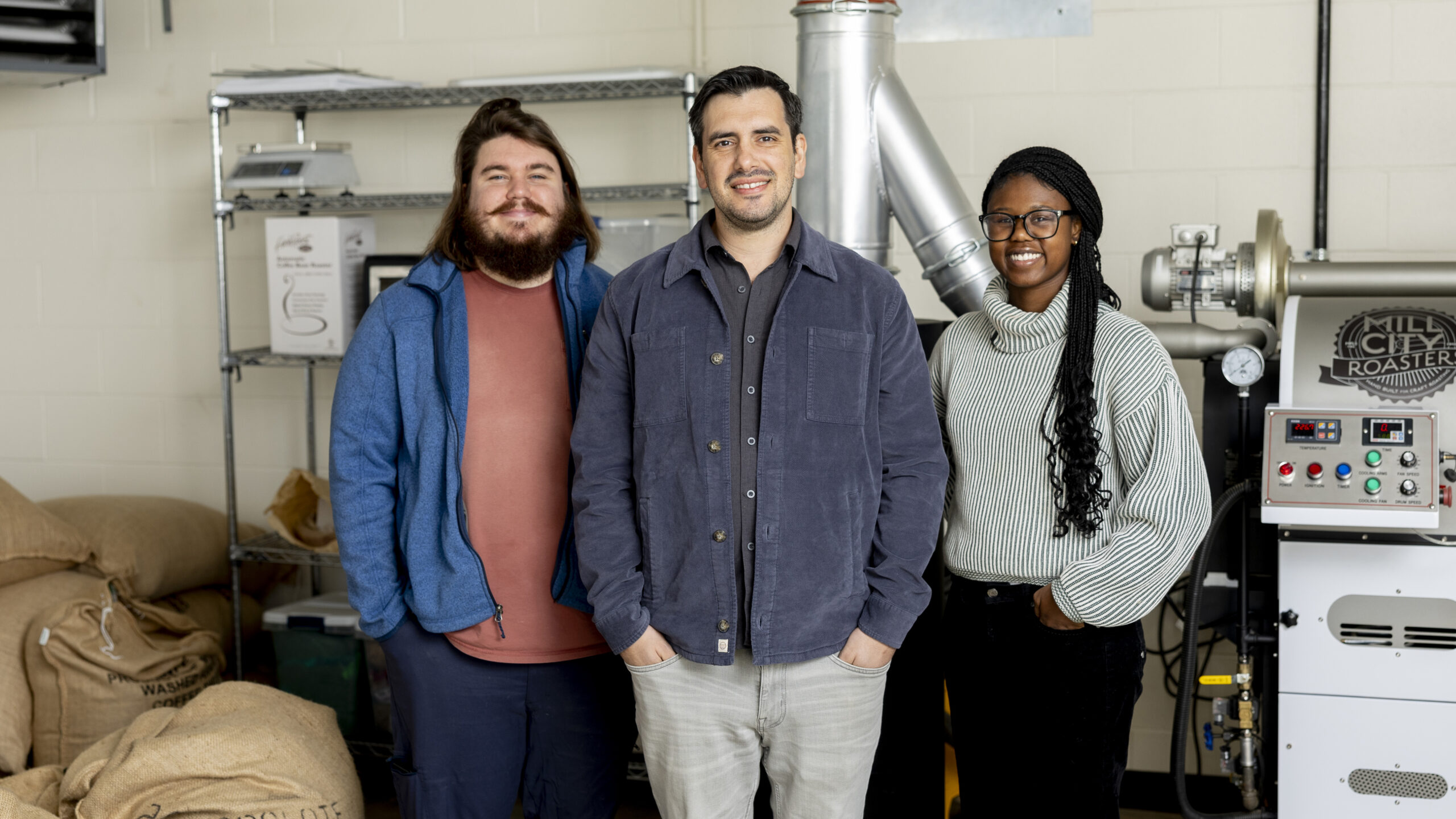
Practical learning takes place at the UK Coffee Lab roastery, located at the university’s Horticulture Research Farm (South Farm). There, students observe roasting in action, study coffee varieties and analyze how roast profiles influence aroma, acidity, body and overall cup character.

The lab and curriculum were developed with the support of Briana Bazile, part-time instructor and graduate fellow in the Gonthier Agroecology Lab, and Viktor Halmos, research analyst at Martin-Gatton CAFE and alumnus of the Department of Natural Resources and Environmental Science.

  • Launch Timeline

Pending final approval, undergraduate students are expected to begin enrolling in the Coffee, Science and Culture Certificate in Fall 2026.

For more information about the certificate program or the UK Coffee Lab, inquiries can be directed to David Gonthier at [email protected]
.

Invisible Gravity in Coffee

By Dr. Steffen Schwarz

If you stand at the edge of a coffee farm at dawn, the industry looks almost impossibly fragmented. It is a mosaic of small plots and a patchwork of varieties where thousands of decisions are made by hand: when to prune, when to fertilize, and when to pick. Multiply that landscape by the number of farms worldwide, and the picture becomes geological in scale.

Yet, the moment the coffee cherry leaves the farm gate, a different geography takes over—not of soil and altitude, but of finance, logistics, risk, and ownership. While often described as “complex,” the sector hides a simpler truth: most of the value chain is governed by a small number of capital-intensive control points. Whoever owns these points sets the tempo for the entire industry.

The Five-Part Series: An Overview

This article serves as the “overview lens” for a five-part series designed for decision-makers. Over the coming weeks, we will dive deep into:

  1. Green Coffee: The industrialization of uncertainty.

  2. Roasted Coffee & Brand Ownership: The architecture of portfolios.

  3. Coffee Technology & Manufacturing: The power of installed bases.

  4. Coffee Service: The economics of high-frequency traffic.

To map this landscape, I use a “triangulation” approach: public filings, official acquisition reports, and corporate self-descriptions. While private groups remain opaque, that very opacity allows capital to concentrate through information arbitrage.

YOU MAY LIKE THIS: Steffen Schwarz: A Silent Shift Towards Canephora is Redefining Europe’s Coffee Preferences

1. Green Coffee: Managing the Industrial Flow

Coffee is biologically diverse but industrially standardized. To turn variable seeds into repeatable contract specifications, the system requires massive infrastructure.

Supply is heavily concentrated at the source: a handful of countries represent the bulk of global supply. At the demand end, the EU and the US act as regulatory gatekeepers; their decisions effectively become global requirements.

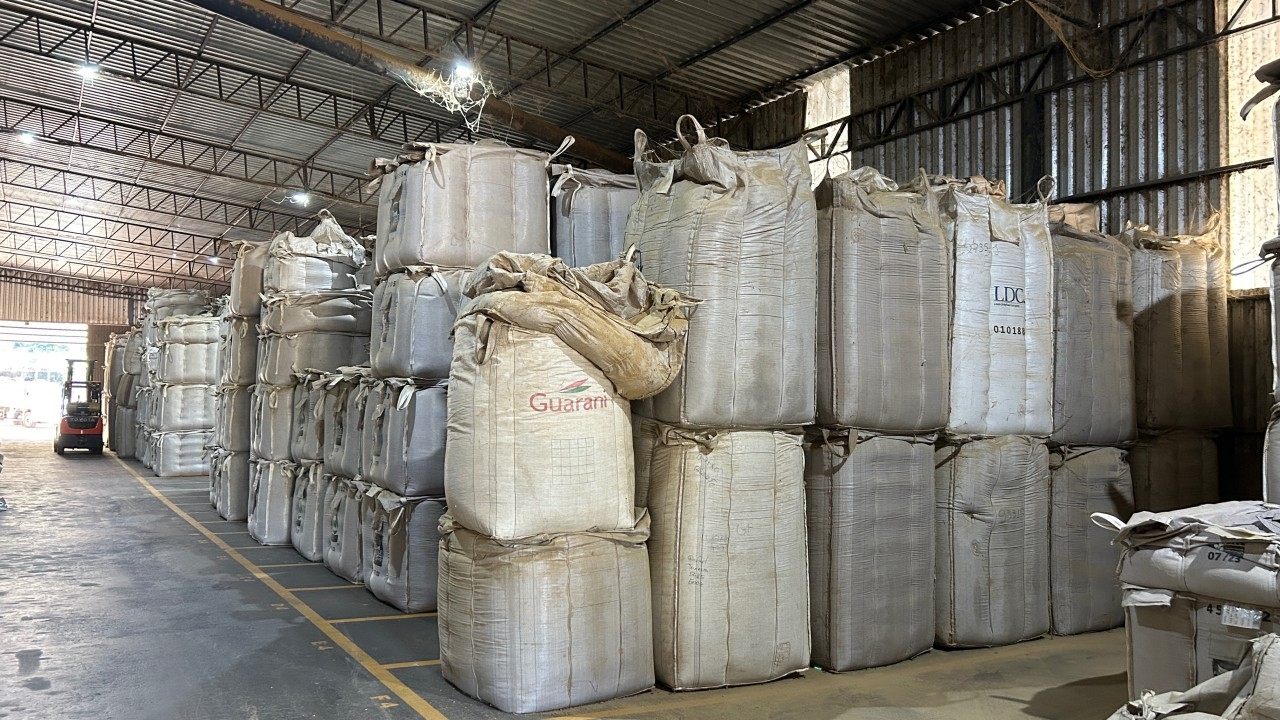
The Power of Working Capital Coffee moves through time before it moves through taste. Financing harvests and managing long ocean lead times requires immense balance sheets. Major merchant houses do not just trade; they process, insure, and provide credit.

  • ECOM Agroindustrial: Integrated from procurement to primary processing.

  • Sucafina: A “farm to roaster” footprint across multiple continents.

  • COFCO International: Connecting China’s state-linked system to global supply, signaling coffee’s role in geopolitics.

  • Volcafe (Hartree Partners): The 2025 acquisition of Volcafe by Hartree Partners signals that coffee is increasingly attractive to energy and commodity-scale capital.

2. Roasted Coffee: The Illusion of Plurality

In the roasting segment, concentration is often masked by brand diversity. A single group may own dozens of brands, appearing as “competitors” on a shelf while negotiating as a single entity.

  • The Nestlé-Starbucks Alliance: The Global Coffee Alliance allows Nestlé to leverage Starbucks’ brand power with its own industrial scale.

  • The “Coffee Champion” Logic: In August 2025, Keurig Dr Pepper announced the acquisition of JDE Peet’s. This move consolidates single-serve systems and global brand portfolios, reducing the number of global negotiating counterparts.

3. Technology: The Lever of Structural Power

Machinery is where chemistry meets economics. Equipment determines labor deployment, consistency, and data harvesting.

Platform Strategy Industrial holdings are building “professional coffee hubs.”

  • De’Longhi Group: By combining Eversys (super-automatic) and La Marzocco (traditional heritage), they control both high-volume convenience and premium café credibility.

  • Ali Group & Artemis Holding: Brands like Rancilio and Franke Coffee Systems are now part of massive foodservice portfolios that prioritize service ecosystems and connectivity over mere “engineering.”

4. Coffee Service: Real Estate and Routine

On the street, coffee looks diverse. On the balance sheet, it is a game of infrastructure.

  • Starbucks: With over 40,000 stores globally as of late 2024, it is less a retailer and more a global infrastructure.

  • Coca-Cola (Costa Coffee): Coffee is used as a strategic complement to a broader beverage empire, appearing in offices, petrol stations, and micro-markets.

  • Private Equity: Roark Capital (Dunkin’) and JAB (Panera/Pret) treat coffee as a high-frequency traffic driver within franchised systems.

Conclusion: Becoming Competent in Concentration

The coffee industry remains plural at the creative frontier—independent roasters still set sensory trends. However, this “long tail” lives within an environment shaped by capital-heavy platforms.

Strategy for the modern manager is not about resisting this gravity, but understanding it. Only by separating the physics of these four interlocking systems—finance, branding, engineering, and operations—can one make intelligent decisions about the future.