Brazil’s Coffee Reality: When Climate Pressure Collides With Market Demand

Dubai – Qahwa World

This analysis is based on reporting first published by Dialogue Earth and written by Kevin Damasio. It has been adapted and republished by Qahwa World.

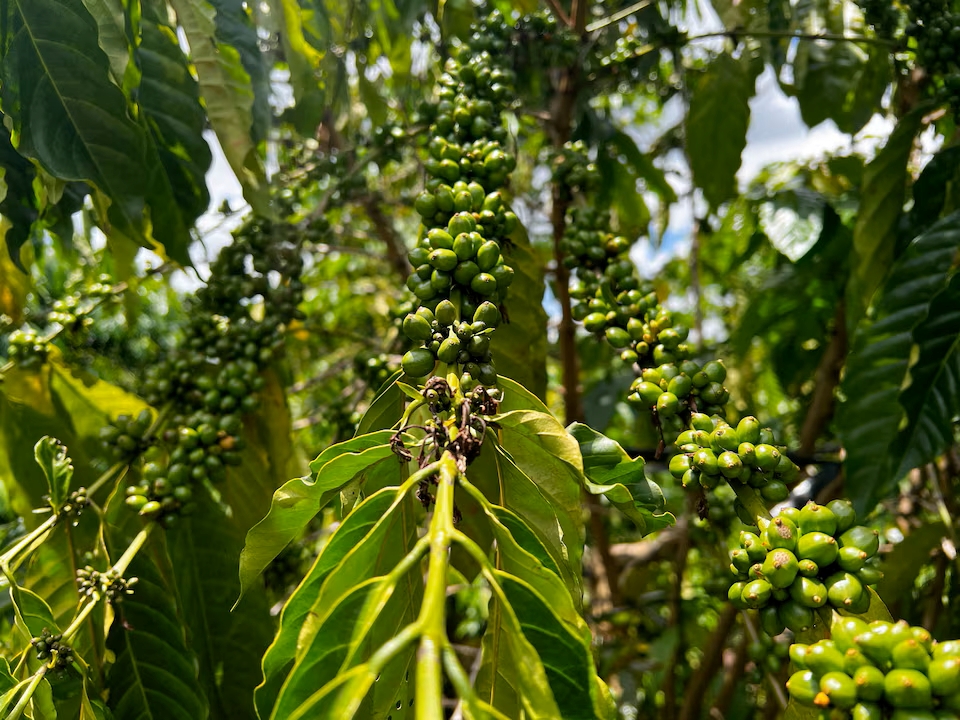
In the hills of Minas Gerais, where much of the world’s Arabica coffee is grown, a quiet transformation is underway. What was once a cycle of seasonal uncertainty has become a continuous struggle shaped by climate instability and shifting global demand.

This is no longer just a farming challenge. It is a defining moment for the future of coffee.

From Climate Variability to Climate Disruption

For generations, Brazilian coffee farmers adapted to occasional droughts, frosts, and irregular rains. Today, those events are no longer exceptions. They are part of a persistent pattern.

Longer dry periods, rising temperatures, and unpredictable rainfall are disrupting the biological rhythm of coffee itself. Flowering cycles are affected. Bean development becomes uneven. Yields lose consistency.

In regions like southern Minas Gerais, farmers are not asking if the weather will affect production. They are asking how severe the impact will be each year.

Scientific projections reinforce what farmers already experience on the ground. A significant share of Brazil’s Arabica-growing land faces the risk of becoming economically unviable in the coming decades if warming trends continue.

High Prices, Fragile Foundations

At the global level, coffee prices have surged as supply tightens. Brazil continues to generate record export revenues, even as shipment volumes fluctuate.

But this apparent strength hides a more fragile reality.

Higher prices are not translating into long-term security for producers. The cost of keeping coffee trees productive is rising. Irrigation systems, soil management, and climate-resistant varieties require investment. Losses from extreme weather events reduce financial resilience.

For many farmers, especially smallholders, the margin between survival and loss is narrowing.

The market is rewarding scarcity, but the conditions behind that scarcity are weakening the system that produces coffee.

The Retreat From Organic

One of the most telling shifts is happening in the field. Organic coffee production, once a growing segment, is under pressure.

Organic methods demand more labor, stricter management, and often higher costs. Under stable conditions, these systems can deliver value through quality and certification premiums. Under climate stress, they become harder to sustain.

As a result, some farmers are returning to conventional practices to secure more predictable yields. Even when they continue to limit chemical use, the shift reflects a deeper tension between sustainability and economic survival.

This raises an important question for the global coffee industry. Can sustainability commitments hold when producers face increasing climate risk and financial pressure?

Adaptation Becomes a Daily Practice

Across Minas Gerais, adaptation is no longer a long-term strategy. It is part of daily decision-making.

Farmers are replanting with more resilient Arabica varieties. They are improving soil cover to retain moisture. They are installing protective systems against hail and excessive sun.

Tree planting is gaining ground as a practical response. Shade reduces heat stress, stabilizes production, and creates microclimates that are more forgiving under extreme conditions.

Yet adaptation comes at a cost. Not every producer has equal access to credit, technical knowledge, or time to experiment. This creates a widening gap between those who can adjust and those who struggle to keep up.

Agroforestry and the Search for Balance

Among the emerging approaches, agroforestry stands out as both a return to coffee’s origins and a potential path forward.

By integrating trees, crops, and ecological processes, agroforestry systems aim to recreate the natural environment in which Arabica evolved. These systems can improve soil health, regulate water cycles, and reduce exposure to extreme weather.

Early results suggest strong potential in terms of resilience and quality. However, productivity gains are not always immediate, and management is more complex.

For many farmers, the question is not whether agroforestry works, but whether it is economically viable in the short term.

Without stronger institutional support, technical guidance, and market incentives, adoption is likely to remain limited.

A Changing Demand Landscape

While production faces mounting pressure, demand continues to expand.

Asia is becoming an increasingly influential force in global coffee consumption. Countries such as China, India, Indonesia, and Vietnam are reshaping how coffee is consumed, marketed, and valued.

For Brazilian producers and cooperatives, this shift offers new opportunities. It also introduces new expectations around volume, consistency, and price competitiveness.

This creates a delicate balance. Expanding into new markets may require scaling production, while climate realities are pushing toward more cautious and diversified farming systems.

The Future Is Being Rewritten in the Field

What is happening in Minas Gerais reflects a broader transformation across the global coffee sector.

Climate change is no longer a distant threat. It is actively redefining how coffee is grown. At the same time, market dynamics continue to evolve, creating both opportunity and pressure.

Farmers are responding with a mix of resilience, experimentation, and compromise. Some invest in new technologies. Others return to conventional methods. A few explore more complex ecological systems.

There is no single path forward.

What is clear is that the future of coffee will not be shaped by price alone. It will depend on how well the industry supports those at its foundation, the farmers who are adapting in real time to an increasingly uncertain environment.

For coffee, this is not just a moment of challenge. It is a moment of redefinition.

Coffee Sector Lags on Deforestation Commitments, Forest 500 Finds

DUBAI – Qahwa World

The European Union’s landmark Deforestation Regulation (EUDR) is driving corporate change across Europe, yet the coffee sector remains one of the weakest performers on key deforestation-risk indicators, according to the 2026 edition of the Forest 500 report released by UK-based environmental NGO Global Canopy.

Now in its 12th year, the annual Forest 500 assessment ranks 500 companies with the greatest influence over nine forest-risk commodities: beef, cocoa, coffee, leather, palm oil, pulp and paper, rubber, soy, and timber, using only publicly available information disclosed on company websites.

Global Canopy has publicly opposed further delays or simplifications to the EUDR. The Forest 500 initiative is supported by Climate Arc and the Norwegian Agency for Development Cooperation (Norad).

“While some battles have been won, this year’s Forest 500 data shows that the fight against deforestation is still being needlessly lost,” the report’s executive summary states. “The year 2025 was at the heart of high-profile corporate targets to end deforestation, but these have now been missed. As in previous years, too few companies are acting with enough urgency.”

Limited Progress Across Sectors

Just 68 of the 500 companies (14%) referenced the EUDR in their public deforestation-related disclosures. Traceability mechanisms showed improvement across eight of the nine commodities. However, the report describes the EUDR as arriving “in a delayed and diluted form” following the EU’s decision to postpone enforcement to December 30, 2026 for large and medium operators and traders, and June 30, 2027 for micro and small operators.

The regulation, adopted in 2023 and originally scheduled for late 2024 enforcement, aims to block deforestation-linked products from entering European supply chains.

Mixed Results for Coffee

The coffee sector delivered a mixed performance. The share of Forest 500 companies with a public deforestation-free commitment for coffee rose to 47% in 2025, up from 44% the year before. Public evidence of traceability systems also improved, climbing to 18% from 14%.

Yet on one of the report’s most concrete metrics, the percentage of companies publicly reporting that more than half their coffee volumes are deforestation- and conversion-free, coffee ranked near the bottom of all nine commodities at just 5%, down from 7% in 2024. Only leather scored lower, at 1%.

How Companies Are Scored and Categorized

Each company receives a percentage score: 25% based on the strength of its commitments and 75% on implementation, reporting, and verification.

The report groups companies into three categories:

  • Leaders: Strong commitments across all relevant commodities and significantly stronger implementation than peers.
  • Late Majority: Some intent to address deforestation, but only partial commitments and weak implementation progress.
  • Laggards: No zero-deforestation or conversion-free commitments at all.

Separately, the report identifies 14 companies that backtracked on deforestation action and 24 “persistent laggards” that have failed to publish any deforestation commitment since 2014.

Coffee Sector Standouts

Among coffee-relevant companies, Nestlé is the only Leader highlighted, scoring 71%. The company disclosed that at least 80% of its volumes in beef, coffee, palm oil, pulp and paper, and soy were deforestation- and conversion-free in 2025.

Italian firm FinLav appears in the Laggard category with a 23% score. Vietnamese coffee company Thang Loi Coffee Joint Stock Company is listed among the 14 backtrackers.

Several major roasters and buyers fall into the Late Majority: Starbucks (36%), JDE Peet’s (41%), Keurig Dr Pepper (26%), and JM Smucker (14%). On the trading side, scores include Louis Dreyfus (65%), Neumann Kaffee Gruppe (45%), Ecom Agroindustrial (38%), and Sucafina (36%).

Important Context

The Forest 500 captures only a slice of the global coffee industry and evaluates companies solely on what they publicly disclose on their own websites; it does not independently verify on-the-ground performance.

The full 2026 Forest 500 report is available at forest500.org.

Amsterdam Coffee Festival 2026 Opens in the Dutch Capital

Strong International Participation and Growing Focus on Coffee Innovation and Technology

Amsterdam – Tareq Alshameri

The Amsterdam Coffee Festival 2026 has officially opened in the Dutch capital, drawing a notable presence of visitors and coffee industry professionals, alongside broad participation from international companies and organizations operating in the sector. The event continues to reinforce its position as one of Europe’s leading platforms dedicated to the coffee industry.

The Amsterdam Coffee Festival 2026 is taking place from 16 to 18 April 2026 at the NDSM Loods venue, located at NDSM-Plein 85 in Amsterdam. The three-day event brings together specialty coffee activities, live roasting demonstrations, workshops, as well as entertainment elements including music, beverages, and cocktails, according to official event information.

This year’s program offers a diverse mix of educational and sensory experiences, featuring specialty coffee tasting sessions, training workshops for professional baristas, and interactive activities such as a Roasters Village concept, live latte art demonstrations, and cupping experiences, in addition to music performances and supporting entertainment events.

According to Amsterdam event listings, ticket prices start from approximately €12, making the festival accessible to a wide audience ranging from industry professionals to coffee enthusiasts.

This year’s edition has also seen a strong commercial and public turnout, with exhibition spaces dedicated to showcasing the latest innovations in coffee equipment and technology, including brewing machines, roasting systems, and digital solutions across the production and consumption chain.

A noticeable trend in this edition is the increasing integration of modern technologies. Several companies are presenting solutions based on artificial intelligence to enhance coffee preparation experiences through interactive systems capable of analyzing user preferences and offering personalized recommendations. Advanced equipment also enables greater precision in roasting and extraction processes.

The festival program also includes a series of training workshops for baristas and coffee professionals, alongside live competitions and professional cupping sessions, offering visitors the opportunity to explore modern brewing techniques and develop practical skills in the field.

The event hosts a diverse range of international organizations and institutions active in the coffee sector, along with companies from various European and global markets, reflecting the growing international dimension of the industry in both commercial exchange and knowledge sharing.

Economically, the festival contributes to boosting tourism and commercial activity in Amsterdam, attracting visitors from within the Netherlands and abroad. It also serves as an important networking platform for industry professionals to explore partnerships and business opportunities.

Overall, the Amsterdam Coffee Festival 2026 highlights the ongoing shift toward innovation and sustainability within the coffee industry, as companies continue to develop solutions that combine quality, efficiency, and evolving global consumer expectations.

The festival further strengthens its position as a platform that blends professional, commercial, and cultural dimensions within an industry that continues to expand and evolve rapidly worldwide.

Coffee Quality Institute Announces Educator of the Year

ALISO VIEJO, Calif. –  Qahwa World

Coffee Quality Institute (CQI) recognized their Educator of the Year at their recent thirtieth anniversary luncheon in San Diego. Javier Hoyos Garcia of Colombia has been selected as the 2026 recipient.

“Educators are the unsung heroes in CQI’s work and enable our small organization to have an outsized impact,” said Coffee Quality Institute CEO Michael Sheridan. “We develop the curriculum, and recruit, train, and certify distinguished coffee professionals to deliver it. Even among the very impressive ranks CQI educators, Javier really stood out over the past year.”

Hoyos García has dedicated much of his life to education as both an agronomist and a university professor. He began his work as a CQI Instructor in 2019. He has trained more than 1,000 students, contributing significantly to the development of coffee professionals across Colombia in different areas including post-harvest processing. In addition to his teaching roles, he serves as CEO of TECNiCAFE (Technological Innovation Park for Coffee), a leading training campus located in the department of Cauca, Colombia.

“What I value most is being able to share what I know with people who need it. It’s incredible how much you can influence or impact people’s lives by sharing knowledge, best practices, experience, and technical understanding, stated Hoyos Garcia. “The changes real. I hope to continue expanding this impact beyond Colombia. This year, I begin teaching in Peru and Thailand—experiences that truly excite me.”

One example of Hoyos Garcia’s impact in 2025 was his commitment to deliver training for four hundred women from Cauca, Colombia, in fermentation practices that strengthen quality and consistency in coffee processing. Participants are part of the EntreAmigos network and represent various farmer organizations across the region. Each has received a scholarship through the CQI Global Coffee Fund, and upon completion, a CQI certificate.

“It is a privilege to recognize Javier Hoyos García for the passion and dedication he brings to his work every day, both with CQI and throughout his career. This recognition highlights his trajectory, discipline, and commitment to teaching, sharing, and guiding others. Javier leads through education; something that is not just what he does, but a genuine and constant expression of who he is. It is an honor to celebrate our incredible instructors, and in this case, a professional like Javier,” said CQI Senior Post-Harvest Program Manager, Yimara Martínez Agudelo.

Through his work in post-harvest processing education, Hoyos Garcia has not only strengthened individual’s coffee skills—he has restored confidence, opened opportunities, and transformed lives. His impact is felt not just in the quality of coffee, but in the people behind it.

About Coffee Quality Institute

CQI is a non-profit that works globally to improve the quality of coffee and the lives of the people who produce it. For thirty years, CQI has trained people who produce and process coffee in more than thirty coffee-growing countries around the world.

UNIDO and Coffee Leaders Invest in Uganda Coffee Seed Systems

Dubai – Qahwa World

A coalition of international organizations and leading coffee companies has announced a major investment aimed at reinforcing Uganda’s coffee seed systems and improving farmer livelihoods. The initiative, led by United Nations Industrial Development Organization (UNIDO) and World Coffee Research (WCR), brings together industry partners including JDE Peet’s, The J.M. Smucker Co., and the Lavazza Foundation.

The partners have committed €850,000 to a three-year program designed to strengthen supply chain resilience in Uganda, Africa’s largest coffee exporter. The project operates under the Advancing Climate-Resilience and Transformation in African Coffee Programme, implemented by UNIDO with support from Italian development cooperation.

The initiative focuses on expanding access to high-quality, disease-resistant planting materials, a critical factor in improving productivity across Uganda’s coffee sector. Farmers in the country continue to face significant challenges from diseases such as coffee wilt disease in robusta, as well as coffee leaf rust and coffee berry disease affecting arabica varieties. Research indicates that adopting resistant coffee varieties can increase smallholder farmer profits by as much as 250 percent.

Central to the program is the establishment of new seed system infrastructure. This includes the development of robusta mother gardens and nurseries across northern, central, and western Uganda. These facilities are expected to produce up to 460,000 high-yielding, disease-resistant coffee trees annually, contributing to the country’s target of reaching 20 million bags of coffee production by 2030.

Ensuring the genetic quality of planting material is another key component. More than 5,000 robusta plants will undergo genotyping to guarantee consistency and performance. The program also prioritizes capacity building, working closely with national institutions such as Uganda’s Ministry of Agriculture and the National Coffee Research Institute to train technicians in advanced propagation methods and quality assurance practices. International training opportunities, including collaboration with leading research centers, are also planned.

To encourage adoption among farmers, demonstration plots will be established to showcase the performance of improved robusta lines and advanced arabica hybrids under local conditions.

The initiative builds on a broader roadmap for coffee research and development in Uganda, developed by national research bodies in collaboration with WCR. It also aligns with growing international support for increased public-sector investment in agricultural innovation, including commitments highlighted during the G7 Summit.

Industry leaders say the partnership reflects a shared commitment to securing the future of coffee production through collective action. By combining scientific research, public-sector support, and private-sector investment, the program aims to create a more resilient, productive, and sustainable coffee value chain in Uganda.

Starbucks Tests ChatGPT Integration to Help Customers Choose Drinks

Dubai – Qahwa World

Starbucks is experimenting with a new ChatGPT integration designed to help customers decide what to order and customize their drinks before using the Starbucks app.

Starting April 15, users can tag @starbucks inside ChatGPT to activate a beta experience connected to the coffee chain. The feature allows people to describe what they’re in the mood for—such as cravings, feelings, or even images—and receive tailored drink suggestions.

For example, a prompt like “@starbucks, I’m looking for an iced pick-me-up” could return options such as an Iced Dragon Energy Drink along with other menu recommendations.

According to Paul Riedel, senior vice president of digital and loyalty at Starbucks, the idea reflects a shift in customer behavior. “Customers aren’t always starting with a menu. They’re starting with a feeling,” he said in a blog post announcing the feature.

The integration is designed not only to suggest drinks but also to encourage discovery of lesser-known menu items. Users can refine recommendations, customize their selections, and place orders through the Starbucks app.

Starbucks joins other retailers, including Etsy and Walmart, that are integrating ChatGPT into shopping and discovery experiences as consumers increasingly use AI tools for recommendations.

Riedel described the goal as meeting customers at the moment of inspiration, making it easier to find a drink that fits their preferences.

The rollout is part of Starbucks’ broader “Back to Starbucks” strategy aimed at improving sales and customer engagement. The company recently reported its first U.S. sales growth in two years, alongside continued investment in AI.

However, the announcement has also drawn criticism online. Some users questioned the need for AI assistance in choosing coffee, arguing that ChatGPT can already provide similar suggestions without direct integration into Starbucks systems.

The experiment highlights the growing role of AI in retail experiences—and ongoing debate about how far that integration should go.

Starbucks and Nestlé launch cold coffee concentrate for global markets

Dubai – Qahwa World

Nestlé and Starbucks are set to introduce a new ready-to-mix product aimed at the growing demand for cold coffee. The companies will roll out Starbucks Coffee Craft Concentrate in 2026 under their Global Coffee Alliance.

Made with Arabica coffee, the concentrate will be available in two flavors: Rich Black and Signature Caramel. The product is scheduled to debut in Japan, South Korea, and the United Kingdom, followed by expansion across Europe and Asia in 2027.

Ethel Touitou said the new product is designed to give consumers more control over how they prepare coffee at home. By simply adding water, milk, or plant-based alternatives, users can create a variety of iced drinks, including americanos and caramel-style beverages.

The Global Coffee Alliance, launched in 2018, combines Nestlé’s manufacturing and distribution capabilities with Starbucks’ brand presence. As a result, Starbucks-branded packaged products are now sold in nearly 80 markets worldwide.

Nik Dodi said the launch reflects the continued expansion of the partnership, bringing Starbucks-style coffee experiences into more homes and new consumption occasions.

Industry forecasts indicate continued growth in the cold coffee segment, with the global market expected to exceed $4 billion by 2030, driven by increasing consumer interest in convenient and customizable chilled beverages.

Brazil Export Decline Supports Coffee Prices

Dubai – Qahwa World

Coffee prices moved higher midweek, with both arabica and robusta futures posting gains. Robusta led the advance, reaching its strongest level in roughly one and a half weeks, supported by tightening near-term supplies.

A key factor behind the upward movement is reduced export activity from Brazil. Recent figures indicate that shipments of green coffee declined in March compared to the same month last year. Broader trade data also shows a sharp drop in overall coffee exports, reinforcing concerns about limited supply from the world’s leading producer.

In the robusta segment, falling inventories have added to the bullish sentiment. Exchange-monitored stockpiles have dropped to their lowest levels in more than a year, highlighting ongoing supply tightness in the physical market.

Weather conditions are also contributing to price support. Brazil’s main arabica-growing region, Minas Gerais, has received significantly less rainfall than usual in recent weeks. Reduced precipitation during key crop development stages may affect yields, adding uncertainty to future supply.

However, the broader outlook remains complex. Earlier projections of a large upcoming Brazilian crop continue to weigh on market sentiment. Several forecasts point to record production in the 2026/27 season, with global supply potentially expanding into a sizeable surplus.

At the same time, rising certified inventories for arabica have recently pressured prices, reflecting improved availability in some segments of the market.

Global logistics challenges are adding another layer of influence. Disruptions to major shipping routes have increased freight, insurance, and fuel costs, raising expenses for importers and roasters and contributing to overall market volatility.

Meanwhile, Vietnam continues to strengthen its position in the robusta sector. Strong export performance and expectations of increased production could help offset supply constraints from Brazil.

Earlier in the year, coffee prices declined sharply amid expectations of abundant global output. Forecasts suggest that worldwide production could reach record levels in the coming seasons, driven largely by Brazil and Vietnam.

Even so, global stock levels are expected to edge lower, with ending inventories projected to decline compared to the previous season. This balance between strong production and tightening stocks underscores the mixed and evolving outlook for the global coffee market.


Russia’s Green Coffee Market Records Historic Growth in 2026

Mocow-QahwaWorld

Russia’s green coffee market posted significant growth in 2026, supported by rising global prices and sustained domestic demand, according to a recent analysis by ROIF Expert. The expansion reflects not only higher market value but also increased import volumes and consumption levels, reinforcing Russia’s position as a key destination for global coffee exporters.

Market Value Jumps by 92 Billion Rubles

The market value of green coffee increased by approximately 92 billion rubles between its lowest and highest recent levels, marking one of the strongest gains in the sector. The growth is largely attributed to higher global coffee prices, influenced by weather-related challenges in major producing countries such as Brazil and Vietnam.

While import volumes continued to rise, value growth outpaced physical expansion, reflecting sustained price pressure across global supply chains.

Imports Remain the Core Driver

Russia relies almost entirely on imports to meet its green coffee demand. Between 2025 and 2026, total import volumes reached around 286,000 tons.

  • Import value increased by 45.5% in the first nine months of 2025, reaching $924.7 million
  • Vietnam recorded a 1.5x increase in exports
  • Brazil nearly doubled its export volumes
  • Indonesia strengthened its position among top suppliers with 1.6x growth

Despite ongoing sanctions, supply flows remained stable. The primary challenge involved payment restrictions, prompting companies to adapt through alternative channels, including intermediary countries such as Turkey, China, and the UAE, as well as increased direct shipping routes.

Consumption Reaches Record Levels

Consumption indicators show continued growth, with per capita coffee consumption reaching its highest recorded levels. Approximately 70% of the population consumes coffee daily, while a majority consider it an essential part of their routine.

Home consumption is expected to grow by 15% by the end of 2026, alongside increasing demand for specialty coffee and whole beans.

Shifts in Supply Chains

Supply chains are gradually shifting toward Asian producers, particularly Vietnam and Indonesia, while overall trade flows remain relatively stable. At the same time, the market continues to face pricing pressures and logistical risks linked to geopolitical factors.

Outlook Through 2033

The baseline scenario outlined in the report suggests steady growth over the coming years, supported by consistent demand and expanding import activity.

  • Projected annual growth between 3% and 5.5%
  • Moderate increase in global price levels
  • Continued rise in per capita consumption
  • Further diversification of import sources

The market is expected to maintain positive momentum, demonstrating resilience in the face of external pressures.

Implications for Industry Stakeholders

The Russian market offers strong opportunities for global exporters, given its full dependence on imports. Domestic players are increasingly focused on higher-quality offerings and cost management, while consumers benefit from a broader range of products.

From an investment perspective, the sector shows the ability to convert price pressures into growth drivers, enhancing its medium-term appeal.

Conclusion

Russia’s green coffee market in 2026 reflects a mature and resilient sector. The sharp increase in market value and sustained demand indicate a continued upward trajectory, with growth expected to extend through the end of the decade.


DrinKit Opens Its 10th Branch in Dubai

Dubai – Qahwa World

DrinKit continues to stand out as one of the most inspiring success stories in the coffee sector, advancing its journey as Dubai’s first digital coffee shop concept. The company has announced the opening of its 10th branch in Emaar Creek Harbour, bringing its global network to 182 locations and positioning it among the fastest growing modern coffee chains.

Katerina Borodich, CEO of DrinKit in the UAE and the Middle East, stated that this opening ranks among the brand’s strongest launches to date. The branch began operations without any prior announcement, yet recorded 86 transactions on its first day, an early and positive indicator of strong performance from the outset.

This branch holds particular significance due to its location within a fully integrated residential community in Dubai Creek Harbour. It is also the largest DrinKit location in the UAE in terms of space. The choice reflects a strategic shift toward expansion in residential neighborhoods that rely on daily coffee consumption rather than focusing only on commercial or tourist areas.

Initial indicators point to strong performance in terms of average order value, reinforcing expectations for future growth at this location, which benefits from rising population density and a fast paced urban lifestyle.

This expansion also highlights the acceleration of DrinKit’s strategy in the Middle East, as the company continues its growth phase with plans to open additional branches across Dubai in the near future.

According to internal company data, Drinkit now operates 10 stores in Dubai, including four under the franchise model, reflecting its transition toward a scalable and replicable operating system.

This growth signals a broader shift in the Gulf coffee market, where brands are increasingly targeting residential communities to meet rising daily demand for coffee as part of modern lifestyles.

With 10 branches in Dubai and 182 worldwide, Drinkit continues to strengthen its presence in the UAE market as part of a wider expansion strategy.

Global Coffee Market to Hit $380B by 2033

Dubai – Qahwa World

The global coffee market is advancing rapidly, driven by strong consumer demand that shows no signs of slowing. Around half a trillion cups of coffee are consumed worldwide each year—more than 2 billion cups every day—making coffee one of the world’s most popular daily beverages and a core pillar of the global beverage industry.

According to the latest data from Grand View Research (as of early 2026), the market was valued at approximately USD 249.34 billion in 2025 and is projected to reach USD 380.28 billion by 2033, reflecting a compound annual growth rate (CAGR) of 5.4% from 2026 to 2033. This growth continues despite economic pressures, climate-related challenges in key producing regions, and evolving consumer preferences. Other industry analyses present slightly more conservative estimates, ranging from $214 billion to $239 billion by 2031–2033, depending on methodology, but all projections indicate continued expansion.

Consumption Leaders: Volume vs. Per Capita

The United States remains the largest coffee-consuming country in total volume, supported by a large population and a deeply rooted coffee culture. On average, Americans drink around three cups per day, resulting in significant national consumption.

On a per-capita basis, Northern Europe leads global rankings. Recent data suggests Luxembourg ranks among the highest per-person consumers at over five cups daily, influenced in part by cross-border commuting. Finland also maintains a leading position, with approximately 3–4 cups per person per day and annual consumption of around 10–12 kg per capita, among the highest levels globally.

This strong Nordic consumption culture is deeply embedded in daily life. In Finland, coffee is a social staple, commonly consumed black and frequently enjoyed during regular coffee breaks known as “kahvihetki.”

Asia-Pacific: The Fastest Growing Region

While established markets are maturing, the Asia-Pacific region is emerging as a major growth engine for the global coffee industry. Rising incomes, rapid urbanization, and a young, digitally connected population are driving demand across China, Japan, India, and other markets.

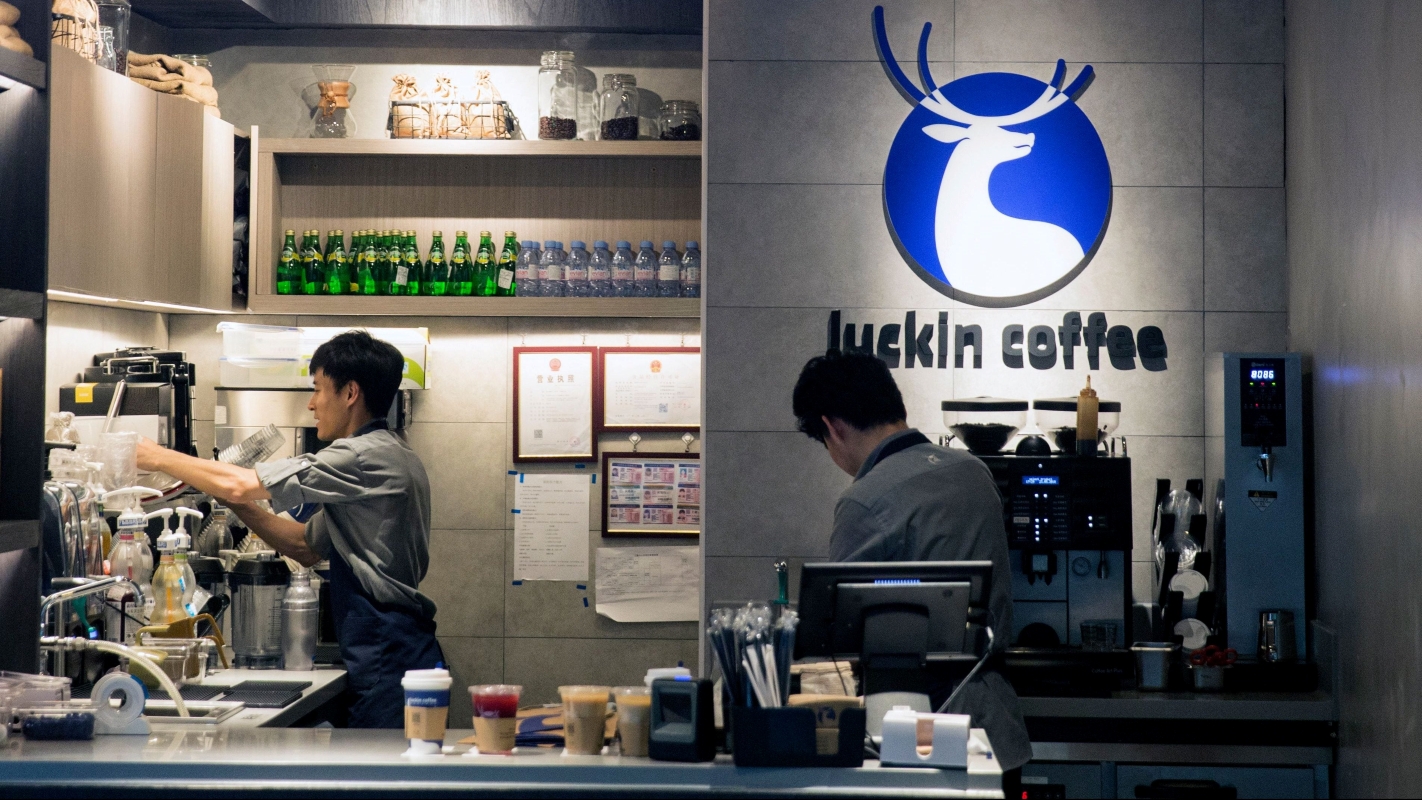
China has surpassed the United States in terms of branded coffee shop presence, with more than 50,000 outlets and rapidly expanding chains such as Luckin Coffee. In India, café culture continues to develop and is expected to significantly expand market potential by 2030. Indonesia has also experienced strong growth, with domestic consumption reportedly tripling since pre-pandemic levels.

The Asia-Pacific coffee market is projected to grow faster than the global average, with estimated CAGR ranges of 6–8% in recent forecasts. Growth is being supported by premium café expansion, ready-to-drink coffee products, and shifting preferences in urban areas away from traditional tea consumption.

The Quality Shift: Specialty Coffee and Arabica Dominance

Global coffee consumption is not only increasing in volume but also shifting toward higher quality. Arabica beans continue to dominate due to their smoother flavor profile, while demand for specialty coffee is accelerating, particularly among younger consumers.

Millennials and Gen Z consumers are increasingly prioritizing single-origin sourcing, traceability, and distinctive flavor profiles over mass-market products. The global specialty coffee segment is expanding faster than the broader market, with projected CAGR near 10.8% through 2033.

Convenience and Changing Lifestyles

Modern consumption habits are driving demand for convenience-focused coffee products. Capsules, instant coffee, liquid concentrates, and ready-to-drink (RTD) beverages are increasingly popular, allowing consumers to access premium coffee experiences at home, in the workplace, or on the move.

Sustainability and Supply Chain Pressures

Sustainability has become a central requirement in the coffee industry. Ethical sourcing, organic certification, and transparent supply chains are increasingly important to consumers, particularly in premium segments.

Many consumers are willing to pay higher prices for coffee that supports farmers, reduces environmental impact, and carries certifications such as Fair Trade or Rainforest Alliance. At the same time, climate change continues to pose risks to major coffee-growing regions, prompting greater focus on resilient crop varieties and sustainable farming practices.

Challenges and Market Outlook

The coffee sector faces increasing competition from alternative beverages, including tea, herbal infusions, energy drinks, and functional beverages, as consumers diversify their preferences toward health-oriented options.

Supply chain volatility, driven by weather events and geopolitical factors, also remains a persistent challenge for producers and roasters.

Despite these pressures, the long-term outlook for the coffee industry remains positive. Strong cultural demand, combined with innovation in product formats, sustainability initiatives, and experiential retail, is expected to support continued growth through the next decade.

From specialty cafés in Tokyo to espresso bars in Dubai and traditional filter coffee in Helsinki, global coffee culture continues to expand. The coming years are expected to bring greater product diversity, improved sustainability practices, and new consumption experiences for one of the world’s most widely enjoyed beverages.

Coffee Still Leads US Beverage Choices in 2026, NCA Finds

Dubai – Qahwa World

According to the Spring 2026 National Coffee Data Trends (NCDT) report released by the National Coffee Association (NCA), coffee continues to rank as the most popular beverage among American adults. Nearly 195 million U.S. adults — roughly 73% of the adult population — drink coffee each week, maintaining its position at the top of the country’s beverage hierarchy.

Past-day consumption remains steady at 66% of American adults, consistent with levels observed since 2022. Weekly drinking habits show similar stability. This confirms coffee’s enduring role in daily life, surpassing other beverages such as bottled water, tea, soda, and juice in long-running surveys dating back to 1950.

Key highlights from the Spring 2026 NCDT report

The data, collected between January 5 and 20, 2026, from a nationally representative sample of 1,850 U.S. adults who consumed a beverage other than tap water in the previous day, reveals several consistent and evolving patterns:

  • Morning rituals and home brewing dominate: Among past-day coffee drinkers, 82% prepare their coffee at home, while 28% have it prepared away from home. Consumption remains highly habitual: 86% drink coffee first thing in the morning, followed by 38% later in the morning, 22% in the afternoon, and 11% in the evening. These patterns have shown little change since 2022, underscoring coffee’s deep integration into daily routines.
  • Traditional coffee holds firm: 62% of American adults consumed traditional coffee in the past week, unchanged from 2022.
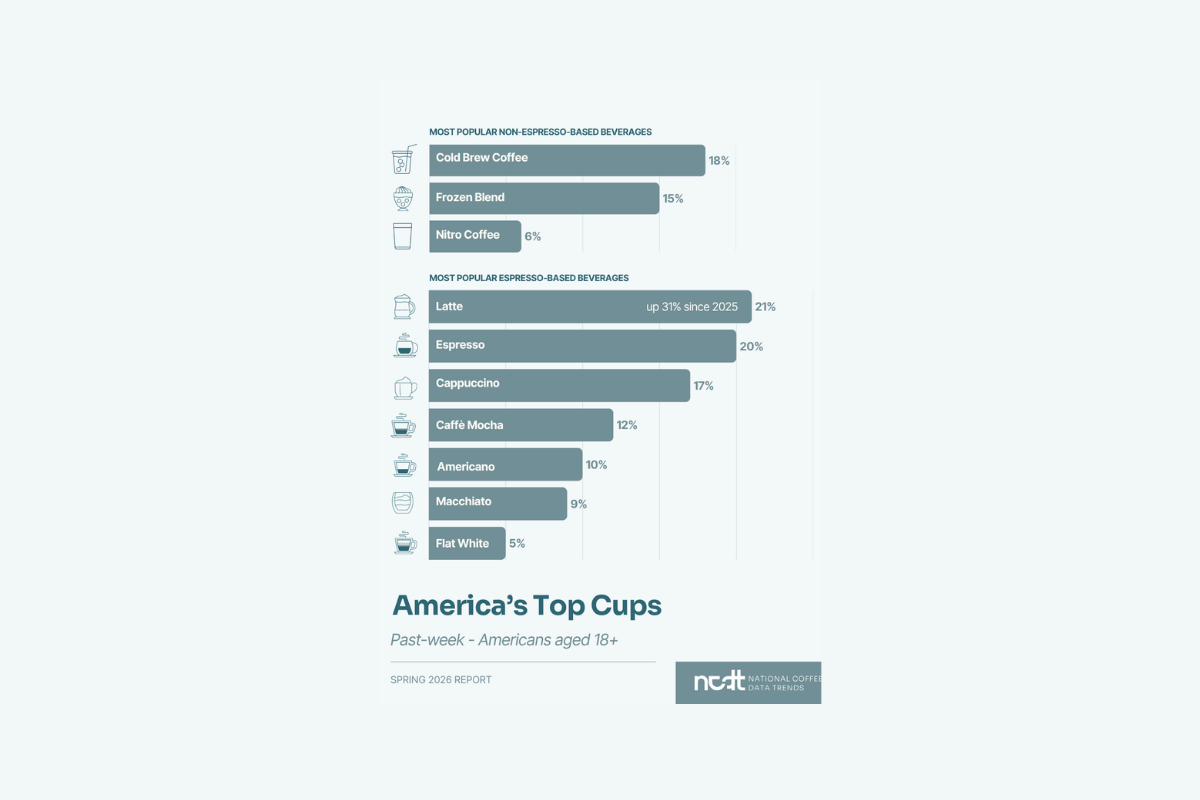
  • Specialty coffee sees notable growth: Past-week specialty coffee consumption has risen by 9.4% since 2022, increasing from 53% to 58% of American adults. This growth is largely driven by espresso-based beverages, which rose from 40% to 45% in past-week consumption. Specific increases include:
    • Lattes: from 17% to 21%
    • Straight espresso: from 16% to 20%

This shift reflects growing consumer interest in café-style drinks, likely supported by the rise of at-home espresso machines, premium pods, and broader engagement with specialty coffee culture.

NCA leadership on coffee’s lasting role

NCA President and CEO Bill Murray said:

“Coffee has long been a touchstone in Americans’ daily lives and a powerhouse in our economy, adapting to fit different tastes, trends, budgets, and routines over time. We expect that to continue for many decades to come.”

This adaptability is reflected in coffee’s economic impact. The industry supports 2.2 million U.S. jobs, operates in every state and territory, and contributes nearly $350 billion to the economy annually.

Why this matters

The 2026 findings highlight coffee’s resilience. While overall consumption has plateaued at historically high levels since 2022, the rise in specialty and espresso-based drinks points to a maturing market in which consumers increasingly prioritize quality, variety, and experience, whether at home or on the go.

As the longest-running study of its kind, conducted twice yearly since 1950, the NCDT remains a key benchmark for the coffee industry.

For the full Spring 2026 NCDT report, visit ncausa.org/NCDT. Media highlights are also available for download. The National Coffee Association, founded in 1911, represents businesses accounting for 90% of U.S. coffee commerce.