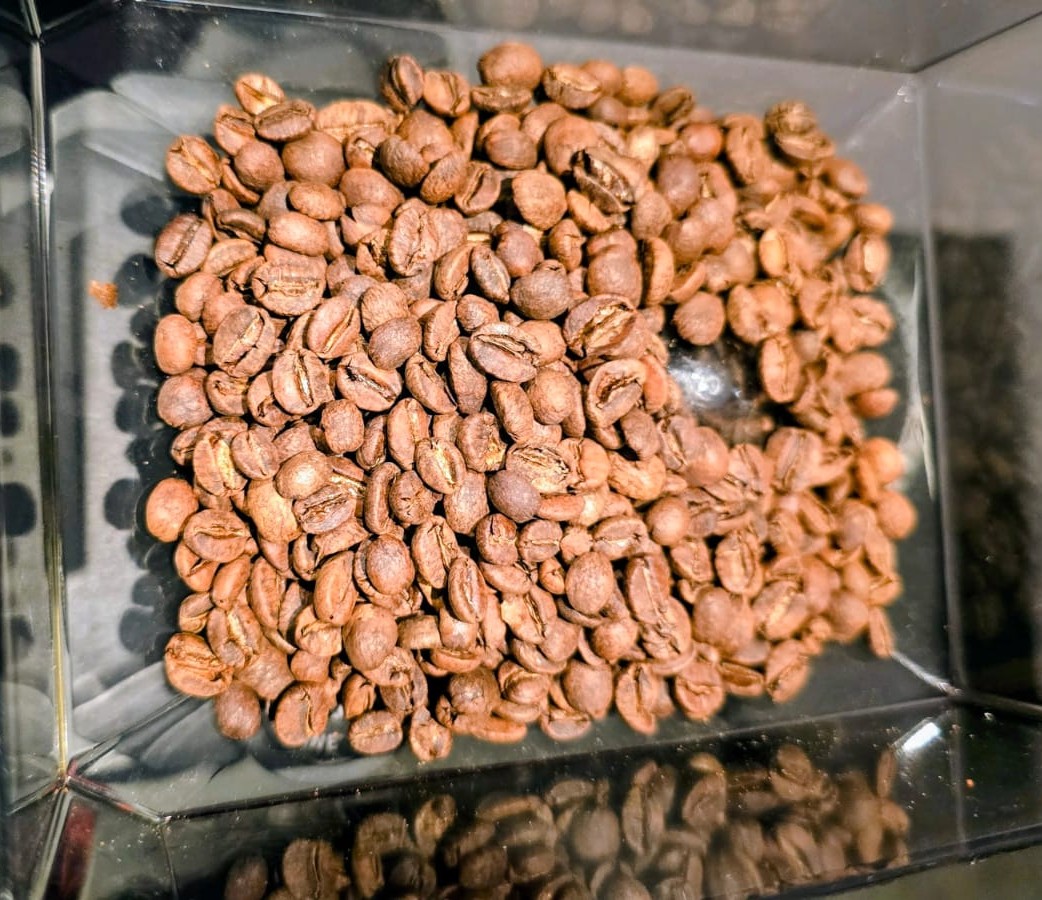
Coffee Drinkers Shift to Whole Beans as Prices Soar

Source: Qahwa World / Lavazza Group
Author: Editorial Team
Date: July 21, 2026

Coffee Drinkers Shift to Whole Beans as Prices Soar

  • Consumers are buying less but better coffee as global prices remain elevated.
  • Whole bean demand surged 46% year-over-year, according to consumer data.
  • Home brewing equipment sales jumped: drip coffee makers up 66%, espresso machines up 50%.
  • Lavazza reported strong 2025 revenue of €3.9 billion, up 15.7%.
  • Lavazza plans to launch Tablì, a sustainable single-serve system using compressed coffee tablets.
  • Nielsen data shows whole bean sales outpacing overall coffee category across UK and Europe.
  • Price volatility is expected to persist, with no retail price cuts in sight.

Global coffee prices have remained elevated for four consecutive years. Consumers are adapting by buying less but better. This trend toward whole bean coffee and bean-to-cup machines represents a significant market shift.

Giuseppe Lavazza, Chairman of the Lavazza Group, called it the sector’s most important trend. “People are looking for beans,” he said. “They enjoy replicating the coffee shop experience at home. Maybe they prefer to consume a little less but of better quality.”

The Trend Emerged in 2024

This shift did not appear overnight. Early indicators were visible in 2024, well before the price peaks of 2025 intensified the movement. Pattern, a consumer demand analysis firm, reported whole bean coffee demand surged 46% year-over-year. This growth was accompanied by strong increases in home brewing equipment.

Drip coffee makers rose 66%. Espresso machines increased 50%. Accessories such as bean storage also grew 20%. The report highlighted a broader move toward serious at-home coffee preparation. Whole beans serve as the starting point for better freshness and flavor.

Multiple National Coffee Association surveys showed sustained high levels of at-home coffee consumption. Around 81% of past-day drinkers consumed coffee at home in some periods. Out-of-home consumption recovered post-pandemic, but the at-home habit remained strong. Consumers continued seeking premium experiences and better value.

2024 Early Indicators – Consumer Demand Growth
Category Growth
Whole bean coffee demand +46%
Drip coffee makers +66%
Espresso machines +50%
Bean storage accessories +20%

Current Reality: Price Surge Accelerates Change

Record-high coffee prices in 2025 pushed the trend into the mainstream. Poor harvests in Brazil and Vietnam drove the price surge. Climate change impacts, geopolitical disruptions, and financial speculation also contributed.

Nielsen data for the year to May 2026 shows the shift clearly. In the United Kingdom, whole-bean sales rose 20.3% by volume. This far outpaced the overall at-home coffee category, which grew just 2.8%. Value sales jumped 36.8%, while bean-to-cup machine sales increased 33.5%.

In Europe, France saw 35% growth by value. Italy recorded 33% growth. Germany, Europe’s largest coffee market, saw 31.2% growth. Whole beans have now surpassed traditional roast-and-ground coffee in volume in Germany.

In the United States, the shift was more modest but consistent. Whole-bean unit sales rose 3.2% over 52 weeks to June 2026. Meanwhile, pod sales fell 4.9% and ground coffee declined 3.9%.

Nielsen Data – Whole Bean Sales Growth (Year to May 2026)
Market Growth
United Kingdom (volume) +20.3%
United Kingdom (value) +36.8%
France (value) +35.0%
Italy (value) +33.0%
Germany (value) +31.2%
United States (unit sales) +3.2%

Why Prices Soared

The coffee market has faced four years of upheaval. Adverse weather and weak harvests in Brazil and Vietnam were key factors. Climate change impacts, including El Niño risks, added pressure. Geopolitical disruptions, higher shipping costs, and financial speculation in futures markets also played a role.

In the UK, at-home coffee prices rose another 6.3% in the year to May 2026. Roasters found it harder to manage costs by blending cheaper Robusta with Arabica. Both varieties hit record levels simultaneously.

Lavazza noted that futures prices have eased from 2025 peaks. However, the market remains too volatile for widespread retail price cuts. “We think there is not time to think about a possible cut in prices,” he said. “The possibility of another increase is not totally over.” At least two strong harvests in Brazil and Vietnam will be needed to rebuild global inventories.

Lavazza’s Performance and Strategic Response

Despite industry challenges, Lavazza reported strong 2025 results. Revenue reached €3.9 billion, up 15.7%. EBITDA rose 8.8% to €340 million. The company is innovating to stay ahead.

Lavazza plans to launch Tablì in the UK in September 2026. This is a single-serve system using compressed coffee tablets. It addresses waste and recycling concerns associated with plastic and aluminum pods. “Capsule is over,” Lavazza declared. “This is a new benchmark.”

Broader Implications and Future Outlook

Consumer behavior is evolving. Coffee remains recession-resistant. However, buyers are trading down in volume while trading up in quality and experience. The “less but better” philosophy reflects economic pressure and a desire for premium at-home rituals.

The pandemic-initiated home-brewing boom has become structural. Demand for whole beans rewards freshness, flavor complexity, and better value per cup. Persistent climate risks, cautious buying by roasters, and farmers holding stock in hope of higher prices continue to shape the market.

Volatility is now “the new constant,” according to Lavazza. Opportunities remain in premium home equipment, sustainable packaging innovations, and single-origin and specialty offerings.

“People are looking for beans and they enjoy maybe to replicate at home the experience of the coffee shop. Maybe they prefer to consume a little less but of better quality.”

— Giuseppe Lavazza, Chairman, Lavazza Group

Conclusion

What began as a noticeable trend in 2024 has evolved into a major market shift in 2026. Soaring prices amplified the movement. Consumers are not abandoning coffee. They are redefining how they enjoy it. As Lavazza observed, this represents a “fundamental transformation in terms of supply and demand.”

For roasters, retailers, and consumers alike, the message is clear. Quality, freshness, and thoughtful preparation are winning out in an era of higher costs and greater awareness.
Frequently Asked Questions

What is the “less but better” coffee trend?Consumers are buying less coffee in volume but choosing higher quality whole beans and premium home brewing equipment to replicate café experiences at home.

How much did whole bean demand surge?Whole bean coffee demand surged 46% year-over-year, according to consumer demand analysis from Pattern.

What are the key market data highlights?In the UK, whole-bean sales rose 20.3% by volume. France saw 35% value growth, Italy 33%, and Germany 31.2%.

Why are coffee prices so high?Poor harvests in Brazil and Vietnam, climate change, geopolitical disruptions, and financial speculation have driven prices to record levels.

What is Lavazza’s new Tablì product?Tablì is a single-serve system using compressed coffee tablets instead of plastic or aluminum pods, addressing waste and recycling concerns.

Will coffee prices come down soon?Lavazza says prices remain too volatile for retail cuts. At least two strong harvests in Brazil and Vietnam are needed to rebuild inventories.

Carolina Gutierrez: In Specialty Coffee, Hospitality Matters More Than Complexity

Author: Carolina Gutierrez
Source: LinkedIn
Date: May 20, 2026

Executive Summary:

  • The best coffee experiences are built on hospitality, connection, simplicity, and humility, not on ego.
  • Consumers rarely build loyalty to a brand simply because they were educated. They return because of how the experience made them feel.
  • People remember experiences far more emotionally than they remember technical details, according to consumer behavior research.
  • Most consumers seek comfort, trust, familiarity, and connection, not complexity.
  • The most successful industries evolved by becoming more accessible, not more intimidating. Wine and craft beer are examples.
  • Specialty coffee sometimes confuses passion with correction, making people feel unwelcome for not knowing enough.
  • The future of specialty coffee belongs to brands that make people feel included first and educated second.

Carolina Gutierrez, a specialty coffee leader focused on coffee quality and education across the Middle East and Africa, recently shared a reflective post on LinkedIn about the state of specialty coffee culture. Her message centered on a simple but often overlooked truth: the best coffee experiences are not built on ego. They are built on hospitality, connection, simplicity, and humility.

Gutierrez observed that while the specialty coffee industry says it wants more people to appreciate high quality coffee, it sometimes makes people feel unwelcome for not knowing enough. She argued that this matters more than many professionals realize. Consumers rarely build loyalty to a brand simply because they were educated. They return because of how the experience made them feel.

The Gap Between Expertise and Accessibility

Gutierrez pointed out that consumer behavior research has shown for years that people remember experiences far more emotionally than they remember technical details. Yet in coffee, professionals sometimes overcomplicate the experience in an attempt to communicate expertise. Processing methods, extraction theory, total dissolved solids, and flavor notes all matter. But most consumers are not searching for complexity. They are searching for comfort, trust, familiarity, and connection.

She emphasized that this is not a weakness in consumer behavior. It is simply human behavior. The most successful industries evolved when they became more accessible, not more intimidating. Wine evolved. Craft beer evolved. The strongest hospitality brands learned how to simplify experiences instead of overcomplicating them. Even companies like Apple built global loyalty by making complex things feel intuitive. Gutierrez believes coffee should learn from that example.

Passion Versus Correction

Gutierrez offered a critical observation about specialty coffee culture. She wrote that specialty coffee sometimes confuses passion with correction. A consumer enjoying sugar, flavored drinks, dark roast, or commercial coffee does not mean they have bad taste. It simply means that is where they are in their journey. People should not feel pressured to understand coffee before they feel welcome in it.

She concluded that complexity may impress professionals, but simplicity is what grows industries. The future of specialty coffee, in her view, will belong to the brands and professionals who make people feel included first and educated second.

Frequently Asked Questions (FAQ)

1. What is the main argument of Carolina Gutierrez’s post?

She argues that specialty coffee should prioritize hospitality, connection, simplicity, and humility over ego and technical expertise to make consumers feel welcome.

2. Why do consumers return to a coffee brand according to Gutierrez?

Consumers return because of how the experience made them feel, not simply because they were educated about coffee.

3. What does consumer behavior research say about memory and emotion?

Research shows that people remember experiences far more emotionally than they remember technical details.

4. What mistake does specialty coffee sometimes make?

Specialty coffee sometimes confuses passion with correction, making people feel unwelcome for not knowing enough about coffee.

5. What industries have successfully evolved by becoming more accessible?

Wine, craft beer, and strong hospitality brands have evolved by simplifying experiences instead of overcomplicating them. Apple also made complex technology feel intuitive.

6. What does Gutierrez believe is the future of specialty coffee?

The future belongs to brands and professionals who make people feel included first and educated second.

Carolina Gutierrez – Specialty Coffee Leader | Coffee Quality & Education Leadership | Driving Growth & Innovation across the Middle East & Africa.
Published on Qahwa World: May 20, 2026

Russians Shift to Home Coffee as Prices Rise

Moscow – Qahwa World

Rising prices are reshaping how Russians consume coffee, pushing more people away from takeaway purchases and toward brewing at home. A trend that began to emerge in 2025 has strengthened in 2026 and is now influencing the broader coffee market.

According to Ramaz Chanturia, head of the Roschaikofe association, consumers are increasingly opting out of buying coffee to go and instead preparing it themselves. The shift is largely driven by a need to reduce everyday spending. Coffee shop purchases are no longer seen as a routine necessity but as a discretionary expense. Many people now prepare their drinks in advance and carry them in reusable thermal mugs.

Market data reflects this change. In early 2026, takeaway coffee sales declined in volume compared to the previous year, while revenue increased. This indicates that consumers are buying fewer cups but paying more per purchase. The pattern suggests price pressure and reduced purchase frequency rather than declining interest in coffee itself.

The price increase is driven by global factors. Supply challenges in key producing countries such as Brazil and Vietnam, combined with rising logistics and operating costs, are pushing prices higher. Forecasts suggest that the average price of a cup of coffee in Russia could reach 500 to 600 rubles by the end of 2026.

At the same time, the home coffee segment is expanding. Sales of coffee beans, grinders, and home brewing equipment are rising as consumers invest in making their own drinks. Improvements in home coffee technology have made it easier to achieve consistent results, allowing consumers to produce quality coffee without visiting a café. While professional baristas still offer a higher level of expertise, the difference is no longer significant enough for many people to justify the extra cost.

Despite these shifts, coffee remains an essential part of daily life. Industry experts describe it as a lifestyle product with strong emotional value, closely tied to routines and personal habits. As a result, consumers are more likely to cut back on other expenses than to give up coffee entirely.

The market is not shrinking but evolving. Consumption is moving from cafés into homes, creating a new pattern of behavior. Russia’s coffee culture is adapting to economic pressures, changing its format while maintaining its importance in everyday life.

Rising prices reshape coffee consumption patterns in Russia

Moscow – Qahwa World

Data from the “Check Index” analytical center of the OFD Platform show significant changes in coffee consumption patterns in Russia during 2024–2026, driven by sustained price increases across all major categories.

In 2025, prices rose across the entire market. The average price of instant coffee reached 482 rubles (+22% year-on-year), roasted beans 1,223 rubles (+40%), ground coffee 541 rubles (+29%), capsules 710 rubles (+15%), and drip-pack coffee 354 rubles (+16%).

At the same time, purchase volumes declined in most segments. Consumption of roasted beans fell by 21%, ground coffee by 11%, capsules by 13%, and instant coffee by 10%. The only category to show growth was drip-pack coffee, where purchases increased by 37% in 2025.

The data attributed this growth to the relatively lower price of drip packs compared with other formats, as well as ease of preparation, which led to partial substitution from ground coffee and capsules. The segment also showed higher adoption among younger consumers, including Generation Z.

In the first quarter of 2026, prices continued to rise. Instant coffee averaged 527 rubles (+7%), roasted beans 1,330 rubles (+10%), ground coffee 618 rubles (+15%), capsules 737 rubles (+5%), and drip-pack coffee 422 rubles (+10%).

Demand trends during the same period were mixed. Purchases of instant coffee increased by 4%, while roasted beans declined by 2%, ground coffee by 13%, capsules by 7%, and drip-pack coffee by 13%.

In the café segment, Russians purchased around 10.3 million cups of coffee per month. The average number of items per receipt was 3.1, with coffee and beverages accounting for 72% of total purchases.

The average price per cup in cafés rose to 289 rubles in Q1 2026. After a 19% increase in 2025, coffee sales in the food service sector declined by 4% at the beginning of 2026.

Overall, the data indicates a gradual restructuring of Russia’s coffee market, as rising prices continue to reshape consumption patterns and shift demand across different product categories.