ICO and FAO Renew Commitment to Sustainable Coffee Sector

Source: International Coffee Organization (ICO)
Author: Qahwa World Editorial Team
Date: July 22, 2026

ICO and FAO Renew Commitment to Sustainable Coffee Sector

  • ICO and FAO signed a new Memorandum of Understanding reaffirming their commitment to coffee sector sustainability.
  • The renewed partnership builds on years of successful collaboration between the two organizations.
  • Key areas include sustainable production, climate resilience, market transparency, and inclusive value chains.
  • The agreement also covers innovation, digital technologies, and knowledge exchange.
  • A special focus will be on empowering coffee-growing communities and smallholder farmers.
  • Both organizations aim to build a more inclusive and resilient coffee sector for future generations.

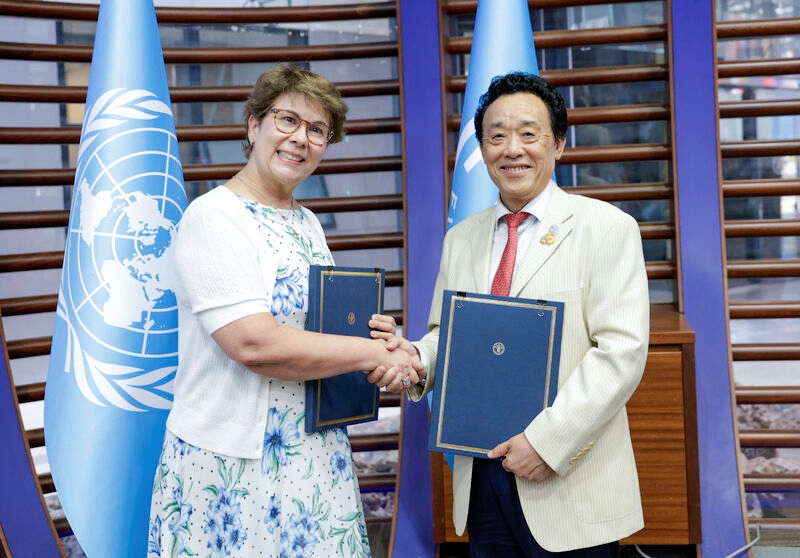
The International Coffee Organization and the Food and Agriculture Organization of the United Nations have renewed their commitment to a more sustainable coffee sector. Executive Director of ICO and FAO Director-General QU Dongyu signed a new Memorandum of Understanding today.

The agreement reaffirms their shared commitment to supporting the sustainable development of the global coffee sector. It builds on years of successful collaboration between the two organizations.

Key Areas of Cooperation

The renewed partnership will strengthen cooperation in several key areas. These include sustainable coffee production and sourcing. Climate resilience and adaptation are also priorities. Market transparency and access to information will be enhanced.

Other areas include inclusive and sustainable value chains. Innovation and digital technologies will play a crucial role. Knowledge exchange between stakeholders is another focus. The agreement also emphasizes empowering coffee-growing communities. Special attention will be given to smallholder and family farmers.

ICO-FAO Renewed Partnership – Key Cooperation Areas
Area Focus
Sustainable Production Sustainable coffee production and sourcing
Climate Action Climate resilience and adaptation
Market Transparency Market transparency and access to information
Value Chains Inclusive and sustainable value chains
Innovation Innovation, digital technologies and knowledge exchange
Community Empowerment Empowering coffee-growing communities, particularly smallholder farmers

The Importance of Coffee

Coffee supports the livelihoods of millions of people worldwide. It plays a vital role in advancing sustainable development. The sector faces numerous challenges. These include climate change, market volatility, and social inequality.

Through this renewed framework, ICO and FAO will continue working together. Their goal is to ensure the coffee sector becomes more inclusive and resilient. They aim to prepare it for the challenges of the future. The partnership will benefit producers, consumers, and future generations.

About ICO and FAO

The International Coffee Organization is the only intergovernmental organization dedicated to coffee. It enhances the sustainability of the coffee sector for both exporting and importing countries. The ICO provides official statistics and facilitates technical cooperation projects.

The Food and Agriculture Organization is a specialized agency of the United Nations. It leads international efforts to defeat hunger. FAO supports sustainable agriculture and rural development. Together, ICO and FAO bring complementary expertise to the coffee sector.

“A renewed commitment to a more sustainable and resilient coffee sector.”

— International Coffee Organization

Future Outlook

The renewed partnership signals a strong commitment to coffee sustainability. Both organizations look forward to building an even stronger partnership. The focus remains on practical outcomes for coffee producers and communities. Innovation and knowledge sharing will drive progress.

Together, ICO and FAO aim to create lasting positive change. The goal is a coffee sector that is inclusive, resilient, and prepared for future challenges. Producers, consumers, and future generations will all benefit from this collaboration.
Frequently Asked Questions

What did ICO and FAO announce?ICO and FAO signed a new Memorandum of Understanding renewing their commitment to a sustainable coffee sector.

What are the key areas of cooperation?Key areas include sustainable production, climate resilience, market transparency, inclusive value chains, innovation, and empowering smallholder farmers.

Why is this partnership important?The partnership combines the expertise of two major organizations to address challenges facing the global coffee sector.

How does coffee support sustainable development?Coffee supports the livelihoods of millions worldwide and plays a vital role in advancing sustainable development goals.

Who will benefit from this agreement?Coffee producers, consumers, and future generations will benefit from a more inclusive and resilient coffee sector.

What is the role of ICO?ICO is the only intergovernmental organization dedicated to coffee, providing statistics and facilitating technical cooperation.

What Must Be Done to Stop Exporting Raw Coffee and Selling It Cheap?

Source: Qahwa World World (translated from Vietnamese) |
Author: Nguyễn Nghĩa |
Date: June 7, 2026

What Must Be Done to Stop Exporting Raw Coffee and Selling It Cheap?

Key Points:

  • Lam Dong, Vietnam’s largest coffee-growing province, still exports nearly 100% raw beans at low prices.
  • In the first 4 months of 2026, export volume rose 9.4% but value fell 10.3% year-on-year.
  • Processing accounts for 60% of a coffee’s quality and refinement.
  • International standards (EUDR, Net Zero, ESG) are becoming mandatory market access requirements.
  • A strategic shift to deep processing and modern technology is urgently needed.
  • Cooperatives must become the pillar linking small farmers.

Despite being the largest coffee province in Vietnam, Lam Dong remains trapped in the cycle of exporting raw beans at low prices. The time has come for this strategic commodity to undergo a revolution, shifting from raw beans to refined processing to enhance value.

The Paradox of the “Brown Gold” Capital

In 2025, among agricultural, forestry, and fishery exports to key markets such as the European Union, coffee, together with seafood and cashew nuts, led the value, accounting for 49%, 15%, and 14% respectively.

In the first four months of 2026, Vietnam’s coffee export picture remained dynamic, with volume reaching approximately 791,090 tonnes and value reaching 3.66 billion USD. However, behind these numbers lies a troubling reality: export volume increased by 9.4%, but value decreased by 10.3% compared to the same period last year.

This decline exposes a fundamental weakness of the coffee industry: over-reliance on raw bean exports. Lam Dong province has the largest coffee growing area in the country, with about 314,000 hectares currently under harvest, average yield of 3.2 tonnes of green beans per hectare. The paradox is stark: nearly 100% of export output remains raw green beans. Yet processing accounts for up to 60% of a coffee’s flavour and refinement.

Technology as the Gateway to the Value Chain

According to the Vietnam Coffee and Cocoa Association, Vietnam has joined a total of 17 bilateral and multilateral free trade agreements (FTAs). New generation FTAs such as EVFTA, CPTPP and RCEP open up favourable tariff opportunities, but the path is also full of technical barriers.

If Lam Dong continues with a small-scale, fragmented production model lacking long-term chain linkages, the coffee industry will be pushed into a weak position. “Large markets do not just buy coffee beans; they buy the ‘environmental ethics’ of the production process. International standards are becoming increasingly stringent: the EU Deforestation Regulation (EUDR), Net Zero commitments, labour rights, and ESG governance standards are becoming mandatory passports for market access,” Mr. Tuan emphasised.

Standard / Requirement Impact on Coffee Exports
EUDR (Anti-deforestation) Traceability and proof of forest-free production
Net Zero / ESG Carbon footprint, social responsibility, governance
4C, Rainforest Alliance, VietGAP Minimum entry certificates for premium markets

What Must Be Done?

To stop exporting raw beans and selling cheap, Lam Dong’s coffee industry needs a restructuring strategy. The core focus is to strongly attract investment in deep processing technology. “We need to design and issue preferential policies on taxes, land funds, and green credit to invite large investors to build modern, large-scale integrated processing plants.

Attention should be paid to attracting investment in producing ground roasted coffee, specialty instant coffee for export. Only by boldly investing in modern drying technology can the value of coffee beans be multiplied,” shared Mr. Bach Thanh Tuan, Vice President of the Vietnam Coffee and Cocoa Association.

Alongside attracting investment, economists also argue that internal strength must be consolidated by promoting collective economic development. Cooperatives and co-operative groups must truly become the backbone to link small farm households, consolidate output, and thereby enhance negotiation and pricing power.

The shift from quantity to quality, from raw exports to refined processing, requires the joint effort of government, businesses, and farmers. When cultivation, care, and deep processing technology are prioritised, combined with market-oriented thinking, Lam Dong’s coffee beans will certainly shed the “cheap price tag” and confidently compete through the brand and value of the very land that grew them.

Original Vietnamese article by Nguyễn Nghĩa – Translated and adapted by Coffee World.

All rights reserved. Republication with attribution permitted.

Publication date: June 7, 2026

ICO and ITC Expand Training Programme to Strengthen Links Between Origin and Specialty Coffee Markets

Dubai – Qahwa World

The International Coffee Organization highlights a strategic direction focused on building stronger connections between origin and specialty markets, emphasizing that stronger links between origin and specialty markets mean stronger opportunities for coffee producers.

The organization expresses pride in its partnership with the International Trade Centre in supporting initiatives designed to bridge this gap, connect producers more directly with high value markets, promote value addition at origin, and strengthen knowledge across the coffee value chain. The shared objective is clearly defined as working towards a coffee sector that is more inclusive, transparent and sustainable for everyone.

This vision is further reflected in the initiative titled Bridging the gap between origin and specialty coffee markets, which brings together Ethiopia, Honduras and other producing countries through a structured training partnership.

The programme demonstrates how coffee producers and cooperatives are being guided to understand specialty markets, build skills to connect with the right buyers, and communicate their identity with confidence. The central idea is a shift in role, expressed in the objective to evolve from simply delivering their coffee to actively selling it.

The International Trade Centre has partnered with the Specialty Coffee Association and the International Coffee Organization to deliver a series of practical workshops under the banner Introduction to Specialty Coffee Markets. These workshops are implemented through ITC’s ACP Business-Friendly and CLEAR Supply Chains projects, and are designed to strengthen market readiness and commercial positioning for coffee producers across origin countries.

The training structure is consistent across sessions and focuses on three core areas. It begins with understanding what makes a coffee specialty and how farm level decisions shape quality. It continues with identifying the right market segment for a given coffee profile. It concludes with learning how to communicate effectively with buyers and telling the cooperative’s story in a way that resonates across cultures and commercial contexts.

The first edition took place on 3 February 2026 in Addis Ababa, Ethiopia, bringing together 21 participants including cooperative representatives from Uganda. The session was delivered by Sara Yirga, a certified specialty coffee trainer and ITC consultant based in Ethiopia. A second edition followed on 19 March in San Pedro Sula, Honduras, with 32 participants consisting of 17 men and 15 women from cooperatives and producer organizations across the country, led by Andrés Montenegro, Specialty Coffee Association Sustainability Director. A third edition is planned ahead of World of Coffee Brussels which takes place on 24 June this year, with further editions planned across producing countries before year’s end.

The Honduras session brought together stakeholders from across the value chain including cooperatives, roasters and exporters. Participants described the training as a turning point in how they understand their position in the global specialty market. In Ethiopia, feedback highlighted immediate practical changes, including plans to approach different markets with greater specificity, tailor farm stories to buyer profiles, and engage more actively in the wider coffee world through events and social media.

  • Participant reflections illustrate the impact of the programme.

Karla María Cartagena from Cafico stated: “Participating in this workshop was a very enriching experience. It allowed us to strengthen our knowledge about specialty coffee markets and reaffirm the value of the work we do as an organization to position our coffee internationally.”

Orlin Alvarado from Proexo noted: “The training provided key tools for improving decision-making across the coffee value chain, from understanding intrinsic and extrinsic coffee attributes to learning how to strategically position our coffee in the specialty segment.”

Kristy Matamoros from Olanch Café said: “For Olanch Café, participating in this workshop reaffirms our commitment to excellence. A practical, dynamic, and enriching experience that broadened our strategic vision and motivates us to continue elevating our role within specialty coffee.”

Maira Lizzeth Gómez from COMIPRONIL Cooperative in Honduras shared: “It was our first time participating in a training on this topic. This learning motivates us to continue improving our processes and to identify new opportunities in the specialty coffee market. I am deeply grateful for these opportunities that strengthen our capabilities and contribute to the growth of our cooperative.”

From Ethiopia, Degaga Wakahum of Yedesta Buna Trading PLC said: “The introduction to the specialty marketing pilot programme was really good. It put everything in simple terms and made it easy to understand. Now I can easily compile information and put it in a way that the market can easily understand and aligned with the value attributes they want to focus on.”

Horom Teshome from Buunni Coffee added: “This training focused on three main areas: knowing the product, the market, and the right fit. It was a very insightful training. Especially for someone like me who’s very new to the coffee industry. It was practical, engaging, and experimental.”

The broader project framework is anchored in two major development initiatives. The ACP Business-Friendly Programme is funded by the European Union and the Organisation of African, Caribbean and Pacific States and jointly implemented by ITC’s Alliances for Action, the World Bank and UNIDO. It aims to improve the ability of agribusiness firms in ACP countries to compete, grow and prosper in domestic, regional, and international markets through inclusive and sustainable agricultural value chains that value all stakeholders from farm to shelf.

The CLEAR Supply Chains project, funded by the European Union, brings together the International Trade Centre, the International Labour Organization as the leading UN agency, the Food and Agricultural Organization, and the United Nations Children’s Fund. It focuses on addressing the root causes of child labour in supply chains, with a primary focus on coffee, while supporting farmer organizations, micro, small and medium enterprises, and value chain actors in strengthening commercial value, sustainability, Human Rights and Environmental Diligence alignment, and incomes for smallholder farmers in coffee producing countries including Uganda, Honduras, DRC and Vietnam.

Together, these efforts reflect a coordinated approach to strengthening origin capacity, improving market access, and building a more transparent and sustainable global coffee sector.

Yannis Apostolopoulos Speaks Frankly About the Past, Present, and Future of Specialty Coffee

Dubai – Qahwa World

The 5th Wave Podcast published a long interview with Yannis Apostolopoulos, CEO of the Specialty Coffee Association (SCA), under the title “The Past, Present and Future of Specialty Coffee.”
Given the importance of the insights shared, Qahwa World republishes the full conversation with minor editorial adaptation.

In today’s episode we’re speaking with Yannis Apostolopoulos, CEO of the Specialty Coffee Association.

First established in the 1980s, the SCA is the largest coffee trade body globally and represents thousands of coffee professionals – from producers to baristas – all over the world.

In this conversation, Yannis discusses the evolution of the SCA and its ongoing efforts to make coffee more sustainable, equitable, and resilient, through research, standards, and education. He also shares his perspectives on the key challenges and opportunities in the industry, from climate change and sustainability to navigating economic uncertainty and the evolving role of technology and AI.

5thwave-the-business-of-c the-past-present-and-futu
Transcribed by TurboScribe.ai. Go Unlimited to remove this message.
One of the conversations that needs to be at the forefront is about risk. Who is taking the risk and who gets compensated for that risk? Welcome back to the 5th Wave Podcast. I’m Geoffrey Young, Editor-in-Chief of 5th Wave.

In today’s episode, I’m delighted to be joined by Yanis Apostolopoulos, CEO of the Specialty Coffee Association. First established in the 1980s, the Specialty Coffee Association, or the SCA as it’s often known, is the largest global coffee trade body representing thousands of coffee professionals from producers to baristas all over the world. In our conversation, Yanis discusses the evolution of the SCA and their ongoing efforts to make coffee more sustainable, more equitable, and more resilient through research standards and education.

He also shares his perspective on the key challenges and opportunities for our industry, from climate change and sustainability to navigating economic uncertainty and the evolving role of technology and AI. Welcome, Yanis. It’s very nice to be here.

Very nice to see you, Geoffrey. We see each other around the world at different spots and really, really excited to have you here actually in the studio, in Serendipity Studios. I wonder if you’d just give us a little bit of intro just on your own career and what drew you into the world of coffee.

So first of all, thank you for having me. It’s really an honor and a pleasure to be here. Well, coffee is an interesting story.

My background is mostly in wines and spirits. And around 2009, the business I used to work for decided to get into coffee. And the more I get to know coffee, I just think that coffee has this amazing, I would say, attribute that brings people in.

And you meet people, the community, the actual beverage. It’s so unique in many ways. I think it was the first time in my career that I realized, okay, I’ve been selling wine, spirits, or soft drinks.

But this time, it’s something that it’s actually good for your health. And you can contribute in making an impact or a difference in the world by impacting the livelihoods of many people. And that’s what drew me into specialty coffee.

I got involved as a volunteer in the Greek chapter, then as a board director. And then during, I would say, the initial conversations between the merger between SCAA and SCAE, the European and the American organization, I found myself working for SCAE and leading eventually SCAE around end of 2018. Wow.

So that’s a good seven years already. Almost seven. Yeah.

Little I know that the year after I become the CEO, there would be COVID and everything would change in the world, at least when it comes to trade shows, because as you remember, it used to be just trade shows. Now we’re doing much, much more. And we at SCAE are trying to make coffee better, to make coffee more sustainable, equitable, and thriving as an endeavor for everyone in the value chain.

And we do that by doing research. We use the research to set standards. And one of our most famous standards is the capping form and the capping protocol, which we recently changed based on the work we’ve done around the coffee value assessment system.

And then we educate people around the world in using those standards and trying to make them get skills to, I would say, focus on the gaps that we have in the coffee industry. And then we do events to try to bring people together and use those opportunities to disseminate the information of our research and standards. So research events and bring people together at events.

Yeah. Yeah. I mean, it’s a formidable organization, I must say.

I was wondering if you could share how many people the SCAE educates in a given year. It’s very interesting. First of all, I have to say that it’s a collective effort.

I have an amazing team of people. They are really passionate about making coffee better. It’s a collective effort from the SCAE board that changed a lot over the years, but also the executive team.

On an annual basis, we educate over 80,000 people globally. It’s really something which I find it very interesting because a lot of people want to get engaged in the coffee industry. We have a lot of, say, churn when it comes to people who are trying to find a career in the coffee industry.

And what we’re trying is to provide tools and education to do so. It’s very interesting. And I think professions around hospitality are going to be much, much more attractive in the future, given the changes that we’re going to see in the global workplace with AI.

I think people will always enjoy experiences in food, in coffee. And coffee is a very human product at the end of the day. Exactly.

Now, thinking about those gaps, what do you think are the key issues that you and your organization are faced with out there in a world? For our industry, you get to speak to a whole array of human beings, from coffee farmers to people that produce equipment, to traders, to all the way down to the baristas, the roasters, and everything. The array of people that you talk to on a daily basis, it must give you a good instinct in terms of what are the big topics for our industry that we need to face over the next decade or two. What are you concerned with? …