Starbucks to Close Up to 90 Pickup-Only Stores

Source: The Sun (exclusive report)
Author: Qahwa World – Dubai
Date: May 26, 2026

Starbucks to Close Up to 90 Pickup-Only Stores: End of Mobile-Order Experiment, Return to Traditional Coffeehouse

Executive Summary

  • Starbucks plans to close or remodel 80 to 90 pickup-only and mobile-order-focused stores across the US by the end of 2026.
  • The move is part of the “Back to Starbucks” turnaround strategy to restore traditional coffeehouse atmosphere.
  • CEO Brian Niccol said these stores became “overly transactional” and lacked warmth and human connection.
  • Mobile ordering will be integrated into full-service cafés with seating and in-store service, not standalone pickup counters.
  • States most affected: California, Illinois, New York, Texas, Washington.
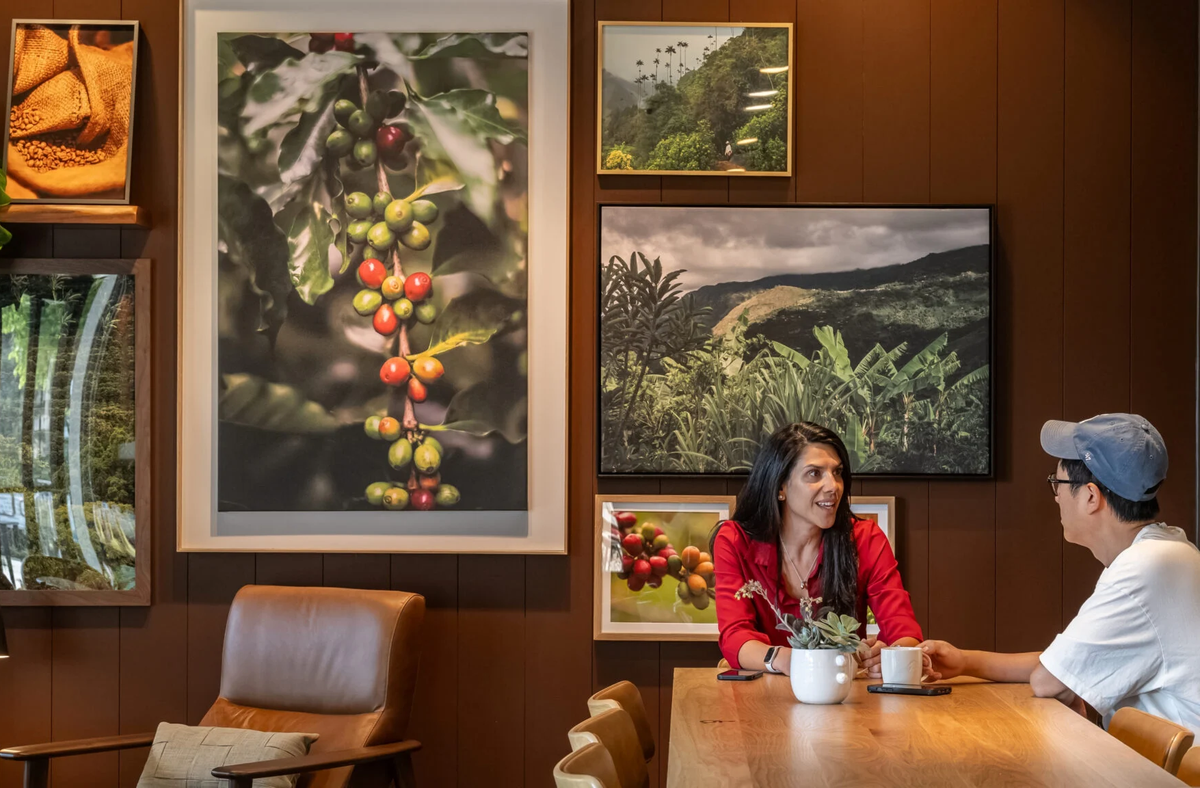
  • Changes include more seating, couches, ceramic mugs, self-serve milk and sugar stations, and handwritten cup messages.

The Sun Exclusive: Starbucks Shifts Strategy

An exclusive report published by The Sun revealed that Starbucks plans to close or convert between 80 and 90 pickup-only and mobile-order-focused stores across the United States by the end of 2026. The decision is part of the broader “Back to Starbucks” turnaround strategy aimed at restoring the traditional coffeehouse atmosphere and improving customer interaction inside stores.

The pickup-only concept was introduced in 2019 to serve customers seeking fast mobile-order convenience, especially in busy urban areas. According to Starbucks leadership, the model did not create the kind of customer experience the company wants to emphasize moving forward.

CEO Brian Niccol’s Statement

CEO Brian Niccol previously stated that these stores became “overly transactional” and lacked the warmth and human connection associated with the Starbucks brand. Instead of relying on standalone pickup counters, Starbucks intends to integrate mobile ordering into standard café locations that include seating and traditional in-store service.

This shift reflects Niccol’s vision to return Starbucks to its roots as a community coffeehouse where human relationships matter, not just a fast pickup point.

States and Locations Most Affected

According to the report, stores in California, Illinois, New York, Texas, and Washington are among the most likely to be affected. Specific locations mentioned include:

  • California: Los Angeles (Broadway & 8th), San Francisco (California St. & Drumm St.), Santa Monica (Main & Ashland).
  • Illinois: Chicago (227 W. Monroe, Addison & Sheffield), Hyde Park (55th & Woodlawn).
  • New York: Manhattan (40th & 8th, 42nd & Park, Broadway between 36th & 37th).
  • Texas: Houston (City Centre, Hillcroft & US 59), Dallas (Victory Park Lane).
  • Washington: Seattle (1st & Denny), Bellevue (4th & Bellevue Way).

Other cities including Nashville, Philadelphia, Miami, and Boston were also listed among potential closures or conversions.

State Cities Affected
California Los Angeles, San Francisco, Santa Monica
Illinois Chicago, Hyde Park
New York Manhattan
Texas Houston, Dallas
Washington Seattle, Bellevue

What the “Back to Starbucks” Plan Includes

The company’s broader strategy includes several changes designed to make stores feel more welcoming and community-oriented:

  • More seating and lounge-style café layouts
  • Additional couches and power outlets
  • Return of ceramic mugs for in-store drinks
  • Reintroduction of self-serve milk and sugar stations
  • Baristas writing messages on cups again instead of relying entirely on printed labels
  • Continued support for mobile ordering through the Starbucks app

A Major Strategic Shift

The closures represent a major shift away from the fast-service urban pickup strategy Starbucks expanded during recent years. The company now appears focused on reinforcing its identity as a sit-down neighborhood coffeehouse rather than a purely convenience-based chain. Some pickup-only stores may close permanently, while others may be renovated and converted into traditional Starbucks cafés.

Customers will still be able to place mobile orders, but pickup will increasingly happen inside full-service cafés rather than dedicated pickup-only stores.

Frequently Asked Questions (FAQ)

1. How many stores will Starbucks close?

Between 80 and 90 pickup-only and mobile-order-focused stores across the US by the end of 2026.

2. What is the “Back to Starbucks” strategy?

It aims to restore traditional coffeehouse atmosphere with seating, couches, ceramic mugs, self-serve stations, and handwritten cup messages.

3. Why is Starbucks abandoning pickup-only stores?

CEO Brian Niccol said they became “overly transactional” and lacked warmth and human connection.

4. Will mobile ordering be eliminated?

No. Mobile ordering will continue, but pickup will happen inside full-service cafés instead of dedicated pickup stores.

5. Which states are most affected?

California, Illinois, New York, Texas, and Washington.

6. What will happen to closed stores?

Some will close permanently. Others may be renovated and converted into traditional cafés.

Author: Qahwa World – Dubai  |
Source: The Sun (exclusive report)  |
Publication date: May 26, 2026
Starbucks Restructuring: 300 Layoffs in $400 Million Cost Cut

Author: Qahwa World – Dubai
Date: May 16, 2026

Executive Summary

  • Starbucks will lay off approximately 300 US-based employees as part of a major restructuring.
  • The total restructuring cost is $400 million, including $120 million for severance payments.
  • Starbucks will close regional offices in Atlanta, Burbank, Chicago, and Dallas.
  • The company is reviewing its international support structure, with more job cuts expected outside the US.
  • Coffeehouse operations will not be affected by these changes.
  • Starbucks recently reported its strongest sales growth in over two years, despite operating profit margins nearly halving since late 2024.
  • Top executives could receive $6 million each if specific cost-cutting targets are met by 2027.

Job reductions and office closures

Starbucks is trimming its workforce once again. The coffee giant will lay off about 300 US-based roles as part of a restructuring aimed at achieving “durable, profitable growth.” According to Reuters, the job reductions will affect regional support offices.

The company will consolidate its US office network and close several locations. These include offices in Atlanta, Burbank, Chicago, and Dallas. Starbucks confirmed that the changes will not impact its coffeehouse operations.

Restructuring costs and financial impact

Starbucks estimates it will spend about $120 million on severance payments linked to this layoff round. The company will also take a $280 million reduction in the book value of selected real estate assets. These assets are largely tied to its reserve and roastery sites, as well as certain non-retail support properties.

Operating profit margins have nearly halved since late 2024. However, Starbucks recently reported its strongest sales growth in more than two years. Executives described this as a milestone in the company’s turnaround strategy.

</>

Item Amount (million $) Notes
Severance payments 120 For 300 laid-off workers
Real estate asset writedown 280 Reserve, roastery, support properties
Total 400 Full restructuring cost

New investment and Southeast expansion

At the same time, Starbucks announced plans last month to invest $100 million to expand its presence in the US Southeast. The plan includes a new support office in Nashville, Tennessee. This office is expected to accommodate around 2,000 employees over the next five years.

The company is cutting costs in some regions while investing in others. This balanced approach reflects Starbucks’ effort to improve efficiency without abandoning growth opportunities.

Executive incentives and continued cost-cutting

Starbucks’ board linked executive incentives to the company’s cost strategy. Last summer, the board approved a plan that could give top executives $6 million each if they meet specific cost-cutting targets by 2027.

The May 2026 layoffs add to a series of workforce reductions since the turnaround began. In February last year, Starbucks eliminated 1,100 corporate positions. The company is now reviewing its international support structure and expects additional job cuts outside the United States.

Frequently Asked Questions (FAQ)

1. How many employees is Starbucks laying off in this round?

Starbucks is laying off approximately 300 US-based employees. The cuts affect regional support offices, not coffeehouse operations.

2. What is the total cost of this restructuring?

The total cost is about $400 million. This includes $120 million for severance payments and $280 million for real estate asset writedowns.

3. Will Starbucks coffeehouses be affected by these changes?

No. The company confirmed that coffeehouse operations will not be impacted. The changes are limited to support and administrative structures.

4. Are there expected layoffs outside the United States?

Yes. Starbucks is reviewing its international support structure and expects additional job cuts outside the US, though specific numbers have not been disclosed.

5. What is the executive incentive linked to cost cutting?

Top executives could receive up to $6 million each if they achieve specific cost-cutting targets set by the board, with a deadline of 2027.

6. Is this the first layoff under the current turnaround plan?

No. In February 2025, Starbucks eliminated 1,100 corporate positions. The May 2026 layoffs are part of the ongoing cost-reduction strategy.

Author: Qahwa World – Dubai |
Publication date: May 16, 2026

Starbucks beats expectations as CEO highlights flexible pricing

Dubai – Qahwa World

Starbucks reported stronger-than-expected quarterly results, sending shares higher as the coffee chain pointed to continued momentum in its turnaround strategy and improving customer traffic. The Starbucks earnings beat shows how effective recent changes at the company have been, and many investors were surprised by the strength of this Starbucks earnings beat.

CEO Brian Niccol said in an interview with WSJ that Starbucks’ menu is structured to fit a wide range of budgets, despite ongoing pressure on consumers from higher everyday costs. In light of the latest Starbucks earnings beat, executives believe pricing flexibility will continue to help withstand consumer challenges.

He explained that brewed coffee starts at about $3, while more customized beverages such as Frappuccinos can rise into the $7 to $8 range depending on personalization. He said the company aims to provide options across nearly every price point, combining accessibility with quality and a consistent customer experience. Recent momentum around how Starbucks earnings beat expectations has boosted confidence in the brand’s pricing strategy.

Earnings exceed forecasts as traffic rebounds

Starbucks posted fiscal second-quarter revenue of $9.5 billion, an increase of 8 percent year over year. Earnings per share came in at $0.50, above analyst expectations of $0.43. Furthermore, this Starbucks earnings beat reflects the company’s robust performance despite challenging market conditions.

The performance was driven by stronger customer traffic, particularly in North America, where comparable store sales rose 7.1 percent. The company said transaction growth in the region reached its fastest pace in three years, further highlighting the impact of Starbucks’ latest earnings beat.

Despite the strong top-line results, profitability was affected by higher investment in store operations, including increased staffing hours, employee training, and wage costs. These investments led to a 170 basis point decline in North America operating margins compared with the same period last year. Notably, Starbucks earnings beat expectations even as operational expenses increased.

Back to Starbucks strategy supports recovery

The results were attributed to progress in the company’s “Back to Starbucks” strategy under Niccol’s leadership. The initiative focuses on improving service speed, streamlining in-store operations, and expanding mobile ordering efficiency. After the Starbucks earnings beat, management is placing renewed emphasis on these strategic pillars.

Starbucks has also introduced new menu items aimed at broadening afternoon demand, including energy refreshers and matcha-based beverages, as part of a more targeted product rollout strategy. As a direct response to the Starbucks earnings beat this quarter, menu innovation is accelerating.

Outlook raised for sales and earnings

Starbucks increased its full-year guidance, now expecting global and U.S. comparable store sales to grow at least 5 percent, compared with a previous forecast of 3 percent. Moreover, the Starbucks earnings beat enabled the company to be more optimistic in its outlook.

The company also raised its adjusted earnings per share outlook to a range of $2.25 to $2.45, up from a prior range of $2.15 to $2.40. Continued Starbucks earnings beat trends have made this upgrade possible.

Wall Street reaction mixed on valuation and outlook

Analysts offered differing views on the company’s trajectory and valuation. While the Starbucks earnings beat has prompted bullish views from some, others remain cautious about long-term valuation.

Jon Tower (Citi) noted that further upside may depend on cost savings and operating leverage, including a targeted $2 billion in gross cost reductions.

Chris O’Cull (Stifel) said concerns over valuation persist, but argued Starbucks is benefiting from structural improvements, including reduced volatility in its China operations and improved balance sheet flexibility. The Starbucks earnings beat has helped illuminate these positive changes for investors.

Danilo Gargiulo (Bernstein) said valuation remains elevated in the near term but argued the company could grow into its multiple over time due to strong brand demand and earnings visibility. As the Starbucks earnings beat results continue, this optimistic view could gain traction.

Industry backdrop and conclusion

The results come during a challenging earnings environment for many quick-service restaurant operators, where consumer pressure continues to weigh on demand. As a result, the recent Starbucks earnings beat stands out as a noteworthy achievement in the industry.

Against that backdrop, Starbucks’ stronger traffic trends and raised guidance stand out, suggesting that operational changes are beginning to support both sales growth and efficiency improvements. More generally, the Starbucks earnings beat is likely to influence industry standards moving forward.

With expectations now higher, Starbucks faces increased pressure to sustain momentum in revenue growth and margin recovery through the remainder of the fiscal year. The Starbucks earnings beat puts the spotlight on their ability to continue executing strategic initiatives.

Starbucks to Close Hundreds of Stores and Cut Thousands of Jobs in a $1bn Austerity Plan

Starbucks is preparing to write off $1bn in costs and assets by closing hundreds of stores in North America and making further corporate layoffs.

Between June and the end of September, 400 US and Canada stores deemed unprofitable and unsuitable for refurbishment were closed or slated for closure. US store managers will find out this week if their outlet has been added to the list, extending cuts that have so far focused on takeaway-only stores.

However, in an open letter to employees, Starbucks CEO Brian Niccol announced that hundreds more sit-in stores deemed unsuitable for refurbishment under the Back to Starbucks strategy would also close. Starbucks has sought to move away from “overly transactional” takeaway stores and focus on longer dwell-time visits and more personalised service as part of a major strategy to reverse faltering sales in the US.

“We have identified coffeehouses where we’re unable to create the physical environment our customers and partners expect, or where we don’t see a path to financial performance, and these locations will be closed,” Niccol said in his letter.

Niccol forecasts that Starbucks will end its fiscal year with nearly 18,300 company-operated and licensed stores across North America, down from 18,734 at the end of its third quarter ended 30 June 2025. The Seattle-based coffee chain, which has posted six consecutive quarters of like-for-like sales decline in the US, plans to return to positive outlet growth across North America next year, as well as modernise more than 1,000 US stores 10% of its company-owned US locations.

Niccol has also announced further layoffs, just seven months after announcing plans to cut 1,100 corporate jobs across its global business. Approximately 900 non-retail roles will be axed as the coffee chain seeks to prioritise investment in retail operations.

“These steps are to reinforce what we see is working and prioritise our resources against them. We will continue to carefully manage costs and stay focused on the key areas that drive long-term growth,” Niccol added.

In a separate SEC filing, Starbucks said $450m of the total $1bn costs will be allocated to exiting leases early, with a further $400m on the disposal of company-operated store assets. The remaining $150m will be allocated to severance and staff support packages.

In July 2025, Starbucks reported 2% year-on-year net revenue growth in North America to reach $6.9bn. However, the coffee chain saw third quarter like-for-like sales and comparable transactions both declined.

One Year Into Change: What’s Happening at Starbucks?

DUBAI, September 10, 2025 (Qahwa World) – One year after taking over as CEO of Starbucks, Brian Niccol says the global coffee chain is “ahead of schedule” in its ambitious turnaround efforts. The company is moving faster than anticipated in reshaping its business through aggressive store redesigns, a revamped rewards program, and the introduction of new food and beverage options, as it works to recover from declining traffic and financial pressures seen in recent years.

Niccol, who became the third CEO of the company in just two years, inherited a business under pressure from unionization drives and falling store visits. He stressed that his first task was to focus on strengthening the fundamentals before building new layers of innovation. He added that Starbucks is now well positioned to move forward with changes to its menu, improvements to the digital rewards program, and investments in technology to enhance the customer experience.

In remarks reported by Fox News, Niccol explained that the redesign efforts are not limited to aesthetics but also intended to enable the company to open more locations with greater efficiency and lower costs. Starbucks has already begun rolling out its “Green Apron Service” model, which uses tools such as the Smart Queue system to sequence orders across mobile pickup, drive-thru, and cafés, reducing wait times and ensuring a smoother flow of service.

According to Niccol, 80% of beverages are now being prepared in under four minutes, compared with just 60% before the changes were introduced, while mobile orders are surpassing a 95% completion rate within the same time benchmark. The company is also set to launch a new protein-focused menu at the end of September, alongside additional food choices designed around snacking, gluten-free products, and protein-forward options.

Niccol emphasized that the company’s plan to redesign thousands of U.S. stores by 2026—out of more than 17,000 nationwide—is central to its transformation. By 2027, he hopes the pace will accelerate further to avoid falling behind on updates. The refreshed look will feature oversized chairs, couches, high-tops, and regular tables, designed to provide “a seat for every occasion.” He also noted that the goal is not to limit how long customers stay but rather to create an environment that encourages them to spend more time in the stores, reflecting the essence of the coffeehouse culture.

He added that the company is reassessing store sizes and equipment needs to bring down operating costs. In the past, Starbucks had invested in larger buildings and unnecessary equipment, but Niccol argued that what truly matters is having “a great coffeehouse with good seats, the right staffing levels, and partners in the right place at the right time to serve customers.”

Despite ongoing economic headwinds that have made consumers more cautious in their spending, Niccol insisted that Starbucks’ value lies in its distinctive mix of high-quality coffee and unique store atmosphere. He highlighted the company’s access to top beans, its advanced Clover Vertica brewing system that ensures freshly ground and brewed coffee for every cup, and the personal connections between baristas and customers.

A new version of the company’s loyalty rewards program is also planned for early 2026. Still under development, the revamped program is expected to strengthen the value proposition for customers and become another driver of growth. Niccol concluded by expressing confidence that Starbucks would finish the current fiscal year on solid footing and enter 2026 “from a position of strength,” closing the first year of change on an optimistic note for one of the world’s most recognized coffee brands.

Starbucks Moves Ahead with Major U.S. Coffeehouse Revamp

Dubai, 5 September 2025 (Qahwa World) – Starbucks is reporting strong progress on its ambitious plan to refresh its U.S. coffeehouses, with redesigned stores in New York and Southern California already showing encouraging results.

The global coffee chain began remodeling select outlets in July 2025 as part of CEO Brian Niccol’s Back to Starbucks strategy, which aims to restore the brand’s traditional “coffeehouse atmosphere” and counter declining sales in its home market.

According to Starbucks, customers at the updated stores are spending more time in-store, visiting more frequently, and responding positively to the changes. The redesign includes:

  • Cozy seating and warmer lighting to create a more inviting environment

  • Vibrant artwork and ceramic mugs to highlight a café-style experience

  • A redesigned espresso bar that showcases coffee preparation and barista skills

  • Improved pickup zones that are streamlined and less disruptive

Starbucks intends to remodel more than 1,000 company-owned U.S. stores by the end of 2026 — nearly 10% of its U.S. network. The revamp is designed to strengthen connections with customers, replacing the “overly transactional” feel of some locations.

In addition, Starbucks announced it will phase out its 90 mobile order and pickup-only sites across the U.S. by the end of 2025. First introduced in 2019, these outlets will be closed to prioritize spaces that foster human interaction and community engagement.

Despite challenges in the U.S. market, Starbucks posted solid results in its latest financial report. For the quarter ending 29 June 2025, the company achieved 4% year-on-year revenue growth, reaching $9.5 billion globally. In the U.S., revenue increased by 1% to $6.45 billion, with Starbucks operating 17,230 outlets nationwide.

The coffee giant believes that its large-scale store refresh will play a crucial role in boosting customer loyalty, improving in-store experiences, and reinforcing its leadership in the U.S. coffee market.