Global Leaders Unite to Advance Coffee Education

Source: Fondazione Ernesto Illy ETS / UNIDO / SCA / ICO
Author: Editorial Team
Date: July 15, 2026

Global Leaders Unite to Advance Coffee Education

  • Global coffee leaders convened at World of Coffee Brussels for a landmark panel discussion on education.
  • The event celebrated 15 years of the Master in Coffee Economics and Science – Ernesto Illy.
  • The Ernesto Illy Master Alumni Community was officially launched as a global professional network.
  • Panelists explored collaborative frameworks for workforce development in African producing countries.
  • UNIDO’s ACT Coffee Programme and Coffee Training Centres were highlighted as key capacity-building platforms.
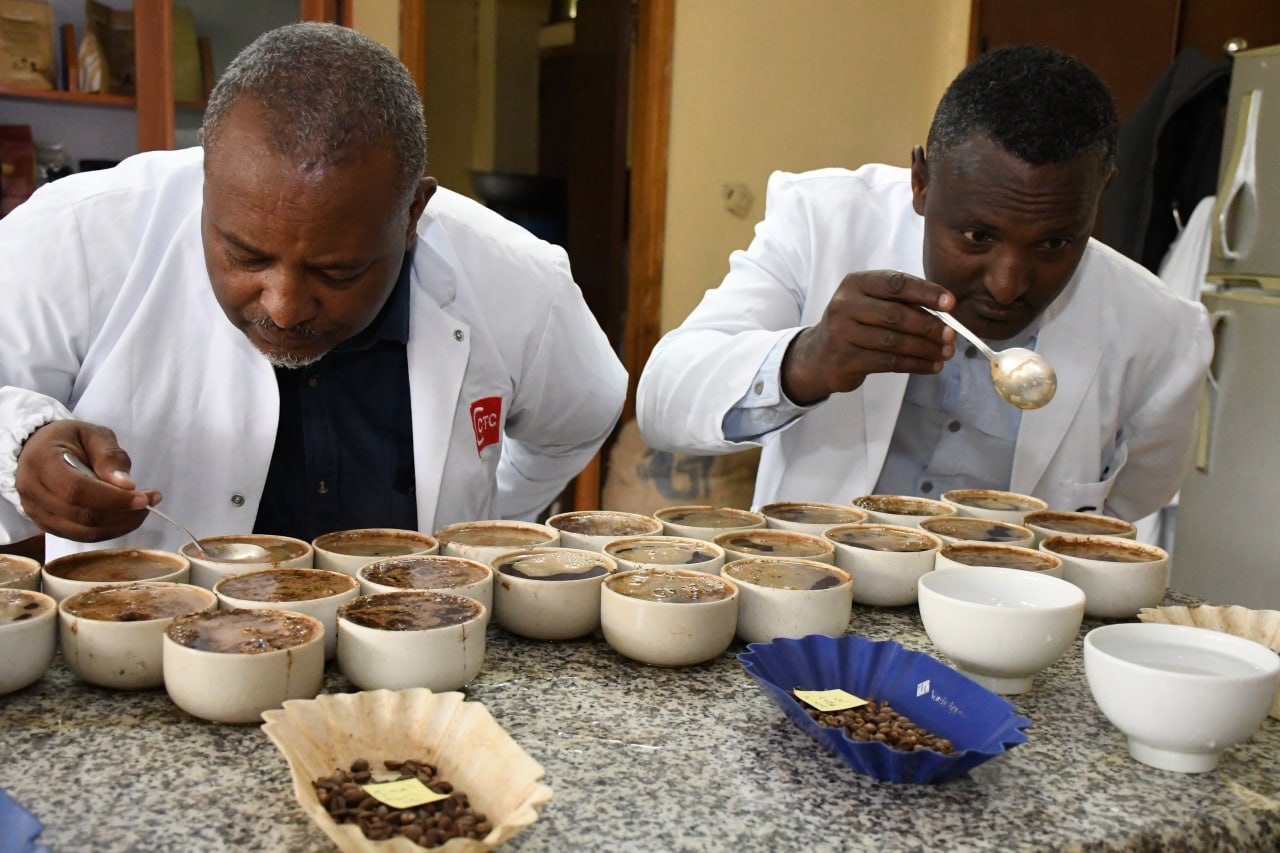
  • Ethiopia’s Coffee Training Centre has already certified hundreds of professionals across Africa.
  • Speakers emphasized education as the most sustainable investment in coffee’s future.

Global leaders in coffee, education, and international development convened at World of Coffee Brussels 2026. The event featured a landmark panel discussion on education’s role in shaping the coffee sector’s future. Organized by Fondazione Ernesto Illy ETS, UNIDO, SCA, and ICO, the event marked 15 years of the Master in Coffee Economics and Science.

The panels celebrated the program’s legacy and launched its Alumni Community. Participants also explored collaborative frameworks for workforce development in African producing countries. The message was clear: education is the most sustainable investment in coffee’s future.

Panel I: 15 Years of the Ernesto Illy Master

The first session celebrated 15 editions of the Master in Coffee Economics and Science. It is the only international first-level Master’s programme taught in English. The panel featured founding faculty members, industry partners, and alumni from Costa Rica and Ethiopia.

Speakers included Anna Illy, Sunalini Menon, Eliana Cossio, Daniel Sanchez, and Addisu Dulacha Gobana. The session culminated in the official launch of the Ernesto Illy Master Alumni Community. This global professional network extends the programme’s impact beyond the classroom.

Panel I Speakers – 15 Years of the Ernesto Illy Master
Speaker Affiliation
Anna Illy Chair, Fondazione Ernesto Illy ETS
Sunalini Menon President, CoffeeLab Limited
Eliana Cossio Chief Research Officer, SCA
Daniel Sanchez Alumni 2018, Costa Rica
Addisu Dulacha Gobana Alumni 2019, Ethiopia

“The Master in Coffee Economics and Science – Ernesto Illy was born from a bold vision: to recognize coffee not just as a product, but as a field of knowledge bringing together science, economics, culture, and sustainability in a truly multidisciplinary and international dialogue. Fifteen editions later, it has grown into much more than an academic program: it is a global community of 300 passionate professionals who share a deeper understanding of coffee from plant to cup. With the launch of the Ernesto Illy Master Alumni Community, this shared knowledge becomes an even stronger force: connecting people, inspiring ideas and shaping the future of coffee.”

— Anna Illy, Chair, Fondazione Ernesto Illy ETS

Panel II: Innovation for Capacity Building

The second session examined how international organisations, governments, and the private sector can strengthen human capital. Focus areas included UNIDO/ACT Programme Coffee Training Centres. These are skills platforms across East African countries. The panel also discussed SCA Coffee Education Systems and new collaboration models for Africa.

Ethiopia’s Coffee Training Centre experience was presented by Dr. Adugna Debela, Director General of ECTA. Speakers included Vanusia Nogueira, Iannis Apostolopoulos, Providence Mavubi, Stijn De Lameilliere, and Wouter Cools.

Panel II Speakers – Innovation for Capacity Building
Speaker Affiliation
Vanusia Nogueira Executive Director, ICO
Iannis Apostolopoulos CEO, Specialty Coffee Association
Providence Mavubi Director, Agribusiness, UNIDO
Dr. Adugna Debela Director General, ECTA
Stijn De Lameilliere GPE/WB
Wouter Cools ILO

Shared Conviction: Skills Advancement is Key

Across both panels, a shared conviction emerged. Sustainable transformation requires investing in the enabling environment for skills advancement. This includes robust institutions and accessible training pathways. Internationally recognised certification frameworks are also essential. They allow local professionals to compete, innovate, and lead.

Coffee Training Centres play a crucial role. They equip local actors with technical skills. They link them to advanced training opportunities. This lays the foundation for inclusive value chain participation. It also increases local value addition.

Leadership Perspectives

“For decades, the ICO has recognized that education, skill development, and the transfer of innovation and technology are essential to building a more resilient, sustainable, and prosperous coffee sector. Partnerships are the catalyst for this change, connecting local talent with global expertise, strong institutions, and internationally recognized training and certification pathways. Together, we can transform capacity building into lasting economic and social progress for coffee-producing countries.”

— Vanusia Nogueira, Executive Director, ICO

“Education is not merely a tool for knowledge transfer – it is a foundational investment in the long-term resilience and inclusiveness of the coffee sector. Through its ACT Coffee Programme, UNIDO is committed to building the enabling environment in which skills advancement can take root and thrive. Coffee Training Centres across Africa are proof that when we invest in people, we invest in the entire value chain.”

— Providence Mavubi, Director, Agribusiness and Infrastructure Development, UNIDO

“The Ethiopia Coffee Training Centre demonstrates what becomes possible when local expertise meets international standards. Our producers and professionals are not only learning – they are leading.”

— Dr. Adugna Debela, Director General, ECTA

“Building a more equitable coffee sector begins with creating more access for the people within our industry. SCA is proud to be part of a growing ecosystem of organizations that recognize education as the foundation of a resilient, inclusive value chain. When local professionals have access to internationally recognized pathways, everyone in coffee benefits.”

— Yannis Apostolopoulos, CEO, SCA

Spotlight: Ethiopia’s Coffee Training Centre

The Ethiopian Coffee and Tea Authority hosts the Coffee Training Centre within its premises in Addis Ababa. It was established with AICS funding and UNIDO technical support. Partners include Illycaffè and the Ernesto Illy Foundation.

The centre is equipped with roasting, brewing, and sensory laboratories. It delivers internationally standardized training across the post-harvest coffee value chain. The centre has already certified hundreds of professionals from across Africa.

About the Organizations

Fondazione Ernesto Illy ETS was established to preserve and promote the legacy of Ernesto Illy. It focuses on scientific research, education, and sustainability projects for coffee value chains. The Foundation’s core value is Ethics.

UNIDO is the UN’s specialized agency for inclusive and sustainable industrial development. It supports sustainable supply chains and strengthens agribusinesses. Its ACT Coffee Programme enhances climate resilience and local value addition in Africa.

The International Coffee Organization is the only intergovernmental organization dedicated to coffee sector sustainability. It provides official statistics and facilitates technical cooperation projects.

The Specialty Coffee Association is the global stage for specialty coffee. It brings together diverse voices across the value chain to spark dialogue and fuel innovation.
Frequently Asked Questions

What event took place at World of Coffee Brussels?Global coffee leaders convened for a panel discussion on education, celebrating 15 years of the Master in Coffee Economics and Science and launching its Alumni Community.

What is the Ernesto Illy Master program?It is the only international first-level Master’s programme in Coffee Economics and Science taught in English. It brings together science, economics, culture, and sustainability.

What is the Ernesto Illy Master Alumni Community?It is a global professional network and digital platform launched to extend the programme’s impact beyond the classroom, connecting 300 professionals worldwide.

What are Coffee Training Centres?They are skills platforms across East African countries supported by UNIDO’s ACT Coffee Programme, providing internationally standardized training.

What is the Ethiopia Coffee Training Centre?It is a training centre in Addis Ababa equipped with roasting, brewing, and sensory laboratories, delivering standardized training across the coffee value chain.

How many professionals has the Ethiopia CTC trained?The centre has already certified hundreds of professionals from across Africa since its establishment.

CQI and BSCA Partner to Expand Coffee Education in Brazil

Source: Coffee Quality Institute / Brazilian Specialty Coffee Association
Author: Editorial Team
Date: July 14, 2026

CQI and BSCA Partner to Expand Coffee Education in Brazil

  • CQI and BSCA signed an exclusive agreement to distribute CQI’s educational offerings in Brazil.
  • The partnership aims to make coffee education more affordable for Brazilian producers.
  • BSCA will coordinate all CQI educational activities in Brazil.
  • Both organizations will work to secure public and private funds to lower student costs.
  • The agreement was signed at World of Coffee Europe in Brussels.
  • CQI has operated in Brazil since 2014, but this deal deepens the partnership.
  • The goal is to improve coffee quality and producer livelihoods through enhanced training.

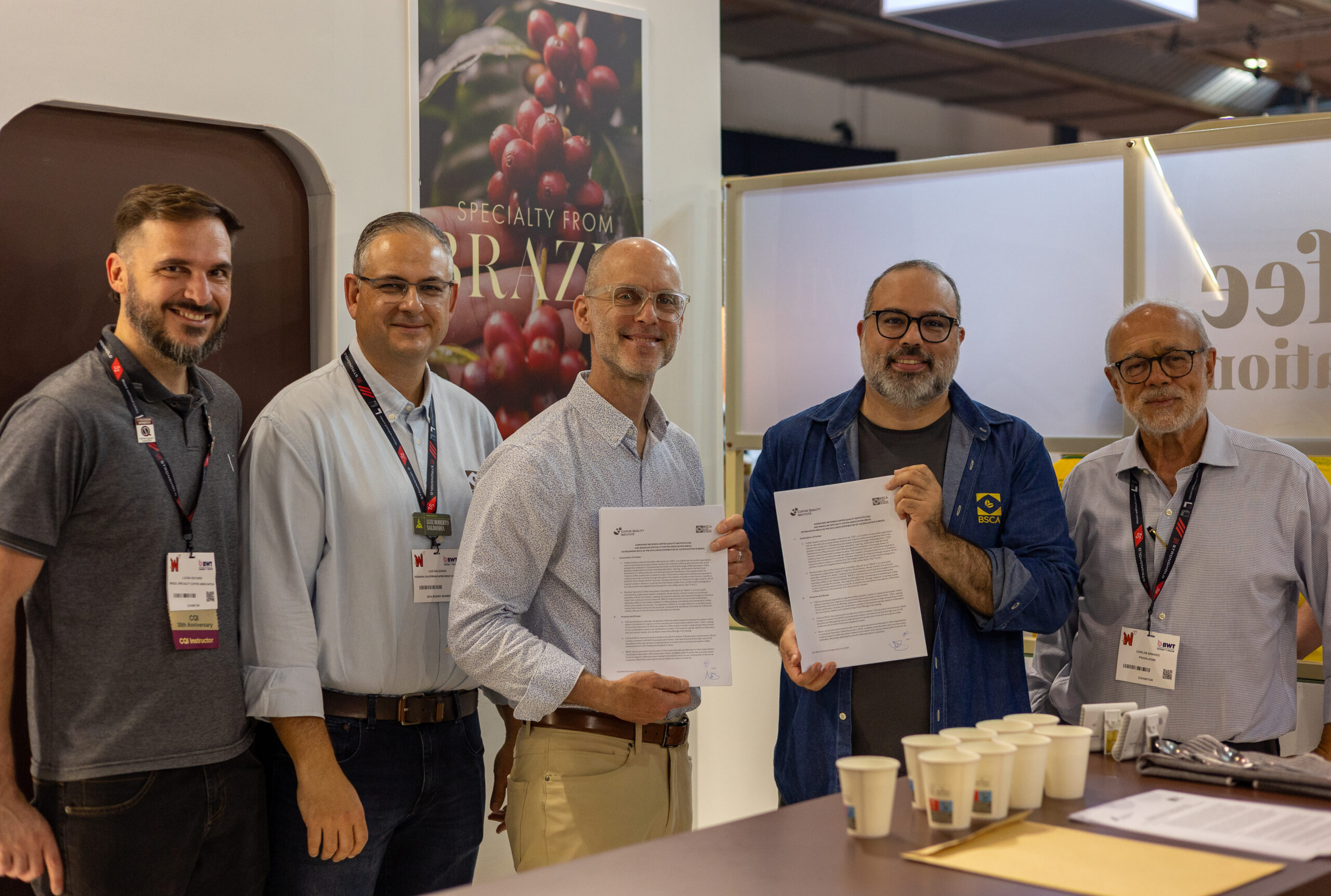
The Coffee Quality Institute has reached an agreement with the Brazilian Specialty Coffee Association. The agreement designates BSCA as the exclusive distributor of CQI’s educational offerings in Brazil. This collaboration aims to make coffee education more accessible to Brazilian producers.

The agreement was signed in Brussels at World of Coffee Europe. It advances CQI’s mission of improving coffee quality. It also supports BSCA’s goal of enhancing the value of Brazilian specialty coffee.

Deepening a Longstanding Partnership

CQI and BSCA have partnered since 2014. They have delivered coffee education in Brazil for over a decade. However, today’s agreement deepens that commitment significantly. It recognizes BSCA’s track record of leadership on coffee quality in Brazil.

Michael Sheridan, CEO of CQI, acknowledged the cost barrier. “We recognize that the cost of CQI courses has limited access to coffee education in Brazil,” he said. “We will work with BSCA to access local funds and reduce costs for students.”

How the Partnership Works

Under this exclusive partnership, BSCA will coordinate all CQI educational activities in Brazil. This ensures that classes are taught at the same high level. All courses will be delivered by authorized CQI Educators.

The agreement also stipulates that BSCA will work to secure public and private funds. The goal is to effectively lower student prices. This will make education more accessible to a wider range of producers.

Key Partnership Details
Element Description
Agreement Type Exclusive distribution of CQI educational offerings in Brazil
Duration Ongoing partnership (since 2014, now deepened)
BSCA Role Coordinate all CQI educational activities in Brazil
Funding Goal Secure public and private funds to lower student prices
Quality Standard Classes taught by authorized CQI Educators at high level
Signing Location World of Coffee Europe, Brussels

Leadership Perspectives

“CQI and BSCA have partnered since 2014 to deliver coffee education in Brazil, but today’s agreement deepens our longstanding commitment to BSCA in recognition of its track record of leadership on coffee quality in Brazil.”

— Michael Sheridan, CEO of CQI

“This partnership represents a significant step towards further strengthening the Brazilian coffee sector. The commitment of these organizations to promoting participation and increasing access will lead to increased coffee quality and ultimately improve the livelihoods of its producers through this enhanced education and training.”

— Vinicius Estrela, Executive Director of BSCA

What CQI Will Provide

CQI will support BSCA in several ways. First, it will provide access to its comprehensive catalog of educational offerings. Second, it will offer ongoing training for educators. Third, it will partner in securing funding for the programs.

Both organizations are committed to promoting high standards of coffee quality and education in Brazil. The partnership aims to create lasting impact for the Brazilian coffee sector.

About the Organizations

The Coffee Quality Institute is a non-profit that works globally. It improves the quality of coffee and the lives of the people who produce it. For thirty years, CQI has trained people in more than thirty coffee-growing countries.

The Brazilian Specialty Coffee Association unites producers, exporters, roasters, and coffee shops. It operates through three pillars: quality, traceability, and sustainability. The association fosters practices that transform each cup into a unique experience.

Frequently Asked Questions

What is the new agreement between CQI and BSCA?CQI designated BSCA as the exclusive distributor of CQI’s educational offerings in Brazil, making coffee education more accessible and affordable.

Why is this partnership important?It reduces the cost barrier for coffee education in Brazil, enabling more producers to access high-quality training and improve their coffee quality.

How long have CQI and BSCA worked together?They have partnered since 2014, but this new agreement deepens and formalizes their relationship significantly.

Who will teach the CQI courses in Brazil?All courses will be taught by authorized CQI Educators to maintain the same high standard of instruction.

How will the partnership reduce costs for students?BSCA will work to secure public and private funds to effectively lower student prices for CQI courses.

What is the goal of this collaboration?The goal is to improve coffee quality and producer livelihoods in Brazil through enhanced education and training.

On the Eve of the World of Coffee Brussels, CQI CEO Delivers a Message on 2026 Achievements and Future Plans

Source: Coffee Quality Institute (CQI) – CEO Message |
Author: Qahwa World |
Date: June 24, 2026

On the Eve of the World of Coffee Brussels, CQI CEO Delivers a Message on 2026 Achievements and Future Plans

Key Takeaways:

  • On the eve of the World of Coffee trade show in Brussels, the CEO of the Coffee Quality Institute (CQI) delivers a message to the international community, reviewing achievements from the first half of 2026.
  • The Institute launched two new programs: the Matching Grant Fund to support coffee-growing communities, and the CQI Insider program to connect coffee professionals worldwide.
  • Following a comprehensive upgrade, the renowned “Coffee Corps” program has been relaunched, with the first volunteers already selected for the new version.
  • Version 3.0 of the Processing Professional (PHP) course completed its review and has been delivered in Africa, Asia, and Latin America.
  • The fifth cohort of the Processing Expert Course, the Institute’s most advanced program, has been convened.
  • In Brussels, CQI is preparing to welcome visitors at Booth 7655 with live demonstrations, tastings, and meetings with key partners.

On the eve of the World of Coffee Brussels, taking place from June 25 to 27, Michael Sheridan, CEO of the Coffee Quality Institute (CQI), delivered a message to the international coffee community. He reviewed the achievements of the first half of 2026, a period marked by significant milestones and qualitative developments, while also announcing the Institute’s participation in the event with a rich program featuring live demonstrations, tastings, and meetings with prominent partners.

This message comes at a critical time, as the global coffee industry undergoes rapid transformation, highlighting the growing role of educational and training institutions in enhancing production quality and improving producers’ livelihoods — priorities that remain at the core of CQI’s mission.

New Programs to Support Producers and the Coffee Community

Among the key highlights of the message was the launch of two new programs during the first half of the year. The first is the “Matching Grant Fund,” an initiative designed to catalyze co-investment in coffee-growing communities by providing matching financial grants to support development projects in producing regions. The second is “CQI Insider,” a digital platform that aims to connect the global community of coffee professionals, creating a space for communication and the exchange of experiences and ideas among those working across all stages of the value chain — from the farm to the cup.

Coffee Corps Relaunched After Comprehensive Upgrade

In addition, the Institute relaunched the “CQI Coffee Corps” program, one of its most celebrated initiatives in history, following a comprehensive upgrade and refinement. The first group of volunteers has already been selected for the new version of the platform, which is designed to strengthen peer-to-peer education among coffee professionals and enable them to share field knowledge and expertise directly. This program reflects the Institute’s commitment to building a more connected and collaborative coffee community.

Training Programs Development and Curriculum Updates

In the training domain, the first half of the year witnessed a significant achievement with the completion of a comprehensive review and two successful pilots of Version 3.0 of the Processing Professional (PHP) course, one of the Institute’s most impactful programs. The updated course has already been delivered across three continents — Africa, Asia, and Latin America — reflecting the Institute’s global reach and its ability to connect with coffee-producing regions worldwide.

Additionally, the fifth cohort of the Processing Expert Course was convened, representing the Institute’s most advanced training program, designed to develop a select group of experts in coffee processing. Students from this cohort are expected to transition soon from the classroom to the field, applying their learning in real-world settings and contributing to raising quality standards across the coffee industry.

Area Achievement
New Programs Matching Grant Fund, CQI Insider
Peer-to-Peer Education Coffee Corps relaunched, first volunteers selected
Processing Professional (PHP) v3.0 completed and delivered across 3 continents
Advanced Training 5th cohort of Processing Expert Course convened
International Engagements Dubai, Addis Ababa, Tampa, San Diego, Bangkok, Lima, and Brussels

Participation in Brussels 2026: Exclusive Activities at Booth 7655

As part of these ongoing efforts, CQI is participating in the World of Coffee Brussels 2026, one of the most significant global events in the specialty coffee sector. Booth 7655 at the Brussels Expo Convention Center will serve as the hub for the Institute’s activities, featuring live demonstrations, tastings, and meetings with prominent partners and experts.

Key highlights of the Institute’s three-day program include:

  • Exploring the New Le Nez du Café Kit: Featuring Viva Lenoir, President of the company behind the kit’s creation, who will be available to answer questions and share what’s new in this updated edition of the aroma training kit.
  • Live High-Precision Moisture Meter Demonstrations: Presented by Ben Collier, Managing Director of Sinar Technology, highlighting the importance of moisture meters and sharing maintenance tips.
  • Fine Canephora Coffee Tasting: With Lukas Harbig, creator of the Canephorum event, and partner Gloria Pedroza, Head of NKG’s Quality Services Department. Visitors will have the opportunity to taste exceptional Canephora coffees and gain insights into the latest developments in this segment.
  • Meet & Greet with Bean Voyage: As part of the Women Powered Coffee Summit, representatives from the organization will meet with booth visitors to discuss the role of women in the coffee industry.

Day Activity Time
June 25 CQI Pin Distribution & Le Nez du Café Exploration All Day
June 25 Meet & Greet: Bean Voyage | Women Powered Coffee Summit 10:30 AM
June 25-27 Sinar Technology Moisture Meter Talks 1:00 & 3:00 PM
June 27 Fine Canephora Tasting with Lukas Harbig & Gloria Pedroza 1:00 PM

Looking Ahead: The Second Half of 2026 Promises Even More

CEO Michael concluded his message by indicating that the second half of 2026 will be even more eventful, with plans to launch new programs, update training curricula, forge strategic partnerships, and implement ambitious investments and projects — all aimed at fulfilling the Institute’s core mission: improving coffee quality and the lives of those who produce it worldwide. He emphasized that updates on these initiatives will be announced in the coming months, inviting the coffee community to follow and participate in these developments.

Frequently Asked Questions About CQI and Brussels Activities

Q: What is the Coffee Quality Institute (CQI)?

A: A non-profit organization dedicated to improving coffee quality and the lives of producers through education, training, and research. It is one of the most prominent institutions in the specialty coffee sector.

Q: What is the CQI Coffee Corps program?

A: A peer-to-peer education program that connects coffee professionals worldwide to share field knowledge and expertise. It was recently relaunched after a comprehensive upgrade.

Q: Where is CQI’s booth located at the Brussels show?

A: At Booth 7655 at the Brussels Expo Convention Center, throughout the show from June 25 to 27.

Q: What is the Le Nez du Café kit?

A: A specialized training tool designed to teach and develop aroma recognition and tasting skills in coffee. A new updated edition has just been released.

Q: What is the Processing Expert Course?

A: CQI’s most advanced training program, designed to develop elite experts in coffee processing. Its fifth cohort was convened in 2026.

The Coffee Quality Institute combines ambitious vision with tangible actions through its participation in the Brussels trade show and its review of first-half achievements. From developing training programs and relaunching educational initiatives to forging strategic partnerships, CQI continues to strengthen its position as a leading force in improving coffee quality worldwide. We invite you to visit Booth 7655 in Brussels and join the Institute’s diverse activities, which bring together education, tasting, and professional networking.

Prepared and edited by: Qahwa World – Based on the Coffee Quality Institute (CQI) CEO message.

All rights reserved. Republication with attribution permitted.

Publication date: June 24, 2026

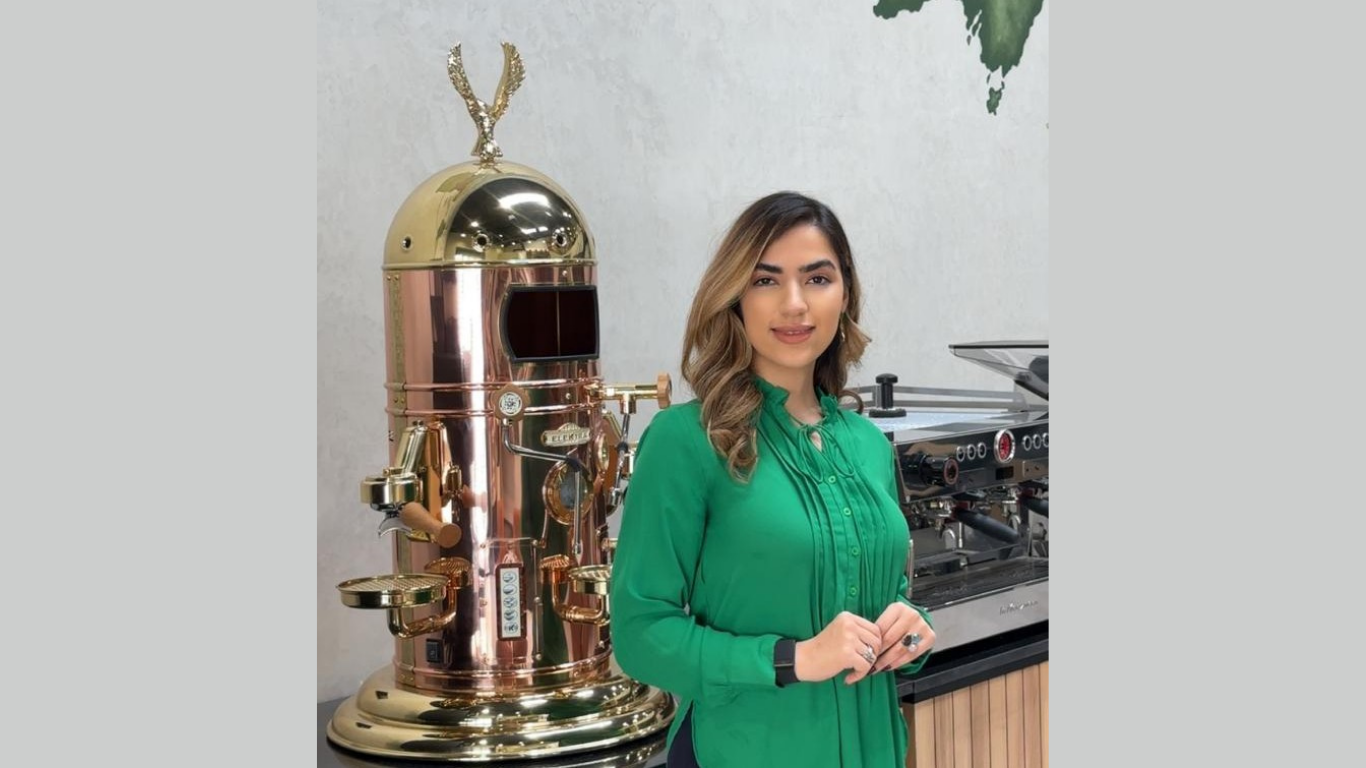
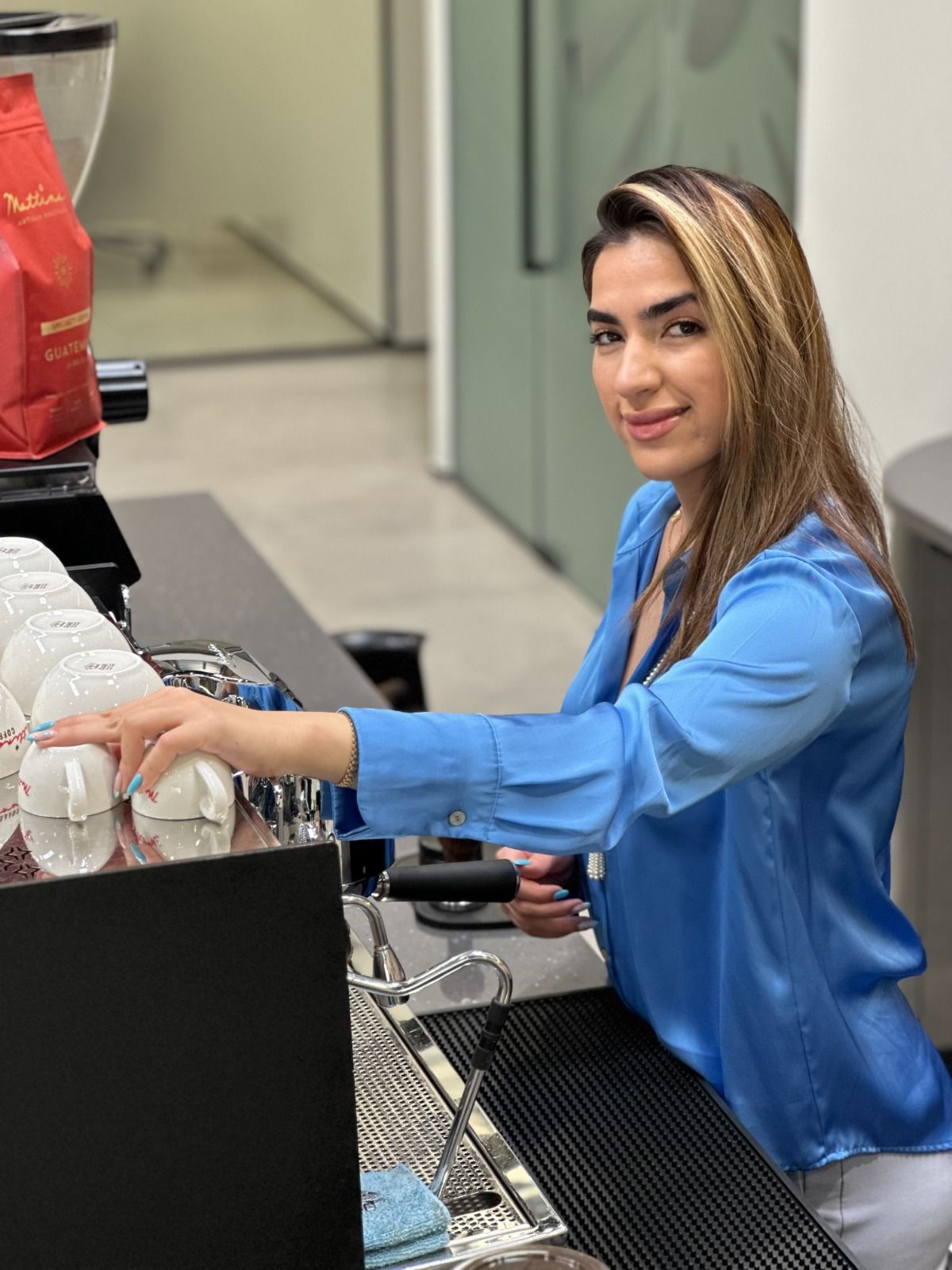
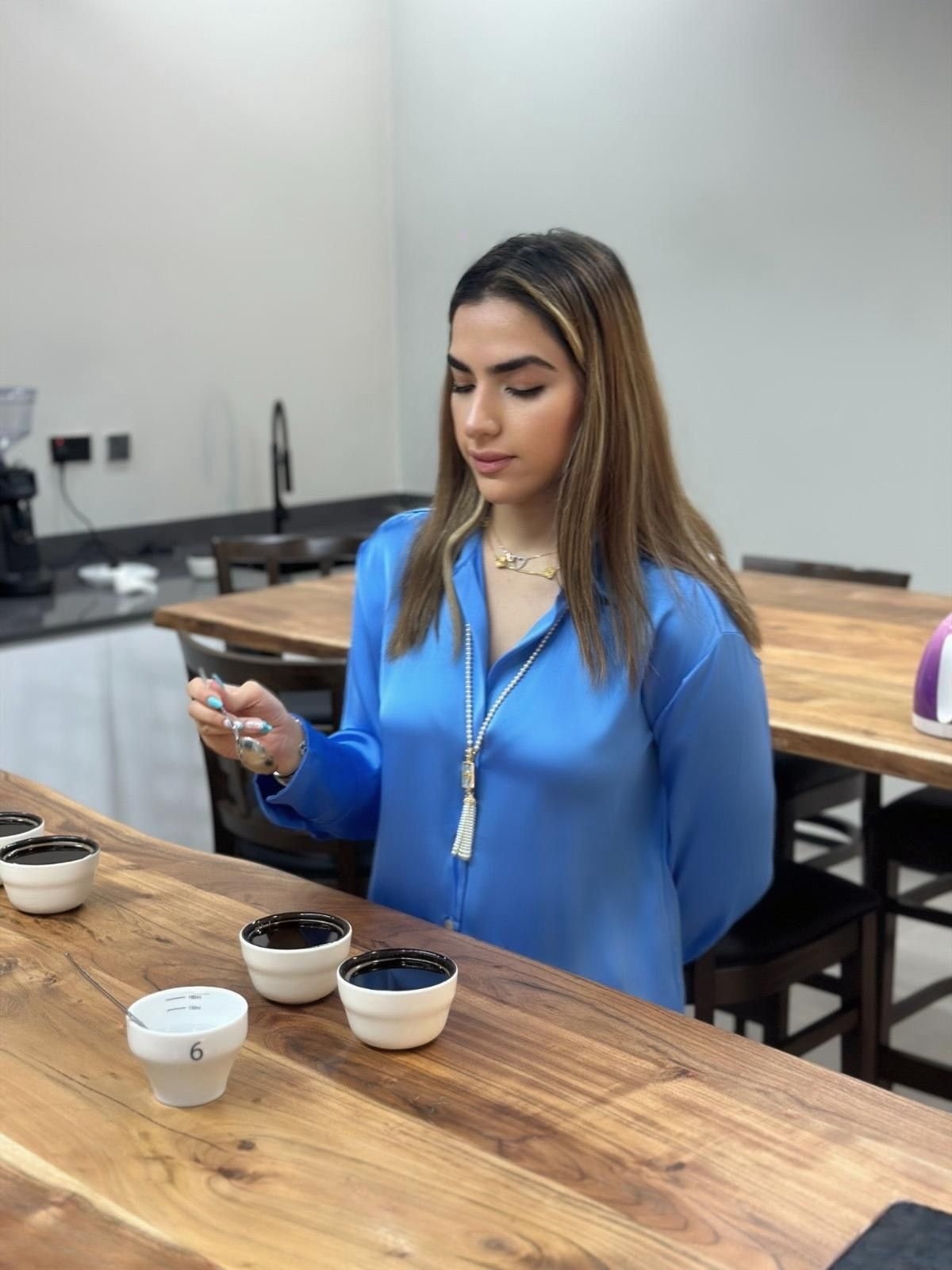
Maryam Tabatabaei: A Journey of Passion in Dubai’s Specialty Coffee Scene

Source: Qahwa World – Exclusive Interview |
Author: Ali Alzakary |
Date: June 17, 2026

Maryam Tabatabaei: A Journey of Passion in Dubai’s Specialty Coffee Scene

Key Takeaways:

  • Maryam Tabatabaei is a specialty coffee expert, holding certifications in coffee evaluation, training, roasting, and competition judging.
  • She believes training is at the core of her work and finds the greatest reward in seeing trainees grow and succeed in the coffee industry.
  • She founded The Coffee Atelier as a learning space that combines professionalism with creativity.
  • She defines specialty coffee as quality, transparency, and respect for everyone in the coffee chain – not just high cost or complexity.
  • She believes coffee is a means of connection across cultures, and that hospitality and passion are universal values.
  • Her advice to those who love coffee but doubt their career prospects: start learning, stay curious, and be patient.

Maryam Tabatabaei is one of the experienced professionals in Dubai’s specialty coffee scene. She holds multiple certifications in coffee evaluation, training, roasting, and competition judging. Her work spans several areas: training, roasting, judging, and sensory analysis.

In this interview, Maryam talks about her beginnings with coffee, her experience in training, her perspective on Dubai’s coffee scene, and her advice for those who aspire to work in this field.

We invite you to read the interview and learn from her experience.

Do you remember the first coffee that truly surprised you?

Absolutely. It was the first time I tasted a naturally processed specialty coffee with intense fruit notes. Until then, coffee was simply coffee to me. Discovering flavors like berries, tropical fruits, and chocolate in a single cup completely changed my understanding of what coffee could be.

When did you realize coffee was going to become more than just a job for you?

I realized it when I started teaching others. Seeing students become passionate about coffee and watching their skills develop gave me a sense of purpose beyond making drinks. That’s when coffee became a lifelong journey rather than just a profession.

What still excites you about coffee today?

Coffee never stops teaching me something new. Whether it’s a new origin, a unique processing method, or helping someone discover a flavor they’ve never experienced before, there is always something new to explore.

You work in education, roasting, judging, and sensory. Which part feels most like you?

Training feels most like me. I enjoy sharing knowledge and helping people grow. Roasting and judging are incredibly rewarding, but seeing students gain confidence and succeed in their coffee careers is what fulfills me the most.

What’s something people misunderstand about specialty coffee?

Many people think specialty coffee is about being expensive or complicated. In reality, it’s about quality, transparency, and respect for everyone involved in the coffee chain – from the farmer to the person preparing the cup.

Has coffee changed the way you see people or culture?

Definitely. Coffee has allowed me to connect with people from many different countries and backgrounds. It has taught me that while cultures may differ, hospitality, passion, and the desire to connect over a cup of coffee are universal.

What was going through your mind during the roasting championship?

A mixture of excitement, focus, and responsibility. I knew every decision could affect the final result. At the same time, I reminded myself to trust my training, experience, and understanding of the coffee.

Do you still get nervous judging competitions or teaching students?

Yes, and I think that’s a good thing. A little nervousness means I care about doing my best. Whether I’m judging a competition or teaching a class, I want to give participants the attention and respect they deserve.

What’s the most rewarding moment you’ve had with a student?

Seeing a former student become a successful coffee professional and knowing I played a small part in their journey. Those moments remind me why education is so important.

What kind of atmosphere did you want to create with The Coffee Atelier?

I wanted The Coffee Atelier to be a place where people feel comfortable learning, asking questions, and developing their skills. A place that combines professionalism with creativity and genuine passion for coffee.

Dubai’s coffee scene is growing fast. What makes you hopeful about it?

The level of curiosity and commitment I see from young professionals. More people are interested in quality, training, and understanding coffee deeply rather than simply following trends. That gives me a lot of hope for the future.

What advice would you give someone who loves coffee but doubts they can make a career from it?

Start learning, stay curious, and be patient. The coffee industry offers many paths beyond being a barista. If you’re passionate and willing to keep improving, there is absolutely a place for you in this industry.

After all the certifications and competitions, what does a “good cup of coffee” mean to you now?

A good cup of coffee is one that creates a meaningful experience. Technical perfection matters, but ultimately, a great coffee is one that brings enjoyment, connection, and appreciation for the work behind it.

When you’re not analyzing coffee professionally, how do you actually enjoy drinking it?

I prefer simple brewing methods that allow me to relax and enjoy the coffee without overthinking it. Sometimes I just want to sit quietly and appreciate the cup rather than analyze every flavor note.

What keeps you motivated to continue learning in coffee?

The fact that coffee is a world without an endpoint. There is always another origin to explore, another technique to learn, and another person to inspire. That endless opportunity for growth keeps me motivated every day.

This interview offers insight into Maryam Tabatabaei’s experience in the specialty coffee world, her professional journey, and her perspective on training and development. We invite you to read the full interview and benefit from her expertise.

Interview conducted by: Qahwa World – with Maryam Tabatabaei, specialty coffee expert and founder of The Coffee Atelier in Dubai.

All rights reserved. Republication with attribution permitted.

Publication date: June 17, 2026

Professional Barista Skills: How the Role Transformed from Drink Maker to Experience Manager

Author: Qahwa World – Dubai
Date: May 17, 2026

Executive Summary

  • The barista role has shifted from a simple drink maker to a quality controller, hospitality professional, and skilled storyteller.
  • Automation does not reduce difficulty; it changes the nature of work, turning baristas into technical monitors and calibrators.
  • Today’s customers are more knowledgeable than ever, raising the stakes for every interaction behind the bar.
  • Staff turnover in hospitality exceeds 70% in the US and reaches 6% monthly in the UK, driven by treating barista roles as temporary.
  • Successful coffee shops invest in clear career paths, treating barista as a long-term craft rather than a stopgap job.
  • Hospitality and emotional intelligence now outweigh technical skills in building customer loyalty and justifying premium pricing.

The Evolution of the Barista Role

Over the past decade, the specialty coffee industry has witnessed a deep transformation in the nature of barista work. The scene no longer revolves solely around leveling a portafilter or pouring a symmetrical tulip. Today, baristas face multiple pressures: customers who follow coffee experts on social media, machines with complex technology, and coffee shops that demand multiple roles simultaneously.

Industry observers compare today’s barista to a chef in a fine dining restaurant. Both require technical mastery, the ability to handle pressure, and a talent for reading customer needs before they are expressed. This shift reflects positive progress in how the profession is valued, but it also places new burdens on those working behind the bar.

Advanced Technical Mastery: Extraction Science and Dynamic Calibration

Technical skills remain the foundation, but they have evolved significantly. It is no longer enough to know how to pull a good espresso shot. A barista must understand why it behaves that way under specific weather conditions or with a particular coffee origin.

Core technical skills include: understanding extraction science and the impact of grind size, temperature, and pressure; mastering latte art as a way to stabilize milk texture rather than just decoration; adjusting recipes for alternative brewing methods (pour-over, filter) based on processing method (natural, washed, honey); and maintaining equipment while troubleshooting issues. In the age of automation, the barista’s role shifts from “machine operator” to “quality assurance manager” who monitors performance and intervenes when necessary.

Dynamic calibration is what separates the professional barista from the beginner. Fixed recipes are the enemy of quality. A successful barista adjusts grind size and dose based on humidity and temperature changes inside the café throughout the day. This requires a trained palate to detect extraction defects (such as channeling or uneven extraction) before the customer complains.

Operational Variable Smart Standard Professional Goal
Water temperature 93°C (199°F) Avoid bitter burning or sharp acidity
Pre-infusion time 4 seconds Ensure even flow and prevent channeling
Grind size adjustment Minimum twice daily Counteract fluctuating indoor humidity

Managing Automation: From Operator to Quality Controller

Many coffee shops, especially in high-volume settings, are turning to automated equipment such as automatic pour-over brewers and milk foamers. Some see this as a threat to barista skill. The reality is different. Automation does not reduce difficulty; it changes the nature of the work. Today’s barista needs to understand machine algorithms, adjust pressure and flow profiles, and maintain equipment precisely to ensure consistent results.

When a machine manages extraction variables or milk steaming automatically, the barista’s role shifts toward monitoring, maintenance, and quality control. Identifying when something is off, understanding why, and fixing the problem requires attention to detail and forward-thinking. The smart barista harnesses technology to reduce waste and raise operational efficiency without compromising the sensory soul of the craft.

Emotional Intelligence and Interactive Hospitality

Research suggests that up to 78% of millennials prefer spending money on memorable experiences over material goods. This reality makes hospitality a critical success factor for specialty coffee shops. The Institute of Customer Service found that most consumers cite service quality as the main factor in whether they return to a business, ranking above price and product.

Emotional intelligence sits at the heart of excellent hospitality. The ability to read a customer’s body language in seconds — are they in a hurry, looking for conversation, or seeking a quiet experience? — handling a stressed customer during rush hour without escalating tension, and maintaining composure during a long queue are professional skills that take time and experience to develop. Additionally, explaining a complex menu in simple language, offering personalized suggestions without condescension, and turning a routine order into an engaging conversation about the customer’s preferences are all essential.

Brands like WatchHouse exemplify the success of a hospitality-first model. After record revenues, the chain aims to reach 100 global locations, where baristas greet guests at the door, seat them, walk them through the menu, and serve drinks tableside. This transforms a routine café visit into something closer to a fine dining experience.

Deep Coffee Knowledge and Storytelling

Today’s customers follow roasters on Instagram and know the difference between Ethiopian heirloom and Colombian pink bourbon. This level of knowledge reduces the burden of “educating” consumers, but it raises the stakes for every interaction. The barista’s role is no longer just providing information but enriching the drinking experience by connecting coffee to its story: the farm, the farmer, the processing method, the altitude, and how each affects the flavor.

The ability to make personalized suggestions with scientific confidence: “This natural Ethiopian will give you bold wild berry notes, while this Colombian offers a beautiful balance of caramel and green apple-like acidity.” Also handling special requests (plant-based milks, decaf, low-acid) with confidence rather than just “yes we can.”

Operational Efficiency and Economic Vision

Professional sustainability means the barista understands how their movements behind the bar affect the café’s profitability. Global coffee shops are not only looking for someone who pours beautiful latte art, but also someone who manages resources intelligently. Workflow optimization — organizing tools and moving smoothly to reduce customer wait time while maintaining the highest quality standards — is an art.

Waste reduction includes precisely adjusting milk quantities and controlling coffee bean waste during morning calibration. These practices directly reduce operational costs. Understanding the basics of drink costing and natural upselling that serves the customer makes the barista a partner in business success, not just an executive employee.

Continuous Learning and Career Paths: Tackling High Turnover

The hospitality sector suffers from high employee turnover. The US Bureau of Labor Statistics reports that the sector has the highest turnover rate in the country, at over 70%. A separate study found that nearly 3 million US hospitality workers left their jobs in early 2024, a figure 204% above the national average quit rate. Meanwhile, in the UK, recent data shows that around 6% of hospitality workers leave their jobs every month.

Most of these problems stem from how roles like barista are perceived. When treated as temporary rather than a long-term, professional position, employers invest less in training and development. This limits career progression, pushing baristas to find other work. The solution lies in creating clear career paths: junior barista, senior barista, head barista, roaster, café manager. Coffee shops that invest in continuous training, positive culture, and competitive pay retain the skilled, passionate people who help their businesses succeed.

Frequently Asked Questions (FAQ)

1. What is the single most important skill for a barista in 2026?

There is no single skill. The professional barista combines technical mastery (extraction science, dynamic calibration) with emotional intelligence (interactive hospitality, pressure management).

2. How has automation changed the barista’s role?

It shifted baristas from machine operators to quality controllers. They now need to understand machine algorithms, perform calibration and maintenance, while focusing on human elements that machines cannot replace.

3. Why are communication and hospitality skills so important today?

Customers are more knowledgeable than ever, and expectations are higher. Excellent service is the number one factor in customer return and justifies premium pricing in specialty coffee shops.

4. What causes high barista turnover in the industry?

The main reason is treating the profession as temporary rather than a career path. This leads to underinvestment in training, development, and competitive pay, pushing talent to seek more stable opportunities.

5. How can a coffee shop retain talented baristas?

By investing in continuous training, creating clear career paths, offering competitive pay, and building a positive workplace culture where baristas feel valued and respected.

6. What separates a professional barista from an average one today?

The professional combines technical excellence (dynamic calibration, extraction science, automation management) with soft skills (hospitality, emotional intelligence, storytelling, and economic awareness).

Author: Coffee Industry Analysis Unit  |
Source: Synthesis of three expert reports (field experience, PDG Jobs analysis, industry research)  |
Publication date: May 17, 2026

ICO and ITC Expand Training Programme to Strengthen Links Between Origin and Specialty Coffee Markets

Dubai – Qahwa World

The International Coffee Organization highlights a strategic direction focused on building stronger connections between origin and specialty markets, emphasizing that stronger links between origin and specialty markets mean stronger opportunities for coffee producers.

The organization expresses pride in its partnership with the International Trade Centre in supporting initiatives designed to bridge this gap, connect producers more directly with high value markets, promote value addition at origin, and strengthen knowledge across the coffee value chain. The shared objective is clearly defined as working towards a coffee sector that is more inclusive, transparent and sustainable for everyone.

This vision is further reflected in the initiative titled Bridging the gap between origin and specialty coffee markets, which brings together Ethiopia, Honduras and other producing countries through a structured training partnership.

The programme demonstrates how coffee producers and cooperatives are being guided to understand specialty markets, build skills to connect with the right buyers, and communicate their identity with confidence. The central idea is a shift in role, expressed in the objective to evolve from simply delivering their coffee to actively selling it.

The International Trade Centre has partnered with the Specialty Coffee Association and the International Coffee Organization to deliver a series of practical workshops under the banner Introduction to Specialty Coffee Markets. These workshops are implemented through ITC’s ACP Business-Friendly and CLEAR Supply Chains projects, and are designed to strengthen market readiness and commercial positioning for coffee producers across origin countries.

The training structure is consistent across sessions and focuses on three core areas. It begins with understanding what makes a coffee specialty and how farm level decisions shape quality. It continues with identifying the right market segment for a given coffee profile. It concludes with learning how to communicate effectively with buyers and telling the cooperative’s story in a way that resonates across cultures and commercial contexts.

The first edition took place on 3 February 2026 in Addis Ababa, Ethiopia, bringing together 21 participants including cooperative representatives from Uganda. The session was delivered by Sara Yirga, a certified specialty coffee trainer and ITC consultant based in Ethiopia. A second edition followed on 19 March in San Pedro Sula, Honduras, with 32 participants consisting of 17 men and 15 women from cooperatives and producer organizations across the country, led by Andrés Montenegro, Specialty Coffee Association Sustainability Director. A third edition is planned ahead of World of Coffee Brussels which takes place on 24 June this year, with further editions planned across producing countries before year’s end.

The Honduras session brought together stakeholders from across the value chain including cooperatives, roasters and exporters. Participants described the training as a turning point in how they understand their position in the global specialty market. In Ethiopia, feedback highlighted immediate practical changes, including plans to approach different markets with greater specificity, tailor farm stories to buyer profiles, and engage more actively in the wider coffee world through events and social media.

  • Participant reflections illustrate the impact of the programme.

Karla María Cartagena from Cafico stated: “Participating in this workshop was a very enriching experience. It allowed us to strengthen our knowledge about specialty coffee markets and reaffirm the value of the work we do as an organization to position our coffee internationally.”

Orlin Alvarado from Proexo noted: “The training provided key tools for improving decision-making across the coffee value chain, from understanding intrinsic and extrinsic coffee attributes to learning how to strategically position our coffee in the specialty segment.”

Kristy Matamoros from Olanch Café said: “For Olanch Café, participating in this workshop reaffirms our commitment to excellence. A practical, dynamic, and enriching experience that broadened our strategic vision and motivates us to continue elevating our role within specialty coffee.”

Maira Lizzeth Gómez from COMIPRONIL Cooperative in Honduras shared: “It was our first time participating in a training on this topic. This learning motivates us to continue improving our processes and to identify new opportunities in the specialty coffee market. I am deeply grateful for these opportunities that strengthen our capabilities and contribute to the growth of our cooperative.”

From Ethiopia, Degaga Wakahum of Yedesta Buna Trading PLC said: “The introduction to the specialty marketing pilot programme was really good. It put everything in simple terms and made it easy to understand. Now I can easily compile information and put it in a way that the market can easily understand and aligned with the value attributes they want to focus on.”

Horom Teshome from Buunni Coffee added: “This training focused on three main areas: knowing the product, the market, and the right fit. It was a very insightful training. Especially for someone like me who’s very new to the coffee industry. It was practical, engaging, and experimental.”

The broader project framework is anchored in two major development initiatives. The ACP Business-Friendly Programme is funded by the European Union and the Organisation of African, Caribbean and Pacific States and jointly implemented by ITC’s Alliances for Action, the World Bank and UNIDO. It aims to improve the ability of agribusiness firms in ACP countries to compete, grow and prosper in domestic, regional, and international markets through inclusive and sustainable agricultural value chains that value all stakeholders from farm to shelf.

The CLEAR Supply Chains project, funded by the European Union, brings together the International Trade Centre, the International Labour Organization as the leading UN agency, the Food and Agricultural Organization, and the United Nations Children’s Fund. It focuses on addressing the root causes of child labour in supply chains, with a primary focus on coffee, while supporting farmer organizations, micro, small and medium enterprises, and value chain actors in strengthening commercial value, sustainability, Human Rights and Environmental Diligence alignment, and incomes for smallholder farmers in coffee producing countries including Uganda, Honduras, DRC and Vietnam.

Together, these efforts reflect a coordinated approach to strengthening origin capacity, improving market access, and building a more transparent and sustainable global coffee sector.

Coffee Quality Institute Announces Educator of the Year

ALISO VIEJO, Calif. –  Qahwa World

Coffee Quality Institute (CQI) recognized their Educator of the Year at their recent thirtieth anniversary luncheon in San Diego. Javier Hoyos Garcia of Colombia has been selected as the 2026 recipient.

“Educators are the unsung heroes in CQI’s work and enable our small organization to have an outsized impact,” said Coffee Quality Institute CEO Michael Sheridan. “We develop the curriculum, and recruit, train, and certify distinguished coffee professionals to deliver it. Even among the very impressive ranks CQI educators, Javier really stood out over the past year.”

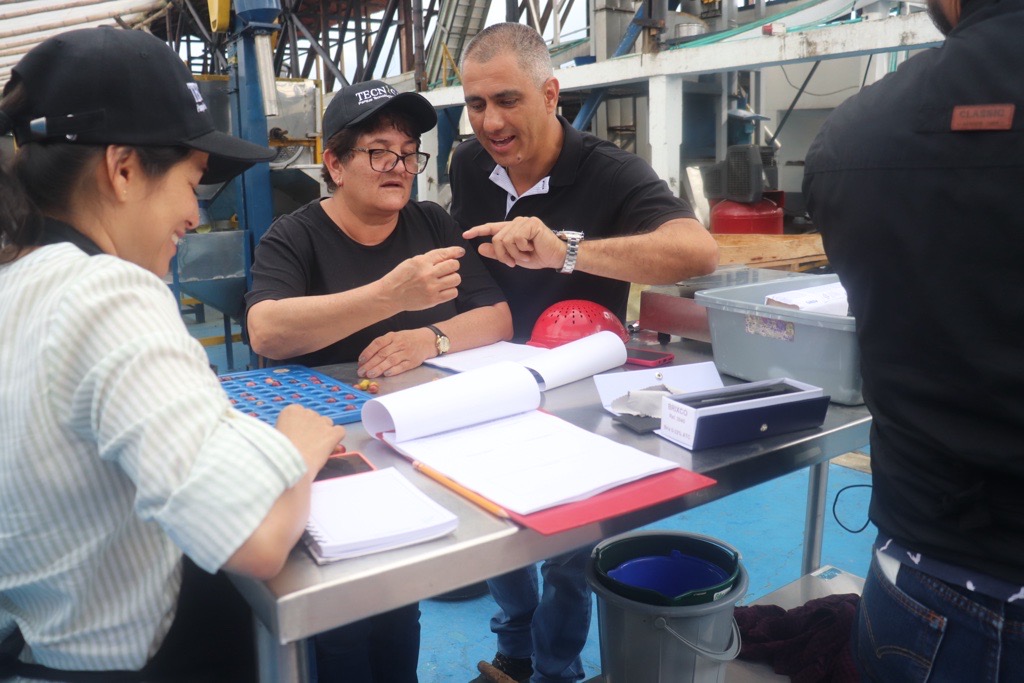
Hoyos García has dedicated much of his life to education as both an agronomist and a university professor. He began his work as a CQI Instructor in 2019. He has trained more than 1,000 students, contributing significantly to the development of coffee professionals across Colombia in different areas including post-harvest processing. In addition to his teaching roles, he serves as CEO of TECNiCAFE (Technological Innovation Park for Coffee), a leading training campus located in the department of Cauca, Colombia.

“What I value most is being able to share what I know with people who need it. It’s incredible how much you can influence or impact people’s lives by sharing knowledge, best practices, experience, and technical understanding, stated Hoyos Garcia. “The changes real. I hope to continue expanding this impact beyond Colombia. This year, I begin teaching in Peru and Thailand—experiences that truly excite me.”

One example of Hoyos Garcia’s impact in 2025 was his commitment to deliver training for four hundred women from Cauca, Colombia, in fermentation practices that strengthen quality and consistency in coffee processing. Participants are part of the EntreAmigos network and represent various farmer organizations across the region. Each has received a scholarship through the CQI Global Coffee Fund, and upon completion, a CQI certificate.

“It is a privilege to recognize Javier Hoyos García for the passion and dedication he brings to his work every day, both with CQI and throughout his career. This recognition highlights his trajectory, discipline, and commitment to teaching, sharing, and guiding others. Javier leads through education; something that is not just what he does, but a genuine and constant expression of who he is. It is an honor to celebrate our incredible instructors, and in this case, a professional like Javier,” said CQI Senior Post-Harvest Program Manager, Yimara Martínez Agudelo.

Through his work in post-harvest processing education, Hoyos Garcia has not only strengthened individual’s coffee skills—he has restored confidence, opened opportunities, and transformed lives. His impact is felt not just in the quality of coffee, but in the people behind it.

About Coffee Quality Institute

CQI is a non-profit that works globally to improve the quality of coffee and the lives of the people who produce it. For thirty years, CQI has trained people who produce and process coffee in more than thirty coffee-growing countries around the world.

Ethiopia Launches East Africa’s First Specialty Coffee Training Center

Sahel Maryam – Qahwa World

In a pioneering move for the region, a new coffee roasting and quality assessment center has opened in Sahel Maryam, Medhin, Ethiopia. The facility, the first of its kind in East Africa, combines state-of-the-art equipment with instruction from experienced coffee professionals.

The center aims to train participants in evaluating coffee quality to global standards, enabling them to independently assess beans and elevate industry practices. Trainees leave with the skills to analyze and improve coffee from the farm to the cup, applying internationally recognized Specialty Coffee Association (SCA) protocols.

The initiative has received recognition from Ethiopian coffee authorities, UNIDO, the Italian government, and the Italian Development Cooperation Agency for its contribution to developing the local and regional coffee sector.

Coffee Quality Evaluation Standards
The process of assessing coffee quality at the center is comprehensive:

Physical Quality of Beans – Inspecting defect count, bean size and uniformity, moisture content, and presence of foreign matter.
Sensory Evaluation (Cupping) – Scoring aroma, flavor, aftertaste, acidity, body, balance, and sweetness.
Defect Identification – Spotting spoiled, fermented, or overripe beans.
Organic Acid Analysis – Identifying natural acids such as citric, malic, acetic, and phosphoric to characterize flavor profiles.
Standardized Protocols – Applying precise roast levels, grind sizes, water quality, and brew ratios to ensure consistent and fair evaluation.

Coffee that scores 80 points or above under these criteria is classified as “Specialty Coffee.” Experts emphasize that proper evaluation relies on certified Q-Graders rather than subjective taste alone, ensuring adherence to international standards.

The new center marks a major step forward in Ethiopia’s ongoing mission to cement its position as a global leader in coffee quality and expertise.

Samah Badr: From Tasting Passion to Yemen’s First Coffee Trainer

Dubai – Ali Alzakry

It wasn’t a calculated career move or a boardroom decision.  For Samah Badr, the journey into the world of coffee began with a biological “finesse”—a heightened sensitivity to flavors that once exasperated her family.  As a child, she didn’t just eat or drink; she analyzed, scrutinized, and questioned every note on her palate.  This innate curiosity eventually evolved from a personal trait into a professional calling.  Today, as the first and only Yemeni woman to become an Authorized SCA Trainer (AST), Samah is “drowning” in the coffee world, discovering her own rush of adrenaline and proving that God’s timing is always perfect.

In this exclusive interview, we explore the story of a woman who turned a childhood obsession with detail into a scientific mission to elevate Yemeni coffee to its rightful global throne.

We invite you to follow this inspiring dialogue that bridges the gap between ancient heritage and modern science:

Samah Badr: From Tasting Passion to Yemen’s First Coffee Trainer

  • You grew up in an environment that loves coffee, specifically in Sana’a.  How did the story begin before coffee became a scientific path for you?

Answer: For me, coffee was never just a beverage; it was a part of the fabric of daily life, present in our social gatherings, our memories, and the very identity of the place.  Growing up in an environment that deeply values coffee gave me this early connection, which began as a sense of belonging and evolved over time into a passion for knowledge.  When I entered the world of specialty coffee, I realized that the heritage we carry can be reintroduced through the language of science, allowing it to take its rightful place globally.

  • Your roots trace back to Ibb–An Nadirah district.  How has this heritage shaped your relationship with farmers and your work in the field?

Answer: This heritage gave me a different perspective; coffee is not a final product to me but a journey that begins with the farmer.  My presence in the field is not a departure from the city but a journey back to the origin of the story.  I am committed to visiting the farms because I believe that real change starts there—where knowledge can be turned into practice, and quality into tangible value that benefits the farmer before anyone else.

  • As the first Authorized SCA Trainer (AST) in Yemen, working within a certified educational environment that includes the Espresso Academy, the SCA Premier Campus, and the CQI Professional Venue… what does this presence signify?

This presence represents the breaking of barriers that once separated ambition from opportunity.   Today, young people in Yemen can access the same quality of education and global standards without the need to travel abroad.  We are not just offering courses; we are building an educational ecosystem that fosters a new generation of specialists capable of competing and contributing to the development of the coffee sector both locally and globally.

Samah Badr: From Tasting Passion to Yemen’s First Coffee Trainer

  • Throughout your training career, what is the most difficult conviction you have had to change?

The hardest challenge I faced was establishing the idea that quality is not a luxury.  Many used to view coffee as a single, unchanging product.  However, through experience and tasting, this concept began to fade.  When a trainee sees the difference for themselves—in flavor and in value—the real transformation begins.  Coffee then shifts from an ordinary commodity into a meaningful experience with high value.

  • From your expert perspective as a Q Grader, what does Yemeni coffee lack to return to the top?

Yemeni coffee does not lack excellence; it lacks consistency.   We have incredible diversity and high potential, but improving post-harvest practices—from processing to drying—is the real key.  When we succeed in delivering stable, consistent quality, we will see Yemeni coffee return strongly, not just through its history, but through its current superior quality.

  • How do you succeed in communicating complex quality concepts to the farmers?

I believe that the simplest methods are the most impactful.  I rely on linking information to the end result and transforming theoretical concepts into practical steps that can be easily applied.  When a farmer sees that a simple improvement in the drying method can double the value of their crop, change becomes a logical choice rather than a burden.

  • How do you see the roadmap for the future of Yemeni coffee?

The future depends on building an integrated system that starts with the farmer and ends with the global market.  We need to truly empower farmers, link them to fair value chains, and strengthen the identity of Yemeni coffee as a product that carries both a story and quality.  If these pillars are addressed in a balanced way, Yemen will not only regain its status but also redefine itself in the specialty coffee market.

  • When you represent Yemen in international forums as an AST, what do you say to the world?

I tell the world that Yemen is not just coffee history; it is a present full of opportunities and a promising future.  I carry with me the story of a country that possesses unique agricultural and cultural depth.  I strive for the world to see this side as I see it—full of potential, capable of competing, and worthy of having its voice heard once again.

Specialized Training Opportunity in Judging WCC in Dubai

Dubai – Qahwa World

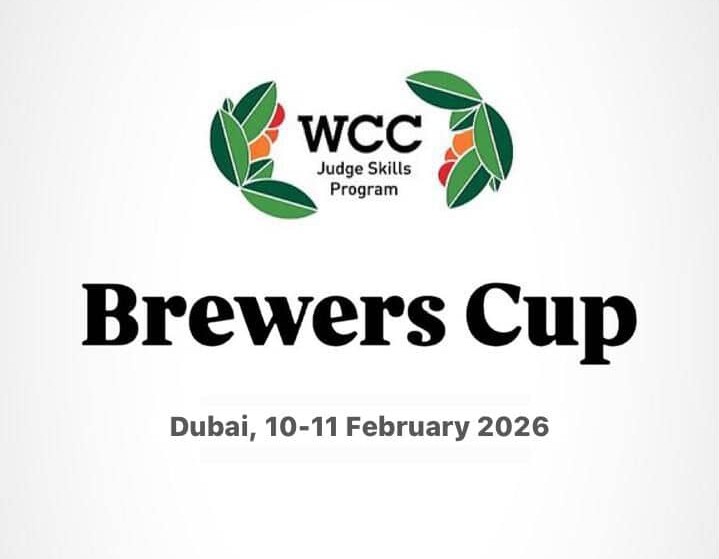
A specialized training program focused on judging skills for World Coffee Championships, with an emphasis on the manual brewing category, has been announced in cooperation with World Coffee Championships and The Phatuncle.

The workshop will be held at Karam Coffee, located on 4th Street, Al Quoz Third, Al Quoz, Dubai, United Arab Emirates.

The workshop is scheduled to take place from 10 to 11 February 2026 at Karam Coffee in Al Quoz, Dubai, as an intensive training program focused on judging skills for World Coffee Championships in the manual brewing category.

The program provides comprehensive insights into World Coffee Championships as a whole, with a detailed focus on the manual brewing competition. Participants will gain an understanding of competition structure, judging roles, and official evaluation criteria.

The workshop is designed as a small-size class to ensure high-quality learning and interaction. It will be conducted by Hendri Kurniawan, a World Coffee Events Representative since 2016, who has judged 20 World Coffee Championships across all six official competition categories.

The training includes both theoretical and practical sessions, allowing participants to experience judging procedures, participate in simulated judging panels, and deliver structured feedback to competing participants.

This workshop is suitable for coffee enthusiasts of all knowledge levels, including those interested in understanding how competitions are judged, individuals aspiring to become competition judges, and competitors seeking better preparation for upcoming championships.

At the end of the workshop, all participants will receive a digital certificate accredited by World Coffee Championships and the Specialty Coffee Association.

To register or inquire, please contact:
[email protected]

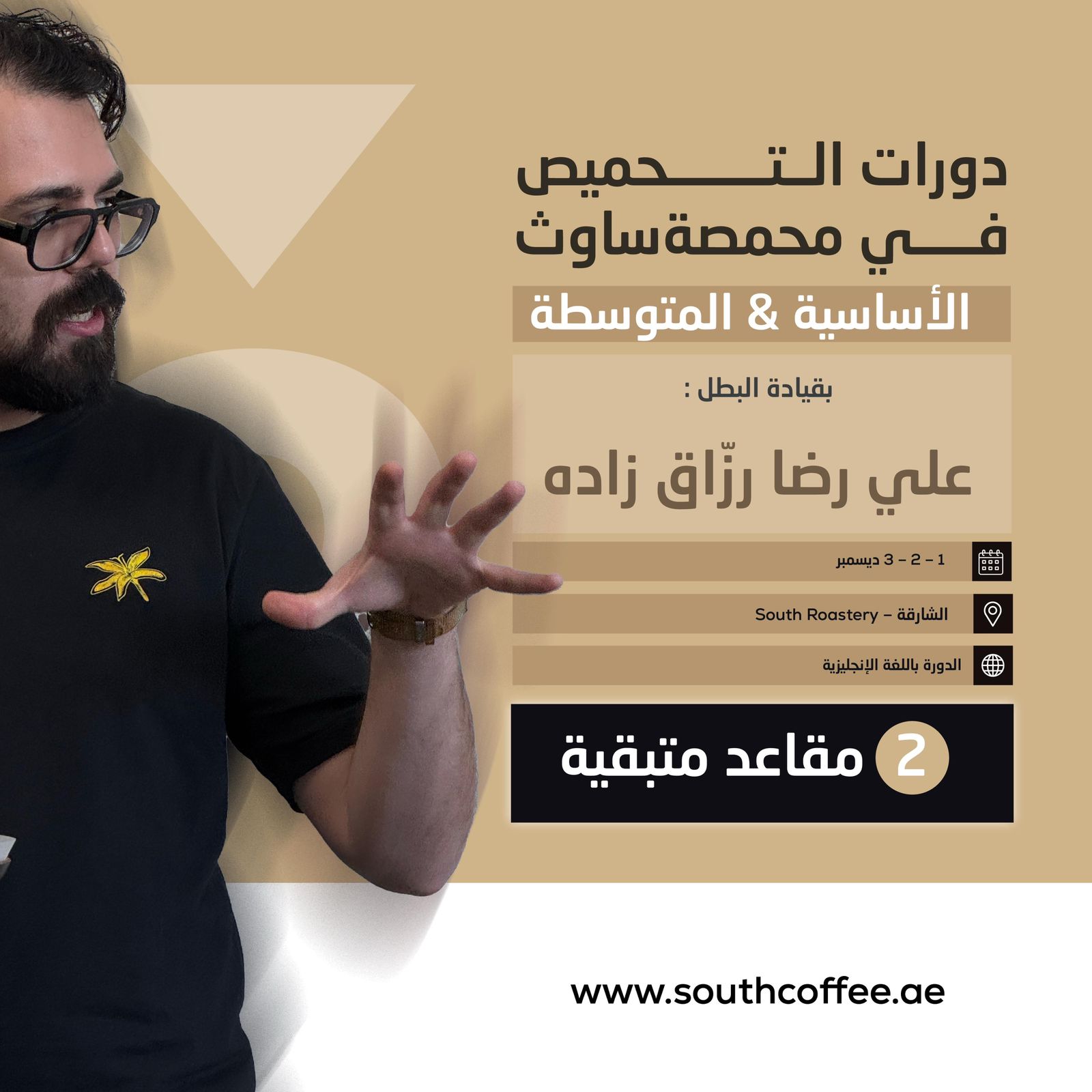
World Champion Alireza Rozeghzadeh Offers Specialized Coffee Roasting Course at South Roastery

Sharjah – Qahwa World

South Roastery in Sharjah announced the hosting of the World Champion, Alireza Rozeghzadeh, the 2024 Turkey Coffee Roasting Champion and winner of the 8th position globally in the World Coffee Roasting Championship. Furthermore, he was among the top eight competitors globally in the 2025 World Brewers Cup (Pour-Over Coffee Preparation).

This hosting is part of the “Foundation Coffee Roasting Course – Specialty Coffee Association (SCA)”, a course directed at beginners and those wishing to understand the initial principles of the roasting world.

The course provides a comprehensive explanation of the stages of roasting, the changes in color and aroma, how to control heat and time, in addition to safety essentials and the method of using roasting equipment.

The course aims to build a strong knowledge base that helps the trainee understand the relationship between roasting and flavors, and prepares them to confidently transition to advanced levels.

South Roastery was established in Sharjah, UAE, in 2022 under Emirati and Saudi management. The roastery works to innovate and redefine the coffee experience through a blend of high craftsmanship and intense passion.

The roastery’s motto is “Smile, Roasted in Sharjah”, which is not just a phrase, but a reflection of the unique spirit it embodies, through which it aims to enrich the lives of everyone who shares this unique experience.

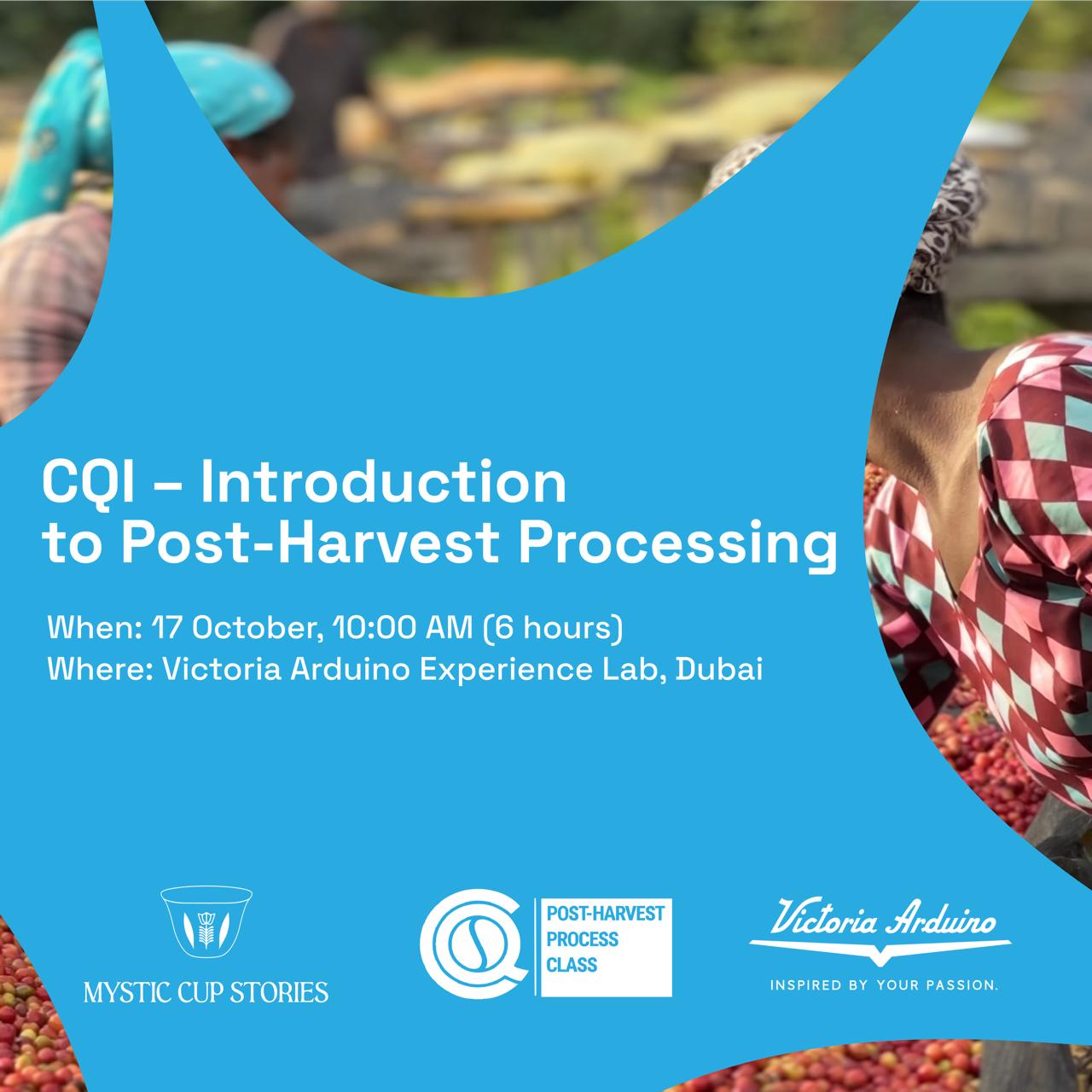
CQI Workshop in Dubai Explores the Science of Post-Harvest Coffee Processing

Tomorrow, coffee professionals and enthusiasts in the UAE will gather at the Victoria Arduino Experience Lab in Dubai for a six-hour workshop titled “CQI – Introduction to Post-Harvest Processing.” Organized by Mystic Cup Stories in collaboration with Victoria Arduino, the class promises an in-depth and hands-on introduction to one of the most crucial stages in coffee production.

Accredited by the Coffee Quality Institute (CQI), the session will guide participants through major processing methods — Natural, Honey, Mechanically Demucilaged, Fully Washed, and Wet Hulled — explaining how each technique shapes the final flavor profile of coffee.

The workshop will be led by Kristina Bakhtoiarova, an experienced educator, roaster, and consultant with over 15 years in specialty coffee. As a Q Processing Lecturer, Bakhtoiarova has trained professionals around the world and will share her deep understanding of post-harvest systems, from cherry selection and fermentation to drying and pre-cleaning.

Participants can also look forward to a guided coffee cupping featuring coffees from Mystic Cup Stories, offering a sensory exploration of how processing methods affect taste and aroma.

The program is open to baristas, roasters, café owners, coffee lovers, and future green buyers who want to decode common processing terms such as “Washed,” “Honey,” and “Natural.”

By hosting this CQI workshop, Victoria Arduino continues to strengthen Dubai’s reputation as a leading center for specialty coffee education and innovation in the Middle East.