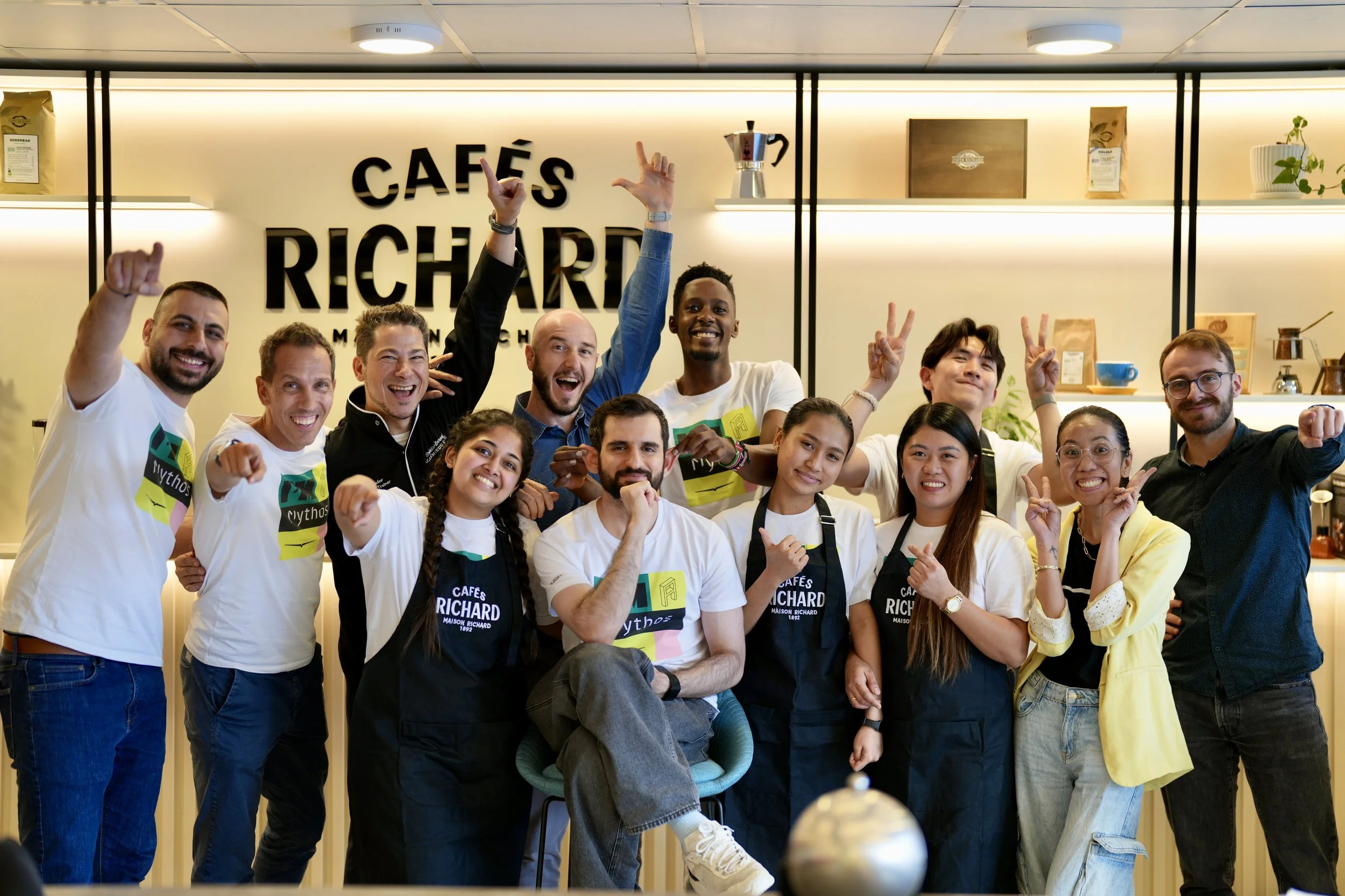
Applications Open for Youth Academy Middle East 2026

Dubai – Qahwa World

Applications have officially opened for Youth Academy Middle East 2026, a regional initiative aimed at developing the next generation of coffee professionals across the UAE. The program, launching today (April 29), offers young individuals an opportunity to access structured training, mentorship, and industry connections through a fully funded scholarship. Youth Academy Middle East 2026 provides a unique opportunity for aspiring coffee professionals.

  • Program Overview

The Youth Academy, powered by Simonelli Group, is designed as a “glocal” platform that combines local engagement with global industry exposure. It targets individuals aged 18 to 30, including both entry-level enthusiasts and those already working in coffee-related roles. Notably, regional youth are the focus of Middle East Youth Academy 2026, aiming to foster career growth for them.

Participants will gain access to professional development resources intended to support long-term careers in the coffee sector. For those looking ahead, the Middle East Youth Academy scholarship in 2026 is focused on connecting applicants with industry leaders and educators.

  • Scholarship Details

Six applicants will be selected to receive a full scholarship covering the entire training program. The curriculum includes:

  • Certification through the Specialty Coffee Association (SCA)
  • Practical, hands-on training focused on industry skills
  • Access to the international “Voices” professional network
  • Eligibility Criteria

Applicants must meet the following requirements:

  • Be between 18 and 30 years old
  • Currently reside in the UAE
  • No prior professional experience is required

Application Timeline

  • Applications Open: April 29, 2026
  • Applications Close: June 21, 2026
  • Online Interviews: June 29 – July 10, 2026
  • Winners Announcement: July 27, 2026 (via Coffee Knowledge Hub)

Application Process

Candidates must complete their application through the Coffee Knowledge Hub platform by creating a profile, accessing the Youth Academy Global section, and submitting the designated form under “Open application.” Shortlisted applicants will be invited to participate in online interviews. Furthermore, Youth Academy Middle East 2026 supports young professionals through each stage of the application.

Industry Opportunity

The initiative reflects ongoing efforts to strengthen the regional coffee industry by investing in young talent. Selected participants will gain exposure to international standards, industry networks, and hands-on training designed to support professional growth. Ultimately, 2026 Middle East Youth Academy is a crucial step for professional advancement in the region.

Applications are now open and will remain available until June 21, 2026, for the Youth Academy Middle East 2026 program.

The Program Built to Give Coffee Talent a Real Shot

By: Naveed Syed

The first edition of Youth Academy Middle East officially came to an end last week.

If you haven’t heard of it, here’s the short version: it’s an initiative by the Simonelli Group, announced a year ago, built specifically for young people who want to build a real career in coffee. Six scholarships, fully paid, covering SCA-certified courses across Barista Skills, Sensory, Green Coffee, Roasting, and Brewing.

How the Program Works

Applicants between 18 and 30 years old complete an online application and answer a set of questions. If the Simonelli Group team feels they’re the right fit, they are invited for a face-to-face interview.

The six selected participants receive the full Specialty Coffee Association Skills Program. They are grouped together and trained by SCA-certified trainers based in the UAE, with some sessions held at the Victoria Arduino Experience Lab.

The SCA Coffee Skills Program is made up of five specialist modules, each focused on a different professional role in the coffee industry. The Youth Academy Middle East cohort completed all of them.

The Modules

Barista Skills is where most people begin. It covers essential practical skills behind the espresso bar—from grinder calibration and espresso extraction to milk texturing, latte art, health and safety, customer service, and basic business practices.

Brewing focuses on the science behind the cup. It explores grind size, water temperature, brew time, different brewing methods, strength measurement, and extraction analysis.

Sensory Skills trains the palate to recognize and articulate flavour. Students learn to identify core coffee attributes and master professional cupping techniques—essential for leading tasting sessions and quality evaluation.

Green Coffee looks at coffee before roasting. It covers evaluation of green coffee quality, processing methods, grading, and the basics of coffee market dynamics. It’s a part of the industry most consumers never see, yet it shapes everything in the cup.

Roasting is the technical core of the craft. Students learn to control roast profiles, manage colour development, operate roasting equipment, and handle production workflows. Understanding how heat transforms coffee—and when to stop the roast—is a skill that takes years to refine.

Each module runs across three levels: Foundation, Intermediate, and Professional. The Youth Academy students completed the Foundation level across all modules, building a structured base for their future careers.

Meet the Six

What made this edition special wasn’t just the program—it was the people in it.

Hnin Kha Nady is focused on growth. Recently joined Archers, she entered the program with a clear goal: to create more memorable coffee experiences. The skills she gained are already being applied in her work.

Mark Mwangi is well known in the community, especially for his matcha creations. As lead consultant behind Mihbash in Jumeirah, he has already contributed to one of the region’s successful café openings. He’s now applying his learning to mentor his own team.

Amritha Varsha transitioned from engineering into coffee, following a stronger personal calling. Now at Cartel Coffee Roasters, she continues to build her presence in the community, recently competing in the Polpanorte AeroPress competition.

Mohamed Alameeri, founder and head roaster of Palate Coffee Roastery and the first Emirati AeroPress Champion, joined a foundation course despite his experience. It reflects a simple principle: learning never stops.

Brenzen Labarete is a Senior Barista, Brand Ambassador for Davinci Gourmet Arabia, and Middle East Barista of the Year 2023. He joined not for credentials, but for depth—an indication of his continued commitment to craft.

Donna Santianez is working toward her long-term goal of opening her own coffee shop. She is steadily building toward it, one course at a time.

Six individuals, six different journeys, one shared vision: to master their craft.

The Trainers

The team behind the program brought serious experience to the table.

Antonio Orria, Simonelli’s Coffee and Beverages Community Expert, led foundational classes, introducing students to the broader specialty coffee landscape before they moved into specialist modules.

Raha Shahsavar, UAE National Roasting Champion 2025, handled Green Coffee and Roasting. Students learned how coffee is processed and graded before roasting, and how heat development, roast profiling, colour control, and production workflows are managed.

Dave Peralta, co-founder of Archers and head of its Coffee Academy, taught Brewing Foundation. Students explored grind size, water temperature, brew time, extraction, and how to measure and adjust coffee strength across brewing methods.

Irina Sharipova, a coffee educator with over a decade of experience, led the Sensory module. She focused on developing structured tasting skills—flavour identification, mouthfeel analysis, cupping, and sensory vocabulary.

Branislav Beronja, Brand and Training Manager for Cafes Richard, delivered Barista Skills training. His sessions covered grinder setup, espresso extraction, milk handling, machine maintenance, customer service, and workflow management.

These trainers are among the most respected professionals in the UAE specialty coffee scene and are widely regarded as mentors in the industry.

What Comes Next

With the first edition complete, Simonelli Group is already preparing the next one. No dates have been confirmed yet.

If you are between 18 and 30 and considering a serious path in coffee, this is a program worth watching.

When applications open again, it will be worth paying attention.

click here to Read the main article

South Roastery: Where Dreams Are Roasted on the Fire of Passion

Sharjah – Ali Alzakary

On Maliha Road in Sharjah, where the spirit of authenticity meets the ambition of the future, and golden sands dance with the dreams of a new era, stands “South Roastery” as a true icon in the world of specialty coffee. My destination was not just a routine journalistic visit; it was an exploratory journey, a profound meeting with a pioneer of the scene, Mr. Ahmed Al Zaabi, Co-Founder and CEO. He welcomed us with his calm smile and a hot cup of coffee, opening a wide window into a world of passion and craftsmanship—a world born from a unique blend of Emirati and Saudi management in 2022.

  • The Coffee Majlis… Where Time Melts in the Cup

In a reception lounge meticulously designed with the architect’s care and the artist’s taste, not to be a loud, bustling cafe, but an intimate space for work and intellectual exchange—where the “rush” of daily life fades behind the warmth of the cup and the aroma of freshly roasted coffee—we held an extended coffee session.

The session was like a private “coffee majlis,” similar to those held in the desert under a sky dotted with stars, characterized by friendliness, transparency, and spontaneous laughter. During it, we discussed the pulse of a sector with a global market value exceeding $130 billion annually, from the remote crop alleys in the highlands of Yemen, Ethiopia, and Colombia, to the clamor of global markets and the New York and London exchanges. Mr. Ahmed presented his deep insights and analyses with utmost humility, insisting it was “just his point of view,” while in reality, it was an accurate and documented testimony from one of the most prominent players in an industry that produces over 10 million tons of coffee annually.

  • Cultural Maturity… From Passing Obsession to Sustainable Awareness

Al Zaabi, stirring his cup with a light, circular motion as tasting experts do, believes that the UAE coffee culture scene has moved past the naive beginnings and blind experimentation, reaching very advanced levels of development and maturity. This evolution, witnessed in the country over the last decade, has created an intensely competitive market with over 4,800 coffee shops in Dubai alone. However, at its core, it holds “immense opportunities for growth, prosperity, and income generation.”

The key, as he asserts with the confident tone of someone experienced, is not in imitating others or blindly replicating successful models, but in the “real and precise understanding of the market’s nature, its requirements, and the influencing factors, from demographic composition to changing consumer behavior.”

Al Zaabi believes that true gain is measured by an entirely different standard: “The important thing is not the amount of direct material gain at the end of the financial quarter, but the extent of people’s trust in the product you offer. This trust is the real capital, the hidden treasure that builds solid loyalty and true long-term success in a market that does not forgive the weak.”

Speaking about the specialty coffee wave that swept the region like a refreshing hurricane since the middle of the last decade, Al Zaabi confirms with the confidence of a seasoned analyst that this wave has “fully matured and reached a stage of stability.” It is no longer a mere “craze” following trends and social media fads; instead, it has transformed into a robust and deeply rooted culture, filtering out the fashion followers who came out of curiosity and retaining “those with genuine taste and an appetite for quality.”

This tangible maturation has clearly reflected on the quality of the coffee shops themselves and the elevation of their standards. Today, the Emirati consumer, especially the educated and well-traveled new generation, is “precisely capable of discerning the quality and true value of the coffee,” shifting from a passive recipient who drinks what is offered, to a conscious and interactive partner in evaluating the product and holding the service provider accountable.

  • Dubai and the Bidding Wars… Strategic, Not Just Marketing, Weight

The conversation smoothly shifted to the media buzz recently created by Dubai in the global coffee market—a buzz that ignited media outlets and social platforms. Starting with paying the most expensive recorded price for a kilogram of the rare ‘Geisha’ crop from Panama, where a Dubai cafe paid $604,080 for 20 kilograms of washed Geisha coffee from Hacienda La Esmeralda farm in Boquete, Panama, and extending to the fierce competition to offer the world’s most expensive cup of coffee, where the price jumped from $680 to $1,000 within two months.

Al Zaabi, smiling knowingly about the city’s nature, believes that for Dubai, as a global destination for excellence and pioneering in various fields from real estate to hospitality, coffee could not be far from this relentless pursuit of record numbers and entry into the Guinness World Records. He does not see any fundamental harm in this competition, despite its occasional oddity, to the spirit or values of the industry. Instead, he views it as a clever kind of marketing and promotional momentum that adds wide fame to the region as a whole, places the UAE on the global coffee lovers’ map, and gives a specific demographic—the one passionate about distinction, exceptional experiences, and financially capable of undertaking these adventures—its private space for enjoyment and showing off.

  • Resilience of Will… Global Balance Challenges and 2026 Preparedness

The discussion did not overlook the immense challenges that have cast heavy shadows over the global scene in the past two years. Specifically, we talked about the confusion of customs tariffs and trade wars between major powers, the severity of climate change that poses an existential threat to major crop regions in Brazil, Vietnam, and Colombia (Brazil’s production dropped by 25% in the 2024 season due to drought), and the consecutive disruptions in supply chains and maritime shipping that raised costs by 30-50% on some routes.

Al Zaabi sees that the UAE, thanks to its unique geographical location as a gateway between East and West, its globally recognized logistical leadership, and the wisdom of its prudent leadership, has managed to build a solid, fortified wall around the local sector: “Thanks to its wise and proactive policy, the availability of a wide and diverse strategic stock of various varieties and crops, and an extended network of commercial relationships, the UAE has managed to overcome the global market storms with superb skill and exceptional flexibility.”

While clearly acknowledging that the overall direct impact of the challenges was relatively limited on the local market and did not leave deep scars on final consumer prices or product availability, as an expert observer who misses no subtle market details, he cautiously pointed out that the accumulated pressures related to climate change and increased shipping and transport costs “may reveal themselves more clearly in the coming year, 2026.”

This is an explicit, implicit signal of the necessity to prepare and anticipate tangible fluctuations in the prices and quality of some major crops, reflecting a deep and well-considered foresight into global market volatility and its delayed effects.

As for the “Matcha” green wave that recently swept cafes and sparked widespread debate about the future of coffee, Al Zaabi, with the confidence of coffee’s deep roots, affirmed an unshakeable truth: “Coffee will remain coffee.” He noted that the Matcha wave, despite its momentary appeal, has already begun to recede and fade, leaving coffee, forever, as the undisputed queen of hot beverages.

  • South… From Roastery to Integrated Factory with Promising Asian Horizons

“South” is not just an ordinary roastery selling bags of coffee; it is, as Al Zaabi proudly describes it, “an integrated factory” focused on high quality and excellence in all stages of production, from selecting green beans to roasting, packaging, and distribution.

After achieving remarkable and astonishing success in the local market in just two and a half years, the company is now seriously considering possibilities for geographical expansion outside the UAE borders. Surprisingly, Al Zaabi clearly indicated that the expansion is not primarily targeting neighboring Gulf markets, as some might expect, but is ambitiously heading toward the rising and promising Asian markets and some emerging East African markets, where Al Zaabi sees huge growth potential and a consumer segment hungry for quality.

With cautious and measured optimism, he predicted a tangible presence for “South” in these new markets perhaps by the end of 2026 or early 2027 at the latest, with a clear plan for gradual opening and building trusted local partnerships.

  • South Academy… Investing in Minds Before Machines

As a true investment in the distant future, Al Zaabi stressed with clear enthusiasm the importance of continuous training and development, considering it “an urgent need, not a luxury or an optional extra that can be postponed,” especially in a fast-paced world witnessing continuous evolution in modern technologies, barista skills, and the arts of preparation and addition (over 20 new methods for preparing specialty coffee have emerged in the last five years).

It is for this precise reason, and from this deep belief in knowledge, that the “South Training Academy” was established—an ambitious initiative whose main goal is not direct profit, but a higher, more comprehensive objective: “to enhance genuine craftsmanship, spread the culture and respect of the profession, and strengthen knowledge and experience exchange among sector workers.”

The academy, which opened in early 2025, has so far welcomed over 300 trainees of various nationalities and backgrounds, offering internationally accredited specialized programs ranging from foundational courses for beginners to advanced workshops for roasting and tasting professionals.

  1. Major Events… Civilizational Convergence and Elevating Collective Taste

In conclusion of this rich and engaging interview, which extended for over three continuous hours, Al Zaabi affirmed with a voice full of passion the pivotal and decisive role of the large-scale coffee events generously hosted annually by the UAE, foremost among them the “World of Coffee Dubai” exhibition, and the national and regional coffee championships that witness fierce competitions among the brightest names.

He bets, with all the confidence of a strategic planner, on these periodic gatherings as “one of the most important factors for the prosperity of the local market and the development of the industry in general on both the regional and global levels.”

These vital platforms far surpass being mere commercial marketplaces or exhibitions for buying and selling; they become radiant focal points for knowledge, culture, and creativity. They are genuine arenas for the convergence of different civilizations and the exchange of rich experiences among the elite of the global coffee industry, a forum where public taste is enriched and elevated, and young baristas’ skills are honed to confidently keep pace with the latest trends and the finest arts of preparation and creativity in the ever-renewing world of coffee.

These events, with their majestic international presence and high-caliber professional organization, confirm to the whole world that the UAE is not just a commercial transit point or a consumer market, but a living intellectual laboratory and a center of civilizational radiation that continuously raises the status of coffee, transforming it from a mere commodity into a deep-seated cultural value and a human heritage worthy of celebration and appreciation.

“Smile, Roasted in Sharjah” – this simple, yet profound, slogan accurately summarizes the spirit of the roastery that innovates daily and bravely redefines the coffee experience through a magical blend of high craftsmanship, intense passion, and insistence on excellence, confirming to everyone that coffee in the UAE is not just a passing morning drink, but a mature, deeply rooted culture and a promising future whose chapters are being written today on the land of Sharjah, one coffee at a time, one cup at a time.

Click here to visit South Roastry site
 

From Jerusalem to the World: Izachman Coffee Preserves a Century-Old Palestinian Legacy

Dubai – Ali Alzakary

From the narrow alleys of Jerusalem’s Old City, specifically the historic Khan Al-Zeit market, a coffee story was born in 1921 one that became part of the city’s collective memory and cultural identity. That year, the founder established the first coffee shop and roastery, laying the foundation for a family legacy that would span generations. Through time, the Izachman family preserved its traditional craft while embracing modernity, turning “Izachman Coffee” into a symbol of authenticity and quality in every Palestinian home.

Today, Mahmoud Izachman, the grandson of the founder and the founder of Jerusalem’s first Specialty Coffee Academy, continues this legacy with a modern vision that blends tradition with knowledge and innovation. In this exclusive interview with Qahwa World, Mahmoud shares his family’s century-long journey with coffee, the challenges facing the Palestinian coffee sector, and his hopes for the future of specialty coffee in Jerusalem and beyond.

Your family has been in the coffee trade since 1921. How did it all begin, and what makes your family’s experience unique?

The story began with my grandfather, who established the first coffee shop and roastery in Jerusalem’s Old City, in the Khan Al-Zeit market in 1921. At that time, coffee was not just a drink; it was part of people’s daily lives and cultural identity. What set our journey apart was our ability to preserve this heritage and evolve it over generations while maintaining a bond of trust based on quality. This trust became a legacy within Palestinian homes, making “Izachman Coffee” a mark of excellence without losing our authenticity.

A historical black-and-white photo from Jerusalem showing a vintage car bearing the “Izachman Coffee” sign surrounded by people and children — a glimpse into the early legacy of Palestinian coffee culture.

How did this passion for coffee pass from one generation to the next?

It was never just a business; it was a way of life. I grew up watching my father and uncle, listening to stories of how my ancestors treated coffee with sacred respect, passion, and precision. This love was passed down naturally. Over time, I developed my own passion for learning, pursuing international certifications and specialized courses. Today, I see myself as a new link in a long family chain, adding a modern touch grounded in science and innovation.

As the founder of Jerusalem’s first Specialty Coffee Academy, how would you describe the current state of the coffee industry there?

It’s a mix of challenge and opportunity. Jerusalem and Palestine have a deep-rooted history with coffee it’s part of the cultural and social fabric. The market still relies heavily on Arabic coffee, Turkish coffee, and espresso in various forms, whether prepared at home or served in cafés. However, specialty coffee is emerging. Young people are increasingly curious and eager to learn about quality and global standards. This gives us an opportunity to build a new generation of professionals who can elevate the industry and reshape how coffee is perceived.

How have geopolitical and economic conditions affected the coffee sector in Jerusalem and Palestine?

The difficult political and economic conditions have had a direct impact from import challenges and high costs to declining purchasing power. But these hardships have strengthened our determination to hold onto our culture and identity through coffee. For Palestinians, coffee is no longer just a drink it’s a symbol of resilience and hospitality, a part of who we are.

How do people in Jerusalem respond to specialty coffee compared to traditional coffee?

Traditional coffee still dominates, being a core part of Palestinian hospitality and heritage. Yet, the appeal of specialty coffee is growing, particularly among the younger generation seeking renewal and global connection. We’re seeing more cafés embracing this shift in Jerusalem, Ramallah, and even smaller cities. It’s not always perfect, but the direction is promising.

Mahmoud Izachman stands at the entrance of Izhiman Coffee in Jerusalem, surrounded by traditional decor and copper coffee equipment, representing a blend of heritage and modern specialty coffee culture.

How do you see the future of specialty coffee in Palestine?

I’m very optimistic. The journey may be challenging, but the potential is huge. Palestinians are naturally discerning and appreciate taste and quality. With the right training and support, young professionals can create a specialty coffee culture that rivals any in the world. The growth may be gradual, but the trend is clear and upward.

What role can academies and training centers play in spreading coffee education?

They are the backbone of any industry revival. Through them, we transfer knowledge, develop skills, and raise awareness about quality and sustainability. An academy is not just a place for training it’s a platform to reshape culture and build a professional coffee community.

Tell us about your recent visit to Dubai. What stood out to you about the coffee scene there?

The visit was to complete training licensing requirements from the Specialty Coffee Association (SCA) and to connect with industry leaders. What impressed me most was the diversity and openness of Dubai’s coffee scene a blend of all schools and philosophies, from small roasteries to global brands. The community spirit and collaboration among professionals were inspiring. The level of investment in quality and customer experience is remarkable, something we aim to cultivate gradually among Palestinian consumers too.

How do you evaluate the UAE specialty coffee market? Do you see opportunities for cooperation?

The UAE market is mature and diverse, with knowledgeable consumers who value quality. This creates opportunities for both academic and business collaboration. We are currently marketing “Izachman Coffee” products in the UAE and promoting our sub-brand “Izpresso,” which focuses on espresso blends and Nespresso-compatible capsules. We also plan to launch training and consultancy projects across the region, building partnerships that combine tradition with innovation.

Mahmoud Izachman participates in a professional coffee cupping session, carefully tasting and evaluating different brews — a moment reflecting his expertise and dedication to specialty coffee education.

What are your long-term ambitions for the academy and future projects?

Our ambition is to transform the academy into a national and eventually regional reference point for specialty coffee in the Arab world, producing certified experts who leave a global impact. We’re also exploring projects focused on sustainability and innovation to contribute to the coffee industry on a larger scale.

How do you envision the coffee industry in Jerusalem over the next decade?

I believe it will become more mature, with stronger awareness of quality and sustainability. Specialty coffee will take a larger share of the market, and cafés will focus more on the full experience rather than just the beverage. In Jerusalem, I hope to see a coffee scene that reflects our identity blending heritage and modernity and becoming a model for the region.

What are the main challenges you face as the first specialty coffee academy in Palestine, and how can they be overcome?

The biggest challenge is spreading accurate knowledge and convincing the public of the importance of investing in proper learning. The field is still new, and much of the information circulating is incomplete or inaccurate. Our approach is to offer affordable or even free introductory workshops to attract more participants and build awareness. This will help lay a solid foundation for a coffee community that values knowledge and modernity without losing its roots.