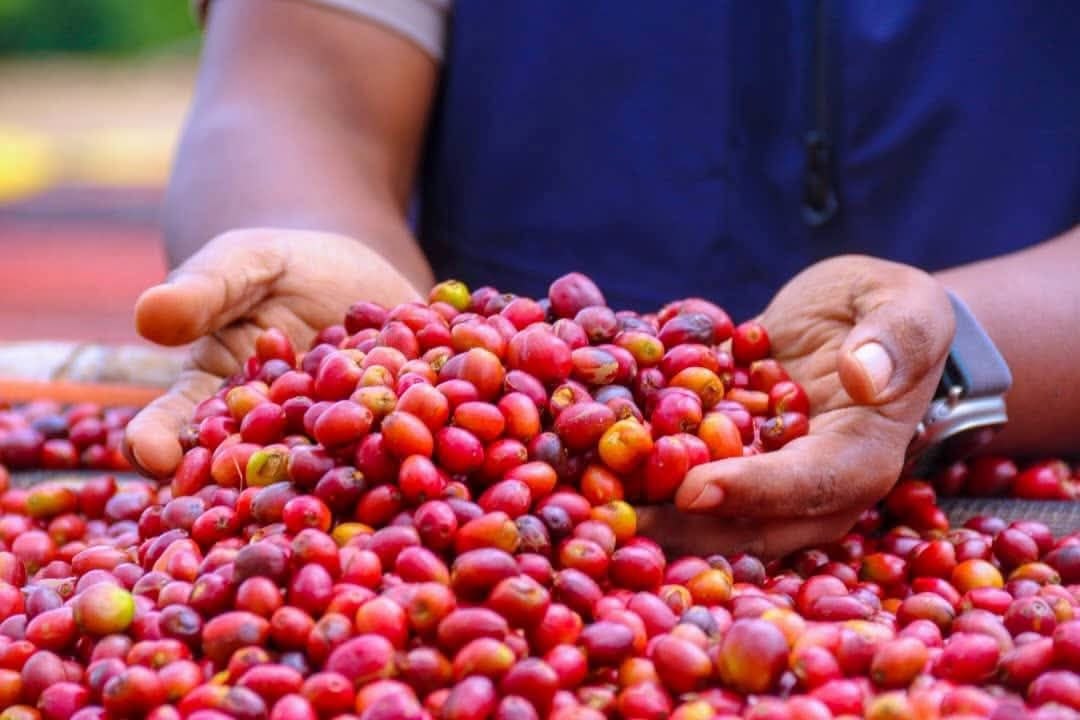
Coffee Linked to Lower Risk of Cirrhosis and Liver Cancer in Large Study

Source: Clinical Gastroenterology and Hepatology – Adapted by Qahwa World |
Author: Qahwa World |
Date: July 2, 2026

Coffee Linked to Lower Risk of Cirrhosis and Liver Cancer in Large Study

Key Findings:

  • Study of over 354,000 UK Biobank participants followed for a median of 13 years.
  • Five or more cups of coffee daily linked to 32% lower risk of cirrhosis, 47% lower risk of liver cancer, and 42% lower risk of liver-related death.
  • The association followed a dose-response pattern: more coffee, lower risk.
  • Similar results for caffeinated and decaffeinated coffee, suggesting non-caffeine compounds play a protective role.
  • Adding sugar or sweeteners did not eliminate benefits but was linked to markers of liver inflammation and fibrosis.
  • Proteomic analysis identified 74 proteins associated with coffee intake and reduced fibrosis risk.

A large-scale study of over 354,000 participants from the UK Biobank has found that higher coffee consumption is associated with significantly lower risks of cirrhosis, liver cancer, and liver-related death. The findings, published in Clinical Gastroenterology and Hepatology, also identified MRI and blood protein changes that may help explain the biological mechanisms behind the association.

The study followed participants for a median of 13 years. Researchers assessed self-reported coffee consumption, including coffee type and whether participants added sugar or artificial sweeteners. They then examined how these habits were associated with new cases of liver disease, MRI measures of liver health in a subgroup of 28,961 patients, and blood protein profiles in 44,633 patients.

The Numbers: Striking Reductions in Risk

Compared with non-coffee drinkers, those who consumed five or more cups daily were:

  • 32% less likely to develop cirrhosis.
  • 47% less likely to develop hepatocellular carcinoma.
  • 42% less likely to die from liver disease.

The association followed a dose-response pattern, with lower risks observed starting at one to two cups per day. Similar findings were observed for both caffeinated and decaffeinated coffee, suggesting that compounds other than caffeine may play a protective role.

Condition Risk Reduction (5+ cups/day)
Cirrhosis 32%
Hepatocellular Carcinoma 47%
Liver-Related Death 42%

Sugar and Sweeteners: Mixed Effects

Researchers also examined whether adding sugar or artificial sweeteners changed the association between coffee and liver health. Overall, patients who added sweeteners had similar reductions in the risk of cirrhosis, hepatocellular carcinoma, and liver-related death compared to those who drank unsweetened coffee. However, they had 1.36 times the odds of elevated iron-corrected T1, an MRI marker of liver inflammation and fibrosis, compared with patients who did not add sweeteners.

MRI Findings: Benefits Visible Before Symptoms Appear

MRI results suggested that higher coffee intake was associated with better liver health before liver disease became clinically apparent. Patients who drank at least five cups daily had less liver fat, lower liver iron levels, and lower odds of liver fibroinflammation than non-coffee drinkers. The findings were similar for caffeinated and decaffeinated coffee, further supporting the role of non-caffeine compounds in liver protection.

Proteomic Analysis: 74 Proteins Point to Potential Mechanisms

Proteomic analyses identified 74 proteins associated with both coffee intake and cirrhosis risk, suggesting biological pathways related to liver function, inflammation, fibrosis, and immune regulation. These findings may help explain coffee’s observed associations with better liver health and provide new mechanistic clues.

Expert Insight: Interview with Lead Researcher Dr. Hyunseok Kim

Clinical Gastroenterology and Hepatology invited study author Dr. Hyunseok Kim of the Karsh Division of Gastroenterology and Hepatology at Cedars-Sinai Medical Center to comment on the implications of this work.

Q: Why does this study matter?
Dr. Kim: Coffee has long been associated with better liver health, but most previous studies focused only on clinical outcomes such as cirrhosis or liver cancer. Our study is unique because it integrates clinical outcomes with advanced MRI biomarkers and large-scale plasma proteomics in more than 350,000 UK Biobank participants. By combining these complementary approaches, we were able to show not only that coffee consumption is associated with lower risks of cirrhosis, hepatocellular carcinoma, and liver-related mortality, but also that it is linked to less liver fat, less fibroinflammation on MRI, and favorable biological pathways involved in fibrosis and inflammation. This provides stronger biological evidence supporting coffee as a simple lifestyle factor that may promote liver health.

Q: Was there a finding that surprised you?
Dr. Kim: Several findings stood out. First, we observed remarkably consistent associations across clinical outcomes, imaging biomarkers, and proteomic signatures, all pointing in the same direction. Second, both caffeinated and decaffeinated coffee showed similar associations, suggesting that compounds other than caffeine likely contribute to the liver benefits. Finally, we were intrigued that coffee drinkers had lower levels of proteins involved in fibrosis, macrophage activation, and extracellular matrix remodeling, while proteins reflecting healthier liver synthetic function were higher. These findings offer new mechanistic clues that go beyond the epidemiologic associations reported previously.

Q: How might the findings influence clinical practice?
Dr. Kim: This study should not be interpreted as evidence that coffee is a treatment for chronic liver disease. However, for most patients without contraindications, moderate coffee consumption appears to be a safe, inexpensive, and potentially beneficial lifestyle habit that can complement other evidence-based interventions such as weight loss, alcohol abstinence, and management of metabolic risk factors. I hope these findings will give clinicians greater confidence when discussing dietary habits with patients and encourage further research into the biological mechanisms underlying coffee’s protective effects.

Limitations and Recommendations: A Simple Prevention Strategy

The authors noted several limitations, including self-reported coffee intake, the possibility of unmeasured confounding and reverse causation, a healthier MRI subgroup, and the predominantly European ancestry of the study population, which may limit the generalizability of the findings. They also noted that the blood protein findings require experimental studies to confirm the underlying biological mechanisms.

Nevertheless, the authors concluded that “higher coffee intake was associated with lower risks of cirrhosis, HCC, and liver-related mortality, as well as favorable MRI-based and proteomic profiles.” They added that the combined clinical, imaging, and molecular findings support coffee as “a simple, scalable strategy for liver disease prevention.”

Frequently Asked Questions About Coffee and Liver Health

Q: How many cups of coffee are needed to reduce liver disease risk?

A: The study showed benefits starting at one to two cups daily, with more pronounced effects at five or more cups per day.

Q: Does decaffeinated coffee offer the same benefits?

A: Yes. Similar associations were observed for both caffeinated and decaffeinated coffee, suggesting non-caffeine compounds play a protective role.

Q: Does adding sugar negate coffee’s benefits?

A: Adding sugar or sweeteners did not eliminate the main benefits but was linked to markers of liver inflammation and fibrosis, so excessive additions should be avoided.

Q: Can coffee be considered a treatment for liver disease?

A: No. The study does not prove that coffee is a treatment. However, moderate consumption may be a beneficial complement to standard interventions.

Q: What biological mechanisms might explain coffee’s protective effects?

A: The study identified 74 proteins linked to reduced inflammation and fibrosis, suggesting multiple biological pathways may explain the benefits.

This study adds to the growing evidence on coffee’s potential health benefits, particularly for liver health. With risk reductions of up to 47%, coffee emerges as a simple, accessible tool for preventing chronic liver disease. However, further experimental studies are needed to confirm the biological mechanisms and determine optimal intake. In the meantime, coffee lovers can continue to enjoy their favorite beverage with greater awareness of its potential benefits.

Prepared and edited by: Qahwa World – Based on the study published in Clinical Gastroenterology and Hepatology on July 1, 2026.

Original source: Doug Brunk – Medical Report.

All rights reserved. Republication with attribution permitted.

Publication date: July 2, 2026

Loser’s Cafe in Mexico City Becomes a Sanctuary for World Cup Fans

Source: Reuters – Adapted by Qahwa World |
Author: Qahwa World |
Date: July 2, 2026

Loser’s Cafe in Mexico City Becomes a Sanctuary for World Cup Fans

Key Takeaways:

  • A cafe in Mexico City’s Condesa neighborhood has dedicated itself to consoling fans of defeated World Cup teams.
  • The idea was launched by Swedish oat milk company Oatly in collaboration with cafe owner Ian Infantino.
  • The cafe raises flags of defeated teams and offers free drinks to those wearing their jerseys.
  • Napkins carry the message “Dry your tears” – a touching human gesture.
  • Mexico achieved its first knockout-stage win in 40 years, potentially changing the “loser” mindset.
  • The cafe remains a permanent sanctuary for disappointed fans if Mexico loses to England.

In the midst of a sea of green that flooded Mexico City after Mexico’s victory over Ecuador in the World Cup on Wednesday, one establishment defiantly raised Ecuador’s flag and opened its doors to welcome all disheartened fans of Mexico’s rivals in a safe haven.

Welcome to the “Loser’s Cafe,” a coffee shop located in the upscale, multicultural Condesa neighborhood, dedicated to consoling fans of defeated teams. Every morning, small flags representing the defeated teams are raised at the entrance to foster a sense of solidarity. Inside, free drinks await those who come wearing the jerseys of losing teams, and even the paper napkins carry the message: “Dry your tears.”

The Story Behind the Cafe: A Hug That Wipes Away Tears

Monse Aguilar, a 24-year-old photographer supporting South Africa, visited the “Loser’s Cafe” earlier this week after her team lost 1-0 to Canada and was eliminated from the World Cup. Sipping a free drink, she said: “It’s like a hug that comforts the heart after a loss.”

The “Loser’s Cafe” was an idea born at Swedish oat milk company Oatly, which then collaborated with Ian Infantino, the cafe’s owner. Infantino (38), whose cafe is normally called “Compai Cafe,” said the idea resonated with him. Originally from Venezuela, he started his business as a street coffee cart in the neighboring Roma neighborhood before expanding to a permanent store. He added that as an expatriate, he immediately understood “the void that loss leaves behind.”

Mixed Reactions at First, Then Widespread Acceptance

However, not all his customers initially understood the concept. He mentioned that during the first week of the World Cup, some had difficulty grasping the establishment’s new identity. Infantino said: “People were saying: I’m not a loser. But once we explained how it works, they understood and started enjoying it more, feeling a greater connection to the idea of defeat.”

Why Mexico? Dark Humor and Football History

Rocío de la Cuadra Díaz, Market Developer at Oatly Mexico, said the company chose to launch this campaign in Mexico City rather than any of the US or Canadian cities also hosting World Cup matches, due to the brand’s rapid growth in Latin America and the local sense of humor. De la Cuadra explained: “The concept of creating a loser’s cafe in Mexico made sense because we almost always lose.”

Now, after Mexico achieved its first knockout-stage win in 40 years, this mindset may change, as Mexican fans pray that their team can pull off a historic upset in their upcoming match against England on Sunday. If not, the “Loser’s Cafe” will always be there.

Team Result Lost To
South Africa 0-1 Canada
Ecuador Loss Mexico

The Cafe’s Message: Defeat Is Part of the Game, Coffee Consoles

The “Loser’s Cafe” embodies a unique sporting spirit, reminding fans that defeat is a natural part of the game and that failure is not the end of the world. By offering free drinks and a warm atmosphere, the cafe transforms moments of loss into opportunities for human connection and laughter at sporting wounds.

Frequently Asked Questions About the Loser’s Cafe

Q: What is the Loser’s Cafe?

A: A cafe in Mexico City that dedicates itself to consoling fans of defeated World Cup teams, offering free drinks to those wearing the jerseys of losing teams.

Q: Who came up with the idea?

A: The idea was born at Swedish company Oatly in collaboration with Ian Infantino, owner of Compai Cafe in Condesa.

Q: Why did Oatly choose Mexico for this campaign?

A: Due to the brand’s rapid growth in Latin America, the local sense of humor, and the fact that Mexico “almost always loses.”

Q: How does the cafe welcome customers?

A: It raises flags of defeated teams at the entrance, offers free drinks, and distributes napkins that say “Dry your tears.”

Q: Is the cafe still open after Mexico’s win?

A: Yes. The cafe will always be there to console disappointed fans if Mexico loses to England or any other team.

In a world where victory is everything, the “Loser’s Cafe” reminds us that defeat is not the end of the road. It is just a passing moment that can be turned into an opportunity for connection, laughter, and a reminder that sport, in the end, is just a game. In this small cafe, disappointed fans find something more valuable than victory: human warmth and a cup that comforts the heart.

Prepared and edited by: Qahwa World – Based on a Reuters report.

All rights reserved. Republication with attribution permitted.

Publication date: July 2, 2026

Coffee Is Under Threat: How Scientists Are Fighting to Save It from Extinction

Source: Nature – Adapted by Qahwa World |
Author: Qahwa World |
Date: July 1, 2026

Coffee Is Under Threat: How Scientists Are Fighting to Save It from Extinction

Key Takeaways:

  • Coffee is critically threatened by climate change, with arabica suffering or dying when temperatures rise just a few degrees.
  • Robusta requires massive amounts of water and its yields drop drastically in drought conditions.
  • Ethiopia, the homeland of arabica coffee, is preserving genetic diversity through conservation areas and living collections of over 12,000 plants.
  • Scientists are exploring wild coffee species such as C. liberica, C. excelsa, and C. stenophylla that are more climate-resilient.
  • C. stenophylla, a forgotten species from the 18th century, tastes remarkably similar to specialty arabica from Rwanda.
  • Chemical tricks like grinding frozen beans can improve extraction and reduce waste, allowing better flavor from less coffee.

“A mathematician is a machine for turning coffee into theorems”, a quote often attributed to the late Hungarian mathematician Paul Erdős. Coffee is one of the world’s favorite drinks and an essential stimulant for many researchers. But its future is uncertain. “Coffee is critically threatened by climate change,” says Kassahun Tesfaye, a plant geneticist at Addis Ababa University.

Nearly all the 10 million tonnes of coffee beans consumed annually around the world come from two plant species: the strong and often bitter robusta (Coffea canephora) and the more delicate-tasting arabica (Coffea arabica). Unfortunately, arabica suffers or dies when temperatures rise just a few degrees, and robusta requires massive amounts of water and its yields drop drastically in a drought. Researchers are racing to keep the world’s coffee drinkers awake – and preserve the livelihoods of the many lower-income-country farmers who grow the cash crop.

The Birthplace of Arabica and Genetic Diversity in Ethiopia

Ethiopians are proud of their country for being the homeland of arabica coffee. The Ethiopian government has been establishing conservation areas to preserve the natural genetic diversity of the species. It also grows more than 12,000 arabica plants in living collections at the Ethiopian Biodiversity Institute in Addis Ababa and at the Ethiopian Institute of Agricultural Research in Jimma. The government is betting that these plants will provide the material for breeding – or genetically engineering – arabica cultivars with traits designed to withstand high temperatures and drought.

Wild Coffee Species: Liberica, Excelsa, and Stenophylla

As temperatures increase, arabica cultivation might need to move to increasingly higher terrain to stay cool, which will not be easy for owners of small coffee plantations. Another solution is to grow other species of coffee plant that can better withstand climate change. There are 134 known wild coffee species, and a few are being grown for their climate resilience, including C. liberica and C. excelsa.

Aaron Davis, a researcher at the Royal Botanic Gardens, Kew, says “the success stories are always about changing the species” that farmers grow. In wet regions, that could mean switching from arabica to robusta, but in other places it could instead mean growing C. liberica, which tolerates higher temperatures than arabica does and does not require as much water.

Davis has also tried a “bonkers” coffee species, Coffea stenophylla, which was described by a Swedish botanist in West Africa in the 18th century and then largely forgotten by science. “It still freaks me out, because here we have a coffee which isn’t related to arabica, occurs in an extreme environment – and yet tastes like a very specific arabica from Rwanda.” The challenge, he says, will be to breed varieties of C. stenophylla that are productive and that farmers find easy to grow.

Species Characteristics Challenges
Arabica (Coffea arabica) Delicate taste, most popular Heat-sensitive, dies with slight temperature rise
Robusta (Coffea canephora) Strong, bitter, heat-tolerant High water demand, yields drop in drought
Liberica (Coffea liberica) Heat-tolerant, tropical fruit flavors Different taste, not for everyone
Excelsa (Coffea excelsa) Climate-resilient, fruity and almondy notes Rarely cultivated, not well known
Stenophylla (Coffea stenophylla) Tastes like Rwanda arabica, tolerates harsh conditions Low productivity, cultivation challenges

Chemistry Tricks: Grinding Frozen Beans and Improving Extraction

Some researchers are looking for ways to get more out of the shrinking arabica supply. Christopher Hendon, a materials scientist at the University of Oregon, says: “There’s a lot you can do at the consuming side.” Hendon and his collaborators have found that grinding coffee beans at below freezing temperatures results in smaller particles. However, counter-intuitively, they also found that finer grinds do not necessarily yield tastier brews. Smaller particles tend to aggregate through electrostatic forces, reducing the surface area exposed to water – and thus the amount of chemicals entering solution – but tweaks to the grinding techniques, such as starting with moist beans, can help reduce the clumping.

Somewhat surprisingly, coarser grinds can also release more of the good stuff into an espresso, but this happens only when beans are put under pressures as low as 7 atmospheres. (A typical coffee-house machine works at around 10 atmospheres.)

Chemistry: The Key to Coffee’s Future

Chemistry is also crucial to investigating alternative coffee plants and how to turn them into desirable products. Hendon says the science of coffee is still young, and researchers are working to develop reproducible and objective techniques. “Compositional measurement is a big challenge,” says Hendon, “and so is assigning a numerical value to flavor.” A typical cup of coffee might contain more than 2,000 organic compounds, and their concentrations vary greatly depending on how and where the plant is grown – and how the beans are roasted.

Tesfaye emphasizes that scientists, of all people, should care about coffee’s future, not just because science is good for coffee, but because coffee is good for science, too. “Many discoveries and knowledge are generated after having a cup of coffee.”

Frequently Asked Questions About Coffee’s Future Under Climate Change

Q: Why is coffee threatened with extinction?

A: Due to climate change. Arabica is highly sensitive to rising temperatures, while robusta requires large amounts of water and suffers from drought.

Q: What are the proposed solutions to save coffee?

A: Solutions include preserving arabica genetic diversity, breeding heat and drought-resistant varieties, cultivating wild species like liberica, excelsa, and stenophylla, and improving grinding and extraction techniques.

Q: What is Coffea stenophylla?

A: A wild coffee species described in the 18th century and then largely forgotten. It tastes similar to specialty arabica from Rwanda and tolerates harsh environmental conditions.

Q: How can chemistry help address the coffee crisis?

A: Through improved grinding and extraction techniques, such as grinding frozen beans, to extract better flavor from less coffee, and developing objective methods to measure flavor.

Q: What is Ethiopia’s role in preserving coffee?

A: Ethiopia is the homeland of arabica coffee. The government is establishing conservation areas and living collections of over 12,000 plants to preserve genetic diversity.

Coffee faces an existential threat from climate change, but scientists around the world are working tirelessly to save it. From preserving genetic diversity in Ethiopia, to exploring resilient wild species, to improving grinding and extraction techniques, the future of coffee depends on scientific creativity and international collaboration. As one researcher said, “Many discoveries are generated after having a cup of coffee.” Let us work together to preserve this precious beverage for generations to come.

Prepared and edited by: Qahwa World – Based on an article in Nature.

All rights reserved. Republication with attribution permitted.

Publication date: July 1, 2026

Dubai to Host DrinkIt Mixology Championship on July 10 Featuring Top Creative Talent

Source: DrinkIt – Press Release |
Author: Qahwa World |
Date: June 29, 2026

Dubai to Host DrinkIt Mixology Championship on July 10 Featuring Top Creative Talent

Key Takeaways:

  • The DrinkIt Mixology Championship will take place on July 10, 2026, at the Victoria Arduino Experience Lab in Dubai, from 10:00 AM to 5:00 PM.
  • The championship is open to everyone: baristas, trainers, mixologists, hospitality professionals, and even home brewers. No prior competition experience required.
  • The grand prize: a specialized SCA course (Barista, Sensory, or Brewing) of the winner’s choice.
  • Round 1 (online) from June 25 to July 1: submit a video of your signature coffee drink on Instagram.
  • The final round on July 10: 20 finalists compete in teams of two, creating drinks using random ingredients.
  • Workshops by industry experts, music, photo zone, and a festive atmosphere throughout the day.

Dubai is gearing up to host one of the most creative events in the beverage world, as DrinkIt organizes its annual Mixology Championship at the Victoria Arduino Experience Lab on July 10, 2026. The event combines professional competition with a festive atmosphere, making it an ideal destination for coffee lovers, innovative drink enthusiasts, hospitality professionals, and anyone eager to explore new frontiers in creative mixology.

The championship is part of DrinkIt’s commitment to supporting its team and developing their skills. However, it goes beyond that by opening its doors to everyone passionate about drink making — from baristas and trainers to mixologists and even those who brew coffee at home.

Mixology Championship: A Chance for Creativity and Professional Excellence

The championship takes place in two stages — one online and one in person in Dubai. In the first stage, running from June 25 to July 1, participants are required to record a video of an innovative coffee drink recipe and post it on Instagram with a tag to the official company account. Twenty participants will be selected based on creativity, originality, and the recipe itself, not on video quality or editing.

The final stage will be held on July 10 at the Victoria Arduino Experience Lab, where participants compete in teams of two. Each team will prepare a drink using randomly provided ingredients within a set time limit and present it to a panel of two sensory judges, along with a detailed explanation of the flavor profile, preparation method, and recipe.

Stage Dates Details
Registration & Round 1 (Online) June 25 – July 1 Submit a video of your signature coffee drink on Instagram
Finalists Announcement July 3 20 finalists announced
Workshop for Finalists July 8 Preparation session for finalists
Final Round (In-Person) July 10 Victoria Arduino Experience Lab, Dubai

Grand Prize and Professional Workshops

The winner of the championship will receive a valuable prize: a specialized SCA course in one of three areas — Barista, Sensory, or Brewing — or any other coffee course of equivalent value. This reflects DrinkIt’s commitment to supporting professional development for emerging talent in the industry.

In addition to the competition, the event features a series of training workshops led by prominent experts from the hospitality and coffee sectors, including:

  • Beverage Menu Development: with Tim Tikhomirov from Jumeirah Marsa Al Arab.
  • Luxury Bean-to-Bar Chocolate Experience: with Laura Garcia from Mirzam Chocolate Makers.
  • How Acidity Changes and Evolves in a Drink: with Mohamed Alaameri from Palate Coffee Roastery.

A Festive Atmosphere for Visitors: Drinks, Music, and Special Experiences

Beyond the competition, the event is an open celebration for the public. Visitors can enjoy a selection of signature drinks created by event partners: Oatly, DrinkIt, and Mirzam. There will also be snacks, fine chocolates, and delicious hot beverages. Guests can decorate their drinks with glitters, participate in workshops, take photos in the dedicated photo zone, with an MC and DJ keeping the energy high throughout the day.

Time Activity
10:00 – 12:30 Participant Presentations (Round 1)
12:30 – 14:00 Break & Workshops
13:00 – 13:30 Workshop: Beverage Menu Development – Tim Tikhomirov
13:30 – 14:00 Luxury Bean-to-Bar Chocolate Experience – Laura Garcia
14:00 – 15:30 Participant Presentations (Round 2)
15:30 – 16:00 Workshop: How Acidity Changes in a Drink – Mohamed Alaameri
16:30 – 17:00 Awards Ceremony & Cake

Free Participation Open to Everyone

DrinkIt confirms that participation in the championship is completely free, with no registration fees, giving everyone the opportunity to join and gain new experience. Interested participants can visit the dedicated championship website to fill out the application form, along with posting their recipe video on Instagram with a tag to the official account. Those wishing to attend as guests can register their attendance via a short form on the website, to help with venue planning and preparation.

Frequently Asked Questions About the DrinkIt Mixology Championship

Q: Who can participate in the championship?

A: The championship is open to anyone passionate about coffee and drinks: baristas, trainers, mixologists, hospitality professionals, and even home brewers. No prior competition experience required.

Q: What is the grand prize?

A: A specialized SCA course in Barista, Sensory, or Brewing, or any other coffee course of equivalent value.

Q: How can I register?

A: Through the dedicated championship website, along with posting a video of your signature coffee drink on Instagram with a tag to @drinkitcoffee.

Q: Are there any fees for participation or attendance?

A: No, participation and attendance are completely free.

Q: What are the key dates for the championship?

A: Registration & Round 1: June 25 – July 1. Finalists announced: July 3. Workshop for finalists: July 8. Final round: July 10.

Q: What can visitors expect on the day?

A: Signature drinks from event partners, workshops, music, a photo zone, and a festive atmosphere throughout the day.

The DrinkIt Mixology Championship is more than a competition — it is a celebration of creativity and innovation in the world of beverages. Whether you are a participant looking to prove your skills or a visitor seeking an enjoyable and enriching experience, this event promises an unforgettable day at the Victoria Arduino Experience Lab in Dubai. Register now and join this inspiring journey.

For registration or more information, please visit the dedicated championship website.

Prepared and edited by: Qahwa World – Based on the press release from DrinkIt.

All rights reserved. Republication with attribution permitted.

Publication date: June 29, 2026

Belgian Crowned 2026 World Coffee Roasting Champion in Brussels

Source: World Coffee Roasting Championship 2026 – Brussels |
Author: Qahwa World |
Date: June 28, 2026

Belgian Crowned 2026 World Coffee Roasting Champion in Brussels

Key Takeaways:

  • Benjamin Brassart from Belgium was crowned World Coffee Roasting Champion 2026.
  • The championship was held in Brussels with top roasters from around the world.
  • Competitors were evaluated on sample roasting, production roasting, and sensory evaluation.
  • Finalists from China, Greece, Chinese Taipei, and Austria delivered exceptional performances.
  • The championship was presented by InterAmerican Coffee.

Benjamin Brassart from Belgium was crowned the 2026 World Coffee Roasting Champion at the conclusion of the World Coffee Roasting Championship held in Brussels over several days. His victory came after intense competition with top roasters from around the world, demonstrating exceptional precision across all evaluation stages.

The championship, organized by the Specialty Coffee Association and presented by InterAmerican Coffee, provided a global platform to evaluate technical skills in coffee evaluation, preparation, blending, and roasting.

Championship Details: Precision Roasting and Sensory Mastery

The championship tested competitors in three key areas: sample roasting, production roasting, and sensory evaluation. Brassart demonstrated superiority in all areas, earning him the title. Judges praised the precision of his roasts and his ability to extract the best flavors from different coffee beans.

Rank Name Country
Champion Benjamin Brassart Belgium
Runner-up Li Zhong Xiang China
3rd Place Thanasis Angelopoulos Greece
4th Place Ashton Huang Chinese Taipei
5th Place Andrea Trevisan Austria
6th Place Wang JianNing China

World Roasting Championship: A Platform for Creativity and Excellence

The World Coffee Roasting Championship is one of the most prominent competitive events in the specialty coffee sector, bringing together the best roasters from around the world to share expertise and demonstrate their skills in transforming green coffee beans into a finished product with integrated flavors. “These competitors represent the pinnacle of coffee roasting,” said organizers. “Through precision roasting and sensory evaluation mastery, their work inspires the entire industry.”

Frequently Asked Questions About the 2026 World Coffee Roasting Championship

Q: When and where was the championship held?

A: It was held in Brussels, Belgium, from June 27 to 28, 2026.

Q: Who is the 2026 World Coffee Roasting Champion?

A: Benjamin Brassart from Belgium.

Q: Which countries had finalists in the championship?

A: Belgium, China, Greece, Chinese Taipei, and Austria.

Q: Who organized the championship?

A: The Specialty Coffee Association, presented by InterAmerican Coffee.

Q: What are the evaluation areas in the championship?

A: Sample roasting, production roasting, and sensory evaluation.

The World Coffee Roasting Championship provides an unparalleled platform for showcasing technical skills and creativity in the specialty coffee industry. Benjamin Brassart’s victory demonstrates that the future of coffee roasting is in excellent hands, inspiring the next generation of coffee professionals around the world.

Prepared and edited by: Qahwa World – Based on official announcements from the 2026 World Coffee Roasting Championship.

All rights reserved. Republication with attribution permitted.

Publication date: June 28, 2026

US Military Turns Coffee Waste into Field Explosive Charges

Source: Pentagon – Defense One Tech Summit |
Author: Qahwa World |
Date: June 28, 2026

US Military Turns Coffee Waste into Field Explosive Charges

Key Takeaways:

  • The Pentagon reveals successful field tests by US Marines in manufacturing explosive charges using locally available materials such as coffee waste, coconut fibers, volcanic rock, and recycled plastic bottles.
  • The tests used 3D printers and mobile manufacturing equipment in the Indo-Pacific region.
  • Field-produced charges achieved 25% better concentration characteristics compared to traditional factory-made explosives.
  • The military aims to reduce manufacturing time by up to 99% and reduce reliance on vulnerable long supply chains.
  • The project is inspired by lessons from the Ukraine war on rapid development and production of military technologies during combat.
  • The strategy includes deploying mobile manufacturing units to operational areas and making government patents available to the private sector.

A senior Pentagon official has revealed successful field tests conducted by US Marines in manufacturing explosive charges using locally available materials such as coffee waste, coconut fibers, volcanic rock, and recycled plastic bottles.

The announcement came during the Defense One Tech Summit held on Tuesday, June 16, 2026, in Arlington, Virginia. Joseph Jewell, Assistant Secretary of Defense for Science and Technology, showcased the project as a living example of the Pentagon’s new direction toward rapid field manufacturing.

Successful Test Details: Coffee and 3D Printers

US units used mobile manufacturing equipment and 3D printers to produce explosive charges in the Indo-Pacific region. Jewell said: “All of the test models exploded successfully, and volcanic rock was the most effective. The amazing thing is that this was manufactured with a 3D printer. You reduce the time to point of use by up to 99 percent, using materials readily available in the local environment.”

Jewell added that the field-produced charges achieved 25% better concentration characteristics compared to traditional factory-made explosives. This performance improvement reflects the ability of field manufacturing to adapt formulations according to local conditions and available materials.

Material Source Effectiveness
Coffee Waste Daily waste High
Coconut Fibers Natural local materials High
Volcanic Rock Geological materials Most effective
Recycled Plastic Bottles Plastic waste Medium to high

Lessons from Ukraine: Speed of Development During Combat

Jewell directly linked these tests to lessons learned from the Russia-Ukraine war, which demonstrated the ability of armies to develop, produce, and deploy new technologies during active combat. He noted that Ukraine successfully built a vast drone industry at record speed, prompting the Pentagon to reassess its traditionally slow research, development, and manufacturing strategies.

The war in Ukraine showed that long supply chains can be a significant vulnerability, and the ability to manufacture rapidly in the field gives forces a decisive advantage on the battlefield. This lesson has driven the Pentagon to adopt the “point-of-use manufacturing” model as a strategic priority.

Future Vision: Mobile Manufacturing at Point of Use

The new US vision relies on deploying mobile manufacturing units that can be transported to operational areas, enabling forces to produce their needs directly in the field. This model aims to reduce risks from targeting long supply chains, especially in a large-scale conflict scenario in the Indo-Pacific region, where US units are dispersed across remote islands that are difficult to support logistically.

The broader strategy includes strengthening collaboration with universities and the private sector, investing in artificial intelligence and biomanufacturing, and making hundreds of government patents freely available to defense companies to accelerate the transformation of ideas into field applications.

Benefit Impact
Manufacturing time reduction Up to 99% compared to traditional methods
Improved explosive performance 25% better concentration
Use of local materials Reduced supply chain dependence
Reduced logistical risk Protection from supply targeting
Operational flexibility Ability to adapt to local conditions

Collaboration with Private Sector and Universities to Accelerate Innovation

The Pentagon’s broader strategy includes strengthening collaboration with universities and the private sector, investing in artificial intelligence and biomanufacturing. Additionally, the department has announced it will make hundreds of government patents freely available to defense companies, aiming to accelerate the transformation of ideas into deployable field applications.

This step reflects a fundamental shift in Pentagon philosophy, from a slow, closed research and development model to an open, rapid model that relies on partnerships with the private sector and academia. The ultimate goal is to ensure US forces can adapt quickly to evolving battlefield challenges.

Frequently Asked Questions About Coffee Waste Explosives

Q: How can coffee waste be turned into explosives?

A: Coffee waste is used as a carbon material in explosive formulations. It is combined with other materials and processed using 3D printers to produce effective explosive charges.

Q: Is this technology safe for field use?

A: Yes. All test models exploded successfully in field tests, showing better performance than traditional explosives in some characteristics.

Q: What are the main advantages of field manufacturing?

A: Manufacturing time reduction of up to 99%, improved explosive performance, reduced dependence on long supply chains, and increased field flexibility.

Q: How do forces benefit from Ukraine war lessons?

A: Ukraine demonstrated the ability to develop and produce new technologies during combat, prompting the Pentagon to adopt a faster, more flexible manufacturing model.

Q: What other materials are used in these tests?

A: Materials include coconut fibers, volcanic rock, and recycled plastic bottles.

The project to convert coffee waste into explosive charges represents a paradigm shift in the concept of military field manufacturing. By utilizing local materials and 3D printing technologies, the Pentagon aims to build a more resilient force less dependent on traditional supply chains. This model, inspired by lessons from modern warfare, may redefine how armies are equipped in the future.

Prepared and edited by: Qahwa World – Based on statements by the Assistant Secretary of Defense for Science and Technology at the Defense One Tech Summit, June 16, 2026.

All rights reserved. Republication with attribution permitted.

Publication date: June 28, 2026

Ethiopica Coffee Show Takes Center Stage as Ethiopia’s Largest Agrofood Industry Gathering Opens in Addis Ababa

Source: Qahwa World – Special coverage from Addis Ababa |
Author: Qahwa World × Buna Kurs – ADDIS ABABA |
Date: June 26, 2026

Ethiopica Coffee Show Takes Center Stage as Ethiopia’s Largest Agrofood Industry Gathering Opens in Addis Ababa

Key Takeaways:

  • The second edition of the Ethiopica Coffee Show opened at the Addis International Convention Center, alongside Agrofood Ethiopia, Ethiopia Food Show, and Plastprintpack Ethiopia.
  • Over 150 exhibitors from 18 countries are participating, covering the entire value chain from production to packaging.
  • The Ethiopica Coffee Show represents a growing platform for Ethiopia’s coffee sector, with producers, exporters, roasters, and equipment manufacturers from around the world.
  • Growing global interest in Ethiopia’s coffee industry is driving greater emphasis on value addition, specialty coffee development, and branding.
  • The exhibitions highlight the interconnected nature of Ethiopia’s agro-industrial economy, including innovations in food processing, packaging, and manufacturing technologies.
  • The event is expected to strengthen Ethiopia’s position as a regional hub for agrofood trade and as the birthplace of Arabica coffee.

Ethiopia’s coffee sector took a prominent place in the spotlight on Thursday as the second edition of the Ethiopica Coffee Show opened at the Addis International Convention Center (AICC), alongside Agrofood Ethiopia, Ethiopia Food Show, and Plastprintpack Ethiopia, bringing together producers, exporters, technology suppliers, and industry stakeholders from around the world.

The combined exhibition, running from June 25 to 27, has transformed the AICC into a meeting point for the coffee, food processing, agriculture, packaging, and printing industries. More than 150 exhibitors from 18 countries are participating, showcasing products and technologies that span the entire value chain, from agricultural production and coffee processing to food manufacturing, packaging, and international trade.

Ethiopica Coffee Show: A Growing Platform for Ethiopia’s Export Sector

For coffee professionals, the Ethiopica Coffee Show represents a growing platform dedicated to one of Ethiopia’s most important export sectors. Exhibitors include coffee producers, exporters, roasters, equipment manufacturers, packaging companies, and service providers seeking to strengthen commercial relationships across domestic, regional, and international markets. The exhibition reflects increasing global interest in Ethiopia’s coffee industry at a time when stakeholders are placing greater emphasis on value addition, specialty coffee development, branding, and direct market engagement. Companies from Africa, Europe, Asia, Latin America, and the Middle East are participating in the event, creating opportunities for business networking, technology transfer, and investment discussions.

Indicator Value
Total Exhibitors Over 150
Participating Countries 18
Event Duration June 25-27, 2026
Location Addis International Convention Center
Participating Regions Africa, Europe, Asia, Latin America, Middle East

Beyond Coffee: The Interconnected Nature of Ethiopia’s Agro-Industrial Economy

Beyond coffee, the broader exhibition highlights the interconnected nature of Ethiopia’s agro-industrial economy. Visitors can explore innovations in food processing, beverage production, agricultural inputs, packaging solutions, printing technologies, and manufacturing equipment, sectors that increasingly support the country’s ambitions for industrial growth and export expansion. This integration reflects Ethiopia’s strategic shift toward a more diverse and interconnected economy.

Building Momentum and Strengthening Regional Standing

The scale of the event builds on momentum generated by previous editions, which attracted record participation from exhibitors and trade visitors. Organizers expect this year’s gathering to further strengthen Ethiopia’s position as a regional hub for agrofood trade while reinforcing the country’s reputation as the birthplace of Arabica coffee and one of the world’s most significant coffee-producing nations. Over the next three days, exhibitors and visitors will engage in product demonstrations, business meetings, and market discussions aimed at expanding trade opportunities and fostering new partnerships across the coffee and agrofood industries.

Integrated Exhibitions Reflecting the Real Value Chain

The organization of these four exhibitions in one location reflects the real-world integration of the value chain in the agro-industrial sector. The Ethiopica Coffee Show focuses on production and processing, while Agrofood Ethiopia covers the broader agricultural side, the Ethiopia Food Show addresses the food industry, and Plastprintpack Ethiopia meets packaging and printing needs. This integration creates an ideal environment for networking across different value chain actors and facilitates knowledge exchange and technology transfer between sectors.

Frequently Asked Questions About the Ethiopica Coffee Show and Associated Events

Q: When are the Ethiopica Coffee Show and associated events taking place?

A: From June 25 to 27, 2026.

Q: Where is the exhibition being held?

A: At the Addis International Convention Center in Addis Ababa, Ethiopia.

Q: How many exhibitors are participating?

A: Over 150 exhibitors from 18 countries.

Q: Which exhibitions are being held alongside the Ethiopica Coffee Show?

A: Agrofood Ethiopia, the Ethiopia Food Show, and Plastprintpack Ethiopia.

Q: Which geographic regions are participating in the event?

A: Africa, Europe, Asia, Latin America, and the Middle East.

The Ethiopica Coffee Show and associated events represent a strategic platform to strengthen Ethiopia’s position as the birthplace of coffee and as an emerging industrial hub in Africa. By bringing together key players across the value chain, from farm to packaging, these events help drive economic growth and foster innovation in Ethiopia’s agro-industrial sector. Follow our special coverage for the highlights of this global event.

Coverage by: Qahwa World × Buna Kurs – ADDIS ABABA.

All rights reserved. Republication with attribution permitted.

Publication date: June 26, 2026

UNIDO and European Coffee Federation Sign Joint Declaration to Strengthen Sustainable African Coffee Value Chains

Source: Press Release – UNIDO & European Coffee Federation |
Author: Qahwa World |
Date: June 25, 2026

UNIDO and European Coffee Federation Sign Joint Declaration to Strengthen Sustainable African Coffee Value Chains

Key Takeaways:

  • UNIDO and the European Coffee Federation signed a Joint Declaration in Brussels to promote sustainable transformation across African coffee value chains.
  • The Declaration establishes a cooperation framework focused on climate resilience for smallholder farmers, improved traceability at origin, and sustainable investment.
  • A Consultative Group will be established as a neutral, pre-competitive platform for knowledge exchange among traders, roasters, exporters, and development partners.
  • The signing followed a high-level roundtable with representatives from DG INTPA, the ICO, IACO, illycaffè, Sucafina, and Volcafe.
  • The ACT Coffee Programme will drive implementation through concrete activities in Ethiopia, Kenya, Tanzania, Uganda, and Malawi.
  • ECF Secretary General: “Sustainable coffee supply chains cannot be built by the private sector or by development agencies alone.”

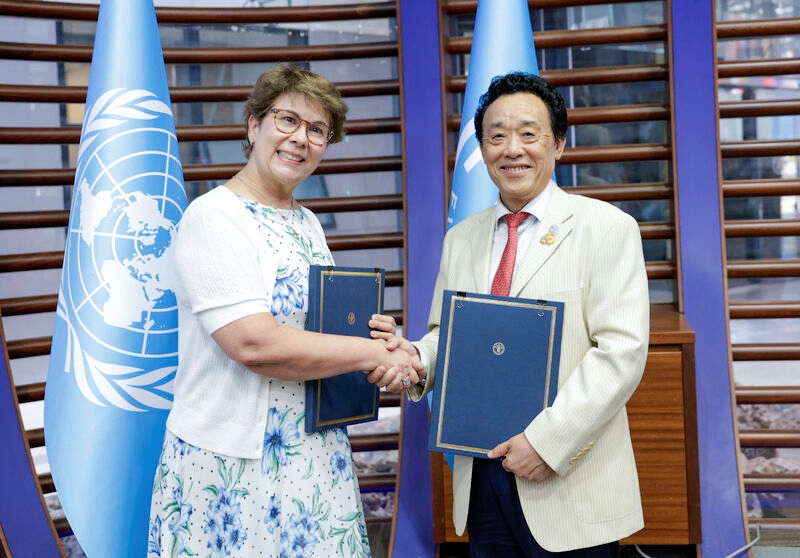
The United Nations Industrial Development Organization (UNIDO) and the European Coffee Federation (ECF) today signed a Joint Declaration at UN House Brussels, formalising a public-private commitment to promote sustainable transformation across African coffee value chains. The signing took place at the close of a high-level roundtable on “Sustainable Coffee Value Chains in Africa: A Public-Private Sector Dialogue,” convened with the participation of the European Commission’s DG INTPA, EU Member States, international organisations, and leading European coffee companies.

This Declaration comes at a critical time, as African coffee value chains face structural challenges ranging from climate change and weak infrastructure to limited access to finance, making public-private cooperation an urgent necessity to ensure the sector’s sustainability and improve the lives of millions of smallholder farmers across the continent.

A New Cooperation Framework Focused on Farmers and Sustainability

The Declaration establishes a structured cooperation framework between the two organisations, with a clear focus on supporting African coffee-producing countries, in particular smallholder farmers, to build climate resilience, improve traceability, and attract sustainable investment. A concrete outcome is the agreement to set up a Consultative Group serving as a pre-competitive, neutral platform for knowledge exchange among traders, roasters, exporters, and development partners.

Leaders: “Choosing Partnership Over Fragmentation”

Eileen Gordon Laity, Secretary General of the European Coffee Federation, said: “This Declaration formalises what the coffee sector has long recognised: sustainable coffee supply chains cannot be built by the private sector or by development agencies alone. Today, we reaffirm our shared commitment and take our collaboration one step further.”

Providence Mavubi, Managing Director, Directorate of SDG Innovation and Economic Transformation, Officer-ad-Interim, UNIDO, emphasised: “With this Joint Declaration, UNIDO and the European Coffee Federation are choosing partnership over fragmentation — a shared commitment to the producers, traders, roasters, policymakers and consumers connected in a single value chain, and to the millions of farming families whose futures depend on how we act together. This is precisely the spirit that drives the ACT Coffee Programme: turning global cooperation into concrete change on the ground for Africa’s coffee communities.”

Party Role
UNIDO United Nations Industrial Development Organization
European Coffee Federation (ECF) Representing Europe’s coffee industry
European Commission (DG INTPA) International partnerships
International Coffee Organization (ICO) Intergovernmental coffee body
Inter-African Coffee Organization (IACO) Representing African producing countries
Private Sector Companies illycaffè, Sucafina, Volcafe, Tchibo

The Consultative Group: A Neutral Platform for Knowledge Exchange

The Consultative Group agreed upon will serve as a neutral platform bringing together different stakeholders across the coffee value chain, with the aim of sharing knowledge and expertise and developing concrete technical proposals and investment projects. This platform will help guide private sector engagement in coffee policy processes at both African and global levels, enhancing coordination among different initiatives.

High-Level Roundtable with Industry Leaders

The roundtable that preceded the signing brought together private-sector leaders from illycaffè, Sucafina, Volcafe, and Tchibo, alongside senior officials from DG INTPA, the International Coffee Organization (ICO), the Inter-African Coffee Organization (IACO), the embassies of Italy and Ethiopia to the European Union, and the Ethiopian Coffee and Tea Authority (ECTA). This broad participation reflects the growing interest in enhancing the sustainability of African coffee value chains.

The ACT Coffee Programme: Driving Implementation

The ACT Coffee Programme (Advancing Climate Resilience and Transformation in African Coffee) will lead the implementation of the cooperation through targeted workshops and roundtables to develop concrete technical proposals and investment pipelines. The Programme, implemented by UNIDO and funded by the Italian Cooperation within the framework of Italy’s Mattei Plan and the EU Global Gateway Strategy, is currently active in Ethiopia, Kenya, Tanzania, Uganda, and Malawi, with the potential to expand to other African coffee-producing countries.

Why This Declaration Matters for the Coffee Sector

This Declaration represents a significant step forward in public-private cooperation in the coffee sector. By combining UNIDO’s expertise in industrial development with the ECF’s representation of the European coffee industry (which accounts for approximately 90% of all coffee imported and processed in the EU), this partnership can create tangible impact in the lives of millions of smallholder farmers in Africa while enhancing the sustainability of global supply chains.

Frequently Asked Questions About the UNIDO-ECF Joint Declaration

Q: What is the main purpose of the Joint Declaration?

A: To promote sustainable transformation across African coffee value chains through public-private cooperation, with a focus on smallholder farmers.

Q: What are the key areas of cooperation?

A: Building climate resilience, improving traceability, and attracting sustainable investment in African coffee-producing countries.

Q: What is the Consultative Group?

A: A neutral platform bringing together traders, roasters, exporters, and development partners for knowledge exchange and developing concrete technical and investment proposals.

Q: What is the ACT Coffee Programme?

A: A UNIDO-implemented programme funded by Italian Cooperation, aiming to strengthen climate resilience and transformation in African coffee, currently active in five African countries.

Q: Which countries are currently covered by the programme?

A: Ethiopia, Kenya, Tanzania, Uganda, and Malawi, with potential for expansion to other countries.

The signing of this Joint Declaration marks a pivotal moment in the development of Africa’s coffee sector. By bringing together political will, the expertise of international organisations, and the resources of the private sector, this partnership can help build more sustainable and equitable value chains, improving the lives of millions of farming families who form the backbone of Africa’s coffee industry.

Prepared and edited by: Qahwa World – Based on the press release from UNIDO and the European Coffee Federation, issued June 24, 2026.

All rights reserved. Republication with attribution permitted.

Publication date: June 25, 2026

Coffee Farming in Vietnam Devours Half a Million Acres of Forest, Threatening Rare Species with Extinction

Source: Coffee Watch Report – Adapted by Qahwa World |
Author: Qahwa World |
Date: June 25, 2026

Coffee Farming in Vietnam Devours Half a Million Acres of Forest, Threatening Rare Species with Extinction

Key Takeaways:

  • A new report from the nonprofit Coffee Watch reveals that coffee farming in Vietnam has cleared nearly half a million acres of forest since 1990.
  • The Central Highlands have lost their wild tigers and elephants, with the saola — the “Asian unicorn” — feared extinct.
  • Intensive irrigation is depleting groundwater, while chemical use is degrading soils, threatening the sustainability of production.
  • Coffee accounts for only 1% of global deforestation, while cattle accounts for 40% and soy and oil palm for 18%.
  • Experts call for agroforestry practices and reduced meat consumption to curb forest destruction.

A new report from the nonprofit organization Coffee Watch reveals that coffee farming in Vietnam’s Central Highlands has led to the clearing of nearly half a million acres of dense forest since 1990 – an area the size of Luxembourg. The region, once home to tigers, elephants, and monkeys, has lost most of its biodiversity, with wild tigers now completely gone and elephant populations at critical levels.

The findings come as Vietnam ranks as the world’s second-largest coffee producer after Brazil, and the leading producer of Robusta beans used in most instant coffee, accounting for roughly 40% of the global market. The report indicates that forest cover in the Central Highlands has shrunk by one-third, while coffee cultivation has expanded fourteenfold over a single generation.

Collapse of Biodiversity and the Disappearance of the ‘Asian Unicorn’

The report, which relied on satellite imagery and historical records, documents that provinces such as Dak Lak, Dak Nong, and Gia Lai have experienced widespread forest destruction. While deforestation rates have slowed in recent years, this is largely because little forest remains to clear. Evidence points to the extinction of wild tigers in the region, a sharp decline in elephant populations, and the likely extinction of the saola — a rare antelope known as the “Asian unicorn.”

Groundwater Depletion and Soil Degradation Threaten Coffee’s Future

Beyond forest destruction, the report reveals that intensive irrigation has lowered the region’s water table, forcing farmers to drill wells as deep as 150 feet. Heavy chemical use has depleted soils, placing farmers on a “nutrient treadmill” where they must apply ever more fertilizer and pesticide to maintain yields. The report concludes that the “production system is eroding the ecological foundations on which it depends.”

Increasing drought linked to climate change is already creating bean shortages, which contributed to record-high coffee prices last year. Scientists warn that half of the region’s coffee acreage could become unviable by mid-century, potentially driving further deforestation and higher prices.

Agricultural Commodity Deforestation Share Impact
Cattle (Beef) 40% Largest driver of deforestation
Soy and Oil Palm 18% Second-largest driver
Coffee 1% Limited but real impact

Experts: “We Are Drinking the Earth with Every Cup”

Etelle Higonnet, founder and director of Coffee Watch, said: “Most people are good people; they’d never dream of going to Starbucks and ordering a latte plus a dead elephant. But that’s basically what we’re doing. We’re raping and poisoning the planet with every cup we drink.” She added: “If this system collapses, shock waves will be felt in every supermarket and every café.”

Higonnet called for increased pressure on major coffee buyers to green their supply chains, noting that about 20% of global coffee production is now grown through sustainable agroforestry practices that combine reforestation with production.

Coffee’s Impact Is Smaller Than Meat’s – But It’s Not Innocent

Despite the devastating impact of coffee farming in Vietnam, data shows that coffee accounts for only about 1% of global deforestation caused by agriculture. In contrast, cattle alone causes 40% of deforestation, while soy and oil palm contribute 18%. Pastures now cover an area twice the size of South America, while the United States uses about half its agricultural land to produce beef, which provides only 3% of its calories.

Environmental writer and analyst Michael Grunwald notes that drinking a cup of coffee every morning contributes to global warming roughly as much as driving a gasoline car 100 miles, while emphasizing that meat’s impact is far larger.

Calls for Agroforestry, Reduced Meat Consumption

The report urges adoption of more sustainable farming practices, such as agroforestry — growing coffee under tree shade — and developing new drought-resistant and climate-resilient coffee varieties, as Nestlé is currently doing. Environmental organizations also call on governments to encourage farmers to use less irrigation water and fertilizer, and to ban imports of coffee grown on recently deforested land.

Experts argue that the real lesson from the transformation of Vietnam’s Central Highlands is not that coffee is uniquely damaging, but that everything we consume causes environmental harm, and the true solution lies in reducing global meat consumption, especially in wealthy nations.

Frequently Asked Questions About Coffee’s Environmental Impact

Q: How much forest has been cleared for coffee farming in Vietnam?

A: Nearly half a million acres since 1990 – an area the size of Luxembourg.

Q: Which animals have been affected by deforestation in Vietnam?

A: Wild tigers have disappeared entirely, elephant populations have sharply declined, and the saola is feared extinct.

Q: Is coffee the leading cause of deforestation globally?

A: No. Cattle accounts for 40%, soy and oil palm for 18%, while coffee contributes only about 1%.

Q: What solutions are being proposed?

A: Agroforestry, improved farming efficiency, drought-resistant varieties, and banning imports of coffee from recently deforested land.

Q: How can consumers help?

A: By buying sustainably sourced coffee, reducing meat consumption, and supporting brands that adopt eco-friendly practices.

The Coffee Watch report highlights the hidden environmental cost of coffee, but it also underscores that the problem extends far beyond a single cup. It is about our entire consumption pattern and the urgent need to rethink our relationship with food, drink, and the land that produces them. Change begins with consumer awareness and the willingness of companies and governments to take responsibility for the planet.

Prepared and edited by: Qahwa World – Based on the Coffee Watch report and Michael Grunwald’s article in Canary Media (June 23, 2026).

All rights reserved. Republication with attribution permitted.

Publication date: June 25, 2026

On the Eve of the World of Coffee Brussels, CQI CEO Delivers a Message on 2026 Achievements and Future Plans

Source: Coffee Quality Institute (CQI) – CEO Message |
Author: Qahwa World |
Date: June 24, 2026

On the Eve of the World of Coffee Brussels, CQI CEO Delivers a Message on 2026 Achievements and Future Plans

Key Takeaways:

  • On the eve of the World of Coffee trade show in Brussels, the CEO of the Coffee Quality Institute (CQI) delivers a message to the international community, reviewing achievements from the first half of 2026.
  • The Institute launched two new programs: the Matching Grant Fund to support coffee-growing communities, and the CQI Insider program to connect coffee professionals worldwide.
  • Following a comprehensive upgrade, the renowned “Coffee Corps” program has been relaunched, with the first volunteers already selected for the new version.
  • Version 3.0 of the Processing Professional (PHP) course completed its review and has been delivered in Africa, Asia, and Latin America.
  • The fifth cohort of the Processing Expert Course, the Institute’s most advanced program, has been convened.
  • In Brussels, CQI is preparing to welcome visitors at Booth 7655 with live demonstrations, tastings, and meetings with key partners.

On the eve of the World of Coffee Brussels, taking place from June 25 to 27, Michael Sheridan, CEO of the Coffee Quality Institute (CQI), delivered a message to the international coffee community. He reviewed the achievements of the first half of 2026, a period marked by significant milestones and qualitative developments, while also announcing the Institute’s participation in the event with a rich program featuring live demonstrations, tastings, and meetings with prominent partners.

This message comes at a critical time, as the global coffee industry undergoes rapid transformation, highlighting the growing role of educational and training institutions in enhancing production quality and improving producers’ livelihoods — priorities that remain at the core of CQI’s mission.

New Programs to Support Producers and the Coffee Community

Among the key highlights of the message was the launch of two new programs during the first half of the year. The first is the “Matching Grant Fund,” an initiative designed to catalyze co-investment in coffee-growing communities by providing matching financial grants to support development projects in producing regions. The second is “CQI Insider,” a digital platform that aims to connect the global community of coffee professionals, creating a space for communication and the exchange of experiences and ideas among those working across all stages of the value chain — from the farm to the cup.

Coffee Corps Relaunched After Comprehensive Upgrade

In addition, the Institute relaunched the “CQI Coffee Corps” program, one of its most celebrated initiatives in history, following a comprehensive upgrade and refinement. The first group of volunteers has already been selected for the new version of the platform, which is designed to strengthen peer-to-peer education among coffee professionals and enable them to share field knowledge and expertise directly. This program reflects the Institute’s commitment to building a more connected and collaborative coffee community.

Training Programs Development and Curriculum Updates

In the training domain, the first half of the year witnessed a significant achievement with the completion of a comprehensive review and two successful pilots of Version 3.0 of the Processing Professional (PHP) course, one of the Institute’s most impactful programs. The updated course has already been delivered across three continents — Africa, Asia, and Latin America — reflecting the Institute’s global reach and its ability to connect with coffee-producing regions worldwide.

Additionally, the fifth cohort of the Processing Expert Course was convened, representing the Institute’s most advanced training program, designed to develop a select group of experts in coffee processing. Students from this cohort are expected to transition soon from the classroom to the field, applying their learning in real-world settings and contributing to raising quality standards across the coffee industry.

Area Achievement
New Programs Matching Grant Fund, CQI Insider
Peer-to-Peer Education Coffee Corps relaunched, first volunteers selected
Processing Professional (PHP) v3.0 completed and delivered across 3 continents
Advanced Training 5th cohort of Processing Expert Course convened
International Engagements Dubai, Addis Ababa, Tampa, San Diego, Bangkok, Lima, and Brussels

Participation in Brussels 2026: Exclusive Activities at Booth 7655

As part of these ongoing efforts, CQI is participating in the World of Coffee Brussels 2026, one of the most significant global events in the specialty coffee sector. Booth 7655 at the Brussels Expo Convention Center will serve as the hub for the Institute’s activities, featuring live demonstrations, tastings, and meetings with prominent partners and experts.

Key highlights of the Institute’s three-day program include:

  • Exploring the New Le Nez du Café Kit: Featuring Viva Lenoir, President of the company behind the kit’s creation, who will be available to answer questions and share what’s new in this updated edition of the aroma training kit.
  • Live High-Precision Moisture Meter Demonstrations: Presented by Ben Collier, Managing Director of Sinar Technology, highlighting the importance of moisture meters and sharing maintenance tips.
  • Fine Canephora Coffee Tasting: With Lukas Harbig, creator of the Canephorum event, and partner Gloria Pedroza, Head of NKG’s Quality Services Department. Visitors will have the opportunity to taste exceptional Canephora coffees and gain insights into the latest developments in this segment.
  • Meet & Greet with Bean Voyage: As part of the Women Powered Coffee Summit, representatives from the organization will meet with booth visitors to discuss the role of women in the coffee industry.

Day Activity Time
June 25 CQI Pin Distribution & Le Nez du Café Exploration All Day
June 25 Meet & Greet: Bean Voyage | Women Powered Coffee Summit 10:30 AM
June 25-27 Sinar Technology Moisture Meter Talks 1:00 & 3:00 PM
June 27 Fine Canephora Tasting with Lukas Harbig & Gloria Pedroza 1:00 PM

Looking Ahead: The Second Half of 2026 Promises Even More

CEO Michael concluded his message by indicating that the second half of 2026 will be even more eventful, with plans to launch new programs, update training curricula, forge strategic partnerships, and implement ambitious investments and projects — all aimed at fulfilling the Institute’s core mission: improving coffee quality and the lives of those who produce it worldwide. He emphasized that updates on these initiatives will be announced in the coming months, inviting the coffee community to follow and participate in these developments.

Frequently Asked Questions About CQI and Brussels Activities

Q: What is the Coffee Quality Institute (CQI)?

A: A non-profit organization dedicated to improving coffee quality and the lives of producers through education, training, and research. It is one of the most prominent institutions in the specialty coffee sector.

Q: What is the CQI Coffee Corps program?

A: A peer-to-peer education program that connects coffee professionals worldwide to share field knowledge and expertise. It was recently relaunched after a comprehensive upgrade.

Q: Where is CQI’s booth located at the Brussels show?

A: At Booth 7655 at the Brussels Expo Convention Center, throughout the show from June 25 to 27.

Q: What is the Le Nez du Café kit?

A: A specialized training tool designed to teach and develop aroma recognition and tasting skills in coffee. A new updated edition has just been released.

Q: What is the Processing Expert Course?

A: CQI’s most advanced training program, designed to develop elite experts in coffee processing. Its fifth cohort was convened in 2026.

The Coffee Quality Institute combines ambitious vision with tangible actions through its participation in the Brussels trade show and its review of first-half achievements. From developing training programs and relaunching educational initiatives to forging strategic partnerships, CQI continues to strengthen its position as a leading force in improving coffee quality worldwide. We invite you to visit Booth 7655 in Brussels and join the Institute’s diverse activities, which bring together education, tasting, and professional networking.

Prepared and edited by: Qahwa World – Based on the Coffee Quality Institute (CQI) CEO message.

All rights reserved. Republication with attribution permitted.

Publication date: June 24, 2026

Turkish Coffee & Arabic Coffee..Two Cups, One Soul

Source: Qahwa World |
Author: Serkan Oral |
Date: June 23, 2026

Turkish Coffee & Arabic Coffee — Two Cups, One Soul

From the Article:

  • Turkish and Arabic coffee share a common historical root, stretching from the highlands of Ethiopia through Yemen to the Islamic world.
  • Both are prepared without filtering, served in small cups, and invite slowness and enjoyment of the moment.
  • Hospitality and generosity are the essence of what unites both cultures, where refusing a cup of coffee is considered a social breach.
  • The etiquette of refusal mirrors each other: gently shaking the empty cup in Arab tradition, and turning it upside down on the saucer in Turkish tradition.
  • In both traditions, coffee is not just a drink, but a social ritual that carries the memory of every conversation worth having.
  • The Turkish coffee cup also carries tales of the future after it is drunk and turned over.

They arrive unannounced, the way hospitality always does in this part of the world. A small cup, thick and dark, placed before you without being asked. Whether you are sitting in a coffeehouse in Istanbul or a majlis in Dubai or Riyadh, the gesture is the same: I see you, you are welcome here, stay a while. Turkish coffee and Arabic coffee come from different hands and different traditions, but they share a deeper kinship than most people realize.

I feel the similarities at specialty coffee houses in Dubai or Jeddah, enjoying warm conversations with friends. Two cups from two cultures, but one soul.

One Root, One Shared Story

Both trace their roots to the same origin story. Coffee was born in the highlands of Ethiopia, traveled through Yemen, and spread across the Arab world before reaching the Ottoman Empire in the sixteenth century. Istanbul and the Arab capitals fell in love with it almost simultaneously, and each civilization made the drink its own. What emerged were two distinct rituals that nevertheless rhyme with each other in remarkable ways.

Preparation and Ritual – Mirror Images

The most obvious similarity is the method. Both are prepared without filters, brewed slowly and deliberately, served in small portions. Neither is meant to be rushed. The grounds in Turkish coffee settle at the bottom of the cup; the spices in Arabic coffee — cardamom, sometimes saffron or cloves — drift and steep. In both traditions, the coffee itself is almost secondary to what surrounds it: the conversation, the silence, the act of sitting together.

Hospitality: Where the Two Worlds Converge

Hospitality is where the two cultures converge most powerfully. Refusing a cup of Turkish coffee is a mild social offense. Refusing Arabic coffee is much the same. Both are offered at moments of significance: welcoming a guest, marking a celebration, sealing an agreement, mourning a loss. The cup is never just a cup. It is a small ceremony, a way of saying that the person across from you deserves your time and your attention.

The Etiquette of Refusal – Silent Signals, One Meaning

Even the rules of refusal mirror each other. In Gulf Arab tradition, you wiggle the empty cup slightly to signal you have had enough. In Turkish tradition, leaving your cup turned upside down on the saucer sends a similar message. Different gestures, identical meaning: a quiet, polite negotiation between guest and host conducted entirely without words.

What Unites Is Greater Than What Divides

What separates them — the roast, the spices, the presence or absence of sugar — matters less than what unites them. Both are instruments of slowness in a world that rewards speed. Both insist that some things should not be automated, bottled, or consumed on the go. And both carry, in every small cup, the memory of every conversation that was ever worth having.

A Cup That Carries Future Tales

And for Turkish coffee lovers, that small cup also gives you tales of the future after it is drunk and turned over. Fortune-telling from the cup is not mere entertainment; it is a continuation of the ritual itself: sitting together, reflecting, and speaking of the unknown in the language of generosity and curiosity.

Frequently Asked Questions About Turkish and Arabic Coffee

Q: Are Turkish and Arabic coffee from the same origin?

A: Yes, both trace back to the same historical source: the highlands of Ethiopia and Yemen, before branching into different traditions in the Arab world and the Ottoman Empire.

Q: What are the most important similarities between them?

A: The method of preparation without filtering, serving in small cups, and the focus on the social ritual and hospitality rather than the drink itself.

Q: How does the etiquette of refusal differ between the two cultures?

A: In Arab tradition, you gently shake the empty cup; in Turkish tradition, you turn the cup upside down. But the meaning is the same: a polite signal that you have had enough.

Q: Why is coffee considered part of hospitality in both cultures?

A: Because serving coffee is a social ritual that expresses welcome and respect, whether in Arab gatherings or Turkish coffeehouses.

Q: What is the significance of fortune-telling from the cup in Turkish culture?

A: It is an extension of the coffee ritual itself, where people gather to reflect and talk after the drink, in an atmosphere of familiarity and generosity.

Turkish coffee and Arabic coffee are not just two different drinks. They are two faces of the same coin: a culture of hospitality, slowness, and celebration of the moment. In a fast-paced world, these two cups remind us that some traditions are worth preserving, and that good conversation and good company deserve a cup to be sipped slowly, and a heart to be filled with stories.

By: Serkan Oral – Qahwa World.

All rights reserved. Republication with attribution permitted.

Publication date: June 23, 2026

Victoria Arduino at World of Coffee Brussels 2026: A Journey Through Origins, Heritage, and Innovation

Source: Victoria Arduino – Press Release |
Author: Qahwa World |
Date: June 23, 2026

Victoria Arduino at World of Coffee Brussels 2026: A Journey Through Origins, Heritage, and Innovation

Key Takeaways:

  • Victoria Arduino will participate in World of Coffee Brussels 2026 from June 25–27 at Booth 11322.
  • The brand will showcase its vision of professional coffee: a blend of innovation, design, and performance.
  • The booth features dedicated coffee stations: “Coffee from the Origins” with Eagle One and “Italian Premium Heritage” with Eagle Tempo.
  • The E1 Prima PRO station will host guest roasters: Da Matteo (June 25), OR Coffee (June 26), and Le Joeli Coeur Specialty Roaster (June 27).
  • “But First Coffee” area offers tastings, signature drinks, and exclusive collaborations across the three days.
  • The L’Atelier project redefines customization in professional coffee machines, transforming the machine into a bespoke design piece.

From June 25–27, 2026, Victoria Arduino will take center stage at World of Coffee Brussels 2026, one of the most anticipated events for the international specialty coffee community. In the vibrant heart of Europe, the brand will showcase its vision of professional coffee: a perfect blend of innovation, design, and performance, created to empower baristas and deliver memorable coffee experiences.

Visit us at Booth 11322 to discover Victoria Arduino’s solutions up close and enjoy three days dedicated to coffee excellence.

A Journey Through Origins, Heritage, and Innovation

Inside the booth, visitors will embark on an immersive journey through dedicated coffee stations designed to showcase different extraction methods and tasting experiences.

Coffee from the Origins with Eagle One: With Eagle One, Victoria Arduino presents the “Coffee from the Origins” concept – an experience dedicated to exploring coffee origins and their impact in the cup. In collaboration with Lohas Beans, visitors will discover aromatic profiles that tell the story of unique territories, varieties, and processing methods, celebrating the most authentic expression of coffee’s raw material.

Italian Premium Heritage with Eagle Tempo: With Eagle Tempo, the spotlight shifts to “Italian Premium Heritage”, a concept that celebrates the culture of Italian espresso and its continuous evolution. In partnership with Filicori Zecchini, one of Italy’s historic coffee roasters, visitors will have the opportunity to taste blends that embody the perfect balance between tradition, quality, and innovation, offering a contemporary interpretation of Italian coffee excellence. Two coffee machines, two complementary visions of coffee, united by the same pursuit of quality in every cup.

Date Roaster / Collaborator Activity
June 25 Da Matteo Brewing sessions on E1 Prima PRO
June 25 Corica + Coffee Foundation Espresso & Flat White tastings, music event
June 26 OR Coffee Brewing sessions on E1 Prima PRO
June 26 Andrea Villa (Italian CIGS Champion) Signature Morning Aperitivo creations
June 26 Ditta Artigianale × Vivoli Original Italian Affogato
June 27 Le Joeli Coeur Specialty Roaster Brewing sessions on E1 Prima PRO
June 27 Belga & Co Espresso, Americano & Flat White

E1 Prima PRO: Roaster Creativity on Stage

The E1 Prima PRO station will host an exciting lineup of guest roasters throughout the event. Each day will begin with Lift Up!, serving coffee every morning on E1 Prima PRO. The guest roaster schedule includes: Da Matteo on June 25, OR Coffee on June 26, and Le Joeli Coeur Specialty Roaster on June 27. A dynamic program designed to highlight the versatility of E1 Prima PRO while offering visitors an ongoing exploration of different styles, origins, and interpretations of contemporary coffee.

L’Atelier: Where Design Meets Customization

Brussels will also host L’Atelier, Victoria Arduino’s project redefining customization in the world of professional coffee machines. Inspired by the universe of luxury ateliers, L’Atelier transforms the coffee machine into a truly bespoke object: not merely a professional tool, but a distinctive design element capable of expressing identity, creativity, and style.

“But First Coffee”: Tastings, Signature Drinks, and Exclusive Collaborations

A highlight of the booth experience will be “But First Coffee” (Booth 11322), a dedicated space celebrating specialty coffee through tastings, roaster takeovers, and exclusive sensory experiences.

June 25: The day begins with a selection of espresso and flat white beverages by Corica. In the afternoon, a special event with Coffee Foundation will showcase the value of a partnership built on dialogue, shared values, and positive impact. The experience will be enhanced by music, creating a welcoming environment for connection and conversation among coffee professionals.

June 26: OR Coffee will take over the morning session at But First Coffee, serving Double Espresso XPL03 Costa Rica Anaerobic and Flat White. In a dedicated area of the bar, Andrea Villa, Italian CIGS Champion, will present a series of exclusive Signature Morning Aperitivo creations, offering an innovative interpretation of the meeting point between coffee and mixology. In the afternoon, visitors can enjoy a truly Italian experience: the Original Italian Affogato, created through a collaboration between Victoria Arduino, Ditta Artigianale, and Vivoli, one of Italy’s most renowned gelato makers.

June 27: The final day will feature Belga & Co, serving a selection of Espresso, Americano and Flat White.

A Different Experience Every Day: Three days, multiple roasters, and a continuous program of tastings, meetings, and special collaborations designed to showcase the many facets of contemporary coffee culture.

See You in Brussels

World of Coffee Brussels 2026 will be the perfect opportunity to step into the world of Victoria Arduino, where excellence, design, and coffee culture come together to create unique experiences. Visit us at Booth 11322 and discover the future of coffee.

Frequently Asked Questions About Victoria Arduino at World of Coffee Brussels 2026

Q: When will World of Coffee Brussels 2026 take place?

A: From June 25–27, 2026.

Q: Where is the Victoria Arduino booth located?

A: At Booth 11322.

Q: Which coffee machines will be showcased at the booth?

A: The Eagle One, Eagle Tempo, and E1 Prima PRO.

Q: Which roasters will be guest features on E1 Prima PRO?

A: Da Matteo (June 25), OR Coffee (June 26), and Le Joeli Coeur Specialty Roaster (June 27).

Q: What is the “But First Coffee” experience?

A: A dedicated space for tastings, roaster takeovers, and exclusive sensory experiences across the three days, with collaborations with Corica, Coffee Foundation, OR Coffee, Vivoli, and Belga & Co.

World of Coffee Brussels 2026 is the perfect platform to discover Victoria Arduino’s vision of professional coffee, where excellence, design, and coffee culture come together in a unique experience. Don’t miss the opportunity to visit Booth 11322 and discover the future of coffee.

Stay updated on Victoria Arduino events and news at www.victoriaarduino.com and follow us on Instagram at @victoriaarduinoofficial

Prepared and edited by: Qahwa World – Based on a press release from Victoria Arduino.

All rights reserved. Republication with attribution permitted.

Publication date: June 23, 2026