Gostoso Coffee: Redefining Brazilian Specialty Coffee

Dubai – Qahwa World

In recent years, Brazil has reaffirmed its position as the world’s largest coffee producer and a growing hub of innovation within the specialty coffee sector. In this evolving landscape, a new generation of Brazilian‑born brands is emerging, shifting coffee’s image from a bulk commodity to a crafted experience. Among them, Gostoso Coffee is beginning to stand out for its clarity of vision, authenticity, and long‑term direction.

  • From Dubai to the Origin: A New Chapter

Gostoso Coffee was founded in 2019 by Brazilian entrepreneur Colin James Francis, after his move to the UAE and his decision to launch a brand that would represent Brazil on the global stage. Over time, the company combined Brazilian agronomy with Emirati‑based roasting operations (Karam Food Inds., Dubai), positioning itself at the intersection of origin and innovation.

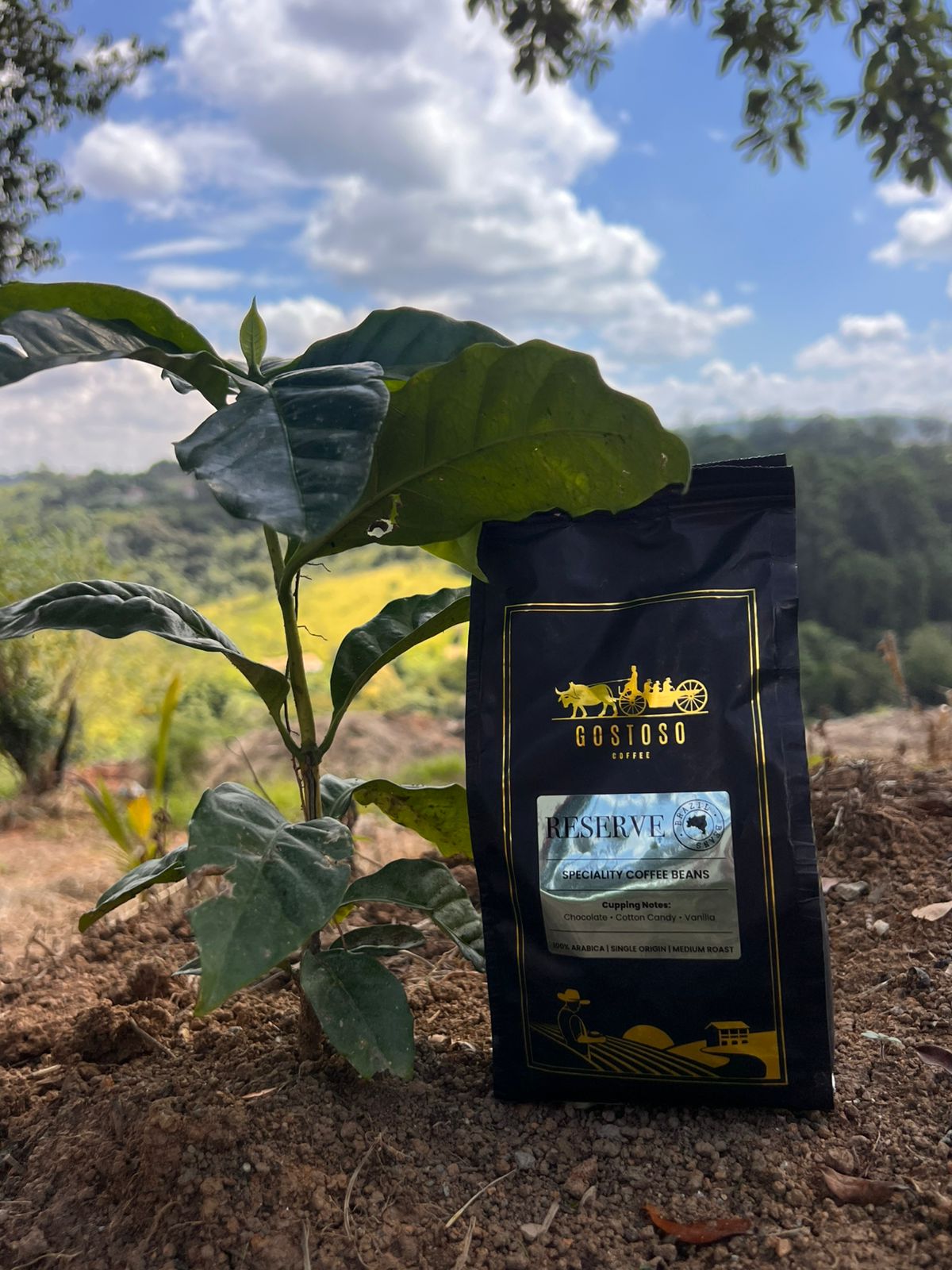
Recently, Gostoso made a strategic return to its roots by establishing a coffee plantation in Brazil, in the prestigious region of São Roque, São Paulo—internationally known as the “City of the Wine Route.” Following rigorous soil analysis, terroir selection, and assessment of climatic conditions suited to rare Arabica varieties, the company chose an estate that blends natural beauty, heritage architecture, and production potential.

The property is set in a mountainous landscape surrounded by the Atlantic Forest, with a historic headquarters built in Riga pine wood using Norman architecture. Designed to be open to the public, the farm will host visits, educational tours, and immersive experiences on coffee, origin, and the global trends shaping the world’s second‑most‑consumed beverage. This project aims to re‑establish São Paulo as a globally recognized specialty‑coffee region, echoing the state’s prominence in the 1950s and 1960s—this time with a focus on quality, rarity, and sustainability.

  • Beyond Commodity: A Global Vision Guided by Ethics

Gostoso Coffee was created to challenge the traditional power structure in coffee: to reduce the role of exploitative middlemen and protect farmers, cooperatives, and origin. From Brazil, the brand controls the entire value chain, from rare plantations to its roastery in Dubai, UAE, ensuring transparency, traceability, and fair practices at every stage.

Under the leadership of CEO Colin James Francis, recognized internationally for ethical sourcing and manufacturing excellence in the UAE, India, and Hong Kong, Gostoso supports and expands Brazilian cooperatives, helping them produce higher‑quality outputs at a larger scale using rare Arabica and Liberica varieties. With a strategic base in Dubai, the brand is positioned to scale across the Middle East, Asia, and the Far East, bringing Brazilian excellence to the world without compromise.

  • Farm and Plantation: Innovation Meets Nature

Located in a mountainous region of Brazil, the Gostoso Coffee Farm is opening new pathways in specialty production. The farm is developing Geisha Arabica, one of the world’s most exclusive coffee varieties, traditionally associated with high altitude Panama, where micro‑lots have recently reached around USD 30,000 per kg. At Gostoso, this cultivar grows under the natural shade of the Atlantic Forest, a terroir that imparts remarkable complexity, elegance, and cup identity.

Sustainability is central to the farm’s operations. Over 15% of the property is preserved as a legally protected Permanent Preservation Area (APP), in full compliance with Brazilian environmental law. The estate lies within the São Roque Atlantic Forest, a region recognized by UNESCO for its ecological value and biodiversity.

The native forest hosts species such as peroba, cedar, pau‑d’alho, mulberry, white fig, jatobá, cinnamon, and ipê, along with a rich variety of wildlife. The farm also cultivates more than 30 fruit varieties, including jabuticaba, uvaia, cacao, pecans, chestnuts, passion fruit, bananas, berries, avocado, jambo, pitanga, and mango, while maintaining beehives to support pollination of coffee plants. As the team puts it: “Nature is our alliance; we work as a cohesive unit.”

  • More Than a Farm — A Destination at Origin

Gostoso Coffee is designed to attract both national and international visitors, not only for its rare coffees but also for the natural and cultural beauty of the region. The farm offers eco‑walks, birdwatching spots, and meaningful experiences that connect guests with the land, the process, and the story behind every cup. As the estate expands, visitors will encounter an ever‑growing diversity of rare coffee varieties, all cultivated with precision and care.

  • Rare Coffee Varieties: Geisha, Arabica, and more

Geisha Arabica is one of the rarest and most celebrated coffee varieties worldwide, renowned for its extraordinary cup complexity, with delicate jasmine‑like florals, vibrant citrus notes, and subtle hints of tropical fruits. The variety gained global fame after winning the Best of Panama competition in 2004 and has since become a benchmark for excellence in specialty coffee.

Demanding cultivation, low yields, and exceptional quality have made Geisha synonymous with luxury and exclusivity. Traditionally grown in Panama, it now also flourishes at Gostoso Coffee Farm in São Roque, São Paulo. Geisha is one of seven exclusive coffee varieties cultivated at the estate, where terroir, technical precision, and passion converge to create a distinctive profile.

  • Empowering Women in Agriculture

Women are at the heart of the Gostoso story. Globally, women represent nearly 47% of the agricultural workforce, shaping farming with resilience and care. At the Gostoso Coffee Farm, 25% of the labor force consists of skilled, experienced women working across seedling production, nursery management, harvesting, and quality control.

Their presence enriches every stage of production and reinforces the brand’s mission to deliver coffee that is Gostoso—good, authentic, and deeply human. Their dedication can be tasted in every cup, from the first seedling to the final brew. As the farm grows, it does so driven by respect for people, partners, and consumers.

  • Scaling with Technology, Genetics, and Vision

Gostoso Coffee is scaling not only in size but also in scientific and technological sophistication. The farm employs state‑of‑the‑art agricultural technology, advanced agronomic methods, and rare coffee genetics to redefine the future of coffee production. The mission extends beyond the farm: it aims to reshape the geography and history of the global coffee industry, restoring São Paulo as a strategic and influential origin on the world coffee map.

This long-term project is built on innovation, sustainability, traceability, and excellence, targeting those who see coffee as more than a beverage—as a legacy. Partners and investors who share this vision are invited to co‑build a project that is timeless, scalable, and globally relevant.

  • Plantation Progress and Technical Precision

The farm recently completed a root development test 60 days after planting, with highly promising results. Seedlings showed over 15 cm of root growth, with strong, healthy structures and excellent formation. This confirms that soil preparation, planting depth, spacing, and fertilization were executed with precision.

Deep root systems enhance drought resistance, nutrient uptake, and uniform growth, laying a solid foundation for future productivity. Every stage is closely monitored to ensure quality from the very beginning—coffee is planted today but harvested with strategy tomorrow.

  • Conclusion: Brazilian Coffee in Motion

Gostoso Coffee reflects a broader shift in the specialty coffee sector. Consumers are increasingly interested in origin, traceability, and environmental impact, and brands that articulate these values clearly gain a competitive edge—even before full operational maturity. The specialty market remains highly demanding, with traditional regions such as Sul de Minas, Cerrado Mineiro, and Alta Mogiana having built their reputations over decades. Entering this space requires both a compelling narrative and consistent delivery and transparency.

Initiatives like Gostoso Coffee demonstrate that Brazilian coffee is evolving — and that the future of the industry will be shaped not only by the quality of the bean but also by the quality of the story that accompanies it.

As a result of this journey, the team behind Gostoso Coffee launched Tawa Arabic Coffee in 2026 at the Museum of Coffee in Dubai, UAE—a new chapter that bridges Brazilian excellence with the rich heritage of Arabic coffee culture.
 

Brazilian Coffee Ends 2025 with Record Revenues Exceeding $15.6 Billion

São Paulo – Qahwa World

In a detailed economic report reflecting major shifts in global commodity markets, the Brazilian Coffee Exporters Council (Cecafé) announced the conclusion of 2025 with an unprecedented financial performance. Despite ongoing supply chain disruptions and geopolitical volatility, Brazil achieved a historic record in coffee export revenues, reinforcing its position as a leading force in the global agricultural economy.

  • Cecafé: The Reference Authority for Data and Policy

The Brazilian Coffee Exporters Council (Cecafé) is the official body representing coffee exporters in Brazil and is responsible for monitoring coffee trade flows to more than 120 countries worldwide. According to Cecafé’s December 2025 report, these exceptional financial results demonstrate the sector’s ability to adapt to global price fluctuations, supported by strategic investments in quality enhancement and value creation for Brazilian coffee in international markets.

  • Financial Performance Analysis: Value Growth Amid Lower Volumes

Based on data analyzed by Cecafé, Brazil’s coffee export revenues reached $15.586 billion in 2025, marking a 24.1% increase compared with the previous year. This figure represents the highest export revenue level in Brazil’s coffee trade history.

Notably, this record revenue was achieved despite a 20.8% decline in shipment volumes. Brazil exported 40.049 million 60-kg bags in 2025, down from more than 50 million bags in 2024. The increase in revenues was driven by a sharp rise in the average export price, which reached $389.17 per bag, up 56.4% year on year. This pricing dynamic allowed exporters to generate higher returns with lower volumes, supporting crop sustainability and helping preserve domestic stocks affected by adverse climatic conditions.

  • A Reshaped Trade Map: Germany Takes the Lead

The year 2025 marked a significant shift in Brazil’s coffee export destinations. According to Cecafé, the United States fell to second place among Brazil’s largest coffee importers, while Germany emerged as the leading destination.

Germany imported 5.409 million bags, representing a 6.1% increase, while U.S. imports declined sharply by 33.9%, totaling 5.381 million bags. Cecafé attributes this contraction in the U.S. market primarily to the imposition of 50% import tariffs on Brazilian coffee during parts of the year, which reduced the product’s competitiveness and redirected volumes toward European and Asian markets.

In parallel, Japan recorded growth of 19.4%, while China posted a 19.5% increase, highlighting the success of Cecafé’s market diversification strategy and its focus on emerging economic powers in Asia.

  • Differentiated Coffees: Driving Qualitative Growth

Cecafé’s report also highlights the strong performance of the “Differentiated Coffees” segment, which includes coffees certified for high quality standards or sustainable production practices. This segment generated $3.525 billion in revenue, accounting for 22.6% of total export earnings.

Although shipment volumes in this category declined by 15.1%, their total value increased by 39.1%. Márcio Ferreira, President of Cecafé, noted that global consumers are increasingly willing to pay premium prices for coffees that ensure environmental and social sustainability—an area in which Brazil has strengthened its position through advanced agricultural technologies.

  • Logistics Challenges: The Cost of Success

Despite the strong financial results, 2025 was not without challenges. Cecafé reported severe logistical constraints at Brazilian ports, particularly at the Port of Santos. According to the report, 55% of vessels experienced schedule delays, disrupting the shipment of thousands of containers each month.

These delays resulted in operational losses amounting to millions of Brazilian reais, driven by demurrage charges and additional storage costs. Cecafé emphasized that improving port infrastructure and ensuring a steady supply of containers are essential to sustaining record export performance in the coming years.

  • Outlook for 2026: Sustainability and Innovation

Cecafé’s December 2025 report concludes with an optimistic outlook led by Marcos Matos, CEO of the Brazilian Coffee Exporters Council. He stated that the “Cafés do Brasil” brand has become a global benchmark, successfully combining large-scale production with environmental responsibility.

According to the report, Brazil—through Cecafé—not only supplies approximately one-third of global coffee demand, but also leads efforts in agricultural digitalization, labor rights protection, and forest conservation, positioning Brazilian coffee as a reliable and sustainable choice for the future.

  • Conclusion

Generating more than $15.6 billion in export revenues in a single year is not merely a statistical milestone, but a clear indicator of the strength and global standing of Brazilian coffee. It also underscores the central role played by the Brazilian Coffee Exporters Council (Cecafé) in guiding the sector toward new levels of financial and professional achievement.

Russia Sets Record for Brazilian Coffee Imports

Moscow – Qahwa World

Russia significantly increased its imports of coffee from Brazil between January and November, with the total value reaching nearly $390 million — the highest level recorded to date, according to official Brazilian statistics.

Since the beginning of the year, Brazilian coffee shipments to Russia amounted to approximately $392.6 million, compared with about $232.3 million over the same period last year, highlighting a sharp expansion in bilateral trade within this segment.

Import volumes also rose in physical terms, totaling 62.3 thousand tonnes, which represents a 13% year-on-year increase.

As a result of the higher purchases, Russia ranked 11th among the world’s largest importers of Brazilian coffee. Germany remained the leading destination with imports worth around $2.1 billion, followed by the United States at $1.8 billion and Italy at approximately $1.2 billion.

Other major markets for Brazilian coffee during the period included Japan and Belgium, as well as the Netherlands, Türkiye, and Spain, while China also featured among the top ten importing countries.

Coffee Prices Plunge as Trump Removes Tariffs on Brazilian Products

Dubai – Qahwa World

On Friday, coffee prices fell sharply, with March arabica futures (KCH26) down 1.91% and January robusta futures (RMF26) falling 2.70%. Arabica reached a seven-week low.

The decline followed an executive order signed by President Trump late Thursday, exempting Brazilian food products from tariffs, including the 40% duty on Brazilian coffee. Prices dropped further after the Brazilian real weakened to a five-week low against the dollar, boosting the competitiveness of Brazilian coffee exports.

Weather factors also influenced the market. Heavy rains are forecast across Brazil’s main coffee-growing regions into next week, which benefits crop development but puts downward pressure on prices.

Robusta prices found some support from Vietnam, where heavy rainfall delayed harvesting in Dak Lak, the country’s largest coffee-producing province. Additional showers may damage crops further, providing some upward pressure on prices.

Inventory trends on ICE exchanges were mixed. US tariffs had previously limited Brazilian coffee imports, reducing stocks. As of Thursday, ICE-monitored arabica stocks dropped to a 1.75-year low of 398,645 bags, while robusta inventories fell to a four-month low of 5,567 lots. US buyers have been avoiding new Brazilian coffee contracts due to tariffs, tightening domestic supply, as roughly one-third of unroasted coffee in the US comes from Brazil. From August to October 2025, US imports of Brazilian coffee fell 52% year-on-year to 983,970 bags.

Rainfall data also influenced the market. Brazil’s largest arabica region, Minas Gerais, recorded 19.8 mm of rain in the week ending November 14 — 42% of the historical average, according to Somar Meteorologia.

On the supply side, analysts at StoneX forecast Brazil’s 2026/27 coffee crop at 70.7 million bags, including 47.2 million bags of arabica — a 29% increase year-on-year.

Vietnam’s coffee production is also rising. January–October 2025 exports increased 13.4% year-on-year to 1.31 million metric tons. Production for the 2025/26 crop year is projected at 1.76 million metric tons (29.4 million bags), a four-year high. The Vietnam Coffee and Cocoa Association (Vicofa) expects production to be 10% higher than last year if weather conditions remain favorable. Vietnam remains the world’s largest robusta producer.

Global supply data show mixed signals. The International Coffee Organization reported on November 7 that world coffee exports for the current marketing year (October–September) fell 0.3% year-on-year to 138.658 million bags.

Brazil’s Conab forecasted a smaller 2025 arabica crop, reducing it by 4.9% to 35.2 million bags, while total coffee production was adjusted down 0.9% to 55.2 million bags.

The USDA projects global coffee production in 2025/26 at a record 178.68 million bags, with arabica down 1.7% to 97.022 million bags and robusta up 7.9% to 81.658 million bags. Brazil’s crop is expected to rise 0.5% to 65 million bags, and Vietnam’s output is forecast up 6.9% to 31 million bags, a four-year high. Ending stocks for 2025/26 are projected at 22.819 million bags, up 4.9% from the previous year.

Jacu Bird Coffee Escapes Trump’s Tariffs as Brazil’s Specialty Exports Collapse

São Paulo – Qahwa World

While Brazil’s premium coffee exports are reeling under heavy U.S. tariffs, one unusual specialty brew has managed to stay untouched: coffee produced from beans eaten and excreted by the Jacu bird.

In early August, U.S. President Donald Trump imposed a 50% tariff on Brazilian goods amid a political dispute with President Luiz Inácio Lula da Silva. The move has slashed U.S. imports of Brazilian specialty coffee by nearly 70% in August alone, according to the Brazilian Specialty Coffee Association. The damage has been especially severe for premium brands, long favored by American consumers.

Yet Jacu Bird coffee — a rare Arabica harvested at Fazenda Camocim in Brazil’s Atlantic Forest — has emerged unscathed. The beans are naturally processed through the digestive tract of the Jacu, a fruit-eating bird of the Penelope species, giving the coffee a distinctive floral aroma and balanced acidity.

“Americans don’t have the same vision as the Japanese, Asians, Saudis, or Europeans in seeking out this type of quality,” said Henrique Sloper, producer and CEO of Fazenda Camocim. “For us, the tariffs don’t affect this product.”

Jacu Bird coffee, which can fetch up to £960 ($1,300) per kilo, has gained strong followings in Japan, Europe, and parts of the Middle East. Its production was inspired by Indonesia’s famous Kopi Luwak, made from beans digested by civets.

Rogerio Lemke, agriculture supervisor at Fazenda Camocim, explained that the bird’s varied diet enhances the beans’ profile: “The Jacu eats fruit as well as coffee. Inside its craw, the coffee absorbs the fruit’s characteristics, adding complexity to the cup.”

While this niche product thrives, the broader sector is suffering. Brazil’s coffee exporters group Cecafe confirmed that specialty beans have been hardest hit by the tariffs, driving a “ruinous” decline in shipments to the U.S.

Sloper admitted the farm’s other coffees, which form the bulk of production, are facing losses: “America is the largest coffee market in the world, and we’re shut out. In the short term, it’s very bad. But in the medium and long term, it may push us to open other markets.”

For now, the Jacu Bird — once seen as a nuisance in coffee groves — has unexpectedly become a symbol of resilience in Brazil’s struggling specialty coffee industry.

Bad News for Coffee Drinkers: U.S. Tariffs Push Prices to Record Highs

Dubai – Qahwa World

Times are getting tougher for coffee drinkers as tariffs push already record-high prices even higher.

When former U.S. President Donald Trump announced new tariffs on imports in April, many in the industry believed coffee would be spared since the U.S. barely produces it domestically. But by midyear, a 10% duty was imposed on most imported coffee, including shipments from Brazil—the world’s top supplier. In August, those tariffs on Brazil rose sharply to 50%.

For roasters like Chad Seegers of Low Country Coffee Roasters in Charleston, South Carolina, the impact has been immediate. “Raw-bean prices have doubled for us,” he said. Wholesale prices to his customers have risen by 30–40%, while retail prices climbed by about 25%. “Brazilian coffee, which made up 80% of our best-selling blend, is simply not feasible anymore.”

The industry was already struggling before tariffs. According to Fernando Maximiliano of StoneX, global coffee output has been hit repeatedly by droughts, frosts, and extreme weather since 2020, leaving global inventories at just 36–37 million bags in 2024, down from nearly 59 million in 2020. “Persistent supply shocks had already fueled inflation in coffee markets. Tariffs only intensified the strain,” Maximiliano explained.

The data shows the severity: U.S. city prices for 100% ground roast coffee hit $8.87 per pound in August 2025—the highest on record since tracking began in 1980. Futures markets reflect the pressure too. Arabica “C” contracts in New York have surged nearly 20% this year, peaking at $4.29 a pound in February.

Trade flows are already adjusting. ING’s food and agriculture economist Thijs Geijer noted that U.S. imports of Brazilian coffee plunged more than 75% in August compared with a year earlier, while exports from Colombia and Vietnam have remained stable. American buyers are now sourcing from alternative markets with lower tariffs.

Still, the adjustment is costly. Seegers said some family growers from Cameroon and Costa Rica refused to sell to the U.S. altogether rather than deal with tariff rules. Profit margins for his roastery have been cut in half, and he warned: “A $4.50 latte is now $7 in some cafés.”

According to Geijer, much of the tariff-driven cost increase has not yet reached store shelves. With the 50% tariff on Brazilian coffee only taking effect in August, existing inventories are still being used. “Expect the tariff impact to start hitting retailers in the fourth quarter,” he warned.

Starbucks, the world’s largest coffee chain, confirmed in its July earnings call that its hedging strategies delay cost spikes, but said year-over-year increases are expected to peak in the first half of fiscal 2026.

Despite the financial hit, Seegers said his company refuses to compromise on quality: “We chose to absorb most of the cost increases rather than cut corners.” But the stress is mounting. Higher prices are slowing demand, squeezing both roasters and cafés.

With U.S. coffee lovers already paying more than ever before, the worst may still be ahead. “High-tariff coffee hasn’t even fully hit the shelves yet,” Geijer warned. For millions of Americans, their daily cup may soon cost more than they ever imagined.