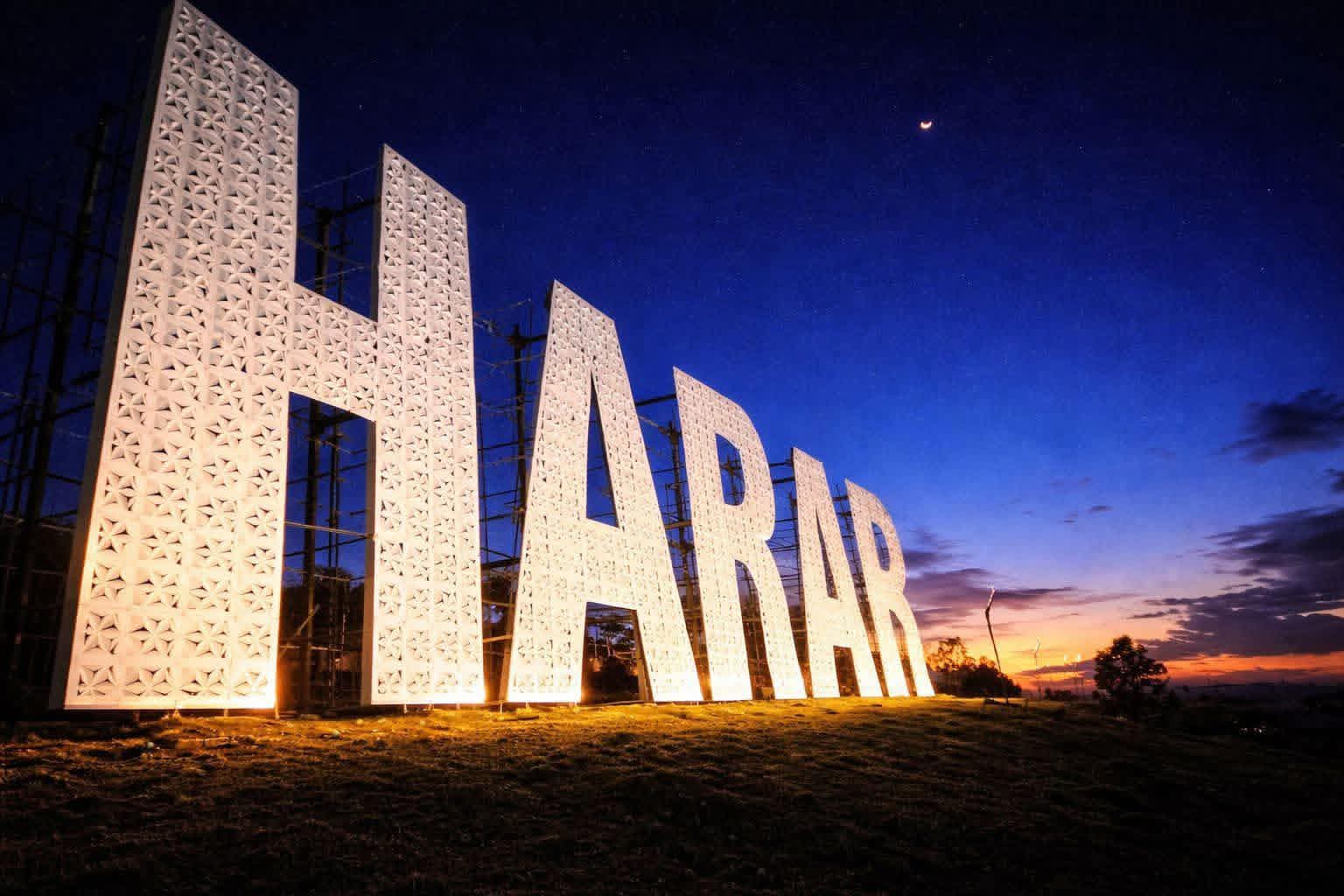
Harar blends centuries of coffee heritage, Islamic history and warm hospitality. The inaugural Great Harar Run offers visitors a new way to discover one of Ethiopia’s most remarkable cities.
By Tewodros Balcha | Exclusive for Qahwa World
Thousands of runners passed through the ancient gates of Harar today, transforming one of Africa’s oldest living cities into the newest stage of Ethiopia’s celebrated running culture.
The inaugural Ethio Telecom Great Harar Run was more than a sporting event. It was an invitation to experience a city where coffee, faith and hospitality have shaped everyday life for centuries.
Long before the starter’s whistle echoed through the narrow streets of Harar Jugol, generations of traders, scholars and pilgrims had followed these same paths. Today, athletes from Ethiopia and abroad joined that long procession, discovering a city whose history is inseparable from the story of coffee itself.
A City Built on Faith and Exchange
Perched in the eastern highlands of Ethiopia, Harar has been a crossroads between Africa and the Arabian Peninsula for centuries. According to local tradition, the city traces its origins to the 10th century and the arrival of Sheikh Abadir Umar ar-Rida, whose legacy remains deeply woven into Harar’s religious identity.
Known as Madinat al-Awliya, or the City of Saints, Harar is home to an extraordinary concentration of historic mosques, shrines and Islamic schools within its centuries-old walls. In 2006, Harar Jugol was inscribed as a UNESCO World Heritage Site, recognized for its unique urban heritage and cultural significance.
For generations, merchants crossed these gates carrying coffee, spices, textiles and ideas, linking Ethiopia with the Red Sea, Arabia and beyond.
Where Coffee Became a Tradition
Coffee’s wild origins lie in Ethiopia’s forests, but Harar played a defining role in transforming coffee from a native plant into one of the world’s earliest traded agricultural products.
For centuries, the region became one of Ethiopia’s most important coffee-growing and trading centers. Caravans carried Harar’s beans across ancient trade routes to the ports of the Red Sea, where Arab merchants introduced Ethiopian coffee to markets throughout the Middle East before it eventually reached Europe.
Today, Harar remains one of Ethiopia’s most celebrated coffee origins. Its naturally processed coffees are prized for their distinctive character, often revealing notes of blueberry, dried fruit, spice, chocolate and floral aromas. Long before the term “specialty coffee” existed, generations of farmers in Harar had already developed traditions of careful cultivation, harvesting and natural drying that continue to define the region’s reputation.
More Than a Cup
In Harar, coffee is not simply served.
It is prepared.
Guests are welcomed with freshly roasted beans, their aroma filling the room before the coffee is carefully brewed and shared. The ceremony unfolds without haste, turning every cup into an expression of hospitality rather than a simple refreshment.
Visitors from across the Arab world often find something familiar in this ritual. While traditions differ from one region to another, the values are instantly recognizable: generosity, conversation and the belief that welcoming a guest begins with coffee.
A Living Heritage
Walking through Harar Jugol is unlike visiting an open-air museum.
Its narrow alleyways remain full of daily life. Children play beneath centuries-old walls. Markets continue to trade much as they have for generations. Historic houses, colorful courtyards and neighborhood mosques remain part of a living city rather than preserved exhibits.
Arabic manuscripts copied by generations of scholars helped establish Harar as an important center of Islamic learning in the Horn of Africa. The city’s traditions continue to be passed from one generation to the next, making Harar a place where history is experienced rather than observed.
Running Through History
The Ethio Telecom Great Harar Run added a new chapter to that living history.
As the final stop of this year’s Discover Ethiopia Classics series, the event attracted thousands of participants, including elite athletes, local residents and visitors from nine countries.
Organized by the internationally respected Great Ethiopian Run, the event brought one of Africa’s leading road-racing organizations to one of Ethiopia’s oldest cities. Known globally for staging the annual Great Ethiopian Run in Addis Ababa, the organization has helped establish Ethiopia as one of the world’s premier destinations for distance running.
Yet in Harar, the route itself became part of the experience.
Runners passed through the ancient gates of Jugol, wound through historic neighborhoods and emerged into streets where coffee ceremonies welcomed visitors at every turn. As evening approached, the city’s famous hyena feeders prepared for another night of a tradition that has fascinated visitors for generations.
In Harar, even a road race becomes an encounter with history.
More Than a Destination
Every generation believes it has discovered authentic travel.
Harar has never needed to reinvent itself.
Visitors who arrive a day before the race can wander through the old city at their own pace, explore nearby coffee farms, watch naturally processed coffee drying beneath the Ethiopian sun and experience ceremonies that remain central to everyday life.
The race offers a reason to come.
The city offers every reason to stay.
Some places are remembered for their monuments.
Harar is remembered for its people, its coffee and the quiet generosity with which it welcomes every visitor.
Some cities you visit.
Harar is one you carry with you.


