Mokha 1450 Set to Unveil Rare Limited-Edition Cuban Coffee

Dubai — Qahwa World

Mokha 1450, a leader in the luxury specialty coffee sector, is preparing to launch its latest limited-edition offering: the Cuban “Extra Turquino Lavado” coffee, recognized as one of the rarest harvests in the world. This exclusive release will be unveiled during a private reception for industry specialists and partners, designed to deliver a sensory experience that aligns with the brand’s philosophy of transforming coffee into a holistic journey.

The rarity of this harvest is rooted in its origin, the Nipe-Sagua-Baracoa region of Cuba. This area is designated as a “Global Biodiversity Hot Spot” and is protected by UNESCO as part of the “Archaeological Landscape of the First Coffee Plantations in the South-East of Cuba”. Such a prestigious heritage provides this edition with exceptional historical and environmental value, making it a significant addition to the luxury coffee market.

The official unveiling of this new edition will take place at 7:00 P.M. on January 19th, 2026. The event will be hosted at the Mokha 1450 x Modora Showroom, located on Umm Suqeim St in Al Barsha Second, Dubai. Invited guests will have the opportunity to explore the unique characteristics of this historic harvest, reflecting Mokha 1450’s ongoing commitment to sourcing the world’s rarest coffees for its audience in the UAE.

Vietnam: The Journey of Coffee Cultivation and Processing Knowledge Towards Global Recognition

Dubai – Qahwa World

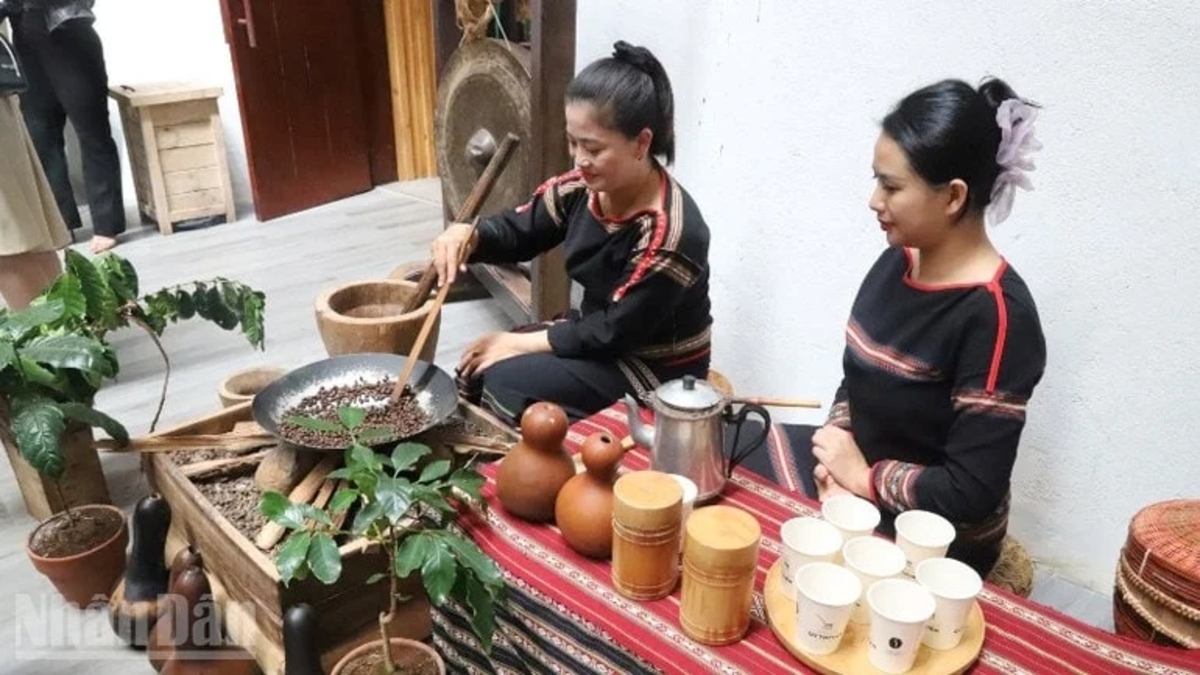
The World Coffee Museum in Buon Ma Thuot, Dak Lak province, Vietnam, hosted the activities of the 2025 International Scientific Conference and Forum from December 5 to 6.

The conference was held under the theme: “Global Coffee Industry Value Chain – Global, Local, and Sustainable Development,” jointly organized by the Dak Lak Department of Culture, Sports and Tourism, Ho Chi Minh City University of Culture, UNESCO, and Yunnan University (China), and sponsored by the Trung Nguyen Group. The event attracted dozens of local and international experts, scientists, and managers.

In his opening speech, Associate Professor Dr. Lam Nhan, President of Ho Chi Minh City University of Culture, emphasized that coffee represents a strategic industrial crop and a source of pride for the people of Dak Lak and the Central Highlands. He noted its sensitivity to climate change and the necessity of transitioning from expanding cultivated areas to raising quality, increasing value, developing processing technologies, and managing the value chain.

The workshop is not limited to the scientific dimension; it represents a step toward formulating a new vision for developing Vietnamese coffee within the global value chain, through discussions on coffee heritage—from agricultural knowledge and processing to the culture of enjoyment—in addition to topics of technology, branding, environmental responsibility, and sustainable development.

The workshop also contributes to the preparation of the file on the “Knowledge of Coffee Cultivation, Processing, and Enjoyment in the Central Highlands,” to be submitted to UNESCO for inclusion in the List of Good Safeguarding Practices of Intangible Cultural Heritage.

  • Dak Lak… The Center of the Vietnamese Coffee Industry

Tran Hong Tien, Director of the Dak Lak Department of Culture, Sports and Tourism, stated that Buon Ma Thuot is the core of the coffee industry in Vietnam, noting that Dak Lak Robusta coffee is not just an agricultural crop, but a deeply rooted cultural symbol among the ethnic communities in the Central Highlands, preserved across generations.

The province aims to enhance the value of coffee heritage by integrating sustainable agriculture, the green economy, agri-tourism and cultural tourism, and creative industries, in line with UNESCO’s philosophy of community preservation and heritage-based development.

  • Practical Steps Towards UNESCO Listing

Tran Hong Tien mentioned that the Ministry of Culture, Sports and Tourism submitted a request to the Prime Minister for permission to prepare a scientific file on the intangible cultural heritage related to the “Knowledge of Dak Lak Coffee Cultivation and Processing.” The workshop is the first step in preparing this file, supported by 67 research presentations covering economics, society, culture, anthropology, heritage, coffee technologies, value chains, and sustainable development.

  • Indigenous Knowledge… Memory, Identity, and Culture

Delegates discussed axes including: cultural exchange through coffee, localization practices during integration periods, the role of coffee heritage in socio-economic and tourism development, and solutions for preserving and enhancing local knowledge in cultivation, processing, and drinking culture.

Experts believe that the knowledge of coffee cultivation and processing in Dak Lak goes beyond inherited traditional skills; it represents a shared system of values and identity that strengthens social bonds, supports sustainability, and provides livelihoods.

  • Towards a Community-Based Heritage Model

Associate Professor Dr. Le Thi Ngoc Diep from the University of Social Sciences and Humanities assessed that the coffee heritage in Buon Ma Thuot is developing in the unique context of Dak Lak’s central position in the Vietnamese coffee industry. She considered integrating coffee with the concepts of “heritage” and “local identity” an effective strategy to enhance value in the global market. She emphasized the necessity of a community-based heritage model that ensures local residents’ participation in managing and investing in heritage while maintaining a balance between tourism and authenticity.

  • Notable Success and Broad Cultural Participation

The workshop concluded with participants commending the outcomes. Tran Hong Tien affirmed that the event constituted a first step in preparing the file for UNESCO heritage listing and contributed to presenting new visions for globally promoting the status of Dak Lak coffee as a symbol of living heritage and a sustainable green economy.

The event featured Zén coffee tasting sessions, visits to coffee farms, and an introduction to the three coffee civilizations: Ottoman, Roman, and Zén, alongside a tour of the World Coffee Museum.

  • Dak Lak on the Global Heritage and Creativity Map

This forum represents a bridge between heritage and contemporary creativity, enhancing the position of Dak Lak – “Vietnam’s Coffee Capital” – on the map of world cultural heritage and creative industries.

The Unwritten Rules of Vienna’s Coffee Culture

In the city that turned coffee into an art, patience is the first lesson every traveler must learn.

Dubai – Qahwa World

At nine in the morning, sunlight filters through the tall arched windows of Café Central, one of Vienna’s most famous coffeehouses. The marble columns gleam softly, the air is filled with the sound of porcelain cups, and newspapers rustle in quiet harmony. An American visitor approaches the counter, smartphone in hand, ready to order a “coffee” to go. A few steps away, an elderly Viennese gentleman settles into his red velvet chair, opens his morning paper, and begins his two-hour ritual with a Melange.
That simple contrast captures everything foreign visitors often misunderstand about Vienna’s UNESCO-protected café culture—a world where time slows, where coffee is not consumed but inhabited, and where rushing through a cup is not merely impolite, but a missed encounter with history itself.

From Yemen to the Danube: The Birth of a Coffee Civilization

The story of Vienna’s cafés begins far beyond Europe. In the 15th century, coffee was cultivated in Yemen’s highlands and shipped from the port of Mokha, the gateway from which the beverage began its global journey. Ottoman traders carried it north to Istanbul, where it became a social ritual and a symbol of refinement.

When the Ottoman siege of Vienna in 1683 ended, legend tells of coffee beans left behind in the camps. The Viennese took these beans and turned them into a new kind of institution—a place that combined Arab hospitality, Ottoman ritual, and European intellectualism.
From these early experiments grew a café tradition unlike any other in the world—one that would come to define Vienna’s identity as the capital of conversation.

By the 19th century, Vienna’s coffeehouses had evolved into living salons. Poets, philosophers, and revolutionaries gathered under their chandeliers. Sigmund Freud drafted theories at Café Landtmann. Stefan Zweig, chronicler of Europe’s cultural soul, described the cafés as “democratic clubs open to everyone for the price of a cup of coffee.” These were not cafés in the commercial sense—they were temples of thought.

Where Time Itself Is Served Slowly

To walk into a Viennese café expecting quick service is to misunderstand its essence. Each of the 17 UNESCO-listed coffeehouses operates on a rhythm established over centuries. Waiters in pressed black jackets and silver trays move deliberately, never hastily.
As Maria Schneider, who has served at Café Central for nearly three decades, explains: “Within two minutes, I can tell who’s a tourist. They look at their watches while waiting for coffee. Locals know coffee comes when it’s ready.”

That wait is not inefficiency—it’s grace. In Vienna, slowness is a form of respect. It allows space for silence, conversation, and observation. The waiter’s distance, often mistaken for coldness, is part of the city’s etiquette. “We provide perfect service, not friendliness,” says Thomas Vogel of Café Sperl. “I’m not your buddy—I’m a professional.”

In a Viennese café, the waiter is not a server but a conductor, maintaining harmony between solitude and society.

Seven Unwritten Rules Every Visitor Should Know

Vienna’s café culture follows codes that no guidebook fully explains. They are unwritten, passed down through habit rather than instruction.
Here are the seven principles that distinguish a local from a hurried traveler:

  1. Never rush your coffee. Time is the invisible ingredient in every cup.

  2. Don’t say “coffee.” Order it by name: Melange or Einspänner.

  3. Wait for table service. Approaching the counter breaks the ritual.

  4. Speak softly. Silence and conversation share equal value.

  5. Pair your drink with pastry. A Melange without Sachertorte is incomplete.

  6. Ask for the check—don’t wait for it. Say “Darf ich bitte zahlen?” and tip 10–15% in cash on the saucer.

  7. Linger. The moment you stop watching the clock, you become part of the city.

A Cultural Mirror in a Cup

Survey data from Vienna’s cafés reveals a consistent pattern: 74% of tourists try to order at the counter, 61% ask for “coffee”, and 68% leave within 30 minutes—while only 12% of locals do. The average Viennese spends 87 minutes per visit, often reading several newspapers.
At Café Sperl, established in 1880, more than a dozen newspapers still hang from wooden racks. To the locals, this is not nostalgia—it is continuity.

“Here,” says café owner Karl Weber, “we don’t drink coffee to stay awake—we drink it to be with people, or to be alone.”
That simple philosophy defines Vienna’s genius: the café is both a private refuge and a public salon. It bridges solitude and society, art and routine.

Why Vienna’s Coffeehouses Endure

Across the world, cafés have evolved—Italy’s espresso bars celebrate speed, France’s brasseries celebrate conversation, and the Arabian majlis celebrates hospitality. Vienna alone turned coffee into a meditation on time itself.

To drink coffee in Vienna is to join a centuries-long dialogue that began in Yemen’s mountains, sailed across Ottoman trade routes, and found permanence on the cobblestones of Europe.
In an age obsessed with productivity, Vienna’s cafés quietly remind us that reflection, too, is a form of work.

A Lesson in Invisibility

Three days after his first hurried visit, the same American tourist returns to Café Central. This time, he orders properly—“Einen Melange, bitte.” He addresses the waiter as “Herr Ober.” He opens the Wiener Zeitung, leaves his phone in his pocket, and doesn’t glance at the time. The waiter nods subtly, recognizing not a customer, but a participant in a tradition.
He has achieved the highest honor Vienna offers: to disappear among locals, cup in hand, perfectly at ease in the art of doing nothing.