Coffee Returns to Bullish Mode After 49% Rally

Source: Barchart / Andrew Hecht
Author: Qahwa World
Date: July 14, 2026

Coffee Returns to Bullish Mode After 49% Rally

  • ICE Arabica coffee futures surged 49.5% in one month, erasing four months of declines.
  • The rally followed a 37.8% drop from January to June, with prices bottoming at $2.3885 per pound.
  • Brazil’s 2026/27 harvest is behind schedule due to heavy rain disrupting operations.
  • ICE Arabica exchange inventories reached a two-year low of 366,756 bags.
  • Emerging El Niño weather patterns could damage Brazil’s flowering and crop.
  • Brazilian farmers are withholding beans, storing them for sale at higher prices.
  • Key resistance is at the October 2025 record high of $4.3795 per pound.

Coffee futures are back in bullish mode. ICE Arabica coffee surged 49.5% over the past month. The rally erased four months of declines. Prices bottomed at $2.3885 per pound on June 9. On July 6, they reached $3.5700 per pound.

The volatility has been extreme. Coffee futures fell 37.8% from January to June. Then they made up all those losses in under one month. The market remains highly volatile with significant upside potential.

Why Is Coffee Back in Bullish Mode?

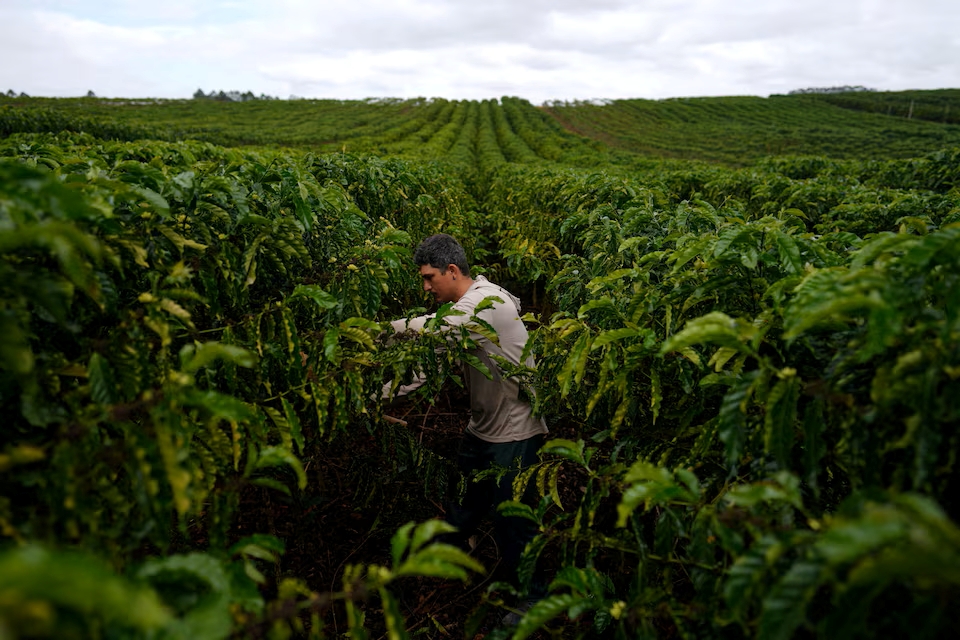
Several factors are driving the rally. First, Brazil’s 2026/27 harvest is behind schedule. Heavy rain has disrupted harvesting operations. This has increased concerns about coffee bean quality. The prospects for lower Brazilian output have been bullish for prices.

Second, global inventories are low. ICE Arabica exchange inventories reached a two-year low of 366,756 bags. This creates the potential for supply squeezes. Third, production costs are rising due to stubborn global inflation.

Top Coffee Producers (2025)
Country Share of Global Production
Brazil 37.08%
Vietnam 16.54%
Colombia 8.44%
Ethiopia ~4%
Indonesia ~4%

Brazil’s Dominance and Harvest Issues

Brazil is the world’s leading coffee producer. It accounts for 37.08% of global production. This is nearly as much as the next four countries combined. Vietnam, Colombia, Ethiopia, and Indonesia produce a combined 37.41%.

Brazil’s 2026/27 harvest is behind schedule. Heavy rain disrupted the harvest. This increased concerns that coffee bean quality had declined. The prospects for lower Brazilian output have been bullish for ICE Arabica coffee futures prices.

El Niño Risks and Farmer Stockpiling

The emerging El Niño weather pattern could trigger extreme temperature shifts. Irregular precipitation could damage coffee tree flowering. This could negatively impact the overall Brazilian crop. These concerns are pushing prices higher.

Brazilian farmers have begun withholding beans. They are storing them for sale when prices rise. This behavior further tightens supply. It also adds upward pressure on prices.

Technical Levels to Watch

The coffee futures market has clear technical levels. The record high stands at $4.3795 per pound from October 2025. This is the key resistance level. Technical support sits at the May 2025 low of $2.3885 per pound.

At $3.16 per pound on July 7, coffee futures were below the midpoint. However, they had traded above it on July 6. There is significant room for volatile price swings between these levels.

Key Technical Levels for Arabica Coffee
Level Price (per pound)
Record High (October 2025) $4.3795
Current Price (July 7, 2026) $3.16
Recent Low (June 9, 2026) $2.3885
Historical Support (May 2019) $0.876

Futures and Options Trading

There are no ETFs that track coffee prices. Participation is limited to ICE futures and futures options. Each futures contract contains 37,500 pounds of Arabica coffee. At $3.28 per pound, the contract value is $123,000.

Traders can control this value with an original margin deposit of $23,227. This represents 18.9% of the contract value. Recent volatility caused margin requirements to rise from 7.9% of contract value. The exchange can change margin requirements based on market volatility. Wider price swings lead to higher margin requirements.

ICE offers put and call options on Arabica coffee futures. Long options involve paying a premium and are not subject to margin requirements. Short options require margin. The leverage is significant for market participants.

Risk Management Is Essential

Coffee is back in bullish mode in July 2026. This will likely increase trading activity. It could also lead to wide price swings. Any risk position in ICE Arabica coffee requires a risk-reward plan. Traders should use stops and profit horizons. This protects capital and establishes reasonable odds of success.

Frequently Asked Questions

Why is coffee in bullish mode?Brazil harvest delays, low inventories, El Niño risks, and rising production costs are driving coffee futures higher.

How much did coffee futures rise in July 2026?ICE Arabica coffee futures surged 49.5% in one month, erasing four months of declines.

What is Brazil’s share of global coffee production?Brazil accounts for 37.08% of global coffee production, nearly as much as the next four countries combined.

What are the key technical levels for coffee?Resistance is at the October 2025 record high of $4.3795 per pound. Support is at the May 2025 low of $2.3885 per pound.

Are there ETFs that track coffee prices?No. The only soft commodity ETF is Teucrium Sugar ETF (CANE). Coffee participation is limited to ICE futures and options.

What is the margin requirement for coffee futures?The original margin deposit is $23,227 per contract, representing 18.9% of the contract value. Margin requirements can change based on volatility.

NCA Applauds Coffee Exemption from Section 301 Tariffs

Source: National Coffee Association (NCA)
Author: Qahwa World
Date: July 16, 2026

NCA Applauds Coffee Exemption from Section 301 Tariffs

  • USTR announced exemption of coffee from Section 301 tariffs on Brazil.
  • Exemption includes unflavored instant coffee for the first time.
  • Two-thirds of American adults drink coffee daily.
  • NCA President Bill Murray thanked the administration for the decision.
  • The exemption recognizes coffee’s unique benefit to the US economy.
  • The US cannot grow coffee to meet domestic demand.
  • The decision eases cost-of-living pressures for American consumers.

The National Coffee Association issued a statement today. It responded to the USTR’s announcement on coffee tariffs. The USTR confirmed that coffee will be exempted from Section 301 tariffs on Brazil. The exemption includes unflavored instant coffee.

NCA President and CEO William “Bill” Murray thanked the administration. He praised the decision to maintain previous coffee exemptions. He also welcomed the addition of unflavored instant coffee. The move recognizes coffee’s unique benefit to US consumers and companies.

NCA Statement: Coffee Exemption Protects Consumers

“Two-thirds of American adults drink coffee each day – more than any other beverage, including water – and today they can do so with confidence that new tariffs will not affect the largest source of their favorite beverage.

The United States can’t grow coffee to meet our needs, so the administration’s strategic exemptions make critical contributions to easing cost-of-living pressures and enabling coffee’s continued enormous contributions to U.S. jobs, manufacturing, and the economy.”

— William “Bill” Murray, President and CEO, National Coffee Association

Impact on US Consumers

Two-thirds of American adults drink coffee each day. This is more than any other beverage, including water. The exemption ensures that consumers can enjoy their coffee without tariff-related price increases. This is particularly important given current cost-of-living pressures.

The United States cannot grow coffee to meet domestic demand. Therefore, imports are essential. The strategic exemption helps maintain affordable coffee prices for millions of Americans.

Economic Significance of Coffee

Coffee makes enormous contributions to the US economy. It supports jobs across the supply chain. This includes roasting, manufacturing, and retail. The exemption enables these contributions to continue without disruption.

The NCA emphasized that coffee is uniquely important. It is not just a beverage but a critical part of American daily life. The administration’s decision reflects this understanding.

Key Facts About Coffee in the US
Fact Detail
Daily coffee drinkers Two-thirds of American adults
Rank among beverages Most consumed, ahead of water
US coffee production Cannot meet domestic demand
Tariff exemption Includes unflavored instant coffee
Economic impact Supports jobs, manufacturing, and economy

About the Section 301 Investigation

The USTR conducted a Section 301 investigation into various policies and practices of Brazil. As a result, tariffs were imposed on certain goods. However, coffee has been exempted from these tariffs. This decision recognizes the unique position of coffee in the US market.

The NCA has advocated for this exemption. The association represents the US coffee industry. Its members include roasters, retailers, and importers. The exemption benefits the entire industry and consumers.

Frequently Asked Questions

What did the USTR announce regarding coffee tariffs?The USTR announced that coffee, including unflavored instant coffee, will be exempted from Section 301 tariffs on Brazil.

Why is this exemption important?The exemption protects consumers from price increases and supports the US coffee industry, which cannot meet domestic demand through local production.

How many Americans drink coffee daily?Two-thirds of American adults drink coffee each day, making it the most consumed beverage in the country.

What did NCA President Bill Murray say?He thanked the administration for the decision and highlighted coffee’s unique benefit to US consumers, companies, and the economy.

Does the exemption include instant coffee?Yes, the exemption includes unflavored instant coffee for the first time, in addition to previously exempted coffee products.

Why can’t the US produce its own coffee?The US climate is not suitable for commercial coffee cultivation, making imports essential to meet domestic demand.

Global Leaders Unite to Advance Coffee Education

Source: Fondazione Ernesto Illy ETS / UNIDO / SCA / ICO
Author: Editorial Team
Date: July 15, 2026

Global Leaders Unite to Advance Coffee Education

  • Global coffee leaders convened at World of Coffee Brussels for a landmark panel discussion on education.
  • The event celebrated 15 years of the Master in Coffee Economics and Science – Ernesto Illy.
  • The Ernesto Illy Master Alumni Community was officially launched as a global professional network.
  • Panelists explored collaborative frameworks for workforce development in African producing countries.
  • UNIDO’s ACT Coffee Programme and Coffee Training Centres were highlighted as key capacity-building platforms.
  • Ethiopia’s Coffee Training Centre has already certified hundreds of professionals across Africa.
  • Speakers emphasized education as the most sustainable investment in coffee’s future.

Global leaders in coffee, education, and international development convened at World of Coffee Brussels 2026. The event featured a landmark panel discussion on education’s role in shaping the coffee sector’s future. Organized by Fondazione Ernesto Illy ETS, UNIDO, SCA, and ICO, the event marked 15 years of the Master in Coffee Economics and Science.

The panels celebrated the program’s legacy and launched its Alumni Community. Participants also explored collaborative frameworks for workforce development in African producing countries. The message was clear: education is the most sustainable investment in coffee’s future.

Panel I: 15 Years of the Ernesto Illy Master

The first session celebrated 15 editions of the Master in Coffee Economics and Science. It is the only international first-level Master’s programme taught in English. The panel featured founding faculty members, industry partners, and alumni from Costa Rica and Ethiopia.

Speakers included Anna Illy, Sunalini Menon, Eliana Cossio, Daniel Sanchez, and Addisu Dulacha Gobana. The session culminated in the official launch of the Ernesto Illy Master Alumni Community. This global professional network extends the programme’s impact beyond the classroom.

Panel I Speakers – 15 Years of the Ernesto Illy Master
Speaker Affiliation
Anna Illy Chair, Fondazione Ernesto Illy ETS
Sunalini Menon President, CoffeeLab Limited
Eliana Cossio Chief Research Officer, SCA
Daniel Sanchez Alumni 2018, Costa Rica
Addisu Dulacha Gobana Alumni 2019, Ethiopia

“The Master in Coffee Economics and Science – Ernesto Illy was born from a bold vision: to recognize coffee not just as a product, but as a field of knowledge bringing together science, economics, culture, and sustainability in a truly multidisciplinary and international dialogue. Fifteen editions later, it has grown into much more than an academic program: it is a global community of 300 passionate professionals who share a deeper understanding of coffee from plant to cup. With the launch of the Ernesto Illy Master Alumni Community, this shared knowledge becomes an even stronger force: connecting people, inspiring ideas and shaping the future of coffee.”

— Anna Illy, Chair, Fondazione Ernesto Illy ETS

Panel II: Innovation for Capacity Building

The second session examined how international organisations, governments, and the private sector can strengthen human capital. Focus areas included UNIDO/ACT Programme Coffee Training Centres. These are skills platforms across East African countries. The panel also discussed SCA Coffee Education Systems and new collaboration models for Africa.

Ethiopia’s Coffee Training Centre experience was presented by Dr. Adugna Debela, Director General of ECTA. Speakers included Vanusia Nogueira, Iannis Apostolopoulos, Providence Mavubi, Stijn De Lameilliere, and Wouter Cools.

Panel II Speakers – Innovation for Capacity Building
Speaker Affiliation
Vanusia Nogueira Executive Director, ICO
Iannis Apostolopoulos CEO, Specialty Coffee Association
Providence Mavubi Director, Agribusiness, UNIDO
Dr. Adugna Debela Director General, ECTA
Stijn De Lameilliere GPE/WB
Wouter Cools ILO

Shared Conviction: Skills Advancement is Key

Across both panels, a shared conviction emerged. Sustainable transformation requires investing in the enabling environment for skills advancement. This includes robust institutions and accessible training pathways. Internationally recognised certification frameworks are also essential. They allow local professionals to compete, innovate, and lead.

Coffee Training Centres play a crucial role. They equip local actors with technical skills. They link them to advanced training opportunities. This lays the foundation for inclusive value chain participation. It also increases local value addition.

Leadership Perspectives

“For decades, the ICO has recognized that education, skill development, and the transfer of innovation and technology are essential to building a more resilient, sustainable, and prosperous coffee sector. Partnerships are the catalyst for this change, connecting local talent with global expertise, strong institutions, and internationally recognized training and certification pathways. Together, we can transform capacity building into lasting economic and social progress for coffee-producing countries.”

— Vanusia Nogueira, Executive Director, ICO

“Education is not merely a tool for knowledge transfer – it is a foundational investment in the long-term resilience and inclusiveness of the coffee sector. Through its ACT Coffee Programme, UNIDO is committed to building the enabling environment in which skills advancement can take root and thrive. Coffee Training Centres across Africa are proof that when we invest in people, we invest in the entire value chain.”

— Providence Mavubi, Director, Agribusiness and Infrastructure Development, UNIDO

“The Ethiopia Coffee Training Centre demonstrates what becomes possible when local expertise meets international standards. Our producers and professionals are not only learning – they are leading.”

— Dr. Adugna Debela, Director General, ECTA

“Building a more equitable coffee sector begins with creating more access for the people within our industry. SCA is proud to be part of a growing ecosystem of organizations that recognize education as the foundation of a resilient, inclusive value chain. When local professionals have access to internationally recognized pathways, everyone in coffee benefits.”

— Yannis Apostolopoulos, CEO, SCA

Spotlight: Ethiopia’s Coffee Training Centre

The Ethiopian Coffee and Tea Authority hosts the Coffee Training Centre within its premises in Addis Ababa. It was established with AICS funding and UNIDO technical support. Partners include Illycaffè and the Ernesto Illy Foundation.

The centre is equipped with roasting, brewing, and sensory laboratories. It delivers internationally standardized training across the post-harvest coffee value chain. The centre has already certified hundreds of professionals from across Africa.

About the Organizations

Fondazione Ernesto Illy ETS was established to preserve and promote the legacy of Ernesto Illy. It focuses on scientific research, education, and sustainability projects for coffee value chains. The Foundation’s core value is Ethics.

UNIDO is the UN’s specialized agency for inclusive and sustainable industrial development. It supports sustainable supply chains and strengthens agribusinesses. Its ACT Coffee Programme enhances climate resilience and local value addition in Africa.

The International Coffee Organization is the only intergovernmental organization dedicated to coffee sector sustainability. It provides official statistics and facilitates technical cooperation projects.

The Specialty Coffee Association is the global stage for specialty coffee. It brings together diverse voices across the value chain to spark dialogue and fuel innovation.

Frequently Asked Questions

What event took place at World of Coffee Brussels?Global coffee leaders convened for a panel discussion on education, celebrating 15 years of the Master in Coffee Economics and Science and launching its Alumni Community.

What is the Ernesto Illy Master program?It is the only international first-level Master’s programme in Coffee Economics and Science taught in English. It brings together science, economics, culture, and sustainability.

What is the Ernesto Illy Master Alumni Community?It is a global professional network and digital platform launched to extend the programme’s impact beyond the classroom, connecting 300 professionals worldwide.

What are Coffee Training Centres?They are skills platforms across East African countries supported by UNIDO’s ACT Coffee Programme, providing internationally standardized training.

What is the Ethiopia Coffee Training Centre?It is a training centre in Addis Ababa equipped with roasting, brewing, and sensory laboratories, delivering standardized training across the coffee value chain.

How many professionals has the Ethiopia CTC trained?The centre has already certified hundreds of professionals from across Africa since its establishment.

CQI and BSCA Partner to Expand Coffee Education in Brazil

Source: Coffee Quality Institute / Brazilian Specialty Coffee Association
Author: Editorial Team
Date: July 14, 2026

CQI and BSCA Partner to Expand Coffee Education in Brazil

  • CQI and BSCA signed an exclusive agreement to distribute CQI’s educational offerings in Brazil.
  • The partnership aims to make coffee education more affordable for Brazilian producers.
  • BSCA will coordinate all CQI educational activities in Brazil.
  • Both organizations will work to secure public and private funds to lower student costs.
  • The agreement was signed at World of Coffee Europe in Brussels.
  • CQI has operated in Brazil since 2014, but this deal deepens the partnership.
  • The goal is to improve coffee quality and producer livelihoods through enhanced training.

The Coffee Quality Institute has reached an agreement with the Brazilian Specialty Coffee Association. The agreement designates BSCA as the exclusive distributor of CQI’s educational offerings in Brazil. This collaboration aims to make coffee education more accessible to Brazilian producers.

The agreement was signed in Brussels at World of Coffee Europe. It advances CQI’s mission of improving coffee quality. It also supports BSCA’s goal of enhancing the value of Brazilian specialty coffee.

Deepening a Longstanding Partnership

CQI and BSCA have partnered since 2014. They have delivered coffee education in Brazil for over a decade. However, today’s agreement deepens that commitment significantly. It recognizes BSCA’s track record of leadership on coffee quality in Brazil.

Michael Sheridan, CEO of CQI, acknowledged the cost barrier. “We recognize that the cost of CQI courses has limited access to coffee education in Brazil,” he said. “We will work with BSCA to access local funds and reduce costs for students.”

How the Partnership Works

Under this exclusive partnership, BSCA will coordinate all CQI educational activities in Brazil. This ensures that classes are taught at the same high level. All courses will be delivered by authorized CQI Educators.

The agreement also stipulates that BSCA will work to secure public and private funds. The goal is to effectively lower student prices. This will make education more accessible to a wider range of producers.

Key Partnership Details
Element Description
Agreement Type Exclusive distribution of CQI educational offerings in Brazil
Duration Ongoing partnership (since 2014, now deepened)
BSCA Role Coordinate all CQI educational activities in Brazil
Funding Goal Secure public and private funds to lower student prices
Quality Standard Classes taught by authorized CQI Educators at high level
Signing Location World of Coffee Europe, Brussels

Leadership Perspectives

“CQI and BSCA have partnered since 2014 to deliver coffee education in Brazil, but today’s agreement deepens our longstanding commitment to BSCA in recognition of its track record of leadership on coffee quality in Brazil.”

— Michael Sheridan, CEO of CQI

“This partnership represents a significant step towards further strengthening the Brazilian coffee sector. The commitment of these organizations to promoting participation and increasing access will lead to increased coffee quality and ultimately improve the livelihoods of its producers through this enhanced education and training.”

— Vinicius Estrela, Executive Director of BSCA

What CQI Will Provide

CQI will support BSCA in several ways. First, it will provide access to its comprehensive catalog of educational offerings. Second, it will offer ongoing training for educators. Third, it will partner in securing funding for the programs.

Both organizations are committed to promoting high standards of coffee quality and education in Brazil. The partnership aims to create lasting impact for the Brazilian coffee sector.

About the Organizations

The Coffee Quality Institute is a non-profit that works globally. It improves the quality of coffee and the lives of the people who produce it. For thirty years, CQI has trained people in more than thirty coffee-growing countries.

The Brazilian Specialty Coffee Association unites producers, exporters, roasters, and coffee shops. It operates through three pillars: quality, traceability, and sustainability. The association fosters practices that transform each cup into a unique experience.

Frequently Asked Questions

What is the new agreement between CQI and BSCA?CQI designated BSCA as the exclusive distributor of CQI’s educational offerings in Brazil, making coffee education more accessible and affordable.

Why is this partnership important?It reduces the cost barrier for coffee education in Brazil, enabling more producers to access high-quality training and improve their coffee quality.

How long have CQI and BSCA worked together?They have partnered since 2014, but this new agreement deepens and formalizes their relationship significantly.

Who will teach the CQI courses in Brazil?All courses will be taught by authorized CQI Educators to maintain the same high standard of instruction.

How will the partnership reduce costs for students?BSCA will work to secure public and private funds to effectively lower student prices for CQI courses.

What is the goal of this collaboration?The goal is to improve coffee quality and producer livelihoods in Brazil through enhanced education and training.

ICO Coffee Market Report June 2026: Prices Rebound on El Niño Fears

Author: Qahwa World – London
Source: International Coffee Organization (ICO) – Coffee Market Report, June 2026
Date: July 2026

ICO Coffee Market Report June 2026: Prices Rebound on El Niño Fears

Executive Summary

  • The ICO Composite Indicator Price (I‑CIP) averaged 248.90 US cents/lb in June 2026, down 2.8% from May. However, prices rebounded sharply by 17.4% from a two-year low on June 9 to a two-month high at month-end.
  • Super El Niño fears (67% confidence) and excessive rainfall in Brazil (1,956% above average in Minas Gerais) slowed the harvest and raised quality concerns, reversing the downward trend.
  • Robusta prices rose 1.7% to 169.39 US cents/lb, while Brazilian Naturals fell 7.4% to 272.01 US cents/lb.
  • US certified Arabica stocks fell 13.3% to 0.41 million bags, the lowest since February 2024. London Robusta stocks rose 4.8% to 0.68 million bags.
  • Global green bean exports fell 4.1% to 10.8 million bags in May 2026, driven by a 17.2% drop in Brazilian Naturals. Robusta exports rose 4.8%.
  • The Strait of Hormuz closure added 10-14 days to shipping routes, raising fuel costs 68% and fertilizer prices 25%.
  • The USDA forecast a record Brazilian 2026/27 crop at 71.9 million bags (+14%), while Rabobank raised its global Arabica surplus estimate by 35.7%.

The ICO Composite Indicator Price averaged 248.90 US cents per pound in June 2026. This was a 2.8% decrease from May 2026.

Prices continued their downward trend in early June. They fell to 231.96 US cents/lb on June 9, the lowest level in nearly two years. However, prices then rebounded sharply by 17.4%.

They reached a two-month high of 272.39 US cents/lb at the end of the month. Weather emerged as the principal driver of coffee price dynamics in June.

The Colombian Milds and Robustas recorded modest gains. The Colombian Milds rose 0.4% to 324.60 US cents/lb. Robustas increased 1.7% to 169.39 US cents/lb.

In contrast, the Other Milds declined 2.4% to 307.83 US cents/lb. The Brazilian Naturals fell 7.4% to 272.01 US cents/lb. London Robusta stocks rose 4.8% to 0.68 million bags.

US certified Arabica stocks fell 13.3% to 0.41 million bags. This was the lowest level since February 2024. The market became increasingly nervous as inventories tightened.

Super El Niño Fears Drive Rebound

Market sentiment shifted abruptly in June. Growing confidence that El Niño would develop into a Super El Niño halted the downward price movement on June 9.

The Japan Meteorological Agency and NOAA released reports on June 10 and 11. They indicated 67% confidence in a Super El Niño event, the highest confidence level on record.

These forecasts raised concerns about the potential impact on the 2026/27 coffee harvest. The effects vary across regions and seasons.

Reduced rainfall is expected in the Caribbean, Central America, and Mexico. Raised temperatures and reduced rainfall are forecast for northern Brazil and parts of South America.

Increased rainfall is expected in southern Brazil and Bolivia. More erratic rainfall and flooding are forecast for East Africa. Drought conditions are expected in Southeast Asia.

On June 17 and 24, Safras & Mercado reported that Brazil’s 2026/27 coffee harvest was progressing slowly. The harvest reached 39% and 44% completion, respectively.

The delay was concentrated in Arabica areas. Excess rainfall disrupted harvesting and drying operations, particularly in Minas Gerais. The 44% completion figure on June 24 was below the 51% recorded a year earlier and the five-year average of 47%.

On June 29, Somar Meteorologia measured 31.3 mm of rainfall in Minas Gerais. This was equivalent to 1,956% of the historical average for the period. The unusually high precipitation occurred during the normally dry season. It delayed harvesting and drying operations and raised concerns over bean quality.

Strait of Hormuz Disruptions Add Supply Pressure

The Strait of Hormuz was effectively closed from February 28. This forced Asia-Europe shipping routes to divert via the Cape of Good Hope. Transit times increased by 10 to 14 days.

Bunker fuel prices were up 68% from mid-to-late February. Container spot rates roughly doubled. Fertilizer prices increased 25%.

A gradual reopening occurred on June 22-23 following the U.S.-Iran agreement on June 17. This pushed Robusta prices to a one-week low. However, attacks on the Ever Lovely on June 25 and the Kiku on June 27 renewed geopolitical tensions within days. The associated premiums returned quickly.

Combined ICE-certified stocks fell to 1.09 million bags on June 30. This was the lowest level since February 2024. The decline signaled tighter availability of deliverable stocks. The market was left with limited buffers against unforeseen supply disruptions.

Supply Fundamentals and Bearish Factors

On June 1, the USDA forecast Brazil’s 2026/27 crop at a record level. The forecast was 14% above the previous season. Rabobank raised its 2026/27 global Arabica surplus estimate by 35.7%.

These forecasts reinforced previous positive reports. CONAB’s official second survey projected Brazil’s total crop at 66.7 million bags. Safras & Mercado projected a total crop increase of 13.4%.

In late May, the USDA revised its estimate of Vietnam’s 2025/26 output upwards to 31.7 million bags. It forecast production at 32.5 million bags for 2026/27. The dollar index stood at 101.6 during the week of June 22. This was close to a 15-month high, creating a headwind for coffee prices.

The arbitrage between the London and New York futures markets contracted by 13.3% to 100.86 US cents/lb in June 2026. Intra-day volatility of the I-CIP decreased by 0.2 percentage points to 8.6%.

Exports: Arabica Declines, Robusta Gains

Global green bean exports totalled 10.8 million bags in May 2026. This was a 4.1% decline compared to 11.26 million bags in May 2025. All coffee groups recorded declines except Robustas.

Robusta exports were up 4.8% to 4.34 million bags. This was driven mainly by Brazil, where exports surged by 195.6% to 0.61 million bags. The sharp rise reflects differences in harvest timing between the current and previous Robusta harvests.

Colombian Milds exports fell by 1.7% to 0.98 million bags. This marked the seventh consecutive month of negative growth. Other Milds shipments fell by 2.8% to 2.75 million bags. This was the first negative growth observed in coffee year 2025/26.

Brazilian Naturals exports fell by 17.2% to 2.73 million bags. This marked the 15th consecutive month of negative growth. The declines were primarily driven by Brazil and Ethiopia.

Total Arabica exports decreased to 6.46 million bags in May 2026. This was a 9.3% drop from 7.12 million bags in May 2025. As a result, Arabica’s share of total green bean exports fell to 60.2% from 64.0% a year earlier.

Table 1: Green Bean Exports by Coffee Group (million 60‑kg bags)

Coffee Group May 2025 May 2026 Change
Robustas 4.14 4.34 +4.8%
Colombian Milds 0.99 0.98 -1.7%
Other Milds 2.82 2.75 -2.8%
Brazilian Naturals 3.30 2.73 -17.2%

Exports by Region: Mixed Performance

Global exports of all forms of coffee decreased by 3.2% to 12.38 million bags in May 2026. The dynamics across the four regions were mixed.

Exports from Asia & Oceania were up 0.4% to 4.32 million bags. India led the growth with exports increasing 33.7% to 0.74 million bags. However, this was largely offset by decreases in Indonesia and Vietnam.

Africa’s exports decreased by 24.1% to 1.63 million bags. The contraction was driven largely by Ethiopia and Uganda. Their combined exports fell to an estimated 1.31 million bags from 1.77 million bags in May 2025.

South America’s exports increased by 4.3% to 4.29 million bags. This was the first monthly increase in 18 months. The upturn was driven mainly by Brazil, whose exports were up 4.3%.

The Caribbean, Mexico & Central America decreased by 3.8% to 2.14 million bags. This was the first negative growth in coffee year 2025/26, driven mainly by Nicaragua.

Soluble coffee exports increased by 3.6% to 1.51 million bags. Vietnam, Brazil, and India were the largest exporters. Roasted bean exports were up 10.8% to 0.07 million bags.

Frequently Asked Questions

What was the ICO composite price in June 2026?

The I-CIP averaged 248.90 US cents/lb in June 2026, a 2.8% decrease from May. However, prices rebounded sharply from a two-year low on June 9 to a two-month high by month-end.

What caused the price rebound in June?

Super El Niño fears (67% confidence) and excessive rainfall in Brazil (1,956% above average in Minas Gerais) slowed the harvest and raised quality concerns, reversing the downward trend.

How did coffee stocks perform in June?

US certified Arabica stocks fell 13.3% to 0.41 million bags, the lowest since February 2024. London Robusta stocks rose 4.8% to 0.68 million bags. Combined ICE-certified stocks fell to 1.09 million bags.

How did the Strait of Hormuz closure affect coffee prices?

The closure added 10-14 days to shipping routes, raising bunker fuel costs 68%, container spot rates by about 100%, and fertilizer prices 25%.

What were the export trends in May 2026?

Global green bean exports fell 4.1% to 10.8 million bags. Robusta exports rose 4.8%, while Brazilian Naturals fell 17.2%. Total Arabica exports were down 9.3%.

What was Brazil’s harvest outlook in June?

The USDA forecast a record 2026/27 Brazilian crop at 71.9 million bags (+14%). However, excessive rainfall in June slowed harvesting, with only 44% completed by June 24, below the five-year average of 47%.


Author: Qahwa World – London | Source: International Coffee Organization – Coffee Market Report, June 2026 | Date: July 2026

Margin Hikes Drive Coffee Prices Lower

Source: Commodity Bulletin / ICE / USDA / ICO
Author: Editorial Team
Date: July 10, 2026

Margin Hikes Drive Coffee Prices Lower

  • September arabica fell 13.65 cents (-3.92%), while robusta dropped 191 points (-4.72%) on Friday.
  • ICE raised margin requirements twice in one week, reducing liquidity and forcing fund liquidation.
  • Funds increased net-long robusta positions to 44,195 contracts, the highest in over two years.
  • Brazil’s harvest is only 52% complete, behind last year’s 60% and the 55% five-year average.
  • El Niño concerns grow as forecasts warn of delayed rainfall during Brazil’s flowering period.
  • USDA projects a record 71.9 million-bag Brazilian crop for 2026/27, up 14% from last year.
  • Global 2025/26 production is forecast at a record 178.848 million bags.

Coffee prices ended the week sharply lower. September arabica fell 13.65 cents to close at 3.92% lower. September robusta dropped 191 points, a decline of 4.72%. The selloff extended the extreme volatility seen over recent sessions.

The decline followed two margin requirement increases by the Intercontinental Exchange. Higher margins reduced market liquidity. This forced many commodity funds to liquidate positions. The result amplified one-sided price movements.

Speculative Positioning Adds Pressure

Fund positioning has added to the downward pressure. According to Friday’s Commitment of Traders report, funds increased their net-long robusta position. They added 5,607 contracts in the week ending July 7. Their total reached 44,195 contracts. This is the highest level in more than two years.

Such concentrated long positions can accelerate price declines. This happens when investors begin unwinding their holdings. The current market structure remains vulnerable to further selloffs.

Brazil Harvest Behind Schedule

Earlier this week, coffee prices had surged on supply concerns. Arabica reached a 5½-month high on Monday. Robusta climbed to a five-month high on Tuesday. These gains were supported by delays in Brazil’s harvest.

According to Safras & Mercado, Brazil’s 2026/27 coffee harvest was 52% complete as of July 1. This compares with 60% at the same time last year. The five-year average stands at 55%. The slower pace reflects persistent rainfall disruptions.

Brazil Coffee Harvest Progress (as of July 1, 2026)
Period Harvest Progress
Current year (2026) 52%
Previous year (2025) 60%
Five-year average 55%

Weather and El Niño Concerns

Weather concerns continue to underpin the market. Forecasts from Rural Clima indicate rainfall across much of Brazil during mid-July. This could negatively affect coffee crops. Heavy rains over the past month have already disrupted harvesting activities. They may have also reduced crop quality.

Growing concerns over El Niño continue to influence market sentiment. Commercial warned that the phenomenon could delay rainfall in Brazil. The critical flowering period in September and October is at risk. This could potentially affect the 2026/27 crop.

The U.S. Climate Prediction Center also issued a warning this week. The developing El Niño event could become one of the strongest in more than 75 years. This increases the risk of floods, droughts, and temperature extremes across Asia and South America.

Meanwhile, Somar Meteorologia reported that no rainfall was recorded in Minas Gerais. This is Brazil’s largest coffee-growing state. The dry spell occurred during the week ending July 5.

Inventory and Supply Data

ICE-certified coffee inventories remain an important market support. Arabica stocks fell to 344,269 bags on Friday. This is their lowest level in more than 2¼ years. Robusta inventories, however, have recovered from a two-year low. They rose from 3,631 lots on May 15 to 4,200 lots. This is the highest level in about 3½ months.

Bearish Supply Outlook

Despite recent weather-related support, the broader supply outlook remains bearish. On June 3, the USDA Foreign Agricultural Service projected a record Brazilian coffee crop. The forecast stands at 71.9 million bags for 2026/27. This represents a 14% increase from the previous year.

Rabobank also raised its forecast for the global arabica surplus. The new estimate is 9.5 million bags. This is up from 7.0 million bags previously. In addition, Cecafé reported that Brazil’s green coffee exports rose 4.2% year-on-year in May. The total reached 2.73 million bags.

Vietnam is also adding to supply expectations. The country’s National Statistics Office reported strong export figures. Coffee exports during January–June 2026 increased 7.3% year-on-year to 1.05 million metric tons. Vietnam’s 2025 coffee exports rose 17.5% to 1.58 million metric tons. Production for 2025/26 is expected to increase 6% to a four-year high of 1.76 million metric tons (29.4 million bags).

Global Coffee Supply Forecasts
Indicator Value
Global 2025/26 production (USDA) 178.848 million bags (record)
Brazil 2026/27 crop (USDA FAS) 71.9 million bags (record)
Global arabica surplus (Rabobank) 9.5 million bags
Vietnam 2025 coffee exports 1.58 million metric tons (+17.5%)
Vietnam 2025/26 production 1.76 million metric tons (4-year high)
Global ending stocks (USDA) 20.148 million bags (-5.4%)

The International Coffee Organization previously reported global coffee exports for the current marketing year. Exports declined 0.3% year-on-year to 138.658 million bags.

According to the USDA’s biannual report, global coffee production for 2025/26 is forecast to reach a record 178.848 million bags. This represents a 2% increase from the previous year. Arabica production is expected to decline 4.7% to 95.515 million bags. Robusta production is projected to rise 10.9% to 83.333 million bags.

The USDA forecasts Brazil’s 2025/26 production at 63 million bags. This is down 3.1% from the previous year. Vietnam’s output is expected to increase 6.2% to 30.8 million bags. Global ending stocks are forecast to fall 5.4% to 20.148 million bags from 21.307 million bags a year earlier.

Frequently Asked Questions

Why did coffee prices fall sharply on Friday?September arabica fell 3.92% and robusta dropped 4.72% after ICE raised margin requirements twice in one week, reducing liquidity and forcing fund liquidation.

What is the current fund positioning in coffee?Funds increased their net-long robusta position to 44,195 contracts, the highest level in more than two years, making the market vulnerable to rapid selloffs.

How is Brazil’s 2026/27 coffee harvest progressing?The harvest is 52% complete as of July 1, behind last year’s 60% and the five-year average of 55%, due to persistent rainfall delays.

What is the El Niño risk for coffee production?El Niño could delay rainfall in Brazil during the September-October flowering period, potentially damaging the 2026/27 crop, with forecasts suggesting one of the strongest events in 75 years.

What does the supply outlook show?USDA projects a record 71.9 million-bag Brazilian crop for 2026/27, while Vietnam’s exports rose 7.3% in early 2026, signaling ample global supply.

What is the global production forecast?USDA forecasts record global production of 178.848 million bags for 2025/26, with robusta up 10.9% and arabica down 4.7%.

$1.5M Initiative Modernizes Coffee Breeding

Source: World Coffee Research / FFAR
Author: Qahwa World
Date: June 5, 2026

$1.5M Initiative Modernizes Coffee Breeding

  • World Coffee Research launched a $1.5 million project to modernize coffee breeding tools.
  • New molecular breeding tools can shorten variety development timelines by half or more.
  • The research targets major threats: coffee leaf rust, coffee berry disease, fruit rot, and berry borer.
  • A public-private partnership includes FFAR funding and industry co-investment from Taylors of Harrogate and Coffee Circle.
  • Global partners include Cenicafé, KALRO, and USDA-ARS.
  • Three workstreams cover arabica markers, robusta genotyping, and breeder training.
  • Record-high 2025 prices reflect urgent need for more resilient coffee varieties.

World Coffee Research announced a $1.5 million project to modernize coffee breeding. The initiative develops high-precision tools to make breeding faster, better, and cheaper. These tools will accelerate the creation of high-performing varieties for the next era of coffee.

Using molecular breeding approaches, breeding timelines can be shortened by half or more. The project is supported by a grant from the Foundation for Food & Agriculture Research. Industry partners Taylors of Harrogate and Coffee Circle are matching the investment.

Closing Coffee’s Innovation Gap

Other major crops have benefited from modern genomic revolutions. Coffee breeding has remained largely stuck in traditional methods. Record-high prices in 2025 reflect a profound underinvestment in coffee R&D. The industry faces a USD$126–405 million per year gap.

This underinvestment has left farmers vulnerable to evolving environmental stressors. More productive and resilient varieties are urgently needed. This project aims to address that gap directly.

Three Workstreams Drive the Research

The project includes three technical workstreams. Each targets a critical area of coffee breeding innovation.

Project Technical Workstreams
Workstream Focus Expected Impact
Arabica Marker Mapping Coffee leaf rust, berry disease, fruit rot, berry borer Faster disease resistance selection
Robusta Genotyping Tool 3,500 genetic markers for Coffea canephora Modern genetic roadmap for robusta
Breeder Training Genomic approaches for national breeders Global technology transfer

The first workstream focuses on arabica genetic markers. It targets devastating pests and diseases. These include coffee leaf rust, coffee berry disease, coffee fruit rot, and coffee berry borer. Together, these cause hundreds of millions in annual production losses.

The second workstream creates a foundational genotyping tool for robusta. Robusta now accounts for over 40% of global production. The tool utilizes 3,500 genetic markers. A similar tool for arabica was developed in 2025. It is already being used in the Innovea Global Coffee Breeding Network.

The third workstream trains national breeders from multiple origin countries. This ensures advanced tools integrate into local programs. The goal is delivering improved trees to farmers’ fields faster.

Global Scientific Partnership

The initiative leverages a global network of technical experts. In East Africa, WCR works with KALRO to advance tools for coffee berry disease resistance. The USDA-ARS at TARS in Puerto Rico conducts screening for coffee leaf rust and fungal pathogens. In Colombia, Cenicafé collaborates on berry borer marker development.

“Cenicafe is pleased to be part of this collaborative research program and to host plant breeders from around the world. The future of global coffee production and climate adaptation will depend on scientific excellence and the development of productive, resilient, high-quality varieties. Collaborative science ensures the best cup remains on the tables of millions.”

— Santiago Jaramillo, Scientific Director, Cenicafé

Industry Support for the Initiative

Keith Writer, Supply Director at Taylors of Harrogate, emphasized the importance of this work. “Taylors depends on the success of many origins around the world to source the high-quality coffee our customers love. Their success depends on coffee farmers having access to new, climate-resilient varieties as quickly as possible. Bringing coffee breeding into the future is essential for farmers and essential for our entire industry.”

Leadership Perspectives

Dr. Jennifer “Vern” Long, CEO of World Coffee Research, highlighted the project’s foundational nature. “Better coffee starts with better trees. This project is about building foundational technology that will benefit our entire sector. We are providing the industry with the insurance it needs to thrive.”

Dr. Kathy Munkvold, Scientific Program Director at FFAR, noted the broader impact. “This research will equip breeders with the tools they need to accelerate the development of improved coffee varieties, helping farmers reduce losses and strengthen productivity.”

Frequently Asked Questions

What is the goal of this $1.5 million project?The project aims to modernize coffee breeding through molecular tools, making breeding faster, better, and cheaper for the entire sector.

How much time can the new tools save?Molecular breeding approaches can shorten variety development timelines from 25-30 years by half or more.

What diseases are being targeted?The research targets coffee leaf rust, coffee berry disease, coffee fruit rot, and coffee berry borer.

Who are the project partners?Partners include FFAR, Taylors of Harrogate, Coffee Circle, Cenicafé, KALRO, and USDA-ARS.

What is the Innovea Global Coffee Breeding Network?It is a WCR network that uses shared science to advance coffee breeding goals globally. The arabica genotyping tool is already in use there.

Is this project using genetic modification?No, molecular breeding uses the plant’s natural genetic diversity without involving genetic modification.

Brazil Coffee Harvest 2026 Faces Delays

Source: Sucafina Brazil / Industry Report
Author: Qahwa World
Date: July 8, 2026

Brazil Coffee Harvest 2026 Faces Delays

  • Brazil’s 2026/27 crop is forecast at 75.4 million bags, driven by a 27% increase in Arabica production.
  • Harvest progress is significantly slower than usual, reaching only 45.2% by June 26.
  • Early quality indicators are strong, with 25% of Arabica grading screen 17+ and 70% of Robusta grading screen 13+.
  • Sucafina plans to expand IMPACT verification by 16% in 2026 across key producing regions.
  • Regenerative agriculture initiatives include 45 demonstration plots and training for 50 producers.
  • Two flagship programs, SEMEIA and RE.CO.LHA, are moving from planning to implementation this year.
  • Despite delays, tree health and vegetative growth suggest a positive outlook for the 2027/28 crop.

Brazil’s 2026/27 coffee harvest is expected to arrive late. Persistent rainfall and delayed Robusta maturation have slowed operations. However, early quality indicators remain promising.

The total crop is forecast to reach 75.4 million bags. This represents a significant recovery led by Arabica production. At the same time, sustainability initiatives continue to expand across key regions.

Arabica Harvest Shows Strong Recovery

The Arabica harvest is progressing more slowly than usual. Recurring rainfall throughout May and June caused significant delays. As of June 26, the overall Brazilian harvest reached 45.2%. This is below last year’s pace of 52.1%. It is also below the historical average of 51%.

Despite the slower pace, Arabica production is forecast to increase by 27%. This growth drives the total crop estimate to 75.4 million bags. Early quality indicators align with expectations for a high-volume crop. Screen 17+ beans account for around 25% of harvested volumes.

In addition, the recurring rains have supported tree health. Vegetative growth remains strong. This suggests a positive outlook for the 2027/28 crop as well.

Robusta Harvest Behind Schedule

The Robusta harvest is also behind schedule. The primary reason is a later-than-usual maturation cycle. Weather disruptions are not the main factor. Harvest activity began within the usual window in April and May. However, progress has been significantly slower than normal.

Completion is expected by the end of July. Robusta production is forecast to decline slightly by approximately 4% year-on-year. Nevertheless, early quality has been encouraging. Around 70% of beans grade screen 13 and above. Overall quality remains strong. This supports expectations for a solid crop despite the delayed harvest.

Brazil 2026/27 Coffee Harvest Key Indicators
Indicator Value
Total forecasted crop 75.4 million bags
Arabica production growth +27% year-on-year
Harvest progress (as of June 26) 45.2%
Arabica screen 17+ quality 25% of harvested volumes
Robusta screen 13+ quality 70% of harvested volumes
Robusta production change -4% year-on-year

Sustainability Efforts Gain Momentum

Sucafina’s sustainability efforts continue to expand. The company is advancing the re-verification of IMPACT producer groups. These groups span the Cerrado, Mogiana, Sul de Minas, and Conilon regions. This process reinforces commitment to responsible sourcing and high-quality standards.

In 2026, the team in Brazil aims to expand IMPACT verification by approximately 16%. The strongest growth is expected across Arabica-producing regions. Matas de Minas has been identified as a strategic priority. Updated participation figures are expected by September.

Regenerative Agriculture Through IMPACT Beyond

Through IMPACT Beyond, Sucafina deepens its focus on regenerative agriculture. Producers receive assistance on multiple fronts. This includes low-carbon fertilizers, composting, and irrigation management. Soil health assessment uses Embrapa’s BioAS methodology.

BioAS adds a biological layer to routine soil testing. It measures the activity of two enzymes: arylsulfatase and beta-glucosidase. This provides real-time data on soil health, sustainability, and productive potential. Early detection of degradation helps build long-term soil resilience.

So far, the program has set over 45 demonstration plots. Around 50 producers have received training. This gives farmers practical, field-based learning opportunities.

SEMEIA and RE.CO.LHA Lead the Way

2026 marks a pivotal year for IMPACT Beyond. Two flagship initiatives are moving from planning to implementation: SEMEIA and RE.CO.LHA.

RE.CO.LHA operates across Brazil’s Arabica regions. These include Cerrado, Mogiana, and South Minas Gerais. The program runs on a four-year cycle. It targets 300 farms with technical assistance, farmer training, and on-farm interventions. The goal is to improve soil health, cut production costs, and lower carbon emissions.

SEMEIA is now in its first year. It is transforming Brazil’s Robusta sector. In just 12 months, the program has conducted more than 100 soil analyses. These cover physical, chemical, and biological indicators. It has distributed more than 120 tonnes of low-carbon fertilizers. Farm carbon footprints have been measured. Through a partnership with EMATER-MG, production cost analyses give producers clearer visibility into their costs.

“It is incredibly rewarding to see the positive feedback from farmers. What stands out most is our collaborative approach, aligning farmers’ needs with what investors expect. It is a challenge, but an inspiring one, because every step forward builds a more sustainable and profitable future for the communities we support.”

— Mariana Martins, Sustainability Manager at Sucafina Brasil

Frequently Asked Questions

What is the forecast for Brazil’s 2026/27 coffee crop?The total crop is forecast at 75.4 million bags, driven by a 27% increase in Arabica production.

Why is the harvest delayed?Persistent rainfall in May and June delayed Arabica harvest. Robusta harvest is also behind schedule due to a later-than-usual maturation cycle.

How is coffee quality this season?Early quality indicators are strong. Around 25% of Arabica beans grade screen 17+, and 70% of Robusta beans grade screen 13+.

What is the IMPACT program?IMPACT is Sucafina’s Responsible Sourcing Program. It focuses on responsible sourcing, partnerships at origin, and high-quality standards.

What are SEMEIA and RE.CO.LHA?They are two flagship sustainability initiatives. RE.CO.LHA targets Arabica regions with technical assistance. SEMEIA focuses on transforming Brazil’s Robusta sector.

How does BioAS methodology work?BioAS adds a biological layer to soil testing. It measures enzyme activity to assess soil health, sustainability, and productive potential in real time.

Ethiopia Coffee Revenue Tops 3 Billion

Source: Official government reports & Daily Coffee News analysis
Author: Qahwa World
Date: July 8, 2026

Ethiopia Coffee Revenue Tops 3 Billion

  • Ethiopia earned 3.1 billion dollars from coffee exports in a single year.
  • This represents a 719.6% increase compared to 20 years ago.
  • The country ranks third globally and first in Africa for coffee exports.
  • One year’s income exceeded the total of the previous 17 years combined.
  • Rising global demand for organic coffee opens new opportunities for Ethiopia.
  • A comparison with Brazil reveals Ethiopia’s competitive edge in sustainable farming.
  • The analysis recommends increased technical and financial support for farmers.

Ethiopia announced a historic achievement in its coffee sector. Export revenues surpassed the 3 billion dollar mark. This reflects a strategic transformation in farming and marketing policies.

Annual revenues reached 3.1 billion dollars. This surpasses the total earned over the previous 17 years. That total stood at only 3.3 billion dollars.

Historical Numbers Confirm Accelerated Growth

Official data compared current performance with past periods. The results showed enormous revenue growth. For example, 20 years ago, revenues were only 366 million dollars. Today, they stand at 3.1 billion dollars.

In addition, the net increase over 20 years exceeded 2.6 billion dollars. This translates to a growth rate of 719.6%. In contrast, income more than doubled within the last 5 years alone.

Ethiopian Coffee Export Revenue Comparison (in billions USD)
Period Revenue Net Increase Growth Rate
20 years ago 0.366 +2.634 719.6%
10 years ago 0.722 +2.278 315.5%
5 years ago 0.907 +2.093 230.7%
Current year 3.100

Strategic Opportunities Amid Brazil’s Crisis

Brazil, the world’s largest coffee producer, faces severe climate challenges. Production in Minas Gerais state has been heavily damaged. As a result, Brazil’s export capacity has declined.

In contrast, Ethiopia possesses unique natural advantages. It is the birthplace of Arabica coffee. Moreover, its farming relies on organic and forest-based systems. Therefore, it can fill the gap in European and Asian markets.

Organic Coffee and the Competitive Edge

Brazilian farmers are shifting to chemical fertilizers. They aim to quickly compensate for lost production. However, this reduces the quality of organic coffee.

Meanwhile, Ethiopian coffee remains natural and chemical-free. Furthermore, Ethiopia’s agroforestry system complies with new EU regulations. This strengthens its position in the global market. Consequently, the value of its exports continues to rise.

Required Steps to Maximize Gains

The report urged immediate action. First, increase productivity through technical support for farmers. Second, improve quality control to maintain global reputation. Third, provide affordable financing for sustainable agricultural projects.

In addition, leverage strong diplomatic ties with Asia. Especially China, which is a vast emerging market. Ultimately, this will enable Ethiopia to turn its origin advantage into true market dominance.

Frequently Asked Questions

What is Ethiopia’s current coffee export value?Ethiopia’s coffee exports reached 3.1 billion dollars last year, setting a new record.

What was the export value 20 years ago?The value was only 366 million dollars, which means a massive growth of over 700%.

What is Ethiopia’s global ranking in coffee exports?Ethiopia ranks third globally after Brazil and Colombia, and first in Africa.

How does Ethiopia benefit from Brazil’s crisis?It can compensate for the global supply shortage, especially in Europe and Asia, thanks to the quality of its organic and natural beans.

What are the main challenges for the sector?The sector needs more farmer support, better infrastructure, and increased funding to meet new market requirements.

Is Ethiopian coffee completely organic?Yes, the vast majority is grown naturally on small farms or in forests, without any chemical inputs.

Coffee Prices Surge 16% on Brazil Harvest Delays and Weather Risks

Source: Barchart – Adapted by Qahwa World |
Author: Qahwa World |
Date: July 6, 2026

Coffee Prices Surge 16% on Brazil Harvest Delays and Weather Risks

Key Takeaways:

  • Arabica prices jumped 16.19% to a 5.5-month high; robusta rose 8.83% to a 5-month high.
  • Brazil’s 2026/27 coffee harvest was only 52% complete as of July 1, behind last year’s 60% and the 55% five-year average.
  • Rain is forecast for mid-July in Brazil, which could be detrimental to coffee crops.
  • ICE arabica inventories fell to a 27-month low of 366,756 bags.
  • El Niño concerns are supporting prices, with a 67% chance of a “Super El Niño.”
  • USDA forecasts a record Brazil 2026/27 crop of 71.9 million bags (+14% y/y), which remains a bearish factor.
  • Vietnam’s coffee exports rose 7.3% in the first half of 2026, pressuring robusta prices.

Coffee prices catapulted higher on Monday, with arabica posting a 5.5-month high and robusta reaching a 5-month high amid a delayed coffee harvest in Brazil. September arabica futures closed up 16.19%, while September robusta futures gained 8.83%.

According to Safras & Mercado, Brazil’s 2026/27 coffee harvest was 52% complete as of July 1, behind last year’s comparable level of 60% and the five-year average of 55%.

Harvest Delay and Rain Forecast Drive Prices Higher

Gains in coffee accelerated on Monday after meteorologist Rural Clima said rain is forecast for a large part of Brazil in the middle of July, which could be “detrimental” to crops, including coffee. Also, Monday’s rally in the Brazilian real to a two-week high against the dollar discourages coffee sales from Brazil’s producers and is supportive for prices.

Coffee prices have moved sharply higher over the past month as heavy rains in Brazil disrupted fieldwork and may have lowered coffee crop quality. Brazilian coffee farmers are also holding back on sales, hoping prices will rise and bracing for the potential impact of this year’s El Niño weather event.

Exchange Inventories at 27-Month Lows

ICE coffee inventories have trended lower over the past three months, supporting coffee prices. ICE arabica coffee inventories fell to a 27-month low of 366,756 bags on Monday. Meanwhile, ICE robusta inventories fell to a two-year low of 3,631 lots on May 15 but have since risen to a three-month high of 4,109 lots last Friday.

Indicator Value Significance
September Arabica Futures +16.19% 5.5-month high
September Robusta Futures +8.83% 5-month high
ICE Arabica Stocks 366,756 bags 27-month low
Brazil Harvest Completion 52% Below last year’s 60%
ICE Robusta Stocks 4,109 lots 3-month high

El Niño Concerns Support Prices and Threaten Next Year’s Crop

Concerns that an El Niño weather pattern could hurt Brazil’s coffee crop next year are bullish for prices. Coffee trader Commercial said the El Niño pattern may delay rains in Brazil this September and October, when tree flowering normally occurs, potentially damaging the 2026/27 crop.

The US National Oceanic and Atmospheric Administration (NOAA) estimates a 67% probability of a “Super El Niño” this year that could be the strongest on record. On June 10, the Japan Meteorological Agency confirmed an El Niño pattern had formed across the equatorial Pacific, setting the stage for months of possible floods, droughts, and temperature fluctuations that could hinder coffee production in Asia and South America.

Bearish Factors: Record Crop Forecasts and Vietnam Exports

Despite recent gains, the broader market remains under pressure from expectations of abundant coffee supplies. On June 3, the USDA’s Foreign Agricultural Service (FAS) forecast a record 2026/27 Brazil coffee crop of 71.9 million bags, up 14% from the previous year. Rabobank also increased its forecast for the global arabica surplus in 2026/27 to 9.5 million bags, up from 7 million bags previously.

In Vietnam, the world’s largest robusta producer, coffee exports in the first half of 2026 rose 7.3% year-on-year to 1.05 million metric tons. Vietnam’s 2025 coffee exports jumped 17.5% to 1.58 million metric tons. Vietnam’s 2025/26 coffee production is also expected to increase by 6% year-on-year to 1.76 million metric tons, equivalent to approximately 29.4 million bags.

Indicator 2025/26 Year-on-Year Change
Global Coffee Production 178.85 million bags +2.0%
Arabica Production 95.52 million bags -4.7%
Robusta Production 83.33 million bags +10.9%
Ending Stocks 20.15 million bags -5.4%

Frequently Asked Questions About the Coffee Price Surge

Q: Why did coffee prices surge 16%?

A: Due to Brazil’s delayed harvest (52% complete vs. 60% last year), rain forecasts for mid-July that could damage crops, and inventories falling to 27-month lows.

Q: How does El Niño affect coffee prices?

A: El Niño could delay flowering rains in Brazil during September-October, potentially damaging the 2026/27 crop and supporting higher prices.

Q: How do Vietnam’s exports influence prices?

A: Rising Vietnamese exports increase robusta supply, which puts downward pressure on prices.

Q: What is the current level of exchange inventories?

A: ICE arabica stocks fell to 366,756 bags (a 27-month low), while robusta stocks rose to 4,109 lots (a 3-month high).

Q: Will prices continue to rise?

A: It depends on weather developments in Brazil, the severity of any crop damage, El Niño developments, and inventory trends.

The coffee market faces heightened uncertainty. While large surplus expectations remain in the background, delayed harvests, weather risks, falling inventories, and El Niño concerns are reshaping the balance. Investors are closely watching weather developments in Brazil and inventory trends to determine the next direction for prices.

Prepared and edited by: Qahwa World – Based on a Barchart report by Rich Asplund (adapted).

All rights reserved. Republication with attribution permitted.

Publication date: July 6, 2026

Ethiopia Surpasses $3 Billion Coffee Export Target, Sets Sights on $6 Billion

Source: Ethiopian Ministry of Agriculture – Official Statement |
Author: Qahwa World |
Date: July 4, 2026

Ethiopia Surpasses $3 Billion Coffee Export Target, Sets Sights on $6 Billion

Key Takeaways:

  • Ethiopia has generated more than $3 billion in coffee export earnings during the 2025/26 fiscal year – the country’s strongest coffee export performance on record.
  • The achievement represents a significant increase from the $2.65 billion earned in the previous fiscal year.
  • The government is now targeting $6 billion in annual coffee export earnings within five years.
  • The strategy aims to raise average coffee productivity from about 9 quintals per hectare to 21 quintals per hectare.
  • Coffee remains Ethiopia’s largest agricultural export and a major source of foreign exchange earnings.
  • The initiative was developed in collaboration with the Ethiopian Coffee and Tea Authority.

Ethiopia has generated more than $3 billion in coffee export earnings during the 2025/26 fiscal year, surpassing a government target and marking the country’s strongest coffee export performance on record. This milestone comes as Ethiopia continues to cement its position as the birthplace of Arabica coffee and one of the world’s leading specialty coffee origins.

Announcing the milestone, Ethiopian Agriculture Minister Addisu Arega said the achievement reflects improvements in production, productivity and quality across the coffee value chain. The result represents a significant increase from the $2.65 billion earned in the previous fiscal year.

The Ambitious Target: $6 Billion Within Five Years

Speaking during discussions on a new national coffee development framework, Addisu said Ethiopia is targeting annual coffee export earnings of $6 billion within five years. The strategy aims to raise average coffee productivity from about 9 quintals per hectare to 21 quintals per hectare. The initiative, developed in collaboration with the Ethiopian Coffee and Tea Authority, seeks to accelerate productivity growth, improve quality standards and strengthen the country’s competitiveness in global coffee markets.

Fiscal Year Coffee Export Earnings Change
2024/2025 $2.65 billion
2025/2026 $3.0+ billion +13.2%
2030/2031 Target $6.0 billion +100%

Boosting Productivity: From 9 to 21 Quintals per Hectare

Raising productivity from 9 to 21 quintals per hectare represents a major transformation for the sector. This will require significant investment in improving agricultural practices, providing high-quality inputs, training farmers, and developing infrastructure. The strategy also includes improving quality standards to enhance the reputation of Ethiopian coffee in global markets and increasing competitiveness, especially in the specialty coffee segment for which Ethiopia is renowned.

Coffee: The Backbone of Ethiopia’s Economy and a Key Source of Foreign Exchange

Coffee remains Ethiopia’s largest agricultural export and a major source of foreign exchange earnings, supporting millions of smallholder farmers while reinforcing the country’s position as the birthplace of Arabica coffee and one of the world’s leading specialty coffee origins. This achievement represents an important step in Ethiopia’s strategy to strengthen coffee’s role in economic development and achieve ambitious growth targets.

The Road to $6 Billion: Challenges and Opportunities

Despite the significant achievement, Ethiopia’s coffee sector faces challenges including climate change, weak infrastructure in some areas, and the need to improve market access. However, opportunities are also substantial, especially with growing global demand for specialty coffee and Ethiopia’s renowned reputation in this field. The new strategy provides a clear roadmap to turn these opportunities into tangible reality, with a focus on quality, sustainability, and innovation.

Frequently Asked Questions About Ethiopia’s Coffee Export Achievements

Q: How much did Ethiopia earn from coffee exports in fiscal year 2025/2026?

A: More than $3 billion, the highest level ever recorded.

Q: What is Ethiopia’s new coffee export target?

A: Ethiopia is targeting $6 billion annually within five years.

Q: How does Ethiopia plan to achieve this target?

A: By raising average productivity from 9 quintals per hectare to 21 quintals, improving quality, and strengthening competitiveness.

Q: Why is coffee important to Ethiopia’s economy?

A: Coffee is Ethiopia’s largest agricultural export and a key source of foreign exchange, supporting millions of farmers.

Q: Which authority oversees coffee sector development in Ethiopia?

A: The Ethiopian Ministry of Agriculture, in collaboration with the Ethiopian Coffee and Tea Authority.

Ethiopia’s surpassing of the $3 billion coffee export mark is a milestone in the country’s history, reflecting ongoing efforts to improve production and quality. With the ambitious target of reaching $6 billion, Ethiopia is drawing a roadmap for its future as a global coffee power, while preserving its position as the birthplace of Arabica. The road is long, but the will and vision are strong.

Prepared and edited by: Qahwa World – Based on an official statement from the Ethiopian Ministry of Agriculture.

All rights reserved. Republication with attribution permitted.

Publication date: July 4, 2026

Believe It or Not: The World’s Third-Largest Coffee Producer Is Importing Processed Coffee

Source: USDA Foreign Agricultural Service |
Author: Qahwa World |
Date: July 2, 2026

Believe It or Not: The World’s Third-Largest Coffee Producer Is Importing Processed Coffee

Key Takeaways:

  • Colombia, the world’s third-largest coffee producer, is increasingly importing processed coffee products such as roasted coffee, extracts, and concentrates.
  • Imports of value-added coffee products have grown at an average annual rate of 9 percent over the past five years.
  • The demand is driven primarily by Colombia’s food manufacturing sector, which uses coffee extracts in a wide range of products.
  • Competition in this segment is intensifying, particularly from Brazil.
  • Colombia’s retail food sales grew 4 percent in 2025, while the food service sector grew 9 percent.
  • Consumers are increasingly attentive to product origin, favoring local goods while remaining open to premium and innovative ingredients.

Believe it or not: Colombia, the world’s third-largest coffee producer, is increasingly importing processed coffee products such as roasted coffee, extracts, essences, and concentrates. According to the latest USDA Exporter Guide for Colombia, these value-added products represent one of the fastest-growing consumer-oriented categories in the Colombian market, with imports growing at an average annual rate of 9 percent over the past five years.

While Colombia maintains a strong domestic coffee industry, the report notes that opportunities remain for suppliers of processed coffee ingredients. The demand is driven primarily by the country’s food manufacturing sector, which increasingly uses coffee extracts and concentrates in a wide range of food and beverage products.

Growing Demand for Processed Products and Competition from Brazil

The USDA points out that competition in this segment is intensifying, particularly from Brazil, reflecting the growing regional market for processed coffee products rather than green coffee alone. This shift reflects changing market dynamics, as manufacturers seek ready-to-use coffee ingredients that meet their production needs and offer flexibility and quality.

Retail and Food Service Growth Despite Challenges

The broader Colombian food and beverage market continues to expand despite economic and regulatory challenges. Retail food sales increased by 4 percent in 2025, while the food service sector grew by 9 percent, supported by tourism and urban consumption. Consumer demand is also shifting toward healthier products, convenience foods, and environmentally conscious packaging.

According to the report, Colombia’s food processing industry accounts for approximately 30 percent of the country’s manufacturing sector, creating opportunities for ingredients that meet evolving nutritional regulations and support product innovation. Coffee extracts and specialty ingredients fit within this trend as manufacturers diversify their product portfolios.

Indicator Value Significance
Value-Added Product Import Growth (5 years) 9% annually Rising demand for processed products
Retail Food Sales Growth (2025) 4% Stable domestic market
Food Service Growth (2025) 9% Rising out-of-home consumption and tourism
Food Processing Share of Manufacturing 30% Opportunities for innovative ingredients

Colombian Consumers: Favoring Local, Open to Innovative

The report also notes that Colombian consumers are increasingly attentive to the origin of food products, favoring locally produced goods while remaining open to premium and innovative ingredients that add value to finished products. This creates a competitive environment where imported processed coffee products must differentiate themselves through quality and functionality.

Colombia: A Promising Market for Specialty Ingredient Suppliers

Published by the USDA Foreign Agricultural Service, the Exporter Guide highlights that Colombia remains one of Latin America’s largest food markets and continues to offer opportunities for suppliers of specialty food ingredients, including value-added coffee products, despite its position as a global coffee producing powerhouse.

Frequently Asked Questions About the Colombian Coffee Market

Q: Why does Colombia import coffee products despite being a major producer?

A: Due to growing demand for processed products like extracts and concentrates used by the food manufacturing sector, which may not be available locally in the required quantities or specifications.

Q: Which product categories are growing fastest in the Colombian market?

A: Roasted coffee, coffee extracts, essences, and concentrates, which have recorded 9% annual import growth over the past five years.

Q: Who is Colombia’s main competitor in this segment?

A: Brazil, which is increasing its competitiveness in supplying processed coffee products to the Colombian market.

Q: How do consumer preferences affect the market?

A: Consumers prefer local products but remain open to premium and innovative ingredients that add value, creating a competitive environment based on quality and functionality.

Q: What opportunities exist for ingredient suppliers?

A: Opportunities lie in supplying processed coffee ingredients that meet quality standards and support product innovation in the food manufacturing sector, which accounts for 30% of Colombian manufacturing.

The USDA report reveals a subtle but significant shift in Colombia’s coffee market. While Colombia remains a production powerhouse, demand for value-added products is growing rapidly. This shift, driven by the food manufacturing sector and changing consumer preferences, opens new opportunities for international suppliers of processed coffee products and reflects a broader trend in emerging markets toward value addition rather than raw commodities alone.

Prepared and edited by: Qahwa World – Based on the USDA Foreign Agricultural Service Exporter Guide for Colombia.

All rights reserved. Republication with attribution permitted.

Publication date: July 2, 2026